
Ashlea Muston
Contributor
Articles by Ashlea Muston
2 articles found. Displaying page 1 of 1.
-
Culture
 Issue 26 30/09/2012
Two Little Boys
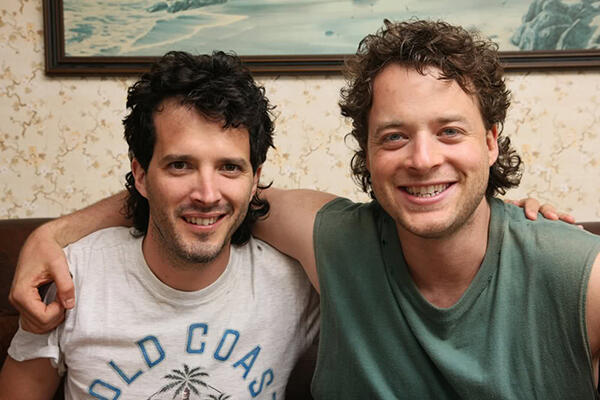
Two Little Boys is the story of Nige and Deano, two best mates from Invercargill. Nige (Bret McKenzie) finds himself in way over his head when he runs over a Norwegian backpacker. He confides in his friend Deano (Hamish Blake), despite their recent disagreement over a toasted sandwich. However, in the foolish fashion typical of two friends, Deano decides to make a bad situation worse by convincing Nige to hide the body. Deano later hacks the remains of the backpacker into small pieces without consulting Nige and becoming obsessed with killing Nige’s only other friend, Gav (Maaka Pohatu). These insights into Deano’s character and his persistent bullying give the film an increasingly disturbing air, which the audience is expected to brush aside in order to embrace the “Kiwi humour”. Nige’s incompetence and inability to stand up for himself stretch the film’s credulity beyond breaking point. The three characters take a trip to the Catlins, the home to many fond memories for Nige and Deano, and end up jumping off a cliff, not suffering any injuries. At this point, though, it’s difficult to see how the audience can be expected to be in the mood for laughter. Another issue with this film is its lack of commitment to the Southland setting. Its portrayal of the Catlins is fantastic, yet the characters, who are supposedly Invercargill born-and-bred, don’t speak with the obvious Southland “r”. Surely the filmmakers are able to portray a small amount of diversity in New Zealand cinema? Two Little Boys’ only redeeming qualities are a superb performance by Maaka Pohatu and its imagery of the Catlins, which conveys a true sense of Kiwiana. The creative folk behind this film deserve kudos. The screenwriters don’t.
-
Culture
 Issue 25 23/09/2012
Hysteria
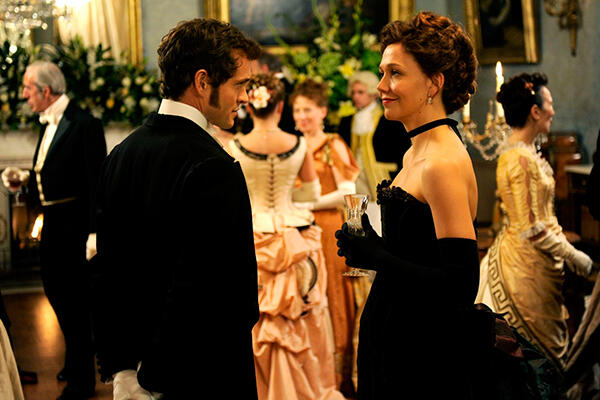
Hysteria, set in London in the 1880s, follows the story of the ever-spirited young Doctor Mortimer Granville prior to his discovery of the vibrator and its medical benefits. Mortimer (Hugh Dancy) continually seeks betterment in the medical profession, and is enamoured with the breakthrough science of germ theory, much to the dismay of his stuffy old employers. A sudden realisation that he is not finding stimulation in his work, nor room to try new methods, leads Mortimer to the door of Dr Dalrymple, the owner of a private women’s practice. Dalrymple introduces Mortimer to the problem of “hysteria” among a client base of upper-middle class housewives. In truth, the women are simply sexually frustrated, and the “treatment” that the Doctor and his new assistant (Mortimer) provide is clitoral stimulation. Although the film is set in the 1880s, its subject matter forces a certain modernity to shine through in its treatment of characters. Maggie Gyllenhaal plays the outspoken Charlotte Dalrymple, the eldest daughter of Dr Dalrymple, and later the unexpected love interest of Mortimer. A beacon of women’s rights, humanitarianism and forward thinking, Charlotte is initially portrayed as a crazy person, an exception to how women “should be”, and Dr Dalyrymple is profusely embarrassed by her. However, she is an audience favourite for her audacity, refreshing candidness, and way of thinking that modern citizens can more easily relate to. Hysteria more than fulfils its role as an entertaining insight into the intricacies of the female orgasm. This film does not attempt to be anything but light, bright and humorous, which is evident in its witty, honest portrayal of the history of vaginal pleasure. 3 / 5 stars


