
Alice McRae
Contributor
Articles by Alice McRae
3 articles found. Displaying page 1 of 1.
-
News
 Issue 14 03/06/2012
Red Bull flies student to Austrian brainwashing bender
University of Otago student Josh Stewart placed 23rd at the Red Bull Paper Wings World Finals in Salzburg on 4 – 5 May. The second-year Knox resident gained a place in the international round after beating 496 New Zealand competitors with a 43.6 metre throw at the Alahambra Rugby Club in March. The win gained Stewart, along with two other New Zealanders, an all expenses paid trip to Austria for five days to compete with other “pilots” from around the world. Stewart told Critic he trained hard in the lead up to the finals, and before his departure he achieved throws of up to 60 metres, just short of the 69 metre world record (insert requisite smirk whenever the number 69 is mentioned). Despite his efforts, Stewart’s best throw in the final round was disqualified after it sailed into the roof. Despite the disappointment Stewart claimed the experience was “brilliant, brilliant.” He told Critic that parties were thrown every night for competitors, and that he got only 11 hours of sleep during the five day trip. “Red Bull just went over the top on everything. It was awesome!” said Stewart, in a plug unashamedly primed by Red Bull’s marketing department. The next Red Bull Paper Wings tournament will be held in 2015, giving students three years to develop their origami skills and Red Bull marketing credentials. Drink Red Bull.
-
Culture
 Issue 13 27/05/2012
A Clockwork Orange
The first thing you need to know about Anthony Burgess’ A Clockwork Orange is something that no-one ever told me: it’s amazing how much slang there is in the novel. Before I read it, all I knew was that it was a well-known book that had been adapted into a cult classic film with an epically named anti-hero. The Anglo-Russian slang, or Nadslat, that the narrator Alex uses is unlike any slang I’ve ever heard. Some terms make sense, but most are just plain bizarre! I like to think that I don’t use slang to the same extent as the teenage characters in A Clockwork Orange, but even moving from Wellington to Dunedin showcases the diversity of slang within New Zealand. One can only imagine the struggle people from different countries or age groups must have. Fortunately, most of the slang words in A Clockwork Orange are repeated, and make sense in context. The book is actually surprisingly easy to read once you get used to the Russian argot. The plot is simple enough to follow, and all the violence seems less extreme when you don’t know what “tolchock” means. The story follows the life of Alex, a fifteen-year-old delinquent living in a dystopian future England. He is the leader of a group of “droogs” who roam around committing unjustified acts of “ultra-violence” for amusement. The first part of the book covers two or three days in Alex’s life where he is involved in multiple beatings and rapes. The scenes are brutal. The reader learns that Alex is very intelligent and a lover of classical music. However, these qualities only confirm his sociopathic nature. Alex’s crime spree ends with his arrest. The second part of the book covers Alex’s time in prison and his torture via “Ludovico’s Technique”. He suffers horribly, and the reader begins to sympathise with him. Alex attempts to escape prison by putting his name forward for a new method of “rehabilitation”. At this point the dystopian nature of the novel becomes totally apparent. Alex’s world takes on the shape of a society that is only a slight exaggeration of our own. The reader can only hope that the methods of psychological torture Alex experiences are no longer used. Brainwashing is a common feature of dystopian novels, but what Alex is subjected to is extreme: forceful suggestion to encourage mental association. Scary stuff! The third part of the book is the most troubling. Alex commits terrible acts in Part One. He experiences horrific things in Part Two. But the effects of the brainwashing, and what it means for the world in which Alex lives, make Part Three the most frightening. You feel sorry for Alex when he is unable to defend himself, even when he welcomes the pain of a beating. It is disturbing that the government views Alex’s torture as a “success” and proof that “Ludovico’s Technique” is a viable and efficient way to manage the criminal population. The consequences are unthinkable: hundreds of thousands of criminals would feel physically sick every time they contemplate violence, never fully escaping the terror of a police state. Unfortunately for Alex, but fortunately for the rest of his society, events transpire which bring public attention to his fate, inciting general outrage. This brings an end to “Ludovico’s Technique” as a method of punishment, and of controlling Alex’s brain, and he is restored to his former self. The final chapter of A Clockwork Orange is omitted from the original American version of the book, and also from the movie. I won’t spoil it for any potential readers, but I do recommend that you watch the movie after reading the book, and decide for yourself which ending is better. – Alex Stevenson
-
News
 Issue 13 27/05/2012
Fishing in Dunedin no longer confined to Monkey Bar
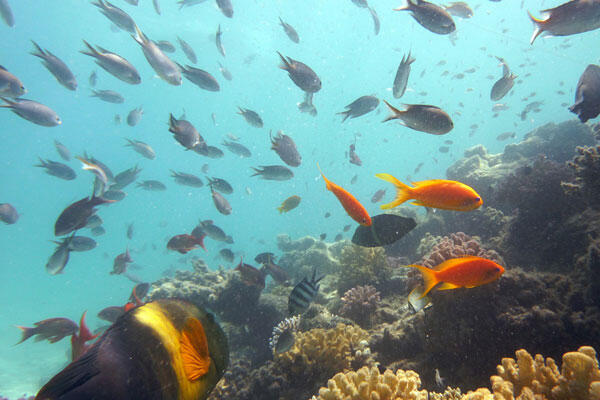
The Leith River is now home to 4000 juvenile salmon, after the New Zealand Salmon Anglers Association released the fish last week to support the “put and take” system of recreational fishing in Dunedin. Salmon have been released into the Leith annually since 1984, and as a result Dunedin is one of only two cities in the world that can offer salmon fishing within a 10 minute walk from the CBD (Critic’s journalistic merit was undermined when its team of investigative journalists were unable to establish the second city in which salmon farming is undertaken 10 minutes from the CBD, we presume it is Ulan Bator). The Dunedin Community Salmon Trust started a salmon hatchery to breed these salmon in Sawyers Bay in 2005, after sources of salmon from NIWA were sold to commercial farms. The hatchery operates out of a redundant sewage plant. Salmon are transported to the Leith in beer tanks that previously belonged to Gardies. Critic is unsure if either of these elements contribute to the salmon’s flavour. The Salmon Anglers Association will release another 20,000 salmon into the Leith on 10 June, to provide students studying for exams with an opportunity for a study break other than Facebook. Given that Critic has heard that in past years some fish have been observed getting frisky outside the Clocktower, this excursion is particularly recommended for biology students.


