
Bradley Watson
Contributor
Articles by Bradley Watson
4 articles found. Displaying page 1 of 1.
-
Culture
 Issue 26 30/09/2012
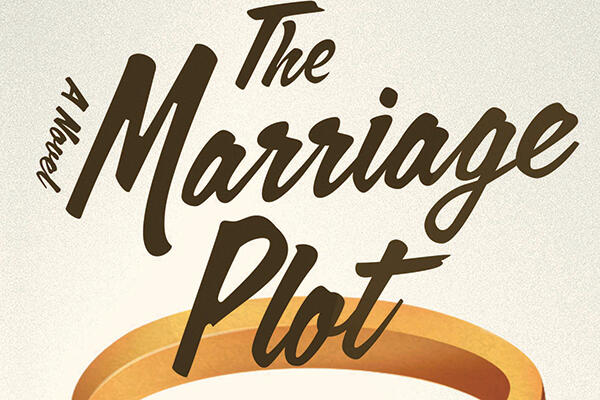
The Marriage Plot
After he focussed on mass suicide in The Virgin Suicides and then hermaphrodism in Middlesex, I was curious to see what Jeffrey Eugenides had in store for us with his latest novel, The Marriage Plot. Unlike his other novels, The Marriage Plot does not trade in shock value. Instead, the plot centres on the love triangle between three college graduates. At the focal point of this love triangle is Madeline Hanna, an English major ironically studying the marriage plot in the novels of Jane Austen and George Elliot. Her two “suitors” are Mitchell Grammaticus and Leonard Bankhead. Mitchell is a somewhat lost soul, who searches for his religious identity in the novel. He falls for Madeline when they first meet — the clichéd “love at first sight”. Throughout his travels through Europe and India, he continues to pine after Madeline, but his love is unrequited. Leonard, on the other hand, is a misunderstood loner who captures Madeline’s eye during a course in semiotics. A relationship develops between Leonard and Madeline, which is later complicated by Leonard’s manic depression. Ultimately, Madeline must make a decision between Mitchell, the great friend who has always loved her, and Leonard, a vulnerable and in-need-of-help individual. Admittedly, I was rather sceptical when I first picked up the novel. It all sounded so clichéd: girl meets boy, girl meets another boy, she must make a decision between the two, just like another terrible Hugh Grant movie. And to add to this onslaught of banality was the irony that Madeline, a hopeless romantic, studies the marriage plot that she herself becomes a part of. However, although Eugenides’ novel orientates itself around the clichéd marriage plot, his stylistic charm and approach leaves the reader refreshed and somewhat disassociated from the classic plots of Austen and Elliot. Eugenides’ approach is more critical, and he works to deconstruct the romanticised notion of marriage and love. Madeline herself gets wind of this notion of deconstructing love when she enrols in a semiotics course. The focus on the literary theory of semiotics and structuralism put forth by Derrida and Barthes segues into Eugenides’ own critique. What I believe Eugenides is attempting to do in this novel is to see whether the classic, canonical marriage plot that was presented by Elliot and Austen would survive in a modern context. We no longer find ourselves in a Lizzie Bennett situation, having to find an appropriate suitor with enough money and social standing to ensure our family and estate are supported. There is room for more of a focus on love — but what is “love”? Is it the developing love within a close friendship, or is it the love of saving someone from depression? Eugenides picks up where Austen left off with her focus on love, and modernises some of the themes she began to develop in her texts. He presents an accessible, readable, hilarious, and heart-warming narrative. Although the literary theory can be a little heavy in the beginning, it is an excellent read for anyone who enjoys a good ole love story but is looking for a bit of a twist on this classic plot. And who does Madeline chose in the end? You’ll have to read it and find out.
-
Culture
 Issue 18 29/07/2012
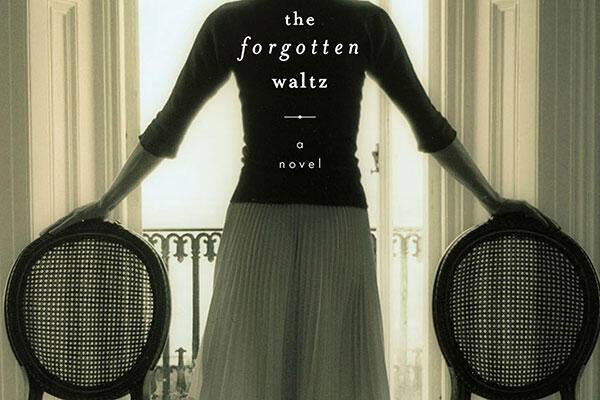
The Forgotten Waltz
Attraction works in mysterious ways, and we often find ourselves wanting things we cannot have. But what happens when we get what we want? What happens when our lust for our husband’s attractive, married friend shifts from fantasy to reality? What about his family, our family, and our marriage? At the heart of Anne Enright’s The Forgotten Waltz lies the complex love affair between Gina and Seán, both of whom are “happily” married, and the impact of the affair on them and their families. In The Forgotten Waltz, her first novel published since winning the Man Booker Prize in 2007, Enright beautifully illustrates how Gina’s and Seán’s relationship develops from an accidental catching of eyes at a party to a full-blown affair which culminates in them leaving their respective partners for each other. In the end, Gina finds herself in a situation that compels the reader to either pity her or feel satisfied that she may finally get her comeuppance. The plotting leading to Gina’s ultimate situation is rather slow. Near the end of the book, I found myself feeling like nothing much had happened. Yes, Gina had fallen for Seán, yes, they had both left their spouses, and yes, Gina’s mother died, but the usual pain and turmoil of marital separations was lacking. However, I soon became aware of the subtlety of Enright’s narrative. Enright cleverly uses these events in the novel to contribute to Gina’s growing uncertainty in love. In the end, I think we can conclude that Gina, in her quick decision to leave Conor for Seán, begins to question the certainty of the relationship between her and Seán. Her relationship and conversations with Evie, Seán’s daughter, in the last chapters force Gina to consider Seán’s past infidelities to Aileen, his ex-wife and mother of Evie. Gina contemplates, “Did he love my sister that day in Brittas? Or all of these women, all of the time? I don’t care. He loves me now. Or he loves me too. Or. I love him. And that is as much as any of us can know.” Gina’s confusion as to whether what her and Seán share is genuine, or just another fling for him, becomes all too apparent. From the novel’s outset, Gina’s retrospective first person narrative emphasises her deepseated uncertainty. However, the reader is unaware why Gina’s narrative is so vague and disjointed. Her hazy narrative does not necessarily paint a picture of love at first sight. At times the retrospective narrative was unclear, and at points I found myself frustrated with Gina’s fluctuating stream of consciousness. However, I must admit that it does effectively communicate Gina’s inner turmoil, which the reader learns more about as the novel progresses. Enright’s novel offers the reader a less typical perspective of an affair and the events which follow it. Although the narrative may cause some frustration, it is an accessible read which I would recommend to anyone who is interested in reading about what happens when we get what we want, even though we were perhaps better off without it.
-
Columns
 Issue 15 08/07/2012
Poetry | Issue 15
You sit there (Can you call it sitting?) staring inquisitively out. Is it true about your memory? That sucks Actually, you suck. No actually, you do: I’ve seen you sucking up all the water Calling it breathing. We breathe too you know, but do you see us sucking? Actually, what do you see? Inside out not outside in? Do you remember? Do you prefer watching, or being watched? Actually, I think to be watched is more exciting: someone must like you praise you to watch you. Funny though. I don’t really like you You just sit there (Yes, I’ve decided you can sit) staring inquisitively out sucking all the air out of your roomI don’t know how you put up with him: sitting and sucking while you, well, you are great: sucking while sitting Did you marry him for his gold? The Treasure Chest outside your artificial coral home? A plastic jungle: it’s nice. Oh, is it not a money thing? More a looks thing? He is gold, being a gold- fish and all Do you ever wonder what goes on outside your glass prism? You probably can’t even remember can you? You’re all caught up in the moment! I still don’t know why you put up with him: sitting and sucking. If you ask me, he’s more orange than gold
-
Culture
 Issue 8 22/04/2012
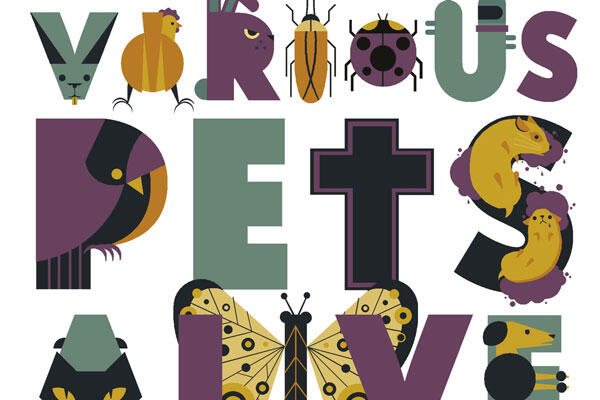
Pets! Dead Or Alive!
Marina Lewycka’s Various Pets Alive and Dead delves into the development of a slightly dysfunctional family who have taken very different lives after growing up in a left-wing liberal commune. Set in 2008, the novel moves between Doncaster and London, exploring both the present lives of the characters, and also their memories of growing up in the commune. The narrative reveals that the mother is the only person in the family that still believes in the radical politics and lentil-eating philosophy of their past. The rest of the family now work in corporate finance and are sex-crazed, rejecting the ideals she had tried to instil in them. And as the title suggests, there are various pets; some living, some dead. The book is focalised through three different characters: Serge, whom the family believe to be doing a PhD in Mathematics at Cambrige when in actuality he is selling his soul to the corporate world; Clara, a slightly neurotic primary school teacher who has the worst luck with keeping pets alive; and Doro, the hippy mother of Serge and Clara, who still tries to live a life of free love and protest. The other characters in the novel include Maroushka, a beautiful ditzy girl from Zhytomyr whom Serge wants to sleep with; Oolie-Anna, Serge and Clara’s Down’s Syndrome sibling; and Marcus, Doro’s soon-to-be husband whose first person narrative is expressed in the epilogue. I found the characterisation effective in highlighting how each family member had chosen different life paths. Doro was my least favourite of the characters because her intrusive, nagging and opinionated personality got tiresome and added little to the effect of the story. However, I loved Serge, who spent most of his time piecing together poetry about Maroushka, and fantasising about sleeping with her. He tries so hard that it’s slightly cringe – like sniffing shoes cringe. The chapters are nice and short, so I found the novel to be an easy and quick read. There were many points where I actually laughed out loud at some situations the characters found themselves in and the memories they recalled. Lewycka paints fantastically funny childhood memories for both Serge and Clara. My favourite belongs to Serge, in which he, unable to comprehend the speed at which rabbits procreate, believes that the rabbits that keep coming back after he has buried them must be zombie rabbits: “It seemed like the rabbits which kept on appearing so inexorably were in fact zombie-bunnies linked in some supernatural way with those little hairless corpses they’d buried.” The “zombie” rabbits that seem to take over the commune end up being donated, unbeknownst to the vegetarian animal-loving members of the commune, to Randy’s Reptiles. Lewycha’s novel is an easily accessible read that everyone can relate to in one way or another – be it through pining for a girl way out of your league or eulogising at pet funerals. If you want to realise you aren’t that weird after all, definitely give it a read! Bradley Watson


