
Jane Ross
Articles by Jane Ross
6 articles found. Displaying page 1 of 1.
-
Culture
 Issue 20 12/08/2012
Interview with Alyx Duncan
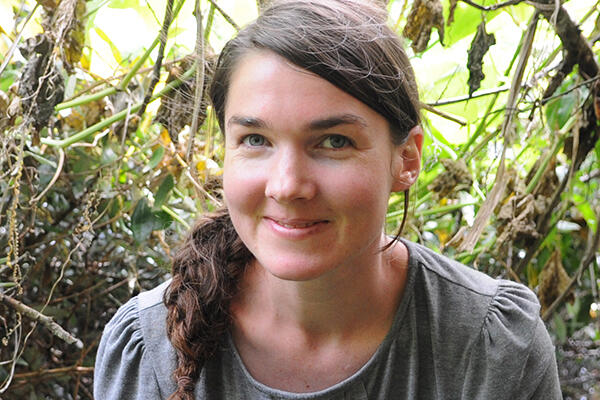
New Zealand-born director Alyx Duncan took time out from the busy international film festival circuit to speak to Jane Ross about her debut feature film, The Red House, which is screening at the NZIFF this Friday at 6pm at Rialto. You describe The Red House as a fictional essay in which you pose the central question “Is home where you are from, or what you carry inside you wherever you go?” How does this question resonate for you? In some ways I feel it’s possible to be at “home” in other parts of the world and carry my identity and sense of “home” inside me, but I always hold this small island (Waiheke) in the centre of my being. This connection ultimately draws me back to New Zealand. Four years ago my father called me and told me they intended to move away and would have to clear out and possibly sell our family home. I was struck by the thought that all the memories of my childhood and my family would get erased from the physical environment. I wondered whether, if I went back to that place years later, I would still feel it was home. This film has two main characters – your father, Lee, and your stepmother, Jia. How did you come to involve your family in this film? Originally I had set out to make a very different film – a short experimental documentary, with the house as the main character. The human characters (my parents) were really only there as background extras. However, once we started shooting I found my lens was increasing drawn to the real people, and so we moved to devising a story more focussed around characters they could play. Obviously they are not actors and in fact are very private, shy people. Yet there’s something very intriguing and honest about the movement of people within their “natural setting”. You make specific reference to how the film gives a personal perspective on globalisation. What do you perceive to be the apparent external forces? I think many of the aspects of our lives now are informed or transformed by globalization. The outside influences that intervene and start the action of the film is that Jia’s parents need her to return home to care for them. Once home, she doesn’t recognize her city. It’s changed from the traditionally constructed city that she knew into a modern mega-city that embraces a certain amount of homogenization – like many different cities of the world now. For Lee, he feels the small island where he chose to live his life has changed in ideology. He is trying to understand his place in a world that’s changing from a small community, that’s been relatively self-contained, to a place that is shaped by the currents of wider consumer-oriented markets. I really like the observation that you made about the filmmaking process in terms of how you have to be present in the moment to be able to recognise that something special is happening. Can you describe one of those moments for me? One of my favourite shots in the film is the one looking down the tunnel in the train. I was lucky during that shoot. Francisco, who was the primary cinematographer for the China section, was shooting the main action with Lee and Jia so this gave me freedom just to look and find moments. I happened to be at the front of the train as we went into the tunnel and I pressed my lens against the glass to stabilize it and held it there recording till we came into the next station. It wasn’t a shot I’d shot-listed or planned but I really love its memorizing quality and how that shifts our reality as we enter the new city. What has been the best part of the making your first feature film? It was fulfilling using a poetic way of saying something that is true and real. It’s deeply satisfying coming to know people, whom I thought I knew, from a different perspective. The film feels quite honest and simple and although the process was demanding, I felt very satisfied when I felt it was coming together.
-
Culture
 Issue 16 15/07/2012
Interview with Bill Gosden
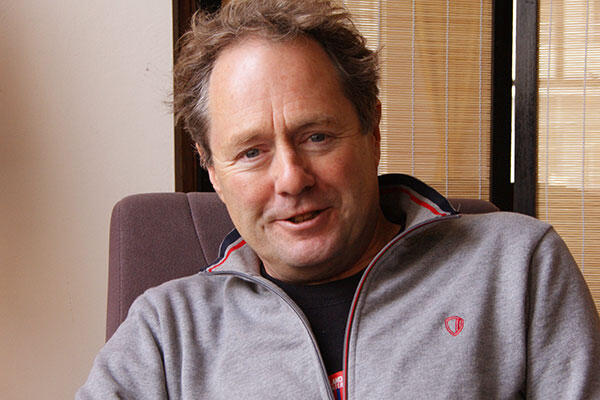
Critic film reviewer Jane Ross caught up with Bill Gosden, Dunedin-born Director of the New Zealand International Film Festival, for a quick chat about his lifetime love of film and what to expect from this year’s NZIFF. Critic: So from where I’m sitting I think you probably have one of the coolest jobs in the world. Does it feel like that? Bill: Haha! It does and it doesn’t – some aspects of it are fairly gruelling but there are times when I have to pinch myself that anybody’s paying me to do what I do. No job’s perfect but mine’s a lot more fun than many jobs I know of. C: How did you enter into your career in film? B: After I graduated I had no clear idea about what I wanted to do but I thought it would be something to do with journalism, and I ended up applying for a job at the Wellington Film Society. That became a job at the Wellington Film Festival and I just stayed there. This is my 29th festival — I was 12 years old when I started. C: So you’re here now to launch the 2012 NZIFF in Dunedin. How do you decide what goes into the programme? B: We try to keep the programme as broad as possible, as it has to appeal to many different groups. I think the most obvious expression of that is always in the music programme. So this year you’ve got a documentary about Bob Marley, a Neil Young concert movie, the McGarrigle sisters tribute concert, and there’s the LCD Soundsystem movie. So extrapolate from that the number of different audiences we hope to cater to in any different realm. C: Do you have any top recommendations from this year’s programme? B: One film that I really love is called ¡Vivan las Antipodas! - Long Live the Antipodes. It’s a rhapsodic nature documentary. The filmmaker has matched four pairs of antipodal places in the world and cuts back and fourth between them. The visual quality of the film is like nothing you’ve ever seen on screen before. C: What can you recommend from the Cannes Film Festival prize winners? B: I’ve seen the Ken Loach film The Angels’ Share which is really funny, and Beasts of the Southern Wild which won the prize for the Best First Film and it also won the big prize at Sundance this year. It’s an extraordinary film, and very hard to describe. It’s like an explosion of energy from Louisiana. The central character of the film is a 6 year old girl — she’s riveting, and she’s kind of leading her people away from the floodwaters. There’s a very specific reference to global warming in this. It’s an amazing film. C: Sounds great! I also really look forward to seeing what’s in the programme from our New Zealand filmmakers, especially the documentaries. B: Well, you are in luck this year — there’s quite a few. Tatarakihi, which Gaylene Preston has produced, is filmed by Maori filmmaker Paora Joseph. It’s about kids from Parihaka who come on a hikoi down to Dunedin in the footsteps of their forebears who were all prisoners in the 1880s and were transported from Taranaki down to Dunedin where they built a lot of the infrastructure here. A lot of it was slave labour and they were imprisoned in caves down in Anderson’s Bay. Dunedin figures large in this film. C: Wow, that’s definitely one to see! The 36th Dunedin International Film Festival runs from 26 July — 19 August. Visit nzff.co.nz to check out the programme. Also, keep an eye on Critic for upcoming sneak peaks, reviews and some great giveaways! Photo Courtesy Rebecca McMillan
-
Columns
 Issue 8 22/04/2012
Classic Film | Issue 8
Director: Richard Linklater Have you ever had a chance encounter with someone who you felt a real connection with? You might have even caught yourself daydreaming about an idyllic future together, but for reasons outside of your control you reluctantly had to part ways. Was it just a matter of right place, wrong time? Does this person still linger in your memory? If you were presented again with that missed opportunity some years later, what would you do? Richard Linklater’s Before Sunset attempts to answer these very questions, at least for the characters Jesse (Ethan Hawke) and Celine (Julie Delpy) as they reprise their roles from the 1995 film Before Sunrise. The pair had met as young carefree travellers with a Eurail pass and the hours that they spent together in Vienna were both spontaneous and magical. Nine years have since passed, the setting is now Paris, and the fire is still smoldering; but much has happened over the long years since those few fleeting hours. The fragility of the terms of their departure in Vienna, in pre-social media days, was fraught with impending disaster. Now reunited, things are no longer so carefree and easy, and life choices now impact on significant others. As the audience gets to eavesdrop in on their intimate conversations we learn that they are currently in long-term relationships – one of them even has a child. There’s much more at stake now. But not only that, they learn that they have never stopped thinking about each other, and that at different times and in very different ways, they’ve both searched for each other. Sequels can be like a Vince Vaughn film – you can have high hopes but ultimately the disappointment is painfully predictable. In 2004, The Times rated Before Sunset as “one of the most rewarding films of the year.” I’m going to go out on a limb and suggest that this is quite possibly one of the most rewarding sequels ever. In terms of great sequel expectations it’s right up there with the much-anticipated Terminator 2: Judgment Day. Thankfully, in both cases, the years of wait were worth it. – Jane Ross
-
Culture
 Issue 7 15/04/2012
The Lorax (3D)
If you were raised on the whimsical poetic meters and trippy cartoon drawing style of Theodor Seuss Geisel (Dr. Seuss) you may find the nauseating pace of the new 3D film version a tad too much sensory overload. There is just so much going on, and while you won’t want to miss out on the hectic experience, the noisy, fluorescent, and furious action often detracts from what is at the heart of this story – a cautionary allegory of ecological responsibility, which is just as relevant now as it was in the early seventies. Dr. Seuss’s The Lorax transports us to the futuristic commercialised world of Thneedville, where the residents have lost their memories of nature and any referent for what is real – air is sold in bottles and trees are CGI projections up for purchase. The story begins with our protagonist, a plucky little kid named Ted (Zac Efron) who has a crush on pretty tree-hugging Audrey (Taylor Swift). Audrey wants to know what a real tree feels like and Ted decides that he’s just the boy to make that happen. After being directed to the home of the reclusive Once-ler (Ed Helm), the man responsible for chopping down the last of the Truffula trees, the musical narrative jumps between Ted’s courtship of Audrey and the Once-ler’s remorseful tale of greed and of his broken relationship with The Lorax (Danny DeVito), the grumpy guardian of the forest, the sympathetic speaker for the trees. Don’t let the surge of sensory stimulus devalue what is central to Seuss’ story – it’s the trees (not the Thneeds) that everyone needs. - Jane Ross
-
Columns
 Issue 7 15/04/2012
Classic Film | Issue 7
Director: Richard Linklater From director Richard Linklater comes a perceptive and poignant film about two young twenty-somethings who meet as strangers on a train, sense a connection, and decide to take a gamble on each other. But the clock is ticking. Jesse (Ethan Hawke) and Celine (Julie Delpy) have just 14 hours in Vienna to get to know all there is to know about each other before both must go their separate ways. And they do make sure that every minute counts, talking intimately about everything and nothing … before sunrise. With no set plans but to make the most of their limited time together, the places that they visit, the people they encounter, and their ongoing whimsical conversations with each other provide a structure to the narrative. The urgency of the situation forces a sharing of each other’s histories and of their hopes for the future. Jesse is more cynical than the free-spirited Celine. We learn that he is still nursing a broken heart and a bruised ego. Yet he strongly feels that Celine can benefit from what he has to offer her. In return, she responds to his directness with interest. While it takes a little while for them to relax into their roles, the chemistry between Hawke and Delpy is overt and mesmerising, which makes up for the times when their dialogue seems contrived and unnatural. Linklater’s camera, however, is gentle and unobtrusive and privileges the audience with intimate first-hand knowledge of the developing romance. But what is to become of them when it’s time to say goodbye? Will they keep their plans to meet again? Before Sunrise is a paean to young love, when anything feels possible and finding a soulmate seems very probable. But it’s not just for the romantics out there. It’s a travellers’ tale, with after-hours Vienna providing an intriguing and picturesque setting. It also superbly captures a particular stage in life when not a lot really matters and unexpected encounters and paths not yet taken can actually direct you to somewhere or indeed to someone. This is a delightful film with two exceptionally charismatic leads. - Jane Ross
-
Columns
 Issue 2 04/03/2012
Classic Film | Issue 2
Director: Peter Yates What happens if you just don’t know what you’re supposed to do with your life? Breaking Away is a funny, intelligent, uplifting, and at times heartbreaking coming-of-age film that attempts to answer this question for a group of four high school graduates. Academy Award winner for Best Screenplay (Steve Tesich), and nominated for Best Director (Peter Yates), Best Original Score (Patrick Williams), and Best Motion Picture Comedy in 1980, there is much to love about this film, not least the sharply-observed humour and the exceptional acting delivered from a then-little-known cast. The strength of Breaking Away lies in the outstanding characterisation of the four young disaffected friends, struggling with identity issues and the perpetual, resonating question of what to do with the rest of their lives. Set in the university town of Bloomington, Indiana, Dennis Christopher stars as Dave, a gifted cyclist, whose intense idolisation of the Cinzano cycling team leads him to assume a pseudo-Italian identity. Along with his friends, Mike (Dennis Quaid), Cyril (Daniel Stern), and Moocha (Jackie Earle Haley), Dave is stuck in limbo. A myriad of tensions exist within the campus town, between different generations as well as between the working-class “cutters” (those born in Bloomington to parents who once cut the limestone used to build the University) and the constant influx of affluent university students. As Mike laments says, “Cutters – to them it’s just a dirty word. To me it’s just something else I never got to be.” Although the underlying story follows a predictable plot, the superb script still serves up some big surprises. Breaking Away is more than just a charming teenage tale of self-discovery; it’s also a compelling and superbly shot cycling film. And, as with all great sports films, “… you’re gonna need a montage”. And Breaking Away delivers some truly outstanding cycling montages. If you are now even just a little bit intrigued, I would recommend watching this film even for the cycling scenes. It’s what cleverly connects all the film’s elements as one. – Jane Ross


