
Skyla from Ngāti Hine
Kaituhi Māori
Articles by Skyla from Ngāti Hine
16 articles found. Displaying page 1 of 2.
-
Culture
 Issue 26 08/10/2023
The Dummy's Guide to Travelling to Hawai’i
Welcome to the Dummy's Guide to Travelling to Hawai’i, where we'll show you how to turn a dream vacation into a nightmare of confusion, frustration, and inefficiency. Who needs simplicity and relaxation when you can make everything needlessly complex? It's time to discuss the epidemic of over-tourism and the astonishing fact that only dumbasses seem to be visiting Hawai'i during this period of crisis. Yes, you heard it right: only the most obtuse among us are flocking to this island paradise instead of practising our "aloha" from afar. Hawai'i, a place known for its stunning natural beauty, rich cultural heritage, and unique ecosystem, is facing an existential crisis. The islands are under siege by hordes of tourists who have seemingly thrown reason out of the window to embark on a journey of relentless Instagram posts and clueless wandering. So, if that sounds like you, here are our top tips for a totally groovy time in paradise! Step 1: Choose the worst time to visit First thing’s first: ignore those conventional travel tips that suggest visiting during the off-peak season to save money and avoid crowds. Why not go during the most expensive and crowded time of year, like Christmas or summer break? Be sure to book your flights and accommodations at the very last minute, ensuring you pay top dollar for everything - not that any of that money goes to the hosts. Step 2: Pack everything but the kitchen sink When packing for your trip, remember to overpack like a pro. You never know when you might need three different snorkel sets, five pairs of shoes or that sweater for the "chilly" Hawai'ian nights (spoiler alert: they don't exist). But don't stop there – leave ample room for impulse souvenir purchases by stuffing your suitcase with a smorgasbord of unnecessary gadgets and at least ten bottles of sunscreen. Who cares if the hotel provides most of what you need? A mini-fridge, coffee maker, and your Nutribullet are absolutely essential for that perfect piña colada experience in your room. After all, who needs the freedom of mobility and a lightweight suitcase when you can have the reassurance of knowing you're fully equipped for any and every unlikely scenario? Besides, if you pack too much junk, you can just leave anything unwanted behind - like buying a cheap tent for a festival so you don’t have to bother packing it up when you leave. It’s not like the islands are running out of room. Step 3: Disregard the local culture Because who even has time to understand Hawai'i's local customs and traditions, right? It's much more fun to barge into sacred places, mispronounce Hawai'ian words, and disrespect the locals by assuming they're just there to serve you. After all, what better way to immerse yourself in a new culture than to do the exact opposite? Don't forget to haggle relentlessly in local markets while wearing your "I Heart Hawai'i" t-shirt, as if your souvenir shopping experience wouldn't be complete without asserting your dominance as a bargain-hunting tourist. And when you encounter a language barrier, just speak louder and slower in English; surely the locals will appreciate your creative communication techniques. But it doesn't stop there. Dumbasses are also notorious for their complete disregard of local culture. Instead of immersing themselves in the rich Hawai'ian heritage, you could opt for inauthentic lū’aus where they feast on spam musubi and pineapple pizza (yes, that's a thing). They butcher the pronunciation of “aloha” and wear cheap leis while imagining they've cracked the code of Hawai'ian authenticity #whitetrash. Step 4: Drive like a maniac Renting a car? Perfect! Drive like you're auditioning for a Fast and Furious movie. Ignore speed limits, road signs and that annoying left turn signal. Bonus points for parking in no-parking zones, blocking driveways, and taking up two spaces in crowded lots. Remember, you're not just a tourist; you're a road warrior, leaving your tire marks of defiance on the island's highways and byways. Step 5: Get lost on purpose Exploring the island is overrated. Wander aimlessly, ignore GPS directions and make sure to hike off the beaten path without any provisions. Don't inform anyone of your whereabouts, and be sure to blame Google Maps when you eventually need a rescue mission. It's all part of the charm of this tropical paradise, where every wrong turn leads to a new, unexpected adventure. Who knew paradise was so taxing? Step 6: Eat at chain restaurants Why try local cuisine when you can stick to the familiar? Opt for fast-food chains you can find back home. Who needs the thrill of savouring fresh seafood caught from the crystal-clear Hawai'ian waters or indulging in the exotic, aromatic flavours of the islands when you can have yet another round of the quintessential burgers and fries? Go ahead, miss out on the culinary treasures that Hawai'i has to offer, and stick with the same old fast-food favourites - because nothing says "adventure" like chicken nuggets. Step 7: Document everything for social media Your vacation isn't real until you've posted every detail on social media. Spend more time taking photos than actually experiencing the beauty around you. Bonus points for using heavy filters and hashtagging every word in your captions. Prioritise your online presence over in-person experiences, because in today's world, it's not about living in the moment; it's about crafting the perfect digital version of it. After all, what's the point of a vacation if it's not expertly curated for your followers' envy and approval? Congratulations, you've successfully turned your dream vacation into a travel nightmare! While others may come to Hawai'i to relax and enjoy the natural beauty and culture, you've shown that you can make it as complicated and unenjoyable as possible. Remember, the key to being a dummy traveller is to ignore all common sense and make sure you have plenty of stories to tell about how you did everything wrong. Aloha, and good luck! Step 8: Stay somewhere that reminds you as much as possible of home Now, let's talk about accommodations. The dumbasses prefer staying in massive resorts that resemble, well, exactly where they came from: complete with golf courses, water parks, and oversized meals. Why experience the natural beauty of Hawai'i when you can be herded like cattle through a buffet line right next to the fried chicken and mac 'n’ cheese station? Breadfruit? Get real.
-
Features
 Issue 24 24/09/2023
Putting the ‘Fuck’ in Whakapapa
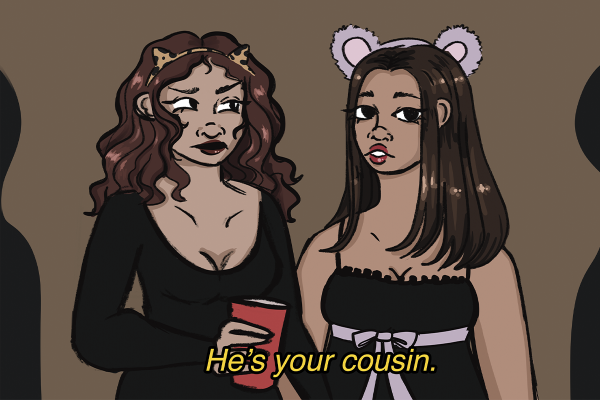
There’s a scene in Mean Girls where Karen Smith justifies getting with your cousin. And maybe she had a point. Yeah, it’s probably a pretty desperate move, but in some cases, it’s excusable. You didn’t hear it from me. They say that forbidden fruit - or in this case, we’ll say kūmara - is the sweetest, and as someone who has, admittedly, done a double take at a few relations, I’ll be the first to concur. While we’ve come a long way from the mattress room (where tradition meets Tinder) and branched out beyond “most likely cousins” to “less likely cousins”, the lines are still quite blurred. So where does the gene pool get a little too shallow for comfort? How close is too close? Or, maybe more importantly, how far is far enough? Well, the first hurdle you'll encounter is the inevitable overlap. It's a small world out there, especially for Māori, and sooner or later you'll discover that your potential bedmates are, one way or another, connected through a complex web of whakapapa. So, before you get your hopes up, making sure your family trees don't intertwine like the vines of a kūmara patch is the first step. Do what you have to do. My advice? Ditch the Tinder bio and get straight to the point with a cultural checklist: we want eel-wrestling, top-knot-wearing, seafood-diving tāne out here. And wāhine mā, if he can sit on the pae, just swipe right. Extra points if he’s inked. That’s a whole lot of admin, though. So to avoid this rigorous vetting process, some Māori have opted out altogether. Maru, a third-year student here in Ōtepoti, was quick to explain why. “I’ve actually had a few run-ins and it’s been tricky… I can never find someone that isn’t related to me, or, we’ve got some pretty colourful intertribal histories,” Maru said. “If I’m gonna take part in Family Feud, it’s gotta have a big cash prize at the end.” But is there a better way? Oh, how the sparks would soar if a pristine match-making service came to our aid… think, something snazzy like ‘MāoriMingle’, where indigenous swipes meet indigenous vibes. Cast Māui’s fishing line and see what kind of catch you reel in! Discover potential matches through a unique algorithm that analyses your whakapapa to find your star-crossed lover. Worried about meeting someone who might be hiding their true identity? MāoriMingle has a “taniwha tracker” feature to help spot potential impostors - if their taniwha doesn’t match the profile, you’ll know they’re fishy. Can you just imagine the tags? #whānau-oriented, or will it be #hakaenthusiast? But on the other side of the kūmara patch, things are looking a little… mushy. Maiao (Ngāti Maniapoto) has had her fair share of terrible online experiences, claiming the ‘name game’ and severe cultural cringe. “I get it, some people don’t get around much. But so many folks out there have barely spoken to a brown person, let alone dated one,” she said. “When it starts to feel like you’re a walking cultural exhibit on the first date, there probably won’t be a second.” And in the age of digital dating, Māori singles must master the delicate art of balancing traditional values with the swipes of destiny. One moment you're at a whānau hui (family gathering), being questioned about marriage and graduation by Aunty Bubbles, and the next, you're swiping left on a potential Pākehā partner with mediocre rizz, asking what their favourite colour is while they try to prove how culturally sensitive they are. But where are the brown-skinned beauties, inked and toned, cheeky laughs and all? And let's not forget the social media scrutiny. The FBI (aunties) will make sure your online presence will be picked through with a fine-toothed comb. That cheeky post you made in 2016 about your dislike for kina? Yeah, that's going to come back to haunt you. Prepare for a thorough grilling by the Vetting Committee (again, aunties), who will demand an explanation for your apparent disrespect of one of Aotearoa's finest delicacies. Speaking of delicacies, I just know that Hinemoa would have some pretty strong thoughts about what we Māori consider ‘chivalry’ nowadays considering she literally swam to Mokoia for Tūtānekai. Clearly, he was quite the catch. Don’t even get me started on Kahungunu. Just an aside, but what I wouldn’t give to see his Tinder profile. But in the grand scheme of things, it sounds like this dating shit was just easier when sex wasn’t taboo and marriages were arranged. In most cases, premarital sex was encouraged and carried no stigma. And while arranged marriages were common within Māori communities, elders and leaders of the hapū often played a leading role in selecting suitable partners based on compatibility, lineage, and social status. Though these unions were not solely based on seduction, there was great emphasis on creating strong alliances and maintaining social cohesion. And there was certainly flirtation and courtship. These often involved the exchange of songs, poetry (waiata), and meaningful gifts. I hate to be that person, but it sounds so much better than today’s hookup horrors. Imagine thinking you’re leaving your small hometown and clan of cousins behind, only to chat up a bunch of distant relatives in a different city. Bringing a whole different meaning to ‘long-distance relationships’ as if it weren’t already bad enough. Clearly, we’re experiencing a kūmara shortage. But it all depends on the size of your rāks (wallet), as it seems that cousinly love is only acceptable if you’re white AND incredibly wealthy. Just look at the divide between all sorts of Royals and the people of Alabama: one was revered for ‘maintaining a pure bloodline’, while Alabamians are referred to as white trash rednecks. #JusticeForAlabama. I wonder what other immoral shit you can get away with if you’re exponentially wealthy. Maybe these folks need to have a squiz on Tinder, because Ancestry.com just doesn’t hit like it used to. So who cares if you’re from the same iwi? Find the Philip to your Lizzy, and swipe responsibly, e te iwi.
-
Culture
 Issue 22 11/09/2023
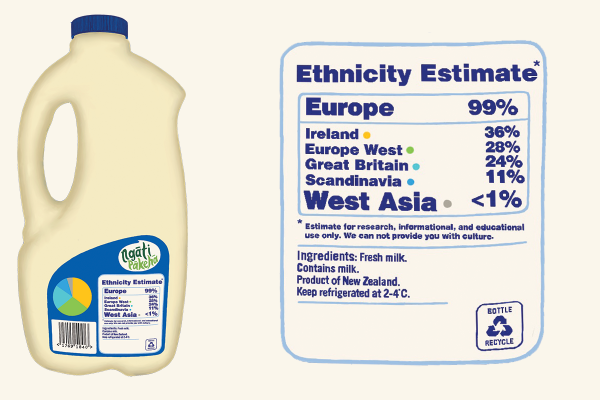
Ngāti Pākehā? More like Naughty Pākehā!
The descendants of Porourangi are known as Ngāti Porou, and Ngāti Tūwharetoa in the central North Island are, of course, descended from Tūwharetoa. So if ‘Ngāti’ means ‘descended from’, then who the hell is Pākehā? Many Europeans, and even some Māori, are using the term 'Ngāti Pākehā' to acknowledge Western roots. In a world where political correctness reigns supreme, where words are dissected with surgical precision to avoid any hint of offence, we now have this gem to add to our ever-growing lexicon of absurdity. Some have argued that it serves as a means of reconciling historical injustices, whereas others say, not even eah. ‘Pākehā’ has been in use since the arrival of the Endeavour in 1769, and it was the most frequent term for these people throughout the 19th century. “I find so much identity in ‘Pākehā’, and yet so much disdain for ‘Ngāti Pākehā’,” said Josh*, a Masters student here in Ōtepoti. “It implies equivalence at an iwi level.” You see, ‘Ngāti Pākehā’ is meant to be a tongue-in-cheek jab at those of European descent in New Zealand. It's an attempt to create a parallel with the Māori iwi (tribal) structure, suggesting that Pākehā (New Zealanders of European descent) have their own "tribe" called Ngāti Pākehā. So, essentially, those who coined ‘Ngāti Pākehā’ are suggesting that people of European descent are a tribe, complete with their own culture, customs, and traditions. I can just imagine the council meetings of the Ngāti Pākehā, where they discuss the best ways to make a cup of tea and the proper etiquette for queuing. “Rather than upholding an organic term that’s grown across 250 years of interaction and cross-cultural exchange, we’re trending terms that are just flat-out incorrect because they sound ‘chic’,” Josh argued. “Pākehā is a stand-alone term that has been used historically. Why can’t we leave it at that?” But even the word ‘pākehā’ is a bit mysterious. Old farts think it literally means ‘white pig’ (sadly untrue, shocker), and others believe it to have derived from ‘Pakepakehā’: mythical, fair-skinned creatures whose canoes transformed into sailing vessels. Considering our ancestors didn’t have pigs in Aotearoa, I’m sure you can draw your own conclusions. Following the big bang that was the Māori language revitalisation movement, support from every corner of the motu has grown exponentially. Te reo Māori is present within nearly every space, Pākehā and tauiwi are embracing the reo (I mean, it’s kinda hard not to), and with the promise of bilingual road signs in the making, things are looking pretty promising. And pride in Māori identity is soaring, too. People rep their Ngāti Wai, their Ngāti Porou, their… Ngāti Pākehā? Wait a minute. What gives? If ‘Ngāti Pākehā’ basically means “I’m white”, embracing it as a tribal identity sort of implies that the settlement of New Zealand is equal and valid on the part of both Māori and Pākehā. Josh said that while “one was a natural human journey via generations of… explorers who would become Ngāti Māori, Pākehā settlements [were] a deliberate, planned colonisation.” Only one of these groups “usurped the indigenous people of 95% of their lands, protocols and indigenous law.” It goes without saying that the concept of a multicultural and inclusive society is highly valued here in Aotearoa. Just look at the University of Otago website and you’ll see exactly what I mean: in-your-face diversity and incessant inclusivity. You get the idea. “Perhaps the term is inclusive to some people,” said Josh. “[But] what’s wrong with ‘Pākehā’ on its own?” Julia*, a design student at the Polytechnic who had never heard of ‘Ngāti Pākehā’, agreed that it was a bizarre concept: “It’s just as bad as ‘Straight Pride’… so self-righteous.” Essentially, it disregards the Māori experience and uses the term ‘Ngāti’ as nothing more than a stamp of approval, according to Josh. But it doesn’t stop there. The term ‘Ngāti Pākehā’ is also a not-so-subtle attempt to transform the history of European ‘settlers’ from colonists to something closer to home, something tribal, as if they’ve always been here. It’s like saying, “Look at us, we’re just as cool as the Māori with their rich cultural heritage, except our cultural practices mainly involve eating pies and watching rugby.” Striving for a multicultural society is great, but sometimes we’ve got to stay in our lanes. Not even Ngāti, cuz, just Pākeha. Own it. *Names changed.
-
Columns
 Issue 22 11/09/2023
Editorial: Te Wiki o Te Reo Māori: Because who needs English, anyway?
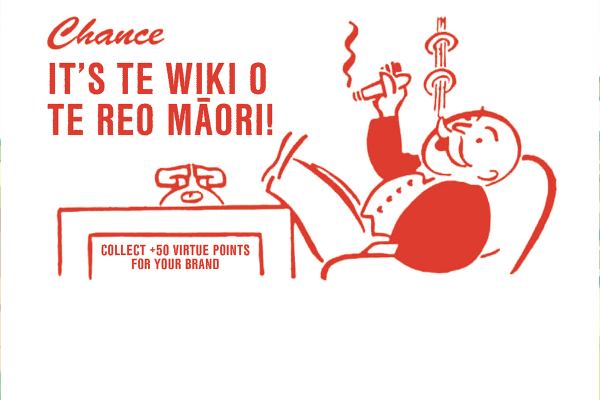
Ah, Māori Language Week, that time of the year when corporate giants dust off their faux-cultural sensitivity and engage in the shameless game of linguistic Monopoly. It’s almost heartwarming to see these mega-corporations roll the dice to determine which Māori word they’ll incorporate into their branding next. Will it be ‘whānau’ for that warm and fuzzy family-friendly image, or perhaps ‘kai’ to give their overpriced organic snacks an air of authenticity? It’s all just part of their elaborate marketing strategy, where they collect cultural tokens and properties, hoping to win the game of public perception. But don’t worry, while THEY rake in the profit, the true winners of this linguistic board game are the Māori language and culture, being trotted out like little Monopoly pieces for the corporate elite to play with. Just remember, e hoa mā, when it comes to Māori Language Week, you can't pass go, and you most certainly won't collect $200 - unless, of course, you're a multinational corporation with a monopoly on cultural appropriation. But as the algorithm feeds us the same “5 ways you can speak Māori this week” bullshit, we may actually be hindering progress, not furthering it. Don’t get me wrong, the exposure is great, but it’s starting to feel pretty bland. In short: shit’s just boring. We need to elevate, not tokenise. Please, I cannot stress this enough: I don’t want another ten words to use in the workplace. Speaking of large corporations on the cutting edge of terrible timing and questionable decisions, the University has decided to unveil a new rebrand (more like ‘reo-brand’, ha) just as the Māori Language is gaining momentum and recognition. And while it’s great to see this recognition, and while I can only assume it’s a genuine effort to elevate and not tokenise, I’ve still got a bone to pick with this. The overarching raru here is that the poorly executed timing coincides with the announcement of major budgeting woes, meaning Māori advocacy is getting torn to shit and copping the blame for being “expensive”. I mean, it’s as if they thought, “Hey, let’s overshadow an entire culture’s efforts to preserve their heritage by choosing the worst possible timing.” Congratulations, University of Otago, for reminding us that some institutions are truly timeless in their näivité. Ōtākou Whakaihu Waka goes hard - I just think the timing might undermine some of our people’s hard work and allow your efforts to feel as if they’re token values, not tāngata whenua values. And nobody wants that. So let’s platform some changes. For instance, in this issue, we’re not just doing guides on your everyday basics of the reo; every article is not just about te ao Māori alone, but specifically about an investigation into the way kupu Māori have influenced several corners of society: from controversial pronouns, to the LEGO company, and even to figuring out who the hell ‘Ngāti Pākehā’ is named after. Because it's Māori Language Week, not just Māori Week. On Māori land, every week is Māori week. Don’t you forget it. Ka keetz Sky xxxxx
-
Features
 Issue 22 11/09/2023
It’s In Our Roots
If you’ve ever done a course on Duolingo, you’ll probably have noticed that the French think shovels are feminine and cheese is masculine. Colonisers, amirite?) But te reo Māori doesn’t really place emphasis on masculine and feminine nouns, and instead garners much of its contextual meaning from whakapapa (genealogy). English, to its credit, isn’t big on gendered nouns either, but English and other Western languages insist on personal pronouns. While this might seem dismissable, the implications are quite insidious: if your entire worldview is narrated by the gendering of objects, gender becomes a central factor of life. I mean, imagine getting stepped out for misgendering cheese, but thinking personal pronouns are for the woke… yikes. As tāngata whenua, our relationship with the land stands as a testament to the intricate bonds that exist between people and the environment. We trace whakapapa to the natural world, bury our afterbirth in the whenua, and eventually return to the earth from which we came. But it is the marae, the heartbeat of hāpori Māori, that unites tāngata whenua across the motu. Honestly, it’s undeniable - it’s in our roots. It is our roots. And it’s here on the marae where debates over these pronouns are raging, all while we strive to revive a language that doesn’t even have them in the first place. To some, the marae is but a labyrinth of protocol steeped in age-old traditions. Some Māori find themselves disillusioned by marae formalities, which doesn’t make them want to visit. Critic Te Ārohi sat down with tauira Māori to discuss the weight of marae culture: from sleeping arrangements and gender-specific bathrooms, to gendered responsibilities and beyond. Between the piercing call of the karanga, to the hākari where all hands blend to fix a feast for the multitudes, varying degrees of procedure characterise every marae and its people. This is known as ‘kawa’, a concept that is similar to tikanga. The kawa of every marae and hapū is almost guaranteed to change based on location: for example, in parts of the Far North, women are not permitted near carving workstations, and iwi such as Tainui and Te Arawa follow the tau utuutu (alternating speeches) method during whaikōrero. Kupu like ‘takatāpui’ have origins in places like Wairarapa. But here, there and everywhere, with or without the title, these people have always existed. Waitapu (Ngāpuhi, Rongowhakaata), a fourth-year student in Auckland, spoke of her own experiences as a whakawāhine growing up in Northland, taking aim at a particular institution. “Up at home, the influence of the Church clearly takes precedence over tikanga, and I just didn’t fuck with it,” she said. “I constantly felt like a burden; like that relative with a thousand dietary requirements, when really I just didn’t wanna sleep next to all the tāne… don’t get me wrong, other marae I visited during kura were quite accepting. It be your own that don’t.” At its core, takatāpui embraces diversity while rejecting the notion that gender and sexuality are binary categories. And historically, Māori society embraced these identities. So where did it all start to shift? I’ll let you take a wild guess. “The relationship between takatāpui and tāngata whenua has been fractured for a long time, and [for] people like me it’s impacted my desire to go home,” said Waitapu, who agreed that judgement has, over time, expanded to other Māori who don’t fit a certain description. From urban Māori, to white-passing Māori and can’t-speak-the-reo Māori, the displacement is real. “We make fools of our whanaunga for shit they had no say in - no Māori just decides to just be white-passing or willingly abstains from te reo [Māori] at birth. But here we are, making it a running joke.” What we consider “the norm”, however, wasn’t always normal, considering the gendered hierarchy was just as foreign as tāngata pōra. It just wasn’t a thing back then. You can see this in te reo Māori, as both personal pronouns (ia) and possessive personal pronouns (tana/tona) which are gender-neutral. But the sudden arrival of Christianity and Victorian values forever changed Māori society, shattering all ideas of gender diversity and placing men firmly at the top. Today, through cultural revival and a surge of international pride, some of these traditions are reemerging. Atawhai (Te Ātiawa, Ngāti Raukawa), a graduate student in Kirikiriroa who identifies as iakē (genderqueer), shared that external influences have had a detrimental impact on Māori for the benefit of colonisation. “We are fracturing our relationships to align with a standard that didn’t once try to understand our own,” they said. “Instead of kissing the white man’s arse, why can’t we love our own people? We preach ‘manaakitanga’ to foreigners, and then don’t manaaki our takatāpui - make them feel like accessories.” And moving towards (or, in many cases, back) to a genuinely takatāpui-inclusive space on the marae is a vital step towards recognising their contributions to the development of te ao Māori. Waitapu agreed that the first step in the right direction goes beyond pronouns - a no brainer, really. “Getting my pronouns right is like foreplay… you kinda should just do it. The reo is already inclusive. But the active work we need to do is rethink traditional gender roles and expectations,” said Waitapu. “We have so few tāne that are fit to speak on the paepae, which is what drove me away from home - not being allowed to speak on the pae as a transwoman. While I don’t have a burning desire to, I was raised to do so.” Atawhai added, “It’s clear to me now, that our people have religious trauma and need to have a wānanga with themselves about it. Until then, I don’t have to put up with it.” “There ARE Māori who view wāhine as accessories, and see takatāpui as ‘unnatural’,” Atawhai said. “Considering the extensively recorded importance of our female and takatāpui ancestors, and the role they held throughout history, only to become a false narrative… my tūpuna would be spewing in their graves.” While historical accounts and evidence prove that takatāpui were established members of society, this is continuously challenged by historians as exceptions to the rule - the rule being that men hold leadership positions in traditional cultures worldwide. However, Atawhai said that “the evidence provided proves anything but that. Those claims are nothing more than a stereotype… Indigenous people ARE the exception to that rule. ‘Nuff said.” After all, who are we to deny our roots, muddied hands and all?
-
Culture
 Issue 21 03/09/2023
Pussy, Power and the Patriarchy
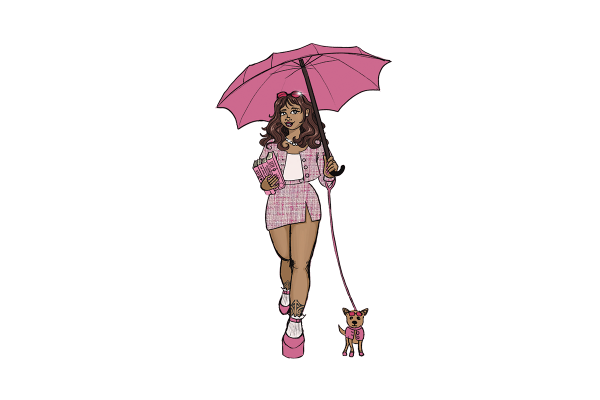
Being a boss bitch comes with an asterisk. Even that term, boss bitch, still carries the word “bitch” in it, as if women can’t be in charge without being insufferable. But despite all the resistance, many have forced their way to the top. Like a modern Elle Woods, pushing on in style, her pink umbrella elegantly propped between her shoulders and an endless tirade of bullshit from above. These wāhine may be taking back their seat at the table, but they’ve had to do it wearing Elle’s pantsuit the whole time, forced to walk and talk in a Pākehā world. Many are itching to get the kaitaka back out of the closet. In small towns like Pātea, politics starts at the kitchen table. The candidate for Te Tai Hauāuru electorate in this year’s election and co-leader of Te Pāti Māori, Debbie Ngarewa-Packer (Ngāti Ruanui, Ngāruahine, Ngā Rauru), said that while growing up with her whānau “we didn’t even call it ‘politics’... it was about advocating for others.” Pātea is a town that’s “been on every side of the counter,” said Debbie. It’s had some serious highs and lows; following the closure of the town’s meatworks, many whānau were driven out of town en masse in search of work. Those that stayed behind got to witness the rise of ‘Poi E’. And Pātea is where Debbie Ngarewa-Packer calls home, in all its richness: a place that, before colonial rule, placed a lot more responsibility on the shoulders of wāhine Māori. Such is the way things were for a long, long time. Before Debbie was co-leader of Te Pāti Māori, before she was even born, her tūpuna wahine were running the table. The role of mana wāhine was central to society’s function - something that didn’t mix with the politics of British colonists. And this is something we’ve seen play out over and over again overseas; the Haudenosaunee relied on councils of grandmothers, Malagasy society had women at the top, the Lil’wat and Squamish Nations had elements of matriarchy with an established welfare state… the list goes on. When colonial powers came ashore, the imported patriarchal system struggled to mix with what was already in place, and often tried to strip wāhine of their mana, disrupting the entire fabric of society. Patriarchy assumed that women were subservient to men; “chattels”, as Debbie put it. Colonisers even pointed to haka, with its row of wāhine behind tāne, as evidence of gendered separation, illustrating their ignorance. “Sadly, it’s a part of their colonised state, to see women as chattels that they can diminish and deprecate… like an asset. Just look at how the Royal Family traded and brought in women for the purpose of making babies; that’s all they saw them for. But for us wāhine [Māori], we are revered for our ability to create life,” said Debbie. “I am an equal, if not more than, and our tāne know it.” Colonialism also introduced a system of individuality, another value that disrupted te ao Māori. But community spirit remained, passed down at the dinner table in towns like Pātea. “Coming from a very collective community, where not everyone got across the line together, or even at all, I was raised to be as fast as my slowest person,” Debbie explained. All of her life experiences combined to produce something much more than an individual. “People feel the need to box you,” she said, “but how do you label a wahine from Pātea who was a teen mum, adult learner, got her masters in Tasmania, did Stanford, who started her own business at 23, and was a CEO?” You can’t. When British influence shook up Māori society, things got messy. For a long time. And now things are changing again, and once more, they’re messy. The rise of wāhine to reclaim their mana has been met with all sorts of objection, with some even pointing to moko kauae as a political tool to acquire votes. “People make grand claims that our wāhine get their moko kauae for “brownie points” [pun intended] as though they haven’t been forced to believe that it’ll put them out of work,” said Māhina*, a younger student that looks up to wāhine like Debbie. But even with role models in place, many young Māori still can feel like imposters in their own land. Imposter syndrome is common enough amongst young people, but Debbie reckoned that even this was a consequence of colonial rule. Not that she suffers from it herself: “We don’t suffer from imposter syndrome because we simply don’t live the way they do. My aunties still tell me what needs to be said or if I’ve dressed wrong - my dad still rings me and says whether I had a good interview or a bad one. We don’t live lives that allow us to be an imposter.” Māhina said that, “When we have wāhine like Debbie Ngarewa-Packer and Nanaia Mahuta in such influential positions, mau moko and all, it sets the tone for our next generation of rangatahi who will see that as their norm.” And with the rise of moko kanohi nationwide, particularly on the faces of the younger generation, Māori continually refuse to choose their mahi over their moko, especially in the halls of government. “Every day when I go to work, I put on my Pākehā voice and speak their language. If I have to do all that, they should be fine with my moko kauae. Wearing my culture is not unprofessional… businesses repackage and sell our culture all the time. It’s only ‘professional’ when they can make a profit out of it.” Pushing back against colonial influence has been a long time coming, but Māhina reckoned it first started really taking hold in the ‘80s with the start of the reo revival. “Tāngata whenua have been escalating ever since. Along with the return of our reo, so too has our sense of self-worth… almost as if they’re synonymous with one another,” said Māhina. And this broader push to return to the old ways has been championed, largely, by wāhine. Two of five political parties are co-lead by wāhine Māori, and we finally have a wahine Māori Governor-General. “This page of Māori history has women written all over it,” said Māhina. Debbie concurred: “Wāhine Māori don’t have that battle anymore - we know our value. We make wakapapa. Listen to the names of our wenua and you’ll hear that they’re predominantly wāhine. We don’t have to sit there and fight for street names because we’re everywhere. That is my default setting.” Debbie spoke of her own experiences with pushing back against the systems as a Māori woman in a Pākehā environment. “I say absolutely not. They don’t value ANY woman. Show me in any English story where colonisers treated their women with the same regard that indigenous people do,” she said. “I feel sorry for women that say, ‘But you’re still one of us.’ Yeah, I am… but I’ve never been a chattel. I know my context as a wahine.” And today, things are changing. In Aotearoa, only so recently colonised, wāhine have retained significant mana in the face of colonial pressure. “As a wahine Māori, I get to karanga and I get to tell our kaikōrero what to say. I am more privileged in most positions of leadership-ā-wahine.” Still, things aren’t perfect. “There are still many ‘firsts’ yet to be filled,” said Māhina, “but I have no doubt about it. It’s just a matter of introducing our tamariki to spaces we too are unfamiliar with: reaffirming self-worth, and validating their experiences. Just because you’re the only brown kid in a room of Pākehā doesn’t mean you shouldn’t be there. If anything, it means you should be.” This is a time of change, after all. Conference rooms have become Zoom squares, war rears its head overseas, and new fires burn in old forests. Once more, the waters have been muddied. Time will tell how things settle, but one thing’s for sure: this time, it’s wāhine Māori stirring the pot. “We have a lot of work to do,” said Māhina. “But let’s also take a minute to admire what our wāhine have done before we do.”
-
Features
 Issue 16 24/07/2023
Matariki, Mātauranga Māori, and Modern Science
In the early years of learning maths and chemistry, posters fill the classroom walls. They’re plastered with motivational slogans like “Music: proof the brain enjoys counting”, “Chemistry is everything”, and “Maths: the secret language of the universe”. There is an implicit message that the tables and figures before you are everything, everywhere. Somehow they bind the world together, and for some reason you’ll be using the quadratic formula for the rest of your life. Indigenous knowledge is sometimes framed to be at odds with these sorts of classrooms; pandered images spring to mind of noble savages charting stars without writing almanacks, managing farms without computing figures. But between indigenous knowledge and Western science is a considerable nexus: the notion that all things, everywhere, are connected. Western science has a history of domination and exploitation, and while words like “algebra” may be direct evidence of their non-Western conception (from the Arabic “al-jabr”), Western science has a clear Western bias. But its dominance is waning. Gone are the days of unconsenting experimentation, of treating island nations like laboratories (or worse, bomb sites). Gone are the licences to pilfer native wildlife and spread disease. Barriers remain, but in recent years there has been a growing recognition of the importance of indigenous wisdom and an understanding of the fundamental similarities it has to modern science. As Dr. Nancy Longnecker of the Science Communication Department puts it: they are simply “two different ways of knowing.” Modern Western science may revolve around the tenet of interconnectedness, but Western values have historically centred on extraction and individualism, especially when it comes to the natural world. With the welcoming of indigenous knowledge, Western science may be able to benefit from the wealth of data that indigenous communities have been gathering for generations. Take Matariki, for example: the same star cluster has cemented itself as a central node of culture for dozens of indigenous communities. Over generations, they mapped and tracked the passing of the sisters, or the hens, or the maids - whatever they called them, their significance remained. The stars coincided with important agricultural dates, and served as a sort of calendar: a repeated exercise that consistently provided similar results. A lot like the scientific method. The same is true for indigenous botany, on our shores and beyond. Plants that may have baffled a Western explorer were intimately familiar to locals, often with descriptive names that matched the personality, purpose or prestige associated with it, and accompanied by stories passed down through generations of experimentation. Someone always had to be the first person to eat a new plant, after all. That’s experimentation at its finest. Through direct observation and experimentation, indigenous communities have developed a rich understanding of the local environment and are able to identify patterns and changes that may not be otherwise apparent. Sometimes, these patterns were scary or powerful, leading Western explorers to cite the presence of witchcraft rather than genuine chemistry. This would often lead to the rapid suppression of native experimentation or expression. A particularly fascinating example comes from the shores of Haiti, with the botanical and zoological roots of zombies: native scientists, experimenting with the extraction of naturally-occuring biochemicals, deduced a recipe for a powerful neurotoxin. They mixed tetrodotoxin (from pufferfish) and other compounds into a fine powder, which could be blown in the face of a target. The victim would then fall into a deep but temporary coma, one so convincing that on at least one occasion a man was pronounced dead by Western scientists and buried. He was later dug up by the witchdoctor and put to work in the fields, kept in a stupor by a constant diet of a second experimentally-derived drug, this time from jimsonweed, a plant with sedative properties. These small armies of the “living dead” became known as zombies, and their presence was so frightening to Western scientists that we still live in fear of that name. There’s a whole horror movie genre in their honour. Native experimentation has absolutely led to the scientific discovery of new technologies. Though indigenous knowledge certainly compliments Western discovery, there are prevalent challenges to incorporating it into modern science. One of the largest obstacles is the lack of communication and collaboration between indigenous communities and scientists. Oftentimes, language differences and cultural barriers make it difficult for Western scientists to understand and fully appreciate indigenous knowledge. Similarly, a history of exploitation has led to mistrust and scepticism on the part of many native communities worldwide. This issue works hand-in-hand with the lack of recognition of mātauranga Māori (ancestral knowledge) within academic institutions which is often dismissed entirely as unscientific or even anecdotal and is not given the same validation as Western scientific knowledge. In 2021, seven academics at the University of Auckland penned a letter to The Listener in which they railed against the validation of mātauranga Māori. They claimed that it “falls far short of what can be defined as science,” and while “it may help... it is not science." The Vice Chancellor of the Uni rebuked their argument, but the impact had already been made. Internationally, the letter was circulated amongst debaters on both sides of the argument. Despite claims of racism and neo-colonialism, and despite disapproval from the Royal Society of New Zealand, the authors stalwartly defended their claims. Native knowledge and Western science are not diametrically opposed. Often, highlighting the similarities between the two can be a helpful way to bridge the cultural gap. Te Wharau Walker (Ngāti Tūrangitukua, Ngāti Hikairo, Ngāti Te Takinga), one of the science engagement coordinators at Tūhura Otago Museum, emphasises the importance of recognising the mana of ancestral knowledge and applying it within modern settings - a feat that encapsulates Te Wharau’s first outreach project: Āwhinatia Te Wero. “Āwhinatia Te Wero pairs traditional methods of science with modern technology, focusing particularly on tī kouka (cabbage tree) and harakeke (flax) as the backbone of the project,” Te Wharau shares. “The project was presented as an opportunity to encourage rangatahi to pursue STEM subjects. But the way it was initially proposed was as a kaupapa Māori project, utilising pūrākau (ancient stories) and acknowledging the whakapapa of things within the taiao (environment). Essentially, further contextualising it within a Māori worldview - things that Māori kids are more likely to be familiar with.” Botany, perhaps unsurprisingly, is one of the sciences most visibly connected to indigenous wisdom. As of writing, Robin Wall Kimmerer’s (Potawatomi) Braiding Sweetgrass is celebrating its 169th week on the New York Times bestseller list. Plants are an integral part of life for every community on the planet, and the people who know certain plants best are usually the people who have known them the longest. But generational expertise is not always reflected in professional demographics. Less than two per cent of Aotearoa’s scientific workforce consists of Māori workers. Similarly, secondary education data is showing that both rangatahi Māori and Pasifika are more likely to be “streamed out” of science education early on in their schooling, as Te Ao Māori News reported last year. But perhaps the absence of Māori within the sciences may be due to the lack of applied learning, especially coming from different cultural backgrounds that perceive the natural world in a different way to Western belief. Te Wharau, a former “kura kid” turned “mainstream”, brought firsthand knowledge of a Māori upbringing and the benefits of such, as well as the challenges of navigating the Western world to the project. “I’ve always had a natural curiosity for things. Had I been exposed to experiences such as ‘Tūhura Tuarangi’ and ‘Āwhinatia Te Wero’, which would have supplemented that curiosity, I’d certainly have pursued science communication as a career. I mean, just seeing a Māori science communicator as a child would have filled all the gaps for me - I’d have known ‘this is something I can do’.” And so, those missed experiences inspired the mission to bring sciences to rangatahi Māori. “A great focus of this project, for me, was to visit kura kaupapa Māori who otherwise miss out on these experiences,” says Te Wharau. “Coming from a kura background and a small town, I know first-hand how science wasn’t presented to us in a way we could interact with.” Te Wharau maintains that the presentation of science and its content must cater to more than one viewpoint. “When kids have that sense of belonging, they are often more inclined to interact with what's around them. In this case, with kura kids, we need to be exposing them to STEM subjects - the world of kura kaupapa Māori prepares you for a different life, not necessarily for university.” In places like Canada and Australia, where indigenous communities have also been subject to the dark history of colonial violence, education has even been used as a tool of oppression, an instrument in the vicious process of assimilating natives into ‘civilisation’. According to researcher Lateisha Ugwuegbula, “The Western education system values only one kind of knowledge” and not only offers a curriculum that is culturally irrelevant and Euro-centric, but also a lack of support and a lack of positive representation. While life on the road and juggling other projects can get hectic, Te Wharau finds balance in “taking things slowly and prioritising time at home.” But home has a different feel to it this year. With the rising and passing of Matariki, and its allocated theme ‘Matariki Kāinga Hokia’, Matariki calls you home: people across the motu are encouraged to return to their roots and reconnect with whānau “wherever and whoever that might be.” For Te Wharau, the lead-up to Matariki, while a busy one, has been momentous. Te Wharau recently returned from presenting the ‘Tūhura Tuarangi - Aotearoa in Space’ science exhibition, visiting cities such as Auckland and Hamilton and smaller, more remote areas such as Niue or Tūrangi - Te Wharau’s hometown. “Growing up in Tūrangi, science wasn’t something we engaged with, and when we did, there wasn’t much to hold on to - there’s an underlying importance in reaching these smaller towns, and that’s to maintain a presence. For example, we left a telescope for the kids in Niue when we were there.” Matariki, in today’s day and age, is representative of embracing change, remembering the past, and looking forward to the future - which is essentially what constitutes mātauranga Māori. Te Wharau says that his recent project largely discussed the innovations of tūpuna Māori, many of which are observed through their migration from warmer to cooler climates. “It is evident to us now that they were, in fact, extremely knowledgeable. They studied various types of harakeke and allocated them for several purposes: some for whāriki (woven mats), others for ropes. They were so observant that most things were pursued with intention. We trace our genealogy to the land, so it makes sense that they knew exactly what they were adapting to. They weren’t just having a tutu.” Precolonial Māori society relied heavily on context and intentional action; upon reaching a certain age, children were taken by tohunga to visit different parts of the environment in order to see which they best connected with. The overarching objective of this process was adhered to through the belief that every child has an intrinsic connection to the natural world that required nurturing. Tasks included diving into bodies of icy water or gathering worms from the māra. Children who willingly jumped were called to the water, and taught the knowledge relevant to caring for aquatic ecosystems and sustainable fishing practices; others who gravitated to the earth were trained to become agriculturalists and cultivators, managing seasonal crops and memorising complex calendars. This process, often referred to as ‘taupuhi’, was instrumental in ensuring that children’s natural gifts were recognised and that they were guaranteed a place within their communities. Today, however, Māori drop-out rates are soaring. After all, how is taupuhi meant to fit the mould of an NCEA-achiever? In postcolonial New Zealand, where much ancestral knowledge has been lost (if not outlawed altogether), the first goal of acknowledging mātauranga Māori is to preserve it. The second would be to normalise it - bring it to the same level of recognition as any other science. However, this has been severely contested by some academics in recent years, like The Listener Seven. But even this goal preserves a duality: elevating mātauranga Māori to the level of Western science still implies that the two are opposing systems, not capable of mixing together. To achieve full symbiosis, the tenets of interconnectedness in modern science and mātauranga Māori must be recognised as one and the same. And this starts with bringing up more Māori scientists into a world where they can really see themselves belonging. For many Māori, this is crucial. According to Te Wharau, the content of Āwhinatia Te Wero builds upon young Māori kids’ preexisting understanding of the world, introducing them to science on a level they can understand. “Instead of a typical science outreach programme, with a white man in a lab coat presenting an unfamiliar topic to unsuspecting kids, we’re meeting them halfway,” he says. This method of applicable learning is especially relevant, as it touches upon a traditional way of assigning roles to young Māori, and meeting them where their strengths lie. Te Wharau says that “the idea of university qualifications is starting to change, especially after Covid,” citing the success of figures like Sonny Ngatai and Te Aorere Pēwhairangi, who weren’t equipped with a tertiary qualification but were backed by a wealth of ancestral knowledge. “You don’t necessarily need [university] if you know who you are - many people pursue higher education for validation or to impress others. But organisations aren’t only looking for qualifications, they’re looking for real people and real experiences.” But the synthesis of science and indigenous knowledge is not a gentle collision. While mātauranga Māori has been disregarded by academics over recent years, Te Wharau shared his own wavering concerns within his role. “[Collaborators for the project] probably thought, ‘Uh oh, that sounds like a Te Arawa name!’” But despite such worries, collaborators fervently agreed to join the development of Āwhinatia Te Wero. “We met collaborators, not to discuss our project, but to absorb their expertise. Carl Russell, a mahinga kai specialist, taught us how to harvest the different food sources of this region, things like extracting the sugars and starch from plants and how to work an umu tī.” The bridges are being built. “We’re already seeing new changes with the upcoming curriculum - but already, we’re seeing backlash to it,” says Te Wharau. “Arguments such as ‘mātauranga Māori isn’t science’ come from a place of misunderstanding - they are two different philosophies, two different worlds, and are therefore incomparable.” And parts of this feel undeniably true, with one championing the process of collecting, naming, sorting and filing, and the other centred on holisticism and stewardship. But they are undeniably similar in their most basic assumption: that the natural world is interconnected, and that through observation and experimentation, we can achieve our most admirable goal: to live in harmony within it.
-
Culture
 Issue 13 29/05/2023
Opinion: Nepotism: It’s okay if it’s tradition!
Exam season may be daunting but, remember, if old mate Charlie can succeed the throne at the overripe age of 74 and still not know his allocated lines, then you can walk off that B+ with your head held high.
-
Features
 Issue 9 30/04/2023
PAID IN FULL WITH BLOOD
Kawiti was tired of digging graves, so he started digging trenches.
-
Features
 Issue 7 16/04/2023
You Cannot Be What You Cannot See
Since the establishment of colonial society in Aotearoa, Māori have remained massively underrepresented within the medical workforce. Despite increases since the 1990s, many Māori are often only able to find employment in entry-level, minimum-wage jobs such as cleaning, caregiving, and manual labour - jobs which require few qualifications. And people need cleaners, caregivers, and manual labourers - but they need doctors, too. Māori have been calling for more Māori health practitioners for ages and, while a great number of Māori have since risen to the challenge, it hasn’t been an easy process.
-
Culture
 Issue 4 19/03/2023
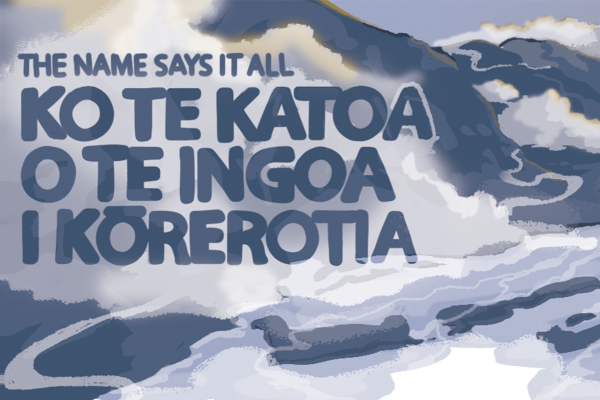
Ko Te Katoa o Te Ingoa i Kōrerotia
Mātauranga taiao, environmental knowledge, has never been more relevant. Built over generations, it’s represented in the names of places all around us, and it offers insight into how these places might behave in a changing climate. That is, if you know what they mean.
-
Features
 Issue 2 05/03/2023
The Return of the Olympics of Māoridom
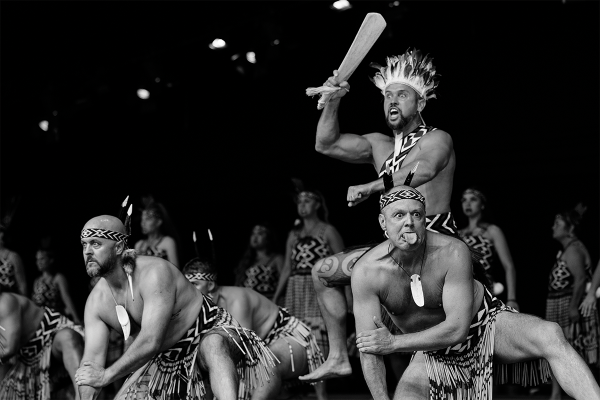
Te Matatini has returned after a four-year hiatus, with a fiery comeback in Tāmaki Makaurau. Known as the ‘Olympics of Māoridom’, or even the ‘Broadway of the Pacific’, 45 groups across 13 regions gathered to celebrate the competition’s great return after the ongoing pandemic and recent storm events across the North Island. There was great speculation regarding the status of Te Matatini, and whether it would go ahead, as groups like Mātangirau and Tamatea Arikinui were unsure of the possibility of reaching the stage due to the destruction in their region, Hawkes Bay, after Cyclone Gabrielle. After a treacherous journey to Te Matatini, Mātangirau presented themselves to the masses with their feet painted in mud to symbolise the struggles that awaited them at home.


