
Nina Brown
Editor 2024-2025
Articles by Nina Brown
172 articles found. Displaying page 11 of 15.
-
Columns
 Issue 1 25/02/2024
Editorial: Moaningful Confessions May Meet Its Unsexy Demise
We’re (maybe) scrapping Moaningful Confessions. I realise this won’t be a popular move, but it’s time.
-
Features
 Issue 1 25/02/2024
Campus Watch, Watched
Campus Watch are the aunts and uncles of North D. They giggle at the antics of youths, make bad jokes and elbow you until you laugh along, and don’t hesitate to tell you when you’re being a dick – aggressively so if you’re caught throwing bottles. Campus Watch is 40 strong, split into five teams of eight: Alpha, Bravo, Charlie, Delta, Echo. Based out of the Proctor’s Office in St. Dave’s, they keep a careful eye on more than 900 CCTV cameras around campus. Campus Watch has been around since 2007 as the middleman between breathas and the cops, and over Flo and O Week, it’s been “all hands on deck at Castle St.”
-
News
 Issue 1 20/02/2024
Daddy Grant Announced as Otago's New VC
Ex-Minister of Finance Grant Robertson has been announced as Otago Uni’s fresh Vice Chancellor, effective from July 1st this year. According to the Chancellor, Stephen Higgs, Grant’s “appreciation for and understanding of the needs of students was evident” during the recruitment process.
-
Columns
 Issue 0 18/02/2024
Editorial: Get Into It, Yuh
To many reading this: welcome back, suckers. To the freshers who have gone back and collected old issues of Critic Te Ārohi once you realised it exists, is free, and is the best thing you’ll ever read: kia ora, I’m glad you made it. Here’s a wee introduction.
-
News
 Issue 26 08/10/2023
Initiations “Back With a Vengeance” after Covid Hiatus
Last week, we reported on a flat initiation involving a live eel. Since then, the ODT and NZ Herald have picked up the story, police have been informed, and an investigation by the Uni (who knew about the incident prior to publication) is underway. A minority of students defend the initiation in the name of “good fun”, while the majority have never, and will never, engage in one. There is mounting concern among many, chiefly the Proctor, over the escalating severity of initiations. Critic spoke to the Proctor, who explained that over his seven years in the role, initiations have evolved. But they’re not actually tradition: “Students say it's been around for 50, maybe 100 years. It’s not, it’s maybe 15 years old.” Despite this, students involved ardently defend the activities - though they’re not quick to put their names, faces or addresses on record. Wonder why. One of them commented to Critic that they think “the Proctor’s been really harsh about it all.” In response, the Proctor said, “I’d rather be seen by students as trying to ruin their fun than sit back and wait for someone to die.” The Proctor said initiations had subsided a bit with Covid, but this year they’ve been “back with a vengeance… What seems to happen is that year on year the events are added to, so if one year the host flat did A, B and C, year two it’s A, B, C, D and E and then we get to a point where it’s really dangerous and really feral and we’re harming people.” Or, in some cases, animals. But, even considering the chugging of vomit, the beatings, the hospital trips and stomach pumps, “At the end of the day everyone is enjoying themselves,” said one student. The Proctor also gave us a copy of a letter penned to flats who plan on hosting initiations. In it, he points out the section of the Student Code of Conduct relating to initiations that reads: “Organising or participating in any initiation event or ceremony that jeopardises your fellow students’ wellbeing, personal, physical or emotional safety, or encourages breaking the law” are among behaviours that “put you in serious risk of facing exclusion from the University for a semester or more”. This is part of a “proactive approach” initiative that was sparked after 2017 when a vomit-filled Debacle initiation made national headlines and saw the nine hosts expelled from the Uni. It resulted in what Critic reported on at the time as a “crackdown” on initiations by the Uni. The Proctor told us that this was opposed to “sitting at the bottom of the cliff and waiting for them to crash - let’s get to the top of the cliff and put some barriers up.” “So we go and have a conversation about the expectations, we provide them with a copy of the Student Code of Conduct, and then this year we followed up with an email to the flat.” The email contains the foreboding statement that “there is genuine concern that one of these events will result in serious harm or death.” “If we have a really bad event and a student dies - has an anaphylactic shock to something that they’re forced to eat, or dies of alcohol poisoning or whatever - who's gonna be investigated? The host flat [will be], and that'll be for a manslaughter charge,” said the Proctor. “And I don't want that. I don't want the death, and I don't want the flat investigated.” He has heard more rumours than evidence, and he said that this year especially, the stories are starting to take a toll. But “I will sleep quite well at night knowing that I'm doing this work. And I'll make no apologies for it. It's not a tradition. I don't think it reflects our students at all.” And as media coverage creates scrutiny, many initiations have moved indoors or into backyards, away from public view. There is still a group of onlookers present, who are generally encouraged to bring shit to throw at the first-years. Last year, an egg cost one student the better part of his eye. “It worries me that that’s how we can treat our own,” said the Proctor. “Our first-year students are less than a year’s difference in age, and yet it gives the second-year students permission to bully, intimidate, humiliate, degrade.” Another major concern is the power imbalance between the second and first-years meaning that even if they wanted to, they couldn’t say no to being subjected to these events that entail “humiliation, nudity, bodily fluids, bullying, intimidation or harassment” because of the immense pressure coming from the second-years and their fellow initiates. “And then you add a hundred people in the crowd who are encouraging and love the debauchery and the salacious nature of it. And sometimes that can be a catalyst for the hosts losing control of it and things spiral quickly out of control.” It’s like our very own fucked up version of Lord of the Flies. Besides the initiation we know involved cruelty to a live eel (that carries a maximum sentence of five years prison and hefty fine, mind you) there have also been rumours going around that some initiates may have been or will be asked to bring live ducks. And considering recent events, it’s not outside the realm of possibility. “Absolutely no good could ever come of this,” said the Proctor. “I don’t think it reflects who we are.”
-
Columns
 Issue 25 01/10/2023
Local Produce: Exhuming our history
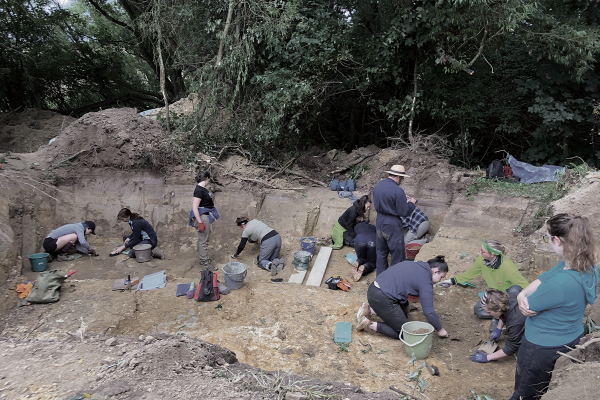
The Southern Cemeteries Archaeology Project is a colonial bioarchaeology research project. It’s run by a multidisciplinary team of researchers led by the Department of Anatomy at the University of Otago. In the first research-driven work done into colonial New Zealand, their goal is to shed light on the day-to-day lives of early settlers to New Zealand. It was sparked in 2016 by the Tokomairiro Project 60 (TP60) group, a genealogy group based in Milton – a small town half an hour’s drive south of Dunedin that grew during the goldrush of the 1860s – who were interested in learning more about their ancestors in the local cemetery. Professor Haillie Buckley, co-director of the project, tells Critic Te Ārohi that their goals were to “help characterise the lifestyles of these early settlers and goldminers by examining the biological tissues left behind and in particular to give a voice back to those who were lost in history - usually the marginalised, including women and children.” Dr Charlotte King, one of the researchers on the team, says, “The project ultimately is looking to discover lost and unmarked graves from the colonial period in New Zealand – especially the gold rush in Otago – to identify the people who lie within them, or at the very least to tell their stories to their descendant communities.” One of the biggest things about their findings is the diversity in the goldfields. Like most, Charlotte’s initial impression of Otago was of Scottish heritage. However, she excitedly tells us how analysis of chemical isotopes from settlers’ remains shows that “people are from all over the place”. Chinese settlers, for instance, often go unacknowledged in our picture of Otago past despite being “a really important part of the gold fields,” says Charlotte. “There are people from really far afield, actually… We have one person who comes from somewhere tropical.” This picture of diversity in the colonial period of Aotearoa New Zealand to Charlotte is “a really important thing for New Zealanders to know about,” especially in the context of the supposedly “modern” multicultural melting pot. “That’s not actually new, you know?” she says. “And people worry about the dilution of New Zealand culture and immigration. But it was always like that from the colonial period onwards. There have been people coming here from all over the place.” The diversity of our ancestry in Aotearoa is something the researchers are able to explicitly show with their data. “Ships records are really good for understanding broad trends,” says Charlotte, however they are still woefully incomplete. Charlotte describes the buried individuals as cold cases: “Like, really cold cases.” The process of identifying them, then, is like detective work for the researchers. Through the analysis of remains like bones, hair, teeth, nails, and artefacts found in the graves, the team can figure out where settlers came from, what their diet was like, and different stressors they endured. In a lot of cases, Charlotte says that this is the limit to what they can understand from the remains. However, in certain cases, they are able to use the scientific data in conjunction with historical records to give individuals back their names. “So, for one individual, we found that he had massive trauma [on his bones],” says Charlotte. “He’d been in a really serious accident around time of death, and we were able to match that back to death records and find accounts of the death of one person, Joe Hogan, who died in a rockfall while mining.” From the coroner’s report, they were able to match the injuries seen in his skeleton to the injuries that were recorded at time of death to identify him. “And so, for him, he would never have been identified without that kind of forensic analysis. Now we’re able to mark his grave.” For Charlotte, it’s stories like Joe’s that make the research worthwhile. Current records “don’t actually talk much about the everyday people,” she says. There’s a huge range of experience in the people they’ve seen: some people had tumultuous childhoods they moved to New Zealand to escape from, while the biochemistry of others have revealed the day-to-day stresses that were experienced on the goldfields. “To me that’s the theory of what we do – it adds flesh to those stories and talks about the people who most of us are descended from,” she says.“We’re not descended from the fancy people who wrote the records. We are descended from the everyday grassroots people who had tough lives in most cases and just made out a living in New Zealand. I find that really valuable because I can relate to those people a lot more.” The idea of digging up graves hasn’t been received well among all, however. Their initial proposal to dig up unmarked graves in 2015 was denied by the Central Otago District Council (CODC) who expressed concerns that the exhumations would be disrespectful. Charlotte says that any opposition to their research has always been respected since everything they do is in consultation with the community: “And so there might be portions of the community that would really like the project to work in their area, but if there are people who say ‘no’, we don’t work there.” She wants to be clear about one thing, though: “It’s not grave robbing… We are not doing it without a reason for it.” In fact, the process of exhumation to reburial aims to give more respect to the people buried there. “If you know that there’s a person in a grave and don’t know who that person is, then how do you give that person respect and mark them appropriately?” poses Charlotte. For the communities involved, it’s about trying to identify those people and reconstruct who they are so that, when they are eventually reburied with the proper funeral rites according to the identity of the person, their graves can be marked and honoured. “We achieved what we set out to do and located the graves of nearly 70 people whose burial places were lost,” says Haillie.
-
News
 Issue 23 18/09/2023
OUSA Exec Candidates Run Uncontested
Last week saw the candidate forum for the 2024 OUSA Exec nominees. It was an opportunity for the candidates to campaign for their chosen positions and appeal to the masses - the masses being the current exec, their flatmates, and Radio One and Critic. That was about it. In what some might call a new low for student political engagement, four out of the ten positions only have one person running, meaning that they’ll be in uncontested unless they receive a vote of no confidence. Academic rep has no nominees at all, meaning another election will have to take place. Alarmingly, one of the uncontested positions is President, the top dog role in the exec, with this year’s Postgraduate Rep Keegan Wells as the sole candidate. On the topic of low engagement, Keegan pointed out that the position was historically one of the most contested, yet engagement has plummeted to the point where she was spinning yarns alone on stage about rebranding the position’s name to ‘Big Chungus’ to avoid allegations of her (an American) running just because of the title ‘President’, and also detailing how awful pelicans are just “as a concept”. Vice President is also going uncontested, with second-year Marine Science student Emily Williams running - a fact she was shocked to learn only after having applied. She also studied under Dr. Christina Riesselman, which our editor notes is “a slay”. Another shoo-in is Abby Clayton for Finance and Strategy Officer: a self-proclaimed “non-math girlie” who blamed the lack of competition on the fact that it “sounds super hard”. She mentioned some sort of controversial spending project that she’d like to cut back on, but said that it was in the Uni’s budget line, not OUSA’s. And she wouldn’t tell us what it was because she didn’t want to get cancelled. We’ll see how that one goes! Finally, there’s also Emma Jackson for Clubs and Societies Rep, who wanted to streamline the application process for new clubs and while appearing to have little knowledge of the current process. Our reporter admittedly zoned out a little during these parts of the forum since they’re gonna be on the exec anyway. Compared to last year’s forum (which was fairly dominated by talk of reopening a student bar), hot topics throughout the policies of nominees in the contested positions of Welfare and Equity Rep, Postgrad Student Rep, International Student Rep, Political Rep, and Residential Rep were mental health, cozzie lives and the tertiary sector cuts. One of the residential candidates, Stella, spoke to the common experience of the link between the quality of accommodation in Dunedin and mental health as well. The “know-how” among the nominees appeared to be lagging in part, with some awkward pauses and “can I get back to you on that?”s in response to some questions, but all in all, the candidates for next year’s exec are all passionate individuals eager to do their part to advocate for the student body - whether it be bolstering support networks, writing submissions on student allowances or putting subtitles on lecture slides. I guess. You’ll be able to find the candidate’s blurbs in the culture section of the mag - just past the puzzles. Voting opens 9am Monday, September 18th, and closes 4pm Thursday, September 21st. There are even New World vouchers up for grabs if you do.
-
Features
 Issue 23 18/09/2023
Table Manners: Dunedin’s Beer Pong Rules
You'd be hard pressed to find a flat that hasn't been witness to a fight over the rules of beer pong. Can you block a bounce shot? What happens when you hit the bitch cup? And what the fuck is a frozen chicken? Critic Te Ārohi asked (almost 50 questions), and 282 of you delivered. That’s 40 more than our July census. Here is a definitive handbook of Dunedin’s beer pong rules. What we can agree on Most of us could agree on a decent chunk of the rules. Let’s start with basic game structure and etiquette. 89.3% of us agree that snake eyes decides who begins the first game on the table. For the following games, that can be split into 70% who think that they should continue to begin with snake eyes, while the other 19.3% think the previous winner should start in some kind of meritocracy, I guess. Someone from “Castle fukyo street” boldly asserted that the last team to complete a buttchug starts, increasing my fear of ever attending a host there again. There seemed to be no point in even asking about whether you play elbows. If the bellows of “ELBOWS” that can be heard walking through any student street at night weren’t enough of a hint, 95.7% confirmed its position in Dunedin’s handbook of rules. Where it gets interesting is what the penalty is for this offence. The majority (58.6%) said that it simply doesn’t count if a cup is sunk whilst someone is in violation of elbows, with the next biggest chunk of people (18.7%) simply calling for “shame”. The more radical among us responded with “screaming ensues” and “killing yourself” - this coming from the same person who lobbied for the game to begin by “crushing my cock with a rock” and who lives on “Bagina” Street, mind you. A resounding 85.1% think that it’s chill to fill cups with water, but 66.2% said only with the caveat that they’re taking sips of their own drinks when cups are sunk. It is a drinking game, after all, and as one respondent pointed out, “Anyone who drinks out of the cups are fucking disgusting, I’ve seen cups mouldier than a 3rd years shower wall. Drink out of vessels, water in cups. EW”. Preach. Regardless of the vessel - pong cup or otherwise - 77.9% said that it is compulsory to drink after a cup is sunk. In the comments, one person introduced a ‘fingers up’ rule where gameplay pauses if a player’s finger is up so that they can finish their drink. Kind of just like a formal way of stopping and staring at your mate to make sure they finish their drink. Something else we could largely agree on was the etiquette around spilled cups during the game. Beer pong isn’t the most structurally sound game: it’s played by drunk people, spectated by even drunker people, with light and flimsy plastic cups (especially if they’re filled by stingy players), on wobbly tables. Cups inevitably get spilled. When a player knocks over one of their own cups, it counts for the other team (68.6%), and it’s just refilled and put back into the game if it’s knocked over by outside interference (93.2%). There were a lot of calls for table suck for any instance of a spilled drink, which goes without saying. It came as no surprise that most of us play island (82.1%). 67.3% of you think that “island” can be called once per player during a game, outweighing the 15.1% who think that it should only be called once per team. Based on this, it makes sense that around the same proportion (69.1%) agree that if one player on a team calls “island”, their partner during the same turn isn’t obliged to also shoot for the island. Over half (57.6%) say that when “island” is called, the lone cup must be named after a specific island such as Long Island or Waiheke. I’m guessing that the rest of y’all are the kinds of people who’ve had the same Subway order since their first sandwich. Rearrange was perhaps the most straightforward section of the survey. 92.1% of you informed me that changing the order of cups is called a “rearrange”, not a “re-rack” as I’d picked up from combing endless (probably American) blogs for every possible rule under the sun. A rearrange can be called once per team during a game (94.3%), but at any point during the game you can ask the other team to fix the alignment of the cups (90.7%). We briefly considered including questions about the names of different formations cups can be rearranged into (like ‘Olympic rings’) but with the 30 or more possible formations, that was a whole other can of worms. Some dude already told us the survey was “long as fuck” anyway. 85.6% of us play bounce shots, and 78.9% voted that they’re able to be blocked. No question there. But we were fairly evenly split on where the ball can be bounced off, with those arguing for the ball to be able to be bounced off any surface at all winning by 15.2%. I’m a little bitter about this one after someone tried to bounce a shot off my forehead at a party last weekend, but democracy has spoken. Just over half voted that a bounce shot counts as two cups, but 43.2% said that it shouldn’t count as two if there are only two cups left. Unsurprisingly, almost all of us play celebrity shots (88.8%) allowing a spectator to sub in for a player. I’m honestly shocked that number wasn’t higher. Celeb shots are a prime opportunity to shut up that mate on the sidelines who thinks they have a massive cock (the beer pong version of a backseat driver) or for you to “go to the bathroom” and never come back if the game’s dragging on. With the obvious perks that come with the rule, 55.3% of you voted that it can be called anytime during the game. Trick shots are similar to rearranges when it comes to the amount of questions we were willing to subject you to. There was talk of defining any and every trick shot possible, but part of the beauty of trick shots is the creativity it brings out in us (just please don’t bounce it off my forehead). By a very slim margin, 52% voted that anyone can retrieve the ball for a trick shot after a ball is thrown and misses a cup - so either of the players on the team who threw, or a nice spectator who gets it for them. This can be retrieved from anywhere (78.2%). Even though most of us play that you can bounce shots, 57.7% of you voted that you can’t block a trick shot even if it bounces off a surface first. There was no contest over whether people play redemption (97.1%). Nor was there any over when you can call redemption, being any time you’ve just lost to the other team (95.1%), if a team is allowed to call for rearrange during redemption (no: 81.7%), or what happens if the team that’s called redemption hits a cup: no cups are taken out, and the game resumes as it was (79.4%). Clean sweep. Contested Here’s where it gets more interesting. We asked you what happens when a ball is spinning inside a cup; on its way to being sunk, but there’s still time before it hits the liquid. There are two possible things you can do to interfere, which 91.8% of you said was okay: blow it out, or pluck it out with a finger. The ruling 58.1% say that this should be by blowing. The second largest proportion (16.5%) said “guys finger, girls blow” (one respondent to this said “don’t be sexist you idiots”), with a similar amount of respondents (15.8%) voting that anyone can either finger or blow. It’s 2023, Critic reckons you can do whatever you like so long as the cup is cool with it. In an incredible statistical phenomenon, the second variation of the graveyard rule received an exact 50:50 split across the 268 votes. This version of the graveyard rule was that any sunk cup goes to the side of the table in what is called the “graveyard”, and any shot that lands in one of those cups means that spectators drink. I learned in primary school to round up from 0.5, so we’ve made the executive decision to include this in our rules. Bitch cup 53.7% of us play with the bitch cup, a cup that has some kind of punishment if it's the first hit by a team. Asked exactly which cup is the bitch cup, one person said, “Go fuck yourself”. Maybe they were tired after answering around 40 painstaking questions about a drinking game. The more cooperative among you voted that the middle cup is the bitch cup (51.5%), but this depends on the amount of cups you’re playing with which we’d honestly completely forgotten to even factor in until someone pointed it out. If you’re only playing with six cups, there will be no middle cup meaning that the front cup by default is the bitch cup. If you’re playing with ten cups, then the middle cup is the bitch cup. One postgrad plays the “bitch cup sisters” for a ten-cup game that we’d never heard of but it sounds fun. With this rule, tops come off if the front cup is hit first, and bottoms off for the middle cup, with the exception that people can choose to just shoot from their knees if they’re uncomfortable with stripping until they sink a non-bitch cup. With the bitch cup sisters, they can stack, meaning if a team hits one after the other they can end up just standing there in their underwear until a non-bitch cup is hit. Out of those of you who play bitch cup, 69.3% voted that the penalty is playing with your pants down until you sink another cup, regardless of whether you’re a girl or a boy. In all the games I’ve seen, though, no one will force a girl to take her pants off if she’s uncomfortable with it. A lot of commenters agreed with this, with the different options including some variation of clothing being removed, but no one is forcing you to (“Pants down if comfortable with it but it’s not enforced”). “Eternal shame” was also suggested, which I don’t disagree with. On whether it counts if the bitch cup is hit because of the opposition’s blocking (so this would only happen if it was a bounce shot), there was a 0.3% margin between “yes” and “no” votes out of bitch cup players. Yes won and made it to the handbook, but it was close. End of game rules Traditionally, end of game rules incur the harshest punishment in beer pong. The largest proportion of you (36%) play that any player at the end of the game who hasn’t sunk a ball the entire game, regardless of whether they are on the winning team, gets punished. Not an insignificant proportion (34.7%) voted that they should only apply for the losing team. Around two thirds of those who play end of game penalties voted for naked run (one of the voters for naked run said “but sometimes we get zesty and make them do other shit”). So, technically that is the definitive penalty, but at that point in the game everyone’s pissed, the rule book goes out the window, and no one is forcing anyone to get naked if they’re absolutely uncomfortable with it. Among your other options are the troll or frozen chicken (13.6%). 8.4% voted for troll (sit under the table for the duration of the next game). The Dunedin version of troll that popped up enough times in the “other” comments to take note of was the frozen chicken, which is basically the same thing but the person is naked, which made up 5.2% of the vote - more than undie run votes. 4.8% voted for undie run, the naked run’s younger cousin. A lacklustre 4.4% voted for some form of drink punishment: funnel 0.8%, finish vessel 2.4%, or finish the drinks on the table 1.2%. Who voted? The survey had a nice spread (almost as nice as your mum’s, ha) of representation across different year levels of students. The most votes came from the year groups who probably play the most beer pong: 28.9% were second-years, and 26.8% were third-years. The next biggest were postgrad students (20%) and fourth-years (17.1%), the veterans of the lot. Going through the results, I regretted not including set options for the streets respondents live on. With 28.9% being second-years, the largest proportion compared to other year groups, it seemed worthwhile to manually comb through the 269 responses to see which streets were best represented. Out of the most reoccurring street names, Leith Street took up the greatest proportion with 12.1% of respondents. Then came Queen Street with 7.8%, followed by Dundas at 7.1%. Castle lagged a little in terms of representation, with the mere 14 voters making up 5% of the pool, adding to the piling evidence that Leith might be on the takeover as Dunedin’s prime party street. Rules we missed Despite there being two variations of the graveyard rule in the survey, it seems we missed one! The third, lesser-known version is that if a shot lands in a graveyard cup, the shooters must then buttchug. Tempting, but I’ll be leaving this graveyard rule in the graveyard of rules. You and the only other person who suggested a buttchug rule should hang out sometime. “When playing snake eyes, if the balls touch in mid air then the two players who threw the balls have a little smooch (cheek acceptable)”. Nice. This one is fun: “Trivia: cause we a bunch of nerds if a spectator picks up the ball before the players (usually when they’re scramming for a trick shot ) the spectator can either give the ball to which ever team they please or they can ask a question and the 1st team to answer correctly gets the ball.” Critic Te Ārohi Beerpong Handbook: 1. Equipment 1.1 Cups: Either 12 or 20 cups (preferably plastic), depending on whether you are playing a 6-cup or 10-cup formation. 1.2 Table: Any table will do. Stickier the better to keep the cups in place. 1.3 Balls: 2 ping pong balls (preferably undented). If you can’t find any, try looking under your fridge or between couch cushions. 2. Players & Teams 2.1 A team consists of two players. 2.2 A player can only play for one team. No swinging. 3. Beverage 3.1 A team can choose what liquid to put in their cups, with the caveat that should it not be alcoholic they must be taking sips of an alcoholic beverage when a cup is sunk by the other team (66.4%). 4. Starting Game & Etiquette 4.1 To decide which team starts, one player from each team must maintain eye contact with the other and shoot for a cup on the opposition's side of the table, known as “snake eyes”. If neither sinks a cup, their partners repeat. This continues until someone sinks a cup. The cup remains in the game, and the team of the player who sank it receives both balls to begin the game. 4.1.1 Snake eyes determine the starting team for every game, regardless of whether there was a game previously played on the table (70%). 4.2 The elbow of a player must not extend over the table on their side whilst shooting (95.7%). 4.2.1 Any player or spectator may call “elbows” if a player is in violation of rule 4.2. If a cup is sunk by a player in violation of “elbows”, it does not count and the cup remains in the game (58.5%). 4.3 The contents of any sunk cup, or equivalent from a personal vessel, must immediately be drunk by a player on the opposing team (77.9%). 4.4 If a team knocks over one of their own cups at any point during the game, that cup is taken out of the game, counting for the other team (68.8%). 4.5 If at any point during the game a cup is knocked over by outside interference, it is refilled and put back in the game (93.1%). 4.6 If at any point during the game a ball is spinning within a cup, a player on the team whose side it is on may attempt to blow it out (58.3%). 4.6.1 Fingering a spinning ball is not allowed. 5. Cup Formations 5.1 Each team may call for a “rearrange” once during the game (94.3%), where the cups on the opposition’s side are rearranged into a formation of their choosing. 5.1.1 A rearrange may be called even if there are just two cups left. 5.1.2 A “gentleman’s I” may not be called in addition to a rearrange (71.7%). 5.2 At any point during the game, a team may request for the opposition to “fix” the alignment of their cups (90.6%) to the correct formation. 6. End of game penalties (63.7%) 6.1 Penalties apply if any player at the end of the game has not sunk any balls, regardless of whether they were on the winning team or not (36%). 6.1.1 Sinking a redemption shot counts as a shot, meaning if a player only sunk a redemption shot the entire game, end of game penalties do not apply (77.4%). 6.2 The official end of game rule is a naked run (63.1%), whereby a player must strip naked and run a distance acceptable to the players and spectators of the game. 7. Types of shots 7.1 If both players on a team each sinks a cup, they get their balls back for another turn (90.3%). 7.2 Rim bounce: If a ball hits the rim of other cups before landing in a cup, those cups are all removed in addition to the sunk cup (69.1%). 7.3 Grenade/Explosion: If two players hit the same cup, all the cups touching it are also removed from the game (79.4%). 7.4 Graveyard: Any cup that is sunk during the game is put to the side into what is called the “graveyard”. If a shot lands in a graveyard cup, spectators drink (50%). 7.5 Island (82.1%): Each player may call “island” once (67.5%) during the game. They must select a cup that is isolated from the rest of the cups, and if they sink that cup one other cup is also removed from the game. 7.5.1 To call “island”, the player must name an island (e.g., Easter Island) (57.6%). No repeats. 7.6 Bounce shots (85.6%) 7.6.1 A shot may be bounced off any surface (57.5%) and will count as two cups if sunk (54.3%). 7.6.2 A bounce shot only counts as one cup if there are only two cups left on that side (43.4%). 7.6.3 If a bounce shot is taken, the opposing team may attempt to block the shot (79.2%). 7.7 Celeb shots (88.8%) 7.7.1 At any point during the game (55.2%) a team may call for a “celebrity shot” where a spectator takes the turn of a player. 7.8 Trick shot 7.8.1 If a shot misses, the ball can be retrieved from anywhere (78.1%) by either the shooter’s team or a spectator (51.9%) for a trick shot. 7.8.2 What counts as a trick shot is determined by the players and spectators of the game. 7.8.3 A trick shot may not be blocked by the opposing team, unless it is a table-based bounce shot per rule 7.6.3 (57.6%). 7.9 Bitch cup (53.7%) 7.9.1 The bitch cup is either the middle cup if playing with a ten-cup formation or the front cup if playing with a six-cup formation. 7.9.2 If the first cup a player sinks is the bitch cup, they must play with their pants down until they sink another cup (regardless of gender) (69.3%). Worth noting that a big proportion of comments for this rule emphasised that it only applied if players were comfortable with it. Consent is key, kings and queens. 7.9.3 Bitch cup counts if the cup is sunk due to swatting from the opposition (50.3%) (swatting is only allowed for a bounce shot per rule 7.6.3). 8. Redemption (97.1%) 8.1 After a team sinks their final cup, the opposing team is able to call for “redemption” (95.1%) where both players attempt to sink a cup. If the opposing team sinks a cup, both cups sunk on each side remain in the game (79.4%). 8.2 You are not allowed to call for a rearrange during redemption (81.7%). House rules These were fairly straightforward. Inside the booklet, we’ve included those that received majority “yes” votes. Here are the ones you voted against (% are yes votes): Death Cup: Two players on a team hit the same cup and immediately win the game (5.4%) On Fire: After a player two cups in a row, they can call “heating up”. If they make a third shot they can announce they’re "on fire" and shoot until they miss (8.3%) Graveyard (var 1): Sunk cups go to the side in the “graveyard”. Any shot that lands in a graveyard cup go back into the game (5.1%) Ring of Fire: If the three corner cups and the centre cup are knocked out forming a circle of connected cups, the team immediately wins (1.8%) Air Ball: Remove a cup from your own side if you completely miss the table (3.3%) Triangle: If there are only three cups remaining and they are not touching each other, they must stay that way without an island or re-rack call allowed (7.2%) Sniper: Catch an opponent shot as it bounces off the rim of a cup and in the same motion throw it at your opponent’s head. The opponent may catch it and counter throw it at your head. The person whose head is hit must drink an extra cup (5.8%) Catch on the Full: Catch an opponent's shot that didn't hit a cup or the table below the table to remove one of their cups (26.1%).
-
News
 Issue 22 11/09/2023
Science Communication Changes Confirmed
Students at the Department of Science Communication received confirmation last week from Pro-Vice Chancellor (Sciences) Richard Barker of changes that will be made to the Department. The Department is still set to be disestablished, with just a distance-only Postgraduate Certificate and Diploma remaining after current Masters students complete their studies in 2024. In July, Critic Te Ārohi reported on the “proposed changes” that were pre-emptively sent to students in the Department from its head, Jesse Berring, who told Critic that what he’d “hoped to do was be as transparent as I possibly could about what was happening and how it would affect individual students and their options going forward.” He also wasn’t aware that the communication was pre-emptive. Lily, one of the Masters students in the Department, said that when they first received the email from Jesse, her first reaction was “disbelief” at not only being told that the course she flew halfway across the world for was being dismantled, but that they weren’t even supposed to know for another month. After taking on a self-described “investigative role where I have been trying to put some of these puzzle pieces together and look back at the history and all these different decisions,” Lily said that she realised “this really was a long time coming… unfortunately upon learning more, it didn’t seem that surprising after all.” “Which then made me feel a lot more kind of bamboozled. Like, oh my God, I was sold this promise of this great program and great opportunities and everything’s going so well. But that really wasn’t the case.” So while Lily and her peers acknowledged that the bigger changes were out of their control, they couldn’t help but feel they got “the short end of the stick” in terms of their own education, which they were determined to advocate for. But without any initial clear student process for feedback, it felt like “building the plane as [we] fly it”. The biggest thing they wanted was for “somebody to listen to us and to take us seriously.” Jesse’s advice at the time to the Masters students who would be most affected by any changes was for them to be “as selfish as possible in terms of what is in [their] best interests for your research.” For instance, with the film programme being cut the question of a documentary thesis was up for debate. Would the equipment and support still be available? Since the proposed changes were announced, Masters students have pushed strongly for their voices to be heard on the matter through news articles, one-on-one meetings with the PVC, a letter of demands from the cohort and 28 individual written submissions. The cohort’s letter to the PVC said that their main concern was that the proposed changes to the Department would mean they “will not receive the quality of education that we have been promised by the University.” Among their requests were adequate technical support, staffing supervision, thesis funding, and resources to be able to complete their Masters in 2024. Richard told students that these submissions were “carefully considered by an advisory panel who, ultimately, recommended the Department be disestablished” with programme and staffing changes to take effect from 2024. The requests for existing resources to be kept for the duration of Masters students studies were approved, while fixed-term contracts for additional supervisory staff still need to be worked out. Still, that’s better than the original announcement of two out of five staff being retained. Critic Te Ārohi spoke to Jesse about the changes the department will be seeing, who said, “My role is to be a cheerleader for the programme going forward, acknowledging obviously the stress and difficulties that the current students have experienced. But given the constraints that we’ve been operating in, I’m really trying to highlight what remains on the table.” He called it “making lemonade out of lemons.” We’re not really sure what else you do with lemons, but maybe a science communicator could tell us. Oh, wait. What Jesse wanted to make clear was that “although change is unsettling, it’s also unavoidable in some circumstances.” He acknowledged that the film programme (which has been the “most expensive aspect to run”) on the chopping block has been a “big draw historically”, the essence of the Department will remain in the new programme in providing “a basic skillset in science communication practice.” And although it's distance-only, that doesn’t mean on-campus students enrolling in the course wouldn’t be able to complete it from Dunedin. From the students’ end, Lily said that now that they’re on the other side of the consultation process, she’s glad she and her peers were so vocal about their studies: “The moral of the story is: if you’re a student in a department affected by the management of change process and you feel like your faculty are not appropriately representing your interests, you need to kick up a fuss otherwise you’ll miss the opportunity to make your needs heard. They’ll try to make decisions made behind closed doors but at the end of the day no one can advocate for your interests besides you.”
-
Columns
 Issue 22 11/09/2023
Local Produce: Ice Lab
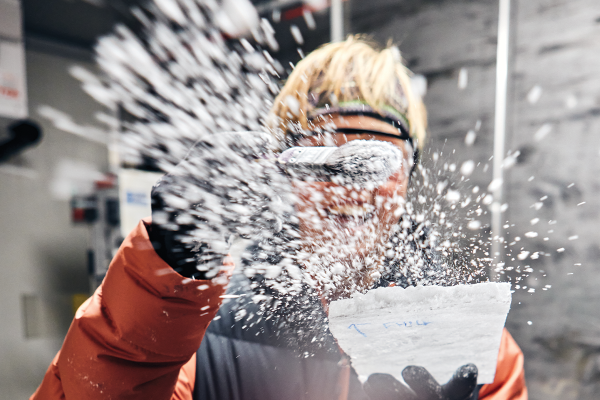
We have an ice lab on campus. If you’re standing on the bridge over the Leith on Clyde St facing toward the harbour, you’ll see it: two blue shipping containers in a parking lot, set to a temperature of minus 8 degrees. The ice lab was set up around two years ago for students who’d previously had to complete a lot of their work bending over deep freezers to stop their subject matter from melting. There are four or five postgraduate students working in the lab, including Zoe MacClure, a Master’s Geology student studying ice. What she does is more complicated than that, of course, but if she were a Ken, her job would be Ice. Zoe said that when she first was offered a postgraduate project working with ice, she was of the opinion that ice was “just all white and boring and there’s nothing going on there.” And we were tempted to end the interview there, but we didn’t. Like the unassuming exterior of the shipping container labs, “actually there’s a lot of really interesting processes going on and a lot of really beautiful things come out. I mean, as you can see,” she said, gesturing at the photos taken from inside the lab. While many of her peers work with ice experimentally, Zoe’s is one of the few whose research is field-based. This, she said, is something she’s had a “bit of a love-hate relationship” with. She’s studying the stresses happening inside ice on the Tasman Glacier, so she can apply those findings to ice in the Antarctic. Obviously, this is a bit harder to access for samples. Ironically, she had the opportunity to spend three and a half weeks in Antarctica for a different project earlier this year to test ice core drilling equipment. It was well into the sub-forties while she was there: “Frostbite was a very real concern,” she said. But it’s nice and toasty in the ice lab’s puffer jackets. Mostly. She’s taken three trips as part of her research to the Tasman Glacier, flying there by helicopter. The five-or-so people who travel there at a time set up camp on the ice with freezers and solar power battery generators: “The kitchen sink, really.” After they finish setting up camp, including a kitchen made out of ice, Zoe said that her supervisor treats them all to a martini on the glacier. “He’s got these plastic martini glasses and he’s taken the bottom of it and we use an ice screw… to make a hole [in the ice kitchen] and then our martini glasses can sit in a hole.” Asked if she thought many students would realise that an ice lab was sitting in the middle of campus, Zoe laughed and said, “Honestly? Probably not. I think a lot of people know there’s work done with ice, but then probably just have not even considered how that would be possible - like collecting it in the field, keeping it in the freezer on the glacier and then the nerve wracking process of like driving home with a freezer going in the car and trying to keep everything cold enough… As soon as you cut the ice out, because it’s so warm in New Zealand” - compared to Antarctica, I guess? - “it’s just gonna melt, and we want to get it back here safely,” said Zoe. She described the paranoia of worrying there might be a power cut, rendering the entire field trip to collect the ice useless. Next comes the analysis: spending long days wrapped up in a thick puffer jacket and gloves, using a band saw to slice the ice thin enough to see individual crystals. Ice crystals within the “S” squiggle shapes you can see pictured contain valuable data. This is where the “love-hate” comes in: “If you have a bunch of cold room days in a row it’s exhausting… you just don’t want to go back in there,” said Zoe. “You just feel drained for the rest of the day.” Next time you complain about how cold your flat is, think of Zoe and her colleagues spending all day in a room colder than your fridge. For science, or something.
-
News
 Issue 20 20/08/2023
Ex-Student Stripper Brings ‘Tragic Mike’ to Dunedin
“I’ll just drop out and become a stripper.” Yeah, right, we’ve all said that. Gianni took it seriously. The pay is great, you keep fit, rake in that yummy attention, and never have to read another academic article again. “What’s not to love?” said ex-student Gianni, who took up stripping as a part-time job while studying towards a double degree in Psychology and Sport and Exercise Science at Otago Uni between 2017 and 2022 (so he did actually have to read more articles). Gianni’s stripping career has taken him around Australasia with different Magic-Mike-esque shows. On October 26, he’s bringing his current saucy tour to Dunedin. Critic Te Ārohi (trying very hard not to blush over Zoom) had a yarn with the breatha-turned-Channing Tatum about the Dunedin stripping scene, local celebrity, and what students can hope to expect from his upcoming three-hour interactive (!) show at the Glenroy Auditorium. Tickets are 30% off for students, but clothes will be closer to 90%. It all began when Gianni spotted an ad promising $50 an hour for topless waiters in his second year of uni. “At the time $50 an hour was like, ‘Woah, that’s pretty good’,” said Gianni. He was informed upon contacting the company that what they really needed were strippers, inviting him for a trial at Stilettos “to see if it was for me or not.” The trial for Gianni and one other newbie involved 20 to 25 strippers in a circle, “and then this chick Tabitha was like, ‘Alright, you guys pick three songs and just go’.” Gianni passed with flying colours. As you’d imagine, the key to success was just “if you’re in shape and if you can dance.” He was promptly sent to Queenstown for what can only be described as a stripper bootcamp. After spending a few days with an American stripper who helped him learn the ropes, “I made up a routine and then started stripping on the weekends doing privates and hens’ parties and things like that, red cards and 21sts, just all sorts really.” So, if you were struggling for red card ideas... Gianni said his mates were fully supportive while he was doing privates part-time in Dunedin: “The other guys thought it was chat.” And it was the perfect job in terms of work-life balance with the party culture in Dunedin. “We could be at a party or whatever… And I knew I would have a strip on that night. And so I'd be like, ‘I just gotta dip out for a little bit’.” He even ended up “pulling one of the boys into it a bit.” One night as he was about to head out, one of his mates asked if he could join. “And I said, ‘Yeah sure you can come but you know you gotta take your kit off’ - cos he was fit.” The pair stripped at a red card on Castle Street, “And it went off. It was crazy. That’s what I’ve noticed actually, like private stripping is a bit more hectic in Dunedin versus like Wellington or other places around the country.” He and his mate ended up stripping together more and more, forming a duo routine between them. The duo were catapulted to local celebrity status after one particular gig on St Patty’s Day in 2021. “These girls had booked a stripper,” said Gianni, “and it was pretty early ‘cos you know how students start in Dunedin pretty early on St Patty’s. So it was like lunchtime.” When he and his mate rocked up in their tradie costumes, there were around 50 girls waiting for them outside a flat on Queen Street. “The girls saw us and just started screaming, ‘The strippers are here!’” The crowd formed a circle around a chair in the middle. Later, when the boys rejoined their mates and headed to the Lake House party, they ran into the same girls. “It was kind of buzzy because we’d be like little celebrities walking through because the girls would see us… People would come up to us asking for photos and things,” said Gianni, “but like, we're just students. And that was pretty cool, but surreal.” After graduating last year, Gianni tossed up between postgrad study or continuing with a career in stripping in stage shows with different groups. “A big thing for me was like, well, it didn't feel like a job, you know?” said Gianni. “I was making pretty good cash from it. I was pretty much getting paid to travel, to train with a group of guys and dance in front of women. Like yeah, what's not to love?” Admitting a preference for stage shows over privates (“It’s just more of a thrill, you know?”) Gianni is psyched to return to Dunedin with the international group Gentleman Prestige to perform their comedy cabaret ‘Tragic Mike’. The theme of the three-hour interactive show (yes, that means you could be pulled on stage) is ‘Netflix and Chill’, with the group describing it as “enlightening fantasies that our audience didn’t know they had relating to characters from movies and shows on Netflix.” Think Harry Potter with strip-off trousers and a very magic “wand” - courtesy of Gianni. He clearly didn’t get sucked into Draco-Harry fanfic if it's meant to be an unrealised fantasy. Proceeds of the show will go towards Shine, a national charity dedicated to supporting domestic abuse victims and safer homes across the motu. So, not only will the audience be treated to a “good laugh and a sexy time”, it’s all for a good cause.
-
News
 Issue 20 20/08/2023
OUSA Puts Down Pet Project
It was with heavy hearts that the OUSA exec passed a motion (with one vote against) on Friday, August 11, to cancel the Starters Bar lease. You’ll probably be thinking, “But I thought that closed ages ago?” And you’d be right - the bar has sat stagnant on the corner of Frederick and Clyde St since its closure in 2021 due to health and safety concerns about the standards of the building. OUSA President Quintin told Critic Te Ārohi that the two-year gap was spent working out “if the building could be improved to a standard that would make it safe to once again operate as a bar.” At an exec meeting earlier this year, a motion to terminate the lease failed pending a final conversation with the landlord about whether it could be saved. “Since then, it has become clear that the Starters premise… will not be able to become suitable for a bar again,” said Quintin. The bar was bought in 2018 by OUSA. It was celebrated for bringing about a space for students to drink responsibly amid the context of bar closures like Gardies (now the Marsh Study Centre) creating a “wild west of drinking,” as OUSA Events Manager Jason told Critic at the time. In the brief window when OUSA operated Starters, “it functioned as a great place for students to enjoy affordable drinks and music in a safe environment,” said Quintin. “The executive at the time were gutted to be put in a position of making the decision to close,” with the 2021 President Michaela telling Critic about the sleepless nights she’d had over the issue. “But unfortunately they were left with little other choice.” Critic reported in 2021 that the exec said they were “hopeful that a replacement bar in North Dunedin will be up and running by O-Week 2022.” That clearly worked out well. “OUSA has always wanted to open a student bar for the purposes of harm reduction,” said Quintin. In the “wild west” of drinking culture in its absence, students tend to stick to flats where it becomes easier to drink to excess without the kind of support that comes with a licensed premise. Quintin went on to say that, “As a Sophia Charter Partner, OUSA is committed to ensuring that North Dunedin is a safe environment for students to engage in the things that make Dunedin student culture so unique and we believe a bar is one of the best ways we can achieve this.” With the cancellation of the lease, the exec are hopeful that they’ll be able to approach the issue with a “fresh set of eyes, moving away from always thinking about how we can reopen Starters,” which had become a bit like “flogging a dead horse” as one exec member said in a meeting earlier this year. The one vote against the motion came from Vice President Imogen, who said she felt duty-bound to advocate for a student bar since it was what she campaigned for going into the position: “I agreed that it’s not the bar we want for our students… but at the end of the day I don’t think we explored all the options with it.” For Quintin, he sees it as an opportunity for something “newer and better.” As a plus, they’re planning a garage sale for a bunch of the old bar stuff like bar stools “if you’re looking to kit out your flat for kickons in 2024.” We call dibs on the sign, and also one of the beer towers.


