
Lotto Ramsay
Culture Co-Editor
Articles by Lotto Ramsay
54 articles found. Displaying page 2 of 5.
-
Culture
 Issue 2 02/03/2024
The Official Dunedin Old Test
Have you ever…
-
Culture
 Issue 1 25/02/2024
Flo-Week Theme Review: 2024
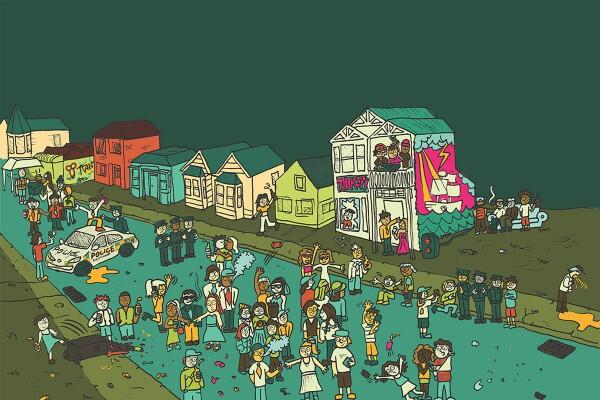
Monday: Back to School (Courtyard)
-
Columns
 Issue 0 19/02/2024
Fresher Simulator: O-Week
1. Welcome (Start here)
-
Features
 Issue 0 19/02/2024
Goops, I did it again! An idiot’s guide to stain removal
Happiness is fleeting, we all die, and nothing is truly permanent. Nothing, that is, except for stains that you don’t get out in time (fuck you especially, red wine).
-
Culture
 Issue 0 19/02/2024
Homie-Eroticism: All the gay shit breathas do
Dunedin is one of the few places on earth where you’ll hear the f-slur casually used by straight breathas who are mere hours away from drinking out of each other’s nutsacks.
-
Features
 Issue 23 18/09/2023
Burning Rubber: Undie 500
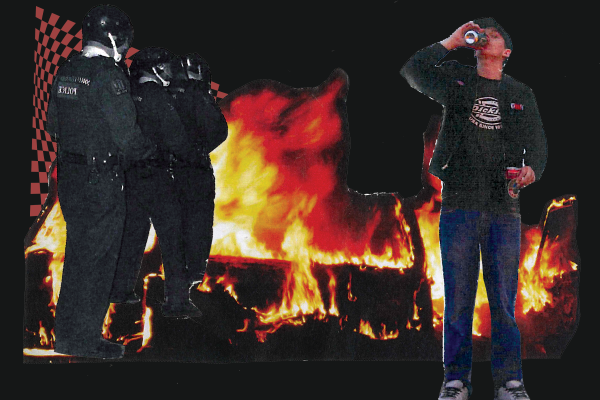
Though now synonymous with riot police, couch burnings and general depravity, the Undie 500 (read: “undie-five-hundie”) had humble beginnings – just ask Doris, the ‘67 Holden Special. The annual event was a tradition spanning from 1988-2009, with a history as long and messy as the drive itself. Organised by the Engineering Society of Canterbury (ENSOC), the Undie 500 was essentially an all-day pub crawl on wheels, in which Canterbury students would make the 360km journey from Christchurch to Dunners. The one condition: it had to be done in a car purchased for under $500 (hence the name, though this would be relaxed due to inflation in later years). Cars were required to have a sober driver and be warranted and registered, but most of all they were required to be decorated. Prizes were awarded for categories such as “Best Dressed Team” or “Best Engineered Car”, which lead to convoys of more-than-pimped rides often resembling parade floats rather than cars. Regrettably, there was also a “Most Politically Incorrect Car” category, which aged just as well as you'd think. Throughout its run, the Undie 500 saw vehicles decorated as Thomas the Tank Engine, the Batmobile, and Noah’s Ark, to name a few, and naturally attracted a lot of attention from both national and international media. However, despite recent efforts to revive the event, the Undie 500 has vroomed its last vroom, so to speak. Its decades-long story has been punctuated with a controversial reputation, meeting a rather fiery end. The first seeds of what would become the Undie 500 were planted in 1986, when ENSOC organised a hitchhiking race from Christchurch to Dunedin to watch the annual Canterbury University Engineers v Otago Surveyors rugby match. In 2020, Critic reporter Chelle Fitzgerald was fortunate enough to interview Matt McCloy, founding member of ENSOC, on the creation and early history of the Undie 500, which we’ve reprinted here: The inception of the Undie 500 began in 1986 with a hitchhiking race from Christchurch to Dunedin, “but not many of them made it.” The following year they made a $300 rule to buy a car and go down, “but then not many of the $300 cars even made it. I don’t know if ANY made it.” Undeterred, Matt and his friend Pete Taylor decided, “right, $500, buy a car, do a race down.” They purchased a Holden Special 186: “It was great, it was called Doris.” Decorating the cars was always part of the event from the start. “It evolved from the Engineering Ball [in 1988], where our friend Buckweed was driving his wannabe girlfriend home, and we decided we’d pick up some road signs and a few other things on the way home.” With a carload of “probably seven or eight of us,” they ended up getting home with “quite a lot of road signs, and those big flashing lights” in the back of the car. They quickly stashed all the evidence in the garage, where they found “all this horrible paint from the landlord” which they disguised Doris with. “So, we thought, right, we better have the Undie 500 next week.” The inaugural Undie 500 that year comprised of about 12 or 13 cars. “We did the rules up and invited a few people […] there had to be a sober driver, who drinks a couple of jugs at the last pub, the Gardies. It started at the Bush Inn [in Christchurch].” Matt’s son Ben had taken him to the site of the Gardies recently and pointed out that Matt was “almost crying when we went to the Gardies” – now the Marsh Study Center on Castle Street. Matt frowned at his drink: “It’s disgusting there. There’s no requiem or anything.” That first event was attended by all the boys who had been part of both the hitchhiking race and the $300 car race. “They were all the mechanical engineers who supposedly knew everything.” As the official driver of Doris, Matt “picked those guys up, because their car had crapped out”. They ended up picking up two other carloads, in the already full Holden Special. “We ended up with like 14 in the car. Big bench seats, four in the front, four in the back, then another few in the ‘back back’.” As carloads broke down, the other cars picked up as many of their stranded cohorts as they could. “We were a bit full over the Kilmog.” The following year, the convoy had doubled to about 25 cars, including Doris with a brand-new paint job for a second voyage. “We were the only ones to use the same car from the previous year.” In the third year of the event, attendance had doubled again, with around 50 cars paving the way down south. Matt was involved in the event for three years before passing the torch down through ENSOC, likening it to the Engineering Ball. “We used to run that, too - 600 people, open bar. There were enough people rolling on so that it just kept going. There were always people willing to step up and do shit.” His voice betraying a touch of ENSOC pride, he pointed out that ENSOC is a very historical society. “It’s one of the oldest societies in New Zealand, dates back to the 1880s. So, there’s quite a bit of passing the chequebook on [...] Quite a good group of people to do shit with.” In what can only be considered a heroic effort, Matt sheepishly recounted a car going up in flames. “Look - it was an environmental disaster about to happen that some petrol was going to run into the gutter. So, putting it on fire was saving the environment. The fact that it ran up the gutter and went into a car had nothing to do with me.” This and other shenanigans were part and parcel of the Undie 500, which steadily grew larger and larger, attracting national news coverage in later years with riots occurring from 2006-2009, culminating in a highly negative public opinion towards both students and the event itself. At its peak, the Undie 500 would attract thousands of student onlookers, though the number of participants would become limited to 150 in 2003. Despite being organised by UoC students, the Undie 500 was heavily embedded in Dunedin student culture – after all, the weary passengers would end up on Castle Street at the Gardies, where they’d be met in spectacular fashion. The rally was routinely held around the last Friday of August mid-sem break, with drivers winding up in Dunedin early Friday night and traditionally staying for Saturday night, too, for a decent Castle piss-up with the breathas (or the archaic “scarfies”) in the warm glow of a burning couch. In the days before adding rubbish to a fire was a serious breach of the Uni Code of Conduct, couch burning was surprisingly legal - until the DCC changed laws around backyard rubbish burning in 2013. Couch burnings go back to at least the ‘80s as an Otago tradition, but experienced a sharp uptick after the legal age to purchase alcohol was lowered to 18 from 20 in 1999, with police reporting increases from about 60 to over 360 a year. It was also so commonplace during the Undie 500 that for most of its lifespan, cops “didn’t bother counting them on those nights.” For an inter-uni weekend rager following a costumed, drunken, five-hour minimum parade down the country, the Undie 500 was pretty uneventful. Until it wasn’t. 2006 - Stoking the Fire 2006 was a different time. Critic ran ads for legal highs, some of you had only just escaped being almost swallowed, and Campus Watch wouldn’t even be a thing until 2007. Couch burning was an unquestioned part of the Undie 500, and as participants and partiers alike would be hitting Castle that weekend in ‘06, fire engines were already stationed on the street on Undie Saturday - usually the rowdiest of the two nights. With student enrolments increasing (they used to do that) and more unofficial cars joining the Undie 500, that Saturday night would see a crowd of a few hundred on Castle Street. 13 fires were lit in under four hours. Police were well aware of the reputation of the Undie 500. With extra staff on that night, they were called out to Castle Street to help control the fires, but arrived to students being “tackled” by firefighters. Students were told to move on by police, but when this failed the cops “had to take a heavy hand” and began to control the crowd with batons. Students would later claim that the police presence “blew it up a bit.” The scene quickly devolved into further chaos, with police allegedly going into flats and dragging students onto the street. Bottles were being tossed, a row of at least 11 bare student arses (I counted) mooned the cops, and some students were dancing naked around the flames. 30 arrests were made for disorderly behaviour, however no injuries were recorded. Police would refer to the students’ behaviour as “just a charade” and “not the worst incident”, because it really was a different time. Few news outlets referred to this event as a “riot” at the time, some even opting for “near-riot”, but the precedent had been set. 2007 - Okay, Definitely a Riot “We were able to follow the dotted couches that were burning along the way, like a guiding path right to the heart of Studentville – Castle Street.” - UoO student (2007). After the previous year’s events, the ‘07 Undie would see a temporary liquor ban placed on Castle Street for the duration of the weekend, and an ‘Operation Undie 500’ squad of police. In their ten months of planning for the event, ENSOC also worked with local authorities in Ashburton, Timaru, Oamaru, and Dunedin to attempt to minimise the disruption. Police would later say that “they got it wrong” and didn’t have enough manpower, with only 36 staff in their weekend taskforce. This time, the crowd numbered in the thousands, and the debacle was substantially worse than the year prior. It was clear that it was a drunker, rowdier crowd. Students from both unis had spent all day drinking for the event, and things kicked off in a blaze much earlier than usual. Years later, Critic would speak to Officer Ian Paulin, who’d “dealt with the Undie 500 right from its inception” and recalled how the nature of the event had spiralled over time: “It just became more about the party at the end of it than the actual event [...] it reached a point in 2007 where it was just massive.” Around 80 fires were set (including cars this time) and bottles were thrown once more. 69 people were arrested (nice), only 9 of whom were Canterbury students registered for the Undie 500. The arrests were initially made for disorderly conduct, but for 21 this would eventually be upgraded to rioting (though later downgraded as the charge was “very difficult to prove”), with many facing convictions. Dunedin Mayor Peter Chin would describe the carnage as “disgraceful”, declaring that the Undie 500 was over. 2008 - The Underground Undie In 2008, ENSOC attempted to work with local groups and authorities to create a management plan for the Undie 500, complete with participant bonds to guarantee good behaviour and a proposal to fund a concert on Undie Saturday to create a controlled outlet for what was predictable debauchery. The Mayor denied their request, so the Undie 500 was cancelled. Just kidding – despite the denial, around 100 rogue UoC’ers travelled down for an ‘Underground Undie 500’, resulting in another riot. However, this time it saw a lot more non-students at the event who had come along seemingly to start shit. Potentially due to another liquor ban from the Council (with some voting against, citing the need to deal with the ‘Underground’ organisers instead), all was quiet for most of Undie weekend – until someone lit a couch on fire around midnight Saturday, just in time for Gardies to close and shepherd hundreds of drunk people onto Castle Street, where chaos ensued. Someone blew up a letterbox. 100 police were rostered and this time many arrests were made. 2009 - End of an Era “It's just a mentality that's around at the moment. Everyone was expecting a riot, so a riot happens. It's self-fulfilling." - UoC student and Undie participant, 2009. 2009 saw the final official lap of the Undie 500. It ended not with a bang, but with a – nah, sike, of course there were bangs, because there was another riot. After the inter-organisational failings of the previous year, ENSOC were determined to install as many safety measures in place as possible, even rebranding the Undie as a food drive in which UoC participants brought over 1,000 cans of food to donate to Dunedin food banks. However, the Mayor once again refused to cooperate with ENSOC, condemning the event. The Undie 500 itself ran successfully, as it often did – with another temporary liquor ban in place, and ENSOC’s “good behaviour” bond instituted – but the after-parties saw the now formulaic violent face-off between students and police. That year, the focus on the Undie itself had dwindled, with fewer cars and less of a spectacle. Until drunk idiots poured out of the Gardies onto Castle and started burning shit. Again. This time, the arrests numbered 60 over the weekend, and many injuries were tended to by emergency services. Police reportedly had to bring in extra canisters of pepper spray as they pushed the crowd back. Canterbury students blamed Otago students and vice-versa, as well as the sensationalism of the event that attracted non-students. Others still would blame indifference from the Council or overzealous police, who an Otago student said “did a good job overall, but they can't always distinguish who are being dickheads or who just want to have fun,” having pepper-sprayed people in their flat doorways and charged uninvolved residents on adjacent streets with liquor ban violations. At least 17 Otago students faced convictions. Some experienced devastating burns. Eventually, the Christchurch earthquakes put the final nail in the coffin, with later attempts to reinvent the Undie being unsuccessful and the University of Canterbury Students’ Association (UCSA) pulling the plug altogether. The fire had fizzled out. Matt was saddened when the Undie 500 in its original form was cancelled, attributing it to “the closed-mindedness of councils [...] NZ is a great place - let people be intuitive, get on, be innovative and do shit […] part of that is people having fun.” Doris the Holden Special now lies in her final resting place, buried “in a spot by my old man’s farm, down by a riverbed.” As her bumper corrodes with the years and she returns slowly to the earth from whence she came, she revs on in the memories of those founding fathers who breathed life into her.
-
Features
 Issue 18 09/08/2023
Wining and Dyning: I tried dyeing shirts with booze
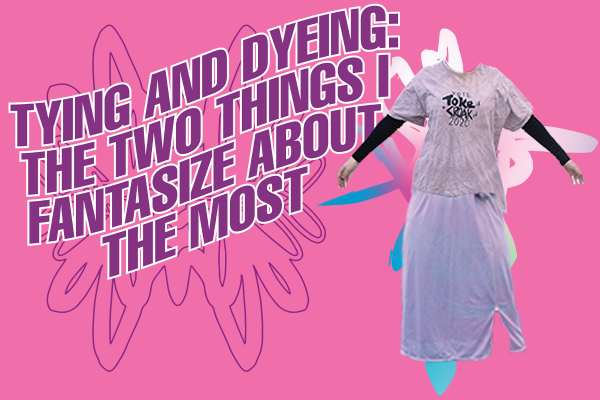
As long as psychedelics are in fashion, tie-dye is too. I’m all for the “DIY aesthetic”, but I’m a staunch advocate for actually doing it yourself. A cheeky tie-dye is a great way to give new life to an old garment, plus, dunking clothes into chemicals and watching the colours change is basically free therapy. I’ve dabbled in both tying and dyeing - sometimes even simultaneously - but the upfront cost of store-bought fabric dye is intimidating, especially if you want multiple colours for tie-dye. Every flat carpet is aware that brightly coloured RTDs stain… but can they actually dye fabric? I set out on an ambitious drunk DIY adventure to see if I could tie-dye shirts with booze, but forgot to ask if I actually should. Spoiler alert: the answer to both is a hard no, but it could still be fun to experiment with yourself. Dyeing something is different to staining: a stain is a stubborn substance that lies on top of the surface, while dyeing involves an actual bond between the dye and fibre to which it adheres. Dyeing isn’t just about the dye – it’s a complex reaction between pigment, fibre and chemical solution. Fibre choice is also particularly important, as most dyes work best on plant fibres like cotton, linen, or rayon, with more specialty dyes required to dye protein fibres (silk, wool, nylon) and synthetic fabrics (acrylic, polyester). Dyeing can take a lot of trial and error. In saying that, I ran a shitload of trials and ended up with a lot of errors. Store-bought fabric dyes are basically witchcraft and come with everything you need, while naturally-derived dyes tend to need extra help. Usually, this is a dye fixative or mordant, which are metal salts like aluminium sulphate that react with the dye to adhere it. Popular at-home natural dyes include things like onion skins and red cabbage, which can be simmered into a pigmented dye. Red wine also contains tannin, a natural coloured pigment, and fruits like blackcurrants (or blackcurrant Scrumpy?) can also colour fabrics with varying success. On the other hand, artificial food dyes such as those found in RTDs are a completely different type of compound. Kool-Aid, which also contains artificial food dye, can be used to dye protein fibres and stain cottons. So why not dunk a t-shirt in Purple Goanna? Well, as I found out, there are quite a few reasons. My Drunken Experiments I spent a week op-shopping around for white clothes (I’m too grubby to own white) and picked up some slightly fugly white cotton shirts for a bargain ‘cos cotton is usually the best bet for dyeing fabrics. I also grabbed some nylon slips – made from protein fibre – to give the artificial RTD dyes a good chance. I had no idea what would work best for mordants or fixatives, so I went for the easiest and most common ones: salt, white vinegar, and soda ash (sodium carbonate or “washing soda”). Salt is used with commercial dyes to help the fabric absorb dye, vinegar is a strong acid and used for acid dyes, while soda ash is alkaline and a common dye assist. None of these are proper mordants, which are metallic compounds, and this is probably why they did jack shit. I did get some accidentally mordanting when the Scrumpy-dyed shorts turned bright blue around the zipper, likely due to reacting with the oxidising metal. Dyeing is full of surprises. I started by soaking everything in vinegar for good measure, which was a bad idea. I tested three beloved brightly-coloured RTDs (Nitro, Purple Goannas, and raspberry Cruisers) plus a few naturally coloured bevvies (blackcurrant Old Mout and various red wines). I spent far too much money on the booze, but luckily drank most of it, which made the dyeing process significantly more chaotic (check out our video to see for yourself). Frankly, dyeing ten different items with different methods in the space of a couple hours went poorly. Add getting midday tipsy in front of three sober coworkers while rambling about pH to that and you have a bit of a hot, bubbly, wet mess. Dyeing involves a lot of precise chemistry, which I suck at. I fucked up and kept adding bases to acids (rendering it useless) and dry-shovelling chemicals with my bare hands. Please don’t do that. However, once I finally got the gag-reflex-inducing smell out of my kitchen, I was able to get some decent results which you can replicate below. How To Tie-Dye With Leftover Red Wine (or Berry Cider) Red wine and blackcurrant Old Mout were the only ones that worked on cotton t-shirts, and were pretty successful. Despite the fuckery of my experiments, it’s simple when done right, and can be a fun project if you’ve got some leftover wine lying around. Don’t expect wine-red clothes – as a natural dye it comes out pretty muted, but you’ll still get pretty tie-dye patterns. The tannins found in red wine are a natural dye found in many plants and don’t typically need a mordant to set, and they vary widely throughout both the types and brands of wine. Shiraz, cabernet-sauvignon, and malbec are the reds with the strongest tannins, but different wines will result in different shades of pale lilacs, pinks, and burgundy. I had the most success with Fat Bird Vintage Red and Cleanskin Shiraz, though any cheap half-bottles of red wine will do. You will need: ⦁ Half a bottle of red wine - ideally shiraz, cab-sav or malbec, but any will do ⦁ A white t-shirt or small, light-coloured garment - just check the tag to make sure it’s mostly cotton ⦁ Rubber bands or string (optional) ⦁ A squeeze bottle or plastic bottle (optional) ⦁ A saucepan and stovetop Tie-dye method: Pour the wine into a saucepan and simmer it for at least 10-20 minutes to concentrate it. This smells exactly how you’d think, and has the added bonus of fumigating your sinuses. To tie-dye, begin by slightly dampening your t-shirt with water – this will create a pattern with a smoother transition, but you could leave it dry for harsher contrast. Next, lay the damp shirt out on a flat surface. Pinch the fabric in the centre of the shirt, and slowly start to twist the shirt into a compact spiral. Basically, purple-nurple that bitch. This part creates that classic tie-dye spiral, so take your time and redo it until you’re happy – rearrange the spiralled folds as you go to make it as tight as possible: the tie-dyed pattern comes from creating compact areas of fabric that the dye can’t penetrate. Secure your spiral-shirt-wad with rubber bands. You’ll want at least a couple, and they should cross over the spiral’s centre like spokes on a wheel. Leave the wine to cool, and then pour it into a squeeze bottle. Water bottles like pump or Gatorade bottles work too – you just need something that’ll squirt. Don’t we all? Once you’ve got your shirt and wine prepared, it’s time to get dyeing. Either pour the wine all over the shirt until it’s saturated, or squirt it onto select rubber band sections for a looser spiral design. All you have to do now is leave the wine-soaked shirt for at least a day, then rinse it until the water runs clear. Let it dry, and BAM. Tie-dyed wine shirt. After a wash, expect it to fade slightly. The colour can also turn slightly bluer from the alkaline laundry detergent, as the tannins are pH sensitive. It looks super sick though. Stove dye method: Once you’ve simmered your wine down on the stove, you can even dunk a shirt straight in without tying it first and then leave it on low heat for about an hour. Stir the shirt around for a more even colour, or keep it scrunched up for a patchy but funky design. You can also tie your shirt like a spiral as above, but use string instead of rubber bands because they’ll explode from the heat. I liked this method best as it creates a stronger colour, but it’s slightly more admin. Blackcurrant and Scrumpy Old Mout I dyed a pair of shorts with Blackcurrant and Scrumpy Old Mout using the stove dye method for pretty successful results. Cider also contains tannins, and blackcurrants can stain some fabric. I didn’t have high hopes, but ended up with VERY bright magenta shorts that turned a cute lavender after a wash (due to the pH reactivity) which I liked much better. Dyeing shit is fun and full of surprises. Dyeing Nylon Lingerie with RTDs Artificial food dyes in RTDs are synthetic acid dyes so they require an entirely different method. Plant fibres like the cotton used for natural dyes will not work, as our filmed tests quickly proved. However, dyeing clothes with RTDs is possible – just use a protein fibre (nylon, wool, silk) and don’t expect vibrant colour. It’s not very effective, but does produce a subtle pastel colour with funky gradients. So if you’re bored and happen to have a white nylon slip and a partial box of drinks: firstly, call me, and secondly, why not give it a whirl? You will need: ⦁ About 750mls (3ish cans) of an artificial RTD. Purple Goanna and raspberry Cruisers were both successful, and created a pastel pink tint on white nylon. Bright red-based colours seemed to work best, and sugar-free options are less sticky to prep. ⦁ A garment made of nylon. White nylon lingerie like slip dresses and petticoats are cheap at most op shops, just check the tag to make sure it’s nylon. Results definitely vary, so don’t use your favourite clothes. We’re going to microwave it, so make sure there’s no metal like zips or buttons! ⦁ Microwave and large microwave-safe bowl ⦁ White vinegar ⦁ String (optional) ⦁ Saucepan and stovetop (optional) Start by soaking your garment in white vinegar – longer (an hour or so) is better. Food-safe dyes are acid-based, vinegar gives it a little extra help and longevity. For best results, simmer your RTDs down on the stove until they’re at half their volume, like we did for the wine. Make sure to deeply inhale the fumes. Take your vinegar-soaked garment, wring it out a little, and prepare it for dyeing. You can spiral tie as described above, but this can be tricky with slippery nylons. Leave it untied for more even colour. I had pretty good success with simply folding the garment tightly and securing it with string – folding creates the patterns, and the possibilities are endless, so feel free to experiment. Just make sure you use string that won’t melt, because we’re about to microwave it (I rubber-banded mine, but apparently rubber bands can catch on fire when microwaved, so don’t do that). Place your garment in a microwave-safe bowl, and pour the simmered-down booze on top until it’s fully covered. You can do this without reducing drinks on the stovetop first, but you’ll get more of a pale tint than a pastel design. Next, simply place it in the microwave and heat for 3-5 minutes, leave to cool, then repeat. Once you’re done, you can leave it to soak overnight just in case, or just scoop it out, give it a rinse and leave to dry.
-
Features
 Issue 18 07/08/2023
Fashion Forecast: Historical Trends To Bring Back
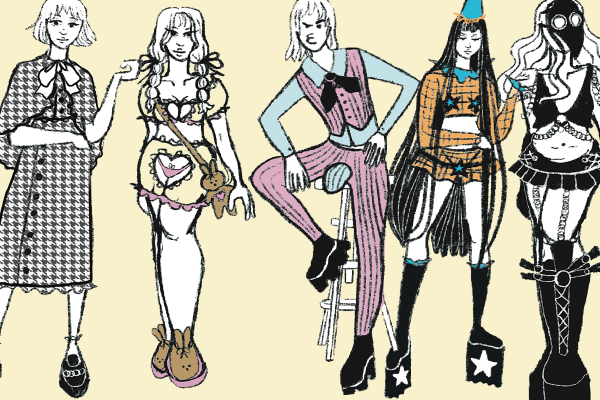
Fashion has always been cyclical. Typically, the overarching trends of each decade are a direct contrast to that decade or decades prior. Think of the boxy, baggy, top-heavy silhouettes of the ‘80s sandwiched between the more fitted and A-line shapes of the ‘70s and ‘90s. In womens’ fashion, waistlines of garments are raised and lowered, hemlines are short one second then maxi skirts are in the next, and this is nothing new. In the Victorian era, the 1860s emphasised soft, voluminous silhouettes and wide crinoline skirts that could barely fit through doors, while in the 1870s skirts became slim and fitted, with bustles padding out the rear (badonkadonk). It’s kinda like how having hips was deeply shameful in the 2000s, but the 2010s and ‘20s came with people injecting chicken stock cubes into their asses (look it up). So you really never know what’s next. However, nostalgia is a hot commodity and the reciprocal fashion cycle is getting shorter. Styles that look “dated” one minute are cool and vintage the next. The ‘80s frothed the retro ‘50s aesthetic, and the 2010s saw a huge revival of ‘70s bohemian and ‘80s oversized casual. Now, the ‘90s and early naughties are back, with the Y2K aesthetic overriding our devices much like its namesake. With the rise of fast fashion, the nostalgia cycle is getting shorter and shorter – new looks are dropped on Shein one week and become an outdated meme the next. It seems like we’ve pillaged past eras for all their fashion, and we’re running out. So, where to next? Using this grossly simplified model, the team at Critic Te Ārohi is at least 32% sure that we can predict styles of eras past that will make a comeback. We’re running out of vintage to bring back, so why not throw it all the way back and draw from heinous historical trends and recent vintage underdogs to bring you the only forecast you’ll ever need. Codpieces Before mens’ clothing had zippers and flies, fashion was kinda confused about what to do with dongs. Enter the codpiece: a phallic, pouch-shaped insert on the front of pants that one would simply pile their nards into. Prominent in the 14-1600s, and even making a comeback in suit-of-armour form in the 1700s, codpieces had many applications. Not only did they eliminate the “which side of my pants do my dick go?” problem, they also functioned as a pocket - the perfect size for a little snack. In an era of body positivity, it’s time for codpieces to rear their heads (sorry) once again – when else do men get to feel sexy? Imagine feeling like That Bitch whipping your ID out of your prominent dickholster. It’s the natural progression of the fanny pack. Pocket hoops Pocket hoops became popular in the later 18th century, and were an alternative to panniers (like crinolines) that gave you light and practical skirt volume at the hips only. And yes, they did also have pockets. Look, the internet has already made us all feel bad about not having perfectly-rounded hips, so why not say fuck it: square hips. Wear pocket hoops to the club and you have guaranteed social distance of like a foot, and yes, you can store shit in them. Carry your things in style while preventing dickheads from dancing too close to you! These are intensely practical and could totally make a comeback in this utilitarian time. Imagine Carhart-braded pocket hoops. Capes Fashion has always thrived on impracticality as a status symbol. Wearing cumbersome and ridiculous clothing separated one from the working class, because how are you meant to do hard labour in that shit? Enter capes: flamboyant, inconvenient, and the enemy of jet engines – all perfect markers for an up-and-coming high fashion trend. Plus, if they get caught on something they choke you out a bit, which is very appealing to our generation, apparently. Despite the pro-cape propaganda produced by Marvel, capes are so unwieldy that they essentially turn one into a limbless mannequin. All this to say that if we convince the elites to wear capes then maybe the revolution will have a chance. Pussy out Women’s underwear as we know it was only invented in the early 20th century – prior to that, everyone was kinda just pussy out. Seriously, imagine having to hike your knickers down to take a shit while wearing layers of historical dress. It just didn’t happen. Even bloomers of the late 19th century were open at the crotch seam, essentially consisting of two separate legs – in fact, that’s partly why we still refer to it as a “pair” of underwear today. The simultaneous and timely occurrence of maxi skirts being in fashion (the longest popular skirt length we’ve seen in decades) and most underwear now being made out of polyester (which is terrible for your vulva) means that it’s fairly realistic that we’ll ditch panties altogether, or at least on occasion. We’re already getting sick of bras, and since the most popular underwear style is “invisible” briefs they could become completely invisible soon. Plague masks The pandemic was the best thing to happen to mask fashion since the Black Death, so it’s not a stretch to think we could be seeing more of those raven’s-beak looking items make a comeback. After the first pandemic we’re all a little burnt out, but when round two hits I think we’re gonna be ready to have fun with it. Might as well! We’ll see the development of ever-more intricate plague masks as people try to one-up each other in the only way they know how. Instead of filling the beaks with sage and herbs to ward off evil miasmas and spirits, we’re gonna start stocking them with quartz crystals (and still probably some sage too) to ward off the bad vibes. Some things never change. Chopines Chopines are kinda like high heels but, instead of having a high heel, it’s sorta like standing on an hourglass-type shape. They’re like very weird mini-stilts. Anyway, their purpose was to allow the wearer to wade through the literal rivers of shit flowing through cities of the time, but this could become once again a necessity as rising sea levels start to fuck with our underground sewage disposal lines. When it all starts bubbling up to the surface you’re gonna need some sort of platform shoe to get around, and these might come back in style. Bonus points if they’re made of wood so you don’t lose them if they float away. Wax cones Probably the weirdest of the lot, wax cones were a trend in ancient Egypt to deal with body odour. You’d just wear a lump of scented wax on your head and it would melt throughout the day and mask your odour. As people start freaking out about microplastics (yummy) in everything, including deodorant, natural remedies are moving more and more into the mainstream. And you know what’s better than spreading literal carcinogens onto your lymph nodes? A cute little dollop of wax. You can even incorporate it into your hairstyle - perfect for the renaissance of the beehive hairdo.
-
Culture
 Issue 17 31/07/2023
Degrees and How They Smell: A walkthrough of the academic perfume aisle
Computer science: The worst. Just the worst. Have you been to the comp sci labs in the science building? They absolutely reek. They never shower because they don't want to get their electronics wet. Yuck. Natural sciences: Distinct aroma of mud, weed, and septum piercing. Strangely alluring. Psychology: Like brown paper bags in a very liminal way. Clean, but kinda musty. SPEX: I bet they reek, but also they might shower heaps because they have nice bodies and they want to enjoy them. Real toss up, this one. Depends on the time of day. Dent: Nothing. An odour as empty as their souls. Maybe they have that weird neutral smell of an empty mouth. Or blood. A sanguine smell. Med: Like Lynx Africa to mask the fact that they haven’t showered in three days. It’s the scent of stress mixed with poorly-devised coping mechanisms. Avoid. History: Musty, like a jacket that you just got from the op shop. You can just tell it’s been there for years. They smell like the back part of SaveMart, or a gentrified mothball. Law: Lizards can’t smell, so who knows. Probably booze. Film: Like they’ve crawled out of their mother’s basement. The scent of unbrushed teeth. Also of cigarettes, but not in a good way. Hard to avoid their breath odour because they are constantly talking. Politics: Like over-caffeinated coffee and cheap perfume. Repulsive, but in a familiar way, like brake fluid made from fish oil. Theatre: Lucky Charms - or actually Cool Charm or Impulse Victoria’s Secret perfume. The female equivalent of Lynx Africa. Nauseating and will give you flashbacks.
-
Features
 Issue 17 31/07/2023
Out of Sight, Out of Mind:
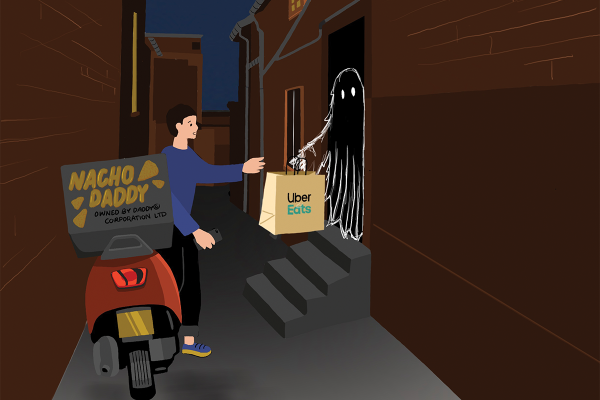
Dunedin is saturated with cheap, easy food joints within walking distance for most students, yet more and more are offering delivery through third-party apps like UberEats. Too many, in fact – some of the restaurants offered on delivery apps don’t actually exist as physical stores. The team at Critic Te Ārohi investigated these shadow restaurants in Dunedin, or what happens when restaurants go “dark”. Most local restaurants have to have a presence on delivery apps like UberEats or DeliverEasy to get by, with many increasing this presence by becoming “dark kitchens”, or delivery-only restaurant franchises. According to the UberEats website for merchants, dark kitchens are restaurants that only sell via online food delivery services – their menu items can only be ordered online and have to be delivered, with no dine-in option available. There’s also “ghost kitchens”, which are usually defined as a subset of dark kitchens. These are large businesses that operate solely out of commercial kitchens without a brick-and-mortar storefront that customers can enter. In this manner, ghost kitchens can circumvent almost all startup costs (and occasionally health regulations) to enable YouTube fuckos to spawn hundreds of delivery-only locations. “Virtual restaurants'', on the other hand, are the lesser-known but more prevalent counterpart to true ghost kitchens. They’re a type of dark kitchen that operates out of an established restaurant with a physical storefront. They are propped up within brick-and-mortar restaurants but tend to function as their own distinct brands with separate menus (or occasionally the exact same menu, with a price markup). Take Biggie’s Pizza, for example, which owns four virtual restaurants, including one that sells poutine through their online menu called All Gravy Baby. When our reporter tried to order in person, however, he was shit out of luck. He eventually placed an order for All Gravy Baby on DeliverEasy, only to pay to have it delivered all the way from Biggie’s kitchen to where he was seated outside. Think of it like this: owning a virtual restaurant is like having a private account on social media to keep your spam and memes separate from your main, while ghost kitchens are like getting bots to make all of your posts for you. However, feel free to take these definitions with a grain of salt (delivery fee included). This information is from an UberEats guide for merchants that details setting up a virtual restaurant, which seems to be ridiculously easy and with a less spooky name to boot. It’s no wonder that UberEats seems to encourage businesses to set up virtual restaurants; UberEats charges a commission fee of 30%. While Critic has not identified any true ghost kitchens currently haunting our streets, there are over a dozen virtual restaurants on delivery apps in the Dunedin area that lack a corporeal body. However, they do list addresses on delivery apps, and by cross-checking almost every restaurant’s location Critic is here to serve our main takeaways on dark kitchens in Dunedin, from Huzur Kebab to Night ‘n Day. Your Guide to Dunedin’s Dark Kitchens: Bowl’d and EGG’d - Pita Pit Pita Pit, the multinational chain known for pitas and wraps, has three listings on UberEats. Capitalising on the donburi bowl or “buddha bowl” (blegh) trend is their delivery-only dark kitchen: Bowl’d. Their other franchise, EGG’d, is basically just egg sandwiches. Bowl’d and EGG’d both list their UberEats address as the Pita Pit George Street location. As is the case with many dark or virtual restaurants, Bowl’d serves the exact same rice and salad bowls as Pita Pit, just with pre-selected and more marketable options – that are also more expensive, of course. Jimbo’s Fried Chicken and Orleans - Dunedin Social Club These two trendy-looking fried chicken restaurants are just Social Club under a different name, in case you want to pay extra for bar food. Note: though previously open, both restaurants are listed as ‘unavailable’, with a limited menu for Orleans and shorter hours for Jimbo’s. Workers at Dunedin Social Club commented that the virtual restaurants aren’t really part of their “business model” anymore. Sweets N Vibes and Kebabs N Chips - Huzur Kebab Surprisingly, locally beloved Huzur Kebab is absent from UberEats, but you can get your munchies fix through Kebabs N Chips. Sweets N Vibes is apparently just Huzur’s Ben & Jerry’s fridge, with the same address and slightly different flavour options. According to the DeliverEasy app, Huzur Kebab is “exclusive to DeliverEasy'' where they launched prior to joining UberEats, which may explain the name change. White Goat Curry Corner - Mela Eatery George Street’s Indo-Nepalese curry joint has two restaurants on UberEats: the physical store Mela Eatery, and the virtual-only kitchen White Goat Curry Corner. Unlike some of the other restaurants that subdivide their menu into more clickable options, Mela and White Goat Curry Corner have the exact same menu, but White Goat curries are a couple bucks cheaper – enough to have a ‘$’ rating instead of Mela’s ‘$$’ which may aid price-related filtering in the app. All Gravy Baby, Nugg Life, Nacho Daddy and Calzones - Biggie’s Pizza NYC-style pizza joint Biggie’s Pizza has four delivery-only virtual restaurants on DeliverEasy, as well as Biggie’s Pizza, the physical store they’re based in. With catchy, punny names like Nugg Life and Nacho Daddy they were pretty easy to spot as dark kitchens, with typical niche foods on offer (and a DeliverEasy exclusive to boot). Just Wing It - Emerson’s Brew Bar Though more of a rebranding than a dark kitchen, we’re doing our duty to let you know that Just Wing It is actually Emerson’s Brew Bar. While Emerson’s aren’t on UberEats as themselves, meaning they aren’t using the virtual restaurant strategy to increase their scrolling real estate, getting wings from what looks like a small, dedicated wing store is that much more appealing than paying an arm and a leg (plus delivery) for chicken from a beer brand. Still, whatever floats your foam. Dessert King - Pizza Bella/Burger Bella Interestingly, while Pizza Bella/Burger Bella no longer operates here as its main franchise on UberEats, they have a presence as Dessert King as a waffle shop. Ben & Jerry’s North Dunedin - Night ‘n Day (North D) Night ‘n Day on Regent Street don’t sell Ben & Jerry’s, but also they do. Ben & Jerry’s North Dunedin is a separate Uber-only store run out of Night ‘n Day. When we asked the manager if you can buy Ben & Jerry’s ice cream from the in-person store (which would be awesome), they replied, “Actually, no, and I have no idea why.” Burgers with Bite and Sir Benedict - The Coffee Club The Coffee Club in Meridian Mall (which apparently people go to) is part of a large multinational franchise that owns several virtual restaurants, among which are Burgers with Bite and Sir Benedict, a breakfast/brunch UberEats store. In a 2021 interview from QSR Australia, their international brand manager described their virtual restaurants as geared towards “millennials”, which explains a lot, actually. – How to spot a dark kitchen/virtual restaurant: Here are five common traits of virtual restaurants. While not universal, these can give you a pretty good idea of what to look out for and how to know when to check before you order. ⦁ It’s unfamiliar. Dunedin is pretty small, and students tend to know local food joints like the back of your Macbook. You usually hear about new (physical) restaurants that turn up, so if something is nearby on a delivery app and looks unfamiliar, it’s worth going to the ‘info’ section and double checking that address. ⦁ It’s got a catchy name. Virtual restaurants are based entirely online, and are therefore marketed to be as clickable as possible, so they tend to feature punny or flashy names that make you want to check them out. ⦁ Their menu is based around a single (usually trendy) food type. Think USA- or Korean-style fast food, poke bowls, and street food. Virtual kitchens are usually the subdivided menu of another business, so tend to offer simpler menus that are dedicated to a trendy, marketable product versus a diverse menu you’d see in person. ⦁ It’s heavily marketed in-app. Merchants on Uber pay for the deals and promotions that make them turn up on your feed first, as well as affecting your personal recommendations. For virtual restaurants, this is usually essential. ⦁ It’s delivery-only and/or app “exclusive”. Virtual restaurants can’t offer pick up or dine-in options, and are sometimes listed as exclusive to a certain delivery app. At least they’re open about it It’s always good to know where your food is coming from even if you do decide on ordering from a virtual restaurant. Most of the time, you can easily confirm this by googling the address listed and seeing what’s at the location. – Nowadays, even virtual restaurants are struggling, but they were certainly profitable during the pandemic when many of them first opened. It makes sense: more restaurants equals a higher chance of being noticed on delivery apps (especially when they’re marketed to be shown first), and it does mean that it can be easier to find what you’re after. Unless you knew beforehand, you wouldn’t think to go to Pizza Bella when you’re craving waffles – and they do look pretty yum. However, though relatively harmless, the subdivision of brick-and-mortar restaurants into different online stores can give the wrong impression, and does feel slightly deceptive. The way in which virtual restaurants tend to sell dedicated trendy food items gives the impression of a specialised indie food joint, which is especially appealing to modern young consumers who want to support what looks like a “new” local business. When restaurants can create dark kitchens so easily – and are encouraged to do so by delivery apps – it’s hard to know if you’re supporting a cool new burger place (where you’d assume local ingredients and ownership) or buying from a huge multinational franchise like The Coffee Club. The level of openness about dark kitchens also varies between restaurants, and the faceless manner of virtual restaurants also takes away from your options as a consumer. All of the local businesses we chatted to were quite open about having virtual restaurants linked to their addresses – even the staff at Pita Pit, a multinational franchise, readily pointed us to a kiosk where they openly had their virtual brands linked. This is distinct from the way many dark kitchens operate, where ownership of their restaurants is kept well out of view. Finding out that The Coffee Club’s virtual restaurants were owned by them and not a separate ghost-kitchen type franchise took a bit more digging, though the Burgers with Bite website maybe hints at it with their slogan: “Unethically sauced since 2020”. Documents we uncovered from The Coffee Club’s retailer hub details “compliance information” for restaurant branch owners, emphasising to check that no Coffee Club packaging or receipts can be included with Burgers with Bite orders: “It’s essential to the credibility and success of Burgers with Bite that the two brands are kept completely separate.” When virtual restaurant branding is separated in this way, it takes away both choice and awareness for consumers, while adding a higher price tag. Fractioning restaurants into single-food type retailers means that you could easily order your fix from what you think are two restaurants and have them delivered from one, after paying the delivery and service fee twice (like we did for this article). Restaurants can easily open as many virtual stores as they like, taking up a substantial amount of space delivery apps, swallowing competition, and creating the illusion of choice. What’s more is that virtual restaurants can’t really be reviewed; delivery apps only show averaged star ratings, with no option to see individual customer feedback or reviews. If you knew that The Coffee Club were actually Burgers with Bite and often receive 1-star ratings and negative reviews for their food on Google, you might be much more hesitant to order from Burgers with Bite. While the easy setup of virtual restaurants provides the opportunity for trialling new and interesting food, it often leads to redundancy, high markup, and an oversaturation of identical products. On UberEats, The Coffee Club sells a ‘Crispy Chicken Strip & Bacon Burger’ with chips for $29.90, while a ‘Barnyard’ burger from Burgers with Bite is $24.50 – but chips will cost you an extra $15. And yep, you guessed it – they’re the exact same burger. The illusion of an authentic, dedicated small business that virtual restaurants provide often means that consumers are more likely to be okay with paying a higher price for what they think is a specialty product. Brands are aware of it, too: on UberEats, Burgers with Bite also sells smoothies and coffee, which are under the header “Partnering and supporting your local cafe.” It’s technically true, if “local” means “The Coffee Club in the mall owned by a multinational franchise.” Though getting more customers through owning virtual restaurants can be a great way for (actual) small local businesses to stay afloat, even that can have its downsides. UberEats takes away a 30% commission from each order delivered by their drivers, whether from a virtual restaurant or a physical one. Though most places charge extra for their food on delivery platforms to compensate (plus other fees), it seems like even virtual restaurants can feel the heat of the competing market, with businesses like Mela Eatery opening cheaper restaurants as dark kitchens. We all know UberEats can be a godsend when you’re stuck at home with the munchies, but we tend to forget that many local restaurants offer delivery through their own websites. Without the cuts from third-party delivery corporations, restaurant delivery or getting off your ass and dining-in is a much better way to show your appreciation. (Left: Burgers with Bite. Right: The Coffee Club. Not that it matters)
-
Culture
 Issue 16 24/07/2023
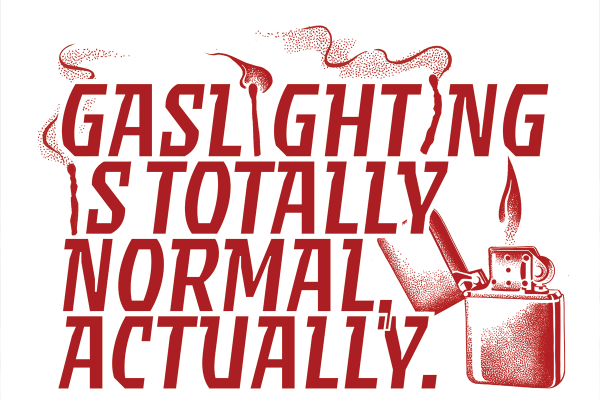
OPINION: Gaslighting is totally normal, actually. (a response)
Gaslighting is totally normal, and I can’t believe you didn’t know that. Assuming you’re a loyal Critic reader, I’m sure you know all about gaslighting by now. We can’t seem to publish an issue without mentioning the word, and we even ran a feature earlier this year wholly dedicated to it. It had its merits and was definitely memorable, but I hated to see such a benign and commonplace topic demonised in this manner, which is why I felt motivated to write a response. Generally speaking, students are a pretty well-educated population, so you’ll trust me when I say this: Gaslighting is normal. Duh. Gaslighting is so normal, in fact, that it was Merriam-Webster’s word of 2022. I won’t patronise you by defining it, since you really should know what it means by now. Okay, well, to spare you the embarrassment of messing it up in front of your friends like you always seem to, gaslighting is persistent deception for one’s own gain, usually characterised by causing the “victim” to question their memories, perception, or even sanity. That’s where my issues with the prior Critic article come in – it characterised a lot of manipulation as gaslighting when it was just that: manipulation. Manipulation is extraordinarily commonplace – a lot of normal social etiquette involves manipulation. When you want the last slice of cake, how often do you actually say so? Versus being like, “So who wants the last piece?” In older generations it’s even worse: how many times have you watched your mum and aunty do the whole, “Oh, that was delicious but I’m so full, you have it” ritual. Just eat the fucking sponge, Sandra. See what I mean? Good, I figured. If every day social manipulation is this dance of reading between the lines, then gaslighting is when you leave no space between said lines and blame the other person for not magically getting it. That’s where my main argument against Critic lies, which I’m sure you’ve spotted by now. The Uni isn’t “gaslighting” us – bureaucratic PR jargon is as nonsensical to them as it is to us. If it’s intended to be misinterpreted and you fall into the trap of misinterpretation, then maybe it’s your fault and you should watch where you’re stepping. Anyway, what’s a little manipulation just between friends? Don’t tell me you’ve never pranked one of the bros, or told the bestie that her outfit is a slay when it’s barely even a flesh wound. In a lot of these cases it’s character-building, and you’re just looking out for them in the long run. For it to be “gaslighting”, some kind of power dynamic must be involved. If you have that much power over your loved ones, or they have that much power over you, then maybe you should reconsider your relationships. You should take a long, hard look at your friends anyway. Maybe you spend too much time with them – it really can’t be good for you. You’re in therapy, right? Gaslighting is not only normal, it’s normalised. Like a lot of terms adopted into pop psychology and colloquial language, the meaning of the word has become desaturated over time. The word’s origin is the 1940 film noir Gaslight, which details an elaborate murder cover-up. The perpetrator convinces his new wife that she’s high-strung and hysterical as she “imagines” seeing the gas lamps flicker downstairs, when really the dancing flames are a result of him sneaking into the house while searching for his previous victim’s possessions. No one believes her, and it gets to the point where she’s almost institutionalised. This intentional and systematic pattern of abuse, the very questioning of one’s sanity, is almost unrecognisable from the way we use the word “gaslight” today. In reality, the things we currently refer to as “gaslighting” are relatively harmless, commonplace, and easily avoidable. If you’re reading this, you’ve probably been studying for a while, and have a good amount of media literacy. Basically, you should know better than to misappropriate the word, and you should know better than to fall for the method. True gaslighting involves a longform pattern of abusing trust, for predetermined benefit for a party with power or status. Admittedly, this trust can be minor, like a media source you generally like, and the benefit can be as simple as shitposting for pay. Gaslighting can make you question your sanity and even plant false memories – say, for example, writing a response to an article that never existed. Trust no one. Question everything. And remember: gaslighting sucks, and I can’t believe I almost made you think otherwise. This must be so embarrassing for you.
-
Features
 Issue 13 29/05/2023
Good (enough) Housekeeping: A Woman's Guide to Domestic Bliss in Dunners
Here at Critic Te Ārohi, we recognise what a relatable struggle it is to be both the perfect student and the perfect housewife. Everyone’s felt the burnout that comes from having to turn in an assignment at 12 and turn out a gorilla-grip coochie at 1, am I right? AM or PM, it’s a full-time job. Now that women have evolved the ability to read, know that you’re not alone (you never should be, as your husband must accompany you everywhere) and we’re here to help with specially-curated tips on womanhood from people who definitely have spoken to girls before. You’re literally so valid, bestie!


