-
Columns
Call Me By Your (Latin/Indigenous/English) Name
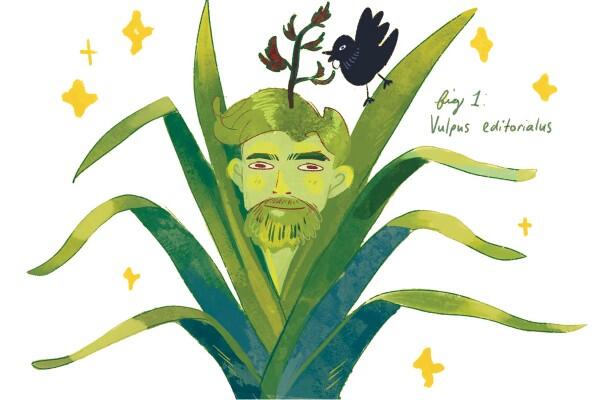
Human brains are not designed to sit at a desk and memorise content for hours on end, they’re built to remember stories. When we stop thinking in terms of stories, we’re setting ourselves up for failure. This is especially poignant in the grown-up sciences, which have traditionally felt like they have to be super serious, and can’t pay attention to things like myth and story.
-
News

Saucy Debacle: Resolved
Two days after publishing the Night ‘n Day sauce debacle, Flynn told Critic Te Arohi that his $300 fine had been revoked. “Obviously it’s great the manager [Matt Lane] revoked the fine,” but “it’s a shame the police and media had to be involved before this could happen,” said Flynn. Flynn was adamant that he would’ve taken the matter to court had it not been for the resolution. “I didn’t feel comfortable paying them such an extortionate fine over an honest misunderstanding,” said Flynn. Plus, since he put the sauce back upon being stopped by the security guard, Flynn didn’t even get to eat the sauce that started this whole thing. However, the legal standing of the trespass notice that accompanied the fine is slightly more contentious. Although this isn’t of much concern anymore for Flynn, who said “I’m not interested in ever going back to a Night ‘n Day,” to which manager Matt Lane allegedly responded via phone call, “Right, okay”. Flynn advises anyone in a similar situation to himself to “be honest and cooperate” while also “standing up for yourself” and reaching out for support. Incidentally, this was the advice his mum gave him. So Critic Te Arohi advises reaching out to Flynn’s mum if you ever find yourself between a rock and a 90c packet of sauce.
-
News
Busted Breatha Budgets Boosted
With the cost of rent, fuel and food skyrocketing (looking at you, tomatoes), the Government’s plans to increase Student Allowance and Loan payments have been cautiously welcomed by cash-strapped students.
-
News

$9,000 from Dead Clubs to be Reappropriated by OUSA
$9,000 from inactive clubs has been sitting in an OUSA bank account untouched for at least six years. This money will get redistributed, with $7,200 probably going back to Clubs & Socs.
-
News
New Club Wants To “Make Composting Sexy Again”
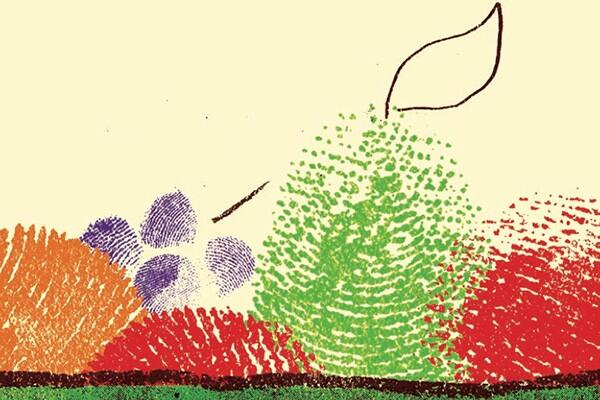
A new club at Otago Uni wants to raise awareness about how food choices can make a big difference to our planet and our pockets. Their priorities include encouraging students to forage, compost, and stop throwing out so much food.
-
News

Church Works With Student Groups To Host Pride Service
Last Sunday, St. Paul’s Cathedral hosted a “queer-affirming reflective service” alongside Dunedin Pride, the Student Christian Movement and representatives from St. Hilda’s Collegiate School. This is believed to be the first service of its kind in Dunedin.
-
News

Rugby Crowd Appeared to Behave Well
The deafening screams of thousands signalled the start of something wonderful last Saturday. At 4:35 pm, with Covid-19 restrictions loosened just the day before, Forsyth Barr Stadium opened its various gates to the rugby-starved masses. This gave students their first taste of life in the Zoo this season.
-
News
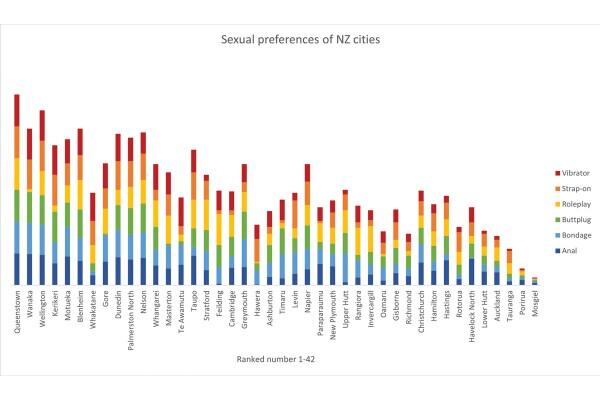
Otago Towns Come First, Last in Map of NZ’s “Sexiest Cities”
Lovehoney, an online sex toy shop, recently revealed their list of New Zealand’s “sexiest cities”. Using a combination of search and sales data, they compiled an interactive ‘Sex Map’ power-ranking 42 of Aotearoa’s towns and cities on their kinks, favourite toys, popular fantasies, “overall sexiness” and much more. Otago towns represented the dominant top and power bottom of this list.
-
News

Death Star once more a Fully Operational Battle Station
Like its namesake, the post-mandate rager at Castle Street’s Death Star was structurally questionable but fully operational. It was also full of massive fucking weapons.
-
News

The Great Exec Quarterly Report Round Up
Thrice a year, the OUSA exec team submit reports on what they’ve been up to. We’ve summarised those here for your convenience.
-
Features
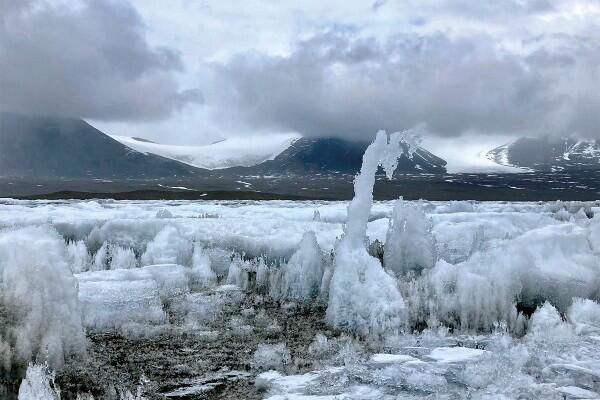
The Great White: Students in Antarctica
Will was soaking in a 250 litre drum filled with hot water. Hundreds of metres away, in a tent, someone was watching Derry Girls. In this moment, to Will, the audio coming from that TV show was the only sound in the entire world.
-
Features
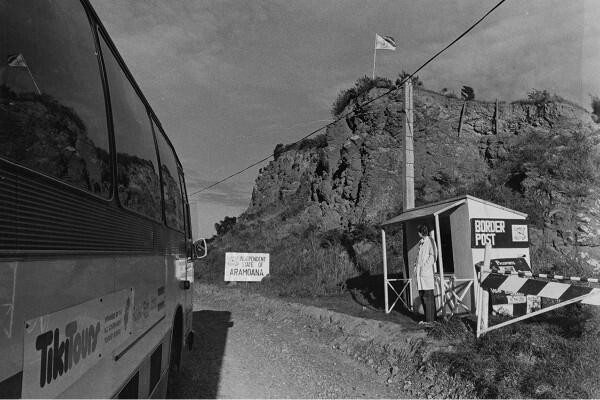
Artists, Activists, Ambassadors: when Aramoana Declared Independence
Over forty years ago, passionate residents of a small settlement, just 20km along the coast from North Dunedin, founded the Independent State Aramoana. While it never became anything close to an genuine independent nation, they fought tirelessly against the government to prevent an aluminium smelter from destroying a pristine natural environment. Through their hard work, determination, and more than a bit of luck, they won.
-
Features
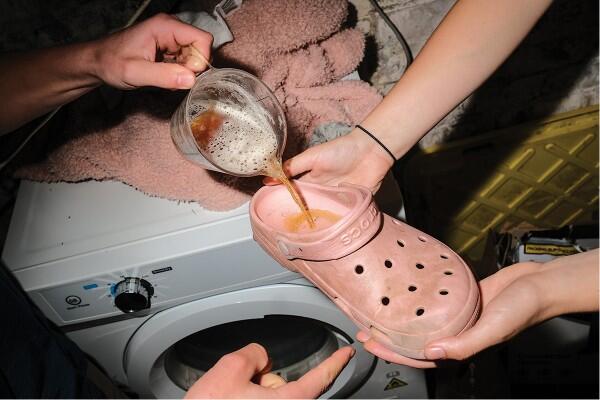
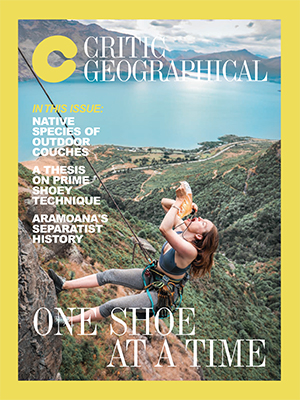
A 4-Point Methodological Approach to Shoey Perfection
Abstract: A 4-point scale was used to determine the optimal foot vessel to utilise as a booze-funnelling device in what is known colloquially as a “shoey”. This metric indicated that a sockie is the least desirable vessel, while a dress shoe is the most desirable. Further field research is needed to fully verify these claims. Please fund our research.
-
Culture

What’s new? How fields of study have evolved over time
Time moves fast. Sometimes, it’s easy to forget that the stuff you’re being taught at Uni might not be the same stuff that was being taught 20 years ago. Plate tectonics, for example, only became a fully-fledged theory in the ’60s. That means we were on the moon before we formalised the way the Earth’s crust moves. And with the rates of digital communication on the rise, the rate at which university classrooms are adopting and adapting to new discoveries is only increasing. Critic reached out to a selection of academics from all over the University to see how their fields have changed since leaving undergrad. It’s a fast-moving world, after all, and we wanted to know what revelations have occurred in the not-so-distant past. Not everything on your syllabus has been set in stone since the dawn of time. So what’s new? Senior lecturer Dr. Gwynaeth McIntyre completed her undergraduate degree in the 2000s and is always happy to chat about Classics. Although Classics is a bit of a slow moving field (it’s kind of in the name), Gwynaeth said that there have been recent revelations that she does her best to pass on to her students. “We’ve moved past the idea of a canon,” said Gwynaeth, “[previously] all classicists will have read particular texts… We’re looking a lot broader now. For instance, my students know how to read coins in my class, so we have a great collection of coins at the Otago Museum.” Instead of reading the same few-dozen historical staples, Classicists have shifted towards a broader sense of “reading”, trying to glean information from everything from baby rattles to tombstones. “In two to three decades Classics has expanded beyond the written word,” said Gwynaeth. And this is important, because written texts were provided traditionally by a very limited window of the population. This shift in perspective has encouraged the consideration of people who do not fit the criteria of educated white men, such as the “invisible Romans that are clearly the majority”. Gwynaeth said that “women are always going to be half the population, and yet if we just look at written text we don’t know their lived experience because it’s so clouded in what the elite male writers are trying to portray.” Evidence of daily life can tell you a lot about a population, a lot that you might not learn from reading the emperor’s diary. Everyday stories are the real lifeblood of Classics. “We want to hear about how someone’s neighbour stole their chicken, long ago.” The physical sciences have had some major breakthroughs, too. Professor Niels Kjaergaard in the Physics Department described a common theme in what a “discovery” often looks like in the sciences. His particular example was a new state of matter, the Bose–Einstein condensate. This is not “new”, per se, as it was first hypothesised back in the 1920s. But, in sciences like these, it takes a long time to really prove something. After all, even if you’re 99% sure that a new state of matter exists, how do you prove it beyond the chalkboard? Niels said that although the concept has been around since the ’20s, a discovery wasn’t formalised until 1995. A Nobel Prize was awarded in 2001. “It’s kind of rare that there’s a discovery and there's a Nobel Prize for it six years later.” He continued to say that there are more fundamental revolutions in physics outside of his field, like the Higgs-Boson, for example, “but that’s beyond the realm of what I teach and write about.” Dr Jenny Jandt, an entomologist (insect scientist) at the Zoology department, had a different take. “To be honest”, she said, “the thing that has changed the most is an acceptance of the fact that postgrads endure a number of mental health challenges.” This has led to an adjustment of “the support that is - somewhat at least - expected of mentors and supervisors when students are struggling.” Jenny continued to say that the other major change in her field was “about statistics, but to be honest, I don't even understand the new stats that the students are learning, and frankly, I tend to argue that they distract from the point of stats in the first place.” And while she explained that talking about how quickly the statistics have evolved “might not paint me as the best scientist”, her compassionate awareness of the mental workload of post grads certainly paints her as a fantastic human being. And that’s one of the most important parts of being a scientist. Some of these changes are global, but some are more Aotearoa-centric. Paia Taani has been lecturing for 14 years now, initially focusing on early childhood bicultural teaching. She is now the program coordinator at Te Tumu while also teaching te reo. Safe to say, she has plenty of experience and has seen a lot in her time. Recently, the biggest shift she has seen is a surge of people wanting to learn te reo. “It reflects what’s happening at a national level and government level with the big push to promote te reo Māori. Teachers now have to meet the explicit standards of using and showing te reo in the classroom. Thinking back to my undergrad experience as a student in a te reo class, the numbers were much lower. I’m teaching about 80 students this year, and there weren’t that many [back then].” Even last year, class sizes were around 40-50 students. “It’s a big reflection of what’s happening at a national level.” Paia has hopes for future changes, too. Just like everyone else right now, she aims to make online learning more engaging, but the end goal is a bilingual university with te reo “being taught in all areas. Not isolated, but woven in. If we could have more staff coming in, learning te reo, and taking it into whatever they’re teaching, like the sciences, that’d be great.” Dr Sophie Briggs, a Teaching Fellow in the Geology Department, agreed. She said that she “Totally agree[s] with Paia, and we’d love to see more te reo Māori being incorporated into teaching in the sciences too. It’s great to hear that there has been an increase in the number of people wanting to learn te reo Māori!” Sophie explained how important it is to use indigenous languages, and how they really aren’t that difficult to integrate into a science-heavy classroom. “This is something that tangata tiriti staff can do to show our respect and commitment to promoting mātauranga Māori”, said Sophie. Specifically in the Earth sciences, “Little things like using proper Māori placenames [is] super easy to do and especially important [in fields] where we’re referring to specific places a lot.” Using these original names, she said, “always brings extra meaning to what’s being taught.” Sophie is a relative newcomer to the teaching staff cohort at Otago, but she has still seen changes to her field in recent years. “I feel like in the sciences in general, inclusivity is something that has been gradually changing for the better”, said Sophie. “While some NZ scientists still don’t respect mātauranga Māori and Te Ao Māori, or accept that these perspectives make our science better, others do and are just getting on with it. Otago has some fantastic research groups who have developed genuine partnerships with Māori and are doing amazing things.” The ivory tower of academia has not always opened its doors to everyone. And as things are changing, and changing faster than perhaps ever before, it is today’s students that have the opportunity to steer these changes in whatever direction they choose.
-
Culture
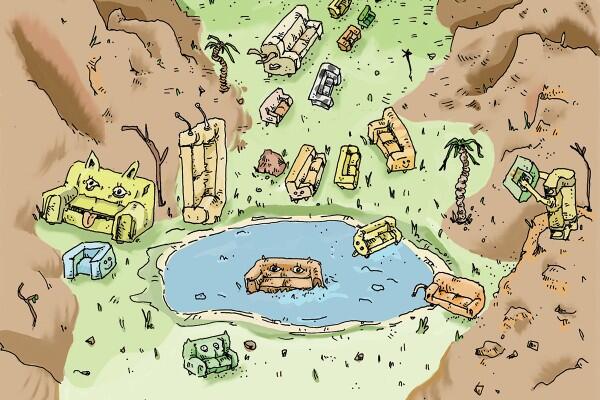
Exploring the Genus Couchus: the Outdoor Couch
A local treasure Outdoor couches are an endangered native species, unique to the flora, fauna and furniture of Ōtepoti Dunedin. Made of cheap, decaying foam and ugly fabric, outdoor couches can be found proudly perching on porches and backyards throughout North Dunedin, despite being better suited to your nan’s living room or maybe a counsellor’s office.
-
Culture
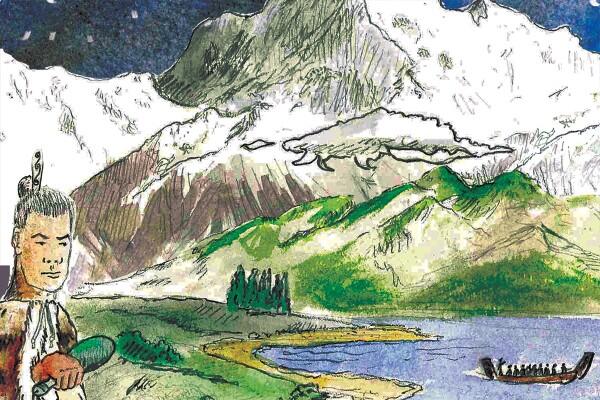
Te Waipounamu:
Te Waipounamu is home to Ngāi Tahu, the mana whenua of the land. It’s full of a rich history and culture, with endless stories to be told, and is one of the most beautiful places in Aotearoa, perhaps even the world. Oftentimes as students, we can get sucked into the vacuum that is Ōtepoti. When it comes time for a mid-sem roadie with your mates, many people often go to the tourist hubs of Wānaka or Queenstown, but there is plenty of territory outside of this that you may not have even explored or heard of. So next time you want to head off on a roadie, consider making these destinations a stop.
-
Culture
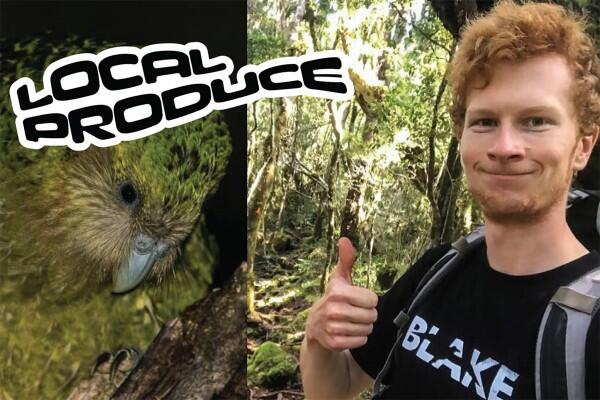
Local Produce: Oscar Thomas
Oscar Thomas is a 21-year-old wildlife photographer and author, studying Zoology and Ecology here at Otago University. Oscar is a Blake Ambassador, and a recipient of Otago’s True Young Explorers Scholarship. His book, “A Naturalist's Guide to the Birds of New Zealand'' was published to great success in 2020. Critic sat down to chat with Oscar about how he got into photography, his book, and what his future goals and plans are.
-
Columns

Skuxx Food | Rocket Pesto
This is my go-to pesto recipe as it makes HEAPS and is cheaper than making a traditional homemade pesto (which is made from fresh basil and pine nuts). Top tip: add this to some cooked pasta and your flatties will go wild. Check out @skuxxfood on Instagram for some pesto-pasta inspo.
-
Columns

Hardy’s 1L (all of it, it’s all the same)
Hardy’s is perhaps the most widely consumed wine in Dunedin. Not a BYO goes by where a bottle does not appear. The iconic one litre bottle towers over the laughably dainty 750 mL bottles on the table. But Hardy’s is also special in another respect: it is utterly shit. It is a symbol of the depraved lengths that anyone with a student loan will turn to just to squeeze a few extra standards out of a bottle.
-
Columns
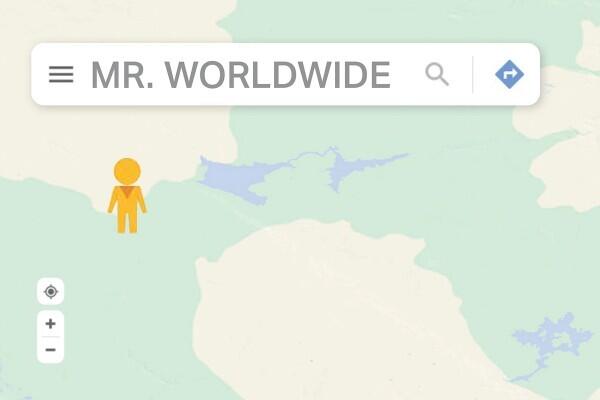
Snoop Dog
In this column, we’ll be using the internet to try to figure out exactly where people took their random photos.
-
Columns

Moaningful Confessions | See you later, phallus-gater. In a while, Crocs-odile
I hadn’t had a root since the world’s greatest heartbreak hit me a year earlier. I was ready. It was my time of the month, I was wearing my lucky dress and my favourite Crocs. My way of flirting with everyone and anyone was to insist that after every nang, you smooch the person next to you. And I had brought a lot of nangs. Eventually, one of the smooches went on a bit longer than the rest. I paused the snog and decided that this exact moment was the perfect time to do my first ever line of ket. Recommence the make out session.
-
Columns

Horoscopes: Week 6
Aquarius Jan 20 - Feb 18 It’s time to fill your life with more wholesome hobbies to ward off the feelings of depression and loneliness. Try going to the farmers market, or knitting, or writing a book about how fucked everything is.


