
-
Columns
Editorial | Issue 6
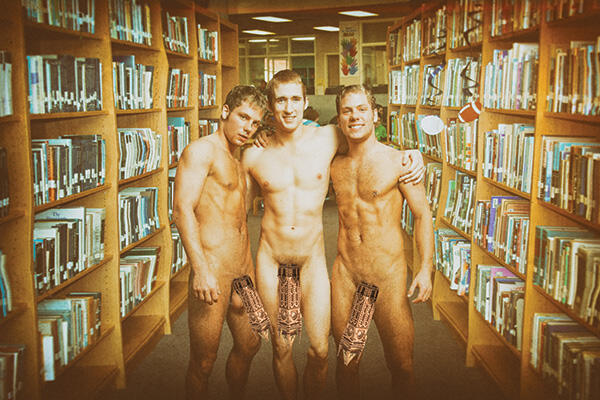
Last week we held a competition for you to choose which Hyde Street photo would make the cover of Critic. You went nuts. I tried to rig it by putting my favourite four photos at the start of the album but, no, you social media whizzkids could not be fooled. It’s time everyone got better taste though. By a mile, the photo with the guy who wore a bra and had a teddy strapped on facing his man parts had the most likes. But there was no way I was putting that on the cover of this classy mag. Seriously, people? A lot of students, believe it or not, haven’t seen that classic, 21 & Over, so a teddy bear stuffed down someone’s pants would be rather disturbing to the small children in town who occasionally see Critic lying about. And that poor guy is probably wondering, “Why is there a teddy bear glued to my penis?” But he did look like he was having fun. Almost as much fun as the rest of us on Hyde. Aside from the idiots who got themselves arrested, it was a bloody great day. Everyone I spoke to seemed to be having a whale of a time, and every year the event gets safer and more organised. It’s a shame the media (yes, you ODT) decide to focus on the shit side of it all too often. Of course the police are never going to encourage a party where everyone gets pretty white girl wastey, but I spoke to a lot of cops that day and they all seemed happy. At one of last year’s rugby sevens matches, there were 20 arrests and 270 people removed from the stadium. See? There are morons everywhere — no need to paint the whole student population with a tainted image. The point of the police giving the party a bad rap is to make OUSA, and the others involved in organising it, rethink how they might make it even better next year. One idea I’ve already heard has been bringing the kegs back to Hyde and not allowing any other alcohol — that could actually be an awesome idea (providing supply met demand, of course!). Another idea is to not let those who are at an incomprehensible level of drunk into the event. That’s the process for a party anywhere else. What’s worse is when you see TV news reporters using footage from previous years to show everyone what a ruckus bunch we apparently are. That’s not even journalism — it’s a historical documentary. Josie Cochrane Critic Editor
-
Columns

ODT Watch | Issue 6
The beer was chilled and the kegs were flowing as the last bastion of Scarfie culture took place on Saturday 21 March. Following the trend current in Invercargill, Dunedin’s own “code brown” situation occurred last weekend at Moana Pool, with those wanting a “leisurely” swim needing to head out to the harbour for a “free” swim. Next time you’re heading out of the North D bubble to go on a camping trip, make sure it’s not to an Arctic island. The ODT features its own gambling section now, with tips being given for the Pick6 at Methven in the weekend. However, the chat does sound slightly sinister, with one stand-out sentence being “if you wanted to have one rough one here, it would be Alan Golightly.” A witty dragging on the coat-tails of Keeping up with the Kardashians, this week sees a feature of four Dunedin sisters being likened to the Kardashians. At least they are a smarter, savvier and less cringe-worthy version.
-
News

Government Offers 90c to Solve Rent Crisis
StudyLink’s Annual General Adjustment is set to come into effect from 1 April 2015, meaning that student allowances and student loan living costs will rise just 0.51 per cent. Social Development Minister Anne Tolley announced this year’s increase, stating: “Rates and thresholds for a range of Work and Income and StudyLink assistance will rise to keep up with increasing living costs … These increases help make sure people who rely on state assistance aren’t disadvantaged by inflation.” Despite Tolley’s statements, figures show that rents are rising at a much faster rate than student living costs and allowances. When the loan scheme was introduced in 1993, rent in Dunedin averaged $50.61 per student. Housing costs only took up one-third of a student’s weekly allowance. In 2014, average weekly rent came to $120.18. Tolley said StudyLink assistance rises each year to keep up with inflation, yet last year students who received living costs spent an average of 70 per cent of their weekly payment on rent. Students receiving an allowance with the added $40 accommodation benefit were spending 56 per cent of it on rent. Since 2009, student loan living costs, which were $160.70, have risen by only 9.52 per cent to $175.96 in 2014. The increase set to come into effect on 1 April will see the maximum living costs raised to $176.86. If rent remains at an average of $120.18, even though patterns show an increase each year, students will still be spending 68 per cent of their payment on rent. Student rents in Dunedin have increased by $23.45, or 19.52 per cent, since 2010. Allowances and loans have increased by a mere $9.52, or 11.75 per cent, in the same period. In 2011, 66 per cent of full-time students at Otago relied on living costs for their income. In 2012 this rose to 67 per cent, and in 2013 it jumped to 71 per cent. For these students, housing costs are quickly outpacing the level of payment they are receiving weekly. These students are not eligible for the $40 accommodation benefit. In the past, those receiving a student allowance were able to keep up with increased housing costs due to the allowed accommodation benefit. In 2012, however, Dunedin reached their $40 per week, and the accommodation benefit has been stuck here since Therefore, as rents continue to rise, the amount of allowance students receive each week increases by very little. The proportion of students receiving an allowance was 44 per cent in 2011, 42 per cent in 2012 and 34 per cent in 2013. The maximum allowance, including maximum accommodation benefit, was $191.70 in 2009. This has only risen 11.75 per cent to $214.21 in 2014. Thanks to NZUSA for providing these figures.
-
News

Execrable | Issue 6
This week’s executive meeting was delayed for a few days due to “weekend activities causing fatigue.” Judging by the images on our Facebook page, Critic assumes the fatigue was alcohol-related. The meeting began with the executives, the whole five who attended, breaking down the hours of work they had done that week. Recreation Officer Johnny Martin was “quite satisfied” he had completed his ten hours of work. Recreation Officer Payal Ramritu was confused with the new process of discussing the time they had spent as she “got really into timesheets.” Vice-President Isaac Yu had done precisely 20 hours and 13 minutes, and Finance Officer Nina Harrap and Colleges Officer TaoTao Li were unsure. President Paul Hunt worked 107 hours due to weekend activities involving Hyde Street and the media coverage that followed. Yes, 107 hours! This wasn’t discussed further, but we hope Hunt got the 8.5 hours of sleep per night left available to him. The executive was reminded that their reports were due at 1pm the following day, to which Li said “oh shit” with a mouth full of potatoes. A decision was made for OUSA to renew its membership to Volunteer Services Abroad after withdrawing last year. The membership will cost $100 annually, which Hunt noted was not a great deal of money. Hunt and Li had met with VSA to get “a background of what it is, why it is good, and where the $100 goes to.” Contrary to the remarks made by 2014’s Admin Vice-President last year, it was discovered that VSA “was not sending students away on holidays.” The executive agreed that students, the community and the nations where the students volunteer all benefit from the programme. When the subscription renewal takes place in June, the executive will rejoin. The team voted on the long-standing issue of a pro-life group wanting to be affiliated with OUSA. Over the last month Martin has been meeting with the group to “form a constitution that both parties are satisfied with.” The constitution states that the group cannot circulate material that contradicts information provided by Student Health. They are also only ever allowed to refer individuals to Student Health. If these rules are broken, the group’s affiliation will be reconsidered. The Dunedin Pro-Life group and the Dunedin Feminist Discussion group were also “mostly” in favour of the affiliation. Both parties say the affiliation is positive as it encourages discussion. The executive moved that the group be officially affiliated to OUSA, though Ramritu abstained. The motion was still passed as the majority had said yes. The executive also agreed to implement a buy-back programme for glass bottles; this would be run with the university and the Dunedin City Council. Hunt said there are concerns from the wider community about glass and bottle breaking: “I think it’s important we do our bit to keep the student area clean.” Harrap said she would help run the programme as she would “like to do more” in her role. OUSA has run a similar scheme in the past where they bought back empty glass bottles for 10c. The amount per bottle for this year’s scheme has not yet been decided. By-Election Results T he results are in for the OUSA by-election that ran from Monday 23 to Thursday 26 March 2015. The election was held for the positions of International Officer, whose seat has been empty for over a year, and Postgraduate Officer, after Claire Mitchell resigned. 31 students voted in total. 21 students voted for the Postgraduate position. Of these, 20 votes went to candidate Christopher Jackson and one went to no confidence. Ten students voted for the International Officer. Nine people voted for candidate Toa Sailusi and one for no confidence. Jackson and Sailusi will begin their positions immediately, with their first executive meeting being held Monday 30 March.
-
News
Teaching Students Want To Go To Class Camp
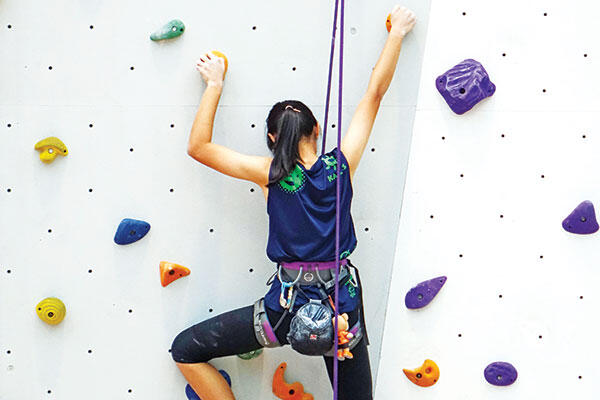
The College of Education has come under fire from students after final-year teaching students were refused official study leave to attend school camps. Sandor Toth, who has recently returned from a school camp despite not being granted leave, has criticised the school for not accepting what he says is “something [every teacher] needs to experience … [Camps are] something you cannot learn in a classroom.” Shaun Robinson claimed that the reason for the refusal is that camps are not valued as highly as classroom-based teaching. Robinson, a final-year student, said, “To understand children outside of the classroom is essential to becoming an effective teacher. I believe it is so important to bond with students not only in, but outside the classroom as well.” Toth said he has applied for leave in the past and has had “permission from all of [his] individual tutors.” However, “the college has still denied it because it doesn’t fit with what the university says is a good enough reason.” Toth said, “I’ve brought it up with teachers, and every person I’ve talked to sees no reason” as to why students should be refused official leave. Robinson said, “It is really hard in our last year to take time off, and I understand the content is a step up this year and classes are extremely important, but I also think we should be able to have leave for something that involves our lives heavily, which is the school life.” Toth added, “It almost makes you feel as though going on school camp is a dissident thing to do, when really it should be encouraged.” He went on to highlight that he has received a reference from a teacher at the camp he attended to add to his CV. “That is something that is going to help me when I am looking for jobs after this year. It will help because it shows I am prepared for a school camp.” Coordinator for Professional Practice at the School of Education, Raylene Galvin, responded, “It is acknowledged that camp is valuable but, given the university policy, students are informed that they must make individual decisions on this matter.” Toth claimed that by missing classes due to camp and not receiving official leave, the College of Education can, “after two absences, send you a letter saying you need to pick [your attendance] up.” Following three or four absences, they can “reserve the right to stop you from finishing the year, leaving you to face doing the year over again.” A College of Education course reader for EDPR332, a professional practice paper, also states: “We reserve the right to not allocate you a place in practicum where we determine you are not sufficiently prepared. This could result in failure of the entire professional studies paper for that year.” Galvin, however, said, “Those who do choose to attend camp [would face] no negative consequences.” In fact, she argued that students who decided to attend the camp “made the necessary arrangements for their classes/work, and are doing fine in the programme.” The students informed the school a month before the camp, and “worked on adjusting their schedules.” Galvin said these students have “expressed sincere appreciation for the support given by the college.” Critic also obtained an email sent to the students regarding the camp, which stated that the college was not able to officially grant leave “even though it is a wonderful experience and great for building relationships with the children.” The students were advised that it was their own decision to miss the classes and were asked to email their lecturers giving reasons as to why they would not be attending. “In the past,” the email read, “we have suggested that students attend for part of the camp time and by temporarily changing streams for most classes in that week.”
-
News

Fundraiser for Pam Victims
L ast Monday the University of Otago held a concert to raise funds for Pacific Island nations. On 13 March, Cyclone Pam hit Tuvalu, the Solomon Islands, Kiribati and Vanuatu. Vanuatu was hit the hardest, with around 132,000 people affected. Pam was the worst natural disaster to ever hit the nation. The night raised a total of $3,200; this was collected by the National President of Red Cross NZ, Dr Jenny McMahon. Pacific Islands Centre Manager, Tofilau Nina Kirifi-Alai, said University of Otago staff, students, community leaders and members of the public were “treated to Pacific performances from the talented University of Otago Pacificana, Ni-Vanuatu Mosuakea String Band, the Samoan community, various ethnic groups and students — Metitilani Alo (Music), Eden Iati (Politics) and Eliana Viali (Physio) — and responded with exceptional generosity.” “While raising funds for the affected island nations was excellent, being able to bring people together to pray, mourn, sing and dance was also a major accomplishment for the organising committee,” said Nina. Greg Hughson, University Chaplain, said the fundraiser was a great success. “It was wonderful that we were able to bring together so many talented singers, dancers and musicians to create such an awesome concert at relatively short notice,” said Hughson. “We wanted to arrange something as soon as possible to enable our university and wider communities to come together to demonstrate our support for the victims of Cyclone Pam. Having the National President of the NZ Red Cross, Dr Jenny McMahon attend and thank us for the money raised, was an added bonus. The total amount raised will go to the Cyclone Pam relief effort,” he said. At the concert McMahon spoke of what the countries will face in the next two to three months “as the devastation caused by the cyclone slips out of the media limelight.” She urged those who are “in a position to donate, please consider doing so.”
-
News
Proctology | Issue 6
H yde Street 2015 has been a success, despite the media coverage in the days after the event. “It was in general a good fun event,” the proctor said. “Most people that went enjoyed it.” The proctor spoke of the media taking “excessive delight in highlighting the few problems” that occurred at Hyde Street. Media have tended to concentrate on the damage to the ambulance vehicle rather than the fact that there were very few other issues, according to the proctor. “Nobody was on roofs, there were no thefts or burglaries … no assaults, no fires, no glass … where are all the problems they were screaming about?” He said when you take into consideration the previous years of Hyde Street, “it is a world away from what it was.” Each year is getting better as “the expertise and skills of all the parties that are joining in the running of it grow. It will just continue to get better.” “The media loves numbers, and they will trumpet the fact that 12 people got arrested … but out of 3,500 … I think only half of those were students.” Six students have been in the proctor’s office regarding their behaviour at the event, and one more student is expected. These were students who “transgressed enough to be taken away by police.” The students will face no further charges from police; they will be given community service by the university — “a number of community hours will be done.” The number of students who ended up in the proctor’s office was “pretty similar” to the last two years. Before 2013, “the numbers go up quite a bit,” with around 25 students being arrested. “Once again, the majority [were] not students.” This said, “There has always got to be a question asked, is [Hyde Street] a necessary thing … do we count up the dollars and balance it against a day’s fun for students?” He said it doesn’t help this when “people attending the party … do something silly and get locked up.” The night which followed the event was very much “a standard Saturday night.” If anything, “the rain made it a little quieter.” In other news, a data projector which was stolen from the university last year has been recovered in a student flat. A visit was made to the flat, and the students admitted they had taken it as “a bit of a prank.” The students apologised, and the proctor pointed out “the degree they were hoping to get would be seriously offset by a burglary charge.” “People who still have [stolen items] from last year, don’t think it’s been forgotten … all of those road signs in the flats, we know that they weren’t there when you arrived.”
-
News
Stocks Erected in Memory of Former Proctor
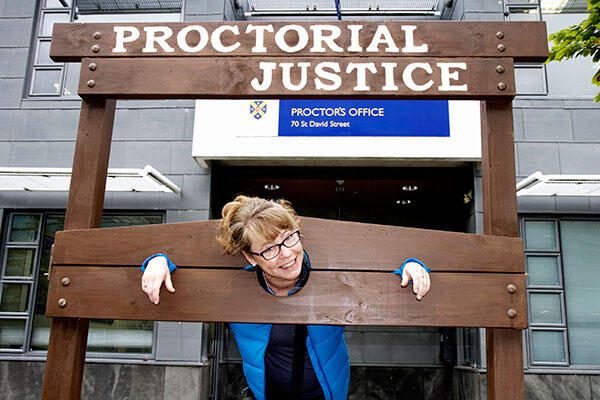
A set of stocks, emblazoned with the words “Proctorial Justice” in large gold letters, have been erected outside the proctor’s office. Unveiled at a ceremony on 25 March, the stocks were erected to commemorate the life and service of former Proctor Ron Chambers. Chambers, who served for 21 years from 1980 to 2001, passed away late last year. In his speech at the ceremony, current Proctor Simon Thompson told the story of how the proctor’s office used to be a little red-brick house, which stood where the Centre for Innovation stands today. One night, a set of stocks “magically” appeared in the front yard; it is believed this was due to Chambers’ tough attitude. The stocks were cemented in place, and stood as a tourist attraction for years until the house was removed to make way for the Centre of Innovation. Rumours have always circulated as to the culprits behind the stocks; Thompson said, “I prefer to believe it was fairies.” When the old proctor’s office was demolished and Chambers relocated, the original stocks were put into storage for several years with Property Services. A lengthy search for the stocks yielded no results, and their current whereabouts remain unknown. After overhearing a passing remark from the vice-chancellor on the subject, Deputy Proctor Andrew Ferguson decided to take on the task of recreating the stocks himself. “A month later,” said Thompson, “we had a new set of stocks.” The memorial was unveiled by two of Chambers’ children, Sharon and Iain. His daughter Sharon said that the stocks were “the best possible thing that could happen to memorialise [her father] at university.” After trying the stocks for the first time, she remarked that they are “not actually very pleasant.” A passing audience member then proceeded to ask if anybody had any rotten fruit to throw. The Ron Chambers Memorial Stocks are fully functional, with spaces for the victim’s head and both hands, as well as a handy catch that can only be undone by a second party. They are expected to be popular with tour groups passing through wishing to take novelty photographs, as they make the proctor’s office much more interesting. To prevent students from locking their friends in them during drunken escapades, they are going to be padlocked and within view of security cameras during the night.
-
News

A Date with Nicky Hager
Last week, Zahra Shahtahmasebi caught up with investigative journalist, Nicky Hager. Hager is most known for his books Secrets and Lies, The Hollow Men, Seeds of Distrust and last year’s Dirty Politics. Recently, Hager has been working with computer professional and whistleblower, Edward Snowden, to reveal evidence that New Zealand has been spying on the South Pacific on a larger scale than was realised. Critic: The election last year saw one of the worst voting numbers in history; despite the revelations that came to light [through Dirty Politics] a large number of people didn’t attempt to change the government. What do you think about that — is it just a sense of apathy, do we not care? Hager: Apathy is the word that’s used when you’re blaming the public for the political system. You’re blaming individual by individual. Why do people not vote? Because they feel alienated from the political system. Taking my book out of the equation, what we had was an election which was, for many people, especially coming from the government and the dominant financial media position — it was a policy-free election. John Key was travelling up the country having “selfies” taken of himself and there was no policy coming out, there was just smiles. You have nothing going on, quieten it all down, hope that people don’t even know there’s an election on practically, that they’re just going to go to the supermarket that morning and won’t even notice. People make the mistake that they think that if you have a three-yearly election that you live in a democracy and the other countries that don’t have elections aren’t democracies. But it’s not a democracy if you’re not having information and real debate, real engagement, and people feel that. They feel alienated and they feel it doesn’t matter what they say or think because the same policies keep going — they don’t get any richer and the things they care about don’t happen so they switch off. In fact, I think that the scariest thing that I have read about in many years about election strategy coming out of the US Republican party is when clever strategists figure out how to turn off sections of the public so they don’t vote — it’s a strategy in gaining their share in the election. Critic: In the case of sending troops to Iraq, for example, should we as New Zealanders trust that Key knows what he’s doing and can make the right decisions? Hager: Joining wars undermines New Zealand terribly and goes against a lot of our character as a nation. Foreign policy isn’t another entertainment channel on the TV, it really matters. I believe that John Key, our current prime minister, is a shrewd, effective politician, in the sense of negotiating issues and weaving his way around the political crises that come along. He’s a money man, so I don’t think it’s surprising that when he comes into the job that we learn that he sounds like a caricature of a rightwing politician who does things like “get some guts and go and join the war” because our traditional friends are there. Those are the words somebody uses when there is no subtlety in their perspective and no reading behind it. Critic: We act like we should be spying on our neighbours as if we have the right to, yet these Pacific countries that we are spying on are supposed to be our friends. Do you think that spying is necessary? Hager: I think that most countries in the world do not spy on other countries. It is not the normal state of the world. It is the big powers that do it to gain greater influence in the world. When you are a whole country with a population the size of a medium-sized city overseas the idea that this is a natural thing for us is sort of stretched from the beginning. The reason why we spy on the South Pacific states is not because we need or use the intelligence, it is 95 per cent because we are doing it to satisfy our place in the American intelligence alliance. We can argue as if it might be rational that we’re doing it, and say when you’ve got a micro state like Tuvalu and it’s going to go into negotiation with America over its fishing industry which might be its main resource that it can support itself with. New Zealand spies on the little country which is our supposed friend, collects the information on negotiations and gives it to the powerful American companies. Now, what is the moral position in that? What did that have to do with the security or safety of New Zealand? It just doesn’t stand up. Critic: As well as collecting data on the South Pacific, the US by extent also collects data on New Zealanders. In your opinion, what assurance do we have that that information is safe from third-party organisations? Hager: The way these big intelligence agencies work is they are very secretive; there are big walls around them. The GCSB, their information doesn’t tend to leak out to private companies or private investigators — it’s too secret. So we need a realistic view of what the risks are and, for New Zealanders, first of all, as far as I know, the GCSB does not spy within New Zealand, which is a very good thing and may it stay that way, but when New Zealanders go into an area which is being spied on, like the South Pacific, the main defence is that people aren’t targets. What I would say about civil liberties is that civil liberties don’t fall equally — when there’s a problem with surveillance it’s not that everyone through society discovers they’ve got problems, most people’s lives go on unchanged, but that doesn’t make it all right. There will be some sector of society which is taking the brunt of it — for example, with the war on terror and so on it’s Muslim people who are having a problem. Critic: In parliamentary question time, John Key recently said that there is no difference between what his government is doing [when it comes to spying] and what was put in place by Helen Clark’s government. This is particularly prominent in the case of the Urewera raids. How much truth do you think there in this claim? Hager: Well first of all, in terms of a moral argument, saying that another government did something isn’t a defence of your own actions. You have to defend your own actions on your own terms. Sometimes other governments didn’t do a good job either. In terms of surveillance interference with citizens, the GCSB has been spying on the South Pacific and catching New Zealanders in the South Pacific and the issues I was talking about for a long time. That has gone through various governments and I would criticise the Labour governments for their lack of interest and their lack of oversight and the lack of public debate about these issues more or less about the same as the National government. But when John Key said “nothing has changed under my government” that’s where he wasn’t accurate. What our stories were about [from the Snowden documents] was a massive increase in spying under his government. In other words, the story wasn’t that we’re spying on the South Pacific — that actually isn’t new news — but we’re actually spying on the South Pacific on a hugely greater scale. And so the answer that it happened under Helen Clark’s government isn’t answering what we were saying. Critic: For those people who are keen to learn more about the Snowden revelations and are keen followers of this kind of information, can you tell us something about what’s to come? Hager: Well, [Snowden and I] are about halfway through releasing the information. The next story that is coming out is about what New Zealand uses this system for. So, we spy on this staggering array of countries or help spy on them, as our part of the alliance, so the next story is a story about what the government decided to do with this system for its own benefits. So I’ve had access to this worldwide surveillance system where they can spy on pretty much the whole internet and the question is: What cause, what principle, and what value in the world would they use this for?
-
News

Kids Probably Going To Stay Cold and Hungry
“Feed the Kids” Bill Fails First Reading National Says It’s a Parent’s Job T he Feed the Kids bill, officially known as the Education (Breakfast and Lunch Programmes in Schools) Amendment Bill, was voted down by parliament in its first reading last week. The bill proposed supplying decile one and two schools with funding for free breakfast and lunch for students. Put to the floor on Thursday 19 March, the bill lost 61 to 59. Labour, the Green Party, the Maori Party and New Zealand First made up the 59 who were for the bill; the 61 against came from National, Act and United Future. The bill was originally submitted by former Mana Party MP Hone Harawira. However, following the loss of his Te Tai Tokerau electorate seat in 2014, it was passed on to Metiria Turei. Turei is the Green Party co-leader and a list MP for North Dunedin. The Greens were the strongest advocates for the bill, stating it was a step towards solving child poverty in New Zealand. The bill was fiercely debated in the house, despite receiving little media coverage due to the upcoming Northland by-election. Labour Justice spokesperson Jacinda Ardern was adamant that the policy echoed the work of the Helen Clark-led Labour Government in 2002 and 2005. In the first reading debate of the bill, Ardern referenced the Working for Families Bill passed in 2004. Working for Families was an amendment to the Taxation Act that, Ardern said, has “lifted over 100,000 children out of poverty.” National, however, argued that the majority of children are fed by their parents and only a small percentage of children at school are not receiving meals. When questioned about the necessity of the bill in parliament, Prime Minister John Key said “Yes, there is an issue where some children come to school without lunch. That number of children is relatively low.” The government further argued that it already contributes to programmes that address the issue. KidsCan, a charity that works to help children in poverty, supplies children with things such as clothes and food. In 2013, the National Government contributed $168,810 to the programme. The Feed the Kids Bill was set to cost $100 million annually. Minister of Local Government, Social Housing and State Services, Paula Bennett, argued that it is the parent’s responsibility to feed their children. This received backlash from opposition parties, with Ardern stating that parents of children in low-decile areas simply cannot afford to.
-
News
It’s the Final Countdown…
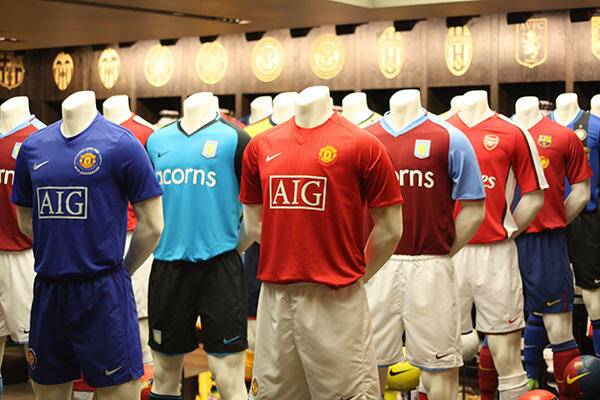
No, we are not talking about the catchy Swedish pop-metal anthem that peaked at number 12 on the New Zealand Charts in 1987 (and may still get pumped into the Zoo on the odd occasion). This week we are talking about Europe’s top domestic football leagues, which are into their final countdown towards the end of the season in May. England — Premier League As they have been at the top of the table since the start of the season, few people would bet on Chelsea throwing it away now. Their closest rivals, Manchester City, have suffered a dip in form and have not capitalised on some of Chelsea’s surprising draws recently. The race for the top four and is probably going to be the most exciting battle to watch as this is likely to go down to the last round, with Manchester United and Arsenal holding the advantage over Liverpool, Southampton and Tottenham, who are still in the mix. Spain — La Liga It is Groundhog Day in Spain as the superpowers of Real Madrid and Barcelona are in a two-horse race for the title again, although Barcelona’s victory over Real in the “El Clasico” derby between the two has definitely tipped things in their favour. Last season’s surprise winners Atletico Madrid haven’t been able to replicate their success this year — probably because Chelsea swooped in and pinched their top striker Diego Costa and replaced him with their misfiring reject, Fernando Torres. Germany — Bundesliga Having a team made up mostly of the World-Cup-winning German team, it is no surprise that Bayern Munich have been characteristically dominant this season, only losing twice all season. Dortmund are always looking over the shoulder as Bayern inevitably swoop in for their best players, and as they are unlikely to appear in the Champions League next season, there could be another mass exodus of players and staff. Italy — Serie A It has been all about Juventus, who are all but guaranteed a fourth successive title. Juve have been utterly dominant, suffering just one defeat to mid-table battlers Genoa so far this year and are favourites to make the Champions League semi-finals. Everyone has been disappointed by the traditional powerhouse teams of AC Milan and Inter Milan, who have been splashing around the middle of the table for the past few seasons. France — Ligue 1 Barely counting as one of Europe’s “top leagues”, it is at least still a close competition as to who will win it, probably due to the fact that most of teams are equally shite more than anything. It still looks to be a three-way fight between Paris Saint-Germain, Lyon and Marseille, with Monaco just about hanging onto the leaders, although the Champions League ambitions of PSG and Monaco could harm their chances domestically. The bad times being endured by the England cricket team have been laid bare in the last few weeks, but it doesn’t get much better for English football teams in European competition as they were all unceremoniously dumped out of the Champions League in the Round of 16 stage. Manchester City never had much of a chance against Barcelona, while Chelsea and Arsenal both became victims of the controversial away-goals rule that will be abolished when I come to power. The standout game of the quarter-finals draw sees a replay of last year’s final with the local derby of Atletico Madrid vs. Real Madrid, which should provide plenty of blood, sweat, tears and passion. Rugby Roundup T he Hurricanes are on top and enjoying their best ever start to a season. The Highlanders were still unlucky to lose 13–20 to the Canes, that damn TMO spoiling the day for the Landers again, but a bonus point keeps them in the top six. Dan Carter looks to be getting back into form as the Crusaders had a classic game of two halves, coming back from 10–14 at halftime to thrash the Cheetahs 57–14 to sit just outside the top six. Over in South Africa, the Chiefs battled hard but came up just short against the Sharks with a 12–11 loss, but are still well placed in the table. A bye keeps the Blues right at the bottom, not that they would have won anyway. Top Tweets Send us your funny sports tweets to @CriticTeArohi or @danbagnz First-world problems in Wellington... Good on ya, mate. You should invite Alan from above... I think That Guy should just stick to selling sausages... Pause at the right moment to see Vettori’s “Air Jordan” impression... That is a strange choice of pets. Get another one and name it Dan...
-
News
The Backwards Step for Uni Councils
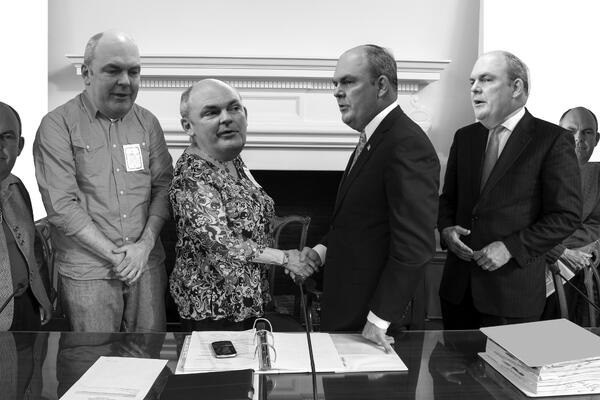
T he government has passed the Education Amendment Act (No. 2) 2015, which, among other things, will reduce university and wānanga councils nationwide. A key aspect of this is that universities are no longer required to have seats on their councils for staff and students. When the bill was at its third reading stage, Tertiary Education Minister Steven Joyce said in a press release, the “bill modernises governance arrangements for universities and wānanga by reducing council size, increasing membership flexibility and ensuring all members have relevant knowledge, skills or experience.” Many people are vehemently opposed to the move, highlighting many criticisms and arguing that decision makers have provided no evidence for such a move being a positive step. Sandra Grey, the president of the Tertiary Education Union (TEU) identified that this has been in place for polytechnics for a number of years. Legislation had provided safeguards for students and staff to be present on university councils, but following the amendment “that right has been taken away,” according to Grey. Grey continued by slamming the government’s decision on the issue, explaining “there is good reason why it was an established right and it is something that internationally is usually protected. Now we’re having to deal with the flow-on effects of that legislative change.” One of the key effects is a loss of autonomy for university councils. As government officials increase their presence on tertiary education councils, their influence is increasing in comparison with the rest of the council representatives. OUSA President Paul Hunt, who is also a member of the University of Otago Council, argues universities need “people who are directly involved and who are able to feed information to higher-level administrators. Having real-time information in discussions on the ground allows you to make better decisions.” The TEU and the New Zealand Union of Student Associations (NZUSA) have joined together for the launch of a campaign “to get one-third of seats set aside for democratically elected staff and students.” This means students and staff would choose a third of the university council. A rally occurred in support of the cause on 19 March at the University of Otago Registry steps. Both Grey and NZUSA President Rory McCourt spoke out on the issue. The campaign seeks to highlight the fact that “to have good decisions being made you need representation from people who are at the heart of that institution, so staff and students should be at the table to inform those decisions.” Joyce stated in a press release that “the changes will not affect institutional autonomy or academic freedom, which are guaranteed by section 161 of the Education Act 1989, nor will they lead to more ministerial control over councils.” Joyce’s comments have done nothing to allay the fears of the TEU or the NZUSA, which have continued to push for student and staff representation on councils. “If they are dominated by ministerial appointments, who then dominate the next group of councillors, the autonomy of our institutions is lost, and this is crucial as the staff and students are charged with being the critic and conscience of society,” said Grey. Furthermore, there seem to be no valid reasons to back up the government’s decision to implement such a change. McCourt said there is “no evidence internationally that university councils benefit from better decision-making by being smaller, which is what he [Steven Joyce] has claimed.” McCourt also highlights that many “great universities have students and staff on their councils, and generally they have much larger councils.” He pointed out the examples of Oxford and Cambridge Universities, which finished third and fifth respectively in the Times Higher Education global rankings in 2014/2015. They have “dozens and dozens of university councillors and that really helps them provide perspective. It also helps in fundraising and to ensure that the university is headed in a strategic direction that is reflective of the community’s will.” The coalition of unions is fighting for a 33 per cent representation on university councils, and was keen to add that they are by no means fighting for exclusive student and staff representation. Sandra Grey has admitted, “You need other people at the table too. You need people from government to help understand the legal implications of the decisions being made at the university. You also need people who understand teaching, learning and research too.” Universities will soon decide how many councillors to have on their councils, with the range of choice now between 8 and 12. Under previous legislation it was a choice between 12 and 20. Grey said it is expected that “most of the universities are going to go for 12-member councils, and so our aim of four seats [33 per cent staff and student representation] is totally realistic. It leaves the minister having a third of the balance of power, and the community to occupy the other third. That is a nice balance, and means they can work together collectively for the good of all of those who have a stake in our institutions.” Dr Rosemary Overell, Media, Film and Communication Lecturer at the University of Otago, attended the rally in solidarity with the TEU and NZUSA’s cause. Overell said, “bosses, in this case the government, are in it for themselves, and in it for their own power and profit, and the reason they want to control the university councils demonstrates their fear of the power of unions and the power of academics, students and other general workers at the university banding together to fight for their own rights.” Overell said university councils should consist solely of the “people who work at universities, so general staff, academic staff and students.” She believed the Act may continue the trend of encroaching on university and wānanga autonomy. The “institutions, in the legislation, are actually required to contribute to the environment, to society and to the community.” Therefore, by having councillors who may not even have affiliations with the university they are on the council for, it could create a situation where economic values are seen as more important than social or community advancement. Hunt also warned that it is “important to note that the ministerial appointments are not necessarily political cronies, although they could be,” before emphasising that the “ministerial appointments on the board now are people who anyone would elect.” Political opposition to the government’s move may be limited, but the unions do take positives from the Labour Party’s public opposition to the move. Grey admitted “it was really nice to see them plan to return staff and student representation to university councils as a legislated right.” However, legislative change is not the focus anymore as “that is a fight we have seen come and go, but what we really want to do is concentrate on making sure our councils that currently exist put in place a constitution that best represents the needs of staff, students, the community and all of the taxpayers.”
-
Features
Fence-Jumpers and First Years: You Can't Hyde
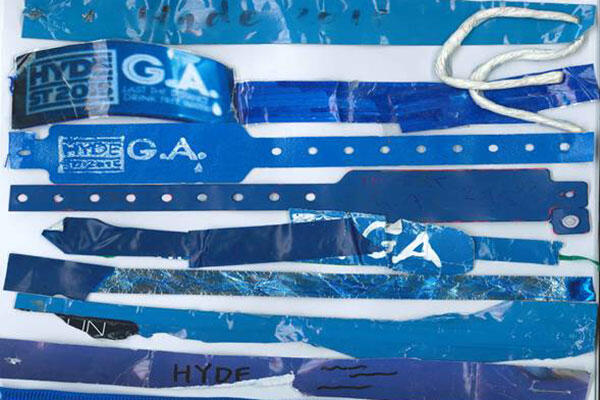
Saturday 21 March saw this year’s annual Hyde Street Party. With 4000 attendees, there were 15 arrests made. Offenders were detained mainly for disorderly and offensive behaviour, although there was one arsehole who shoulder-barged a St John ambulance on Albany Street in an incident that left a paramedic covered in broken glass. If 3988 party-goers can abstain from law-breaking and troublemaking for the day, one would hope the other 15 feel bad about their behaviour. Of the 15, 10 were students. This being the third year OUSA has taken the reins in making Hyde Street a more controlled event, and despite the negative media coverage, public opinion seems to be swaying in favour of the new rules and regulations. Temah Bunyan, a first-time attendee of the event, felt that the Hyde Street Party has always been and will continue to be a solidified part of Dunedin culture. She thought that the rules implemented were working well, saying, “No glass, limited numbers, time restrictions; it’s still heaps of fun. Drinking under controlled circumstances is good, it won’t get shut down.” One of the biggest issues surrounding number regulation in the past has been the frequency of people jumping the fences of corresponding Clyde and Leith Street properties to gain access to Hyde. This year security staff were patrolling these streets continuously throughout the day, and several properties had secondary fences put up in their backyards to prevent fence-jumpers making it onto the street. There seemed to be a surge in fence-jumping attempts following the 2pm cut-off and implementation of the one-way door policy, but security staff were on the ball and few made it through to the event. In the past, roof-caving and damage to property have been directly attributed to the actions of out-of-towners and/or first years. Many blame the out-of-towners for the irresponsible behaviours, stating that they have no respect or sense of responsibility surrounding the reputation of Otago’s students. First years, before their attendance was prohibited, were also blamed for reckless actions such as the “Dunedin appeal” and the “IDGAF” attitude. Kendall Garrud, a Hyde Street veteran and all-round Scarfie lass was among the first group of freshers to be barred from the event, and in retrospect she feels this was a wise decision. “There’s a naivety, a misplaced sense of entitlement to be way too rowdy that a lot of Otago’s freshers seem to have. I had it, and I probably would have f**ked up if I got into Hyde during my first year.” With the annual street party comes the annual backlash from news outlets who brand the event as “dangerous”. It would be hard to find the source of this negativity on the day, however, as police officers and security staff all generally seemed to be in good spirits, with most holding the same attitude as Police Officer Dan, who noted that “helping out, keeping [the students] safe, it’s our job.” Sam, another police officer stationed near the front gates, agreed that the backlash was uncalled for, saying, “Hyde Street is just like the Rugby Sevens in Wellington, except in that case it’s a bunch of grown adults doing just the same thing.” TV3’s news bulletin, which was released immediately following last Saturday’s shenanigans, not only reused footage from previous years but highlighted irrelevant material. For example, it noted that “the emphasis on speed seems to have dropped.” Critic is confused as we always thought the emphasis was always on alcohol. One News found that Inspector Mel Aitken of Dunedin’s police is confident the event can be improved in future to make Hyde Street a “safe and enjoyable social occasion for all students.” A jolly group of sailors had a few suggestions for future improvements: “More recycling bins, everywhere, just put them everywhere,” said Michael. Another student, Josh, added that “The free water roaming is great, keep that up.” Much appreciation goes out for the efforts of OUSA, St John, Dunedin police, Are You OK?, Red Frog and all other staff and volunteers on the day — special mention to everyone walking around with the “Free Water” flags as you may have prevented many a Hyde Hangover
-
Features

Humans of Hyde
For those of you oblivious hipsters out there still living in the age of Myspace and Bebo, the Facebook page Humans of New York is an arts/humanity project where a photographer in New York — you guessed it — photographs humans in New York. The core message that this project shares with us is that all the coolest and quirkiest people live in NYC, and if you don’t live there, then you’re pretty much as basic as a yoga-pants-wearing white girl in a North American suburb. The popularity of this page had us thinking about all the interesting lads and lasses around campus in possession of above-average chat. Where better to look for these quirky folk than on the street of Hyde? Waking up to the dawn of my fourth and last Hyde Street, my challenge was simple. With five hours on the clock, I had to get a decent diverse selection of Hyde characters spilling their deep and darkest secrets.
-
Culture

Christchurch’s Creative Revival
S ince the 2011 earthquake, Christchurch has been undergoing a creative revival. When I was lucky enough to visit the South Island’s biggest city, what I found there was at once shocking and awe inspiring. Some of what I saw was expected, with rubble, heavy machinery and buildings awaiting demolition dotting the streets. However, some of what I saw was not. Contemporary installations in public squares and multi-storey murals on building walls were everywhere, adding touches of light and beauty to a city in dire need of some positivity. While some of the works were commissioned by the Christchurch Art Gallery, others resulted from freelance artists who felt the city needed something to be cheerful about. One such piece is a three-storey mural that popped up almost overnight on the side of a central city club, Calendar Girls. Done in deep hues of blue and green, the mural serves as a sharp juxtaposition against the grey rubble and fluorescent construction tape that otherwise dominate the scenery. The variety among the pieces means that there is something for everyone. Just across the way from the Calendar Girls mural stands the Transitional Cathedral, an architectural work of art by Shigeru Ban. The Transitional Cathedral, located in Latimer Square, is meant to serve as a refuge for churchgoers while the ChristChurch Cathedral is under construction. Typical of Ban’s minimalist style, the cathedral is composed almost entirely of cardboard, paper, glass and wood. The selected materials honour the cathedral’s transient nature, while simultaneously creating a feeling of lightness for the congregation. The A-line ceiling creates a large communal space, and the wooden cross on the altar fosters a natural and open environment. At the back of the cathedral, colourful panels of stained glass cast a beautiful glow when the lighting is right. With ChristChurch Cathedral being a key part of the city’s centre, it’s not surprising that it inspired more works of art, such as Sarah Hughes’ public installation of a vibrant, multi-coloured flag wall. Made of green, pink, purple, orange and just about every other colour in the rainbow, Hughes’ piece is meant to mimic the shingled roof of the damaged cathedral. Hughes’ intention was to add colour to the grey and dust that covered the city when she first started working on the piece about two years after the major earthquake. Hughes’ installation is representative of the works that beautify a city undergoing reconstruction. Some pieces, on the other hand, commemorate the lives lost in the earthquake. One such installation is “185 Empty Chairs” by Peter Majendie. This piece was by far the most mesmerising I saw. Created on the first anniversary of the earthquake, each white chair represents a life lost in the disaster. The beauty of this piece is in its simplicity. All of the chairs sit together on a 185-square-metre lot but no two chairs are alike, which both creates a sense of unity and symbolises the individuality of each person it commemorates. There is an old leather armchair, fit for a grandfather or mother. A swiveling desk chair, fit for an office manager. A bar stool. Even a child’s car seat. Artists’ work in Christchurch is saving the city in more ways than one. The pieces welcome you with open arms and serve as protection from the loneliness that is inherent to a city in recovery. “185 Empty Chairs” proves the point well. It is commemorative and respectful, and, ultimately, it’s beautiful. It’s a way to honour those who have passed and to offer hope and beauty for the present and the future.
-
Culture

Satay Chicken Wraps
The struggle to nurture my body with more than just eggs on toast continues. Having eaten spaghetti and meatballs for most of last week, I was keen to mix things up a bit. This satay sauce can be used for chicken, tofu or even without a main protein player; it is delicious smothered by itself on the wrap. Make the most of the salad greens while they last and before I bombard you with endless soup recipes. Ingredients Serves 4 4 wholemeal flatbreads or wraps 2 large chicken breasts 4 large handfuls salad greens 2 carrots 1 cup shredded red cabbage fresh mint or coriander leaves ¼ cup sunflower seeds ¼ cup pumpkin seeds For the satay sauce 4 tablespoons peanut butter 4 tablespoons maple syrup 2 tablespoons tahini paste (aka sesame paste, which is super cheap at your local Asian supermarket) juice of 1 large lemon Method Mix together all of the satay ingredients so that a thick paste forms. Slice your chicken breasts into half-centimetre-thick slices and toss them in a couple of spoonfuls of the satay sauce. In a frying pan on a medium to high heat, brown the chicken pieces until golden and cooked through. Place to one side. Warm the wraps in the microwave for 20 seconds. Divide the remaining satay sauce between the four wraps and spread a thick strip of it down the middle of each. Divide the chicken over the top, followed by healthy handfuls of greens, red cabbage, grated carrot and mint or coriander leaves. Top each one off with a sprinkling of seeds for added crunch.
-
Culture

Home
Rating: 3/5 If there’s one thing that films such as The Incredibles and The Iron Giant have taught me, it’s that animated movies can hold their own as great standalone films. Home does not qualify for this. The film bites its own tail when it forces inconsistent satirical metaphor into its story and, in the process, accentuates the poor quality of the script. Following the destruction of their original planet at the hands of the tyrannical Gorg, a race of aliens known as the Boov decide to invade and inhabit Earth. All humans are shipped off to Australia and are forced to live in reconstructed reserve towns. When the eccentric yet inept Oh (Jim Parsons) accidentally sends a party invite to the whole universe (including the Gorg), he becomes a fugitive and is forced to go on the run. He teams up with invasion survivor and human, Tip (Rihanna), and the pair stop the invite reaching the Gorg and also find Tip’s kidnapped mother, Lucy (Jennifer Lopez). While the voice acting of Parsons and Rihanna is top-notch, the poor dialogue and extremely unoriginal slapstick humour littered through the film bring it down. Also, for a family-friendly film, the idea of the Boov shifting everyone into ghettos seems dark; this point is further accentuated when it is referred to as “befriending and liberating”, which also brings into question political points concerning American foreign policy. I just felt confused as to what exactly the film was attempting to discuss, as none of these issues were resolved. However, I must praise the diversity of the humans that appear, as not only was the protagonist a POC, but the supporting cast of humans was culturally diverse. Home is a visually stunning attempt to overcomplicate an unoriginal premise and market it to a younger audience in the hopes that no one will catch onto the satirical and serious elements it fails to address. It’s another Dreamworks film that I do not expect to be remembered more than a year or so from now.
-
Culture

Cinderella
Rating: 3/5 With a $95 million dollar budget and an iconic fairytale storyline, you’d assume that the directors would spice up Cinderella just a little bit. However, if you were looking for a dramatic plot twist or anything remotely original, you won’t find it here. Ella (Lily James) lives happily with her parents until her mother (Hayley Atwell) becomes sick and dies, but not before telling her to “have courage and be kind.” This is a resounding theme throughout the film and one that Ella definitely needs after her father (Ben Chaplin) marries Lady Tremaine (Cate Blanchett) and later dies after travelling overseas for business. Treated poorly by her stepmother and stepsisters, Ella is forced to move into the attic and soon gets her new nickname, Cinderella, when she falls asleep in front of the fireplace and wakes up with soot on her face. With a fairy godmother (Helena Bonham Carter) at hand, Ella’s luck changes when she gets to go to the Royal Ball, falls in love with Prince “Kit” Charming (Richard Madden) and leaves behind her glass slipper. Cue the happy ending when Kit and Ella are eventually reunited and she gets to wear the shoe again! Although Disney missed the opportunity to make a convincing and realistic heroine in Cinderella, Cate Blanchett steals the show as the evil stepmother. She sweeps onto the screen in her green gown, establishing herself as a lady who knows no kindness. Her character is well developed and perhaps the most legitimate of Disney’s villains. The convincing justification for her spite towards Cinderella shows that all characters are in search of their “happy ending.” The film’s cinematography is breathtakingly creative and, if anything, the music saves the film by making it flow seamlessly, fixing what the script fails to do. Cinderella is nothing special, but if you want to see a lighthearted and aesthetically appealing film that guarantees you a happily ever after, this is the one to watch.
-
Culture

X+Y
Rating: 4/5 X+Y is a smart drama that rides the fine line between movie and TV-drama-of-the-week by juxtaposing the life-changing events thrust upon the film’s young autistic protagonist and maths genius, Nathan Ellis (Asa Butterfield), with the everyday hassles of his condition for those around him. The audience follows Nathan on his journey to Taiwan, as he is selected to compete in the International Mathematical Olympiad Preliminary Section Contest. Being away from home, Nathan is forced to deal with a new environment, new people and a feeling he doesn’t quite understand: love. Across the board, the performances are top notch. Rafe Spall gives a very likeable, unsentimental characterisation as Nathan’s multiple-sclerosis-suffering tutor, Mr Humphreys. Eddie Marsan as competition leader, Richard, shows us the subtle twattery that can turn smart, misunderstood kids into disagreeable adults. Jo Yang as Zhang Mei, Nathan’s maths partner, displays great maturity and control in the ebb and flow of some quite complex emotional scenes and brings the audience along in trying to understand Nathan. The film’s star, Asa Butterfield, carries it all beautifully. He’s a quiet, coiled spring, ready to jump clear of any possible contact or public interaction. He tells us so much through awkward body language but never falls into affectation. However, there are some odd flaws. The film overuses its score, which seems to tell us at every turn how emotional and important everything is. With the director and actors having done so much of that legwork with the story, the ambience the music brings ends up feeling redundant. Combining a director who has a perceptive sensitivity towards the everyday reality of behavioural disorders with the authentic performances from the cast, X+Y is a film that has its heart firmly in the right place.
-
Culture

Insurgent
Rating: 3/5 Even though we’re well into 2015, it seems as though the dystopian film fad just can’t be shaken off. Insurgent picks up where Divergent left off, but this time with Robert Schwentke as director and Akiva Goldsman as the script writer. After the attack on Abnegation’s side of town (that’s where the selfless people live), Dauntless soldier and overall crazy person, Eric Coulter (Jai Courtney), finds an artefact that has the symbols of each faction. Believing that this box will help solve her divergent problem, Erudite leader and the film’s current antagonist, Jeanine Matthews (Kate Winslet), begins a witch-hunt for divergents, as they are the only ones who can pass all the box’s simulations and thus open it. Meanwhile, protagonist Tris Prior (Shailene Woodley) and her hunky boyfriend, Four (Theo James), are in the hippie commune that is Amity with her annoying brother, Caleb (Ansel Elgort), and the strangely comedic ex-antagonist, Peter Hayes (Miles Teller). Unfortunately, their time there is cut short when Eric and his fleet rudely run over some very nice vegetable gardens and Peter gives up their location, forcing Tris, Four and Caleb to jump on a train to Factionless territory. Without giving too much away, what ensues is a Dauntless reunion, a family reunion between Four and his not-so-dead mother, beating people up, a lot of running, finding out that Jeanine is killing divergents. Despite the overwhelming heat that radiates from Rialto’s “baby and me” sessions, Insurgent was an engaging and oddly hilarious film to watch. Miles Teller’s performance was what I appreciated the most, as he effortlessly transitions from comic relief to a character that will try to stab you during dinnertime. However, with so many dystopian films out there and the inevitable comparison to The Hunger Games, this film falls short. Even though Insurgent has a spectacular cast, the script lacks any room for character development. It is inundated with scenes of violence and there is no real substance or depth. Insurgent is an easy and enjoyable watch. If you’re in the mood to see science-fiction-meets-teen-romance-and-good-sarcasm-here-and-there, then this is the film for you.
-
Culture

Vivienne’s Blog
Stephen K. Leaton’s novel, Vivienne’s Blog, is described by its blurb as a psychological thriller and, to a certain extent, this is true. The titular Vivienne is seemingly delusional and dangerously obsessed with her ex-boyfriend, Callum. A court order prevents her from having personal contact with him, so she sets up a blog that requires a password to access. She then sends Callum a letter encouraging him to work out the password and read her thoughts. The novel consists of this blog, with Vivienne posting scans of the letters she sends to Callum and receives from him and his lawyers. Vivienne seems confident Callum won’t manage to unlock access to the blog, as in it she details her plans to abduct one of Callum’s twin sons. Soon she does so, intending to use the boy in a spell. At this point, the book stops being a thriller. Over half this book is made up of stories Vivienne tells the kidnapped child about her ancestors. They contain a mixture of New Zealand history with magical realism, told in very literary language. While this isn’t my personal brand of book-nerd buzz, I’m sure it is somebody’s. Somebody who would have been delighted with these stories if the blurb had mentioned what the bulk of this book actually is. Some of this book is like a thriller. A lot of it is not. Because the main plot is emotionally gripping, it is very hard to read Vivienne’s stories with the patience they probably deserve. It’s a testament to how good the ancestor sections are that I didn’t entirely resent their existence, but I didn’t enjoy them. The middle of the book has Leaton returning to the main plot in frustratingly brief segments, only to start telling yet another story about dead people Vivienne has probably made up. The stories begin to seem like padding after a while, and it becomes apparent that there wouldn’t be a book’s worth of material in Vivienne’s Blog without them. Vivienne’s Blog’s greatest flaw is the way it makes no use of the subject of blogging. Because her blog isn’t public, there’s no chance for people to make comments, which could have been interesting. Also her entries aren’t time-stamped, even though there is a final plot twist that would have greatly benefitted from having a date. Her continued access to her blog becomes a bit dubious over the novel, especially since she uses a phone to write her entries. There is also a “probably she was molested as a child” sub-plot about Vivienne’s childhood. That is a tedious cliché I have seen in everything from literary short stories to games made with RPGMaker, and never want to see again. Although Vivienne may be an unreliable narrator, she’s also a very compelling one; Vivienne’s Blog is almost worth reading just for the hilarious descriptions of how she hates everyone around her.
-
Culture

The Legend of Zelda: Majora’s Mask 3D
When The Legend Of Zelda: Ocarina of Time was released in 1998, it was hailed by many as a masterpiece. Seventeen years later, it still regularly tops Best Video Games Of All Time polls. It has the same cultural legacy and enduring appeal in the world of video games as the original Star Wars movie has in mainstream cinema. Entertainment website, IGN, hit the nail on the head when it described its 2000 sequel, Majora’s Mask, as “the Empire Strikes Back” of video games. It was a huge risk, changing up Ocarina’s winning formula, but it paid off. Though darker and weirder than Ocarina, Majora’s Mask proved to be just as thrilling an adventure as its predecessor. Freshly remastered for the Nintendo 3DS console, Majora’s Mask 3D takes an already fantastic game and improves it. Whereas Ocarina of Time had a fairly standard fantasy plot, reinforcing Joseph Campbell’s theory of the Hero with a Thousand Faces, Majora’s Mask is a more psychedelic experience from the get go. The main storyline can be described as follows: the grinning moon you see in the sky is going to fall to earth in three days’ time, and only you can stop it. Already this impending apocalypse gives Majora’s Mask a darker feel; it sounds like Lewis Carroll describing the end of the world. Adding to the voodoo atmosphere is the fact that you must utilise your Ocarina of Time to repeatedly reset this three-day period. Suddenly, there is a mind-boggling Groundhog Day aspect to Majora’s Mask. Though this endless reliving of the same three days could have made for a monotonous game, the information and items you collect contribute to the next cycle being totally different. I won’t disclose any more of how the plot plays out, because that is perhaps the best surprise Majora’s Mask has in store for you. And trust me, it has a few. As far as the gameplay goes, Majora’s Mask has aged like fine wine. World of Warcraft and other more complex role-playing games may have come out in the fifteen years since Majora, but there is something timeless to Majora gameplay that still delights in 2015. Adding to the experience are the graphical improvements and sumptuous 3D that the remaster brings to the table. Though Majora has always offered a good-looking world to explore — the land of Termina is a weird and wonderful sister to the kingdom of Hyrule in other Zelda games — it never looked quite as good as it does now. Playing with the 3D effect of my 3DS on, I felt as though I could reach inside the screen at any time. With slight improvements to the boss battles and a bit more autonomy when it comes to time travel, my big frustrations with the original Majora’s Mask have been more or less ironed out here. That said, Majora’s Mask 3D still isn’t the flawless game that Ocarina of Time was. Some of the puzzles you have to crack aren’t exactly intuitive. On top of that, the main quest in Majora’s Mask does feel a little short for a Zelda game. However, the game’s macabre atmosphere and addictive gameplay make up for that. Whether you played the original or not, Majora’s Mask 3D is well worth picking up.
-
Culture
Lightning Bolt: Fantasy Empire
Lightning Bolt are a noise-rock duo from Providence, Rhode Island. Everything about the band sounds far-fetched: both members are called Brian and one of them plays drums and sings through a gas mask while the other shreds a bass guitar strung with banjo strings. Their music is a technicolour assault of frantic percussion, distorted bass riffs and strangled vocals. The duo being as anomalous as they are, I wouldn’t blame you if you outright dismissed them as “artsy”. What makes that adjective difficult to slap on Lightning Bolt, however, is just how fun their music is. They aren’t a band for intellectual examination, but for pure visceral pleasure. Ever since their 2001 album, Ride the Skies, there has been an ecstasy to their music I can only compare to the TV show, Adventure Time. Everything about the band, from their album and song titles through to their rainbow-coloured artwork, beams with a childlike glee. And more often than not, the riffs they jackhammer into your brain are addictively melodic. YouTube the songs “Ride the Sky” or “Crown of Storms” if you want proof. Despite having such a tried-and-true formula, Lightning Bolt have made some welcome attempts to shake things up in the last few years. 2009’s psychedelic Earthly Delights sported more dynamic production and a blistering, metal-inspired immediacy. New album, Fantasy Empire, continues this sense of evolution, and as a result is the most fully realised Lightning Bolt album to date. Their first release on the Thrill Jockey record label and sixth album overall, Fantasy Empire sees their signature intensity captured in high definition. In a recent interview with Pitchfork Media, the band discussed how they deliberately deviated from the rough-as-guts approach to recording they’ve used in the past. “It was a desperate act,” said Brian Chippendale, the enigmatic drummer-vocalist of the group. “We just couldn’t make headway with our old process.” It may have been born out of desperation, but the leap they took towards higher fidelity paid off immensely. When Chippendale’s drums kick in on opener ‘The Metal East”, they don’t ride atop the surges of distorted bass from Brian Gibson, but rather anchor them. This more complementary relationship between the two Brians adds a three-dimensionality to their music. The drums, bass and vocals that comprise Lightning Bolt’s snowstorm of sound seem to illuminate one another on Fantasy Empire, rather than compete for your attention. In terms of sonic detail, there are nuances in these songs that on a previous album would have gotten lost in the blur. Having said all of that, there is a directness to the songwriting on Fantasy Empire that will surely polarise longterm fans. Though delivering hooky riffs is nothing new from the band, some people will surely lament the relative accessibility and cleaner production of Fantasy Empire as Lightning Bolt “going mainstream”. While I personally preferred the swirling psychedelia of Earthly Delights, the Lightning Bolt we know and love is still very much present on Fantasy Empire, and more tangible than ever. I already consider songs like the kaleidoscopic “Over the River and through the Woods” or the seething “King of My World” as among the band’s finest. If you are a newcomer to Lightning Bolt, I would recommend starting with 2003’s superb Wonderful Rainbow. If you are already familiar with the band, get your mitts on this album as soon as possible.
-
Culture

Horoscope | Issue 6
Do you struggle with making basic life decisions? Worried about never bumping into your campus soulmate, or whether to eat two-minute noodles for every dinner this week? Fear not, chums, for I, Madame McMystery, have gazed deep into the cosmos to reveal the secrets the planetary alignments hold in store for you! (Disclaimer: Madame McMystery is not responsible for any physical or emotional damage caused by the interpretation of her predictions and subsequent actions influenced by them). Aries Blue can be the colour of the sky on a good day, or the colour of a mouldy piece of bread. You will be blue this week, but how you deal with it is up to you. If things are heading south, blast Taylor Swift’s album because if you feel that shit, the judgement of your cruel peers is not going to matter to you one bit. Taurus You should take the bull by the horns this week and face up to whatever you’ve been avoiding. No one likes a wimp, especially you, so put on your big kid shorts and sack up. Alternatively, if you ignore the issue, it should resolve itself by mid-2016. Gemini Twinsies! Someone will wear the same outfit as you on Thursday and — I’m going to level with you here — they will wear it much better than you. Try not to let the jealous spite stop you from striking up a conversation with them though, as I see a potential friendship budding between the two of you. Cancer At noon on Friday, the thing you’ve been wanting to happen most will occur. Unfortunately it won’t happen to you because you’ll be in the library, studying like a nerd. Leo An unexpected journey will take you to exactly where you need to go. Even if it seems like you’ve ended up in the worst place imaginable, it’s honestly where you need to be. Unless you end up in Gore, because there’s absolutely nothing okay about that. Virgo Romantic endeavours are doomed this week. Pluto’s just messing your mind up and making you think that taking someone to a parking lot at 3am is super romantic. It isn’t - no matter how much chocolate and Justin Timberlake tunes you bring. Libra The alignment of the moon and Uranus this month means that you should definitely not go to any lectures on Monday at 12pm. You should also skip any other lectures you have for the day because Mondays are abominable. Scorpio Hme is where the heart is, but it’s also where your parents monitor your drinking habits. Life is full of swings and roundabouts — try not to pine for home and instead enjoy being an adult who can buy alcohol while having the responsibility of a housecat. Sagittarius You’re having trouble keeping up with the excitement of your love life, but you must make a choice about who you want to be with. Get it together, or the dreamboat with the pretty eyes will find someone else to stare at. Capricorn So you’ve had a week of sobriety after swearing off alcohol permanently after the St. Patrick’s Day/Hyde Street debacle(s), but I foresee a time in the immediate future when you will find the inner strength to pick up that Scrumpy bottle once again. Aquarius I see scurvy in your immediate future. What were you thinking? A diet of toast and tea is not okay. To avoid having all of your teeth fall out; get creative with fruit and veggies. You don’t actually need to eat them, just rubbing them all over your body should do the trick. Pisces Get among some book learning this week, Pisces! Sure it’s boring, but you can’t spend all day frolicking in nature. Knuckle down for a week while Neptune is still in your knowledge quadrant, then you can skip down as many forest trails as your heart desires.
-
Columns
Skeptic Schism | Issue 6
Wake up and smell the wee! Would you drink your own piss for the sake of your health? Because doing it every day will, according to some, cure you of pretty much everything from acne to cancer. The first big wee in the morning is the most effective, with urine taken mid-stream and then drunk fresh and steaming or mixed with juice or served over fruit. However, participants in urine therapy should expect to endure around six months of nausea, stomach pain, diarrhoea and vomiting. This is supposedly your body’s response to releasing “toxins” from your system. Maybe. Or maybe you are feeling sick because you’re drinking wee. Urine is 95 per cent water, but it also contains small quantities of nutrients including sodium, calcium, folic acid, iron, magnesium and zinc. According to extremehealthradio.com, drinking urine helps the immune system by reminding it of the substances it has already encountered, similar to “reading a book for the second time.” It has purported antiseptic qualities, though if this is the case I don’t know why you would want to put it into your stomach every day and risk disrupting the delicate balance of bacteria the gut needs to function healthily. Drinking urine supposedly improves skin tone and energy levels. The website also claims that urine therapy prevents and treats arthritis, cancer, hepatitis (type not specified), MS, eczema, psoriasis, diabetes, herpes, adrenal failure and pretty much any other illness. Warning bells should go off in your head when you read something “cures cancer”. This jumps the line between an eccentric lifestyle choice and a very dangerous, possibly life-threatening idea. If someone chooses to forego medical treatment for cancer in favour of urine therapy, they may well die. Proponents of urine therapy believe that the magical qualities of wee have been kept under wraps by pharmaceutical companies because there is no way to make money from telling people to drink piss. To believe this you have to believe that every doctor you know would rather see you die of cancer or suffer with disease than tell you about the secret miracle cure you are carrying around in your own bladder. I don’t think that indulging in urine therapy occasionally will do you any harm, save from having to live with the knowledge that you’ve drunk your own feculence. But I, Wee Doubt, doubt that drinking wee will do you any good.
-
Columns

Crush on Campus | Issue 6
Each week Critic wants to hear from you if you’re struggling to approach the man or woman of your dreams. Does she always sit on that front row seat and give the lecturer far more attention than you’re comfortable with? Does he stroll past your window each morning and your only attempts at getting his attention have been taking a little longer to put clothes on? Flick your stories to crush@critic.co.nz I had heard about you before but the first time I saw you was on stage. My friends and I had each drunk a bottle of wine and wanted to head into campus to watch some bands play at Re:Fuel. I was reluctant. Thoughts of the cruel “Re:Fuel stare” burdened me. The impossible mix of chads and valley kids peaked my anxiety. But I was also drunk. My friends and I were in group formation. The two paired together took me to Re:Fuel. Beer, somehow, in hand and separated from my “friends” who lined the front of the stage, I stayed back, lingering near a speaker (or behind it, I am meek in a crowd). I smiled like I had chosen to obscure my vision. A band took the stage, and I vaguely recognised the members. My friends yelled at them. I took a sip of beer. And then I noticed you. Your hair draped over your face as you took the centre stage and began to sing - loud and fast. Unlike your bandmates, you didn’t care, your bowed head showed you didn’t want to be there. Your guitar hung around your stooped, wide set shoulders. My eyes moved from your shoulders down your arms to your hands. I began to breathe heavily. Your long fingers drifted up and down the neck of the guitar caressing strings or strumming them - soft and hard, soft and hard. I stopped hearing the music and focused on them. I had thought you didn’t care but your hands showed otherwise. They moved everywhere but always with control. I wondered what your hands could do to me. But I didn’t know what to say or how to begin. I was stuck behind the speaker. I didn’t know the lyrics and I had forgotten the name of your band. And then it was over. My friends grabbed me in a sporadic hug. I tensed and tried to push past them. But when my eyes returned to the stage you were gone. xoxo
-
Columns

David Clark | Issue 6
I recently heard a senior cabinet minister expressing contempt in parliament for what he still calls Labour’s interest-free loan “bribe”. The government hasn’t been brave enough to return interest to student loans yet. But if NZUSA collapses, an increase in your student debt may be the future reality. NZUSA — a collective body of students’ associations across the country — is on the brink of oblivion. Otago and Victoria, two of the stalwarts, are threatening exit. I hope between them they can figure a way of continuing their collective effort in some shape or form. Longer term, I doubt very much it will be the existing one. Frustrations with the current model have history. In buying into a collective model, students’ associations give up some degree of autonomy. From what I’ve heard, several students’ associations have felt their hands too tightly bound by an organisation they didn’t feel was genuinely reflecting their interest. The question as to whether it matters that NZUSA exists or not comes down to the ability of the various university student association presidents to work together for the common interest of those they represent. If they are not capable of reaching across pre-existing divides to form a common front on issues of mutual interest, having NZUSA as their collective vehicle is pointless: a reminder of a bygone era where there were shared values and battles to fight. On the other hand, if the various student presidents succeed at the task of reaching across the conflicts of their predecessors, the organisation will generate value. The job of leadership in the constituent bodies is to find one or two issues of common interest. Only time will tell whether this year’s presidents are up for that and, if so, whether they can actually make it happen. The push to retain student representation on university councils is one area where students’ associations may find common interest. Despite near unanimous opposition, the deliberate attempt to muzzle staff and student voices at university and polytechnic boardroom level looks set to be one of this government’s legacies. Victories require long-term investment, meaning many student presidents won’t get to claim a “win” during their tenure. That may not be attractive to some. Ambitious student presidents want to make their mark. But in representing students, associations have to be robust. Not every battle will be won. NZUSA campaigned for over a decade before winning interest-free student loans as a concession from government. If NZUSA crumbles completely, this government may just find the courage to reverse that concession.
-
Columns

A Broad View | Issue 6
A Broad View is written by different international students each week who wish to share their impressions of their time here or unique experiences. Email critic@critic.co.nz if you are an international student wanting to tell your tale. Well, first things first. What immediately struck me (besides the gorgeous views, herds of sheep and astronomical liquor prices) was the presence of bare feet. Everywhere. But the simple fashion choice of to-shoe-or-not-to-shoe doesn’t even begin to cover the general culture and atmosphere that encompasses Dunedin. And that’s something else I’ve already discovered about this place: there is no “general” culture. Everything has its own aura and everyone their own story. Compared to life back home in the States, people here seem to move slower and time seems less important. What I understand thus far is that the people who find themselves in this city are just here for a good time — to attend class (maybe), but more so to enjoy life. They’re here to explore the scenery and to get to know one another on a deeper level than the typical US-driven conversation of, “What’re you studying? What fraternity/sorority are you in?” In Dunedin, what’s important is who you are and what you bring to the table, and that in itself is amazing. It’s a place where two strangers stumble upon each other at the Saturday Farmers’ Market, discover a common love of bacon butties and soon become fast friends. Maybe it’s tramping to the top of Signal Hill, watching a beautiful sunset together and seeing just how out-of-shape one another is that causes this camaraderie, but I think there is something more to it. Whatever that “something” is, I’m still trying to find out. In the few short weeks I’ve been here, I’ve been to a chaotic-as-it-gets tramping meeting, met some of the most amazing people, both local and foreign, and been met with some beautiful scenes I thought I’d only find in guidebooks. Dunedin already holds a special place in my heart, and I cannot wait to see what the remainder of this crazy adventure has in store.
-
Columns
Science, Bitches | Issue 6
Sixty-six million years ago — as the Cretaceous period transitioned into the Paleogene — a massive asteroid hit the earth, and three-quarters of all animal and plant species went extinct in a geologic blink of an eye. In the wake of all the destruction lay evolutionary opportunity: ecologic niches waiting to be filled. In a short period, mammals radiated out from a small, simple family into the diverse and extensive group of animals we’re familiar with today, producing groups like horses, primates and whales. When Darwin sailed to South America, he uncovered the bones of an ancient and mysterious group of hoofed mammals - South American native ungulates (SANUs). He was perplexed about the animals’ evolutionary history, calling them the “strangest animals ever discovered.” In a recent study, researchers finally pinned down SANU ancestry and found that SANUs came to be after the Cretaceous-Paleogene mass extinction. SANUs are now completely extinct, with no living relatives to give us clues to their origin. Some believed that they should be grouped with mammals coming from the ancient northern supercontinent, Laurasia, along with horses and cattle. Others thought they belonged with Afrotheria, or mammals hailing from ancient Africa, along with elephants, aardvarks and sea cows. Because the ancient DNA has degenerated over time, it hasn’t been useful. The only known way to test these historical relationships has been through comparing SANU bones with other species, but those tests have also been inconclusive. So biologists developed a better method — applying proteomic analysis (study of the proteins) to screen bone samples. Essentially, they examined bone protein from extinct mammals and compared it to molecular data from living mammals to narrow down the SANU family tree. They took collagen protein from bone specimens and compared it to an array of modern mammals, including those from the Afrotheria and Laurasiatheria groups. The research nearly definitively places two SANU groups — Litopterna and Notoungulata — with Perissodactyls: odd-hoofed mammals like horses, zebras, donkeys, etc, nullifying theories that the group should be part of Afrotheria. But — because they couldn’t test the SANU species that have been extinct for a long time — they can’t make any final calls, essentially the group is “more like” Perissodactyla than it is like any other placental mammals until they have further evidence. Completely fleshing out the tree of life will take a few more steps in technological advancement and more digging, but nearly solving Darwin’s centuries-old ungulate mystery is a long stride among baby steps.
-
Columns
From the Back of the Class | Issue 6
You may have read in recent weeks of the easing of tensions and the opening of diplomatic channels between the United States and Cuba. The animosity between these two countries in its present iteration dates back to the Cold War. One might think that given the US’s victory in that war they could have done the magnanimous thing and at least offered some relief from economic sanctions. However, the situation is not quite so simple, and is definitely more complex than this column can do justice to, but here we go. Florida has often played an important role in the deciding of presidential elections and is home to many Cuban exiles from the Castro regime, as well as their descendants. These people as a general bloc are conservative in their politics, particularly when it comes to any amelioration of relations with the Cuban regime; they also form a powerful and well-funded political lobby. Part of the reason why Obama has been able to take steps towards an easing of tensions is that, in his own words, he has no more campaigns left to run and so can make politically distasteful decisions such as this. President Eisenhower severed diplomatic relations with Cuba in January 1961, recalling the US embassy in Havana but maintaining the US military base at Guantanamo — funny that. Economic sanctions followed, with an embargo on Cuban exports in 1962 that continues to this day; the most significant embargo was on sugar. Sugar was Cuba’s main export and the US had been its biggest importer. The effect of this was to threaten Cuba with economic disaster and to usher the fledgling socialist nation into the arms of the Soviet Union, which was prepared to pay top rouble for sugar they didn’t really need. As part of the CIA’s botched 1961 invasion, known as the Bay of Pigs, CIA-trained counter-revolutionaries engaged in economic sabotage of the Cuban sugar economy. The Bay of Pigs was an almost perfect failure: over 100 of the invading force were killed and most of the remaining 2000 captured. The CIA doesn’t like to talk about it.
-
Columns

Woody's Word | Issue 6
T he Hyde Street Keg Party (HSKP) has come and gone for another year. 12 arrests, 50 treated for injuries and intoxication, six off to hospital, one ambulance out of action for a week. On one level you might think that, given 4,000 students attended the event, this might not be a bad outcome for the day. Of course, those statistics mask other more concerning effects. Most would have woken up hungover, some would have added to what will become an addiction, and it is possible a number of unplanned sexual connections occurred. The last thing I want to do is sound like a champion for the wowser brigade. My social liberal leanings drive me to the view that if you want to drink till you’re sick, fill your boots. Do what you want as long as it doesn’t affect me. Only it does affect me. The most conservative estimate of the cost of policing the event, providing ambulances and other taxpayer-funded services is $125,000. Not only does that come out of the taxpayer’s pocket but those valuable and limited resources are diverted away from other policing and healthcare work. Some have pointed out that HSKP is no different to other events that require emergency service support, such as a Highlanders game or a concert. I don’t agree for two reasons: firstly, probably around six police would have attended last week’s Highlanders game — about 50 police attended HSKP. Secondly, a concert or sports game has that as its primary purpose; the choice to consume alcohol at the event is a secondary activity. HSKP is specifically designed to drink excessively. It’s not presently allowed in law, but would adding a $35 tariff to the ticket price to cover the cost of emergency services moderate behaviour, either yours or that of the person next to you? Food for thought, but if present behaviour persists HSKP will go the same way as the Undie 500. Can we have events like this without the booze-filled disorder and negative health effects? Over to you. The Easter break is coming up and it’s hard to believe the semester is already half done. Enjoy the break, have fun and stay safe.
-
Columns

Love Is Blind | Issue 6
Critic’s infamous blind date column brings you weekly shutdowns, hilariously mismatched pairs, and the occasional hookup. Each week, we lure two singletons to Di Lusso, ply them with food and alcohol, then wait for their reports to arrive in our inbox. If this sounds like you, email critic@critic.co.nz. But be warned – if you dine on the free food and dash without sending us a writeup, a Critic writer will write one under your name. And that won’t end well for you. Tom Brady Just another fucking aucklander too cold in the Dunedin nights, looking for a good snuggle that his roommate can’t provide for him. Short on the sides but all go for a good time. W hat better way to break up a boring-as-tits week than to get real fucking weird on a blind date? I sat in Di Lusso about six drinks deep and sussed out escape plans for the guaranteed weirdo who was about to turn up. What other kind of girl goes on these things? I was doing it for the chat but was not gonna let being unprepared get in the way of me bailing out when she started talking about her toy Game of Thrones sword she polished just before she arrived. Fuck, maybe I pre-drank too much? Then she arrived. And dayum. Let it be said that women our age need to wear red dresses more often. ’Dis girl rolled into the bar and the six old corporate gentlemen drinking at the bar immediately coughed up the pieces of ice they’d started choking on. Being the GC I am, I went to order a drink for her. Third-years are unaware what a good drink is, right? Well apparently I know as much as Jon Snow. My partner for the night rolled to the bar and slams down a hella drink order and sits down leaving me with my jaw dropped. Needless to say, I was impressed. We both started talking at about 100 miles an hour and the chat never really stopped. The meat platter was barely touched (more of a foreshadowing than I would ever imagine) and when we rolled into Ra Bar, my colleagues found it hilarious to ply us with more alcohol and see if my date’s boobs could stay in her dress. We then made our way to hers. We both share a room with our respective flatmates so it was a fucking gamble either way. The night turned when, in my drunken vigour, we were hooking up and her dress tore...and my night progressed to fall apart at the seams too. Brutally this whole debacle ended much more PG than either of us want to admit. Sorry, you dirty fucks looking for an erotic climax. No deal. I should have known it wasn’t going my way when she asked for a ciggy break earlier in the night. I let it slide but, nah man, that ain’t me. Shot to Critic and Di Lusso for a solid night. I’d do that shit again in a heartbeat. Gisele Bundchen A nutter that can’t do a good write up for shit. Well, I turned up 5 minutes late and my man was waiting silently. I arrived at Di Lusso to see the mystery man, and he had obviously let the other four people at the bar know I was coming as I wasn’t just welcomed by my man but everyone at the bar. We started the night with a japa slipper and shared a frothing meet platter. My first impressions of mystery man are weasel, but I was soon to find he’s full of humor and great chat. We got an epic as feed from the bar, followed by getting fucked up in the octagon. I find out he’s a lovely chap who is really into his teaching, loves to keep the kids close. Thought we were getting along allgood, and according to him, very well, as he went in for the kill. I just couldn’t deny. After our romatic kiss, we found ourselves on the way to the ice skating ring. We both got on the ice skates, but the mystery man needed the training poles. We rided around the ice ring for a good half an hour before we got the idea to go to lazer tag. Before I know it, we were in a taxi and on our way to the closest lazer tag. We were in the same team, and playing 8 year olds, it’s safe to say we kicked their ass. After finishing off the eight year olds, we were back in the taxi to find our “roots” back at his flat. All in all in, it was a blast, and the man knew how to drink, root, shoot a lazer and skate round a ring (just). Cheers for a good night, you know how to put on a date.
-
News

Healthy Homes Bill Also Fails
The Healthy Homes Guarantee Bill failed to pass its first reading in parliament on Wednesday 18 March. The house was split on the issue, with the bill receiving 60 votes for and 60 votes against. In order to pass, however, a bill needs a majority vote. The aim of the bill was to impose a standard for rental homes in New Zealand. Effectively, a warrant of fitness would be placed on homes in order to qualify them as eligible to be leased. The Bill was sponsored by Labour Housing spokesperson Phil Twyford. Most of the opposition to the bill came from the National Government; its coalition partners Act and United Future also voted against the bill. The Labour Party and the Green Party advocated for the proposal, and New Zealand First also voted in the bill’s favour. Green Party MP and co-leader candidate Kevin Hague argued that having an acceptable standard of living was a necessity for New Zealanders. In a speech to the House, Hague argued that warmth and shelter “are basic human needs that need to be met in order for a human being to meet their potential.” National opposed the bill on the basis that standards are increasing and it would result in landlords being forced to take their properties off the market due to impossible standards. National MP Brett Hudson contested the proposal saying “an increase in cost to the landlord is going to be borne by the tenants.” In response, Twyford said that rent prices in New Zealand are determined by “supply and demand” and therefore “won’t necessarily increase.” In his final speech in the bill’s first reading, Twyford said that the cost of renovations to an average New Zealand home was around $5000, which in effect would last up to 15 years. New Zealand Union of Students’ Associations President (NZUSA) Rory McCourt has since expressed his disappointment with the bill failing. McCourt said “For thousands of New Zealand’s students living in places like Dunedin, Christchurch, Wellington and Palmerston North, this bill would have brought hope for winters without colds, and flats without mould.” “We’re disappointed National was more interested in political point-scoring than ensuring the next generation of doctors, nurses, teachers and businesspeople can focus on their studies, rather than being sick due to poor quality housing,” he said.
-
News

In My Opinion: Henry’s word | Issue 6
T he Green Party is naming a new co-leader come July. The appointment of a new face also brings forth the possibility of a new direction. Over the past decade the Greens have made huge strides in growing their support and refining their message. Yet it’s a fair assumption that this may be the end of the road. The Greens have a place sitting comfortably with between 10 and 15 per cent of the party vote for the foreseeable future. This would be a place of achievement for the party’s counterparts on the crossbenches. Peter Dunne stays awake at night dreaming of 10 per cent. But the far left has become an ideological ghetto for the Greens. A place that cannot accommodate their aspirations. The Green Party campaigns on environmental sustainability and social justice. They’re the defenders of the vulnerable, whether that be lower socio-economic New Zealanders or natural and the environment They have a good message. However, their inability to find their way into the executive prevents them from ever making their ideas a reality. For anyone else this may be fine. But the Greens champion themselves on standing up for the voiceless. Time and time again the party has seen its submitted bills fail. The “Feed the Kids” Bill has just been voted down, which comes as no surprise. No government in their right mind would vote through an opposition bill, scoring points for the other team while also harming its fiscal budget. But the proposal was not a bad one. National struggled to produce formidable arguments against it, although in the end it succeeded somewhat. This is an example of where the Greens could make a difference. Having the ability to co-operate with either major party opens up massive opportunity. The Greens need to refine their message even further and push for it to be implemented. Pragmatic progress or ethical stagnation. That is the choice the Green Party ultimately faces in deciding where to go from here. The co-leadership race has produced a number of different camps. James Shaw and Vernon Tava have offered a new direction where they are more open to compromise, whereas seasoned Greens, Gareth Hughes and Kevin Hague, pledge to continue promoting the Green message, offering little in the way of compromise. Undoubtedly the two latter candidates are anticipating a Labour coalition in 2017. This isn’t an unlikely expectation. But it isn’t a smart one. For the party to cut through the noise of the National–Labour election contest, it needs to present the possibility that its ten to fifteen per cent could go either way. This is the game that minor parties play to become significant. Many have argued against this notion, believing sustainability of the minor party vote rarely resides in the centre of the spectrum. So the Greens have to decide, are they going to stay in their comfortable corner, or are they going make an attempt to change the game?


