-
Columns

Editorial | Issue 4
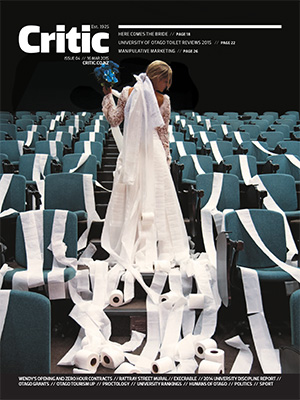
T his is a photo of just a fraction of the tissues required for our cover photo shoot in Castle lecture theatre — a toilet-roll wedding dress perfectly brings together this issue’s toilets review and wedding feature. We even reused most of the tissues. On my nose. I have a cold, and when I have a cold, everyone needs to know about it. We also used them in the office this week when we said goodbye to our fish friend, Gandalf the Gold Bastard. Aside from murdering a snail late last year, he’s been a good fish. He started sinking to the bottom of the tank throughout February. Apparently this means the fish is constipated and can be helped by feeding the fish peas. We had no peas. And last Wednesday, it passed away. Nothing wakes you up like walking in on your fish floating on the surface. Back to the cold: I’m not one for making a fuss. Except for when I have ebola/flu/a cold. For all you freshers out there, if Fresher Flu hasn’t caught you already, get prepared, for it will catch up with you eventually. Second-years, you’ll probably get something too for choosing a crappy, damp flat. That $150/week flat on Castle was a silly decision. Third-years, you’ll catch something too as you’re super cool with your jandals and shorts in winter. That $70/week flat past the Botans wasn’t worth it either. Fourth-years and postgrads are starting to figure out how damn cold it is and that another year of snivels isn’t worth showing a bit of leg for. You might be safe this year. Unless you’re me, and decide to live with eight other people and invite couch surfers every other weekend. There is no way of escaping the germs. I considered taking vitamin C and echinacea with the hope of speeding things along. But then I thought, naaa. Ain’t nobody got time fo’ dat homeopathic shit. Just last week, the UK’s National Health and Medical Research Council (NHMRC) released their views on homeopathy after the first thorough review of 225 research papers on the practice. “Based on the assessment of the evidence of effectiveness of homeopathy, NHMRC concludes that there are no health conditions for which there is reliable evidence that homeopathy is effective.” “People who choose homeopathy may put their health at risk if they reject or delay treatments for which there is good evidence for safety and effectiveness.” As much as I’d like to talk about the likelihood that research like this drives up the sales of the big pharmaceutical companies, instead, my congested self is going to continue to inhale Codral, Lemsip and Ibubrofen, and force my flatmates to feel sorry for me as I heal. And I’m probably still going to take vitamin C and echinacea, because if it might work, then hope will keep me going through these tissues. Or issues? Or tissues?
-
News
Unions Plan Protests Outside Wendy’s
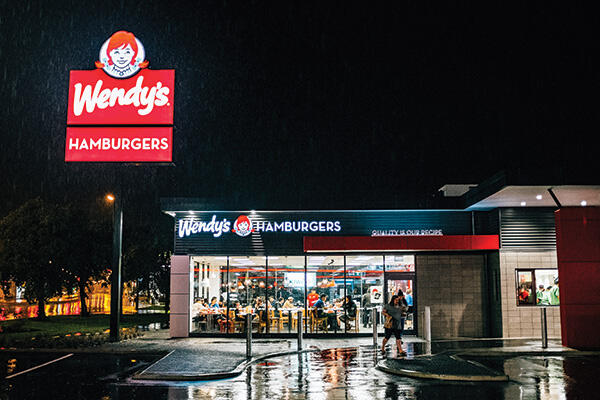
A new branch of the fast-food giant Wendy’s has opened on Anderson’s Bay Road, Dunedin, making it the southernmost Wendy’s in the world. The new location was officially opened on Monday 9 March 2015, bringing 54 new jobs to the area. “We’ve been wanting a presence here for a long time, but the process has taken a bit longer than expected. Finding the right location has been key,” said Wendy’s CEO Danielle Lendich in a press release. “There are definitely a lot of Wendy’s lovers in the South. We’ve had people knocking on the doors each day these past few weeks with training going on in store.” Although the employment opportunities are positive for the local economy, Unite Union and Union Otago planned a protest at the opening of the new store to support the campaign against “zero hour contracts”. Unite Union is a campaigning union that represents 8,000 people nationally, with 700–800 of those based in the South Island. A press release from Unite Union said zero hour contracts are where there are no guaranteed hours of work, leaving workers in a “constant state of instability, and [the contract] is open to manipulation by employers.” According to Unite Union Organiser Ben Petersen, “almost all of those employed in fast-food restaurants in New Zealand are employed on zero hero contracts.” This includes Burger King, McDonald’s and Domino’s. “Wendy’s have used these contracts to refuse workers a day in lieu when they work a public holiday by restoring workers into varied hours to avoid paying legally mandated holidays.” Not all Wendy’s stores have had action against them for using zero hour contracts, however. As an employee you may be employed on a part-time or even full-time basis, but there is “nothing contractual, so that can change in the first few weeks,” said Petersen. The contracts essentially allow flexibility to companies for regular staffing options, while leaving the staff themselves wondering when their next shift will be. Companies can be overstaffed and, as they reduce costs and save money, their employees are not getting paid while they wait for work. “Wendy’s needs to provide security to its workers. Wendy’s staff are obliged to turn up to work each week and do their job. It’s time the company was made to feel some obligations towards its workers and provide decent, secure employment. Zero hour contracts and using them to rip off public holidays has to stop,” said Petersen. In an attempt to convince the restaurant to reconsider its contractual agreements, the union organised a strike action for Saturday 14 March. At the time of Critic going to print, the Facebook event for the protest had 340 people invited, but only 32 attending. According to Petersen, there “has been progress on several issues after negotiation began” between the union and fast-food restaurants. They include increasing staff breaks from ten to fifteen minutes and providing staff with tea or coffee while on those breaks. These changes may seem innocuous to some, but they are issues the staff were “quite upset about.” Negotiations between Wendy’s and Unite continue as there is very little progress on zero hour contracts, which the union sees as the main issue facing the staff members. Petersen said Unite is “pushing on until we can get something a little more concrete for our members.” Wendy’s CEO Danielle Lendich responded to the claim the company had been using the controversial contracts by stating: “We do not have a zero hour contract and this has been confirmed by the Ministry of Business, Innovation and Employment Mediation Services. I had never heard of a zero hour contract until about a month ago. It makes no sense to have zero hour contracts.” She continued, stating, “[the fast-food] industry is about having quick, accurate service, to be able to do this employees need to work.” Unite has said it is open to looking towards other avenues if these talks fail to achieve the desired results. It said it may appeal for legislative change if the negotiations break down, with some political parties currently supporting the abolition of zero hour contracts. As a student, do you feel like your working conditions are fair? Critic wants to hear from you. Email critic@critic.co.nz with your story.
-
News

Execrable | Issue 4
T o begin the meeting, OUSA President Paul Hunt mentioned the possibility of OUSA renewing its membership to Volunteer Service Abroad (VSA). The membership would cost $100 per year and Hunt said that they would ask for OUSA to have a seat on the VSA Board. In 2014, OUSA withdrew its membership, causing backlash from both students and VSA staff. The executive will decide about renewing the membership soon. Postgraduate Officer Claire Mitchell announced she would be resigning from her position on 26 March 2015 “due to uni commitments.” A by-election will be held for her position, as well as for an OUSA International Officer. Nominations for these positions will run from 16 to 19 March, and voting will take place from 24 to 26 March. Executive members are currently not able to campaign for those running in an election, unless they add a disclosure that they are not doing so in their capacity as an Executive Officer. Hunt said this rule is “a technicality which doesn’t influence the result.” He added that support for candidates “should be transparent.” The issue will be put to committee before the by-election. Following this, Hunt mentioned that the structure of the executive should be discussed. A major focus of this would be on the workload of each position, and whether this workload fits with the hours set for the position. According to Hunt, role descriptions currently “don’t accurately indicate” the workload required. The executive agreed on the review, and Hunt said if changes were needed, it “would have to be done through a referendum.” He aims to ensure any changes stay within the current budget. The affiliations of five new clubs were accepted: Otago University Longboarding Society of Dunedin, Society of the Autonomous Collective of North Ōtepoti, Easy Bible Study Group, OUSA Emerging Technology Society and OUSA Art Society. The club, Organisation for Global Non-Violent Action, also changed its name to Peace People. On the topic of affiliations, Recreations Officer Jonathan Martin said he has had meetings about the possible affiliation of a pro-life group. Martin said the group would have a “revised constitution” which will be “tighter” with “more limits” on what they can and can’t do. Hunt said the group should “have more scrutiny than others” due to “the harm their actions might cause.” Martin and fellow executive members will “work with the group to form a constitution” and then vote in the next meeting. Postgraduate Officer Claire Mitchell and Campaigns Officer Alice Sowry said later in the meeting that they had been keeping their eye on social media feedback regarding the affiliation. Welfare Officer Payal Ramritu said she was “torn” on the decision both personally and in her role as Welfare Officer. Ramritu said the group’s brochure, which outlines the harms of abortion, made her feel “uncomfortable”. She said if the group is affiliated, the brochure would be placed around campus and thus be available to all students. The 2015 Orientation Week was further discussed. The break up of each event is not yet available from accounts, but the matter of whether it’s okay to break even over a three-to-four-year cycle was discussed. This follows the loss of at least $57,500 over Orientation this year. OUSA CEO Debbie Downs said it is a “dangerous mindset” to justify losses by gains made in previous years. “That’s not how the real world works,” she said, adding that financial statements are “an annual thing.” “But,” she noted, “we are student-driven, not profit-driven.” Referring to the fact that if executive members see a service or product as of value to students, then a profit is not necessarily required, Downs used the example of the OUSA Craft Beer and Food Festival. “For example, if we look ahead and think the beer festival will make a loss of $60,000 again, for example, then is it worth it? Is it of value to students?” This was “just an example” of course. Martin agreed there should be “more general performance targets, for example, how many students we want to attend.” Ramritu added that an “event-by-event basis is the way to go.” Colleges Officer Taotao Li agreed, though still wants a “clear focus on student enjoyment.” The Marketing Manager of the Highlanders has also reached out to OUSA. Downs said they are willing to “give a couple of players” for activities, for example “a students vs. players game on the Union Lawn.” This scheme would generally be before local games and is a “win-win situation” for promoting both OUSA’s activities and the Highlanders’ games.
-
News

Discipline Report Shows Decline
I n 2014, a total of 482 students were involved in disciplinary matters referred to the proctor. Of these, 23 were deemed extreme enough to be recommended to the provost. The proctor deals with students who breach the code of conduct, and then if the matter is serious, he can refer them to the provost. If exclusion is to be considered, then the provost may refer them to the vice-chancellor. This year, the number of students referred to the proctor for disciplinary matters declined, whilst the number of students referred to the provost by the proctor has increased. Three cases involving the lighting of fires were recommended to the provost in 2014. All of these students were in their first year of university. One student attempted to set fire to a mattress, and he was issued with a warning and a $550 fine. Another student set fire to a flammable substance on a roadway; he was also given a warning and fined $500. Two students were caught by the police after setting fire to a couch. One student had decided not to return to university in 2015 and received no consequence, and the other was administered a final warning and had to complete 50 hours of community service. Four incidents referred involved throwing bottles. Two first-year students were caught throwing bottles at a University College flat — they were given final written warnings and $550 fines. A third-year student was caught using a cricket bat to smash beer bottles on a roadway; he was given a final warning and fined $500. A third-year student also took part in an incident involving breaking bottles on a roadway, though this time golf clubs were used. The student was fined $300 and given a final warning. A second-year student was arrested for throwing a bottle at a police van. The student then attempted to escape police custody. He was referred to the vice-chancellor with a recommendation of exclusion or lesser penalty. Two other students attempted to escape police custody. The students were found behaving in a disorderly manner on Castle Street; they were then arrested after trying to escape police custody. The students were referred to the vice-chancellor with a recommendation that they be dealt with by way of exclusion or a lesser penalty. These were separate incidences. Three students were referred for verbal abuse. One student verbally abused the deputy proctor when asked about complaints of harassment received regarding the student. The student was advised to seek professional help for his anger and warned that if he attempted to contact the original complainant the matter would be taken further. Another student made derogatory remarks to another member of the university community; the incident was investigated and the student had to write an apology to the victim. A second-year student verbally abused Campus Watch. It being his second offence, and he was given a final written warning and 55 hours of community service. Three students were referred for theft. An international student was found stealing from UniPrint on multiple occasions. The student was sent to the vice-chancellor with a recommendation of exclusion. Two first-year students stole boxes of energy drinks from a distributor; they were each given a final warning and fined $300. A first-year student stole a box of beer in a residential hall. After kicking a taxi-van trailer, he was referred to the vice-chancellor with the recommendation of exclusion. One student attempted theft, as well as having four incidences of disorderly behaviour. The student withdrew from the university. A first-year student assaulted a fellow student and a member of Campus Watch while intoxicated. Having had previous visits to the proctor’s office, he was referred to the vice-chancellor with exclusion recommended. An entire flat was referred due to disorderly behaviour at a school reunion they held on the property. Three of them were fined $200 and given a final warning, and the other two were not present at the time so were given a warning. A first-year student reoffended after a final warning by the provost for being in possession of cannabis paraphernalia in a residential college. He was moved to another college and referred to the vice-chancellor with a recommendation of exclusion. A student was referred as a consequence of inappropriate behaviour, though he has since withdrawn from the university.
-
News
Rattray Mural Adds to Street Art
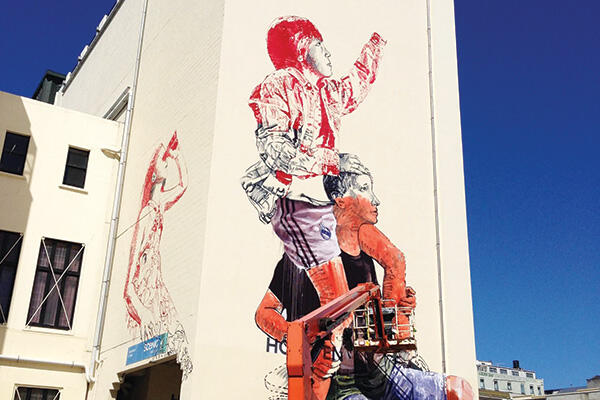
A s part of a project by the Dunedin Street Art group, Australian artist Fintan Magee has begun a new mural on Rattray Street. The mural, which spans from three to four storeys, is one of three projects in the area and is located on the side of the Scenic Hotel building. It is set to take a week to complete. Jess White of Dunedin Street Art said feedback on the mural has been “really positive,” however “there will always be the matter of peoples’ personal taste … regardless of the positivity, there will always be little bit of backlash.” “People come every day to watch the progress of the art … you can see the smiles on their faces, the happiness that the art brings.” The group’s spokesperson, Glen Hazelton, said that members of the public have stopped to see Magee at work, with individuals often returning several times. The second aspect of the project is set to be a piece that will be replaced on a monthly cycle, titled “Changing Wall”. The third will be a collaboration between Dunedin Street Art and Stickum, an artist’s co-operative. The mural comes as part of a Street Art Trail, which involves a 60-minute walk of all the murals they have created in North Dunedin. Hazelton said, “Street art has artistic value … It is something that just can’t be lumped in the same category as graffiti.” “There will always be something that is taking away from the roots of how it began, something that seems cutting edge and brings a new vibe … The artwork makes you look at the world differently; it makes you more aware of the world around you,” said Hazelton. According to White, the group has been contacted by numerous building owners in Dunedin who are “offering up their wall space … There’s a lot of empty walls in Dunedin … we need a bit of vibrancy.” White said the artwork “gives locals a sense of pride for Dunedin.” The group, led by Hazelton and Justin Cashell, is run entirely by volunteers. Funding for the art comes from donations. Magee, who has been described by the Daily Telegraph as Australia’s version of Banksy, is known for murals throughout Queensland and New South Wales. His mural depicting Felix Baumgartner in Brisbane has gained him recognition worldwide.
-
News

Gates Are Opened for Otago Research
A $14.6 million grant has being given to an Otago-led government initiative, Ageing Well. Directed by the dean of Otago’s School of Physiotherapy, David Baxter, the initiative is one of the eleven research areas the government has targeted in order to improve the lives of New Zealanders. The three key areas of focus are to prevent neurocognitive decline, to reduce physical frailty and to make sure the elderly stay connected to society through social integration. Baxter said the aim is to “harness science to sustain health and wellbeing into the later years of life … The challenge is not about making people live longer, but reducing the disability burden as you get older.” Baxter said although the research focuses on ageing, the results will benefit more than just the elderly. “Choices made by people in their twenties may not be present immediately, but the effects live with you forever.” While the grant is an enormous investment, Professor Baxter stressed this is public money and will help to secure noticeable results. It is a collaborative initiative, working with academic institutions across the country to provide internationally significant results. Otago is a research-intensive university, and this means it can “attract large grants for cutting-edge research,” said Baxter. He said this in itself entices academics from around the world to come to Dunedin to conduct their own research and to teach local students. Research opportunities for students will also come out of the project, with students being able to engage in likely research spin-offs. PHD scholarships and research assistant positions are also likely to become available. Research for the project is expected to begin in late August or early September as the management team for the project are “careful to make sure the money is best put to use.” In the same week, the Bill and Melinda Gates Foundation has pledged $320,000 to salmonella research at Otago. Co-ordinated by the Otago’s Centre for International Health, the research is set to provide an accurate estimation of casualties of the disease. While the disease has been known since 1885, there is still no accurate figure on the annual deaths. Salmonella is particularly prominent in Sub-Saharan Africa, a key focus area for the foundation. The World Health Organisation says it is “one of the most common and widely distributed foodborne diseases, with tens of millions of human cases occurring worldwide every year.” Understanding the areas in which salmonella is most prominent worldwide and gathering accurate figures of casualties are key. Without an accurate estimate of the deaths caused, it is difficult for any organisation to gain funding to assist with the disease.
-
News

Tourism Gives $11 Million Boost for Otago
T he Otago economy experienced a boost of almost $11 million last month, a 32 per cent increase from last year. New figures from the electronic transactions processor Paymark showed the foreign credit and eftpos card transactions in the region grew from $33.7 million in February 2014 to $44.5 million this year, a $10.8 million increase. Sophie Barker, the Business Development Advisor for the Dunedin City Council said, “February was particularly busy because of Chinese New Year and the Cricket World Cup … it is also peak season for many international visitors.” Dunedin’s Chinese Garden became a popular destination during the Chinese New Year celebrations, with four day-long events being run from 19 February. Dunedin was also host to three high-profile ICC Cricket World Cup matches between 17 and 26 February. Barker said that the Otago tourism industry is doing “very positively” and that she has high hopes for the future of the region. “[The Otago region] is made up of a number of Regional Tourism Organisations … there are about six … who work hard to promote their destinations.” Otago is not the only region that has seen such increases, with Barker saying, “growth in tourism has been strong” all over the country. Data released by Statistics New Zealand revealed that for the 12 months to the end of January, total arrivals grew by 4.3 per cent to over 2.86 million. Holiday arrivals were also up by 5.6 per cent for the year ended January 2015. “We have also seen stay days increase 7.5 per cent for the year ending January, with holiday stay days up 8.7 for the same period, which are great indications that we are attracting more high-value visitors to the country,” said Tourism New Zealand Chief Executive Kevin Bowler in a press release. “This is a great start to 2015 and has been further supported by an increase in visitors’ spend, up 13 per cent for the year ended December 2014.” “We are continuing to see a significant shift in the China market, with holiday stay days having increased by 12.9 per cent for the same period and holiday spend up 50 per cent for the year ended December 2014,” said Bowler. “These indicate a shift towards higher quality and higher value Chinese travellers and I am confident we will see a spike in arrivals from this market in February.” Visits from Singapore were up by 5 per cent, Japan was up by 10.3 per cent, and Korea by 12.4 per cent.
-
News
Ploughing Proves Dangerous
U niversity of Otago research has shown that the ratio of male cancer risk is higher in populations descended from plough-using societies. The research, conducted by Professor David Fielding from the Department of Economics, looked at societies where the plough was adopted in the Neolithic period. The period is considered to be between 10,000BC and around 4,000BC, though experts still disagree on when the period came to an end and the Bronze Age began. The effect “remained even after [looking at] socio-economic factors, including sex differences in epidemiological factors that are associated with higher cancer risk” said Fielding. “One plausible evolutionary mechanism is that plough agriculture, which is more taxing than activities such as hoeing, created an economic environment which favoured those males who possessed greater upper-body strength.” In societies where the plough was adopted, as opposed to the less labour-intensive method of hoeing, “males with genetic predispositions for higher testosterone levels would be able to out-compete other men by developing and maintaining stronger physiques.” The downside for the descendants of these males is that higher testosterone levels are also linked to a “higher risk of many types of cancer.” Indeed, “countries where males and females were generally descended from non-plough societies would have a smaller difference in cancer rates between the sexes, because there was less selective pressure in those societies towards higher-testosterone males.” Fielding compares this human evolutionary process, “if it did indeed take place, to the spread of a gene mutation in Neolithic dairy farming peoples that extended lactose tolerance beyond childhood.” His research was not for medical purposes; “however, it adds to the evidence [that there is] a strong link between testosterone and different kinds of cancers.” For some types of cancers, this is already well known. Fielding said “testosterone levels [are] already part of the therapy for some types of cancer.” This includes prostate cancer. He did add that, for students, “cancer of this type is something [they are] not going to worry about for the next 30–40 years.” The study is set to appear in the March issue of the Oxford University Press journal, Social Forces.
-
News
Proctology | Issue 4
T he proctor said February this year was “one of the busiest” he has seen in regards to students in his office: “It has been a bit frantic.” This said, it seems as though it has been multiple flats rather than individuals, “which accounts for lots more people.” Noise from flats is an ongoing problem. “We get approached by the DCC’s Noise Control … [who] have visited [certain flats] for the third time.” He said Noise Control is “rapidly running out of patience” and is willing to confiscate gear if noise does not decrease. The flats’ inhabitants have been called into the proctor’s office and warned about their behaviour. A number of students have had their items seized by Noise Control since the 2015 academic year began. It seems as though street parties have caused more trouble this year than organised OUSA events. “To be fair,” he said, “the behaviour at these parties has not been too bad.” However, the issue is that when students “move on into town and into other flats,” a great deal of rubbish “such as bottles and cans” accumulates on the street. “It makes it look as though the night has been chaos, and really it hasn’t.” Recently, the music group Six60 held a surprise gig at their old flat at 660 Castle Street. Hundreds of students attended the event. The proctor said, “though there were a number of intoxicated [students] … the behaviour was pretty good.” One student fell off the roof of a flat, though he did not sustain any serious injuries. The proctor said students drinking on roofs is a continuous problem. Not only is this “dangerous,” students also tend to “throw their cans and bottles” from the top. Multiple first-year students from residential colleges have been caught attempting to use false IDs to get into R18 OUSA events. “I’m not sure that they realise the penalties they’re exposing themselves to” by using these IDs, said the proctor. The fine for presenting false evidence of age in New Zealand is currently $250. Students caught using false identification are brought into the proctor’s office and warned of the consequences. When a student attempts to use the identification, if the person on the door of the event notices that it is not that individual, the ID is confiscated. Confiscated IDs are handed to the proctor: “I normally get the owner to pick them up if they are [in Dunedin]” otherwise the “Campus Cop returns them” to the owner. A number of the owners who are tracked down will say they misplaced the ID, though some “admit they got $50 for it.” False IDs have also been used to try to gain access to bars.
-
News
At Least We Believe in Ourselves
Times Higher Education has published its World Reputation Rankings for 2015, placing Harvard University in the US at #1 for the fifth year in a row. The rankings, published annually, show a list of the world’s 100 most prestigious universities. This is based on an invitation-only survey of senior academics across the globe. Of the top five universities, three are from the United States and four from the United Kingdom. After Harvard, in second place, is the University of Cambridge, which has moved up two places from fourth in 2014. The University of Oxford came in third, also bumped up two places from fifth in 2015. The Massachusetts Institute of Technology in the US is ranked at fourth, a drop from its second-place ranking in 2014. Stanford University in the US is fifth, a drop from its ranking of third in 2014. The rest of the top ten is made up primarily of United States institutions: the University of California, Berkley, is sixth; Princeton University is seventh; Yale is eighth; the California Institute of Technology is ninth; and Columbia University is tenth. 26 of the top 50 universities are from the United States; eight are from the United Kingdom. Canada and Germany each have three, while Japan, Switzerland and China each have two. The Russian Federation, Singapore, Australia and Sweden each have one. New Zealand is not featured in this year’s top 100. Five Australian universities made the cut. The University of Melbourne sits at 41st; this is up from a ranking of 43rd last year. The Australian National University in Canberra ranks at 52nd, and the University of Sydney sits at 61st. The University of Queensland is ranked at 85th, and Monash University in Melbourne, which did not make the top 100 in 2014, now sits at 97th. The top performer in Asia this year is the University of Tokyo at 12th, followed by the National University of Singapore at 24th. Tsinghua University in China is ranked at 26th, and Kyoto University in Japan follows at 27th. China’s Peking University is ranked 32nd. Osaka University in Japan, which was ranked at 50th in 2014, did not make the top 100 this year.
-
News
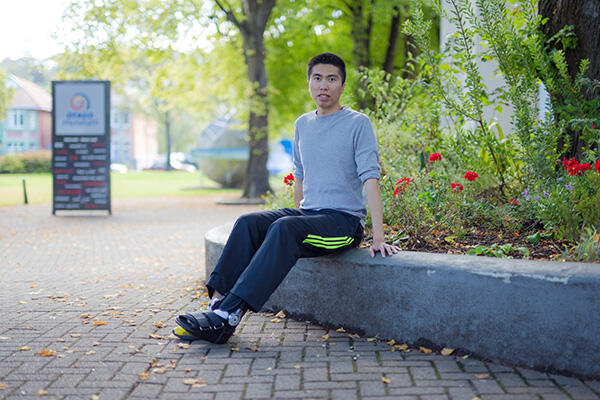
An Interview with David Xie
Facebook pages ‘Humans of [insert city here]” have grown tremendously in popularity during the past year. The original, Humans of New York, now has 12.4 million likes. David Xie, a University of Otago IT administrator, decided to create a page for those living right here in Dunedin, and the page has gained 6,900 likes. What inspired you to start Humans of Otago? I quite liked [Humans of New York] previously, but I never thought I could do it because just asking and talking to strangers is just hard enough. Taking photographs is actually taking it to the next step, and then asking those questions, the more personal questions, that is the last thing that I was prepared to do. I originally didn’t think I could do it. How do you choose your subjects? Normally I choose people who look, I guess, different from the crowd. I especially like people who are wearing bright clothes or have tattoos and are not afraid, I guess, to stand out. Someone who, let’s say if you smile at them, he or she will smile back at you, rather than just walking past pretty quickly and that kind of thing. What is your favourite aspect of this work? My favourite aspect is actually getting the story at the end of the day. Sometimes their answer will surprise you. Literally anyone on the street can give you an answer that you would never have thought of. That’s the part I like about it, just the surprise and twists of stories, the things that people have gone through and that kind of thing. Are there any interesting experiences you’ve had while talking to and photographing people? Two people that I’ve interviewed, I think they were friends, were sitting on the lawn just outside the museum. The female subject wasn’t very open and wasn’t very keen to talk. The male subject was okay but then later on he put it on Facebook saying that she, I think it was his boss or something, didn’t know what was happening and thought I was a cult leader. And I thought “that’s bit strange,” and she went back to her place and then discovered that actually it is kind of, like, I think in his original words, a “cheesy copy of [the] Humans of New York” book, which was just lying on her table. How has hearing all these different stories and meeting so many different people affected you and aspects in your life? Respect people’s opinions and the choices that they make. We always want to jump to the conclusion. Let’s say I see someone walking down the street with tattoos all over them, I’ll probably think she must be a gang member or she might be hanging out with the wrong type of people, and that’s why she’s got that tattoo or that’s why they’ve dyed their hair this way or are doing that. Sometimes it might not be that way. And sometimes you think you’re in quite a bad situation. For example, I’ve ruptured my Achilles and can’t really walk. Yet I see Josh, who is working with Stopping Violence Dunedin, the latest interview that I did about three or four weeks ago. I mean, he can’t walk and he has to have someone feeding him his food. So when I compare myself to him, my ruptured Achilles is nothing really. He’s been helping Stopping Violence Dunedin as a Marketing Campaign Manager, so he’s been doing great things. Also, he’s at work as well. Sometimes when I compare my problems to someone else’s I can see that mine aren’t really that bad. Things like that. And sometimes other people’s answers could lighten up my day as well. What do you hope people can take from all the different stories and life experiences that are shared through Humans of Otago? Personally, I would hope that they can see that we are not that different from one another. We might have a different skin colour, be a different age, every one of us is very different, but I guess deep down we all have happy moments, sad moments, struggles just like everyone else. It doesn’t matter where you’re from or how high or how low you are in society, we all have good times and bad times. So that’s, I guess, something that I hope someone can take away just by reading the stories.
-
News

Little Plays Politics
L abour leader Andrew Little has confronted the fact his party’s candidate for the Northland by-election, Willow Jean Prime, is an unlikely contender. Little has hinted that a Labour endorsement for New Zealand First leader Winston Peters may be on the cards. Prime Minister John Key has reframed his opinion of Winston Peters having “zero chance” after polls showed he may be the frontrunner of the race. The first polls showed Peters with a 36 per cent approval rating, while National candidate Mark Osborne had 30 per cent. Labour candidate Willow Jean Prime was at a mere 19 per cent. The most recent poll, however, has seen Osborne move into the mid-30s. Peters’ and Prime’s numbers, however, remain the same. Little has stated the by-election is now a “two-horse race,” referring to Peters and Osborne now being the main contenders. This leaves Prime out of the “race” in the eyes of her party. Since Peters’ support has become clear, Little has reconsidered his position on potentially supporting the New Zealand First candidate. Last week, Little echoed Peters’ campaign slogan, “send them a message” by stating: “If Northland voters want to send a message to the government, they should think carefully about how they exercise their vote …They’ve got a vote, they should use it,” said Little. Polls have proven that, without a Labour candidate, Peters would likely have a clear lead. The motivation for Little is clear. If a left-wing candidate were to win the seat, National would be forced further into the realm of reliance on their coalition parties, United Future and ACT. It would therefore advantage opposition parties of the National-led government for Peters to win. However, a political deal like this could potentially harm Labour’s integrity and ultimately hurt its chances in the 2017 election. Many commentators have criticised any deal that strategically places an MP in Parliament for a reason other than to represent the electorate. TV3 Political Editor Patrick Gower took to Twitter to express his thoughts on the deal. Of the topic, Gower tweeted “#disgrace”. Furthermore, Labour and New Zealand First have strongly criticised National and ACT’s long-standing Epsom electorate deal. In the deal, National endorsed the ACT candidate in the Epsom electorate in Auckland. This allowed Act to utilise the MMP electoral system, effectively “coat-tailing” into government. Any deal struck between Labour and New Zealand First would clearly compromise the superior ethical code they had previously campaigned on.
-
News

US Presidential Election Updates
L ikely candidates for the 2016 presidential election, still ten months away, seem to be kicking off their campaigns early this year. Last week, nine soon-to-be Republican Party candidates travelled around Iowa apparently preparing for the coming election. None of the candidates has officially confirmed their running, but the front runners all seem rather obvious. Jeb Bush, former Governor of Florida, has already begun hiring staff for his soon-to-be-announced election campaign. Bush is the son of the 41st President George H.W. Bush and brother of 43rd President George W. Bush. Other Republican candidates expected to run include Kentucky Senator Rand Paul and Texas Senator Ted Cruz. The Democratic Party has also been in the spotlight recently, though coverage has not been as positive. Likely Democratic candidate, Hillary Clinton, spouse of the 42nd President Bill Clinton, has come under fire for her actions while serving as Secretary of State. Clinton was found using a private email account to conduct State Department business, though she has since stated that no classified information was discussed through this account. “I have no doubt we have done exactly what we should have done,” said Clinton. “I trust the American people to make their decisions about political and public matters and I feel that I’ve taken unprecedented steps to provide these work-related emails, they’re going to be in the public domain, and Americans will find that interesting and I look forward to having that discussion.” In US politics, candidates must be elected to represent their party as the presidential candidate. These elections are called primaries. Clinton’s biggest rival is current Vice-President Joe Biden. Biden has also been pinned as a Democrat who is likely to announce his plans to run soon. The Democratic primary, however, has been labelled over before it has begun due to the mass support for Clinton, who commentators have called the strongest contender for 2016. The 2016 election is looking like a “free for all,” as the incumbent president is not running for re-election.
-
News
Indonesian Authorities Tired of Australia
An Indonesian Minister, Tedjo Edhy Purdijatno, has made threats of what he calls a “human tsunami” if the Australian Government doesn’t stop the pressure it is putting on Indonesian authorities. The threats come after a continuous effort from the Tony Abbott-led government to save the lives of the Bali Nine duo, Australians Andrew Chan and Myuran Sukumaran. Purdijanto, the Coordinating Minister for Political, Legal and Security Affairs of Indonesia, has accused Australia of antagonising the public and discouraging people from visiting Bali. “If Canberra keeps doing things that displease Indonesia, Jakarta will surely let the illegal immigrants go to Australia,” said Purdijatno. “There are more than 10,000 [asylum seekers] in Indonesia today. If they are let go to Australia, it will be like a human tsunami.” On 17 April 2005, Chan and Sukumaran were two of nine Australians arrested by Bali authorities after attempting to smuggle more than eight kilograms of heroin out of Indonesia. In 2006, the two were found guilty of providing the money, airline tickets and hotel rooms for drug mules. Chan and Sukumaran were sentenced to death by firing squad, the only time the Denpasar District Court has given the death penalty for drug trafficking. The Australian Government has since made numerous attempts to have the sentence reduced to life imprisonment. In recent weeks, Australian Foreign Minister Julie Bishop has made a desperate plea to Indonesian officials to swap Chan and Sukumaran for three Indonesian offenders being held in Australia. The prisoners up for negotiation were three Indonesians caught smuggling 252 kilograms of heroin into Australia in 2000. Kristito Mandagi was given 25 years without parole, and Saud Siregar and Ismunandar were given 20 years and can apply for parole in 2017. Indonesian President Joko Widodo has declined the offer. “No way, he said, “look how many people die [from drugs], our young generation … We have to look at the future.” Abbott told Parliament last week, “As Australians we abhor drug crime. We stand resolutely against drug crime, but we are against the death penalty as well. Pull back from this brink. Don’t just realise what is in your own best interests, but realise what is in your own best values.” An execution date for the pair is yet to be confirmed.
-
News
RUGB215
T he first four rounds of assignments for the semester have been completed, so Critic turns the sometimes subjective and arbitrary University of Otago grading scale to New Zealand’s Super Rugby teams. Is your team going to be accepted for Honours or have an embarrassing grade on their transcript? HighlandersGrade: A- (Verging on Excellent) Not perfect, but have all the tools in place for a home semi-final. Pride of the south, the Highlanders have been a model of consistency over the first four rounds, scoring exactly 20 points in each of their games. With Aaron Smith providing quick ball behind a no-nonsense forward pack, the class of All Blacks Ben Smith and Fekitoa in the backline and sharp-shooting goal kickers in Sopoaga and the hero from Hamilton, Marty Banks. Jamie Joseph has instilled the patience and mentality for them to win close games. A solid, defence-first approach with quick counter-attacks seems to be the plan so far. Unlucky to draw a bye in the first round, which hopefully won’t catch up with the Highlanders, who have a tendency to run out of gas near the end of the season. A nice run of home games coming up now so the Highlanders can consolidate a position near the top of the table. Keep it up. Pros: 1st in lineout success (96%) Least tries conceded (3 - bullshit penalty tries don’t count!) Cons: 14th in tries scored (4) MVP: Marty Banks (clutch penalties win games) Suggested improvements: Clean up the ball handling in open play, which will lead to more tries. HurricanesGrade: A (Excellent) Great start, which will be difficult to maintain through the season A 100 per cent winning start from a road trip to South Africa and Australia is a fine start, as the Hurricanes had to vacate Westpac Stadium for the Cricket World Cup. Ma’a Nonu has returned to the Hurricanes, but hasn’t contributed much so far. If it wasn’t clear that he is a disloyal mercenary, Nonu is heading for France to play for Toulon at the end of the year in what will be his fourth team in as many years. Club captain Conrad Smith will also head to France at the end of the season. Fellow All Blacks, Beauden Barrett and Julian Savea, have been providing the majority of the points, but poor running and line-out stats while having a decent scrum shows an unbalanced team for new coach Chris Boyd to work on. Will probably just miss out on the playoffs. Pros: 1st in tackle success (91%) Lowest points against (34) Cons: 13th in running metres (1124) MVP: Julian Savea (crucial try to beat the Bulls) Suggested improvements: Bench Nonu and develop a midfield partnership with the future in mind. ChiefsGrade: B+ (Very Good) Solid start from an exciting squad. A third title in four years is a realistic target. The Chiefs are looking as dangerous as ever, with a decent scrum and exciting young winger James Lowe, who is quick, strong and has a powerful left-foot kick. No surprises to see Sonny Bill throwing the most offloads in the competition, with four other Chiefs in the top ten aiding their expansive, attractive style. Their big win over the Crusaders was spoiled by a poor home defeat against the Highlanders, having to rely on a hawkish referee to gift them points. Best team to watch so far though. Pros: 11st in offloads (73) Line breaks (33) Running metres (1887) Cons: Most yellow cards (4) MVP: James Lowe (leads several key attacking stats) Suggested improvements: Get Cruden some new kicking boots and cut out the silly penalties. CrusadersGrade: C- (Marginally Passable) Poor start, with the World Cup being a distraction for their top players. Going from being seconds away from winning the trophy last year to losing to the Rebels at home this year and then getting thrashed by the Chiefs — it has been a poor start for the seven-time champions. The Crusaders were also lucky to benefit from another dodgy TMO decision and some wobbly goal kicking by Colin Slade to avoid losing to the Highlanders. With All Blacks legends Richie McCaw, Dan Carter and Kieran Read being coddled towards the World Cup, I wouldn’t be betting on the Crusaders to make an impact on the playoffs — not even with your StudyLink money. Pros: 1st in scrum success (96%) Cons: 14th in defenders beaten (48) 13th in line breaks (15) MVP: Matt Todd (top tackling NZ player) Suggested improvements: Fuck the NZRU and play your strongest team. BluesGrade: F (Inadequate) Complete shambles but some credit for picking up a few bonus points. With two tenth-place finishes and an overall losing record since taking over in 2013, John Kirwan now finds his team at the bottom. With a no-point bye and tough away trips to the Hurricanes, Waratahs and the Chiefs over the next few rounds, things are looking grim. However, the statistics show that the Blues are doing some things well in the backline, but inconsistency lets them down. Things could click into gear quickly, but if their current form continues, their season could be over by the time they come to Dunedin next month. Pros: 1st in defenders beaten (82) 2nd in running metres (1751) Cons: 14th in scrum success (80%) MVP: Ihaia West (surprisingly is the top-scoring NZ player) Suggested improvements: Stats suggest that it’s the forwards who are not pulling their weight.
-
Features
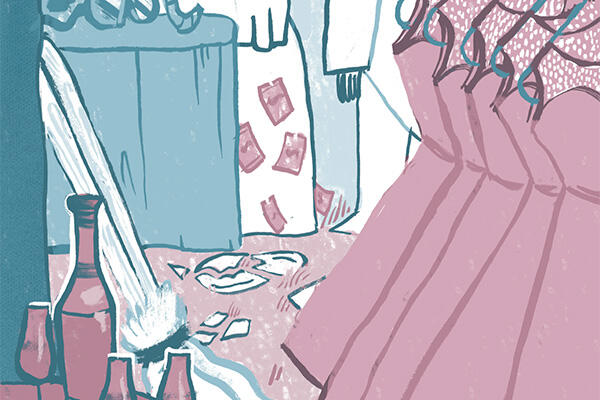
Here Comes the Bride
Some do it on a beach. Some do it in the backyard. Some even do it in church. From the smallest of intimate celebrations to the largest and most raucous of affairs, a wedding is undeniably a special moment in a couple’s life. This article delves into the nuttier of nuptials across the globe while also taking a look at wacky wedding traditions closer to home. As a child of divorce, I never saw the point in getting married. Sure, the party looked fun — albeit, a tad ludicrous — the decadent cake, the gorgeous dress, the lavish gifts heaped upon the corner table. But even at nine, wise well beyond my years, I had already decided the wedding-marriage path was not for me. I wasn’t cynical. I just didn’t desire a commitment to a lifelong, likely mismatched partnership that would inevitably grow into resentment and bitterness, leading to a permanent atmosphere of household hostility and foreseeable psychological scarring. But, hey, I wasn’t cynical. Promise. It was with no romantic notions, then, that I applied for a summer job at a wedding venue in central Auckland. I wasn’t dreaming of white dresses and frosted cakes. Rather, I was broke, desperate and dreaming of weekly rent, corn fritters and enough Smirnoff to get me through those all-too-familiar frosty southern months. When I got the call that I’d made the cut, I breathed a huge sigh of relief. After many rejections, someone actually wanted to employ an English major whose only real skill was the ability to talk at the speed of light and occasionally open a bottle of wine (something which my three years at Otago had left me quite over-qualified for). Decked in my hospo white-and-blacks, I quickly became hostess-extraordinaire, serving trays of Moët to incoming guests with one hand, canapés of balsamic-roasted tomato and mozzarella crostinis in the other, all with my best customer-service smile relatively intact. Over the summer, I worked over a dozen weddings. Each one was different — different people, different traditions and different ways of doing things. The sheer diversity in each wedding celebration was fascinating — from traditional dances to religious ceremonies to the more secular, family customs. Even the traditions that were familiar started to look strange after seeing them performed over and over again. Why on earth do brides throw flowers over their heads? Why do couples spend hours getting ready only to smear cake on each other? The most interesting examples were from weddings between different cultures, such as the marriage between a Kiwi-Chinese groom and an Irish bride. At this wedding, the bride and her bridesmaids all donned red Chinese slippers under their traditional dresses, and Chinese envelopes filled with money were substituted for gifts for the couple. After speeches, the Irish and Chinese families joined in a rousing (and rather drunk) version of an Irish jig (is there any other version?), shattering two trays of champagne glasses in the process. I wanted to know more. What was the point of all this photograph-taking, cake-cutting, speech-making and red-faced dancing? Where did our absurd traditions come from? Every movie I watched under the age of seven ended in the princess marrying the prince. Was this really the first step to happily ever after? The wedding industry is booming with websites, magazines, books and event planners, all dedicated to the “big day”. It appears that the idea of the long marriage ahead is forgotten in favour of the one-day ceremony. No wonder brides-to-be go a little bit nuts. The amount of information out there is overwhelming. And this is without mentioning Pinterest. Associate Professor Jacqueline Leckie, Head of the University of Otago’s Anthropology & Archaeology Department has studied the varying cultural customs and traditions found at weddings around the world and at home. Leckie believes weddings are largely symbols of display and status, something we certainly see in contemporary weddings. “People invest a lot into the appearance, the presentation, the photographs, the memories — and now with the Internet, with [social] media presence.” The widespread promotion and publication of celebrity weddings are sure to add to the white wedding noise, with Kardashian weddings blocking the airwaves and royal weddings blocking the streets. Many modern weddings seem intent on a display of wealth and extravagance, with no expense spared. In Australia and New Zealand, the trend towards wedding excess seems to be growing. The average price of a wedding in New Zealand today is approximately $30,000, while our Australian cousins spend an average of over NZ$65,000. This makes an Australian wedding one of the pricier in the Western world. The average cost of weddings in the United Kingdom sits at £20,000 (NZ$36,660), and figures from CNN show the average wedding in the United States costs $28,400 (NZ$33,500). “For a lot of communities,” states Leckie, “ceremonies offer hope and are a time of celebration.” In many communities, weddings are the main event in the social calendar, with festivities often lasting up to a week and numbers of attendees sure to reach into the thousands. “Even very poor communities will put a lot of time and energy into planning a wedding,” furthers Leckie. Traditional ceremonies and customs in weddings are still widely celebrated in times of hardship — wars, famine, depressions — attesting to the enduring nature and importance of these traditions for the local community. In climates such as India’s, dry season is synonymous with wedding season as monsoons can inhibit travel across the country. In large communities, this “season” can mean months of back-to-back celebrations in order to get through all the impending nuptials in the drier months. Some couples even opt to participate in mass weddings, sharing their wedding-day ceremony, celebrations and costs with other couples. The largest mass wedding in a decade took place in 2009, with 20,000 couples married in a “blessing ceremony” in Asan, South Korea, and another 20,000 joining simultaneous ceremonies in the United States, Brazil and Venezuela. The most recent legal development pertaining to marriage law in New Zealand is the legalisation of same-sex marriage in 2013. New Zealand stands proudly alongside countries such as Canada, Spain, France, Brazil, Belgium and the Netherlands in support of marriage equality. While New Zealand law has allowed for civil unions for some time, the inclusion of same-sex couples under marriage law has served to redefine both the “traditional” marriage and the traditional wedding. For the wedding industry, the change can only mean one thing — more weddings. And with recent figures showing that a quarter of same-sex couples married in New Zealand are Australian, New Zealand’s tourism industry has also been given a boost. Perhaps something for our less-enlightened friends across the Tasman to consider? George P. Monger, author of Marriage Customs of the World: An Encyclopaedia of Dating Customs and Wedding Traditions, offers interesting insight into the universalities and similarities of weddings across cultures. The human ability to form partnerships and create families is something that we want to celebrate. While the specifics of how we do this varies, the thoughts, ideas and symbolism are often strikingly similar. Generations of cultural traditions across the world, while differing in specific aesthetics and customs, have strong parallels in a way that is simply remarkable considering the vast nature of our world, separated by sprawling landscapes and seemingly insurmountable oceans. Some practices seem almost universal, such as the basic structure — religious, spiritual or secular ceremony followed by celebration, generally involving food and entertainment. Some wedding traditions can seem rather bizarre to us here in our corner of the world … Here are some of the more curious customs found around the globe: The tradition of “jumping the broom”, where marrying couples jump over a broom at the end of the ceremony, is widespread among African-American culture, stemming back to the days of slavery where marriage was forbidden between slaves. It is said that broom jumping comes from an African tribal marriage ritual of placing sticks on the ground representing the couple’s new home together; however, its original purpose and significance has been lost over the years. Although the custom fell out of practice when African Americans became legally free to marry, it saw resurgence in the late 1970s and is now practised quite widely at modern weddings. We’ve all heard about the plate smashing that goes on at Greek celebrations. The custom originally served as a demonstration of overwhelming grief on Ancient Greek mourning occasions. However, this custom is practised relatively rarely today. At an Orthodox Greek wedding, you would be more likely to see the traditional Greek Cypriot dance, aptly named the money dance or the dollar dance, where guests pin money to the bride and groom as they move about the dance floor. The tradition not only helps with the honeymoon, but is said to ensure prosperity in later life. If you were to attend a traditional Shinto wedding in Japan, you would amazed by the sight of the large white hood adorning the bride’s head. This hood, called a tsunokakushi, is meant to conceal the “horns of jealousy” the bride feels towards her mother-in-law and is also a symbol of her gentility and obedience to her husband. Traditionally, a Shinto wedding would require the bride to be painted head-to-toe in white, a visual declaration to the gods of her purity and maidenhood. Nowadays, many Japanese are opting for a Western-style wedding as opposed to the elaborate Shinto ceremony. In India, while traditions vary across religions and regions, it is common for brides to be covered in intricate bridal henna or mehndi patterns. According to Hindu tradition, the bride and groom attend a mehndi ceremony on the eve of the wedding, where a relative or a professional mehndi artist applies the patterns to the bride’s hands and feet. Henna is also used for ceremonies and celebrations in other Asian and Middle Eastern cultures. At many Western weddings, brides are encouraged to wear “something old, something new, something borrowed, something blue.” The origins of this come from a popular Victorian nursery rhyme that actually finishes “a silver sixpence in your shoe.” The “something old” is meant to honour your family of origin while moving forward to establish a family of your own, whereas the “something new” is meant to bring good luck for the future. “Something borrowed” should ideally be borrowed from someone who is already happily married, and “something blue” is supposed to represent fidelity and faithfulness. The coin in the shoe, apart from making the bride uncomfortable, is supposedly meant to attract good fortune and prosperity. Who knew? The exchange of rings in Western weddings as a sign of promise and commitment has been around since Ancient Rome, although the rings during this era were mostly made out of iron. Diamonds came to the party relatively late — only in the twentieth century. They are less of a time-honoured tradition and more the result of a brilliant marketing scheme in which New York ad agency NW Ayer teamed up with South African diamond mine De Beers to coin the slogan “A Diamond is Forever”, a line so effective it is still used sixty years later. Matching bridesmaids’ dresses are another Western tradition rooted in superstition. In Roman law, wedding guests were required to dress similarly to the bride and groom in order to confuse any evil spirits seeking to curse the couple. Nowadays, many brides are forgoing traditional bridesmaids’ “uniforms” altogether. So what have I learnt after my exciting foray into the world of wedding madness? Well, funnily enough, that perhaps weddings are both not as crazy and, impossibly, even crazier than they seemed at first glance. I’m not yet ready to abandon my cynicism about marriage, but I’m warming to the idea of a huge party in my (and I guess the groom’s) honour. For communities in which the prospective nuptials mark a cornerstone on the social calendar, weddings can provide a great source of hope and kinship. For families scattered across the globe, weddings can be a rare occasion when everyone is gathered in one place at one time. There sure are some nutty traditions, but there are also some heartwarming moments. While I’ll continue to rail against children’s movies that promote weddings and marriage as the only desirable option for young girls (looking at you, Disney), I can see now that weddings are complex beasts, amorphous and ever-changing. For some, a wedding is the ultimate in romance, publicly declaring your love for one another in front of your nearest and dearest. For others, a wedding is the practical joining of two families to make one, knitting the bonds of a community tighter than ever. For me? Well, for now at least, a wedding is a time for free food, abusing Polaroid cameras, dancing like I’m Beyoncé and ransacking the open bar. After all — who needs true love when you’ve got vodka?
-
Features

Otago Toilet Reviews 2015
The title of this article belies its serious nature: a daring exposé on the state of the bathrooms around campus conjured up in a fit of mad rage after being exposed one too many times to tap water hotter than Satan’s ball sack in the Central Library toilets. While I’ve frequented a lot of these locations over my three-and-a-bit years at Otago, there’s still a whole slew that had gone uninvestigated, so — with a three-litre bottle of water in hand — I journeyed across the campus, marking my territory on behalf of the greater student population so that you can make an informed decision next time the occasion to “do your business” presents itself. Bathrooms were rated on a scale of 1–10 based on what random number I thought of at the time of writing; much like calling “shotgun” when not in sight of the car, these scores don’t mean shit. You’re welcome. Central Library Toilets (East Wing Side)Oh, you bastards. This is where it all began, the place I’ve been cursing ever since my third week as a university student. These toilets have been a thorn in my side for every single one of my study sessions in Central, which is also my excuse for giving up on them completely in second year. The Central bathrooms are not great. Sure, the lighting is flattering, but you’ve got to give me some other incentive to come here — aside from convenience. Admittedly, the pink lights put in two years ago were a step in the right direction, but, still, this is not enough to counteract the fact that my hands are set on fire every time the tap turns on. Why is this? Do you take pleasure in giving me scaly red hands akin to a certain breed of dragons, faucet gods? Does my suffering please you? Please put the temperature down by at least 20°C and then maybe these will rank higher than a measly 5/10 Burns BuildingAssuming you’ve ignored the grim Soviet Russian exterior and voluntarily entered our ironically designed Arts and Humanities Building, I would guess that you are either here for a compulsory class or absolutely desperate for the loo. Unless your bladder is actually on the point of bursting, I would highly recommend dashing to the Castle lecture theatre toilets — stat. If, however, you are the kind of arts major who writes deeply depressing poetry under the stars each night or are a misunderstood soul who takes comfort from wandering through the most desolate of wastelands, then this is the place for you. With the type of interior that can only be described as an exciting fusion of prison-esque minimalism and vomit-coloured design, this facility will inspire even the most bubbly of souls to write tortured odes to the Burns Building Bathrooms, where dreams come to die. There’s quite a good sexual health sticker on the back of one of the cubicles though. 2/10 Castle Lecture TheatresBecause the Castle lecture theatres are often the location of exams, these bathrooms have hosted many a breakdown over the years. The cubicles are large enough to rock yourself back and forth while asking yourself “why didn’t I study for this?” and “what the hell am I doing with my life?”, yet are bare and uncomforting, forcing you to pull yourself together because you can’t stay here forever. There is also a weird room about 1m2 in size that separates the bathrooms from the corridor, meaning that you have to open two doors to get into the bathroom. This design feature is in place to help whoever is having a life crisis from having anyone hear their cries of despair from the corridor outside, making it easier to save face when your splotchy, tear-stained mug finally surfaces. While these toilets are grim and minimalist, they do their job well. If they were any more accommodating, I know I never would’ve made it back into my CHEM 191 exam all those years ago. 7/10 The Link Opposite ID OfficeThis freak of university experience is inexplicably, yet constantly, the meeting place for two girls who haven’t seen each other in “foreveeeeeerrr” to have a d&m (deep and meaningful). I feel like the question “why?” at this stage is too simple, and instead the question of “how?” must be begged. This particular bathroom is home to ten cubicles, which is nine cubicles too many to be thought of as a reasonable meeting place for emotional heart to hearts. Keep it to the Burns bathrooms. This facility also boasts two wall-to-wall mirrors that force you to maintain eye contact with yourself throughout exiting the cubicle, washing your hands, drying your hands and navigating around the two girls having a breakdown in front of the hand dryers. Do not approach this bathroom at any stage during any exam period, when there can be up to four groups of friends soothing each other in front of the soap dispensers at any one time. Poor location and a nightmare for the socially awkward, but is great for checking self out and abundance of hand dryers. 4/10 Union Hall BathroomsHave I died and gone to heaven? These bathrooms are everything I’ve ever wanted and more. Reasonably located, a large mirror with semi-flattering light, modern clean design and usually empty. There are no words for I how I feel about these bathrooms. Everything is perfect. Until you wash your hands. As the taps are apparently on the same water-heating system as the Central Library, my hands are instantly scalded, and I realise that this bathroom is a false paradise. I can picture those responsible for the water temperature cackling away from the pits of Hell: “We got another one, Larry!” “What, someone else fell for it? This is gonna get us major bonus points from the boss.” The best tricks are the simple ones In saying that, the bathrooms are still the best on central campus, just make sure you bring a bucket of ice with you for afterwards. 8.5/10 St Davids Opposite ComputerAlways a weird smell. What’s up with that? Also crowded and prone to rapid influxes of Asian tourists due to the close proximity of the tour-bus stop (usually only when you’re running late for class though). 3/10 St Davids Opposite Science LibraryBoasts three cubicles, one of which is a disabled toilet. There is often a queue, and panic ensues when you’re forced to take the disabled one, envisioning a person on crutches/in a wheelchair patiently waiting outside. The orange walls shouldn’t work but they do, contrasting well against the political statements constantly being written, erased and rewritten on the cubicle walls. The harsh lighting does not do anyone any favours though, and it’s often at a brief pit stop in between classes that you’ll notice a monstrosity of a zit taking centre stage on your forehead. Disgust, despair and resignation follow, making you wish you’d never grown out your bangs and left your forehead open to public scrutiny. 6/10 (Would be higher, but I’m still feeling delicate about my forehead pimple.) Science LibraryLike the rest of the Science Library, it is what it is. You know what you’re getting into — nothing fancy, just functional (although ridiculously hot in warm weather), and the only conversations you’ll generally hear are people bitching about the amount of readings they have to do. So much better than being forced to overhear a conversation about the dreamy guy on 5th floor a Unicol fresher hooked up with last Thursday at Boogie Nites (which is a regular and unwelcome topic at the Link bathroom heart-to-heart sessions). 7/10 You keep doing you, Science Library. Marsh Study CentreWell, since you did screw us out of a classic Scarfie experience, thanks, Otago, for at least making the carcass of the legendary student bar Gardie’s a decent place to piss. The toilets here are truly excellent, and I would highly recommend them to anyone living on Castle Street, as they are guaranteed to have 100 per cent less mould than yours, a constant supply of toilet paper and much less vomit on the walls. 9/10 (Would be a 10, but am still pissed about never making it to Gardie’s or the Bowler. Also, what’s up with the study centre having more room for chilling out than desks for studying? These are the questions.) TColJust like the auditorium, nobody wants to be here, and the bathroom reflects this. If you’re coming here after a 9am business lecture, what are you doing? No one goes to those. But I digress. If you’re coming here after a 9am, chances are anything will be an improvement to the lecture slides you’ve been copying down verbatim, so the effort put into the bathroom design is equal to zero. On the flipside, the College auditorium is also the venue for many cultural performances and shows. Now, here’s where the bathroom design gets clever. Anyone using these bathrooms during the interval of a performance will go from the destitute minimalism of the TCol bathrooms to the comparatively marvellous stage design of an Otago production. Audience members are amazed at the treat being bestowed upon their eyes, and the Theatre Club treasurer is content in the knowledge that you can churn out a decent set on a budget of $25 and some fairy lights. TCol toilets, you crafty buggers. 6/10 Commerce BuildingA thoroughly miserable place to visit during lecturing hours, but an oasis of serenity and calm come 6pm. During the day, this is a place to get your fill of impatient queues and shit chat (if you’re into that sort of thing), and to pass the time you can count the number of striped shirts and top buns entering and exiting the bathrooms. At night time, the Commerce Building empties out, and the toilets become a top spot to roll out your yoga mat and do some exercises in between study sessions. 6.5/10 Namaste. ArchwayA bathroom with two cubicles that somehow always leave you vaguely disoriented upon exiting. Commonly the cause for freshers wandering into the wrong Archway lecture theatre 20 minutes in, after an unfortunate toilet break that resulted in total loss of direction and rising levels of panic. Dark and confusing, but as a result can give people some in-class amusement from time to time at other’s expense. 4/10 Smithells GymnasiumAs if taking an exam in Smithell’s isn’t stressful enough (which is the main reason for ending up in that sporty hellhole), in their infinite wisdom, the architects of this eye-sore decided to put a floor-to-ceiling frosted window in right next to the bloody toilet. I don’t care how frosted the window glass is, this is never an okay idea, especially when said window faces out on to a busy Cumberland Street. What the ever-living fuck were you thinking? 3/10 And the RestAt this point in the article, an honourable mention goes out to all the unreviewed and unloved campus bathrooms that don’t make it into the article. You’ll find these silent heroes in all sorts of strange places, tucked away in the corners of the Gregory Building or hiding down the stairs of the Union Street lecture theatres. Always there for the desperate Botany major or Microbiology student who has just powered through a large soy caramel latte from The Good Earth. You guys are the real mvps. 10/10 for all. Top SquatsMarsh Centre Union Hall That weird bathroom you found in the Geology Department just in the nick of time when you thought the end of your dignity was nigh Author’s note: Each bathroom does have a sign inviting me to call maintenance if I find the bathrooms not up to standard, but I don’t think those are invitations to call up and bitch about the colour scheme. It’s just a shame the university is wasting all its money on research and education, rather than providing upstanding bathroom facilities. Bloody intellectuals. Also, only female bathrooms were reviewed in this article, in the interests of not sexually harassing male peers.
-
Features
Manipulative Marketing
Coca-Cola, Google, Apple, Samsung, YouTube, Amazon, Starbucks, McDonald’s, Facebook, Nike, Cadbury, Mars. These names don’t come to you easily for no reason. When you think of a product, there’s normally one brand that will immediately come to mind first. These corporations, who are at the top of their game, haven’t done this by any accident. Marketing and advertising are a massive part of our everyday experience. While not all marketing is intended to encourage you to spend (e.g. anti-drinking ads), it is designed to influence your decisions and thinking. The majority of advertising aims to get people to do one thing: consume. Marketers are given a product or service, and they have to make it desirable to their potential consumers. There’s a need and this particular product needs to fill that need. It is no secret that supermarkets are carefully designed to maximise the amount of time, and therefore money, that a customer spends wandering the aisles. You would be lucky to see a clock near the front door of any supermarket. Beyond the sense of timelessness, the customer is often carefully guided through a barrage of cheap products, usually loss leaders or products approaching expiry (we’re looking at you, “Aisle of Value”), before having to trek to the furthest depths of the store to find meat, milk, bread and other high-turnover necessities. The obvious reasoning here is that this exposes a customer to as many products as possible as they journey through the store, resulting in more impulse purchases and thus more money for the supermarket. Not that it ends there. Next time you’re in a supermarket, try to note the products that you’re selecting and why. Most of the time, customers make snap decisions without thinking about it, grabbing products that are at eye level or have the “on special” tickets. Those products at eye level are what the supermarket wants you to buy. They’re either the high-margin, money-making items (sometimes even brands that the supermarket owns) or they’re placed there because the supermarket has been given a nice pile of cash to put them there. And those “specials” are obviously helping customers buy smart and shop for the bargains, right? Essentially this is true, customers are getting something for less than they would otherwise. But here’s the kicker: research has shown that customers as a whole will buy more of that “special” item even if the price is increased. Now that might not be standard practice, but if a store wants something gone, they can mark it down by two cents, slap a big red sticker on it and they’re away laughing. Digging deeper into what’s actually on those shelves reveals that consumers have a depressingly small choice in who that dollar goes to. Take good old Kiwi Wattie’s for example (owned by Pennsylvanian Heinz). A customer might see a Wattie’s can of peaches and think $1.99 for a can of peaches is expensive and instead, pick up the 89¢ can of Oak peaches. Wattie’s owns that cheaper Oak brand, and so that ticks up another sale for Oak, therefore Wattie’s, therefore Heinz. The same is true for Eta, Weight Watchers, Golden Circle and countless other brands under Heinz’ far-reaching umbrella. And it isn’t only true for Heinz either. I’ve been judged for taking my liquor shopping to Liquorland rather than Henry’s because of the perceived quality of each store, when in reality they’re both owned by Foodstuffs (as are PAKn’SAVE, New World and Four Square). Using the previous example, if a small business decides to join the high-octane business of peach-selling, then that business will have to go up against the peach juggernauts. Now Heinz sees this new competitor and is faced with a decision. They could mind their own business, they could lower the price of Wattie’s peaches to a point where the new business cannot compete, or they could do the same with Oak peaches. Of course they would choose to lower Oak’s price, because this way Oak retains its image as the affordable option, while Wattie’s still looks like the pricier but higher-quality option. Heavily lowering the price of Wattie’s peaches would cause them to appear cheap and nasty. They could even lower Oak peaches to a point where they’re losing money, just to push the poor new business out of existence, while bathing in income from other brands. So a very small handful of companies owns a huge amount of what the consumer dollar can be spent on. This is often referred to as “illusion of choice” and, not surprisingly, extends far beyond the humble food industry of New Zealand. Thirty years ago, there were still huge corporations, of course, but a larger number of these were independent from one another, without this insane web of parents and subsidiaries. Take Disney’s recent actions for example. Their recent acquisitions have been hugely publicised, and most people are aware that Disney has bought out Pixar Animation Studios, Lucasfilm, Marvel Entertainment, et cetera ad nauseam. Sure, building an airport-to-resort railroad is pretty impressive, but Disney built a city. It designed and built a city in Florida called Celebration because it’s Disney and they’ll do whatever they damn well please. Over the last few decades, this extreme merger and acquisition growth process has been occurring across nearly every industry, with all the big players vying for power. Disney is not alone. A mere six — six — media goliaths control a whopping 90% of the media market in the US. CNN, HBO, Time and Warner Bros for example are all owned by Time Warner. And this doesn’t exist in a vacuum. The vast majority of our media is also dictated by the media giants. Illusion of choice: we think we have this vast smorgasbord of food stores, of movies, of god damn peaches to choose from, but really we’re only choosing from six or seven power players, plus this struggling pile of tiny, niche competitors. Sure, that’s a somewhat simplified version, but it’s close to the scary reality. Despite all of this, these huge corporations are filling a need. They are giving consumers something that, for the most part, they’ve made it very clear they want. It’s easy to see how these businesses grew so rapidly and potently: they make people happy, so people pay them the dollars. But then how is it possible to justify the billion-dollar industries built on making people suffer? How are tobacco companies still so profitable, given increasing education around the detrimental effects of smoking, not to mention political hurdles thrown at them from every angle? The answer is somewhere between marketing and lawyers. Before the health issues surrounding smoking were well known, tobacco companies advertised more or less like any other industry, by flooding the available media with their message of why their product was the best. For the most part, this consisted of showing the audience some rugged bastard, maybe a cowboy in the desert or a petrolhead doing manly things with a manly car. “Do you want to be masculine? Better ignite some tobacco then, you wuss!” But once people caught on that smoking was killing them as much as calming them, most first-world countries put laws in place to stop mainstream advertising. Naturally the industry fought back as strongly as it legally could. However, it eventually gave in and poured money into other ventures, such as heavy sports sponsorship to stay true to the masculine image, or facilitating brand communities by hosting events for fans. Anything they can do, they have done. Where it gets scary is when the line between law and marketing is blurred. Arguably, the only reason that the tobacco industry is still a powerhouse today is because of the sheer amount of funding these corporations put into fighting anti-smoking legislation. These companies are going to legal war with countries, and sometimes winning. A person may think that the government shouldn’t be in control of what people consume, and that’s fine. But surely it’s objectively wrong for a company to legally overpower small, third-world nations in order to flood that nation’s market with its cigarettes. Highly regarded entrepreneur and Dragon’s Den investor, Duncan Bannatyne, took it upon himself to investigate the activities of British American Tobacco and how it is actively targeting young people in Africa. He was, as we should all be, disgusted at what can only be described as money-hungry evil oozing from these organisations. These corporations are out to make a buck for their shareholders, consequences be damned. But they’re not just faceless companies — these are businesses that exist because they are full of individual people. Somewhere there is a board full of old wrinkly gits getting their rocks off to the idea of becoming richer by influencing impoverished schoolkids to get addicted to tobacco, and that’s just terrifying. Subliminal messaging is where producers flash images of food or drink up on the screen for less than a second during an ad or a movie, making you subconsciously desire that object. It rests on the assumption that the message will pass below normal perception and be taken in unconsciously. The majority of research will tell you that it is not particularly powerful, even if it might slightly influence your decisions. Because there’s so much research into subliminal messaging, the technology has vastly developed since the phrase was originally coined in the ’50s. It’s even used in the army as training to help soldiers recognise foreign ships and aircraft. Mostly, subliminal messaging in this form is illegal, and most corporations won’t even bother trying to use it — it’d be a public-relations disaster. But that doesn’t mean they don’t have other methods of subliminal messaging up their sleeves. The logo design of a company and the colours they choose can have a large impact on how that company is perceived by customers. The logo of a company can say a lot about it if they have a clever designer. Take Amazon, for example. The underline beneath the word “Amazon” acts as an arrow pointing from a to z, meaning they’ve got everything. The arrow also looks like a satisfied smile. This kind of subtle design is not something most people will be actively aware of, but the message is there, reinforcing the ideas the company wants to promote. If someone wants to present their business as urgent, then they might make a large portion of their logo red. On the flipside, purple is a soothing and spiritual colour that promotes luxury and royalty. Amazon’s smile/arrow is yellow, a colour associated with optimism, friendliness and creativity. Companies use subtle marketing techniques to influence you; even though it doesn’t seem like much, it can still make you choose one company or product over another. We’ve all seen the bullshit “miracle cures” and damage caused by products that have been sold to us with supposedly no flaws. But it’s also clear that marketing is a fundamental aspect of business, and human life in general. It’s even a sizeable chunk of many students’ education at Otago, so there’s something more to it than just big business exploiting the little guy for profit, right? David Bishop, one of Otago’s own Marketing Professional Practice Fellows, is a past employee of some of New Zealand’s largest food manufacturers and, as such, he knows his way around corporate marketing. Bishop points out that on one hand, consumers are lucky that legislation such as the Commerce Act prevents large businesses like Foodstuffs and Progressive from colluding and essentially forming a simulated monopoly by deciding, “Hey? If we both charge them an arm and a leg for a can of beans, those bean lovers have no other options!” On the other, much more positive hand, Bishop offers his own definition of marketing: “Finding out what people want and getting it to them at a profit to yourself.” And that, in and of itself, is a positive thing. Marketing professionals will research a market and find out where a product gap is: you want that thing, so we’ll make that thing for you! Consumers are happy because their life is full of little comforts, whatever they may be, businesspeople are happy because they have a nice revenue stream with which to buy comforts of their own, and on a grander scale these interactions keep the wheels of our economies churning. It’s another matter entirely what trouble creating those extra wants may be causing..
-
Culture
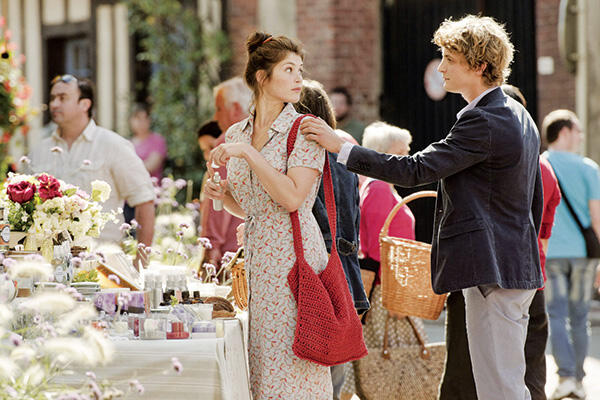
Gemma Bovery
Rating: 3/5 The Francophiles of Dunedin can rejoice in the knowledge that the 2015 Alliance Française French Film Festival is now in full gear. I myself am rejoicing, but that’s because I’m a lover of subtitles. A film with subtitles and also part of the French Film Festival is Gemma Bovery. Anna Fontaine brings this film — based on Posy Simmonds’ graphic novel of the same name — to life with a talented cast and a beautiful setting. Gemma Bovery first introduces us to Martin Joubert (Fabrice Luchini), a man who has moved his family back to Normandy to take over his father’s bakery. Life in Normandy is peaceful but, for Martin, it seems to also verge on mundane; his family life does not seem to help either. That is until an English couple called Charlie (Jason Flemyng) and Gemma Bovery (Gemma Arteton) move across the street — then Martin becomes a weird stalker who confides in his dog. For Martin, there’s just something about Gemma. He finds her physically attractive (the number of sexually objectifying shots in the film is simply ridiculous) and cannot believe how much Gemma seems to embody Gustave Flaubert’s Madame Bovary — protagonist and plotline. In attempt to make sure that Gemma does not have the same fate as Madame Bovary, Martin becomes incredibly involved in her life, especially her love life. Unfortunately, several events thwart Martin’s efforts to save Gemma. When it comes to French films, Gemma Bovery is just like the rest of them; the film has an aesthetically pleasing backdrop, sexually fuelled camera shots and characters overreacting to the littlest things but not even flinching when it comes to life-changing events. Even though Gemma Bovery has a cute soundtrack, adorable dogs and satisfying shots of bread, the film doesn’t push me to think about art and life when its 100 minutes are over. There’s nothing profound about Gemma Bovery, but it is a visually pleasing watch with a reasonably satisfying plot, one that you’re happy to sit down and see.
-
Culture

How to Make a Salad
I went to the Farmers’ Market the other day and became instantly inspired to start eating more vegetables. I was prancing around the market in new fluoro Nike gym gear too, so I feel like the health kick had gone well and truly to my head. I became overwhelmed with choice and even found myself purchasing kale. Make the most of what remains of the salad vegetable season and compensate for the stodgy white-carb season that is approaching (#winteriscoming). The thing about salad is that most of the time the salads we all grew up with were dead boring, consisting of lettuce, tomato, cucumber and avocado — hardly Instagrammable, is it? So here are a few helpful tips and ingredient suggestions to help cram those vegetables into your poor, wilting student bodies. Invest in a decent julienne peeler. Being able to serve up salads with your carrots ever-so-fashionably sliced into the thinnest strips will make your salad look right on trend. A decent Y-peeler also makes shredding cabbage and cucumber a dream and avoids the hassles of blunt, flat knives and chopping boards. If adding roasted vegetables to your salad, then try roasting up a massive batch once or twice a week so that you can save time during the week. This also makes the idea of preparing your lunch salads less daunting. TextureI am a huge fan of mixing up the textures in my salad, whether that be from the crunch a handful of seeds provides or from the creamy mouthfeel of crumbled feta. Try incorporating vegetables with a bit more crunch than usual. I have been throwing in handfuls of sugar snap pods; not only are these crisp and refreshing, but they are super sweet as well. I love a sprinkling of sunflower or pumpkin seeds in my salad too. If you are feeling balla rich, then a handful of almonds works a treat too. I really like dollops of garlicky hummus as well. Not only does this lubricate the drier salad ingredients, but it also packs one hell of a flavour punch. FlavourA handful of torn-up herbs makes a world of difference in your salad. For a traditional garden salad, try throwing in a few torn basil leaves. I am loving the oodles of mint leaves I have been putting in my Middle-Eastern inspired salads lately. You, of course, can’t go wrong with a handful of fresh coriander either. As mentioned earlier, try throwing spoonfuls of your favourite hummus or healthy dip onto your salad as well. Roasting cubes of vegetables and tossing them in garlic before putting them in the oven also gives your salad a kick in the pants. If you really feel like it, shake up a quick dressing to drizzle over the top. Eat SeasonallyMake the most of what is cheap at your vegie store or farmers’ market. Right now, aubergines and courgettes are in abundance. I love roasting chunks with a few cloves of crushed garlic and a drizzle of oil until they are soft. These lubricate the mouth, add garlicky flavour and go perfectly with mint. During the cooler months, root vegetables and pumpkins will be cheap as chips. These vegetables can also be turned into my favourite liquid salad known as soup, but I will delve into that topic in a later issue. Carbohydrates and ProteinSometimes you want something a little more substantial than just leaves. Lately, I have been buying tins of brown lentils, draining them and throwing about a third of the can into each of my salads. They are a great source of protein, fibre and carbohydrate. I love to toss some rice vermicelli noodles through my salads to give them more of an Asian vibe. Drizzle over some sweet chilli and lime to add flavour, and your salad is transformed. During the wintertime, when root vegetables come into season, roasting up cubes of pumpkin, kumara and carrot is a great way to increase the satiating power of your salad bowl; try adding some walnuts and blue cheese to salads like these. Cheeses are a great source of protein, as are tins of tuna, leftover roast meats and eggs. Canned chicken, for those who have not tried it, is also delicious. A Note on DressingsDressings can easily be made from a few simple cupboard ingredients. Most of my favourite recipes contain non-perishable ingredients, so can just be kept in a jar in the fridge for many weeks. If packing your salad to-go, try keeping your dressing in a small container separate to the salad. You can buy small plastic vials from the supermarket. The acidity of dressings has a tendency to wilt your greens, making them less than appetising come lunchtime. Quick & Easy Dressing IdeasSweet Balsamic Dressing 1/2 cup olive oil ¼ cup balsamic vinegar 3 teaspoons runny honey 2 teaspoons wholegrain mustard Shake all the ingredients together in a jar. Store in the fridge and shake again before each use. Pomegranate Dressing 3 tablespoons pomegranate molasses (look in gourmet section at New World) 2 tablespoons balsamic dressing juice of 2 oranges ¼ cup olive oil 1 tablespoon honey Shake all the ingredients together in a jar. Store in the fridge and shake again before each use. Lemon Dijon Dressing ½ cup olive oil juice of 1 lemon 2 teaspoons Dijon mustard 1 teaspoon sugar 2 cloves of garlic, minced ½ teaspoon salt Shake all the ingredients together in a jar. Store in the fridge and shake again before each use. Here are some ideas for salad ingredients. Next time you go to a vegie shop, have a look around and ask yourself, can this go in a salad? More often than not, the answer is yes, so get creative! Leaves Iceberg lettuce, butter lettuce (smooth-edged, fancy lettuce), kale, baby spinach, rocket (gives a peppery flavour) Colour Shredded red cabbage, julienned carrot, tomatoes, cucumber, sliced radishes, julienned raw beetroot, sugar snaps, roast courgette, roast aubergine, red onion, avocado, watermelon, melon, stone fruits, oranges, blanched green beans and broccoli, capsicum (fresh or roasted) Herbs Fresh coriander, mint, basil, parsley Crunch Sunflower seeds, pumpkin seeds, nuts of your choosing, edamame beans (find them in the freezer of your local Asian supermarket) Carbohydrates Tinned lentils, roasted kumara, roast pumpkin, roast potatoes, cous cous, vermicelli rice noodles, homemade croutons, pita pockets, quinoa Protein Tinned fish, nuts, boiled eggs, cheeses, roast meats, tinned chicken Flavour Hummus, roasted vegetables, cheeses (feta, parmesan and blue vein are my picks), herbs, dressings, dried fruits, corn kernels
-
Culture

Focus
I must admit, following the utter disappointment of After Earth, my expectations of Will Smith providing quality cinematic entertainment in Focus were pretty low. The fact that it was a “Baby and Me” screening did not help matters — screaming toddlers and dimmed-but-not-entirely-blacked-out lighting did not sound like my idea of a good time. Focus actually left me pleasantly surprised. Focus follows con man, Nicky Spurgeon (Will Smith), as he finds, and consequently loses, the love of his life; a storyline that sounds like the plot of basically every movie that I have ever seen. The opening credits had me worried that I’d have to sit through just another depressing Will Smith action movie, as the supposedly more important aspect of the film is the myriad of criminal schemes Nicky immerses himself in, but what makes Focus far more enthralling is the arrival of Jess Barrett (Margot Robbie), a wannabe (and, might I add, totally babin’) pickpocket extraordinaire. Margot Robbie as Jess brings an edge of humour to the film, one that I was unaccustomed to associating with her counterpart. Her initial lack of flirtatious flair is made up for during the latter part of the film, which follows her emotional disembowelment by Nicky when he dumps her like freshers dumping greasy food on their plates after a hangover. The film takes some interesting and surprisingly unexpected twists that peaked my interest and held it throughout (only twice were there epic screaming episodes from my baby companions, which disrupted the peace of my abnormally illuminated theatre experience). These twists highlight the importance of never “dropping the con” and, ultimately, maintain focus. I appreciate Will Smith’s attempt at portraying a con man with actual human feelings, but without the star performance from Margot Robbie, Focus would certainly have fallen into the stagnant, generically mainstream pit where movies go to die.
-
Culture

Dunedin Fringe Festival
T he night was a successful taste test of what to expect from the Dunedin Fringe Festival, and I’m sure it won’t disappoint. With a song from Beards! Beards! Beards! by two men sporting their very own impressive beards and a hilarious performance from the girls of BENEDICT CUMBERBATCH MUST DIE that left the audience wanting more, the opening night of the Dunedin Fringe Festival was off to a good start. When you see two girls with crutches, you don’t assume that they’re contortionists until one of them climbs on top of the other (I just thought both of them had sprained their ankles). All Good Poems Wear Travelling Shoes is described as a “marriage of poetry, drama and music” but, really, it was like strobe lights for the ears: enjoyable but intense, and trippy. Fortunately, the opening night also provided calmer performances such as those from Footnote Dance and Metamorphosis. The most impressive acts of the night, though, have to have been Scottish Comedian of the Year 2014, Bruce Fummey, and Joseph Moore, who was nominated for the Billy T Comedy Award in 2013. When you hear about how awful Australia is for a Scotsman and why TVNZ’s Coastwatch is Joseph Moore’s favourite show, you become a changed person. With acts that make you think more about Vogel bread and make you question whether a man simply putting on his jumper is an artistic performance, you know that the 2015 Dunedin Fringe Festival has events for everyone. Critic got the chance to interview Dunedin local, Emma “Feather” Shaw, who is directing and performing in Dunedin Fringe Festival shows, Are You Game? and Lads on Tour. CRITIC: Have you always wanted to pursue drama, theatre and performance professionally? EMMA: I’ve always been really passionate about performance, and as a kid, I was always the star of all the little end-of-year community hall shows. I didn’t dream of being an astronaut or a teacher or a mother or a movie star. When I was a kid, I just wanted to grow up to be a milk-truck or rubbish-truck runner by day, and a rock star by night. CRITIC: You have two shows playing in the Dunedin Fringe Festival. Can you tell me what inspired you to create Are You Game? and Lads on Tour? EMMA: Lads on Tour was inspired by my OE, and all the crazy encounters that I had. I kept this travel diary over the past couple of years and there are just too many juicy and hilarious bits in it to keep to myself. So now it’s being put onstage, with a bunch of circus, musical, burlesque, drag and dance acts happening in between me as MC telling travel stories that tie the night together. I’ll tell a bunch of stories about things like the time I snuck into an abandoned theme park in Berlin and the time I went to the Icelandic Penis Museum. We also tackle the big questions that plague the lives of those in England, like is a Jaffa cake a cake or a biscuit? In stark contrast to that, I have also written and directed Are You Game?, which uses dance and monologue to explore the themes of sexual assault and blurred lines of consent. It is a heavy piece that goes on this journey from a light-hearted, fun night out through to a point when boundaries perhaps become unclear and the miscommunication that can stem from some innocent flirting. Are You Game? is a devised piece of theatre, based from an account I wrote down about five years ago after my own experience of being assaulted at a party. The piece kind of looks into the reaction of freezing up like a deer in the headlights, rather than using your words or movement to be strong and say no and walk away — even when technically you are given that opportunity. CRITIC: What advice do you have for aspiring performers and directors? EMMA: Just go out and get involved. There’s this huge supportive network out there just waiting to be taken advantage of. Volunteer to clean toilets at the local theatre, meet people and get involved. Just make yourself known and don’t be afraid to throw an idea out there for a show — because there will be people around to make it happen. As far as I’m concerned, if you perform a show in the lounge of your flat to an audience of ten people and a labrador, that’s making the big time. It’s all about the love of it.
-
Culture
Thunderstruck & Other Stories
Whenever I read contemporary literary short stories I tend to feel like I’m missing the point. I must be missing the point, because there must be one. No one would publish entire collections of meaningless stories where nothing happens to boring people. And if they did, scores of critics wouldn’t respond with fulsome praise along the lines of “transcendental elegiac portraits of the universal human struggle … quiet … harrowing … strangely beautiful.” I refuse to believe that an endless stream of people are delusional just because I’m seemingly incapable of experiencing whatever it is they get out of today’s lauded literary story writers. Reading Elizabeth McCracken’s latest short story collection was a relief to me. I knew right away that whatever was going to happen, I wasn’t going to be left adrift in the usual sea of meh. Thunderstruck & Other Stories contains nine stories, all of which can be described as “elegiac” with total accuracy. The theme that ties McCracken’s collection together is one of loss and mourning. These stories are about situations that are fundamentally depressing, from murdered mothers to dying fathers to starving children, yet McCracken makes them so interesting and occasionally funny that reading them is delightful even when it’s upsetting. The first story, “Something Amazing”, begins: “Just west of Boston, just north of the turnpike, the ghost of Misty Goodby sleeps curled up against the cyclone fence at the dead end of Winter Terrace, dressed in a pair of ectoplasmic dungarees. That thumping noise is Misty bopping a plastic Halloween pumpkin on one knee; that flash of light in the corner of a dark porch is the moon off the glasses she wore to correct her lazy eye.” This writing speaks for itself. Another story, “Property”, deals with grief and loss, looking at the uncomfortable situations that arise when dealing with landlords and living in other people’s houses. I also enjoyed “Juliet”, a story about a murder told from the collective point of view of the local librarians. Picking favourites seems pointless, though. They are all worth reading.
-
Culture

Panguru and the City: Kāinga Tahi, Kāinga Rua
Panguru and the City: Kāinga Tahi, Kāinga Rua, by Melissa Matutina Williams, shares the history of the migration of Māori from the community of Panguru in North Hokianga to establish new lives in Auckland. Covering a time period from the 1950s onwards, Williams takes apart the historical narrative previously constructed around this migration, which claimed that migration was a one-way trip that stripped Māori who moved to urban centres and left them disenfranchised. Using oral accounts from the migrants as well as social analysis, Williams shows how complicated the relationship between Panguru and Auckland was for people. Rather than offering a definite story of what these particular migrants experienced due to their decision to move, Williams acknowledges the many ways that attempting to boil down the complexities of life and human beings into a particular narrative does no service to the truth. I always prefer history books that challenge standard history, even as a starting point on any particular subject. Challenges tend to make their own points while simultaneously demonstrating what the established history was, and how it is flawed. One of Williams’ specific challenges is to the idea that Māori who migrated from Panguru were passively reacting to social forces rather than acting in their own interests. She also demonstrates the web of relationships that developed between the Panguru migrants living in Auckland, others living in Auckland and those who continued to live in Panguru. Williams’ account begins with a description of the methods she used to obtain it, as she is deeply and personally involved in this history. She acknowledges that she is choosing not to include some information from the oral accounts, chiefly because of concerns that Pākehā would pull it out of context and use it to bolster their prejudices. But I suspect there’s a school of particularly rabid historians indignant at the very thought, so this is my warning. Williams makes it very clear she isn’t going to tell you everything. Panguru and the City is a thorough and fascinating piece of work filled with beautiful photos. Williams’ combination of social analysis and oral accounts perfectly encapsulates, for me, what is one of the most interesting things about history: the way social forces shape people’s lives even though every person is still an individual making personal decisions. Māori who made the move from Panguru to Auckland are both part of a historically important pattern of migration and human beings who get to speak.
-
Culture
Patrick Lundberg Draft Copy
Patrick Lundberg’s Draft Copy is a connect-the-dots of all sorts: literally in its arrangements of round pins intersected by faint pencil lines and intellectually in the discussions it raises between art objects and the gallery space. This show can be enjoyed by taking a step closer to discover the finer details of painted patterns, and then a step back to examine the interesting, ongoing conversation in the way art objects are made and their visual qualities in contrast to the importance of their context and the ideas behind them. On entering the Hocken Gallery, however, a distracted viewer, or one with diminishing eyesight, may wonder where the art is at all. A closer inspection of the white surfaces is revealing. Arranged across the walls are small colourful objects like round, stationary insects. These globes of gesso, acrylic, pencil and varnish attached to the wall by hidden pins are arranged in six different instalments throughout the gallery, with large spaces between each instalment. In one room, for example, there are four creamy-white balls arranged at the intersections of the room’s walls. At first, they are almost indecipherable from the wall. But a closer look reveals small, speckled, colourful details. The works that Lundberg has created for Draft Copy can be examined as individual art objects that occupy their own space and also as the shape that they create within their arrangement. This and the objects’ visual qualities show that Lundberg has used his time in Dunedin as 2014 Frances Hodgkins Fellow (previous fellows include Ralph Hotere, Jeffrey Harris and Seraphine Pick) to build on previously formed ideas. While beautiful in themselves, the pin heads’ size is such that the viewer finds herself equally lost in the inbetween and the periphery. Suddenly, the rough white paint covering the walls and the bulk of the lights that illuminate the art from above (both staples of most gallery spaces) become noticeable and part of the work in a way that could never be achieved by framed paintings or stand-alone sculptures. The boundaries of the institutionalised gallery space are brought into question again in an instalment where one of the balls, like a dropped yellow lolly, is “lost” on the ground. For several minutes the viewer may consider going downstairs to inform the staff that the exhibition is falling apart. But, be warned, Lundberg is playing with her; forcing her to acknowledge her deeply held, supposedly natural, ideologies about how a gallery “should be”. With space being one part of the conversation, art’s permanence (or lack thereof) is another. An interest of Lundberg’s, Sol LeWitt was a leader and one of the first artists of the postmodern era and advocated for an idea itself being art. LeWitt believed that the production of work could be delegated to others and still be able to be called his art. Draft Copy’s temporary nature invokes a similar idea. While Lundberg has created the art himself, the balls arrived at the gallery and will leave the gallery with no decided or definite layout. In their perpetual status as “drafts”, the balls are incomplete artworks in that they can always be rearranged; how they interact with the space and the viewer will also change accordingly. While Lundberg’s final products are beautiful, it is when viewing his work as this idea of a draft or an incomplete process to be completed by the viewer’s interaction with the art that makes Draft Copy exciting; it partly relies on the viewer to make it engaging. This art is about ideas and, as LeWitt said, “The idea itself, even if not made visual, is as much a work of art as any finished product.”
-
Culture

Recent Releases
Hot Chip “Huarache Lights” London group, Hot Chip, has been carefully honing its brand of electronica for a decade and a half now. On fifth album, In Our Heads, they have seemingly perfected their craft, blending irresistibly catchy electronics with thought-provoking lyricism. New track, “Huarache Lights”, however, suggests the best may be yet to come. The first single off their upcoming sixth LP, Why Make Sense?, “Huarache Lights” suggests even further musical maturation for the group. The song is a simmering mid-tempo number, with pulsing synthesizers and psychedelic vocals. The way Alexis Taylor calls “just bathe in the light” suggests both David Byrne of Talking Heads and a New Age hippie with an unhealthy obsession with lava lamps. More confident and blissed-out than we’ve ever heard them, Hot Chip are on top form with “Huarache Lights”. Faith No More "Superhero" Just in case you missed the fantastic news, Faith No More are about to release their first album in eighteen years. “Superhero” is the second single off the long-awaited Sol Invictus, following “Motherfucker” late last year. Whereas “Motherfucker” was new and alien, “Superhero” is pure fan service. It starts off sounding like a cut from 1989’s The Real Thing, before locking into an aggressive groove more reminiscent of their mid-nineties work. The precarious chorus is the song’s best asset, due in no small measure to Roddy Bottum’s haunting keyboards. If I have any complaints with the song, it is the mixing. There is something claustrophobic about “Superhero” soundwise, especially when compared to the cavernous “Motherfucker”. The instruments don’t quite have enough room to breathe. Hopefully this was just due to poor YouTube sound quality, and won’t be the case on the album. Regardless, “Superhero” is a fantastic tune. If you are hungry for new Faith No More, this will no doubt tide you over until Sol Invictus comes out in May. Kanye West “Only One” (feat. Paul McCartney) and “All Day” (feat. Allan Kingdom, Theophilus London and Paul McCartney) I t was anybody’s guess where Kanye West wanted to go after 2013’s caustic, industrial-tinged Yeezus. A recent collaboration with Rihanna and Paul McCartney called “FourFive Seconds” turned out to be rather sweet in nature, featuring acoustic guitar, summery vocals and not much else. Worryingly, our next glimpse of Kanye’s future was “Only One” — yet another stripped-back, sugary tune featuring Paul McCartney. Some people will feel differently, but to me that track is one of the least developed songs Yeezy has ever put to tape. On Yeezus, Kanye’s raw production and autotune gave the songs an added corrosiveness. On “Only One”, they actually work to the song’s detriment, exposing just how ugly and half-baked it is. But if you had fears that Kanye would fail to deliver on upcoming LP So Help Me God, “All Day” should quash them. This new song may feature Paul McCartney once again, but it is a genre-hopping monster nonetheless. Aesthetically, it takes cues from both the lushness of My Beautiful Dark Twisted Fantasy and the dissonance of Yeezus. Kanye raps as hard and as fast as he ever has, his words complemented by the stuttering beat. Kanye’s lyrics might not have the same punch here that they did on, say, “New Slaves” or “Gorgeous”. And, yeah, the autotuned vocal refrain is pretty reminiscent of “Monster”. But it is nice to hear Yeezy spitting bile again all the same. Jack Ü “Where Are Ü Now” (feat. Justin Bieber) J ack Ü is a collaborative project between EDM gargantuas Diplo and Skrillex. After that weak, rushed-sounding song they did with Kiesza (“Take Ü There”), I didn’t have high expectations for the project. Surely a Jack Ü song featuring Justin Bieber on vocals would be a contender for the worst song of 2015. Actually, “Where Are Ü Now” isn’t that bad. Firstly, the track is much more tender than you might expect. The focus here isn’t on facemelting bass but on Bieb’s impressively melancholy vocals. The way Jack Ü chops up his words into glitchy hooks shows creativity. And when the bass finally drops, “Where Are Ü Now” is less brostep than it is a strange brand of post-dubstep. Congratulations, Jack Ü and Justin. Your song together wasn’t awful.
-
Culture
Anthonie Tonnon
You are from Dunedin originally, but migrated to Auckland. Did you feel there wasn’t a place for you in the Dunedin music scene? That wasn’t it. I decided very suddenly that I was going to move to Auckland. It was New Year’s Day, I took two suitcases with me, and that was that. I think Dunedin has a very welcoming music scene. But I guess I felt that being a musician in Dunedin could only get you so far. I used to have the idea that if I just made the perfect album and released it on the Internet, it would blow up and I’d become famous overnight. That’s worked for people like Lorde, but it isn’t my way of thinking anymore. Now for me it is so much about touring and perfecting my craft. Is it important to you to sing in your Kiwi accent? I don’t really like the term “Kiwi accent”, but I guess that’s just cultural cringe. I’ve been honing my voice for a while now, and it just feels right to sing the way I do. I don’t see Lorde singing in an American accent as inauthentic or a bad thing. Though she’s been criticised to hell and back, the poor girl. We Kiwis grow up hearing a lot of American accents in mainstream culture; I think it makes sense to sing in one. We live in such a globalised world. Is Successor, as the name suggests, a sophomore album? Or do you consider it your debut solo album? I don’t see this as me starting over musically or anything. This is just the first album I’ve released under the name Anthonie Tonnon. I certainly didn’t work alone on it; I had my band, I had Jonathan Pearce, Daniel Blackball [of Critic!] helped me hugely with the visual sides of things. Though it’s my name on the CD and my face on the cover, my music is always going to be collaborative. Releasing Successor under my name was more a way of cultivating a musical persona for myself. I take cues from theatre with my live show. I’m very interested in the idea of artifice. I really like that. I think a tangible visual aesthetic is something Kiwi musicians can sometimes lack. What were the sounds and emotions that informed Successor? Sonically I wanted something that was minimal, but still somehow otherworldly. We were listening to a lot of Lou Reed, David Bowie’s Berlin trilogy of albums, early Krautrock bands like Neu! I don’t know if there are any dominating themes or emotions to Successor. I guess I like to keep things emotionally vague in a way. It is more about the characters I talk about on the album, the aesthetic. I’m a big Twin Peaks fan. I was struck by how lyrical much of Successor is. Do you have a background in poetry? I actually did a poetry paper at the University of Otago. I think it’s called Engl217. It was taken by Emma Neale, who is a really great Dunedin poet. She was the Robert Burns fellow a couple of years ago. But I’m not sure “poetic” is the best way to describe my music. I’m actually really interested in prose, in long-form journalism. A song off of the last album called “A Friend from Argentina” is based on an article “Blow Time” by Donna Chisholm, which is about the cocaine trade in Auckland. One of the cocaine mules died on the job when this huge bag of cocaine she was carrying inside her burst. A really sad story. Oh my god. How would you describe your creative process? On some songs, I come up with, say, the opening lyric first; others evolve from a musical idea like a riff. “Bird Brain” (a song from Successor) started with a riff. I often write my songs in a comfortable urban environment, get them ninety per cent completed, and then finish them when on tour. I think it takes me playing those songs in the real world, to real audiences, for me to perfect it and make it resonate with people. I find that so interesting. I think for a lot of bands it’s the other way around; they come up with musical sketches when touring and polish them when they get home to the studio. How has the national tour to promote Successor been so far? Great. We’re driving down to Wellington at the moment, and will be in Dunedin to play Chicks Hotel on Saturday 14th.
-
Culture

Super Smash Bros for Wii U
Nintendo’s Super Smash Bros franchise is probably the most well-known, well-loved fighting video game in existence. Originally, the idea behind the fighter was to use generic brawler characters, but thankfully Sakurai (the bright spark who designed the game) decided to throw Nintendo’s mascots into the mix and see what happened. Link, Pikachu and Mario could beat the hell out of each other, and the franchise grew insanely popular. Put simply, Smash has you take control of a character from Nintendo’s pantheon and utilise that character’s unique skills to beat up your friends (or opposing artificial intelligence (AI)) until you can smash them out of the park. Super Smash Bros for Wii U (yes, that’s literally the game’s name) is the fourth instalment of the Smash franchise and boasts an impressive 51 characters to choose from, even some non-Nintendo gems such as Mega Man, Pacman and Sonic. Almost every character, with the exception of one or two clone characters, owns a unique fighting style and move-set. We’re talking around seven or eight distinct techniques each, as well as their own speed, weight and strength. Alongside a mind-boggling plethora of weapons, this creates a more varied, unpredictable and often downright chaotic environment than any previous instalment in the series. You can ramp up that chaos by engaging in up-to-eight-player battles with any combination of human and AI. This might not be for everyone: you’re in for a constant onslaught of beatings and fighting for your life, but there’s a beauty in that insanity. A huge plus for battling friends in the new Smash is that you can hook up almost any controller you want. We’re talking Wii remotes, the Wii U gamepad, pro controllers, Gamecube-style controllers, even a 3DS console. The only main drawback to this is that you’re stuck in that one room: no online eight-player battles. Which seems crazy; eight-player Smash madness and online play feel like a match made in heaven. Super Smash Bros has a history of intentionally neglecting its competitive play community, as creator Sakurai pushed very hard for his vision of a no-worries party game, but finally we see an instalment that truly embraces this side of its fan-base. Once again, the ability to switch items on and off (in any combination) is still available to us, but now we can convert any given stage into a flat, no-interruptions, competitive-style battlefield. This play style is carried over to online matches, which are separated into just-for-fun casual battles and ranked, competitive matches. Smash’s accessibility has always been a strength over other fighting games on the market, but now you can truly tailor the game to any play-style and skill level, and even ramp up the difficulty in solo play for increased rewards. Super Smash Bros for Wii U still offers its classic solo “campaign” but with some large tweaks over old game modes. They’re still fun and they’re mostly cosmetic changes, with the notable exception of Smash Tour mode. This is a watered-down Mario Party boardgame-style romp, but it feels like one of the weakest areas of the game. While interesting in concept, in practice you end up running around a hugely uninteresting game board and occasionally engaging in short, stunted battles. It may come down to personal opinion here, but the 3DS version of the game has a much more engaging game mode called Smash Run, where you run around powering up, fighting monsters before battling friends or AI. But what really sets this game apart from previous entries in the series is the pure polish on every aspect of battle. Character movements feel more intuitive and snappy than both Super Smash Bros Brawl and the widely praised controls of Super Smash Bros Melee. The colours are brighter and the character models are smoother, everything looks gorgeous and easily stands up to anything on competing, more powerful consoles. Hell, Mega Man even runs and jumps the same way he does in his own game. It’s downright beautiful. Super Smash Bros for Wii U outdoes its predecessors in every feasible way; it’ll leave you craving more every time you put down the controller.
-
Culture

Horoscope | Issue 4
Do you struggle with making basic life decisions? Worried about never bumping into your campus soulmate, or whether to eat two-minute noodles for every dinner this week? Fear not, chums, for I, Madame McMystery, have gazed deep into the cosmos to reveal the secrets the planetary alignments hold in store for you! (Disclaimer: Madame McMystery is not responsible for any physical or emotional damage caused by the interpretation of her predictions and subsequent actions influenced by them). Aries You know you’re going to get that assignment done — you’re an Aries! You’ve got this! So stop using that 2% assignment as an excuse not to come out with the flatties this Thursday, nerd. Taurus Did you know Carly Rae Jepsen has made a comeback? You will by the end of this week, as her new single will be playing in the background during your hook up on Saturday. Check out the music video too; Tom Hanks is in it (and it’s basically the cat’s pyjamas). Gemini Mars is aligned with your alcohol moon this week — avoid tequila at all costs. Bad decisions will follow and the loss of your dignity will haunt you through to the end of semester. Cancer Wear blue this week. Not only does it bring out the colour in your eyes, but with Jupiter in your career zone it will help you make friends and influence people! Also, make lots of eye contact to project confidence. Everyone loves people who stare. Leo The time will come this weekend when you ask yourself if you really need that last can of beer before you hit town. The answer is no. Virgo You know where hiking trails lead? True love. Go wander through some nature this week and you’ll probably meet the love of your life. Or at least see a cool tree. Maybe some birds. Libra You know how you said that test coming up would be fine? It won’t. If you sit it with your current attitude, I foresee a three-day wallowing-in-self-pity extravaganza filled with Doritos, self-loathing and a three-kilogram weight gain. Get to a library ASAP. Scorpio You will get a cold later this week. If you have your eye on a special someone, get with them before the symptoms show up. Also, beware the man in blue. He is plotting something. Sagittarius I f you’re trying to pull this weekend, Boogie Nites is the place to be. Just set your standards low. Capricorn S top being a dick to your flatmate about drinking the last of your milk. The time will come this Thursday at 3am when you will be begging them for some toast and they will not let you forget it. Aquarius T his week is a chance to get back to your roots. Seeing as you are a water sign, I highly recommend spending most of the week frolicking in the surf at St Kilda beach. If you have classes, forget them. This is more important. Pisces Y ou know you’re talented, I know you’re talented. Have you ever thought about showcasing this to the wider student population via a free performance on the Union lawn? This is the week that guarantees you success if you do! From juggling swords to putting on a one-man production of West Side Story, I’m sure your peers will admire you for your endeavours!
-
Columns
Skeptic Schism | Issue 4
T he first definition of “virginity” in The Urban Dictionary is “What women are proud to have and men are ashamed of.” This sums up our culture’s obsession with “virginity” as a tangible part of a person. But outside of its cultural context, virginity is a myth. Men are expected to be physically unaltered through losing their virginity, but women are still often expected to have physical changes. The hymen is a thin membrane of skin covering the vaginal opening — its presence in many traditions is considered evidence that a woman is a virgin. However, the hymen varies in shape and form, with some hymens covering nearly the entire entrance to the vagina and others being barely present at all. A hymen may not even be detectable in a “virgin” vagina. A hymen can be broken through activities other than penetrative sex, such as exercise. In many cases, if the woman is properly aroused, her hymen will often stretch to accommodate a penis during penetrative sex and return to its original shape. Only rough sex or a lack of lubrication will damage many hymens. The traditional definition of loss of “virginity” is through penetrative vaginal sex, so a woman could have sex with other women her whole life and still be a “virgin”. Having oral or anal sex may or may not be considered “losing your virginity” depending on who you talk to. Penetrative vaginal sex may not lead to female orgasm, even after years of sexual activity. So a woman who has never had an orgasm can be considered a non-virgin by having a man orgasm by means of her body. If the reverse were true and a man was considered a non-virgin only when a woman had achieved orgasm through penetrative sex with him, a man could have sex for his whole life and still be a “virgin”. If virginity were to be defined as a person achieving personal sexual gratification, then what would losing your virginity entail? Achieving orgasm through penetrative sex? Penetration by an object? Any kind of sexual contact with another person? On your own? The whole concept of “virginity” is outdated and meaningless. If a person wishes to partake in or abstain from sexual contact with another person for any reason, that is entirely their business. They don’t need an antiquated and sexist label imposed on them by a ridiculous tradition.
-
Columns

Crush on Campus | Issue 4
Each week Critic wants to hear from you if you’re struggling to approach the man or woman of your dreams. Does she always sit on that front row seat and give the lecturer far more attention than you’re comfortable with? Does he stroll past your window each morning and your only attempts at getting his attention have been taking a little longer to put clothes on? Flick your stories to crush@critic.co.nz Oh sweet Arae, how I would roll you in the hay. You are so petite, smelling oh so very sweet. I take books out of the library, just so you will spy on me. Do you like my new cologne? Oh your face when I’m alone. See you at wine and cheese, my chat will be a breeze. Show me what’s the law and I’ll show you to my floor. Beautiful fox, I’d like to find your box. I know this may be risky, but you and I get frisky? Now I won’t be crude, I just want to make you food. And romance I can do, so you I will accrue. i need an alibi, because I can be a little shy. You are simply so hot, my heart beats a lot. You are the inspiration for all my masturbation For you I would sing and dance, if I only had a chance. I would take you to the beach, if you weren’t so out of reach. Our consummation will rock this very nation. Please say yes to me, you and I are meant to be. This is for the most beautiful girl I have ever seen. She looks like Taylor and she dresses even better. I never thought I would meet the love of my life in a lecture. I wonder where she lives? She dresses so well, I thought she was from Auckland. However, it can’t be as she is so sweet and nice. Be my starlight. Put me in a state of grace with your sweet face.
-
Columns

David Clark | Issue 4
I n my line of work, I’ve run into a few “spooks”. Good people, as far as I can tell. One view privately expressed to me is that oversight is something they welcome. Far from wishing for unencumbered powers, those I’ve met wish for suitable oversight of their activities. Intelligence gatherers know the importance of public confidence in their work. Perhaps more poignantly though, they have often had reason to observe the effects of absolute power and its ability to corrupt government regimes. The results are not pretty. Nicky Hagar’s recent revelations about wholesale data-hoovering have sparked fresh concern about the government’s role in spying abroad. This spying on allies includes collecting all emails, text messages and other digital data from New Zealanders resident in the Pacific. Some will say all government-sanctioned spying is bad. Some will say it is good. But the reason most New Zealanders are interested in the issue is twofold. First, we haven’t known much about it until recently; second, the issue isn’t completely cut and dried. To what extent are governments legitimate in trading away individual liberties (and privacy) in the interests of wider safety concerns? Where should the line be drawn, and who should make that call? We share a lot more personal information on the Internet than people did a generation ago, much of it nominally private, but all of it a part of our digital “shadow”. Difficult family conversations used to happen in person, not via email. Our bill payments and purchases weren’t available for trawling online; bank withdrawals were hand-written in a savings-book. To my mind, the issue we should debate is oversight. Regular citizens (me included) don’t always have the best information to decide when and why civil liberties should be traded away for reasons of our greater security. Greater supervision, by a panel of trusted New Zealanders, would give us all greater confidence that our interests were being properly served. Structural reform and stronger governance is required. @philiplyth put it like this on Twitter: “Righto. GCSB’s full take will include many of the 22,333 votes via internet from overseas in Sept 14. How do you like that?” Truth is: we feel uncomfortable with this thought, and we lack trusted third-party oversight to give us confidence that data is being used appropriately. That needs to change.
-
Columns
A Broad View | Issue 4
A Broad View is written by different international students each week who wish to share their impressions of their time here or unique experiences. Email critic@critic.co.nz if you are an international student wanting to tell your tale. Hours before sitting down to write this column, I was not quite sure of a theme for the piece. But, over dinner, my kiwi host asked me what aspect of New Zealand culture shocked me the most. I had to think for a while — much of how I learned to behave growing up in the United States holds true here in New Zealand. “The bluntness,” I finally told him. The word sounds harsh, but I meant it in an absolutely positive sense. My university experience stateside is, quite possibly, the one true polar opposite of the “Scarfie” experience. I attend a small — 2,000 students — liberal arts school in a vast city — Los Angeles. Of course, the University of Otago is a large school in a small city. More important than the demographics, however, is the attitude of the students. My college prides itself on the progressive nature of its students. And while that is certainly the case — they stage protests, ignore social convention and question authority — there is a strange pressure among the student body to mute yourself as well. On many occasions, people are afraid to speak their mind because they don’t want to be the reason for one of those protests. Therefore, the opinions and, more noticeably, the humour of the student body end up trapped in a paradoxical container labelled “political correctness”. (Or, at least, what the majority deems “political correctness”.) Here, the situation is quite different. Students use cruder language and are less sensitive. When they feel a certain way about something, they let it be heard. This is not to say that bigotry is part of the bluntness that I hear amidst conversations between Kiwis. In fact, I have seen less of it here than anywhere I have lived in the States. Instead, with that bluntness comes a refreshing breath of freedom of opinion. People can develop a dialogue without the fear of having their words woefully misinterpreted because they contradict a certain expectation of appropriateness. When one party is not immediately offended by the differences in opinion of another (or, dare I say it, a joke), real progress and change can happen. So, the first lesson I have learned in my short time here — don’t get so offended, have a laugh, lighten up.
-
Columns
Science, Bitches | Issue 4
F our and a half billion years ago, a star exploded and a cloud of dust spewed into the universe. As it collapsed, the cloud began to spin, and particles began to clump together into planets and moons. Hotter planets fell into the centre of the disk and, at the very centre, our sun was born. Small, icy planets like Pluto sat on the rim of the great spinning disk. One of those small, icy planets is the dwarf planet Ceres. A week ago, on 6 March, NASA’s Dawn spacecraft entered orbit around Ceres, a relic from our solar system’s explosive beginnings. At 1000 kilometres across, Ceres is one of the largest planetary bodies in our solar system that hasn’t yet been explored, and is the first dwarf planet explored by a spacecraft. Since Ceres was born with the birth of the galaxy, it’s considered a “protoplanet”. Like studying a fossil, investigating Ceres’ composition and processes is like looking through a portal to the dawn of time to get a glimpse of how the universe operated at its very birth. Better yet, Ceres likely harbours water, and may even host microbial life. Planetary scientists at NASA’s Jet Propulsion Laboratory (JPL) are nearly certain that they will find water in the form of a briny sea of ice when they land on Ceres. The idea came when planetary scientists spotted “unusually bright spots” on a 92 kilometre-wide crater in Ceres’ northern hemisphere. They believe the bright spots come from light reflected off frozen water. As in Columbus’ days, when ships sailed the oceans for years in hope of discovering new lands, planetary exploration requires long journeys. Ceres was spotted from Earth in 1801, but it isn’t until now that a spacecraft is nearing the dwarf planet, 4.9 billion kilometres away from earth. In fact, the Dawn spacecraft took off in September 2007 and has been roaming the universe for seven years — before it took off for Ceres, it visited Vesta, the second-largest rock in the asteroid belt. Like Mars, Vesta turned out to harbour watery minerals — most likely, they came from a smaller, water-rich asteroid that crashed into Vesta and left mineral residue in its crust. The plan on Ceres is to analyse minerals and conduct planetary geology, similar tasks to those conducted on Mars or Vesta. Dawn will lower down onto the planet’s surface over the next few months and will stay for 16 months, with a planned departure on 16 June to fly home. Hopefully, Dawn will bring back some clues into our solar system’s beginnings, and maybe even a further clue in the ongoing quest to discover extraterrestrial life.
-
Columns

From the Back of the Class | Issue 4
K ing Phillip II of Macedon is nowadays most famous for having banged Angelina Jolie in that movie with all the snakes and then spawning Alexander the Great. However, if his son had not gone on to be such an overachieving Eurasian, Phillip himself would doubtless be remembered as one of the foremost military and political leaders of the day. He oversaw the rise of Macedonian hegemony, and his military reforms introduced the phalanx and sarissa to the Macedonian army, which formed the backbone of his son’s continent-conquering forces. The sarissa was basically a really, really ridiculously long spear that Phillip invented. While everyone else on the Greek peninsula was messing around with a three-metre-long spear called a Dory, Phillip was, like, “Wait, what if I, like, doubled that? Then I could spike my enemies twice as soon as they could spike me.” So he did. Now, this might seem as obvious to you as someone else’s pubic hair on your bar of soap, but at the time it was the equivalent of going from one of those rubber-band guns you make with your fingers to an intercontinental ballistic missile. Phillip learned much of his statecraft and militarism when he was a child hostage in Thebes. Being a hostage in the classical Grecian age was not quite what is in our modern barbaric times. Phillip lived comfortably, received military and diplomatic education from the master general Epaminondas and was the eromenos (the “bottom” in the Greek man-boy love tradition of pederasty) of the great athlete and statesman Pelopidas. Although he seemed to have an all right time of it, that didn’t stop his son Alex from going back in later years and obliterating Thebes. Phillip also accomplished what doubtless many have wished for when he went to war with his wife’s relatives in 358BCE. He killed some 7,000 of her Illyrian countrymen in the process, creating many an awkward silence at the breakfast table. Though a masterful general and statesman, Phillip was not immune to setting himself up for a classical Greek burn. After having declared war on the Spartans (of 300 fame), Phillip’s emissary carried the message, “If I win this war, you will be slaves forever.” The Spartans’ laconic response was simply, “If.” Wisely, Phillip and (later) his son Alexander decided to leave the Spartans alone to focus on their abs.
-
Columns

ODT Watch | Issue 4
Being a guy used to be easy, but now it’s the year of the man bun, the hot lumberjack and manscaping. Stop, pop and roll! Nothing like a good NZ Breakers Basketball/Savage remix of a great club banger. #punoftheweek In another story featuring dodgy hospital treatment, this poor chap fell from an operation table while being transferred to a bed after a hip operation. Perhaps it’s time for the staff gym club to focus more on arms than legs. It seems that the foreign language known as teenage text has risen to a new level, with the TeenAg farming competition seemingly also murdering the English language. Think this is just a normal Saturday night house party on Castle Street? I’m afraid not; the party of 400 moved to the town of Otematata for a family reunion, and apparently it was an absolute ripper. Take note, Scarfies.
-
Columns

Woody's Word | Issue 4
I have been a Dunedin based National MP for the past six years. I was born and schooled in the Dunedin and, after completing my OE, attended Otago University where I gained a B.Com. I am a chartered accountant and have worked in the banking sector, previously worked at Dunedin Hospital and also had senior management positions with ACC. Before entering Parliament I spent seven years as CEO of Mercy Hospital here in Dunedin. I am married with three children and I am a keen sports fan and rugby referee. I hold three Cabinet portfolios which keep me very busy – Immigration, Police, and Workplace Relations and Safety. However, you will see me from time to time on campus so make sure you come and say hello and share your views with me or ring my office and make a time to meet. I hope to bring you a fortnightly report of activities in Parliament. In its first session for the year the House sat for the last three weeks of February, beginning with the Prime Minister’s statement outlining the Government’s programme for the year ahead. Our programme centres around four key priorities. 1. Responsibly managing the government’s books so taxes are spent wisely on the services New Zealanders need, our country isn’t burdened by high debt and interest rates are kept lower for longer. 2. Building a more competitive and productive economy to create more jobs, lift incomes, and provide more opportunities for young people. 3. Delivering better public services so we provide better education and upskill our workforce. 4. Support the rebuilding of Christchurch. In a major announcement in late February, the PM outlined in Parliament the Government’s decision to deploy a non-combat military training mission of 143 personnel to Iraq to help the international coalition against the Islamic State of Iraq and the Levant (ISIL). This is part of our overall contribution to the international coalition of around 62 countries that are helping in various ways to combat this brutal and inhumane group. New Zealand is a country that stands up for its values. We stand up for what’s right. We believe we have to do our bit to fight this group, whose distressing methods deserve the strongest condemnation. March began with the Government announcing that MP salary increases will be tied to those of the wider public sector. This follows the Remuneration Authority decision to increase MPs’ remuneration by about 3.5 percent, an increase that was neither necessary nor justified at a time when inflation is at 0.8 per cent. This week I will introduce legislation to reverse the Authority’s decision and make changes linking future pay increase to the average increase for the public sector.
-
Columns

Love is Blind | Issue 4
Critic’s infamous blind date column brings you weekly shutdowns, hilariously mismatched pairs, and the occasional hookup. Each week, we lure two singletons to Di Lusso, ply them with food and alcohol, then wait for their reports to arrive in our inbox. If this sounds like you, email critic@critic.co.nz . But be warned – if you dine on the free food and dash without sending us a writeup, a Critic writer will write one under your name. And that won’t end well for you. Ed A fourth-year, finishing Maths and Spanish. He’s a runner, loves exercising and is one of the few students who abstains from alcohol. After reading enough “Love Is Blind” articles, I noticed a general trend of people giving themselves a little liquid courage before their blind date. I, however, didn’t give myself that luxury and hoped that my nerves would be those of steel. After being pestered by my flatmate to bring my date back to the flat later in the night so she could meet her, I left my flat a little early so I could pop in and visit my mates for a last-minute pep talk, and then I was on my way to Di Lusso. I arrived a couple of minutes early, preferring to be the one who waits instead of the one who makes my date wait. Once I was there, my nerves started to crack a little, but thankfully I only had to wait a few minutes before my date turned up and was pointed in my direction. She was a pretty blonde, and my nerves went away as soon as we started talking. We discovered we’re both Kiwihosts, and it was good to find something in common that early into the conversation. The conversation flowed smoothly, with only a couple of pauses where we were trying to think of the next topic. Eventually the food — which I’d been given the tough task of choosing — arrived, but I don’t know if neither of us was that hungry or if we were both just too involved in talking that we didn’t actually end up eating that much of it, even though it was good food. Before we knew it, it was approaching 10pm and we decided it was time to make tracks and head home as we finished our conversation. We soon reached the fork in the road where our houses were in separate directions and parted ways with a hug. Sorry to the weekly readers looking for something scandalous, but the only thing I ended the night with was her number, which I plan on using. Thanks to Di Lusso and Critic for the food, drinks and a great night. It was a great experience, and I recommend it to anyone thinking of signing themselves or a friend up. T Swizzel A single third-year searching for a good night and stories to tell the grandkids. She’s sick of being the good girl. F rom studying past blind dates, I’ve learnt that the best way to start the night is to warm up beforehand, so I played beer pong before heading to Di Lusso fashionably four minutes late. Unfortunately, I had been paired with the self-proclaimed “only student in Dunedin who doesn’t drink.” My date was an Ed Sheeran look-alike with academic talents instead of musical ones. We had a great time bonding over a few common interests, including political views and being Kiwihosts. Despite the fact that Ed Sheeran wasn’t drinking, I decided to take it upon myself to try out a few of the cocktails; it wasn’t until after the date that I realised how strong the cocktails actually were and, looking back, my attempts at acting sober probably failed miserably. I’ve had my fair share of awkward dates but thankfully this wasn’t one of them. Although he preferred How I Met Your Mother to Friends (which is pretty much a deal-breaker) as far as I can remember he had pretty good chat and at least pretended to listen while I drunkenly word-vomited about nothing in particular. At about 10pm, after a few bathroom phone calls, I felt like I needed to leave before I drank any more, so we began the trek down George Street, politely greeting freshers on the way. After parting ways outside The Good Earth with a decidedly G-rated hug, I made my way to Castle Street to meet my flatmates. So even though I could feel the alcohol burning through my bloodstream, I didn’t really feel afire with love; I can’t see us building a Lego house, so maybe I’m your Taylor Swift not your Ellie Goulding. Or maybe I was just too focused on not slurring my speech to feel a connection. Overall, I had some good drinks with a nice guy, so thanks Ed Sheeran for a nice night and for helping me tick another item off my Scarfie bucket list. Looks like I’ll be continuing my quest to find my ginger Prince Charming.


