-
Columns

Editorial | Issue 2
I love people having a good rant and getting things off their chest. Go for gold, say what you want. What’s difficult though is when people take offence and then decide to use that as a platform to insult people back or think it makes them a better person. I am not easily offended — it makes you miserable and it bores other people. It’s fine for things to bother you — there are some things that I cringe at: like when underwear is hung out in front of houses, or when people make cups of tea too weak, or if people don’t appreciate my references to FRIENDS. But offended? God, no. (Maybe a little, if you don’t know what “pulling a Monica” is or that “we were on a break” can never be used.) But there are much bigger things to be offended about. Like seeing the latest hostage video broadcast, reading about another death because someone was driving under the influence, or hearing about kids being groomed over Facebook — once again, headlines in the news last week. Taking offence is all good if that’s how you feel, but think twice before you go and accuse people of being something or another, or promoting a particular behaviour. It’s not necessary for me to be specific because this happens all the time. But is sending troops abroad really only promoting war? Or is it an attempt at saving a horrendous situation? Is promoting girl power really man hating? Or can people realise that while we love men too, women still have things to fight for? You’ll be a much happier person if you look at the positive side when there is a positive side to look at. The world is too fucked up to be searching for more things to be mad about. And it’s definitely too fucked up to go and accuse people of things you have zero justification for. Jump off the high horse and have a productive discussion with the mere mortals. On another note, this issue is the last one with our dearest Sam Clark’s input — he’s developed Critic from just another student magazine to a damn-well sexy one, winning us every design award he could for the last three years. You will be massively missed in this place. Have fun gallivanting across the world and then come back and tell me off for all the things I’ve probably broken. Lots of love, Josie Cochrane Critic Editor
-
News
DCC Considers Liquor Ban Extension
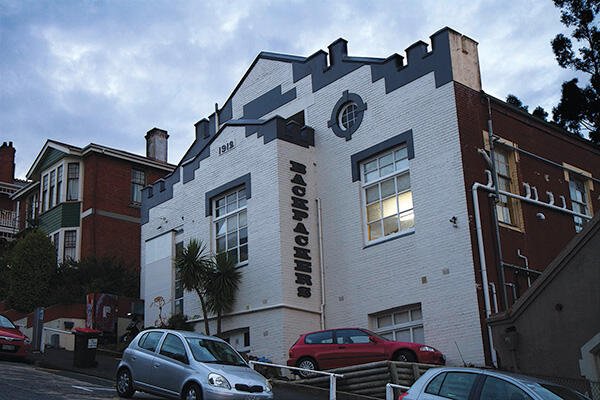
A View Street residence known as “Backpackers” has come under scrutiny from the Dunedin police and neighbouring houses, as the behaviour of its inhabitants is seen to have crossed the line. Urinating on the street, wrecking household items, blasting music and smashing bottles and windows have allegedly become regular actions of the flat’s inhabitants, causing the Dunedin City Council to consider taking extreme action. The DCC is considering extending the central city liquor ban to View Street. The idea was originally suggested by Cr Benson-Pope after the DCC received numerous complaints from the flat’s neighbours. According to Dave Cull, Mayor of Dunedin, the flat has been a recurring problem over the last few years. “It’s a house with 19 people, but I don’t think there are only 19 people involved in the gatherings … there are hundreds spilling out onto the street.” According to Cull, neighbours have approached the DCC with complaints including “disorder, damage, noise, drunkenness, obscenities, you name it.” General Manager Services and Development Simon Pickford confirmed that at a recent party, a student jumped out of an upper-storey window onto a Noise Control Officer as the officer was leaving the flat. The officer “suffered minor head, neck and shoulder injuries, but these could have been much worse,” Pickett said. “It was an extremely dangerous situation. The council will not jump into initiating a liquor ban but will conduct a consultation to gather multiple options for action. According to Cull, other options include police action and noise abatement notices. In a noise abatement notice, continued disturbance from the flat in question can constitute a crime. Pickford said he believes that a noise abatement notice, which would mean continued disturbance from the flat would constitute a crime, could be just as effective as a liquor ban. “The police have requested [liquor bans] in the past — particularly around large events — and they have worked well,” said Pickford. “However, bylaws of any sort are generally the last resort as they restrict people’s rights and freedoms, so it’s not something that’s done lightly.” Pickford explained that in order to create a bylaw extending an alcohol ban, substantial evidence that alcohol has contributed to a high level of crime or disorder is needed. “Ultimately … our preference is to encourage more responsible behaviour without the need for infringement fines and bans,” he said. “In the case of View Street we invited the tenants along to a meeting with council staff, Armourguard Noise Control contractors and police. This was a very positive meeting which hopefully will avoid the need for a regulation approach.” However, the police favour an extension of the liquor ban, according to Pickford. Cull believes action should be taken immediately. “We would like it to kick off as soon as possible, and come back to council as soon as [we can],” Cull said. “We are not talking about minor disturbance. We would like to see that there are solutions sooner rather than later.” The DCC will discuss the options and decide how to proceed at its next meeting.
-
News

Execrable | Issue 2
T o kick off the second executive meeting for 2015, President Paul Hunt warned that the proceeding 40 minutes would be the final “warm-up meeting” for the year. In the future, “more substantial issues” are to be covered. That said, business this week was swift and productive. The executive thanked OUSA staff for a “successful and safe orientation”. Although the motion was passed, Welfare Officer Payal Ramritu asked “when will we get the facts and figures about how it went financially?” Hunt wants OUSA to lobby for the recording of all lectures at Otago. He said, “students miss lectures for legitimate reasons.” Campaigns Officer Alice Sowry noted that the Law Faculty has cut podcasts for 2015 as failure rates increased excessively in 2014. She suggested that podcasts could be available only to those who had an excuse for not attending. Finance Officer Nina Harrap disagreed with this idea, stating that lecturers were “difficult to get hold of.” Ramritu also assumed that “lecturers will be like, ‘no’, students have to come to class.” Following research, Hunt pointed out key reasons for the lobbying were that students miss lectures for legitimate reasons, students use the recordings for revision and recordings allow the lecturer and the students to review how the lecture went. Hunt added that although there had been a drop in attendance at lectures, there had also been an increase in cases of mental illness, and therefore attendance could not be attributed solely to podcasts. The team eventually came to a decision that “OUSA in principle supports the provision of recordings in lectures.” Hunt brought it to the executive’s attention that a contractor working on the OUSA Aquatic Centre had had a serious accident but further details are to come. Three new OUSA Clubs and Societies affiliations were accepted by OUSA: Forward in Faith Ministries Students; Revolution Uni; and OUSA Students of Arise Church. Hunt then informed the executives that he had been approached by a member of a pro-life group that is looking to affiliate. Most of the team were unaware of what affiliation actually means. “The point of affiliation is to access OUSA resources,” said Hunt. He noted that there could be severe issues with such affiliation. He believed it was unnecessary as “it’s not OUSA’s job to dictate student opinions.” The pro-life group has told Hunt they are solely about education, but Hunt said, “there is a difference between pushing your thoughts on religious grounds and saying they are on scientific grounds.” He added that the group could cause “significant discomfort and psychological trauma for people making legitimate choices about their body.” The executive is set to vote on the decision this week. Hunt moved a motion to congratulate Sir Murray Brennan, OUSA President 1964, on his Grand Knight Companion of the New Zealand Order of Merit. Admin Vice President Isaac Yu stated that the Capping Charity for 2015 would be the Otago Cancer Society. Yu said the reason for the decision was that they were “a local charity” and “a worthwhile cause.”
-
News

Fruit and Vege Scheme Goes Bananas
A ll Saints’ Anglican Church is aiming to “prepare well” for the deluge of interest in their new fruit and vegetable distribution scheme. The scheme involves the supply of various fruits and vegetables in three different box sizes (single people – $3, couples – $6, and family/flats – $12) to Dunedin people and households. The church’s priest Reverend Michael Wallace, is surprised it is “so successful.” As a result, it has been forced to discontinue registrations for the service. However, it does harbour an ambition to “extend it to everyone” in the future. The church, located opposite the Alhambra-Union rugby ground on Cumberland Street, is now looking for volunteers to help carry out the various jobs. Tasks include preparing the hall for streamlined distribution, unloading crates from the trucks and bagging the produce into the three box sizes. Rev. Michael Wallace wanted to stress that any volunteers are welcome, from those with “limited physical capacity” to those who are a “big lump of an athlete.” A wide range of volunteers has committed already, ranging from “members of the congregation, to lots of people within the community.” The church has a close connection with Selwyn College, but they are looking forward to seeing a wide array of student faces. Ivica Gregurec, the church’s priest assistant, said, “There are so many people out in the community who are in need of cheaper fruit and vegetables” and “we are so glad as a church that we are able to partner with the community and also everyone who is interested in this cause.” The distribution of the fruit and vegetables is set to begin as soon as possible, though the organisers are waiting for Charities Services to approve their charitable status. Once this is approved, the church will be able to “have a bank account” to collect the fees for the goods. While it is currently unable to take registrations for the service, due to its success, the church does wish to know the total interest from within the community to judge further expansion. If you’d like to keep track of the scheme, see the plans for its growth and know when future sign-ups are available, send your details to fruitvegedn@gmail.com.
-
News

OUSA and VUWSA Hit With NZUSA Bill
A fter its withdrawal application last November, OUSA has received a bill from NZUSA (the New Zealand Union of Students’ Associations) for $22,500. The bill, which is half of the 2015 membership fee, was also sent to the Victoria University of Wellington Students’ Association (VUWSA). According to NZUSA President, Rory McCourt, NZUSA’s constitution “states that there is a one year withdrawal period.” OUSA and VUWSA are “still technically members” of NZUSA for the year following their withdrawal application, so they are still required to front up their membership fees. However, “[NZUSA’s] constitution is vague on whether [the withdrawal period] runs until the end of the calendar year, or whether it’s just until the point where they’ve given notice,” said McCourt. NZUSA is currently seeking legal advice, following a request to do so from VUWSA. VUWSA President Rick Zwaan said the executive is “still debating how [to] approach” the situation: “We’re getting advice as to what we can do in this case … It’s the general feeling of the executive that we don’t think it’s the best use of our students’ money, that’s the same sentiment that we shared when we withdrew last year.” Zwaan said VUWSA feels that the bill is “an unreasonable” way “to spend students’ money,” given that they “indicated that [VUWSA] want to withdraw immediately from NZUSA in September last year.” OUSA has already paid half of the sum ($11,250) — though it will discuss whether to pay the full amount. OUSA President Paul Hunt said this decision is “entirely up to the executive.” “I think there’s a case that we should keep some of the money to spend on our own political lobbying; given that we think NZUSA isn’t that great, we think the money could be better spent on our own campaigns,” said Hunt. In regards to whether NZUSA will take legal action against either association if they refuse to pay the full sum, Zwaan said that’s something that VUWSA is carefully taking into consideration. “I don’t think it’s a good look [for NZUSA],” he said, adding, “it seems pretty unreasonable and out of the scope of NZUSA to be spending time and money waging legal wars to extract money out of an association that has indicated that they don’t want to be involved in it.” Hunt believes NZUSA will put forward an argument as to why the two associations are liable to pay, but whether they take legal action is to be decided: “I would be surprised if they took legal action against an association given they claim to represent and help those associations. It wouldn’t be very helpful to those associations if you took them to court.” McCourt said any legal action would be entirely up to the NZUSA Board, of which Zwaan and Hunt are currently members.
-
News
DCC Goes Green
T he Dunedin City Council has presented its Sustainability Audit Subcommittee with a draft proposal to reduce greenhouse gas emissions. The goal is to cut emissions by five per cent of 2013–2014 levels before 2019. The plan comes as the DCC prepares to vote on an ethical investment policy that, if passed, would effectively divest the council from fossil fuels and mark a political shift towards fighting climate change. Jinty MacTavish, DCC councillor and member of the Sustainability Audit Subcommittee, said that the DCC’s plan is still very much a draft. At this stage, the plan doesn’t list the actions that would be taken to achieve the target. Further, the target itself is based on measures that have already been approved by the council under different proposals. “I would be interested to see how ambitious we’re being and which actions would be necessary if we wanted to make more of a hole in emissions,” she said. According to a report on emissions that accompanied the draft plan, 75 per cent of the DCC’s emissions come from its landfills. The DCC has only partial control over the reduction of those emissions, as it depends on how much waste residents bring to the landfills. MacTavish said, “It is difficult to be ambitious” as DCC operations such as landfill “are a direct reflection of the activity of our citizens.” MacTavish said she is optimistic that Dunedin citizens’ activity — like the amount of waste they bring to the city’s landfills — might be shaped by a city-wide environmental strategy that the council is working on. A public consultation on the strategy is expected to be held in August. Colin Campbell-Hunt, Director of the Otago Business School’s Accountancy and Finance Department, said that, given the DCC’s relative lack of control over landfill emissions, it should focus on other measures. “Obviously, a five per cent reduction is nowhere near enough,” he said. “We should focus on [reducing emissions in] areas where relatively good technology does exist, like public transport and electric cars.” Mayor David Cull said there is a possibility that the target could rise above five per cent, but only if the plan proposes actions that haven’t yet been approved by the council. Councillors would then have to vote on any new actions before the plan could proceed. “Without Council’s conscious approval, we could not aim for something that’s higher than [five per cent],” said Cull.
-
News

What You Need To Know: The Trans-Pacific Partnership Agreement (TPPA)
I f you type “TPPA” into a search engine, the first result will probably be the website of It’s Our Future NZ, a hub for anti-TPPA activity in New Zealand, decorated with a handy countdown to the next action organised against the agreement. The second will probably be Greenpeace’s webpage viciously condemning the agreement. What you might not find, however, is much information about what you’re actually searching for in the first place. What you’re searching is the acronym for the Trans-Pacific Partnership Agreement, which has been in negotiations since 2005. It is an agreement to set out the terms of the Trans-Pacific Partnership (TPP) between a number of countries on both sides of the Pacific. New Zealand is an original signatory of the partnership. Negotiations over the terms of the TPPA were set to wrap up in 2012. However, they proved to be so contentious that, three years later, they are ongoing — and heated. Here, on this page, we’ll lay out the guts of the Trans-Pacific Partnership Agreement for you, so you can understand what it is and why everyone’s so riled up about it. The Players There are 12 original signatories of the TPPA, including New Zealand and the US, but a number of other countries have declared interest in participating in the negotiations. When the TPPA emerges from negotiations, it may become the world’s largest economic trade agreement to date. The Basics According to a page dedicated to the TPP on the New Zealand Ministry of Foreign Affairs and Trade’s website, “the TPP aims to create a regional free trade agreement … [that] would deepen economic ties between its diverse members by opening up trade in goods and services, boosting investment flows, and promoting closer links across a range of economic policy and regulatory issues.” Nowhere on the page are there details about how, exactly, the TPP will do all of that. That omission isn’t an accident — it’s by design. TPPA negotiations have become famous for their secrecy — almost everything that the public knows about the TPPA has come from a series of high-profile leaks of chapters of the agreement. In the most basic terms, the TPPA is a multilateral trade agreement. It will regulate and favour trade between signing countries. However, it’s become clear from leaked documents that the TPPA is not a “standard” trade agreement. The degree of regulation outlined in the leaked drafts of the agreement goes beyond what could generally be considered normal for a trade agreement. The leaks have shown that the TPPA encompasses a wide range of issues, including, notably, prosecution for digital copyright infringement, enforcement of pharmaceutical copyright and the process by which a corporation might sue a signing country’s government. The Controversy In the context of the secret negotiations and alarming leaked information, a robust movement against the TPPA has formed. Here, It’s Our Future NZ has spearheaded protest efforts. This involved helping to coordinate the New Zealand branch of an international day of action against the agreement this past November, and another one planned for 7 March 2015. While the TPPA has been kept secret from the public, a number of large corporations have been able to see (and likely influence) its contents. Many critics have suggested that the agreement will be more favourable to certain deep-pocketed corporations than to any of the signing countries. In 2013, WikiLeaks published 30,000 words of the TPPA, which comprised the chapter on intellectual property and copyright infringement. The terms laid out in the chapter would likely drive up the price of many medications in New Zealand (and in other signing countries), because they would increase the time that patents last for (thereby limiting the possibility of cheaper, generic brands being on the market). The leak also revealed that the TPPA would probably require much harsher penalties for intellectual property infringement, especially for digital copyright infringement and hacking. There’s another problematic aspect of the TPPA, which the public learned about when the investment chapter of the agreement was leaked in June 2012. Provisions in the chapter would give transnational corporations the right to sue signing governments if they do anything that would deprive those corporations of expected future profits. The lawsuits would be heard by international tribunals, not the country’s domestic courts. New Zealand has signed other treaties with similar provisions, but never with countries like the United States. Many corporations based in the US are big investors in many countries, including New Zealand, and have a reputation for using their power to sue foreign governments. If the government is worried that they will be sued by a big corporation with significant investment in New Zealand, “it will have a chilling effect on the ability of New Zealand and other signatories to pass certain legislation,” Green Party MP James Shaw told Critic. Then there’s the question of negotiating an international trade agreement in total secrecy. Many people say that — no matter the terms — such a monumental trade agreement should not be negotiated in secret. In response to a question about why the TPPA negotiations were being kept so secret, Trade Minister Tim Groser replied that it was to avoid an “ill-informed” public debate about the issue. Of course, there’s no better way of ensuring that a public debate be ill-informed than by deliberately blocking public access to information. In a phone interview with Critic, former CEO of Oxfam New Zealand and 2014 Green Party candidate Barry Coates said, “There are potentially other [problematic portions] as well, but until we get ahold of the text, we don’t know how serious the other considerations are.” Potential Benefits Ever since New Zealand first expressed interest in the TPP, critics have been asking a basic question: why is New Zealand interested? John Key and Tim Groser both argue that the TPPA would be a boon to the New Zealand economy, which is highly oriented towards agricultural exports. A 2011 study found that signing the TPPA could lead to a $5 billion yearly growth in New Zealand exports, among other benefits, according to what was then known about the negotiations. But a later study, in 2014, looked at the analysis used in the 2011 study and concluded that less than a quarter of the potential benefits identified would likely pan out. Groser has said, publically, that New Zealand would walk away from negotiations if the final agreement wouldn’t benefit New Zealand farmers. But Coates expressed deep scepticism about Groser’s claims. “The biggest barrier to New Zealand exports isn’t tariffs, but subsidies, which aren’t up for negotiation,” he said, adding, “And [the final agreement] will be a long way from the full liberalisation that Tim Groser has said would be the only thing that’s acceptable.” In any case, according to Shaw, it’s unlikely that the US market for agricultural goods will open as much as some might hope. “The United States farm lobby is very powerful and very resistant to opening up to foreign imports,” he said. “There might be a partial opening, but it’ll be limited.” The critics of the TPPA are many and varied: from those who think it won’t bring enough benefits to New Zealand to those who think that the cost is too great for any potential gain. And, for now, critics of every variety will continue to gather in the streets and demand change. Saturday 7 March 2015, STOP THE TPPA National Day of Action has a protest march leaving the School of Dentistry, Great King Street, Dunedin at 1pm, heading towards the Octagon.
-
News
Otago Researchers Prep for Diabetes Trial
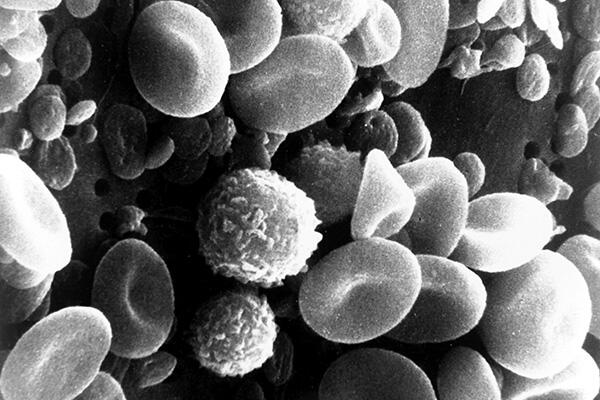
A group of research scientists from the University of Otago is currently preparing to begin clinical trials of a cure for type 1 diabetes. Led by cell biologist, Dr. Jim Faed, clinical trials are expected to begin within the next two years. The research involves extracting bone marrow from individuals who have the disease. This marrow can then be used to stimulate production of the hormone insulin. The stem cells are said to stop the autoimmune response that prevents insulin from being produced. Insulin is required to remove excess glucose from the blood; those who suffer from type 1 diabetes do not produce this naturally. Faed said the procedure, which takes between 30 and 40 minutes, is completed using local anesthetic. The donor lies on their side, and a bone-marrow needle is worked inside of the “bony bit at the back of the pelvis.” A syringe is attached, and three to five millilitres of blood and bone marrow are extracted. Although these cells are widely associated with blood, Faed says that his team’s research is interested in connective tissue cells. As there are 25,000 people in New Zealand suffering from type 1 diabetes, there are plenty of opportunities to find donors. The disease’s precise markers also make it useful for research purposes. So far, there have been successful trials on both rodents and humans, but the treatment still requires some further adjustments. The research has many more potential uses in healthcare, including multiple sclerosis, rheumatoid arthritis and other diseases caused by autoimmune reactions. The Spinal Cord Society New Zealand, with which Faed is affiliated, is interested in using the stem cells involved in new treatment methods for patients with spinal-cord injuries. This is in line with the organisation’s focus on “Cure, not care”, which emphasises the importance of curing disease at the source, rather than merely caring for those suffering from it. In order to raise the funds for the trials to continue, the research team is fund-raising at local events, such as the Lions’ Lark in the Park family day. Those interested in helping the Spinal Cord Society to find a cure can make a donation on their official website at scsnz.org.nz. All donations are used for research funding, and donations over five dollars are eligible for a tax rebate in New Zealand.
-
News
Massive Magazine Back in Print
M assey University’s magazine, Massive, is back in print after being online-only since February 2014. The Magazine, launched in 2012, was forced out of print due to a lack of funding. In order to get the print format back up and running, MAWSA Manager James Collings said it was a case of “putting forward a solid business case,” which “[Massey] University accepted.” Massive Editor Kim Parkinson said, “it feels good” to have the magazine finally back in print. “I applied for the job last year to replace [the previous editor], and I didn’t know that it was coming back to print when I applied, I just thought it was online, so it was actually a really nice surprise to see that it was coming back.” “When I was in first year, the magazine was in print. There was just something so special about being able to hold it, smell the pages, and all that kind of thing.” MAWSA President Tom Pringle said it’s “great to have the physical copy of the magazine back on campus,” “it gives something for students to look forward to and collect.” “Having the magazine physically creates conversation and gives students an item to be proud of if they have work featured in it.” Alongside the print editions, Massive is now available in mobile app. Designed by APPTAVO, the app makes Massive the only student magazine in New Zealand available in such format. “We started discussing the idea with [APPTAVO] back in December and we produced the InDesign content using old material to produce a test app and flesh out functionality.” Collings said the process took nine days in total, from presenting the proposal to the University, to having a signed agreement in place. Parkinson said the app is something she’s really excited about, “it’s just something new and it means all of our distance students can access [the magazine].” “It connects the University a bit more, and lets them know what’s going on. That’s the main goal.” Massive’s first edition for the year was released in print and on the app on Monday 23 February. A bumper orientation issue was also created, which contains 60 pages of relevant student content.
-
Columns
Proctology | Issue 2
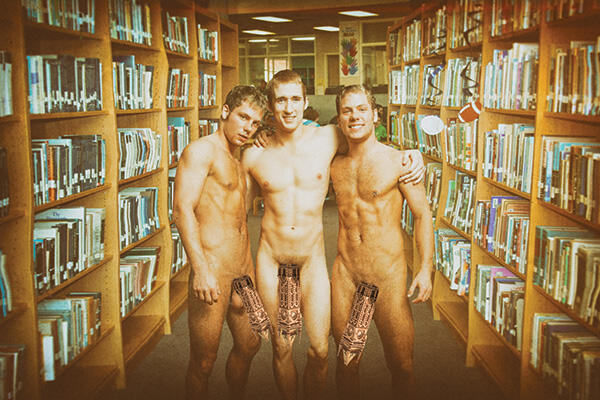
T he proctor said that during Orientation, “the behaviour of most students was great.” The week had its problems, though, including a great deal of broken glass and excessive noise. The noise be came particularly troublesome for commercial operations in the student quarter. Hotels, in particular, suffered with reported cases of guests leaving due to disruptions. The proctor warned that no matter what time of day the noise occurs, “if it’s unreasonable, Noise Control can visit.” Noise Control visited a great number of student flats during the past few weeks, with many flats having their speakers confiscated. Tenants were also charged for the inconvenience caused. The throwing of bottles was also a problem during Orientation Week. The proctor warned that it’s “not just the instance of throwing the bottle itself” which is harmful; “the glass shreds car tyres, wheelchair tyres” and also “cuts feet.” In areas where a great deal of glass was present, students were “equipped with brooms” to clear the streets. The students were also advised of the penalties for throwing bottles, as it breaks the university’s Code of Conduct. $4,500 worth of fines was issued to students during Orientation Week. One female student has also been referred to the Deputy Vice-Chancellor to “review her stay at university” after repeat offending. The police investigation is continuing in relation to the fires set during Orientation Week. A fire on Leith Street left severe damage to areas of a flat, which was fortunately empty at the time. The proctor noted that the fire was caused by individuals lighting fire to a piece of furniture on the porch, and then fuelling the fire with different items until the house caught alight. He advised that students remove furniture from their porches or backyards. In a separate incident, a group of students were found walking the streets with a toilet roll that was on fire. When asked their reasoning, the students said it was being used to light their cigarettes. On Castle Street, two young men were advised that “socks and shoes alone does not mean you are dressed,” as they wore their birthday suits in daylight. The individuals were “supplied with boiler suits” and placed in police cells. The first-year students were said to have been on their best behaviour and it was “mainly second and third years” who had issues.
-
News
Cumberland Courts No More
C umberland Courts, affiliated with Castle Street’s Cumberland College, are no longer running. James Lindsay, Director of Accommodation Services, said “the properties are being administered by UniFlats for 2015” — this is a university operation that mostly houses single-semester international students. The option to apply for accommodation at the Courts was withdrawn in the early stages of enrolment, so most students applying for the 2015 year would not have found Cumberland Courts on the online application system. Despite this, a small number of early applicants managed to apply for a place; Lindsay maintains that the number of these applicants who missed out on their first choice was “less than a handful.” These students were all offered accommodation elsewhere. Lindsay said that funding of the Courts is achieved by “whichever university operation is supervising the properties concerned.” Currently this is UniFlats. In previous years, the Courts served as a residential community in which mostly first-year students were placed with four to six others. In total, the Courts housed around 100 residents at a time. These residents had access to all Cumberland College facilities, with lunches and dinners provided in the Gazebo Lounge of the University Union Building. The UniFlats will be self-catered, with individuals splitting cooking and cleaning duties. Flatting expenses and utilities are shared with the other students in the flat and are not included in the rent. Flat residents will not be entirely independent, as a residential assistant (RA) will be appointed to each building. UniFlats are also generally provided with at least one New Zealand resident per international undergraduate flat, who acts as a “Kiwihost” for the other members. Lindsay says future plans to reallocate Cumberland Courts back to Cumberland College will “depend on demand.”
-
News
Best of the Week | Issue 2
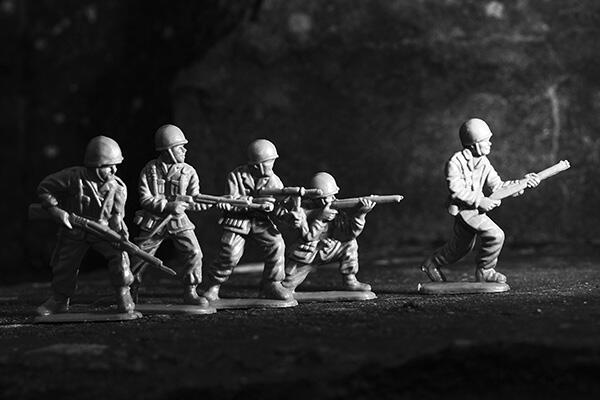
N ews this week has been dominated by Prime Minister John Key’s decision to send New Zealand troops to Iraq. The decision, coming as no surprise after months of discussion in Parliament, was finalised on Tuesday 24 February. Key confirmed that 143 New Zealand soldiers will be sent to the region for up to two years. The mission has been described as non-combat. Key outlined in a public statement that New Zealand military personnel would not be going to fight; instead their sole purpose would be training Iraqi troops. However, he did acknowledge that operating in a warzone does have inherent risks. According to a Firstline Report, a major risk is “green-on-blue attacks” whereby the trainees attack their trainers. Key has, however, continually highlighted that all personnel will remain “behind the wire”, meaning they will not leave the designated safe zone that they operate in. The announcement has stirred controversy around the nation, this being increased by Key not putting the decision before Parliament. Key’s reasoning for this is evident, as two National allies, United Future and the Maori Party, have condemned the notion of sending any troops to Iraq. Left-wing parties Labour and the Greens have also publically opposed it. Yet lack of parliamentary approval will have no bearing on the PM’s decision. As Key is able to make executive orders concerning the military. However, public opinion is his biggest enemy. Although he has stated that he believes sending troops has a strong public mandate, it seems that may not be the case. So far no poll has enlightened us on where the majority of the public stands. Whether this decision becomes a long-term political liability for John Key remains to be seen.
-
News

Political Round Up | Issue 2
1. ANDREW LITTLE — FACE OF HYPOCRISY — Opposition Leader Andrew Little has been caught out for accidentally not paying one of his workers. The individual, a contractor, was owed $950 for nearly four months. Funnily enough, Little had spoken out against the challenges small-business owners face just a week earlier. 2. STEVEN JOYCE — FORCED TO FOLD — Economic Development Minister Steven Joyce has been forced to pull out of his controversial deal with Sky City. A deal had been struck between Joyce and Sky City for the government to deregulate Sky City’s gambling licenses. The agreement, originally forecast at $402 million, fell through after the cost increased to over $470 million. Joyce was forced to fold on the proposal of a government contribution to the project after controversy in the media. 3. BILL ENGLISH — SUPER FUND LOSSES — Finance Minister Bill English has landed in the middle of his first controversy of 2015. It was recently reported that a New Zealand superannuation fund has lost $200 million of taxpayer money. The sum was invested in a US investment fund, a fund that went bust after investing in a Portuguese bank.
-
News
Critic’s Night at the Rugby!
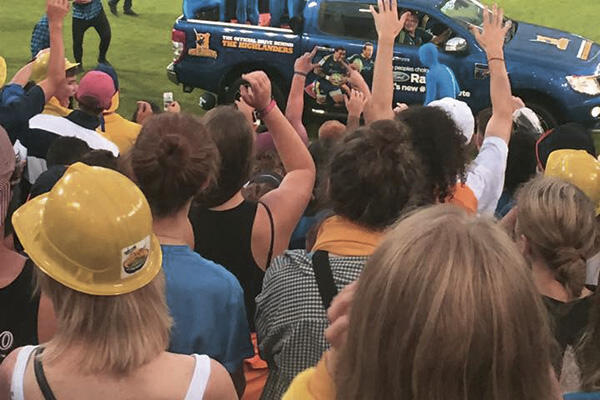
7:00pm: I decide I can’t afford stadium-priced beer so I knock back a few leftover Cindys as I wait for my friends to show up. Their lack of punctuality is noted for the future. KICKOFF: A huge roar from the crowd as the Highlanders’ season gets underway. Unfortunately, we are still five minutes away from the stadium getting absolutely drenched. “Don’t You Go Out in the Rain” by Dragon is pumping through the speakers as we arrive. The irony is almost too much. 7:40pm: We find some seats high up in the middle of the packed Zoo. A young lady asks if we can move back a row as her friends are on the way and one has a broken leg. Sounds legit. 7:45pm: On the field a bit of biffo breaks out as Crusaders prop Owen Franks goes crazy and starts swinging punches everywhere. Highlanders pile in and the crowd is loving it. 7:47pm: Richie fumbles close to the line so a scrum packs down. I do my best to offer a crash course in the laws of the game to the confused group of Chinese Health-Sci students standing beside us. 7:54pm: Aaron Smith scores for the Highlanders! He skins his All Blacks skipper with a dummy and a right-foot step to bust through from close range. Sopoaga converts and we start to believe. 7:58pm: A penalty goes against the Highlanders and Colin Slade lines up the shot amid a torrent of abuse from the Zoo. He thumps his penalty kick off the post and we serenade him with a lovely rendition of “You fucked up, you fucked up!” 8:01pm: Some douchebag lock called Scott Barrett barges over and scores an ugly try for the Crusaders. The Zoo voices its disapproval. 8:05pm: Sopoaga makes a break and it’s a try to the Highlanders! The Zoo goes crazy. Wait. What? The video ref has ruled a forward pass. No try! I claim to remember the good old days when the TMO couldn’t rule out a try due to a forward pass. 8:15pm: The Highlanders soak up plenty of pressure, defending on their own line, but some other douchebag scores after the halftime hooter has sounded. Who the hell is this Johnny McNicholl? HALFTIME: The Crusaders enjoy an undeserved 20–7 lead. The Health-Sci team beside me asks about “the halftime show”. I inform them that Beyoncé will not be making an appearance. Instead, the T-shirt cannon begins firing sponsor merchandise into the crowd at a high velocity that reminds me of the Simpsons episode where Maude Flanders met her demise at the hands of a similar weapon. 8:25pm: Second half is under way. I cringe as “Wagon Wheel” is cranked up again. Why does everyone love it? 8:32pm: Slade lines up another penalty kick. “He won’t get it, he won’t get it” we start chanting. And he doesn’t! Hitting the woodwork again. Richie decides to call it a day and is substituted. A muted applause ensues. Looks like he has one eye on the World Cup already. 8:39pm: Battle of the fullbacks now as Smith and Dagg exchange several kicks. This prompts an explanation of territory and tactics to the Health-Sci crew. 8:46pm: Try time! Malakai Fekitoa sells a dummy, drops a shoulder and runs in between the posts and scores right in front of the Zoo. A black and red plastic pitchfork is launched in protest from a pocket of angry Crusaders fans but this goes unpunished. 8:53pm: There is a break in play so “Uptown Funk” starts blasting out of the speakers and everyone goes nuts. Don’t believe me? Just watch the replay. 9:02pm: Sopoaga misses a crucial penalty from 50 metres out. Cue a collective hands-on-heads reaction from the Zoo. He makes amends a few moments later, slotting another goal to get back within seven points. 9:12pm: Slade scores another penalty goal to put the Crusaders nine points ahead with only two minutes left. The ball has barely hit the ground when the mass exodus of disappointed Highlanders fans starts. A girl in a red and black dress celebrates a little too aggressively and nearly slips off her seat in front of us. FULLTIME: Sopoaga scores a penalty with the last kick of the game to clinch a deserved bonus point for the Highlanders but the Crusaders have held on to win 26–20. At least it is not raining on the walk back home where I drown my sorrows with the rest of the Cindys and half a bottle of cheap blackcurrant liqueur before heading into town … following a few thousand other students who do the same.
-
Features
FFIC101: An Introduction to the Horrors of Fanfiction
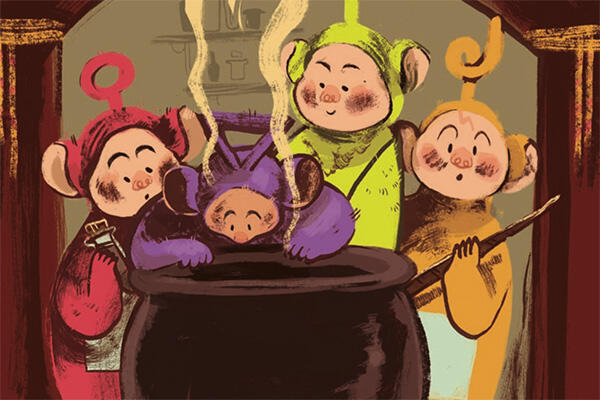
Fans show their love and loyalty to their fandom in a myriad of ways. Some purchase merchandise, some learn every fact there is to know, some dedicate their spare time to developing intricate cosplay, some people do all this and more. And some people write fanfiction. This article is probably NSFW (not safe for work) by the way, as we give you a rundown of the top fanfiction available at a computer near you. Everyone has encountered fanfiction at some point. Fifty Shades is a good place to start. Author, E.L. James, originally wrote the bestselling novel, which features erotica and manipulation, as fanfiction of another bestseller, Twilight. This should come as no surprise considering the nature of Bella and Edward’s relationship. It was originally titled Master of the Universe and was posted on fanfiction sites under her penname, Snowqueen’s Icedragon. All fanfiction is purely wish fulfillment and it’s often erotic. Not always, but often. I’d suggest you don’t look too deeply into the My Little Pony fandom; there’s a darkness there impossible to come back from. SlashSlash fiction is as good a place to start as any. This is where a fanfiction writer will take two characters of the same gender from a series and create a romantic and, more commonly, a sexual relationship between the two of them. A fandom notorious for this is Supernatural. A lot of fans ship two of the male leads, Dean and Castiel (the pairing is known as Destiel). Another Supernatural fandom favourite is known as Wincest. As in, “Win” for Winchester brothers and “incest” for, well, I’m sure you get it. There are a lot of people who attempt to justify this relationship, explaining that the brothers go through a lot of trauma and intense experiences together, have saved each other’s lives countless times and share a deep love, understanding and connection with each other. Obviously, they would end up together romantically, rather than simply sharing a co-dependent, deep, non-sexual but none-the-less unhealthy brotherly bond as depicted in the show. The majority of slash is male/male, but there is a sub-category called femslash. I would give examples from Supernatural as well, but as there are practically no significant female characters in the show, there’s really no point. Cross-FandomHere writers bring two fandoms together to create some sort of terrifying mashup. One of the more bizarre fanfiction pieces places Sherlock and Watson as love interests … plus they had Pokémon. That’s it. There’s also a fanfiction about Harry and Draco moving to Forks (yes, Twilight Forks) and developing romantic relationships with Edward and Jacob. Also Draco inexplicably gets pregnant to Jacob, because why not? “‘No,’ Draco snapped. ‘No you don’t! My father can barely stand to look at me, Jacob’s on the other side of the country and I don’t even know what I feel for this — this baby growing inside of me!’” Believe me, I’m as confused as you are. The next two examples also involve slash. Most fanfiction isn’t limited to one trope, and often they bleed into each other and intertwine into a scary mess of a story. ComedyBecause it’s so easy to make fun of, there’s a lot of comedic fanfiction. This is what makes a lot of horrible fanfiction bearable to read. It’s comforting to think, “Nah, they didn’t write this seriously. It’s meant to be ridiculous and shocking. This is hilarious.” For an example of pure satire, read ‘A House Elf’s Needs’ by Chaos-chick. It’s a fanfiction featuring Dobby convincing Hagrid to have sex with him. It features lines such as “Dobby stretches, sir!” and “Harry Potter was not big enough to fulfil Dobby’s needs!” For a more extreme story, there’s another untitled masterpiece. The plot goes something like this: Snape is sad and stressed at Hogwarts. To help him relax, Dumbledore sends him to the “Tubbydome” (yes, this is Harry Potter/Teletubbies cross-fandom fanfiction). Snape teaches the Teletubbies how to make potions, but they resist, begging him to teach them “how to adult”. After their sexual awakening, they try to escape the Tubbydome through a Shawshank-esque tunnel the Teletubbies have created. Eventually they come across Dumbledore who yells, “You shall not pass” and reveals that the Teletubbies are Deatheaters and must be killed. This is where the fanfiction ends. Quality stuff. Mary SueOne of the most infamous and well-known fanfiction examples of a Mary Sue is My Immortal. Mary Sue fanfiction is where the main character is simple and idealised, with little personality (think Bella Swan from Twilight). Furthermore, Mary Sue characters are often a self-insert into the story (some people would argue, still think Bella Swan from Twilight). My Immortal is infamous because it is so poorly written, with a glaringly obvious Mary Sue self-insert into Harry Potter. This particular fanfiction centres on Ebony (often Enoby due to atrocious spelling) Dark’ness Dementia Raven Way who is a “totally goffik teenager”. No explanation can give this fanfiction justice, so here’s an excerpt: “But den Draco looked at me sadly with his evil goffik red eyes dat looked so depressant and sexy. He lookd exactly like a pentragram (lol geddit koz im a satanist) between Kurt Cobain and Gerard. But then I looked at Vampire and he looked so smexy too wif his goffik black hair. I thought of da time when we screwed and the time I did it with Draco and Dumblydore came and the tame where Draco almost commited suicide and Vampire wuz so sportive.” Vampire would be Harry Potter. Because she’s so “goffik” and renaming people things like “Vampire” is definitely awesome. There are even YouTube adaptations of this particular fanfiction because of how notoriously bad it is. SmutA lot of fanfiction features uncomfortable and downright bizarre sex scenes. In the past, when people wrote about their weird creepy sexy fetishes, it generally wasn’t published anywhere (save for James Joyce’s stuff; seriously, read the letters he wrote to his wife). Now we have the wonderful invention of the Internet, where any person can post whatever they want on the many, many sites catering to bad writing. A comedy website, thetoplessrobot, hosts a weekly fanfiction Friday section where they find disturbing fanfictions and comically annotate them for the twisted entertainment of readers. On this site’s top ten “Most Facemeltingly Awful Fanfictions Ever”, Reticfied Anonimity by David Garrett resides in first place. And it really deserves to be there. It’s a Pokemon fanfiction, and it is very disturbing. It features Gardevoir. Pokemon fans, you know where this one’s going. The problematic relationship in Fifty Shades is making more and more sense … This is what so much fanfiction is made of. Combining people’s creepy sexual fetishes with the freedom of writing and the ability to publish anything on the Internet. Imagine …There’s this whole other subset of fanfiction that predominantly lives on Tumblr. Imagines are found by simply searching Tumblr with the word “imagine”. It isn’t normally detailed fanfiction in the sense of fully fledged stories, but rather sentence-long scenarios. These imagines feature pretty little quotes like, “Imagine Dean (from Supernatural) looking at you like you’re the most beautiful girl in the world after you get married” or “Imagine Draco breaking up with you to protect you from Voldemort.” Some of these imagines are more sexual and creepy than others: “Imagine Stiles walking in on you giving Scott a blowjob.” There are some plain bizarre scenarios as well: “Imagine cursing out loud and Legolas not knowing how to handle it because he’s never heard English curse words.” Fanfiction about Real People (Namely Boy Bands) Fanfiction is not limited to fictional fandoms. People will also write fanfiction about real people. The most worrying part is that they’re not just defiling a fictional character, they’re actually writing this stuff about real people who are able to read what they’ve written. The most common victims of this form of fanfiction are members of boy bands like One Direction and 5 Seconds of Summer. A lot of the fanfiction about these boys is pretty tame, and is often an extended version of the imagine trend: “Imagine living next door to Luke Hemmings (from 5 Seconds of Summer) and every Friday night you hear him and his band rehearse in his garage because the music is so loud, you can hear it through your bedroom walls.” There’s also fanfiction that depicts the reader in a romantic relationship with the chosen celebrity. Most of this is focused on Harry Styles of One Direction. These stories are often written in second-person voice. It’s another extension of the Mary Sue category, but far more direct. A fanfiction titled “He Is My Sun” depicts “you” waking up next to Harry, remembering that “you’re” engaged to him, then proceeding to have sex, written in the least erotic way possible: “Just seconds after you came, Harry let go himself. He hid his face in your neck and grunted loudly as he let go. He moaned your name before he collapsed onto your chest and sighed.” It doesn’t stop there, though. It never stops there. Because there has to be a fanfiction titled “This Time Around” about Harry being pregnant to another One Direction member, Louis. It depicts the two of them married with a two-year-old daughter, Cree, who refers to Harry as “Mummy”. After putting their daughter to bed, they have pregnant sex. Louis, uh, sexily telling Harry how much he loves him pregnant: “‘perfectly round with my babies.’ Each word is punctuated with a thrust, Louis’ cock touching places deep inside Harry that have him seeing stars. Harry can barely catch his breath, Louis gliding past his prostate and slamming into his sensitive cervix.” Anatomy seems to have gone out the window. That’s good because by the end of the story Harry gives birth and starts breast-feeding his new daughter. I’m done. While it seems predominantly an Internet-based phenomenon, fanfiction was around for a long time before that. It exploded in the 1960s, when Star Trek came out. Fans of the show started writing fanfiction as an attempt to fill in all the holes left by the writers, developing and extending the characters and universe further. Cassandra Clare, who wrote The Mortal Instruments series (a movie adaptation, which was awful, was recently made), started off writing fanfiction where she shipped Draco and Ginny together, which is pretty obvious when you look at the two main characters of The Mortal Instruments. An assertive and incredibly ginger leading lady named Clary is totally in love with a pale, snooty, blond-haired male named Jace. While her writing isn’t necessarily literary genius, it’s still great fun to read as far as fantasy novels about angst-filled supernatural teens go. Outside published fanfiction, you can find almost anything on Tumblr and fanfiction.net. A lot of people write fanfiction about Harry Potter, probably because it’s such a detailed universe. There’s fanfiction that focuses on Neville, Luna and Draco, among many others. There’s even stuff that goes back to explore the earlier generation, so James and Lilly Potter, Sirius, Remus and Tonks. Even the show How I Met your Mother wasn’t safe from being rewritten. Fans, unhappy with the awful finale, re-cut, re-wrote, speculated and edited alternate endings to make it more satisfying. Even the show runners made their own alternate ending, which was put on the DVD release. Fanfiction has the capacity to be great. Budding writers can continue to explore beloved worlds and characters. It gives fans a chance to connect over a common interest and make lasting friendships based on mutual love of a fandom. It allows people to redefine characters as gay, trans, non-white and non-cisgendered. Essentially, it can allow for much better representation and exploration of complex characters that writers often neglect. However, this article is not here to showcase the merits of fanfiction. It’s here to explain that while fanfiction has the capacity to be fun and great, it also has the capacity to be fucking terrifying. As with everything else on the Internet — there’s always a dark, scary side to it.
-
Features
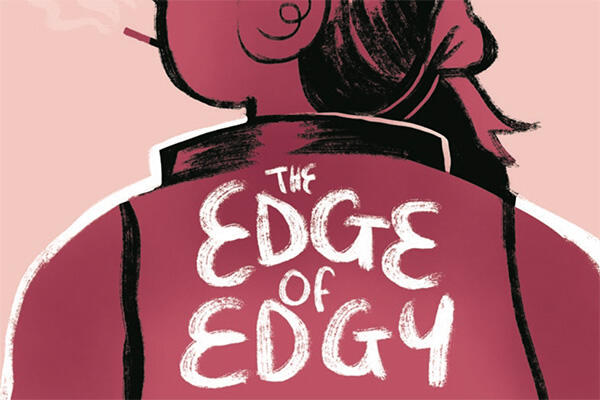
The Edge of Edgy
I’ve always envied the edgy, watching them from afar with a David Attenborough-esque focus. For those not up with the lingo, an edgy person is classified as an approachable hipster. It’s someone who’s got just a little bit of mystery about them (not the serial killer kind) and walks to the beat of a different (but catchy) drum. From my borderline stalker observations of the wild edgy human, I’ve noticed common trends of wearing clothing in various states of disrepair (because buying new things is playing right into the hands of capitalist bastards) and possessing a devil-may-care attitude. These are both things that I do, so what is the difference between us? Why am I perpetually known as the “nice girl”, while they are known as the badass gods of the street? If I had known then that this question would drive me on a mission to attain edgy status that would push me to the brink of sanity and leave me with semi-permanent acid reflux and comparisons to a 90’s makeover montage, I may have backed out. But if I had, I would have missed out on a mediocre journey of self-discovery that I wouldn’t change for all the pita pockets in Pisa. Summer is a great thing. Having a break from the drudgery of having to show up to three hours of uni each day is bliss. It’s a chance to replenish savings accounts (to end the weekly sacrifice of choosing alcohol over food) or a chance to get a tan, a beach body and 200 new Twitter followers. For a lot of people, it’s a time to be spent snapchatting and instagramming through countless music festivals and parties, with the use of the hashtag #blessed spreading faster than chlamydia at a Hamilton house party. For me, the period of November to February has always been spent on some form of half-assed attempt at self-improvement. There was the summer of “Exercise Can Be Fun” in which I decided to take up running, biking, lawn bowls, tramping, netball and tennis (the lesson learned is that exercise is not, and never will be, fun). There was the summer of music festivals where, due to poor budgeting, I spent the last of my money set aside for the summer on the all-you-can-eat lunch deal at the Pizza Hut in Gisborne. Somewhat predictably, the recollection of power-chucking pizza and chocolate mousse over the Pizza Hut parking lot after three days of heavy drinking on next to no food and water is my clearest memory of Rhythm and Vines 2012. Broke and nauseous, I had to spend the rest of the break working every day instead of chilling at various idyllic North Island locations. The following summer of fad diets was yet another dark time, with meal plans, investigations into whether sugar was trying to kill me and the dangers of fat-free products haunting my dreams to this day. Enter my fourth summer as a uni student; the ’14 to ’15 break in which I decided to become known as an “edgy chick”, overhauling my entire image so that my outside appearance would finally reflect the brooding badass that lurked inside (a.k.a. “The Summer of Being an Ultimate Try Hard”)... 12 November 2014I begin an open discussion with several friends on the subject of becoming edgy, which quickly turns into a session of open ridicule (aimed at myself). They tell me it’s just something you have or you don’t. Ever the optimist, I’m pretty sure I’ve got this project in the bag, which I explain to them. More laughter follows. I guess this is going to be a solo project. 18 November 2014 The brainstorming begins. I can’t just plunge into this new project without doing some research on the subject, but a quick Tumblr search using the popular tag “Edgy Girl” quickly brings me to despair as photo after photo of dyed hair, crop tops and tattoos pops up on the laptop screen. It looks like I’m going to have to get a facial piercing. 19 November 2014My goal for the end of the summer is to be wearing the hell out of a black leather jacket, leaning against a brick wall, smoking a cigarette and nonchalantly flipping a coin. And so the search for the uniform of a badass begins. The opshops of my hometown are woefully lacking in leather jackets, so instead I search through old family clothes in the garage. After an hour of sorting through the dusty fashions of the 90s and early 2000s, I triumphantly hold aloft my sister’s oversize Pumpkin Patch denim jacket from 1996 — it’s not made from the skin of a dead animal (I think), but I guess it will do. Macklemore would be proud. 22 November 2014All great change begins at home. Looking around my embarrassingly pink and purple room, I have to admit that the circa-2006 posters of The Kooks and The Kings of Leon really aren’t enough to trick anyone into thinking this is a cool dude’s room. So begins an afternoon of replacing pictures of kittens from an old calendar with posters of hip young bands and uncomfortably hipster Tumblr images. Looking around, I don’t feel that my redecoration is having much of an impact, but I figure that immersion is everything and that despite retaining my heart-patterned duvet cover and gold princess curtains, this new look will definitely work its magic on me while I sleep. Maybe. 6 December 2014I reach into the washing pile to find that a pair of my jeans has a small hole in the left knee. At this moment I know that I have been given a sign. I pick it a little bit (just enough to create an “I earned this through skateboarding and extreme sports” look), but grow increasingly aware over the course of the day that these jeans are no longer comfortable. I can see the bright red tip of my knee trying to force its way out of its denim prison, so I cut a larger hole. Now I have a very circular, vey purposeful-looking hole in my jeans. This is not skater-girl chic. The evidence of my failure is carefully folded and tucked away into the bottom corner of my closet, to be ignored until further notice. 24 December 2014When it comes to cigarettes, I have no idea what’s going on. Are they still cool? Will they make me cool? What are they supposed to do? Does anyone actually know? Google doesn’t (I checked). Still, obsession drives me to “bum a cig” off my sister. Suppressing memories of rotting eyeballs and diseased lung photos from Year 9 health class, I start smoking that cigarette with all the gusto I can manage (which isn’t a lot). Halfway through, I am bored. By the end, I have sworn off cigarettes for life. Turns out when they say a cigarette takes 11 minutes off your life expectancy, what they really mean is that you’ll have just wasted 11 minutes powering through this shit stick. You just can’t get that time back. Also, there will be mucous. 31 December 2014So, tobacco was a bust. Maybe I am playing it too safe. Maybe I need to take things to the extreme and get risky. So, the next logical step is to try to get some drugs, right? A fairly simple task in theory, but next to impossible in practice, given that I can’t even say the word “drugs” without sounding exactly like a severe British headmistress and that I have a straight-laced friend group whose knowledge of locating illicit substances begins and ends with Breaking Bad. Essentially, there is not a hope in hell of me being initiated into the enticingly badass underground drug scene of my hometown without a large amount of effort and false confidence on my part. After a fruitless week of chatting up shady-looking characters outside the local pubs, I strike gold at a New Year’s party when a friend’s boyfriend offers me a go with his vaporiser. Unwilling to admit to my novice status, I immediately take up his offer and enter the next stage of badassery. After several attempts at inhaling deeply, there’s a building sense of distress. There should be smoke, shouldn’t there? There’s burning but there’s nothing to show for it. How am I stuffing up this badly? By a stroke of fortune, no one has noticed my shameful attempt and I casually pass the vaporiser back to its owner. Shrugging off my misfortune, I reach for the vodka and accept that I won’t be getting high tonight. Ten minutes later, everything is spinning and I power-vomit against some poor bastard’s car. Knowing that vaporisers don’t give off smoke would have been extremely useful information to have roughly 15 minutes ago, as I am definitely, 100 per cent, turnt. After I’ve finished decorating the side of the street with the contents of my stomach, the night gets better and I begin to shake my booty in the way only wasted white girls can (i.e. badly). So bad, in fact, is my hip-swinging rhythm that an overenthusiastic slut-drop/thrust combo results in a powerful headbutt against a concrete post, leading to a mild concussion, being recognised as “the chick that greened out” and passing out before midnight. Hectic. 1 February 2015 It’s the start of February and time is ticking down fast now for my return to Otago. I’m starting to realise that floral floaty crop tops don’t cut it in the world of grunge and that I can’t rely on one pair of disfigured jeans (still being pointedly ignored) to carry the whole “edgy” thing for me. It’s time to do something drastic. I drive past the two closed (it’s a Saturday afternoon) tattoo/piercing parlours in the area and breathe out a sigh of relief. Thank. Fuck. Plan B time. I buy the lightest brown hair colouring sold at the Warehouse and march home like I’m Genghis Khan on the warpath, about to conquer my mousy brown hair with the weapon of ombre. Mum is less than supportive, asking me if I would like some Ugg boots and jeggings to complete my new look. I tell her that glamorous models and actresses have ombre hair. She says it’s a shame that all these stars don’t have the money for a full-head hair-dye job. I’m now feeling happily misunderstood (a sure sign that I’ve become too avant-garde for the mainstream) and comb the dye through my hair, throwing caution to the wind and leaving it in for 15 minutes over the recommended time. Badass. While I’m waiting, I envision the end result. This hairstyle will surely be a bold statement, yelling out to the world that I am not content with having bourgeois natural hair colour. Time’s up. I dry my hair to reveal … hair that looks exactly the bloody same as before. Howling with frustration, I curl into the foetal position and indulge in an hour of wallowing in self-pity accompanied by chocolate ice cream and Coronation Street. 9 February 2015Now I’m back at uni, and I think the main lesson that I’ve taken from my experience of trying (and failing) to follow in the footsteps of Miley Cyrus is that appearing edgy is something you can’t force. Sure it worked for Miley (although I’m pretty sure her success is all down to bone structure and the Draco Malfoy haircut), but I’ve had to accept that I’ll probably always be seen by most people as a “nice girl” (which could definitely be way worse). I feel like the main character in a standard children’s movie, where they go through a life-changing journey, beat the bully, gain self-confidence and realise that they “had the answer all along” (which is actually super lame). For years my life motto has been “I do what I want” and I think that may just be what edgy is all about. Although my Summer of Change was a bust, a Summer of Growth has taken place. I realise now that no matter how many floral dresses I own, changing my image to be edgy is ridiculous. I am and will always be, as edgy as I feel, and no one can convince me otherwise. Peace, squares, I’m off to go listen to T Swift.
-
Features

Don't be Afraid
“If it’s a huge whitetail, I’ll get a ringing in my ear and freeze,” said Katelyn Hill, asked about her arachnophobia. Heard that one before? What about coulrophobia? There’s a good chance you have a minor form of it – a fear of clowns. Napoleon Bonaparte had ailurophobia, a fear of cats. Hitler, Mussolini and Julius Caesar also feared cats. Sigmund Freud had a fear of weapons, which was said to be a sign of retarded sexual and emotional maturity. Richard Nixon, the thirty-fourth president of the United States, had an excessive fear of hospitals, believing that if he ever went in, he would never come out. You can find endless numbers of famous people who are phobic of something, which inevitably increases the popularity of the particular fears. There are some bizarre-sounding phobias on the master list. Have you ever heard of alliumphobia — a fear of garlic? Chromophobia — fear of colours? Thaasophobia — fear of sitting? Hedonophobia — fear of feeling pleasure? Papyrophobia — fear of paper? It quickly becomes apparent that these could have been made up by quick-thinking people in desperate situations. A non-phobic person losing an argument could go into a fit in order to stop listening and later claim he has allodoxaphobia, a fear of opinions. Your mum might claim to have ataxophobia, a fear of disorder or untidiness when she tells you to vacuum your room. You could tell your lecturer that you can’t spend $80 on a textbook because you have bibliophobia, a fear of books. Then again, anything can be neatly explained away by the top dog polyphobia — fear of many things. For those with phobias, it usually means to have a chronic or irrational fear of something. 11 per cent of people will experience a phobia at some point in their lifetime. There are two main categories of phobia; social and specific. Social phobia is directly associated with Social Anxiety disorder (SAD) and the people suffering experience extreme fear and discomfort in social situations of any kind. People suffering from this phobia also tend to be very self-conscious and a lot of the fear stems from stress about possible humiliation and scrutiny from other people. This is the most common type of anxiety, and is normally developed after puberty. On the other hand, specific phobia is the unreasonable fear of a specific object or situation and is related directly to the object or situation itself. By unreasonable, we mean that the fear the person feels is unjustified – ie. Looking at a clown will not actually hurt you. When people are placed in situations where they have to directly face their phobia, they may experience a feeling of losing control, panic and even fainting. Specific phobias will often develop at a much younger age than social phobia and are generally what we are referring to when we’re scared of something. Senior Lecturer Dr Dione Healey from the University of Otago’s Clinical Psychology Department described the DSM (Diagnostic and Statistical Manual of Mental Disorders) criteria that clinical psychologists and psychiatrists use to make a diagnosis for this particular form of anxiety. There are five key criteria: Marked and out-of-proportion fear within an environmental or situational context to the presence or anticipation of a specific object or situation Exposure to the phobic stimulus provokes an immediate anxiety response, which may take the form of a situationally bound or situationally predisposed panic attack The person recognises that the fear is out of proportion The phobic situation(s) is avoided or else is endured with intense anxiety or distress The avoidance, anxious anticipation or distress in the feared situation(s) interferes significantly with the person’s normal routine, occupational (or academic) functioning, or social activities or relationships, or there is marked distress about having the phobia The DSM criteria also state that the symptoms for all ages must last for at least six months. Healey confirmed that people can have phobias about absolutely anything, and a friend of hers even has a severe mayonnaise phobia. 21-year-old Katelyn Hill knows that the fear of spiders is called arachnophobia, although it’s not a label she puts on herself. She says her “phobia” has gotten worse as she’s grown older, because now she’s too old to call for mum to come and get them, and now she lives in a cold Dunedin flat, she seems them more often. Despite the anxiety, she says it has not really limited her life in a way that other phobias could. How do we know Katelyn has a phobia instead of just a fear? She said that she gets a ringing in her right ear whenever she sees a spider, and if no one gets rid of it for her she will wonder where it is for hours. This fits in with the “immediate anxiety response” in the DSM criteria, as well as having “marked distress”. She knows she is not alone, and has never felt the need to be officially diagnosed by a professional — It’s probably not too hard to notice when you and your eight-legged friend don’t get along. 55-year-old Sandra Gordge has acrophobia, a fear of heights. She didn’t realise it had this label and believes that it developed when she fell down the stairs as a toddler, needing stitches above one eye. Since then, she has avoided heights. Sandra avoids theme-park rides, ferris wheels and cable cars, as expected, but she also struggles on stairs and escalators, having to hold on to the handrail and take her time unless there’s a lift she can use. Otherwise, she endures the flight of stairs with “intense anxiety and stress”. She feels the limitations of her “phobia” as she can’t experience everything and has missed out on climbing Sacre Coeur in Paris and the Mayan ruins in Guatemala when travelling. Sandra believes she is getting better at managing her fear as she is more aware of it and has become more confident with facing her fear over time. Searching for a characteristic that further matched the DSM “out-of-proportion fear” specification, Sandra noted, “I can be on stairs walking normally and suddenly be overtaken by fear and then find it difficult to actually move. I have to concentrate really hard just to complete them, particularly if there is no handrail.” She doesn’t believe she is alone and thinks that everyone must have a phobia of something, and refers to a friend of hers who she knows is scared of butterflies. Allana Cato, a 20-year-old with a fear of injections, believes she was born with her phobia. Her dad is also squeamish around needles so she thinks it must run in the family. Although she was not aware that her fear of needles and injections is called trypanophobia, she is aware of how much it limits her life in small ways — not being able to give blood frustrates her, and getting a blood test or injection is a much bigger deal than it needs to be. She is embarrassed to make a scene with “tears and thrashing” when the nurse tries to hold her arm, “which isn’t fun for anyone.” A strong fear of veins goes hand in hand with her fear of needles and injections, and she has always avoided anything to do with veins: even just talking about them makes her feel weak. She says that at a recent blood test, she applied numbing cream to prevent the trauma but was still sweating, crying and shaking at the ordeal, even though “it didn’t hurt that much.” 81-year-old Julie Grenfell described her claustrobia, or fear of being trapped in small spaces. Once, she found herself trapped in a top bunk “virtually a shelf approximately 40cm from the ceiling” in a crowded mountain hut, experiencing “what I began to realise was a level of anxiety increasing to panic.” She doesn’t believe her phobia has grown over time, as she learned quickly to avoid small spaces that may give her the same ‘trapped’ sensation — avoiding the phobic situation as the DSM criteria notes. She believes that the term phobia is “a somewhat loosely used label” that has perhaps become slang for any form of fear. When one doesn’t have a phobia, the story is quite different. Ben Butt, who doesn’t describe a particular phobia, believes “all people are born with fear but it takes certain experiences in one’s life to turn that fear into crippling terror.” He sympathises with people “to an extent”, explaining that it’s understandable to have a “deep fear of spiders or snakes or tall heights” but that phobias such as “a fear of flowers or fear of bathing seem like they’ve been made for the special snowflake generation.” He also said that he lacks sympathy for those people with phobias who don’t get treated, as this impedes “both their own lives and those of their loved ones.” He thinks that having over 500 documented phobias is excessive but does believe that a phobia can be more than “just a fear” and can end up controlling your life and restrict daily activity, which “could lead to an even more introverted and withdrawn individual.” “I would say that a large majority of people with phobias have too much time on their hands and WebMD saved to their favourites bar.” Fear is a natural human response to sensing danger, and is one of the basic human emotions and functions like an instinct. However, intense fear of a specific thing is often a learned behavior. In 1919, psychologist John B. Watson did a completely unethical experiment on a young boy to show how fear is learned and is actually conditioned through our experiences. This is known as classical conditioning. The boy, called ‘Little Albert’ was shown many animals, none of which he feared. However, for the experiment, every time Albert was exposed to the rat, Watson made a loud sound by striking a steel bar with a hammer, which obviously scared the boy. After several repetitions, the child was then conditioned to be afraid of the very sight of the rat. He had been conditioned to be afraid of the rat. This demonstrates how exposure to a traumatic experience triggers the fear or phobia in childhood, which can follow you for the rest of your life. Self-diagnosis is more common than going to a doctor about a fear or phobia, as it would rarely occur to someone that professional help should be sought for, what is sometimes, a very common feeling. Doctors can give medication to patients if they feel it is necessary, but there are alternative cures to phobias that can work, depending on the person. An exposure treatment called flooding works by immersing the person in the fear long enough for the fear to fade away. Counter-conditioning or systematic desensitisation trains phobic people to relax in the tense situation instead of feeling scared. In another method, modelling is used, where phobic people observe non-phobic people in their feared environment. Mildly phobic people tend to avoid the situations that make them anxious, and this is enough for them to cope. There are also hundreds of self-help tips, telling phobic people to face their fears, to challenge their own negative reactions and to relax in the tense situation. Individuals may have enough discipline or self-belief to achieve this on their own, but help can be worth it. Hypnosis can be an effective treatment for a lot of people by accessing the underlying cause of the phobia and neutralising a person’s negative response. In hypnosis, the brainwaves slow down and the subconscious mind is engaged: it is a focused state of relaxation. New associations can be formed when positive thoughts are introduced, meaning that a person can develop a different, healthier response to the phobia trigger. The best way to check whether you have a proper phobia is to use the DSM criteria; from this you can also see how badly it is affecting your life and decide whether or not you want to do something about it. Doctors can talk through your symptoms and determine whether your fear is serious enough to be a phobia, and then offer you appropriate solutions. Healey specifically recommends cognitive behaviour therapy as first-line treatment. However, if you have a phobia strong enough to meet the DSM criteria, you probably already know about it by now. Unless you are scientiapantophobic — scared of knowing.
-
Culture

Vegan Steamed Buns
Needing a post-O-Week detox yet? While I believe in butter, smash back trays of eggs every fortnight and am pretty much the poster child for milk consumption, I am also a massive fan of these vegan steamed buns. I base them on a Jamie Oliver recipe, which I tweaked due to my lack of mushrooms, abundance of corn and obsession with hoisin sauce. I n all honesty, there are no substitutions to make these especially vegan; by default, there are no animal products in a vego steamed bun. So don’t be scared off trying these for fear of growing a man bun in your sleep. Simply by having #vegan in our tagline we will get all the likes from the instagramming kale-consuming health kids. Go and pick yourself up a bamboo steamer from Kmart or Unimart. They are a great way to cook your buns and veges in a flash. IngredientsMakes 12 Adapted from a recipe by Jamie Oliver 400g button mushrooms, diced somewhere between fine & rough ½ cup corn kernels, cooked (optional) 3cm fresh ginger, sliced into thin sticks 4 cloves garlic, minced 4 spring onions, sliced 1 red chilli, diced finely (include the seeds if you want an extra kick in the pants) ½ bunch coriander leaves and stems 2 tablespoons rice wine vinegar 2 tablespoons sweet chilli sauce 2 tablespoons soy sauce 2 tablespoons hoisin sauce 2 tablespoons sesame oil 400g tin coconut milk 3 tins self-raising flour (fill the empty coconut milk tin 3 times) ¼ teaspoon salt 2 tablespoons toasted sesame seeds hoisin sauce to serve baking paper squares or muffin cases MethodPluck the coriander leaves from the stems and set aside, then finely chop the stems. Sauté the ginger, garlic, chilli and coriander stems in the sesame oil for three minutes until softened. Throw in the chopped mushrooms, corn and sliced whites of the spring onion (leave the green tops to garnish) and continue to sauté until the mushrooms have darkened and softened. Add in the soy sauce, vinegar, hoisin and sweet chilli and simmer away until it all thickens and caramelises. Set aside. To make the dough, stir together the coconut milk, flour and salt. Bring it together into a dough and knead briefly until smooth. Roll the dough into a thick sausage and divide into 12 equal pieces. Leave to rest for 15 minutes before rolling each piece into a disc, 10cm in diameter. Rest a disc in the cupped palm of your hand. Fill with a tablespoon or two of the filling mixture. Bring the edges of the disc up towards the centre and pinch together. Place with the pinched side down on a square of baking paper or in a muffin case. Repeat for each of the buns. Place half the buns in a bamboo steamer. I place my steamer over a small saucepan filled with rapidly boiling water. Any pot will do provided it can hold about 2cm of water. Steam over a rapid boil for 12 minutes. Garnish with toasted sesame seeds, coriander leaves and slices of spring onion. Serve with hoisin sauce and steamed asian greens such as bok choy (it only takes two minutes in the top steamer layer). Enjoy!
-
Culture

Gabriella & Silvana Mangano - Visible Structures
C onfronted by a wall of text that partially blocks Gabriella and Silvana Mangano’s “Visible Structures”, the viewer can experience only a slice of the show from the outside. These glints of colour and light from one of the show’s projected films, mixed with ethereal, overlapping sounds, lure the viewer beyond the first wall into a visual landscape of solid white walls with films flashing and glowing across their surfaces. Within this new landscape, the viewer is never quite alone with one film. As she faces one of the five walls (none reach the roof of the space) the light and sounds from other screens beckon and interact with each other — surrounding the viewer with a world of repeated and sometimes echoed imagery. By avoiding the use of the four outer walls of the room and, instead, projecting the films on their own walls as objects that stand by themselves and at angles to each other, “Visible Structures” mirrors the works of Fiona Connor, which are exhibited on the same floor. Connor’s works feature paintings by three celebrated New Zealand artists: Colin McCahon, Milan Mrkusich and Toss Woollaston. Each painting has been taken from its “normal” place on a gallery wall and displayed on movable white frames (like those used for portable whiteboards at school). Rejecting tradition, Connor’s works play with and critique the gallery as an institution whose ideas of exhibition formation can seem unchanging. In the Manganos’ works, however, instead of mail addresses and other scrawls marking the paintings’ journeys, the backs of the walls are lit with flashes of the journeys of surrounding films. On the three smaller walls (one of which has a projection on either side) are films that show parts of a landscape rolling by, often in strange hues of pink or green-blue. Although these films’ contribution to the overall effect of the show is not less important, they are more simplistic, outlines of ideas or “sketches” that manifest themselves more fully in the films shown on the two larger walls. These two larger walls have some of the same imagery featured on the smaller screens spliced with black and white scenes of one of the artists (the collaborating artists are identical twins, which makes it difficult to identify who is performing) interacting with or wandering around an open space that sometimes features towering rock faces or dusty, rocky surfaces. In these glimpses, which are somehow both familiar and otherworldly, the viewer recalls segments of sites seen from the back of a car in between dozing off on summer road trips. In these two films, the performer carries a large circular mirror, which sometimes reflects a smooth grey colour, almost creating a hole within the work. The held mirror also segments the artist’s body, creating a link to Joan Jonas’ groundbreaking “Mirror Pieces”, which incorporated mirrors into performance works and fragmented the audience’s perception of her art in shows that were almost Surrealist. The use of the mirror creates a second, alternative perspective by reflecting what the artist sees and creating another gaze within the filmer’s. In other shots, the mirror (held off-screen) is used to reflect a circle of light that wanders across different natural surfaces. The Melbourne-based artists filmed the work for this show during daily expeditions in the Otago region in a six-week residency as part of the Dunedin Public Art Gallery’s Visiting Artist Programme. Perhaps unintentionally, the deliberate ambiguity of the landscapes they chose to film reflects the feelings of students new to Dunedin who are attempting to form connections with the unfamiliar territory that they find themselves in. Experiencing the Manganos’ works is oddly reassuring; although the strange hues and compositions are initially alien, the rhythmic and repetitive patterns of the work calm the viewer. In contrast to the hustle of a new year, especially for students, “Visible Structures” gives us time to watch, listen, experience and wander in an artificial, dreamy reality.
-
Culture

Björk - Vulnicura
Rating: 4/5 E xperimental pop star Björk has proven more than once that she’s capable of making gorgeous, genre-defying albums. Sadly, the last time she made one of those was in 2001 with Vespertine. Sure, the three albums she has released since then had their merits, but they were hardly coherent or emotionally engaging works. Volta was a soulless mess of guest musicians and Timbaland’s ill-suited production. Medúlla and Biophilia had awesome concepts - the former an album comprised only of vocals, the latter a multimedia experiment with an accompanying app. These couldn’t help but feel like gimmicks, tacked onto what were otherwise insipid albums. It may have taken a messy breakup with her longterm partner, artist Matthew Barney, but for the first time in fourteen years, Björk is appealing to the heart rather than the head. Ninth album Vulnicura is a stunning return to form, and a throwback to the ethereal sounds of her masterworks Homogenic and Vespertine. Not crippled by too many cooks or its own ambition, Vulnicura is pure and unadulterated emotion. Things get off to a lovely start with ‘Stonemilker.’ The tectonic beats and Björk’s dramatic vocal delivery pleasantly bring to mind ‘Jóga’, one of her all-time great songs. And the strings. Oh, the strings. Personally, I found her last three albums to be pretty scarce sonically. The nothing-but-vocals palette of Medúlla got old fast, as did the twinkly harp and xylophones of Biophilia. Vulnicura, on the other hand, feels rich and substantial. Björk’s lyrics have never been my favourite aspect of her music. The fact English is her second language accounts for her hit-and-miss poeticisms. Sometimes, she’ll come out with something as cringeworthy as “what’s the lesser of two evils ... if a suicide bomber made to look pregnant manages to kill her target, or not?”. Other times, her words can be powerfully raw, and in perfect harmony with her voice. The way she sings “I can obey all of your rules” on ‘Unison’ is like a knife in the heart. Perhaps more so than any other album of hers, Vulnicura tells a coherent and moving story. Songs on the album correlate to a time period around the aforementioned breakup. You are made to feel Björk’s sorrow as she describes each emotional stage of the separation. ‘Mouth Mantra’ describes the frustration of not being able to express one’s self, with lyrics like “my throat was stuffed, my mouth was sewn up, I was not heard.” It is only fitting that Björk losing her voice – her greatest asset – is presented in such dramatic terms. Elsewhere, ‘Family’ describes the pains of a broken household. The song ends with Björk repeating the line “God save our daughter” in haunting fashion. It is worth mentioning that Vulnicura is undeniably a feminine album. As with her previous work, Björk describes her emotions in female terms. Matthew Barney is presented as something of a misogynist, harming Björk during and even after their relationship. The album cover shows Björk with an opening in her chest, half a gaping wound and half a vagina. If you wanted proof that this is an album about female pain, then there it is. Vulnicura is a sonically vibrant, emotionally potent suckerpunch of an album, and Björk’s best work in years. Its only fault is that it doesn’t explore any new territory for the Icelander. As much as I enjoyed her harkening back to her millennial heights, Vulnicura offered little in the way of surprises for me. Having said that, if at this point Björk has to choose between being innovative and being compelling, I’m all for the latter.
-
Culture
Top Tracks | Issue 2
Azizi Gibson - Claustrophobic (Prod. Kamandi) Off Azizi’s latest EP The Last, ‘Claustrophobic’ is another huge one for Gibson. Produced by NZ’s own Kamandi, this bass-heavy track is another great addition to the duo’s catalogue. Be sure to catch them both in Dunedin in early March. Audio - Foodchain 2014 saw Ram Records sign major producer Audio, known for his ridiculously hard-hitting drum & bass smashes. This latest track is no exception. Taken from the latest RAMLife compilation EP, ‘Foodchain’ is a track guaranteed to get stuck in your head. Raiza Biza - New Kings (Prod. MZWETWO) With a video hot off the press, ‘New Kings’ is a summer anthem. Written by one of New Zealand hip-hop’s new kings himself, the title is hugely appropriate. 2015 is set to be a big year for Raiza, so be sure to keep your ears to the ground. Spor - As I Need You Ft. Tasha Baxter The long awaited return of the legend Spor is finally back with an absolute monster! ‘As I Need You’ has to be my favorite from the Caligo LP. Released on Sotto Voce, this one is deep and dark. Tasha Baxter vocals are killer as always. Ben Jamin - Stay Calm Ben Jamin has been making waves after joining Third3ye, and has been producing fire ever since. ‘Stay Calm’ is a prime example of his talent. The melodic track can chill any exam nerves, so be sure to have it on repeat at the end of semester.
-
Culture
Oasis - (What's the Story) Morning Glory?
Cult Album It’s been twenty years since Oasis’s blockbuster second album, (What’s the Story) Morning Glory?, was released. A lot has happened in that time. The band themselves lost their critical and commercial success and their place in the zeitgeist, and fell into an oh-are-they-still-going slump. They eventually broke up in 2009, having never gotten their groove back. Guitarist and principal songwriter Noel Gallagher left his days of ripping off The Beatles behind him, for a wildly creative solo career in which he rips off The Kinks instead. The other band members tried to continue Oasis without him, under the uninspired name Beady Eye, and gave up on that after a while too. It seems there just isn’t a place in the world for blokeish, no-frills rock ’n’ roll anymore. It didn’t take long. By 1997, other British rock bands were releasing far more imaginative, introspective albums than Oasis could offer: Oasis’s excessive third album, Be Here Now, failed the same year that Radiohead’s OK Computer and Blur’s self-titled record were showered with praise. By the turn of the millennium, unsophisticated rock music was well and truly out of fashion. Even the most mainstream of rock acts had something else going for them, improving on Oasis’s meat-and-potatoes formula. Muse had their science-fiction imagery. Bands like The Strokes and Arctic Monkeys opted for slickness over big riffs. The culture of hedonism and excess shifted away from stadium-filling rock bands and clung once more to dance music. People stopped looking to lads with guitars for their mindless musical escapism, and turned once more to the bass-generous DJs of the world. Leaving bygone albums like Morning Glory where, exactly? It is a strange experience listening to (What’s the Story) Morning Glory? in 2015. It’s difficult to say it has any creative merit that makes it worth revisiting. Heck, half the ideas you hear were lifted verbatim from somewhere else. The last minute of rollicking opener “Hello” is laughably similar to Gary Glitter’s “Hello, Hello, I’m Back Again”. The piano riff from “Don’t Look Back in Anger” is just John Lennon’s “Imagine” played faster. And the sighing little outro of “She’s Electric” — “With a Little Help from My Friends”, anybody? Lyrically, Morning Glory isn’t exactly a treasure trove either. Head-scratching highlights include “the sink is full of fishes ’cos she’s got dirty dishes on the brain” and the infamous “slowly walking down the hall, faster than a cannonball” line from “Champagne Supernova”. Noel did absurdist lyrics wonderfully on Oasis’s debut, yet on Morning Glory they mostly fall flat. I won’t even mention his attempts at love poetry. So why revisit this album? For one, Morning Glory is a fascinating wee cultural capsule. To listen to it is to step back into another time, a simpler time. Rock ’n’ roll was still alive, and very much a British institution. Furthermore, the album’s just had a remaster and sounds miles better now than it did in 1995. And as energetic guitar pop, Morning Glory has actually stood the test of time. Liam’s voice remains as fiery as ever, and Noel’s ability to come up with (or steal) earworm melodies is still remarkable. Skip “Wonderwall” if you must, but give the blissed-out “Champagne Supernova” or the caustic title track a go. They just might scratch an itch you didn’t know you had.
-
Culture
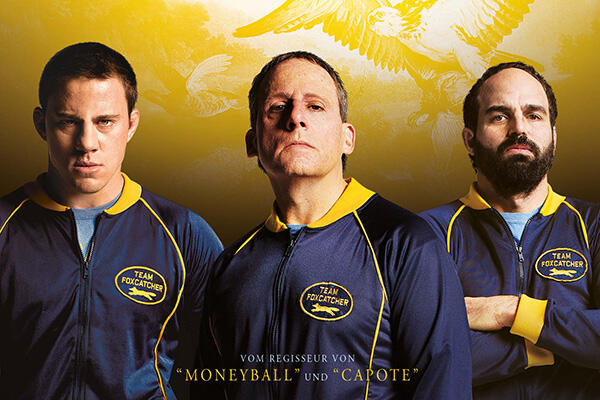
Foxcatcher
Rating: 4/5 Foxcatcher tells the true story of Olympic wrestlers, Mark Schulz (Channing Tatum) and David Schulz (Mark Ruffalo), and their unsettling benefactor John DuPont (Steve Carrell) as they attempt to repeat their gold medal win from the 1984 Los Angeles Olympics at the 1988 Seoul Olympics. The film quickly reveals to the audience that Mark appears to be living his life in his older brother’s shadow, a feeling that is exacerbated when he learns that Dave has been offered a coaching position at USA Wrestling. Mark views himself as Dave’s equal but struggles to best his brother in wrestling and in his personal life. Their fortunes change though, when Mark receives an invitation to join the wrestling team of John E. du Pont, a member of the wealthiest family in the United States, a zealous American patriot, and a wrestling fan who dreams of giving the national team the respect he feels it deserves. Channing Tatum, an actor often typecast as an attractive egghead, brings complexity to the role of Mark Schulz, which allows the audience to experience the protagonist’s frustration. Not only does he witness his brother exceeding him both professionally and personally, the strains that develop between Mark and du Pont also play a major part in his frustration, as he comes to truly know the egotistical and seemingly infantile man. Steve Carrell’s disturbing performance as du Pont has been lauded by critics and rightfully so - this is Carrell as we have never seen him before. He’s stern, quiet, and strange in a way that is genuinely unsettling; Carrell as du Pont has an almost perverse sense of megalomania as his character’s obsession with Mark, Dave, and the Olympic gold drives them and the audience away from a character who initially appears as a benevolent patriot but quickly morphs into something much darker; this transformation is highlighted by the director’s subtle exploration of the relationship between du Pont and his mother, and an examination of the dangers of money and hubris. Overall, Foxcatcher is dark, exploratory and troubling; it’s something that would not have been possible without stellar performances from Tatum, Carrell, and Ruffalo and understated yet effective direction from Miller.
-
Culture
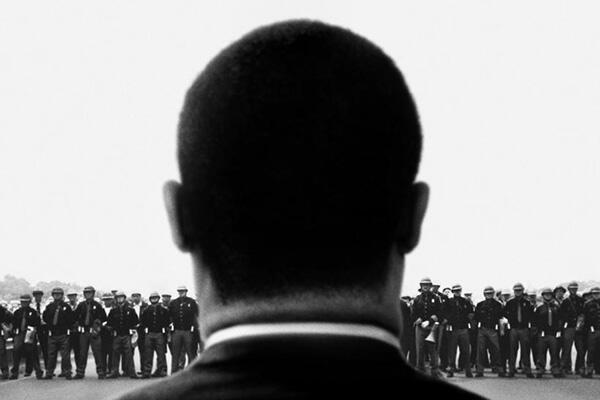
Selma
Rating: 4/5 Fuck you, America, I have a dream! In 1964, the American Civil Rights bill was passed and African-American citizens had the right to vote. Except that black citizens were systematically and violently denied access to register and vote. Selma shows that 1965 America was filled with power-tripping douchebags but also had the superhero team led by the late Dr Martin Luther King, Jr. In this film, he leads the badass Southern Christian Leadership Conference (SCLC) through moral and tactical minefields in the quest for freedom for his people (and for proper voting rights). There are a few key moments in the film where you may require a viewing break: I don’t want to spoil anything, but there are brutal, terrifying scenes that will make you cry and, all the while, they’re incredibly, morbidly captivating. This film taps into the small but potent fire some of us are lucky to have and calls the audience to action with an alarming sense of urgency. Why? We know about the US civil rights movement, but what we haven’t seen and experienced are the collapsed families, the fear, internal fractions, sense of hopelessness, shattered spirits and the death of friends — these things that activists and leaders of this movement endured every single day. They endured them so that their people and generations to come could stand as proud, equal citizens in a country hell-bent on being “free”. Combine these raw human moments with the honey-smooth voice of David Oyelowo, who plays Martin Luther King, Jr., the strength of Carmen Ejogo (Coretta King) and the vision of both Ava DuVernay and writer, Paul Webb. You are wrenched heart first into Selma, as if you are right there on the Edmund Pettus bridge. I loved this film like I love a good merlot: by oneself until the end.
-
Culture

Jupiter Ascending
Rating: 1/5 Jupiter Ascending follows Jupiter Jones, a young girl who hates her life, which is spent cleaning houses and bathrooms with her scary Russian family just to get by. She is convinced by her ridiculous cousin to sell her eggs to a clinic in order to get money so that she can buy a telescope just like her daddy, who died tragically at the beginning of the film. But, wait! The doctors are actually aliens in disguise who are trying to kill her! Cue sexy lycan boy, Caine Wise (Channing Tatum), bursting in on flying boots to save her. It turns out that Jupiter is a “somebody” who the aliens want dead. Gasp! “But she’s a nobody! She cleans toilets!” you say? No — she’s actually royalty, because the bees told us so. Really, this is what happens in this movie. Obviously, bees are honest and they know royalty when they see it and Jupiter Jones is most definitely “Her Majesty”. That’s why aliens are trying to kill her, because the royal space family is messed up, with weird Oedipal issues. This clusterfuck of a movie is one of the most hilarious things I have seen in the last year. The reason for this movie being so good, but bad, is the script and how much it attempts to shove into two hours. The actors are fine; they’re not bad actors and you can really see Mila Kunis doing her absolute best to play her role convincingly — but no one can work with a script like this. My favourite part of the movie is Eddie Redmayne. His potentially unintentional Voldemort impression is fantastic, and his random high-pitched screaming is not so much unsettling as it is giggle inducing. I think he saw how fantastically he did in The Theory of Everything and decided he couldn’t top that performance so he didn’t even try.
-
Culture
From Dusk Till Dawn
Cult Film F rom Dusk Till Dawn is a two-course action-crime buffet with references as juicy as a Kahuna Burger; the first course comes in the form of a hostage film and the second, a Vampire film that is far gorier than what we were accustomed to in 1996, let alone 2015. The film revolves around the religious Fuller family being taken hostage by the Gecko brothers, two criminals played by George Clooney and the film’s screenwriter, Quentin Tarantino. The brothers take the Fuller’s and their RV to get them over the Mexican Border to El Rey, a crime paradise. Safely over the border in Mexico, the group stop at a bar called “The Titty Twister” to meet a crime boss, a mistake that ultimately brings up the film’s body count. With the introduction of Salma Hayek’s character, Santánico Pandemonium, the film changes direction from Hostage situation to trapped with a growing number of vampires situation. Hayek’s character is the tipping point of the film’s genre transition – and it works. Without giving too much away, the last part of the movie is a kind of no-holds-barred shut-up-and-kill-things gore-fest that our generation are purportedly thirsty for. What differentiates From Dusk till Dawn from its counterparts is that it isn’t trying to be realistic. The film is messing with you and sweet baby Jesus, is it cool. Though what would you expect from a film with a character named Sex Machine? It’s almost shameless how From Dusk Till Dawn has just about made a checklist of spectacles, from your standard explosions to a guy with a crotch gun. If you missed them all over the references and the soundtrack, Rodriguez and Tarantino’s fingerprints are visible in the gratuitous blood that spurts all over this film. With Rodriguez directing and Tarantino as actor and screenplay writer, this film has a more gritty B-movie feel than the more popular Tarantino-brand movies. You have to hand it to them; When Rodriguez and Tarantino set out to make a b-movie spectacle, they damn well deliver.
-
Culture
Demons
Demons, by Wayne Macauley, tells the story of seven Australians who retreat from the world for a weekend to get drunk and tell each other stories but find, as the weekend goes on, that the experience is becoming a disturbing one. The title and this premise make it sound like Demons might be a horror story, but it’s not. Rather, Demons is social satire that expects readers to feel sympathy for a bunch of white, middle-aged, middle-class, tediously heterosexual people feeling discontented and discussing the state of the world. Maybe sympathy isn’t the right word, but Macauley definitely seems to expect readers to care about these characters in some way that I don’t. Six of them are introduced at once, with their jobs, a physical description and whichever of the other characters they have their relationship with. It’s neatly done for what it is, but it is a bad idea. I remember exactly one character’s name and physical description. I can’t remember her job or who she was heterosexual with though, because human beings are not actually designed to remember infodumps, no matter how competently executed they may be. That’s the frustrating thing about this novel. It’s well-written and filled with things that could be fascinating, but it ultimately failed to make me care. A big problem is its themes. One of them seems to be that people are miserable and discontented no matter where they go or how much money they have. Speaking from personal experience, that is not true. Another theme would be that the world is a screwed-up place. Well, and I don’t use this word lightly, duh. I am not denying that people in the position of these characters can be unhappy with society, but their unhappiness does not involve society denying their humanity, so if you are in that latter position it will be very hard to care. Another theme is attacking capitalism. Critique of capitalism is hardly new since Karl Marx was pointing out capitalism sucked at the same time he was pointing out it existed. And, yes, it is an awful, irredeemable system that kills people on a daily basis, and it’s not even self-sustaining. But instead of trying to offer a viable alternative, Demons just says that Stalin proved there is no alternative, woe is us. I think it’s childish to point out that something blatantly terrible is terrible if you don’t have any ideas for improving it. One of the stories the characters tell involves a teenage girl who is allergic to everything “artificial”. The story obliquely mentions her having regular sex. You know what is a surprisingly common allergy? Latex. And no, she’s not in a position to be using any other form of birth control, even if you can think of one that doesn’t come under the nebulous category of “artificial”. The fact that this subject is never mentioned is something I am going to blame on a sadly common blind-spot; those without wombs seem almost eager to forget what wombs are capable of. Also, Macauley doesn’t use speech marks, which is pointless, pretentious and makes the reading experience more difficult. Although I didn’t hate this novel, I don’t think it tells a story that anyone young and/or disenfranchised can truly appreciate. The themes won’t be meaningful to you unless you are a discontented, white, middle-aged, middle-class, tediously heterosexual person.
-
Culture
Stranded Deep
H ave you ever wanted to live out a Tom Hanks, Castaway fantasy on a deserted island with nothing but a netball for company, but couldn’t afford the tickets to nowhere? Then, boy, do I have some good news for you, and you don’t even have to leave your couch to get it. Stranded Deep is another in a long line of realistic, Castaway-style video games that all seem to start with the player crash-landing somewhere impossibly remote and surrounded by dangerous creatures. In this case, your mortal foes are great white sharks and you have the misfortune of landing amid several sparsely populated tropical islands with nothing but a life raft, water bottle and knife to get yourself to the nearest shore — alive preferably. From here on, things only get worse as you start to get your bearings. Quickly realising you’re going to need food and water soon, you encounter a serious problem — there’s no McDonalds on this island. All you have to sustain yourself through that anxious first night alone under the stars are crabs and coconuts. However, all is not lost. You can find salvation in one of the many shipwrecks that dot the seascape above and below the waves, as long as you avoid getting eaten that is. From flare guns to diving equipment, these shipwrecks can contain any number of helpful items to aid in your survival and only really scratch the surface of what is a surprisingly complex and, forgive the pun, “deep” aspect of gameplay. The game also has a fairly simple crafting system, allowing you to create your own crude tools in order to build the things, like a shelter, that you’re going to need if you want to survive long term. This helps to extend the playability of the game and gives you an endgame to aim for, although how you get there is entirely up to you. Stranded Deep (it’s all in the name) is an open-world survival game that is heavily focused on ocean survival. This is most apparent when you get off your island and into the open ocean, where several species of fish, stingrays, turtles and, of course, the ever-present sharks all realistically interact with one another: bigger sharks chase away the more docile smaller ones so they can stalk your raft as you row from island to island looking for more loot; fish turn and swim away, startled by your presence in their home. The game is also different to other survival games that tend to focus too much on gunplay and building extravagant fortresses over pure survival. In Stranded Deep there are no zombies to dismember and the only gun in the game fires flares. This game isn’t easy either — your survival is never guaranteed and you have to struggle to build even a simple shack. This is by no means a perfect game. It is definitely a refreshing twist on a genre that is about as played out as zombie movies were in 2008, but it still feels a bit half-baked in places. The ocean gameplay is great and everything looks very pretty, but once you get into the actual crafting and survival aspects, some pretty big game-breaking bugs start to appear, bugs that can easily ruin several hours of work and made me rage quit the game more than once. It’s also a little light on content — you might get a few hours of entertainment out of fighting sharks and chopping coconuts, but even this gets a little dull after a while. Once you’ve built a house and a motor for your boat, there’s really not that much left to do. The game has been released to the public early to gauge customer demand and help raise money to continue its development. With any luck, future updates to Stranded Deep will bring in more content. For now, it’s a little too obvious that this game isn’t quite complete.
-
Columns

Skeptic Schism | Issue 2
Imagine if I were to show you a million dollars in cash with one hand and a loaded gun with the other. I then tell you that I will give you the money and walk away if you believe that John Key is, at that moment, wearing a chicken suit and riding a tricycle to Helen Clark’s house for a play-date. If you don’t believe me, I will shoot you in the face. Assuming that you want the money and don’t want to die, you have everything to gain by choosing to believe this is true. But even if disbelief means certain death, would you really believe it? If I could see into your brain and know whether you truly believed my statement (rather than desperately wanting to believe it), would I be convinced by what I saw? Or would I still shoot you? Blaise Pascal, a seventeenth-century French philosopher, thought that by not believing in God you were taking a huge personal risk. His “wager” went like this: even if God’s existence seems extremely improbable to you, you should still believe in him because you have nothing to lose and everything to gain. If God exists and you believe in him, you get into heaven. If God doesn’t exist and you either believe in him or you don’t, nothing happens. But if you don’t believe in him and he does exist, you risk missing out on heaven and landing yourself in hell for eternity. So, according to Pascal, it is rational to believe in God. The problem is the difference between wanting to believe in something and actually believing in something. It may be rational to try to believe, but if you can’t make yourself believe anything, you don’t have good reason to believe. As in the example with the money and the gun, if you searched the world for evidence of God, went to church every day, prayed to God, read the Bible (which, of course, assumes you’ve picked the right God), studied theosophy and told everybody around you that you believed in him, but you still knew in your mind that you really didn’t believe at all, would God be convinced? Or would he go ahead and smite you for lying? Surely God would appreciate you admitting to honest disbelief more than having you lie about believing in him. A sincere disbelief in God (or John Key on a tricycle) is more admirable than an insincere hedging of your bets to try to win yourself a reward.
-
Columns

Crush on Campus | Issue 2
Each week Critic wants to hear from you if you’re struggling to approach the man or woman of your dreams. Does she always sit on that front row seat and give the lecturer far more attention than you’re comfortable with? Does he stroll past your window each morning and your only attempts at getting his attention have been taking a little longer to put clothes on? Flick your stories to crush@critic.co.nz I t was a usual Saturday night out. I was in Boogie Nights singing to S Club 7, and then I saw her. The most beautiful girl I’d ever seen. She was about 5’5 and wearing a tight black skirt the size of a tea towel. She looked amazing. I waltzed over to her, shoulders pinned back. I walked up behind her and, just as I was about to get her attention, I realised I had just come from my bro’s red card … I was dressed in a full clown suit. Just as I was leaving, our eyes met. Would she laugh? Would she walk away? My fears were wrong; she danced against me for at least 30 seconds, then grabbed me by my squeaky clown nose and pulled me down to her face. I was in. Just before she kissed me, she shouted in my ear, “Sexy costume. We’re wearing the same lipstick.” What did she mean? I have no idea. She made no sense. This was the girl of my dreams. I ripped up the dance floor all night with this girl. Then at around 3 am she tugged me by the arm and led me out of Boogie onto the street. She said, “Let’s go to yours.” I was sold. It doesn’t take much. My Sleepyhead mattress from Mum was going to get some serious use tonight. She jumped on the bed, and you can guess the rest. I awoke from a coma of happiness in the morning. But it didn’t last long. The love of my life was gone. She had slipped out while I was sleeping. Now I can’t be happy. All I can do is don my clown costume again this Saturday night and hope my love finds me. If you see a stud wearing a costume at Boogie, don’t run. I forgive you for ditching me. Lots of love, The Clown of Your Dreams
-
Columns

David Clark | Issue 2
T he North Dunedin population is younger, poorer and more likely to be single than populations elsewhere in the country. We are an outlier. Many of our statistical quirks derive from having the most intense congregation of tertiary students anywhere in the country. What is perhaps less well known is that the Dunedin North electorate has the most people employed in the health and social services sector. Why? Because we have a teaching hospital in the electorate. Our hospital serves a huge geographic area and trains a good proportion of New Zealand’s health workforce. Most students will know someone studying medicine or nursing. It’s fair to say, the quality of their education is at risk. Dunedin is the last major metropolitan centre not to have a hospital upgrade. Operating theatres leak. Surgery gets postponed after major downpours. The main clinical services building may well contain asbestos. Maintaining buildings already past their use-by date is expected to cost $50 million in coming years. Students should be preparing themselves in first-world facilities, not training for a shift to the third. A hospital upgrade is key to unlocking Dunedin’s potential. The teaching hospital is critical to the university’s financial health. The university’s financial health is critical to the city. Local biotechnology firms rely on the hospital’s expertise and equipment. When the hospital loses the power to attract specialist teachers, researchers and clinical leaders, the city suffers. There is a domino effect. That is why I pushed Labour last election to pledge an immediate hospital upgrade. Money is an issue. The Southern District Health Board (SDHB) has been running deficits since forever. Different things have contributed to financial shortfalls. One major factor is that the health funding formula doesn’t work for the South. For example, there appears to be too little funding recognition for nursing, medical and other student training, which brings an extra cost to running the hospital. Sky-high maintenance bills are one thing. But the situation is made worse still by the fact that outdated buildings were built for outdated practices, which are often more expensive. The DHB does what it can to cut costs — many staff are paid less here than elsewhere. It is well and truly time that the government committed capital to a hospital upgrade. Because of substandard buildings, Dunedin Hospital recently lost its status as an Australasian intensive-care training hospital. The first dominoes are falling.
-
Columns
A Broad View | Issue 2
I t’s night, the stars are out and a bonfire is burning wildly in the middle of the road. Green shards of glass from smashed bottles are strewn about the flames. I peer closer at the fire, fearing what could be burning in there. Then I see … a ratty old couch. On the street corner, the campus security officer is watching the event with an amused expression. Students running around with beer in their hand. Students running around wasted, barefoot, on the sharp glass shards of beer bottles they’ve just dropped from balconies. Does the officer see what’s happening? At my home school in the US, the officer would be after every one of those kids with a list of 200 convictions, hunting for an excuse to stop a good time. Here, he just seems to want to ensure that everyone’s okay and having fun. Sunday night, I approached an officer for directions to a friend’s flat. He was standing in the street in the midst of couch-burning riot. “I’m looking for 378 Leith Street,” I offered, tentatively. “Oh, I heard there’s a great party there!” he replied. And then — “I’ll walk you over! How do you like Dunedin so far? Hope you’re having fun.” If a campus security officer saw you with a can of beer in your hand in the US, you would be written up, called in for a conduct meeting, forced to attend Alcoholics Anonymous meetings and required to write essays detailing your progress with alcohol abuse. These extreme sanctions often lead to serious binge drinking and multiple transports to hospital during big parties. I’m not sure how much of an issue alcoholism is at the University of Otago, but a policy of drinking in the open and semi-supervised seems much healthier than the situation in the US. Students aren’t forced to take six shots in six minutes hiding in their dorm room before they head out onto the street. Campus safety officers genuinely seem to want to help you stay safe, instead of looking for any excuse to bust your ass. I’m enjoying a break from the uptight campus culture I’m used to at home, and may just get too used to this freedom. Thanks for the burning welcome, Dunedin. emmabilgerlodes.wordpress.com
-
Columns
Science, Bitches | Issue 2
Right now, your eyes are following the lines of this article, sending the black marks that make up letters to your brain where they are interpreted. This task, which we perform every day, is so complex that we are the only life forms that can do it. How is it possible, then, that we formed from single-celled organisms? Three billion years ago, a very simple cell called a prokaryote morphed into a more rough, intricate cell called a eukaryote. The new cell had tiny compartments that efficiently converted particles into energy. It had a separate section for DNA called the nucleus and, because of that, the eukaryotic cell could create diverse life. Over time, it became the foundation for all complex life on Earth — from the cells in your brain to the grass beneath your feet. The birth of the eukaryotic cell may very well be the most profound evolutionary change that Earth has ever seen, and many microbiologists are captivated with its metamorphosis. In the past, scientists thought prokaryotic cells folded in on themselves to create the complicated ripples and sections of a eukaryote. Recently, David and Buzz Baum, cousins at the University of Wisconsin and University College London respectively, realised that evolutionary scientists might have it backwards. They think that the prokaryotic cell ejected “blebs” of itself to the outside of the cell where they fused. This means that the inside of the eukaryotic cell is the ghost of a prokaryote — an ancestral fossil still present in every complex cell on Earth. The research offers a way of seeing eukaryotic cells that might answer questions that have stumped other scientists. David and Buzz Baum drew new maps of the cells, and they suddenly made sense; the new concept connects the endoplasmic reticulum and nucleus membrane and explains why they have similar material to the ancient prokaryotic cell wall. As the semester picks up, you may not think about the blebs that protruded from prokaryotic cells billions of years ago, but you should thank your lucky stars that they did. Those very blebs are what enable you to order your chai latte, pick up your pen to doodle during lectures, and think of the words to win over that special someone. That’s science, bitches.
-
Columns
From the Back of the Class | Issue 2
G enghis Khan was not only a mass-murdering psychopath but also a pretty interesting guy. He was born sometime around 1162AD (accurate birth records were somewhat scarce on the Mongolian tundra) and given the name Temujin, meaning “of iron”. Temujin united the Mongolian tribes under one banner and was proclaimed Genghis Khan in 1206. I’m skipping quite a bit of terrific history here (including political intrigue, gruesome battles, daring rescues and Mongol sex) in order to tell an apocryphal story illustrative of the ingenuity and flexibility that allowed old GK to create the largest contiguous empire in human history. Having united the peoples of the steppe, GK turned his attention south to the Tangut Empire in north-western China, whose political machinations had been keeping the Mongols and their fellow tribes weak from in-fighting for centuries. This was a totally reasonable tactic of the Tangut considering that once they’d gotten their act together the Mongols pretty much ran rampant over much of Eurasia killing so many people that large areas of cultivated land grew thick once again with trees that absorbed 700 million tons of carbon dioxide from the atmosphere and made GK one of the best environmentalists in history. The Tangut were technologically advanced compared to the nomadic Mongols and lived in walled cities, a housing concept the Mongols considered fit only for looting and reducing to ash. When unable to breach the walls of a Tangut city with contemporary means, our hero used a clever trick. He sent a message to the starving people of the city that he would end his siege in exchange for a gift of one thousand cats and ten thousand swallows. Astonished by the unusual request but feeling pretty fucking tired of the whole “siege” thing, the fortress commander gratefully complied. After the animals arrived in the Mongol camp, GK ordered his men to tie small cotton-wool tufts to the tail of each creature then set the tuft alight. When the panicked and frightened animals were turned loose, they made directly for their nests and lairs inside the city, igniting hundreds of fires. While the defenders were a little preoccupied with watching everything they’d ever known burn around them, GK’s warriors stormed the city and lived happily ever after. A similar tactic — involving a cat, some kerosene and a sugar-cane field — would be used by the CIA in 1960s Cuba, but more on that at a later date.
-
Columns

ODT Watch | Issue 2
A new player in the weapons market was discovered at the recent Highlanders game. Better keep this one on the lowdown so ISIS doesn’t find out. Must have been a slow news day. Although who wouldn’t want a hat of the day featured in their newspaper every day. LOLs cause toilet paper is on a roll #punny The ISIS Centre at Wakari Hospital in Dunedin is considering a name change due to its similarity with the terrorist group. Probably a good idea not to confuse a caring hospital centre with a radical Islamic terrorist group. In blatantly obvious news, the ODT reports that ten times the recommended dose of codeine given to a child is ‘too much’. Yes, it is ... stay away from drugs kids. Luckily the child is now fine and there have not been any lasting effects. All nighters trying to finish an essay + 12-hour library days + copious amounts of Red Bull/No-Doz = a whole lot of stress apparently. Surprisingly, they are talking about NCEA assessments.
-
Columns

Love is Blind | Issue 2
Critic’s infamous blind date column brings you weekly shutdowns, hilariously mismatched pairs, and the occasional hookup. Each week, we lure two singletons to Di Lusso, ply them with food and alcohol, then wait for their reports to arrive in our inbox. If this sounds like you, email critic@critic.co.nz. But be warned – if you dine on the free food and dash without sending us a writeup, a Critic writer will write one under your name. And that won’t end well for you. EricHe’s a lean, keen, drinking machine. Studies roofing and feels very accomplished in his profession. He loves Top Gear and has a man crush on Jeremy Clarkson. I t was a bit of a surprise to suddenly be going on a blind date, but flatmates coerced me and the commitment was made. Before the date, I made sure I sculled and shotgunned a few Speights so that I was prepped to chat up my anonymous lady friend. Later on, one of my chums dropped me off at Di Lusso. I had no idea what a blind date was before arriving, so I was quite surprised to learn that the person I was dating was not actually blind. After spending a few minutes trying to work out whether there was some other deformity about her, I came to the conclusion that she was really quite normal. My ability to converse with the female population has always been quite limited, so when I arrived, I practiced my conversation with one of the barmen in preparation. One would think it is quite easy to talk to a normal girl, but it is clearly beyond the capabilities of your average ape. When she arrived, we said hi and there were changes in tone and stuttering, so already this confident lady was aware of my social inadequacies. For a young guy with the sex appeal of a camel, I knew the only way this could end even remotely successfully well, would be to drink a lot more, so I did exactly that. I believe my attempts at humour occasionally worked (although I’m not very funny) and was able to get her to laugh a few times. When the bar tab ran out, we decided to have a few cocktails each, which was a great way to conclude our evening. When the evening did conclude, we hugged and went our separate ways. She was very lovely and I am still awkward. Cheers, Di Lusso and Critic, for a great blind date/first date. ArielShe had high expectations but got a mouse. Apparently she looked like a lizard. W hen I woke up Thursday morning, I didn’t know that come the evening, I would be sitting through one of the worst dates of my existence. I was expecting a man and I got a mouse. When I arrived fashionably late, the bartender informed me that my date was in the bathroom and “cute”. By the way she said it, I knew I was in for a rough night. Five minutes later, a pre-pubescent twelvie walked out of the bathroom. Instantly my hopes and dreams of a good root and quality banter were gone. His opening line of “I called my dad before this, it’s my first date” really hit the nail on the coffin of my libido. I forgot his name instantly as I tried to concentrate on the appalling chat he was giving. It got to the stage where I was drinking to hide my sorrows. At 9 pm I was ready to leave but, seeing as we still had some of the bar tab left, I decided to power through and commit to the end. As I got drunker, the conversation got weirder. One of the questions that arose was “What animal do I most look like?” A future note of advice to my date: it’s not attractive when a punching-20-year-old male says his date looks like a pretty lizard. It was then that I knew it was time to leave. The date concluded just before 10. I left with a sloppy kiss on my cheek and gave him no chance of ever getting in contact with me again. I decided my night wasn’t a complete disaster when I went to the next bar and met a man who had actually had sex more than three times. It didn’t take long for my restored libido to be quenched. Top marks to him for the good use of his hands and tongue. Cheers Critic for a shit date, but excellent booze. A quick shout out to the bartender here — your drinks were on point!


