
-
Columns

Editorial | Issue 1
Issue one: Mission accomplished Orientation Week is a blast. Even spending the majority of it in an office trying to figure out how we’ll come up with a 48-page magazine in a week, it is still a very special time of the year. Reuniting with friends, finding new ones, partying every night, and avoiding the books for at least another couple of weeks. What’s not to love? Aside from the morons who set your house on fire. This year, we’ve done it again with the nuttiest Orientation in the country. Before the week had even begun, some flats already had nearly 4000 people set to attend their parties … this is before the university attempted to have them cancelled and then collected over $4500 in fines later in the week. But while national news and the Otago Daily Times were busy highlighting the pyromaniacs of Dunedin, Critic was witnessing the good times of Orientation. Roaming the streets of Castle and Hyde, we captured countless new romances blossoming, as young love found it’s place in North D. We saw bros finding new bros, dance routines being formed and we had friendly banter with the cops. There’s a reason we love O Week; we devote the entire week to having a great time, without getting engrossed in our own singular lives. Grades aren’t everything and another shift at the café isn’t going to make your loan disappear or a grad job land in your lap. Spend your time here finding your passion and spending time with those you love. Whether it’s your family, flatties or that cat that’s probably going to kick the bucket any day now, realise that it’s these connections we are here for. With a wild week kicking off the year, I’m so excited for 2015. This week has been one of the steepest learning curves (or slides? or cliff drops?) of my life. And this brings me to another point. Great content isn’t what got me excited about this issue. There’s some good stuff but there’s plenty to improve on, and we’ve got the rest of the year to figure this out. What got me excited was that everyone left print night passionate about the next 26 issues, merry on pizza, and buzzing to be a part of the team. Give this year your everything, and so will we. Josie Cochrane Critic Editor
-
News
Parties go ahead despite warnings
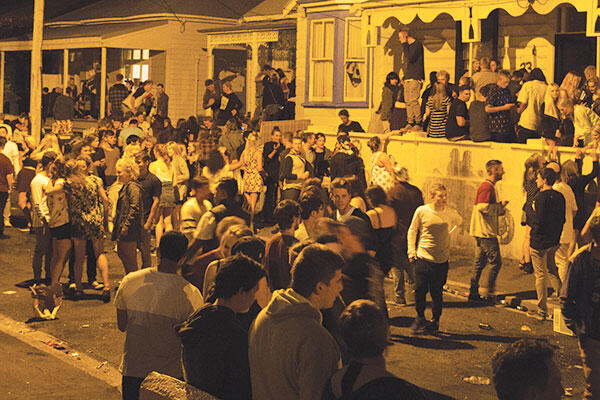
T he University of Otago took a tougher stance on out-of-control flat parties leading up to the 2015 Orientation Week, with flats being asked to cancel events before the week had even begun. Residents of the Dundas Street V Flat, Dylan Hall, Tessa Lunam, Baily Beecher and Ross Stocker, were some of the many tenants of numerous flats pulled into Proctor Simon Thompson’s office. They said that Campus Watch arrived at the flat and told the students they had an urgent meeting with Thompson. “He told us to close [the Facebook event] down … he also told us to completely change the date, but that just doesn’t work for us.” Members of the Hilton flat, located on Clyde Street, said there was a pile of printed screenshots on Thompson’s desk, each with the Facebook events that had been made for each party. The V flat confirmed this was also the case during their meeting. The students were told they would be liable for anything happening on or around the premises if the party were to go ahead. “Anything and everything that happens is our fault,” said Lunam. “[The Proctor] basically said if we had the party then we had to take the consequences that came with it.” These consequences could range from small fines to expulsion. The students were offered the chance to cancel the party or to make it invite only. The Proctor said, “Antisocial and dangerous behaviour can result in a wide range of consequences from warnings to expulsion. Lighting fires or throwing bottles at people is very likely to result in expulsion, but each case is dealt with separately and the penalties could vary.” Lunam said, “It seems to us that the University just doesn’t want us to have our own parties, they only want us to attend the O-week events … which are mainly aimed at Freshers.” Hall felt the university was being “very sterile” and added, “There’s nothing really for second years aside from house parties … it seems like [the university] is trying way too hard to stop people having a good time.” The Hyde Street flat, Fear and Loathing, shifted the location of their party “due to a lot of pressure from the DCC, police and the university,” resident Richard Scott stated in a Facebook post. Scott attributed the “possibility of the Hyde St keg party not going ahead” as a reason for the change in venue. The party was moved to the Lotus Room. A flat at 662 Castle Street also cancelled the Facebook event they had created for their party after rumours of the threatened consequences. “We saw other people shutting their parties down and talked to [some] mates who were [cancelling the events], so we decided to shut ours down before we had to, [in order to] avoid a pre-warning,” said resident Dermot Frengley. The party went ahead, though Frengley said police arrived “twice before it was even dark [to] tell us about the dangers of a party.” A paddy wagon was also parked outside the residence while the party was happening. “Our party was very mellow in comparison to what the police believed it would be, only a hundred people would have been there at any one point in the night,” he added. The Proctor said, “Although the majority of students are well-behaved, [there is] a minority whose antisocial behaviour is unacceptable. Activities such as lighting fires, breaking glass bottles and the like will not be tolerated as they greatly endanger their own or others’ safety and well-being.” Otago Police Coastal Area Commander Inspector Jason Guthrie said, “To ensure a safe and enjoyable party, rule number one is do not post an open invite on social media; this is a fast track to losing control.” He added, “There are plenty of other simple considerations including providing food, knowing the people who are at your party, keeping your guests on your property and avoiding glass as much as possible.” Police have been attending flat parties on a nightly basis over the past few weeks, Guthrie said, and although many had been “run without issue, it is unfortunate that the minority continue to tarnish the reputation of the wider student community.” He said this year’s Orientation has been “no worse or better than any other.” However, there is “still a significant scope for students to mature their attitude towards alcohol.” Guthrie warned those organising parties that “being a responsible host extends to monitoring the numbers attending, ensuring that attendees stay off roads and footpaths, and most importantly taking a sensible approach to alcohol use. The focus needs to shift from risky alcohol consumption and, for flat parties to be safer, organisers need to grip this up and take ownership of providing a safe environment.”
-
News
O Week heats up
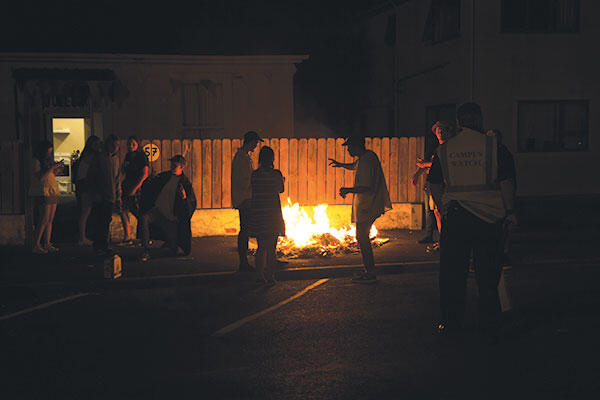
O n Wednesday 18 February 2015, emergency services were called to four separate North Dunedin areas in the early hours of the morning. A house located on Leith Street was left with severe damage to the front porch, as well the front two rooms of the house. The Leith Street residents had not yet set up insurance; however, OUSA has created a Givealittle fundraiser to show support. University of Otago Proctor Simon Thompson said the fire “was started in a chair on the front porch of the property that had been set alight by a passerby.” He noted that the flat was empty at the time. The Southern District Police said in a press release that an ongoing investigation was being conducted on who started the fire, and that it is as yet unclear whether it’s connected with the other fires that night. The release notes that the police are looking into three men who “were seen near the Leith Street address and running away from it towards Frederick Street at about 12.45am this morning.” Lindsay Rae, a Senior Station Officer with the Fire Service, responded to the calls made by residents that night regarding the fires. Rae said the bystander presence on Leith Street was significantly large when they arrived on the scene. “I would presume that the other bystanders were [mostly] students,” he said. Rae seemed resigned to the fact that there would always be arson in Dunedin. “I’d like to think the fires would go away,” he said. “Of course, a person would be naive to think that there would be no deliberately lit fires at all. But the numbers that there are, are out of hand.” Professor Harlene Hayne, Vice-Chancellor at the University of Otago, said in a media release that fires “will not be tolerated” and the university “fully support the Fire Service and Police in their efforts to apprehend offenders who carry out criminal behaviour.” “Our Code of Student Conduct makes it clear that any offence relating to fires and couch burning will result in serious trouble for the perpetrator. We have taken a hard line with students who have been caught lighting fires, and we will continue to do so,” said Hayne. The University Proctor has already issued nearly $4,500 worth of fines for students breaching the Code of Conduct during this Orientation Week, and he said that they will face the “prospect of exclusion from the University as a result of their foolish actions.” Otago Police Coastal Area Commander Inspector Jason Guthrie warned, “if Police catch you or your guests fire lighting this will result in a court appearance but more importantly you do not want a death or serious injury from fire on your conscience.” Given the apparent propensity of North Dunedin residents and/or visitors for setting furniture on fire, the Fire Service has asked residents to keep outside furniture indoors.
-
News

Posties stamped out
D unedin-based postal workers are at risk of unemployment as New Zealand Post makes cuts to its residential delivery services. Dunedin is currently home to around 60 posties, all of whom could be at risk of unemployment as part of a five-year strategy to restructure New Zealand’s postal service. Approximately 400 jobs are expected to be lost across the country due to the closure of mail centres in Dunedin, Waikato and Wellington. Because of the closures, mail services in these areas will be cut from three to six days per week. Rural delivery services will not be affected. The changes will come into effect in July of this year, a New Zealand Post spokesperson has said. Staff are set to consult with the state-owned enterprise between April and June; the number of jobs cut will be confirmed at the end of this period. The Engineering, Printing and Manufacturing Union (EPMU), New Zealand’s largest union for postal workers, has spoken out about the plan. Joe Gallagher, EPMU organiser, said in a press release: “[The National] Government has pushed for bigger and bigger dividends, which has driven NZ Post to cut costs any way it can.” Gallagher argued that by making the cuts, New Zealand Post is “sacrificing good service for profit … we’re now in a situation where it could take a week for a letter to get from one side of Dunedin to the other.” Alix Muir, student and Dunedin resident, said the cuts will be “a total nuisance”. “I live in a flat, as most students do, and most of my bills tend to come through the mail,” said Muir. “I know I can get them electronically, but it’s always a reminder to pay them when I have a physical copy in my hand.” In 2014, total mail volume fell by around nine per cent; this year’s figures have also shown a record decrease.
-
News

Execrable | Issue 1
T he first OUSA Executive meeting for the year kicked off with OUSA President Paul Hunt laying down the law for 2015. Executive members were instructed to raise their hand if they want to say their piece during the meeting. Additionally, it was clarified that if an executive member misses three consecutive meetings without an apology, then they have vacated their position. The first point of discussion was the need to promote Empire of the Sun tickets during Orientation week. Hunt said that although Super Pass sales were “going well”, there needed to be a “significantly more sales” in order to “get a substantial return”. Admin Vice President Isaac Yu asked what was currently being done to promote the band, to which Hunt replied “not much”. Education Officer Greer Mahoney suggested the team “jam it out everywhere,” playing Empire of the Sun’s music around campus or on four wheels through town. She emphasised the executives should suggest purchasing tickets to students: “be, like, get the music pass instead” or state “this song is mean”. She pointed out that Sticky Fingers tickets were selling well. Welfare Officer Payal Ramritu wanted to “target sixth formers and seventh formers”. Mahoney agreed, as “they’re more likely to have more money.” Hunt pointed out that the concert was on a school night and there would be alcohol present, so the idea was quickly shut down. The team decided that they would start playing videos of the band in the Main Common Room. The Executive then discussed whether they agreed with the decision made by the 2014 executives to pull out of NZUSA. Hunt said current executive members were being contacted by NZUSA via Twitter and Facebook, lobbying for them to rejoin. All members agreed that the $45,000 cost of a membership was not justifiable due to “serious structural ineffectiveness”. The Executive also decided that NZUSA could not have a stall at OUSA’s Tent City during Ori Week. Paul said it was not a club or society, nor would it have any benefit to students and the event was “already oversubscribed”. The Executive went into committee of the whole, due to privacy reasons, and discussed the importance of adding two new members to the Planet Media Dunedin Limited Board. Associate Professor Jessica Palmer and 2014 Education Officer Laura Harris were appointed and the whole conversation was said in code of “that thing we’ve discussed earlier”. The precious last 20 minutes were spent selecting which executives would be added to a Code of Conduct Committee. After a round of Rock-Paper-Scissors, a potential coin toss and an eventual online random number generator, Finance Officer Nina Harrap was appointed. Rock-Paper-Scissors and the coin toss failed to work once the Executive realised one of the members was in the meeting via a phone line.
-
News
Dunedin Sick of Mores
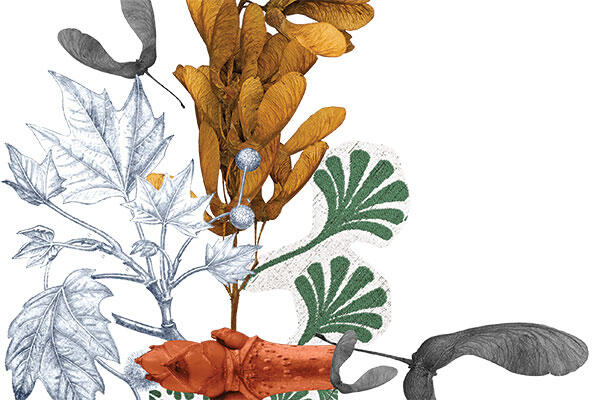
S ycamore trees have become a topic of conflict in recent weeks, with the Dunedin City Council and the Chalmers Community Board arguing that they’re choking out native plants, hogging sunlight and stamping out undergrowth bush. According to Lisa Wheeler, DCC Parks Manager, the city is “being inundated with [sycamore] seedlings … They are actually starting to reach maturity enough to create their own seedlings, so it’s becoming a problem.” She said, “[Dunedin] has a number of sycamore trees and [they] germinate quickly, so we have new seedlings coming through anywhere the wind blows.” According to Wheeler, the issue with sycamores is “the impact they have on the environment and just how fast they spread.” Due to their height and fast growing rate, sycamores tend to block natural light very easily,” argued Wheeler. “They’ve got a big root system as well,” she added, “so they affect the underground and the bush environment that [the DCC is] trying to regenerate.” Wildscreen’s online initiative, Arkive, notes that a sycamore tree can live to be 500 years old and can produce over 10,000 seedlings a year, which can be dispersed kilometres away with high winds. Wheeler and the Dunedin City Council have begun encouraging residents to cut and poison sycamores on their property: “We are trying to see if we can do anything and, if so, what those controls will be,” said Wheeler. “We’re looking at it from a city perspective,” she said. “The community board and [Dunedin residents] are becoming more conscious [of] the nuisance the sycamores are creating.” Sycamore seedlings can be pulled out, but once the trees grow to a larger size they must be covered with a weed-control paste to kill the roots. The Dunedin City Council currently has contracts that include the removal of noxious weeds, but a limited budget constrains their ability to remove full-sized trees. “We want to identify the best control method for different size trees in different locations, and then make a plan for people to remove the sycamores from their own property,” said Wheeler. The DCC will be working closely with the Chalmers Community Board, beginning with a mapping activity in West Harbour to locate individual trees. They plan to test methods for controlling the sycamore trees in that area and then expand successful methods throughout the city. The council will also be recruiting volunteers to help remove trees on public land.
-
News
Backlash over University Council amendments
A bill amending the 1989 Education Act has come under fire recently from university student associations around New Zealand. In addition to creating a new professional body for teachers — a move that infuriated the Post-Primary Teachers’ Association (PPTA) — the bill aims to decrease the current size of university and wānanga councils. The previous requirement that at least three seats on the councils be reserved for members elected by students and staff will be removed. Councils will decrease from 12–20 members to 8–12, though the number of ministerial appointees required will remain at three to four members. OUSA President Paul Hunt will be negotiating with the council to ensure that at least two student-elected representatives will remain, even if this means one staff position is “sacrificed”. “As Otago students, we’re focused on ensuring that we maintain, or slightly increase, the number of students we have on the council,” said Hunt. Auckland University Students’ Association President Paul Smith said in a press release that it is “extremely disappointing to see the government push the bill through despite its enormous unpopularity.” Education Vice President Jessica Storey said, “[The amendments] will inevitably affect council make-up, because it reduces councils in size, meaning that only some interests will be protected. Ministerial appointees are protected, and there’s not lots of room left for others, which forces councils to make a decision between protecting student- or staff-[elected members], or people with other skills. It puts a lot of pressure on councils to get rid of students and staff.” Wānanga councils will also be affected by the amendments, although it’s not clear exactly how. New Zealand’s oldest wānanga, Te Wānanga o Aotearoa, currently has a thirteen-member council, including one member elected by students and one by staff. The New Zealand Union of Students’ Associations (NZUSA) made a submission to Parliament, calling changes proposed in the bill “wrong-headed and unnecessary”. The submission also pointed out that ministerial appointments have been overwhelmingly male, white and from corporate or legal backgrounds. In a press release following the bill’s passage into law, Education Minister Hekia Parata responded, “The changes will not affect institutional autonomy or academic freedom, which are guaranteed by section 161 of the Education Act 1989, nor will they lead to more Ministerial control over councils.” Parata added that university and wānanga councils will still have the option of maintaining student and staff seats on the council, and student associations have already begun putting pressure on their councils to do just that. Universities and wānanga have until 2016 to rewrite their constitutions in accordance with the amendments.
-
News
Fears deepen as drought drags on
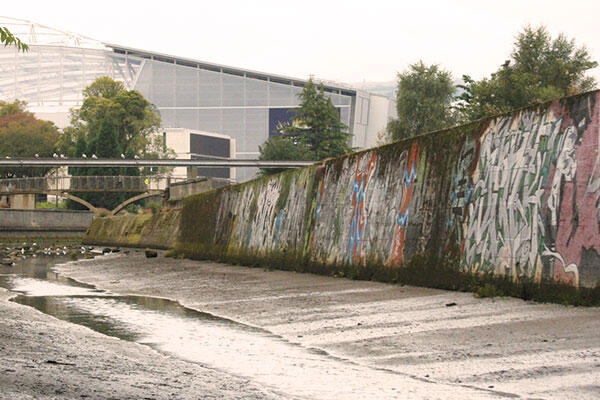
O n January 30 2015, the Otago Regional Council asked the government to officially recognise the devastating dry spell as a recorded drought, after the longest dry spell since 2004. Except for the Clutha River, most tributaries and rivers still have dangerously low levels, with no sign of rain to abate the situation. According to Peter Bodeker, Chief Executive of the Otago Regional Council, high levels of rainfall in the near future would still not be enough to regenerate the vegetation in the region. The severity of the drought means that even winter crops will face extreme difficulty. The effects are set to be felt in the region until spring, at the earliest. Farmers, particularly those involved in dairy and crops, are struggling. Irrigation from most rivers has been stopped and, as a result, most farms no longer have stock on the fields. High numbers of animals are also being sold. Backpackers passing through the region described the impact of the drought as disastrous. The travellers reported that farmers throughout Southland and Otago are still wishing for more rain; recent showers in the area had simply not been enough to rehydrate the land. Not only is the drought killing crops through lack of water, the intense sun is also damaging some crops directly. Charlotte Crawford-Sharpe, an apple thinner, said that workers had been asked to cut off any apples that had been burned by the hot sun. Luckily for students, not all farming industries are suffering. The dry weather has not harmed crops linked to the brewing industry. Concerns that the drought could later cause a supply shortage of beer are unnecessary. Chris Snow, a spokesperson for Speights, said, “From a Speights’ point of view, with our malt grown in Canterbury and our hops in Nelson, very few of the ingredients we use come from the Otago region so we are confident that there will still be plenty of Speights for Kiwis to enjoy over the coming months.” An employee for McDuff Breweries in Dunedin said that they also had no concerns, as their barley crops are grown up in Canterbury. The Dunedin City Council currently takes domestic water from Deep Stream, which has low but not minimum water levels. While the DCC has alternative measures in place for such events, the city could still face shortages if the drought were to continue. Bodeker suggests that Dunedin residents continue to help their rural counterparts through common sense, minimising shower lengths and not heavily watering lawns or washing vehicles.
-
News
Seriously accurate predictions to continue
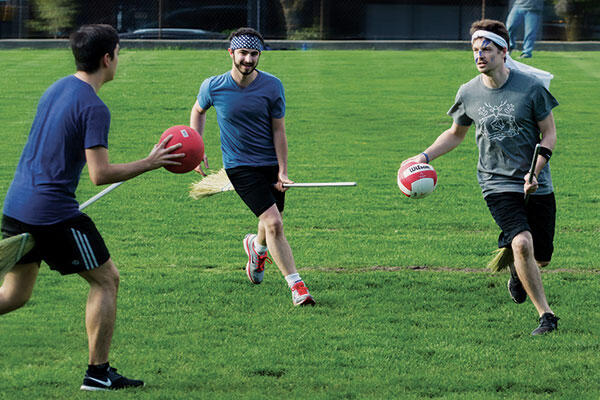
Last year’s FIFA World Cup coverage proved our credentials in providing serious analysis, accurate predictions and the ability to type a sentence like that with a straight face. Here is an update and preview of some of the sports action that we will be reporting on and ranting about in 2015. RUGBY Traditionally the winter sport of New Zealand, rugby’s season has just kicked off in the middle of summer, and the super rugby clash between the Highlanders and the Crusaders was a fitting end to Ori’ 2015, with the crowd in the Zoo providing plenty of colour and noise that surely makes Hurricanes fans jealous as they look around the soulless, windswept spaces of their often half-empty stadium. It is too early to tell what will happen in this year’s competition so we’ll wait a few weeks before making any predictions, but one thing we are certain of is the Highlanders making a triumphant march to a home semi-final. Some might dismiss this as fanciful thinking but, as several of my ex-girlfriends have reminded me, “you can’t spell Daniel without denial”. I will not be hiding my bias as a Highlanders fan this year and will be relentlessly mocking my favourite targets, Ma’a Nonu and Sonny Bill. But once the Super Rugby season is over, all club allegiances will be forgotten and I will be 100% behind the best possible All Blacks team getting together and heading to England to defend the World Cup. FOOTBALL Two of the biggest-spending clubs of recent history are in a two-horse race for the Premier League title, with Chelsea leading the way over last year’s champions Manchester City. The other “big clubs” — Manchester United, Arsenal, Liverpool and Tottenham are all battling it out for a top-four finish and qualification to the lucrative Champions League. But they will have to overhaul the surprise package of the season, Southampton, who have been in the top four all season. A lesser-known World Cup is being hosted by New Zealand in May this year, and Dunedin is one of the host cities. It is the “second biggest FIFA tournament” in the form of the FIFA Under-20 Football World Cup. Heavyweight footballing nations like Brazil, Argentina and Germany will be fielding their next generation of superstars against nations less steeped in footballing glory, such as Uzbekistan, Myanmar and New Zealand. Our unlucky Junior All Whites have a poor record at this tournament, only managing four goals and no wins from their last three appearances dating back to 2007. CRICKET New Zealand are among the favourites to win the ICC Cricket World Cup for the first time, and the tournament is well underway with Dunedin doing its part hosting the Black Caps for their win over Scotland during the carnage of Ori Week. Another interesting matchup between Afghanistan and Scotland is taking place at the University Oval this week on Thursday. It would be a huge surprise if one of those teams were to make it to the March 29 final at the MCG in Melbourne, but the Black Caps have a genuine chance to go all the way, having lost several times in the semi-finals at previous tournaments. RUGBY LEAGUE Rugby League has always had a reputation for attracting some “less than reputable individuals” to the 13-man code; over the last few years too many players to mention have got into trouble, with a multitude of drink-driving, gambling, autoerotic urination and vehicular fellatio videos giving the NRL a fair share of PR headaches and prompting some embarrassingly insincere public apologies from these “role models”. But on the field the NRL, in particular, the South Sydney Rabbitohs are enjoying their most successful period in a generation, winning last year’s NRL Grand Final. They backed this up by winning the second annual Auckland Nines tournament. The New Zealand Warriors will be determined to get their season off on the right foot after a slow start last year that saw them just missing out on the play-offs through an inferior points differential. A return to the top eight play-offs is an absolute minimum for the Warriors this year. Unfortunately, they ignored my Tweets about playing a game in Dunedin, choosing to host their game against the Dragons in Wellington. THAT’S NOT ALL, FOLKS! You can also expect some coverage of pseudo-sports like motor racing and netball, and we may even pretend to know something about American sports. As well as covering the world’s elite professional sporting competitions, we will share the stories of some of the personalities of the Otago sporting scene.
-
Columns

Bouncing off the halls | Issue 1
F or those Critic newbies, Bouncing off the Halls follows the lives and times of our wee freshers as they embark on the voyage of “self-discovery” in Dunedin’s illustrious halls. Here, disgusting deeds are exposed and every saucy secret is thrust into the open. Please be aware, this column is not for the faint hearted. Call it XXX. Freshers — don’t despair. Those of us who were fresh meat in the days of the Cook, the Monkey Bar and $4 Jagerbombs at Melbas look to you now to carry on the torch of the tales. If your nauseating O-week activities are anything to go by, you’ll do fantastically. UniCol, the monstrous presence towering over campus, packs a punch with its O-week shenanigans. One gentleman climbed from the annex to the seventh floor to paint the walls in vomit as he attempted to find his bedroom. Upon being discovered on all fours with his pants around his ankles, the yakking young’un was escorted back to his room in a wheelchair, with plenty of time to think about the kind of first impressions he was making. Ah, bless. Hayward College also made a valuable contribution to the fresher O-week barf quota, with stories of projectile vomit covering walls, doors and carpet, spanning a rather impressive 15 metres in length. The culprit remains unknown, although evidence seems to point to a fresher incarnation of The Exorcist. Scumby Cumby’s new batch of freshly risen fornicators has more than earned its name. Two lads took it upon themselves to infiltrate the infamous girls-only floor, where they were discovered snooping through one unfortunate lass’s lacy undergarments. Caught with their hands in the cookie-jar, the lads fled the scene, no doubt blaming it on the a-a-a-a-alcohol. However, it’s Selwyn College that takes the cake for the downright weirdest O-week to date. At the Selwyn meet-and-greet BBQ — before even moving into the college — one young gentleman got over-excited by some neighbouring farm animals and proceeded to strip naked and ride a poor unsuspecting sheep like a bareback cowboy. Needless to say, that sheep is going to need some serious therapy. In one week, the freshers of 2015 have committed some disgusting, depraved and downright ugly deeds. Keep the stories coming, guys. We never reveal our sources and these reports come from our nifty moles inside the halls. If you’ve got a tale worth telling, email critic@critic.co.nz.
-
Features
The social pokédex
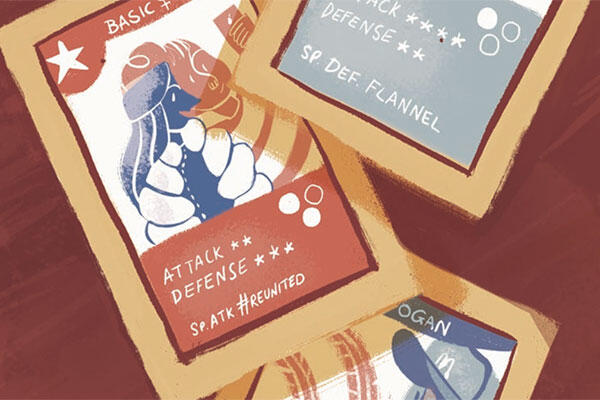
Nick Ainge-Roy, a judgmental soul with a kind heart, has been navigating the realms of the University of Otago for less than a year. But as a Dunners local, he’s familiar with the characters you’re likely to encounter in your new home and here presents you with a cynical insight into the characters of Dunedin. While I, along with most people, try to live my life in as accepting a manner as possible, abiding by such timeless and tiresome maxims as “Don’t judge a book by its cover” and “Know me before you judge me”, it is an oft-overlooked fact that through our daily goings-on we pass judgment on others constantly, be it conscious or not. It may not be inherently negative, but every time you pass someone you’re also making inferences, formulating opinions and making judgments about them. Entering university is akin to entering an arena of judgment because despite what people tell you, everybody here is judgmental as fuck. So, to aid the wide-eyed fresher in their judgments I have constructed the Social Pokédex. In this Pokédex you will find all the information needed to successfully identify those flies you will most commonly find in the social web of university and thus avoid being ensnared in the same traps. When conducting a social dig, it is best to start from the top, with the most obvious and arguably offensive layer of the hierarchy: the basic bitches and bros. The basic bitch has received a fair amount of coverage in the media of late, but I find that while most descriptions of the BB are apt, they do not paint a complete picture. The New Zealand basic bitch is first and foremost hot, and while the levels of hotness across basic bitches may vary, they are generally considered attractive. The second most discernible characteristic of the BB is their tendency to move in packs: a gaggle of striped tops, puffer vests and exercise pants, merrily screeching their way down the hall, laughing just a little too loudly at something that probably wasn’t all that funny to begin with — the perfect picture of platonic pleasantness. That is, until you separate them from one another and their fangs emerge from their hiding place of pretty smiles and hashtags, ones that are generally along the lines of #reunited or #missedyou, despite the fact they see each other six days a week. Although the basic bitch may seem innocent and endearing, the real danger lies in the vapidity of her thoughts, as little else seems to fill their minds and mouths other than drinking, recounting tales of their drinking and studying a BCom. The faithful companion to the basic bitch is, of course, the basic bro. Essentially interchangeable with the basic bitch, the only differences between the two are superficial, as the basic bro’s dress code consists of chinos/joggers, Chucks and a black t-shirt with a blue shirt over the top. Combined with a vacant look in the eyes, a love for rugby (and any rugby-related “banter” including, but not limited to, court sessions) and a study of Commerce, the basic bro complements the basic bitch with a guffaw to her giggle, and both are joined by their love for visiting the same string of bars every Saturday night and standing steadfastly by the belief that flat initiation was the most fun they have ever had. In second year the basic bro evolves into the Scarfie lad, a creature usually found out the front of a Castle Street flat dressed in a flannel, sweatpants and thick woollen socks, Double Brown in hand and drum ’n’ bass — it mustn’t be more complex than a snare and a kick at 140bpm — blaring from the open door behind him. The New Zealand social scene is possibly unique in its division, one that I would consider almost unrivalled elsewhere in the world, with the exception of our crass Australian cousins. This division is embodied through the bogan, the antithesis of the basic bitch or bro — as a disclaimer, I would like to point out that although the bogan is not usually found on campus they are frequently encountered within its locale and throughout Dunedin. Whereas the basic bitch/bro expresses a desire to document almost every movement on Facebook, the bogan seems to possess an ineptitude with modern technology that would rival that of our parents or grandparents. If you listen hard enough, you can occasionally hear a bogan muttering, “How do you use this bloody thing?” as they hopelessly try to upload a photo to Facebook before admitting defeat, firing up the WRX and dropping the clutch to go rip some skids or run some mainies. For those of you unfamiliar with these terms, ripping skids is the process of driving in circles in an empty carpark or similar venue, preferably until a tyre bursts or the turbo is thrashed so fucking hard it blows. In contrast, “mainies” is the rather sedate act of driving up and down the main street of a town while chain-smoking rollies and indulging in a box of Billy Mavs (at this point, the author would like to pay his respects to bogan culture by acknowledging the demise of the 10% Billy Mav and the 8% Diesel). Alongside their passion for burning rubber, tobacco and proverbial bridges, the New Zealand bogan has a fascination with one of those relics of the 90s that, like Biggie or the Backstreet Boys, is rarely seen or heard: the chin strap and the soul patch. Other iconic features such as Metal Mulisha or Monster Energy hats can be used to identify a bogan, but none is as reliable as the presence of the chinstrap/soul patch combo, one that climbs skyward towards thickly gelled and spiked hair, mirroring the sneer a bogan will often display as he leans back in his car seat, arm extended, before dropping the living hell out of his clutch and peeling the fuck out of there. Now that we have cleared away the offensive topsoil, we can examine the minnows of the university social clime. Because of the lack of basic-ness and bogan-ism, it is often difficult for a novice to differentiate and divide those who are not in the upper echelon into separate groups. But for the cynical, scornful and judgmental eye — such as that possessed by yours truly — it is easy work. The largest of the sub-groups is undoubtedly the international students. Out of all the people you meet at university, the internationals are probably the least troublesome for the sole reason that you hardly ever see them outside class. The international’s university career will consist of innumerable hours spent in lectures, followed by a few more studying in the library. Coupled with their studious nature, they may have a poor grasp of English, making the international student a hugely inoffensive and often likeable character due to the hilarious soundbites that are produced when the rudiments of the greatest language on earth are still being learned. Derisive comments aside, the international student is possibly the best type of student because they represent what we all should aspire to be: hard-working, polite and determined to do something that actually benefits society rather than ourselves (looking at you, basic bitches and bros). I also wish to avoid saying anything truly offensive towards international students because a) I know that if I were to go to their country and study, I would be even more of a hermit than them due to my fear of mispronouncing something, and b) because while nobody really gives a shit if you make jokes about your own race, it is frowned upon (and let’s be honest, bad) to talk shit about somebody else’s. We now come to another of our university “cave-dwellers” — that is, people who are usually pasty, odd-looking and socially struggling. I am referring to the counterpart of the international student, the domestic student who takes uni just a little too seriously. While I avoided talking badly of internationals, I have no such qualms about doing so of the domestic students for a number of reasons. Firstly, they’re not from another country, so that makes it okay. Secondly, their mastery of the English language and academia always seems to make them come across as just a little smug: “Oh, you only got a B? That’s not too bad I suppose.” Fuck you and your 86 per cent average. The too-serious domestic student will, unsurprisingly, sit towards the front of the lecture theatre, be the first to answer any questions — out of what I am going to instantly assume is a smug desire to flaunt their wealth of knowledge on the topic — and will often carry with them some chunky text on politics or gender equality, a sign that they want to be treated as an adult with a genuine regard for worldly issues and not as what they actually are, a kid who six months ago was stressing out over their English NCEA Level 3 Unfamiliar Text paper. Do they actually expect me to believe that they spend their free time between classes sitting in the gardens adjacent to Quad, sunlight streaming onto the pages and refracting radical insight such as “Treat everyone equally” into their spectacularly large cranium? Fuck out of here, man, go back to your flat and bitch about how boring your lecture was like the rest of us. This accessory represents the sad impression that they are still under, the impression that the university of today is the university of yesteryear, a birthing ground for the leaders and thinkers of tomorrow, a place where all are welcomed, original ideas are nourished and intellectual conversation abounds. The sad reality is that university has morphed from a prestigious higher calling for those with a genuine desire for self-fulfillment and education to a paper mill churning out degrees to anyone with enough patience to stick around for three years without completely failing. The too-serious domestic is an ode to a bygone age and, although I approve of such outdated ideals, my real problem with these specimens lies, as you may have guessed, in their title: this type of student simply takes university too seriously. Now I’m not saying that there isn’t more to life than getting fucked up; I’m merely saying that there is more to university than studying. Uni is one of the best opportunities you will ever have to meet people you genuinely like, and not just because you have to see them six hours a day, and to squander that opportunity seems a little bit foolish. Admittedly you (Mr/Ms Serious) will leave university with far better marks than I, which may lead you to a far better job and thus more success, money, happiness, etc. But while you might be in a high-flying job with an ear-to-ear grin about how well you’ve done in life, I’ll be sitting in squalor, resentful of your forethought and hard work but nonetheless content in the knowledge that I had a great time and, more importantly, made some pretty good friends. At this stage many readers might be feeling incensed (especially if you happen to number in any of the groups outlined above) at my inadequate acknowledgment of any of the numerous other groups that will be encountered throughout one’s time at university. The reality is that there are just too fucking many and most of them — despite my bullshit about possessing a discerning eye — are too difficult to compartmentalise, leading me to prey on the easy targets, the majority. However, I will attempt to redress my selective shit-talking by providing a quick summary of some of the slightly less well-known but frequently encountered characters this university has to offer. Members of NORML can be found sitting on the grass outside OUSA most afternoons, usually around 4.20pm. They’re an unassuming bunch and, if memory serves correctly, most don’t even have dreadlocks, which makes them a bit easier for the average middle-class white student to tolerate. Mature-age students really shouldn’t be that hard to spot, although be cautious as they may often be mistaken for the lecturer and any attempt to discuss the course with them will result not in helpful guidance as you had hoped but in a tedious conversation covering every aspect of the course as they try to wring every precious minute of interaction out of you that they can. It is also worth noting that the mature-age student is often the same person as the too-serious domestic student, after the mid-life crisis. Alongside these characters are the usual “Freaks and Geeks” that can be found in any institution, but their numbers are neither large enough, nor are they annoying enough to warrant inclusion in this Pokédex so I shall leave it up to you to identify them. Having almost reached my editorially prescribed word limit, I must now bring this piece to a close. Before my arrival at Otago, I had fallen victim to the familiar uncertainties that plague many freshers and former freshers: What am I going to study? Is it going to take me anywhere? Should I do something I enjoy or something that will get me a job? To ease my worrying, my older brother told me the following: Uni is one of the only times in your life when you will be truly free of the constraints of a job, family or similar authority figures, so have fun. Do not stress about what you want to do, you’ll know in good time — better to wait and do something you love now than do something you’ll regret for the rest of your life. It’s good to work hard, but don’t let it take over your life; there are other, better things besides work. It is this message — along with my various observations and warnings — that I ultimately wish the reader to absorb. Work hard, play harder and, please, whatever you do, don’t be basic.
-
Features

The kids are alright
Midway through last year, one of the world’s oldest and boldest student media publications was closed down. London Student had been in print since the early 1920s and until recently had been representing over 120,000 students as one of the largest university newspapers in Europe. London Student’s demise came from the strong arm of the University of London Union, which refused the newspaper a £54,000 (approximately NZD 110,000) budget booster that was needed to continue production beyond the year. The decision caused uproar among not only the national student population but the general public as well. Journalism and the face of mainstream media are changing — that much is obvious — yet student media and their importance in regard to larger and more nationally recognisable news agencies is a discussion best served heated. In a world where the mainstream media are evolving, publishing houses of small local or regional papers are in trouble. Where agencies like CNN or the BBC are the powerhouses of global broadcasting, smaller companies often find themselves experiencing considerable financial pressure. Student media outlets have an advantage here: they are, for the most part, free — and due to different funding structures, they don’t suffer the same monetary stresses that other local publications might. While student publications all over the world are being squeezed until the pips squeak by their unions, one of the biggest arguments that can be made for student media lies in their merit as training grounds for aspiring journalists. The opportunities provided to would-be reporters are invaluable and need to be recognised. Whether you’re into columns, news, features, cartoons or reviews, as a budding newsperson you have the chance to experiment with different types of writing. Getting involved with your university’s media outfit is a brilliant way to build both your skills and your network. Everyone has to start somewhere, and if journalism is something that interests you, then there is no better place than on-campus media. London Student had in recent years been a focal point of student movement against governmental fees and cuts, as well as a major campaigning voice for workers’ rights. Despite the paper being a well-loved and central part of student culture in London, the move to reduce funding is seen by many as the culmination of a long internal process of undermining student representation within the university itself. Could it be that the business-minded board members at the University of London saw the investment in a publication that was ultimately given to students for “free” as too great a risk? Or was it more than that? A media resource created by students, for students, will always be easier to relate to and hold more sway over a university’s population than any sort of passive production mandated by the institution itself. Perhaps therein lies the actual risk — a battle for populace persuasion. While discussing the difference between student and mainstream media, Paul Rutherford, a Dunedin local and self-described avid newspaper reader, posed an interesting question. At 57 years of age, Paul has seen and read many a newspaper and magazine in his time, yet he wonders, “Could student publications be the only truly independent form of journalism?” He presented the idea in relation to the fact that for-profit news agencies have to keep the interests of their main stakeholders in mind when writing and presenting material. As such, whether or not we can feel safe in the guarantee our media are unbiased is a perfectly valid question. Although student media outlets have significantly less national impact than other broadcasting organisations, they still play an important role on a local scale. National, publically funded broadcasting institutions, such as the BBC, have relatively good reputations compared to other, more privatised news outlets, (cough, cough, FOX News Channel). Student media certainly aren’t the only unbiased voices to reach the public, but they are among a small population. Of course, no forum that allows the youth of today behind its publishing wheel is safe from the non-politically-correct and sometimes controversial material that may be printed. Each of New Zealand’s main tertiary institutes has a corresponding student magazine, and each of these magazines has a chequered history. Auckland University’s Craccum published a feature on date rape in 2002 that immediately came under fire from both police and social workers, who described the piece as a “how-to” for drug rapists. In 2007, Victoria University’s Salient published an article titled, “Top Five Species To Be Wary Of”, which listed Chinese as number three. The feature caused huge protests from the university’s Chinese student body, as well as the Chinese Embassy. The editor of Waikato University’s Nexus was forced to make a public apology in 2009 after printing jokes about incest, abortion and sex with infants. His apology was sincere. Also in 2009, Canterbury University’s Canta sent an issue to print containing an article that declared people with mental illnesses unfit to have their own children. Even our very own Critic has found itself at the centre of controversy; in 2006 the Office of Film and Literature Classification banned possession or distribution of a particular issue of Critic, which, like our Craccum cousin, contained a “how-to” guide on drug rape. With all this in mind, we must not forget that even global media conglomerates falter in their reporting. All too often we hear about another Fox News interview gone horribly awry, CNN becoming more and more infamous for race baiting, or a BBC broadcast that probably shouldn’t have gone to air as it contained controversial content such as an interviewee discussing joining ISIS and referring to combat as “actually quite fun”. Josie Adams, a veteran of the student magazine scene in New Zealand, feels that student publications are a very important aspect of media and reporting in general as they provide a voice to a younger generation that is often accused of being far too impassive. “The youth must keep the aged authorities constantly afraid of rebellion,” she said firmly. “It is the only way to protect our interests.” Josie is adamant in her belief in the importance of student media, asking how everyone on campus is expected to retain the ability to converse with strangers in lecture theatres and laboratories if they can’t relate to one another on a banter-specific level. One way that student journalists (and their publications) have an edge over their older, far more mainstream counterparts is that they have the attention of their classmates. Students are unlikely to read a story that vaguely relates to the younger generation simply because it appears in the local newspaper, but with students writing for the students, there’s an advantage. They are allowed to turn to each other with facts and information that relate to their own experiences at university and in life as young adults. Young reporters have the chance to one-up the older generation, providing front-row seats to the most significant and buzz-worthy stories in their various communities. Infrequently will you see John Campbell waltzing down Hyde Street dressed as a pink crayon in order to get the inside scoop on the annual keg party. Rarely would you notice Hilary Barry perched in Central Library waiting for her informant to relay the juicy details of the latest Cumberland College spooky scandal. Student media, on the other hand, can ask their staff to undertake these assignments with ease. It’s the perfect disguise. Not only can they blend in, but they also have a vast network of people they know throughout different halls, departments, ages and education levels. Through Critic’s affiliation with the OUSA Executive, all decisions and statements made during meetings can be broadcast back to students. Relationships like this between student media and their universities and unions are of vital importance because board members can and will be held accountable for their actions in regard to the wider student community. Without student media reporting on university politics, students wouldn’t have the slightest clue about what rulings were being made up top that could negatively or positively impact on their own academic livelihoods. Media in all shapes and sizes are ever-present in our daily lives as students. Websites and social media are used by most of our generation every single day. We consume so quickly that sometimes it seems like we’re on autopilot, scrolling through news and information so fast that we forget to truly engage. Because of this, others often view our generation as out of touch and impassive towards the key issues of today. As students ourselves we know this to be untrue, and where passivity may be assumed, only a fellow student voice can rebuff these claims. Thus, it becomes crucial that we maintain our own voice in the media. “I think it’s vital; I think it’s an important voice at the university,” said Dr Geoff Stahl, a Senior Lecturer in Media Studies and compelling advocate for freedom of the press. Having spent several years involved in community radio himself, Stahl has an expert understanding of the struggle young reporters go through in finding their voice and personal political consciousness. He describes the phenomenon as “a kind of laboratory” within which student journalists will often happen upon quite provocative and political material. That awareness and understanding allows students, both writers and readers, to better grasp the idea of media being a civilising voice — part of a larger engagement with the public. “Student media can contribute to the conversations that the university wants to cultivate and facilitate,” he said. And asking questions of union policies and general university governance is at the heart of what Stahl deems one of the biggest roles student media play: “to be provocative, to be the critical voice of the university.” Often the other media that you find on university campuses have little to do with student engagement. They are often celebratory and passive in terms of how they choose to represent the university. In many respects, they’re advocates for the institution. Student media again hold an important role here, as passivity is tossed aside in favour of provocation. A student publication may well act as a university advocate, but not in an all-affirming manner, more in a playful and critical one. This is an attractive attribute to potential students as the material they’re reading is honest and relatable — a fellow voice of youth culture. Adrienne Rampton is a Child and Youth Services Library Specialist who has been working in communications for well over 15 years. “My son,” she began, “is 15 years old and he wants to be a journalist.” Having had experience in the field, Adrienne felt that perhaps her youngest child would appreciate her expertise in advising him to get involved with his high school’s magazine committee. She soon found out that she was, in fact, mistaken. “Apparently it’s not very cool, but you know what else isn’t very cool? Being turned down for job after job because you have zero experience.” She’s not wrong. Like any additional contributions you make to your university community, if you have even the smallest amount of practical experience over another person standing next to you, the job is yours. Too often do students hear of the terror that awaits them beyond graduation: you’ve voluntarily placed yourself in a mountain of debt, you have a bit of paper that says you know something about something in particular, but you’ve never professionally worked a day in your life. It’s the experience of actual work and real-world reactions to your work that will make the impact. Students, lecturers and media professionals alike hold student journalism in high regard. It makes sense as a significant proportion of our national and international reporters started out working for a student publication. What the media of the future will look like is anybody’s guess, but you can rest assured that students will be a part of whatever it is.
-
Features

The social justice warriors
Mandy Te has had first-hand experience of the difficulties social minority groups can face in the western world. Although these are sometimes difficult to navigate, she believes there's an opportunity for us as human beings to use the internet to grow our acceptance and understanding of one another. As someone who was born and raised in New Zealand, the question that follows “where are you from?” really bothers me: “No, I mean but where are you really from?” Of course, you can tell when a person is genuinely interested and you can tell when they’re not but, then again, you don’t hear people asking where Caucasian people are really from. These little things, these everyday things that I try not to let get to me are something many minority racial groups face in New Zealand and in many other countries. Social justice is about advocating for the equality and acceptance of all people no matter what they look like, where they come from and who they’re attracted to. Social justice itself is not a term that can be narrowed down to one specific meaning. For example, Urban Dictionary describes social justice as “promoting tolerance, freedom, and equality for all people regardless of race, sex, orientation, national origin, handicap, etc ... except for white, straight, cisgendered males. Fuck those guys, they’re overprivileged no matter what.” This one definition of social justice is enough to offend most of Dunedin’s population so, as you can tell, it’s also a sensitive topic to discuss. Perhaps this is why online activism, especially regarding issues of race and privilege, is a method of choice for new, young activists. With our lives so entrenched in technology, typing a post online ensures that no one will interrupt you mid-explanation, you have time to thoughtfully plan and write out replies, and while there still may be some yelling, sentences typed with caps lock permanently on will save you a trip to the audiologist. Access to the Internet has allowed people – and particularly young people – to discuss and understand the social issues that occur in our day-to-day lives, as well as dispel popular ideas or stereotypes about groups of people, religions, and countries. With such a disparity of wealth, power, and social equality, young people have taken to blogging platforms like Tumblr to tackle these issues. I was given the opportunity to talk to popular Tumblr blogger and social activist, Jenny Park, on her perception of what social justice is and why she is an online social activist. Park believes that many social justice bloggers simply write about their personal experiences and in fact, this is how she first started addressing issues concerning race and gender. Park defines social justice as “dismantling oppressive systems in our society that exist to uplift people that fit certain expectations while holding down those that don’t. It’s about looking at issues critically from a broader scope of systematic oppression rather than personal, individual choices and intent. It is about seeking to undo the status quo that so many people accept without question and speaking out over normalized oppression.” Put more simply, “it’s about being a good person, not just a decent one.” Many social justice bloggers like Park struggled to know whether they were being over-sensitive or whether others felt the same way: “At the time, I was not able to articulate why they made me upset. I majored in history at university, and taking courses that actually discussed race theory and feminist discourse gave me the words to understand and process my own experiences.” For many people, writing and reading about social justice online helps them find their feet, and there’s a comfort to knowing that these uneasy feelings you have when it comes to race and gender are shared. The ability to express and tackle these types of social issues is also tied to media representation and media coverage; in many cases, it’s the lack of media representation and media coverage that adds to this uneasiness and strange sense of isolation. When the Charlie Hebdo shooting occurred on 7 January 2015, media outlets chose to cover the issue extensively. The shooting at the paper’s offices in Paris was considered a violation of free speech, and demonstrations took place all around the world. “Je suis Charlie” became a worldwide slogan, with celebrities like George Clooney showing their support at the 2015 Golden Globes. All the while, from 3 to 7 January 2015, Boko Haram, a militant Islamist group, had destroyed at least 16 towns. The media coverage of this issue and of the massacre in Baga was limited to a few media outlets, although the death toll and the number of people missing is said to have exceeded 2000 people. The point of comparing these two events that happened almost simultaneously is not to say that the Charlie Hebdo shooting should be dismissed or that the severity of the Baga massacre is necessarily worse and therefore deserves more attention (although there is no doubt that the Baga massacre and the Boko Haram attacks within Nigeria, Chad and Niger should be given more coverage) but to show why everyday people are challenging the news and media representation in the hopes that social justice can take place. With the Ferguson protests in 2014, which were spurred on by the shooting of Michael Brown, the racial prejudice within news was also something that outraged social activists. As one media outlet pointed out, Michael Brown was described in the New York Times as a teenager who “dabbled in drugs and alcohol … [and produced] lyrics that were by turns contemplative and vulgar …” It is unclear what the point of these comments was when describing the shooting of an unarmed 18-year-old. Media ownership plays a major role in this problem of representation and lack of widespread coverage. Six companies own the majority of American media, and in 2012 it was recorded that 232 media executives were in charge of all the information being fed to not only the American population but to people internationally. One main criticism of media ownership is that news outlets lack diversity and thus minority groups are not accurately covered or represented; less than seven per cent of TV and radio licenses are held by women, while racial minority groups in the US hold just over seven per cent of radio licenses and three per cent of TV licenses. Unhappy with the disparity in media coverage and media representation, online activists now take to social media to challenge how groups are perceived within mainstream media and to spread awareness of the issues pertaining to social justice. Twitter’s part in the Arab Spring displayed the positive influence that social media could have on political and social change. Social justice blogs spread news and information that cannot be found within mainstream culture (or are often found days later). However, the Internet is a dangerous place. There’s a reason why your parents told you not to talk to strangers on the street and, now, not to talk to strangers online. The ability to send anonymous questions and messages on Tumblr allows people to hide behind a screen. Instead of spreading positivity, most questions, messages and even replies are abrasive, invasive, offensive and aggressive because it’s a lot easier to type what you think than it is to say something rude to someone’s face. A major issue that some people have when it comes to social justice blogs is that they are safe spaces for racial minority groups and racial minority groups only. People from majority groups are often dismissed when they ask questions or reply to posts made by social justice blogs. However, where does this aggression really come from? One social justice blog, angryasiangirlsunited.tumblr.com specifically tells their majority-group followers that they are “free to reblog submissions and posts unless the OP (original poster) tags it as ‘do not reblog’, but keep your comments/observations/theories to yourself. Understand that there are so many spaces that cater to the experiences and opinions of white people. These are spaces where we are often spoken over or spoken for by white people and we don’t need that happening here.” When these requests are constantly ignored and social justice bloggers start retaliating, the term Social Justice Warrior (SJW) is used. As well as interviewing Jenny Park, I also interviewed a Scarfie, Fedora-wearing Redditor, who said he sees SJWs as people who come in two categories. The first group consists of people who are passionate and strong-minded when it comes to issues under the social justice umbrella. The second group, on the other hand, is the group he has nothing nice to say about: “They are all people on the Internet, who are basically all Americans, and a guy I know in Wellington. I don’t think you should talk to people as if you’re on a moral crusade; they come across as ignorant and arrogant and I really dislike the ‘us versus them’ worldview of the second group.” Senior Lecturer in Sociology, Marcelle Dawson, who specialises in social movements and popular protests, views SJWs similarly to Internet trolls: “Sharing one’s opinion is not the same as being a committed activist … it would seem that their contribution to any kind of debate is more about seeking attention by being rude and aggressive, and less about understanding an issue and forming an educated opinion.” As a social justice blogger, Park considers SJWs to simply be “someone who fights for equality. Isn’t that something we should all aspire to be? I’m supposed to be offended that you called me someone who strives to better society?” One question that must be asked, though, is whether online activism is an acceptable method of protest. While we have social justice bloggers and SJWs actively taking part online, do these people fight for equality offline? We saw what happened with Kony — there were over 80 million YouTube views of a video that aimed to make Joseph Kony, militant leader of the Lord’s Resistance Army in Uganda, a public enemy. He became infamous for abducting children and forcing them to become brutal soldiers. The aim was to create enough demand to make international governments take Kony down. People believed in the cause, watched the video and put up some posters but did not attend rallies and protests or donate. Whenever Kony is brought up in a discussion, the issue of slacktivism is now addressed. People complain that the Kony issue was oversimplified and that those who produced the video weren’t actually helping the cause. While it is true that volunteering inside the war zone and sharing viral videos are two very different things, it’s probably unfair to stretch this to calling people “slacktivists”. The alternative is doing nothing. So, could all these people blogging about racism and sexism meet the same result? Marcelle Dawson believes that there is no “best” method of protest: “Different causes and different political climates will require different strategies.” According to Tumblr’s Director of Outreach, Tumblr users aged 18–34 are more likely to attend protests and educate their friends and family on politics and current events. Park, who has seen numerous social protests take place online — in particular, the Ferguson protests — believes that Internet activism is underestimated by people: “I see a lot of people throwing around the word ‘slacktivism’ in reference to activists online and I think that’s incredibly demeaning and does a disservice to the message that can be spread through the Internet as a platform … Internet activism/posting can also support ‘real life’ activism. During the Ferguson protests, donations and legal advice were mobilised through the Internet. Hashtags like #blacklivesmatter created solidarity amongst the movement.” Ultimately, each case works on an individual basis. No doubt, there will be people who are activists both online and offline, but there will also be people who talk the talk but don’t walk the walk. So, if mainstream media representation and the disparity of media coverage doesn’t change and if online activism through social justice blogs, while informative but also exclusive, is problematic, how are we meant to achieve social justice? While I have benefited from the safe spaces of social justice blogs, better communication is needed between the owners of these blogs and those who follow them. The conversation needs to be opened for everyone to participate so that people can gain a better understanding of the issues at hand and so that all of us can work together to dismantle the power imbalances within society, especially when it comes wealth, class, racism and sexism. I’ve had enough of people telling me the reason I do well at things is just because I’m Asian. Rather than have my successes invalidated — “Asians are naturally smart” — I’d like to think I have worked hard. But I get that people don’t necessarily understand the implications of what they say. In fact, it may even be viewed as a compliment. That’s why if we open the conversation, we can collectively come together and make an effort to elicit change; we can encourage one another to educate ourselves more, and maybe by taking small steps like these, they can eventually become bigger ones.
-
Culture

Roast vegetable frittata
I read somewhere that root vegetables are the kale of 2015. This news excites me greatly as I am the kumara’s biggest fan. I have been trying to nourish my body with more than just scrambled eggs three times a day. I love eggs — they are so cheap and such a great source of protein. The only problem is that while I love a good salad, my budget and enthusiasm get in the way. I feel like the lack of colour may be a contributing factor to my dwindling afternoon energy levels. The answer to my monotonous and monotonal meal crisis came to me in the form of a frittata. M y frittatas are basically a bunch of roasted seasonal vegetables, a handful of baby spinach, half a block of feta and as many eggs as it takes to cover it all. Recently I have been topping them off with a handful of sunflower seeds to give an extra nutrient boost and to give the top an awesome crunchy texture. Scout your local vege shop for the season’s most affordable produce. Aubergines and courgettes are super cheap right now. Kumara and carrots are always a good option. Chop everything into roughly the same size, but make the denser, slower-cooking veges slightly smaller so they are all cooked at the same time. I sometimes make these in muffin tins lined with muffin cases to save cooking time. Each muffin-sized portion makes a great snack between meals too. These take only 15 minutes in the oven. IngredientsMakes 12 portions 1 large kumara, chopped into 1.5cm cubes 2 small beetroots, chopped into 1cm cubes 3 carrots, sliced into discs 1 aubergine, sliced into 2cm pieces Splash of olive oil 100g feta, crumbled half a bag of baby spinach leaves 18–20 large eggs ½ cup sunflower seeds 1 handful of grated tasty cheese salt and pepper to taste Method Preheat the oven to 200 degrees Celsius and line a large oven tray with baking paper. Toss the cubed vegetables in the splash of oil, then spread over the tray. Season with salt and pepper and roast for 25 or so minutes until they are soft and the edges start to caramelise. Line a 25x25cm or 20x30cm slice tin with baking paper. Scatter the cooked vegetables onto the base, then toss through the baby spinach leaves. Sprinkle the feta over the mix. Whisk together all the eggs and another seasoning of salt and pepper, then pour this over the vegetables. Top with the grated cheese, then the sunflower seeds. Reduce the oven temperature to 180 degrees. Bake for 25–30 minutes, until the centre is only just firm to the touch and the top has browned slightly. Remove and cool for ten minutes on the bench before slicing. The frittata will keep in the fridge for around five days, so it is great to make on a Sunday for the week ahead. Enjoy!
-
Culture

50 Shades of Grey
Rating: 0/5 W hen student, Anastasia Steele (Dakota Johnson), improbably interviews icy billionaire Christian Grey (Jamie Dornan), she finds herself trapped in a downward spiral of kinky sex and utter tediousness. We’re unfortunately in for a ride too, one that would send insomniacs to sleep. The film goes from a comfortably boring melodrama about pretty people in dull apartments to an offensive endorsement of sexual violence. Jamie Dornan plays the most unlikeable film protagonist since Hitler in Triumph of the Will. Why do people even care about Christian Grey? His tacked on emotional scarring makes no sense in the film and comes far too late in the day; we’ve already given up on a man who can easily compare his own desire for a disturbing sex weekend with the starving millions in Africa! Dakota Johnson is a shining beacon of light amidst this utter dross but even she is hamstrung, playing a character so badly written. Also, I can’t help but wonder why has this popular, attractive, outgoing, young woman never had sex? How does she not know what butt plugs are? She’s at university! Also, isn’t the sex meant to be amazing? Isn’t it meant to provoke our desires and look like the ultimate erotic fantasy come to life? If foreplay were allowed to be that quick and effortless then here’s some advice for all of you: do it in the kitchen! You can boil an egg in the meantime! The sex can only work if we were engaged with the characters and their relationship but there was no chemistry and no spark between the two characters; 50 Shades of Grey is a film that is supposed to based on an unhealthy romance, you’d think that besides the abuse, that there would be some chemistry! On a similar note–the male/female nudity ratio is so out of whack that it becomes ridiculous. Seemingly, Christian Grey hasn’t got a penis–aside from being one. With a colour palette thought up by a five year-old and plodding pacing in the mix, don’t even bother.
-
Culture

Outside Mullingar
Rating: 3/5 Outside Mullingar has too many faults to be more than average. The plot is classically Irish, with rain, farms, endless tea and family feuds in abundance. The First Act deals with death, family inheritance and lost love in an emotionally battering rollercoaster. Anthony Reilly is a hardworking farmer and the son of Tony, who owns the farm. After a neighbour passes on, his grieving widow and daughter are invited back to the Reillys’ place for a cup of tea. A verbal bomb is dropped when Tony announces that when he passes, he won’t be leaving the farm to Anthony, causing a rowdy quarrel between all parties. The Second Act deals solely with the relationship tribulations of Rosemary Muldoon (Lara MacGregor) and Anthony Reilly (Phil Vaughn), and it is truly a piece of theatrical beauty. The most irritating flaw is that there is no consistency in the time that the play is supposed to be set in, which is confusing for the audience. At first, the piece seems set in the past, but “pizza boxes” are mentioned in the dialogue. People fetch coal and wood for a fire but then discuss the Olympics being on “telly”. In the First Act, the clothes seem older, with the women in skirts and shawls and the men in corduroys and shirts. Then in the Second Act, the men and women have modern clothes, but this Act is set only three years later. If it is a scripted attempt to show that the story is applicable in any era, then it would be better left unsaid. The actors are professionals, and it shows, but they are let down by the play itself. The scenes are a little dragged out in the First Act but still seem to lack explanations for the audience. The Second Act is considerably better. Not only are the scenes punchier, the banter is better — and in Dunedin, that’s always a gift. Lara MacGregor’s performance in the Second Act is superb. The set is a delightful, timeless kitchen in a quaint Irish farmhouse, and Irish folk tunes play softly in the background at frequent intervals during the play. It was the black Irish humour that kept me going through this play though; the witty one-liners boosted the otherwise flawed dialogue.
-
Culture

Citizenfour
Rating: 4/5 I have a love–hate relationship with documentaries. If they’re centred on animals, murder mysteries or food, then I love them, but if they’re on glaciers or erosion and use scientific vocabulary that isn’t easily defined for BA students like myself, then I’m not interested. However, if I’m given popcorn at the cinema and a comfortable seat to sit on, I’ll watch almost anything. Online privacy has never really been a major issue until recently. With our world becoming more and more immersed in technology, our whole lives are now online. Citizenfour looks at online surveillance and, in particular, America’s National Security Agency (NSA). In 2013, Edward Snowden made headlines for divulging to journalists that the NSA had been collecting information on where people went, what people searched online and probably what they ate for breakfast. I wouldn’t be surprised if the NSA’s theme song is “I Will Follow Him” by Little Peggy March. Poitras’s documentary shows the unravelling of Snowden’s whistleblowing in real time. When we first see Snowden, he is already in Hong Kong, which is where Poitras and a few journalists, such as Glenn Greenwald, are interviewing him about the NSA’s mass surveillance. Shot in a distinct, cinéma vérité style, Citizenfour has a sterile eeriness to it that creates a tense feeling for audience members. Though, when the US government is able to pinpoint your every move, of course you’re going to feel a little bit worried, stressed and paranoid. Or maybe that’s just me. Although the premise and overall topic of Citizenfour is enthralling and incredibly relevant, I found myself dozing off during scenes full of hefty dialogue. Those dull moments coupled with a generic documentary style did make me yearn for a film that was livelier and more colourful. However, what I learned from Citizenfour far outweighs the need for a lighter film. If you’re sceptical about living in the digital age, or just want to watch a film that will make you think, then I highly recommend Citizenfour.
-
Culture

A Constant Companion
I n a taxi one night in Beijing the taxi driver told me he dreamt of travelling — out of Beijing, around the world — but never could because of a lack of money. The driver explained, speaking slowly in simple Mandarin, that he travelled instead through his passengers and the stories of their lives in worlds beyond China’s capital city. For many, physical travel is something that cannot be a part of their lives, but this doesn’t stop exploration. Just as for the taxi driver, there are so many other ways to be transported and go beyond. One way is through art. As well as moving the viewer, art is constantly on the move. It’s an exchange; it’s seeing the world and reacting to it. In Beijing I wandered around the white-walled rooms of the UCCA, which were filled with works by contemporary artists based in Los Angeles. This exhibition was an attempt to make specific cultural connections between Los Angeles and Beijing — connections that the UCCA believed were lacking despite their “imagined proximity” as Pacific Rim cities. Art was on the move again in Caochangdi at the Three Shadows Photography Art Centre (designed and built with the help of prolific Chinese artist Ai Weiwei). A second collaboration, between Amsterdam-based photography institution Foam and China’s He Xiangning Art Museum, was an extensive display of contemporary Dutch photographs. The travelling exhibition, titled Still/Life — Contemporary Dutch Photography, played with the art historical theme of the still life. In one photo by Ingmar Swalue, a plastic cup slowly spilled coffee onto a pile of napkins photographed against a background of black, sky blue, white and nude abstract shapes, reinventing and subverting the still life. This work and others in the show highlighted the sheer cleanness of the digital image — a change from the sole emphasis on pre-production, which is evident in original still life works. In its loyalty to cultural exchange and strong efforts to reaffirm diplomatic and commercial ties with China, this year Foam will present the work of Chinese artists based in Amsterdam who are working in the field of photography. The excitement in the sharing of art and ideas between Beijingers and foreigners was everywhere I went. But this exchange is not restricted to cities in the Northern Hemisphere. Exhibitions and performances that I saw in Dunedin last year manifested this global trend and interest in the mobile. Two examples come to mind: the impossibly long and realistic noodles hanging from hovering chopsticks in Korean–New Zealand artist Seung Yul Oh’s MOAMOA at the Dunedin Public Art Gallery; and a cathartic performance in Touch Paste Contact at the Blue Oyster Art Project Space of trauma and identity as a South Korean soldier experienced by the artist Samin Son. Both examples transported Dunedin viewers to “foreign worlds” last year, and I am sure new works will continue to do so this year. With most galleries being a mere 15-minute walk from campus, art couldn’t be more accessible. Whether you are adjusting to a new hostel, attempting your first university assignment for the year or simply feeling reflective about the distance between you and your family, you can always trust one of the numerous art galleries or spaces in Dunedin to be there for you. Let the DPAG, or the Blue Oyster, or Brett McDowell take you away from these anxieties or bring to your attention details of the reality you are immersed in. Art is a refuge; equally, it is a conversation starter. In fact, I believe good art demands a conversation — it asks questions of you and also makes you ask questions. Why do Seung Yul Oh’s hyper-real bowls of noodles suddenly look haunting rather than humorous? How would I feel if I had to do military service in South Korea like Samin Son? And we also have to imagine what themes and narratives viewers around the world connect with and respond to when they see travelling work from Dunedin artists. As young New Zealanders who aspire to be global citizens, we must look at the art in front of us and learn to interpret it from different contexts — small and large, local and global. We all need to embody the wisdom of the Beijing taxi driver and see art as our “passenger” and our access to a global world.
-
Culture

Panda Bear - Panda Bear vs. the Grim Reaper
Rating: 5/5 Experimental pop group Animal Collective requires no introduction. Between their critical acclaim, alluring sense of mystery and smattering of successful singles, they are certainly a band whose reputation precedes them. In the absence of a conventional frontman, it was never quite clear who the main creative force in Animal Collective was. True to their name, each album of theirs felt like a team effort, a piece of sound-art born of collaboration. That is, until Noah “Panda Bear” Lennox released his third solo LP, 2007’s Person Pitch. An album of vibrant textures and dizzying depth, Person Pitch is a kaleidoscopic pop masterpiece as good as any Animal Collective album. Suddenly, it seemed obvious where the real talent in the collective lies. If Person Pitch had any flaws at all, it was that its tracks felt more like collages than actual songs. Sure they had melody in spades, but they could feel a little intangible at times. Panda Bear responded to this in 2011 with Tomboy, the more streamlined and song-driven sequel to Person Pitch. Like his previous work, Tomboy was a pop album of enormous, echoing scope. What it lacked, however, was the sonic richness of Person Pitch. As its pallid grey-and-white artwork suggested, Tomboy was the musical equivalent of an overcast sky. That is precisely where Panda Bear’s new album, Panda Bear vs. the Grim Reaper, comes in. Thirty seconds into the opener of this new album, “Sequential Circuits”, it is obvious that Panda Bear has in 2015 perfected his aesthetic. The fact that the robustness of Tomboy and the rainforest lushness of Person Pitch even exist under one roof is enough to make the listener jump for joy. Thankfully, the surprises don’t stop there. From the death-referencing title alone, one could have expected Panda Bear vs. the Grim Reaper to be his darkest album yet. As Noah Lennox has gotten older and had children, the blissful naivety in his lyrics has gradually disappeared. Even Animal Collective’s most famous song, the scintillating “My Girls”, features Lennox discussing responsibility and mortality. True enough, this new album does have dark undercurrents. Queasy interludes like “Davy Jones’ Locker” evoke the onset of a panic attack. The album’s melodies have an uncanny quality to them. The lyrics include references to insanity (“Come to Your Senses”), injured dogs (“Mr Noah”) and Lennox’s father dying of cancer (“Tropic of Cancer”). However, there is also plenty of glee to be found here. The watery hymn “Sequential Circuits” slowly fades into “Mr Noah”, the barnstorming lead single from the album. It is one of the funkiest songs Panda Bear has ever made, with a driving beat and addictive vocals. The melody does feel tense and precarious, like that of the Beatles’ “I Want You (She’s So Heavy)”, but “gloomy” is not the word to describe it. Rather than being overtly dark or optimistic, Panda Bear vs. the Grim Reaper is an album that operates on a tension between the two. Panda Bear’s echoing, angelic vocals are frequently set against gurgling drones. The delightful melody of “Boys Latin” flits anxiously between two vocal tracks. The Tchaikovsky-sampling “Tropic of Cancer” somehow manages to be both the most sombre and the most sugary track here. Fans of the dichotomous approach Animal Collective takes to music will not be disappointed. Panda Bear vs. the Grim Reaper is an album of many sounds and ideas, all competing for your attention. You can appreciate it instantly on the grounds that it is a well-produced, melodic pop album. You can also push past the surface-level sheen and dissect the many other layers it offers, such as its cryptic lyrics and myriad sonic nuances. Every Animal Collective-related release so far has rewarded concentration and repeated listens. After giving Panda Bear vs. the Grim Reaper a handful of spins, I feel I’m only just skimming the surface.
-
Culture

Asleep: The Forgotten Epidemic That Remains One of Medicine's Greatest Mysteries
D o you like horror stories? Do you ever wish for factual proof that the world is completely terrifying? Asleep: The Forgotten Epidemic That Remains One of Medicine’s Greatest Mysteries is about a disease known as encephalitis lethargica. It’s not surprising if you haven’t heard of it. It was an epidemic around the 1920s that killed close to a million people, and altered the lives of thousands more. It’s not at all famous. Probably because that would require talking about it, and talking about it would require thinking about it. People don’t want to do that. Because this disease is terrifying. It was colloquially known as sleeping sickness because the most famous cases often involved people staying asleep for months before dying, but some who suffered from encephalitis lethargica instead lost the ability to sleep at all, which can kill you and did kill them. The symptoms varied wildly from person to person. People who survived the initial outbreak would often alter dramatically in personality, to the point of seeming like different, and much less pleasant, people. In particular, children who had seemingly recovered would lose all control of their impulses when going through puberty, becoming so dangerously violent that it was considered necessary to isolate them from society. Since they don’t really know what caused it (the accepted answer is “something something flu something”) they don’t really know why it went away. It could come back as an epidemic, cases do still occur occasionally, and there isn’t a cure. You may now understand why the usual reaction to this disease is to just avoiding thinking about it. Asleep takes case studies of seven patients and combines them with a focus on the physicians who studied encephalitis lethargica. Probably the most frustrating thing with the book is a result of what makes it so frightening: it’s all true. Crosby has to work with what was recorded and, sadly, people at the time weren’t especially invested in keeping track of those who suffered from this disease. The case histories Crosby presents have a tendency to vague out into question marks once the subjects are no longer receiving medical care. This works as a pretty excellent allegory for how the medical world as a whole treated encephalitis lethargica. Unfortunately for most, this results in a book that is in no way suited to people who like closure or happiness. However, if you are like me, morbid and attracted to any information you can use for disturbing anecdote fodder at parties, read Asleep. Have nightmares.
-
Columns

Skeptic Schism | Issue 1
Ah, the 1790s. A time before germ theory and anaesthesia, when medical doctors would bleed, purge and burn their patients to restore their four “humours”, or life forces, to balance. Miasma theory, the idea that disease was caused by bad smells, was considered a radical new science. Witch-hunts were still at large in Europe. And Samuel Hahnemann invented homeopathy. Hahnemann’s idea was simple: that “like cures like”. After being administered a tiny dose of a substance that causes similar symptoms to those suffered by the patient, the body would respond by healing itself. For example, hay fever makes you cry and onions make you cry; therefore (in Hahnemann’s logic), onions cure hay fever. Rather than rubbing onions into the patient’s eyes, Hahnemann devised a way to dilute the onion in water to a very tiny amount. Water was put into a vial and banged several times against a leather-bound book, preferably a Bible. This would supposedly activate the water’s ability to retain a “memory”. Then a small part of the onion was added, the vial was shaken in a specific way, and a single drop from it added to another hundred drops of water. This process was repeated until no single molecule of the original substance remained in the water. The “memory” of the substance was said to remain in the water, ready for the body to respond to when it was administered to the patient. If you think modern homeopathy is less wacky than this, think again. A small sample of substances used as base ingredients in today’s homeopathic concoctions are: the liver of a duck, a spider ground up alive, table salt, the breast milk of a German Shepherd dog, beer, menstrual blood and, no joke, dog shit. Thankfully, no trace of these substances is left in the preparations by the time they are consumed. In fact, in one British investigation of homeopathy the machines used to dose sugar pills with the diluted concoctions were regularly causing the drops to miss their destination, so none of the water was reaching the pills at all. Attempts to prove homeopathy’s efficacy have been foiled by revelations of biased, cherry-picked, shaky data and a failure to replicate positive results in careful, double-blind studies. Rival medical treatments from its time, such as whipping out demons, blistering patients’ skin to release bad humours and half drowning patients in icy water, have disappeared because they are painful and dangerous. Homeopathy has endured because it is painless. But its theory is as illogical as any of its maddest contemporaries. Don’t waste your money on it.
-
Columns

Crush on campus | Issue 1
Each week Critic wants to hear from you if you’re struggling to approach the man or woman of your dreams. Does she always sit on that front row seat and give the lecturer far more attention than you’re comfortable with? Does he stroll past your window each morning and your only attempts at getting his attention have been taking a little longer to put clothes on? Flick your stories to crush@critic.co.nz T owards the end of second semester last year, I met the man of my dreams. Now where art thou, Romeo? It started as all love stories should start, with a drunken night in the octy. I had never been into Ra Bar, but for some reason decided this night I would give it a chance. I went to order my usual, Vodka Lime and Water (can you tell I’m from Auckland?), and as the barman took my order, my heart fluttered. He had hair of the finest gold and a chin that could chisel the statues of Rome. As he talked, butterflies left my stomach in knots and I struggled to match his level of chat. In the morning I woke up feeling sure I’d met the man for me. For the rest of the semester, I headed to Ra Bar every Saturday, hoping for the chance to meet my man again. It was not to be, however, as I never saw him on a shift again. Exams then rolled around and nights out stopped. My chance at love had come and gone. I struggled to study, as my mind would wander off, picturing what my Romeo was doing, where he was going, who he was seeing. Was he thinking of me as he slaved away for his exams? After exams were over, summer came and went and I had begun to move on from thoughts of my mysterious barman. But life is a surprise, and as I walked through Polytechnic on my first day back, who did I spot but the barman strolling by, with a purposeful, powerful stride. I walked the same way the next day and, again, I saw him walk past! He is no longer a figure of my imagination. He is my regular eye candy. I believe this year is my year, so I’m going out on a limb here. Mister Ra Bar, if you are reading this and are interested, meet me on the Ra Bar dance floor this Saturday at 11pm. Love alwayz Miss X
-
Columns

David Clark | Issue 1
Welcome to 2015. I love the vibe in North Dunedin at this time of year. A critical mass of students brings a surge of energy into the electorate — and it’s infectious. This isn’t my first appearance in Critic, but for those of you I haven’t yet met, I’m your local electorate MP David Clark. I have the privilege of representing your aspirations, the aspirations of Dunedin North people, in Parliament. I hope you’ve had a good summer and arrive at Otago ready for a fresh start and a memorable year. I’m buzzing after a trip to South America for an inter-parliamentary conference. Meeting politicians from other countries gave me a new perspective on local issues. It also reminded me how lucky we are to live in one of the world’s oldest continuous democracies. Of course I believe there’s plenty of stuff that the government could be doing to make New Zealand a better place (I wouldn’t be in politics if I didn’t think that!), but I came back from South America more grateful than ever that journalists, opposition MPs, academics and students can speak their minds — without constant fear of being locked up. The freedom to learn, the freedom to debate ideas and the freedom to share views publicly are all things we mustn’t take for granted. No doubt you’ll be presented with opportunities to do all three during your time on campus. Cherish these freedoms. And don’t be afraid to share your views directly with me when you see me on campus. My office is on Albany Street next to the Captain Cook tavern, just down from the Rob Roy dairy — so I’m close by, and I make it my business to be on campus often. Or if you’re burning to share something, drop by. In my Dunedin office, we aren’t always debating lofty ideas. Our bread and butter is sorting practical local problems. If you have a rash, see a doctor — but for many other issues, we may well be able to help. We witness and sign many documents, assist with tenancy disputes, do certification of degrees and certificates, help with immigration and StudyLink issues, and much more. Politics is off to a flying start in 2015. I look forward to reporting back regularly as your local electorate MP.
-
Columns

A broad view | Issue 1
I n April of 2010, I sat in my living room in New Jersey and stared at the cover photo of the New York Times. The wings of a New Orleans pelican were drenched with black, sticky oil. On TV, the black, billowing smoke soared in plumes from the Deepwater Horizon rig. 757 million litres of crude oil escaped from the ocean floor and leaked onto beaches, covering wildlife. The country grieved for weeks. Flash forward a few years, and I’ve been in NZ for one week; I already understand that conservation is part of everyday life here. So when I heard NZ has opened its waters to oil companies, my heart sank. 190,000 square kilometres of New Zealand’s waters have been approved for oil exploration. Though oil companies are exploring all around New Zealand, 11 wells exist in the Canterbury Basin, which lies off the coast of Otago. Chatham Rise, New Zealand’s most productive fishing ground, rests 50 kilometres north of a potential drilling site in the Canterbury Basin. In it, nutrient-rich waters from the south converge with warm waters from the north, creating optimal conditions for phytoplankton and zooplankton, which are eaten by other marine life such as fish. The 6,177 tonnes of fish that have been caught commercially in the Canterbury Basin in past years prove its productivity. Surrounding Chatham Rise are migration routes for most large whales in New Zealand, including the Southern Right Whale, which is nationally endangered. A spill at this site could destroy the entire ecosystem. If a spill occurs in the Canterbury Basin, the trajectory of the oil spill reaches the Chatham Islands and significantly affects the shores of the South Island. 76 days would go by before emergency systems could mobilise and drill relief wells. By then, oil would have flowed from the sea floor at a rate of 2,500 barrels a day. The spill would leak about 30 million litres of oil, and all from only one well. In a country that relies on tourism and prides itself on sustainability, an oil spill would be devastating. Drilling for more oil, and in doing so making a move away from alternative energy, would be a mistake for this country and would send the wrong message to the rest of the world.
-
Columns

Whole lotta love | Issue 1
If you’re flatting this year, chances are you’ll have a great time and meet some amazing people, but the flatting experience can devolve into a never-ending C-grade splatter film pretty quickly. Here are a few über-simple tips and suggestions to get you off to a good start. Get yourself some insurance! Might seem like a waste of good dosh that could go on, well, textbooks, but for only a few bucks a week you can save yourself a whole heap of steaming trouble. Did you know that if your dodgy flatmate burns down the house and then scarpers to Zimbabwe, you might end up footing the bill? We’re not talking small time either, so if you don’t have $500,000 lying about, we strongly recommend you ring around and find yourself personal liability and contents insurance. It’ll be the best five bucks a week you’ve invested in your future for a while. Maybe you’ve moved into your flat that looked good and shiny when you signed up last year but is actually a hellhole. The stove is broken, the fridge has just crapped out and the previous tenants have left mountains of discarded bottles, parts of chairs and other things you’re too scared to explore without protective clothing. It is your landlord’s responsibility to get rid of that stuff and fix your stove and fridge. If they don’t get onto it pronto when you ask nicely, you can give them a legal letter telling them they’ve got 14 days to sort it (Student Support can help with this). Same for stuff that breaks later too. You’ve invited a few mates around in O-week, only a “few” has turned into 3,000 mates. This is when you need to ask for advice! We’re all part of a community, and we have to hang together for the next year or more in pretty close proximity, so it’s a good idea to look after each other. If things do get out of hand though, stuff gets damaged or you’re worried about someone who turns into a seriously scary lycanthrope that just goes off after a bit of grog, come and see us at Student Support. We can help with all of these problems, and more. For more info on your rights as tenants, check out flatting101.co.nz. OUSA Student Support deals with every flatting issue under the sun (and a few from other solar systems). So, if things go pear-shaped, we are just an email away: flatting@ousa.org.nz. Whole lotta love and happy O-Week xox.
-
Columns

From the Back of the Class | Issue 1
C icero, the great Roman philosopher, lawyer and statesman, once mused that “a man who knows nothing of what happened before he was born shall remain forever a child.” Rudge from Allan Bennett’s The History Boys said, “How do I define history? It’s just one fucking thing after another.” Though the two men differ greatly in time, culture and the fact that one was a fictional schoolboy from Sheffield and the other possibly the greatest orator to ever live, they are equally insightful in their analysis. History is the human story. An appreciation of the past allows us to better understand our present and anticipate our future. It also, as the exasperated Rudge would attest to, shows that some world leaders should read a book every once in a while because a lot of this shit has happened already. The US-led war in Afghanistan is just one such example. It began in 2001 with the delightfully named Operation Enduring Freedom, but actually was the latest in a string of wars and armed conflicts dating back to the first successful conquest of modern-day Afghanistan and its inhabitants by Alexander the Great in 330 BCE. Old mate Alex was quite possibly the only “Westerner” to subdue and rule the Afghani people for an extended period of time and did so in a booze-sodden romp across the Persian Gulf all before the birth of Jesus, a person whose historical veracity we might get to in a later column. The Americans, before nobly trying to give Afghanistan all the freedom it could endure, should have taken the time to chat to their allies, the British, who enjoyed not one, not two, but three Afghan wars before their 2001 effort. Or even to their erstwhile enemies, the Russians, whose Soviet troops were hounded out in the 80s by the Mujahedeen, who were armed, funded and trained by … the Americans. Yet, apparently, by the time 2001 rolled around the US had forgotten all that. This column shall attempt to tell some of the historical stories from the rich and sordid past of our species so that you don’t one day find yourself declaring war on Mesopotamia with an overwhelming sense of déjà vu. Some will be funny, some will be horrific, some will provide a greater understanding of current events, and some will just be absolutely fucking irrelevant, fit only for pub quizzes and trying to impress Tinder dates.
-
Columns

ODT Watch | Issue 1
We’re wheely proud too. As anticipated, the ODT has provided us with some finely tuned puns. This surely answers the age old question that alliteration and puns are all you need to know when writing a headline. No, this article is not just another pun-tastic attempt at a quirky title, but is about a Dunedin husband who calls his wife an ‘old fossil’ in reference to their scientific careers. If my husband called me an old fossil, he would be tickled to death in an instant. As we all know from the 2011 Rugby World Cup, John Key loves nothing more than a bit of blue steel looks on the runway. Perhaps John, it is time to invest in a bit of TLC and Moroccan oil to revamp those lush locks. I know what you are thinking, does this mean it’s officially O-Week? When the ODT announces that it is officially couch burning season, it most certainly is. They helped keep the excitement alive as they spent the week discussing the pyromaniacs of Dunedin.
-
Columns

Love is Blind | Issue 1
Christian A charming, puppy-loving, milkshake-drinking Dunners guy. He’s got the chat, the moves, but just needs the girl. The night started out with the lads setting a concrete limit of no more than four Diesels. I then had a couple of lovely ladies critique my outfit, thus ensuring maximum levels of dapper. With the admin out of the way, for better or worse it was go time. I arrived fashionably early so as to come on as keen as possible, because if there’s anything I’ve learnt, the ladies love a guy who tries. After a smooth introduction, we started ordering drinks, and it soon became evident that she’d come in faiiiirly hot, so I selflessly took up the challenge of punishing the bar tab. After dinner, I had my chauffeur come to run us back to the party underway at my place. Details get fuzzy here, but I’m fairly sure conversation held up well between both date and party patrons. Once she’d laid eyes on both our glorious outdoor entertainment, including a spa area and the skilfully placed chocolate-lab puppy, things were looking hopeful for this young punter. The tour came to a timely end in the most important room of the house (where the magic happens #mtvcribs). After chilling in my room with a couple more bevvies on the couch, I thought it was time to make “the move”. Fair to say, preparation paid dividends, because shit got hot and heavy quickly. She made a dart to lock the door, whereupon I employed a textbook Fifty Shades lift and throw to the bed. There was some top-notch slap and tickle and some dry-humping so intense it was basically kindling. After cooling down and catching my breath, we rounded things off with a romantic front-door pash. A good end to my first-ever blind date: cool chick, cheers to Critic for the hookup and Di Lusso for the feed.


