
-
Columns

Guest Editorial | Issue 24
Elections are over! By the time you read this, you'll know who is the new top dog of the Government. I'll keep my election talk to a minimum here, it would be painful to both you and I to spend any more time on that topic. But in the middle of the political shit storm that has occurred over the last couple of months, one major issue stuck out to me: last week over 100,000 18 to 24-year-olds STILL hadn’t enrolled to vote. Some people say they don’t vote because they believe it won’t count (gasp!) or that they don’t trust the government. Fine, but this doesn’t explain why only 25 per cent of Otago students voted in last year’s OUSA Executive Elections. The OUSA Executive is far closer to students than any government ever can or will be and they can directly implement students’ ideas and financially support them. For God’s sake, they ARE students! Despite this, people still don’t vote. Last year had one of the highest voter turnouts in a long time, but with 5,193 votes cast, that still leaves nearly 15,000 who just don’t give a shit. And here’s my point. People complain. All. The. Time. Some healthy debate is great. People having a whinge about what is wrong with society / government / university / that bitch at work is how we become aware that others have the same problem and maybe something can be done. People can talk, but they struggle to do. That makes sense. It’s easy to talk; doing takes effort. The opportunity to vote for someone to make a change – for someone else to do the hard work for you – is presented right in front of you and is, I promise, really easy and requires next to no effort. Still, I predict that well over half of the student body will not vote for the 2015 Executive. In our generation, how are we still not aware of the difference we, as one person, can make? If all you can do is vote, then do it. Pick an OUSA President and Executive that represents something you agree with or one that just seems like they might get shit done. If you can do a little more than just vote, which I am quite sure most students can, then contribute to this place. There are an insane amount of opportunities offered at the University and by OUSA. But due to a lack of involvement, some of these opportunities are going to die. The Business School Case Club has just lost funding for its international competitions, despite the latest competitors winning both national and international events. Aside from the fact I personally know the incredible value of Case Club, in terms of the connections you build, the confidence grasped with public speaking and the general business skills developed, I also know that the chance to attend international competitions is what drew me to the club in the first place. When there's already been a drop in international student numbers (Dunedin is having to launch the “Study Dunedin” brand to entice students to come back), the University should hang on to everything that makes it shine! They’ll only do this if we make some noise about what does make it shine though! OCOM used to be the heart of Commerce students’ time at the University, with the Commerce ball and various events, but it has been dead this year. The Dean of the Business School himself said he felt the heart is missing from the faculty. Yes, it’s his responsibility to bring back that heart but we, as students, also have the responsibility to fight for it – to form a student body! SOULS, the committee for Law students, is thriving, but only because of the joint effort of a lot of eager students and staff. If students make some effort to show what they want, the higher powers will listen. It’s just that recently there are never more than a handful of a people showing they care. Apparently Law students have argued their case! We all came here for a reason. Yes, there are parties to be had but we can have those once we’re out of here too. Make your whopping loan something to be proud of. Push the University and your teachers to let you shine, whether that’s through your work or extra curricula activities. Get involved with clubs and societies. Ask for feedback. Maybe even attend lectures. OUSA Teaching Awards are opening today and PLEASE vote! The teachers that tend to do exceptionally well in these awards get little attention from the University because they may not be producing the research output that is financially desired. OUSA Executive voting also opens today! VOTE VOTE VOTE!! Your Executive WILL listen to you and they can make a difference! And if they don’t listen, complain to Critic. I promise we will stir things up! And if you’re sick of being told to vote, sick of the democracy, try North Korea. I’m keen to hear what it’s like. Josie Cochrane Critic News Editor
-
News

Disability Services confusing for all
OUSA Welfare Officer Payal Ramritu is calling for the inclusion of a specific disability advocate to provide for the needs of students with disabilities. This comes after two Otago students were told that they were not able to live together due to their disabilities. Otago Accommodation Services, who on their website state that they are “committed to assisting students with disabilities,” suggested one student live in a five-bedroom flat and another to live by themselves. The students wished to remain anonymous, but one said she believes a disability advocate would have been beneficial in her situation: “All my other friends live with their mates, so why can't I?" Both students share a support worker. "Ideally it would be helpful for us to be living in the same place so [the support worker] could visit us at the same time.” According to the student, the University has two flats that cater for disabled students but the two were not able to live in either of them as they were allocated to international students. The student went to the Head of Disability Support who resolved the issue by collaborating with the Head of Accommodation, but the student worries that other people with disabilities may not have the confidence to take their issue to the Heads of Departments without advocacy support. "Its been frustrating ... It would have been easier to talk to one person, rather than go to the heads of everything," she said. Another student with a disability had their benefit incorrectly altered at WINZ; the student felt too uncomfortable to go to WINZ by herself to sort it and did not know whom to directly approach at the University or within OUSA. The students believe a disability advocate could support accommodation issues, discuss financial matters which specifically affect those with disabilities, and help with the general welfare of disabled students. Students with issues that are beyond academic issues are referred to OUSA's Student Support. However, Payal says, the advocates may not have had prior experience or training with disability issues: “The disabilities office is fantastic but their area is academia and academic support so they are restricted with what they can help with. A disability advocate could help with broader issues like finding a flat, helping sort out extra Studyink assistance and helping to explain what help and support is available.” Payal said that she had put the issue to the Vice Chancellor who, according to Payal, did not think that it needed to be addressed. She claimed that each disability issue could be addressed individually, but Payal believes other universities have been approaching disability issues more actively and this has been recognised by NZUSA. The University’s Disability Information and Support (DIS) spokeswoman said that in reference to the number of students who are referred to student support, “We have a good working relationship with [OUSA]. We refer quite a few.” However, she notes that instating a disability advocate, "Maybe would be underutilised. We should be able to do every role, really, so if it was just for disabled people that kind of goes a little bit against what we are trying to do and that is, to create an inclusive environment." Karen Heine from OUSA Student Support believes there are a lot of students with impairments who are unaware they are able to access support and advocacy. "I have first-hand experience of accidentally coming across cases whereby the students have not been referred to me formally, but I've met them in a social setting and they've disclosed issues they're having," she said. Heine has experience researching the field of intellectual disabilities and supports the inclusion of a disability advocate. "University is a rough enough time for anyone, but when you are entering tertiary education with an impairment or a disability, there can be a huge array of extra challenges for you to face" she said. Payal is also hoping to dedicate much of the remainder of the year to collaborating with NZUSA to put together a short guide to tertiary education for those with a disability.
-
News
2015 OU$A Budget
After a six-minute meeting by the OUSA Executive, the 2015 budget was passed on Monday 8 September 2014. The OUSA Executive assured Critic that further discussions had gone on behind the scenes, but we can’t report on secret chat and are skeptical of how much discussion did occur. The budget has a deficit of $1,278. Among various other changes from the original proposed 2015 budget, the idea of a new Executive Assistant was cut entirely. Critic speculates that this means the existing team of eleven may have to do their job next year. A last–minute change was also made by the Postgraduate Officer to restore his budget line to $5,000, making it the same as this year. In 2014 OUSA Events have operated at a profit of $27,833 and 2015 is budgeted to make $84,248. The 2014 Organisational Plan budgeted for a loss of $8,000 for this year’s Craft Beer and Food Festival, but the latest figures in the 2015 plan show that the Festival is looking to lose at least $16,000. The OUSA Finance Officer said that this was because OUSA did not receive an expected $30,000 of funding from the Dunedin City Council. Critic notes that the Craft Beer and Food Festival is forecast to make the greatest loss this year, using up more time than anything else, and appears to have the lowest involvement of students out of all the events. OUSA expect it to start making money in 2015 though, with an anticipated profit of $632. Art Week was expected to make a loss of $18,400, but instead cost $12,600. OUSA expects it to be bigger and better next year with an anticipated cost of $18,400. O-week is budgeted to make $120,120 in 2015, $34,091 more than this year. Re-O-week made a loss of $15,100 this year and is expected to make a loss of $9,553 next year. Critic suspects this is due to the realisation that not having anything on for the week doesn’t actually cost much. Similarly to 2014, Critic is budgeted to cost OUSA approximately $62,000 a year and Radio One to cost $147,000. This is inclusive of allocating sales income to the two services. The total University contribution budgeted for in 2015 is $3,046,440. This equates to $159,492 less than last year being given to OUSA. The OUSA Finance Officer explains that, “The University is under cost pressures.” He says “until this year, over the last couple of years, OUSA has not had to deal with that ‘belt tightening process.’” The University also specfied that the $45,000 to go towards NZUSA membership must not come from Service-Level Agreement funds and that this money needs to found from elsewhere. The University said the reason for this was merely “The University is regulated in the services it can fund OUSA to provide for students.” The Finance Officer believes this may be because of the “high level of political heat” surrounding the worth of the NZUSA membership, or that the NZUSA services “only really benefit Executive members rather than students being directly involved.” The Executive prioritised certain items to be added to services in 2015. $5,000 is suggested to go towards OUSA’s 125th birthday celebrations, but no plans are currently in place. They are “hoping for a nice message from the Queen.” $10,000 is going towards training and travel for the Executive. Maybe they’ll know what they’re doing next year. One can only hope. $2,000 is to go towards volunteer workshops and volunteer reward programmes. $1,500 is to go on enhancing the class representative system. An additional $5,000 will go on the Critic and Radio 1 volunteer training programme because “they have more volunteer offers than they can manage.” $3,000 to go towards the Curate Campus programme, planned to compliment the Art Week in Second Semester. $5,000 will go on hiring an OUSA intern for semester one as, they say, “it has a particularly heavy workload.” The Executive have decided on additional items to add to the budget, should the University decided to contribute the extra amount required to the SLA agreement. In order of priority, these are: $70,000 towards campus groups; $21,000 towards satellite campus support; $10,000 towards International Games eventsl; $22,680 towards additional staff at Critic; $9,000 towards more satellite campus support; and $14,000 towards Radio One forming projects with various University departments. Radio One has suggested $3,000 to put towards practicum experiences for music degree students and $7,000 towards practicum for MFCO students. Critic questions whether it should be OUSA paying when they generally don’t support academic pursuits and leave these up to the University. Campus group spending is to include “social cause groups, service and volunteer providers and faculty based boards and clubs,” says the Finance Officer. “It ties into the Memorandums of Understanding we have been working on with a lot of clubs over the last year.” The Finance Officer believes OUSA should give as much support as possible to campus groups, “Auckland University allows $150,000 for all their clubs and societies.” When asked if they would look at assisting the Otago Business School Case Club, following their loss of funding for international competitions, the Finance Officer said, “I personally would be open to the argument that the Case Club could be supported with these funds.” The budget also says that new staff will be starting on lower rates at OUSA to allow for existing staff to receive expected increases so “hiring is likely to be problematic and risk to continuity of service through staff retention at greater risk.” This is expected to save approximately $30,000. The referendum for the passing the 2015 OUSA Budget opens online today and the full budget is available on the OUSA website, under the Finances tab.
-
News

MBA gets Massive Big Assignment
The University of Otago Business School’s Master of Business Administration degree is now being offered as an online course, as well as on-campus from early next year. The Master of Business Administration degree is the leading MBA programme within New Zealand, with a focus on teaching its students’ professional development and giving practical experience within businesses and networking activities. These skills are now being introduced as part of the newly developed Otago Online MBA, where students can partake in the course in an online, part-time format from anywhere in the world. The Otago Online MBA has been designed along the lines of being administrated as a small, private, online course, which is similar to the online course format that schools such as Harvard use. The format involves lectures being streamed live, so students enrolled in the online version of the course can still participate in class discussion, as they would if they were on campus. The Director of Executive Programmes Ian Lafferty said, “There will be a very high level of engagement among the students and teaching team and we are offering a lot more than traditional distance courses where students study in isolation.” Students can also re-watch the lecture recordings if they happen to miss a class. The online version of the Otago MBA has had several changes made to it to accommodate for being an online course. It must be taken part-time and takes two-and-a-half years, instead of the on-campus time of 15 months. The two-and-a-half year course is made up of seven-week blocks within which one paper is taught at a time. This is followed by a business research project that students take part in. Lafferty stresses that the online MBA programme is still a high-class degree, but it is just reduced to a part-time course and can be taken from all over the world. “The difference is we can offer this to students who live anywhere and choose to work full-time and study part-time.” The Otago Online MBA is essentially identical to that of its on-campus version, with it being “important to note that this is the same degree as the one delivered to those who choose to live and study in Dunedin. It is the same curriculum, the same lecturers, and the same assessment,” Mr Lafferty said. The Otago Online MBA programme starts in May 2015, with applications now being accepted for the course. More information can be found at otago.ac.nz/mbaotago.
-
Columns

Bouncing off the halls | Issue 24
Let’s crack into it, shall we? We begin with breaking news: an underground, black-market nightclub has sprung up at the very heart of one of Dunedin’s most prestigious halls. At Studholme – okay, I lied about the prestigious part – one student turned his bedroom into a fresher rave pit-cum-spicy sweat dungeon, complete with strobes, speakers and a flailing mass of filthy fresher bodies. Extra room was made by punching holes in the walls (call this emergency renovation) and by throwing the bed out of the window (interior redecoration). Dubbed “Kingpone,” this truly remarkable nightlife experience comes complete with its own Facebook page, which sadly announced the club’s closing due to “final warnings, broken bottles and substantial fines.” Distraught Studholme residents mourned the club’s closure in the only way they knew how – with a College-wide keg race at Willowbank shops, resulting in a police escort and a stern talking to from the Proctor. Rest in peace, Kingpone, you will be missed. Speaking of underground operations, the naughty nippers over at Unicol seem to be giving the Studholme criminals a run for their money. As if a 30-man lock-in, complete with smuggled-in kegs, wasn’t enough, these Unicol outlaws craved the adrenaline only illicit activity could satisfy. A few drinks deep, they proceeded to scale the building’s North Tower with ninja-like stealth, climbing into the Master’s office to steal a confiscated funnel. For all our St Margs readers, a funnel is a beer-drinking apparatus. Thankfully, no one was captured during the operation, and these scandalous super-villains lived to drink another day. With all this talk of the illegal, illicit and immoral it’s easy to lose sight of what truly matters in life. By this we mean true love. One lovely Unicol lass managed to find not one, not two, but five true loves in five consecutive nights, racking up a Dan Carter-like conversion rate that surely puts her on the fast-track to the black jersey. Much like the average Health-Sci student, the young woman did not let muscle fatigue or sheer exhaustion hinder her quest for a perfect score. Determined to plough and pillage her way through Unicol and the surrounding fresher villages, this relentless lioness knew no obstacle. That was, however, until the sixth consecutive “morning-after,” where she discovered her fresh catch was actually a tad stale – being that he was 44 years old with three kids. Oh, Unicol, it’s not what we’re drinking; it’s how we’re drinking. Cumberland College once again returns like an oozing sore on the face of North Dunedin. This time we follow a Cumby female as she joins her fellow freshers at the local watering hole, Boogie Nites. During the traditional ritual of selfies and dancing, our gal suddenly found herself regretting ordering the “super-hot” curry at India Gardens only hours before. Rushing to the bathroom, she found a lengthy line for the Ladies’, causing her to make a snap-decision that will undoubtedly affect her life, and the lives of many others, for as long as they shall live. Male Boogie Nites patrons were stunned into silence when a drunken damsel threw open the door of the male bathrooms, eyed up the nearest urinal, popped a squat, and unloaded her bowels in full view of the traumatised onlookers. After releasing her Kraaken, the now-carefree youngster shimmied her way past the scarred and speechless spectators and back to the D-floor, leaving a trail of destruction in her wake. The cherry on top of this disgusting cake? Our lass took home a lad later that night, confirming once and for all that one man’s trash really is another man’s treasure.
-
News

2015 OUSA Executive forums
From 15 to17 September, OUSA and Critic hosted forums for the candidates of the 2015 OUSA Executive. Candidates spoke of their main policies that they aim to implement if elected. Postgraduate candidate Claire Mitchell, Welfare candidate Payal Ramritu and Recreation candidate Jonny Martin could not attend. Isaac Yu, candidate for Admin VP, outlined his aims to “increase the interaction OUSA [has] with students” and “increase accessibility of the [OUSA] referendum and policy.” Yu also intends to “help out with the physical and mental well-being” of students by “increasing the amount of support for Unipol as well as Clubs and Societies.” Nina Harrap, Candidate for Finance Officer confessed she doesn’t “have a lot of experience with finance,” but is “very happy to learn.” Her objectives included “keeping the budget balanced” so that “OUSA doesn’t end up going into deficit.” Harrap intends to be “guided by the Exec in terms of where funding should be allocated.” Her third policy is simply to “keep everything running smoothly.” Recreation Candidate Matt Ross said studying at Otago needs to be “more than just a degree” and instead an “entire experience.” To ensure this, Ross wants “a big focus on clubs and events.” He said “currently [OUSA have] got a massive burst during O-week,” but “there are a lot of quiet periods during the year when it’s not O-week.” Eric Lim, running in the by-election for the 2014 International Officer, said he was running because of experience dealing with international clubs. He promised to continue international events while spending more time on listening to international students’ problems because “I found it quite hard to adapt to living here.” Greer Mahoney, who is running for the position of Education Officer, reasoned that her passion for education started when she missed out on Excellence in NCEA due to the quality of her teachers. “I’ll be really passionate and dedicated,” she said.” Alexia Cochrane, the other candidate for Education Officer, said that she wanted to address that students are not being judged by their knowledge, but by their ability to reference. She reasoned that extra-curricular events such as Business Case Club and debating need to be supported by the University, and concluded that there needs to be a big focus on class rep systems and question/answer sessions prior to exams. Joel Mcmanus, running for Colleges Officer, pleaded for students to “vote not for yourself, but for the freshers of next year.” He believes that your experience in a hall resonates throughout your time at university, and promised to “work as hard as I can,” implementing a “year-long sports and arts cup, and the creation of several new events along with existing ones.” Taotao Li, also running for Colleges Officer, started with a story about how sad a young man was that all the data on his phone had been used up because the University proxy blocked porn. She believed in strong advocacy and thinks all the rules are too much - freedom should be given to students. She also campaigned on interhall events, such as interhall swimming and quiddich, “to actively create more opportunities to get involved with the university.” Jess Mclean, the current Colleges Officer, is running for re-election. She pledged to organise more intercollege events. She also indicated that people aren’t aware of what OUSA offers. She believes that while there’s support in halls, students still need to know what’s offered once they are out of one. “We do a lot more than Hyde and O-week. I have a good relationship with the masters of the other halls and I’d love to continue with my work.” Anton Hovius, yet another Colleges candidate, started with the claim “I don’t even need a microphone.” He promised to implement an Internet policy and to “continue Jess’s work” on sexual harrassment issues. He also paid attention to alcohol policies and felt that the University and DCC “like sweeping things under the carpet … kicking everyone out of halls doesn’t work.” The final Colleges candidate, Alex Gregory wanted to “start with the thing dearest to my heart – alcohol.” He felt that a hall “should allow me to have a beer at 7.30pm after I’ve handed in a ghastly POLS essay.” He was also going to encourage clubs and societies to recruit as many first year members as possible. Henry Napier, running for the position of Campaigns Officer, would “increase awareness and support for things like student support.” Under his scheme, each week would offer a majorly subsidised course or service “such as free WOFs.” Alice Sowry, also running for the position of Campaigns Officer, promised she was really well organised with the University community. “I’m a kiwi host,” she reasoned. She wanted OUSA to better inform students of what it offers. “I’d get a lot of clubs involved in the events OUSA run.” Taylor-Jane Cox, running for Welfare Officer, said that she already works at the OUSA Recreation Centre and had worked for Youthline as a mentor, councillor and governance member. Having been a speaker at World Suicide Day, she indicated that “too many people in the student community are struggling and need our support.” Presidential forumHenri Faulkner said his first goal for 2015 would be to “get OUSA involved in more forms of media” to increase their connection with the student body. Faulkner also aims to have a “big focus on recreation;” this included tutorials at Unipol so that “people know what they’re doing.” Sporting clubs will also be a point of focus. Paul Hunt said he will “protect and enhance Otago’s student culture” - a key aspect of this will involve Dunedin’s nightlife. His second priority was to increase funding for campus groups as they “create political discourse … volunteer in the community, and they link in with students sometimes closer than OUSA does.” Hunt’s third policy was “better academic support for students,” especially in their first year at Otago. When asked what fruit they would be, Paul would be an apple. “It keeps the Doctor away,” he reasoned. Henri would be a banana because “you can do lots of fun activities with them and they provide a lot of carbohydrates.” When asked what drink they would be, Henri said he would be a Strawberry Daquiri served with whiskey because “it’s more manly.” Paul would be a Speight's, “just served in a glass.”
-
News

Execrable | Issue 24
The meeting began with a round-up of everyone’s efforts this week. I’ll cover this quickly, because the rest of the meeting was a lot more interesting. OUSA President Ruby Sycamore-Smith continues work on the General Manager’s review. Education Officer Laura Harris has been attending the forums and is trying to push for the Summer School season to have a lot more student engagement. The Colleges Officer has finalised the sexual assault policy. Campaigns Officer Hamish Barker continues his work on Mental Health Week. He says, “she’s not looking too bad. Get Ready.” We have been for about eight months, Hamish. The Welfare Officer has organised a lot of events and is trying to establish a list of accessible flats for disabled students. Admin VP Ryan Edgar has been working on the candidates’ forums, held the budget forum and “VSA stuff, VSA stuff, more VSA stuff.” The Finance Officer has attended Dunedin City Council meetings. He said the proposed alcohol policy changes mean “Capone, Urban Factory and Boogie Nites will shut if the proposed changes happen. This isn’t scaremongering. The majority of their revenue comes between 1am and 3am, so if the one-way door policy comes in, they will not be able to function.” He is also organising reforms to the budgeting processes, to make the budget “more accessible to Executive members and to students.” He suggested OUSA approach the University to ask them to oppose the proposed changes and that they organise “a march or something.” Ryan presented the University Committees appointment list. “I was under the impression everyone’s name was going to be on this document,” said Ruby. The Postgraduate Officer responded, “The point of bringing it, I think, was to show who wasn’t on it.” Ruby said she wants to see it complete and wanted Ryan to find all the representatives on the committees as soon as possible, as this was expected “months ago.” Ryan explained, “This reflects the minutes of all previous meetings. I’m not God.” Laura also defended Ryan saying, “I was with him. There was a decent effort to try and find what committees people were appointed to. I was with him when he was ctrl-F-ing the OUSA site for a long time.” Critic believes this to mean he was pressing the “Control” and “F” keys to find key words. Laura offered to help complete it. Ruby said, “Great, next time it’ll be presented and completed.” The tone kept people awake, at least. Reaching the discussion of general business, it was straight to the Volunteer Services Abroad (VSA). Ruby asked that Executive members consider their involvement with Critic. “I am the spokesperson to Critic … make sure you alert me to these stories.” “The Critic article gave the impression the whole Executive thought VSA was sending students on a holiday,” said Ruby. The Postgraduate Officer said he wanted to defend Ryan, as he was “just answering a couple of questions to Critic.” The VSA issue refers to a recent decision of the Executive to withdraw their VSA membership, with the idea that they should only donate their time and resources to charities that do not directly help students. Since Critic printed an article on this two weeks ago, a petition to reverse the decision has received over 400 signatures. Various posts on Facebook have received a lot of attention and the Recreation Officer recently publicly posted that he disagreed with the Executive’s decision despite having not opposing it during the meeting. Ruby sternly told the Recreation Officer off for “publicly stating that you were going against what the Executive had agreed upon.” She added, “And you apologised to the student body regarding an Executive decision without approaching the Executive.” Ryan wanted to discuss the issue in committee of the whole, “it’s a sensitive issue.” Ruby said no because “it’s not commercially sensitive.” Thanks Ruby. For a second there, Critic felt the support. That didn’t last long. Ryan blamed the flare-up of the issue on “incorrect perceptions amongst the student body. It’s not OUSA’s place to fund VSA.” He explained that “there are many causes we would like to support, but students pay us for the services we provide, not to divert spending to other causes.” He added, “it’s the precedent we are setting.” Ryan suggested OUSA look into supporting the UniVol programme, which is run through VSA. The Welfare Officer also believed the Executive should be setting a precedent, “It’s 90 per cent government funded. Why don’t we fund Rape Crisis, or any other association that asks for money?” The Postgraduate Officer pointed out that “we can’t become a member of those. We were a member of VSA. I think there’s a benefit to showing we’re listening to students. Are you happy spending all that time on $100?” Ruby was concerned that OUSA had received a letter from an OUSA life member and the petition was continuing to increase. “We need to advocate for them and support them.” Ryan concluded, “It’s not about the money. It’s about the precedent we’re setting. Fuck it, I have even thought of paying the $100 myself so as not to have OUSA paying it and setting a wrong precedent.” He formally apologised for his comment about VSA being about sending students on “a holiday” but he maintained, “it’s not our place to fund them.” Laura believes OUSA should “take our time with this. They don’t need the $100 right now.” Ruby reasoned that “we’re representing the students - let’s make sure we’re doing it thoroughly.” After all this talk, three motions were moved - to receive and recognise the petition, to receive and recognise the letter, and to agree to find an agreement with VSA to form the best outcome. Ryan suggested putting the decision to referendum as over 100 signatures had been received, but the Postgraduate Officer was against it. “For 100 bucks? Nah.” Ruby supported the idea, only if the referendum included other memberships considered. Ruby concluded, “That Critic article has completely misled the students.” Critic believes it was balanced. Ryan double-concluded, “I really appreciate VSA and what they do.” He said this about five times; just to make sure we quoted him.
-
News
Otago Employability Program wants you to get a job
Otago University Careers Centre has developed an employability program to give students more career options to compliment their studies and become ready for the working world. After attending a conference in 2013, the Otago Career Centre realised the benefits of having a more extensive employment program, adding to their previous CV and interview skills workshops. The new program will cover career planning, getting the skills employers want, job searching, making applications and attending interviews, as well as step by step guides on what workshops they should attend. Careers Centre Manager Jackie Dean believes students will benefit greatly from the introduction of the programme. “Ultimately we wish to empower students to market themselves successfully in the workplace at any stage of their career,” Dean says. “It aims at early engagement of students in terms of employability-related topics. We wish to raise students’ commercial awareness of the labour market whilst offering a staged support system that enhances their employability skills throughout their study and after their completion.” The programme will not only benefit students but it is also expected to help employers. “Employers already tell us they like Otago graduates. With 80 per cent of our students coming from outside of Dunedin, our graduates are recognised for their academic achievements and qualities of independence and self-motivation,” Dean proudly admits. “Employers will benefit by having applicants who have a good understanding of the requirements of the industry they are seeking to enter,” she says, “and now will know how to present themselves well.” Needless to say, the extensive development of the existing workshops meant the programme was not designed overnight. “We spent the last eight months revising existing workshops, writing new ones and improving content based on student feedback,” says Dean. The Otago Careers Centre staff will deliver the programme with additional guest speakers at some of the workshops.
-
News
University rankings fall
The University of Otago has slipped down four places, now ranked 158th in this year’s QS World University rankings. However, the University is defending the decline, blaming it purely on higher investments made from other universities. The QS World University Rankings are an annual league table of the top universities in the world. It is arguably the best-known and respected ranking of its kind and is based on four key pillars: research, teaching, employability and internationalisation. “While Otago’s latest ranking of 159 has dipped slightly on last year’s (155), the University actually increased its overall score and remains firmly placed as one of New Zealand’s top two universities,” said Professor Richard Blaikie, Deputy Vice-Chancellor (Research and Enterprise). “Our small dip in ranking is due primarily to increased investment in tertiary education by countries other than New Zealand.” QS Head of Research, Ben Sowter revealed that the results show more investment should be injected into New Zealand institutions. “The University of Otago is the best performing national university for research citations per faculty, ranking 158th in the world in this key criterion. The University of Auckland is next in 232nd position,” Sowter said in a recent press release. “While these are positive results, there is certainly room for more ambitions and sustained investment in this crucially important area.” The University of Otago has continued to move down the rankings from its previous placing at 114 in 2007. “The historical trends of the QS World University Rankings show that universities need to continually improve to maintain their own positions due to the increasing global competitiveness,” says Sowter. ”New Zealand’s overall performance in this year’s rankings shows stability but also indicates that continuous investment is needed to ensure that its higher education sector remains globally competitive. Initiatives such as the increased government funding announced last year to promote the country as a top study destination, are certainly positive signals.” Auckland University of Technology, Massey University, the University of Auckland and University of Canterbury have all received multiple QS Stars, while Otago has none. The QS Stars have been awarded to 150 universities and are awarded in consideration of the institution's qualities.
-
News
Te wiki potitia - Voting week
Te Hau (Te Roopū Māori Vice President) says, “You can’t have a feed if you’re not at the table” As you may already know, this month is full of elections – Te Roopū Māori elections, OUSA elections and the national elections. Te Roopū Māori was established to support and encourage Māori students enrolled in the university. Our past executive and members have made many actions and movements to maintain and uphold the objectives and tikanga (values and customs) of Te Roopū Māori. It is important for you as a Tauira Māori to keep up the momentum of Te Roopū Māori by making your vote in the Te Roopū Māori elections this week. Vote! WHY vote? Te Rito says … We need to support the mahi (work) of our tūpuna who fought for seats in Parliament. To have your voice heard. Choose a party or person whom you connect with. To make sure you are not left out. To make sure Māori representation is present. While you are making your decision think about who you believe best represents you, your whanau and your beliefs – also factor in all the positive and negative actions you may have seen from each party or each candidate. Make the right VOTE (decision) for you! We encourage all Te Roopū Māori tauira to submit their votes. Mauri ora From your Tumuaki
-
News

Black cats jazz up the Teachers' College
The Otago Dance Association (ODA) is preparing for another major event in Dunedin’s dance calendar, with the annual ODA Dance Showcase scheduled for later this month. The Black Cat Cabaret aims to showcase the variety of dance styles of its members, “from burlesque to ballet, contemporary to krump,” states ODA Vice-President Katarina Schwarz. The “dynamic dance showcase” is to be held at 7.30pm on 28 September and will see the Teachers’ College Auditorium staged to look like “a sultry jazz club,” complete with “plenty of fishnets.” The ODA, which has been running for two years, now hosts several major events throughout the year, in the hopes of further promoting Dunedin’s dance scene. “Dunedin's cultural scene has a lot of vibrancy and depth,” says Schwarz, “but it can sometimes be difficult for students to break into that and bring their interests with them to university.” The events include the Dance Showcase, the OUSA/ODA Dance Competition, and a Dance Video Competition. However, the core focus of ODA remains on dance lessons, which are free to ODA members and run six times a week. In addition, the ODA has provided dance classes and performances for other groups, including the Dunedin Midwinter Carnival and Otago University’s Medical Students’ Association Health and Wellbeing Week. Earlier this year, the ODA hosted the first OUSA/ODA Dance Competition, which Schwarz believed was a “huge success,” attracting over 50 dancers to the competition. The competition included three core styles, jazz, hip-hop and contemporary, but also allowed for a more wide-ranging “open” category, which included belly dancers, tap dancers, acrobatic dancers, and an extremely memorable drag performance by the Debating Society. The Championship Award, which celebrates well-rounded performers who compete across the three core categories, was awarded to both Andrew Coshan and Anna McBride. McBride was incredibly enthusiastic about her involvement: “It certainly felt more like a performance rather than a competition, due to the high standard of all performers, the professionalism they brought to the stage, and the enjoyment this provided for the audience.” Schwarz believes the support from the OUSA has been invaluable in assisting the ODA to grow as a club: “We're really excited to make it bigger and better in the years to come, and also to keep working with OUSA to promote dance on campus and throughout Dunedin.” OUSA’s Clubs Development Officer also believed the event was a “big success” and that it will continue to grow in the future. “We hope that we will be able to keep pushing the Dunedin dance scene further along, and build on the opportunities already available in a way that brings people from all over the country, and indeed the world, together in dance,” said Schwarz.
-
News
Sports stars are literally getting away with murder
This week we are back to normal sports news after last week’s wildly popular election special issue saw the sports desk jump on its high horse and try its hand at some loosely sport-related political commentary. We are not known for our unbiased approach when it comes to sports reporting so I didn’t feel the need to feign objectivity when it came to political matters. This week Critic is full of praise for the All Blacks, full of malaise at the state of Otago Rugby and we shine the light on the easy treatment that murderers and perpetrators of domestic violence seem to receive just because they are famous athletes. All Blacks continue to do the businessIt was a mighty performance by Richie and Co. in Wellington recently. The Springboks always serve up our biggest challenge of the season and this match was no exception. My highlight of this season so far has been Richie popping up out on the right wing and linking up with his Crusaders teammate Kieran Read for our only try. Even after 131 games and 24 tries, the passion, commitment and enthusiasm that our captain has is very impressive and we all are hoping that he can lead this team to another World Cup next year in England. While we won the game and banked the points, it wasn’t all good news, as the All Blacks injury list got a little bit longer with Ma’a Nonu being forced out for the rest of the season after breaking his arm, which required surgery. While I do make fun of Nonu quite a bit, I would prefer it if he were dropped from the team due to poor form rather than being forced out through injury. However it happens, he is out, which means that Malakai Fekitoa should get an extended run in the team, which he will be happy about. He should be involved in the decider in Johannesburg next weekend, which will be as tough a test as they come. However, Otago does not do the business I wish that Otago could emulate the success of the All Blacks just a little bit more. Our last ITM/ NPC series win was all the way back at the end of the last millennium, in 1998, and success in the Ranfurly Shield being pretty much non-existent. Our local team has had an up and down couple of years since the ORFU’s financial problems nearly caused the team to fold a few years back, which was a definite low point. Luckily the DCC came to the party at the eleventh hour with a rescue package. Of course, they needed people playing at the stadium in order to pay for it. A high point came last year when Otago beat Waikato to win the Ranfurly Shield after a 56-year spell without the ol’ log o’ wood. Another low point immediately followed when they narrowly lost the shield to Hawkes Bay in our first attempt at defending it. Otago had the chance recently to avenge that defeat, taking on Hawkes Bay for the shield in Napier. Things couldn’t have gone much worse for the boys in blue, with the game ending in a rather embarrassing 41 – 0 defeat. This leaves Otago third from bottom in the second tier of the ITM Cup Championship division while Canterbury are riding high at the top of the Premiership, still yet to lose a game as they march on towards a seventh straight title. Domestic violence in sportsBig news recently was South African sprinter Oscar Pistorius being cleared of premeditated murder charges over the death of Reeva Steenkamp, instead being found guilty of the lesser crime of culpable homicide, despite the athlete shooting his then girlfriend four times with a shotgun while she was locked in the bathroom. However, he says, he did not mean to pull the trigger. Despite the gruesome facts of the case, there is no minimum sentence for culpable homicide under South African law, meaning that Pistorius could receive a suspended sentence and no jail time and continue to represent South Africa on the track as there are no rules that say convicted felons cannot compete. ''As he stands right now, he's free to compete'' South African Sports Confederation and Olympic Committee chief executive Tubby Reddy said. What a great role model to have on the track at the next Olympics. A recent case involving American NFL star Ray Rice has sparked a debate over the handling of domestic violence cases involving high profile sports stars. Rice was caught on tape in March punching his fiancée in the face, knocking her unconscious. After celebrity tabloid site TMZ released the video, this led to Rice being indefinitely suspended by his team, the Baltimore Ravens. Criminal charges of third-degree aggravated assault were later dropped after Rice agreed to undergo court-supervised counselling and his victim is now his wife. Probably owing to the publicity generated by TMZ, this case was at least dealt with harshly by the team. You can argue that he got off rather lightly in court. However, there is a worrying trend when you look at the statistics of all the recent cases of domestic abuse in American Football and how the teams deal with them. In the last eight years there have been 56 cases of NFL athletes being arrested under charges of domestic violence. Now, while not all them were found guilty of these charges (sometimes charges were dropped or settlements reached) there was a total of only 13 weeks of suspensions dished out to those 56 players. That doesn’t seem like a lot and is totally ridiculous when compared to the punishment dished out to one single player, Josh Gordon of the Cleveland Browns, who was suspended for 16 weeks after testing positive for marijuana. 56 guys arrested for domestic violence get a total of 13 weeks suspension. One guy smokes a joint and gets banned for 16 weeks.
-
Columns

ODT Watch | Issue 24
Nearly 10,000 people aged between 18 and 34 in Dunedin are not enrolled to vote. Was the cover of last week’s Critic not clear enough? This is one way to raise money for a new children’s playground: lure people to an old derelict hospital, bring it to life as a creepy asylum, and scare the money right out of people’s pockets! They’re even thinking about including live spiders in next year’s fundraiser. Engaged and short on cash? Get married at your local grocery store! It may sound bizarre but that’s just what a Dunedin couple did last weekend. It actually turned out to be a bit of a shindig: 200 flash mob dancers, Tiki Taane playing some of his hit tunes and a Shortland Street star handing out promotional cheese were all part of the big day. Despite the bride being “very happy” with the celebration, I would be pretty upset if it was me, since my usual attire to the supermarket is either fat pants or gym gear. I bet he was just burning for his turn to come. So this boozer wandered outside in near-freezing conditions with minimal clothing, did he? Now he knows how it feels for us women going out every weekend wearing dresses in Dunedin’s glacial temperatures. This article reports how students aren’t the only ones with a dress code: teachers are now expected to turn up to class in “correct uniform,” though we’re wondering when “plunging necklines,” “showing cleavage” or “stubbies” with “knee-high socks and sandals” were ever acceptable as teacher attire?
-
News

Critic tackles election year | Issue 24
Disclaimer: This was written before the election The country is in disarray after a shocking turn of events leaves New Zealand with a government poised to make dramatic changes that were almost unheard of during the election campaign. When New Zealand took to the polls on Saturday night, fear of change won out; the National Party polled so high that they lapped themselves and landed on 102 per cent. The Electoral Commission, unable to deal with the challenge this presented, stripped National of the 100 per cent and distributed it across a number of political parties according to the extent to which their policies align with National. This left National with 2 per cent of the party vote; only their electorate seats remained. The Conservative Party received the majority of the results, as the Electoral Commission mistook their slogan of “Stand for Something” to mean “Stand for Anything” and offered them 45 per cent. Prime Minister Colin Craig was thrilled, and instantly looked towards the election landscape for a coalition partner. ACT was the second largest recipient of National’s overhang, but after David Seymour went into a loop upon losing Epsom to Paul Goldsmith and could only say “hi” at random intervals, Jamie Whyte commented, “ACT is all about personal responsibility. Really, we should only be responsible for ourselves. Philosophically, it wouldn’t be responsible of me to accept taxed percentage points.” Without Seymour, ACT has disintegrated. As the majority of the remaining parties were left in awe and unwilling to engage with Colin, the Conservative Party panicked. Not realising the Civilian Party were satirical, he offered them a coalition deal that would leave the majority of the Civilian Party’s small policy framework set to be implemented. The first of these reforms began on Sunday night, when Deputy Prime Minister Ben Uffindell announced the removal of Hamilton from New Zealand. “Hamilton is simply a waste. They use too much energy, they’re full of scary people, and I’d feel much better if Auckland could just expand more instead,” argued Uffindell, to a crowd of perplexed elderly, who were redirected from Winston Peters’ election night party to an empty field for the announcement. Hamilton’s struggles to create a central government were abated when a rogue Green Party member saw it as an opportunity to create a fully sustainable, 100 per cent renewable energy city. In the past few days, at least 40 wind turbines have been erected, forming a wall around Hamilton’s borders that mean any person who gets too close is simply blown away. The Labour Party watched the majority of the developments from afar, having been allocated 24 per cent of the National Party excess. David Cunliffe refused to enter into a coalition with Craig, and decided to remain in the Beehive until the Electoral Commission “saw some sense” about “exactly what they’ve done.” Russel Norman and Metiria Turei supported Cunliffe’s stand against “Conservative tyranny,” and initiated a Facebook campaign around “Occupy Beehive.” When asked what part Facebook could play in a potential revolution, Norman commented, “Well, look, everybody knows the Green Party is about a smarter, greener economy. We’re uniquely innovative, and, really, Facebook likes give us physical strength.” As the developments have unfolded, Critic got in touch with Winston Peters, whose usual anti-Chinese ranting has been re-targeted towards new Hamiltonians. Resenting the way the Hamiltonians have “stolen” the land, Peters has embarked on a journey to “talk some sense” into the people. His aim, apparently, is to get them to “give some of the land back” as, “otherwise, foreign buyers will snap it up.” Critic is unable to comment on the truthfulness of his allegations. Ex-Prime Minister John Key was unavailable for comment, as he had been put to use constructing referenda packages for Craig’s first referendum, on the use of corporeal punishment in schools. Craig noted that Key “wanted to work for New Zealand. Now, he’s working for New Zealand. It’s not some big conspiracy, he just really likes work.” Critic considered the look on Key’s face to say otherwise. General Election Results, distributed randomly after National’s percentage points were redistributed to the top right of the page. Turning to Dunedin, once again the election resulted in a large surprise. In an activity suspiciously close to treating, the Aotearoa Legalise Cannabis Party hosted a citywide 420 Election Day event. Participants would smoke cannabis for a short period of time, then be ushered towards the polling booths, inevitably giving their vote to the party they most felt akin to at the time. Abe Gray won the candidacy for Dunedin North in a landslide, and has been commended for his efforts in getting the youth to vote by the Pro-Vice Chancellor. David Clark retreated to Invermay and Michael Woodhouse has, presumably, been engulfed by the sheer number of Michael Woodhouse jackets his team had worn throughout the campaign. Immediately after Gray’s victory, while the central government was still struggling to comprehend how to distribute the election results, Gray declared cannabis to finally be legal. His speech gathered much support, although very little could be seen through the haze of smoke that settled at eye level. When Critic asked Gray what about his life would change, he said “not much. Weed might be a little cheaper, but to be honest I’ve been acting like it was legal for years. I’m just happy more people will stop drinking and start smoking.” Indeed, Gray’s assertions about a reduction in heavy drinking across campus have proven to be correct; over the weekend, Critic noticed a severe increase in numbers of students simply stargazing, as opposed to the usual raucous behaviour. Dunedin South has been left in a void, as a shocking 80 per cent of the population decided to tick “no confidence” on their ballots; the remaining 20 per cent went to Pak n’ Save Wine Week. As a result, Clare Curran held a public meeting and announced, “If you don’t want any of us, why don’t you just join Dunedin North?” Given Prime Minister Craig’s encouragement of referenda, one was had on the spot. As 72 per cent considered this a “good idea,” Dunedin South has been amalgamated into Dunedin North – a move Gray thinks will make them “the Colorado of New Zealand.”
-
News

Greatest hits / Greatest shits | Issue 24
Greatest HitThis one’s really easy this week. By the time you read this, the election will be over, and I’ll be able to return to a relatively peaceful life. Thank the fucking Lord. Greatest ShitI really don’t think I could give it to anything other than the National Party for being sued by Eminem over their use of a loop that sounds suspiciously like “Lose Yourself.”
-
News
Politweets | Issue 24
Whoops. 23.5. Might be a good idea, John. Yes. Haha.
-
News
Are students a secondary priority?
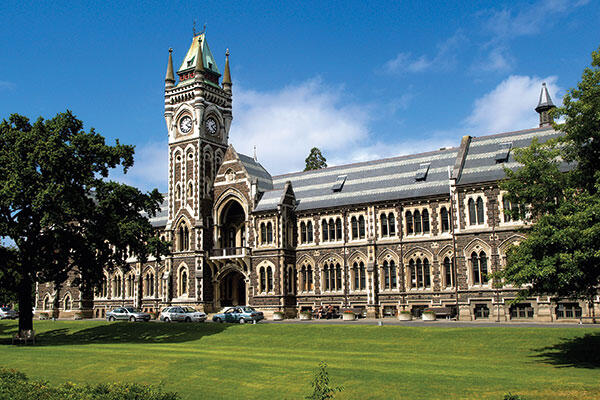
The University of Otago is ranked as one of the best tertiary institutions in New Zealand. As quoted by Chancellor John Ward in the University’s 2013 Annual Report, “students are taught by world-leaders in their fields, and our graduates continue to be sought after by employers for their independence, critical thinking and aptitude for life-long learning.” These “world-leaders” are your lecturers; they are the ones researching the topics that are later taught to you in class. Research is a key component to the University, but a number of students and staff have questioned whether research is taking priority over teaching. OUSA’s Student Support told Critic that members of the Education Department had commented that research was becoming more of a priority. Student Support Manager Matt Tucker said that a place “teaching how to teach” was having the focus taken away from teaching due to emphasis on research. Although the Education Department would not comment directly to Critic on this, we investigated what role research plays at the University and how this is impacting students. Deputy Vice-Chancellor Professor Richard Blaikie agreed that research at the University has increased over the past few years. He said research has “grown from 4,047 items in 2009 to 5,226 in 2012, an increase of 29 per cent.” Blaikie further added that “In international research publication and citation measures, our performance as the top New Zealand university for publications per academic staff member, and the citations that these publications receive, has been consistent for many years.” He said “Otago’s vision is that we are ‘a research-led University with an international reputation for excellence.’ Accordingly, excellence in both research and teaching are among the seven strategic imperatives of the University, and these two vital activities are closely linked.” A major aspect of research when it comes to New Zealand Universities is the Performance Based Research Fund (PBRF) which is granted to a University based on their research output. Blaikie said, “As well as being a substantial component of the University’s funding, PBRF, through its quality evaluation exercise, ensures a rich and detailed view of the research performance at all New Zealand’s tertiary institutions, much of which is supported by taxpayer funding.” PBRF granted $53.39 million to the University in 2013. He said “The latest PBRF exercise confirms that Otago maintains a strong and balanced scorecard as a top-ranked university for research.” The University’s 2013 Annual Report showed that PBRF testing ranked the University first for research quality weighted by postgraduate role; second for quality relative to enrolments at degree-level and higher; third for the quality of research by staff who submitted portfolios for assessment; and fourth for the measure across academic staff. The report also noted that of the 1,318 Otago staff who participated in the evaluation, 735 were ranked as either “A” (high international standing) or “B” (high national standing) for the quality of their research. As Blakie mentioned, over $53 million of income was made through PBRF. The University’s Annual Reports stated that “The University of Otago gained around 20 per cent of the total [PBRF] funding pool.” Students, both domestically and internationally, contributed $141.2 million in fees. Thus, students contributed $87.8 million more than the Research Fund. If the claims that research is taking priority over students’ learning experience holds true, are students really getting out of Otago what they put in? A lecturer at the University told Critic, “The revenue towards teaching versus the effort that goes in is out of sync.” He said, “The excuse is that it’s the role of the University to research and stuff like that; nobody disputes that at all. But when you get students paying up to 80 per cent of the revenue and focus is more on the research side of things, they have a right to be grumpy.” He said the research focus is taking time away from students. “[When it comes to PBRF] the University goes manic, and a lot more focus is put on research - that’s what lecturers are rewarded on. If you’re smart, that’s where you put your effort in.” Sean Fitzsimons, Head of the Geography Department, believed the balance was equal at Otago. “In terms of looking at the performance of academic staff and the promotions process that we have, I think there’s at least equal weight on teaching and research. I think it’s actually quite balanced.” Fitzsimons told Critic he “understands where the comment is coming from, particularly with the pressure that’s put on by our Perfomance Based Research Fund that we have in New Zealand.” However, he said, “my experience as a Head of Department for the last six years shows that that’s just not true.” David Bishop, Professional Practice Fellow in the Department of Marketing, said that balance is key when it comes to research and teaching. He said, “There is a great deal more emphasis on research than there used to be, and that has been, to some extent, not in the best interests of teaching. I suspect that maybe there isn’t enough resources being put into teaching because research is being made such a high priority.” He said, “it appears there’s a lot of emphasis on research now because most academic staff have to achieve certain standards in PBRF … If they don’t, their careers are in danger.” Bishop referred to students as somewhat customers of the University. They pay for their education, therefore deserve to get the most out of their lecturers in regards to this. He did note, however, that research informed teaching is a vital aspect of any University, “anyone can stand up and read bits out of a book, but you’d like to think, as a student, that you’re hearing from an expert on the topic that you’re being taught.” Dean and Pro-Vice-Chancellor Professor George Benwell said, “everyone gets the perception that research is the neon flashing lights and teaching is the poor cousin, but that’s a misconception.” He said “Research has a high profile … more dollars attached to it, more public appeal, therefore it’s more visible.” However, he adds, “The University’s job is to uncover new knowledge, and impart that knowledge onto the community of students.” Benwell said “We’re a University, therefore we must do both … A teacher has to be a researcher, and a researcher has to be a teacher, that’s what a University is.” Blaikie concurred with this view. He said “teaching excellence is a clear priority and the University is committed to ensuring a strong research-teaching link, and one which achieves a synergy between these two defining activities.” He said, “teaching by international experts at the forefront of their fields ensures that Otago can continue to offer world-class qualifications to its graduates.” He also noted that “The Tertiary Education Commission’s annual monitoring shows that over the past several years Otago students have performed very strongly in key indicators.” This includes course completion and retention rates. Professor Lyall Hanton, the Head of the Chemistry Department and a member of the Staffing Advisory Committee explains, “The University normally expects a staff member to spend about 40 per cent of their time on research, 40 per cent on teaching and 20 per cent on service.” He said “The reason people may feel that there is more emphasis on research at the moment is because we are currently half way through the PBRF assessment period, and the University is gearing up for this. People are obviously talking more about research, but that is not to say that any focus is being taken away from teaching … the balance between the two has always been good and is so at present.” Hanton said “research and teaching are not mutually exclusive and to be a good teacher you should be a good researcher and vice versa … We do that really well here at Otago.” Another lecturer however, noted that the split between research and teaching does not work as well between different departments. He said throughout the Otago Business School, “You can split [staff] into three categories: good teachers; good researchers; and those who are involved with public service.” He said, “the model for the science side of the University is the same as for the Business School, and it just doesn’t work. We should be engaging with New Zealand businesses.” In regards to the push for research, he believes, “if you did a survey on how people are coping, it’s not a happy place because of that.” He said “the resources [the University] throw in to PBRF drives people crazy.” The Tertiary Education Commission New Zealand has rated the University of Otago as top of all New Zealand Universities for the Educational Performance Indicators in 2013. These measure course completion; qualification completion; student progression; and student retention. According to Otago University’s 2013 Annual Report, “Otago was placed first in all four indicators, the first time any university has topped all four since the system was introduced.” On the other hand, the QS World University Rankings have recently placed Otago in 159th position. This is four places down from last year and reflects a continued drop over the last seven years. The ranking is based on research, teaching, employability and internationalisation. It seems that all staff agree research is essential to the running of a University, but when students are funding such a large proportion of the University’s operation, the balance is difficult to ascertain.
-
Features
Original and dark fairy tales
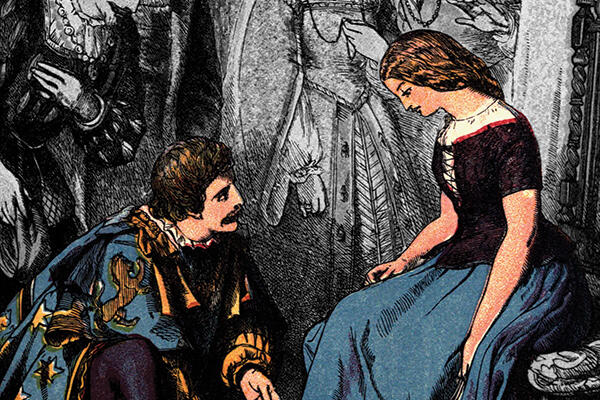
Fairy tales, we have all been exposed to them. Whether it was a toned down Disney adaptation, a dramatic retelling like Maleficent, or even a book collection from our childhood, we’ve all experienced fairy tales at some point in our lives. They inform our understanding of right and wrong as children, and develop a sense of consequences due to actions. They’re wonderful, influential things. Fantasy favourites like Harry Potter, Narnia and even Lord of the Rings were all in some way influenced and inspired by the structures and tales developed within folklore. These tales have had a significant impact on the way we relate to and understand the world. As a matter of fact, a lot of the fairy tales that we know and love started off quite differently from their sanitised modern counterparts. More often than not they are gruesome and dark, with violent and cannibalistic themes to boot. Charles Perrault seems to be one of the earliest writers of fairy tales. The Frenchman set the foundations for fairy tales as a genre, and wrote mostly in the late 1600s. He wrote some of the earliest versions of Little Red Riding Hood and Cinderella. In the early 1800s, The Brothers Grimm, who were particularly interested in German folklore, began to collect and record as much of the oral tradition of that folklore as possible. They’re often the go to guys when it comes to fairy tales and down some of the first versions of Snow White and Hansel and Gretel. Another figurehead in folklore is Hans Christian Anderson. Instead of being a collector like the aforementioned brothers, he was a writer of fairy tales. He wrote the original versions of The Little Mermaid and The Snow Queen (which Disney’s recent Frozen was based on). Mainly I am going to be drawing from these writers for the “original” story but it’s important to keep in mind that a lot of these tales were inspired by a wider oral tradition, and a lot of them date back much further – so it’s hard to have a definitive “original.” Personally, I have something of an obsession when it comes to fairy tales and folklore. It felt so good to actually have a legitimate reason to blow the dust off my old fairy tale collections, sit down and just read through them again. Yes, I have a whole shelf dedicated to these kinds of books. Snow WhiteSo, the Grimm Brothers version of this seemed fairly familiar. Evil and vain Queen, jealous of her step daughter’s superior beauty, orders a huntsman to kill her. However, at this point in the story Snow White is only seven. Oh, and unlike in the Disney film where the huntsman is ordered to bring Snow White’s heart back to the Queen as proof of her death, he is instead ordered to bring back her liver and lungs for the Queen to eat. Oh yay, cannibalism of a small child (depressingly enough this theme of eating people will turn up in more than one story.) This is my favourite type of uplifting fairy story. He gives her the lungs and liver of a boar instead and the Queen merrily eats these assuming that she’s eating her husband’s child. Great. Moving on … After finding out where Snow White is staying, the Queen attempts to first suffocate her with an extremely tight bodice, then a poison comb until finally she tricks her into eating the famous poisoned apple. The apple gets caught in her throat and she is put into a state of suspended animation. The dwarves, assuming that she was dead, place her in a glass coffin. Again, this all seems so familiar and innocent, until the prince shows up. He sees this supposedly dead seven-year-old, falls in love with her, and convinces the dwarves to let him take the coffin with him. Okay, so I am not 100 per cent sure what’s going on here, but does that sound a little like necrophilia to you? Not to mention the creepy fact that she’s so young as well? Someone trips, the coffin falls, the apple is dislodged from her throat and Snow White comes back to life. The prince marries her and now she’s Queen. This is where the Disney film ends – however, there is actually a little more to the story than that. Snow White invites her evil stepmother to her wedding. She arrives, unaware of who this new queen is, and is shocked to find Snow White upon the throne. It is at this point that the Queen is forced to dance in a pair of glowing, red-hot, iron shoes until she dies. Snow’s just a tad vengeful, isn’t she? CinderellaThis is probably one of the most famous fairy tales of all time. There have been so many retellings and versions written over the years, and I don’t think I have ever met anyone who doesn’t know the basic outline of this this tale. Both Perrault and the Brothers Grimm wrote a version of this tale but I’m going to focus on the Brothers Grimm’s version, just because it’s more messed up and therefore more interesting. Obviously. Mostly it follows the same story line: Cinderella is abused by her stepmother and sisters and is treated as a slave. In the Grimm version there is no fairy godmother – she instead received her dress and famous slippers from some heavenly doves. She goes to the ball, dances with the prince, he falls in love, but she runs away by midnight. She returns the following night, dances the night away with him then runs away by midnight once again. On the third night the prince puts pitch (a sticky substance) all over the stairs and when Cinderella inevitably runs away, she loses a shoe that the prince can use to identify her. Oh, flawless plan! Once he gets to Cinderella’s home, her stepsisters both try the shoe. The first one cuts off her toes so her foot will fit. The prince is fooled and leaves, feeling he has found his queen. However, the mysterious doves reveal her treachery. He returns and tries the other sister, who cuts off her heel to fit the shoe. Once again, he is fooled and, again, the doves reveal the trick (I honestly don’t understand how he isn’t noticing the blood everywhere but, okay, let’s roll with it – however that slipper must be pretty disgusting and bloody by this point). He returns one more time, Cinderella fits the slipper, everything is lovely and they get married. Cinderella chooses to have her stepsisters as her bridesmaids at the wedding, for whatever reason. As they are entering the church the doves come down upon them and peck out one of the eyes of each sister. After this, we assume the wedding proceeds – there’s no mention of it being haltered or anything due to the Cinderella’s stepsisters now bleeding out from the eyes … Anyway, as they’re leaving the doves come down once again and strike out the remaining eyes of the two women. This is their ultimate punishment for being terrible people – they’re now to be blind for the rest of their lives. I am starting to struggle to believe in the whole Snow White and Cinderella are such lovely people thing. Both of these women seem pretty vengeful and uncaring. I mean (a) I wouldn’t choose to have people who tortured me my whole life as my bridesmaids at a wedding and (b) I definitely wouldn’t proceed with the wedding as though everything was perfectly fine and normal if some doves had stabbed their eyes out. I don’t know. Maybe that’s just me. Sleeping BeautyThis is another tale that both Perrault and the Brothers Grimm wrote a version of. Perrault’s version came in two parts but later versions often separated the two parts into two individual stories. The first part covers the well-known plot, where you have a princess that has been cursed to sleep 100 years in a castle, along with all her family and subjects, until a prince comes along, wakes her with a kiss, they marry. However part two covers something totally new to me. The prince doesn’t take his princess home with him right away; rather he waits until he is king before doing that. So by the time she joins him at his castle, they have already had two children. The king goes off to fight a war, and Sleeping Beauty and her children are left alone with their mother-in-law, the Queen. The Queen has some ogre blood in her. For some reason unexplained, he sends Sleeping Beauty and her children off into a cabin, and orders her cook to kill and serve her the youngest of her grandchildren, covering it with Robert Sauce. The cook, of course, doesn’t and feeds her lamb instead. She then requests the second child and, again, he fools her but with a goat this time. Lastly she requests the princess, but is instead satisfied with a hind – all meals prepared with the same sauce. Okay so this theme of cannibalism has popped up again – what is it with all these insane mothers? I don’t understand why she thinks that it’s okay to just eat her son’s wife and children, but whatever. Eventually she finds out that she has been tricked and decides to create a pit in the courtyard filled with vipers and other poisonous type creatures in another attempt to seal the demise of her grandchildren and daughter-in-law. However, the king returns home just in time. Once the Queen is found out she throws herself into the pit and is fully consumed. The story concludes and everyone lives happily ever after. What? I mean, yeah, what? It all just seems so strange, there appears to be no reason for the mother to eat them other than her being an ogre. She obviously knows that it’s wrong because otherwise she wouldn’t kill herself over it. If she had such a strong appetite for people maybe she could have eaten some peasants or something rather than her own family? At least the evil Queen in Snow White had a motivating force – she wanted to be the fairest of them all and Snow White was standing in her way, that little fiend! I think I understand why that section was missing in the Disney adaptation. The Little MermaidOut of all the fairy tales I looked at, The Little Mermaid is the one that differs the most from the versions I’ve seen or read – especially the Disney adaptation. The basic concept is the same, but it’s much more depressing. The Little Mermaid lives in the ocean with her father, the Mer-King, her Grandmother and her five sisters. On her 15th birthday she is finally allowed to go to the surface of the water to see the rest of the world. On her first time appearing she sees a prince and instantly falls in love with him. He is caught up in a shipwreck and she saves him, taking him to shore then waiting until a young woman comes to help him. The Little Mermaid learns from her grandmother that while mermaids have a life span of 300 years, much longer than humans, they do not have an immortal soul and merely turn into sea foam upon death. However, one way to gain an immortal soul is to have a human man fall so deeply in love with her and marry her so that they essentially become one – his soul shared with hers. The Little Mermaid decides that this is what she wants, and visits a Sea Witch (cue Ursula singing “Poor Unfortunate Souls” here.) The witch gives her a potion that will give her legs in exchange for her beautiful voice. The Mermaid will be the most beautiful creature, she will have the ability to dance better than any other person and she will have her beautiful sparkling eyes to entrap the prince. However, the process of shifting is incredibly painful, and with every step she takes it will feel like her feet are being cut open with knives and she will never be able to sing or talk to him. Furthermore, she can never return to the ocean and if she cannot convince the prince to marry her, on the morning after his wedding her heart will break and she will die, turning to sea foam, without an immortal soul and unable to live out her normal 300-year mermaid life. Obviously, The Little Mermaid agrees to these conditions, seeing as the odds are so very clearly in her favour. She gets her legs, the price finds her and he even likes her so much that he lets her sleep on a velvet cushion outside of his room. Lucky girl. She dances for him even though it causes her excruciating pain, but all of her efforts are in vain as, alas, the price has fallen in love with the woman who he met after his ship wreck. He does not marry The Little Mermaid, so she is condemned to die. Her sisters strike up their own deal with the witch so that if the Little Mermaid stabs and kills him before morning, she can return to the ocean. She cannot bring herself to do it, and thus dies, returning to sea foam. However there is hope. Because she struggled so much to gain her immortal soul, instead of dying she is elevated to join the sisters of the air. Her task is to now help and support human kind, bringing cool winds to tropical lands and bring healing in her wake, with all the other air sisters, and maybe at the end of 300 years she will be able to gain an immortal soul. Yay! All she has is 300 years of serving and supporting human kind in order to gain a soul. What a lucky girl. While this story is not necessarily gruesome and dark, it’s definitely depressing and so incredibly different from the versions I have previously encountered. Poor Little Mermaid: all she really wanted was to be loved and to go to heaven. While I’ve only covered four stories here (I tried to pick ones that everyone would be familiar with), there are a plethora of these tales out in the world, each just as messed up as the last. These stories are aimed at children but they seem filled with the kind of themes we would attempt to shelter children from: cannibalism; death; violence; horror; and more cannibalism. Tim Burton stated that the old Disney films often had themes of “death and horror all the time. Children need that, I believe. It’s how they understand the world.” While Burton is talking about Disney specifically, I think the sentiment applies to all folklore. The world is filled with injustice, and children view it as a very black and white thing. The bad guy has to get their comeuppance, otherwise it’s just not fair.
-
Features

From flat out to flatmate
Despite Knox College’s desperate attempts at securing third year residents for 2015, all 80 second-year returners have felt that two years is long enough. It’s time to move on from residential advisers banning an open vessel of V (the constant fear of wondering if a security guard will reprimand us for “laughing too loud” is far too harrowing for our young selves, too). Although the administration has decided to get rid of the traditions that separate Knox from all the other halls, I have ultimately enjoyed my time there and have formed friendships with a wonderful bunch of people. However, it is only now that I have realised the problem with staying at a residential hall for two years. We become attuned with how to live in a hall rather than how to live on our own. The routine and rules of a hall become our safety net. We don’t fret over bills because there’s only one we have to pay (subject to change depending on punishments and thus, how many New World vouchers you are forced to overload the OUSA foodbank with). We don’t clean our own sheets because it’s all done for us; we don’t worry about being too cold because we can recklessly leave our heaters on for several hours with no repercussions; and we don’t have to prepare our own meals. Our lives are probably easier than it was when we lived at home with our parents. The prospect of flatting and flat hunting excites us. It’s something new to look forward to and a rite of passage for most university students. As I reflect on my emotions prior to flat hunting, I realise that I was looking forward to the freedom of living in a flat and having a place to call my own. I didn’t actually acknowledge the process of finding a flat or comprehend that it can be quite a tiring task. Sifting through realty websites, visiting houses, writing up applications, paying for bonds and bills – these things weren’t on the forefront of my mind until the story of flat hunting came to life. Chapter one: The talk (the non-sex one.) In residential halls, talk spreads like wildfire. Mainly this talk is of meaningless hook-ups and the Scarfie antics people get up to, but there is a time when the talk turns to the topic of flatting. When the first flat group is formed, the match is lit and the rat race begins. For me, the flatting frenzy took place in May. Yes, that early. This frenzy occurred amongst people who had no desire for the infamous streets of Castle, Leith and Hyde. Breakfast, lunch and dinner chat consisted of who was flatting with whom and how “Queen Street will be Knox but on one whole street!” Once again, the idea of living at a makeshift hall just couldn’t be shaken off. Hall life seems ingrained in our minds, no matter how different the living arrangements are. The desire to incorporate our safety net continues to take place, even in 2015. I do have to admit though, I’m really looking forward to living close to my friends. What I don’t like is the lack of development it gives us if we remain in this state of mind. Generally, you don’t live in a house with two hundred people nor do you have one bathroom with five showers and three toilets in it. Generally. While living in a hall gives you many experiences to meet new people, it can also confine you. Chapter two: The fear sinks in. It took me a long time to actually jump on the flat group bandwagon. I hadn’t thought too much about the people I wanted to live with and I had made little effort to tell people that I would be interested in flatting with them. Organising a flat group in May just seemed irrelevant to me. I don’t even plan what I eat for lunch (hall perks) so planning my flat was clearly not on my agenda. Despite my laid-back (more like lazy) attitude, I’m a worrier. Even when I’m not worried, people think I’m worried and when I’m actually worrying, they think I’m about to have a nervous breakdown. From a psychological point of view, my tendency to worry probably first occurred when I was 7. I put tinfoil in the microwave and set my prawn-fried rice on fire. However, primary school had trained me well and I managed to save the day. Unfortunately, I couldn’t eat the prawn-fried rice. It was soaked in water and I had to opt for toast instead. RIP prawn-fried rice. Ever since then, I’ve always been a little on edge. As the number of flat groups increased, the faster my heart began to palpitate. It would have been rude of me to include myself in a group. And, although there were people who had asked me, I was so hesitant in May to give them a set-in-stone answer that I had been replaced with someone who was definite and eager to immediately find a flat. I became scared, which I really didn’t need to be. And when the fear hit me, I scrambled to piece together a group, just for the false sense of security of having one. Now that I look back on it, I wish I had paid more attention to my laptop’s desktop background. After all, it has been my background for most of the year. The picture is one of Ezra Koenig’s wise tweets about going to the gym. He states: “exercise makes me sweaty, fuks up my hair and makes my face blotchy & red. the idea that it will improve my well-being is...absurd [sic].” As an English and Communication Studies major, I feel like there’s great depth to what he has to say and it must be analysed. To me, Koenig’s theory (yes, theory) suggests that we sweat (literally and figuratively) over the small, insignificant details in life that, by the end of it all, we wonder if labouring over it was worth the outcome. I didn’t initially imagine Koenig’s tweet to be applicable to my flat hunting experience, but his theory? Definitely applicable, and if something makes you sweaty, fuks up your hair, makes your face blotchy and red…it’s not worth it. Chapter three: The scramble. Feeling the pressure of being “homeless,” I found myself running around like a headless chicken pecking at other strays in the hopes that we could form some kind of group. I remember telling two friends about the people I was flatting with and having them laugh at how mismatched we were: a hippie living with a Bible lover? Interesting. In my eyes, it would make for a good modern rendition of Romeo and Juliet. Like the part where almost everyone dies because during the flat hunting process, every member at one point or another wanted to kill each other. (All contemplations of this were done with the eyes; I saw it myself! Until I died, of course.) When people ask my old group why we didn’t work out, they always give the politically correct answer of “oh, we all just wanted different things.” While this is partially true, the reality was this: the people in my group were stingy, over critical and obsessed with quirky rather than practical. And when the flat hunt began, Murphy’s Law began to take place. Chapter four: The beginning of the end. I didn’t realise how much effort and time flat hunting takes. When everyone finally begins their search for flats, the novelty of the hunt quickly begins to wear off and reality sinks in. The start of semester two saw an increase in distressed conversations, glum faces, stories of “we didn’t get our flat.” For many flat groups, the best way to keep up to date with their flat hunt is by creating a Facebook group. Incorrectly naming the Facebook group, “fun in the sun flatties!” and sifting through what felt like thousands of flats, I could feel myself getting exhausted from merely copy and pasting links. Early on, you can see who makes an effort by how often they comment and how many links they post. Though I was certainly caught off guard when the time came to go and visit these flats. One five-seat car with a group of six people is a recipe for discomfort and squats. It only took two journeys before two of us decided to call it quits. What seemed like a fun adventure quickly turned sour as conversations became heated. The people who had the least to offer or say over Facebook appeared to be the most critical and overnight; they had become Dunedin flat connoisseurs. Other members of the group became so aggressively insistent over particular flats for their price rather than their quality while others were unhelpful through their passivity. There never seemed to be a unanimous decision or love for one flat and when it came time to send in applications I found myself applying for a flat I was not impressed with. Yes, it ticked off quirky and cheap and, as students, I know that our wallets aren’t exactly filled to the brim with cash. However, it’s all too often that cheaper flats in Dunedin come with complimentary illnesses. A flat with character is always exciting and all the rage but if the house is leaky, mouldy or damp (which the one we looked at was) that’s not raging with me; I felt as though it was time for me to reassess my flatting situation. OUSA gives great tips on how to stop Aunty Mildew from moving in, but before that even happens I feel as though the best thing would be to try to avoid these types of flats completely – unless you’ve got time for Asthma, longer lasting colds and Bronchitis, of course. I know this is an old joke, so please forgive me, but I can tell you that Sweet Brown definitely doesn’t have time for that! When R, the most reasonable and sane member of the group, decided that it wasn’t worth applying for a house with people she wasn’t particularly close to, it raised a lot of questions for me. If we’re fighting now, what will it be like living with this group of people? Am I willing to apply and pay for a flat I know I won’t be happy in? After tossing and turning, I finally decided that it would be best if I left the group. Chapter five: The aftermath. When I let the group know that I wouldn’t be flatting with them anymore, everything felt better. Sure, I was back to being “homeless” but, at the same time, I finally took notice of something that I should have thought more about really early on. Dunedin is always going to have an abundance of flats and there are always going to be people looking for flatmates. Facebook groups such as Dunedin Flatmates Wanted have people posting everyday looking for someone to fill a bedroom or join their flat group. While the prospect of flatting with strangers can be unnerving, it’s also an opportunity to form new friendships and for you to get out of your hall bubble – one that most of your current friends are in. The day after I left my flat group, I began to look for alternatives. While I initially thought it would be odd of me to invite myself into a group, I decided to uncharacteristically take a risk and text someone I had met once. I had heard from a mutual friend that she was looking for flatmates and having visited the flat below hers, I knew that it was in a nice location and was mould free. By the afternoon, I had miraculously found a place to live in and, while my first experience took an agonising two weeks, my new flat hunt only took 7 hours. Was it fate? Was I meant to endure a bad flat hunting experience before I had a good one? Was the fault in my stars no longer in my stars? Was John Green wrong? Was Shakespeare right? These were the strange questions that circled in my mind. The answer? Koenig’s theory. It was when I didn’t sweat the little things that my flatting situation cohesively came together. Ezra Koenig doesn’t need exercise to be devastatingly handsome and healthy; and I didn’t need to fret as much as I did over who and where I would be flatting with in 2015. Chapter six: Food for thought. The following week I met my future flatmates and I’m looking forward to what 2015 brings. I also brought over food, which might have been the reason our first official meeting went well. As I reflected on my rollercoaster ride of a flat hunt and how I landed myself in a flat with strangers, I couldn’t help but think that maybe it’s sometimes better not to flat with your friends. My departure from the first flat group resulted in the disintegration of a few friendships, as the experience made me realise that the basis of our friendship was based on living circumstances. We all lived in the same hall and that was it. As people and potential flatmates, we’re just not compatible and, while it is a shame, it’s something that simply happened. Flat hunting not only teaches you a lot about yourself, it teaches you a lot about others. While some friends can easily live with one another, I think that to keep other friendships intact, you need to consider if you can honestly live with them. Your flaws and their flaws cannot be overlooked, especially when it’s within the same walls for an entire year.
-
Culture

Butter chicken, raita and pilaf
This butter chicken reminds me of a time I cooked for three excellent gentlemen (you know who you are). Prior to this curry’s consumption, the four of us went on an excursion for garlic naan to serve with it. During the half-hour round trip, two of us attempted to drink a Pump bottle of 50/50 gin and soda. I certainly can’t remember actually eating this meal on that particular night, but I think it was a crowd pleaser. I have had this butter chicken since and I can confirm that it is amazing and worth the effort. Make it the day before for optimum excellence in flavour. This recipe is from one of my all-time most-loved, and most-used, cookbooks, Ripe Recipes by Angela Redfern. IngredientsServes 4 Chicken Marinade: 500g of chicken breast, thigh or tenderloin, cut into decent sized chunks ½ cup of plain unsweetened yoghurt 2 teaspoons of freshly grated ginger v6 cloves of garlic, minced 1 teaspoons garam masala ½ teaspoon of chilli powder 1 teaspoon of salt Sauce: 1 teaspoon of oil 1 onion, diced 50g of cashew nuts, toasted in a dry frying pan until slightly brown ¼ cup of oil 1 teaspoon of garam masala ½ teaspoon of hot chilli powder 1 cinnamon stick 1 teaspoon of coriander seeds 4 cardamom pods, crushed open 1 teaspoon of cumin seeds 3 whole cloves 100g of tomato paste 100ml of cream (I used light cream) 1 cup of chicken stock 2 teaspoons of white sugar 2 teaspoons of salt Tonnes of fresh coriander to serve Pilaf: 1 1/2 cups of basmati rice 1 onion, diced 50g of butter 4 cardamom pods, crushed 1 cinnamon stick 1 tablespoon of cumin seeds 1 cup of mixed dried fruit (I used sultanas and chopped dried apricots) 3 cups of water 1 teaspoon of salt Handful of fresh mint leaves, torn, to serve Pepper to taste Raita: ½ a cucumber, halved and deseeded, grated ½ teaspoon of salt 1 cup of plain, unsweetened yoghurt ¼ fresh mint leaves, chopped Salt and pepper to taste Chicken and sauce methodIn a snap lock bag or bowl, mix together the chicken and the other marinade ingredients and allow to rest for at least an hour but preferably overnight or for all day. Once the chicken has been sufficiently marinated, heat up a large frying pan with a good splash of oil to a medium-high heat. Place the pieces of chicken in the pan so they are well spaced out. You may need to cook the chicken in a couple of batches. Fry until well browned on all sides. Leave to one side. Wipe/scrub the pan clean and heat it up again to a medium-high heat. Sauté the onions in the teaspoon of oil until soft and translucent. Set aside to cool for a few minutes. In a small food processor or mortar and pestle, grind together the cooked onions and cashews to form a paste. Heat up the frying pan again but this time with the ¼ cup of oil over a medium-to-low heat. Add the garam masala, chilli powder, cinnamon stick, cardamom pods, cumin seeds, coriander seeds, cloves and tomato paste and fry gently for a few minutes until their flavours have been released. Stir in the cashew and onion paste. Add in the chicken pieces, cream and chicken stock. Bring up to a simmer. You can either transfer the butter chicken to a slow cooker and cook on high for three hours (adding a bit more water half way through) or leave it to simmer away on the stovetop for an hour. Pilaf methodIn a large saucepan, sauté the onions in the butter over a medium heat. Add in the cardamon pods, cinnamon stick, cumin seeds, salt and dried fruit and toast for a minute before adding the rice. Cook the rice and stir about the pan for another two minutes. Add the water and bring to a boil. Cover the rice with a lid and leave to simmer for 10 minutes before removing from the heat and leaving to steam itself for another 15 minutes. Fluff the rice up with a fork and toss in the chopped mint leaves before serving Raita MethodSprinkle the salt over the grated cucumber and leave to sit for ten minutes. Rinse the cucumber under cold water to remove the salt then squeeze out excess moisture gently with your hands. Mix this cucumber together with the mint leaves and yoghurt. Season with salt and pepper. Serve everything up along with a good chunk of garlic naan and you are sure to have a winner!! I personally can't wait to make this again.
-
Culture
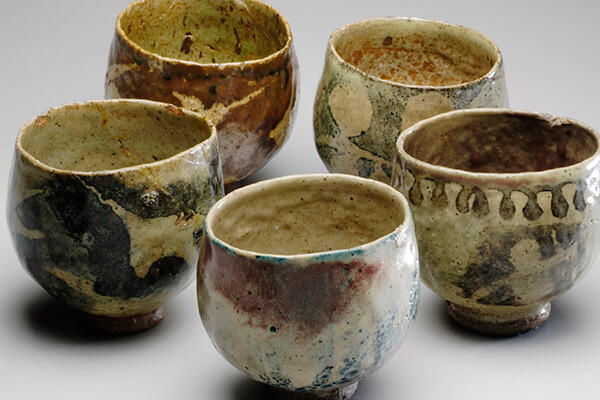
Barry Brickell - His Own Steam
Dunedin Public Art Gallery (DPAG) Exhibited until 1 March 2015 The DPAG is clearly into ceramics at the moment and I have been enjoying the refreshing change from paintings to pottery. Barry Brickell is one of the pre-eminent contemporary potters working in New Zealand and is a pioneering figure in the development of contemporary indigenous art. This exhibition is the first retrospective survey exhibition of Brickell’s pottery, bringing together more than 80 works collectively. Each piece is taken from the Dowse Art Museum’s collection, which is over 60 years in the making, and Brickell’s own private one. The exhibition also displays publications on Brickell’s work, published by the Auckland University Press. The Dowse Art Museum’s senior curator, Emma Bugden, and sociologist David Craig curated some aspects of the exhibition, too. Brickell was born in 1935 in New Plymouth and was raised on Auckland’s North Shore. When he was 15 years old he met the talented potter Len Castle, who would become his life long mentor and close friend. While still in his teen years, Brickell co-founded the North Shore Ceramic Society, the first “formal” potters’ group in New Zealand. In his last year at Takapuna Grammar he worked an after-school job at a gas station and a brickworks, where he would use the commercial kiln to fire his own pots. In the early 50s Brickell attended Auckland University to study science and joined the New Zealand Forest Service as a trainee intern. After that he became a teacher in the Coromandel. Left unfulfilled with teaching, he threw himself into a full-time career as a potter and, since then, hasn’t looked back. The works are made out of salt-glazed terracotta and each piece shares a similar aesthetic – organic colours, indigenous patterns and unrefined rendering of the clay, which have a distinctively native feel to them – specific to Brickell. New Zealand’s natural environment is one of his greatest inspirations. The salt glazing, especially, makes the work look less like mismatched tea sets and more like art(ifacts). According to Brickell, salt glazing was once a key part in the development of commercial pipe production at the brickworks Brickell used to work at, and he quickly became partial to the distinctively “antique, nitty-gritty” style of the brick pipes – so much so that he transferred it to his own work. My favourite piece is the “Salt-Glazed Dog” (1989), which opens the exhibition. Its curvy body, small feet and upturned nose work together to create an almost comical representation of an every day thing. However, rather than just being cute, Brickell’s distortions and close attention to small details turn the viewer’s attention to the craft of making the piece itself. The surface of the dog, with all of its lumps, bumps and lines, really highlight Brickell’s raw working and reworking creative process. Another highlight for me were the “Spiromorphs,” his most well known forms, which are large-scale spiral creations built from curved and coiled clay. The Spiromorphs twist and unfold in expansive curves, drawing on the relentless energy of nature. His work resonates with his often quoted mantra, “not the thing but how,” that expresses his unique interest in the process of creating and the distinctiveness of a local voice. The salt-glazed stoneware sculptures have swirls that are reminiscent of the curves in Paul Gauguin’s Tahitian nude portraits. Indeed, Brickell’s earlier ceramic works also have a similarly native and primal aesthetic, with attention to process, not perfection, shared by Gauguin, too. As there are 80 pieces in the collection it is hard to narrow it down to two or three but, overall, Brickell’s work displays his advanced skills in pottery and the complimentary video provides deeper insight into his working processes across the years. You can find out more about Barry, his life, philosophies and prodigious work as a potter, painter, engineer, railway enthusiast, conservationist and writer at www.culturalicons.co.nz
-
Culture
Before I Go to Sleep
Rating: A Okay, so if you are anything like me, and you hear that this movie is about a woman with amnesia waking up every day with no memory of who she (or her husband) is, you immediately think it’s going to be a crappy re-hash of Memento or 50 First Dates, right? Wrong. While watching Before I Go to Sleep, there was only one name running through my mind: ALFRED HITCHCOCK! The suspense in this film is utterly exquisite, on par with the great master himself. Not since Psycho or Dial “M” for Murder have you been more engrossed in a story set in only a couple of places with only four characters. Every day Christine (Nicole Kidman) wakes up confused, and her husband Ben (Colin Firth) patiently explains what has happened to her since her head injury decades ago. It seems some assailant walloped her after she accidentally witnessed something incriminating, after which her best friend Claire mysteriously decided to cut ties. On top of this, her neuroscientist consultant Mike seems to know more than he lets on. The memories she recovers through her journal seem to indicate she was attacked because she stumbled onto someone’s affair. It is clear that between these four earnest and helpful characters in the story, one person, somewhere in the chain of events, is telling gigantic lies to cover up their vile true identity – and it might be her. Extra-marital affairs, secret identities, dead bastard children, attempted murder, and the little matter of figuring out who the hell you are, and more, challenge Christine to relive the night she doesn’t want to remember, to set the story straight once and for all. It is SO hard to tell you how great this movie is without spoiling it. There are a hundred and one shocking secrets to be uncovered, and one by one they all have a reasonable explanation, until the very last, which is too sickening to contemplate. But they went there. And when the answer finally comes, it’s at the shock level of “Luke, I am your father.” (don’t worry, that is not a spoiler). Holy crap do I recommend this movie.
-
Culture
Into the Storm
Rating: B- Disaster movies can be approached in one of two ways. It can either be a character film, in which you follow interesting and dynamic characters as they deal with the disaster, or it can be disaster porn in which everything constructed is solely for the purpose of producing disastrous mayhem. The creators of Into the Storm had these two options, and unfortunately they chose wrongly. A found footage film about a freak tornado storm sounds to me like the perfect platform to focus on creating spectacular CGI carnage, but instead director Steven Quale focused the film on three sets of incredibly forgettable or dislikeable characters. Into the Storm follows a documentary crew chasing tornados, a pair of redneck thrill-seekers and a father and his two sons. The first half of the film is dedicated to establishing these characters, with not a single tornado to be seen in the first half of this 90-minute adventure. The characters are terribly scripted to begin with, but what makes it even worse is the incredibly forced or fake ways in which they use the “found footage” construct to aid character development. In general, the found footage direction was terribly handled; at one moment the film dedicates itself to the handicam feel to the detriment of your understanding of the action, and then the next moment the whole premise is thrown away for clearly cinematic shots with sweeping orchestral music in the background. Fortunately, for those wanting to get out of this film what it clearly promises, there are some amazing CGI storm effects for those willing to sit through the character nonsense. All of the special effects are flawlessly executed and often are surprisingly innovative in their scale and approach. There are a wide variety of tornados to be enjoyed, including a fire tornado that was both thrilling and terrifying to watch. Into the Storm could and should have been a 90-minute tornado orgy; unfortunately what you will get instead are tornado interludes between ineffectual and ridiculous exposition and character development.
-
Culture
The Keeper of Lost Causes (Kvinden I Buret)
Rating: B Scandinavian cinema has a tendency to be kind of grim and morbid, and the recent wave of crime-dramas is no exception. After watching this movie, or The Bridge or the Millennium trilogy, one might be left with two strong impressions of Scandinavia: that it’s completely grey and colourless; and that it’s full of bizarre and extravagant violence. Having been there, I can happily say that both are untrue; or at least I never once had my eardrums forcibly ruptured or my teeth removed with pliers. This film’s ill-fated victim is not so lucky. (By the way, this isn’t a movie for the faint of heart). Danish Police Detective Carl Mørck is assigned to the Cold Cases department of his station after being injured in the field. He looks into the disappearance of politician Merete Lynggard years earlier, and suspects that it was not the suicide everyone assumed. The film’s setup is involving, but relies on a lot of crime-drama clichés. The detective protagonist is world-weary and pessimistic (á la John Rebus, Jack Bauer etc); he’s saddled with an optimistic sidekick who he is initially annoyed by, but eventually learns from; the victim is a young, attractive and seemingly angelic woman with a back-story that might connect her to the killer; and there are even some ball-busting senior officers thrown in for good measure. This genre could really do with some mixing up. From this setup, the film did surprise me by becoming more dark and twisted than I expected, but the conclusion is very formulaic. I thought the film’s cinematography was its most impressive feature. The way each shot is framed and set up, the colour scheme, the use of claustrophobic grey environments is all very striking and effective (again, Denmark is an extremely nice place in real life, so it’s impressive how well they are able to transform it for the camera). As for the story, I couldn’t help but make comparisons to The Bridge, which was similar but a lot more original and resonant. The Keeper of Lost Causes held my attention well enough, but overall it felt more like an elongated episode of a TV show than a movie.
-
Culture

Good Morning, Vietnam
Classic Film First on my road of escapism (the post-mid-semester-blues haven’t left) was Good Morning, Vietnam. Settling in the lounge, a place incredibly similar to a bus stop, I was instantly met with approval for watching such “a good, classic film.” Good Morning, Vietnam is set during the Vietnam War and begins with Adrian Cronauer’s (Robin Williams) arrival to Saigon. Adrian is an airman second class and a popular radio DJ for the armed forces. In true Robin Williams-style, Adrian Cronauer is full of wit, has little regard for the rules, and is a man willing to risk his life to get to know a girl. Sounds romantic, but it’s actually a little creepy. Earlier in the film, Adrian is seen fawning over Vietnamese girls and becomes enamoured with Trinh (Chintara Sukapatana). What follows is a near-death experience and Adrian bribing his way to becoming Trinh’s English teacher. At work, Adrian plays rock and roll music and his zany approach to radio broadcasting peaks the interest of his fellow DJs, who find him hilarious. However, his two superiors, and Sergeant Major Phillip Dickerson (J.T Walsh) in particular, are unimpressed. Although Good Morning, Vietnam is a war-comedy, and I did find myself laughing a lot, the near death experience of Adrian’s friend Eddie Garlick (Forest Whitaker) was probably the scene that resonated with me the most. When talking to Adrian about the experience, Garlick says, “my whole life passed before my eyes … and it wasn’t even interesting to me.” This moment gives us a break from the comedy and patriotism by showing us a real sense of honesty. Honesty that becomes more prevalent throughout the film. Good Morning, Vietnam doesn’t glorify the armed forces; instead it reveals them for what they are: self-censoring and somewhat unsatisfying. At times, the ignorance over anything non-American became a bit overbearing, but Robin Williams’ performance was spectacular - no doubt as to why he was awarded a Golden Globe.
-
Culture
New this week / Singles in review
Ariel Pink - Put Your Number In My Phone Ariel Pink is an experimental pop musician based in Los Angeles, known for his prolific nature and his pioneering of lo-fi home recording during the earlier stages of his career. “Put Your Number In My Phone” is the first single to drop from his upcoming double album, Pom Pom. The track sounds like an ode to 60s British Invasion groups and psychedelic folk luminaries such as Syd Barrett and Robyn Hitchcock. With it's gently strummed guitars and soft mellow production, Ariel croons about tea and butterflies and living life to the fullest. It's charming, simple and quirky. The track also includes a sample of a girl leaving a message on his voicemail, which is vintage Ariel Pink. Grouper - Call Across Rooms Grouper is Liz Harris, a noise musician based in Portland, Oregon. “Call Across Rooms” is the first single from her tenth studio album, Ruins. Usually drenched in ambience and reverb, Harris sheds a lot of her characteristic effects and presents us with her most sparse, intimate track yet. Recorded in Portugal, “Call Across Rooms” is just Harris and her piano recorded in a room with one microphone. Her voice is faint, muffled and just audible enough for us to make out her beautiful, haunting vocal melody. A melancholic track that exerts a cold, cold loneliness. Vince Staples - Hands Up “Hands up” is the second single to drop from Hell Can Wait, the highly anticipated upcoming album by Long Beach hip-hop artist Vince Staples. Where his first single, “Blue Suede,” dealt with the paranoia of street life and growing up, “Hands Up” addresses a more deep-seated and, some would argue, heavier matter. "Shoot him first without a warning/ And they expect respect and non-violence/ I refuse the right to be silent," Staples sputters across a dizzying symphony of chaos. With a looped descending bass line, synths that mimic sirens and percussive hi-hats that mimic circling helicopters. Arca - Thievery Arca is a Venezuelan producer who has done some work with renowned artists such as Kanye West and FKA Twigs. “Thievery” is the first single to drop from his highly anticipated debut album, Xen. The track samples cold, almost mechanical, utterances over a landscape of razor sharp, glassy percussion. It's a dynamic, otherworldly, cosmic, jungle run. It's quite minimal but effective and intricately pieced together. SBTRKT - Look Away (Featuring Caroline Polachek) SBTRKT is the moniker for British producer Aaron Jerome. Coming of the success of his debut, self-titled album back in 2011, “Look Away” is the sixth song to appear from his sophomore album, Wonder Where We Land. Teamed up with Chairlift's Caroline Polachek, what’s created is a hypnotic, colourful, soulful track, pieced together with ethnic sounding piano samples, burning synths and deep, crunchy percussion.
-
Culture
Download of the week: Fazed on a Pony - Alone / Mary like me (NZ)
Fazed on a Pony is Peter McCall, a talented songwriter who is also part of two great Dunedin bands, Yawny and the Apocalypse, and Dasepo Girls. Over the last month or so he's released two singles, “Alone” and “Mary Like Me.” This is hopefully a precursor for things to come. His laid back, honest delivery decorates these charming, feathery pop songs perfectly. The guitars are fuzzed out, warm and glide nicely over the soft, crunchy percussion. You can download the both songs for a name-your-price deal from his bandcamp, fazedonapony.bandcamp.com.
-
Culture

Zola Jesus - Taiga
Rating: A- For me, it's always an interesting little storyline when a mainstream pop artist decides to make a more adventurous, more authentic, record. When they feel that urge to break out of their contrived pop shell and validate themselves as true artists and not just a product of the institution. But what I find even more intriguing is when the opposite occurs. When a more experimental artist decides to really go for it and try their hand at making a more commercially orientated record. Whether or not I'm a sadist is another question all together, but I do love to see if a person or group is able to succeed with this difficult venture; or if, you know, they just flat out embarrass themselves. So about a week or two ago, when I heard the lead single from Zola Jesus's new record, Taiga, my first thought was, “alright, here we go.” The track in question featured a no-nonsense EDM dance beat, clean, lush production and rich, majestic vocals. It had a catchy chorus and an overall upbeat sensibility. It sounded kind of like Rihanna. Please don't get me wrong, in no way does that have to be a bad thing. I like Rihanna's music, especially when it's well produced and it's infectious, because that's the aim, right? Zola Jesus's “Dangerous Days” is, in fact, a pretty great impression of a good, commercial pop song. I mean, in terms of how the song sounds, it is a commercial pop song. It kind of just lacks the major label and the millions of dollars that would otherwise be spent on advertising it. Nika Roza Danilova (Zola Jesus) is better known for crafting beautifully textured, slightly gothic records, such as 2011's Conatus or last year's Versions. Ethereal and otherworldly are words that immediately spring to mind. Taiga does not lose that completely. The overall production has taken a step towards the more polished side but artists such as Kate Bush and The Cure have played this game in the past and they were able to form great, balanced albums which contained both artistic and commercial merit. Zola Jesus succeeds to a degree with Taiga, but fails to really hit the peaks necessary to make it a truly stand-out release. It's not that the songs are bad, but the album just isn't interesting enough when digested in its entirety. Her music suffers a little from the cleaner production, which takes out a lot of the grit and flavour to her otherwise quite guttural soundscapes. Zola Jesus does present us with a few interesting sounds, a key example being “Go (Blank Sea),” in which the whole track seems to be walking on a path of broken glass. Apart from that, though, it's all very much of the same: bombastic percussion; lush synths; pop ballad vocals; and an atmospheric effect every now and then. These tracks don't exactly drag the album down but they don't exactly push the album any further either. There are tracks such as “Ego,” “Hollow” and “Lawless” where it all comes together really well, but then there are tracks like “Long Way Down” and “Nail” where it falls a little short. It would be interesting to see what would have happened if Zola Jesus had some sort of major label backing, only because some of these tracks could perhaps thrive in today's Top 40. “Hunger” and “It's Not Over” come to mind immediately, but I'm guessing she's better for it. Her talent as a songwriter is undeniable; this record is evident of that. Taiga is a somewhat successful foray into a more produced brand of pop music, whilst retaining some of the qualities that made her great in the first place. But it is an excursion that I hope evolves into something a little more interesting, and into something which more successfully showcases her edginess, eccentricities and abilities as a talented, fearless and creative artist.
-
Culture
Unaccustomed Earth
Jhumpa Lahiri’s second collection of short stories, Unaccustomed Earth, is another stunning contribution from the Pulitzer Prize-winning author. The fictional collection includes eight short stories, divided into two parts. The narrative works as a unified whole yet simultaneously each story commands its own space within the collection, each as unique and detailed as a fingerprint. The collection follows the children of Bengali immigrants as they embark on new journeys in modern day America. It explores the many ways in which these characters sense their “otherness” growing up alongside their American counterparts. Many of these characters endeavour to remain dutiful to the expectations of their families. Yet they also possess a hunger to daringly strike out on their own, freed of such influence. This tumultuous tension troubles these characters throughout. Perhaps one of the most captivating features of this novel is Lahiri’s haunting ability to unabashedly elucidate the anxieties, selfishness and bias of the individual. She unflinchingly deals with the uncomfortable, artfully catching the reader in the stream of conscious narrative. The beautiful, flowing prose is captivating and Lahiri proves herself to be an author with a fastidious eye for detail as she refuses to reduce the complexities of everyday life. Her diction remains unclouded and succinct, each word evidently chosen with great care, as she relies on the visceral to avoid becoming verbose. The relationships presented in the collection are incredibly compelling because of an intensity of depth, largely created because she does not shy away from difficult issues. The painful effects of alcoholism, death, estrangement and infidelity all appear in the collection. Lahiri’s ability to create an imagined world as complex and dynamic as our own is astounding. In the title story, “Unaccustomed Earth,” we met Ruma who is anxiously awaiting the arrival of her father. Ruma has recently settled into a new home with her partner Adam and their small child Akash. It quickly becomes apparent Ruma is struggling to understand her relationship with her father after the death of her mother. She is pained by the absence of her mother and understands that it is altering the way she perceives those around her. To quote Lahiri, “There were times Ruma felt closer to her mother in death than she had in life, an intimacy born simply of thinking of her so often, of missing her. But she knew that this was an illusion, a mirage, and that the distance between them was now infinite, unyielding.” Again Lahiri delicately captures intense, multifarious emotions as Ruma reflects upon her father’s new relationship with her son. “[A]s she stood by the door she realized that for the first time in his life her father had fallen in love … But she stopped herself, returning upstairs, briefly envious of her own son.”
-
Columns

Too much screens | Issue 24
Two per cent of the world's population disappears in the blink of an eye. Those who disappeared don't really seem to have anything in common, morally or otherwise, as they were taken equally and at random from all across the globe, and the world is left grasping around in the dark for answers. HBO's The Leftovers is set three years after the mass disappearance, in a world that has failed to reach any kind of consensus about the nature of the event, nor about how to proceed. Government programs set up to investigate the “sudden departure” have come up with nothing, leaving the world's population with a dangerous vacuum at the centre of its understanding of the world. The Leftovers focuses on the remaining residents of small US town, Mapleton, and their efforts to get by in a world that fundamentally doesn't make sense any more. The show is loosely focused on Mapleton Police Chief Kevin Garvey, but regularly shifts focus to peripheral characters, such as members of the many cults/spiritual groups that have sprung up in the wake of the event, and other town residents, each of whom has been affected by the disappearance — and responded to it — in unique and deeply personal ways. With it's shifting perspectives and its bleak subject matter, watching The Leftovers can be a disorientating and mildly alienating experience. But the show is easier to understand, and will endear itself to you more if, rather than approaching it as a mystery to be solved, you see it more as a meditation on loss and depression. The world in the show has come to be defined by an unexplainable void, a niggling sense that when it comes down to it the world can't really be understood in the communal, hopeful ways that society-at-large seems to want us to. The process of grappling with cosmic powerlessness is so different for everyone that, rather than uniting people, it creates rifts between them. It's these tensions that The Leftovers trades in; one person's optimism offends another's more pessimistic attempts to come to terms with the new reality, and vice versa. One big way that the show looks at these tensions is by diving into the inner workings of one of the many “cults” that has sprung up since the event, the Guilty Remnant. The Guilty Remnant wear all white, don't speak, chain smoke, and hang around watching particular people going about their daily lives, in an effort to prevent people from forgetting what happened. Naturally, this pisses off people who attempt to do exactly the opposite of that and move on with their lives, and when the Guilty Remnant stage a demonstration of sorts, tensions in Mapleton quickly boil over. The tensions aren't just between cult-members and non-members though; they hang over every interaction and relationship on the show, from Kevin and his daughter, to the town pastor and the people he's trying to help. At a basic level, people are having trouble relating to one another because there is no longer a commonly accepted world-view. We have cultural narratives to explain most things in our lives, from affection, to death, to heartache. Usually we make sense of trauma by adapting narratives provided for us by the dominant culture. Sometimes, however, we don't have anything to draw on; from the loss of a child to a loss of faith, there are things that can't be satisfactorily explained for us. In the world of The Leftovers, like for many people in times of crisis, the world-views we have in common have vanished, and individuals have been left to fend for themselves, suddenly responsible for making new narratives, and for defending those narratives against any that conflict. At times, it can make for bleak and confronting viewing, but ultimately The Leftovers tackles loss and a depressive world-view head-on.
-
Culture

Sims 4
The concept of simulation games, on paper, is truly absurd. Especially when you consider what many of these games simulate are often the most mundane aspects of our lives. Managing and planning city infrastructure, businesses, sport’s teams, the most boring aspects of flying a plane. All of these concepts should be dull, and yet simulation games somehow manage to turn simulating events and scenarios we would avoid in our own lives into fun and rewarding entertainment that you can’t help but keep coming back to. In terms of mundane activities turned into glorious entertainment, no simulation game has ever done this better than The Sims, a simulation game that attempts to literally simulate life with all the minutiae included. Despite the appallingly tedious prospect of managing someone else’s life, The Sims is one of the most successful game franchises of all time and the latest instalment, Sims 4, reminds us why. The Sims is a very hard game to judge on its core release. This is because each instalment in the franchise has received a multitude of expansions fleshing out the core game, by the end of its generation, into something quite grand in scale. Unfortunately, this means that the step from a fully expanded game back to a stand-alone core title can be a little disappointing. However, The Sims 4 when viewed as a stand-alone instalment, and compared to the previous three core instalments, is simultaneously a triumph and a disappointment when looking at what the game achieved and what it neglected. As a consumer it can be disappointing to have to look at a product as one part of a larger picture, however, with it’s expansion market, this is what The Sims has become. As such, I tend to look at the first core title as a foundation on which Maxis will build their larger vision, and let me tell you that, as a foundation, I think Sims 4 is a triumph. As a player, the thing we are always looking for is content such as items, textures and things to interact with. However, content is one of the least foundational parts of a game. A good foundation, particularly for The Sims, comes from technical aspects such as Artificial Intelligence (AI), creative tools and interactive design. All of these aspects are superbly designed and executed. Considering that The Sims is a simulation of the life of people, the artificial intelligence is perhaps the most crucial aspect of these games. In those moments when you stop commanding your Sim and they become autonomous, or in the behaviour of other Sims, that is when the created artificial intelligence of the game kicks in. Personally, I love that Sims gives me the ability to create interesting and unique characters and then shape the life of that personality. However, I have always been disappointed with previous Sims titles, because the moment I stopped commanding a Sim they acted in ways that I thought were contrary to the character I had created. But The Sims 4 AI appears so complex that it seems to learn from how I play with a character, and then extend that personality I have created into its autonomous actions. This is a game changer. Suddenly the story and character of my Sims no longer exists solely in my mind, but rather it exists within the game external to myself. This means that when creating families, friends and lovers, the interactions that you see, and the actions that they take, really do become a simulation of the reality you have created. In previous Sim titles it felt like you were playing with a doll’s house, picking up dolls and placing them where you want imagining that they said and did what you desire, but now the dolls have come to life and they do it without your command. Unfortunately, the flipside of how robust and complex these foundational features are, is that Maxis appears to have put all their effort into doing so and has somewhat neglected the content of the game. Though the building of Sims and houses is the best it has ever been, the slate of items and interactables to accompany it is a little on the lean side. However, there is still plenty to do with The Sims 4 and experimenting with these complex new systems is an experience worth having on it’s own. I am glad that Maxis focused on these aspects first, because the content can always come later, but you can’t build something great on a shaky foundation. I cannot wait to see what The Sims 4 turns into over the coming years with its expansions, but for now I am enjoying the game for what it is: a technical feat.
-
Columns
Science, Bitches | Issue 24
If you’re not a coffee drinker, you’re probably a tea person. What do these delicious beverages have in common? One of society’s favourite drugs: caffeine. If we take a look at the plants these beverages come from, they look pretty different. Why is it, then, that these two species of plant produce the same chemical compound? What is the evolutionary history of these plants, and where did their ability to produce caffeine come from? First, a quick recap on evolution: characteristics, or traits, that are shared between two different species can arise from one of two evolutionary pathways – either these species both evolved from an ancestral species that had these characteristics (such as the hooves of cattle and sheep), or these two species evolved these traits on their own (such as bat wings and bird wings). A group of researchers in France and the US recently published the genome of the Robusta coffee plant. Robusta and Arabica are the two types of coffee that you might encounter when you’re out getting your fix. They picked Robusta because the genome is simpler than Arabica’s. One of the main things we can take from this study is how the plant makes caffeine. Caffeine is used in nature as a plant’s defence against insects – it’s an insecticide, so any bugs trying to make a meal from a caffeine-producing plant is in for a bad time. It can also be used by seeds to prevent any seeds nearby from germinating or sprouting, allowing the caffeine-producing plant to be a step ahead of the competition and snatch itself up a place to grow. Leaves falling from the tree also stop any competition from growing around its roots. It turns out that the enzymes the coffee plant uses to make the caffeine molecule are different to those that make the caffeine in tea. If we take a closer look at the genetic differences between these two plants, we can see that the ability to make caffeine is a trait that arose independently! Research suggests that cacao, the plant that’s responsible for chocolate, and tea share a caffeine-producing ancestor, while coffee went right ahead and made it independently. This means that, by pure coincidence, these two groups of plants were able to make the exact same compound! Perhaps it’s no wonder that we all love it so much. This is an example of convergent evolution, where two species (coffee and tea) have a similar characteristic (caffeine) that did not come from a caffeine-producing ancestor. Now that we know how coffee’s caffeine is made, we could also use plant biotechnology to produce a tastier decaf, for those of you who love the coffee but aren’t so big on caffeine. Current decaf-producing methods compromise the flavour of coffee and often don’t remove all the caffeine. So if you’re one of the few coffee-loving people who drink decaf, there may be a better product for you on the horizon. On a side note, scientists are one of the biggest consumers of coffee (if you break coffee consumption up by profession), so I suppose it’s no major surprise that they were pretty keen on sequencing the coffee genome. Coffee is great for caffeine, which is excellent for helping us do science, bitches!
-
Columns

Queer Eye | Issue 24
As promised, here is the follow up to last week’s “Lesbian Sex 101” column! This week we are looking at the top four lesbian sex positions. These positions were chosen based on a combination of Internet popularity, as well as my own personal preference, so they do not reflect all lesbians. “Cuming” in at number four is the rocket (cosmopolitan.com). The rocket is what most people would commonly refer to as sitting on your partners face. This position is great for orally stimulating your partner – it also gives your partner the opportunity to be more interactive with you. If your partner has long enough arms or is reasonably flexible they may even want to show their gratitude by rubbing your clitoris at the same time. In at number three is the traditional missionary position because, lesbi-honest, who doesn’t love a classic? Now I know what you are thinking, “hey, lesbians can’t do the missionary position, they don’t have a penis.” Well I’m sorry to disappoint you but a penis is NOT necessary for great sex. This position involves one of you being on your back while the other is placed in between their partner’s legs. There are two ways which you can do this position, the first is as an alternative to scissoring. As I mentioned last week, grinding is a great way to stimulate the clitoris so if you don’t like penetration, and scissoring is a bit awkward for you, the missionary position is great for grinding up against your partner. The second alternative is by using a strap-on. This means that the receiver can be either on top or on the bottom, or if you both like penetration and don’t want to wait for your turn you can use a double-ended strap-on. This position is perfect for people who like face-to-face intimacy. It is also perfect for those that like to be in control as you can wrap your legs around your partner if you want them to be closer or move them further apart if you want to give them a little bit more freedom. Slipping into second place is the sublime caress (sofeminine.co.uk), which is ideal for those sexy shower moments. While both of you are standing face to face, have your partner put one leg up on a stable resting place. From here the possibilities are endless! You can stimulate your partner’s breasts with your mouth, stimulate their vagina or, if you are so inclined, stimulate their anus. This position is great for closeness and for those who want deeper penetration. Finally, the moment you have been waiting for – the climax of the evening, shall we say? The winner of the top lesbian sex position is the ride ‘em cowgirl (cosmopolitan.com). This position involves one person lying on their back while the other straddles their leg or pelvic bone in order to stimulate the clitoris. There are many variations of this position and you can be either facing your partner or have your back to them. You can even spice this position up by placing a dildo or strap-on on your partner’s leg. Like most other positions you can return the favour by stimulating your partner with either your fingers or with a toy of their choosing at the same time. This position is perfect for those who want to try orgasming together – yes, ladies and gentlemen, it is possible.
-
Columns

Defending the kingdom | Issue 24
My friend posted a video of a group of girls torturing some birds in a local park. She was outraged by this act. Fair enough. Nonetheless, for me, the incident highlighted the idea that if one person is unkind to an animal it is considered to be cruelty, but when a lot of people are unkind to animals, especially in the name of commerce, the abhorrent mistreatment is excused or explained away by the business concerned and condoned by consumers who ignore or accept it as a price worth paying for the sake of a cheap feed. Species are now going extinct exponentially faster than ever before, dying out at the frightening speed of 1,000 times the natural rate. Hundreds of species are being wiped out every year because of the actions of us humans. If any other organism caused this, a biologist would consider them a virus. However we exempt ourselves from such criticism by believing our assumed position at the top of the evolutionary chain grants us unique privileges and prestige that justify any actions we take. Our current political and economic orthodoxies make us view the world in terms of growth and exploitation and how best we can maximise advantage for ourselves. This conceited and corrupt outlook damages our precious earth and validates our using animals for personal gain regardless of the consequences for them. As justification, people cling to classic threadbare reasoning and defence e.g. “eating meat is natural,” “it’s the circle of life,” “they aren’t as smart as us,” “we need it for our protein,” “the world’s population needs to be fed.” There are myriad flaws within these arguments but essentially, now, in 2014, the moral and environmental consequences of eating meat are too dangerous and destructive to ignore any longer. The great writer (and vegetarian) Isaac Bashevis Singer said “in their behaviour towards creatures all men are Nazis. The smugness with which man does as he pleases with other species exemplifies the most extreme racist theories, the principle that might is right.” Our fraudulent idea that because animals are different they are therefore inferior shares the moral corruption of obnoxious racists who degrade their victims by first calling them vermin or cockroaches. The factory farm and the abattoir are the animal kingdoms prison and death camp. I admit that sometimes even I, who feel very strongly about animal rights, find myself wanting to bite into a steak or eat a Sunday roast but in the end I force myself to make the connection that every mouthful would have involved another sentient creature having lived and died hideously. We share this earth with other varied, beautiful and invaluable lives. I will not fuel my sense of self-importance by condoning cruelty and slaughter for the sake of my diet or satisfaction.
-
Culture
Interview: Rima Te Wiata
Rima: I’m just sitting in a park in Wellington; it’s very nice, it’s very sunny. Critic: Oh wonderful! So, yeah, one of our reviewer’s here at Critic for our film section finished their review saying that Housebound was “International funny,” not just “Kiwi funny.” I guess in terms of the style of comedy, I know that you have done English things, I recently saw you in Jumpy at the Fortune Theatre, as well as The Little Shop of Horrors and plenty of other things; how did you find the style of comedy? Rima: I agree that it has turned into an internationally recognised group of characters but it is specifically Kiwi. That’s what’s been the major surprise and relief for all of us that these characters have translated into an international context, which is fantastic when they were so specific to our Kiwi world. Critic: Yes! I know that there were some production setbacks early on, were you guys feeling a bit nervous in the making of the film? Rima: Um, to start with we were, [but] not so much nervous [it was just that] we didn’t really know what we were doing. It took a while to sort of grab on to what best we actually had to work with; we didn’t really know, it just sort of evolved and we just started to get a grip on who the people were– (to a passerby in Wellington:) “Oh, sorry, I’m just in an interview.” Sorry, someone just stopped me in the park; that’s just the downfall of having interviews in a park – people will actually come up [to you]. (To the passerby:) “Thank you, thank you.” Sorry, what were you asking again? Critic: Just sort of how you felt about the film while it was in process. Rima: Yes, so we didn’t really know what it was until we started shooting it. Gerard knew he wanted a mix of genres and he wanted to try a number of different things to achieve that mix and so we tried it a bunch of different ways and so, as an actor, I didn’t really know what dynamic I’d end up with over all. I didn’t know that in this scene that I’d be crying or I might be doing this, I didn’t know how that was going to end up in the end because we’ve tried it all these different ways so I didn’t know what I’d end up with and in a way that takes quite a lot of trust. You don’t get an idea of what it’s going to turn out like in the final product. You have to surrender your own context and go with a variety of experiments, that’s how he works. You still stick to the script but you tried it all at different volumes and moods. Critic: So you had the ability to really explore creatively with Gerard and you had time to try different things? Rima: Yes, we did. He had a lot of ideas that he wanted to explore and he’s also really meticulous. Say you had a turn to do what you wanted to do, he’d really start honing in on exactly what it is he likes. And sometimes that can be, like you can feel a bit stifled, having to do it over rather than just have another go. So you’ve got to be incredibly focused. It’s not just all having a ball. Critic: I guess I wonder in terms of the creative freedom in your performance. BadassDigest describes you as being a total scene-stealer, in a really positive way! And you’re performance is so nuanced, so I guess I was wondering in comparison to doing, like, you know, recent theatre work like Jumpy, what do you find more satisfying? Rima: Um, well, the control that an actor has in theatre with a two-hour piece and a lead role is completely different to a movie. For a start you rehearsed the whole thing, you’ve discussed it, you’ve made the decisions before you perform it in front of other people, but with a film it’s not like that. You don’t have that sort of rehearsal period. You can rehearse things in terms of blocking but you don’t actually know what you’ll be doing until you’ve started shooting and you will still be trying it a number of different ways – some of the scenes are still being written that you’re going to approach later and, of course, once you hit a location you start to get an entirely different feel for what’s going on. So, yeah, it’s just a completely different thing and, uh, yeah, just the whole thing of it taking so long, because it took us three years on and off to finish it, and just the length of time and having to return to things sometimes after months and try to grasp on to the mood you had last time two years later, you know? Critic: Absolutely. So your co-star Morgana O’Reilly was meant to be, or in the text is, a teenager but obviously O’Reilly isn’t a teenager. How did you guys deal with that as a casting decision or how did that change the dynamic for you? Rima: Sorry, pardon? Critic: I guess I just wonder how it changed the way you interacted with O’Reilly just because she’s supposed to be very young but she’s not; was that something that you guys felt was able to be an in-context joke or did you play it as is? Rima: No, no, I mean, if the character’s meant to be, you know, just a teenager, you know you just believe it, that’s what you do. It would be the same, you know, if I was a hundred years old in it – she’d have to believe that and so would I, it’s just whatever you get told really. And then that’s your job, you’ve just got to imagine it and make other people believe it. (She laughs.) Critic: Fantastic! And so I know that the official US release date for Housebound is coming up next month, are you excited or nervous, how do you feel about it? Rima: I’m absolutely thrilled that the US has embraced this film. Thrilled for Gerard because I know that he’s going to get a lot of work out of this and he deserves it, he worked so hard. We all did, everybody did. But it’s his baby at the end of the day and it’s so great that he’s had this feedback. The fact that it’s been embraced by the US is fantastic; they really understand it and like the quirky off-kilter thing that he’s offered. Critic: That’s wonderful. And I know that it’s also set down to play in the Spectre Fest, [and Housebound] is that sort of horror film that celebrates the horror genre and, leading up to Halloween, Hollywood loves that, but [Housebound] is also a real mix of genres – do feel that [Housebound] is an appropriate kind of film for something like [Spectre Fest]? Rima: Yes, I do. I think [the mix of genres] has removed it from just being a goofy kind of spoof sort of horror and it’s not that, and it’s also not one of those horrors that you’re going to be terrified of for the next ten years – you know, about getting in the shower or whatever. It’s in between those two sorts of things, and its funny but it’s not self-consciously funny, if you know what I mean. In that sense it’s dramatic and the characters are quite eccentric in a very ordinary New Zealand small town way. I think that’s what people around the world seem to have locked onto – that there are people like that in every community no matter where you are – and I’m just so thrilled that it’s been recognised that there are people like that everywhere even though we were honing in on something so specific. Critic: Are you quite excited about the way that the New Zealand Film Industry has been producing things in the last few years? Rima: It’s fantastic that there’s been so many lately! It’s absolutely ridiculous. That is fantastic. The downfall of that is that the funding gets spread among a lot of people, so the risk of it falling any lower than the funding you get now is going to be that people aren’t going to be able to afford to do it. Like, everyone was doing another job: I was acting in a play at night for the last part of the shooting – you have to earn a living as well. You know, I mean, we were getting paid but not masses of money or anything, and with the bouts of shooting where it went over several years, you have to make sure that everybody’s free to do the next round of shooting and some people would be in plays and other television programs that they had to do, you know, [so they could] get the money in order to be able to afford to complete the movie. That’s the logistical nightmare that can occur if funding fell any lower in order to make a variety of New Zealand films, to make sure that everybody gets that creative opportunity, and there’s such a wide range of creative endeavours, but the down side is that you might not be able to afford to do it professionally.
-
Columns

Love Is Blind | Issue 24
Critic’s infamous blind date column brings you weekly shutdowns, hilariously mismatched pairs, and the occasional hookup. Each week, we lure two singletons to Di Lusso, ply them with food and alcohol, then wait for their reports to arrive in our inbox. If this sounds like you, email critic@critic.co.nz. But be warned – if you dine on the free food and dash without sending us a writeup, a Critic writer will write one under your name. And that won’t end well for you. PeterI sat in the bar, being my usual self, in anticipation of my date. Struggling to focus as I had scoffed down a bottle of wine, and had further drinking to go, she suddenly arrived. When my eyes lay upon her (barely), my heart skipped a beat and butterflies came as I thought, “you’ll do and throwing up would be a nice thing to do right now.” In any case, I soldiered on. I tried to focus and, in any case, being the young woman she was, she may have been quite unaware of my state. We discussed the usual things and although the conversation was nice there were definitely things to set off alarms, such as her being a fresher (keep in mind I’m 23, so half a decade difference) and the fact that she lived in a hall, but drunken me is an idiot and refuses to make any mature decisions. So I asked her back to mine with the classic line, “Do you want to watch a movie back at mine,” which she agreed to. We taxied back to mine, going straight to my room as I put on the classic Wreck it Ralph, fully knowing where the real wrecking was going to happen. A sudden plot twist halted my plans as she revealed to me that she was as much a virgin as 99 per cent of all computer science majors. Again, I make terrible decisions when drinking and one drunken night plus a bloody condom later, left me with the thought, “oh no, hymen trouble.” So a great night thanks to Critic but now I believe I should stay home for a while and maybe question my morals as my friends have now coined me the virgin slayer. All in all, though: no regrets. TrishTwo of my close friends decided it would be a good idea to send me on the Critic Blind Date. I initially refused, but after pressure from my entire hall, which resulted in a campaign video and a poll on our Facebook page, I begrudgingly agreed to go along with it, at the expense of a night spent in my fat pants, accompanied with popcorn and chocolate. As you can tell, I was making serious sacrifices. Once I got there I walked up to the bar, explaining that I was here for the blind date, the bartender introduced me to him. I liked what I saw. He had blonde hair, stunning smile, black pants with a crisp white shirt. He’d nailed his outfit; I was in for a treat! At this point the nerves had gotten to me, I fumbled sitting down at the table. “Deep breaths,” I thought to myself. After a wine or two, I started to relax; I had never been on an official “date” before, so this was a very stressful experience. The conversation ranged from past memories of Taekwon-do to the Civilian Party. This date was going better than expected. The conversation continued, until I realised it was 10.30pm – we’d been here for three hours! This date had far exceeded my expectations of a 20-minute dine-and-dash. The Di Lusso DJ started to set up for the night, so we decided to move on. “Would you like to come to mine for a movie” was the way he proposed we spend the rest of this night. With the full knowledge that we wouldn’t be spending the night watching movies, I hopped into the taxi with him. Let’s just say, we both got our happy ending; looks like a night spent in my fat pants, accompanied with popcorn and chocolate was a good price to pay. Cheers, Critic!


