-
Columns
Editorial | Issue 14
It may seem quite late in my tenure to have done so, but over the mid-year break I started noticing a lot of media coverage centered around US universities, students’ associations and publications. My observation was simple: while students in New Zealand struggle to find a voice, let alone be taken seriously by “real adults,” the equivalent American college culture plays a central role in American society. One recent story explored the efforts of the Associated Students of the University of Nevada (a students’ association) protesting Hillary Clinton’s hefty $225k speaking fee. Yet another detailed the uproar at a 19-year-old Texas Tech cheerleader being a hunter. For sure, these two cases feature cultural phenomena that we largely don’t see in New Zealand (I mean cheerleading, not hunting), but the point remains: student voices can and should be central to a country’s contemporary culture. So, what are we missing? It’s not for lack of “representation” within the hallowed halls of our parliament. There are plenty of ex- student politicians and publication editors holed up in there. Peter Dunne was the president of the University of Canterbury Students’ Association, Grant Robertson was the president of OUSA, and Holly Walker was the 2005 Critic editor. To be fair, these particular individuals do seem to have their heads relatively well screwed on when it comes to student issues – particularly Robertson – but both the politics and contemporary consciousness lags well behind the magnitude of the student plight. And it’s getting worse. Students don’t seem to give a shit; politicians completely ignore students all the while making hollow election-year promises centered on buzz-phrases such as “universal student allowances;” and the wider population only ever pays attention when they can complain about student unrest, despite this often being mis-aligned from the acts of those living outside of town. It’s the perfect combination of complacency and ignorance for things to get much, much worse. Yet as New Zealand’s supposed pillars of knowledge, tertiary institutions are certainly important. Their research is extensively used; politicians maintain relationships with relevant departments; world-renowned artists will lecture classes. And more to the point, New Zealand’s wider culture appears to have angled itself towards seeing tertiary education as vital. It is therefore a jarring oxymoron that no one seems to care about students and what’s going on at universities outside of Vote Chat and the latest in Biochemistry research. Is the reason for such complacency perhaps, then, tied up in one of our key differences from US college culture – sport? Personally, I don’t honestly care too much for sport, but if, say, the University spent some marketing budget on inter-Uni rugby matches rather than sponsoring the Highlanders, would this heightened mainstream relevance of student culture lend a hand to engagement with students’ associations and a heightened interest in student media? For sure, that’s but one small idea that could work within our particular New Zealand context. I would also like to think that events such as OUSA’s Dunedin Craft Beer and Food Festival are a step in the right direction. As much as “the meeting of town and gown” may sound like the cheesiest cop-out of a PR buzz-phrase, it truly is an important goal if we want to make attendance at universities more worthwhile, desirable and culturally significant. That’s certainly not to say that we should forego other student-centric events such as Orientation or the Hyde Street Party, but if students are the cultural group that proactively move towards being taken more seriously, then the act itself may lend to the cause. Zane Pocock Critic Editor
-
News

Execrable | Issue 14
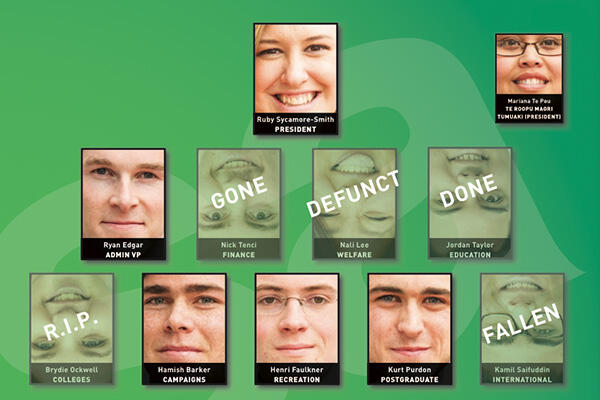
The second round of quarterly reports were presented at last week’s OUSA Executive meeting. It was to be the final meeting for four Executive members, who recently resigned, but with the exception of outgoing International Students’ Officer Kamil Saifuddin they failed to show, believing that their resignations excused them from presenting their final reports. This may have been a blessing, however, as the two and a half hour meeting would have easily reached four hours had they attended. The majority of discussion revolved around Executive members’ performance and their job descriptions. OUSA President Ruby Sycamore-Smith discussed her report first. Reviewing her meetings with various politicians, she said the discussions with them were “disappointing.” She said it was clear that “no one cares about the students.” Ruby intends on working closer with NZUSA so that lobbying for improvements to student loans and allowances continues. She discussed the need for further engagement with students so that they understand why the OUSA Executive exists. An OUSA TV campaign was suggested to make the Executive “more approachable and attractive [to students].” Before leaving the room so that the Executive members present could discuss her report, she admitted, “I don’t think we have a strong team. Everyone has other priorities.” All members present believed Ruby was doing a great job in her role, despite Admin VP Ryan Edgar reporting that he had heard from Welfare Officer Nali Lee and Finance Officer Nick Tenci that “Ruby’s leadership was a potential reason [for their departures]” and that “some members felt a hostile atmosphere in the office.” No Executive members at the meeting, including Ryan, claimed to share these thoughts, however, and Ruby said it was the first time she had heard they were issues. Education Officer Laura Harris said, “If you have an issue that drives you to resignation, you should be addressing that person directly.” A shared opinion by the Executive was that two-faced behaviour (particularly in these two departing individuals, as Critic has previously reported) had become too common amongst the Executive and a fresh start was much needed for the second semester. The Executive felt that there was a high demand from Ruby in regards to the number of meetings they were expected to attend, particularly as an extra hour was added during first semester exams. Kamil said, “[Ruby] is working too hard and beyond her job description, which then overlaps into other peoples’ roles.” Ruby admitted to possibly needing to improve her delegation of tasks, but observed, “It’s not my job to babysit the Executive.” Following Ruby’s suggestion, it was decided that monthly reports were required from each member to keep each other up to date on each others’ work and to hold each member more accountable. Her report was unanimously passed. Kamil was present over Skype for the meeting so that he could present his report and later made it clear that he wanted to give his opinions on other members’ reports. He outlined his efforts with increasing cultural awareness through various events including the International Sports Games and preparation for the International Food Festival. Laura believed he was the Executive member who volunteered the most and had an “exceptional rapport with students who always seem to approach him.” Administrative Vice-President Ryan Edgar’s report outlined his success with the Hyde Street Keg Party, involvement with University events and intentions with the establishment of his OUSA Policy Committee. He made several suggestions for future referenda, including the option of allowing students to “abstain” from answering questions in the future. After he left the room, there was mutual agreement amongst the Executive that Ryan had stepped up to his role over the last three months, as well as giving significant assistance to the Finance Officer. However, discussion was had as to whether Ryan was filling in his 20 hours per week. When Ryan returned, he openly questioned whether there was even 20 hours worth of work available and suggested joining the Finance Officer and Admin VP roles together. Ruby believed there was more work to be done in regards to assistance with the leadership of the Executive. It was agreed that a meeting would be set up to “analyse the job description.” Ruby reflected on past Admin VPs stating, “the bar has dropped quite significantly and it’s hard to bring it back up.” Ryan’s report was moved, but Kamil opposed it, getting a panicked response from the OUSA President following the tense discussion. Laura’s report described the strong relationships she has formed with University staff, assistance with Are You Ok? and work on the class reps system. As a result of her late entry to the Executive, she did not have specific goals set, however the Executive gave her excellent reviews and her report was passed. Recreation Officer Henri Faulkner mentioned attendance at various meetings and reported that $30,000 is still left in grants for the remainder of the year. There was concern over the comment in the meeting that “George does my job.” George McLenaghen is the Clubs Development Officer at the Recreation Centre, so the report seems to suggest that Faulkner may also need a review of his job description. Modest as ever, he said he was enjoying the role: “It’s awesome having a few hundred people say I don’t know what I’d do without you.” Always humble, Henri is. His report, despite containing no specific goals, was passed quickly; most likely as a result of the hours he spends “practically living” in the office. Te Roopu Maori President Mariana Te Pou outlined her work as contributing to various committees and assisting with numerous events. She also stated that she wanted her job description to be defined, however she seems to be a stand-out Executive member in regards to her ability to delegate tasks to the Te Rito Executive. Her solid report outlined the organisation of study retreats, exam lunches and heavy involvement with most OUSA events. Brydie Ockwell, Hamish Barker, Nali Lee and Kurt Purdon’s reports were all tabled, as they did not attend the meeting. Nick Tenci notably failed to present a report. If Ruby continues to be as direct with the Executive members as she was in this meeting, and gains a diligent new intake in the upcoming by-election, the second semester could bring a much-needed breath of fresh air to the OUSA Executive. Critic suggests a clarification of all Executive members’ job descriptions, even for those who did not ask for one.
-
News
The Bye-Bi-By-Election
The start of the second semester will bring in a few fresh faces to the OUSA Executive, following the resignation of four Executive members at the end of the first semester. Two of the resignations were expected as Brydie Ockwell, Colleges and Communications Officer, and Nick Tenci, Finance Officer, head on exchange in the second semester. Brydie, a notably strong Executive member, was sad to leave after an “amazing six months.” She advised anyone running for Colleges Officer to “ask lots of questions, meet as many people as you can and run with almost every idea you get.” On the other hand, Nick’s key advice to pass on to his future replacement was to “get out now.” He asked Critic not to print that out of fear of getting his “balls ripped off,” and instead added that the role is “a great opportunity to hone your managerial skills, and to make a real difference, and it’ll look great on your CV.” The other two resignations from Nali Lee, Welfare Officer, and Kamil Saifuddin, International Students’ Officer, were not expected but come as a result of both members having an increased University workload in the second semester. Kamil said that “after much thought and consideration,” his decision to resign was due to “personal reasons.” He said that other commitments he has means he “cannot give the dedication and commitment that this role needs and deserves.” He said he will assist the next International Students’ Officer “as best as I can” so that they can familiarise themselves with the role. Nali said that the “difficult decision” to depart was a result of struggling to put sufficient work into her university studies and being able to dedicate the required time towards her Executive role. She said she would continue to volunteer for some of the organisations she was involved with once she returns from her holiday in the USA. She hopes the person who replaces her will have “as much passion for the role as I had.” OUSA President Ruby Sycamore-Smith said, “It is a real shame to see them leave,” but explained that “the pressure of the Executive can be somewhat overwhelming, and university grades can suffer.” She said, “I thank them for all the work they have done.” As the by-election nominations open on Tuesday 8 July, she says, “I am looking for some determined and inspired students to be a part of the Executive whanau.” This will be the second OUSA by-election this year, with Education Officer Jordan Taylor resigning earlier in the first semester. Critic observes that this now means all five of the openly gay or bisexual members on the Executive at the start of the year also account for all five of the Executive members who have now resigned. The by-election nominations for Finance Officer, Colleges Officer, International Student Officer and Welfare Officer will open at 9am on 15 July 2014 and close at 4pm on 17 July 2014. The new OUSA Executive members will be announced soon after voting closes. *Ruby loves everyone. Critic takes full responsibility for twisting what is otherwise a very boring explanation for all the recent Executive resignations.
-
News

The DCC's $4,000 mistake
Dunedin Mayor Dave Cull has mistakenly spent $3,900 of rate payer’s money on purchasing what he believed to be leg irons used to hold Maori prisoners in the Victorian Era. Cull told Critic the DCC discovered the auction when it was published in the Otago Daily Times, along with an image of Kevin Haywards, owner of Hayward’s Auction House, holding the shackles. Cull said he was also contacted by local Runanga representatives and “alerted to the significance and sensitivity of the items to the descendants of the Taranaki people who were imprisoned in Dunedin.” Further investigation by Toitū Otago Settlers Museum, where the artifact was supposed to be displayed, indicated that this was false. Staff concluded that the iron shackles have no significance to Taranaki Maori and are in no way connected to historical Maori imprisonment. Although the use of the shackles has not yet been proven, the report by Toitū staff advised that the shackles would instead fit the leg of a camel or a horse. The mistake has caused an outcry from New Zealanders, and the DCC is under fire for the waste of ratepayer’s money. Critic spoke with Jordan Williams, Executive Director of the New Zealand Tax Payers Union, who believes “Mr Cull has some form in being fast and loose with rate payers money.” He said “Mr Cull should do the decent thing and refund ratepayers for his silly excursion.” He added, “[Cull] should leave it to the experts and not blame the vendor.” Cull, however, says he does not regret the purchase and “did so for good reasons and on the balance of evidence at the time.” He believes the purchase, which prompted research into the origin of the shackles, has benefited the Dunedin Community. Cull said, “We have actually uncovered quite a bit of information that before was the subject of conjecture.” He explains that some people believed Maori prisoners were held in the cave, however “this is apparently not the case.” Cull also added that “this episode may be the prompt for further historical research and the very positive story about the relationship between Taranaki Maori and Dunedin may get to be better told.” In regards to whether or not the mistaken shackles will still be displayed in the Otago Settlers Museum, Cull has said he is “not sure what will happen” from this point onwards.
-
News
Gigatown bribes students and gets #insensitive
Chorus’ Gigatown competition has come under fire after a post on their Facebook page was seen as insensitive by members of the public. On 8 June, a head-on collision involving four teenagers occurred on Dunedin’s Southern Motorway. Gigatown Dunedin’s Facebook page posted a status on the day of the incident reading “Very sad to hear about another crash in #GigatownDunedin. Our thoughts are with the families of the people involved.” The post immediately prompted numerous replies from the public, with one response reading, “This is the most disrespectful thing I have ever seen.” Critic spoke to Josh Jenkins, Gigatown Dunedin Project Manager, who said, “[the post] was made empathetically to show support for the families and friends affected.” He said it was “never intended for point scoring” and that the families affected in the crash did not report feeling offended. Gigatown Dunedin, run via the Dunedin Digital Office, have taken the post down and issued an apology. “We understand that this may have been construed as a way of using the event to gain points. The post was made out of genuine feeling and concern for all those involved.” Jenkins said that as a result of the post, support for Gigatown Dunedin has actually increased. Communications company Chorus launched the competition on 28 October 2013 and it is set to run for 12 months. The competition involves cities nationwide competing through social media sites by using the city’s hashtag and the relevant city scores points for each post. The city with the highest number of points will receive a $200,000 development fund and a 1Gpbs Internet service. Over the first semester exam period, the group also hid envelopes of money around the University of Otago Central Library to attract more students to get involved with the social media frenzy. New clues to the whereabouts of the envelopes were released once a certain number of posts were made containing #Gigatowndunedin. Almost immediately after the project was announced in early 2013, it became a mockery on Twitter, with the hashtag #gigashit being used. The recently emerged Internet Party has used the competition to their advantage by tweeting “Should NZers have to compete for better broadband ala #gigatown? We stand for better broadband from Cape Reinga to Bluff.” At the time Critic went to print, Gigatown Dunedin was ranked third in the competition behind Gigatown Nelson and Gigatown Wanaka.
-
News
Pinging for better grades
Recent research conducted at the University of Auckland has shown that six per cent of the 400 students surveyed had used drugs as a study aid. The most common drug used by students was Ritalin, a B class drug often referred to on the streets as “Ritz.” Ritalin is a medication prescribed to individuals with Attention Deficit Disorder (ADD) or Attention Deficit Hyperactivity Disorder (ADHD.) It adjusts chemicals in the brain that contribute to hyperactivity and impulse control. Those under the influence are able to concentrate better, therefore increasing study capability. Bruce Russell, conductor of the survey and senior lecturer at the University of Auckland’s School of Pharmacy told the ODT he would be “extremely surprised” if University of Otago students weren’t using the same methods. He said, “There needs to be a discussion around it and people need to be aware that these drugs are out there.” In 2012, Druvi Patrick Rodrigo, a University of Otago student, was arrested and charged for illegally obtaining Ritalin and selling it to his classmates. In April 2013 Rodrigo was convicted and sentenced to 10 months of home detention and 200 hours of community service. However, after a co-offender who had admitted to the same offence was discharged without conviction, Rodrigo appealed his case. His charges were dropped on March 13 2014. Another Otago student, who wished to remain anonymous out of fear of repercussions, told Critic that his friend had received a prescription from a doctor for “a few hundred dollars” so that he could “study better.” The student then sold them on to some of his peers. Another student told Critic that he believed the street value to be approximately “$100 for a tray of 20mgs or $10 a pill.” A Unichem Pharmacist said “[Doctors] give out Ritalin as if it’s nothing these days; we have entire families on it.” Around 12,000 New Zealanders received prescriptions for medications to treat ADHD in the year up to June 2013. When prescribed by a doctor, stimulants such as Ritalin are to be taken orally. However, it has become common for the drug to be crushed into powder form and then snorted, creating amphetamine-like effects for the users. Dr Michael Beasley, toxicology expert at the National Poisons Centre, said potential side effects of Ritalin could include “agitation, tremor and anxiety” but that “severe cases include hallucinations and seizure.” He said the severity of symptoms depends on the dosage but it can become “extremely toxic to the heart.” Student Services Manager, Matt Tucker was unaware as to whether there were any issues at Otago as “students don’t come in admitting that kind of thing.”
-
News

Crimes on Cargill by violent school girls
Three young women were assaulted in Dunedin on the night of Saturday 28 June on Cargill Street. Footage of the attack has been widely shared across social media sites, showing the women being punched and kicked by seven other teenagers. One girl was kicked in the forehead so hard that it left an imprint on her face. It is believed a young male accompanying the attackers filmed the video. The three women, Tae Flavell, Makayla Spiers and Annaelise Cooper, spoke to a Campbell Live reporter to discuss the attack. They claimed the attack began after the girls, who all work full-time, asked the school-aged teens to stop kicking over wheelie bins in the street. Flavell, who was visibly upset on the show, said “I want people to realise that you don’t have to do anything wrong [to get attacked].” She said that without any provocation, the teenagers “beat us to the point that we didn’t think we would get out.” Flavell reported being dragged several meters down the road, where she was “pushed to the ground, repeatedly kicked in the ribs and swung by her hair.” She was dumped with such force that her ankle was broken. Cooper, aged 19, told the reporter “I thought they were trying to kill me,” so her main focus was on protecting herself. She said that just as she thought the attack was over, another girl approached her, looked her in the face “and boots me in the head.” The third victim, Makayla Spiers, believes she was “left alone” by the attackers because, she thinks, some of them recognised her. She says she called one of them by name, who was a junior at her school when Spiers was a senior. Spiers begged them to stop but they continued as she remained helpless. “I saw my best friend being kicked in the head on the ground by eight girls.” Senior Sergeant Mark Crawford, of Dunedin police, told ONE News, “We’re following a few positive leads and we’re also following up an earlier incident as well which may have involved members of this group.” He said that the victims had been referred to victim support, but would not comment on whether charges had yet been laid. If the offenders are found and charged, they will be treated as children in a youth court which, Campbell Live reported, “angers the older victims.” The police investigation is continuing.
-
Columns
David Clark | Issue 14
It is the time of year when my office comes closest to processing more 18+ cards than the Rob Roy Dairy sells ice creams. And this is my last scheduled Critic column for 2014. This column has been a great opportunity to communicate with you as your local electorate MP. But this is au revoir from me – not good-bye. You’ll still see and hear plenty from me over the coming weeks. The campaign is heating up. Election Day, 20 September is only about 10 weeks away. The best part about the opportunity to connect with you each week through Critic has been the regular feedback I receive on campus. Over the previous 13 issues I’ve canvassed many topics including: healthy housing; sign language; literature; technology; homelessness in Dunedin; Invermay; 7 Days; Facebook; the role of an electorate MP; religion and changing the world; and student representation on University Councils. I’ve received most feedback on columns about: drug reform; my column on trends in climate change thinking; inequalities; democratic participation; access to education; and on my piece about community law centres – which seems to have travelled far and wide. Editor Zane Pocock has pointed out that a column by the local MP is a great way to ensure accountability with constituents – as I report on trends in the electorate, share my views, and engage with your responses. As I sign off from my column for the year, and as we enter deepest Dunedin winter, please rest assured, dear reader, that my office remains at your service. We’ll continue to deal mostly with practical local issues. Between now and the election we’ll witness and sign many documents, assist with tenancy disputes, do certification of degrees, help with immigration and StudyLink issues and, of course, the 18+ cards. And I’ll be on campus. Aside from casual catch-ups, I’ll be at my regular MP clinics – and on the hustings campaigning on the positive change a Labour Government will bring. Please continue to stop me for a yarn when you see me on campus. Or drop by my office in Albany Street. I’m generally up for a chat about the issues that matter to you. And, naturally enough, I’m keen to share Labour’s story about the opportunity to make positive change.
-
News

Sharks, sex and banana stunts
The International Science Festival is set to offer students a chance to prematurely boot their brains back into action for semester two. Taking place over Re-O Week from 5 July to 13 July, the festival will offer students a sober break from the traditional Re-O Week activities. Leading science experts will be contributing to the week, including Dr. Bunhead, who promises spud bazookas, banana stunts, the world’s biggest indoor cloud and chocolate powered flamethrowers. Professor Terry Collins will make an appearance on Tuesday evening with insight into his research surrounding the potential development of civilisation through better connections between science and technology. He will discuss how we can build this relationship without devastating the future. Shark stalker and leading scientist Ryan Johnson will present marine research based on the Great White Shark. Johnson, who is also a wildlife documentary filmmaker, will hold presentations on Thursday 10 July and workshops on Sunday 13 July. Johnson will demonstrate shark dissections, shark biology and a few of his documentaries later that evening. For those who appreciate an alcoholic beverage, there will also be presentations on the science of whisky. If you are feeling a bit under the weather from your return to the harsh climate of Dunedin, the festival has free health checks through the Southern District Health Board. These will run from Monday to Saturday starting at 9am on the second floor of the Fraser Building, Dunedin Hospital. The Otago Institute of Sport and Adventure will also be available to assess your health and fitness on Friday and Saturday. For a stunning night under the stars, the Beverley Begg Observatory in Roslyn will be offering Astronomy at the Observatory every night from 7.30 – 9.30pm. For five dollars you can observe an array of our neighbouring planets, stars, nebulae and galaxies. Dunedin Mayor Dave Cull will be hosting the free Let’s Talk About Sex, Baby! Scifest Debate on Friday at 7.30pm at the University Staff Club. Other events include sculpture classes, a giant LEGO construction, a photography competition, and numerous talks from scientists discussing everything from beer fermentation to reptiles to the anatomy of a crime scene. Check out the NZ International Science Festival’s website scifest.org.nz for times, dates, and other happenings in the week. Tickets can be purchased from ticketdirect.co.nz.
-
News

Suarez
Welcome back to the second semester, sports fans! Plenty to catch up on so, first, let’s go to the teeth-marked World Cup desk where, without a doubt, the biggest controversy so far has been Vampire Diaries and True Blood fanboy Luis Suarez’s attempt to sneak in a mid-game snack. Now, we all like eating Italian, but c’mon, Luis! You are being too much of a literalist here. After he serves his ban, Uruguay must make sure Suarez is properly fed before his next game. We can all see that he has a very prominent set of chompers but that doesn’t mean he needs to try incorporating them into his football game; he is talented enough with his feet as it is. Amongst several racist outbursts this was his THIRD biting incident in just four years, which instantly spawned many awesomely funny Hannibal and Jaws parody memes. Speaking of Jaws, the team at “I Fucking Love Science” have crunched the numbers and worked out that a football player has a significantly higher chance of getting bitten by Luis Suarez than getting bitten by a shark. Suarez’s club Liverpool has a motto of “you’ll never walk alone,” but I don’t know if they can continue to support him after another incident that will see him banned from playing until the start of November. After his two-goal performance that knocked out England from the World Cup, the gossip mills were throwing out rumours of impending £80 million bids from Spanish giants Real Madrid and Barcelona. This latest incident will surely make them think twice about investing in a player with such a short fuse. I personally hope Liverpool has a clause in his contract that they can exercise and fire his ass so that he finds himself walking alone from now on. However, despite all the rhetoric about players being role models and doing the right thing, modern football isn’t so much about morals and sportsmanship as it is a cold blooded, cash driven business and Liverpool invested £23 million to bring him to their cold, miserable city and they will want to see a return on that investment should he leave for sunny Spain. An exciting World Cup so far ... In terms of return on investment, the England team gave a very poor account of themselves. Actually this year’s performance was their worst at a World Cup: only two goals were scored and a single point gained. English Football Association chairman Greg Dyke was so desperate to shift the blame away from his chronic mismanagement of English football that he went so far as to suggest that had Prince Harry, who came to the dead rubber against Costa Rica, turned up to watch their first two group games against Italy and Uruguay, that maybe this would have raised spirit and morale and inspired the overpaid squad, boosting their chance of qualifying. Whatever helps you sleep at night, mate. This World Cup has been very good to watch so far. By halfway through the Round of 16 matches, more goals had been scored than in the entire 2010 tournament. Not many people would have predicted England, Italy, Portugal and Spain to all fail to make it out of their groups while minnows like Costa Rica and Algeria would advance. The hosts Brazil have been very unconvincing and may struggle to make it into the semi-finals that are being held in Belo Horizonte and São Paulo on Tuesday and Wednesday night, setting the stage for the final in Rio on Sunday. All Blacks & Highlanders are looking good The “Red Roses,” a.k.a. the one-time world-champion England rugby team, failed to win a match against our multiple-time world-champions, but gave a much better performance than the anaemic “Three Lions” managed, as intimated above. The three-test series against the All Blacks was a lot closer than most people thought it would have been. The AB’s started off a little bit rusty but only got better as the series progressed. It was good to see Highlanders centre Malakai Fekitoa getting his first cap and he proved that he will be a Lomu-like force to be reckoned with at next year’s World Cup in England. The “brothers Smith,” Ben and Aaron, were also very impressive, scoring some important tries and only strengthening their claims as first-choice picks in their positions for the upcoming Rugby Championship. The trio also backed this up with a big performance in the crucial home game against the Chiefs, marking a huge step in the Highlanders’ quest to make it into the playoffs. This weekend’s game against the Crusaders is massive. I also think that Richard “Barracuda” Buckman has been very impressive out on the wing and has my vote as a wildcard replacement for the iffy Corey Jane in the All Blacks squad for the end of year tour. Warriors are on the up, Sharks season gets worse Good news for Warriors fans as they are hitting some good form at a crucial point in the season. Four wins from their last five have lifted them up into the Top 8 and they have some very winnable games coming up so hopefully they can maintain their form through to the end of the season and host some play-off footy up in Auckland. New South Wales finally breaking the stranglehold that Queensland has had over the State of Origin series since 2006. Ever since I started watching State of Origin I haven’t really supported one side over another but for the past few years I have really wanted NSW to win it back as, historically, it has been such a close competition in terms of games won, points scored, etc. – although Queensland’s recent dominance has skewed the stats in their favour. Over Queensland’s recently ended eight-year series-winning streak they only managed one 3 – 0 clean sweep (in 2010) and the Blues will be trying to go 3 – 0 for the first time since 2000 when they play the final Origin match in Brisbane on Wednesday night. One man who will never pull on the Blue jersey again is the thirsty Todd Carney who we have all heard about being fired for a leaked picture of him drunkenly pissing into his own mouth in a nightclub bathroom. I usually take issue with stupid but unrelated off field incidents being taken too seriously but given his dodgy past and multiple offences and warnings I have to agree with the Sharks decision to terminate his contract immediately. It really sucks for them, though – stuck at the bottom of the table, mired in financial problems and doping scandals and having to fire one of their best players for a non-criminal, non violent off field incident. All of which shows that social media is rarely a good thing for sportsmen prone to behaving like douchebags.
-
Columns

ODT Watch | Issue 14
This article heralding the launch of a new rural fire organisation does not only contain a punny headline. No, the fun doesn’t stop there! ODT clearly couldn’t contain their love for puns, inserting one in the photo caption, “Sparked into life,” and another within the article: “once the idea’s fuse was lit, there was no going back”. The ODT continually raises the troubling question: how many puns are too many? Not much compares to the crushing lameness felt when one is rejected for a high five. The ODT has cruelly captured this student’s unreciprocated high five and published it for all viewers to see, essentially eternalising an awkward social blunder she probably wishes never happened. This rather disturbing little article warns of a lingerie-lusting burglar in our midst. The article asks residents to report any suspicious activity, so, if you see a fellow wearing lacy panties, I’d call the police immediately. New Zealand-based chocolate company The Seriously Good Chocolate Company is exporting NZ to the world through chocolate. What are the flavours used to express Kiwiana? Why, alcohol and sheep poo, of course. Truffles infused with pinot noir and beer and chocolate sheep poos (albeit not literally sheep poo, rather chocolate coated freeze-dried boysenberries) to be exact. These are our chocolate representatives on the international confectionary market. Spot on.
-
News

Critic tackles election year | Issue 14
If you regularly read this page, you’ll know I have a bit of a fascination with Clare Curran. The Dunedin South MP/Twitter Warrior provides me with great Politweets fodder, and has tried a few times to make #cheeserolls trend. In fact, my encounter with her came down to a Twitter conversation. Not one to back down from a challenge, I agreed to visit her in the #realworld. After Clare was to appear on Vote Chat, I was to accompany her to a clinic in Mosgiel. An afternoon with the MP I’d featured twice as a Greatest Shit and too many times to count in Politweets? Fantastic. I was very excited. Friday was a horrible day weather-wise: cold and pouring with rain. I got thoroughly damp on the way to Vote Chat, but was keen to see what Clare would pull out on stage nonetheless. Her morning was more interesting than mine: she’d abseiled down Forsyth Barr Stadium for charity as part of “Toss the Boss.” The interview between Bryce and Clare predictably began with an in-depth discussion about cheese rolls, and Clare declared that Dunedin ought to have a giant cheese roll statue to welcome guests. I won’t go into too many details about the rest of the chat (it’s available on YouTube), but I will note that when a Twitter question of mine was asked during the show, Clare rolled her eyes rather dramatically at the mention of my name. Clearly she takes my status as a Critic writer very, very seriously. When the interview finished, it was time to head to Mosgiel. Clare and I hopped in her car (which has her face on it, of course) and drove south. As we were driving past the University, she asked me, quite flatly, how I managed to be friends with National Party people. It’s all in the name of banter, I suppose. As we veered off from Pak’n’Save, she gave me a brief history of South Dunedin. Due to the rising water table and the high population density, it suffers from severe dampness and cold. She certainly knows the area, and I could tell she was truly annoyed about the lack of action to support the community. Most notably, the area lacks a community facility, like a library, that would bridge the ‘digital divide’ and allow more voters to become engaged in local issues. Mosgiel, the area we were heading to, is separate from much of South Dunedin; its microclimate makes it a few degrees warmer than most parts, and it is comparatively well serviced. The conversation moved to the lack of police, until it was halted when Clare stopped to point out a mobility scooter. Given that this was Mosgiel, there were quite a few mobility scooters about. She pointed out every single one. She wasn’t kidding when she said she wanted one on Twitter a few issues ago. We arrived at her caravan to find people already waiting. She’d explained to me on the way over that Mosgiel residents can’t always get into town, and that visiting them was one of the only ways they’d get their issues dealt with. I was expecting a lot of banter and some good fun; I was wrong (although the first person pointed out that Michael Woodhouse’s advert might not abide by electoral law, which I enjoyed). The reality is that the caravan was cold and the people were struggling to deal with the bureaucratic mess that is WINZ. There’s a serious lack of funding for the institutions that people rely on to get by, and as a result mistakes are made. These sorts of mistakes often mean people go hungry. In the bubble that is North Dunedin, it’s easy to wear the cold and the shit dinners as a mark of pride; as something to prove you’re a student and you’re tough, so that one day you’ll look back on it with nostalgia. But for some people, the cold and the shit dinners are as good as it gets. Clare, in her little caravan, is trying to help them. We were there for a couple of hours, getting progressively colder, until we decided it was time for a cheese roll. In the car on the way back, the chat picked up; I asked her about her fellow MPs and got a couple of gold quotes. Peter Dunne, according to Clare, “fancies himself as quite the hipster … if it would keep him in Parliament he’d sell his grandmother.” She believes that Dunne or Maurice Williamson were the only two MPs who could have jumped to the Internet Party, and firmly denied to me that it was her who was switching. I never really believed that anyway, as I’ve been told that it was a group of Young Nats who decided to promulgate that rumour. Cheese rolls were next on the agenda (how could it be anything else), so we headed to a pub opposite the Labour office to indulge. I joked that it could be considered treating to pay for my cheese roll and flat white, and Clare just gave me a sly look. She ordered a large sauv. Once we sat down, I asked her a bit more about other MPs. In answer to “who’s your least favourite,” she responded first with “John Key,” then paused and elaborated with “Chris Finlayson,” because he’s “nasty.” She also commented that “some of the National Party backbenchers are a bit suss.” The conversation shifted slightly to what goes on that we can’t see on Parliament TV, and she noted that there’s a lot that doesn’t go on camera. “Jami-Lee Ross’ homophobic comments to Dennis O’Rourke,” which Clare was disgusted by, are an example of this, and we wouldn’t know it, but Maggie Barry has a “foul mouth.” Clare has only been asked to withdraw a comment once, and that was when she said the Government has no courage. She said it was part of an allusion to The Wizard of Oz, insinuating the Government has no courage, heart, nor a brain. There were a few chuckles at that one. It was at that stage a few extra Labourites slipped into the bar, bringing our little chat to its conclusion. I enjoyed spending an afternoon with Clare, if only to finally meet the woman behind the Twitter account. Despite her nonchalant attitude and hilarious tweeting habits, she genuinely wants to help her electorate. This is a quality that is extremely desirable in an MP. If you want to have your own chat, I’m sure there’s a clinic you can attend. Watch out for the Labour caravan and come with a cheese roll or two.
-
News
Greatest Hits / Greatest Shits | Issue 14
Greatest HitOur dearly beloved long-lived politician John “Banksie” Banks has resigned after a bit of a hiccup with the law. The Auckland readers of Critic will know him best, as he ruled the city with an iron fist for two separate terms (2001-2004; 2007-2010); Epsom residents will know him even better, as he was their electorate MP. In a recent legal scandal, Banks was found guilty of filing a false electoral return regarding donations from none other than Kim Dotcom. While he has not been convicted (and won’t be until later in the year), the pressure to resign came from all sides. Why is this deserving of Greatest Hit? Well, his actions were certainly shit worthy – but given his resignation, he’s free to return to his radio show Breakfast with Banksie. Gosh, I can’t wait. Greatest ShitThere is essentially one thing you have to do to form an OUSA club – get ten members to join. Unfortunately for the proposed Internet Party on Campus, in a meeting during the last week of May they only managed to get five. This led to the Dunedin “Internet Party Meet-up Captain” sending around an awkward message to those who clicked “attending” on the Facebook event, asking them to come along next time. Unfortunately for the Captain, a number of young politicians from other parties “attended” only to get the updates, not because they truly believe in the power of torrenting. I do wonder if the Internet Party’s inability to reach the OUSA member minimum is a mystical piece of foreshadowing?
-
News
Politweets | Issue 14
Well, that’s nice, Paula. #DJSuMo You’re not wrong, Tau.
-
Features

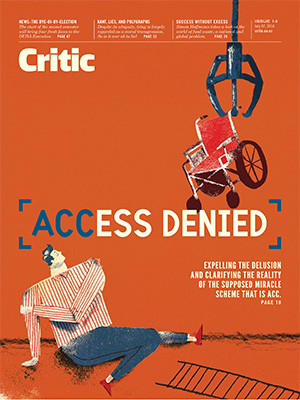
ACCess denied
Following the recent conflicting and confused news reports about New Zealand’s Accident Compensation Corporation scheme, Loulou Callister-Baker undertook her own investigation. With the aid of Acclaim Otago, she identified several disturbing issues with ACC; expelling the delusion and clarifying the reality of this supposed miracle scheme. As an ambulance officer, she saved people’s lives on a daily basis. She was a black belt in karate. But her life changed when she fell from a roof and suffered labral tearing in her hip and shoulder. For nearly a decade her injury went undiagnosed. During this time she developed a serious pain syndrome and depression. He was young, had a job as a farmer and had the world ahead of him. But when he was only 23 years old he was in a serious motor vehicle accident. Now he lives with paraplegia. Not only have those two New Zealanders suffered serious injuries that have had unfathomable consequences on their own lives and the lives of the people around them, each of them are the victims of inadequacies in the Accident Compensation Corporation (ACC) scheme. In the first incident, ACC did not properly manage the case. After two review applications were lodged, ACC sent the woman with labral tearing to be assessed for mental injury cover, but only provided the assessor with a fraction of the medical evidence that showed her depressive symptoms before their fraud investigation had begun. ACC then decided not to provide any help and support on the grounds that her mental injuries were caused by their own fraud investigation, rather than her injuries. These issues are only some among the myriad of problems evident within the facts of this case. The young man with paraplegia wanted to move out of the hospital and return home to his partner. To do this he needed $20,000 for housing modification but ACC delayed making a decision. After mediation with ACC on this issue ACC did not do what they purported they would do. The man sought professional advice and lodged another review application regarding the delay. ACC asked for mediation. Although the matter was not settled at mediation, ACC agreed to let it proceed to review. However, in the week before the review, ACC issued a decision not to fund the modifications and then claimed that the review for delay lacked jurisdiction because a decision had now been made. It was 18 months after the man was discharged from hospital when he could finally leave his flat in the city and go home. But, by this stage, his mental health and his relationship with his partner had deteriorated significantly. He had incurred over $5,000 in legal fees and, despite having three sets of costs awards throughout the process, he was still over $3,000 out of pocket. The ACC scheme was founded on a set of five principles described in the breakthrough Woodhouse Report. These guiding principles were: community responsibility; comprehensive entitlement; complete rehabilitation; real compensation; and administrative efficiency. The scheme was first legislated in 1972 and has since undergone significant revisions by legislation in 1982, 1992, 1998 and 2001. In the most recently revised Act, the purpose of ACC is to “enhance the public good and reinforce the social contract represented by the accident compensation scheme by providing for a fair and sustainable scheme for managing personal injury ...” However, events over the last decade raise the question: has our government lost sight of these guiding principles? Somewhere amongst the photos of smiling New Zealanders on ACC’s website, ACC claims that, “Everyone in New Zealand has 24-hour, seven-day-a-week, no-fault comprehensive injury cover through ACC.” This means that under the ACC scheme, everyone in New Zealand (including visitors to the country) is eligible for comprehensive injury cover. The injured person can be of any age, working or not. A person can even be covered if he or she did something to contribute to the injury. It sounds almost too good to be true. Some strong voices throughout New Zealand would tell you that it is. But these same voices would also tell you that it doesn’t need to be – the scheme could do everything it purports to do. However, what ACC (and, by extension, Government) isn’t doing or is avoiding doing, is not straightforward to find. The recent news stories posted on the ACC website are of claimant fraud and proposed “across the board” levy cuts (relevantly coming into place just before the general election). Both types of stories paint ACC as martyrs. But it is what’s not being reported and acknowledged by ACC that is of concern. That’s where groups like Acclaim Otago play a fundamental role. Given that an accident can happen to any person at any time in New Zealand, it’s crucial for every New Zealander to understand their findings. In 2010 an ACC policy document was released that outlined plans to increase non-compliance amongst long-term claimants as a means of removing entitlements. Members of Acclaim believed this was done in order to force clients to attend assessments with ACC’s chosen “preferred assessors.” If a claimant does not go to a preferred assessor, he or she gets his or her entitlements cut off. These “preferred assessors” are flown all around the country by ACC to assess claimants and write up medical reports – even if the assessments they are being flown around for only take 30 minutes. Figures released under the Official Information Act show that one doctor in Christchurch billed ACC nearly one million dollars in 2005 and more than $700,000 a year from 2004 to 2007. In 2010, Acclaim received an influx of its members coming to them after ACC stopped their weekly compensation for supposed “non-compliance.” One member had even been cut-off by ACC three times and each time, she has been reinstated after taking legal action against ACC. This has been an issue since the early 1990s. In a document known as the “Trapski Report,” a retired Chief District Court Judge, Peter Trapski, criticised ACC’s preference of the opinions of their contracted occupational assessors over claimants’ general practitioners. Trapski recorded: “Corporation staff, I was told, had become fed up with clients who were seen to be ‘ripping off the system.’ These people were therefore referred to a specialist who I was told, was unafraid of examining factors aside from the injury. I was told quite clearly that this was where Dr Gluckman’s usefulness lay, as he was a qualified physician, and a psychiatrist, and he had been used over a number of years as the Corporation’s ‘hit man.’” It’s not a coincidence that the most highly paid assessors are also the assessors who cut off the most claimants from payments. Years later it seems that the situation hasn’t improved. In an interim report (supported by a shadow report grant from the New Zealand Law Foundation) to the United Nations Committee on the Convention on the Rights of Persons with Disabilities (CRPD), Acclaim Otago stated, “the fact remains that the architecture of the ACC scheme and the way it is administered deprives people of fundamental human rights. The state report does not record this, because the state does not accept this.” This state report that Acclaim refer to was the first New Zealand report on implementing the United Nations CRPD. The state report focused almost entirely upon people with disabilities unrelated to personal injury (such as congenital cause or sickness) who are administered through other systems including the Ministries of Social Development and Health. In Acclaim’s eyes, this first report failed to properly examine New Zealand’s ACC system from the perspective of people with disabilities caused by accident. Acclaim’s recent report – endorsed by a consensus of experts throughout New Zealand – focused on those with long-term disabilities caused by injury. Although it looked at a range of rights infringements, it particularly highlighted four articles of the CRPD; the most significant to the report being Article 13: Access to Justice. This was a concern due to the small amount of lawyers who specialised in ACC cases and the high costs often involved in challenging ACC decisions, especially in comparison to the limited costs of success. However, ACC (which in the 2012-2013 financial year had a revenue of $6.5 billion and made a profit of $4.9 billion) does not have these financial restrictions. With no limit to what ACC can spend on the costs of cases, this creates a huge disparity in funding between claimants and ACC. In fact, over the last five years, ACC’s investment fund has more than doubled from $10.3 billion to $24.6 billion. While, at the same time, people with long-term disabilities due to injury are often suffering more than ever when it comes to costs and entitlements. These issues have only been exemplified by the recent news that Cabinet has signed off a paper to introduce a bill that will remove access to the courts for injured people. This confirmed desire for change to the ACC appeals process means that cases will go to a tribunal instead of through the District Court, creating a clear bypass of the justice system and cutting judges completely out of the picture. Instead of judges (who cannot be fired) there will be tribunal members (who can be fired), which is especially convenient if, say, too many ACC claimants win cases. Interestingly, it’s the Minister of Justice, Judith Collins, who appoints these tribunal members and Collins is also the Minister of ACC. It is an elementary lesson in law school that our judicial system is independent from the government. When this kind of decision-making is placed into the hands of Government it’s an affront to our constitutional system. Furthermore, Cabinet’s proposed changes lacked consultation with the very people it concerned, creating a mockery of the idea of “nothing about us without us” and New Zealand’s obligations under the CRPD. As Tom Barraclough, one of the authors of Acclaim’s report, stated, “The Courts are the only institution that exercises any real independent oversight of ACC. Other government departments such as the privacy commissioner or health and disability commissioner generally refuse to investigate ACC matters. Court decisions, like the recent District Court decision stating ACC’s 167 privacy form was illegal, can cause huge nationwide issues for ACC.” In its 120 pages, Acclaim’s report outlines 10 possible system breaches of the human rights of people disabled in accidents. Included among its questions to the government was: whether there was proper funding for injured people to gain access to justice; what the government was doing to increase the supply of legal representation for injured people; what it was doing to ensure procedural fairness and reliable evidentiary procedures are observed in ACC dispute resolution; and how it planned to allow serious complaints against ACC staff members to be escalated and given external oversight. The last of these questions arises due to the lack of procedural and administrative safeguards in the statutory dispute resolution process. In one example described in the report a person called Jo had a case set for a review hearing. However, before the hearing, Jo became aware that the ACC reviewer had sent an email to her employer demonstrating bias against her. With this evidence, Jo asked the reviewer to step down but the reviewer refused to do so. The reviewer continued with the case and decided against Jo. If a person, like Jo had done, disputes whether a reviewer has met the requirements (like non-bias), there is no authority or process to facilitate the resolution of that dispute. Acclaim also asked Government what it was doing to ensure people with injuries are not improperly prosecuted or imprisoned because of the management of their injuries and long-term loss of earnings for those suffering from injuries who are not entitled to compensation. Acclaim ultimately found that the government and the administrators of the ACC scheme do not have the correct balance: “There is no proper respect for the privacy of people with disabilities, entitlements are stopped without a person being able to work or being properly rehabilitated, integrity of the person is compromised and effective access to justice is denied.” After considering this report, the United Nations Committee responsible for this Convention formally raised access to justice and other issues with our government. The Committee’s question to Government was: Please explain whether New Zealand law provides access to justice for persons with disabilities engaged in the statutory dispute resolution process with regard to adequate funding, procedural fairness and reliable evidentiary procedures under New Zealand’s Accident Compensation scheme. These issues will also form the basis of the Committee’s examination of New Zealand’s compliance with the Convention in September 2014 – 10 days before the general election. When the UN Committee responded to Acclaim’s shadow report on the CRPD it came back to our government with a list of issues. Government was required to prepare a formal and detailed response on these issues for the Committee’s consideration. While the recently prepared response did include news about the tribunal proposal, it did not acknowledge any of Acclaim’s objections. Barraclough commented: “They still don’t see ACC claimants as people with disability. For example, they say the dispute resolution process ‘provides access for all people who wish to apply for a review of a decision made by ACC, including persons with disabilities.’ They talk about how costs can be awarded, but don’t even attempt to deal with our objection that these costs are too low to ever make a review financially viable. They talk about how Reviewers are required to be independent, but don’t acknowledge our point that there is no mechanism to enforce that.” ACC could be a wonderful scheme. It could be world leading. However, considering these damning reports on ACC’s cavalier attitude to it’s founding purpose and the rights of the disabled through accident, it is more than due time to question how it is being implemented, even if there is a general election just around the corner (or, perhaps, especially so because there is). “It’s hard seeing people let down all the time,” Barraclough says when describing his work, “but we’re hoping that the UN will make recommendations that lead to claimants being treated as injured people with varying degrees of disability who need support, rather than just fakers or fraudsters to be persecuted.” An accident can happen to any one of us at any point in our lives. Go on Acclaim Otago’s website and complete their survey (notably, ACC denied all of Acclaim’s attempts for a collaborative approach in answering the UN’s question). Get in touch with them if you have further information or personal stories about the issues discussed in this feature. Without demanding that Government maintains what it purports to do, any concept of a “social contract” and its underlying principles becomes meaningless. Survey link: surveymonkey.com/s/accesstojusticenewzealand
-
Features

Kant, lies and polygraphs
In the summer of 1999 four teenage boys were camping in the backyard of one of their family homes, and two of them were so scared they were crying. They had only agreed to go camping again because they didn’t want to look like sissies who were scared of a ghost. The ghost had made its presence known during the past two camping sleepovers, and it was happening again. A disembodied voice began as a quiet, indecipherable whispering which slowly built to a loud, guttural, rasping sound like somebody speaking in tongues. When it had got to shouting volume it stopped abruptly, leaving the boys in silence. “What do you want? What does it mean?” said Henry*, whose house they were staying at. After a few more seconds in silence the voice hollered from outside the tent: “It means I WANT BLAKE*!!” The traumatised boys ran home. Later that week, when walking home at night, Blake saw a figure of some kind of humanoid thing with a long black robe, black hood, and hideously long arms running aimlessly up and down a field near the haunted house. Eventually one of the boy’s mothers insisted on getting a priest to do a blessing on the house. The ghost never returned. If these stories sound like practical jokes to you, you’d be right. Henry and his brother had hidden a tape-recorder in the bushes with recordings of their own voices reversed and slowed down, with gaps to ask questions in followed by appropriate answers. The robed figure was Henry in costume. At one of the hoax-victim’s 21st parties his mum, in the middle of her speech, suddenly turned on Henry and said “what was all that spooky stuff, Henry? What really happened? Did you know about it?” Henry was too mortified to reply. Fifteen years later and his friends still don’t know that it was a prank. To be called a liar in our culture is a voracious insult. But statistically all but the most scrupulously careful of us tell several lies every day. An American study showed that around 38 per cent of social encounters between college students involve some kind of deception. About 10 per cent of what we say to our partners is untrue. Yet despite its ubiquity lying is largely regarded as a moral transgression. So is it ever ok to lie? Neuroscientist and philosopher Sam Harris says no. In his book Lying, Harris argues that our day to day lives can be made resoundingly better if we don’t tell lies, not even little ones. In the manner of Immanuel Kant, Harris believes the truth is always a better option than the lie. If your friend wants your opinion on their shitty band, terrible dress sense, or their unbearable mother, you should tell them, or politely decline to answer. To do otherwise is to disrespect your friend by choosing what you think is appropriate for them to believe is true. Harris says: “To lie is to intentionally mislead others when they expect honest communication.” The term “brutally honest” is therefore the opposite of what is actually going on when you respect someone enough to tell them the truth. So far so good. But Harris believes that even in extreme cases, even with Nazis at the door and Anne Frank in the attic, there are ways of telling the truth that are preferable to lying. This sounds psychopathic, bar, perhaps, true statements such as “I wouldn’t tell you even if I knew, and if you take another step I’ll put a bullet in your brain.” By lying, Harris argues, you shift the burden of combatting evil onto others. Hopefully few of us will ever have to face a situation like this. I found Harris’s book convincing in all but the life-or-death situations, so, with the ethics of lying bouncing round in my brain, I went to talk to Dr Lisa Ellis, from the Otago philosophy department. Dr Ellis is a fan of Immanuel Kant and agrees mostly that avoiding telling lies is a good thing. She explains, “Kant makes it possible for you to engage with total strangers on a basis of mutual respect. Any time you encounter somebody new, if everybody is subjecting themselves to the moral law, each person can be confident that they won’t be subjected to any attacks on their dignity, that they won’t be presumed to be dishonest, that any promises made will be kept. It really is a wonderful thing for imagining a world in which you can stand up as a dignified and honourable human being without having any previous experience of everybody.” This much is difficult to argue with. The extreme cases, however, are problematic. Dr Ellis thinks the tricky answer to avoid lying to the murderer has “a kind of cheesy feel” and upholding a moral law over your friend’s life may make you “a bit of a monster.” But she agrees, in a way, with the respect given to the murderer, as Kant’s ethical system involves treating people as ends and not means. Dr Ellis is more lenient on white lies than Sam Harris. She says many white lies are responses to “Gricean Saids”, when there is a difference between what is said or asked and what is meant. So when you tell your partner, “You look good today, honey,” it’s not judged against some abstract criteria, it’s just a reassurance of affection. Nobody expects it to have reference to some serious truth claim. Taking every question perfectly literally would be a social mistake. Dr Ellis explains: “It would be like picking up the wrong fork. It’s just socially insensitive. And Kant, by the way, was famously socially insensitive. He had a tin ear for social nuance. If I’m walking out that door and I ask my husband how do I look, and I really want to know according to some abstract criteria, I can use the language so he knows I’m not doing the white lie game. Fortunately he’s socially apt.” I played a terrible solo piano gig recently. I felt like shit at the end of it. The few people watching – mostly my friends – told me it was good. They may have been lying. In this case I am glad if they were. I needed my self-esteem boosted, and they did it. Thanks, buddies. When thinking of the ethics of lying I became interested in lie detectors such as the polygraph machine Moe gets hooked up to in The Simpsons. The polygraph is still used by police in parts of America to interrogate suspected criminals. I was surprised to find several articles on stuff.co.nz calling for an increase in use of the polygraph in New Zealand, and particularly in hiring staff. The polygraph measures the physiological reactions that supposedly occur when the person it is attached to is lying. It measures changes in sweating, breathing, and heart-rate. Advocates of the machine believe that deceptive answers to questions will produce different physiological responses in those associated with non-deceptive answers. Though much of the scientific community consider the polygraph to be pseudoscience, the National Academies of Science found in 2002 that polygraph testing can determine lying from truth telling at rates better than chance, but below perfection, in people untrained in countermeasures. But despite advocates claiming 90 per cent validity in the use of polygraphy, most members of the judicial and scientific community doubt its usefulness. The spy Aldritch Ames famously passed the CIA’s lie detector test with flying colours. Twice. Serial killer and necrophiliac Gary Ridgeway also came out of a polygraph test looking like an angel. He was later convicted of the murder of 48 women, and is suspected of having killed around 90. But you don’t have to be a psychopath to fool the machine: there are tricks that can easily be learned to “beat” the polygraph, including some nifty sphincter clenching (seriously). The National Academy of Sciences declared in 2003 that the majority of polygraph research was “unreliable, unscientific, and biased.” I looked up polygraph operators and found one willing to talk to me. Barry Newman is an ex-policeman who runs a polygraph service in the North Island. Their motto is “confirming the truth”. For between $300 and $700 he will hook volunteers up to his polygraph machine to help them clear up personal questions concerning fidelity, theft, fraud, pre-employment, personal screening and any issue involving matters of honesty and integrity. The process takes 2-3 hours and includes an interview on personal, background information. He backs his results with “independent supporting evidence”. There are no surprises; all questions asked on a test are thoroughly reviewed with the examinee prior to any testing. Barry is certain that his polygraph is a tool for good. He says: “I don’t initiate it – people come to me wanting to prove their innocence, or wanting others to prove their innocence. The polygraph not only identifies the deceptive but also vindicates the innocent”. He says, “Polygraphs are effective. They have a 96-98 per cent accuracy rate. “Accuracy” is a misleading term – it’s not about being truthful or deceptive, more that charts can appear inconclusive. The remaining two per cent of results are “inconclusive” which means there are not enough points to make the determination of “truthful” or “deceptive”. These “inconclusives” are not errors.” I liked Barry a lot and was grateful that he talked to me. He is an honest man who believes he is offering a good service with his polygraph machine. But I did find his insistence that the machine was highly accurate slightly chilling. I asked about cases I’ve heard of where people claim to have “beaten” the polygraph, or have been falsely accused of lying and later shown to have been telling the truth. He replied: “If someone claims to be able to beat the test they are obviously a deceptive person, and their “cheating” actually means they will fall into this inconclusive area. If they claim to beat the test it is merely because the results were “inconclusive” and to a deceptive person, that is a victory because they were not found “deceptive”.” He assured me that nervousness has no effect on the polygraph, as it reacts to adrenaline and physiological responses to individual questions. When I asked if he feels any ethical dilemmas in using the polygraph he replied: “I don’t know about helping the community but it helps those people as individuals. It can help them to move on, can clear up years of doubt, it can resolve family conflicts that have been festering for years. I don’t feel any ethical issue at all as the entire process is a voluntary one.” While I’m still sceptical about the efficacy of polygraph testing, I don’t see its use as less valid than many other inaccurate ways we judge each other’s behaviour, through gossip, clairvoyance, or “bad vibes”, not to mention other forensic tools and processes. As Barry says, “Nothing is 100 per cent. The polygraph is as good as you can get. It’s statistically better than fingerprinting or witness statements.” Perhaps the thing Barry and his polygraph really offer is a “brutally honest” outsider’s opinion on a situation. I asked Dr Ellis for her (speculative) opinions on Barry’s polygraphing. She replied: “From a pure rights perspective if people want to voluntarily be polygraphed I think they should have the right to. Just like if I want voluntarily to go and get reiki. I think one thing that he might disagree with me about is that I think moral virtues are socially inculcated. I don’t think they’re natural, or at least not wholly natural. So if you were raised in a family where deception was necessary for survival and everybody learned very young to be successful deceivers, you’d have a totally different reaction to the polygraph test than if you were raised in a family where truth-telling in a very strict sense was honoured. So I have my doubts about the connection between the infinitely nuanced, complex social practise of deception, and something so straightforwardly physical. I’m sure he’s measuring real physical things. If you pay him then you can discover what your heart-rate is, and how much you’re sweating.” “But think of the tragic situation where the relationship’s got to the place where they want to establish themselves on a basis of truth validated by something outside like a polygraph. Putting aside all the dysfunction of that, what about the case where there is that one error? That’s Shakespearean-level tragedy. Let’s say he has half of one per cent error rate; that means if most of the cases are really strongly emotionally confected then if he has a client a day he’s got at least a tragedy a year.” Me: But wouldn’t any judicial system have errors? Dr Ellis: Oh yes. For sure. Absolutely, or worse. There’s no denying that. Study after study. There are so many innocent people on death-row in the United States, for example. Eye-witness accounts are notoriously unreliable, line-ups are notoriously unreliable. There are many innocent people behind bars. And even if you discount error, the more clever criminals are the ones outside and the more hapless people are the ones who are inside. Certainly eliminating the polygraph machine is not going to eliminate tragedy.” Sam Harris’s final words on lying are powerful: “Lying is, almost by definition, a refusal to cooperate with others. It condenses a lack of trust and trustworthiness into a single act. It is both a failure of understanding and an unwillingness to be understood. To lie is to recoil from relationship.” In the movie The Invention of Lying the characters inhabit a world where nobody can lie. Everything the characters think comes out of their mouths, even if it is incriminating, embarrassing, or hurtful. This is silly – you don’t have to say everything you are thinking in order to be an honest person. In fact if you did that you’d be a horrible person. I wondered whether our society needs lies to function smoothly. I asked Dr Ellis: “Do you think the world would be better off without lies?” Dr Ellis: “Oh no certainly not!” Me: “Certainly not?” Dr Ellis: “No! Nietzsche was right about that. No, we really need to be able to move in a social world in a sophisticated way. We’re really advanced creatures, I mean if you think of us as on a continuum with all the other creatures and there’s no serious difference in kind between our particular species and the ones that are pretty close to us, we’re still really lucky to have this complex social reality. And without lies we would lose it.” So should we adopt Sam Harris and Immanuel Kant’s view that lying is always morally reprehensible? Or a more relaxed attitude to lying that allows for the nuances of human experiences as social animals? I like the idea of sticking closely to Harris’s blanket rule – until I’m asked a question to which the answer may offend or embarrass somebody. The awkwardness and chance of offending a friend or acquaintance can seem overwhelming in the moment it is needed, but in the long run it is better to have a policy of truthfulness for the sake of respecting yourself and the people you care about. I’ll finish with another ghost story. I was 17 and my boyfriend was in the process of moving into a dingy old house that he and his flatmates were joking was haunted. I decided to invent a ghost. I suppose I wanted to get the attention of my boyfriend’s cool flatmates. I went into the kitchen, screamed, and ran to my boyfriend in the other room. I told him I’d seen a ghost in a shadowy corner – just a torso floating that moved an arm and started to turn around toward me. He panicked and we drove away, he terrified, me happy that I’d pulled off a good joke. What I hadn’t thought about was the prospect of having my ghost story told by my boyfriend over and over again during our three-year relationship. Every time he started telling it at parties I’d feel the shame of my lie grow inside me. My bogus ghost story may have contributed to any number of people’s collected evidence for believing in the paranormal. But I didn’t want to admit to having lied. Recently I was talking to my ex-boyfriend, who was happily telling his new girlfriend about the time I saw a ghost. I decided the time had finally come to tell the truth. I said “I’ve been meaning to tell you, I made up the ghost story. I lied. I’m really sorry.” He was shocked but thought it was funny. I felt stupid but it wasn’t so bad telling the truth. The ghost of that lie has finally been laid to rest.
-
Features
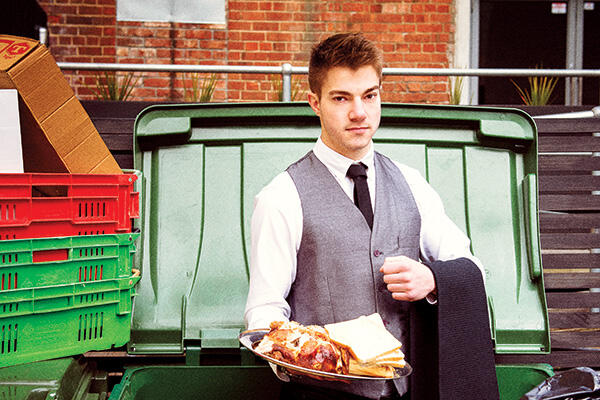
Success without excess
Simon Hoffmann provides a researched account on local and international food waste and gives suggestions on how each of us can minimise this worldwide crisis. I’m sure that at one time or another every one of us has felt a pang of guilt as we’ve binned an old carrot that slid to the bottom of the fridge, or perhaps felt discomfort when spotting a commercial skip filled with new-looking food products. Maybe you even helped yourself to some of these products and pondered why they were there in the first place as you savour your seemingly perfect yoghurt or bread. If you have, you’re not alone; you have had your very own glimpse into the world of food waste, a national and global problem. A report released in 2013 by the Institution of Mechanical Engineers estimated that between 30 per cent and 50 per cent of all food produced worldwide is wasted before it reaches human stomachs. Even at the lowest end, this would amount to around a staggering 1.3 billion tons per year. In developing countries, most wastage occurs during production. While in developed countries, increased efficiency in farming, transport, storage and processing means more food reaches consumers, but instead of this resulting in a reduction of wastage, the problem just seems to move to the retail and consumer level instead. Statistics regarding food waste in New Zealand are somewhat vague. The Ministry for the Environment (MfE) reports that 28 per cent of all landfill waste is organic (this includes kitchen waste, green waste and other food processing waste) and that the agricultural, food, and beverage sectors are responsible for a large proportion of this. A 2008 report to the MfE estimated that around 64kg per person of residential organic waste goes to landfill per year, amounting to approximately six per cent of landfill waste altogether. Waste Not looked at a sample of Auckland kerbside bins in 2008 and found that 24 per cent was food that could have been eaten, amounting to almost 1kg per household every week! So why should you care?The large amounts of energy required to produce food as well as the fact that many in New Zealand go hungry mean there is a strong moral obligation not to waste it. Food rotting in landfills is a significant source of methane, a greenhouse gas with many times the global warming power of CO2. Kept separately, food waste could be used as compost to improve soil health, fed to livestock, or digested anaerobically with the methane captured as a combustible fuel source and the remaining effluent used as fertiliser. While these methods are suitable for inedible food waste, and preferable to landfill for food waste of any kind, they still require more resources than simply making sure that good edible food doesn’t end up in the rubbish. A small study by the Australian institute estimated that approximately $155 per person and $751m in total per annum is wasted on food in NZ. According to Tristram Stuart, an author who spent three years travelling the world researching food waste, New Zealand produces 160 per cent more than the nutritional needs of its population (not including crops fed to animals or not harvested), above Australia and Japan, but below the US and most of the EU. Studies estimate that 130 per cent is a sufficient buffer against food shortage; oddly, however, no extensive studies have been done to establish this. Such figures raise the question – how are we in a situation where there’s more food than we need? Stuart explores the history of food wastage in his book Waste: Uncovering the Global Food Scandal, finding that it has waxed and waned over the years. For example, in 1930s UK only two to three per cent of calories were wasted, climbing only to between four and six per cent in the 1970s, and during WWI it was a crime to waste wheat, rye or rice. Food waste is not a new problem, though; archaeological remains from 12,000 years ago show hugely inefficient butchering of mammoths with much meat being left to rot rather than dried out. Condemnation of food waste can also be found far back in history – such as in John Locke’s 1690 Second Treatise of Government where he called food waste an offence “… against the common law of nature.” Locke considered that leaving food to waste was essentially a theft from the commons, and that by wasting food you gave up your right to possess it. Historically, consuming resources even to the point of exhaustion may have provided the boost in population required to conquer neighbouring clans and thus increase benefits to a group by allowing them to increase their territory. Similarly, a large food surplus allowed fewer members of society to have to engage in food production – allowing technological development and a large trained military force. In European history, excessive production and consumption (particularly by the rich) acted as a self regulating buffer against famine, socially acceptable until times of scarcity – where all were instructed to tighten their belts and stop fattening animals so that all could eat the remaining grain and potatoes. But most modern developed countries have long since passed these points and have more than sufficient to protect themselves from food shortages, so why have we kept going? Stuart draws parallels between the excessive feasting seen in tribal cultures and modern food production, both can be explained as a show of wealth, power and prestige. Just as one tribe wishes to show off its success to its neighbours – supermarkets pile their shelves ever higher to show their superiority over their competitors. Even food aid provided to developing nations – seemingly altruistic at first glance, has the danger of leading to loss of independence in developing nations, leading some aid agencies to call for an end to non-emergency aid. History also contains some examples of societies taking measures to alter over-consumptive systems in times of necessity, for example inhabitants of 1600s Tikopia decided to kill every pig when they realised they were unsustainable consumers of produce, and the Hindu ban on slaughtering cattle has been suggested to have originated from their difficulty to maintain as a food source and their more efficient use as farming tools, or possibly from complaints by poorer classes of wasteful sacrifices by the rich. Are we just stuck in old habits reinforced by those who profit from wasteful production systems? Are most of us just ignorant given that waste can be so easily hidden out of sight and mind from urban centres where political influence is concentrated? Is there any chance of a significant change while a capitalist system still exists? Regardless of the answers to these questions, excuses for excess seem to be fast running out as the population and temperature of the planet increases. What can we do?While infrastructure and strategies to divert food waste landfills are beneficial, the best strategy is to prevent it from being waste in the first place. So while you’re not too depressed to concentrate on the rest of your lecture, I will conclude with some suggestions and examples of ways to minimise food waste. Best-before datesThere are two types of dates you will see on food in New Zealand – a use-by date, and a best-before date. A use-by date relates to the safety of the product and is calculated by testing how long it takes the product to become unsafe for human consumption. A best-before date relates to the quality of the food, and is calculated by estimating when nutritional value or sensory characteristics start to decrease. Use-by dates are obviously mandatory for many types of foods, however, so are best-before dates in many circumstances. Both dates are likely to be on the conservative side, to encourage consumers to eat the product quickly and minimise the perception that it is the manufacturers fault if the consumer is unhappy with the product after this time. Best-before dates have been implicated as encouraging wastage due to consumers’ strict adherence to them. The European Union is currently looking at scrapping the dates and allowing consumers to figure out for themselves whether the contents of their pantry are of good enough quality to eat. The Herald reports support for this proposal from New Zealand experts also, so hopefully we will see a reduction in best-before dates soon. In the meantime, remember that a best-before date does not mean the food will be bad for you and even a use-by date is likely to be conservative. Perhaps try and re-examine your own internalised behaviours and assumptions when clearing out your fridge and pantry. I know that my background working in commercial kitchens and studying food science has trained me to be extremely risk-averse which, while beneficial when producing food for many, is likely unnecessary when just providing for myself or a few others. PlanningStuart recommends careful planning of shopping, portion sizes and use of leftovers to help minimise the amount of food thrown away (potato skins make awesome chips, by the way). However, one problem I often have is finding myself stuck with large amounts of a particular specialised ingredient once I’ve cooked a meal – and really there’s only so many meals one can use an obscure spice in before its flavours start to dull. German company Original Unvertpackt, is helping to deal with this problem by opening a “zero-waste” supermarket made up entirely of bulk-bins and fresh produce allowing consumers not only to have complete freedom of how much they buy but also to reduce packaging waste. Hopefully such stores will grow in popularity or the model will be adopted in part by supermarkets – perhaps by expanding their bulk bin selections. Diverting food-waste from landfillsInevitably no matter how good we get at buying only what we need and using it all up there is likely always going to be some food waste at consumer level such as vegetable scraps and the like. At this point, the focus changes to what happens to it. A small 2008 MfE survey estimated that 63 per cent of people compost at home, dropping to 58 per cent for the urban North Island. A 2011 study by Mobius Research showed that only 39 per cent of Aucklanders compost. I would suspect further research would show similar figures or lower for inner city areas with a lot of apartments, thus an organic waste collection service may be beneficial for inner city areas. Only five local councils in the country currently offer such a service to residential properties, however, interest appears to be picking up with the Auckland Council reporting last week a successful trial adopted by 70 per cent of North Shore homes. One News reports that the compost is processed at a facility for ten weeks and finally ends up as fertiliser or soil improver. Dunedin City Council does not currently offer this service; it was proposed in 2009 but was not pursued due to lack of demand. In the meantime, try to set up composting in your flat if possible, although this can be difficult if you are in a city apartment – we tried a Bokashi a few years ago, a nifty composting bucket available from the DCC which uses a micro-organism mix to digest food quickly and with minimal odour. It was extremely effective, however, we quickly filled up the small planters on our flat balcony and were a bit stumped as to what to do after that. Nevertheless, if you have a willing recipient for its contents once a week or so, a bokashi may be a good option for a small flat or office. On the commercial side of things, while I still hear stories of successful dumpster dive trips yielding numerous luxury products (gluten free bread and cheese seem to be the most common finds), it is heartening to see some organised food redistribution occurring. Foodshare Dunedin, and similar organisations in other major cities, collect and redistribute food donated by commercial producers to community organisations. Since 2012, Foodshare’s website states, 86,864 kilograms of food have been diverted from landfill to provide 248,185 meals. Many large food retailers also seem to be picking up on the issue and developing policies to minimise waste. Countdown’s website reports a policy of donating food to charity partners where possible and also reports donations of old bread and vegetables for farm use, while Foodstuffs recently announced a new recycling program to separate out waste and repurpose it, such as using old meat for pet food or tallow and repurposing bakery items as animal feed. Their website reports that one store reduced its waste from 11 to 3.6 tonnes. While such contributions are positive, supermarkets should also be pressured to lower their standards with regards to produce appearance – as unnecessarily high visual quality standards have been implicated as causing much waste at harvest level. For example, Stuart reports that Marks & Spencer refused to accept sandwiches from a supplier if they included the four pieces of bread from either end of the loaf! Independent audits and transparency will be crucial if the public is to have confidence in companies’ commitments. Question your local retailer about their food waste practices, and if you suspect waste – don’t be afraid to investigate and use the power of the spotlight. Question local business or your workplace as well – businesses and organisations with many people consuming food on-site should have a triple bin system with landfill, recycling and composting sections. This is yet to be seen around the University, although their website reports that there is a new initiative to compost Green Waste and food scraps for bio-gas. Future innovation?There’s nothing like a crisis to inspire creativity, and exciting innovations to deal with waste problems are coming from a number of disciplines. Finding ways to use grape skins (a waste product from the wine industry) to make dietary supplements and antioxidant additives has been a popular topic in recent years. While German company Qmilch has developed a way to manufacture a silk-like fabric using milk no longer suitable for human consumption. Otago Food Science lecturer Dr Miranda Mirosa looks from a consumer behaviour perspective at how people are cooking and why waste occurs, including why offal is under-utilised. Food waste is a complex problem, and effort and innovation from all areas of the industry is needed to ensure we can maintain a sustainable food system. However, remember that we as consumers are responsible for a large proportion of the problem – and through simple changes in behaviour at home we can reduce our environmental footprint and be drivers of change in the industry by becoming informed consumers and producers of food.
-
Columns
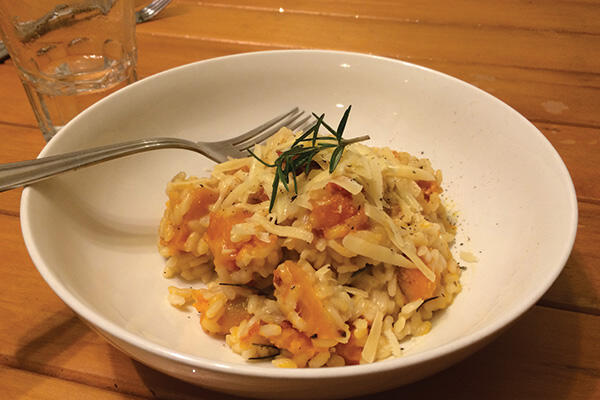
Baked pumpkin risotto
Risotto isn’t at all difficult to make. In fact, I think it is easier than a boring old bolognaise. At the end of the day a risotto of any flavour consists of a white risotto base with whatever other inclusions you want thrown in at the end. In this case it is cubes of sweet baked pumpkin. Pumpkin is one of my favourites, up there with pea risotto. The trick to any risotto is a wee bit of patience, making sure you are using the correct rice to begin with and a dash more patience. When cooking risotto you need to stir the rice constantly. This will stop the rice from burning but also help to develop the starches to form a lovely creamy and flowing texture. It usually takes around 40 minutes for the rice to cook. For the die-hard risotto fans, I recommend buying a goon of white wine to use as cooking wine. More wine equals more risotto. It doesn’t matter if it is terrible vinegary stuff. It just needs to be white. I guess you could just save a cup from Saturday night but the likelihood of that happening is low. Very low. Pumpkins this time of year are in season and super cheap. Pierce the skin with a sharp knife and pop in the oven for about 15-20 minutes to help soften it and make cutting it up a less precarious task. Roasting the pumpkin brings out the natural sweetness of the vegetable, which contrasts nicely with all the parmesan cheese you will be throwing over the top. This is also super delicious with a few slices of crispy pancetta over the top (which is cheap as chips from the New World deli). To cook the pancetta, bump the oven up to a high grill. Place the pancetta slices onto a baking tray and grill on the top shelf of the oven until the edges are crispy. This may take around four minutes. Keep a careful eye on it then slice it up and stir in and sprinkle over just before serving. Ingredients½ crown pumpkin, cut into cubes (2cm x 2cm will do) 1 ½ cups Arborio rice 1 onion, diced 5 cloves garlic (two of them minced, three of them left whole) 6-7 cups boiling water 5 teaspoons chicken stock powder 50g butter 1 cup white wine ½ cup grated parmesan plus extra to serve salt and pepper MethodToss the pumpkin cubes in a dash of oil, sprinkle with salt and pepper and bake on a lined baking tray at 180 degrees for 25 minutes or until they are soft with browning edges. Sauté the onion and the two minced cloves of garlic in the butter over a medium heat in a large saucepan until translucent, not brown. Add the Arborio rice and gently toast for a couple of minutes. Add the white wine and stir until it has all been absorbed. Add in the chicken stock powder. Gradually add the boiling water half a cup at a time, stirring constantly. Wait until the water has pretty much absorbed before adding the next cup. Add as much water as you need to bring the rice to a soft al dente texture. Stir in the grated Parmesan. Once the pumpkin has finished baking carefully fold it into the risotto. Serve up with grated Parmesan (that pancetta if you wish) and a good grinding of fresh black pepper.
-
Culture
The fault in our stars
Rating: A Of the big movies released over the break, perhaps the dark horse of these was The Fault in Our Stars. It’s an absolutely spot-on film adaptation of the New York Times number-one best-selling young adult novel by vlogbrother John Green, and it’s exciting that two more of his novels will be adapted in the coming years, riding this film’s tear-jerking success. TFIOS is a cancer story that deliberately defies the typical cancer story. Instead of featuring healthy people learning about the fragility of life from stoic sick people, this is a story about two extremely self-aware and empowered teenagers making whatever remains of their lives meaningful. Every member of the cast is perfect for their role, and indeed Shailene Woodley was actually hand-picked for the lead part by the book’s author. Teenaged cancer patients Hazel Grace Lancaster and Augustus Waters stake their hopes on visiting their favourite writer, an irritable recluse living in Amsterdam, and in the process have to face the cruelty of a universe that is totally indifferent to the plight of humanity, let alone individual “cancer kids.” But of course, what the film really embeds in you is the idea that we are all dying of something; to be alive is to be dying slowly. Hopefully we can all be as lucky as these two, who find each other and really make the most of their time with loved ones before the inexorable end, at which point literally every person in the theatre audience was bawling. Ahem. If I have one teensy niggle about the film it’s that the characters are actually too good. The charming, witty, hyper-adjusted Augustus, in particular, seems totally unlike any troubled 17-year old boy I have ever met, and resembles more the selflessly empathetic thirty-something John Green who wrote him. He seems impossibly wizened and, as such, I’m predicting, will replace even Edward Cullen as the new gold standard against which 17-year-old boys everywhere will now be measured by 16-year-old girls.
-
Culture

Maleficent
Rating: A+ Disney has outdone itself yet again by making the old-school “good girl gone bad gone good” movie into something completely refreshing. Be that as it may, this is a remake of the old animated Sleeping Beauty (1959) classic, but thankfully with a completely new and engaging twist. Immediately the audience is thrown into a land divided between humans and magical beings. These two groups don’t really get along, but against all odds, a romance blossoms between the young fairy Maleficent (Angelina Jolie) and orphan boy Stefan. Without spoiling too much, their love isn’t Disney textbook. Selfishness, greed, and revenge are so prevalent that one begins to wonder whether true love exists at all. When their rage is taken out on princess Aurora (Elle Fanning) in the form of Maleficent’s “16th birthday spinning needle eternal sleep only broken by true love’s kiss” curse, things in the kingdom take a turn for the worse. Aurora is sent away to live with fairies for protection and Maleficent spends her days toying with them all from a distance. What sets this family movie above all others is the tremendous cast. Angelina Jolie was downright amazing. Hesitant as I was about her “British” accent, I really had nothing to worry about. She played the downtrodden yet still oh-so-powerful villain to a “t.” Deservedly, she outshines everyone else in the movie, even though Elle Fanning played Aurora as if she was born for it (you go Glen Coco). My only qualms are with the story itself. Does anyone else see the logic in sending Aurora away for safety? If all the spinning wheels were burnt anyway, she’d have a much better chance of finding true love before her 16th birthday living in a castle filled with other people than being hidden away in the forest. Alas, her father wasn’t a thinker. Yet the team at Disney are thinkers. This movie was absolutely tremendous. The parallels between young Maleficent and Aurora were well drawn, and despite giving the male gender a bad rep to kids, it is a film full of good morals. Nothing but respect from me here.
-
Culture

X-Men: Days of future past
Rating: A- Every franchise, regardless of its pedigree, makes a misstep at some point. Undoubtedly, that moment for the X-Men film franchise was 2006’s X-Men: The Last Stand. However, unlike every other franchise, X-Men has narrative concepts, such as mutants that can time travel, that allow for these missteps to literally be erased from the canon. That is what Singer has done with Days of Future Past, wiping away the mistakes of the past while still retaining all the characters and events that we love and cherish. And might I add, he has made a bad-ass film in the process. Days of Future Past introduces us to a dystopian future in which humans have developed an insanely awesome army of robots called Sentinels to kill the mutants. In this future, Xavier decides to send Wolverine back in time to correct the mistakes that led to this future. In doing so, Singer unites the two time lines from X-Men films. In the future we have the long standing Xavier and Magneto played by Patrick Stewart and Ian McKellen, and in the past we have these characters as they were introduced in 2011’s X-Men: First Class played by James McAvoy and Michael Fassbender. Considering the complexity of this narrative, it is astounding how coherent the film is. Singer manages to juggle fan service without alienating mainstream audiences. For the fans, there are countless characters and Easter eggs, and for everyone there is all the grandiose spectacle and action that we have come to expect from the superhero genre. With Days of Future Past boasting a cross-section of the world’s greatest actors, it is not surprising that all of the performances were superb. However, the standout performance came from up-and-comer Evan Peters and his amazing portrayal of Quicksilver. It was awesome to see Peters create a character with all of the charm, wit and sass that made Quicksilver such a beloved character in the comic book world. X-Men: Days of Future Past is a movie that continues the recent tradition of creating rich universes in which films can exist. Singer has done a superb job of not only creating a great film, but also correcting the mistakes of the past, while simultaneously uniting the last 15 years of X-Men films within one cohesive universe.
-
Culture
A million ways to die in the west
Rating: B- This is really the sort of movie that could have gone straight to DVD and had exactly the same impact as it did in the cinema. Seth MacFarlane’s second feature film is nowhere near as funny or memorable as Ted. MacFarlane plays the lead role of Albert Stark, a nerdy sheep farmer with few friends and a contemporary mentality, living in the old west. He inadvertently gets caught up in some nasty business with the woman he falls in love with (Charlize Theron) and her a-hole husband (Liam Neeson), who happens to be the most bad-ass outlaw of the time. You know, that old chestnut. This loose plot lays the groundwork for a number of below-average, Family Guy-esque jokes that you will probably forget an hour after the movie ends. As a leading man, Seth MacFarlane does not cut the cheese. He’s awkward to watch, he isn’t that great an actor, and his only strong point is delivering self-aware jokes around intentionally less aware characters. Fortunately, he is saved from a failure of a movie with funny and interesting performances from Giovanni Ribisi, Charlize Theron and Liam Neeson. Even Sarah Silverman was more fun to watch than MacFarlane. The film’s musical score is possibly my favourite thing about the movie. It’s got a light, bouncy, nostalgic tone that takes me back to the western films of yesteryear, which is weird, because this movie completely misses the mark in every other aspect of a great western. There were a small number of cameo appearances from characters of other films, and actors that MacFarlane is friends with, and who doesn’t love a great cameo? This is not a terrible movie, but it’s not a great one. Hopefully MacFarlane uses this as a learning experience and Ted 2 will be a return to form.
-
Culture

This is not the end of the book
Rumours of the death of the book have been grossly exaggerated. In this book-length discussion, Umberto Eco and Jean-Claude Carrière celebrate the book by delving into its history and speculating on its inevitable future, since, as Eco says early on: “The book is like the spoon […] Once invented, it cannot be bettered.” This is Not the End of the Book is itself derived from a series of conversations between Eco and Carrière that have been lightly edited and arranged into chapters by Jean-Philippe de Tonnac. Even though the book is organised into chapters on, say, the impact of technology on reading, or the books we’ve lost to the ravages of time and censorship, we never lose sight of the fact that this book arose out of conversations, and so the book has this meandering, relaxed feel which is really enjoyable to read. You can imagine Eco and Carrière sitting round in Eco’s living room having a chat over some Tuscan wine. Because of this chilled out, comfortable vibe, we get a chance to “get to know” Eco and Carrière, and they both seem like erudite, intellectually curious people, with an encyclopaedia of knowledge in their heads and a perhaps surprisingly eccentric taste in books. Case in point: my favourite chapter was called “In praise of stupidity,” where Eco and Carrière discuss the books that do nothing but show how stupid their authors are. Quite rightly, they point out that these published proofs of human stupidity actually show a lot about the cultural and intellectual context of that time. But less seriously, it’s clear that for Eco and Carrière all those stupid authors are just fodder for amusement. As Carrière says, they are “faithful lovers [of stupidity…] Human stupidity can count on us.” My main complaint is, paradoxically, bound up with why I like the book. The conversational tone makes it quite an easy read, but at the same time, the book’s meandering quality means that you put the book down not really feeling like you’ve learned anything or drawn any conclusions on the topic of the book. Without a strong narrative architecture to focus your attention, the book feels a little vague, and about as tightly structured as porridge. But that’s the nature of the conversation, I suppose—it goes everywhere. So don’t pick up this book expecting heavy duty theorising or analysis. This is a beach read for the book nerd, and a pretty enjoyable one at that.
-
Culture
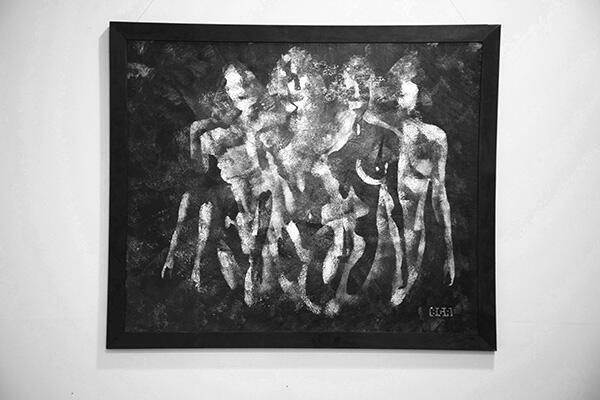
Brian Alexander - Coppertone
Mint Gallery Exhibited until 10 July 2014 Dunedin artist Brian Alexander unveils yet another solo exhibition in Dunedin at Mint Gallery this week – Coppertone. Combining influences from his original designs as well as other topics of the female form, the exhibition is comprised of 18 works, each varying in size all less than 1m x 1m, and ranging in affordable prices that sit between $150-$850 – reasonable for budding collectors. Since 2007 Brian Alexander has been an exhibiting artist. In 2007 he was accepted into local business art exhibitions such as Edinburgh Realty’s and Hope and Son’s, as well as being accepted into various art society exhibitions. In 2012 he debuted his first solo exhibition, A New Beginning, in the Dunedin Community Gallery, before curating his own exhibition in the Port Chalmers Town Hall in 2013. This was followed by his success in the Carey’s Bay Hotel charity art auction, where he entered and sold numerous works, and most recently he has been accepted into the 2014 Christchurch Art Show. A New Beginning seems to be the most direct influence on Coppertone in both style and subject. A New Beginning featured 31 abstract works, with motifs ranging from Maori symbolism to eclipses and coronas of the sun using acrylic paint, combining both neutral and metallic hues in textured layers. Alexander has confessed he is “interested in the thin veneer that covers society, saying: “Once you cut through that fabric, what lies behind it?” Justifying his interest in the conflict between what is, and what lies behind what is, and the relationship between nature and humanity. Alexander has produced a series of metallic works, covering the topics of the female form, portraits, faith, relationships and original designs inspired by nature and his imagination. In Coppertone, not dissimilar to A New Beginning – Alexander has utilised the luminescent earthly tones of black, red, gold, silver and, of course, copper to achieve images with a visual impact that stimulates contemplation on what lies beyond empirical experience. Painted on plywood, framed with raw wood that has been dyed black, the works are explicitly organic in both content and form. Moreover, the background of each painting is very similar, linking each painting to one another creating overall coherency. Murray Eskdale, curator/owner of Mint, suggested that Alexander had adopted the technique of pressing paint on plastic bags and then transferring the result onto the surface to create the background texture. The exhibition starts with the largest painting, Mantis – which displays Alexander’s interest in layering and texturing colour using both acrylic and spray paint to create dimension and definition. Alexander creates a scene of four nude female figures painted in metallic copper as well as combining areas of blackness with negative white space to create suggestions of form – a technique applied to all of the paintings in this particular exhibition. The figures remind me of a less angular and constructed, more blurred and textured version of Picasso’s ladies in his 1907 masterpiece “Les Desmoiselles d’Avigon.” Bar the blue areas, and I don’t think Alexander’s females are prostitutes; there is a similarly intriguing mythically and subtly sexually loaded aesthetic that reflects his interest in the female form. The artist also includes a self-portrait in which one half of his face is painted in gold and copper tones, and the other half is completely black space that recedes back into the canvas, and is defined by the background colours – so ominous. Other works include portraits of musicians, including Tim Finn, and other various objects and symbols including crosses, eclipses, and “cracks” – which literally show cracks in the surface of the wood, reflecting Alexander’s continual interest in what “lies behind.” The titles of the work, “Portal 2,” “Crack in the Wall” and “Into the Gap” further imply his intrigue with what is beneath the surface. It is interesting to notice how symmetry seems to be a point of interest for Alexander, as numerous works are divided in the middle by either a line, or change in colour, or some defining visual feature which creates visual conflict on each half of the canvas. This is appropriately in dialogue with his counter-balanced subjects such as male/female – nature/religion – relationships/the self. Alexander’s works are both stylistically and conceptually multilayered, and Alexander’s unique representations convey the tension he observes between humans and nature. Alexander’s Coppertone is interrogative, imaginative and radical, yet still remains understated and profoundly thought provoking.
-
Culture
Wolfenstein: The New Order
Rating: A- It is strange to think that first person shooters (FPS) are barely 20 years old, especially considering how prevalent they have become. Yet it was only in 1992 that ID Software released the very first FPS, Wolfenstein 3D. Since then, many games have made steps to evolve the genre. Franchises such as Half Life introduced new elements of storytelling, while games such as Portal integrated other forms of gameplay, including problem solving and exploration. With all of this development happening within the genre, it feels fitting that it should be a reboot of Wolfenstein that brings them all together, if only to demonstrate how far the genre has come. Wolfenstein: The New Order is a game that pays homage to its legacy, while also superbly integrating 20 years of development within something comfortably familiar. Like all Wolfenstein games, players take control of American soldier William “B.J.” Blazkowicz. However, unlike in previous instalments, B.J. is far more than just a grimacing face at the bottom of your screen. For the first time, Machine Games has created not only a substantial character out of our legendary protagonist, but also a fully realised and beautifully stylised world and story around him. The New Order tells an alternate version of history in which the Nazis create technologies that allow them to win World War II. The bulk of The New Order takes place 16 years after the world’s surrender to the Nazis, as B.J. and the resistance fight to take the world back from them. Though the tale of the resistance may be a classic, the rich array of diverse characters, themes and events included into this old narrative structure make it a truly unique and powerful adventure. Between missions, B.J. returns to the resistance base where you can explore the past and motivations of your fellow resistance fighters. In these sections B.J., and subsequently you, create relationships with many fascinating characters, the most evocative being the romantic relationship you form with Austrian nurse Anya. However, supporting characters such as the mentally disabled Max or the genius but disturbed Tekla offer fascinating conversations as well as insights into how the world under the Nazis is different. The missions are focused around destroying the new general of the Nazi empire, General Deathshead. Deathshead, as is demonstrated by his name, is a caricature of evil. However, the hideous and atrocious acts that he commits aren’t far from the acts the Nazis actually committed during WWII. From the genocide of the mentally disabled, to human experimentation, Deathshead is a stylised representation of the evil the Nazis encompassed, as well as an illustration of how much worse these acts may have become if the Nazis had gained control. This goal sees B.J. exploring locations that range from familiar to outrageously awesome. The familiar is represented by the infiltration of Deathshead’s castle, a clear homage to Castle Wolfenstein itself. Other locations include concentration camps, science facilities and Nazi museums. All of these settings, aside from offering different approaches to gunplay, give fascinating insights into this new Nazi order and what their goals and intentions are. The locations grow exponentially more extravagant, culminating in the assault of a Nazi base … on the moon! The gameplay itself seeks to both pay homage to the gunplay of ID Software’s past, while integrating some of the refined mechanics of today. The result is a first person shooter that is over the top and absurdly powerful, while still requiring some skill and precision. This is emphasised by the different approaches players can approach combat situations from. The first approach is stealth, allowing players to infiltrate areas and brutally take down Nazi soldiers with knifes and silenced weapons. The next approach is precision, using rifles and scoped weapons from cover to tactically take down an alerted group. Finally, there’s the “guns blazing” approach, endorsed by Machine games in the inclusion of dual wielding weapons, which allow you to mow down almost anything in your path. These approaches are supported by an upgrade system, which is unique in the way that upgrades are earned by completing tasks. For example to upgrade the number of throwing knifes you can carry, you simply have to kill a certain number of Nazis with throwing knifes. Machine Games’ Wolfenstein: The New Order is an all-around surprising game. No one could have expected that anyone but ID Software could create an instalment in this series that maintains the things that gamers loved about the series in the ‘90s, while bringing B.J. into the 21st century with full force. However, though the gameplay is great, I guarantee it will be the story and characters that will have you continuing to think about it for weeks afterwards.
-
Culture
New this week / Singles in review
Sharon Van Etten - Every Time The Sun Comes Up The second single from her upcoming album Are We There Yet. Sharon Van Etten crafts yet another melancholic folk song, this time over an affected drum machine. Her voice is full of substance and carries a heaviness that is beautiful, as well as rare. Parquet Courts - Instant Disassembly Brooklyn band Parquet Courts return with “Instant Disassembly.” A stoner ballad, woozy and as hungover as Andrew Savage’s delivery. As melodic and as emotionally honest as they have ever sounded. They pull it off well. White Lung - Face Down I think this is verging on metal, but still retains the brashness of punk. White Lung are a band from Vancouver set to release their album Deep Fantasy. “Face Down” is energetic and whoever is playing that guitar line is a god. Okay. That is all. The Pains of Being Pure at Heart - Simple and Sure This band was the darling of indie pop two or three years ago, with a stream of solid singles and two solid albums. Lately they’ve sort of disappeared, maybe for no apparent reason other than music is sometimes a game of trends. “Simple and Sure” is a catchy, polished, pop song. Lacking in character a little, but still well crafted. Amen Dunes - Lonely Richard Amen Dunes is Damon McMahon set to release his debut album, Love, on Sacred Bones records. “Lonely Richard” is a simple song, acoustic guitar, simple-tribal percussion, and a cool drone in the background. Sounds sort of like Love or The Velvet Underground.
-
Culture

Alex G - DSU
Rating: B+ Though DSU is Alex Giannascoli’s first album to be released on Brooklyn-based label Orchid Tapes, it’s the sixth to be uploaded to the 21-year-old’s Bandcamp page (where you can get it for free!). I first heard Alex G’s music through a girl I used to follow on tumblr who would post clips, recordings or photos of him almost every day. From what I can tell, neither her behaviour nor my method of discovery were out of the ordinary, as Giannascoli’s music continues to spread through a small-but-growing die-hard internet fanbase. His latest LP is arguably his most cohesive and well produced, though it is definitely worth going through that five album back catalogue to find gems like “Change” (from Trick) or “Dust” (Winner). In the past I’ve described Alex G to friends as “a poppy Elliott Smith” and while this remains somewhat applicable, DSU sees Giannascoli moving away from the simple layered vocal and guitar tracks that drew the comparison and moving towards his own distinct style. Whether it’s interesting instrumental choices, like the flutes on standout track “Harvey” or pitch-shifted vocals (“Rejoyce”), Alex creates a diversity in sound that was often missing from his earlier releases. However, the Smith influence can still be heard in his whispery, layered vocal delivery and instinctual ear for melody. Giannascoli’s sound is heavily indebted to ‘90s indie, with echoes of Modest Mouse (see “Serpent is Lord”) and Built to Spill. The strength of this album lies mostly in the music, with not a lot of really affecting lyrical content; often Alex’s words seem to exist purely as a means of carrying the melody. This is a shame because he’s proven with previous releases just how well he can write (see “Be Kind” or “Break” – both unreleased tracks worth finding on YouTube). Regardless, this record sees Alex G finding his voice, producing eleven good tracks, and two great ones.
-
Culture

Giveaway: Arcee - The Cool Zone EP
Local rapper Arcee is giving away two copies of her debut EP, both of which will be signed by the artist herself. To be in to win, keep an eye on the Critic Facebook page this week for details on how to enter. Her EP launch takes place on 12 July and it’s free entry, so if you’re a hip-hop fan definitely head along. Arcee has performed with artists such as Scribe and has carved a strong reputation as one of New Zealand’s up-and-coming rappers.
-
Culture

Lana Del Rey - Ultraviolence
The queen of tumblrcore returns with her sophomore album boldly titled Ultraviolence, perhaps a reference to Anthony Burgess’s A Clockwork Orange? Thus, the pop culture collage that is Del Rey’s music continues. In all honesty, it’s almost easier to start asking what isn’t a reference when analysing the artistic output of Lana Del Rey. This is by no means a negative criticism, in fact Del Rey’s brand of retropop seems to thrive from this purposefully curated, almost-excess of nostalgia. Shedding the hip-hop influenced percussion from her debut album, the songs sound now even more excavated from the heyday of baroque pop. With even grander instrumentation and huge, reverb drenched drums. This even deeper delving into the past could be due in part to Dan Auerbach (The Black Keys) producing almost the entirety of the album. Whatever it is, it definitely seems closer to the place in which Del Rey’s image was originally crafted. A manifestation of Marilyn Monroe and James Dean. Young, tragic, helpless, jaded, doomed. Now, whether or not her romanticisation of doomed love and dying young is a good thing is another story altogether. Lana Del Rey, however, does manage to re-imagine a few intriguing caricatures, and fitting soap opera fantasies to go along with them. Ultraviolence starts off incredibly strong with a slew of singles. The stretch spanning from “Cruel World” to “West Coast” is undoubtedly the peak of the album. Del Rey has a knack for crafting beautiful, melancholic, infectious melodies and it is on full display during the first 26 minutes. Lyrically there are some entertaining moments but a lot of it counts on you to buy into the drama. Title track “Ultraviolence” borrows an old line from The Crystals, “he hit me and it felt like a kiss.” The song seems to be about abuse, with a sort of Stockholm Syndrome scenario taking place. “Shades of Cool” is another take on a destructive relationship. “Brooklyn Baby,” as strong as it is, almost seems tongue-in-cheek. The song is centred around a girl who has a rad jazz collection and gets down to beat poetry. As hard as it may be to believe, it doesn’t really get any more interesting thematically, just slightly more annoying, as Del Rey starts really parodying her image with songs like “Money Power Glory” and “Fucked My Way Up To The Top.” This is not a bad record by any means, in fact at times it’s good. It does, however, require an understanding of where Del Rey is coming from to really enjoy it. To view it in its most optimistic way, Ultraviolence is an interesting character study, with Del Rey playing either a doomed femme fatale or Lolita-type character.
-
Columns
Science, Bitches | Issue 14
Last semester we introduced you to our microscopic friend yeast and its excellent role in making beer. This week let’s talk about how else we can use these wee bugs to make another delicious treat: bread! First, though: what actually is yeast? The kind used in bread, baker’s yeast, is called Saccharomyces cerevisiae. A bit of a mouthful so we’ll stick to calling it yeast. This guy is a single-celled fungus – and, yes, it is related to mushrooms and mould – that’s only a couple of thousandths of a millimetre in size! Yeasts and other fungi aren’t bacteria or animals; they’re not even plants, despite mushrooms being a pretty common vegetable in a stir-fry. Fungi are their own classification entirely. Yeast is pretty important in bread making – it’s the ingredient that makes bread rise to be lighter and airy. When we talked about beer, the yeast ate the sugars from the grains to produce carbon dioxide – the bubbles – and alcohol. The core ingredients in bread are yeast, flour, water and salt. Where does the sugar come from? Flour is full of starches, which are long-chain sugars. The yeast can break these long chains down to use as a food source, which means they will produce carbon dioxide. This is what makes the bread rise! Also in flour is gluten, a protein that makes flour sticky when mixed with water, and holds the bread together. Yeast can be a tricky beast though; you have to treat it well to get it to make your bread excellent. It likes warm temperatures – so if you’re making bread in an icebox of a flat I suggest letting it rise in the hot water cupboard. Why not combine our favourite yeast-filled products? You can use beer to make bread! This can be done a couple of different ways: you can use leftover yeast from brewing beer to make bread; or you can use a store-bought beer to make beer bread. The yeast in the bottle can be enough to make bread with, and it tastes pretty awesome. You could even put some marmite – also made from yeast – on your bread for a triple yeast hit. (Too much?) What about other baking that rises, and doesn’t have yeast? How do cakes and cookies rise? To get air into these foods, to make them rise, we use a little bit of chemistry to get the job done. Ever wondered what baking powder or baking soda does? Both of these products have sodium bicarbonate, which is a basic compound. When it reacts with something acidic it produces carbon dioxide, just like our yeast does in bread! Also like when you made that baking soda volcano back in primary school. Baking powder is a mixture of sodium bicarbonate and a weak acid. When baking powder is mixed in to the baking, and put in the oven, it reacts. Baking soda, on the other hand, needs an acid added to react. This means a recipe with baking soda will have something acidic in the recipe too, such as lemon juice or even milk. We do pretty well without yeast here, but you won’t see me making beer or bread with baking powder! Now that you know the secrets of yeast, grab a beer and make some bread. Then grab some more beer, and have some friends over to try your yeast creations. Cheers to beer and bread, cheers to yeast, and cheers to the science that taught us how to use it, bitches.
-
Columns

Queer Eye | Issue 14
While you were toiling over your examinations and then heading home for the break, your mate Sir Lloyd was undertaking a grand tour of the ancient world. In amongst the museums, Roman ruins and pizzeria visits, there was one thing that really struck me; that being the number of cocks I was looking at. Most of these cocks were either painted or carved from marble and some were among the most famous in all of history. One of the more memorable of these cocks was David’s, from Michelangelo’s depiction of the Biblical character. I had to queue for more than two hours to see this particular cock. While the cock itself was fairly underwhelming, as a part of David’s overall physique the experience was quite remarkable. I sat and stared for quite some time at his naked form, as did thousands of other people that day. So why did an exposure to so much cock have such a great impact on me? It seems that in our present Western society genitalia is something to be hidden because it is taboo or a source of shame. Indeed it is rare to see an image of a naked body outside of pornography. Most people would agree that this has been brought about by the influence of Christian sexual values. This seems logical when you consider that from the mid 1500s a succession of Popes have ordered the censorship of art within the Vatican walls. This means that a host of priceless ancient and renaissance sculptures have had their phalluses removed and replaced with a fig leaf. Apparently these marble dildos are hanging out in a box in the basement waiting for a more progressive Pope to order them to be reattached! Unfortunately this censorship didn’t just apply to statues as even some of the most famous paintings in all of history got some clothing added later in their lives. One example followed Michelangelo’s completion of his Last Judgement fresco in the Sistine Chapel. Cardinal Biagio da Cesena complained that “it was mostly disgraceful that in so sacred a place there should have been depicted all those nude figures, exposing themselves so shamefully,” and that it was no work for a papal chapel but rather “for the public baths and taverns.” Michelangelo retaliated by painting Cesena’s face into the scene as Minos, judge of the underworld, complete with Donkey ears and his willy being devoured by a coiled snake. This act of artistic desecration wasn’t just the whim of a single Cardinal, rather part of a much larger societal shift. This was the time when the Protestant Reformation was heavily critiquing the Roman Catholic Church for its corruption, lavishness and hypocrisy. The Catholics responded with the Council of Trent which, among other things, decreed that in art, “all lasciviousness will be avoided; in such wise that figures shall not be painted or adorned with a beauty exciting to lust.” These movements of Reformation and Counter Reformation have both hugely impacted the social mores of the Western world. In order to be more integrated with our sexual selves we all must become more integrated with our sexuality.
-
Columns

Defending the kingdom | Issue 14
On a cold Dunedin evening in June, the Centre for Science Communication hosted acclaimed British ethnologist and UN Messenger of Peace Dr. Jane Goodall at the Regent Theatre during her 2014 tour. Dr. Goodall is perhaps best known for her work on social and family interactions of chimpanzees in Tanzania, of which she regaled the audience with many stories. However, Dr. Goodall is also an animal advocate and conservationist, who has worked tirelessly on a number of conservation and animal welfare issues. Only recently she called for the Vancouver Aquarium to phase out its captive whale and dolphin population, and along with other celebrities, urged U.S. President Barack Obama to help end illegal ivory trading. One might have expected, therefore, that Dr. Goodall would talk about the many issues of animal welfare she has dealt with over the years. However, her talk instead focused mostly on one particular animal: homo sapien. More specifically, her talk looked at the capacity for humans to create change in the environment, for good and for bad. It was a message that was neither positive nor negative, merely a reminder that the choices we make have consequences to the world around us and it is therefore important that we strive to do what is best for the planet we call home. For every tale of deforestation, climate change, or ocean acidification caused by human activity, Dr. Goodall reminded the audience of the ability of humans to bring about positive changes through their actions. One such local example given during her talk was that of the Chatham Islands black robin, which in 1980 had been limited to only five birds, with just a single breeding pair. Through the resolute efforts of New Zealand conservationist Don Merton and his Wildlife Service team, the black robin has since then been brought back from the brink of extinction to a population of around 250. Even positive actions seemingly unrelated to the idea of conservation can help protect our environment. Dr. Goodall spoke of her time in Africa, noting that sometimes in order to protect the habitats of the chimpanzees from being lost through deforestation, and to avoid the poaching of chimpanzees for food, often all that was needed was to address the root cause of the issue, namely the social poverty which affected the locals. By helping to alleviate this poverty through education, something which many would see as a purely social action, it reduced the need for those people to cut down the forests and to go poaching, thus indirectly helping to preserve the chimpanzees. Ultimately, Dr. Goodall surmised that every single person makes decisions every day that have an effect on the world we live in, yet, in spite of how intelligent we are, we are destroying our only home. It is therefore never too late to start making a difference for the better. So whether you volunteer at an animal shelter, choose to go vegan, advocate for conservation or social efforts, or simply make ethical decisions when shopping, every positive step is a step towards a future that is environmentally sustainable.
-
Culture

Interview: Peter Dunne - United Future Leader
You were the President of the University of Canterbury Students’ Association, so obviously you would care a bit about student politics. What do you see as the biggest issues for students at the moment? Why should students vote for you; what would you do about those issues? Well, if I go back to my experience, I was president of Canterbury the year that the students took over running the student union and broke away from the University and set up the basis that they’re autonomous and independent, etc. So I guess the first thing I’d say is trust people; this is the next generation of leaders coming through. I think that for students one of the issues that I’m quite concerned about, and I’ve been talking to NZUSA about it, is it’s not just about student representation; it’s about good governance of institutions and the contributions students make and how you get students interested and aware of and involved in governance. Because I think that’s important to the institution, but it’s also important for what they might do subsequently. So yeah, I have a particularly strong interest in that area. I agree with that. Our voter turnout for OUSA last year was exceptionally high, historically, and it was only 25 per cent. Yeah, well at one level it’s about who the student exec is and all of that sort of thing, but at another level it’s about what’s going on in departments, how students are being represented, how do those views then fit into the whole in terms of what’s coming up to the University council or whatever, and are those views more than just those idiosyncratic views of the particular individual? At the moment it’s almost quite easy to say, “That’s not the student view, that’s just his or her view,” and I think there’s a much greater role for students in governance. Yeah, and thinking about it more generationally as well. Alright, so what’s your take on the student loan scheme and allowances and the like? Well, look: at the moment we have a student loan scheme that I think works as well as it can within the circumstances, but I think fundamentally it’s time to look at what you want. And although the numbers don’t entirely add up, my argument would be to say let’s have no fees, or no fees borne by the students – the fees would still be imposed [but] effectively the cost is borne by having no student allowances, so you trade one off for the other. You allow students obviously to work part time and borrow for their living costs within the same parameters at the moment, but what that means is the cost of the loan comes down dramatically, and it doesn’t matter if you’re doing your first degree or a postgrad degree; the costs are broadly the same. It also puts pressure, because you’ve identified a fixed sum, a fees bucket, it puts pressure on the institutions in terms of what they want to impose. Because there will be people who stand outside the system. So the argument at the moment – someone in my office said to me the other day that when they began in their studies over the last seven or eight years, the fees per course was about $600. Now, it’s about $3,000. And so where’s the pressure on the institutions to keep their costs down? And I think that one of the trade-offs here is to say, if you’ve got a fixed bucket, okay Otago University or Canterbury or whatever, you justify your fees within that bucket. It’s really interesting, when I first raised this, Vice Chancellors thought this was a great idea until they thought about what it meant to them. They said it was unfair, but they don’t mean to students – they mean to them. Okay. So for you, your year has been an interesting one to follow. One thing that is relevant to the live-and-let-live attitude of students has been the legal highs. Now, we covered it quite extensively in Critic back in 2012, and I just wonder what’s going on? It’s been quite hard to follow, and it seems that it’s been portrayed as changing hugely but I don’t know that it necessarily has? No, it hasn’t, and that’s the point I’m trying to make. That if you wind the clock back to this time last year, if we knew then what we know now I wouldn’t have had the interim regime. I would’ve said all products were off the shelf until they were proven to be safe. But I figured that since for some there was no visible perception of risk with, and I still think that’s the case, and therefore pragmatically you’d still let them stick around. The transition’s taken far longer than we anticipated because the testing regime takes time, and then when we had all this uproar early in the year led mostly by some local councils and others who had vested interests, I just felt that we were in danger of a situation occurring whereby the Government would say, “stuff it, we’ll just ban the whole lot.” Which is impractical, it doesn’t work, and it would’ve been disastrous because it would’ve driven the whole trade up. So that was why I thought, okay, there’s a pragmatic way through here, let’s just pull the ones that are on the shelves at the moment, say we’re just going to put them all into the testing regime, and so that’s what we’ve done. People say, “Oh, you’ve done a u-turn, you’ve introduced a ban, you’ve done all the things you said you’d never do,” but no, all we did was say that those interim products have had their approvals withdrawn. Well, you’ll find this question to be another tired old tune – you’re a liberal centrist party. I feel like the tide is turning in the wider population’s opinion on marijuana. How do you match up this public opinion with the supposed evidence you have for its hazards? Well, we need to be evidence based, and I’m aware of some polling that’s going to come out shortly that shows the public tide has turned far less than people think. But for me it’s the evidence, and if the evidence was there … The argument that you’ve let alcohol out of the stable and you’ve let tobacco out, well you’re going back hundreds of years there and I don’t think those arguments still apply. But if you say, well, if you’re talking purely about safety and risk, if the evidence was there that there is no risk or there’s very little risk or there’s no threat to safety, then for me it doesn’t matter whether it’s marijuana or something more serious – that should be the governing point. But my role, as Associate Minister of Health, is to protect the public interest in terms of protecting the public’s safety. Exactly as it is with psychoactives and the slightly different situation with tobacco and alcohol. All right, so, back to the centrist thing. In the unlikely scenario that they’re in a position to form a government, would you look at going into government with Labour and the Greens? Well I’ll tell you what my answer is to that. I’ve never ever, with any government, seen this in terms of “this group or that group.” It’s about policies. And it’s about policy compatibility. Now, that’s on two sides. On the one hand they may agree to do some things that we want to do; on the other side is would the price be one that’s too high to pay? Now, I made a pretty strong stand throughout my career of opposing high taxes, opposing things like capital gains taxes, and so they are central to Labour’s campaign, and so the idea of saying “oh yeah, I’ll actually vote with you and for those things that I’ve strongly opposed,” is pretty difficult. That’s what it comes down to, and there’d be other examples. Cool. Well, that’s all the questions I’ve got for this short amount of time, but to do the student media thing and throw you a curve-ball… I’ve gone a bit left-field on this one. Back in 2012 when we were following the legal highs, we took particular pride in Photoshopping you (pulls out defamatory poster – see page five. “Ah!”) and I was wondering if you’d sign this? Sure! I haven’t smoked a tobacco cigarette since 1971, and it would be a little less time but probably since the 70s that I’ve smoked any form of cigarette, so … Do I just sign it up here? Yeah, thanks! I like that! This is really good! (Laughs) Thank you very much, Peter.
-
Columns

Love is Blind | Issue 14
Critic’s infamous blind date column brings you weekly shutdowns, hilariously mismatched pairs, and the occasional hookup. Each week, we lure two singletons to Di Lusso, ply them with food and alcohol, then wait for their reports to arrive in our inbox. If this sounds like you, email critic@critic.co.nz. But be warned – if you dine on the free food and dash without sending us a writeup, a Critic writer will write one under your name. And that won’t end well for you. SethNot one to waste time, I’d barely got back to my flat from a mid-winter day at the beach when, in a panic, I realised that in five minutes I was due at Di Lusso. The half-hour walk from Scarfieville has never been covered so quickly, my panic only appearing when already halfway there because a) I hadn’t had time to change out of my fat pants; and b) I was working up a Kim Dotcom-level sweat. Stumbling into the establishment only ten minutes late, my panic increased further when there was no sign of my date. How impatient was this girl? Alas, my panic was unfounded this time. It turned out she had a similar day but actually took the time to get ready; she was a full half hour late and I pounced on the opportunity to down the couple of drinks I’d meant to have at my flat beforehand (albeit much nicer ones). Despite her tardiness, my date was absolutely stunning. Her smile was infectious and I could immediately see that this was someone who could have excellent conversations with anyone from David Bain to her grandmother. Unsurprisingly, we got on really well. We agreed on almost everything and ploughed through the bar tab and food in what I’d imagine would’ve looked like the cutest first date of all time. It would seem that I had absolutely nothing to worry about; a pleasant change from the disastrous first dates I’d been on in the past. In particular, she was super interested in French tecktonik dancing, which, I must admit, was a real surprise. She seemed to know every artist that I threw at her and more than held up her end of the conversation. I think I was falling in love just a little bit. Unfortunately she had a class first thing in the morning but we went out for another few drinks regardless to keep the night going for just a bit longer. We also made sure to exchange numbers before parting ways – I’ll definitely be in contact. SamanthaOne thing I believe in this world is that pretty people shouldn’t have to wait, and so assuming that my date would be yet another male slowpoke, I was content to take my time looking fabulous. When I arrived at Di Lusso, it was a shame to find that Boy was anything but a match for me. He redefined the idea of “sloppy dresser” to the point that I felt more embarrassed for him than for me considering the wonderful venue, and his conversation wasn’t even close to the game. Luckily I’d been drinking a bit while I got myself ready so I basically propped up the entire evening. To be fair I’m relatively fussy and this has happened before; I took it in my stride. I kept stealing a few moments with my phone to go on Tinder – in theory I could find someone to make up for the doomed situation but the city seemed to be dry thanks to the Uni break. I even messaged some old flames but apparently to no avail. Ah well! If only Boy knew the potential had he put in more effort … If my mind wasn’t already made up, it didn’t help that he raved (excuse the pun) on and on about some incredibly strange form of electronic dancing. Like, I mean a good half-hour monologue followed by a short demonstration of seizure-like arm flailing that everyone in the bar took great awkward delight in observing. The date had turned into a next-level train-wreck quite unlike anything I had ever experienced. But an experience it certainly was, and I’m not one to miss out on a good story so I guess I kind of encouraged him. What a bitch, but YOLO. To be fair, he had a really cute, dejected look on his face when I made up some since-forgotten excuse for leaving (I figured I’d be gentle), and so I agreed to go out for just one more drink. Back to the flat after that where I substituted the warmth of man for the warmth of my over-heating MacBook and some Gossip Girl.


