
-
Columns

Editorial | Issue 09
I sincerely dislike public holidays. I understand that many others do, too. Before I explain, I feel the need to emphasise that I am a big supporter of increasing workers’ rights. I’m not at all a fan of what currently seems to be an inevitable enslavement by employment, I understand the importance of family time, and after editing Critic for just two months I definitely understand why people need holidays. But let’s be honest here. Public holidays are a momentous pain in the ass. You have to plot your life well ahead of the one-hour window that most of us operate by (even the damn supermarkets are closed) and if you do so happen to find a business that’s open, you’ll get whacked with a whopping great surcharge. It also strikes me that cell phones and emails have made public holidays rather useless, anyway. It seems that although everyone else conveniently hides from the day, there’s always something urgent that you need to do; some piece of work that you’ve been meaning to catch up on or a task that a family member pushes your way. As for Easter, in particular, can someone please remind us why one can’t buy alcohol, even if you are fortunate enough to stumble across a shop that stayed open? Everyone, of course, has a right to religion – it’s the sort of right that should always be defended even by those it doesn’t strictly apply to. But on the same note, we should be stepping back to think when a nationwide affiliation with religion restricts everyone else’s lives. Alcohol does a lot of societal harm; so much so that I could almost entertain the thought of having an arbitrary alcohol awareness day that restricted its sale. But please don’t link it up with a religious holiday. So how many such holidays do we have? 11 all-up, by my count, if you include Otago Anniversary. Why don’t we add one more and just say that everyone gets the equivalent of a three-day weekend once a month? That way, entire businesses can simply reshuffle staff and not be penalised a day of revenue, and if you want to get a flat white from your favourite cafe just around the corner, you can. The meanings behind these days in the wider populace are increasingly being lost, anyway. And if any of the days we currently celebrate do have particular meaning to an individual, there’d be nothing stopping them from cashing in their holidays on the same days as we’re currently forced into. I don’t know, maybe there are international reasons for certain areas closing up. For example, perhaps there’s no point in the New Zealand Stock Exchange operating when everyone else around the world is having a family dinner. But the question I have is this: why would you make everyone’s life more difficult as a reward for working hard? Thanks to a combination of Easter Monday, Otago Anniversary being observed by the University last Tuesday, and our printers being closed for ANZAC Day on Friday, last week technically saw Critic forced into a one-day production cycle. Now, we’re all rather dedicated here, so this isn’t strictly true, but making Critic requires endless phone calls, content sourcing, and coffee runs. With most of these unable to be achieved until print day, it made life pretty difficult. My editorial photo has nothing to do with this whatsoever. But now that I think of it – what would Winston do? Politics Editor Carys Goodwin interviews him on page 12. Zane Pocock Critic Editor
-
News
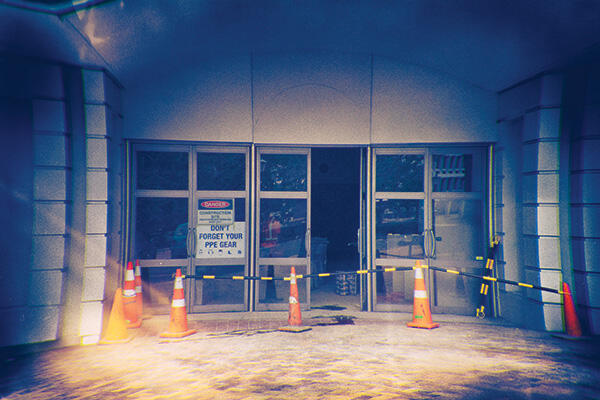
Hoyts closure corporate battle with rival Reading
Reading Cinemas is set to open in the middle of 2014, following the unexpected closure of Hoyts last year. The ODT reported that Hoyts was forced to close because it was “unable to negotiate favourable terms” regarding the lease renewal. Further investigation, however, indicates that Hoyts’ tenancy would inevitably have come to an end anyway after rival, Reading Cinemas, purchased the building seven years ago, presumably with a long term intention of having a presence in Dunedin. Hoyts’ General Operations Manager, Matthew Garelli, said that when the lease was coming to an end in August, they fought hard to renew it but “negotiations could not be agreed on” and they left the premises in September 2013. Hoyts attempted to renew their lease with the building’s owners but, as it turned out, the landlords also owned Reading Cinemas as well as being part owners of Rialto. Garelli said they were aware of this fact but it was “certainly a site I did not want to let go.” A former manager of Hoyts claimed that Reading Cinemas priced the rent for the new lease so high that it meant staying would not be commercially viable. Reading Cinemas’ Managing Director Wayne Smith denies this, instead saying that Hoyts gave up the opportunity to stay in Dunedin years ago and were aware that renewing the lease would not be an option. Smith was the executive manager of Hoyts New Zealand for 23 years until 2004, when he became managing director of Reading Cinemas. Smith’s investment company purchased the building in 2007, following its public sale. “Hoyts had every opportunity to buy it back then,” said Smith. He says Hoyts had an equal opportunity to invest back in 2007 as a “much bigger company with much bigger resources.” Despite the building being converted to a cinema, all furnishing, projectors and even the carpets were stripped from the building and sent to other cinemas nationwide that were in need of replacement chattels. Garelli said that “as per the lease terms, it had to be restored to its original condition.” This meant they returned it to the empty concrete block it was received as in 1993. Smith said that Reading Cinemas did attempt to buy the chattels but Hoyts wanted a seven-figure sum for them, despite the “appalling” conditions of the furnishings. “The carpet was worn down to the concrete.” He says Hoyts “did us a favour” by putting such a high price tag on the fittings as it forced Reading Cinemas to start from scratch, “giving Dunedin a brand new cinema.” Smith says five million dollars is now being invested into the local community “to replace a cinema no one would be proud of.” A former Hoyts Duty Manager told Critic the closure was “most certainly unexpected for everyone” and that staff felt like they were “left in the dark.” Hoyts staff members were only notified one month prior to Hoyts closing and over half the staff took more than a month to find alternative employment. A former manager said that she felt some ex-employees may have missed out on jobs because local employers have a negative view of how Hoyts ended. “They think it shut down because it wasn’t making enough money, when in fact it was doing very well.” She says that “people should know that Hoyts did not leave because of lack of success.” She described the take-over as a “corporate battle” between the two cinema companies. Smith says there is “no hard luck story” for the staff because there will be new jobs and new opportunities. He said delays on opening had occurred because the building approval took three months and the five million dollar refurbishments are “a good five months’ worth of work.” Garelli said it is unlikely Hoyts will relocate in Dunedin because “the market just isn’t big enough here [for another multiplex].” This follows reports to the ODT last year that “we would reconsider reopening in the future, if we were able to find a viable venue.” He disagrees with comments made regarding the chattels but would not disclose any further information. “We begrudgingly had to leave a territory we had operated in successfully for a significant length of time.” Craig Robinson, Manager of Dunedin’s Rialto Cinema, said that since the closure of Hoyts “we have obviously been busier” but he was not concerned about the arrival of Reading Cinema. “I’m sure we will keep our customer base as it’s all about loyalty.”
-
News
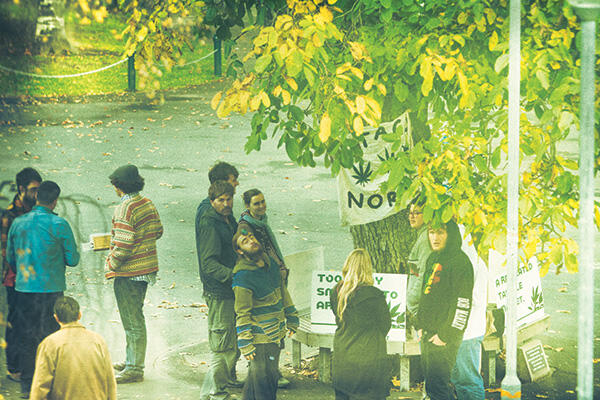
Direct order leads to less than NORML confrontation
A number of confrontations between Campus Watch, the Police and Otago NORML’s 4:20 protests have left speculations rife that the University is attempting to remove the protest group from Campus. A recent incident culminated in Police almost trespassing a member of NORML after he was mistakenly identified as a non-student smoking on Campus with the group after Police were called to assist Campus Watch. Otago NORML smokesperson Abe Gray indicated to Critic that on two occasions, 9 April and 11 April, Campus Watch arrived and “started harassing people saying they’d had a complaint people were smoking.” Gray said the first incident, which he was not present at, involved Campus Watch threatening to trespass those without IDs and “a bunch of people flee because of the intimidation.” A second and similar incident occurred two days later. Gray arrived 20 minutes late to the Friday protest and “thought something was off.” Gray said a member of Campus Watch indicated to him that there was a “direct order” from the VC, with the intention of removing the 4:20 club from campus. Police were then called after protestors refused to move and pass on details. Gray then noticed an officer filling out a trespass order for Julian Crawford, leader of the Aotearoa Legalise Cannabis Party, who had arrived with Gray. “For some reason Campus Watch had said that was one of the guys smoking.” He said the confusion was a case of “mistaken identity because of [Crawford’s] jacket” and the order was ripped up when Campus Watch verified Crawford was not one of the offending smokers. “It was, like, that close,” said Gray. Whether the University is attempting to shut down the protests was not addressed by the University in a statement to Critic. Director of Student Services David Richardson indicated that a complaint regarding the incident was made and investigated and “further inquiries are underway, with the Police and the Proctor involved.” He said the Proctor would deal with students in breach of the University’s Code of Conduct, while issues concerning non-students would be a police matter. Gray said that, since the incident, the protest group have been more cautious, but that “if the University would just acknowledge us and work with us, then we would like that.” Since the incident, protests now have “more responsible organisers,” but Gray did acknowledge that they can’t police everyone. “We will definitely tell anyone smoking tobacco to put it out. But it’s kind of awkward when people passing through smoking stop to talk to us.”
-
News

Environmentally friendly parking tickets rolled out
The Dunedin City Council has introduced environmentally friendly receipts for 90 per cent of the 400 pay-and-display meters in the city. Replacing the previous plastic-coated tickets, the new receipts will be made from 100 per cent paper, meaning they are completely biodegradable. Community and Environment Committee Chairwoman Cr Jinty MacTavish said the new receipts will reduce the amount of litter and pollution on beaches and the marine environment, and such continual refinement is “in line with our vision of becoming a zero waste city.” She added that the new receipts have no plastic coating and that the receipts can be recycled in residents’ yellow kerbside bins. Cr MacTavish said that the new initiative will come at no extra cost, and the paper would be sourced from the same Auckland supplier. The need for change was seen three years ago when those involved in coastal clean-ups around the area were finding a number of plastic-coated receipts on beaches, especially in the Otago Harbour. The concerns were then included in the Annual Plan process, to which the Council responded by trialling paper alternatives in October last year. Brent Bachop, Citifleet/Citipark Team Leader, said that while advice from meter manufacturers had indicated the paper needed a plastic coating to work properly in the machines, the trial revealed that the 100 per cent paper receipts also worked. The former plastic receipts will be entirely phased out as the new paper alternatives are brought in. The DCC is currently the only local authority in Australisia using paper receipts for pay-and-display machines. Cr MacTavish says, “This great result shows how rewarding it can be – and how simple it can be!” With pay-and-display meters placed around many University Buildings and popular flatting areas, students will be directly affected by the change. Critic spoke to University of Otago student Bonnie O’Donoghue who said, “knowing that I’ll be saving the environment [while producing carbon emissions from my car] is really the icing on top of the cake.” Grace Borgdorff also added that she would now “be far more enthusiastic to use pay-and-display machines around the city.” Critic suggests that the paper receipts may also double as extra note paper to write passive aggressive notes around the flat, as well as being an alternative to using the pages of Critic as toilet paper when the flat’s supplies are depleted.
-
News
Execrable | Issue 9
The Executive meeting held on 15 April was complete with guest proposals, agenda thieves, and banter on Winston Peters’ campus visit. Kicking off the meeting, guest Sue Heap spoke to her proposal for OUSA to “look into the matter of street harassment.” Proposed courses of action were to produce a pamphlet for victims to distribute to their harassers, and to push for inclusion of the issue in the University’s Code of Conduct. This was received relatively well, however, it was agreed that further investigation is necessary. Henri expressed enthusiasm not just for the proposal being discussed but also for a much wider initiative, while Nick sought further clarification on the target and scope of such an initiative. Tabled for now, the discussion will no doubt be revisited in due course. Following this was another guest proposal. Tabled by Fiona Nicoll, it sought OUSA’s support in requesting the presence of gender-neutral bathrooms around campus. Pointing to examples such as halls of residence where, if you’re all honest, gender neutral bathrooms aren’t really an issue, the proposal found “total support” from Nick and Brydie, with Henri proposing that there should be half a dozen such bathrooms “at minimum” around campus to begin with. At the conclusion of discussions, a motion moved by Brydie and Nick expressed “general support” from the Executive. In matters arising from the minutes of the last Executive meeting, it was noted that the Executive had still not received Nali’s extended quarterly report. Moving on to each Executive member’s general round-up, Ryan saw the Hyde Street party as a “big success,” noting that “the rain helped control it.” Henri mentioned that he had recently been brainstorming with the University for a combined Uni-OUSA app, and Kamil championed International Sports Day as a success due to diverse participation. Nick was called out for being enamoured by Winston Peters, to which he admitted, “I did love him, but it’s just not realistic to support him.” Brydie, following on from the last meeting’s revelation that hall of residence balls would be required to use internal services, said that in her discussion with stakeholders they proved “convincing, like Winston is, on the benefits of internal services,” but hopes that the mandatory use of such services will be more relaxed next year. Mariana had been hard at work planning for the Te Roopu ball and a first-year Amazing Race in Te Reo, and newcomer Laura (welcome, we’ll be nice this week!) had already commenced discussions with OUSA Student Support about class representatives. It was briefly mentioned that the by-election, which saw Laura emerge victorious as the new Education Officer, “went well but uneventful.” It must be noted here that Nick then took the opportunity express opposition to Critic being granted speaking rights for the duration of the Executive meeting, but fortunately for us, no other Executive member has quite yet crossed the threshold of complete distrust in us. He had also, in a striking lack of preparedness, stolen Critic’s copy of the agenda. We’re not bitter
-
News
Kiwis traverse Europe with help of bobbies
A chaotic seven days traversing 1,000km across Europe has seen three Otago students take out a number of places among a huge group of international teams in Red Bull’s “Can You Make It” challenge. Representing the University of Otago were Tish McNicol, Finn Henry and Chessie Henry, also known as the “Freedom Hunters,” who were the only Australasian team chosen to be part of the 100-team field. Beginning their journey on 4 April, the trio finished up placing fourth in the number of cans earned (276), sixth in distance per can (22km), 16th in the number of countries reached (six), and 18th in checkpoints reached (eight). Critic caught up with team member Tish McNicol, who had a number of wild tales to recount of their journey, including a number of special people that helped them along the way. McNicol recounted the first memorable personality they encountered when stranded at Victoria Station in a struggle to reach their next checkpoint in Oxford. After fruitless attempts to bribe train station staff and strangers to take them to Oxford, “Finn and I were seriously contemplating what plan F was going to be, when the security guard suddenly opened the gate to the platform, and was like, ‘run!’” As the team sprinted through the gates he yelled “My name’s Bobby, remember me!!” From then on anyone who displayed a good deed was a Bobby, “For the record there were many more Bobbies to come.” The trio met another Bobby, actually called David, in Linz, Austria who drove the team to their next checkpoint. “On our way to the checkpoint building he met us at the entrance and said ‘change of plans, I want to take you out for lunch.’” David then took the trio to an “amazing restaurant and said we could order whatever we wanted.” David explained that he had once been on the receiving end of such generosity as a 25-year-old hitchhiking to London and “that this was his time to repay the favour.” In true Dunedin spirit, the journey wouldn’t be complete without the after party. The team “seriously lost it,” partying on the 20th floor of a skyscraper in the middle of Berlin. “All the walls were windows so you could see 360 degrees of city lights,” McNicol said. “All in all it was the most amazing, ridiculous adventure! I think what is so amazing about the whole journey was experiencing so much kindness from complete strangers.”
-
News
$1 million dollar microscope first in New Zealand
The University of Otago has recently paid one million dollars for a state-of-the-art microscope that will allow researchers to study the development of neurological diseases such as Alzheimer’s and Parkinson’s. For the first time, Otago medical scientists will be able to view and analyse living brain cells, with the “multiphoton microscope” being the only one of its kind in New Zealand and one of only a handful worldwide. The microscope uses a powerful but harmless infra-red light to literally see into tissues and organs, including the brain, lungs, skin, gut and lymph nodes. Associate Professor Ruth Empson, of the Department of Physiology and the University’s Brain Health Research Centre, said at the unveiling of the Microscope it was all “incredibly exciting,” according to the ODT. Empson said in a press release that “it is very appropriate that the Department of Physiology is driving this initiative since physiology is the scientific discipline that aims to understand how living things work.” Empson said having the ability to see into hugely complex structures such as the brain, and being able to measure their electrical impulses, will revolutionise our understanding of the cells. “Understanding how they work is critical for fixing them, so the knowledge developed with this new microscope will help answer important questions in human health and diseases including stroke, arrhythmia, wound healing and irritable bowel disease.” It will be especially useful in the understanding of mental illnesses and brain traumas. “We will be able to see how these impulses change or malfunction in response to a brain trauma such as a stroke, or diseases such as Parkinson’s or Alzheimer’s. We will also be able to visualise changes in brain structure during development, across puberty, right through to old age.” Professor Richard Blaikie, Deputy Vice- Chancellor (Research and Enterprise), said that the new microscope was a “powerful new tool,” and highlights how dedicated the University is to providing state-of-the-art facilities and research. It will allow researchers to “look at the microscopic intricacies of living systems in literally a brand new light,” he said. Professor Empson and fellow physiology researchers Dr. Karl Iremonger and Dr. Peter Jones were among those who fought to acquire the microscope. The microscope was funded with the assistance of NZ Lottery Health as well as a number of University of Otago sources. It is being housed at the Otago Centre for Confocal Microscopy on Great King Street.
-
News
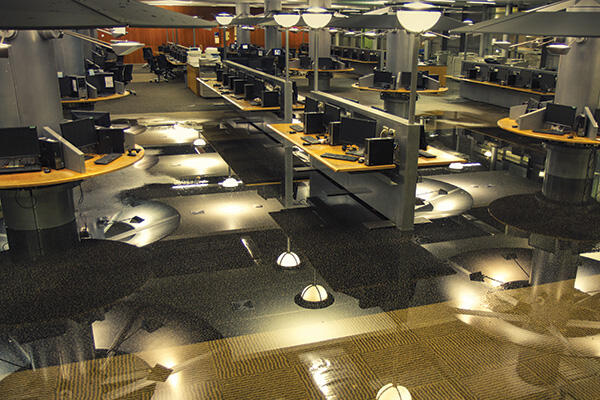
Burst pipe streams deluge onto unsuspecting nerds
More than half of the Central Library’s ground floor computer lab was forced out of commission during library hours after thousands of litres of water flooded the area prior to the Easter Break. A burst water pipe in the ceiling caused water to cascade from light fittings both in the Central Library and in the Link and caused some disruption to students who were still undergoing mid-semester assignments on Wednesday prior to the break. The incident meant 68 (around half) of the computers in the central Library computer lab were listed as being offline, however, the entire lab was closed as a precaution. The area was subsequently cordoned off and dealt with by the Campus Watch Office because it was outside the core hours of 8:30am to 5:00pm, according to Central Services Manager Maureen Miller. Miller indicated that in situations such as this, the Campus Watch Office has access to emergency contact numbers for trades staff and others who may be required to respond. “On this occasion a Property Services plumber and an electrician were called onsite to stop the water flow and to isolate the electrical systems in the area.” She indicated an external carpet cleaning contractor had been called to vacuum up the water and to provide air driers in order to dry the effected carpet and furniture as quickly as possible. The flood spilled “approximately 3,000 to 4,000 litres of water into the ERA area on the ground floor of the Central Library.” The area had to be cordoned off while a clean up was undertaken and access to the computers and printers was withdrawn. “There was very little effect on the students as computers and printers were available in other Libraries around the system, and, due to the impending Easter break, occupancy in the building was very light.” Updates were given via Facebook as to the availability of alternative computers during the flood. The cost of the clean up was not yet known as the relevant invoices had yet to come in, but it was expected to be “relatively low because the situation was contained quickly.” While computer access was restored by 9am the following morning, the multifunctional devices in the area, which are used for printing, copying and scanning, were not available until mid-morning of the Wednesday after Easter.
-
Columns
David Clark | Issue 09
Not so long ago, Dunedin’s homeless were regarded as an idiosyncrasy, known by name to students, and looked out for. Now they are becoming too numerous to care about – or so it seems. People don’t stop to speak with the homeless. Instead of an idiosyncrasy, their ubiquity is turning them into an anonymous urban backdrop. The growing gap between rich and poor is most starkly seen in the growing number of homeless people in towns around New Zealand. Together with a few other supporters of Dunedin’s Night Shelter, I recently slept under the Octagon Gazebo. For me the experience was a positive one. For many who sleep rough, it is not. The members of the Night Shelter Trust I joined in the Octagon are fundraising. The Lees Street property the Trust currently rents is Dunedin’s only night shelter, and they want to buy it to ensure the sustainability of the service they provide to our community. The Dunedin Night Shelter provides emergency accommodation for those who find themselves out in the cold at short notice. Sometimes this can be triggered by a domestic situation, or a mental health episode, or release from prison, or it can simply be a bridge between two rental situations for those on tight budgets. The Shelter provides up to three nights’ accommodation, no more. It fills an important niche. Unfortunately, demand for their services is growing apace. I wish them well in their fundraising efforts, and encourage those with means to support them. Visit dunedinnightshelter.co.nz. The wider issue of homelessness resembles a constant, sad and inevitable march. As the cost of living rises and incomes do not, there is a social cost. Oftentimes, mental health issues and the inaccessibility of affordable medical care play a part, too. Published research tells us that tackling inequalities leads to better societal outcomes. This must certainly be true for the homeless.
-
News
Synthetic zoning causes users to lapp around
The Dunedin City Council is currently drafting legislation that may stop some retailers from selling legal highs. The Psychoactive Substances Act, which was passed by Parliament last year, gives local government bodies the ability to pass a Locally Approved Product Policy (LAPP), meaning councils can restrict the sale of legal highs by any stores within a certain distance of community facilities such as schools, churches and doctors’ surgeries. Five other cities around the country have adopted LAPPs since the Act was passed last year, with exclusion zones anywhere between 50 and 500 metres. According to the ODT, Dunedin’s draft policy calls for a 100-metre exclusion zone and would affect two of the eight legal high dealers in Dunedin – Zeng Trading, on Prince Albert Road, and Sunny Limited, on Princes Street. Zeng Trading is placed next to Supporting Families Otago, while Sunny Limited trades near Chipmunks Playland and Divo needle exchange, which Critic observes is rather ironic. A 200-metre exclusion zone would add PT Imports, which trades near Dunedin Hospital, to the affected businesses, as well as Cosmic Corner and Funk That, which are both within a block of Knox Church. Critic hit the campus to find out what students think about the proposed legislation. One second-year student said that “it’s great to see the Council tackling [the problem of legal highs] proactively,” because “they seem a hell of a lot more harmful than cannabis.” Conversely, Critic spoke with another student who felt that “while I believe synthetic highs are a significant problem, the exclusion zone really achieves nothing in the scheme of things. People who want their drugs are going to walk 100 metres.” Yet another student said “either way, it doesn’t really bother me.” Peter Dunne, Associate Minister of Health, said “I strongly encourage Dunedin City Council, indeed all councils, to develop LAPPs ... This is so communities have the opportunity to identify where in their city or district they would prefer licensed retailers to sell approved psychoactive products ahead of the implementation of regulations and the full licensing system.” Drug Foundation chief executive Ross Bell said “[councils] are naïve if they think banning shops from these areas will remove these products, as that demand will be met by internet sales or tinny houses.” The draft LAPP will go before a Council work- shop by the end of the month, where councilors will decide on more details. Of the 11 students Critic talked to, seven were in favour of a LAPP, one was against it, and three remained neutral.
-
Columns

Defending the kingdom | Issue 09
Pigs have long been a human meal, being one of the first animals to be domesticated almost 13,000 years ago. Under domestication, pigs lived a similar life to what they had in the wild, bar only the fence around their enclosure. This way of farming pigs remained largely unchanged until the second half of the twentieth century. From then onwards, farms became increasingly impersonal, more intensive, and developed into what we refer to today as factory farms. It is a common misconception that the factory farm is not a New Zealand issue. We have images in our mind of rolling pastures dotted with cattle, or rugged peaks mottled with sheep. However, most pigs are not so lucky. It is the sad truth that even New Zealand sows (adult female pigs) spend a large part of their lives in stark confinement. A sow stall, also known as a gestation crate, is a metal cage measuring about 60 by 200 centimetres. Housed indoors, the concrete floor is sloped to allow waste to drain out. The confines of the cage mean that the pig is unable to turn around or lie on their side. The vast majority of the world’s sows are contained in these conditions for the duration of their pregnancy, which lasts an average of 114 days. With an average of 2.5 pregnancies in a year, sows spend most of these 285 days contained in the sow crate. While nursing their young, the sow is placed in a similar confine called a farrowing crate. Slightly larger, the pig is able to lie on their side to allow teat access to the piglets. The use of the farrowing crate is only needed as the pork industry demands production of more piglets than a sow can naturally handle. Thankfully, in December 2012, the use of sow crates in NZ was limited to the first four weeks of pregnancy. However, this is still four weeks of solitary confinement. Studies have shown that sows in these conditions exhibit repetitive behaviours such as head waving, tongue rolling and biting the bars of the crate, sometimes until their gums bleed. Sows in these conditions have also been observed to suffer from learned helplessness, in that they will remain passive when poked or splashed with a bucket of water. Proponents argue that the sow crate is necessary, as sows become aggressive during pregnancy, and can harm the swineherd or other pigs. However, the final size of the crate cannot rest upon any other factor than cost saving. There is no reason why the crates cannot be large enough to allow a pig to be comfortable. The sow crate is banned in Sweden and the UK, and, thankfully, will be phased out here next year. Already prohibited in Sweden and Switzerland, there are no plans to discontinue the use of farrowing crates in NZ. So next time you bite into your bacon buttie, have a think about what suffering has occurred before that tasty morsel. It might be better to avoid pork altogether, at least until next year – unless it is free range.
-
News
Freshers contribute to higher enrolments
This year has seen an overall increase in enrolment at the University, largely due to strong first year domestic growth over the past three years. It also marks the highest ever proportion of commencing students from outside of Dunedin. Over 85 per cent of students commencing at Otago are from other parts of the country. First year growth has increased by 3.2 per cent, with an increase of 119 EFTS to 3,806 EFTS, and significant increases in the number of Maori and Pacific students commencing their studies at Otago. The demand for first year places at residential colleges continues to be an indicator of the growth, further highlighted by the University’s additional investment in colleges. Along with the opening of Te Rangi Hiroa, which houses 127 students, a number of additional places have been incrementally added at other colleges such as Toroa, Selwyn, Salmond and Knox. Vice Chancellor Professor Harlene Hayne remarked that the increases in Maori and Pacific enrolments are “particularly pleasing” because of the substantial volume and “because a high proportion of these students are choosing to study in areas such as the sciences and health sciences where Maori and Pacific students have been particularly under-represented.” Professor Hayne also said the growth has made it “clear that Otago made the correct call for the future in 2011 by significantly restricting first year numbers to reset the academic calibre of its student cohort at a higher level.” While the decision initially reduced enrolment numbers, the effect was short term and had “largely worked their way through the system.” She added, “thanks in part to these changes, the academic performance of Otago’s student cohort is now – according to the Tertiary Education Commission’s figures – the highest of any New Zealand university.” The University has also noticed a drop in full-fee international enrolments, which is partly due to the conclusion of a number of contracts with Malaysia to provide health professional training, as well as fewer international students being in the New Zealand secondary school system. Important markets, such as China, continue to provide growth in enrolments, and single semester study abroad is also on the up. Overall enrolments for 2014 went up 13 EFTS to 17,707 EFTS, with total domestic enrolments up 58 EFTS to 16,516 EFTS. Typically, the University will gain a further 900 to 950 EFTS between now and the end of the year, the majority of which will occur at the start of semester two.
-
News

Should they stay or should they go?
To the “did he go or was he pushed desk,” and it seems that the struggling rugby league convert Benji Marshall has thrown his toys again and is apparently looking to return to the NRL as soon as possible with his tail between his legs. After 10 years at the Tigers in West Sydney, Marshall threw a tantrum over money and contracts and jumped ship to rugby union in a high profile move to the Blues for “sporting reasons” and “a new challenge.” In his mind, he probably thought he would be ushered straight into the All Blacks like his pal SBW. But after struggling in his limited game time so far, and coming under increased pressure, it was suggested that Benji step down to the development squad to give himself time to improve. This must have damaged his ego so badly that he decided to jump ship again before the NRL player transfer window closes in June. I have to ask, though: what did the Blues and the NZRU think would happen? Surely jumping straight into Super Rugby from the NRL was always going to be a struggle for him. Maybe a season in the ITM cup or the softer environment of Japanese rugby would have been a better way to transition into playing a new position in the 15-a-side code. In the world’s hardest rugby competition, you can’t get away with setting a team up to carry an inexperienced player, which is why the Blues find themselves near the bottom of the table again. Maybe all he heard was “Auckland” and he thought he was signing with the Warriors? I think Benji needs some tips from Sonny Bill about this whole code-changing thing. Maybe he should take up MMA? Another man struggling at his new job was new Manchester United manager, David Moyes. Replacing the legendary Sir Alex Ferguson was always going to be a tough job and the United hierarchy were fully expecting a downturn in form as the team adjusts to the management reshuffle after 26 years. A slight downturn in form to second or third in the table was maybe acceptable in their minds, but not seeing the reigning champions slump to seventh place and failing to qualify for next season’s Champions League. If this were Chelsea, he would have been sacked months ago. Were Benji and Moyes both forced upon clubs that didn’t really want them? David Moyes is now very likely to have a lot of spare time on his hands to check out some of the games involving the teams in Group F, as we continue our unsolicited promotion of the upcoming FIFA World Cup in Brazil. Argentina CONMEBOL – Confederación Sudamericana de Fútbol Population: 41 million Currency: Peso Capital: Buenos Aires Language: Spanish Nickname: La Albiceleste – Sky blue and whites FIFA World Ranking: 6th Qualified: Winner of the South American group. Fun Fact: Have won the Confederations Cup, the Olympic gold medal, and the World Cup. History: Cocaine-crazed Argentine legend Maradona has provided some of the World Cup’s most memorable moments, including the infamous “Hand of God” goal. Key Players: Global star Lionel Messi is finally playing to his full potential on the international stage - one of his biggest criticisms. Prediction: Definitely through to the semi-finals. Are one of the big favourites to win the whole thing. Bosnia & Herzegovina UEFA – Union of European Football Associations Population: 4 million Currency: Mark Capital: Sarajevo Language: Bosnian, Croatian and Serbian. Nickname: Zmajevi – Dragons FIFA World Ranking: 25th Qualified: Winner of Euro Group G. Fun Fact: First appearance at the World Cup as an independent nation. Used to compete as part of Yugoslavia. History: Team established in 1992. Narrowly missed out on the 2010 World Cup, losing to Portugal in the final play-off round. Key Players: Manchester City sharp-shooter Edin Džeko is their all-time top goal scorer. Prediction: Too close to call with Nigeria. Nigeria CAF - Confederation of African Football Population: 175 million Currency: Naira Capital: Lagos Language: Official language is English. Nickname: The Super Eagles FIFA World Ranking: 45th Qualified: Beat Ethiopia in continental play-off. Fun Fact: Won the last annual Nelson Mandela invitational match against South Africa. History: Won the Africa Cup of Nations in 2013. Key Players: Liverpool winger Victor Moses leads a tough young squad. Prediction: Crucial game against Bosnia-Herzegovina to get through. Iran AFC – Asian Football Confederation Population: 77 million Currency: Rial Capital: Tehran Language: Persian or Farsi Nickname: Shahzadehgane Parsi – The Princes of Persia FIFA World Ranking: 37th Qualified: Winner of Asia Group A Fun Fact: Currently the highest ranked AFC team. History: Encouraging form in qualifying. Key Players: To be honest, I have absolutely no knowledge of them as they are all from the Iran Pro League, which no one takes notice of. Prediction: Probably not going to go all the way and probably won’t win a game.
-
News

Critic tackles election year | Issue 9
Before I even began my interview with the mighty Winston Peters he was on great form, spotting the Photoshopped Critic image of Peter Dunne smoking a fat joint and determining, after a lengthy pause, “it’s a fake.” Say what you will about Winston, he’s one of the most famous politicians we’ve ever had, and he is supremely slippery. We chatted for about 20 minutes – mostly about student issues, but also drawing in some ideas I’ve brought up in previous write-ups. What follows below is an abridged version of the interview, but the full transcript is available at critic.co.nz/winston. So the first thing I want to talk about is the fact that the youth vote is a sector that is almost untapped, because we have such little voter turnout. And I was wondering what sort of policies you would advocate for in order to increase the youth turnout and what you’d bring to the table for the youth of New Zealand? Well, there’s no doubt we’ve got a lot of policies that are pitched towards the interests of young people; their place in this country, their future, their education, their employment in the kind of country they want to live in. This is all based on where young people would want to be, wherever they want to live in NZ. So, the question, I think, is not so much that, I think it is – why don’t students vote? Exactly, what’s the biggest barrier? And the answer to that question is they’re a bit hedonistic, they think that there’s nothing … of interest to them, that the transient things that they’re currently engaged in is a part of their current learning process, and there’s nothing new in that. That’s been the way for the last 60 years. Young people are not voting or will not take an interest, so that many parties have found you start university branches, and it’s been an extraordinary amount of work to try and keep them alive, and then you find that the, uh, how should I put it, the pass-through rate is just so high. I don’t think that NZ First is able, more than any other political party, to answer that question, and I suppose we’re working on the new technologies that are available, to get to them and see if we can get turnout that way. […] Fantastic. So, in terms of issues that students are focused on, it very much has to do with money. Money now, money when we’ve finished our degrees, how much money we’re putting into our degrees; so what sort of policies are you for? Are you for a universal student allowance? The first party ever to talk about and promote a universal student allowance was NZ First. Oh, really? Imitation is the most sincere form of flattery, but we were the first party to advocate that in this country. When was that? 1996. 1996. Good stuff. I’m going to look that up. What about fees? Are you – ? Well before we even formed New Zealand First, I was saying that the biggest one-off education equation in the education budget in this country was going to be defaulting student debt. That was what I said way back in the early nineties, and I’m sad to be proven true. Our policy on student debt is to have a range of parts of this country where a student can get serious discounting of their student debt, a range of occupations in this country where they can get serious discounting of student debt, or third, if they can arrange for earlier repayment, at a much faster rate than that they have been prescribed to do, then we will halve that debt. […] Cool. So I’m assuming you don’t support National’s tactic of Student Loan Amendment Bill (No. 3), which specifies that overseas repayments, if they’re not made, can mean students can be criminalised? That’s going to bring in, at maximum, fourteen million dollars. Right? You’ve got a multi, multi-billion dollar bad debt, and they’re going to get fourteen million out of it. Uh, it’s only a sort of quantity surveyor approach to politics who’d come up with that solution. I sat on the select committee and opposed the bill all the way, because it is ridiculous. [...] Okay. Just to change tack a little bit, now, your favourite question. [Let’s say] I’m a voter. I like New Zealand First. I like Labour. I don’t like National. How can I trust that New Zealand First will truly represent my interests if you won’t disclose who you’re going to get into bed with after the election? Alright. There’s five months to go. Have you heard all the policies yet? Nope, some of them, uh, don’t exist. Yeah, but they might exist, they might be great or they might be terrible. So you surely want to know that before you make up your mind, wouldn’t you? The second thing is, you could spend all your time talking to one party about the outcome and that party not even make it. So you’ve just wasted a whole lot of critical time in the campaign talking to them about something that might not eventuate. The third thing is, in a recent survey, now this is unusual, this actually shocked the political scientists, was, a significant majority of people in this country, including 35 per cent of National voters, don’t like pre-election deals. They’re sordid and unsavoury. And I happen to agree with them. See? Three reasons why I’m doing what I’m doing. But you don’t wanna … allude to any sort of particular … was there any truth to the idea that you’re the MP going to the Internet Party? There is no truth in that whatsoever ... A party like New Zealand First is not going to have a German running it. I mean, a German with a criminal record! The raid you spoke about quite a lot in Vote Chat. Um, another thing you said at Vote Chat was, uh, you said journalists are being starved of information, so – No, they’re being starved of resources and funding to do their job properly. […] There are some seriously good journalists in this country, but most of them are being starved of resources, time to do their job properly, and that’s a great disappointment. […] So, um, I have time now, so could you tell me a secret? Er, well, um, your voters don’t vote enough, so … I’m going to drop this bombshell when there’s a huge audience! There will be if you drop one! There possibly will be! And they’ll think “why on earth did he drop it down there?” I’m sure a fair few people read Critic … Uh, for a surprise, […] look, when Helen Clark called up after the [2005] election (National called up too), but when Helen called up, and I looked up all the numbers and what have you (on election night you can see the numbers anyway). But I didn’t stop with that, I thought before I go back to her, I’ll go and see Peter Dunne and say, “Peter, if you want to be part of this, are you in or are you out?” And, of course, he was on the out then, but then he would be in. So now I go and see Helen Clark, not with one party, I’ve got two parties. More powerful than I was before, wasn’t I? I seriously got their attention, I walked in and said “not just me, the United Party as well. I’m taking power with them.” Now. Why would you compromise that brilliant chance to get everything that you want by telling people before what you’re going to do? See what I mean? Democracy… transparency… Ah, now you’ve given me the fourth reason I forgot. Democracy is what the people are about, and they’ll decide the election, and that’s why I’m waiting until they speak. So you say it’s democracy; if I say I’m going to do this, right, so that what you’re saying to the press is “I don’t care what you do, it’s all over-rover. We’ve decided the government five months out.” Now, I’m sure you’re pretty upset with that. Now, I have one last question. Shoot, shag, marry: Jenny Shipley, Helen Clark, Jeanette Fitzsimons. Um, there’s no way, having avoided half your questions in this interview, that I can answer this one! […] Um … no, I have to admit, there’s nothing that I could possibly answer on that question that’s going to add to my political credibility, my political longevity, or my sense of sanity when I go to bed at night! Okay, we have a parliamentary alternative, where you can reject one – reject them completely, re-elect one, or realign one, so one who you think should go to another party. [...] No, Fitzsimons is in the right place, Shipley, well, she’s all over the place, and Helen Clark belonged to the right party. So the only one who could go to another party would be Shipley. The ACT Party. You heard it here first. Maybe a bit late, but, um ... Before that story goes South completely. But, mind you, her turning up there would bring about that result. Just like a certain Brash. Yes. Well that’s unbelievable, actually. Did you see his book?! I saw the photos of him regarding his book, which were him with an open shirt ... He was photoshopped in a number of ways. It’s sad actually […] You know his book, know why they called it Incredible Luck? Because he’s got no talent.
-
News
Politweets | Issue 09
Telling it how it is. The secret to her kiss (true). We're so sorry. Yeah Josh.
-
News
Greatest hits / Greatest shits | Issue 09
Greatest HitsThis week’s Greatest Hit goes to my favourite NZ politician/DJ hybrid. No, not Kim Dotcom (whose album ‘Good Times’ spurred an active Facebook campaign to get him to Starters Bar during O-Week), but Laneway alumna Jacinda Ardern. After realising her flight from Wellington to Auckland was cancelled, stranding a number of people at the airport, she picked up the last rental car. Rather than dashing away like Paula Bennett with a poor person’s Easter chocolate, she circled back around and picked up three students. Thanks to Jacinda’s generosity, three more people were able to make it home for the holidays. I can only assume the lucky passengers were treated to a seven hour playlist of DJ Ardern’s favourite tracks. Greatest ShitsIf there’s one MP that’s good for banter, it’s Clare Curran. The Dunedin South resident constantly provides me with glorious, laugh-out-loud Tweets, and I live for the day when she’ll let me interview her. That is, so long as she doesn’t pash me. On a recent episode of 7Days, Clare Curran ended her Yes Minister segment by planting a kiss on the lips of comedian Tim Batt. While I admire her forwardness and don’t deny that MPs should be able to find love in whatever hopeless place they deem fit, it’s not exactly what I like to see on national television. At least she’s not afraid to truly engage with voters.
-
Columns

ODT Watch | Issue 09
Good try with the cutsie title, ODT. What this article is really about is the systematic murder of 769 rabbits in the “Great Easter Bunny Hunt.” Back in my day, the Easter Bunny hunt entailed searching for chocolate eggs ... times have apparently changed. The ODT appears to be running out of news ... reporting on things that aren’t actually happening. Down with the whiney American accent! Disabled New Zealanders are rightly demanding a Kiwi-accented synthetic voice to read their emails, electronic books and texts, and to speak for them. Think audio books or Stephen Hawking – but with an authentic Kiwi twist. We took the liberty of producing a wee exemplar to give you an idea: Dear Robert, How are you? I’m doing fine, as is the wife. Young Susie’s finished college and is moving to Australia next week, we’ll sure miss having her around! All is well with the farm, though we’ve been having some heavy rain. We should catch up for a drink sometime soon, though I don’t think John will be able to make it. Best, Bruce But read out in a kiwi synthetic voice it’s much livelier! G’day, Robbo! How the bloody hell are ya!? Me and the missus are flamin’ great and the young nipper Susie’s buggering off over the ditch nek week. Bloody parasite. The farm is a fucking shambles, mate, I tell ya. The ewes are lambing left, right and centre and, ‘struth, it’s been pissing down for weeks! Stuff it, let’s head down to the local for a quart or six tomorrah night, but fuck off am I bringing that dick Jono and his mates this time. On ya, Bob. Rightoh, hurrah! Bruce
-
Columns

Hi Dr. Nick | Issue 09
Hi everybody, I want you to picture two healthy new-born babies; all cute and pudgy and covered in blood and poo, because birth is messy like that. For simplicity’s sake, let’s call them Baby A and Baby B. For complexity’s sake, let’s turn Critic upside-down and try to read the rest of this column standing on our heads. A bit about Babies A and B to help your mental image: both babies are male, both have a loving family, both were born vaginally at term, neither had any perinatal complications, and both are so adorable it’s like Pixar designed them. They’re like two peas in a bag of frozen peas, because who really buys podded peas anymore? Now the morbid part: with one change to our vignette we can cut eight years off one of those cute balls of fat’s lives. Instead of calling them Baby A and Baby B, let’s call them Aronui and Blake. Almost any medical student can rattle off the fact that Maori have a life expectancy eight years shorter than non-Maori. It’s one of those things you get used to vomiting onto your answer sheet during exams. Every year the number eight gets scribbled in blue biro across a couple hundred medical exam papers and people move on. In the words of a girl telling her partner not to let go of the ringing Samsung mobile being inserted into her vagina: hold the fucking phone. How is that a fact? How can we metaphorically regurgitate that number onto a page without physically feeling sick? We have two babies being born into the world at the same time and one of them consistently gets eight years less because of how they differentially experience things? That’s revolting. How is it that our profession, our society, our nation, doesn’t feel ashamed of this? How is that just a fact of life? Listen to others and you’ll hear every excuse in the book for the difference: “they are genetically predisposed,” “they drink and smoke themselves to death,” “they never go to the doctor,” “they’re poor,” “they’re violent,” “they’re [derogatory stereotype here].” Truth be told, it’s our fault. Not in an “us versus them” manner, but in a collective “everybody reading this” manner. Through our collective actions, society doesn’t resemble anything close to a level playing field – it’s a match being played on the side of a mountain, with the wind and sun pitted against the home team. Throughout Aronui’s life he’ll be subjected to pressures that Blake won’t because of his heritage. Society’s previous actions will have crippled his inherited wealth and knowledge, and society’s current actions will cripple his sense of self and his opportunities in life. Colonisation, migration, racism, and marginalisation mean his life will be harder and shorter, whether Aronui is conscious to it or not. There’s piles of evidence that describe the problem, but we walk through life with our fingers in our ears saying, “it’s their fault.” We all need to change. We all need to recognise that we’re perpetually dropping the ball. We need to realise that jokes around Maori stereotypes do damage, understand that complaining that the use of Te Reo is “PC gone mad” belittles an entire culture, recognise that “preferential” treatment and admission to things like medicine are redressing the balance. Most importantly, we need to realise that things like Maori smoking aren’t “their fault,” but a reflection of a whole host of problems with society that began long before Baby A and Baby B came into the world crying and covered in poo. He aha te mea nui o te ao? He tangata! He tangata! He tangata!
-
Columns

Queer Eye | Issue 09
Moving on from last week’s introduction to non-monosexuality, today it’s time to bust some myths and talk media representation. Let’s get this out of the way right now: Non-monosexuals are no more likely to cheat, be promiscuous or have trouble committing to a relationship than anyone else. These traits aren’t determined by sexual orientation, but by the choices of individuals – the sexuality spectrum is broad, but it’s tiny compared to the variety of approaches to sex and relationships. That said, there are two important absolutes around non-monosexuality. Firstly, non-monosexual people can’t force themselves to be straight or gay. If a non-monosexual person, over the course of a few years, finds that they’ve become solely attracted to one gender, that’s fine, but there’s no way to intentionally make it happen. Nobody can, or should, force themselves into a box that doesn’t suit them – labels were made to fit people, not the other way around. Secondly, a non-monosexual person is never defined by their current partner – if a bisexual woman has sex with a man, she hasn’t “turned straight,” and if a pansexual man is dating a man, he’s still not gay. Media portrayals and discussions of non-monosexuality are few and far between, and tend to exaggerate stereotypes around attraction to multiple genders. The term “bisexual/pansexual erasure” refers to the massive under-representation of bisexuality and especially pansexuality in literature, film and pop culture. Bisexual men, in particular, are regularly dismissed by the media and society as “not really existing.” Even TV shows that appear to be queer-friendly, such as The L Word and Buffy, tend to either support negative non-monosexual stereotypes or reinforce the gay/straight binary. On the bright side, pop-culture is gradually warming up to non-monosexuality. For examples of realistically portrayed (if unusually promiscuous) non-monosexual characters, look to Bones’ Angela Montenegro, Firefly’s Inara Serra and Doctor Who’s Captain Jack Harkness.
-
Columns
Science, Bitches | Issue 09
Is there something important you’re meant to be doing? As many as 20 per cent of people identify as “chronic procrastinators,” so you are not alone. And by reading this column, you may be able to save yourself. With science! You want to do your homework but, simultaneously, you don’t. You’ve got all night ... maybe you should tidy your room first (it will just be a distraction otherwise), or watch a movie to relax. This ancient battle between you and yourself is actually a tug-of-war between two different parts of your brain, namely the limbic system and the prefrontal cortex. When the limbic system wins, we procrastinate. But the limbic system isn’t always our enemy – it passes on such handy hints like “stop touching that hot stove.” Essentially, it just wants us to be happy, right now. Though well intentioned, the limbic system lacks the ability of the prefrontal cortex to accurately predict the future, and to see just where our actions are leading. The severity of your problem with procrastination may be your parents’ fault, with research pointing to impulsivity and procrastination being genetically linked. Impulsive people often are procrastinating people! Other traits that positively correlate with being a procrastinator include being distractible and having low self-confidence (maybe you just don’t think you can do a good job, anyway?). At this point, you may feel hopelessness start to set in. Does all this mean that you should give up the fight? Is it your destiny to put things off until the cumulative stress results in the heart attack that ends you? Don’t despair, dear reader! Science is just telling you that some people may have a predisposition to procrastination, not that it can’t be fought. To fight procrastination, you must first arm yourself. By reading this column you have already armed yourself with some knowledge. Good work! Now you just need to learn about some scientifically-endorsed battle strategies. For example, you can start by tackling the very worst task, or part of a task first. Another method is to break down that distant deadline into a bunch of smaller deadlines. And sometimes a procrastinator finds that starting is the hardest part. Set a timer for a small amount of time, say 10 minutes, and promise yourself you will work during that time. You might just find you can keep going! Or if you have a few decades on your hands, you could just keep waiting. Procrastination tends to decrease as you age. To end on a positive note for you chronic procrastinators, there is also science suggesting your powers may occasionally benefit you. You may be speedy! One study found that when the worst procrastinators finally get around to starting, they manage to work up to 11 times faster than average. This suggests that science may be able to back you up when you claim to just be “efficient.” And it’s not like there have never been successful procrastinators. Douglas Adams, author of The Hitchhiker’s Guide to the Galaxy, is often quoted as saying “I love deadlines, I like the whooshing sound they make as they fly by.” So grab your pen, get to work and then you can go back to reading all the “Science, bitches!” you can handle. That’s science, bitches!
-
News
Continuing changes to student loan now include prison time
From 1 April 2014, Inland Revenue will be able to request an arrest warrant for borrowers who knowingly defaulted on their overseas-based repayment obligation and are about to leave New Zealand. This follows on from four years of extensive restrictions being imposed on the student loans and allowances system, with the latest changes making it a criminal offence to fall behind on student loan repayments. As per the student loan contract signed upon applying for a student loan, borrowers have an obligation to pay back their loan, whether or not they remain in New Zealand. Government has introduced several initiatives through the Overseas Based Borrowers (OBB) Compliance Initiative, such as an information sharing agreement between Inland Revenue and Internal Affairs. This means borrowers who are in serious default can be identified when they enter New Zealand through information matching with New Zealand Customs. The warrants are part of a series of moves by Government to increase repayments but have been met with much objection. Overseas-based borrowers represent an increasingly disproportionate share of the total amount overdue on borrowings. The 2013 budget acknowledged that the continued increase in overseas-based default is a result of unpaid repayments and interest charges on both debts and late charges. Overseas-based borrowers make up 60 per cent of the 84,562 borrowers in default as at March 31 2013, despite comprising only fifteen per cent of the borrowing population. They are responsible for 82 per cent of the $520 million currently in default. Revenue Minister Todd McClay says arrest warrants are a last resort, but people must expect to repay their loans. “I want to emphasise that the arrest at the border provision is very much a measure of last resort; it will only be used for those who, despite having the ability to pay, consistently and deliberately refuse to do so.” The New Zealand Union of Students’ Associations (NZUSA) believes Government is going about encouraging repayments the wrong way. “NZUSA believes that any student who borrows has an obligation to pay back their loan. But the chorus of opposition to this Bill shows that more logic and common sense is needed to encourage repayment,” said Daniel Haines, NZUSA President. He says that submissions, including those from NZUSA, made suggestions that would address repayment rates, “but the submissions were ignored in favour of a gimmicky ‘criminalise and arrest at the border’ proposal that was opposed by the Police and Parliament’s own regulatory oversight committee.” He explains that 40 per cent of those overseas have access to a non-New Zealand passport, “making the Government’s ability to penalise those students toothless.” In their submission, New Zealand Police have made it clear they do not want to use Police resources in this way and would prefer not to be Inland Revenue’s debt collectors. In a media release posted on the National Party website, Ministers Steven Joyce and Todd McClay claimed that their initiatives with overseas-based borrowers had brought in $100 million in repayments. NZUSA said in a media release that it is “not clear if these are additional to what would have occurred anyway. No mention was made of the $550 million in default or the three billion dollars owed by ex-students currently living overseas.” A recent tweet from the official National Party handle claimed, “When Kiwis repay their student loans, the government can better support new tertiary students.” Haines disagrees, "the fact is that although student loan repayments are increasing, due mostly to domestic graduates having their repayment obligations increased, this Government continues to make cuts to student support.” He says that instead of supporting current students, the Government has made at least 25 changes that have made it harder to be a student over the past five years. In 2010, several major changes were made: the student loan establishment fee increased, an annual IRD admin fee was introduced (a cost for having a loan that undermines the interest free scheme), a two-year stand-down period was introduced for Australians and permanent residents, loan eligibility was removed for those who didn’t pass half of their papers the previous year, and a seven EFTS life-time limit was introduced to the borrowing entitlement. In 2011, the eligibility of students aged over 55 to get loans for living costs or course-related costs was removed and part-time full-year students’ eligibility for course-related costs was also removed. In 2012, post-graduate students’ entitlement to allowances was removed and exceptions to the 200-week limit on allowances were removed for long courses such as medicine. The parental income limit was frozen, so there are no longer adjustments with inflation, making fewer students eligible. This freeze on the income limit has remained in place since 2012. The repayment rate was also increased from 10 per cent to 12 per cent and the repayment threshold was frozen. A matching agreement was first introduced between Customs and Inland Revenue to restrict the movement from New Zealand of some student loan borrowers. In 2013, the stand-down period for non-citizens increased to three years and was extended to refugees. Students aged over 40 are now restricted to 120 weeks of allowances, including any they used before they were 40. Students aged over 65 had all eligibility to allowances removed. In 2014, there has been an increase in repayment rates for overseas-based borrowers. There is now a refusal to investigate payments on the basis of income and it continues to be based only on the size of the loan. It is now a criminal offence for ex-students to be behind on their student loan repayments and there has been an introduction of an “arrest at the border” capability at airports. Student loan debtors are also no longer eligible for a New Zealand passport. The parental income limit continues to be frozen with no adjustments with inflation, making fewer students eligible. “The fact is that the numbers of debtors, the amount of debt, the amount of debt in default and the numbers of overseas based borrowers in default have risen under this Government. These numbers will continue to rise because recent policy which beats up on students is a missed opportunity to address the real issue of student debt,” said Haines. The EFTS limits introduced in 2010 are a major barrier for postgraduate medical students, according to Alex Hedley, EFTS Officer of the New Zealand Medical Students’ Association. He said “the minimum time period to complete an undergraduate degree then to complete medical studies is eight years, so we have people who will not be able to pay for their final year.” Additionally, for students who have completed an honours year, they will have to find alternative ways of funding their fifth and sixth years, “which amounts to about $40,000.” Fees are $14,000 a year with at least $6,000 a year in living costs on top of that. The first students to be affected will be postgraduate students who are in the 2017 graduating class. Correspondence from Tertiary Education Minister Steven Joyce offers some options to students, “none of which solve the problem,” said Hedley. The first option offered was the Medical Trainee Intern Grant, which amounts to around $26,000 a year. Payments are made monthly over the whole year but the issue is that fees need to be paid up front. The other options included applying for a bank loan but Hedley says students are “laughed out the door” when they have asked banks for a $20,000 loan. Joyce suggested asking family and friends for money, which is “a slap in the face” and “heavily limits people from lower socioeconomic backgrounds.” Hedley says that few 25-year-olds would be happy going back to their parents asking for that amount of money. Joyce also suggested that students have three or four years to prepare for their final year but “as students we have trouble making ends meet already.” Hedley explains that the money students save over summer is barely enough to cover the upcoming academic year, let alone save for future years’ study. Joyce referred to the fact that students may gain direct entry into medicine if students perform well in their first year of study. “High achieving students will not be affected by the seven EFTS cap.” Hedley’s response is that over 25 per cent of medical students enter the course via postgraduate entry and Joyce is suggesting these people are less deserving of a loan. Joyce discussed further financial assistance provided upon concluding medical school, however none of the assistance addresses the fact that fees must be paid up front. Hedley approached Labour, Greens, NZ First and the Maori Party who all acknowledge that it is a major issue. David Cunliffe, leader of the Labour Party, told Hedley he would “return the loans system to pre-2010.” The Maori Party say they want an exemption for courses producing professionals that the Government say they desperately need. Haines says, “The recent efforts from this Government are misguided, ill-informed and, as a consequence, are failing.” He believes the most recent policy will make students too scared to return to New Zealand after already discouraging students to study with the changes over the last few years. “The system encourages this culture of fear where they're afraid to return to New Zealand and we lose both the economic investment that was made in them and the cultural diversity that they were exposed to by living overseas.” Otago University Medical Students' Association will be presenting a political forum at the Colquhoun lecture theatre on Thursday 1 May at 7pm. Discussion, involving representatives from the major political parties, will primarily focus on the EFTS issue as well as the future of healthcare jobs in NZ.
-
Features
The art of faking hypochondria
With limitations on how much genuine clinical experience a medical student can expect to get, there exists a high demand for trained medical actors. Loulou Callister-Baker investigates Dunedin's very own Simulated Patient Development Unit. She sits in the waiting room. She feels slightly nervous, despite returning to this same room four times already that day. Her name is called. She approaches the room, acknowledges the three people waiting for her (one of whom is considerably more nervous than the others and even herself) and takes a seat when offered. Who is she? What is she visiting for today? Introductions are made and formalities are addressed. Although she has never experienced discomfort or a rash in her genital area, she describes these symptoms to the question asker. She even shows him or her a graphic photo of the rash that she extracts from her bag. Some information she chooses to withhold unless she is asked in what she perceives as a comforting, caring manner. If the questioner mentions that she has potentially contracted a sexually transmitted disease, she may start to sob quietly. At the end of the appointment, the questioner will make suggestions as to her next steps and she will acknowledge them (although she will never actually follow his or her instructions). Returning back through the door, she will write a few notes on her interaction with the questioner and, depending on the occasion, she will even grade them on their performance. Throughout the day, she will continue to return to this room over and over again – the only obvious difference being in the person who asks her questions. If she is not a hypochondriac, why does she visit the doctor’s surgery so often? For her, it’s about the money. And as an employee of the Dunedin Simulated Patient Development Unit, it’s her job. Despite one of the central principles of bioethics, primum non nocere (“above all, do no harm,”) numerous studies around the world have found that approximately 10 per cent of patients who are admitted to hospital suffer from some kind of harm while there. As Carol Fowler Durham and Kathryn R. Alden write for the U.S. National Centre for Biotechnology Information, “The overwhelming majority of untoward events occurring in healthcare settings involve miscommunication.” For their fields, medical students need extensive practice, but to have this there are a handful of hurdles they must overcome, which provide limitations on the amount of times they can practice and the effectiveness of it when they do. As researchers found for a paper for BMJ Quality & Safety (the international journal of healthcare improvement), “The term ‘learning curve’ has repeatedly been used to account for higher complication and mortalities, as well as longer procedure times, among inexperienced practitioners and teams. Climbing the steep learning curve can no longer be done by trial and error, so it is necessary to explore, define and implement models of health professional training that do not expose the patient to preventable errors. One such model is simulation-based training for practice, assessment, teaching clinical skills.” Healthcare simulation can either involve actors or devices that attempt to create characteristics of patients suffering from health issues in the real world. Either way, the goal is to promote decision-making, good communication, clinical skills, critical thinking, and general medical competence. It also allows students access to situations that they would otherwise be unlikely to encounter, either because they’re less common or because there are certain types of patients who are common but would not want to see a student. In other places around the world, the use of simulation is necessary due to shrinking in-patient populations or when in-patients have become progressively unrepresentative of the spectrum of disorders that students could be seeing. Cindy Diver and Martin Phelan with the University of Otago Medical School established the local Simulated Patient Development Unit (SPDU) in Dunedin in more recent years (Janine Knowles took it over in 2007 and brought it under the wing of Outstanding Performance, which runs a range of similar programmes). However, Howard Barrows is seen as using the first simulated patient in Los Angeles in 1963, when he used an artist’s model pretending to have multiple sclerosis. Like most changes, Barrows’ innovation was met by some with questioning doubt, particularly as to its perceived costly nature and its potential to be over-acted. But when Barrows moved to McMaster University in 1971, practice of his ideas began to spread and increase. At a similar time in Michigan, the use of simulation extended to teaching interview skills. Lingering doubts were diminished when “unannounced” simulated patients went undetected in several outpatient clinics. Their first use in medical student assessments is likely to be by Ronald Harden and colleagues in Dundee, Scotland, who used them in objective structured clinical examinations. At a similar time, in the late 1960s and early 1970s, researches from the University of Miami developed the first cardiology patient simulator, otherwise know as “Harvey,” which was both a computer-enhanced manikin and task trainer that was able to reproduce both common and rare cardiac diseases. Then, in the 1980s, computerised manikins were developed for anaesthesiology trainees, which, as the BMJ Quality & Safety article found, “provided opportunities for repeated practice in a safe and pedagogically sound environment.” Now, as most who have done a first-aid course know, anyone can purchase manikins that can breathe, dilate their pupils or even experience arrhythmia (a problem with the rhythm of the heartbeat). However, despite studies proving the benefits of simulation-based training on real patients, “it is currently widely accepted that simulators serve as an adjunctive tool, not a replacement, for patient-based operative experience,” with this area of training and science still being viewed as in its “infancy” stage. Dunedin’s own SPDU employs actors to play patients for Otago medical students to practise with. As Cindy Diver told the Otago Daily Times: ‘’That became an important branch of our business because it was on-going local paid professional work, but also had the by-product of making our actors better actors, because intimate acting in a scenario with your doctor makes you work really hard at being truthful.” Diver also believes the use of actors is integral to simulation: ‘’Part of the difference between someone just coming in and pretending to be a patient and using an actor is that the actor is at all times analysing why they are feeling what they are feeling, what you’ve just said that makes them react.” Medical actor Josie Cochrane attended training for SPDU in March last year. The first time Josie did a job, she was nervous as she sat with other actors in a waiting room that is made to look exactly like one found in a real doctor’s surgery. Immediately, however, she learned that the students were normally far more nervous: “Sometimes they’ll get shaky voices. Sometimes they’ll even stop halfway through and say something like ‘hold on, I’m just gathering my thoughts.’ This is particularly the case during exams, which are videoed, or when there’s an examiner in the room. Those are a whole other ball game to skills clinics.” Now, in 2014, Josie has been a medical actor for a countless number of scenarios involving fourth to sixth year medicine students and sometimes third years – on one particularly busy day she even did a simulation 16 times in a row. Josie’s income ranges between $20-28 an hour – with the pay depending on how much preparation you have to do for the scenario. The first scenario she started off as a teenage girl wanting the contraceptive pill but not wanting her mother to find out, and, in this case, the test was how the medical student talked her into telling her mother. In one scenario, Josie had to pretend she was a high school student who had recently had a fight with a person close to her and, sparked by overwhelming teenage anxiety, attempted suicide by taking pills from her family’s medicine cabinet. The actor is provided with a wealth of information about her character’s own lifestyle and interests as well as her family’s background. She is also told to use her own experiences and knowledge when talking about leisure activities (although this isn’t always the case as specific leisure activities can suggest health concerns that the medical student is required to find out through questioning). Throughout the interaction, the actor must analyse the conversation, as well as withhold certain details unless the medical student creates (what the actor personally views as) a comfortable environment and asks questions in a sensitive manner. The brief for another job required Josie’s character to be pregnant or hoping to be, but (unknown to the character) she had a miscarriage for the third time. In this scenario the students asked her questions about her pregnancy and past. They also asked to see her blood results, which she had on a laminated card. Then, in the most compassionate way possible, the student had to tell Josie’s character that it looked like she had a miscarriage. “Quite often the students were actually unsure themselves, because the facts don’t make it immediately clear. I only learned this from reading up about it afterwards, but the fact sheet does give you a bit of information about what they’re meant to be looking for,” Josie comments. “Some med students are really good at explaining it, particularly some guys – I find them really sensitive in situations like this. Women are too, but sometimes the guys really surprise you, which is interesting. I didn’t expect that. I’ve had to do a woman’s violence scenario before where the guy looked almost choked up about it, but none of the female med students did.” However, counteracting this observation somewhat, Josie also found her most negative experience involved a male student. In the simulation, this particular student asked her if she knew what endometriosis is; she told him that she did and she had friends who have it. Josie then asked him if it made it more difficult to have children. The student briefly stopped typing at his computer, turned to her and in a casual tone replied, “yeah, you’re probably infertile.” “I was quite taken aback by that reaction,” Josie remarks, but she did comment about that on his feedback after the skills lab (which is set up solely as a learning experience.) Other students in this scenario have also told her that it wasn’t a miscarriage before. When this happens, “you have to react appropriately, so I’d say, ‘That’s great – I’m really happy about that!’ But you do have that sinking feeling that they’re on the wrong track, although you can’t show this because you’re an actor.” While common consensus views the use of simulation (by both actors and computer programmes) in health professionals’ education as integral, especially in cities or towns with smaller populations, some research has found certain disadvantages with actor simulation. Some of these were outlined in an article for the Psychiatric Bulletin: “Simulated patients can be stressed by the roles they portray, which is probably a reason for using professional actors in psychiatric teaching, where roles may well be more emotionally demanding than in other areas of medicine.” When I brought this up with Josie she agreed that, “some scenarios are pretty heavy, they can be depressing and you leave on a low – even though you don’t want to be like that because you’re just acting … But,” Josie adds, “my employer does give everyone the option that if they don’t want to do a scenario, then they are allowed to say ‘no.’ I know people say ‘no’ for difficult scenarios – because it’s too close to home. And if there’s a scenario where an actor suddenly feels uncomfortable, he or she can stop (although it will go back to the boss).” But Josie has never been unable to complete a scenario and she has only said ‘no’ for a lack of availability. Another disadvantage, despite “predominantly positive” experiences, outlined in an article for the Psychiatric Bulletin was caused after some actors have been trained and find it “tempting not to tinker with their script or performance, so that teaching sessions may become out-dated or repetitive. Actors may draw, inappropriately, on their own experiences and embellish their roles outside the scope intended by the scriptwriter. Occasionally, overacting may occur; for example, simulated patients may be just too depressed or too hopeless.” This issue, however, doesn’t seem to be the case for Dunedin’s SPDU which, Josie tells me, often gets enthusiastic feedback about how consistent the actors are. In fact, the only problems or “awkward situations” Josie has ever had with the job is when she’s known the med student – a situation that is almost unavoidable, especially in a city the size of Dunedin. “Normally they tell us to give them a list of people we know to try and avoid you being a room with somebody you know, but for one exam I forgot a particular person was doing medicine who I knew reasonably well. He came in for an exam and my character had diarrhoea – it was awkward! He looked at me and I could tell he was thinking ‘fuck, I know her!’ He was so uncomfortable throughout it. I told the examiners afterwards that I knew him because they’d observed that he was very uncomfortable and that he hadn’t asked many questions. But the examiners told me that in a real life situation anyone you know could walk into your doctor’s surgery; you can’t behave like that – you can’t avoid personal questions.” Another questionable (if slightly entertaining) encounter was when Josie played the character that was asking to go on an oral contraceptive scenario. “The student asked ‘are you sexually active?’ And I said ‘yes.’ ‘Is it with a regular partner?’ ‘Yes, I’ve had a boyfriend for two years.’ ‘When did you last have sex?’ ‘Like three days ago.’ ‘Oh right, how about before then?’ ‘Ahh, five days ago.’ It was purely nerves I think and he became stuck for questions, so he asked, ‘How was it?’ He didn’t really click what he’d said ... or find it amusing at all!” In general, however, the students don’t pry enough. “They should ask questions and delve into it. That’s what the examiners say. As a patient you don’t have to reveal everything unless they make you feel comfortable enough and you feel there’s enough confidentiality to say.” Ultimately, however, Josie believes that, “most of the students have the compassion pretty down pat. They are learning to be genuine, which is apparently a skill that’s become more emphasised over the last few years with the med school trying to get students to have much more patient contact earlier on. Even in second year, I think it is, they’re made to go out and do community visits to people’s houses.” While different publications reiterate the need for further research in this field, simulation-based training creates both a fascinating and undeniably significant learning environment for students. With its obvious usefulness, simulation should and is becoming an integral part of the push for safer health care everywhere.
-
Features
The great annual Critic pub review
With the likes of regular student jaunts Monkey, The Cook and Metro now out of business, it’s not quite so easy to plot an evening through town. We’ve certainly seen a trend of “out with the old,” but the question still begs: what, exactly, is “the new?” Ever sacrificing our limited free time for the good of the students, Critic sent a small, reluctant team out on a pub crawl to plot a refreshed take on a good night out. AlibiClientele - 2/5 Price - 4/5 Decor - 3/5 Toilets - 4/5 Drink Selection - 4/5 Entertainment - 2/5 Service - 5/5 OVERALL - 3.5/5 6:56pm We roll in. A prime after-work bar, our first observation is that this could well be renamed the Blue Checkered Shirt Bar. Every person here – mostly 30-year-old single guys with those short spikey mohawks that they use to look younger – thinks they’re wearing Hugo Boss. In reality, they all have exactly the same two-piece suit from Barkers. Or maybe it’s Hallenstein’s? The decor is best summed up as faux elegance, but the fireplace and leafy wallpaper looks good in the dark. The vintage-looking posters never really go awry, either. Reflecting on the entertainment, kudos must certainly be given for an old-school Batman film playing on one screen, but there’s rugby on all the others. To be fair, they know their clientele. In terms of drinks, there is a wide selection of wines and spirits, plus Heineken as the beer selection of choice for a slightly classy scarfie. We settled in to the Black Dog – they’re not quite a full pint but one dollar cheaper than the Heineken and a truly delicious craft brew from Wellington. The reason that we give full marks for service is that a member of the bar staff gave us a five dollar note that they found on the ground. Combined with Alibi’s weekly nine dollar drink voucher (sign up!) that they text to you on Fridays, our stay made a solid net profit. 7:02pm We have our first spill. Ten minutes later, the term “bub” – a combination of pub and bar – was coined by our ever-creative team to describe the general ambiance of the venue. This is why we tend to make Critic while sober. 7:16pm At this point, our notes inform us that a mystery woman who appeared was “married for ten years, starting to get tipsy, slowly busts out some subtle moves. Secretly, she’s quite a good dancer, but she represents repression upon repression upon repression.” Our over-analysis prompts us: it’s probably time for the next bar. We take a piss-stop as we leave for the necessary toilet review. They’re nice, modern and clean, but more units are probably necessary when it’s busy. The Craic Irish TavernClientele - 3/5 Price - 3/5 Decor - 4/5 Toilets - 3/5 Drink Selection - 4/5 Entertainment - 2/5 Service - 2/5 OVERALL - 3/5 7:39pm While waiting at the rather under-staffed bar, yet another new term was coined. It turns out that while tipsy, “pale ale” is too complicated to say (and we just weren’t feeling much like Guinness). It was thus that we ordered a “pale.” We thought we were genius. The staff apologised that, contrary to whatever medieval history we thought we knew about taverns, they don’t serve beer by the bucket. It was still a rugby night, and unfortunately the whole bar was watching. A couple occupying the couch beside us, in front of the main TV, were watching intensely, unable to communicate with one another – her Sav evidently translating poorly to his Guinness. The clientele here are older again. They’re comfortable and have families, and they come with partners or a select group of “genuine” friends. It gets dancy and more youthful later in the evening. The Craic is very much a comfort pub with its decor of exposed brick and fireplace. It feels somewhat like a ski lodge and is very much in theme of a tavern – to the point, perhaps, that we wouldn’t be surprised to find that the roof is thatched. The quality of the drink menu is slightly higher than Alibi – and it even includes their own Craic Ale. However, it may be a tad steep on a student budget. While we were there, one couple in a hurry to get somewhere got refunded for their meal because of how slow the service was on the night. This is even worse considering that the food is rather overpriced. 7:53pm “THEY DO BABY PINTS WHAT IS THAT CUTE THING CALLED?!” Maybe we should’ve got those ... Now, the advantage of us drinking beer (as opposed to spirits) at each place is you’re forced to review the bathrooms. The Craic features small unisex one-person units, nothing special, nothing bad. They’re just typical, somewhat old, pub toilets. 8:23pm After realising that we’d been squatting on one beer for too long, the skull begins. 8:24pm “I don’t think I can finish this.” Mou VeryClientele - 4/5 Price - 4/5 Decor - 4/5 Toilets - 2/5 Drink Selection - 4/5 Entertainment - 2/5 Service - 4/5 OVERALL - 4/5 8:49pm We decided to go for a walk and pace ourselves out a bit. We had started in the Octagon, which is unusual, so we headed back to Mou Very as it serves as an excellent but understated stop-off on your way out. Rum and coke was the drink of choice – and they have a heck of a rum selection! We got a little lost in it and defaulted to Appleton Estate. If you’re into people watching, this is certainly the place to be with all the foot traffic going past. It has a buzzy, alty vibe and our bartender was chilled and dopey. Having your drink out on the footpath is totally recommended, and by way of food there is a great kebab shop next door. 8:50pm The street sweeping service rolls by. It’s loud. What does this say about the night? It draws our attention slightly down the road. Now, it must be cautioned that if you do likewise there is a chance your heart will break when you see the recently vacated corpse of Surfin’ Slices. We observed a moment of silence. Despite our street-side preference, the little bar does have an interior, too – it’s quite cool, with the brick walls covered in writing. 9:15pm “OMG. I have to go down the alley way [bath- room].” It’s grotty, but what did you expect? Character, people! Robbie BurnsClientele - 3/5 Price - 3/5 Decor - 3/5 Toilets - 3/5 Drink Selection - 4/5 Entertainment - 5/5 Service - 4/5 OVERALL - 3.5/5 9:25pm Hopping across the road, we head into what is best described as a dedicated followers pub. Having seen the huge selection, we decide it’s whisky time – $10 for Glenfiddich is pretty standard. We loved certain quirks of the interior here, with a “confessional box” sign above the bar’s phone proving quite charming. Further to this is another sign reading “poet’s corner,” and we felt that they could’ve played up more of these little literary gems and downplayed the rugby a bit. The bartender informed us over the sound of the live band that the pub has eight bands on rotate, and, as such, it certainly had the highest entertainment value so far. A guy who looked like Bono, with a friend who looked like Nick Cave wearing black plugs, was standing outside having a smoke, and, when looking at the crowd surrounding the band, there was one figure wearing a cowboy hat; this rather summed up the clientele. The band got stuck on counting out “one, two” (seriously, they repeated it an uncountable number of times), which had us speculating that their lack of arithmetic was putting them out on what we assumed must have been a four-count piece. 9:36pm Bathroom time – and it would seem that we now had plenty enough drinks down us, with the observation being that “the urinals aren’t the Duchamp ones - they’re more like a pig sty.” 9:57pm The band delved into the lyrics “she’s the best girl I’ve ever had” – we decided it was time to leave. 9:58pm First signs of the rugby crowd arriving in town from the stadium. Fever ClubClientele - 4/5 (for entertainment value) Price - 5/5 Decor - 4/5 (for entertainment value) Toilets - 1/5 Drink Selection - 2/5 Entertainment - 4/5 Service - 3/5 OVERALL - 3/5 10:00pm Straight to the bathrooms here – not sure what caused that – and it’s fair to say they’re below par. Not that we blame them – minimal effort is needed for their undoubtedly drunk crowds. Fever Club feels kind of like Laser Force for 40-year-olds, and younger people who wish to mock those adults who they deep down fear they will become. Oh, and our editor has traumatic memories of being grinded on by retirees. 10:12pm Prompted by a Tweet from the Radio One station manager, we were suddenly struck by the realisation that Critic’s cat of two years ago – Howie Staples – has more followers than any of our personal accounts do. We posted a photo on Twitter for validation. No one noticed. We were drinking hilariously named Marga-V-tas to compensate. They were a super-cheap six dollars each and very sweet but totally recommended. 10:17pm Steps’ “5, 6, 7, 8” – you know the one: “Rodeo Romeo ... driving me crazy ...” was playing to no one. Yup, we were the only ones here, and we were loving the giant, slightly filthy booth that we had squatted on. 10:20pm “You just walk in, I make you smile ...” – SPICE GIRLS! Clearly it was time to hit the d-floor with its flashing squares, disco ball and stripper pole. AlbarClientele - 5/5 Price - 4/5 Decor - 4/5 Toilets - 3/5 Drink Selection - 4/5 Entertainment - 4/5 Service - 3/5 OVERALL - 3.5/5 10:43pm Albar has high entertainment value, with board games, dominoes and books depending on your mood. The atmosphere is accentuated by an antique chandelier, empty bottles on display to show that the selection’s always good and some nice bunting all around. Not to mention the “Malt of the Month” sign – such class! A Kumara Brown Ale was the drink of choice for us this round. It was surprisingly delicious. The age of the crowd here is somewhat similar to that found at Alibi, but they seem to be lower on income and higher on creativity and general class which, let’s be honest, are decidedly awesome factors when you’re thinking about who to go out with. 10:49pm We were now at the point that we were writing down our emoticons, e.g. “smiley face,” rendering half our notebooks redundant. It was as we discussed this intriguing pastime that we realised something – as relatively young-looking folk, it was surprising that only The Craic and Albar had asked for our IDs. While making a note of this, one member in the crew apologised, saying, “I don’t know how to spell ID.” 10:59pm Existential dilemma. We still had no Twitter or Facebook comments/attention. We felt empty. Must we rely on conversations, observations of drunkards and a kumara beer? Maybe we would disappear from the lack of online validation ... 11:04pm “You’ve got a good angle” “What?” “Literally and literary” “...” These were our last notes. We’re not quite sure what happened afterwards. Honourable Mentions Due to a lack of time, money, forward-planning and energy on our part, some well-deserved honourable mentions are needed here. Di Lusso Okay, so we didn’t run out of time for this one – it’s a Critic team favourite and just happened to be frighteningly popular with the wider population when we cruised/staggered past. As regular readers of Love is Blind will be well aware, Di Lusso has unparalleled service, great cocktails and a charming setting. It’s also con- veniently located on lower Stuart Street, right by the Octagon. We recommend going earlier in the night so that you can savour the charm. The Bog Irish Bar This falls into the “short-sightedness” category – we went to every bar around it and somehow Dunedin’s bastion of Guinness never crossed our minds. Go for the excellent entertainment value of live bands, and stay to get your name on the Guinness 100 Club board above the bar. Pequeno Another regular visit, the cocktails lean towards the expensive end but are well worth the ensuing poverty. Hidden down an alleyway off Moray Place, you’ll feel like you’re in on a secret when you discover this cavernous, brick-walled hideaway, fireplace roaring. Live jazz nights on Thursdays are highly recommended. Duke of Wellington It’s a bit of an extra walk down to Queens Garden, but totally worth it. The setting is absolutely stunning with gilt and chandeliers, the drink selection is predominantly a wide range of English ale (with some lovely spirits and wine for other tastes), and the chat from the proprietor is fantastic.
-
Features

Climaximum
For such a sexually active group of people, the student populace knows surprisingly little about the end goal: orgasm. Critic’s Josie Adams explores the body areas and methods for having the best time. For many of us, sex is simple. We want it, look for it, have it, and then start all over again. There’s a who, what, when, and where that we consider every time we have sex, but the “how” is often neglected; and it’s the “how” that makes sex worth the search. By “how,” I mean the way you have sex, and the way you reach orgasm. There’s an assumption that, if you push the right button, orgasm is guaranteed; but there are a myriad of buttons you can press, and some people’s are different than others’. I’ve created a run-down of the most common paths to O-town, and how to navigate them. First off, let’s lay down a basic truth: some parts of the body are more sensitive than others. These might not all be sexy, sexy “erogenous zones,” but they can all be used to maximise sex, which is a very touchy experience. The neck, ears, lips, eyelashes, in-betweens of fingers and toes, and the tops of your thighs are all arousing areas to stroke, nibble, caress, scratch, or suck on. Pay special attention to these at the beginning of foreplay to get the blood flowing and ready to surge and swell up those super-sensitive erogenous zones. The nipples: Let’s start at the top. Breasts increase in size when aroused, and a whole lot of extra blood pumps around the nipples, making them extra sensitive. The nipple has been shown to affect the same area of the brain as genitals, and – this has been studied nearly exclusively in women – some people are able to orgasm purely through nipple stimulation. It’s not common, but it’s possible! Try some gentle stroking or licking, moving in circles, possibly nibbling or using clamps. See what’s nice for your nips and even if they don’t get you to orgasm, it could be a damn fine lead-up to what’s below. The penis: The first step in working a penis is getting it erect. Most, when standing at attention, will point up; however, it’s not considered unhealthy for it to point straight out or down, too. There will usually be a curve to the penis, with which there’s quite a bit of variation. The head of your penis is called the glans, and it’s the most sensitive part. The very tip of the penis is where the highest density of nerve endings is, and some tips are more sensitive than others; just like the clitoris. Lightly tapping or licking the dick tip can be an excellent beginning, or even end; for those with more sensitive glans, it’s actually possible to reach orgasm solely through tip-tapping. The base of the glans – the rim of the penis head – is another good spot to stimulate. A two-handed approach can work best, or even a mouth-and-hand: have one hand or your mouth moving over the sensitive base, and let the other hand grip the shaft just underneath it and move with your mouth/first hand. This creates a full-penis sensation whilst really getting to that sensitive rim. The clitoris: The clitoris, believe it or not, can be larger than a penis (even in the west). It’s made of the same erectile tissue, and its little, external glans has 8,000 nerve endings – that’s twice as many as in the glans of the penis. The hood of the glans is the same as a male’s foreskin. During arousal, the external clitoris swells to twice its unerect diameter, and its hood swells with it, for protection. Some glans are bigger than others: one person may like direct glans stimulation because it’s bigger and less sensitive; someone else might like clitoral stimulation through a sheet or underwear as well as the hood, because it’s more sensitive. This “magic button,” though, is the tip of the iceberg. Below its cute little surface lies a spread of clitormass; a mass of erectile tissue which, when stimulated, thrusts forward the labia to be tickled pink and tightens the vagina so it can caress and squeeze whatever is inserted. Ever had a vaginal orgasm? Guess what, it was also a clitoral orgasm! The mystical “g-spot,” it’s theorised, is actually the spot where the clitoris presses close to the vaginal wall. The double clit-and-vag combo is said to be the absolute apex of orgasm. Don’t believe you can have one? Pop a dildo, hairbrush, sharpie, whatever, inside you the next time you’re flicking the bean. Enjoy. The g-spots: Hands up if you don’t like being fingered? I know it’s a common practice, but, yeah, most of you. No one likes being stabbed, especially in their soft, sensitive insides. What if I told you, though, that you’re doing it wrong? We’re going to use our newfound knowledge of the g-spot to make fingering fun! First, cut your nails. Then, on the front wall of your vagina, about five centimetres up – subject to variation – you should press down with your lubed finger/s. Don’t thrust, just move your finger in a circle, or perform a move called “trying to get the pit out of an apricot,” which is pretty self-explanatory. You won’t feel any of the stabby motions usually associated with fingering, just a pleasurable, deep pressure. Time for an important health segue! You might actually feel a bump or “pit,” but this is not marking the g-spot; this is part of vaginal rugae, which are bumps and corrugations lining the inside of the vagina so that it can stretch better if you give birth. It’s not cancer, as a couple of people have, terrified, asked me about (you should really go to a doctor with that kind of concern). There is also a male g-spot, all ready for fingering! The prostate is where the milky-white fluid that your tides of semen surf upon comes from. It’s located below your bladder, and prostate massage, or “milking,” can bring you to orgasm on its own. Although you can purchase prostate toys in a range of shapes and sizes, the best way to get into it is with a finger-sized tool with a bend to it, to properly target the prostate; a finger, maybe. To start off, you’re going to want to slide a lubed-up finger into your ass (or, with their permission, someone else’s). Once it’s in, touch the tip of your finger to the anterior wall of the rectum; this is the side of it closest to the front of your body. You’ll have noticed that in there the hole opened up around two knuckles in. There’ll be a dip down, like a slide, and if you hook your finger so it’s resting on this slide, that’s perfect. Now, move your fingertip in light circles – don’t thrust! – and feel for that deep, tingling orgasm building. Ain’t that a fun trick to have in your arsenal? If being penetrated is uncomfortable for you, then – joy of joys – the prostate can also be massaged externally! The stretch of skin between the penis and the anus - the perineum - has our fun little friend nestling right above it. Most journeys of self-discovery tend to result in finding this magic land, which can be manipulated with hand number two whilst hand number one is dealing with your primary means of orgasm. In females, the prostate is more commonly known as Skene’s gland. Although it can’t be massaged, it is responsible for ejaculatory fluid; yes, the female prostate is where you squirt from. It’s not present in everyone, and can be present to different degrees; it’s much more variable than the male prostate. That’s why not everybody gushes. Those who do, though, were once considered the norm! In the early 20th century, when sexology was taking off, female ejaculation was the expected orgasmic response. Why wouldn’t everyone just ejaculate, right? Some people understood squirting to be a recycled spitting out of the male ejaculate recently deposited. Squirting on orgasm: an urban myth, or the norm? It’s somewhere in between. Is it seminal fluid, or is it just piss? Neither, and somewhere in between. Skene’s gland is just another fun curiosity in the theme park that is the human body. The Ass: Anal sex happens quite a bit, and between people of all kinds of sexualities. Think it’s totally gay to have anal sex? Nope, an estimated quarter of straight people have done anal, some pretty regularly. In addition, some gays don’t enjoy it. People like what they like, y’know? If you’re interested in liking anal, here’s the run-down: To test the waters, you might want to start with some rimming. Lube up a finger, and place it at your ass entrance. Move it slowly in circles on the outside of it first, to get it all excited. Then you want to slide your fingertip in – don’t put it in too far, just the tip – and back out again. Did that feel good? Moving your fingertip or anal beads through the rim of your back door can be a super fun sensation. If you want, from here you can move up to a prostate massage. Anal sex can massage your prostate, and having someone else there means you might get a lovely reach-around, too! If you want to try it you can use a dildo, someone’s dick or any of the many butt toys available for purchase. You should really work your way up size-wise, but if you use plenty of lube and are horny enough, it should fit. For those of you without the butt’s love-button - the prostate - anal sex can still be an orgasmic experience. The thinness of the walls between the rectum and the internal clitoris can be enough to get off to; particularly if you’re already aroused. Most people with vaginas say they prefer to be penetrated there before their asshole. If you’re going to try anal, get yourself horny – this is where really getting into some vagina, penis or clitoris stimulation comes in – and, as above, try to start off small and very lubricated. If you’re into it, go for gold! But go in slowly and slickly, because tearing will mean no buttsex. The Mind: Orgasms can be witnessed physically, but they put on a damn fine light show in your head, too! The brain is sometimes called “the largest sexual organ,” and that’s not because of a massive surge in sapiosexuality; it’s because orgasm can be heightened, lessened, made impossible or possible just with the power of thought. Did you know that it’s possible to orgasm using only your mind? The whole process can basically be described as a waking wet dream. When doing it for the first time, you should set aside about an hour; it can take twenty or so minutes to first feel the tingle of a building orgasm. With practice, this time will shorten dramatically! Sit upright, open your chest, and do the kind of breathing yoga teachers love: fill your belly with air and, once you’re relaxed, begin to push out with your genitals in time with your breathing. Imagine the air is filling them up, too. You can fantasise throughout, if it helps. You should begin to feel a tingle or pressure in your genitals, which will build up. Try not to force an orgasm; just relax into the sensations and enjoy them. Don’t think about an end goal; enjoy your fantasy. Keep pushing out your genitals, and just let the Big O happen! It’s not uncommon for people to have a mental block toward orgasming. This could be because of a past event, or just because they don’t believe it will happen. If you’ve noticed that you can masturbate just fine but you’re not orgasming with a partner, it could be more than poor technique. Next time you go to have sex, make sure you and your partner have communicated how to best get each other off, and then know that you’re going to orgasm. I hate to put it this way, but: you’ve just gotta believe! At the same time, the brain’s inextricability from sex can result in some scary emotional surges. Crying and/or laughing during or after sex is well-documented and not unhealthy. Crying can be a sign that you aren’t comfortable or are in pain, which you should definitely consider; your partner should not make you feel this way. If there’s nothing wrong, though, crying can still happen. You might be feeling tired, fragile from another event, or be otherwise unprepared for the hormonal floods of sex. This can make you cry. If your partner is crying during sex, you should stop and check on them. If they want you to continue, that’s fine – if they don’t, then don’t. There is another basic truth you should know if you’re going to have sex: lubrication is really, really important when penetrating. Shoving anything into anywhere as delicate as the skin around your genitals and anus requires a slick surface and delicacy, otherwise you will tear. You might be tempted to forgo buying lube and just rely on “getting wet,” but your body can sometimes take a long time to react to an act; it can take up to fifteen minutes after foreplay initiates to get wet, and one in five women have vaginal dryness (this can be treated fairly easily with a visit to your GP). As handy as these tips are, they may not always work. You might have a headache, be tired, or have had a nipple piercing that dulled its sensitivity. Sometimes, you’re just not “in the mood,” and that’s a good enough reason to not have sex on its own; you’re not likely to orgasm. Some people have anorgasmia: they just won’t orgasm (this can be exacerbated by certain medications). If there’s one thing the anatomy of arousal demonstrates, it’s that all our genitals are just variations of the same combination of materials. You’ve typical “male” and typical “female,” but this isn’t a spectrum: it’s an endless galaxy of different combos of glans and skin and fluids and ducts and sizes and colours, and they all have their own special moves. Press the right buttons and get them to orgasm, yeah, but you’re gonna have to learn their unique code.
-
Columns

Love is Blind | Issue 09
Critic’s infamous blind date column brings you weekly shutdowns, hilariously mismatched pairs, and the occasional hookup. Each week, we lure two singletons to Di Lusso, ply them with food and alcohol, then wait for their reports to arrive in our inbox. If this sounds like you, email critic@critic.co.nz or FB message us. But be warned – if you dine on the free food and dash without sending us a writeup, a Critic writer will write one under your name. And that won’t end well for you. ChadI had willingly signed up for the Critic date as I thought it would be a good time with a chance to meet someone new. But when it was my turn for the date I had a major sense of apprehension, which only increased, as the date loomed nearer. Somewhat reluctantly, I put on a shirt and headed down to Di Lusso. I arrived first and had a chat with the very friendly bartender and had a beer to calm the nerves. When I mentioned I had arrived sober a mystery shot was put in front of me without asking and I downed that, too. When my date walked in a very attractive girl greeted me. She was slender and athletic, pretty much the perfect build, with a cute smile, too. I knew I had my work cut out for me because she was clearly out of my league. We ordered cocktails and some vegetarian food to accommodate her, which I honestly don’t have an issue with, as I was once a vegetarian. Conversation seemed to flow easily throughout the night and I was enjoying myself far more than I had expected I would. As the night went on and several cocktails downed, I got the impression she was losing attention, particularly when she pulled out her phone and started texting. I knew my chances were lost when she asked me about my music interests and I tried to explain progressive death metal to someone who thought Paramore a bit too aggressive. We finished the tab and I walked her back to her street where we said our goodbyes and headed in different directions without exchanging numbers. She headed back to her flat to drink with her flatmates before going to see somebody called Opio play, while I headed home to finish studying for my midterm exam the following morning. Thanks to Critic and Di Lusso for providing a thoroughly enjoyable night, even if I didn’t manage to strike up a lasting connection with my date; she was a nice girl and exponentially better company than the text book I had waiting for me. AvrilHe was a boy. She was a girl. Can I make it anymore obvious? He was a punk. She did ballet. What more can I say? He wanted her. She’d never tell. Secretly she wanted him as well. And all of her friends stuck up their nose. And they had a problem with his baggy clothes. Even though I knew that the chances of me finding true love on this blind date were about nil, as I have tested the Dunedin waters already and know there are not many eligible bachelors left, I still held out hope that my date at Di Lusso would provide. I should have taken my flat’s advice, but when I first arrived I couldn’t help but feel that, perhaps, these polar opposites could attract. I’ve never really taken a walk on the wild side when it comes to love, and was instantly attracted to his bad boy, punk rock and dishevelled style. Safe to say he would be getting free legal representation if he ever had a few too many Cody’s and reeked havoc on the streets of Dunners. I was extremely nervous, however, I knew there would be no pulling out on this date, unless it was in the bedroom. Half a bottle of wine deep, I engaged in what I will always remember as being the most bizarre, yet interesting, romantic experience of my life thus far. Ladies, if you’re ever looking for a man who will just listen, this is the guy for you. He gracefully put up with 90 minutes of me word vomiting in an attempt to never let there be an awkward silence. While we may not have had much in common, nor do I think that this spark will ignite, it was really rewarding to go out with someone who I wouldn’t normally date. He never did ask for my number, so I guess we were finally on the same page. So ladies, there is an eligible bachelor in Dunedin and if you’re keen, I’ve got the hook up.
-
Culture

Stretching Time
Dunedin Public Art Gallery Exhibited until 15 June 2014 Auckland based artist Steve Carr is currently exhibiting a new series of work at the Dunedin Public Art Gallery as a result of his ten-week residency under the Gallery’s Visiting Programme. Carr was awarded the 2013 Dunedin Public Art Gallery Residency, the New Zealand Creative New Zealand Grant and the Headlands Residency at the Headlands Centre of Art in San Francisco, USA. Steve Carr was born in New Zealand in 1976, and completed his Masters at Elam School of Fine Arts under renowned contemporary New Zealand artist, Michael Parekowhai, whose work also stems from complex production processes, functioning in the realm of the “spectacular.” His work has been in many major national and international exhibitions, which most recently includes Videos of New Zealand, a touring exhibition through New Zealand, Germany and Denmark. In 2011 Carr participated in the Rencontres Internationales, at the Centre Pompidou in Paris. He also represented New Zealand at the Busan Biennale, Metropolitan Art Museum, South Korea in 2006. And in 2010 he was the recipient of the Sapporo Artist in Residence in Japan. Carr’s work is held in a number of significant public and private collections throughout Australasia and further abroad. Carr’s new series, Stretching Time, is an immersive and engaging installation that plays with spectacle; metaphorically, and literately, “stretching time.” Carr’s work allows for a slowing of spectacle, giving the viewer more time to explore and expand upon it through the subtle utilisation of time lapse techniques, focusing in and out on a series of singular forms creating the charming and elicit spectacle that is Stretching Time. Range, the opening piece, brings together a collection of unique golf balls that were prototyped in 2013 for release this year. The golf balls were tested and designed for the current top tier of international golf players and the opportunity arose for Carr to make an artwork out of them when he was on the Headlands Artist in Residence Programme in San Francisco, which immediately preceded his time in Dunedin. The presentation of golf balls is situated on the wall of the lobby in which the exhibition opens, and it shows a series of coloured discs, which (I failed to realise this until I actually looked a bit closer) are the inside of the golf balls. They are artfully displayed in symmetrical rows, which make up the rectangle of empty space and small coloured circles, which have been described as “a scientific chart that punctures the optical field. It’s an interesting concept, an intriguing display and a delicate entrée to the optical expanse of the second part of the exhibition, Transpiration (2014), undoubtedly the most visually immersive part of the show. Transpiration literally and metaphorically slows down the process of time though Carr’s cinematic rendering and the elaborately constructed elements of mise-en-scene that enhance the act of spectating. In this screening, Carr captivates the viewer through his repeating and sequencing of the manicured carnation arrangements, which are projected thirty metres across the walls of the gallery space. The sequence is equally as overwhelming as it is contemplative, as Carr brings the viewer’s attention to the fact that, although the technical process of the piece is somewhat simple, the optical result is expansive and intense. Carr delightfully transforms the common object, a carnation flower, into a charming, sensual and highly charged still life spectacle. You are able to loose yourself in the moments of detail that are revealed through this process of “stretched time” – such distilled details that are otherwise lost in the process of real life time, which is often fast-paced, stressful and somewhat disengaged. As Carr notes, the idea of “stretching time is important in a physical and personal way, because I want people to be aware, even before they see the show, that this is as much an exercise in relaxing as it is in sinking into a cinematic experience of the effects of time.” Disregarding all this extra biographical and conceptual information about the show, overall, it was just really nice to be in an empty dark gallery space, subtly illuminated by projected images of pretty pastel coloured carnations on the wall. A brilliant and beautiful spectacle that you all must see – I want one on the wall in my apartment!
-
Culture

Zine of the week: What She Said
24 A5 Pages Available at Blackstar Books If only there were some kind of space dedicated to celebrating the creative and diverse voices of young feminist women in New Zealand ... that’s What She Said. What She Said is essentially the literary embodiment of a new intersectional feminist society operating at the University of Canterbury – UC FemSoc. The first edition of the zine, published in early February and subtitled “A Room of One’s Own,” collages together articles, artwork, poetry, and resource reviews in order to demonstrate the continued relevance of a critical feminist perspective, albeit revamped and appropriately self-aware, and to challenge the devaluation of gender studies within universities across the country. Working under the banner of fourth-wave feminism, What She Said aims to democratise and apply academic feminism in a way that is relevant to the real-world experiences of women, non-binary individuals, and men. Showcasing a range of contributions as diverse as its members, the first issue features an illustrated guide to feminists past and present, musings on the power dynamics inherent in the English language, an historical exploration of the first women-led union in NZ, articles on LGBQT actualisation, ally-ism, and masculinity, and showcases local performance artists and poets. As a means of organising activism, and for engaging with issues of gender identity and representation as they present themselves outside of the university, What She Said is ultimately designed to act as a positive statement about the capabilities of young people, especially women, whist challenging the dominant discourses of masculinity and femininity and all that they entail. Available in print and on the web, the next issue of What She Said is due to be released in the first week of May, and promises to deliver more of its multivocal glory. Zines of the week are chosen by volunteers at Blackstar Books, Dunedin’s own anarchist-inspired community library and social space since 2003, located on Moray Place near the Octagon. Come by sometime – details and directions are available at cargocollective.com/zinefest
-
Culture

Do androids dream of electric sheep?
Philip K. Dick depicts a desolate and battered San Francisco in his post-apocalyptic science fiction novel, Do Androids Dream of Electric Sheep? Earth, post-World War Terminus, has been swathed in radioactive dust causing the eventual death of many species we have today. Most people have been evacuated from Earth, but a few undesirables remain interspersed amongst androids, which are indistinguishable from their human counterparts. Despondency is rife among the scarce human populace because of their morbidly depressing surroundings. Luckily, for the humans of his novel, happiness is a click away thanks to the presence of mood organs, which allow you to experience any sensation you desire. For instance, you can dial an “888,” which prompts the desire to watch TV no matter what’s on. (Surely, this setting is somewhat redundant due to the lack of activities offered on earth after nuclear disaster?) A restless, irresolute bounty hunter named Rick Deckard drives the plot as he seeks to “retire” androids; “retire” being a thin euphemism that could easily be substituted with “destroy” or “kill.” Rick’s greatest ambition is to own a real animal, which is the ultimate status symbol. He cares for an electric pet sheep that he pretends, for the sake of his own dignity, is alive. After years as a bounty hunter, Rick Deckard begins to be plagued by an internal philosophical crisis. Due to the brutality of his job, Rick begins to reconsider whether empathy should be extended to androids. This novel cleverly forces us to question what is real and what is a carefully constructed artificial illusion. A classic instance of this bewilderment occurs when Deckard is accused of being an android. I would say “spoiler alert,” but I feel this was a fairly predictable progression of the story as Rick enters the novel as a highly pragmatic and somewhat selfish individual. Running parallel to the story of Rick are the mishaps of John Isidore, a human whose IQ is too low to meet the requirements necessary to emigrate to a different colony. John, lonely and ostracised by many, attempts to give his life meaning by working a solid job (I am sure many post grads can relate to this humble aspiration). John works for a company that fixes electrical animals under the guise of a veterinary service so that owners, like Rick, can fool their neighbours into believing they own real live stock. Sadly, it is not always smooth sailing for John as he unwittingly allows a real cat to die, mistakenly believing it can be rewired later. This foreshadows much of the distress John suffers later. The way John is mistreated and manipulated by other characters forces the readers to consider how second-class citizens are created and wronged in everyday society. His story is particularly poignant and stirring because his compassion for all living things outshines that of the other characters. The narrative style of this novel is clear, bold and easy to follow once you have accepted the jargon that’s inextricable from Philip K Dick’s futuristic vision of Earth. The premise of this story is interesting and there are a few quirks that generate a surreal quality. Personally, I was hoping for a more action packed story (perhaps the sporadic inclusion of a rabid zombie would have created the urgency I craved?) However, I must say, if you enjoy science fiction and contemporary American fiction, Philip K. Dick is an author you cannot go past.
-
Culture
Style Watch
Good Bassikes - The philosophy behind Australian brand Bassike is covetable everyday wardrobe staples with longevity. These organic cotton treasures are more adaptable than bacteria and can be dressed up or down for any occasion. In Dunedin they can be found at Slick Willy’s. Relax fit pants. According to an anonymous source on an unreliable webpage, skinny jeans can cause nerve damage. It is therefore time to invest in some relaxed fit pants, perfect for hideously uncomfortable lecture theatres and Central Library naps. Girls shouldn’t be scared of bold prints (we love Sass and Bide’s Love Indeed Bird Print Pant and Bassike’s Stripe Slouch Jersey Pant), and those with a Y chromosome should keep it simple (you can’t go wrong with the Commoners Basic pant). Team with a slouchy knit and some New Balances or Birkenstocks.
-
Culture
How to: Not look like a fresher
College residence t-shirts are not to be worn in public. Nobody cares that you did enough extracurricular activities to get into Arana. Leave those awkwardly fitted t-shirts, along with your school leaver’s hoodie, for all of the lazy, hungover Sundays. Dunedin is not the Coromandel. The average Dunedin temperature in winter is 7.2 degrees Celsius and no amount of attention from the opposite sex is worth hypothermia-induced loss of limbs. Note to first year girls: wearing a puffer jacket with your short shorts is not a clever compromise. Speaking of puffer jackets, all puffer jackets are offensive. Never forget that the puffer jacket was derived from the concept of a sleeping bag, so unless you are a geography student on an overnight field trip, put it away. Wearing sports gear to Uni is an art form. “Sporty Casual” does not mean sweaty foreheads and muddy league shorts. Rugby jerseys are for rugby games and one must always remember that unless your gym shoes are Nike 5.0s, they should not come within several blocks of campus. Head-to-toe Karen Walker is disturbing. Not even K-dubs herself would condone such antics. One or two items are more than sufficient to let everybody know you’re from Remuera. University has no uniform, therefore an effort must be made every time you grace this glorious campus. As Oscar Wilde said, “you can never be overdressed or overeducated.”
-
Culture
The Observer
Bryn (Commerce and Law) is wearing a Commoners t-shirt, J.Crew shirt, AS Colour pants, River shoes and an ASOS bag. Brianna (Communications and Design) is wearing a Mad Love cardigan, Sass and Bide top, Bec & Bridge shorts, Nike shoes, Ray Ban sunglasses and Marc by Marc Jacobs laptop case.
-
Culture
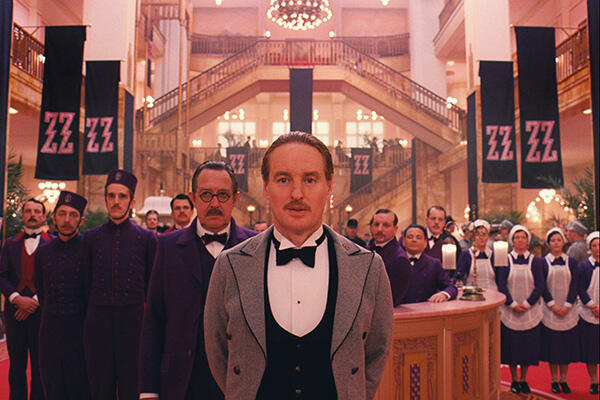
The Grand Budapest Hotel
Rating: A There is no way to adequately summarise The Grand Budapest Hotel’s plot in a couple of sentences, but it must be done for the purposes of this review, so please keep in mind the following paragraph does not remotely do the film justice. The Grand Budapest Hotel follows the eponymous establishment’s devoted concierge, M. Gustave, as he battles to clear his name of murder charges with the help of his trusty lobby boy, Zero. The story includes a prison breakout, a ski race, finger amputation, cat homicide, artisan baking and fellacio (to name a few). Wes Anderson’s aesthetic has always been highly stylised but here it reaches its peak, as every new shot looks like artwork from a 1930s surrealist children’s novel about aristocracy. The cast is massive and prestigious – again, I do not have the word count to list but, nevertheless, the stand out performances come from Willem Dafoe, Jeff Goldbloom and, of course, the impeccable Ralph Fiennes as our hero Gustave, whose portrayal of an eccentric gentleman born into the wrong era carries the film with dignity and humour. Unfortunately, the casting takes a slip when the character of Zero (adult and adolescent) is played by two actors of obviously different ethnicity, making the flashback sequences unnecessarily confusing. Regardless, both actors (Tony Revolori and F. Murray Abraham) played the role beautifully so I’ll let it slide. My only serious qualm is that despite the absolutely huge ensemble cast, there was only one major female character, adding up to a man to woman ratio of approximately twelve-to-one (#yikes). Of course, there are countless films that present predominantly one gender, and if this was a standalone case I would not give it another thought, but unfortunately this “boys’ club” theme has become a rather worrying trend in Anderson’s films, and I fear one day he will do away with representing women all together. However, that is another can of worms that hopefully will not deter you from seeing The Grand Budapest Hotel on the big screen – it’s an insane, shocking, and wonderful ride you need to be on.
-
Culture
Tracks
Rating: A Tracks is one of the most powerful films I have seen. The cinematography is breathtakingly beautiful, as is the expansive and dangerous Australian desert. Normally, I don’t love journey films; or films about endless and repetitive landscapes such as deserts, oceans and space. I find them tedious and repetitive. John Curran must be one of the few directors who knows this about his audiences because although Tracks is, for all intents and purposes, the story of a really long walk, it was so much more than that. Mia Wasikowska (you may know her as Alice in Wonderland) is an Australian born actress who carries the film with grace. She is portraying the true story of a woman, Robyn Davidson, who in 1977 trekked with four camels and a faithful dog from Alice Springs to the west coast of Australia, a distance of over 2,700 kilometres. Within the film, as well as in real life, Robyn’s journey was documented at several stages through photographs taken by Rick Smolan, played superbly by Adam Driver. As the credits role you are shown the real photographs of that colossal journey, and it is then that you really understand just how well this film was wrought. From casting to costumes to sound track, I think that Curran achieved something stellar. With relatively minimal directing credits, five features and one short, I did not know what to expect from Curran. I can now confidently say that he has my utmost trust and respect. This film was beautifully realised, nominated for Best Film at the London film festival, a Golden Lion at the Venice film festival and Achievement in Cinematography at the Asia Pacific Screen Awards. There is a delicate quality to the balance of honesty and sentiment in Tracks. This film asks, what do we really need? The answer is explored through triumph and tragedy, isolation and companionship, determination and self-discovery. If you can sympathise with the need to be alone sometimes, the difficulties of trusting people, the desire to finish something. If you’re human, you will find this film inspiring.
-
Culture
The selfish giant
Rating: A- The Selfish Giant is bleak. Not only is it about two brats, Arbor and Swifty, being expelled from school and scratching a living pilfering scrap metal for a crooked bookie in an impoverished town in Northern England, it also features a beautiful horse being electrocuted and melted alive to make ends meet. As my esteemed cinema-going colleague Alex put it, it’s like “bleakness porn.” There was very little story happening, and I was impatient for events to unfold. Instead, I watched a long exposition about an area of England with socio-economic woes, comparable to Billy Elliot, only without anything uplifting. This was achieved by presenting dark, claustrophobic environments devoid of life or stimulus, with little sound or music other than the barking of angry, neglected dogs, and the shouting of angry, abusive families. What I found deeply unsettling was that the characters were not on any journey. They were merely existing, as soulfully impoverished as the very community that had forgotten them. Even though they try to make money from scrap, they can’t achieve anything, because the “Selfish Giants” (from their limited perspective this is every adult in the film; but from our omniscient perspective, CAPITALISM!) are constantly trying to use and abuse them. There was no hope, joy, or love to be found anywhere – except, of course, in the eye of an innocent horse, which the director couldn’t resist reinforcing with gratuitous horse-eye close-ups amidst the human chaos. We got it. Though I can’t claim to fully comprehend this movie, when the kids had a tiny bit of fun playing on a trampoline, and then got so desperate that they contemplated selling the very trampoline springs that symbolised their youth for two quid in scrap metal, I noticed myself reasoning that this experience was so bleak and emotionally damaging, I ought to walk out. So I must concede that, whatever the hell this was, it was effective.
-
Culture

Captain America: The Winter Soldier
Rating: A There have been moments in the past decade when the abundance of superhero movies became tedious. With everybody rushing to join this trend, there were years where all we got was origin story after origin story. Now, however, I feel we have entered the golden age of the genre, as we are finally seeing the fruits of the now-established characters. Captain America: The Winter Soldier is the embodiment of this, not only acting as undoubtedly one of the best superhero films ever made, but also as an exciting forerunner of the calibre of content we can expect from the Marvel universe in the coming years. Perhaps the greatest feat of Winter Soldier is the way it simultaneously, and to great effect, tells a story that is focused on Captain America, while also creating a narrative that is firmly grounded within the expanded universe, affecting it and being affected by it. This idea of an expanded cinematic universe is such a new idea that I did not expect to see it handled with this level of mastery so early in the game. The Russo brothers were a strange choice to direct this kind of blockbuster, considering that their past credits only include indie films and the TV show Community. However, it was a risk that paid off. The directors’ skills are evident as they make large sections of dialogue and character development feel natural and engaging amongst the obligatory action sequences (which are the best I’ve seen in recent years). Whether it was a fight scene, a car chase or large-scale action montage, you will be treated to some superbly conceived and executed carnage. A new standard has been set for superhero films with Captain America: The Winter Soldier. Hopefully this marks the end of the genre’s slump, and the beginning of an exciting, varied and innovative period.
-
Culture

Savoury Crepes
Back when I was at high school (to make certain people feel old, that was a mere six years ago) we had a French exchange student called Alan. It sounds terrible, but we used to exploit him for his crepe making abilities. After all, he was French – this sort of thing is automatically programmed into his being. His crepes were amazing and the only ones I’ve tried since that rival his are those made by other French people. My good friend Alix and I took a trip to the markets and got Nutella crepes and gelato for breakfast last Saturday. We are both greedy and couldn’t get enough of the crepes so we made them for dinner that same night. These savoury ones may or may not have been followed by dessert crepes filled with condensed milk, Nutella and caramel ... We turned to the wonderful Julia Child for guidance. Crepe recipes are really simple; flour, eggs, milk, butter and water are all you will need. After you whizz it all up in a blender, let it sit and rest for at least an hour so that the bubbles settle and rise to the top. This will make for a thinner crepe. You want to cook these in a really good non-stick pan. For those of you on a budget may I recommend the six-dollar non-stick skillets from Kmart. I bought my mother one and it still continues to blow her $300 Circulon out of the water. Experiment with your fillings and use what you have available. I have listed what we had in ours. IngredientsServes 4 (plus a few extra for dessert) Adapted from Julia Child’s Mastering the Art of French Cooking 1 cup cold water 1 cup milk 4 eggs 60g butter, melted 1 ½ cups plain flour A pinch of salt Filling Ideas Grated cheese, ham, Brie, cherry tomatoes, baby spinach leaves, red onion, chutney, cream cheese (as much or as little as you want ) Method Heat your non-stick pan to a medium high heat. Preheat the oven to a warming 100 degrees and place a plate inside. Once the pan is hot, pour enough batter (1/4 - 1/3 of a cup) onto the surface. With your other hand tilt the pan to spread the batter everywhere in a circular shape. Once the edges start to brown, use your fingers to flip the crepe over to cook the other side. Once golden brown, transfer to the plate in the oven to keep warm and continue until all are cooked. You may need a few goes to get the amount of batter needed to achieve a thin coating over all the pan just right. Once all the crepes are cooked, assemble them by placing the desired filling in one quarter of the crepe. Fold in half then fold in the sides to make a cone, and serve. Devour with your hands like a taco or, in a more sophisticated manner, with a knife and fork. These are surprisingly filling and so easy to make!
-
Culture
The Elder Scrolls Online
Disclaimer: Massively Multiplayer Online Role-Playing Games (MMORPGs) are immense games, containing content enough for, theoretically, years of gameplay. As such, this review is not comprehensive, but rather a review of the experiences I have had with it in its first few weeks of being live. Over the past 10 years, one franchise in particular has consistently been setting standards in the gaming industry: the Elder Scrolls series. The last generation in particular was punctuated with three releases in the series, Morrowind, Oblivion and Skyrim, each of which offered experiences that were more than gamers thought was even possible. When Elder Scrolls Online (ESO) was announced, people rejoiced at the idea of playing Skyrim within the scope and scale of an MMORPG. However, if you are expecting that this game will be an MMORPG Skyrim, I am afraid that you are going to be sadly disappointed. This is not to say that ESO isn’t a great experience but, rather, due to the differences in genre this game is only set in the same universe as the others and does not offer the same experience. It is important that if you are going to delve into this game you recognise this, because 90 per cent of feedback I have seen online has come from people who didn’t expect this difference in experience. What ESO does offer on the other hand is perhaps the most innovative MMORPG we have seen in recent years. Zenimax Online must be commended for the risks they have taken with this game, because many of the decisions they have made could easily have been a disaster. Thankfully, they are not. The biggest innovation is ESO’s use of real-time combat. For those familiar with MMORPGs, you have no doubt grown tired of the tireless grind of targeting and loading spells and actions. With ESO, all combat is real-time, meaning that you have full control over the timing and method of your attack. What attack you’re dealing, however, depends entirely on which weapon class you are using. Like its use of real-time combat, ESO also contains the most diverse and innovative class and weapon system I have ever seen. The game offers complete freedom as to the combination of weapons, armour, and class that you use. This, again, is such a breath of fresh air considering that every other MMORPG asks you to make a generally uneducated decision as to how you are going to play in the first few minutes in the class selection screen – a decision you are stuck with for the next 100+ hours of gameplay. ESO offers players the freedom to experiment with different combinations of weapon, armour and class during gameplay, meaning that players can create a character that is truly a representation of the way they like to play. For example, when I first started out with my Argonian (Kaabaz on the American megaserver, feel free to add me) I opted for the use of two-handed weapons, wanting to feel like an unstoppable death machine, and so I did. After a while, however, I got sick of the slow pace of these heavier weapons and decided to try out sword and shield. Now I am experienced in both these styles and swap out of them at will. This kind of freedom creates an incredibly diverse gameplay experience and it is so refreshing to not have to create a whole new character just to try how other styles feel. ESO ties in the Elder Scrolls lore beautifully, containing all of the sorts of quests and characters you would expect. Unfortunately, the game still suffers from the MMO curse in which story and large chunks of dialogue are cumbersome and drag down the pace of what you are doing. It would require a more patient man than me to read every bit of text. This is alleviated somewhat, however, by a cast of excellent voice actors. Despite the inattention to this dialogue, however, fans will be pleased to know that the game tonally, at least, feels like an Elder Scrolls game. Unfortunately, there is not enough room on this page to truly outline every detail of ESO. I opted instead to show you what the game is doing that is different from other MMORPGs on the market. However, the game still includes all of the things that you love from this genre, including group dungeons, PVP, end game content and a huge amount of crafting (which is so fucking good, I can’t get enough of it). My final verdict is that this is a really fun MMORPG that executes the tone and ideas of the Elder Scrolls games very well. I’m looking forward to continuing my adventures in Tamriel.
-
Culture

Woods - With light and with love
What if Neil Young fronted an indie folk band? Good news everyone! Look here, Woods. They’re talented too. They write some catchy alternative country songs, most of them on the sentimental side. They have their nine minute jammy epic, they have their two minute pop treats, they have the sweet and mellow three to five minute ballads. It’s as if Neil Young himself constructed this album. Hailing from Brooklyn, With Light and with Love marks the band’s sixth full length album over a nine year span. Throw in running a record label, two EPs and a few singles to the mix, this results in an extremely busy bunch of guys. Their discography has been relatively strong to date, however, one thing that is apparent is their lack of any evolution musically. You would think after nine years you would be bored of the same old formula, but I guess Woods know what they love, they know what works for them and they do it well. I mean, apart from a few surprises along the way, you could argue Neil Young did the exact same thing. However, Woods don’t have the privilege of being quite as iconic, and when you’re dealing in terms of folk songs, memorability and meaning is hard to sustain. What are these songs saying? The same things mostly. When you deal with themes such as heartbreak and inner peace as often as Woods does, it’s hard to say something new. As good as some of these songs are, sadly they suffer from a lack of variation. Apart from a few moments here and there, there is nothing that really sticks out and stays with you. Not so much a lack of quality, but diversity. These songs are beautiful, though melodically they are all relatively simple and sometimes predictable. The title track has a few blistering Crazy Horse throwback moments. “Moving To The Left” and “Leaves Like Glass” are also highlights. Just good, well written, warm, sweet songs. There’s not much left to say, really. For what it is, With Light and With Love is a solid album, and a good addition to Woods’ career so far. Not a step in a new direction, but maybe an improved version of their never changing style.
-
Culture
New This Week / Singles in Review
Percussions - Ascii Bot Percussions is another alias of Kieran Hebden, also the mastermind behind electronic project Four Tet. With Percussions, Hebden seems to approach electronic music from more of a minimalist standpoint. “Ascii Bot” spans eight and half minutes, but is constructed masterfully around an almost Nintendo-like synth pattern. Rhythmically the song transitions from busy hi-hat patterns to basic kick drum and back. A beautiful voice sample also comes in and out, working well to accentuate swells within the song. Swans - Oxygen Why not have two eight-minute tracks in a row! “Oxygen” is another single from the highly anticipated Swans album To Be Kind. It is everything you expect, really. It’s kind of visceral and nasty. The vocals are reminiscent of Nick Cave in Birthday Party mode. The song is built around a descending guitar riff, spelling doom and gloom. The track transitions into sort of a chant-mantra-esque bridge part. Then it gets even more Birthday Party with the introduction of a gnarly horn section. Chaos. Lana Del Rey - West Coast Queen of faux-hipster hype Lana Del Rey returns. Not venturing too far from her previous output, “West Coast” is moody, crimson and sultry. I read somewhere that it was described as “Edge Of Seventeen” on heavy sedatives. That’s really a perfect description, so thank you, Internet! Do you like “Edge Of Seventeen?” Of course you do. Everyone does. Stevie Nicks, man. Total Control - Flesh War Hailing from Melbourne, “Flesh War” is Total Control’s first single from upcoming album Typical System. Apparently this band used to be quite hardcore? Or punk? Or whatever label people use to generalise loud, shouty, angry music. But this sounds kind of like Joy Division. Controlled, relatively straight drum beat. A cool synth bit comes in, driving bass. Monotone, dead-pan vocals. Do you like Joy Division? Because Total Control definitely do. Maybe you’ll like each other? tUnE-yArDs - Wait for a minute “Wait For A Minute” is another single from Merrill Garbus’s tUnE-yArDs. Compared to previous single “Water Fountain,” “Wait For A Minute” is more soulful, slower, less playful. I kind of like it a little more. It doesn’t sound like a hyper active child unleashing itself on a room full of African instruments. Which actually I do like, but it’s nice that there’s some variation. This track has a great rhythm and groove. Yeah, it’s good.
-
Culture
Elbow - Take off and landing of everything
Manchester quintet Elbow have cut a unique musical path over their near two decades of output. With their characteristic fusion of orchestral stylings and progressive rock, Elbow bridges the precarious gap between the classical and the contemporary: operatic and atmospheric yet concise with unforgettable pop refrains. On this sixth release Elbow showcase their experience and musicianship, crafting a beautifully melancholic and steadily unfurling composition that flows almost effortlessly throughout. As the title hints at, the lyrical focus of Take Off and Landing of Everything paints flying as a metaphor for both mortality and romance. That said, singer Gus Garvey seldom comes across as melodramatic, desolate or gloomy. Instead Garvey provides a matured, hopeful and wised insight into the ending of long-term love and, further, the fleeting nature of “everything.” As an ensemble, Elbow are masterful in creating a cohesive mood through interweaving dreamy guitar and synth textures, accompanied by restrained, rolling percussion, laying an expansive and emotive foundation upon which Garvey’s wistful and pure tenor tones soar upon. Tracks “Charge,” “Real Life” and “My Sad Captains” are perfect examples of such song writing, with slow burning verses blossoming into climatic, revelatory choruses. Arguably Take Off is not nearly as ambitious or varied stylistically as preceding releases Leaders of the Free World and Mercury Prize winning Seldom Seen Kid, yet the composure displayed is far more compelling. For a group that has charmed a devout audience over their career, I believe Take Off to be their portfolio piece, a consolidation and reiteration of all the musical territory conquered so far. In that sense, it is a perfect place for new listeners to begin, their diverse back catalogue anticipating those listeners who are willing to delve deeper. Title track “Take Off and Landing of Everything” is the climax of the album, with Garvey’s profound and poetic lyrics, “a prayer to the take off and landing of everything good,” weighed against the hypnotic, driving rhythm section, nailing home the ideals of endurance and regeneration in light of sadness and great change. For those with an affinity for Grizzly Bear, Radiohead or Bill Callahan, Elbow’s latest will be a thoroughly enjoyable listen. That said, an existential crisis is probably the only prerequisite.
-
Culture

Interview: Boots Riley
On 16 and 17 April, political activist and rapper Boots Riley visited Dunedin to give a public lecture and acoustic performance. Radio One’s Olivier Jutel caught up with Riley for a post-lecture, pre-gig discussion. Kia ora, good morning Boots! Kia ora, what’s happening? Hey. Listen – it’s Thursday, we’re here, we did this, man! Yeah, man, you guys have really rolled out the works and I feel the love here. Everyone seems to want to be engaged with the world and I see why people come here and stay. Well, I wasn’t fishing for compliments, but I’ll take them! But, listen, and this is kinda what everyone wants to know when somebody international comes over and checks us out – and I know you’ve only been in the country for more-or-less 48 hours – but what have you made of New Zealand and your experience here, and how is talking at this University different from others? I mean, obviously there was some stuff going on the campus at Western Michigan a few weeks back … I mean, you do a lot of public lectures, you engage with a lot of people, what was last night like for you? Honestly, there are a lot of things that are very similar all over the world. On Friday night, no matter where you are in the world, at about six o’clock, people start calling their friends up asking what’s going on tonight. That’s happening all over the world, no matter what continent you’re on. All over the world, around the first of the month, people start worrying about bills and money. That’s a truism. And all over the world, people are thinking about ways in which their life, their world, could be different. And I’d like to say that things are so different here – the way people walk, or the way people phrase questions – I’m sure there’s differences, but the truth is that the students and faculty here, like all over the world, wanna figure out how they can be part of making a different system, and changing the way the world works, and that’s what I’m seeing all over the world. I’m seeing people trying and those ideas growing, and the amount of folks that came last night was … I didn’t even know that people knew who I was out here, so the fact that there were, like, four overflow rooms … Amazing. No one since Bill McKibben … that was the only other time that anyone kinda flirted with 400 at an open lecture, so that was something right there. And I’d like to say even that, just on that thing with Bill McKibben, climate change, without going back over what I said last night, but that’s an example of why labour needs to be part of any radical change, you know. You had scientists that came out a few months ago at a climate change conference in London and said, “wait a minute, none of these measures are going to work. The only thing that’s going to work is if we shut everything down right now. And demand these drastic changes, if we shut industries down.” Now, it can happen that those scientists’ statements fell on curious and confused ears, because radicals have not been organising labour for so long that they would never be able to do that right now. So the changes that even need to be made for climate justice are so drastic that it’s going to take people being able to control industries as opposed to asking and simply slightly pressuring industries to do it. Well, that’s the thing with, I guess, the formulation of politics for a group like [Bill McKibben’s] 350 – somehow we’ve got this objective number, 350 – people just need to realise, leaders will understand the pressure, they will understand in kind of a rational way that if you exceed this number … And so it’s kind of not really something that conceives of changing our world or our politics so that we can address these problems, and so there’s no real formula for it. Somehow, just the truth is enough. Yeah, and we see the truth gets exposed all the time, like, most of us understand that the way the system works is not just. We understand the idea that the rich are getting richer and the poor are getting poorer. We understand the idea that there is just one per cent on top that is just leeching off the 99 per cent. The question is, can we dedicate part of our day, a big part of our day, a big part of our life, to something that we think won’t be able to change it? So it’s about a winning strategy, and that winning strategy for anyone is going to be based on what their power is. And for those of us that are in the 99 per cent, our power rests in the fact that we create profit, that we create wealth. And also just understanding where we are, where our organising is powerful, and obviously the great thing about last night, a public event, many people from across the different shades of the left were there, were unified and good vibes between folks that possibly hadn’t felt good vibes between one another for a very long time. That very notion of public-ness, and that was something where Occupy was so important, was just getting out of clicktivism and actually being somewhere in the city space, you know, because democracy is nothing if not being there in the central city space. Public-ness is incredibly important. Dude, you were so generous with your time and I had to pull people off you because people want to just rap with you into the wee hours of the morning, man! How do you find the strength to come all the way across the earth – and I’ve seen your schedule for the next two months, you’re in Sweden, you’re in Spain, you’re in Hungary, all this kind of stuff. How do you find the strength to still be giving and contribute to people, strangers and all that? Well, actually, you know, flying over here is pretty simple. Nowadays they have airplanes and you just sit down and they do all the work for you. They get you all the way here, so it doesn’t really take a lot of energy to do this. On the other hand, I think about it like this. You know, either way we’re producing for ourselves or producing for someone else and it’s not like it would be easier … Sometimes I think it would be easier if I just got a nine to five job and then just came home and watch TV and go to sleep … And you’ve got kids, man! Yeah, you know. The truth is not easier. Most people are not having that kind of life anymore. Most people are then having to take on another job, or working longer hours, and have that combined with a sense of powerlessness, because they’re spending all their time trying to pay the bills. So I happened to put myself into a position because of the art that I do that affords me people’s ears, and so I feel very grateful that I have this opportunity to talk to people. I’d rather be tired from doing this than from simply going to work for someone all day and feeling powerless. And you’re right here with us bright and early, and some of those heads that took us out last night – the academic heads, man – they’re sleeping in this morning, let me tell you that! You’re putting in the hard work. Hey, listen, tonight, acoustic set. People got a taste, obviously, of what that’s going to be like, but how does that roll out? There’s energy in the way that I write the songs. The acoustic set focuses more on the lyrics but it still has some of the music and the rhythm and the oomph that we have. It’s definitely not the same, it’s a different animal completely from when The Coup is here. When The Coup is here, it’s a punk funk explosion, it’s like Sly and the Family Stone mixed with The Clash, without the cocaine. But this is powerful in a whole other way and it’s kind of like a punk thing. It ends up feeling, having that energy of a punk show, of hip-hop with passion and emotion. But it also allows people to listen to the lyrics. A lot of times, even if my music is played in a club or we do a show, people are just thriving off the energy and you don’t really catch so many of the lyrics, and that’s just how it is. And probably if you’re in the club, you’ve been drinking and then you go home and listen to the lyrics later on or read the lyrics. But I think that this setup is more primed for people to feel something at the same time as being able to hear what I’m doing with the lyrics. And so that’s a good introduction and it’s a party. And with the lecture yesterday, people are primed, man. It’s gonna be good, but I still want this Coup show! I still want the whole set up! Yeah yeah yeah, it’s a different thing! People still leave the acoustic set thinking “I didn’t know something like that could happen just with an acoustic guitar.” Because we don’t, you know, it’s not some sit-down Crosby, Stills and Nash sort of thing, it’s still up in your face. But what happens if 2015 is your big year, you get the big Hollywood movie contract, you still gonna make your way down to Australasia? Oh, yeah, the thing about that is after having worked so long and being in debt so much, even if I strike it rich, all that money is spoken for. So I’m still gonna be husslin’ to pay the rent. And I just gotta give a plug to our homies in Melbourne – you’re going from Dunedin to Melbourne for Marxism 2014; what is the importance of that to you, that particular conference? I go to places and speak to people who are looking to change the world. The Marxism conference, of course, is going to be full of a lot of people who agree with me on many things. A lot of what I talked about last night is relevant to people who already agree with me on those things; I’m not just explaining how capitalism works. But what I say is appropriate for preaching to the choir. Because I might be preaching to the choir, but I’m telling them that we need to take it up another octave. So I think most of the music that goes out with The Coup, because it does reach a lot of people, falls on the ears of folks that aren’t involved in something. But what I do is I frame what I’m saying with that in mind. That there are people that agree with me on certain main issues, and then there are people who don’t. So Marxism conference … So, I call myself a communist. I don’t usually stick to saying I’m a Marxist, not because I’m afraid of that – people call me a Marxist and I’m fine with that – but Marx himself said he’s not a Marxist. What that was alluding to was the idea that sometimes people get caught in text, and radicals do that a lot, too, where you find yourself looking to the future by quoting something almost as if it’s scripture and using that in your argument. And so I think there are new ways of doing things. I think that we have to look to history and we have to learn from history, but we’re going to find new ways to do it. I mean, every revolution disproves a certain part of the previous theory. The Russian revolution disproves some of the way Marx said that it would happen. The Chinese revolution disproves some of the way it was thought it was going to happen beforehand. We’re refining. And we’re moving forward and we make mistakes and we keep going. Fail again, fail better Yeah, exactly. Or I get knocked down, but I get up again.
-
News

Winston Peters
Critic: So the first thing I want to talk about is the fact that the youth vote is a sector that is untapped almost, because we have such little voter turnout. And I was wondering what sort of policies you would advocate for in order to increase the youth turnout and what you’d bring to the table for the youth of New Zealand. Winston Peters: Well there’s no doubt we’ve got a lot of policies that are pitched up towards, uh, the interests of young people; their place in this country, their future, their education, their employment in the kind of country they want to live in. This is all based on where young people would want to be, wherever they want to live in NZ. So, the question that I think is not so much that, I think it is – why don’t students vote? Exactly, what’s the biggest barrier? And the answer to that question is they’re a bit hedonistic, they think that there’s nothing that’s engaged in sort of what you might call ‘older adults’ as society is of interest to them, that the transient things that they’re currently engaged in is a part of their current learning process, and there’s nothing new in that. That’s been the way for the last sixty years. Young people are not voting or will not take an interest, so that many parties have found you start university branches, and it’s been an extraordinary amount of work to try and keep them alive, and then you find that the, uh, how should I put it, the pass-through rate is just so high. I don’t think that NZ First is able, more than any other political party, to answer that question, and I suppose we’re working on the new technologies that are available, to get to them and see if we can get turnout that way. Yeah, I mean, I know you’ve got a young NZ First faction, um, I don’t think they have a presence in Dunedin anymore. But it will have. Really? Is Curwen getting into that? Well we’re going to all the universities and getting them underway. Well that’s good. Yeah, I’m friends with Beau Murrah, who used to – is there any truth to the rumour that you once, uh, hosted a crate party in his flat? How long ago was that? I dunno, it’s just what I’ve heard. Quite possibly. Quite possibly? Well it could be possible, depends what he says by crate party. Fantastic. Um, so, in terms of issues that students are focused on, it very much has to do with money. Money now, money when we’ve finished our degrees, how much money we’re putting into our degrees, so what sort of policies are you for? Are you for a universal student allowance? The first party ever to talk and promote a universal student allowance was NZ First. Oh really? Imitation is the most sincere form of flattery, but we were the first party to advocate that in this country. When was that? 1996. 1996. Good stuff. I’m going look that up. What about fees? Are you-? Well before we even formed New Zealand First, I was saying that the biggest one-off education equation in the education budget in this country was going to be defaulting student debt. That was what I said way back in the early nineties, and I’m sad to be proven true. Our policy on student debt is to have a range of parts of this country where a student can get serious discounting of their student debt, a range of occupations in this country where they can get serious discounting of student debt, or third, if they can arrange for earlier repayment, at a much faster rate than that they have been prescribed to do, then we will halve that debt. Okay, so kind of re-introducing- On the basis of that we think that so much debt is appearing as an asset on the budget, but it’s a bad debt and will never be paid. So if you can get that paid earlier, you will actually save money for the state, not lose it. Cool. So I’m assuming you don’t support National’s tactic of Student Loan Amendment Bill (No. 3), which specifies that overseas repayments, if they’re not made can mean students can be criminalised? That’s going to bring in, at maximum, fourteen million dollars. Right? You’ve got a multi, multi-billion dollar bad debt, and they’re going to get fourteen million out of it. Uh, it’s only a sort of quantity surveyor approach to politics who’d come up with that solution. I sat on the select committee and opposed the bill all the way, because it is ridiculous. You can do far better with high incentivisation and encouragement than that. But more importantly, the number one reason why there’s bad debt in this country is that we’re running a failed economy in terms of getting students jobs. So they can pay the debt off. That is absolutely one of the biggest issues in that you have this mentality where you go to university and you know, you study, study, study, and you have all this debt, and then you’re left out to dry. What do you do after you graduate? So- Well for many of them, they become an investment that you’ve made for twenty years, in another economy. They go off-shore. Yeah, the ‘Aussie exodus’. Yeah, Australia and wider. UK, elsewhere. So what sort of policies would you propose to ease the transition from student to ‘worker’, I suppose. Well first of all, unlike many other parties, we believe NZ is capable of full employment. We know it’s capable of full employment because the large parts of our past history, we were the only country in the world with full employment. And we could do it again. But what we’ve done, in New Zealand, and it appears in our manifesto, and it also appears in our founding principles, we have used immigration as an excuse for failing to have trained, educated, skilled, and employed our own people first. Now, what you’ve got, you’ve got students coming in now, being offered by this government, on the pretext of export education, that they can work for NZ as well. Where’s the export quality of that education straight away? Our economy is paying for their education, not some other economy. So if they can work here, some other economy is no longer paying for them to be educated here, ours is. Who’s losing out here? Well domestic students are going to be losing out. That’s the blunt consequence of it all. Now a lot of people have got pretty soft heard and the head to match. They will argue that I’m wrong here. But if I was, and I know because I was the Minister that went to China in 1997 to sign off student visas for Chinese. Chinese demanded of me that I promise they all be sent home after education. We sold it as export education. Good for New Zealand. But export education only works if some other economy pays for the education in our country. But it’s not going to do that, so we’re going to stop that. And the second thing we’re going to ensure, by the economic changes we’ve got, that we generate work in New Zealand. Our manufacturing base is falling apart. We’re down from 33 percent of the economy to now 30 percent of the economy. I don’t know how long you’ve lived in this city, but business after business has stopped here. Where’s the manufacturing base here now? You’ve got one freezing works left here. What about, moving away from traditional manufacturing and into new technologies. I know the Greens have talked about 3D printing as a kind of industry we could invest in? What’s your thoughts on- Do you know anything about business? Well, I do. Oh. I see how it is. I’ll tell you how it goes- Ah-ha. You’re pulling that card on me. No, I’m not pulling the card that way! I’m not saying on a personal level, but I’ll tell you how business goes. You’ve got a great idea, you’ve got a great plan, and the first thing you’ve got is debt. To make it work. And the only way you can ever pay the debt off is if you fire this business up and it goes. Now. Government can seriously help you do that, but with respect to the Greens, you can have these bright ideas like a light bulb going off in your head, but where is the business discipline around it? For, in the end, business is about profits. And bright ideas, if they do work, will make you some serious profits, as you know. Especially in some of the new technologies and what have you. But to dream it up as a solution to employment, when I know that if we were to change our dollar and control its level to be dramatically what it should be, that is, it’s probably 28 percent overvalued now. A 28 percent revaluing of our dollar will see significant employment in this country overnight. Because the exporter will have the money. And you’re on an export-dependent province. How’s the exporter doing? Well, he’s up against it, and the dollar’s heading towards 90 cents US. He’s more up against it every day. And more will collapse as a consequence. It’s not easy, but I have watched the Greens policy, but look I am a great admirer of the Scandinavians, and I spent some time there, and in fact I started an embassy there as the Minister for Foreign Affairs cause I knew they could teach us a whole lot. Their idea of the new economy, is exciting in the context of it’s sustainable, it’s innovative, and you know they’ve got some- Nokia started there, they’ve got great industries and great manufacturing. All of their manufacturing products are world first stuff. You can rely on them. Energy efficient. However, the Greens over there are practical. They’re not away with the fairies. The thing about Scandinavia, though, is that they have extremely high taxes. And one of your fifteen principles, correct me if I’m wrong, is that you ultimately want to lower taxes for New Zealanders. So how do you reconcile that? Uh, well I reconcile it by first of all, one in five dollars in NZ is in the Black Market. New Zealand tax evasion in this country is huge. So you think that’s a- That’s why I ran the wine box enquiry way back years ago. These people were ripping the country off not paying any tax at all. So we dealt to that, and I could see, if we deal to that and everybody was paying their fair taxes, we could afford to reduce taxes. But we have the most amazing debate when it comes to taxation. I’ll give you an example. They’re having a big debate in Togo about taxation. Know why? Why? The wage is so low that nobody can even exist. Let’s talk about it. Scandinavia, they might have 60 percent tax, but they’re taking home two and a half times more in their pocket every week. Which one would you rather be? The guy in Togo or in Scandinavia? I know what I’d rather be. Not in a ‘Libertarian’s paradise’, then? No, but see the thing is, we have this huge debate, and I think – hang on a minute, this is a theory that’s all been thoroughly blimin’ – Henry Ford once was in a conference about the carmakers, way back a long time ago in America, and he’s been criticised by all the carmakers for putting his wages up. And they’re saying that you’re deliberately, you know, ruining it all for the rest of us. He said, ‘but you don’t get it. I get more car production out of my wages than you get out of yours. I’m paying less than you for the car.’ So that’s what Scandinavia understands, right. I’m not saying that – it just happens to be an alternative to some of the right wing, neoliberal drivel I keep on hearing. Yep. That we all keep on hearing. Not from me! Okay. Just to change track a little bit, now, your favourite question. I’m a voter. I like New Zealand First. I like Labour. I don’t like National. How can I trust that New Zealand First will truly represent my interests if you won’t disclose who you’re going to get into bed with after the election? Alright. There’s five months to go. Have you heard all the policies yet? Nope, some of them don’t exist. Yeah but they might exist, they might be great or they might be terrible. So you surely want to know that before you make up your mind wouldn’t you? The second thing is, you could spend all your time talking to one party about the outcome and that party not even make it. So you’ve just wasted a whole lot of critical time in the campaign talking to them about something that might not eventuate. What about sort of- The third thing is, in a recent survey, now this is unusual, this actually shocked the political scientists, was, a significant majority of people in this country, including 35 percent of National voters, don’t like pre-election deals. They’re sordid and unsavoury. And I happen to agree with them. See? Three reasons why I’m doing what I’m doing. Very nicely laid out. Like a true politician. We’re the only one’s saying that for goodness sakes. But you don’t wanna… allude to any sort of particular… was there any truth to the idea that you’re the MP going to the Internet Party? There is no truth in that whatsoever. Good, just thought I’d check. A party like New Zealand First is not going to have German running it. Touché. I mean, a German with a criminal record! The raid you spoke about quite a lot in Vote Chat. Um, another thing you said at Vote Chat was, uh, you said journalists are being starved of information, so- No, they’re being starved of resources and funding to do their job properly. Okay- There are some seriously good journalists in this country, but most of them are being starved of resources, time to do their job properly, and that’s a great disappointment. I mean I’d hate to be a journalist in New Zealand, because when you’re onto something it takes time. Now the only way I can do that is stay up until 3 o’clock in the morning. I’m not going to be paid for it anymore. Whereas in the old days they’d be seriously out there, committed to it, in a sort of, what you might call a romantic, glamorous place, not highly paid, but you would seriously have to send off the action as a researcher and journalist. I think those days are sadly gone. So um, I have time now, so could you tell me a secret? What. You know, something saucy for the voters out there? Er, well, um, your voters don’t vote enough, so… Maybe they would! I’m going to drop this bombshell when there’s a huge audience! There will be if you drop one! There possibly will be! And they think ‘why on earth did he drop it down there?’ I’m sure a fair few people read the Critic … Uh, for a surprise, I was talking to Denise the other day, and I said to her, you don’t know this do you, and I laid out what happened in 2005, when it came to coalition talks. And she said ‘I’ve never heard that before’ and I said ‘that’s because I’ve never told anybody but you.’ I was expecting it to be a bit of a scoop. What I said to her was, look, when Helen Clark called up after the election (National called up too), but when Helen called up, and I looked up all the numbers and whathaveyou (on election night you can see the numbers anyway). But I didn’t stop with that, I thought before I go back to her, I’ll go and see Peter Dunne and say ‘Peter, if you want to be part of this, are you in or are you out?’ And of course he was on the out then, but then he would be in. So now I go and see Helen Clark, not with one party, I got two parties. More powerful that I was before, wasn’t I? I seriously got their attention, I walked in and said ‘not just me, the United Party as well. I’m talking power with them.’ Now. Why would you compromise that brilliant chance to get everything that you want by telling people before what you’re going to do. See what I mean? Democracy… transparency… Ah now, you’ve given me the fourth reason I forgot. Democracy is what the people are about, and they’ll decide the election, and that’s why I’m waiting until they speak. A binding referendum. So you say it’s democracy; if I say I’m going to do this, right, so that what you’re saying to the photos ‘I don’t care what you do, it’s all over-rover. We’ve decided the government five months out.’ Now I’m sure you’re pretty upset with that. Now, I have one last question. This, you have to answer. Rule number one. Um, shoot, shag, marry: Jenny Shipley, Helen Clark, Jeanette Fitzsimons. Uh, this is a trick question. Nope. Rule number one of shoot shag marry, you have to answer. Um, there’s no way. Having avoided half your questions in this interview, that I can answer this one, mate. This is the one I want the answer to. This is my scoop! Um… no, I have to admit, I have to admit, there’s nothing that I could possibly answer on that question that’s going to add to my political credibility, my political longevity, or my sense of sanity when I go to bed at night! Okay, we have a parliamentary alternative, where you can reject one – reject them completely, re-elect one, or realign one, so one who you think should go to another party. Which member should go to another party? Yup. Of Helen Clark, Jenny Shipley, Jeanette Fitzsimons. No, Fitzsimons is in the right place, Shipley, well, she’s all over the place, and Helen Clark belonged to the right party. So the only one who could go to another party would be Shipley. The ACT Party. Shipley to ACT? Yup. You heard it here first. Maybe a bit late, but um. Before that story goes South completely. But mind you her turning up there would bring about that result. Just like a certain Brash. Yes. Well that’s unbelievable actually. Did you see his book?! I saw the photos of him regarding his book, which were him with an open shirt. Now that’s an old photograph, that’s a bit nasty for Don, they’ve dug that up from a long time ago. Really? That’s a 2005 photograph. He was photoshopped in a number of ways. It’s sad actually… You know his book, know why they called it Incredible Luck? Why? Because he’s got no talent.


