
-
Columns

Editorial | Issue 25
Voting is now open for the OUSA elections, and we have an interesting three-way battle for the top spot. I say “interesting”; in reality it’s a little depressing. If I could have picked two ideal Presidential candidates from the current Exec, it would have been Blake Luff (the Recreation Officer) and Gianna Leoni (the Te Roopu Maori President). Ruby Sycamore-Smith would have been well down the list, and Zac Gawn would only have made the list at all if I were forced to rank every single Exec member … if you catch my drift. Somewhat belatedly, I’m beginning to see the merit in Francisco Hernandez’s proposal to bump the Exec’s pay by up to 33 per cent across the board. This year is the weakest lineup of Presidential candidates I can remember, but it’s not due to a lack of talent on the Executive. It’s due to the most talented members of the Executive being older students, for whom a $30,000 salary represents a hardship rather than a windfall. Yes, being OUSA President is primarily about serving students; it’s not a “job” per se, and candidates shouldn’t be motivated by money. But in saying that, we shouldn’t be offering prohibitively low pay. Students nearing the end of their studies shouldn’t feel as though postponing entering the workforce for a year in order to be OUSA President will leave them worse off, as indeed many of the older members of Exec this year have felt. $30,000 is too low to attract the kind of high-calibre candidates OUSA is lacking this year, even in a relatively inexpensive city like Dunedin. Fran’s proposed $40,000 sounds about right, and should be put to the student body well before nominations for the 2015 elections open. Anyway, back to the candidates. Jordan Watts, the outside candidate, has performed much more strongly than I (and many others) expected. He’s intelligent but doesn’t have Ruby or Zac’s knowledge of OUSA, and his view that OUSA should drop its political role and focus on events and services misses the main point of students’ associations, which is advocacy. Give that up and you give up the need for members or, indeed, an elected President, and when I put this to him at the candidates’ forum he seemed a bit stuck. Zac has smarts and ambition, and this is his second run for President after losing the last election to Fran. Since then, he’s been the Administrative Vice-President, a role that would give him a strong platform for this election it not for the fact that he’s been useless at it. He’s been so lazy and ineffective that even running for President in the first place evinces more than a whiff of arrogance. He worked hard to make Hyde Street a success, but that’s about it. I like Zac and this is nothing personal, but he hasn’t exactly covered himself in glory this year. My endorsement goes to Ruby (although it should be noted that for most of this race, I was strongly considering No Confidence). She’s a flawed candidate, and will need a lot of media training to turn her stream-of-consciousness ramblings into coherent soundbites. But as Welfare Officer this year she’s shown a great work ethic (the contrast with Zac is telling), she’s organised events like Women’s Week, and she’s good at engaging students at a grassroots level. She’s also run a campaign that actually treats student voters like intelligent, informed individuals, rather than just running on a platform of “HODOR LET’S BUY A PUB AND PISS AWAY ALL OUR MONEY FREE BEER.” Which is nice. But whoever you do vote for – Jordan, Zac, Ruby or No Confidence – be sure to vote. Last time the turnout was around 17 per cent. Let’s make it to 20 this time, people! #wecandoit #inspiring #decision2013 -Sam McChesney
-
News
Uni to Open Responsible, Supervised Bar on Campus
More details have emerged regarding the University’s plans to build a bar on campus, possibly with the involvement of OUSA. Critic reported on 16 September that the University was “looking into” the possibility of owning or co-owning a bar on campus. On 23 September, the news made its way to the Otago Daily Times who, in true ODT style, reported the story as their own. Vice-Chancellor Professor Harlene Hayne indicated that if efforts to resurrect the Cook fail, the University would consider building a pub. Although the shape and form of such a business venture is yet to be determined, Prof Hayne did make a vague promise: “It is either going to be the Cook or something like the Cook. It is either going to be owned by the University, or somebody else.” Contrary to Prof Hayne’s reportedly ruthless stance against excessive student drinking, she has come out in favour of a student bar of some description. Rewriting history somewhat, Hayne told Critic that she has “always maintained the importance of students having a safe place to drink and socialise in North Dunedin.” In recent years the University has purchased several North Dunedin pubs, including Gardies and the Bowler, converting the former into the Marsh Study Centre and the latter into office space. It also opposed the relicensing of the Cook in the wake of the last Cook-A-Thon. Speaking to the ODT, Prof Hayne said that despite claims to the contrary the University did not have a master plan to snap up all student bars Monopoly-style, and argued that recent closures were due to the bars’ dismal financial performances. The University’s decision to purchase these bars was motivated by their strategic locations, according to Hayne. The return of the Cook, or something similar, appears to be the University’s preference. Prof Hayne acknowledged the efforts of the Cook’s proprietors to prevent its closure and said that if it were to be resurrected, the University would not compete with it. She further added that, despite what many may think, the University was “actually very sad to see the Cook close.” She’s right. No one believes her. Prof Hayne maintains that the University is not against student drinking provided it is in a safe place, and believes that the University’s efforts to contain boozy, misbehaving students are working. “I would much rather that the students did their drinking close to campus rather than wandering to the Octagon and, more importantly, stumbling back,” she said. Doubts persist around the commercial viability of any North Dunedin bar after the Bowler, Gardies and the Cook all closed due to consistent losses. Prof Hayne believes a University-owned bar on campus would be different, however, as it could put in place a more diverse business model. Currently North Dunedin bars enjoy limited business outside of the 38-week study period, or during the daytime, but a University bar could be put to other uses during these periods. If Prof Hayne’s words translate to more than just support, and the University does build a pub on campus, it is expected that the University “would work very carefully with the student body, to find out exactly what they wanted.” Hayne said that several options are being considered, and indicated that the University would work with OUSA “to find the right solution.” As for ReFuel – the University-owned pub and venue already on campus – Prof Hayne indicated that another University-owned pub in the area would not mean a pending closure for Re:Fuel. The University has come out against OUSA owning a bar without the University’s involvement, and figures within OUSA fear the University may withdraw its Service Level Agreement (SLA) funding from OUSA should the association go ahead with any such plan. Plans for a three-year SLA, which would have guaranteed this funding in the medium term, recently fell through after the University changed its mind on the matter. The debate over a student pub has been the centre of attention in the OUSA Presidential race, with hopefuls Ruby Sycamore-Smith, Zac Gawn and Jordan Watts each holding different positions on the matter. Sycamore-Smith supports a joint OUSA- and University-owned bar on campus, Gawn supports a fully OUSA-owned pub in North Dunedin, and Watts opposes the purchase of a student pub altogether.
-
News

Ten Plus Two Equals Twelve, Says Fran
OUSA has announced plans for a one-month trial of a $12 airport shuttle service for students. Although exact dates are yet to be confirmed, the trial period will coincide with the upcoming exam period. As such, it will only be an outgoing service at this stage, but may operate both ways next year should the scheme prove successful. A $10 airport shuttle service for students was one of OUSA President Francisco Hernandez’s election promises, published last year in his “Franifesto.” Hernandez told Critic that the slight price increase was due to a change in fees charged to transport service providers by Dunedin Airport. “$12 shuttles are just like $10 shuttles, but $2 more,” he reasoned. An independent provider will run the service, and for the sake of cost-efficiency will have only two pick-up stops: Gardens New World and the main OUSA building. There is the possibility of adding a third stop (the Railway Station) if demand is sufficient, Hernandez said. The shuttles will stay at these stops for 15 minutes each, and are expected to leave strictly on time. Hernandez reasoned that “if it’s there for that long, then it’s probably your fault if you miss it.” The suggested timetable includes eight outbound services a day, leaving between 5:15am and 8:15pm. The maximum capacity, if all three of the available shuttles are running, will be 35 students per slot. Bookings and cancellations will be taken online, with both needing to be done at least 12 hours in advance. Extra gear (within reason) will not cost extra, although it is expected that travellers will warn the service provider when making a booking. “We just want it to be easy for everyone,” Hernandez said. “Everything, from the simple stops to the timing, is easy for students and the service provider alike.” The cost to OUSA over the one-month trial period is expected to be approximately $2,000, with most of this going towards establishing the booking website.
-
News

SOULS Buys Penance for Their Sins
The Society of Otago University Law Students (SOULS) has made a donation to Women’s Refuge, and in future will run Law Revue scripts past Dean of Law Professor Mark Henaghan, after this year’s Revue was slammed as offensive to women and minorities. Prof Henaghan told Critic that “there were some scenes in [the Revue] that really could be upsetting to people and I don’t think we want to do that. It seems to me humour shouldn’t be disempowering unless you’re disempowering the powerful, and that was probably the problem really.” The most controversial skit was a pastiche of Robin Thicke’s song “Blurred Lines.” The skit took the form of a rape trial, during which scantily-clad women held up signs bearing messages like “#you’refucked” and “nomeansyes,” and concluded with the jury holding up signs including “YOLO.” There were also sketches poking fun at racial minorities and people with disabilities. “I think using people with disabilities and rape and various things like that as humour, although it’s not badly intentioned, [makes it] hard for these people to talk back,” Prof Henaghan said. A participant in the Revue, who did not wish to be named, told Critic that “all the female roles seemed to be unnecessarily orientated toward pleasing guys; it all seemed to be very derogatory toward the women. When you look back there were also a lot of really subtle things, just like pieces of improv that were quite unnecessary, like pretending to look up skirts and that sort of thing.” The participant felt that the main problem with the Revue this year had been racist humour, but said that “if you’re comparing it to Capping Show … I actually thought some of the Capping Show sketches this year were more racist, probably. … I think in general there’s a problem with revues having some quite cheap humour and going after minorities.” However, she felt that previous years’ Law Revues had been worse. “I would have to say that this is definitely the best Law Revue of the three,” she said. “I didn’t go see the first one but I heard really bad things about it, and last year I was in the Law Revue and … I thought that about 90 per cent of the jokes were [about] rape. Two of them were the exact same joke, which was just gang rape. “I’d definitely consider myself a feminist and last year every sketch, except for maybe three, I had a problem with. “I think they’ve improved but in saying that, I think they had too many Maori jokes and stuff like that. … And obviously the ‘Blurred Lines’ skit wasn’t fantastic, to say the least.” While she enjoyed participating in the Revue, she also found it difficult to raise concerns over the offensive content. “It’s really fun, but I found it quite frustrating … you don’t really want to speak up because you’d be speaking up against, like, 35 people.” However, she was happy that SOULS had made restitution by donating to Women’s Refuge. “That was good of them,” she said. Prof Henaghan said he spoke to SOULS after meeting with students who had complained about the Revue’s content. The donation came after the students were invited to propose a remedy for the situation, and Henaghan described it as “a good outcome.” “I think the Revue’s a great thing and I don’t want to lose the Revue, and I don’t think anyone went in with bad faith, but I think it’s good to get that feedback and it shows we’re in a healthy situation where people can debate these things,” Prof Henaghan said. “Humour should always be used to disempower the powerful, in my view, and I think that’s what we should try to aim for in the next few Revues.” Several of the students who had raised concerns declined to speak to Critic, saying they were happy with the outcome.
-
News
Hayne Joins the One Per Cent
The Tertiary Education Union (TEU) has condemned the recent trend of pay rises among Vice-Chancellors in universities nationwide. An annual report by the State Services Commission has revealed that at least six Vice-Chancellors across New Zealand received pay rises between 2012 and 2013. The pay rises have occurred despite several crises facing tertiary education, including declining Government funding and increasing competition from universities in East Asia. University of Otago Vice-Chancellor Professor Harlene Hayne received the greatest increase in remuneration, with her maximum potential pay jumping $110,000, from $420,000 in 2012 to $530,000 in 2013. The lower figure for 2012 is partially explained by Hayne coming into office one month into the payment term. Critic questions, however, whether 20 per cent of the Vice Chancellor’s work is really carried out in a single month. TEU Communications Officer Stephen Day has criticised Hayne’s raise. “Otago is facing the same kind of austerity issues and loss of students that a number of other institutions, particularly universities, are facing at the moment. They’ve got students facing four per cent fee rises year on year, and staff that have had minimal pay raises. As such, Day argues, it “looks cynical for a Council to turn to the person who sits in front of them in meetings every month and award them huge pay rises. It’s just completely out of synch with the financial position of the country, and of the institution itself.” The rise coincides with a drop in Otago’s roll of nearly 3,000 over the past three years. Hayne’s office did not answer Critic’s request for comment for two days, and on Thursday – the day Critic goes to print – finally referred Critic to the State Services Commission, without providing comment. The Commission had not responded by the time Critic went to print. The TEU have also specifically denounced the University of Canterbury’s Vice-Chancellor Rod Carr, who received a boost of $40,000 despite the significant issues facing the University. “The University of Canterbury is a university that is struggling financially. It’s struggling to recover from an earthquake, [and] it’s losing students and sacking staff,” said TEU Deputy Secretary Nanette Cormack. “It’s hard to imagine how a Vice-Chancellor who is already paid far more even than the Prime Minister could justify taking a pay rise that equals an entire salary.” Prime Minister John Key’s salary is currently set at $410,00 per annum. “It hard to come up with a sane justification for why the richest public servant in New Zealand would be the Vice-Chancellor of the University of Auckland, earning $50,000 more than the head of Treasury,” Cormack said.
-
Columns
Yellow and Blue Make Green | Opinion
The environment is a stick with which libertarians are stuck gleefully, and often. If our libertarian ideals are to be taken seriously, they need to be seen to deal satisfactorily with the problem of pollution – a problem that is deeply intertwined with the pressures of consumerism. Personally, I’m on the fence about climate change. I’m (at best) an ignorant admirer of science, and I’m not one for blindly taking people on their word. If, however, we accept that climate change really is a problem – and many say that it is – then the question for libertarians becomes: what should we do about it? We have to accept the status quo, for a start. The decision has already been made (by voters) that governments will intervene. The political “flavour” of governments seems to matter little when it comes to the climate change issue – whether right-leaning or left-leaning, they all seem to respond to the pressure to “do something.” Libertarians, therefore, must start here, and convince voters that their solutions are the best available. To begin with, let’s consider taxing carbon emissions. A simple solution is nearly always best. The idea of carbon markets – power plants in California selling their credits before demand increases, for instance – is destructive nonsense. Taxation, that necessary evil (yes, Russell Norman), is a far more effective way to influence behaviour. If a carbon tax were to be implemented, polluters would naturally try to avoid it. They would essentially be faced with two options: pay the extra in taxation, or cut down on carbon emissions by finding alternative ways to produce the same goods. The downside, of course, is the depression of economic activity due to the tax’s flow-on price effects. The upside, however, is that such a policy may reduce consumer demand for luxury items. More importantly, what would happen if such a tax were axed? Would the lessons we have learnt be remembered and passed down? I highly doubt it. We live in a resilient, docile consumer culture, and tend to overlook the realities of what such a culture means for the environment. This is precisely what the “interventionist environmentalist” has to answer for, and is the reason why governmental policies are merely short-term solutions. There is virtually nothing governments can do – save going to war or installing an authoritarian regime – to change such a culture. The only option is to continuing researching and debating in an effort to raise awareness; and that is the libertarian way.
-
News

Government Picks on Old People For Once
Student Allowances are being restricted once again, with mature students now being targeted by cuts to the scheme. As of next year, the Allowance’s 200-week limit will be reduced to 120 weeks (approximately three full years of study) for students aged 40 years or over on the date their studies commence. If a student over the age of 40 has used their 120 weeks in the past, they will no longer be eligible to receive the Allowance. They can, however, continue to borrow interest-free under the Student Loan scheme. The new rules will apply from January 2014, but a stand-down period for some current students will be in place, meaning that the new changes will not kick in fully until 2015. Figures released by the Ministry of Social Development show that 783 students over 40 are currently studying in New Zealand, with 21 at Otago Polytechnic and 19 at the University of Otago. Otago Polytechnic Students' Association president Rebecca Swindells says she has already spoken to students who are planning to withdraw from courses because they will no longer be able to afford to study. Labour Party Tertiary Education Officer Grant Robertson told Critic that the changes were “yet another example of National limiting people’s opportunities.” Robertson believes it is important for students over 40 to have access to the Allowance. “In this day and age, people often change jobs and need to retrain,” he said. Robertson explained that many courses are too time-consuming for students to be able to hold down a job on top of training, which means that some courses are out of reach for older students. “Everyone knows you cannot live off just the loan.” Robertson told Critic that Steven Joyce, the Tertiary Education, Skills and Employment Minister, “hates the interest-free student loan policy.” Knowing that he would be in “huge political trouble [if he were to stop interest free loans],” Robertson says that “[Joyce] has instead just hacked away at eligibility for allowances” and that “his ultimate goal is to get rid of allowances for good.” Joyce lashed back at this statement, telling Critic that “there is absolutely no intention to remove student allowances and Grant Robertson is just scare mongering. Once again he is pretending to be as fiscally responsible as the Government, but then opposes every single spending change the government makes. “The Government has sought to focus student allowances more on students from low-income families and the early years of study - which was the original intent of the policy.” Joyce said the changes are necessary to reduce the cost of student support, which ballooned from $385 million in 2007/2008 to $644 million in 2011/2012. When asked what he would ideally do with the Student Loan system in the future, Robertson said he would advocate for a “review of the entire system.” All the changes that have occurred recently – including limits to allowances and the seven-EFTS loan restrictions – have been incremental, and there has been no comprehensive look at the loan system for years. Robertson said that there had been particular issues with psychology students. Many have completed an undergraduate degree, but postgraduate study, which will now be significantly more expensive, is necessary for those who want to advance their careers. Otago’s psychology department is one of the largest in the country. The change will also have a disproportionate effect on women, who constitute the majority of mature students. OUSA President Francisco Hernandez says that “OUSA is fully against [the changes].” Hernandez describes the changes as part of “a consistent trend to undermine the education system.” He intends to work with other students’ associations to voice their concerns collaboratively.
-
News
OUSA Election Forums
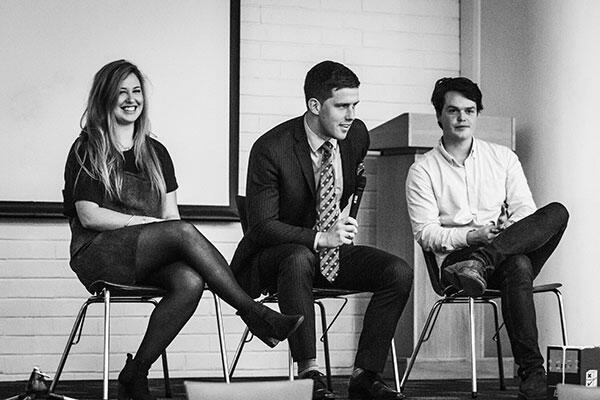
Last week saw the OUSA 2014 Executive Candidate Forums take place in the Main Common Room. With more candidates standing than usual, Bella Macdonald went along to suss out who prioritises what. Presidential CandidatesRuby Sycamore-Smith Ruby’s confidence in her achievements as Welfare Officer for OUSA in 2013 was evident. “Your priorities should be mine,” she told the audience. As a strong advocate for women and equality, she hopes to maintain events such as Women’s’ Week if elected President. She also believes that the prospect of a student bar is “real,” but that it would need to be the result of a partnership, probably between OUSA and the University. Flats are also an issue Ruby would look to address if elected. Ruby hopes to bring bigger and better events to the University next year, and to get the Executive more involved in organising events like Women’s Week. The sole female candidate for the position, she argued that it was important for women to have role models in politics. Zac Gawn Zac “the foxy fox” Gawn went in with confidence, relying on the knowledge of OUSA he has gleaned through his current position as Administrative Vice-President. Zac wants to make OUSA accessible to the majority and get the 16,500 students who don’t usually vote to vote. Zac felt that “decomposition of Scarfie culture has come too early,” and recommended preserving it by way of a new student bar. He believes a student bar would also help to address issues around women’s safety, as well improving safety for the student body as a whole. Zac would also like to promote more involvement within faculties, so that students can get more out of them. He believes a new bar is a commercially viable idea, but that it would need to target the majority of students (unlike ReFuel, which he feels targets the minority). Jordan Watts Jordan believes that “OUSA is better served by someone with a fresh perspective.” A bar, he said, “is not a commercially viable idea,” considering the number of pub closures in the past few years. “It would be throwing money into a black hole and [would] become a liability,” Jordan told the audience. Jordan would prioritise better University internet over a pub. If elected, he would focus on events that make students care more about OUSA and would encourage students to “get together a lot more.” As for the free breakfast scheme, he said he did not know many people who use it. However, he said that OUSA should be more focused on being a service provider. Jordan believes that a low voter turnout could mean that people are already satisfied with what OUSA can do for them. Admin VPRyan Edgar Honesty was Ryan’s policy, stating that as politicians have a very bad record of keeping promises, he would not make any. But his number one focus – unsurprising given his status as your typical Scarfie – was the preservation of student culture. His Scarfieness also manifested in less desirable ways, however; he was frequently lost for words, and proved unable to express his opinions in the heat of the moment. Paul Hunt Paul seemed to want to convert Otago into Canterbury Uni. With his frequent references to the great way that UCSA runs the Foundry, he seemed to think it was possible for Otago to do the exact same thing with a campus bar. He was all for saving Scarfie culture, wanting to talk to local breweries and negotiate with local sponsors. Kamil Saifuddin Running for both VP and International Officer, Kamil’s introductions consisted of rattling off greetings in multiple languages, showing the diverse roots that he would bring to the Executive. He hopes to get more international students integrated into society, and Critic wishes him luck. His experience with the International Food Festival and International Cultural Night shows that he is definitely capable of managing events successfully. WelfareNali Lee Nali claims to “[give] a shit about you.” A confident speaker, she was on the fence about the prospect of a student bar but was less prepared when it came to questions about VSM and the SLA. She is definitely able to think on her feet, describing herself as a talkative person. This was evident – she only just managed to say what she wanted to in the given timeframes. Jenna Bone “I put the PRO in Procrastination,” Jenna said, referring the amount of time she spends reading about current events. Critic wonders whether a propensity to procrastinate is something we should look for in an Execcie. However, Jenna did show an interest in making changes for the benefit of students and in making campus more environmentally friendly. Payal Ramritu Despite wanting to pull out due to nerves, Payal bravely took to the stage to tell the audience why she wants to be Welfare Officer: so no one else ever has to go through what she had to. If Payal gained some more confidence, her past experiences would make her a great advocate for student welfare. FinanceNick Tenci Newly elected into the role, Nick wants to continue in this position, boasting that “I know my shit.” While not competing against anyone else, he has shown he is capable of doing the job. He believes that the safety of women on campus “rests in men’s laps.” Critic wasn’t sure whether or not the pun was intentional. EducationThomas Mitchell Thomas made a bit of a statement before leaving halfway through the forum, telling to the audience that “the best way to stop rape is to stop raping.” He also said that students can’t learn in mouldy, damp flats, prompting speculation as to whether or not he could be the voice of a student population who have thus far proved him wrong. Jordan Taylor Jordan’s confidence and calm responses showed his experience in his role as the current Education Officer and his knowledge of OUSA. He introduced Sex Awareness Week this year, and will prove a hard candidate to beat. Not so keen on a student bar as of yet, Jordan wants to prove that OUSA can run ReFuel before taking on another such commitment. RecreationDan Stride According to Dan, this role is about representation and administration. However, his anti-E-Sports perspective won’t win him the votes of the hundreds of gamers out there. He believes that the $15,000 that was going to be put towards E-Sports could be spent in much better places. However, his experience and knowledge of OUSA might be to his advantage. Henri Faulkner Henri is your stereotypical gamer and science student, who would be a strong advocate for E-Sports. With experience running a gaming club, he has knowledge of the organisational skills required by such tasks. He also showed an interest in keeping other sports clubs running, and having had experience running a club with zero funding would likely be unperturbed by having to do so again. CampaignsHamish Barker Hamish wants to represent the best interests of the student body, taking a “no-bullshit” approach. He appeared to have your typical Scarfie attitude, but wants to be proactive about the potential loss of Scarfie culture. With praise for the way OUSA handled Hyde Street this year, he is sure to reflect the opinions of the majority of Scarfies out there who want to uphold these traditions. Jarred Griffiths Another Scarfie campaigning for Campaigns, Jarred will “make the best campaign machine in 2014.” He also wants to open up things to the majority of students, firstly by tackling ReFuel. While his critiques of Hyde Street (mainly focussed around the wristbands and ticketing system, which he believed didn’t work) threw sand in the eyes of OUSA, Jarred has the potential to be a good advocate for the mainstream.
-
Columns
OUSA Election Forums | Opinion
I wasn’t surprised that the questions raised at the Presidential Forum centred around three main themes: participation, finances and OUSA’s role in campus life. Jordan seemed to be the odd one out. Someone (I suspect a friend of his) asked him whether OUSA should, like the modern-day state, be charged with overseeing welfare issues. Jordan responded by arguing that while student welfare is important, we must avoid spending excessively in such areas. He was also of the opinion (and was the first of the candidates to make his position on the issue clear) that OUSA should be more politically neutral. Finally, he believed that a new student pub would constitute a financial liability, and therefore did not support OUSA’s investment in one. Ruby is a fascinating candidate. Her enthusiasm is infectious, and she immediately distinguished herself from her male counterparts. She had clearly thought about her position on the various issues, and her answers added a level of depth to the debate that I wasn’t expecting. This should come as no surprise, though: Ruby has been a member of the Exec throughout 2013 and, in her capacity as Welfare Officer, has worked to deliver free breakfasts to students, secured a $10,000 grant from the Government for something called “healthier relationships,” and promoted queer representation. Zac seemed ill-prepared, but was definitely the best-dressed. I have some experience when it comes to trying to get away with a lack of preparation, and nothing good has ever come of it. The lesson, of course, is that when you leave things to chance you leave your fate in the hands of others. However, while Zac’s opening speech was short, and while he stumbled over most of his answers, his experience as Administrative Vice-President should serve him well should he be elected President. His ideas regarding participation and outreach also reflected a maturity that should be taken into account. Strangely, the tension that the Service Level Agreement (SLA – OUSA’s financial lifeline) may cause in the future was not addressed from the podium. I did, however, ask the candidates privately for their thoughts on the issue. Ruby sounded as though she would do everything she could to keep OUSA ticking over, and supported continuing with the SLA. Zac was a bit nonplussed, but pointed out that he has always been in favour of revenue diversification. Jordan was keen to address the issue, and argued that in a VSM environment, the SLA was crucial. It looks, therefore, as though the SLA is here to stay. On a final note: it must be remembered that putting yourself forward for something like this, and subjecting yourself to the scrutiny of your peers, is incredibly courageous. Congratulations Zac, Jordan and Ruby – I wish you all the best.
-
Columns
OUSA Election Forums | Opinion
In my mind, the success of any elected organisation is largely dependent on its leader(s), and whether or not they manage to unite an often disparate group of people under one banner in the name of getting shit done. Ruby Sycamore-Smith could name at least six other candidates she was interested in working with on the Executive. Jordan Watts was pretty charming and presented himself as an independent thinker, unbeholden to any particular people/ groups currently embedded in OUSA. Zac Gawn wore a suit and prides himself on being the “lad” who can bring Scarfiedom back to OUSA. My Two CentsRuby: Has a large/ solid exec team she can work with if elected, and already has a good relationship with the large majority of candidates. Aiming for the “caucus/community” vote. Zac: Ticket seems based around large drinking events/ places. Aiming for the “populist” vote. Jordan: Seems like a cool dude but is basically the new guy, and probably won’t win simply because he lacks name recognition. Aiming for the “protest” vote. I split the issues down three lines:1. New Student Pub:Ruby: Favoured a pub funded in partnership with the Uni. Zac: Favoured a pub owned by OUSA. Jordan: Favoured no new student pub. 2. Internet:Thoughts on censorship: Ruby: Strongly anti-censorship. Supports removing or limiting the Uni proxy. Zac: Seemed to encourage DIY circumvention of the proxy to pirate material or access Redtube as needed. Jordan: Claimed that censorship was necessary given the network problems caused by piracy. Thoughts on Internet speed: Jordan and Gus: Believed that the issue was out of OUSA’s hands and could only be dealt with by ITS. Ruby: Believed that advocating for improved Internet speed should be high on OUSA’s priority list. 3. InclusivenessZac: Felt that greater OUSA inclusiveness translated into a new student pub and more Scarfies at the Hyde Street Keg Party. Ruby: Advocated for greater OUSA support for all kinds of events. Highlighted her past successes at bringing diverse minority groups together on various projects. Jordan: Advocated greater support for larger, partly external events such as the Craft Beer Festival. One criticism of each candidate: Ruby: Her “induction booklet” for freshers sounded no different to the handbook diaries given to all new students by OUSA for years, which I believe are rarely used. Uninspiring. Zac: Seemed to be against most items of “welfare spending” and yet supported a potentially massive white elephant of debt in the form of a student pub. Was unable to justify such a purchase in economic terms. Jordan: Possibly a libertarian.
-
News

Dorian Joins Larry in Animal Heaven
Two weeks ago, Dunedin was once again the scene of brutal animal violence. This time the victim was Dorian the rabbit. CCTV footage showed a man dressed all in black and wearing a beanie and gloves walking back and forth past the rabbit’s residence, a student flat on Arthur Street. Finally the stranger climbed the fence, grabbed the rabbit and took off. In a horrifying twist, once the man was further down the road he proceeded to smash Dorian against the neighbour’s garden wall. He then threw the carcass several metres into the air and over a neighbour’s fence. Shannen Lo, one of the flatmates who bought Dorian just three months ago, is distraught. “Our reaction was initially of shock at the brutality, tears for Dorian’s undeserved killing and anger at the sicko for taking Dorian from us so viciously.” Dorian’s hutch was secured in the front yard of the property. The man had trashed the hutch and the rest of the front yard in order to catch the rabbit. The flatmates, who were inside building a new hutch for Dorian’s offspring, rushed outside after hearing the rabbit’s screams. They searched the yard, thinking Dorian had been attacked by a cat or been caught in the fence attempting to escape. After searching for a while, a neighbour said that they had seen a man dressed in black acting suspiciously. They showed the flat the CCTV footage they had of Dorian’s kidnapping and murder. “The video was creepy and heartbreaking,” Lo said. “We found Dorian’s body the next morning and took pictures to update the police. He didn’t deserve it. The viciousness of the abuse and attack destroyed his defenseless little body.” The offender has been described as “more than 6 feet, about 180 to 190cm and medium-athletic build with dark hair.” The police are looking into the footage and are urgently searching for the killer, although there are few leads. The footage is now on YouTube. If anyone recognises the man, they are urged to contact the Dunedin Police. The killing continues a stream of animal abuse in Dunedin. Two teenagers admitted last week to the brutal killing of Larry the lamb, and Critic reported earlier this year on a number of cat hangings. “The killer was seen. He will be found, and while I wish he would be treated in the same manner that came so easily to him, the most we can hope is that Karma’s a bitch,” Lo said.
-
Columns

ODT Watch | Issue 25
Shocking! Critic had always thought history was about the future. In an insightful study, researchers found that by standing near the bar and looking at the bartender, you’re more likely to get served. He is fine with humans; he just needs therapy for sneering at the gorillas, especially female gorillas. Critic feels he needs therapy for speciesism against his own kin. The gorilla is getting sent to rehab so that Zola, the famous break-dancing gorilla, can have its place. Critic isn’t sure which of them has more issues. The family loved the horse so much that they did not realise it was missing until a few days after hearing a gunshot. On finding the horse (which was likely mistakenly shot by a hunter), they decided to put it down. Continuing the animal theme, medical claims by New Zealanders travelling abroad over the past year include run-ins with monkeys, seals, and camera-chewing leopards.
-
News
The Third Quarterly Executive Reports
The end of the third quarter has rolled around, and the OUSA Executive all have to submit reports on what they’ve been up to or else they don’t get paid. With the OUSA elections now happening, and several of the current Exec standing again, this is a good opportunity to assess who’s been doing their part and who’s been shit. While this year’s Exec has achieved a lot, much of that has come down to the efforts of President Fran, and he hasn’t always enjoyed the full backing or support of his team. Fran was feeling mushy at the meeting, though, personally thanking each of the Exec during a speech that ended with floods of tears. Critic has assigned each Execcie two scores out of five: one for their performance this quarter, and one for their overall performance so far this year. We’ve also helpfully pointed out who’s standing for re-election and if so, for which position(s). Francisco Hernandez President Fran’s had a less-than-stellar quarter by his standards. He’s continued to work very hard, dutifully ticking items off his “Franifesto,” bouncing around and generally being every bit the aspiring Labour backbench hack, but there have also been a number of notable fuck-ups. Fran’s had problems in the past with publicly blaming his Exec when things don’t go his way, and took another swipe at them earlier this month in Critic. This time around he was careful to (marginally) dial down the pass-ag, giving a special thanks in his report to most of his Executive but (pointedly?) excluding Zac. Probably fair enough; Zac doesn’t really do anything. Fran’s had a few big successes this quarter, particularly the DCC housing bill and the student bus fare trial period. However, he also saw a couple of his pet projects bite the dust – the November E-Sports tournament was cancelled after a series of delays and postponements, and the OUSA Governance Review has withered away into nothingness. On top of that was the polling booth debacle: students lost their on-campus polling booth for the DCC elections after Fran declared his candidacy for those very elections and thus created a conflict of interest in the eyes of the returning officer. There have been a couple of other let-downs. When Fran announced his plan to bring $2 coffees to OUSA, Critic was mildly excited, reminiscing about the Staff Club’s $2 flat whites of yesteryear. But it turned out that $2 coffee meant $2 “coffee” – OUSA is just buying a coffee vending machine like the one in the Commerce building, and plonking it in Clubs and Socs sometime next year. This has also been a quarter in which Fran’s lack of PR skills has come to the fore. His penchant for 600-word Facebook updates aside, he’s been sending out some pretty mixed and confusing messages about NZUSA, and attacking the media is usually a bad idea. After all, they’re the ones who give you ratings out of five. Standing for re-election: No. Quarter: Overall: Zac Gawn Administrative Vice-President The Administrative Vice-President does most of their official work behind the scenes, which means it’s hard to tell when they’re not doing it. This suits Zac fine. Still, read between the lines of his report and it’s pretty clear that Zac’s hardly been pulling his weight. When reading Zac’s report, it’s surprising how few responsibilities the Admin VP seems to have. Isn’t Administrative Vice-President the second-in-command? Surely they do more than just sit on a couple of committees, shuffle some papers for the OUSA Secretary and update the odd policy? Why is it such a senior position? The Admin VP is a senior position because its primary purpose is to back up the President. That means getting behind the President’s initiatives, taking on some of his work, and generally being his right-hand man (or woman, though we haven’t had a female VP in a while). While Zac states that “Francisco and I have a constructive and effective relationship” and that “I have been able to assist Fran in his duties throughout my term so far,” he gives no examples of how he has done this. None. Fran has such a high workload that he often sleeps in his office through weekends, and Zac seemingly couldn’t give a fuck. This isn’t all Zac’s fault – Fran is bad at delegating and admits as much himself – but it’s still pretty shit. On top of all this, Zac doesn’t really contribute much during Executive meetings, only clanking into life upon hearing the words “E-Sports” or “pub.” He doesn’t pull up the Executive on procedural matters during meetings (which is his job), and the upcoming referenda (which, again, are his job to organise, including ensuring the questions are unambiguous and constitutionally valid) already look like a mess. Standing for re-election: Yes – President Quarter: Overall: Ruby Sycamore-SmithWelfare Officer Ruby’s report clocked in at 3,580 words. Gee, thanks Ruby. Ruby has had another productive quarter. She has been particularly strong on women’s issues, overseeing Women’s Week, starting the Tea Cup Club and running campaigns against relationship abuse. She has also worked hard on Fran’s flatting initiatives. Plans for a Men’s Week have hit the rocks, however, as Men’s Rep Ryan Edgar “is a bit tied up at the moment in other pressing issues right now” (i.e. he’s running for Executive next year on Zac’s ticket. Awkward.). Ruby’s clearly put together a strong and well-informed Welfare Committee, and has learned a lot from them. However, the composition of that committee, and the tenor of the projects Ruby has ended up running, suggest that the Welfare Committee is wielding a lot of influence. Somewhat surprisingly, Ruby’s been one of the most effective feminist champions that the Executive’s had in years, and she’s the kind of mass-appeal figure who can bring feminism into the mainstream at Otago. But it’s a bit unclear how much of that is down to her specifically, how much is down to her committee, and how effective Ruby will continue to be next year without her committee’s guidance and support. Anyway. Ruby is a member of Keir’s Postgraduate Committee, but doesn’t appear to have got the memo about that committee not really existing any more (despite she and Keir having “strong communication lines”). She continues to divide her time during Exec meetings between showering her colleagues with praise, and playing Candy Crush on her phone. Standing for re-election: Yes – President. Quarter: Overall: Jordan TaylorEducation Officer Jordan’s report had a “man of mystery” vibe to it. He was unable to shed much light on what he’s been doing this quarter, he told us, because “most of it has been made confidential.” Taylor, Jordan Taylor did, however, reveal that he was a key supporter of the University’s recent adoption of the Grade Point Average (GPA) system. The Exec then universally agreed that GPA was actually a shit system. Awkward. More positively, Jordan pointed to a new University policy, which states that from the end of next year all courses must have a course overview and a detailed course description on the Otago University website, rather than the short, uninformative blurbs currently there. However, Jordan didn’t say whether he’d actually played any part in bringing this about, so it’s unclear whether he was trying to claim credit or just pointing out that there was something good happening in his general vicinity. Still, Jordan reckons that through his roles on University committees, he’s had a direct impact on over half of all courses, which is quite a big claim. And kinda raises the question, what sort of impact? What does he do? Oh that’s right, it’s confidential. Standing for re-election: Yes – Education Officer. This quarter: ???????? This year: ???????? Kamil SaifuddinInternational Students’ Officer Kamil definitely earns the title of Most Improved Player this quarter. He was a bit anonymous last semester, but has been omnipresent these last couple of months, going way above the call of duty for a 10-hour position. Basically he’s been a GC, always helping out his fellow Execcies as well as doing a tonne of work for his own portfolio. He’s overseen two highly successful events, the International Food Festival and the International Cultural Night, although for some reason he invited Te Roopu Maori to participate in the latter (Maori isn’t international! Bit racist). He’s also liaised regularly with over a dozen clubs, maintained a perfect attendance record across a variety of committees, and has become an increasingly confident presence at Exec meetings. Continuing Keir’s theme of devolution, Kam has big plans to build up the International Cultural Council into a large, semi-autonomous body in the mould of OUPS or Te Roopu. Standing for re-election: Yes – Administrative Vice-President and International Officer. Quarter: Overall: Nick TenciFinance Officer Nick’s only been in the job a month, so it’s a bit early to be passing judgment. His report reflects this; most of it says things like “haven’t really done much yet, not sure why I have to write this report, lol” (Critic is paraphrasing). Even so, he’s made a promising start, and looks likely to be around again next year. Standing for re-election: Yes – Finance Officer. Blake LuffRecreation Officer Blake’s been on a teaching placement in Wyndham this quarter, and has largely had to do his job over the Internet. He’s had to lean on his fellow Execcies quite a lot, as well as Recreation Centre staff, but as always he’s getting involved whenever he can. He’s been a great Recreation Officer over the last two years and will be missed. Standing for re-election: No. Quarter: Overall: Gianna LeoniTe Roopu Maori President Gianna didn’t submit a report this quarter; for some reason, she’s required to submit quarterly reports to Te Roopu Maori but only half-yearly reports to OUSA. Critic likes Gianna though, and wishes she had run for OUSA President, so we’ll give her an honorary star/ decapitated-head-turtle-bomb anyway. Standing for re-election: No. Keir RussellPostgraduate Officer Keir’s landed in the role during a particularly shit year for postgrads, and he’s the only real conduit between OUSA and a group with whom OUSA has an often-difficult relationship. During Executive meetings he has sometimes come across as stressed and testy – he and Ruby in particular seem to rub each other up the wrong way. This quarter Keir has been carving out a semi-autonomous role for postgrad representation, eliminating unnecessary red tape and giving the Otago University Postgraduate Society (OUPS) a bigger role. Devolution not revolution, that kinda shit. He hasn’t found much use for OUSA’s Postgraduate Committee, noting that it has “combined forces with” (read: been absorbed by) OUPS. He’s currently fixing up the rules to make this merger official. Standing for re-election: No. Quarter: Overall: Pippa BensonColleges Officer This quarter, Critic would like to note that Pippa is Canadian. That’s CANADIAN, people. Not American. Pippa’s main project this quarter was the College Stand-Off, an inter-hall music competition, which proved a success. Like last quarter, she’s been slowed down a bit by other projects falling through, usually due to factors outside of her control. However, she hopes to have the “ratemycolleges” website ready to launch by the end of the year. Pippa showed her lack of administrative skills recently, foolishly scheduling a committee meeting for Friday 13. She was duly punished when only two people showed up, but fortunately neither of them was called Jason. Standing for re-election: No. Quarter: Overall: Rachael DavidsonCampaigns Officer Rachael got an extension on her report; apparently she’s “writing her Master’s thesis” or some shit. Sounds pretty dodgy to us. Standing for re-election: No.
-
News

Masters by Coursework on the Rise
The University of Otago has seen an increase in the number of coursework Masters programmes on offer, and recent changes to admissions criteria have made some postgraduate qualifications more accessible than ever before. There are now five coursework Masters programmes on offer in the Division of Humanities: the Master of Higher Education, the Master of Planning, the Master of Indigenous Studies, the newly-reconfigured Master of International Studies (MInSt) and the newly-established Master of Peace and Conflict Studies (MPACS). According to Associate Dean of Graduate Studies, Alex Trapeznik, a Master of Development Studies is also in the pipeline. In terms of the MInSt and MPACS programmes, recent changes to admissions criteria mean students can now attain a Masters qualification in four years rather than five, as a Bachelor of Arts endorsed with Honours is now no longer a prerequisite. Instead, both programmes simply require prospective students to have a B+ average across all their 300-level papers, regardless of discipline. The competitive-entry MInSt and MPACS programmes are both unique within New Zealand and require 180 points to be completed over a minimum 12-month period. The MInSt programme has been running for 13 years and is a multidisciplinary course, incorporating economics, law, politics and peace and conflict studies, the latter of which replaced history in 2012. Along with completing four 30-point papers, students are also required to produce a 60-point dissertation of approximately 20,000 words in length. Sarah Macindoe, a current MInSt student, saw a Masters by coursework as preferable to a straight thesis Masters for various reasons. She says it is “a far more social experience than a Masters by thesis – it’s a fun and tightknit group that gets along really well together, and we’re also in contact with lecturers from other University departments and graduates who have been offered jobs or linked in to jobs by other graduates before them. You end up with a network of people you can mine, which is something you’re not really offered in a thesis programme.” For Macindoe, the class discussions and interactions integral to a coursework Masters are also invaluable. “We’re still getting experience with research and extended writing, but we spend a lot of time presenting, debating and defending ideas, presenting information in a way that someone can understand clearly. These are important, practical skills that you can’t really exercise in a thesis Masters.” The major advantage of the coursework Masters, however, appears to be their interdisciplinary capacity. Macindoe explains that it “reflects more closely the realities of the kind of workplace I want to work in. Just doing a straight pols degree or a research Masters (where you remain entirely within the pols framework) means you might be good at that skill set, but it’s limited and not representative of the kind of job you’ll end up doing. Having had practical and academic experience in subjects like law and economics, I now have a far better grasp of the complex issues I’ll be dealing with, especially if I end up working for the Ministry of Foreign Affairs (MFAT) … or in policy formation – typical avenues MInst graduates go down.” Indeed, the MInSt programme has seen its graduates secure jobs at MFAT every year since 2007. The National Centre for Peace and Conflict Studies, offering its MPACS programme from February 2014, has taken the vocational opportunities posed by a coursework Masters one step further, and is offering students the chance to complete a practicum paper instead of a research dissertation. Such students will take on overseas internships in the peace building, development and humanitarian fields, giving them invaluable on-the-ground experience. The Centre will be in a position to contribute financially to students’ travel expenses, having recently secured a large donation from an anonymous donor specifically for this purpose. Associate Professor Philip Nel, director of the MInSt programme, is enthusiastic about the opportunities a coursework Masters presents for students. Echoing Macindoe, Nel says the programme gives students a “broad exposure at a very advanced level to a number of subjects, and close interaction with other students, some of whom have been practitioners in the fields which you are studying.” Indeed, he adds that, if he were hiring for a position at MFAT, he would likely choose a candidate with a coursework background over a thesis. The changes to the degree structure come as part of a government-backed shift designed to align New Zealand’s university curricula with the internationally favoured Bologna system, in which a three-year Bachelors degree (incorporating an Honours-style dissertation) is followed by a one-year Masters, whether coursework or thesis. Along with the temporal, financial and vocational benefits for domestic students, it is hoped that the new Masters programmes will also be more familiar and therefore more attractive to international students, who represent a significant source of revenue for the University. Whilst Trapeznik says that coursework Masters “will not replace thesis Masters or PhDs,” he does say that, “these new programmes will make you a more marketable commodity in the workplace because [you’re] achieving at a certain academic level that is recognised worldwide.” This is in contrast to Honours or postgraduate diplomas, which enjoy little recognition outside of the New Zealand context. In any case, the inflation of advanced degrees internationally has seen a Masters qualification become an entry-level prerequisite for both paid positions and many unpaid internships. However, there are some who are experiencing disquiet about the admission reforms. Nel sees the changes as signalling “the death knell for Honours in the long term,” as completing the extra Honours year will only make sense for those wanting to do a Masters by thesis and/ or pursue a career in academia. There is also a feeling among some students that the new, and apparently less rigorous, entry requirements have somehow lessened the programmes’ worth. Indeed, Nel acknowledges that Masters by coursework has in the past been considered a less challenging alternative to Masters by thesis – in fact, the postgraduate common room in the Politics Department used to deny entry to coursework students. The bias is also reflected in scholarships – thesis students can receive up to $13,000 in tax-free grants and have their fees waived, whereas coursework students can receive only $10,000 and still have to pay the fees. Whilst it could be argued this is due to the fact that, as a one-year qualification following a three-year degree, the coursework Masters falls within the temporal ambit of the Government’s student loan scheme, according to Nel the present system of scholarship allocation gives the impression that coursework Masters are somehow “not a full Masters, which isn’t true.”
-
Columns

The More Things Change | Issue 25
This week, animals are important. 30 September, 1846: Modern medicine advanced once again when Dr W. M. Morton first used ether as an anaesthetic, administered by simple inhalation of the fumes. Ether is rarely used for anaesthesia today, but has become a mildly popular recreational drug, allegedly producing effects similar to alcohol intoxication. I say “allegedly” because I have inhaled a fair bit of ether during my attempts to knock out fruit flies, and all it gives you is a headache. Science, eh. 6 October, 1945: A guy called Billy Sianis took his pet goat to a baseball game, and consequently became a part of the sport’s folklore. Known for sneaking the goat into public places, this time Sianis got kicked out of the stadium. He was apparently quite upset about this, and proceeded to put a curse on the team. This was (predictably) known as the Curse of the Billy Goat, and was later revoked by Sianis. There seem to be some fans who still believe in the curse, though. It’s all very mysterious. 5 October, 1962: The film Dr. No was released, launching the “secret agent” genre that was very popular in the 1960s, as well as the whole James Bond thing. It was a financial and critical success (well, mostly: the Kremlin called it the personification of capitalist evil). It also established the Bond motifs we’re familiar with to this day: the shot down a gun barrel, the fancy title sequence, the Bond girl and so on. Dr. No is well worth watching, except for the scene with the giant venomous spider, which is grosser than the evil supervillain. 1 October, 1982: The institution of the cassette tape began its inevitable downfall, thanks to Sony launching the first consumer CD player. The audio CD was newly available at the time, and these fancy pieces of technology enjoyed twenty years at the top, until downloading and flash drives took over. CDs are still useful, though. People make art out of them and stuff. 30 October, 2004: Japanese scientists took the first photos of a giant squid in its natural habitat, which was helpful because the giant squid is still shrouded in mystery. We don’t really know how this thing reproduces or feeds or even how many species there are (estimates range from one to eight), and the evidence from the photos contradicted previous theories about its behaviour. Until science prevails, the giant squid will have to remain a shadowy creature of the deep, but there are probably worse things you can be.
-
Features
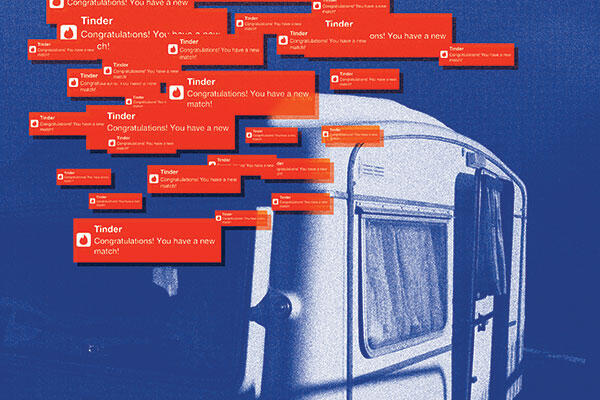
Hey Babe, Let’s Make Art
At his flatmate’s behest, Dunedin photographer Alex Lovell-Smith signed up to hook-up app Tinder. After one pleasant but uneventful date, Alex got bored, and decided to use Tinder for an art project-cum-social experiment. Could he convince any of his Tinder “matches” to meet him, not for casual sex, but for a photoshoot? I’m walking down Princes Street, southbound, with St Clair beckoning me in the distance. I have the usual mix of nerves and excitement that accompanies meeting a girl. A simple exchange of text messages has led me to Mojo Cafe at 2pm to meet Heidi*. So far, it’s all pretty normal. But there’s something different about Heidi: all the while, a little monkey is jumping up and down in my brain, screaming, “you met this girl online! What are you up to, bro?!” Heidi is the first person I have ever “met” online, and in only a matter of seconds will become the first person I have ever dated using an online dating app. Confession time: I have dipped my toe in the somewhat suspicious and murky waters of the iPhone and Android app Tinder. Heidi, 23, is working as a radio DJ in Dunedin for a couple of days, and is keen to meet some new people while on the road. She looked pretty hot in her five profile photos; plenty of Instagram filters in effect, but cute nonetheless. After some flirty banter I suggested a mid-afternoon caffeine hit. Nerves were in full effect, and following an awkward “wow you are a real person, holy shit I should probably shake your hand or hug you” moment and a hilarious mix-up involving me forgetting my PIN number (it wasn’t actually that hilarious), I managed to engage this real-life person in some conversation. It was all very PC and above-board: what we did, what we were interested in, which famous Dunedin landmarks she should see while in town. It was just nice, simple chat, and within minutes I was thinking, “shit, this online thing dating thing isn't so bad.” 30 minutes rapidly passed by and then she was off, heading to Larnach Castle for a quick visit (complete with hand-drawn map by yours truly) before turning her feet homeward. We exchanged a few texts later on – “thanks that was nice” (me), “sorry for spilling coffee on you” (her) – but it was pretty clear there was nothing substantial there. Online date number one over; cherry popped. I am fairly sure that many of you reading this will have downloaded Tinder, and I am also sure that those of you who have mainly did so “for the lols.” Heck, I know I did. But my God is it a freaking addictive app! As I was walking down Princes Street I asked myself, just why is it so addictive? Is it the ease of use? Is it just because it is app-based rather than on a website? Or is it because of the emphasis it puts on image when matching you up with potential partners? What has Tinder managed to do differently to, say, findsomeone.co.nz? Ease of use is definitely part of it, as is the fact that it takes online dating into a familiar app-based format. But most importantly, it has tapped into our collective obsession with the visual aesthetics of our potential sexual partners. It has harnessed this tendency to make snap decisions based on physical appearance – the decisions that are often impeded (or heightened) at 3am by copious amounts of booze – and condensed it into a simple, and familiar, swiping action of the index finger. Does Mr X. look hot in that snazzy suit and tie number? Swipe right for a “like.” Too many images of duckface selfies in bathroom mirrors? Swipe left and that person is gone from your list of possible matches forever. Simple, right? No wading through screeds of emails, messages, notifications and alert icons, let alone actually having to talk to someone for more than 10 seconds over an ear-splitting dubstep remix of “Wrecking Ball.” The other thing Tinder has over apps that have done this before (such as Growler and Grindr) is the fact that it works from your Facebook account. Not in a creepy “Jane Doe liked 17 new men on Tinder!” kind of way, but by allowing each user to only upload photos that currently exist in folders on their Facebook account. In one simple masterstroke, Tinder has removed your ability to have a bunch of dick pics as your five profile photos. This Facebook integration has gone a long way towards reducing the creepiness that seems inherent to online dating. Once you have swiped to the right on that sexy-looking someone you wait and see if they have done the same to you. If so, not only do you get a massive and instant ego boost (ZOMG that hottie thinks I’m hot too!) but Tinder then allows you to chat directly with this person in a simple format that resembles regular text messaging. From there, the magic is supposed to flow. Supposed to. Yes, this is a shortcut version of online dating, and yes, it’s simple, easy and a little cleaner than some of the alternatives, but judging from my experiences (and the anecdotes of others) it seems that people still feel the need make things easier for themselves once they have the chat box open. The most common complaint from the females I spoke to was that many guys’ opening gambit was “DTF?” Simple, yes. Classy? Errr … The laziness of casual pick-up lines aside, what I really want to focus on here is the fact that while Tinder has certainly streamlined the “hooking up” process, it has, in doing so, raised the importance we attach to physical appearance. We are asked to make split-second decisions on the basis of five photographs that users themselves have selected for their profiles. The visual element has always been important with regards to online dating, sure, but Tinder seems to get straight to the core of how we pick our causal sexual partners. This got the wheels whirring in my head, and before long I could sense the genesis of a project. Serendipitously, it seems, just as I began to think about Tinder’s social experiment potential I was offered the opportunity to travel to Christchurch for an “ultra-short term artist residency.” This wasn’t as flash as it sounded: I was to live for six days in a tiny caravan run by A Place to Build Art Projects at the site of the former Convention Centre, in the heart of Christchurch’s reconstruction zone. (Alone in a caravan in an abandoned-by-night part of Christchurch … totes not creepy.) I was given a simple, open-ended brief: my project had to involve some sort of “community engagement.” So I came up with a plan: while in Christchurch I would use Tinder with all of the settings maxed out – age range 18-50+, both the male and female boxes ticked, and the location fence set to 100 miles. Oh, and I would also “like” everyone that I encountered, which, as you Tinder pros will know, meant I would only get in contact with those who liked me back. The theory was simple: once I had a few chat dialogues going with other Tinder users I would try to convince them to come down to where I was working and pose for a series of portrait photos. I would then give participants their five best images and allow them to use them for whatever purpose they saw fit – they could even replace their five Tinder photos in the hope of increasing their perceived physical attractiveness! My goal was to answer three questions: whether my images would increase participants’ Tinder “appeal,” whether anyone would actually agree to approach the creepy bearded guy in the caravan, and whether people would be annoyed that I was using the hook-up app for something other than casual sex. The answers to at least two of them turned out to be “yes.” I arrived in Christchurch at 5pm on the Tuesday night and, after dumping my stuff at the caravan, immediately hit the pub. And so it began. Things got real very rapidly: within the first 30 minutes of the ol’ “swipe and giggle” I had over 40 open “matches” with other Tinder users. In other words, 40 conversations to start, and 40 people to convince to come down to the heart of Christchurch and have their photo taken amongst the city’s rubble. No big deal, right? Wrong. 40 in the first half an hour seemed manageable, but by the time I awoke the next day I had more than 70 matches, with no end in sight. It quickly became apparent that while some people understood the importance of an attractive image, approximately two-thirds of those on Tinder did not. There is nothing attractive about shovelling cake (and a whole cake no less) into your mouth. Additionally, it is a pretty intense task to initiate (and then maintain!) a conversation with over 70 people simultaneously. Imagine being at a BYO at The Asian with 70 other people. You have never met any of them; in fact, the closest you have come is looking at each other’s photos. You now have to work the room and make conversation with all of them, all while dodging the cheesey one-liners and dealing with the stubborn few who fail to respond to any communication. Now add the fact that you not only have to chat with these 70 people, but must convince them to come down to the caravan you are staying in and pose for a series of photos. At this point I realised that I may have been just a touch insane and/ or naive when thinking up my project. Oh, and a quick pro-tip: “DTF?” does not count as good chat if you want someone to come and pose for photos amongst piles of rubble. Wednesday consisted entirely of writing messages to my (increasingly numerous) “matches” and entering their names and details into a spreadsheet. By the end of the day my number of matches had ballooned to over one hundred, and I was making entries in the Excel document based on various tracking criteria: their age and location, whether I had initiated a conversation with them, whether they had replied, and whether the conversation had reached the point where I had pitched the project to them. It was early on in the first full day of the project that I had my first success. Jane*, 21, had not only been quick to reply but had chatted with me for long enough that I felt comfortable outlining my real intentions. Much to my surprise, she was also willing to get amongst, and agreed to meet me at the caravan the very next day. Not upset that I was after neither a date nor casual sex, she was more than happy to participate in the project, and even expressed enthusiasm at doing so. Win! Suddenly it began to feel like the whole thing might work after all. Thursday morning. After showering at Les Mills (the caravan lacked such luxuries) and making myself look halfway presentable, I waited nervously outside the caravan for Jane to show up, trying to look as unthreatening as possible. “Dammit,” I kept thinking, “I should have shaved.” Jane arrived right on time. She was elegantly dressed, and had obviously spent a bit of time preparing for the fact that she was going to be photographed that day. The easy conversation we had enjoyed through Tinder continued, and we talked about her studies (she was an architecture student). The first shoot location was on the vacant lot next door, and we rapidly worked through 90 minutes and six locations. With a quick signing of some paperwork my very first Tinder shoot was all but over. Jane was lovely and pleasant throughout, even confessing that she had done a spot of modelling back in her native Holland. “All of the success!” I thought to myself as we bid each other farewell. “This could actually work …” For the sake of not boring you all to tears I shall summarise the rest of the week in one short paragraph. Jane was easily the best of the (tiny) handful of people who responded to my Tinder approaches, and I had but one other success (Sarah*, 26). I spent six days on my phone and laptop, tirelessly cajoling people to come and meet me, and of the 128 people that Tinder “matched” me with, only five (four female and one male) made some sort of commitment to participate. Perhaps this was due to the general public’s uncertainty regarding non-traditional (read: non gallery-based) art. Or perhaps it was because the females I encountered were less overt in their online advances then their male peers. Whatever the reason, the outcome was depressingly obvious: after six days of living and sleeping in a caravan, tirelessly chatting to people at all times of the day and night, I managed to convince only two people to come and meet me for something other than casual sex.
-
Features

The Genital Composer
The music scene, particularly its more alternative elements, often claims to be a progressive force that tramples sex and gender underfoot. Despite this, female musicians still struggle with discrimination on a daily basis. Loulou Callister-Baker asked Dunedin musicians about their experiences with sexism. The musician stands on stage with a guitar between her hands and a microphone in front of her. She raises her eyes and stares the crowd down. The performance begins. A droning sound crescendos from her guitar and envelops the audience. She then starts to sing and scream intermittently. Her hair hangs down to her waist, wrapping both her and her guitar in an orb of music. She is terrifying. Her music is incredible. But she is also fighting for something other than her music. Every time she steps off the stage she is complimented not as a musician but as a female who makes and performs music. And if she continues her career she will be constantly reminded, in every review and every interview, that she is a female first and a musician second, as though what she does isn’t quite real. Sexism in the music industry exists. Although it takes a variety of forms – many of which are subtle and subconsciously ingrained in the minds of both men and women – more and more stories of sexism are rising to the surface. The opaque world of the music industry is becoming more transparent. On the mainstream international level, several stories in recent years – including of multi-layered victimisation – have created ripples throughout the online world and have revealed the darker side of what it means to be an internationally renowned female musician. In a short video featuring Nicki Minaj talking to a friend, the pop musician expresses her frustration with the industry. “When I am assertive, I’m a bitch. When a man is assertive, he’s a boss. He bossed up! [There are] no negative connotations behind ‘bossed up,’ but lots of negative connotations behind being a bitch,” Minaj claims while she fixes her makeup. She then explains that “when you’re a girl, you have to be, like, everything. You have to be dope at what you do, but you have to be super sweet and you have to be sexy and you have to be this and you have to be that and you have to be nice and you have to … It’s like, I can’t be all those things at once! I’m a human being.” Before the video ends, however, Minaj becomes noticeably more reluctant to be filmed, and asks that the footage not be used because, she states, “it’s just gonna make me look stupid.” While Nicki Minaj’s branding can appear to oscillate spasmodically between objectification and feminist activism, her identification of sexism in the industry is inspiring. Another protest occurred earlier this year, when electro-pop musician Grimes (otherwise known as Claire Boucher) wrote a post on her Tumblr that was shared and reported on almost every well-known music website and blog. The post, entitled “I don’t want to have to compromise my morals in order to make a living,” unequivocally questioned the male-dominated music industry on every level, from behind-the-scenes production to branding and marketing issues. Some of Grimes’ more powerful statements include “I don’t want to be infantilised because I refuse to be sexualised,” “I don’t want to be molested at shows or on the street by people who perceive me as an object that exists for their personal satisfaction,” and “I’m tired of people assuming that just because something happens regularly it’s okay.” She also expresses sadness at the fact that her “desire to be treated as an equal and as a human being is interpreted as hatred of men, rather than a request to be included and respected.” Grimes concludes the now-famous post by stating that while she loves what she does, she’s “done with being passive about any kind of status quo that allows anyone to suffer or to be disrespected.” This is a powerful message, made even more striking by how rarely this global industry is demystified. What often angers such musicians is the manufactured image of “pop stars” (whose careers frequently rely on these projected images rather than their music) that still dominates the industry, and that places immense pressure on serious musicians to conform to the money-making formula. The “Britney Spears model” is certainly toxic, and it’s hard for female musicians in particular not to be consumed by it. The perpetually introspective and observant musician Richard Ley-Hamilton views this element of the music industry as patriarchal and male-dominated, arguing that “sexism likely survives because sex, as a commodity, has a high value. In respect to female artists, there’s a lot more cultural currency in selling an artist as sexual than as authentic.” Millie Lovelock, a local Dunedin musician, also fervently believes that there is still an issue with sexism endemic to female musicianship: “the mainstream music media dictates that rock bands are for male musicians and folk bands are for female musicians – or female musicians can be sexy pop singers. I think it’s harder to break into the scene if you don’t think you can be a part of either of those categories.” Millie’s status as an increasingly well-known and respected musician in Dunedin led me to wonder whether, when she performed, she tried to make an element of female activism shine through. She wasn’t sure. As she told me, “I’m definitely trying to be feminine. I’m not trying to not be a woman, but I’m also trying to be kind of terrifying, which is something I do to kind of prove myself. Okay, I am small and I am female, but I’m fierce so don’t mess with me. I once had someone come up to me in Christchurch and tell me that, ‘oh, I saw you play and you were the scariest thing I’ve ever seen.’ In a male-dominated music scene I am definitely advocating the idea that I can be just as tough as male musicians can be, just as loud and aggressive, and I don’t have to be a folk singer.” It took (and still takes), however, a lot of small battles for Millie to feel motivated to stay on stage performing. When she first started playing guitar in high school, she tells me, “males, who were usually younger than me, would always ask me if I needed help plugging in my guitar but would never say the same thing to other males. It was like they thought because I am a girl I wouldn’t be able to do it.” Grimes also experienced this problem, writing in her blog that “I’m tired of men who aren’t professional or even accomplished musicians continually offering to ‘help me out’ (without being asked), as if I did this by accident and I’m gonna flounder without them. Or as if the fact that I’m a woman makes me incapable of using technology. I have never seen this kind of thing happen to any of my male peers.” It was when Millie started performing gigs while at university that sexism and music became a duo whose company she was forced to endure. Her worst encounter with “openly repugnant misogyny” was at a house party where Astro Children were performing for someone’s birthday. She described the scene to me: “it was a pretty basic setup – we didn’t have a microphone or anything, we’d been improvising for a while and people were enjoying it I assume, and then this guy just yells out, ‘show us your pink bits.’ The whole room booed him, which was really nice, and I yelled at him to stop being a misogynist piece of shit. I think he left after that. This guy thought ‘oh, because you’re a girl and people are enjoying the music I better say something obnoxious now.’” In a blog post about the gig, Millie stated that “it made me really angry to be reminded that some people think a woman playing music is only worth watching if she gets her vagina out. I can almost tolerate being patronised and belittled, but being openly objectified is disgusting, frightening and deeply upsetting. In some ways this was a positive experience. I felt brave enough to tell that piece of shit to fuck off and a lot of people backed me up on that … But I shouldn’t have to get aggressive just to stop from being sexually harassed while I am playing, and my band shouldn’t be in a position where we feel uncomfortable performing. I hope it never happens again, but unfortunately I am not confident that it won’t because I am female and music is sexist.” What became clear talking to Millie is the existence of a “boys’ club” within the music industry. What’s worse is that this mentality is so deeply ingrained it gets passed down through generations by way of the dangerous ritual that is “male bonding.” Millie tells me that this is “inherent in the small things, like when you get introduced to someone. It’s not so much with Astro Children, because there [are] only two of us, but when I’m with Trick Mammoth and we get introduced to (usually) an older male he’ll shake the male band members’ hands but he won’t shake my hand. They don’t register that it’s weird not to shake my hand, and look weirded out when I put out my hand. They’re not doing it on purpose; it’s just ingrained in their minds that either I’m not in the band or I’m someone’s girlfriend or you just don’t shake a girl’s hand or whatever.” While the predominant issue around sexism in the music industry is undoubtedly the victimisation of female musicians, problems with closed-minded gender division and stereotyping affect all types of musicians and their audiences. “The masculine image is not necessarily just a New Zealand-specific thing,” Ley-Hamilton suggests. “But the Kiwi bloke stereotype or the idea of masculinity in New Zealand is a strong, recurring trope, particularly in [those] we idolise – people like Richie McCaw or Sir Edmund Hillary. I see that in University culture. In the Scarfie culture, a large percentage of the guys I see walking around exude that macho ethos. They’re relying on an outdated stereotype to give them authenticity. They also represent a lack of emotional connection with themselves, which is something that I think is important to externally express. They’re happy to take on the image of a generic masculine icon.” In respect to this image and the music industry Richard believes that “a lot of the bullshit that surrounds sexuality stems from the ‘men are from Mars, women are from Venus’ idea. I think it’s a consumerist and a capitalist issue as well, because by splitting humankind into two completely different demographics you double the amount of money you can make – you don’t have to market music to one generic pool of emotions. Instead, the music industry extract emotions and ideas and uses those to tell women and men who they are and then sell them things like music to satisfy that. Sexism is the social reality of that economic policy in a sense. When you look at the state of the world you have to look at all political and economic agendas behind pretty much any social ideologies.” Discrimination of a person on the basis of sex is like the common cold. Every year you can forget, for a time, that sexism exists, but then “winter” comes around again and you realise that sexism has, and may always, come back. As I reached the end of my interview with Millie I confessed that I felt guilty about talking to her primarily because she was a female making music. Millie, while understanding the cause, agreed with me: “no matter who is talking about you, if you’re a female and making music they will never just describe the … music alone. Instead, they’ll always say ‘this person who is a girl is making this music.’” Millie continued to express concern about the issue of sexism generally. “I think what’s so dangerous about sexism is that women have had it ingrained in them just as much as men have. This makes it that much harder to get out of that situation. If you’re a woman and you can’t take yourself seriously because you can’t take women seriously, then it’s a never-ending cycle of oppression.” While in 2013 female artists have created places for themselves in an extensive range of musical genres, they still face great problems due to inherent and ingrained sexism in both the music industry and society in general. Millie ended our interview with a sentiment shared by musicians from Grimes to Nicki Minaj. “Sexism feels insurmountable. As a female you can’t even walk down the street without being yelled at. If you can’t be taken seriously in your day-to-day life then you’re not going to be taken seriously when you’re doing something else like music.”
-
Features

From Innocence to Sexual Commodification
Ines Shennan untangles Miley Cyrus’ Video Music Awards performance and considers the awkward transition from child star to adult. Why do some survive it, whereas others are considered impure “bad girls” when they shed their childlike image? We have a sick relationship with celebrities. We look to them for inspiration when they’re at their best, and at them as a source of comfort and self-affirmation when they’re at their worst. They are celebrities because of society’s unrelenting demand for details of others’ lives, whether salacious or mundane. Invasive documentation of their every move is disseminated with cool ease by every conceivable media outlet and is readily consumed by a drooling public. Image is everything, and the masses are hungry. There is a certain kind of celebrity that is no less immune to this treatment: the child star. I grew up eagerly watching the Olsen twins in Full House, I watched a young Britney Spears’ slick music videos and I was in awe of Lindsay Lohan’s great handshake in The Parent Trap. In the years following, I then watched as these stars grew into adults under the public’s watchful eye. Aside from trying to prove my “90s-kid” credentials, I mention these examples as a way of illustrating the central point: the awkward transition from child to adult is hard enough to deal with in private; trying to accomplish it whilst constantly subject to volatile social scrutiny is another thing entirely. Ironically, despite out constant monitoring of child stars – and our unashamed sexualisation of their bodies, in particular – the pictures we have of them are hardly representative of reality. What we see are artificially constructed versions of these individuals, designed to be held up as either inspirations or warnings. What really spurred this article was my horror at the discourse following Miley Cyrus’ VMA performance last month. Wildly provocative (though nothing new in its overt sexuality), the video went viral and sparked intense online debate. Numerous “WTF”-style comments took over my newsfeed, the stunt became a trending topic on Twitter, a host of new memes emerged overnight and coverage of the event ranged from the superficial to the overly-comprehensive. It is fair to say that people are more interested in Miley 2.0 because of who and what she used to be than because of who and what she is today. The difference is phenomenal: we have witnessed, seemingly overnight, Miley’s transformation from blond-haried, rosy-cheeked “Hannah Montana” to shaven-haired, semi-nude “Queen of Twerk.” Both her public image and her target audience have undergone a radical evolution. This brings us to the first problem associated with today’s vapid celebrity culture: commodification. When a 15-year-old Miley appeared on the cover of Vanity Fair draped only in a silk sheet, public outrage ensued, and Miley herself issued an apology. Parents of her tween fanbase were aghast, and others expressed similar dismay. Miley’s “wholesome” image was shattered by the suggestive photo, although outwardly it seemed not to tarnish her commercial success. Fast-forward to the VMAs and, despite Miley’s repeated assertions that she has “grown up” in recent years, public reaction barely differed. Phrases such as “why would her mother let her do that?” and “how inappropriate” were once again on everybody’s lips. Miley’s brand equity is determined purely by public perception, itself influenced by media coverage. When she appeals to a target audience, she is a marketable commodity; when she is the source of controvery, she is a liability, and the question becomes one of her “suitability” or “appropriateness.” But “appropriateness” for what, and according to whose standards? What the media – and the general public – seem to like to forget is that the trade-off for fame and wealth is invariably the sacrifice of one’s right to privacy. Like any 20-year-old, Miley is going to act in ways that occassionally challenge social niceties and preconceived notions of how “young women” should behave, notions that are themselves underscored by hypocritical normative standards. Unlike most 20-year-olds, however, Miley’s every move is instantaneously reproduced in all its full-colour, high-resolution glory. Labelled as “innocent” by virture of her rise to fame at a pre-sexualised age, her deviation from this idealistic image has prompted a vindictive response. I’m certainly not claiming that Miley is no longer a popular, bankable star; she earns millions every year, has a committed fan base, and continues to enjoy extensive media attention. My point is that the social commentary accompanying her transition from child star to young adult is flawed, and based on overly-simplistic pigeon-holing. When celebrities “act out,” judgement comes thick and fast. Sweet, virginal images are carefully constucted for the likes of Cyrus, Spears and Lohan by publicists and managers only too aware of what is needed to successfully sell to their young and impressionable target market (via, of course, the wallets of protective parents). While the stars themselves grow up, our perceptions of them don’t. When they act in ways that are all but expected of the average teenager today, we claim that they are “playing up” and heading “off the rails.” More disturbingly, as they mature physically they become sexualised objects as well as commercial commodities. This confuses people. Consequently, as soon as these young women no longer fit the inoocent, “good girl” typology, we dismiss their actions as misguided and their expressions of sexuality as dangerous. Interestingly, in what appears to be an attempt to shed their childish images, the Lohans and Spears and Cyruses of the day often seem to go too far towards the other end of the spectrum. It’s like the Madonna-whore complex, but exacerbated by the cruel effects of social media: we respect the innocent child star, but then casually dismiss her as insufficiently desirable. Should she try to become so, though, we immediately slut-shame her. A number of female child stars who have “fallen from grace” have managed to navigate this good girl/ bad girl divide by way of reformation and subsequent comeback. Drew Barrymore’s stints in rehab were overshadowed by her later professional successes, returning her to the “good girl” fold. University of Otago’s Hilary Radner notes that many child stars – including Barrymore and Jodie Foster – do successfully transition, and their ability to overcome hardship is just as intoxicating as their failure to do so: after all, “everyone loves a comeback.” The Olsen twins progressed from Full House to the DVD market, bypassing theatrical releases, before starting their own fashion labels. Sure, they’ve been dogged by the usual cloud of celebrity gossip, but their transition has been in marked contrast to the likes of Miley. Clearly, they seem to fit more within a good girl/ good girl narrative than the expected good girl/ bad girl one. Radner is astutely able to unravel such celebrity images, including from a historical perspective. She highlights the shift from the controlled flow of information to complete dissemination. In the mid-twentieth century, “morals clauses” in stars’ contracts with studios meant that tales of sex and drugs were often swept under the carpet. By controlling what information went to the press, studios were able to manufacture a certain kind of image for their media darlings. Control was tightened still further by the use of pre-digital photographic technology that was far more constraining than that used by today’s snap-happy, DSLR-clad paparazzi. Until now, this article has been somewhat Hollywood-centric. In terms of a local example, Lorde is the first to come to mind, although the young Aucklander has so far managed to escape the sort of media-driven dissection to which young stars such as Miley have been subjected. Lorde exploded onto the international music scene with the release of her debut EP “The Love Club” in late 2012. At 16, it’s a touch condescending to label her a child, but her talent was first discovered at the tender age of 12. Rather than milking her for all she was worth, her scrupulous management team kept her carefully under wraps. As such, she has remained an elusive enigma, an image that has only added to her image and appeal. When photos of Lorde (born Ella Yelich-O’Connor) finally surfaced, the Internet erupted with excitement. There was finally a face to the sound. In an image-saturated world, this was backwards, but damn was it refreshing. It’s certainly worth keeping in mind that this sense of unknown was instrumental in Lorde’s dizzying ascent to fame – alongside her sheer talent, of course. Clearly, limiting access to her physical image did nothing to hinder the public’s appreciation of her work. Now that she is very much in the public sphere, it will be interesting to whether this careful image-management can be maintained. It is also worth pondering how different things may have been if we had first been introduced to her age 12, rather than four years later. By skipping the “child” phase while still toying with “teendom,” Lorde has managed to simultaneously wow us with her innate talent while demonstrating a level of maturity. It’s worth considering whether this “intermediary facelessness” is a model that should be more readily adopted. We can’t deny that a neatly crafted image of Lorde exists, but it’s one that actively challenges our usual conceptions of “celebrity.” In a world in which image is everything, keeping certain elements under wraps is a progressive twist on an otherwise superficial celebrity culture. These stories of success, reformation or “disaster” all share one central theme, according to Radner. Perhaps, she suggests, everything we have been talking about is a “manifestation of cultural anxiety with women’s sexuality.” Celebrities live in an paradoxically ordinary-yet-extraordinary world; they live (mostly) ordinary lives (aside, of course, from their immense wealth and often-unattainable beauty) that just happen to be documented in extraordinary ways. Consequently, they become reference points for our own lives. Some may be role-models; some certainly are not. Their talent, whether actual or perceived, may serve as inspiration, whereas their downfalls serve as a reminder of who (or what) we do not want to be. So, when Miley “plays up,” we find it easier to condemn her than to deal with the reasons why her behaviour makes us uncomfortable. Robin Thicke happily exploits feminine sexuality in his “Blurred Lines” video, and yet his role in the VMA performace caused far less offence, confusion and technological hype than Miley’s. This is a double standard. Rather than simply dismissing Miley as a disgrace, why not enagage in a more intelligent discourse about the challenges facing female twenty-somethings in today’s world, especially as they begin to experiement with their sexuality and the way they wish to express it? On a final note, the outcry spurred by Miley’s VMA performance and her recently released “Wrecking Ball” video highlights inconsistencies in the way we perceive sexuality. While they may seem like obvious examples, they are important ones. Our society seems fundamentally unable to cope with women who push the boundaries on what we see as “safe” sexuality, and the media space is equally polarising. The “good girl”/ “bad girl” narrative doles out praise and criticism in a superficial manner, dictated less by reality than by the public’s hunger for a good old story.
-
Columns

Love Is Blind | Issue 25
JackIt was the usual story for me: my flatmates dobbed me in for the date and I decided to go along with it. My date was a good old-fashioned Scarfie lass – a GB in the truest sense – and I thought we were in for a relatively good night. I was wrong. Initially, it seemed like dinner was going really well. She was drinking the wine as fast as me and we enjoyed chatting about the trivialities of life on a Castle Street that has basically failed to deliver its usual promise of extreme Scarfiedom. We even talked politics – neither of us is so sure that the Dynamic Duo is anywhere near as strong as the Logan days, but time will tell. She ordered food that was too hot for her which was sweet as for me – I basically got two meals, and she got quite drunk. After a decent feed we were still going strong, and so we headed out to a bar … or five. It was after that that shit started to go downhill. Initially it was fine – conversation was even better than over dinner and I felt like we were actually getting quite close in that way that gets you excited for what could come next. But she started launching into me about not paying enough attention to her and getting too caught up in my own thoughts and priorities, which I think was really fucking harsh. I was just trying to keep what I thought was a really good conversation going. Being with an angry drunk is never fun and, to quote my Grandma, “it’s really unbecoming.” I decided it was time for me to head to the hills and told my date that my mates were out drinking and desperate for me to join them. She acted all disappointed (“aww, really?”) which almost changed my mind again – after all, moments earlier I was sure I was going to get lucky – but the decision was made, and I wandered home alone (via town, just to make sure that my lie was believable). JillI’m not sure what I wanted from this date. They seem to be either awkward as fuck or perfect, and I just had this gut feeling mine would fall into the “awkward as fuck” category. Naturally, I was right. Dinner was long and boring but the food was really good and the bottle of wine went down a treat. We had some decent conversation but the guy was just really self-absorbed and, at the end of the day, simply had nothing much of interest to say. I heard about his drinking habits and his exes and his time back home and his “epic” flat and I couldn’t have cared less. Ah, well. As many people do on these dates I texted my friends about the mediocre/ middle-of-the-road guy I had been put with, but they advised me to just stick with it – apparently these people can be kinda fun sometimes. He wasn’t, but that’s okay. I downed my bottle faster and faster until I got myself to a point at which conversation was genuinely easy, and eventually I wasn’t in so much pain. I’d even go so far as to say that I started having fun. I had a gut feeling that it was a mistake but I agreed to head out for a post-dinner drink at some of my favourite bars, and surprisingly it wasn’t too bad. Despite the boredom, the alcohol and close proximity had put me in the mood for a shag. I’m not a “do it on the first date sort of person,” though (I think they’re a rare breed these days even in more outrageous circles), so I flicked my usual teddy bear a text to see what he was up to. Nothing. Perfect. After our third (I think?) bar I excused myself to “see my friends who were having a party” and avoided his request to exchange phone numbers. It was a good night all in all – thanks Critic for the feed and giving me something to talk about!
-
Culture
The Deconstruction of a Gallery Opening’s Mystique
The Dunedin art “scene” is often considered to be “underground.” Seen as the realm of the city’s “alty” citizens, there is a widespread public perception that few students would go out of their way for an artistic experience. However, for the entirety of last week Dunedin art pervaded the student consciousness, spreading awareness and enjoyment in equal measure. OUSA Art Week is designed to expose students to the art world and provide them with opportunities to participate themselves, and “White Night” accomplished this with aplomb. Gallery openings can be as low-key as any movie, and yet many still hesitate at the thought of attending one. Perhaps this is because gallery openings can exude a sense of exclusivity, or because people are concerned that they will not be able to “talk the (art) talk.” The White Night Gallery Crawl, however, did away with such misconceptions, bringing people from diverse backgrounds together over glasses of (free) wine. Despite the distinct lack of cheese (which I’m told was a direct consequence of my being late), this relaxed gallery crawl successfully broke down students’ reservations, and will hopefully prove instrumental in prompting increased student attendance at such events in the future. Many of my flatmates asked me afterwards why I hadn’t made them go to openings before. White Night took me down alleyways I’ve had my eye on for years. The trail was brilliantly diverse, leading attendees from the Attic to the Dunedin Public Art Gallery, and then on to Allbell Chambers, Dowling Street and Moray Place. All in all, it transported me far away from the mundane realities of my day-to-day Dunedin existence. A highlight was being immersed in the Allbell Chambers. All three storeys of the studio-crammed building were open to the public. You could wander causally between the various rooms, each of which had its own special character. Alex Lovell-Smith’s photography studio stood out; professional, streamlined and stylish, it was jam-packed when my flatmate excitedly dragged me in to check out his “Swedish aesthetic.” Some attendees were more willing to explore Space 4 U (a gay/ bi sauna in Allbell Chambers) than others. One guy went so far as to write off painting as a “dead” medium, and everyone devoted different amounts of time to different spaces depending on their stylistic inclinations. The artworks I remember are the ones other people also pinpointed as their favourites. I’ve become accustomed to visiting galleries on my own this year, and thus to experiencing new art without the benefit of other opinions to balance my own. To spend a night wandering from gallery to gallery with a bunch of likeminded people, therefore, exposed to a range of opposing viewpoints, was a novel and highly enjoyable experience. As we were leaving Dowling Street studios, a friend expressed a renewed faith in Dunedin. Exploring so many hidden, creative places made us all fall in love with the city just a little bit more. I’ve focused on the gallery crawl because it was a dynamic event that appealed to many people who hadn’t previously had the confidence to enjoy art in a social capacity. Opening people up to art’s addictive properties was Art Week’s real success.
-
Culture

The Third Policeman by Flann O’Brian
The opening sentence of this book describes a brutal murder. An old man is first knocked down with a bicycle pump and then beaten to death with a spade. The one-legged, unnamed narrator, however, doesn’t want to explain his crime right away; more important to him is his friendship with John Divney, who works on his farm. The two men don’t have even one single minute apart during their three-year friendship. They sleep together, work together, and don’t socialise with anybody else. The thing is, the two friends actually hate each other. They murdered the old man together for his box of money, which Divney then hid. The narrator won’t leave his side until he shows him where the money is. The eventual revelation of the money box’s location triggers a change in the narrator, who is transported into a cruel, absurd, Alice in Wonderland-type world: “it was as if daylight had changed with unnatural suddenness, as if the temperature of the evening had altered greatly in an instant or as if the air had become twice as rare or twice as dense as it had been in the winking of an eye; perhaps all of these things happened together for all my senses were bewildered all at once and could give me no explanation.” Mathers, the man he killed, is there. The narrator speaks to him while averting his eyes from his terribly maimed body. Mathers sends the narrator to the policemen, who hold all the wisdom of the universe but are completely preoccupied with a deep, romantic love of bicycles. With frequent bicycle riding, the molecules of the policemen swap with those of the bikes, and each take on qualities of the other. The policemen have to prop themselves up against walls when they stand still, and the bicycles sometimes get caught in terrifyingly human acts. The narrator explains various aspects of this new world by footnoting the opinions of his hero, de Selby, a scientist and philosopher to whom he has devoted his life and on whom he has written a book. The comments are convincingly written nonsense, such as: “a) that darkness was simply an accretion of ‘black air,’ i.e., a straining of the atmosphere due to volcanic eruptions too fine to be seen by the naked eye and also to certain ‘regrettable’ industrial activities involving coal-tar by-products and vegetable dyes; and (b) that sleep was simply a series of fainting fits brought on by semi-asphyxiation.” One of his footnotes goes on for six half-pages, and covers de Selby’s belief that his mother is a man, a possible cure for cancer, and some military tactics. The book is very funny, but also very disturbing. There is a recurring theme of infinity, which really creeped me out. One of the policemen makes a carved wooden box which is so beautiful that the only thing he can bear to put inside it is another identical box, and another one in that, a process that goes on and on until the boxes are so small they become invisible. Events repeat themselves, reflections in mirrors go back for years, and time stops and starts according to the policemen’s strange laws of physics. My copy of the book is second-hand and is falling to pieces. I had to keep fishing dropped pages off the floor and rearranging them into the correct order, which seemed appropriate considering the book’s content. I wouldn’t call it an easy read, but if you are into horror, hell, eternity, and meaninglessness, this is the book for you.
-
Culture

Stoker
Rating: 4/5 Chan-Wook Park’s Korean films are beautifully pieced together masterpieces with brutally twisted elements. Stoker (2013) is his first attempt at an English-directed film. Do not judge Stoker through the strict lens of realism; rather, treat it as a cinematographic journey into Park’s twisted imagination. This psychological thriller follows the story of the events that take place after India’s (Mia Wasikowska) father is killed in a car crash. Her charismatic uncle (Matthew Goode) mysteriously moves in with India and her mentally unhinged mother (Nicole Kidman). He is grippingly fascinating, and is driven by motives that simultaneously compel and frighten India. She becomes slowly infatuated, and heads inexorably down a path of brutality and unease. Wasikowska’s performance is chilling, whilst Goode is easily in the same league as Patrick Bateman from American Psycho (2000). His cold, unhinged beauty is perfectly matched with that of Wasikowska; so much so that their hinted incestuous relationship doesn’t feel wrong, because it is only natural that people with such chemistry should be together. I would recommend watching Stoker simply for the cinematography. It uses fragmented, new-age photography and paints the world with a gothic exquisiteness. The close-up is used to incredible effect: from a white flower being sprayed with blood to the spiraling smoke of a birthday cake’s candles, the technique is used with impeccable skill. I enjoyed the way the narrative leads you blindly down a path you are not quite sure you want to travel. You don’t know how Park came to the final conclusion; you just know that he is tackling another social taboo. Just like a Hitchcock film, nothing is truly revealed and there is a constant feeling of unease in the air. However, the film took a bit too long to reach its climax, and the ending was a little unsatisfying. Park’s Korean films have been bloodier and darker, but this hyper-visual film is the first touch of creativity I have seen in mainstream cinema in long time. It is excitingly refreshing.
-
Culture

Riddick
Rating: 3/5 It’s hard to believe, but despite his brawny machismo and horrific repertoire of films, Vin Diesel is a gigantic nerd. It is Vin’s inner geek that has driven him to champion the Riddick franchise, in which he plays the central figure, Richard B. Riddick. At the start of the millennia, Vin Diesel pushed for the creation of two films and two video games in the series. Now, nearly 10 years since the last film (The Chronicles of Riddick), a third film in the series has been made. Riddick tells the story of Riddick (Vin Deisel) struggling to survive on, and ultimately escape from, the hostile planet on which he has been stranded. Fans of the series will immediately recognise that this is the exact plot of the first film, Pitch Black. If you watch the movie, however, it will soon become obvious that this is not a poor coincidence, but rather a return to what made the franchise a cult favourite to begin with. Riddick combines the best elements from the series’ first two films while also adding a number of great new ideas, such as periphery characters with genuinely believable emotions – not something the series has been known for in the past! Riddick also incorporates plot points from the previous films without alienating viewers new to the franchise. The film is cringeworthy at times, with some truly horrible dialogue and seemingly-obligatory nudity: science fiction superstar Katee Sackhoff gets naked in what is perhaps the most undignified moment in cinematic history. Luckily, this is offset by some excellently written, directed and performed set moments, which colour the spaces between the conventional science fiction thriller moments. The film also has some really great action, which is handled more intelligently than in most science fiction films. Such scenes thus become more about the psychological thrill than your standard “blood and explosions” fare. Riddick is mostly a pretty standard science fiction thriller. A must-see for fans of the genre or the Riddick franchise, friends and partners being dragged along to watch this film will also be pleasantly surprised – for what it is, it’s pretty darn entertaining.
-
Culture

What Maisie Knew
Rating: 3.5/5 I fully understand that divorces are never fun, carefree events that come with smiles and free popsicles, but I could not have predicted the messiness, nastiness and general glumness depicted in What Maisie Knew. The film follows the bitter separation of ageing rockstar Susanah (Julianne Moore) and her sarcastic, wealthy husband Beale (Steve Coogan), told from the perspective of their young daughter Maisie (Onata Aprile). What Maisie Knew easily challenges The Shining and Carrie for the award of “worst parents in film history.” Susannah and Beale pass Maisie between them like a rag doll that neither of them particularly wants, with Maisie finding an odd solace in her parents’ new partners Lincoln (Alexander Skarsgard) and Margo (Joanna Vanderham). This film’s success is almost completely reliant on the talent of the young actress playing Maisie, and Alprine definitely delivered. Moore and Coogan gave strong performances, but Alprine was an absolute star, and her quiet dignity carries the film. Skarsgard is also a notable mention as the bumbling, smiley barman tossed into a complex web of lies, playing his character with just the right amount of stupid. Unfortunately, What Maisie Knew is let down by a plot that often left the realm of believability. It was difficult to accept that two educated, mature adults would leave a small child in some of the situations Maisie ended up in, or that the child would essentially be fine with it. Throughout her harrowing ordeal Maisie did not have one tantrum or even cry, apart from the one silent, solitary tear that escaped during her most upset moment. If these were purposefully made decisions to reveal character psychology, I have to say that the psychology seems iffy. Nevertheless, this is an intelligent, raw film that unflinchingly examines the selfishness of human nature. Although the ratio of unpleasant events to pleasant is about five to one, I constantly wanted more, and couldn’t wait to know what happened next. This film offers just enough of a glimmer of hope to satisfy an industry too scared to present anything unhappy.
-
Culture
Spirited Away
After receiving the devastating news that the king of animation, Hayao Miyazaki, may possibly be retiring from film making, I thought it would only be right to review Spirited Away (2001). Miyazaki co-founded Studio Ghibli, which has never made a disappointing film. Miyazaki enjoys a huge cult following, with such films as Princess Mononoke (1997) and Howl’s Moving Castle (2004) to his name. Spirited Away is by far his most prosperous masterpiece (and the most successful film in Japanese history), grossing over $274 million at box offices worldwide. Miyazaki wrote the script after deciding that the film would be based on his friend’s ten-year-old daughter, who came to visit his house each summer. Sound familiar? Lewis Carroll said the same thing about Alice In Wonderland. This film is so gloriously artful that I would place it in my top ten films of all time. It tells an Alice In Wonderland-style tale of a young Japanese heroine, Chihiro. She and her family find an abandoned theme park – a discovery that immediately exudes a sense of abnormality. After her parents transform into pigs as a result of eating a forbidden feast, night falls, and the theme park magically turns into a bathhouse for Japanese spirits. The tale follows Chihiro as she tries to release her parents from the evil witch, Yubaba, who runs the bathhouse with an iron fist. Even you if loathe the very thought of watching a Japanese anime, I guarantee that this wonderful piece of cinema will broaden your imagination and leave you fully satisfied. The vivid colour, constantly-twisting narrative and endless characters reminds me of carefree childhood adventures … on acid. The fine attention to detail makes this animation a true treat, plunging the viewer into a completely new world. Your eyes want to soak up every detail as you become engrossed in the hand-painted mise-en-scène. My favorite aspect of film, however, is the innovative characters: the huge, radish-shaped spirit takes the cake, closely followed by the adorable soot spirits that eat candy stars. The storyline is extensive, so be prepared to find yourself totally immersed. If I get just one more person to watch this film, I will have achieved something beautiful.
-
Culture

Fried Rice
Good old fried rice. Whilst it’s a simple takeaway staple, it can be surprisingly hard to adequately replicate at home. Therefore, I now impart to you my own tried and true recipe, inspired by my Mama’s version. It’s another great way to use up bits and pieces in the fridge and freezer – I often use frozen mixed veggies and whatever is in the fridge at the time (broccoli, cauliflower, courgettes etc.). You’ll need quite a large pan for this – if you haven’t already, I’d invest in a wok; they really are great for cooking large amounts for hungry flatties. If you want to spice it up a little more, add one deseeded, finely chopped chilli in with the garlic and onion, and a squeeze of lemon or lime juice just before serving. A cup of green tea and a few steamed dumplings are great accompaniments too. Ingredients (for four):- 2 cups of cooked basmati or jasmine rice - 3 cups of water - 3 free range eggs - 1/3 cup of milk - Salt and pepper - 1 medium sized onion, finely chopped - 2 spring onions, finely chopped - 1 cup sliced green beans - 1 cup sliced button mushrooms - ½ cup of diced red capsicum - 2 tbsp vegetable stock powder - Soy sauce - Chilli sauce (Sriracha is my pick) - Oil for cooking Method:1. Cook the rice. I find fried rice works best if you use cold cooked rice, so make it well in advance if you can. 2. Heat a tablespoon of oil in a large frying pan/ wok and brown the onion and garlic. 3. Add your vegetables (the frozen ones should go in a little earlier than the fresh) and stir-fry until they have just cooked through. Remove from the pan and set aside. 4. Combine the eggs and milk in a jug and add a little salt and pepper. 5. Heat a little oil in a flat pan (circling to coat the base) and pour in the egg. Flip when only a little liquid remains on top and the outside has cooked. When it is cooked through, remove from the pan and place on a clean chopping board. Dice into small pieces and add to the vegetables. 6. Heat a little more oil in the large pan/ wok and then add in the cooked rice, breaking it up as you go and turning it in from the side of the pan to ensure it all gets heated through. 7. Add the vegetable stock, 3 tablespoons of soy sauce and about a teaspoon of Sriracha, and stir through. 8. Add the vegetables and egg and stir through. Finally, add more soy and Sriracha to taste.
-
Columns

Daily Grind | Issue 25
Rating: 3.5/5 This one has been a long time coming. Capers is a Dunedin institution, mostly for freshers who want a break from hall food and well-meaning guys taking their one-night stand out for a “thanks for the bang” brunch. Famous for their obscenely large pancakes and frantic weekend service, M decided to nab a takeaway with his flatmate A to suss the place out. M and A both got takeaway lattes and one of Capers’ colossal muffins. Throughout this transaction the staff seemed super friendly and attentive, normally a stretch for any café that has patrons coming out of every orifice. The latte was actually the best coffee that M has purchased from Capers; the foam:milk ratio was bang on and the entire thing went down a treat. In the past G, has had some pretty average coffees at Capers and has even had to return a few undrinkable ones, but since advertising for new baristas a while ago their coffee seems to be on the rise. Capers use Dunedin’s favourite Allpress beans, which are bold and not the friend of a shoddy barista. There are many great cafés in Dunedin, and G has always been perplexed by Capers’ popularity with students and the public alike. It’s pretty expensive for what you get, and the “legendary” smoothies appear to just be Simply Squeezed mixed with yoghurt. G attributes Capers’ popularity to the little things, like the jugs of maple syrup on the tables, the all-day breakfast, and the easy-to-fill-in coffee cards. G is still unsure whether you can actually purchase any meals that contain capers, as the name would suggest. G rates the cooked beans that come with the breakfast meals, and recommends trying the “pancake of the month” if you’re that way inclined. Sometimes they even have jazzy ones like jam and cream donut. M and G suggest that those of you who have discounted Capers in the past give their new baristas a go. But don’t be daft; avoid the crowds and brunch on a weekday.
-
Culture
Kingdom Hearts - 1.5 Remix
Rating: 6/10 The jump from standard definition (SD) to high definition (HD) has created a chasm between gaming generations. It has created a culture in which SD games belong to a past age while HD games belong solidly to the future. But it is also about more than how we perceive games. Rockstar has gone so far as to split GTA into two entirely separate universes: GTA San Andreas and all games preceding it inhabit the SD realm, whereas GTA IV, GTA V and any future iterations in the series inhabit the new world of HD. Recent years have seen a concerted push by developers to pull older games into this new age of gaming by performing HD overhauls. The latest series to receive such a makeover is Square Enix’s Kingdom Hearts, now Kingdom Hearts 1.5 Remix. Kingdom Hearts is a wonderful amalgamation of Western and Eastern influences. The first Kingdom Hearts game, developed by veteran Japanese RPG developers Square Enix, was released in 2002. Despite these Eastern origins, the game occupies the world of popular Disney franchises such as Tarzan, The Lion King and Alice in Wonderland. Using classic JRPG storytelling conventions, including ridiculously long cut scenes, overly sexualised youths and outrageous dialogue, Kingdom Hearts sees our protagonist Sora explore these various worlds with his faithful sidekicks Goody and Daffy Duck in an attempt to vanquish the Heartless threat. Kingdom Heart 1.5 Remix includes three games from the series: Kingdom Hearts, Kingdom Hearts Re: Chain of Memories and Kingdom Hearts 358/2 Days. The first is a simple HD remake, but the others are a little more complicated. For instance, this is actually the second time that Chain of Memories has been remade – the game was first released on Gameboy Advance in an effort to bridge the gap been Kingdom Hearts 1 and Kingdom Hearts 2, but was remade later for PS2. The version included in this compilation is the HD remake of the PS2 remake. Equally confusingly, the version of Kingdom Hearts 358/2 Days (originally released on DS in 2009) you get here is not actually the game, but rather three hours of cinematics that have been re-mastered in HD. While these re-mastered games retain their inherent charm, they do poorly as HD remakes. I am not normally a stickler for graphical fidelity, but the whole point of re-releasing these games was to improve their graphical potential, and the graphics of the remakes are disappointing. Certain aspects have been greatly improved – such as world textures and the special effects on things like hair – but such improvements are entirely overshadowed by the characters’ square faces, which are horrifically out of time with the dialogue. Considering the cinematic cut scenes have been re-mastered and look incredible, these graphics stand out like a sore thumb. This makes jumping into the game somewhat jarring. In my opinion, the only way to justify the flood of HD remakes is to demand not only that the graphics be brought up to modern standards, but that the underlying systems be revamped also. In this respect, Kingdom Heart 1.5 Remix once again falls well short of the mark. All of the systems that drive the game are essentially the same as they were on the PS2. But before I start receiving hate mail from JRPG fans, let me be clear: this is not a mark against the Kingdom Hearts games themselves, but rather against the attempt to re-master them as an HD collection. The Kingdom Hearts games are absolutely magical, and the opportunity to play these three on your PS3 may well be reason enough to purchase the compilation – especially with Kingdom Hearts 3 on the horizon. However, I do believe that we need to make it clear to the industry that if they are going to take advantage of our nostalgia to sell these re-mastered games, we expect more for our money than a new coat of paint.
-
Culture

Kings Of Leon - Mechanical Bull
Rating: 3/5 What a strange tale the Kings Of Leon story has been. Though ever-adored by the British music press, it wasn’t until album number three, their magnum opus Because Of The Times, that they broke into the mainstream consciousness. Even after several monster hits and two more albums – the lustrous Only By The Night and the lethargic Come Around Sundown – they never really achieved much success in their native America. And after the disappointment many people expressed at Come Around Sundown’s failure to deliver either the garage grit of their early days or the polished theatrics of their latter, they seemed to be calling it quits. Going out with a whimper rather than a bang, then? Not quite. Many fans begged the Followill brothers and cousin to reunite and return to the sun-baked garage rock they started out making. As much as I loved everything up to and including Only By The Night, I found myself echoing the sentiment; Come Around Sundown was the sound of the band moving too far into Springsteen stadium rock territory, all beige choruses and no weight. A return to the fire of their early years is exactly what they needed. How excited we all were, then, when sixth LP Mechanical Bull was announced. “We’re going back to our roots,” the band said. “We’ve been listening to a lot of Queens of the Stone Age.” Perfect. Mechanical Bull was to be heavy, energetic, and maybe even experimental. The title alone suggested a sound both muscular and adventurous, perhaps in the pile-driving style of The Dead Weather (or Them Crooked Vultures, at the very least). Kings Of Leon were to return with a bang. Well, bugger. Though thankfully not Come Around Sundown 2, the hot-off-the-press Mechanical Bull isn’t the stomping and face-melting return to form we were hoping for either. It is, in fact, slap-bang in the middle of the two. Their bite is back – faster tempos, coarser guitars – but the soppiness of Sundown still hangs in the air, and the frothy nods to Springsteen still lurk around every corner. “Supersoaker” kicks things off in lukewarm fashion; though on paper it is an Aha Shake Heartbreak-style track through and through, it is delivered with the same radio-friendly restraint that made their last album so un-stirring. It is frustrating to hear quite an energetic track arrive through the speakers so flimsy, so insubstantial. Are they striking their instruments deliberately feebly? Or is it production that makes it so wishy-washy? Whatever the explanation, a slight breeze and this song (among others on Mechanical Bull) would be blown away. Thankfully, around half the tracks here are great, either packing more punch than “Supersoaker” or doing “delicate” more fruitfully. “Don’t Matter” is the song that delivers on the promise of Queens of the Stone Age influence: its fuzzy guitars and spooky chorus are in a similar vein to Rated R. Elsewhere, “Temple” is a widescreen pop song worthy of a spot on Only By The Night, just as “Family Tree” and “Tonight” could have easily been late-album highlights on Because Of The Times. These memorable songs ultimately outnumber the forgettable ones – the watery ballad “Wait for Me” probably being the worst offender. But still, it doesn’t quite feel like enough. Kings Of Leon have failed to explore enough new territory, or do anything particularly exciting with the sounds already in their repertoire. The lads have certainly taken a step in the right direction away from Come Around Sundown, but said step could’ve – should’ve – been larger. Now that they’re out of hibernation and on an upwards trajectory, perhaps “heavy” and “experimental” will be words we’ll associate with their next album. Until then, we’ve got Mechanical Bull. It’s good, but far from great.
-
Culture

Someone Still Loves You Boris Yeltsin - Fly By Wire
Rating: 4/5 With the slow onset of the sunnier half of the year, the musically-inclined are already building up their summer playlists, soundtracking lazy drives to the beach, rooftop sunbathing sessions and afternoon backyard drinking sessions that segue into crisp starlit evenings. If you are in such a phase, you’ll find a fine candidate in Someone Still Loves You Boris Yeltsin’s Fly By Wire. Being something of a fan of the Missouri trio’s work, especially 2008’s Pershing, I picked up Fly By Wire shortly after its release. And boy, do I not regret it. In overarching aesthetic, Fly By Wire comes across as Swede-pop gone chillwave with a dash of Midwest indie: imagine The Little Hands Of Asphalt had a mid-tempo baby with The Shins. It features a wide range of instrumentation, from dreamy piano/ acoustic guitar interplay (see opening track “Harrison Ford”), to fuzzy surges of keyboard wash, to the reverb-drenched vocal melodies of Philip Dickey and Jonathan James. Despite all these diverse sounds, the tracks still manage to sound uncluttered and superbly pieced together. In fact, SSLYBY combine these myriad sounds so cohesively that Fly By Wire can sometimes seem a little samey. Thankfully, though, most tracks have enough distinctive nuance to keep the listener interested the whole way through. The band offers excellent dynamics within their tunes, seamlessly transitioning from bubbly riffs to high energy passages to soft, moving segments – the track “Nightwater Girlfriend” being a prime example. They maintain a certain clarity throughout all of these gear changes, despite their songs’ inherent haziness. These tracks all have a subtle dancey vibe to them, with vibrant (often programmed) percussion and layered melodies generating a solid sense of movement. If halfway through this album you haven’t tapped your foot or bobbed your head at least a couple of times, the only possible explanation is that you are either asleep or deaf. Overall, Fly By Wire is a great album, colourful and coherent. Give it a listen through, and maybe even chuck it on your summertime playlist. At just 32 minutes long, you really have no excuse not to check it out.
-
Columns

Science, Bitches! | Issue 25
Exams are looming, stress is building, the Central Lib will soon be overflowing, and the stress-relief method that got us through the rest of the semester – that favourite student pastime, the weekend booze-binge – will shortly be abandoned in favour of Saturday nights hitting the books. Within a few short weeks we will cram a semester’s worth of knowledge into our brains, only to forget it all upon completion of the three-hour word-vomit they call an exam. Finally, we will then be free to bask in the sweet summer sunshine. What anxiety antidotes can science offer? “Science, Bitches” is here to help! How about a bit of leafy leisure? Edinburgh scientists recently confirmed that nature itself is relaxing. Using a nifty portable device to measure participants’ brainwaves, researchers tracked brain activity during real-life exposure to natural and unnatural surroundings. They found that brains emit patterns characteristic of “relaxed attentiveness” when subjects are walking through busy but leafy surrounds, like parks. In comparison, when walking through busy and concreted areas of Edinburgh, participants’ brainwaves were characteristic of “stressed alertness.” Yes, science has confirmed that grass is good for you. Is study putting you in a vegetative state? Seek out some vegetation! Dunedin has a plethora of plant life; any of the following arboreal areas could be perfect for a bit of foliate free time. The Botanic Gardens are lovely and are nice and nearby, plus you can feed the ducks while you’re there! If you’re a bit of a city slicker, you could amble up through the Town Belt and reward yourself with a coffee in highbrow Highgate – no need to go bush entirely. But if some really good bush is exactly what you’re after, head down lovely Leith Valley to Ross Creek Reservoir and the tracks beyond. (Be warned, though, the valley can get quite moist.) Wear some sturdy footwear. As Thoreau said (verbatim, I swear): I went to the woods to chill out, because it’s science, bitches!
-
Columns

Hi Dr. Nick | Issue 25
Hi everybody, Put your hand in your front right pocket and have a good ol’ feel. That phone you’ve got in your hand, and its reliance on the ore Coltan, is responsible for the conflict in the Congo that the World Health Organisation conservatively estimates kills over 1,000 people a day. But that’s okay, because we could easily all die in a nuclear war before we would be able to fix that issue. Research from 2007 shows that a war involving 100 small nuclear weapons would basically wipe out a third of the world’s population within two years, leaving the rest of us to starve to death or suffer the long-term effects of global irradiation. (For the record, 100 weapons of that size constitute less than 0.1 per cent of the total amount of explosive nuclear weaponry in the world and around 5.5 per cent of the number that are able to be launched with less than 10 minute’s warning, and are substantially less than the standard load on a regular Trident submarine used by the United States.) And hey, if the world doesn’t end in fire, it can always end in ice (either a reference to Robert Frost or Game of Thrones, depending on your literary background and fondness for titties on TV). Climate change is set to wipe humanity off the face of the earth if we don’t do something to radically alter the tracks we’re currently on. Show of hands (you can take them out of your pockets now, guys): who’s bored already? 250 words in and the column is already preachy, doomsday-y and “same old, same old”-y. We’re literally talking about the end of humanity, and it’s simply not exciting anymore. This is what I call “repeated exposure, don’t give a fuck anymore” (REDGAFA) Syndrome. Perhaps it has a real medical name, but this is my twenty-fifth column and I don’t give a fuck anymore. REDGAFA Syndrome plays an important role in medicine. It’s the reason we don’t actually care how small, curved or awkwardly narrow your junk is when you come to clinic; it’s the reason why we can keep functioning when a 14-year-old tries to kill herself; and it’s the reason we can seem so heartless. I watched my Granddad have a heart attack one Christmas. It was terrifying, and I felt utterly, devastatingly powerless. You tell me that there’s a “?MI” (suspected myocardial infarction) in Bed 4, however, and I will casually wander in to say hi and run through the standard questions while hoping I make it to lunch. It’s not that I don’t empathise with the pain and worry; it’s just that heart attacks are bread and butter on the ward. To many people (including my younger self), such an attitude seems unbelievably callous, but the diagnosis is nothing special. What is special is the patient. No matter how many patients you see and no matter how many textbooks you read or lab tests you order, the patient is always unique. Their perspective, their history and their ideas, fears and expectations about what it means to be sick are all unique. REDGAFA doesn’t apply to a patient’s life, just their symptoms. Life lesson: REDGAFA’s not unique to doctors. You’ve probably already REDGAFA’d things like breakups or drunkenly pissing the bed. As you grow older, you’ll be repeatedly exposed to things like suicide, cancer, and death of family and friends, and while they may seem horrible now, they are incredibly common in society. Odds are, you’ll begin to develop REDGAFA towards them throughout your life. Just because medics get to skip ahead in the “book of cynicism” doesn’t mean we aren’t all reading it. Keep REDGAFA at bay by individualising situations you feel indifferent to – find a way to connect to something specific to that event and run with it.
-
Culture
Checking in on Yahoo!
It has been a year since overachieving, Silicon Valley poster-girl Marissa Mayer (formerly of Google) took over as CEO of Yahoo! There has been a lot of buzz about Yahoo! recently, what with Mayer’s acquisition of several start-ups, the re-vamp of Flickr, and a logo change. I decided it was time to finally check out Yahoo! and have a play around with its services. I’m fascinated by Mayer, who is undeniably brilliant and stubborn and does things her own way. She has gained a reputation over the years for being difficult, and is obsessed with user experience. At Google it became apparent that she likes to be in absolute control, even if it means bottlenecking progress at the company. Her policies so far have been controversial – she’s banned working from home, for instance. The role of a CEO can sometimes mean little more than a figurehead and a large salary, but I have no doubt that Mayer is taking a very hands-on and assertive approach to running Yahoo!. The tech world is rightly interested to see where things will go with the company under Mayer’s control. Deep breath now. For the first time since 2002, I visited Yahoo!. Yahoo! NZ loaded and I was underwhelmed. Mayer clearly doesn’t have her clutches on the international sites yet, as Yahoo! NZ is still rocking the old-school Yahoo! logo and Century Gothic typeface. Aside from the typeface, it wasn’t terrible. It showed a mash-up of news similar to the front page of Stuff. I can see the appeal for people like my mum. I clicked over to the US Yahoo! site and was immediately overwhelmed. There in the top right corner was the new Yahoo! logo, purple and … animated? Weird. As for the rest of the page, it looked like Buzzfeed and The Huffington Post mated. Lots of news, lots of click-bait, lots of headlines. I checked out a few other Yahoo! sites. The design is inconsistent, but no doubt several of the sites will be revamped within the next year. News, Sports, and Finance aggregate stories from popular websites, while the Games site offers your usual range of Zynga-esque games without the annoying prompts to “invite your friends.” Yahoo! Answers is its good old stupid self, and Screen is YouTube for Yahoo!. Actually, I quite liked Screen – the interface is quite intuitive and there are fewer idiotic/ racist/ sexist comments. I also enjoyed Shine, Yahoo!’s “life and style” section (read: gossip, recipes, manicures and articles about sex for when you’re feeling particularly hormonal), and will probably visit again when I have a block of chocolate and a giant pimple on my chin. I decided to try the new “My Yahoo!,” which hopes to replace the nixed iGoogle. In fact, you can even import your iGoogle information to My Yahoo!. I dispensed with iGoogle a few years ago, so created My Yahoo! from scratch. I signed in with my Google Account (weird) and my page was automatically populated with several RSS feeds, weather information for Sunnyvale, California, and horoscopes. If you’re in the market for an iGoogle replacement, My Yahoo! is quite nice looking and will probably serve you very well. Overall, my visit to Yahoo! wasn’t as abjectly awful as I thought it would be. There’s heaps of inconsistency, which is only to be expected. Yahoo! has become a beast with many heads that will take time to tame, and Mayer’s reforms at Yahoo! are only beginning to have traction. Yahoo! remains a little ambiguous – their search engine is powered by Bing, their content comes from all corners of the web, and their services run the gamut from finance to dating and shopping. At the core of all these services is the hope to change people’s habits, making Yahoo! their first stop on the web and their preferred gateway to information.
-
Culture
Web Trick of the Week: The Wadsworth Constant
The Wadsworth Constant: Noun. An axiom stating that the first 30 per cent of any video can be skipped because it contains no worthwhile or interesting information. Popularised by Reddit user Wadsworth in 2011. (knowyourmeme.com) It’s true though, isn’t it? Pretty much any how-to video begins with several minutes of some guy telling you useless information, or some makeup blogger talking about the new brushes she bought before showing you how to do your eyeliner. &wadsworth=1Skip the boredom by applying the Wadsworth Constant to your YouTubeing. There’s a few ways you can do this: add the string “&wadsworth=1” to the end of the URL of your YouTube video (thanks, Google engineers!), or click on the video and then tap the number three on your keyboard. Actually, tapping the numbers one through nine on your keyboard will allow you to jump to 10 per cent to 90 per cent of the way through respectively. There you have it, procrastinators, a way to YouTube more productively!
-
Culture

Interview: Sonja Urban (Animal Rights Activist)
Sonja Urban is a German-born human and animal rights activist who became a New Zealand resident last year in order to study Environmental Organisation at Otago. Baz Macdonald spoke to her about her latest cause, Shave It or Save It, which aims to raise money for animal welfare by letting donors decide whether Sonja should shave her head or not. What causes are you currently supporting? The causes I support are KidsCan (child poverty) and SAFE (animal welfare). What drives you to support them? I chose the charities for different reasons. Why child poverty? Child poverty in New Zealand is a lot worse than I thought it would be. For a developed country like New Zealand it is actually really bad. Children need our help; if we do not start here where else? If the children of today get more chances they can be “better” adults. They cannot speak up for themselves just yet, so let’s help them. KidsCan does all sorts of things. And why animals? Well, aren’t we all just animals? And we should take care of each other. We need each other to keep this planet running. There are thousands of homeless dogs out there that have to get put down because no one wants them, or [because] there are not enough resources to look after them. SAFE … cares about all animals, not only the ones we call pets. What is the goal of your current endeavour, Shave It Or Save It? My first goal is to raise a lot of money for the causes, and then I wish to make more people aware of the poverty and animal welfare issues. Many people do not know just how many children do have to live below the poverty line in New Zealand. I also want to raise the profile of SAFE in Dunedin, as they are doing really important work for animal rights. What argument would you make to a meat eater to encourage them to engage in a vegetarian or vegan diet? My reason for being vegan is to keep the harm on beings and the environment as low as possible. A meat eater could do so by eating less meat – for example having a meat-free day, or better still a week – which would change our farming industry from a heavy reliance on animal farming to more diverse multi-cropping practices. Animal farming has a big impact on the environment and we could all do a little bit to reduce that. For example, it takes tonnes of crops and water to feed farmed animals – it takes up to 13 pounds of grain to produce just one pound of animal flesh and it requires between 5,000 and 20,000 litres of water to produce one kilogram of meat. So not only would you do good to the animals by eating less, or no, meat, but you would also reduce the impact on the planet. Having grown up in Europe, how do you think NZ stands in terms of environmental and human welfare issues? Better or worse than European countries? This is a tough question. Every country has their own issues, which are not quite comparable. We do some things better in New Zealand compared to some European countries and we do some things worse than some European countries. What is your next activist venture? If people decide that I should shave my hair, I will write a blog afterwards on how people react towards me. I heard from many girls who have had a bald head that they got weird reactions from people. I want to show people how superficial their reactive behaviour can be and how painful it is for people whose baldness is due to health issues. I am also hoping to find some time to volunteer for SAFE. How can people get involved in your causes or donate to Shave It Or Save It? It is easy as to donate. If you think I should shave my hair, you put money in the “Shave it” account: S N URBAN 38-9012-0395397-02 If you think I should keep my hair you pay your donations into the “Save it” account: S N URBAN 38-9012-0395397-03


