-
Columns

Editorial | Issue 23
This week Sam McChesney took the rare step of admitting he doesn’t know too much about a topic. That topic is art. You see, your humble Editor is a still-life sort of man. He likes flowers, elaborate portraits and shit. But unless these are painted (and yes, it’s always a painting) by van Gogh or another outsider artist, they don’t really qualify. There’s only so much you can write about a pretty daisy. Art is a pain in the arse. The difference between good and bad art is inherently subjective and prices paid by collectors are more arbitrary than any other market. I’ll admit this as someone with significant emotional investment in it. But criticisms of this fluidity are clichéd and too easily misconstrued, so let’s just leave it alone. My own experiences with art began a fair few years ago when I was lucky enough to go on a family trip to Paris and spent the ensuing weeks alone in any museum or gallery I could find. I was probably being an angsty teenager who didn’t appreciate what I had, finding solace and escape from my family in the huge museums. This in itself is nothing spectacular – these collections are tourist destinations whether you care about art or not. But spending several days in a row at a single gallery, reading all the wall texts and admiring as much of the work as you physically can, spurs an almost accidental passion. I wouldn’t say that simply overindulging in art in such a way leads one to understand it differently. At that stage I was just intrigued by trivialities and captivated by beauty. But my perceptions began to change near the end of high school when I started meeting people from the big, bad, frightening “art world.” It takes someone interesting and enthusiastic to pass on a passion for art. It takes someone who cares about challenging his or her own perceptions of the world every day who will encourage you to do likewise. Falling in love with art requires someone giving you a massive heave in the right direction. For me, it was completely accidental. But once you’re on the slippery slope, a rapid descent into the sort of art that people “don’t get” is almost inevitable. Last year I bought a sculpture by Campbell Patterson that consisted simply of an empty wine bottle and some soap squashed out to look like vomit. It’s an interesting piece and adds a level of intrigue when placed next to other objects. It is also very representative of the particular artist’s themes and aesthetic. But my family genuinely thought I was trolling them, and I can’t decide whether I find that disappointing or whether it’s a hilarious joke to be shared with only a few people. So if you’ve ever considered the art world too wanky, you’re probably right. But keep in mind that this isn’t a bad thing – you can learn what you like and get a lot of pleasure out of it. I want to communicate here that it doesn’t take anything too remarkable to develop an interest and engagement in art. If anything, my background in art is rather unimpressive, but it now holds huge significance in my life. This is Critic’s art issue, and this week is OUSA’s Art Week. If you’re still not convinced, at least get along to the White Night Gallery Crawl on Thursday evening. It’s incredible and should open your eyes to the wonders of Dunedin’s rich art world. - Zane Pocock
-
News
Hernandez: “I Am Not A Bitch”
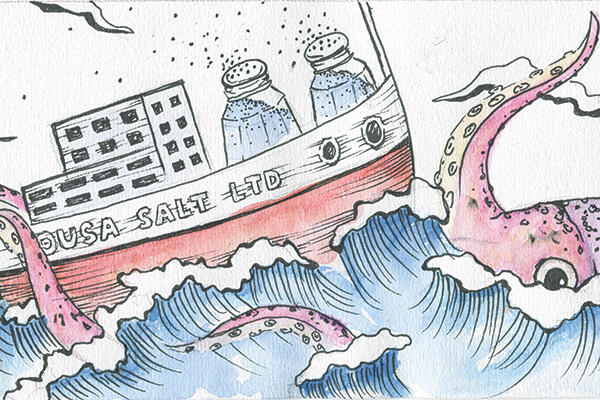
OUSA has firmly denied that the University of Otago attempted to strong-arm the association out of purchasing the Cook or any other North Dunedin pub, after concerns to that effect were raised in an OUSA Executive meeting on 3 September. OUSA currently receives around three-quarters of its revenue through its Service Level Agreement (SLA) with the University, which places the University in a powerful bargaining position. As reported in last week’s Critic, senior OUSA figures believe the University may withdraw from SLA negotiations should OUSA purchase a bar without the University’s involvement. University Vice-Chancellor Professor Harlene Hayne told Critic that the University’s “clear advice” to OUSA was not to purchase a pub. However, Hayne would not be drawn on whether the University had ever threatened to withdraw from SLA negotiations over the matter. “My very clear advice to OUSA is that this is a really, really bad idea, and certainly they cannot use any of their SLA funding to engage in this business – not necessarily because it’s a pub, but because it’s a really bad business to get engaged in right now,” she said. The University has also made it clear that it opposes any use of OUSA reserves, which total around $6 million, to purchase a bar. “My advice would be exactly the same, whether it’s the reserves or the SLA, it’s a bad business decision,” Hayne said. Despite the University framing their position as “business advice,” figures within OUSA have interpreted this as a threat, and the Executive was advised not to proceed with any plan to purchase a bar while SLA negotiations were ongoing. This included Welfare Officer Ruby Sycamore-Smith’s proposal to raise $500,000 through PledgeMe to purchase a part-ownership in the pub. The proposal was tabled at the 3 September meeting, but was withdrawn pending consultation with the University. It was not re-tabled at the latest meeting on 10 September. The debacle spilled over onto Facebook last Monday, when OUSA President Francisco Hernandez referred to Critic as “infotainment” and suggested that its articles be taken “with a shipping container full of salt.” He also took umbrage at Critic’s suggestion that OUSA had become the University’s bitch, clarifying that he was “not a bitch.” Hernandez later apologised to Critic staff for his remarks, correctly identifying that Critic is “the best student magazine in the country.” In a Freudian slip, he also expressed his belief that Critic’s coverage of the issue was “factually correct.” A portion of the student body has been pushing for OUSA to purchase a bar for some years now, in response to the gradual closure of most of North Dunedin’s iconic pubs. However, Hernandez insists that purchasing a bar is not “fiscally responsible,” and that OUSA lacks the infrastructure to take on the venture. Despite this, OUSA and the University remain interested in co-owning a pub, possibly one on campus, although Hayne told Critic that “if the Cook wants to reopen we don’t want to go in competition with the Cook.” As reported in Critic last week, the Cook’s new owners plan to reopen the pub as a restaurant and bar within a year. The University’s main objection, then, is to OUSA owning a bar without any University involvement. It is questionable whether the financial rationale is sufficient to explain such staunch opposition to the idea. The University of Canterbury Students’ Association (UCSA) has owned a bar on campus, the Foundry, since the 70s. Although Hayne insists that the University’s opposition is not about alcohol, pointing out that “OUSA runs the best events involving alcohol in this entire city,” the University has a long-standing antagonism toward student drinking and last year backed proposals for a permanent North Dunedin-wide liquor ban. The proposed ban was only abandoned in April this year after OUSA collected over 5,000 signatures against it. While there are undoubted financial barriers to owning a bar in North Dunedin, the saga raises wider concerns about OUSA’s independence from the University. Prior to 2012, OUSA was funded through compulsory membership fees. This gave OUSA complete discretion in its spending, subject only to its constitution. After the passage of Voluntary Student Membership (VSM), however, OUSA charges no membership fee and can only secure SLA funding through negotiation with the University. This model provides more financial oversight of OUSA and prevents its financial decisions being hijacked. In the early 2000s, for instance, OUSA spent half a million dollars on its Aquatic Centre after the rowing club stacked a Student General Meeting and passed a motion to that effect. The centre cost OUSA $65,000 in maintenance costs this year alone. On the other hand, the SLA gives the University unprecedented financial control over OUSA and prevents the association from spending as its members direct. OUSA is to seek student consultation on its proposed 2014 budget this week, but as this budget has already been the subject of protracted negotiations between OUSA and the University, radical changes are likely impossible. The University was opposed to VSM when the legislation was introduced, and made a submission against Heather Roy’s Education (Freedom of Association) Amendment Bill in 2011. However, Hayne now states her position on VSM as “agnostic … I think that the VSM has provided much greater opportunities than it has challenges. “In the event that [VSM] was repealed … we would find other opportunities to work collaboratively [with OUSA],” Hayne continued. “But from my perspective the VSM just does not appear on my radar on a daily basis, because I do think the relationship between OUSA in particular and the student body in general and the University is really good right now. And I just wouldn’t want to put that in jeopardy, for any reason.”
-
News
Otago's Stock Does a Fannie Mae
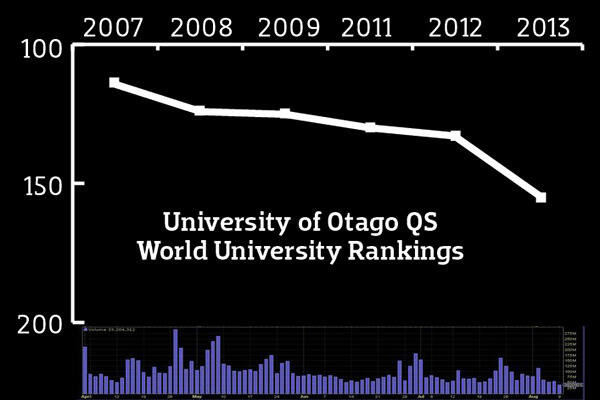
The University of Otago has been declared the 155th best university in the world, tailing 61 places behind the University of Auckland. The Quacquarelli Symonds (QS) World University Rankings are published annually in the United Kingdom, and according to the official website, feature “over 800 universities worldwide.” The results reflect a total of 62,094 academic and 27,957 employer responses. QS Head of Research Ben Scowter says that “New Zealand’s universities have collectively seen a drop in academic reputation, faculty-student ratio and international students in this year’s results.” Otago University fell 23 places from its 2012 position, which was itself three places below its 2011 ranking. Rankings for individual subject areas are also outlined in QS annual reports, and Otago has seen significant drops since the first QS rankings were released in 2007. In the last six years, Otago’s Natural Science ranking has fallen from 181 to 301, Social Sciences ranking from 92 to 148, and Arts and Humanities ranking from 81 to 161. Nor has the University of Auckland fared well in the last six years. Impressively, the University scraped into the top 50 in 2007, but has steadily fallen since, only just keeping a place in the top 100 in 2013. The Tertiary Education Union has blamed government cuts for New Zealand’s tertiary plummet. TEU Vice-President Sandra Grey claimed that New Zealand universities are struggling to keep up with their East Asian counterparts, which enjoy greater financial resources. “That task is made near impossible by a government that has cut hundreds of millions of dollars [from] tertiary education in the last five years,” says Grey. “We are moving in the wrong direction. New Zealand academics are highly regarded, and are involved in world-class research and teaching. But falling government funding means they face larger lectures and tutorials, more administrative workload that takes time away from research and teaching, and stagnant pay.” According to QS, New Zealand’s student-to-academic ratio rose from 17.5:1 in 2007 to 19:1 in 2012. Worldwide, the Massachusetts Institute of Technology has topped the list for the second year in a row. The top 10 ranked universities are all in either the United Kingdom or the United States, and are composed largely of members of the Ivy League in particular. On a positive note, Lincoln University, which did not make the 2012 rankings, gained a ranking of 481= in 2013. This makes Lincoln the only New Zealand university to improve its QS ranking. A Lincoln staff member told Critic that this was probably due to the university’s “top notch cow poo analysis.”
-
News
God Throws Roofs at Cars
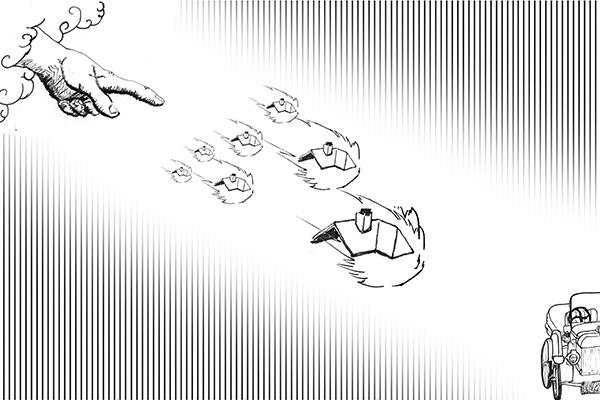
In the wake of the storm that bolted through Dunedin last week, the Dunedin City Council has deemed the large amounts of damage caused to nearby cars by parts of its buildings flying off “an act of God.” One victim, reported in the Otago Daily Times, was Uil Ludemann, whose car was damaged by iron sheets torn loose from the Council’s building at 20 Parry Street. Ludemann, who only had third party insurance for the vehicle, claimed that the total cost of the damage was more than the value of the car itself. On approaching the Council, Ludemann was told that the damage, primarily the result of materials being lifted loose by strong winds, was caused by an “act of God” and was therefore not its responsibility. The Council’s response has lead to an outbreak of comments castigating the DCC for not taking responsibility for a preventable occurrence. One online commenter questioned the DCC’s apparent belief in religion, stating that “I would think in this day and age that the DCC would know the difference between reality and fantasy.” DCC Communications and Marketing Manager Graham McKerracher told Critic that the damage was the result of “gale force winds,” which reportedly reached 140km per hour in Dunedin. McKerracher also stated that most owners of vehicles damaged by the winds had insurance and had contacted their own insurance companies. Those with only third party insurance, like Ludemann, have since been referred to the Council’s own insurance company. Another online troll suggested that “surely the problem here is that the roof was not bolted on well enough for foreseeable weather conditions – not something that can be blamed on a god.” McKerracher, however, confirmed that the building met the required standards. The troll continued, “of course if the DCC has stopped paying for insurance so it could afford the rugby stadium, they are not insured for this sort of thing.” Clearly, Dunedin residents have not lost the urge to blame every regional problem on the Stadium. Comparatively, Dunedin was let off lightly by the spring storm. More severe damage occurred elsewhere in the South Island, with trees uprooted and boats blown away.
-
News

Jones: Racist, Fascist Wanker?
Labour leadership candidate and self-described “kingmaker” Shane Jones has suggested that migration to Christchurch from other countries be restricted, and that beneficiaries be forcibly relocated and put to work in the city’s reconstruction. The list MP and former immigration minister told Critic, “I’ll be brutally straightforward; before we start bringing any more Filipinos et cetera, [we must] make sure we are not leaving young Kiwis on the scrapheap,” and said that “it’s a tragedy that courses and apprenticeships have not been actively supported by the current government.” Immigration Minister Michael Woodhouse estimates that of the 35,000 workers required to rebuild the earthquake-stricken city, 17,000 additional people must be trained or allowed to move to the city from other countries. The Ministry of Business, Innovation and Employment has issued 1,278 work visas related to the rebuild. A little over 16,000 working age New Zealanders have currently been receiving the unemployment benefit (recently renamed Jobseeker Support) for more than one year. Rex Gibson, manager of the Christchurch Migrant Centre, has previously stated that one of the reasons foreign workers have been easily accommodated in Christchurch is that several male adult workers will often flat together. In comparison, “if they were tradespeople from New Zealand, for six people we’d have to find six houses, and that’s just not available in Christchurch at the moment.” When Jones’ comments were presented to him, Mr Gibson told Critic “Filipino rebuild workers are all tradespeople. Very few unemployed plumbers, electricians, scaffolders, carpenters, drain layers, etc., can be found anywhere in the country.” He also questioned Jones’ suggestion that migrant workers live in overcrowded housing, saying, “The 10:2 ratio is far from my experience. Jones also suggested “I don’t buy the notion that because ten Filipinos can live in a two-bedroom house we should favour them over Kiwis; I find that obnoxious.” He also claimed that “immigration and migrant labour has … skewed property prices in Auckland.” Jones proposed that the government erect “workingmen’s quarters” for those employed in construction projects. “The people of Canterbury that are young, unemployed people must be made to work on the Christchurch rebuild.” Just over 30 per cent of Canterbury’s 2,256 unemployment beneficiaries are aged between 18 and 24 years old. When asked what should happen if such measures should prove insufficient to provide enough domestic labour for the reconstruction effort, Jones told Critic, “if there’s still a shortage, there’s no scarcity of young workers lounging around in provincial centres in New Zealand and, indeed, in Auckland.” Asked if the relocation of unemployed young people ought to be forcible, Jones replied “absolutely … I’d thoroughly pursue the option that just as people go and relocate to Australia to work, well hello, you’re not staying on the dole any longer. If you’re able-bodied, capable of working, go through a work readiness course et cetera, and it’s not beyond the wit of … a government that I lead to come up with a solution for temporary accommodations et cetera, go to Christchurch, go to work.” Jones denied that such a scheme was comparable to the Depression-era relief camps – which the Labour Party once criticised – saying, “I don’t know of anyone who doesn’t want to see Kiwis rebuilding Christchurch.” When quizzed about his view on Grant Robertson’s suggestion of rent controls in the city, Jones declared himself “in taihoa mode” until he had seen details of the plan, but said that “if we’re prepared to essentially manage the cost of energy,” referring to the Labour Party’s state power-buying scheme, “it’s not a huge ideological step to move towards managing the costs of accommodation.”
-
News
Council of Smaug Hoards Treasure
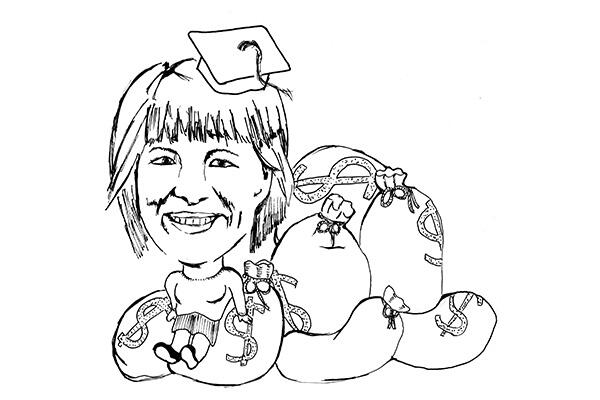
A number of major forthcoming projects have seen the University pump up its cash reserves and produce an operating surplus significantly above budget, according to monthly financial statements presented at last week’s University Council meeting. The statements revealed that as of the end of July, the University had $141.739 million in cash on hand, $21.050 million more than budgeted and an increase of $22.449 million on the same period last year. The increase in cash on hand is part of an intentional build-up of cash that “will be required to fund a number of major projects that are in the planning and design phase,” according to the Director of Financial Services, Grant McKenzie. The operating surplus for the year to date was $16.716 million, $4.545 million higher than budgeted and $3.243 million greater than at the same time last year. This “abnormally high” amount of cash on hand is the result of delays in capital projects, and the variance from the budget has been attributed to timing factors as well as savings in consumables and scholarship expenditure. While the statements did not indicate specifications for any of the planned projects, they noted that “all of the cash savings will be needed when the major projects on the priority development plan move into the construction phase.” Although the University’s financial position “continues to be very sound,” McKenzie also noted that the savings were indicative of a tighter budget situation next year. “It is clear some academic departments and a number of the service divisions are taking steps to reduce their costs in anticipation of a tight budget situation in 2014.” The total income for the seven months ended 31 July 2013 was $355.796 million, $235,000 greater than budgeted and $6.726 million higher than this time last year. External revenue for the last few months has been less, but the current month has seen a reversal in this trend. Income is expected to drop below budget again by the year-end, however. The report also indicated that the full-year budget review target for Equivalent Full-time Students (EFTS) enrolled is 18,577. An additional 46 EFTS must enroll between now and the end of the financial year to meet that figure. This year’s total of 18,531 EFTS is 343 fewer than the corresponding time last year, but the report indicates it is likely the University will reach the budget review EFTS target.
-
Columns

ODT Watch | Issue 23
"No bad air days: ‘you have to have a lot of trust’"The article is about a circus troupe visiting Dunedin. We see what you did there. “Snowbroads build slopes confidence”To be fair, the name of the event is “Burton Snowbroads ski and snowboard freestyle camp,” but we know the ODT just jumped at the opportunity to print blatant misogyny as a headline. And what a cliché that ensued! “Breakfast and bubbles broke the ice on Saturday morning …” Something really important came up before we could read any further, but Critic is sure it was a literary gem. And this week in “community notices posing as news stories”: “Open day at tennis club on Saturday”Just in case you were confused what pillowcases are used for: “Pillow cases turned into dream bags”Lol, JK. The article is actually talking about a group of 8-year-olds turning pillowcases into reusable shopping bags. Crafty. “String of fat fires prompts warning”We honestly thought they had misspelled “phat” and were talking about Castle Street rediscovering its stride. But it turned out to be something boring like a whole shitload of restaurant fires in Queenstown and “inappropriate extinguishers.”
-
News
Feral Cats to Be Sent to Heaviside Layer
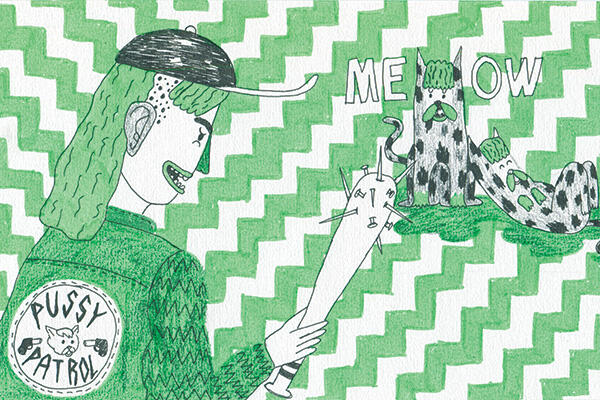
Dunedin City Councillor Kate Wilson has created a ‘‘cat committee’’ to discuss solutions to the city’s growing feral cat problem. The committee was set up in response to ongoing concerns about the “pest problem” represented by such cats. Residents argue that if there is a system in place for controlling dogs, there should be one in place for controlling cats. The committee has met once so far. Members include Otago Zoology lecturer Dr Yolanda van Heezik as well as people representing the SPCA, Pet Fix and Dunedin Cat Rescue. The Otago Peninsula Biodiversity Group also has an interest in the proceedings, saying that people on the Peninsula are carrying out “amazing biodiversity work that can be severely damaged by cats.” The Otago Daily Times claims that “a dramatic plea [was made] at a public forum from Dunedin woman Diane Yeldon, who suggested forming a posse to go around the city at night shooting feral cats.” Wilson, however, did not believe that this was the answer, pointing out that feral cats are extremely hard to catch and reminding attendees that the committee is currently just a “working group focussing on ideas.” Feral cats, Wilson explained, are by defintion those that are at least second-generation wild, and have never been domesticated. Committee members describe them as “hard to catch and rarely ever seen by humans.” They are, in other words, “in full-time stealth mode.” The SPCA cannot take in feral cats unless they are adopted at under five weeks of age. Any later and it is impossible to domesticate them, and they simply “pass on diseases to the domestic pets.” Online discussion over this “very emotional issue” saw residents expressing their concerns. “Imagine the uproar when someone’s poor pusskins is killed accidentally,” said one contributer to the debate. Maria Aiau, however, begrudges the cat love, saying “my cat is 17 years old, and I for one don’t want another.” Another resident pointed out that “we don’t have a ‘Save the Flies’ campaign, [and] they also happen to be God’s creatures.” There are many issues up for discussion, including “what happens to the rat and mouse population?” Possible resolutions include spaying, neuter and release, and Timm traps. Timm traps, which are used near homes, require cats to put their heads through a small hole in order to enter a space in which food has been laid as bait. They have proven effective in catching possums, but Wilson believes that cats are more switched on. Wilson and the SPCA suggest that the best action residents can take is neutering their cats.
-
News

Execrable | Issue 23
No scandalous revelations this week, folks. This week, all you get is the collapse of drawn-out, politically contentious OUSA project; Budget 2014; a referendum we’ve been waiting for years to hold; a proposal to change OUSA’s voting system at elections; and a laughable attempt by Fran to counter-bully the University. Meh. Glaring pointedly at Critic, President Fran and Welfare Officer Ruby declared that they had held a “productive” discussion with Vice-Chancellor Harlene Hayne over the possibility of purchasing a North Dunedin pub, and that OUSA’s and the University’s interests and goals “don’t disalign.” I’m sure they don’t, darlings. Next up, E-Sports coordinator and Critic Virtual Recreation Overlord Baz Macdonald announced that OUSA’s national E-Sports tournament had bitten the dust. This was because although there had been no shortage of entrants for OUSA’s regional tournament earlier in the year, people had been more intimidated by the prospect of a national tournament, and had not backed themselves to enter. The prospect of a national E-Sports tournament next year hinges on other students’ associations pitching in for their own regional competitions (unfuckinglikely), which would then feed into the national version. So it’s farewell to E-Sports, for this year at least. Fran moved a motion to thank Baz for the work he’d put into the tournament. “That is the lamest thing I’ve ever heard,” Baz said, and left. Next, the Exec discussed next year’s budget, and hooray! they remembered to move into committee of the whole this time. Anyway, the draft budget for 2014 is now open for consultation, and is available at ousa.org.nz until Tuesday 17 September. The University has shot down hopes of a three-year SLA, so the budget will contain the nice small numbers to which we’ve become accustomed at OUSA. Students will FINALLY get a say on OUSA’s continued membership to the monumentally useless New Zealand Union of Students’ Associations (NZUSA), after Fran FINALLY came up with a question on the matter that wasn’t blatantly leading. Fran then proposed a referendum on OUSA switching to Single Transferable Vote (STV) for OUSA’s elections from 2014 onwards. Basically: STV is a system where you rank your candidates instead of choosing one. It’s fucking complicated and opaque, but a lot fairer than what we currently have. You should probably vote for it. Finally, Fran proposed a Memorandum of Understanding (MOU) with the University over SLA negotiations. In a classic case of ooh-I-wonder-what-brought-this-on, the MOU would stop the Uni from using SLA negotiations as leverage to dictate OUSA policy. So basically Fran is asking the University to adopt an internal policy with no give-and-take on OUSA’s side, which would be completely unenforceable anyway since SLA negotiations are confidential. Um, good luck with that.
-
News
Frances Hodgkins Fellowship Announced
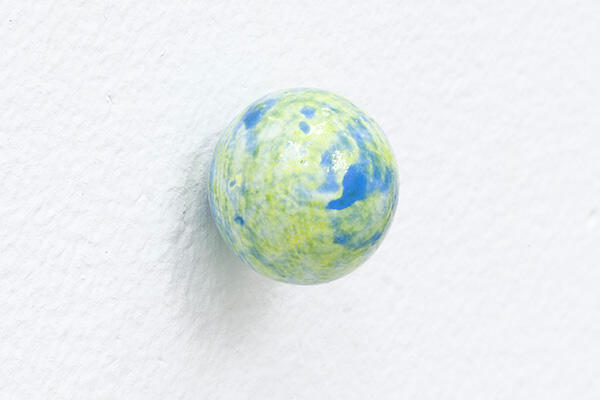
Auckland artist Patrick Lundberg was announced last week as the 2014 recipient of the University of Otago’s Frances Hodgkins Fellowship, one of New Zealand’s most prestigious art fellowships. Beginning on 1 February, he will receive a stipend for a year and a studio on campus to pursue his art. “It’s a prestigious fellowship; I didn’t have any presumption I would get it and I’m very grateful for the opportunity,” he told Critic. “At the moment I work four days a week, so I’m looking forward to a year as an artist full-time. This will be the first time I’ve been able to do this.” Over the course of the Fellowship, he intends to pursue a direction of work he began in early 2012, but to “change [it] in unforeseen ways.” “The last time I was afforded a bit more time for my practice, I noticed that sort of thing beginning to happen to a greater extent. When you have more room and more time, you can try things that you wouldn’t have otherwise thought of.” The works in question consist of a collection of 15mm-diameter painted spherical pins, which are arranged on the gallery wall in a meeting of painting, sculpture and installation. The painting on each pin ranges from fine mottled patterns to seemingly random letters, but the inspiration for these patterns is often “quite arbitrary.” “I just want to pursue the natural inclination to expand the vocabulary of my work,” Lundberg said. “It’s a different way of articulating that these works are actually a volume, a ball, rather than a flat thing like a dot, to give it that feeling of a solid. The colours also give a dynamic relationship between the balls, so each one has an individuality.” His works are best thought of as being like games and instruments: they’re a set of objects to be performed on and that is what distinguishes them from other kinds of painting. “They have the potential to implicate the viewer much more actively and make them perform it. The boundaries are very different, they’re being worked out as I make them.” With influences such as New Zealand’s Richard Killeen and the American conceptual minimalist artist Fred Sandback, his work builds on a rich art history. But whereas these artists’ work comes with a set of instructions to be performed by an institution, part of Lundberg’s work is that nothing is set and definitive. “I’m interested in intensifying the level of contingency in the work, and changing that relationship between the work and its iteration by another agent, be that an institution or an individual. The things that I make, rather than existing as game rules or a musical score, exist more as a set of physical parameters that you can play with.” The Frances Hodgkins Fellowship is an annual artist residency that has seen the likes of Ralph Hotere, Rohan Wealleans and Kushana Bush develop their practices.
-
News
TEU Fears Minister’s Uni Council Changes
A lecturers’ union says it is afraid that Tertiary Education Minister Steven Joyce might shrink University Councils and stack them with ministerial appointees. The Tertiary Education Union’s (TEU) National Secretary Sharn Riggs says any changes replacing staff and student representatives with ministerial appointees would be “an attack on democracy and on academic freedom.” In 2009, the government passed the Education (Polytechnics) Amendment Act that, amongst other things, reduced the size of polytechnic councils from a maximum of 20 members to eight and allowed the government to appoint half of them. The Minister has since appointed dozens of polytechnic council members, some of whom have been controversial. One of Joyce’s most contentious appointments is Mary Bourke, whom Joyce reappointed as chairperson of the Western Institute of Technology in Taranaki. A letter from the Institute’s staff in March called on Joyce to sack Bourke. The letter alleged, amongst other things, that Bourke had bullied staff. The Minister already has the ability to appoint some university council members, and his choices so far appear to reflect his desire that “universities take a more entrepreneurial approach.” ANZCO Foods chairman Sir Graeme Harrison, whose subsidiary company CMP locked out 100 workers from its Rangitikei meatworks in December 2011, was appointed to the Lincoln University council in July this year. PricewaterhouseCoopers partner and former Meridian Energy director Catherine Drayton joined the Canterbury University council at the same time. TEU communications and campaigns officer Stephen Day told Critic that ministerial appointees had voted for funding cuts for a number of courses. He feared that if the appointments process was extended to universities, ministerial appointees could force further cuts on unwilling university communities. “At the University of Canterbury last year, when they were looking to close up theatre programmes, the council was able to engage in democratic debate. They eventually overturned the proposal put forward by the Vice-Chancellor and backed by ministerial appointees. If that vote had gone ahead without the staff and students there, then that would have been a different outcome.” A spokesperson for Joyce did not respond to Critic’s questions regarding current polytechnic council appointments or possible changes to university councils, insisting only that any decision was “weeks away.”
-
Columns
If I Had a Magic Wand ... | Opinion
If John Key could implement any policy he wanted tomorrow … it would be to change the flag. (I’d vote for Kyle Lockwood’s design.) But in all seriousness, if we could magically make anything relevant to our nation’s governance happen, what would it be? My first act would be to legalise cannabis, because, as recent Transport Agency public service announcements suggest, New Zealand seems to be well adjusted to it by now. Bakeries are also on board – they can’t wait for the increase in business as well the daily comic relief. Oh, and apparently Dunedin can be like Amsterdam (instead of a smaller Wellington). My second act would be to grant residency to international students who have graduated in New Zealand. I’m open to some fine-tuning on this policy proposal, but it would help with our current chronic skills shortage. Also, we would be incentivising study in this country. Considering that international students pay unsubsidised tuition fees, each of them contributes far more to the economy than domestic students: they pay more to the University they attend, improving that institution in the process, and they bring a substantial amount of money into the country on an individual basis. Plus, if rich people can get residency in New Zealand, why is it not the same for young students who want to make an honest go for themselves in an awesome country? I would make polluters pay. To offset the inevitable increase in the cost of living, income and corporate taxes should be reduced, as should GST. Taxing positive contributions to the economy, such as productive work and market transactions, is counterproductive. Taxing negative externalities such as pollution puts pressure on polluters to find better alternatives or to pollute less. I would also give the negative income tax a go and scrap the minimum wage. Why not wave my wand at poverty? Stopping at-risk (and ordinary) youth from having their employment and travel prospects hindered by possession of a harmless drug will prevent some poverty. Reducing the impact of pollution, which exacerbates certain conditions most prevalent among the poor, will also help to reduce poverty. Getting rid of the minimum wage will get some unemployed into work. Supplementing incomes by way of a negative income tax will give the working poor a break. Allowing international students to stay in New Zealand and to contribute to the economy of a country they love helps us all. I was waving my wand at poverty.
-
Columns

The More Things Change | Issue 23
This week, various governments get up to typical government things. 17 September, 1863: Antonie van Leeuwenhoek, a Dutch scientist known as the “Father of Microbiology,” wrote a letter to the Royal Society describing a bunch of tiny little things he saw down his homemade microscope. He called these “animalcules,” and they are known today as protozoa. For all that van Leeuwenhoek was very secretive about the way his microscopes were made, they worked pretty well: he was the first person to describe the existence of single-celled organisms (a discovery that was met with great scepticism, as such things often are). He was also the first to observe bacteria, sperm, and the pattern of muscle fibres, which was not too bad for a guy who was technically a draper by trade. 20 September, 1954: In a stunning display of government efficiency, New Zealand’s very own Mazengarb Report published its findings just ten days after finishing all its hearings. The report was officially known as the Report of the Special Committee on Moral Delinquency in Children and Adolescents, and was commissioned after an outbreak of moral panic subsequent to a few notorious criminal cases (including the one that inspired Peter Jackson’s film Heavenly Creatures). It appears that not much happened after the report was published, though, except that many postal workers complained about how much it weighed. 19 September, 1959: Soviet leader Nikita Khrushchev, on a visit to America, was supposed to visit Disneyland but found himself thwarted by that age-old demon, “security concerns.” Apparently he was quite put out by this, but who can really blame him: earlier in the trip he visited a supermarket in San Francisco. One can only assume it left a lot to be desired. 19 September, 1982: Internet history was made on a Carnegie Mellon University message board when a computer scientist called Scott Fahlman posted the first documented emoticons. They were :-) and :-( and were intended to help people distinguish serious posts from jokes, an skill that many Internet users still have not mastered. 17 September, 2006: The Hungarian Socialist Party got into a bit of trouble when evidence arose showing that they’d lied to win the election. The evidence in question was a tape of a private speech by the Prime Minister, in which he stated outright that his party had lied, and also swore a lot. The whole thing resulted in civil unrest and protests for the next few weeks, and ended with the resignation of a few government officials (although somehow the Prime Minister stayed put). Unsurprisingly, the party got voted out in the next election.
-
Features

Profile: Sir Geoffrey Cox (1910-2008)
When Geoffrey Cox first attended Otago University, foreign periodicals took over a month to reach New Zealand, travelling by sea through the Panama Canal. Amateur radio broadcasting had only existed for five years and was seldom heard by everyday New Zealanders, who still often referred to Great Britain as “home.” Only quarter of a century later, Cox secured his role as the director of a major television company that broadcast instantaneous news reports via satellite. His days were crammed with intrigue and excitement, and early in his career, he was often thrust into witnessing the worst regimes of the twentieth century. But Cox never lost sight of a journalistic integrity that helped to rescue British independent television news from the exploitative yellow journalism that has come to characterise much of the country’s print-media. So how did a boy born in Palmerston North come to be a key figure in British news journalism for over twenty years? Cox didn’t speak much of his stint at Otago University, nor indeed his editorship of Critic. In Cox’s day there were three editors: one from Knox, one from Selwyn, and in an early if patronising example of equal opportunity employment, a “Lady Editor.” Cox was the Selwyn Editor. The Critic that Cox oversaw is almost unrecognisable to the modern reader, but similar themes arose now and again. In an April 1930 issue, the self-anointed “Knox College Misogynist’s Club” complained of well-off girls refusing to pay for their own dance tickets. Letters to the editor openly wept of the sexual neglect thrust upon some fresher males, albeit in a euphemistic tone. Articles did not reflect the economic mayhem of the period, and were largely farcical in tone. The most striking difference is a shift from advertisements for pipe tobacco and Scotch whisky in Cox’s Critic, to the enormous anti-drug PSAs that dominate much of modern student media today. A decisive moment in Cox’s life came when he was granted one of New Zealand’s two Rhodes Scholarships, hand-picked by the Governor General Viscount Bledisloe, in 1931. In a stroke of luck, he won the trust of Bledisloe through his mutual interest in pig-breeding. Before arriving at Oxford in 1932, and observing its stifling class system, Cox travelled to the Soviet Union to assess the credibility of Marxism. He visited during a nadir of Soviet existence, and saw glimpses of a year-long famine that claimed roughly six million lives. Russia was not hurting as economically as the rest of the world, but its people were starving. It was in this environment of two deeply dysfunctional opposing ideologies that the embers of fascism began to spark. On the very date that Hitler won election, 31 July 1932, Cox arrived for the first of his two trips to interwar Berlin. He stumbled into the uncertain environment of a fledgling Weimar Republic, amid various political ideologies vying for power. The streets were draped with an artist’s palette of party flags; red, white and black for the monarchists; the hammer and sickle for the communists; and the black swastika for the Nazi Party. Cox observed that Germany was a country of remarkable “freshness and freedom,” with bookstores flanked with H.R. Knickerbocker’s Deutschland: so oder so? [Germany: either way?]. Uncertainty about Germany’s submission to either left or right was still yet to give way to the collective hysteria of Nazism. When Cox returned to Germany in the winter of 1934, the Nazi party had extended its grip over every aspect of German life. This was the year Hitler granted himself total autocracy by consolidating the roles of Chancellor and President under der Führer. Political prisoners were already commonplace, and Cox befriended the wife of an imprisoned communist leader. Shortly after dining with her in uptown Berlin, Cox refused to Heil Hitler when prompted by a large group of stormtroopers on a street corner. He was rewarded with a blow to the back of the head and only regained consciousness minutes later. Shortly after, the pharmacist who treated Cox instructed him to “wait till [Oswald] Mosley is in power in England, and you too will appreciate what discipline and soldierliness really are.” The Nazi soldiers’ abusive behaviour may be no surprise to the modern reader, but helped set in stone Cox’s opposition to the looming spectre of fascism. Cox’s further experiences in Germany testified to the unprecedented changes taking place in a nascent Third Reich. Crucially, Cox was present at the 1934 Nuremberg Rally, best known as the setting of Leni Riefenstahl’s infamous documentary Triumph of the Will. With an estimated three hundred thousand attendees, Cox was particularly lucky to secure the Nuremberg equivalent of an Opera Box: the window of an acquaintance’s bookshop. With the bookseller’s binoculars, Cox studied Hitler and his deputies for four full hours. Cox was impressed by Hitler’s stamina, standing upright for the entirety of the Rally. Frenzied housewives dabbed their swollen eyes with handkerchiefs, while tens of thousands of Hitler Youth watched their namesake in wonder. Cox later commented on Hitler’s appearance, noting that his face was a “strange blend of ordinariness and strength.” Fluent in German, Cox was nevertheless immune to Hitler’s abhorrent charisma; his 90-minute speech was not made for foreign consumption. Hitler boasted that he now embodied Germany and that supreme power was now held by the Nazi Party. Cox’s initial motivation for returning to Germany may seem borderline suicidal at first glance. While at Oxford, Cox had felt deprived of the physical exercise he had enjoyed as a farm hand in New Zealand. Confronted by a German scholar for his anti-Nazi sentiments, Cox readily accepted his invitation to attend a labour camp in Germany. The camp was designed to draw, as Cox described, “puny and undernourished” young men from Germany’s metropolises. One might assume that after getting bashed in the head by a Nazi soldier and witnessing the terrifying spectacle of the Nuremberg Rally, Cox would be reluctant to go back. Daringly, though, he travelled to rural Hanover as an Arbeitsmänner [Labour Service member]. Fortunately, the camp was a far cry from the atrocious death camps of the war years, and indeed Cox found the work to be “not very hard.” In one memorable anecdote, Cox recounted how he taught his fellow Arbeitsmänner a Maori haka. Cox later pondered whether any of his long-lost comrades “as soldiers in Crete or the Western Desert heard the haka roared out in reality, as the Maori Battalion of the 2nd NZ Division came towards them.” Perhaps the biggest break of Cox’s life came through his reportage of the Spanish Civil War whilst working as a junior reporter at the News Chronicle. Unlike a great number of his colleagues, Cox elected to stay in Madrid just as Franco’s forces began to threaten the city. Faced with probable imprisonment if the city fell to fascism, Cox took a gamble that paid off. The Republicans outfought the favoured Nationalists, and Cox was one of only three British journalists to enjoy an inside scoop on the 1936 Battle of Madrid. Upon his return to London, Cox did not graduate from chasing fire engines and ambulances, but earnt a reputation as a dedicated and objective reporter. It was with these experiences in Madrid that he wrote his first book, Defence of Madrid, a book still considered an authoritative account of the Spanish Civil War. When war arrived, Cox chose to serve under the jurisdiction of his home country. As a chief intelligence advisor to General Bernard Freyberg and a member of the Pacific War Council, Cox sat at the same table as Churchill and Roosevelt. Cox was in Crete in 1941, where New Zealand troops fought and lost a battle with German invaders. He later reflected that “My first reaction was, ‘I might be dead by tonight, but by God, I’ve seen the first airborne invasion in history.’” In 1956 Cox won the job as Chief Executive of ITN, the United Kingdom’s first independent television news company. In its infancy, ITN had suffered from major budget cuts that prompted Cox’s predecessor to resign less than a year into his role. Much of the station’s talent was moving to the BBC, leaving the company with an uncertain future. But Cox helped ITN secure a reputation for removing spin and making their reports digestible for even the most unenlightened viewer. In 1967, as Cox’s parting gift a year before he resigned, ITV’s News at Ten was established. A familiar fixture for many Britons, the show was the first news broadcast with two readers, a tactic initially employed so that one reporter could receive breaking news as the camera focussed on the other. The show was significantly longer than its predecessors, allowing a deeper reportage that is seldom seen on television today. When News at Ten was axed for nine years in 1999, Cox wrote in The Times that its dismissal would “strike a blow at the functioning of democracy in Britain.” He lived long enough to see the station he helped establish descend into reality TV, but also saw News at Ten’s renewal in 2008. Cox lived a life that would make Tintin jealous, packed with adventure, and witnessing some of the crucial political regimes of the twentieth century. He has been largely overlooked in his home country, partly because he spent so much of his life trying to strike a balance between being a Briton and New Zealander. As one of the great New Zealanders of the twentieth century, Cox is likely the only Critic editor knighted for services to journalism.
-
Features
The Emperor's New Art
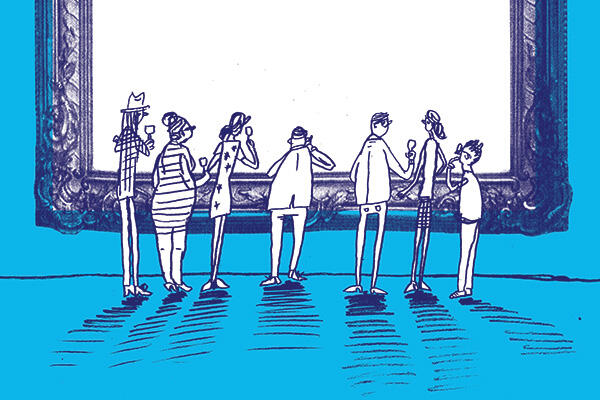
“What does it mean?” is a common refrain when it comes to contemporary art, not to mention the classic “my kid could have drawn that.” Loulou Callister-Baker explores the modernist and postmodern turns in the art world, and debunks the idea that contemporary art is merely lazy and pretentious. The first time I felt exhausted by art was at the Museum of Modern Art in New York City. Every Friday night at the MoMA is the UNIQLO Free Friday Night, which offers free admission to the gallery from 4pm to 8pm. This free experience, however, comes at a cost: your sanity. On the particular Friday evening that I visited the huge museum, it was crowded. As I wandered around the galleries, hundreds of people pushed by me, speeding through the exhibitions in a seemingly competitively fashion. The one time I viewed someone actually focusing on an artwork, the girl in question was simply trying to work out how to frame it in relation to her face so she could take a selfie with her cellphone. The rest of my time was spent avoiding the gaze of the many lingering, perpetually scowling MoMA staff who would growl and cough whenever you came within 50 metres of an artwork. Midway through my visit to the MoMA, I found myself posing in front of a conceptual text art piece, attempting to subdue my increasing crowd anxiety as well as stall my diminishing ability to understand art. On the brink of suffering an existential crisis, an Indian man with a huge red-beaded necklace approached me. At first he used the conceptual artwork in front of us to pick me up; then, in the space of a minute, the conversation transformed into a pitch for his novels about time-travelling Nazis. I politely excused myself from the conversation. By that point I was exhausted, but I still felt obliged to view the extensive abstract art exhibition on the museum's top floor. Big mistake. Piet Mondrian’s grid-paintings (typically astounding works advocating the idea of pure abstraction and universality in painting by a reduction to the essentials of form and colour) reduced me to insane fits of laughter. I realised I was convincing myself to admire painted boxes of colour and black lines. Is art in the twenty-first century a conspiracy? Is it one big personal in-joke for the cultural elite? In the twenty-first century, “[i]deas about culture and art’s place within it have undergone seismic shifts,” Karen Raney writes in the introduction to Art In Question. In the past, Raney explains, “it seemed that there were artworks whose meaning was put there by their creators in the process of expressing themselves. The art object was in a separate category superior to advertising, craft, fashion, decoration.” Those with the requisite knowledge could then assess the quality of individual artworks and correctly place the works into “a hierarchy of great achievements.” Furthermore, the meaning of artworks themselves, the artists’ intentions and the works’ contextual backgrounds (or “what really happened”) were also seen as fixed. Once such decisions were made (by the appropriate people, of course) they were set in stone and hidden from view, never to be meddled with again. However, a gradual rethinking and re-evaluation of language and meaning interfered with this traditional model. From the 1970s onwards, art history began to widen its focus; no longer content with studying the opaque world of elite art, it embraced a more open view, encouraging people to learn a new language for art and art history. Our conception of “culture” subsequently shifted from being something built on a collection of “great works” to being, as Raney explains, “a set of language-like systems of meaning.” As a result, all types of artistic representation become worthy of our attention. At many universities around the world, Art History (although still currently available as a degree) was forced to compete or work alongside a new, umbrella degree: Visual Culture. In the art galleries, all forms of culture – from fashion to advertising – were suddenly elevated to the level of art, becoming objects or fragments of culture that could be analysed, interpreted and reflected on. Not only did the meaning of culture change, perception itself shifted from being a “matter of the individual’s eye and mind” to a “social and cultural question.” Twenty-first century art is dynamic. It reflects emerging science, evolving anthropological understandings of what is local or global, and new patterns of audience participation and interaction (the Among the Machines exhibition at the Dunedin Public Art Gallery is a great example of this). Art now can involve extensions of crucial concepts that emerged from art made in the late twentieth century, like post-modernism and feminism. Art in the twenty-first century can also be constructed from an inspiring array of materials and means, including the latest electronic technologies like 3D printing and traditional forms of fine art like painting and sculpture. An example of this can be found in the work of Korean-born artist Jae Hoon Lee, who currently lives in New Zealand. Jae Hoon Lee travels around the world, from Nepal to Antarctica, taking hundreds of photos of the places he visits. After an expedition, Lee then stitches and grafts these scenes together on his computer, compressing a range of perspectives from all different times into one frame that is then printed and placed on an art gallery wall. Lee manipulates scenic clichés to create worlds that are haunting and somehow supernatural, and recently won the major prize at the Wallace Art Trust awards for these works. What art of this century lacks, however, is rules. As curator and art educator Okwui Enwezor says in an interview in Art in Question, “art is no longer something that is handed down by the Academy, which has laws about how you must see and experience it.” This poses the question: how is art being thought about today, in the absence of such standards and laws? A New York couple (one a film director that had studied art history, the other an architect) I met while visiting the city outright refused to appreciate the value of any art made after Andy Warhol. They believed that since Warhol, all art has been simply a repeat of something done before, and disregarded the idea that all creations are influenced by, and themselves manipulate, other creations. They also disagreed with the very notion of conceptual art, believing that you should not have to read about art to understand it. With a belief framework that exists purely in opposition to contemporary art without demonstrating any substance of its own, the couple established themselves as modern-day artistic atheists. As they spoke I thought about artists of the past whose work would have been subject to similar, belittling and popular generalisations. I wondered if they would have been the same people who snubbed works by van Gogh or refused to show Duchamp’s urinal piece at the Society of Independent Artists in 1917. While change is a word that, when used correctly, can win a presidential campaign, it is one of the most difficult things to accept when it confronts us directly. Works that reflect developing ideas about what “art” is are thus easy to condemn. When my mother bought a collection of painted rocks by Kate Newby, her friends laughed at her and thought she was just being “quirky.” A week or so later, the very same artist won the Walter’s Prize, a $50,000 award for outstanding contemporary New Zealand art. It takes confidence to stare at a canvas painted all white (or peppered with blue painted pebbles) and see beyond what appears immediately obvious – that you’re pretending to admire something your average two-year-old could have produced. In many ways, it can feel like you are part of the gullible crowd admiring the naked Emperor as he saunters past in his new “clothes.” The difference, of course, is that a two-year-old does not have the intellectual capacity or artistic skill to knowingly produce a work designed to raise social and cultural questions. In fact, such an accomplishment is probably outside the capabilities of most adults. It takes a complicated melange of perfect timing, skill, luck and connections for an artwork to be shown in a gallery or project space. Curator and writer Okuwi Enwezor argues that “we constantly have to test our faith in the category of what we call ‘art.’ As annoying as it is to many people that the Tate Modern Gallery is covered with wall texts explaining to people why this art, the naming of something as ‘art’ is not enough.” In other words, it seems that art increasingly requires an element of trust, a trust that you are not being fooled and that there really is something to be taken from a piece. For me, art is most exciting when its meaning is not instantly clear. Just like I trust a friend who understands music to suggest a good album for me to listen to, when it comes to art I will take on board the thoughts of the gallery directors, curators and art historians who have lived and breathed certain works. Doing me allows me to accept that something truly is “art,” and that’s when the really interesting thoughts can start. If you are still thinking that it is impossible to even begin to answer the question “what is ‘art’ in the twenty-first century,” Enwezor has another suggestion: look at art in terms of economic value. “We’ve come to a point where there have been so many quarrels about what an art object is,” Enwezor says. “We’ve gone through the death of art, we’ve gone through the death of the author, we’ve gone through the death of so many things. It’s time now to go back and to say okay, there are various economies of art. I like to use this word ‘economies’ because it puts art into a relation of values of different sorts – exchange value, use value, exhibition value, commodity value.” However, valuing art purely in economic terms is problematic in itself, and is often misleading in terms of quality. The price tag of an artwork is explicit proof that art retains monetary value as well as a type of social power, but a large price does not necessarily mean good art. Unfortunately, this distinction between “good” and “bad” art, based on economic value, only muddies the conversation further, and leads, once again, to questions regarding the subjective nature of artistic merit. In a skit on the TV show Portlandia, a band attempts to come up with a point of difference that makes them original. Eventually, they include their cat in the band, and achieve instant Internet fame. Later in the episode, the band is kidnapped, and responds by making their kidnapper a new member. The scene then shifts to the headquarters of the music website Pitchfork, where one staff member is writing a review of the band in question. As the review nears completion, however, the Pitchfork team suddenly comes to the realisation that everything in music has been done before. Closing the website down, they go home, turning the lights out forever. Underlying the comedy of this skit is a great message that applies to art today: there will never be a point at which the art world can say, “right, everything’s been done,” turn off their laptops, and go home. This, quite simply, is not the point of art – or music, or culture in general for that matter. You are perfectly entitled to dislike contemporary art, just like people are entitled to believe that any music produced after the 60s is rubbish, but it is ignorant to claim that new art (or music) is impossible to create. Twenty-first century art does exist, and already I have witnessed it achieve countless incredible breakthroughs. As Karen Raney writes, “the explosive pluralisation of art, the merging of disciplines, the myriad stories being told through different voices and visual languages makes for a field of great turbulence.” It is through such turbulence and conflict that old ideas are questioned and new ideas are formed; through such turbulence that new stories are added to our cultural history.
-
Features
Contemporary New Zealand Artists to Know and Watch
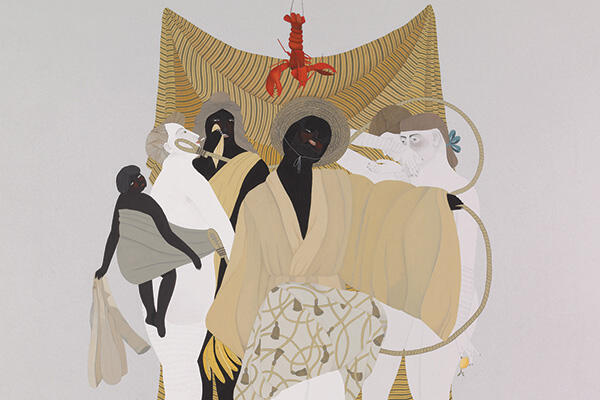
As an art lover, it comes as a constant disappointment that the names of New Zealand’s greatest and, for those who follow the art scene, most renowned contemporary artists don’t even ring a bell in the minds of most people I talk to. To be fair, some older (i.e. not contemporary) examples, such as Dick Frizzell and Colin McCahon, often elicit at least vague nods of recognition. The rest, however, wallow in obscurity in New Zealand, while international contemporaries – such as Damien Hirst and Jeff Koons – fare much better. And so here is Critic’s highly subjective overview of the contemporary New Zealand artists you really need to know. Michael ParekowhaiAlthough he hasn’t received the awards or fellowships of many of the other artists on this list, Parekowhai is a forerunner in the race to be recognised as New Zealand’s most important contemporary artist. Representing New Zealand at the 2011 Venice Biennale, and also exhibiting at other important international art fairs such as Art Basel, the Gwangju Biennale and the Sydney Biennale, Parekowhai has been on top form for over a decade. Parekowhai’s narratives are incredibly complex and shouldn’t be pigeonholed. However, they can be seen predominantly as commentaries on introduced species and culture, including the impact of New Zealand’s colonial history. To understand his strange narratives you need look no further than his Venice Biennale installation – On First Looking into Chapman’s Homer – which is now back on show in Christchurch. The featured works are surprising, humorous, and have a showman’s flair typical of Parekowhai. Francis UpritchardAs the Walters Prize winner in 2006 and the New Zealand representative at the Venice Biennale in 2009, Upritchard was already a big deal in New Zealand when the international market discovered her. She has, arguably, made the biggest name for herself out of New Zealand’s current group of contemporary artists; her works are held in collections such as that of the Saatchi Gallery, and are exhibited in more countries than could comfortably be listed here. Upritchard’s most well-known sculptures feature blanket-draped, psychedelically coloured people seemingly involved in a strange modern cult. They reference the failed counter-cultures of the 1960s and 70s that are still celebrated today, and also represent a contemporary grasping for spirituality and the struggle to find meaning in life. Rohan WealleansAs the Frances Hodgkins Fellow, Wealleans exploded onto the New Zealand art scene in 2005, and followed up by winning the Wallace Arts Trust Premier Award the next year. Recently working with internationally renowned YBA (Young British Artists) member Sarah Lucas in both London and New York, Wealleans is fast gaining on Upritchard in terms of international recognition. Wealleans’ distinctive style involves building up layers of different paint colours and then cutting into them after they have set to produce bright topographical chasms. The parts cut away are often added back on as unruly mountains, the monstrous result a mixture between painting and sculpture. Peter RobinsonAs the Walters Prize winner in 2008, New Zealand representative at the Venice Biennale in 2001, and a double exhibitor at the Biennale of Sydney (in 1998 and 2012), Peter Robinson more or less ticks all the official boxes. He is also equally renowned for his painting and his sculptural work. Robinson has long been the big man on the scene when it comes to challenging consumer culture and cultural mobility, drawing on historical references and his Maori roots. He has continued to produce phenomenal work recently in a relatively new sculptural series. His wool felt and aluminium rod sculptures are based on a collection of spirit sticks found at Te Papa and evoke themes of Maori ancestry and cultural fluidity. On the surface level they are intriguing pieces and, although you probably shouldn’t, they beg to be played with. Ronnie van HoutAlthough he may lack the paper credentials of many of the artists featured here, Ronnie van Hout is incredible. He exhibits regularly in New Zealand and Australia, and has featured in shows in the US, Germany, Austria and the Netherlands. Working predominantly in sculpture but often crossing over into photography, video, painting and sound recordings, van Hout’s work is characterised by self-portraiture and symbolic autobiography. The self-portraits are modest, reflective and often humorous, making them accessible and intriguing. In his 2005 piece Ersatz (Sick Child), for example, we see a precariously balanced model of van Hout with an empty thought bubble and a reserved, withdrawn posture. It is entertaining and down-to-earth, a piece that people go to a gallery specifically to visit. Kushana BushAnother Frances Hodgkins Fellow (2011), Kushana Bush recently had her first solo show overseas at Sydney’s Daren Knight Gallery. Bush’s work is unique; she is loved both by those who value pure aesthetics and those who value intellectual analysis and challenging themes While the details in her work are incredibly fine and mesmerising, the general aesthetic can implant feelings of both jubilation and extreme uneasiness. Often utilising sex and sickly skin tones to evoke intrigue in her early work, Bush has changed tack since her fellowship – she now seeks to communicate a cosmopolitan ideal in which colour and gender differentiation are questioned and the walls of the home are opened so as to disallow personal isolation. Her works are complex and challenging, but one thing that all viewers understand immediately is that they are undeniably beautiful. Yvonne ToddThe inaugural (2002) Walters Prize winner, Todd’s work is a seductive and disturbing commentary on popular culture and the glaring, confrontational nature of corporate photography. Her work has a transfixing ability to dehumanise her models, making them feel uneasy and fake. Early works often featured vacant gazes and antique clothing, but recently her photographs have received a slight rethink; her 2009 series The Wall of Man features random first-time models in exquisitely executed corporate setups with titles such as Senior Executive. The images fool you – you have no idea until reading about the exhibition later that these people are acting a part just as businesspeople act theirs, promoting a critique of the contemporary corporate image.
-
Features
Disumbrationism: A Beautifully Executed Hoax
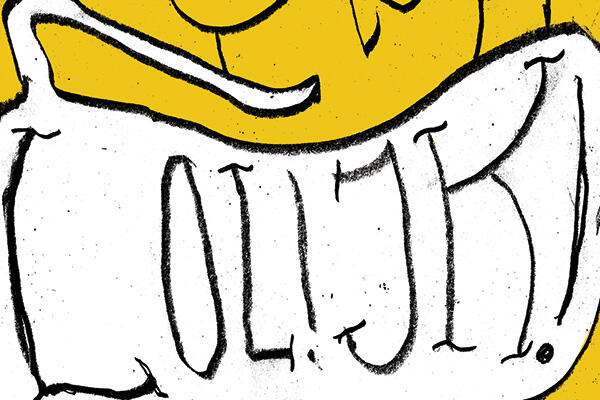
What follows is a tale by someone who loves art galleries but has an elementary understanding of art. Someone who can say “I like that” but has no clue why. Ines Shennan unravels the disumbrationist movement, and is almost fooled by the beauty of banana skins and bears drooling rainbow saliva. Almost. Living in Dunedin is more than playing up to, or retreating from, the classic student stereotype. Personally, I’d advocate for the latter; the former is a rather simplistic way of categorising an eclectic majority by the actions of a minority. We are part of a vibrant city with a great sense of community. We’ve got city status without getting too lost amongst it all, and infiltrating this diverse community is a bubbling art scene. Whether it’s a miserable, grey morning, or a bright, beaming afternoon, I’m a big fan of wandering along to our lovely Dunedin Public Art Gallery (DPAG) and having a nosy around. You’re probably wondering what this has to do with one of the most hilarious art hoaxes of the twentieth century. Fear not; I’m getting there. Whilst happily meandering around the DPAG, shoes clicking on the wood floor and eyes darting haphazardly from painting to photo to installation, I sometimes can’t help wondering: am I doing this right? Maybe that’s a naive question. If beauty is in the eye of the beholder and all that, doesn’t the same go for art? Isn’t art as giving, meaningful and aesthetically striking as the viewer believes? Or perhaps the artist has imparted meaning to their work in the very act of creating it – by selecting one means of expression over another and by arranging elements in a particular way. So, can anything be art? Can you cover sheep droppings in glitter and call it art? (Can you?) Is my naive wonderment as I stroll through the DPAG any less meaningful than that of an esteemed art critic, or contemporary art aficionado, or impressionist lover, simply because I don’t have the comprehensive historical and contextual appreciation to attach to whatever is hanging on the walls, emerging from the floorboards, or taking hold of the space? I’d like to think it isn’t. I’d like to think that I can enjoy the offerings of any art gallery or great building or living room wall despite all of this. In fact, I know I do. And no one can take that away from me. But I am also acutely aware that if the disumbrationist movement was to occur today, I’d probably fall for it. The funny thing is that this great twentieth century hoax did not just fool the likes of me. It fooled the art world. *** Born in Virginia in October 1885, Paul Jordan-Smith jaunted around the US from Chicago to Berkeley, becoming a writer and editor and also acting as a literary critic for The Times. In the early 1900s he developed a distaste for modern art. Some suggest that this was initially sparked by his viewing of a modern art exhibition organised by the Association of American Painters and Sculptors in 1913. Originating in New York, the large-scale exhibition was held at various locations, including the Art Institute of Chicago. Something didn’t sit well with Jordan-Smith, however. Later, adding to his grievances, his wife’s still-life paintings failed to gain the recognition he felt they deserved. Rather than simply voicing his unimpressed views, he decided to one-up the art world and produce a few contentious works of his own. Giving himself the exotic pseudonym Pavel Jerdanowitch, a playful twist on his real name, this disgruntled yet proactive man began painting pictures for his self-created disumbrationist movement. From 1924 onwards Jordan-Smith produced a series of works, going for a deliberately sloppy aesthetic that was loosely postimpressionist. His first attempt, “Exaltation,” won praise from the very art exhibition judges who had turned their noses up at his wife’s still-life portraits. This crudely painted work of a Pacific Island woman holding a splaying banana peel was only the beginning. What followed was a series of works with evocative yet increasingly repetitive titles, such as “Illumination,” “Aspiration,” “Gination” and “Adoration.” In terms of quality, it doesn’t take much to appreciate that the brushstrokes are sloppy and the human depictions garish. From a purely visual perspective, it’s a straightforward judgement. But as an artistic movement that was essentially an elaborately planned, tongue-in-cheek act of protest, perhaps we should give the fictitious Jerdanowitch some credit. In 1927 he gave up the game – perhaps he was becoming attached to his wild creations – and spilled the beans to an LA Times reporter. The article that broke the news of the hoax is a joy in itself, and the stories didn’t stop. Though told exclusively in the LA Times (a fact the publication, as proud protectors of the art world and all its pretense, boasts loudly of), spin-off stories soon appeared in New York and Boston papers. The later reports are equally hilarious, one terming Jordan-Smith’s elaborate retaliation an act of “whimsical revenge.” It’s a spot-on description, and a cheekily appealing one too. Think about a time that someone criticised a piece of work in which you had invested time or intellect or passion. (As an aside, I’m all for criticism – I think it’s essential for self-improvement and for the cultivation of competing ideas. But I digress.) Then imagine that instead of simply adapting the work (or choosing a response from the alternative end of the scale and working yourself into a great huff), you turn it all around on whoever advanced the criticism. Imagine hearing that person say that your work is shoddy, or sloppy, or uninspiring, or lacking a deep connection with whatever wankery it’s tied to. Then, with a sassy pirouette, they turn and shower “someone else’s” work with praise, adoration and everything candy and rainbows and happy feelings. Damn, that must feel good, or at least be incredibly amusing, especially considering Jordan-Smiths’ concerted efforts to make the latter as crude as possible. I sure couldn’t do it and keep a straight face. Our dear friend “Mr Jerdanowitch” managed it for three years. This does present an issue though, or at least something to consider. Jordan-Smith was clearly disgruntled at the lack of praise for his wife’s still-life work, and he presented something he knew to be a spoof in order to teach those pesky, know-it-all art critics a lesson. He essentially had them state that he was a genius whilst simultaneously being a nobody – in the art world at least. Aside from the humourous paradox, this does suggest that he wanted to humiliate the reviewers by getting them to contradict themselves. A pseudonym gave Jordan-Smith the ability to be judged as someone else entirey. This makes you think about how much value (not merely in a financial sense) accrues to a work as a result of its creator’s status (or lack thereof). Not that this is necessarily a bad thing – knowledge of an artist’s life experiences might give critics reason to attach a certain kind of importance or meaning to what is presented. Artists who make a serious effort to engage with the natural landscape or pursue environmental causes in conjunction with their art might be perceived as more valuable contributors to the art world simply because they seek to challenge the human tendency to prioritise market growth over the preservation of natural resources. When Dunedin’s not-so-faraway cousin, Aramoana, was threatened with the introduction of an aluminium smelter in the late 1970s, a campaign was launched to save the small, quietly picturesque town, renowned for its surf and long sandspit. Based nearby, the late Ralph Hotere participated in the debate with a series of paintings entitled Aramoana. For clarity, I’m not drawing a link between Hotere and disumbrationism (although they do share one similarity: they got people talking – for different reasons, of course). My point is that Hotere’s connection with the land and the issues at hand made him a valuable contributor to this debate, and the work he produced reflected this connection. *** The oddly amusing legacy of Jordan-Smith lives on, in the most poetic way possible. Each year, on the very appropriate date of 1 April, online entries close for the “International Pavel Jerdanowitch Painting Contest.” At the beginning of September, a winner is announced, rated between 0 and 1 on the “badness” scale. The 2013 winner was what appears to be a Microsoft Paint-created bear spitting out rainbow saliva and hurtling into oblivion on a concrete block, with a dijion mustard-hued background. Named “Childhood is already not what it was,” it is a delicious pile of confusion that I had to love for its unashamed ugliness. Other recent entries bear disturbingly pretentious titles such as “The solitude of transcendental consciousness.” This particular work echoes one of those screensavers that are showered with a rainbow of colours and feature endless tubes moving furiously but in no particular direction. Then there is the incredibly un-inspiring “Woman-butterfly,” which was a drab disappointment despite the promise of its title; “Dance” – an offence to crayon lovers worldwide; “A Cat in a Necklace,” which is self-explanatory, really; and “A perfect math at the end of a short rope,” which is as unintelligble in meaning as its name suggests. Perhaps one of the greatest elements of the competition is the criteria for disqualification – namely, the demonstration of any “glimmerings of actual ability” in an entry. (That said, some entries have still scraped through, despite such glimmerings, because they are just that terrible.) Those who come out on “top” are awarded titles such as Loser, Underloser or Vice Loser. Whilst the computer-generated entries find it easy demonstrate a total lack of skill, some of the oil paintings, pastels and pencil sketches consistently display a shadow of potential. I knew once I started to question whether these heinously executed pictures were truly lacking 100 per cent in artistic merit that I had to close my web browser – not because I doubted my grip on reality (though you’d be wise not to ask me to judge any art-related contest), but because I deliriously thought that I could beat these people at their own game. My artistic ability is one completely devoid of any technical skill, and in terms of content, I tend to doodle cats and plates of spaghetti. This supposed logic, however, is fundamentally flawed. You don’t have to be a talented novelist to appreciate literary greats, or be able to seamlessly strum a guitar to have a love of music. I love books and music, but I’m no novelist and my singing even sounds abysmal in the shower. Though talent may well translate into an ability to appreciate, it’s not a prerequisite. And an ability to appreciate something that explores not just the black and white of the world but the shades of grey in between is always going to be clouded by preconceived notions of what “art” or “literature” or “music” is, and normative judgments of what it should be. This brings us back to Jordan-Smith’s tale of “whimsical revenge.” The art critics saw little value in his wife’s portraits, yet applauded that which was trying to be anything but artistic. But for all of its crudeness and obvious digs at the art world, the disumbrationist movement got people talking. It started a discourse, it slyly made fun of pretentious reviewers and it is still remembered today. It may not be high culture, but it is part of the conversation. Often what something “is” is in part defined by what it is “not.” Disumbrationism is the “not.” Art builds upon ideas. It draws influence. Art can ask questions and provoke debate. But it also has a special quality about it; an aesthetic quality, though perhaps that’s even too narrow a definition. Disumbrationism might not fit our idea of what art is, or should be. But by goodness, it’s damn funny. I’ll settle for that, and continue to drift around the DPAG, without an air of pretension and without a clue, and just enjoy the art.
-
Features

Hungry For Change
In the wake of Live Below the Line (last seen taking over Facebook), Brittany Mann takes a look at the impact that Western aid is having on impoverished societies. Are campaigns like Live Below the Line helpful, or do they stand in the way of development? What Is LBL?Beginning in Australia in 2010, the Live Below the Line (LBL) campaign is one of the Global Poverty Project’s most recognisable activities. The campaign is now an annual event in countries across the world, but is biggest in the UK, the US, Holland and New Zealand. LBL aims to raise awareness of the global poverty problem by affording participants insight into what it feels like for the 1.2 billion people who currently live below the poverty line. How? By asking them to do exactly that for five days. In New Zealand terms, living below the line equates to living on less than NZ$2.25 per day. The line is an absolute measure calculated by Purchasing Power Parity and adjusted for inflation (a more detailed explanation can be found on the LBL website –livebelowtheline.com/nz). What Is It Good For?The P3 Foundation is a New Zealand-based, youth-led poverty-fighting charity and one of LBL’s major partners this year. Franky Maslin, P3 Foundation’s regional director for its LBL marketing campaign, says she likes it because “it has more of a sense of realism in taking part. It’s giving an open mind as to the realities that people live like this … [also] when you take part in LBL as a campaign, you have quite a lot of choices as to where your sponsorship money goes.” Indeed, the website boasts eight major partner organisations on its main page and 14 minor ones, as well as the standard endorsements from B-list celebrities and the requisite photographs of non-white people smiling appreciatively. Maslin considers the breadth and diversity of charity choice on offer to be one of the campaign’s strengths, as it allows for more widespread engagement. “I know it’s a cliché,” Maslin says, “but the more the merrier.” LBL: Start-Up GuideLike picking the cutest sponsor kid from the World Vision booth at the mall, with LBL you choose the cause that most appeals to you and raise money for it by getting people to sponsor you in the challenge. Apart from P3 Foundation, LBL’s partners include old favourites like TearFund and Oxfam, as well as lesser-known charities such as Engineers Without Borders and Spinning Top. Each partner has a specific country and/or area of focus, though all address extreme international poverty in some way. The organisations clearly spell out what the funds you’re raising for them will go toward, a notion that appeals to increasingly compassion-fatigued and skeptical donors. Having chosen your charity, you create an online profile (as an individual or as a group) that you can personalise by adding photos, videos, or even a blog. You can share your profile via Facebook, Twitter, Google+, Pinterest, ShareThis and email, and those wanting to donate to your cause can do so either on or offline, openly or anonymously. There are opportunities to win prizes, and LBL’s homepage displays the rankings of both individuals and groups in terms of donations gleaned, as well as the real-time donation total. You can even buy an LBL cookbook published by TearFund. I picked The Leprosy Mission, whose focus I found refreshingly self-explanatory, and whose activities involve “physiotherapy,” “reconstructive surgery” and “prostheses.” I liked the idea that for just $432, one person suffering from this chronic disease can be given the chance to metamorphose into Being All That They Can Be, sans hideous skin affliction. I chose a profile photograph of a pensive-looking baby gorilla, sent off a few Facebook private messages and, cringeing slightly, left it at that. Doubt: An Uncomfortable Condition Now is probably a good time to mention that I could hardly think of a worse person than me to write about the LBL challenge, which is probably why the Critic editor let me run with the idea – this was never going to be an advertisement. The idea of doing LBL sits uneasily with me for three main reasons (and many subsidiary ones). Firstly, aid is not a viable way to solve poverty in the long term: it is at best a bandage and, at worst, an infection in the wound. Secondly, I felt weird about the LBL campaign’s stated point of difference: its assumed enabling of participants to “really understand at an emotional level the realities of extreme poverty.” And lastly, I hate asking people for money. How was I meant to ask people to donate to a campaign I wasn’t sure I believed in, and worse, risk them thinking that I was some sort of “good person” for doing it? They Created A MonsterI blame my cynicism almost entirely on my PGDip in Peace and Conflict Studies, which, if nothing else, has ensured I will live out the rest of my days in a philosophical purgatory of juxtaposed idealism and nihilism. I truly believe the world doesn’t have to be broken and I am convinced that we have the knowledge, skills and resources to fix it. But I also think that the Westphalian legacy of state sovereignty, combined with the global capitalist financial system, means that though we could fix poverty, we won’t. And, at the end of the day, even if things do appear to be getting better, it will be in spite of the cycle of dependence created and maintained by aid, not because of it. After all, if money were going to solve the problem, surely it would have done so by now? In Spite Of UsA recent article in the Economist stated that the Millennium Development Goal of halving world poverty by 2015 was actually achieved five years early. In April, the president of the World Bank named 2030 as the year we will see extreme poverty consigned to the dustbin of history. The reason for this was growth, both of GDP and household consumption, and the reduction of inequality. You will notice that foreign aid is conspicuously absent from this list, and indeed, the authors of the article state that “it is hard to argue that aid had much to do with halving poverty.” In other words, the world is becoming less impoverished by the decade and it’s not because people like me gave up organic chicken for five days and asked their friends to give them $15. When I raised this with P3 Foundation’s Maslin, she felt that there was still a place for charity: “it’s not the only solution but it is a huge part of it. Charitable organisations still need to keep their side of the deal with the money. The fact that standards of living are increasing is not reason to stop but a reason to continue, so we can make it happen faster.” But that’s simply not how it works. Indeed, far from being a “huge part” of the solution, it’s donation-happy rich people who are part of the problem in the first place. Peter Buffet, son of billionaire philanthropist Warren, recently wrote an op-ed in the New York Times that was (for those who haven’t studied Immanuel Wallerstein’s world-system theory) rather groundbreaking. In it, Buffett stated, “As more lives and communities are destroyed by the system that creates vast amounts of wealth for the few, the more heroic it sounds to ‘give back’ … But this just keeps the existing structure of inequality in place.” In this way, poverty cannot be addressed by throwing cash at the problem, but by combating structurally embedded inequalities at the systemic level – something highly unappealing to the neoliberals who currently run the world. Dambisa Moyo is perhaps the most radical critic of the aid and development sector as we know it. In her bestseller Dead Aid, she asks why the majority of sub-Saharan African countries are trapped in a cycle of corruption, disease and poverty despite having received over US $300 billion in aid since 1970. The belief that the rich should help the poor and should do so with aid is what campaigns like LBL are founded upon. Indeed, it’s a familiar sentiment, echoed by Maslin when she asked me, “Why should we live ten times better when other people are living sub-standardly? I don’t see how that’s justified, so why shouldn’t we want to or feel obliged to help?” But Moyo, a Zambian economist, says that aid has actually made countries poorer and hindered their growth. According to Moyo, the most aid-dependent countries have shown an annual growth rate of minus 0.2 per cent. Having worked at both the World Bank and Goldman Sachs, and been educated at Harvard then Oxford, it is with some gravitas that Moyo unequivocally claims that for most parts of the developing world, “aid has been, and continues to be, an unmitigated political, economic, and humanitarian disaster.” You’ve Got To Know To UnderstandSo my uneasiness lies not with LBL in particular but with what Oxford-based economist Paul Collier refers to as “headless hearts” in general, who are good at raising awareness but bad at doing much else. But awareness of what, exactly? Far from being invisible, the new celebrity craze – endorsing every charity under the sun – has made “fighting poverty” downright fashionable in the twenty-first century. Why do we need yet another awareness-raising campaign when Brangelina’s latest cause, let alone adoptee, is advertised at every news stand? Why? Because LBL offers participants a chance to understand what life might be like for the 1.2 billion living below the poverty line, which is an intuitively appealing concept even if a slightly presumptuous one. When I asked Maslin about this, she was quick to point out that in reality, the $2.25 had to cover a lot more than just food. For most of us, living on less than $2.25 would be difficult purely in terms of sustenance – imagine how hard it would be if that money had to stretch to utilities as well. Fair enough, but that wasn’t really my point. I get that living below the line offers insight into the physical hardship of being poor. And maybe that is enough. But it seems that the true hardship of destitution comes not from a poverty of wealth but the corresponding poverty of spirit engendered by what British writer Caitlin Moran refers to as “the sclerosis of being broke.” Moran explains that, “when you're poor, nothing ever changes … this has the effect of making your limbs feel heavy; like you’re perpetually slightly drowning … You look around and start to suspect you might not exist. After all,” she continues, “you appear not to be able to make an impression on the world.” I could give up food ad infinitum and never understand what poverty feels like, because it would have been my choice to do so; and choice, even when choosing nothing, is always empowering. Thus, the experience of hunger can be manufactured, but the experience of poverty cannot. To claim otherwise seems, frankly, rather patronising. I Get ItHowever, I do understand what it is to be (comparatively) rich and desirous of helping people less fortunate myself. To this end, I have done the 40-Hour Famine a handful of times and I used to have a Burmese sponsor child I nicknamed Minty Yinty. I once shared my Fanta with a Rwandan baby, gave all my spare change to a blind old man outside a genocide memorial and emptied my purse for a Burundian mother holding a crying baby. Last year, I saved $1,000 for an overseas trip and then gave it all to an Australian couple helping to settle refugees. And last month, I sent two weeks’ worth of full-time pay to a friend who lost his job and is unlucky enough to live in a country where it’s unlikely he’ll be able to get another one. What I’m trying to say is: I get it. My sickeningly token, even toxically naïve, gestures of Western Guilt show that I am intimately acquainted with wanting to alleviate both others’ poverty and my own discomfort at being better off than someone else purely by accident of birth and geography. I have given money not because money per se is what the situation really needed, but because that was something I had that the recipient did not. In this way I have come to realise that money, despite the best of intentions, is often just a proxy for empathy, and giving it lets us off some sort of hook. It’s No Fun Feeling Like A Clichéd CynicBut I also wanted to be proven wrong. After all, we are constantly bombarded with messages via both news and social media about how one’s money will “make a difference” to this or that cause. The realisation that this might not actually be true is a pretty bitter pill to swallow. I wanted, therefore, to be convinced that a brief foray into asceticism could indeed make a difference to someone, somewhere, and that the experience would somehow make me think differently about the global poverty problem (as if I hadn’t done enough thinking about it already.) And that’s why, despite all my doubts and uncertainties, I ended up eating nothing but plain, unadulterated rice for five days (three kilos in total) coming in well under budget at $5.97. I felt a bit light-headed and lost a bit of weight (on an all-carb diet! Take that, Dr. Atkins). I joked that I could feel the scurvy welling up in my gums, and I worried about the post-constipative onslaught that awaited me at the end of the challenge (which may have been why I never felt that hungry, or thought much about food at all, to be honest). I also had the rather obvious epiphany that “living below the line” requires sacrificing some of food’s benefits for others – in my case diversity and nutrition for not feeling hungry and not having to worry about what I was going to eat. As far as revelations go, it’s probably not going to make it into the Bible, and would likely annoy Jamie Oliver, but I suppose it wasn’t bad for only $6. I did raise a bit of money – it would have felt rude not to – and maybe some of it will even make it to some leper somewhere. And, though my doubts remain real, unoriginal and, in my opinion, worthy of addressing, you will not see me raining on anyone’s LBL parade but my own. My Facebook newsfeed is presently a veritable traffic jam of friends requesting sponsorship for their various LBL causes. As the “likes” roll in, I do not begrudge my friends their intentions, which I am convinced are genuine, sincere and above all, well meaning. As a generation that is so often accused of being passionate about nothing but ourselves, LBL offers an extremely attractive, apparently coherent, and highly visible platform from which to inform our accusers that they are wrong. And there is a growing part of me that thinks that this, in and of itself, makes it worth it.
-
Columns

Love Is Blind | Issue 23
OliveI actually finished my degree last semester but still figured I should get on one of these blind dates while I messed around for half a year preparing for professional examinations. My date sure was a cocky bastard and, spoiler alert, I knew instantly it wasn’t going anywhere. But channelling the best ever contender from The Amazing Race – “Suck it up, hoorah!” – I gritted my teeth and made do with the situation. Dinner was really good and I happily downed my bottle of wine as I had texted my friends from the bathroom very early on to make sure they were ready to party afterwards. I know it’s a cliché but although I didn’t enjoy my date’s company, I didn’t want to be mean by texting in front of him. Speaking of said date – he never really stopped talking about himself and how much he was doing and achieving. For sure, it’s great to be ambitious if you’re at Uni – I never understood why people who weren’t ambitious were here at all – but there’s a fine line between that and sounding like a Republican Presidential hopeful. We did bond briefly over a shared nerdiness/ appreciation of Bond films and to be fair I enjoyed that part of the conversation quite a lot, but overall I was still stinging from the foul hand of fate that Critic had dealt me. So as the date came to an end I batted away his attempts to go out for another drink, apologising that the night had clashed with something else important and I’d already missed half of it. He challenged the point, which came as no surprise, but I just laughed in that way which makes you seem like you think someone’s taking the piss, gave him the one-second hold-and-drop hug treatment, and made my way back to the flat where my friends had set up an Easy A party. Oh the joys. Regardless of the date, I had a great night with friends afterwards and feel compelled to thank Critic for the free booze. BrandonAs far as I’m aware, no one at Selwyn had gone on one of these dates yet, so one night with my mates we decided to put my name forward and find something to talk about over dinner. The only flaw in our beautiful plan was that my date was like a “pull this tab to hear me talk” doll with the batteries removed – I couldn’t really work out whether she was tired, boring, or shy, but I figured it was probably an utterly crippling shyness as she perked up ever-so-briefly when we realised we had mutual friends that she wanted to talk about. Aside from this, I spent most of the night trying to fill the void and, to make matters worse, the food was significantly delayed. I must confess that I was astounded she downed her bottle of wine so fast – so fast I thought of offering her some of mine but luckily decided not to as I needed the liquid courage to keep the night from descending into silence. And on the bright side, at least she was hot. When the food eventually did arrive it was a good excuse for me to take a break, and just when I thought nothing – even a fast bottle of wine – would perk this girl up, she launched into an epic monologue on David Bain’s guilt that left her food too cold to eat. She had even developed the courage to ask a waiter to reheat it. I was astounded by the turnaround but for the life of me I still can’t think of what inspired such a strange fucking tirade. But as dinner came to a close, another sure sign of her shyness shone through in her desire to leave immediately after the date – she didn’t really have a good reason to, but I could see her heart was set on it, so I decided to move on with my own night. Heading just a bit down the road I met some friends at The Bog and proceeded to have a relatively good night.
-
Culture
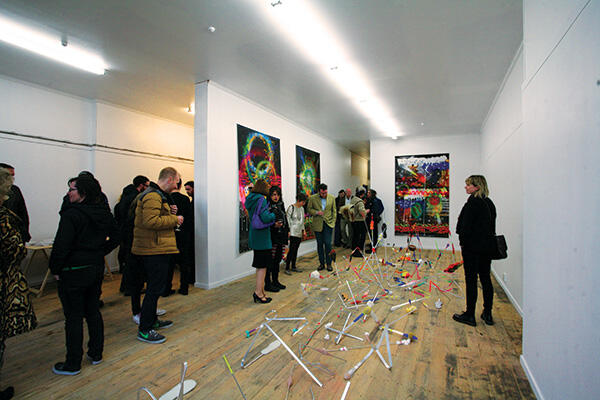
Blue Oyster
Blue Oyster is the hipster gallery of the Dunedin art scene. Bound to provide you with an interesting glimpse into local contemporary art, it has until now been somewhat of a hidden gem, tucked down an alleyway on Moray Place. However, it recently underwent a transformation, and on 30 August hosted a packed opening function to showcase its brand spanking new space. With its first exhibition featuring a prominent New Zealand artist, the move marks a new era of elevated professionalism for this edgy gallery. Established in 1999, the Blue Oyster Art Project Space is a programme that fosters contemporary and experimental art practice within Dunedin. Designed to “broaden interest [in] and understanding of contemporary art,” the space affords artists the freedom to experiment fully, and remains strictly not-for-profit, going so far as to reject outright any clearly commercial projects. The new gallery also has a designated room at the back for research, and in the past has held many panel discussions over artistic items of interest. Blue Oyster is therefore a novel concept, extending the notion of a gallery beyond being a place that promotes and sells art. Blue Oyster used to be underground, literally as well as figuratively. While being located down an alleyway is an interesting feature, it had the unfortunate consequence of depriving the gallery of any natural light. The gallery’s new space, entirely fronted by a full-glass window, is thus a dramatic improvement; not only is it flooded with light that doesn’t come from a dangling fluorescent bulb, it now attracts an unprecedented amount of foot traffic. During the 10 minutes I was there, about three groups of people stopped walking to look through the window. Perhaps the next challenge should be making the entrance more welcoming, so that anyone feels comfortable walking through the door. In saying that, however, the window does provide enough of a glimpse that being in the room may not even be necessary. Judy Darragh has the honour of being the first artist to display work at Blue Oyster. Pinewood Bend 2013 consists of twisted pieces of metal composed along the middle of the not-yet-varnished floor, garnished with pieces of fluorescent tape and spray paint, the tips bandaged with fabric and pieces of foam. It manages to exude a sense of simultaneous density and flimsiness. Referencing the progression of life, it evolves both in colour and in scope: neutral colours become bright neons, and the low-lying metal structure becomes tall spikes sporting various shoe insoles. The work stays true to her distinctive kitsch style, but while a crowded room never works in an artwork’s favour, many people I’ve spoken to who attended the opening were more impressed by the galactic adaptions of Denzel Washington movie posters with neon spray paint. The continuity of both theme and style across the various works, however, combined with a clear attention to detail, made the exhibition more powerful than second-hand descriptions had led me to believe. Located right next door to Les Mills, not only does Blue Oyster offer fitness buffs a taste of art alongside their workout, it makes the entire street the art hub of the city. Next to Milford Galleries and up the road from Brett McDowell (two galleries known for their vibrant openings), the Dunedin art scene is increasingly becoming a real community. The gallery isn’t even finished yet, and there is plenty of exiting potential yet to be realised. Darrah’s bright works are an appropriate reflection of the thought-provoking art to come, and perfectly signposts the gallery’s new direction. Director Jamie Hanton described the space as a “dream came true,” and it’s easy to see why. Its raving opening may well be the hook needed to convince students to tap into Dunedin’s vibrant art scene. Watch this space.
-
Culture
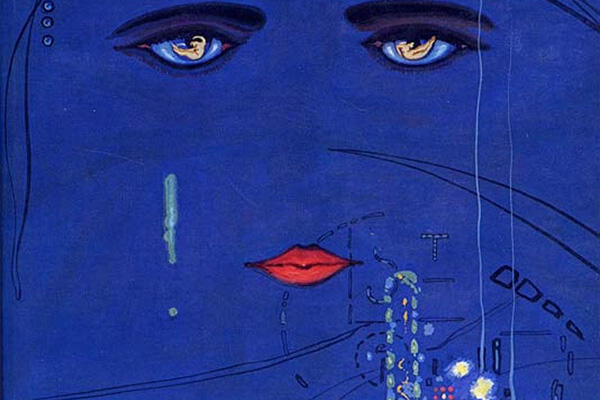
The Great Gatsby by F. Scott Fitzgerald
There is something about the glamour of 1920s New York that makes The Great Gatsby a timeless favourite. Fitzgerald’s characters collide from one party to the next in a bubble of “purposeless splendour” where nothing has consequences, and no one loses out. Our narrator, Nick, arrives at West Egg in the hopes of cashing in on the East Coast’s easy money. His new neighbour hosts extravagant parties, and Nick watches as glittering figures dance through the blue gardens until one night he is invited to join them. His host, Gatsby, makes no dramatic entrance; it is as though he wishes to be a guest at his own party. He floats like a ghost through his own house, and has a timeless smile and handsome, all-seeing eyes. Gatsby has always loved Nick’s cousin Daisy, a beautiful, delicate creature with a voice that sounds like a song. Years later, he buys his house knowing she lives just across the water. Yet Daisy has a husband, Tom, and a daughter. Daisy cries when her girl is born, and says “I hope she’ll be a fool – that’s the best thing a girl can be in this world, a beautiful little fool.” Her husband Tom is a white supremacist, and is having an affair with Myrtle, who is also married. Everyone cheats on each other, and makes little attempt to hide it. Women fall into men’s arms at Gatsby’s parties, and are referred to as attention seeking “girls.” No one seems to know what they’re doing, so they draw attention to themselves with material things. Gatsby’s car is the centrepiece of his affluence, and yet it is the power of this car that sparks the tumultuous events at the end of the novel. What’s striking is how young everyone is; it is as though they have been prematurely thrown into adulthood. They foolishly throw their fortunes at elaborate cars, clothes and parties, in a desperate attempt to stave off boredom. By her early twenties, Daisy believes she has “been everywhere and seen everything and done everything.” Perhaps what readers still relate to is the sense of escape that such frivolity brings; throwing parties and getting drunk shows that you’re living life, when really you’re unhappy. The real tragedy, however, goes beyond the facade of having a good time, and beyond the harrowing loneliness that sets in as the last guest leaves. The saddest thing of all is that Gatsby’s show fails. He only wishes to impress Daisy, yet he fails even to bring a smile to her face. She doesn’t see what he wants her to see, and it’s tragic, frustrating and embarrassing. The moment Daisy so much as hints that she is not fully impressed by Gatsby’s mansion, it’s as though the walls are made of paper. The fact that it is all for show becomes clear as daylight, and there is no justification, no covering it up. His life is a lie, but we already knew that. What’s tragic is that the lie is pointless. Despite being the most talked-about man in West Egg, no one really knows who Jay Gatsby is. He is built on rumours and the opinions of others, and his personality is extrapolated from his material possessions. As Daisy says: if you hear enough people say something, it must be true. Gatsby is only what other people think of him, and perhaps the message is that, really, we all are.
-
Culture
Jobs
Rating: 3/5 Jobs is a biographical drama that tells the story of Steve Jobs, the co-founder and former CEO of the Apple corporation. The film starts with Jobs as a barefoot college dropout in 1974 and ends with the invention of the iPod in 2001, unfortunately skipping the last ten years of his life. I was familiar with Jobs’ biography beforehand and was worried the film was going to pussyfoot around the fact that he was, well, an arsehole. Brilliant, of course, but an arsehole. My concern proved to be unwarranted, however – the film was respectful whilst remaining truthful, with screenwriter Matt Whitely only too happy to explore Jobs’ intense, cutthroat personality. Ashton Kutcher clearly took his role as Jobs very seriously. He perfectly mastered the idiosyncratic Jobs’ mannerisms, including the funny walk (although at times he took this too far and looked like a Thunderbird/Quasimodo). However, Kutcher’s “let it rip” approach meant that he was often yelling or crying in inappropriate scenes; it was impossible to forget that he was not, in fact, Steve Jobs, but rather an actor trying desperately for an Oscar nod. The real star of this film is Josh Gad as Apple’s co-founder, Steve Wozniak. Gad’s performance is subtle, touching and believable – a breath of fresh air next to the manic Kutcher. Although the film is stylish and sleek, it unfortunately treats the audience as though they’re idiots. Swooping violins are inserted behind all remotely significant moments, and almost everything said during the first fifteen minutes is expository. One particularly obnoxious example of this is when an acid-tripping Jobs quips some spaced-out poeticism about how he’s adopted – nice. However, the prize for the most unintentionally hilarious scene goes to the weak attempt to make computer programming look cool. Jobs and his friends are shown making logic boards … in slow motion … to rock music. Seriously?! Jobs was an incredibly fascinating man, and the film mostly does this justice. It is disappointing, however, that his death – which was due to Jobs refusing mainstrem medical treatment for his pancreatic cancer and opting instead for alternative remedies – isn’t mentioned. Regardless, Jobs is still a worthwhile (if patronising) examination of a legendary figure.
-
Culture

Red 2
Rating: 2/5 When Red came out in 2010 it offered a fresh, light-hearted take on spy thrillers. It also featured a seasoned cast and a skilled director. Unfortunately, while all of these ingredients where once again in the mix, somewhere in the intervening three years Red 2 lost almost all of the magic of the orginal. Once again Bruce Willis takes the lead as retired CIA agent Frank Moses, keen to leave his old life behind and move on with his partner Sarah (Mary Louise Parker). Once again, however, he is dragged back into his dangerous old ways by his crazy pal Marvin (John Malkovich). Moses is joined in his adventures by a rag-tag group of friends played by a host of “Academy Award-something” actors such as Helen Mirren, Catherine Zeta-Jones and Anthony Hopkins. The fact that the film’s storyline could so easily have begun with he words “once again” is the key reason it’s such a bore. The last film thrived on a public thirst for movies featuring distinguished casts taking on a threat together; with that thirst satiated, Red 2 really has nothing new or interesting to offer. Bruce Willis is an amazing actor who proved with last year’s Looper that he still has a lot to offer. However, his performance in Red 2 was undermined by the fact that he clearly didn’t want to be there. This was the case with many of the actors, with the exception of Malkovich and Hopkins, both of whom play very convincing and amusing nutcases. This film had “contractual obligation” written all over it. It was clear that many of the actors, the writers, and possibly even the director had all signed on for several films, and were regretting the decision. But guess what? The film has already made $100,000,000 at the box office, and thus Red 3 is already in development. The best films are products of passion, not of contracts and box office figures. Red 2 is a clear example of the latter.
-
Culture

Frances Ha
Rating: 3.5/5 An endearing and fresh take on the messy lives of twenty-somethings, Frances Ha is equal parts Woody Allen and Lena Dunham, taking a neurotic central character and using her to charming effect. A star-making performance from Greta Gerwig in the title role ensures that Frances never delves into the manic pixie dream girl stereotype, and we are instead offered a proper character study of this flawed and fascinating figure. As a contemporary dancer struggling to make ends meet in Manhattan, Frances experiences trials and tribulations that wouldn’t seem out of place in a Girls episode. However, the many funny moments, Gerwig’s seamless performance and the black-and-white cinematography that illuminates unseen aspects of New York elevate the film’s TV-appropriate subject matter into something far greater. In navigating Frances’ nomadic experiences as she moves from one cheap apartment to another, Baumbach’s film depicts twenty-something friendships in a fashion that rings true and is oddly rare on the big screen – or anywhere for that matter. The pithy, sarcastic exchanges between Frances and her best friend are handled naturally, as is her surprise at discovering how insincere friendships can be at that age. Similarly, Frances Ha adopts a realistic approach towards the poverty of young adult life, and is careful neither to glamorise nor romanticise the experience. Instead, it conveys how limiting it can be for our heroine. For a film to explore how issues of class and wealth seep into our relationships from this young age is refreshing. Nonetheless, the film provides something of a litmus test for the viewers in terms of tolerance for neurotic characters: during one of Frances’ especially cringe monologues, the couple behind me walked out of the film. Frances is muddled and frustrating, but ultimately sympathetic – and while the film is at times excruciatingly awkward to watch, therein lies part of its success. Although the film isn’t aggressively quirky, certain scenes err on this side, and Baumbach’s attempts at catering to his hipster audience are transparent. Frances’ habit of dancing to catch her bus, or playfighting with her friends in the park, come across not as the actions of an emotionally stunted 27-year-old, but rather of someone who is intellectually damaged. While Frances Ha is unlikely to appeal to those who find the average Girls episode beyond their realm of comprehension, for the target audience it’s a charming, funny and intelligent effort.
-
Culture
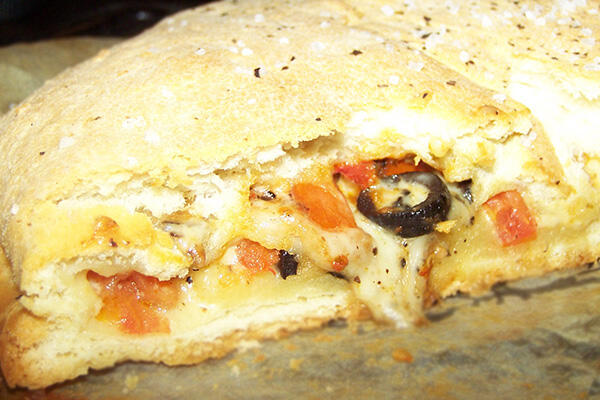
Stuffed Focaccia Bread
Dissatisfied with Pak ‘n’ Save’s colourless and inadequately topped pizza bread offerings? Unhappy with your regular, run-of-the-mill, unexciting toasted sandwich? Hankering after a more sophisticated savoury treat that you can customise? Then this delish stuffed focaccia recipe is for you, lovelies. I’ve included some basic ingredients for the filling, but anything goes, really – roasted peppers, sun-dried tomatoes, spinach, feta, capers, broccoli and blue cheese – basically whatever you’d put on a pizza. Don’t be put off by the bread aspect either; just allow enough a couple of hours to create your masterpiece so the dough has enough time to rise. Ingredients:For the dough: - 450g plain white flour - 300ml warm water - 2 tsp dried yeast - 4 tbsp olive oil For the filling: - 2 fresh tomatoes - 1 ½ cups of grated cheese or 250g of mozzarella - 1 cup of button mushrooms - 4 tbsp sliced black olives - 2tsp dried mixed herbs - Sea salt for sprinkling - Salt and pepper to taste Method:1. Sift the flour into a large bowl and then stir in the yeast. Make a well in the centre, pour in the oil and water, and then stir the ingredients together. 2. Transfer the mixture onto a floured surface and knead for about 10 minutes or so until you have created smooth and elastic dough. 3. Grease a bowl with a little olive oil, place the ball of dough inside and cover with a tea towel. Leave the dough to rise in a warm place for about 1½ hours until it has almost doubled in size. 4. In the meantime, prepare the filling ingredients. Dice the tomatoes and mushrooms and then place these, together with the cheese, olives, and mixed herbs, into a bowl. Lightly toss, and season with a little salt and pepper. 5. Once the dough has risen, briefly knead it one more time and then divide into two pieces. Place some baking paper on a baking tray and lightly brush with oil. 6. Roll out the first piece of dough to about the size of a dinner plate. Place this on the tray. Spread the mixture over the base, leaving 1cm around the edges. 7. Roll out the remaining dough (making it the same size as the first piece), brush the edges with a little water and place over the filling. Pinch the edges together tightly to seal. 8. Brush the top with a little olive oil. Sprinkle with the sea salt and bake in the middle of a preheated oven at 220º for 20-30 minutes or until the top has risen slightly, is firm, and golden brown in colour.
-
Columns

Daily Grind | Issue 23
Rating: 4.5/5 Everyday Gourmet, or “Err-day,” as M and G affectionately call it, is located on George Street opposite the Knox Church car park. This French-style café uses Supreme beans for their coffee, and is well known for its wall of ingredients and delectable food. It may seem a bit small on first glance, but actually consists of the main ground floor level, an outside area, and an intimate downstairs area. G once had the fresher flu and bought some meds from Albany Pharmacy. Receiving a complimentary hot chocolate voucher for Everyday Gourmet, she tentatively visited and was recommended the gingerbread flavour. It was handed to her with such love and was so delicious that tears welled in her eyes. This was the start of a deep bond between G and Err-day – a bond that was weakened somewhat when the gingerbread flavour was removed from the menu. G has since learnt, however, that this was due to the manufacturers halting production of the flavour, so no hard feelings, Err-day. As well as its many heavenly hot chocolate flavours, Everyday Gourmet is well known as an on-seller of the Friday Bakery’s famous almond croissants, making these tasty morsels available to the people of Dunedin that are too lazy or too busy to make it up to Roslyn at 6am. Err-day is on the rise again after a shaky period earlier this year, during which M and G felt the service was not as smooth as usual (and G was mourning the loss of her gingerbread mochas). After having some breathing space, however, Err-day seems to be back to its former glory. A quick tip for the newbies out there: you can get each of the hot chocolate flavours in mocha form, so you can have a delicious caramel hot chocolate with a caffeine kick. M and G are strong advocates of Everyday Gourmet, and suggest that those of you who haven’t been there in a while – or haven’t checked it out yet – pay it a visit. Go on a Friday and devour an almond croissant as the staff drowns you in coffee and TLC.
-
Culture
Gone Home
Rating: 9.5/10 As gamers we have become used to associating our games with grandiose situations and spectacular premises. From protecting the universe from alien threats to fighting dragons and other mythical creatures, we have the pleasure and privilege of living out some of the most amazing scenarios that have ever been conceived. This can make our own lives seem very mundane, unworthy of the same attention we afford every aspect of the games we explore. But does that make it so? The Fullbright Company, a four-person independent game-developing team from Portland, has just released a game that pushes the limits of what is possible in terms of both video game narrative and exploration, using only you and an empty house. The Fullbright Company was formed by three developers who worked on the Bioshock franchise. Bioshock games famously employ alternative methods of storytelling in the form of discovered documents and audio logs that allow you to learn more about the world, the characters and the story. With Gone Home, the Fullbright Company wanted to take the techniques that Bioshock had taught them and put them at the centre, rather than the periphery, of the game. The only thing I can safely tell you about the story is the premise. You play a 20-year-old woman who has just returned from a year long trip around Europe. In the year that you have been away your family has moved into a new house. You arrive at this house for the first time in the middle of the night, during a thunder storm, to discover it empty. The goal of the game then becomes discovering where your family is and what has happened in their lives while you’ve been away, relying entirely on the information you glean from exploring the house. It is important that this is all you know about the story going into the game, because its intensity and thrills derive from the discovery of this information. Though the game has one main narrative thread, through your exploration you will discover sub-plots that are beautifully crafted stories in their own right and yet interact with, and inform, other aspects of the story in ways that will leave you breathless. While exploration has played a hand in many great games, by making it the central focus the experience is heightened tenfold. Suddenly every shadow is a potential secret, and discovering any piece of the puzzle becomes an absolute victory. I was pleasantly surprised by the fact that even though the game involved no enemy fire or traps behind locked doors, the play was incredibly exhilarating. The reasons for this lie in the conventions themselves. While the game tells a very down-to-earth, human story, the Fullbright Company has used gamers’ expectations to make it exciting. This is largely achieved by the rapturous thunder storm that rages outside and makes you jump every couple of minutes with a fresh peal of thunder, but the game has other surprises up its sleeve as well. Gone Home combines many gamers’ innate desire to explore with a beautifully written and artfully executed story. As you explore you will uncover multiple narrative threads which unravel and interweave with a finesse usually reserved for genres that have been through a decade’s worth of trial and error. The Fullbright Company, however, has managed to conceive, implement and master an idea in one fell swoop. Your time with this game will make you look at your own life with renewed respect and wonder.
-
Culture
Final Fantasy XIV: A Realm Reborn
In the 20 hours I have spent with this game since its launch I have discovered a huge amount about it. However, as those of you who have played MMORPGs will know, 20 hours is barely enough time to scratch the surface of what these types of games have to offer. With that in mind, this article will serve as a preview rather than a review. But despite the fact that I have only just delved into the world of Final Fantasy XIV, the game has already displayed its few strengths and its many weaknesses. This isn’t actually the launch of the game, but rather the re-launch. Final Fantasy XIV was originally announced at E3 in 2006 and was finally launched in late 2010 to overwhelmingly negative feedback from critics and players alike. In the truly relentless style for which the Final Fantasy brand has become known, the developers thus began a complete overhaul of the game. The overhaul has been re-released as Final Fantasy XIV: A Realm Reborn. It retains the lore, setting and story arc of the original, but has redesigned or improved almost every aspect of the game itself: a new graphics engine has been implemented, the map has been greatly expanded, and the gameplay is far more varied. My first step into Square Enix’s revamp was creating my character. The character creation allows you to choose between five races, and then offers you a series of options to specify your character’s background and fighting preferences. The five races are all pretty standard fantasy fare, but considering Final Fantasy actually created many of these conventions this is easily excused. Your character’s physicality is customisable, with each aspect having several options regarding both size and shape. At first having only a few options seems limiting, but there are so many sections to customise that your selections end up making your character very much your own. Despite highly enjoying character creation and liking my final avatar, however, the way in which your choices will affect the gameplay is poorly explained. It was only by doing further reading that I discovered how your selections would affect your character’s stats. On loading up the game the first thing you will encounter is a cutscene explaining the world in which the game is set and the events that have shaped it. I may be wrong, but I think it’s something to do with crystals and a dragon that lived in a moon. Only the most dedicated of Final Fantasy fans will be able to keep up with a story that is so overwhelmingly Eastern in every respect. Regardless of the differences between Eastern and Western storytelling techniques, the game still fails, both in its introduction and in its opening scenes, to create any sense of cohesion between the story, the world and your character. MMORPGs aren’t known for their storytelling (except BioWare’s Star Wars: The Old Republic) and not many fans of this genre expect a clear, or even coherent, storyline. However, I am of the opinion that by not giving your character a proper context in which to complete tasks and objectives, MMORPGs become the mind-numbing, soul-draining experience they are often accused of being. It becomes something akin to reading a senseless jumble of words solely for the sake of reading. Despite not knowing who my character was, what his motivations were, or what was happening in the world around him, I ventured on. The series of uninspired and uninteresting fetch quests I was presented with filled several hours before I was finally able to try out combat. The combat is fairly standard. My Marauder used a heavy axe to auto attack, which I supplemented with special attacks earned by levelling up. The wider world also has level-based events in which players from the area cooperate to dispatch a threat of some kind. Final Fantasy XIV offers nothing new, and implements the overused conventions that it does use poorly. This, combined with a characteristically confusing Final Fantasy story and zero character motivation, made me reluctant to waste any more time on it. I do not doubt that Final Fantasy and MMORPG fans will find reasons to keep playing, but I think it is time that we demand a higher standard from this genre.
-
Columns

Science, Bitches! | Issue 23
We all know that life is beautiful. Total cliché, I know. Flowers are pretty sweet, you can’t help but enjoy a good sunset, and everyone loves butts. You can see all of those things for yourself, though. The microscopic world is just as incredible, only you can’t see it with the naked eye. By adding fluorescent “labels” onto cell structures, however, we can have a look at what’s going on down there. You can watch chromosomes being pulled apart, a cancer cell metastasising, a fly eye develop; it really is an alien world. This is a technique scientists have been using for years in research, but the photos are so stunning that some can be considered works of art. Want to see a newt cell dividing? Or a video of immune cells rushing to a wound? The answer is, of course, “yes! That sounds super awesome.” So check out nikonsmallworld.com and let it blow your mind! For most people, science and art are two completely unrelated fields. In the spirit of this week’s theme, however, I feel obliged to mention that photosensitive E. coli have been used to make photographs, and that a whole range of scientific analytical techniques have been employed in order to detect forgeries of classic works of art. Not so separate after all, perhaps? But what would I know about art, anyway? I’m a scientist – clearly a left-brain, logical thinker. Right-brainers are the creative types, right? Uh, nope. Just to smash a common misconception, it has been officially proven that there’s no such thing as left or right brain dominance in healthy people. Sure, the different sides of the brain aren’t exactly the same – the left side deals more with language, the right side more with what’s going on around you. But, surprise surprise, artists can be good at chat, and scientists do pay attention now and again. When researchers looked at 1,000 people’s brains, they found nothing to suggest any “dominant” side. After all, brains are probably a bit more complicated than that. Who knows, maybe I could still learn to paint? That’s science, bitches.
-
Columns

Hi Dr. Nick | Issue 23
Hi everybody, So a fortnight ago I put off talking about obesity because it was too big a topic. Like a morning on the crapper after a night at an Indian BYO, though, the subject can’t be avoided, so we might as well load up Angry Birds, settle in and do this shit. Obesity is defined by Body Mass Index (BMI). Your BMI is number that relates your height and your weight. When it hits 30, you’re suddenly obese. Obese people have an increased risk of everything from A to Z (arthritis to … er … ziabetes), which is worrying because nearly a third of New Zealanders are obese. It may sound simple, but this paragraph alone has raised enough issues to fill about four or five Critic columns, so let’s crack in already. As a measure, BMI is about as good as Michael Jackson was in his hit song “Bad”. That is to say, it’s bad. It’s far too simple to accurately reflect things like levels of activity, body fat (percent and distribution) and diet, all of which are major players in the link between obesity and death. National sex symbol Dan Carter, for example, has a BMI of 29.7. According to the BMI index, he is therefore flirting with obesity more than a chubby chaser in South Dunedin, despite being one of the healthiest people in the country. The next problem with BMI, and today’s episode of Sesame Street, is brought to you the number 30. If you plot odds of dying against BMI, the line starts climbing around 25 (meaning you get more and more likely to cark it). Some smart cookie noticed that and defined “overweight” around that point. Then a slightly less intelligent snack said, “well, 25 is a nice number, so let’s make the next category (obesity) at the next nice number: 30.” Sure, it makes sense to stratify weight levels. It gives public health researchers standardised tools to play with, and it acknowledges that body fat risk profiles are not one amorphous blob. The problem is, though, that people focus purely on “obesity” and the “obesity epidemic,” ignoring the fact that “risk” with BMI sits along a continuum and is not a flat line from 25.1 to 29.9 with a massive step up at 30. People don’t wake up obese having gone to bed a stick figure – getting heftier is a gradual process. The “obesity” epidemic reflects a percentage of the population moving from BMIs of 29.9 to BMIs of 30.0. It isn’t great, but neither is it the tsunami of tubbiness suggested by the media and by many health professionals. Then there’s the complexity of weight itself. In theory, weight gain and loss is simple – energy in versus energy out. The whole “slow” and “fast” metabolism stuff is a load of nonsense, but there are certainly extra factors that complicate the math. Despite what you might think while bingeing on Maccas, the body very tightly regulates energy intake by subconsciously controlling appetite. In issue 5 we talked about the fresher five – the extra 5.3kg that people gain, on average, over four years at college. That works out to be 138kJ too much energy each day, significantly less than is contained in the apple a day meant to keep us doctors away (398kJ). The fact that this energy intake is normally so rigidly controlled means that any weight gain must involve a disturbance in the fundamental regulatory process – in the leptin signaling pathway, for instance. In the tiny bit of space remaining, I want to briefly return to minority stress and stigma. We covered this in issue 17, but I want to touch on it again as fat phobia is one of the few remaining socially acceptable forms of prejudice, and one that has horrific effects on people’s self-esteem and wellbeing. When I introduced this topic two weeks ago I again peppered the column with harsh references to weight. Again it was largely ignored. Sticks, stones and words all hurt like a bitch, and the weight-hate needs to stop.
-
Culture
Internet Art
Art both expresses and reflects the society in which it was produced. In an Internet-obsessed society it hardly comes as a surprise, then, that Internet art is thriving. Net art is hard to pin down and categorise, because it is as diverse as the Internet itself. Just like Internet pornography, there’s something for everyone. There are: - shrines to cats rendered in amateurish gifs and HTML; - glitch videos that look like a pack of highlighters mated with TV static; - 3D rendered visuals that look like a mash-up of naked Sims, and even - browser extensions that promise to eradicate Justin Bieber from your Internet experience. One pair of artists even staged a suicide scene and broadcast it on Chatroulette, filming peoples’ reactions. A look at some of the most popular Internet artworks can leave you confused, uneasy, and asking “is it art?” All this has happened before, though, and will happen again. Contemporary Internet art takes many cues from Dadaism, the art movement that culminated in 1917 when Marcel Duchamp shocked the art community and forced it to question what exactly art is. His infamous artwork “Fountain” (a porcelain urinal tipped on its side and plonked in an art gallery) expanded the boundaries of the art world, and art has become increasingly weirder since. With the invention and popularisation of the Internet since the early 90s, artists have found a whole new medium to play with – forget the tempera, brushes, clay, or Perspex: Internet artists use pixels and code to create surreal, blasphemous, absurd, queer creations. It is often hard to tell the difference between Internet art and poorly photoshopped cat pictures cobbled together and posted on Tumblr. Internet art is kitsch, ironic, and meta in the extreme. Yung Jake’s piece Datamosh (look it up on YouTube) sums it up best: “You thought it was an accident, a video glitch. I did it on purpose though … it’s nothing. You don’t have bad Internet, I’m just datamoshing (swag) I’m on my web shit, ya heard me? It’s cool cause its nerrrrdyyyyy.” Yung Jake drawls these lyrics tonelessly over a video that looks like the Internet (circa 2001) took an acid trip. Nostalgia, irony, and meta mingle in net art to produce a body of work that sums up contemporary culture in a way that artists like Andy Warhol and Robert Rauschenberg did in the 50s and 60s. Greg Leuch’s project “Shaved Bieber,” a browser extension that promises to eradicate Justin Bieber from your Internet experience, comments on society’s relentless obsession with Justin Bieber, and, in turn, our weariness with Bieber’s overexposure. Looking deeper at net art, the dichotomy between maximalism and minimalism has become a recurring theme. Take Michael Guidetti’s yyyyyyy.info for example – visit the site and you’ll see the hyper-coloured flotsam and jetsam of the Internet heaped on a page in all its weird glory. There’s a glut of visual noise; maximalism indeed. But take a look at the source code behind the mess and you’ll find a neatly structured, very basic HTML document creating the bones for the absurd facade. Even the CSS is pared back, relying on (now antiquated) web-safe colour standards and generic fonts. Net art is intriguing and disturbing. It’s exciting to see what artists can create with the Internet, but it can be sickening when those artworks cause you to ask some deep questions about yourself and your society; Eva and Franco Mattes’ piece “No Fun,” which recorded Chatroulette participants’ reactions to a staged suicide, makes you wonder about peoples’ respect and concern for fellow human beings. Art holds a mirror up to society, and Internet art does a particularly good job at reflecting ours in a very “warts-and-all” manner. If you’re not the type to visit galleries, you might like to delve a little into the weird world of Internet art. Skip Buzzfeed for an evening and Google a few of these artists: - Eva and Franco Mattes - Yung Jake - Lorna Mills (she posts on Google+ - I can’t figure out if that’s making a statement or not) - Michael Guidetti’s yyyyyyy.info
-
Culture

App of the Week | Issue 23
Next time you have to give a presentation for a class, skip the PowerPoint and give Prezi a go. Prezi is a presentation tool that allows you to scribble all over a canvas, rather than organising your ideas into traditional slides. Imagine a mind-map with fancy transition effects, embedded pictures and videos and an awesome background. Rather than being restricted by PowerPoint’s linear structure (that is, one slide after the next), you can express your ideas in a way that makes sense to you – the canvas is yours to do with what you will. Prezi also brings depth to your presentations – you can zoom in or out of your canvas as much as you like, expressing layers of detail. Combine this with Prezi’s animation effects and you have a pretty fun tool for telling a story. It takes a little while to adjust to the Prezi frame of mind. We’re so conditioned to think in terms of slides that it can be hard to break free of those little boxes. As you become more competent and familiar with Prezi, though, you’ll find that there’s a lot more scope for creative presentation and storytelling than there is with any other presentation tool.
-
Culture
Arctic Monkeys - AM
Rating: 4/5 Since their debut Whatever People Say I Am…, British indie rock quartet Arctic Monkeys have evolved their sound with every new release. Fifth album AM both throws all of their styles thus far into the blender – the rampant energy of their first two albums, the darker tone of Humbug, the wistful pop of Suck It And See – and strides boldly into new territory. Packaged together by Alex Turner’s caustic wit and lust-soaked lyricism, it makes for one inspired and goddamn sexy album. Guitarist Jamie Cook’s pulsating riffs kick off the record with the seductive “Do I Wanna Know,” as Alex Turner croons out lyrics of unrequited lust. Follow up track “R U Mine?” is easily an album standout, with a sexy Queens of the Stone Age-like groove and an intensity I haven’t heard from them since “Brianstorm.” On the smooth “One for the Road,” Turner’s lower tones are complimented by falsetto harmonies, a new facet of the Arctic Monkeys’ sound that features heavily on AM. Another new emphasis is hip-hop, as seen on the Sabbath and Zeppelin-influenced “Arabella,” incidentally one of the album’s lyrical standouts: “she’s got a Barbarella swimsuit, and when she needs to shelter from reality she takes a dip in my daydream.” The new experiments don’t stop there, as the toe-tapping ode to glam rock “I Want It All” – complete with “shoo-wops” for backing vocals, can attest. “No.1 Party Anthem” and “Mad Sounds” provide the mid-album breather typical of an Arctic Monkeys record, but neither truly delivers. The former is a Lennon-esque ballad that feels like a disappointing sequel to Humbug’s “Cornerstone,” while the latter is a slow-burning track with more than a touch of Velvet Underground’s “Pale Blue Eyes” that left me wanting more. Aside from the forgettable, conventional “Snap Out Of It,” AM’s second half is fantastic. “Why’d You Only Call Me When You’re High?” is another of my favourites: a stoner’s anthem with a hip-hop beat that plays like an extended booty call. “Knee Socks” ties the album’s ends together by bringing back the lusty feel of the beginning of the record, with Turner wrapping his tongue around AM’s most brooding and spine-tingling lyrics. Finally, last track “I Wanna Be Yours” is a sincere and beautiful ending to this impressive album, and one that proves that Arctic Monkeys are very much here to stay.
-
Culture
Pixies - EP-1
Rating: 2/5 Most big bands like to make it obvious when they’re releasing new material – ads, fan announcements, at least a few posters. That was not the case for the new Pixies EP, offhandedly titled EP-1, which just sort of appeared last Tuesday and seems to have gone unnoticed since. Perhaps they were hoping that their first new material in ten years (following the excellent single “Bag Boy” in June) would create hype enough on its own. Strangely, it was not to be. Listening to EP-1 for the first time is an odd experience. It is the Pixies’ first release without the legendary bassist Kim Deal, but even then I expected it to sound at least a bit like their usual, distinctive selves. Instead we are greeted by “Andro Queen,” a low-key, spacey number featuring Black Francis singing with … is that autotune? It seems unfathomable, but knowing the Pixies it must all be part of some clever plan, right? Right, guys …? If there is a clever plan in play, it isn’t revealed in second song “Another Toe In The Ocean” either. I’ve done my best to enjoy this song and make excuses for it, but quite frankly, it’s terrible. One deliberately catchy hook and a few contrived riffs is literally all it has to offer; I practically knew the words off by heart by the end of my first listen. Witty as the Pixies are, irony is no excuse for producing something that wouldn’t be out of place being remixed by DJs wearing their caps backward and sunglasses indoors. After these first two tracks, I found myself wondering whether this actually is the Pixies, or if someone messed with the files and the $4 I paid for the download is now funding a pyramid scheme in Nigeria. A comparable situation would be the first time I heard the song “Golden Lights” by The Smiths, and that song is just fucking weird. However, there is a bit of hope in the third track, “Indie Cindy,” a decent alt-pop number more in line with what you’d expect from the band. It’s catchy but not shamelessly so, and features spoken verses from Francis as well as some calculated hooks. This is followed by another complete change of tack. “What Goes Boom” is one of the heaviest songs the band has ever produced, and my favourite track on the EP. There’s definitely no autotune to be found on this one – just a series of badass riffs and a bit of haptic feedback to let us know they still don’t give a shit, which is reassuring. EPs don’t really need to be cohesive works, but EP-1’s disjointedness borders on ridiculous. Hopefully they hone in on one of their new sounds before embarking on a new full-length, rather than repeat EP-1’s creative disarray. Then I won’t have to lie awake at night having a vicarious identity crisis for one of my favourite bands. We can but hope.
-
Columns
The Loose Guide | Issue 23
Depending on how far up your arse your head is, some of you may have noticed that Dunedin actually extends beyond the Student Quarter (and the Octy on weekends). The rest choose the path of blissful ignorance, which is a short path indeed. If you’re tired of being limited to territory that you can cover with your own two feet, now is the time to discover the public bus system. It may seem daunting at first, but don’t panic. With a little guidance and some true grit, you too can become a master bus jockey and explore the road frequently travelled. Now that you are aware of the existence of “the bus,” your first order of business is to catch one. Public buses can be quite elusive, so knowing where they hang out (bus stops) makes this part much easier. Find a bus stop by walking along the street until you see one. There will usually be a signpost, if not a shelter. In on or around the stop there will be a timetable detailing the buses that come to that stop, where they go, and when they go there. Simply select your destination and a time that suits and then wait for the bus to appear. Buses have helpful neon signs on their foreheads that indicate their various destinations. If in doubt, flag them down and ask the driver. Once you have managed to trap the right bus, you must then board it. Make your presence known to the driver by standing close to the curb as the bus approaches. Climb aboard and state your destination or the number of “zones” you wish to traverse (expert level only). You will have to cough up some cash at this point, so be sure you have some before beginning your journey. Bus drivers do not accept favours or artwork as payment – the standard fare is $2 per zone, and this can actually get you quite a long way. Grab the little ticket, crumple it up in your pocket and sit down in a seat. While riding the bus, you may wish to stare pointedly at the floor or out the window to avoid making eye contact with the plebs. Don’t start daydreaming though, or you might miss your stop. You’ll have to rely entirely on your own judgement to know where to get off. Once you think you’re close enough to where you want to go, pull the cord that runs along the window or push one of the conveniently located red “stop” buttons. The driver will then let you off at the next stop. When the bus is no longer in motion, disembark gracefully and enjoy your day.
-
News

Interview: Stevie Jepson
Now, we all know about Texan abortion laws after Wendy Davis’s famous filibuster, but what’s the situation here in NZ? Well it’s definitely not as bad as states like Texas or Ohio, but the laws are still pretty backwards and [are] hurting women in a different way to the American laws. We have our share of abortion clinic drama though; recently a nurse’s car’s brakes were cut. I didn’t realise that sort of thing happened here. It’s not talked about much. That’s one of the major problems with the laws at the moment, actually. There’s this whole stigma around abortion that is created and perpetuated by treating it as a crime and not a health issue. We’re trying to raise awareness of the issues surrounding abortion, and to start the conversation about decriminalising abortion. Abortion is a crime? Abortion at the moment is a criminal act under Crimes Act 1961. But the thing is, lots of people know people who have had an abortion, and not been charged with a crime, and so they don’t think there’s a problem. The problem is that women have to prove to multiple doctors that they qualify as an exception to the law. 98.2 per cent of women who had an abortion last year had to tell the doctors that continuing the pregnancy would make them mentally unstable. Before Invercargill got their own abortion services, women had to travel to Christchurch because the Dunedin service couldn’t handle them. So [with abortion] being regarded as a criminal act, you have to go through all these extra hoops to access the health care you want. This prevents a lot of women from having earlier terminations, something that is unanimously safer. What does reproductive justice mean to you? Reproductive justice means ensuring that all people can access the reproductive services that they want and need, be it abortion, contraception, or information; that their choices are respected and listened to – not dictated by archaic laws, but informed through discussion with their own doctors. We are trying to start a conversation on campus about why we need to change our reproductive services and laws, creating a culture where it’s okay to talk about these kinds of things openly. I’ve seen your posters around – “Coat hangers are for clothes” etc. That’s pretty shocking. How are people reacting? There’s also “Magic Potions are for Fairy Tales,” and “Needles are for Knitting” – three of the ways that women used to have to procure abortions when they weren’t legal, something that we never want to have to go back to! People are having mixed reactions. At the market day stall we had, it seemed to make some people uncomfortable. I guess that’s understandable, given the nature of the quotes/ images, but people were also shocked and intrigued, which was great! It meant that they gave it a second look and were more likely to read about the issue. Lots of people we talked to on the stall still had no idea that abortion was in the Crimes Act, or how bad the reality of reproductive services are in NZ, and when they realised, a lot were really angry! Talking to those kind of people and sharing the information was awesome, and I think it’s how we’re really going to make a change. And if your mission is to start a conversation, I guess that’s a success? Definitely! Even if a few people who saw the stall or the poster tells some of their friends, who tell their friends, we’ve achieved something! If we can get a whole bunch of people behind the issue, it gives it a lot more weight when we talk to people who make the laws. Absolutely. So is that your next move? Talking to MPs? That will be one of them. I think we are going to try and get more support down here first, but talking to MPs, writing letters and supporting campaigns like the Pro-Choice Highway is going to be really crucial. It’s just about making ourselves heard, and showing that there are lots of people who are calling for a change. Also, supporting MPs who do speak out about the issue, like Holly Walker! More info at alranz.org


