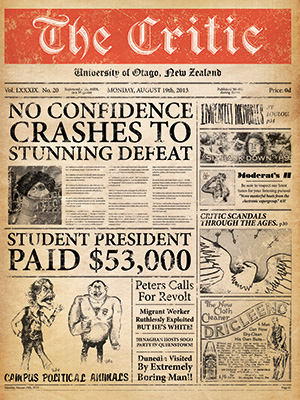
-
Features

Why Do Soldiers Weep for More Cowbell?
“There’s a rare occasion when the public can be engaged on a level beyond flash, if they have a sentimental bond with the product. “My first job, I was in-house at a fur company, with this old-pro copywriter, a Greek named Teddy. Teddy told me the most important idea in advertising is new. Creates an itch. ... But he also talked about a deeper bond with the product. Nostalgia. It’s delicate, but potent. “Teddy told me that in Greek, ‘nostalgia’ literally means ‘the pain from an old wound.’ It’s a twinge in your heart far more powerful than memory alone. This device isn’t a spaceship, it’s a time machine. “It goes backwards, forwards, takes us to a place where we ache to go again. ... It lets us travel the way a child travels. Round and around, and back home again, to a place where we know we are loved.” -Don Draper, Mad Men In the seventeenth century, a strange affliction was observed among Swiss soldiery who had been posted in the lowlands of France and Italy. Mentally, the soldiers would exhibit extreme melancholia and anorexia; physically, there would be bouts of weeping and irregular heartbeats. The soldiers’ malady was attributed to a variety of factors: sharp differentiations in atmospheric pressure wreaking havoc in the brain, evil spirits inhabiting the soldiers’ heads, brain damage caused by the clanging of cowbells – y’know, all those Swiss things. The “Swiss illness” was eventually linked to Kuhreihen, the horn melodies that alpine herdsmen would play as they drove their cattle to pasture. Kuhreihen would provoke in the soldiers an intense longing for home, and accordingly the songs were banned from the military. In 1688 Swiss doctor Johannes Hoffer coined the term “nostalgia” to describe the affliction, and described it as a “neurological condition of essentially demonic cause.” Into the nineteenth and twentieth centuries, nostalgia was considered a form of “immigrant psychosis” and a “mentally repressive compulsive disorder.” However, recent research has shown something surprising: it’s not just weird foreigners who experience nostalgia – we all do! One survey found that 80 per cent of people report feelings of nostalgia at least once a week, and nearly half report it three or four times a week. And the experience of nostalgia is the same, whether it occurs in a European, a South American, or an African. *** Few emotions stir us like nostalgia – that wistful, bittersweet recollection of times past. But for all its power and ubiquity, nostalgia had hardly been studied until 15 or so years ago, and is still quite poorly understood. As a subtle interweaving of memory, imagination and emotion, it is far too complex to be fully explained with our current knowledge of neurobiology. That being said, it appears that we can hazard some fairly plausible guesses about how nostalgia is formed. A disclaimer: I have zero background in biology, let alone neurobiology, and the following is likely riddled with inaccuracies. I apologise in advance to Otago’s stellar contingent of science snobs, who are likely to take gross and indignant offence to my artsy mangling of their field. The traditional layperson’s view of memory is of a kind of library or photo album from which individual memories can be selected at will and examined. When new memories are formed, they are filed away for later perusal. Occasionally, a memory will not be used in a while, and will be lost from the archives, either temporarily misplaced or forgotten forever. However, the current view among researchers is that memory is not stored in a database, but created through the repeated firing of certain neurons. Neurons are connected by synapses – electrical pathways that pass signals from cell to cell – and when a particular synapse is used repeatedly, it strengthens and passes this signal more easily. This initial strengthening creates short-term memory. In order to create long-term memory, the synapse must be strengthened permanently, creating a “trace.” Complex long-term memories consist of patterns of traces that cover large areas of the brain. When these memories are triggered, the synapses fire according to these patterns. So the process of remembering is not a case of looking at a photo in an album; the memory is recreated in real time, and because these patterns are never entirely stable, memories can be creatively altered and reassessed, albeit usually unconsciously. Most of our episodic memories – memories of events, facts, and autobiographical details – are formed through the hippocampus. However, where the memory has a direct emotional element, the amygdale becomes involved and can “tag” certain memories as emotionally significant. This makes it more likely that a memory trace will form, and that the memory will be more vivid and persistent. These emotionally-invested stories form a huge part of our identity. The stories of our lives help to structure and inform who we are; deep-seated memories, particularly of our childhood and upbringing, give us a sense of comfort and belonging. As one researcher has put it, “our brains are conservative; they place a value (often an emotional value) on the coherence and stability of old stories and do not easily change them. Humans want to preserve things the way they were; they feel comfortable when the new experiences fit their previous stories.” Nostalgia, so one theory goes, occurs when these comforting memories are triggered in an environment materially different to that memory. We relive our happy, comforting experience from the past; but this coexists with a sense of disconnection and loss, and thus can cause an overwhelming longing and bittersweet sensation. *** There is a growing literature on the psychology of nostalgia. From a mental illness calling for treatment, its reputation has swelled to the point that nostalgia is now considered psychologically beneficial. Greek psychologist Constantine Sedikides has been at the forefront of this recent research. Sedikides has found that nostalgia fights, among other things, boredom, loneliness, anxiety and feelings of mortality. By reflecting on our comforting memories, we gain a stronger sense of self and belonging, and this can make life seem more meaningful and death less frightening. Nostalgia also increases goodwill and tolerance, and makes couples feel closer. It has even been shown to make people literally feel warmer. “Nostalgia makes us a bit more human,” Sedikides told the New York Times. “You end up with a stronger feeling of belonging and affiliation, and you become more generous to others.” Music is a particularly strong trigger of nostalgia. In a Dutch study, researchers found that listening to songs made people feel not only nostalgic, but physically warm. In another study at North Dakota State University, participants were played hit songs from the past, and afterward were more likely than the control group to say that they felt “loved” and that “life is worth living.” “Nostalgia serves a crucial existential function,” the researchers concluded. “It brings to mind cherished experiences that assure us we are valued people who have meaningful lives. Some of our research shows that people who regularly engage in nostalgia are better at coping with concerns about death.” One of the primary purposes of nostalgia appears to be as a coping mechanism during periods of transition: it is reported most commonly in young people who have recently left home, and in old people with one foot in the grave. “Young adults are just moving away from home and/ or starting their first jobs, so they fall back on memories of family Christmases, pets and friends in school,” says Erica Hepper, a psychologist at the University of Surrey. Nostalgia probably lies behind the gratuitous amount of Friends I watched in fifth year (a coping mechanism in the alien and soulless world of studying law), and my recent predilection for Star Wars and Toy Story marathons. *** As the above quote by Don Draper makes clear, the advertising potential of nostalgia is well understood. Nostalgia is a selling point for confectionary, music, boxed sets of old TV shows, failing North Dunedin pubs – you name it. But what about selling ideas? It’s doubtful that any genre of popular fiction has had a greater effect on the collective consciousness of a nation as Westerns have had on the United States. According to historian David H. Murdoch, “no other nation has taken a time and place from its past and produced a construct of the imagination equal to America’s creation of the West.” In the Old West, men were men and guns were great; rugged self-reliance was the name of the game; and loyalties were clear-cut – never trust a man who wears both a belt and suspenders; he can’t even trust his own pants. This attitude has persevered in the Southwest, crystallising into a fierce blend of individualism, economic libertarianism, and social conservatism. This isn’t always totally consistent – yay for freedom, unless it’s gays marrying – but when viewed as a product of nostalgia, the logic is much clearer. It’s a throwback to a more anarchic time – hence the suspicion of the government – but also to a largely monocultural society, in which difficult questions around diversity did not typically arise. Political figures – particularly Republicans – have become adept at tapping into this nostalgia to push their message. The use of Western tropes evokes nostalgia despite the fact that nobody alive today directly remembers the Old West. We recall childhood games of Cowboys and Indians, but none of us have protected an honest rancher from a group of outlaws, or had a showdown, or ridden out across the prairie with only our horse for company. The closest we come to reliving a Western is getting drunk in a bar and falling over into a pile of mud. This is probably just as well: as Murdoch points out, the mythic frontier has little to do with reality, which was a far grimmer affair. As a result, it is tempting to dismiss nostalgia for the Old West – or for any idealised past that we have not personally experienced – as a form of delusion. After all, Michael Jackson pined for the childhood he never had, and he was one messed up mofo. Jackson suffered physical and emotional abuse at the hands of his father, and in 1995 song “Childhood” he explains that “it’s been my fate to compensate for the childhood I’ve never known ... I’m searching for that wonder in my youth like pirates in adventurous dreams of conquest and kings on the throne.” Nostalgia for an imagined past often stems from dissatisfaction with the present. Dissatisfaction for the present, accompanied by a lack of faith that things will improve, can negate the positive effects of nostalgia: it can lead to a cynical view of human nature and a less tolerant outlook on society. So far, so Republican. Then again, yearning for the good old days does not reflect a deprived childhood; it reflects a particular interpretation of our past, which is then tied to a narrative of decline. If we view our childhood as simpler, freer, more picturesque than our present, it is not a case of suppressing our childhood and erecting a new, imagined one in its place, but placing a particular spin on our childhood and romanticising it. So, in short, those who nostalgise for the Old West probably view their childhood as more akin to the idealised frontier, a frontier that the passage of time has eroded. They don’t literally believe they inhabited the frontier, but they do see elements of the Old West in their backstory. Ultimately, it is the creative flexibility of our memories that allows this to happen. Our identities are formed through the higher regions of our brains, such as the neocortex. The neocortex helps to structure our memory traces into a roughly coherent narrative about who we are and where we come from. These narratives can incorporate the imagery we have learned to associate with our past, and if this imagery is linked to a particular political message, this can give rise to deep-seated attitudes that are hard to shake. From a liberal perspective, though, the message is still nuts, and airbrushes away the intolerance, violence and misogyny of the Old West. Liberal America has long recognised the importance in countering or subverting the traditional, conservative Western tropes pushed by figures like John Ford and John Wayne. Hence the “revisionist” Western films of the 60s and 70s: 1970’s Little Big Man, for instance, championed Native Americans, while Once Upon a Time in the West (1968) made capitalism the villain. In more recent times, The Three Burials of Melquiades Estrada (2005) denounced the Southwest’s attitude towards immigration and Brokeback Mountain (also 2005) undermined the genre’s intense heteronormativity by presenting that most unthinkable of phenomena, cowboys bumming each other. All of these films, by challenging the values associated with Western imagery, help to change the idealised view of the frontier into something more nuanced. They stir doubts among conservatives about the proper lessons to draw from their nostalgia for the Old West. All of which goes to show that people aren’t really rational. Don’t appeal to their sense of reason – just hit them in the childhood. *** In order to bring a sense of narrative closure to this feature, let us return to our friend Constantine Sedikides. As Sedikides points out, dwelling on the past can be comforting, and can play an important role in reminding ourselves who we are. But we shouldn’t let our nostalgia for the past detract from our enjoyment of the present. “Many other people have defined nostalgia as comparing the past with the present and saying, implicitly, that the past was better – ‘those were the days,’” Sedikides says. “But that may not be the best way for people to nostalgise. The comparison will not benefit, say, the elderly in a nursing home who don’t see their future as bright. But if they focus on the past in an existential way – ‘what has my life meant?’ – then they can potentially benefit. “I think you’ll benefit by nostalgising two or maybe three times a week. Experience it as a prized possession. When Humphrey Bogart says, ‘we’ll always have Paris,’ that’s nostalgia for you. We have it, and nobody can take it away from us. It’s our diamond.”
-
Features
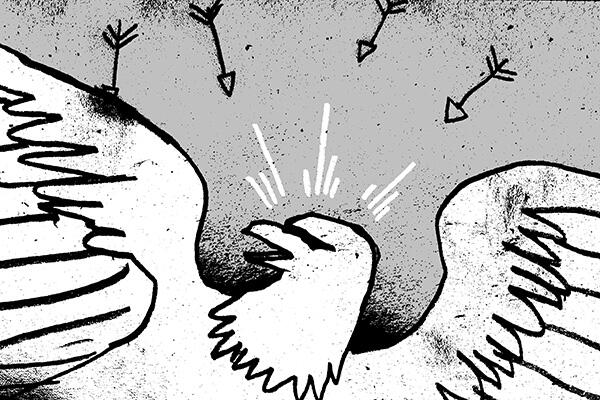
Critic Scandals Through The Ages: An Inexhaustive Account
Now in its 89th year, Critic is widely known as an upright and distinguished Publication, where people turn for only the most rigorous of journalistic standards. LOL, JK. Brittany Mann takes a look at the scandals that have shaped Critic over the years. It seems like the height of journalistic narcissism to write a feature about the very magazine in which it will be published, but here we all are. Since 1925, Critic, in its various incarnations, has been the capricious mouthpiece of Otago University’s students. Whether tabloid-sized or quarter-fold, glossy or matte, the missive Dunedin loves to hate has always prided itself on its coverage (however expletive-laced and hyperbolic) of whatever controversy happens to be affecting the southern-most university on the planet at a given point in time. But what of the scandals that have befallen Critic itself? For if this year has confirmed anything, it is that the magazine is not immune to controversy – whether within its pages or within the walls of its newly painted office. David and GoliathThe passage of years has made the scandals of old appear trivial through the retrospective lens by which we contemplate them, but you can be sure that at the time, these events were as outrageous as, say, a former editor being escorted out of the office by police whilst his colleagues recorded the whole saga on video. Take 1931, for example, when the editors of The Critic (as it then was) criticised the Board of Discipline for fining two students and standing down a third for insulting a lecturer at a particularly rowdy dance at Allen Hall (#YOLO). This was arguably the first real conflict between students and the University authorities and the latter were not having it – no sir, they were not. The next issue of The Critic began with a statement from the Chairman of the Professorial Board calling the editorial a “distinct breach of discipline.” The editors apologised and round one went to the Board: the stage was now set for an infinite cycle of line-crossing that continues to this day, whereby the magazine offends, sparks complaints, and apologises, only to promptly go and exasperate all over again in due course. In 1932, the University Council stepped things up a notch by standing down that year’s editor, medical student Joe Small, after The Critic ran a series of articles that lived up to the magazine’s moniker and criticised the rather oversensitive Board for banning that year’s Capping procession and ball because of past drunken behaviour. When The Critic was resurrected in Semester Two of that year, it had been reincarnated as a University puppet, spewing Council propaganda and vowing to end the “delusions of injustice among students.” Indeed, historically speaking, many of the scandals Critic has withstood have pertained to the University trying to censor it. In 1934, the revolutionising effect of the Great Depression saw an unprecedented level of student interest in politics, and members of the Independent Radicals Club were nominated for positions on the OUSA Executive to counter what they deemed the “intolerable censorship” of The Critic that year. Two years later, foreshadowing scandals to come, the Intellectual Affairs Representative on the Executive banned a whole issue of The Critic after it reprinted a cartoon from Tomorrow magazine that had zoomorphised the University as an ass (hee-haw). The recently elected OUSA President, a radical student by the name of Douglas P. Kennedy, saw this as an opportunity to make a point about freedom of speech, and took it upon himself to distribute copies of the banned issue around North Dunedin under the cover of darkness, like Santa on Christmas Eve. Falus (Insert Witty Pun Here)The radical/ conservative student schism would be immortalised forever in 1965 when rival publication Falus, er, sprung up. Claiming to be “The Official Organ of the Beardies and Weirdies and the Industrial Union of Workers,” Falus existed to counter Critic’s (they dropped the The in the early 40s) “government propaganda.” Not to be outdone by one measly issue of Critic depicting a drawing of a donkey, it was not long before Falus was outlawed from the Union building. Just like its rival and forebear had for the past 30-odd years, Falus soon began to challenge OUSA, filling the vacuum left by Critic becoming a lapdog of the Establishment. After the University used its newly developed accommodation regulations to evict a male flatmate from an otherwise all-female flat on Union Street in June 1967, Falus became the short-lived crowd favorite at Otago University. Even as Falus championed gender diversity in student accommodation, Critic Editor Charles Draper brushed off the issue as a “petty infringement of what we consider our glorious democratic right of liberty,” a statement that epitomised just how out-of-touch Critic had become. Falus, however, was eventually consigned to the dustbin of history, and Critic emerged from behind its editorial Iron Curtain to return to doing what it did best: enraging minorities. In the halcyon days of 1977, when second-wave, radical feminism was at its zenith (or nadir, depending on your perspective) Critic published an insulting cartoon and, surprise surprise, incurred the wrath of a lesbian on campus. Oh, how history repeats itself. The woman fulminated that she and the rest of the Sisterhood were rejecting men “wholesale, for your lies, your deceptions, your lack of convictions, your preoccupations with property (us), your precarious virility …” At the time, it would seem that Critic was too preoccupied with increasingly vocal Malaysian and Maori students to pay much attention, presumably to the abject dismay of the emerging and reactionary men’s rights lobby on campus. (Luckily, it would seem that Dunedin’s feminists have softened up a bit since then – if the magnanimous acceptance of Sam McChesney’s apology for recent rape comics is anything to go by.) That Drug-Rape IssueEnter the 21st century, and Critic continued to conjure scandals out of thin air. The magazine totally outdid itself in 2006 when it managed to get an issue published in September of the previous year banned by the Office of Film and Literature Classification. Under former editor (and more recently Green Party List MP) Holly Walker, the offending issue placed “an instructional drug-rape article beside a positive profile of a man who makes a living by filming the extreme degradation and humiliation of women for sexual arousal,” and, according to the Office, “promoted sexual violence and criminal activity.” It doesn’t get a lot more scandalous than the national censor making it a criminal offense to possess an issue of your magazine, especially in a liberal democracy like New Zealand. But “Diary of a drug rapist – no means no, but if they can’t talk, they can’t turn you down” made headlines around the country (and indeed around the world) after the Censor received complaints from the usual suspects – Critic’s publisher, the New Zealand Drug Rape Trust, Rape Crisis Dunedin, the Society for the Promotion of Community Standards and the police. Today, the infamous issue has become the stuff of urban legend and, happily, a précis of the feature can be found in an appendix to this one. Just kidding! It is true, however, that Critic was allowed to maintain a copy of the hallowed issue, which, despite being passed from editor to editor in a Freemason-style liturgy upon their inauguration since 2006, the current editor was unable to locate for me at the time of this writing. That Homeless Vagrant ArticleThere is a certain irony in the fact that Critic presumably enjoyed a surge in readership – if not popularity – after this ruling, as students and the general public alike must have held their breath to see whose feathers the magazine would ruffle next. In 2010, it fell to the Otago Mental Health Support Trust (OMHST) to complain to the Press Council about “The Bum at the Bottom of the World” feature in the 24 May issue, whose standfirst read: “Dunedin’s most well-loved celebrities are not politicians or sports stars, they are vagrants known to most as Speedy and Joan the Butcher. Thomas Redford spent time on the streets to find out the truth about Dunedin’s homeless.” The OMHST called the article “poorly written, poorly researched, in disgustingly bad taste, defamatory, discriminatory, and possibly inciting violence” and its complaint was duly upheld. Editor Ben Thomson apologised in a 19 July editorial entitled “A Bum Note,” and the same issue featured a more legitimate feature on homelessness that remedied the inaccuracies contained in Redford’s, as well as various letters of complaint regarding the latter. Perennial targets of Critic’s budding Gonzo journalists, the people mentioned in the 24 May feature were also the subject of a “Bunch of Fives” column (where students were stopped on campus and asked five questions) in which the respondents had to say whom they would kill, fuck or marry. The subsequent OMHST complaints about the column and the perceived lack of sincerity in Thomson’s apology were not upheld. That Critic IncestThe general University population likely neither knows nor cares about the degree to which Critic staff members routinely get with each other, but rest assured that such larking about is as incurably “Critic” as the magazine’s proclivity towards publishing poorly-executed rape jokes. Indeed, the not-so-clandestine trysts that have taken place over recent years have become so elaborately interwoven that one would need to utilise all of the gratuitously large Critic office whiteboard just to get one’s head around them. Particular intra-office scandals of note include an unnamable editor having anal sex with a member of the sales team on the editor’s desk, and a text sent by an editor to a subordinate that suggested the two “hang out away from critic sometime (read fuck).” In contemporary terms, is it scandalous that Critic’s gender issues writer and rape comic curator have been shacking up to try out Cosmopolitan sex tips? I’ll let you be the judge of that one. The Elephant (or Eagle) In the RoomAs you are no doubt painfully aware, the biggest scandal to befall Critic this year was the suspension of maverick former editor Callum Fredric by OUSA General Manager Darel Hall. This was followed by Fredric’s appearance at, and subsequent trespass from, the Critic office on Monday 6 May. After Fredric was asked to leave by police, Critic staff dutifully avoided eye contact with one another and then hustled, along with various members of the Planet Media advertising team, to the Staff Club for a stiff drink. The entire staff sworn to secrecy, within hours there were not so much leaks as floods regarding Callumgate, with Kiwiblog, Salient, the Otago Daily Times and even the Christchurch Press clamouring for information and weighing in on the saga as it unfolded. Fredric having begun legal proceedings against OUSA that very morning, Hall ultimately chose to pay out rather than go to court; Fredric received a figure initially reported as $35,000, but now believed to be in the region of $20,000, and resigned as editor (though his Facebook “About” does not currently reflect this). Students were to be disappointed when, after Critic (now under Sam McChesney) made public its intentions to publish the reasons behind Fredric’s suspension, the latter threatened further legal action and McChesney’s subsequent editorial was a string of nonsensical words interspersed with blacked-out sentences. Basking the glow of his windfall (which he chose to celebrate with an event entitled “Settlement Drinks with the One True Editor”), Fredric then jetted off to Japan for some R&R. There were also rumours circulating at the time that Fredric planned to start a rival publication (reminiscent of the mighty Falus of yore) with the settlement money. Whilst it is uncertain how much progress Fredric has made thus far with regards to this venture, a quick perusal of his Facebook page would suggest that he is currently preoccupied with promoting a start-up by the name of The Chicken Cube Cooperative, whereby chickens who have been zombified at birth – and are thus unable to feel discomfort – will be sold as ethical meat at battery cost (just as soon as one of these fabled chickens is actually created). Critic: Suffering Fools Gladly Since 1925Over the years, Critic has crossed the line more times than that its editors have gotten with its interns, often for crossing the line’s own sake: to provoke a few cheap laughs at the expense of various minority groups on campus as well as generate fodder for its somewhat erroneous “Letters” section. It can be a dubious honour to be on staff, standing on the shoulders of alumni like Paul Oestreicher, Chris Trotter, Michael Laws, James K. Baxter and Joe Stockman. But you have to hand it to us – we take as good as we give: Critic isn’t New Zealand’s longest-running student publication by accident.
-
Features
Imperfect Memories
“During the 1980s, Dunedin gained global fame as a centre of musical excellence, and the 80’s now enjoy an almost mythic reputation in Dunedin's collective consciousness. Loulou Callister-Baker speaks to some of the figures from the period to find out if this nostalgia is justified.” Dad doesn’t talk much about his past. I know he once lived on a kibbutz in Israel, and that he also arbitrarily dyed his hair green for his 21st birthday, but to him these experiences are well settled in his history. There is one aspect of his past, however, that makes him nostalgic. Although my dad will deny any emotional attachment to his experiences as an Otago student in the 80s, there is a certain animatedness that comes over him when he recounts those times. Dad is also wholly unmaterialistic – he has worn the same pair of shoes for ten years. In his spare time he plays Angry Birds on a tablet that he somehow received free of charge from an electronic store. One thing that Dad does enjoy owning, however, is his Flying Nun t-shirt. It is this combination of Otago student life and the apparent brilliance of the Dunedin music scene in the 1980s that induces feelings of nostalgia in my dad, as well as many others who experienced this time. Dad tells me that this was a period in Dunedin when “the band scene was so pervasive that there seemed to be a band playing every night” and pubs like the Captain Cook “were so full that you would often have to stand shoulder-to-shoulder drinking huge amounts of beer.” The Otago lifestyle was “pretty raw like the music. It wasn’t delicate – no one drank pinot noir. I don’t think you could even order a glass of wine.” As is typical of the baby boomer generation, however, my conversation with Dad quickly descended into him taking pity on my generation for its over-seriousness and bland student culture. The 80s music scene in Dunedin seems like a perfect world, a world that people my age will never know, never experience – but I question this “perfect” status. As Julian Barnes wrote in The Sense of an Ending, “How often do we tell our own life story? How often do we adjust, embellish, make sly cuts? And the longer life goes on, the fewer are those around to challenge our account, to remind us that our life is not our life, merely the story we have told about our life. Told to others, but – mainly – to ourselves.” Nostalgia and remembering involves some sort of destruction of the origin. It involves a disregard for the present and a fantasising about – or lust for – a moment that never quite existed. Dad may wear a Flying Nun t-shirt and dream about the 80s but, like others who experienced that era, everyone just wants to be twenty again. *** As I delved further in my discussions about the past with those who experienced it, it became clear how very flawed Dunedin was in the 80s. As Graeme Downes – Otago’s head of music and frontman for The Verlaines, a band born in 1980s Dunedin – told me: “the New Zealand you’ve grown up in is very different from the one in the 80s. New Zealand then was a monocultural, predominantly anti-intellectual, rugby, racing, beer-drinking place. We considered ourselves the Great Britain of the South Seas since ‘we’ [said sarcastically] settled here. All our news presenters spoke with very English accents and most of our culture came from America or England. Then, at the end of the 60s, Britain signed up to the EU and that lost us a lot of our automatic markets. David Lange said it best in about ’84: [we’ve] got to start believing what the map is telling us – we’re a South Pacific nation, we’re not Britain. The 70s through to the 80s was a period of asking ourselves, ‘if we’re not Britain then who the hell are we?’ “Punk came along and it was a huge liberation. Music had become technologically very involved with big mixing desks and really expensive equipment so only bands like Pink Floyd could afford to make a record. Punk said ‘stuff all that – if you’ve got content then you can record it on any old piece of crap and just go and play it.’ But by the time punk came to Dunedin it was already dead in Britain – Ian Curtis had hung himself before Joy Division records even got here. In Dunedin the punk spirit got taken on, but everyone kept their 60s record collections so the music created ended up being an amalgam of that.” Although the range of people I talked to were all able to describe the 80s Dunedin culture, just how the Dunedin music scene achieved such incredible successes during this time remains characteristically mysterious. For Ian Henderson, who runs recording label Fishrider Records (which has signed a myriad of interesting, mostly local bands including Trick Mammoth and Males), it is difficult for people who lived through the 80s in Dunedin to understand it. Ian likens the world’s interpretation of Dunedin to his own illusion of Athens, Georgia – somewhere he has never been: “It’s probably a horrible, grotty little place, but because so many fantastic bands came from there in the 80s I have this impression that it’s an amazing artistic place. Maybe that’s what people who are from overseas think about Dunedin.” Graeme Downes also attempted to explain what happened musically in Dunedin during the 80s: “Music spikes at various points and it spikes en masse. I have heard other people theorise about this, but the 60s were the first generation of people that came of age as adults after WWII. After the horror of Auschwitz and Hiroshima people woke up and went into adulthood thinking ‘right, I’m in the human species, what have you been up to recently? Right, okay – let’s put the entire culture in the rubbish bin and start again.’ “The 80s in Dunedin may be like the 60s was in the Northern Hemisphere. In the 80s in New Zealand there was a massive thing to rebel against – the Springbok tour was very divisive; it was more or less a civil war. During the South African tour the atmosphere at a gig was often extremely violent because the general populous didn’t like punk rockers or students or anti-tour people. Those people would come to the gig and beat you up. It calmed down by ’83, but between ’79 and ’82 was a pretty ugly period of time. “My generation grew up through the 60s, and as children we heard all the 60s music on the radio. I remember where I was and what I was doing when I heard ‘Penny Lane’ on the radio for the first time, and I went ‘my God.’ The sheer effort bands like The Verlaines, The Chills [and] The Sneaky Feelings put into the 80s – we saw no other choice but to rescue what we grew up with … and try and bring it back to life again. If you can’t effect any change outside of yourself then all the energy goes inwards to creating your own skill and evaluations.” *** Graeme’s discussion of musical influences only led to more questions. In the world of the past, where credit cards or the Internet didn’t exist, being able to obtain and listen to music were momentous acts in themselves. As Ian elaborated: “It took two to three months for the newspaper the New Musical Express to arrive, which was the main way people found out about new music. There was also a really good TV programme called Radio With Pictures that showed a lot of post-punk, independent, alternative music. The show was on every Sunday night – there was nothing else you could do on a Sunday night so a lot of people got exposed to Joy Division and Cabaret Voltaire.” (Graeme also discusses Radio With Pictures: “Watching that show was a religion. Everyone had to watch that – you could not turn up to school on Monday without having formed an opinion on everything in the show.”) “With the Internet,” Ian said, “it is a lot easier to get new music out to the world, but at the same time it’s really hard to get people to notice and pay attention because a lot of the traditional ways that used to happen – like through print media in particular – have shrunk to almost nothing. If you’re making music you can’t make them like your music, and you can’t make them buy your music even if they like it. But in order for either of those things to happen, people have to spend the time to hear it first. In the past, I’d read about a band in the New Musical Express. I’d decide that that was my kind of music just by reading about a band. I’d then order a record from overseas and wait two or three months for it to arrive. Because I’d spent all that time and invested all that emotional energy in getting the record, even if on hearing the album for the first time it didn’t excite me straight away, I’d give it a much better chance. “Now, however, you can click on something in Bandcamp or Spotify and if it hasn’t captured your attention in the first 20 seconds you’ll never listen to it again – that’s a main difference. It’s a lot easier to find music but we don’t engage with it with the same level of determination that we used to.” *** A central aspect of nostalgia is how it lingers in the present: it can either hinder progress or encourage people to recapture the moment until they are satisfied with the time in which they’re living. When I asked Ian what impact the 80s had on the current Dunedin music scene, he explained that until recently there has been a rejection of the past, of the generations of musicians that have come before: “Each generation wants to make its own mark – they don’t want to be judged by the standards of their predecessors. It’s a bit like when you’ve got older siblings – you don’t want to have to go through life in their shadow. “What happened in the 80s is so far away now that it’s almost a different city – a different country – but people overseas still make those connections. What people in Dunedin don’t realise is that the rest of the world has this semi-mythologised impression of the place. From what I have noticed from recording music, the fact that a band comes from Dunedin helps them get noticed. It doesn’t matter if they don’t sound like anything from Dunedin – people overseas who are into strange, independent music recognise Dunedin as an indicator of quality or interest. “One of the really cool things that’s happening in Dunedin at the moment is the trans-generational interest in music. For example, one of the bands I play in is called Kilmog, and it features Bob Scott … the bass player in The Clean and guitarist in The Bats. There’s Glen Ross, who was in a band called On and On, which is a band that ten years ago would have been reinterpreting what the 3Ds did in the 90s. Then there’s Richard Ley-Hamilton, who is 22 years old and plays in Males. We all share a common interest in different eras of music. The current line-up of Snapper has some young musicians in it too. In the 80s there wasn’t that same degree of support from the previous generation of Dunedin musicians. I think they regarded the new music coming through in the 80s as a threat, and they perhaps thought that the 80s musicians weren’t very good technically.” When I asked Richard Ley-Hamilton – a young, talented Dunedin musician – whether nostalgia for the 80s affected him today, he didn’t seem concerned. Richard explained his interpretation of this era: “For everyone else outside of Dunedin I think the idea of the ‘Dunedin sound’ has cultural capital. I was talking to Bob Scott and he said that when the Bats toured America all their shows sold out. There’s a massive respect overseas for bands in the ‘Dunedin sound’ catalogue. Regardless of whether we assign value to the idea of the ‘Dunedin sound’ or still see it as existing in the present, [both] overseas and in different parts of New Zealand it is still seen as existing. “My band Males is still compared with music from the 80s, but I don’t see that link that much – the early days of the ‘Dunedin sound’ was all about that lo-fi four-track sound and we’ve already gone far beyond that. We have twenty guitar tracks on everything just because I want to layer things! I still love the ‘Dunedin Sound’ bands, and I respect them – they’ve done an amazing thing by putting Dunedin on the map. As a far as music is concerned, Dunedin probably has the biggest profile out of any New Zealand city because of the ‘Dunedin sound.’” *** As I write about other people’s nostalgia for the 80s music scene in Dunedin, I realise that I too am having experiences that will soon become memories driving my own nostalgia. Even though the line between where the current Dunedin music scene ends and the rest of the world’s music begins has become hazy, I love the gigs I go to and the Dunedin musicians I meet. I know that my experiences in Dunedin are momentary and fleeting, but what these conversations about the past and my current experiences of the music scene have made me realise is the importance of “the moment” itself. Among the perpetual chaos and noise of life, truly experiencing the moment gives me a brief, beautiful clarity that I will forever cherish and one day describe, over and over, to my own kids, in the hope that they too will have these experiences.
-
Culture

Pussy Riot: A Punk Rock Prayer
Rating: 3/5 It’s a story that has begged to be told outside of the news media. Maxim Pozdorovkin and Mike Lerner’s Pussy Riot: A Punk Prayer is an intriguing documentary that tells the story of how and why three young activists were arrested and prosecuted for publicly opposing the Russian government and Orthodox church. The film takes us right to the beginning, as Vladimir Putin reclaims control of Russia. Many, especially the youth of the country, stage protests in defiance of what they see as a move away from democracy and the return of dictatorship. The same day that Putin returns to power, Pussy Riot is formed. The feminist punk rock group delivers their anti-Putin message through social media: donning fluorescent balaclavas and bright dresses, they tell the masses that they plan on revolting peacefully against the Russian establishment. And they do. The documentary runs more or less chronologically. After Pussy Riot is formed, the group stages several guerilla performances at which they “rock out” – read kicking and punching while shouting politically-charged lyrics – at various locations symbolic of Russia’s power structure. Then, the big one happens: they storm the altar of Russian Orthodoxy’s most prized edifice, the Cathedral of Christ the Savior, and perform “Punk Prayer – Mother of God, Chase Putin away!” Bowing and praying, the group yells “Shit! Shit! It’s God Shit!” as attempts are made to physically remove them from the cathedral. What ensues is a tale of incarceration. Within days, Maria Alyokhina, Nadezhda Tolokonnikova and Yekaterina Samutsevich are arrested for anti-religious hooliganism and held without bail. Throughout the documentary the viewer is privy to firsthand footage of Pussy Riot’s public performances, their rehearsals before the cathedral performance, and their trial. In between this direct chain are interviews with their families and those representing the Russian authorities and the Orthodox Church. The conflict becomes clear: it is a battle between young and old. Not that this is necessarily wrong, but this is not an objective documentary. The viewer is pressed to feel sympathy and compassion for the women arrested. The hopelessness surrounding their chance of acquittal is frighteningly conveyed during the course of their trial. The oppressive zeal of those who want Pussy Riot punished is expressed through interviews. To help the viewer realise the extent of the indoctrination within the Russian Orthodoxy, the documentary includes footage of a number of ultra-orthodox men who look like they belong to a religious biker gang, proudly wearing black leather vests and grizzled beards. We learn that they think of the young women on trial as demons and witches. Basically, they come across as bat shit crazy. Quickly, the viewer gets the picture that the opinions, thoughts and overall feminist message of the group are ideals of equality not shared by the power elite or by the Orthodox Church and their practitioners. Sporadic, “bullet point” history lessons are offered in order to give viewers a sense of Russia’s cultural context, but the film essentially relies on Western prefigured assumptions regarding Russia’s penchant for extreme ideology and ruthless handling of dissenters to generate sympathy on behalf of the incarcerated members of Pussy Riot. Though the moral message of the film is justified, a deeper treatment of Russia’s history of revolution and martyrdom could have prompted viewers to consider Pussy Riot’s actions as located within a deeper cultural truth that symbolises Russia’s turbulent past. Bertolt Brecht’s famous quote, “Art is not a mirror held up to reality, but a hammer with which to shape it” introduces Pussy Riot: A Punk Prayer. However, can it be both? At the end we are faced with two of the three members of Pussy Riot on trial sentenced to two years in a penal colony. Is their art, in some form or another, not dissimilar to the revolutionaries before them? Were they not demonised publicly in a show trial as a result? Though the world now knows what happened – thanks in part to this documentary – deeper fissures have not been cast across Russia’s political and religious landscape as a result. Rather, Pussy Riot: A Punk Prayer may simply offer a magnified image of the “new Russia” for the rest of the world to see from afar.
-
Culture

Us and the Game Industry
Rialto Cinema - Moray Place Friday 23 August 6:30pm Rating: 2/5 The video game industry is currently nearing the end of a transitory period. The transition isn’t happening within the industry, but rather in how people outside of the industry perceive it. It is a transition toward an acceptance that video games are not only capable of becoming works of art, but are inherently artistic. Many of you may scoff at this, but I’m afraid that the decision has been made for you. Last year the Smithsonian officially opened its video game art exhibition and other museums and galleries all over the world have followed suit. Video games are officially art. Us and the Game Industry is a documentary that follows a group of video game developers who are part of a sub-section of the industry: the Indie market. These developers are not paid or generally supported by video game giants such as EA or Activision, but rather independently fund and publish their work in order to retain creative and artistic control over their games. Many documentaries have been made in the last decade that focus on these sorts of developers and their fight to have their work taken seriously. So, now that the debate has died down, what does this documentary have left to say? Unfotunately, it doesn’t seem to know. The film consists entirely of interview footage with some of the most influential Indie developers in the world, including the team at ThatGameCompany, responsible for incredible games such as Flower and Journey. The film never introduces any coherent theme or objective, so at first all you have to keep your head above this sea of interviews is the title of the film. Us and the Game Industry is the main idea of the film: while it is never articulated in a clear or coherent fashion, the film gives you, as a viewer, a real sense that there is very little separating you from these developers. In a vaguely inspiring way, it makes you feel that you too could be a game developer if you so desired. The documentary moves randomly between developers, and thus between seemingly disparate ideas and emotions. An attentive viewer, however, will soon realise that the real emphasis is on the sheer “Indieness” of the Indie market. The film showcases many different personalities within the industry, with the apparent goal of making it seem that these developers are all hipsters. However, this is clearly not the case: the hipster developers are clearly surrounded by plenty of “un-alty” individuals who simply do not receive the same level of attention. From the beginning, the film makes clear its blatant disdain of the other side of the industry: the AAA industry. The AAA industry constitutes game developers who receive enormous amounts of money to make games that focus on spectacle and grandeur, but have little creative control past making what is guaranteed to sell. Some of the developers interviewed offer compelling arguments as to the flaws of such an approach, while others just came off as bitter that these developers earn more money than they do. In a somewhat inconsistent move, the film then ends by back-peddling and inplying that the whole goal of Indie development is the pursuit of money after all. It’s a shame that this film fails to properly communicate its ideas and themes. What the gaming industry needs right now is a film that clearly demonstrates why video games are, and deserve to be regarded as, art. This film, unfortunately, is not easily approachable: even I – an avid game enthusiast who is aware of and interested in these developers and their work – often found myself bored by the neverending stream of raw interview content. Still, it is a rare opportunity to see behind the scenes into these small developers’ processes and works, so despite the film’s flaws, it is still a must-see for avid game enthusiasts. Unfortunately, they are the only people who will really care about what this film has to say – or should I say show?
-
Culture

The East
Rating: 4/5 A rare environmental-political thriller, The East represents one of the bigger-budgeted and more purely enjoyable options from the 2013 film festival. It’s a curious combination of The Departed meets Martha Marcy May Marlene, and combines the best talent from American indie cinema (Patricia Clarkson and Ellen Page) in an effective thriller that is just as unrealistic as it is inspiring. Investigating the thin line between activism and terrorism, the film is an idealistic take on corporate America and a social revolution against its wrongdoings. The titular group is a ragtag assembly of outsiders, each with a personal vendetta that prompts them to target corporate honchos who have committed gross violations of ethical and environmental codes in search of bigger profits. Through social media (which they use as skillfully as the Kony2012 activists, only, you know, genuinely), they expose their motives and gain mass popularity. Brit Marling plays Jane, an impossibly classy and intelligent former FBI worker, now taking orders from a private intelligence firm. Her clients demand she expose the group as the “terrorists” they are. In order to do so, she must first infiltrate a group of radical environmentalists who can lead her to the hierarchy of the East. Having done so, she discovers a group of zealous, but seemingly passive, intellectuals. They are not the extremist cult she, or the audience, expects – their more eccentric rituals extend only to bathing one another and feeding one another dinner before being fed themselves. Naturally, despite their eye-for-an-eye policies at first repelling her, she finds herself drawn to the charisma and heady idealism of the group, in both a personal and professional capacity. We realise that for each member, the missions do not have a political so much as an emotive agenda. Indeed, there is only one scene allocated to an ethical discussion of what they are about to do – the rest of the time they act out of mere self-righteousness, which Jane at first loathes but is ultimately seduced by. One is thankful that the film doesn’t spell out each character’s motives and internal dilemma. Instead, the director treats his audience as being intelligent enough to not only navigate the film’s twists, but also impose their own moral compass on Marling’s central blank canvas of a character. Indeed, The East is not arrogant enough to posit any suggestions to the threats posed by corporate America, other than to condemn violence as part of the solution. To reveal anymore would spoil the surprises of the third act, but as Jane’s ethical position fluctuates, so too does the audience’s, and this is undoubtedly a film to incite much post-credits debate. Whenever I assumed to know where the film was going, it would take a different route and a different ethical dilemma would arise. Under different direction, this constant pirouetting might be tiresome, but here the audience is enjoyably kept on their toes. Similarities abound between the cultish aspect of this film and the director’s first effort (last year’s The Sound of My Voice), in which Marling also took the lead role. Marling’s grounded presence carries the film through some of its less believable elements, and the audience is willing to follow her charismatic and credible persona through all the third-act twists and plot contrivances. She is that rare actor who conveys entire thought processes with mere looks. Supposedly the writing duo of Marling and director Zal Batmanglij spent a summer pursuing the anarchist lifestyle, dumpster-diving, living off the land and hitching rides across the North-East in an attempt to enhance the veracity of the script. Though aspects of the film are somewhat difficult to swallow (e.g. their innate ability to disappear after each act of terrorism, despite not using disguises or pseudonyms), its tone is never preachy or sanctimonious. In a way, it is a wish-fulfilment fantasy for the 99 per cent that Hollywood would typically avoid – corporate hogs receiving their comeuppance in increasingly inventive fashions that eschew our conventions of morality and bring bigger questions into the fray. This is a confident and mature second feature from this duo, and raises the stakes for their third effort.
-
Culture

The Weight of Elephants
Rialto Cinema - Moray Place Monday 19 August 12pm Rating: 3.5/5 The Weight of Elephants is a dramatic film set in rural Invercargill, directed by New Zealand born and raised but Denmark-based Daniel Joseph Borgman. The story follows 11-year-old Adrian (Demos Murphy), a sensitive and lonely boy convinced that his new next door neighbours are the three local children who were recently abducted. Adrian’s life is bleak: having been abandoned by his mother he lives with his less-than-nurturing grandma and mentally ill Uncle Rory. His only escape from this unhappy home is school, where he is a target for class bullies. The one glimmer of light in his life is the possible friendship with the new girl next door, but Nicole (Angelina Cottrell) is confrontational and complicated, and battling her own challenges at home. The Weight of Elephants tackles many difficult issues head on: death, mental illness, abduction, abandonment, loneliness and bullying. I was lucky enough to speak with Borgman about the film, and he explained that he’s happy for the viewer to take their own personal meaning from his representation of these issues –“that’s the beauty of cinema, every audience member brings their own experiences to the film.” The story may be harrowing, but Borgman is careful to make sure that it isn’t without hope; the film’s ending is decidedly cheerier than that of the novel on which it is based (Of A Boy by Sonya Hartnett). “A novel can do different things than a film,” Borgman said. “The novel is very sad but poetic, but in film the same ending would have been making a statement we didn’t want to make. It would have given in to hopelessness.” The film completely relies on the audience’s sympathy and connection to protagonist Adrian, something which is triumphantly assured by Demos Murphy’s raw and hauntingly real performance. Murphy’s acting ability is astonishing for an 11-year-old, especially one with little previous experience. Borgman and his casting director auditioned over 800 children for the part, but struggled to find their perfect Adrian. Eventually, through a friend of a friend of a friend, Borgman finally met Murphy. “It was fate!” Borgman laughed. For Borgman, it was Murphy’s emotional intelligence, confidence and sensitivity that made him right for the part. “Not many 11-year-old boys are happy to be sensitive – they think if you’re sensitive you’re not strong.” Murphy was the exception. Something I particularly love about the film is how it so effectively captures the essence of Southland. The photography is sparse, bleak and striking, and moments such as Adrian sitting in a wooden paddle boat in a concrete back yard just feel so perfectly Invercargill. Borgman describes capturing this essence as a “process.” Location scouts worked hard to find the perfect areas, but Borgman emphasised the need to incorporate the unexpected – the stranded paddle boat was a happy accident for which Borgman made room in the film. Borgman was eager to return to New Zealand and to make a film in the country in which he grew up, and found the story – in which the protagonist’s world “[falls] apart around him –perfectly suited to the setting of rural Southland. This film has been very well received worldwide, not only making it onto the Official Selection of the New Zealand International Film Festival, but also that of Melbourne, Espoo Cine, Transylvania and Guanajuato. However, it has particular significance for us in little old Southland – Borgman was raised in Invercargill and educated at our very own Otago University. It’s a film made by a New Zealander, about a New Zealander, that appeals to more than simply New Zealanders, and the latter is particularly difficult to achieve. The Weight of Elephants may be dark, but I feel Borgman captures the glimpse of hope it promises the audience wonderfully: “it’s about finding enough worth in yourself that you can keep moving.” So move along to Rialto and buy a ticket.
-
Culture
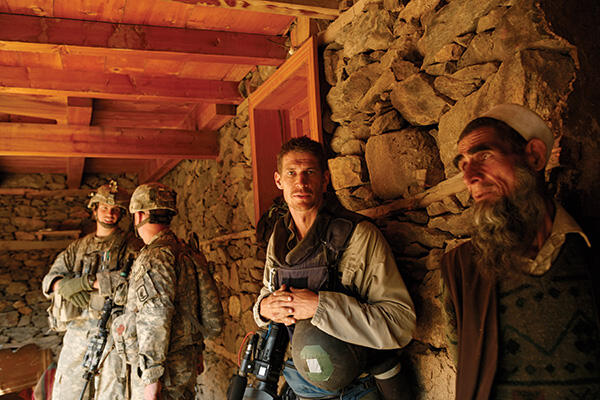
Which Way is the Front Line From Here?
Rialto Cinema - Moray Place Monday 19 August 4:45pm, 8:30pm Tuesday 20 August 8:30pm Rating: 3.5/5 Which Way is the Front Line From Here? is a documentary that explores the life and work of world renowned war photographer Tim Hetherington. Through Hetherington’s footage, photography stills and interviews with his friends, family and the man himself, we are given an insight into the dangerous life of documenting war and the kind of person who would willingly make a job out of it. Here’s the twist – it’s not actually about war. Well, not in the way that we have come to expect after films such as Saving Private Ryan and Apocalypse Now. There is very little focus on the political, economical and social causes of the conflict and the audience is never given an expository line of text stating when the wars started or how many lives have been lost. For Hetherington, the point in documenting war is that it crystallises human emotion – it provokes true human nature to expose itself. Male human nature, to be precise. For me, this was a challenge: I longed to see a female perspective on the fighting, but most of the women interviewed spoke about Hetherington himself rather than what he was filming. However, I understand that this is simply the nature of the beast – the military units / rebel forces are male-dominated, and it is therefore natural that the film took this leaning, even if it could feel one-sided at times. Hetherington himself is such a fascinating subject that the film’s focus on his personality is well warranted. The film didn’t ignore the fact that there is something extremely unusual about him choosing the life that he did, but his memory is treated with respect without too much sentimental mush. The other photographers’ attitude to the war is sometimes blasé and shocking (“I saw there was going to be an execution so I got a wide shot ready”), making Hetherington’s refusal to remain emotionally detached especially poignant. This documentary is as much about humanity as it is about war, making it one to be enjoyed by even the most fragile arts students.
-
Culture

The House of Radio
The Regent Theatre - Octagon Saturday 24 August 1pm Rating: 3/5 The House of Radio is the newest delight from French documentarian Nicholas Philibert. Philibert spent half a year filming the inhabitants of France’s public radio station, allowing the viewer to gain a better insight into the world of high end professional radio that is heard, but rarely glimpsed. If you’re expecting an hour and a half of a couple of guys sitting behind microphones then you’re wrong: the group of people working at the station is large and varied. We observe news readers, opera singers, orchestras, administrators, technicians, journalists, interviewers, interviewees … the list goes on. All are fascinating, and seem not to give two shakes that what they’re saying about their co-workers is being recorded. A favourite moment is when the woman coaching the voice actors mutters to her friend that he needs to speak to them as if they are children. I think a lot of the joy in this film is the same joy that I derive from His Girl Friday, Man of Steel and Beyonce’s music video for “If I Were A Boy” – it’s fun to watch people who are really good at their job (Beyonce would make a goddamn awesome cop). As for those employees not doing their job so fantastically … well, that’s fun to watch as well. There’s a sick pleasure in being a fly on the wall the first time a news reader get heavily critiqued by his straight-talking boss (“I told you not to do this. You did it. Never do it again” – ouch!). It’s extremely interesting to see how radio professionals make good radio, which includes quashing bad radio. The film is beautifully structured as “a day in a life” – we go from dawn to dawn in the busy station. We come back to the same people constantly which gives the film focus, with cute interludes of one-time appearances from others (such as a blind newsreader reading a brail news report). However, I am a volunteer radio DJ and remain unconvinced as to whether the film will be as captivating for those not interested in the medium. If you’re interested in radio then this film is amazing; if not, well, it’s still pretty good.
-
Culture
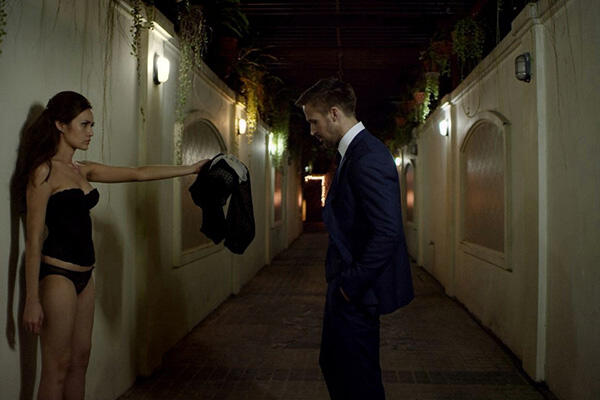
Only God Forgives
Rating: 2/5 The crime thriller genre is rarely graced with the artistic flair that Nicholas Winding Refn brings to his films, but his previous works Drive and Bronson are proof that it can be done well. His latest film Only God Forgives, however, is an example of it being done very poorly. Only God Forgives is set in Thailand, and tells the story of an American family of drug kingpins whose son is killed by the Thai authorities: a great premise which is unfortunately butchered in execution. Though the film is a standard 90 minutes, it probably has less than five minutes of dialogue, and consists mainly of long, drawn-out shots of people walking or staring deeply into the dark corners of a room. The result is a film full of needlessly violent, unlikeable characters with indiscernible motives and inscrutable emotions. Only God Forgives has a very basic revenge plot, but the content is often so weird or unfathomable that the film ends up as a confusing and absurd mess. For example, the protagonist/ antagonist (God only knows with this film) spends much of the movie butchering people with a sword, during which there are several cutaways to him singing Thai songs in a karaoke bar to a solemn faced crowd of officers. The film stars the much loved Ryan Gosling, but even this handsome devil was not enough to save it. Every actor performs with such robotic rigidity that even the charismatic Gosling ends up looking like a hack actor. Despite the film itself being fairly terrible, the cinematography is beautiful. This movie has a strange and lurid visual tone which, despite the terrible narrative, at least makes it nice to look at. It is overwhelmingly violent, and while this would have worked better had it contributed to a good narrative, the brutal and visceral nature of this violence is at least exquisitely portrayed. If you are thinking of seeing this to satiate your Gosling obsession, I’d wait till his next film.
-
Culture
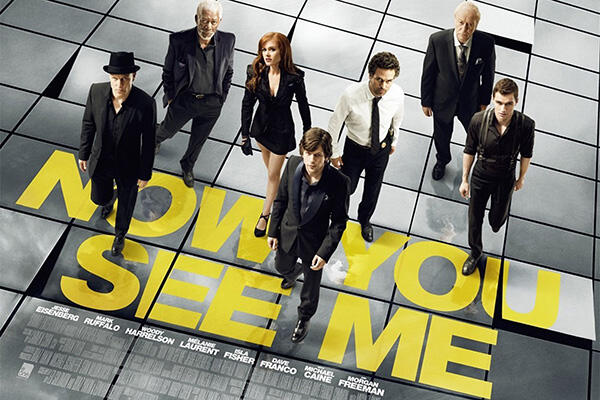
Now You See Me
Rating: 2/5 When you watch the trailer for Now You See Me, you get the distinct impression that the film might actually have some merit. The trailer features Morgan Freeman’s melodic voice promising a cryptically intriguing film about illusionists. The film itself, however, could not have been more of a let down. You expect to come out pondering and impressed, like after other magician-based films such as The Illusionist (2006) and The Prestige (2006). Instead you are left with the cold hard realisation that every mainstream film now is Hollywood’s excrement. The film follows the illusionists “The Four Horsemen” as they receive an enigmatic message from a mysterious benefactor who promises to teach them how to become the greatest illusionists of all time. It turns into a Robin Hood narrative as they pull off a series of daring heists against corrupt businesses and give the money back to the people. The FBI then become involved, creating a cat-and-mouse chase that concludes with an obvious plot “twist.” You would hope that the average audience member, after watching the film, would think critically about the many plot holes. Much of the glittery CGI-based magic is so preposterous and unfounded that it loses all sense of realism. The film tries to back this up by explaining the main tricks of the show. However, you are still left with the sense of being cheated. The love story between FBI agents Alma (Mélanie Laurent) and Dylan (Mark Ruffalo) was so painfully obvious that the cinema crowd actually laughed when they kissed. It was also sad to see admirable actors like Laurent and Freeman in such pitiful Hollywood filler. A sense of a capitalistic and consumer-driven society also lies behind the film’s shimmering exterior. We see “The Four Horsemen” gain a position of eminence and fame simply because they give away millions of dollars at every show. It seems like they are giving back to the people, but you see by the end that they, too, are motivated by money. Hollywood cinema continues to churn out mindless drivel. If you want to endorse rubbish, then by all means pay to watch this less-than-magical film.
-
Columns

Love Is Blind | Issue 20
XYMy flatmates dobbed me in for the blind date after I broke up with my long-term girlfriend. We had come to Dunedin to study together but the University life did what it does and saw me kicked out of our shared room halfway through this year. The last couple of months have been crazy and amazing but I’m unsettled when I’m single and my mates figured it was time to get in the game again. I was stoked to meet my date – she seemed like a really lovely person and was quite pretty, too. Conversation flowed as easily as the wine and we both ended up pretty drunk. I’m not used to drinking a whole bottle by myself and I had to help her with the end of hers – we were both in hysterics at one point when my speech started slurring. Keen to keep talking but too full to eat and too drunk to buy more alcohol, we decided to buy more alcohol. She knew of this cool place down an alleyway called Penguin [Editor’s note: it’s called Pequeno], where we chatted over cocktails by the fire. I was worried she’d think I was either boring or bored as the alcohol and heat sent me on a steady descent into tiredness, but it turned out she was feeling the same so we headed outside and on to another bar. I can’t really remember what we talked about – I established that she was a keen traveller and we ended up in a pseudo-hug for most of the last hour. All I do remember well is thinking how lucky it was that no friends or flatmates discovered us – it was a lovely night that could have been ruined if so. I find that relationships work best for me if I flirt and take things further later, so sensing my date’s hesitation to walk in the same direction as me at the end of the evening, I opted to exchange phone numbers and hit her up later. It could be a good one! XXTo be honest, I was initially more intimidated by the prospect of visiting the Critic office – even if just to pick up supplies – than I was by the prospect of meeting a nice young man. He was an excited fella, that’s for sure! An older Media Studies first-year (he had worked for a few years), he was always full of jokes and seemed to jump around in excitement quite a bit. I say this to frame why it was so funny but also inevitable when he spilt his wine glass at one point in a sweeping arm movement. He got very apologetic about it and was incredibly shy/polite to the waiter, which had me finding him cuter and cuter by the minute. Anyway, having had a really nice meal and enjoying the conversation a lot we decided to continue the night at a bar. It was then that I found out he was quite indecisive, refusing to decide what his favourite bar was so I suggested Pequeno. He bounced and joked the whole way there and I must say it was incredibly fun, with me developing a rather big crush as the night went on. We murmured seductively in big armchairs, acting different movie roles and working out how best to hold a Martini glass. I had never ordered a real Martini before but we decided we both would to make the enactments more real – and wow was it strong! He was still too excited for me to really lean in and cuddle over our drinks but that was okay, on to the next place where we finally got a bit closer! I surprised myself, but I was actually pretty keen to sleep with him. It would seem he didn’t pick up my hints, however, and I went home cold, surprised and a bit disappointed. He has texted me though, so maybe a repeat night might end a bit better.
-
Columns

Get Out Of The Ghetto | Issue 20
Port Chalmers, a mere 10km along the harbour from Logan Park, feels a world away from Dunedin. (Well, except for the fact that as a Dunedin wannabe and/ or the victim of unimaginative local government, its main thoroughfare is also called George Street.) As its name suggests, it is a “chalming” place, peppered with quaint second-hand clothing stores, artists’ studios and galleries, friendly cats and coffee outlets. It’s also mostly closed, most of the time. The township’s sleepy existence is punctuated only by the arrival of cruise-ship hordes that prop up local retailers sufficiently that they only have to open a few times a week. Though no one day or time will guarantee you full access to all of Port Chalmers’ delightful emporia, there are definitely better days than others. My completely unscientific survey of the shops’ opening hours suggests that heading out on a Saturday afternoon is your best bet for maximum exploratory excitement. Here are some of the highlights: Tall Poppy: this café (and its pizzeria twin) is open for brunch from Wednesday to Sunday, for dinner on Friday and Saturday, and for pizza from Thursday to Sunday. It has a sunny courtyard out the back. The cakes look yum. 2 Gypsies: despite the dubious use of a numeral in its name when a word would have done quite nicely, 2 Gypsies offers many exotic and interesting knick-knacks: recycled teak furniture, scarves, kimonos, recipe books, candles, many kinds of Buddha, bowls, cushions and tableware. And it has a roaring fire – toasty. Magpies: open only in the afternoons from Thursday to Sunday, this second-hand store has a collection of oddities, with a few cool Kiwiana design offerings thrown in. The Costume Box: if you want a strange hat, an unfashionable tie or a 1980s prom gown, look no further than the Costume Box. As well as hiring out costumes, most of the eclectic collection is for sale. Open Sunday through Tuesday from 10am-2pm. Port Royale Café: great coffee, delicious baking (including gluten free options), babe-ing baristas and cool artwork. Enough said. Coffee dot: cute-looking baking (reportedly the best brownie around, although I can neither confirm nor deny) and a cosy setting. If you stray beyond the main strip, Port Chalmers can offer you: Iona Church: a splendid old dame perched up on the hill who watches over Port Chalmers. She’s been onsite since 1883 and is currently undergoing a facelift (so you can’t go inside), but it’s still worth the hike. And if you keep walking, you’ll make it to the Lady Thorn memorial lookout and rhododendron dell. We saw a chicken chilling on a park bench – it was pretty cool. Port Otago. If you like artistically stacked logs, you’ll be in tessellation heaven. Peninsula Beach Road, which skirts the harbour-side edge of the Port Chalmers peninsula, is home to some fearsome geese but is worth the walk. Check out Goat and Quarantine Islands, which straddle the harbour between you and Portobello on the other side. Carey’s Bay Hotel, about 1km further along the road towards Aramoana, does fantastic gastro-pub type lunches and looks out onto a picturesque bay studded with boats. Enjoy. Get there: by car, or by biking along the fandangled harbour-side track (it starts near the rowing club behind the stadium). Do: climb the hill to the lookout. Don’t: go on Monday or Tuesday – the whole town shuts up shop. Eat: at Port Royale for bangin’ café food, or Tall Poppies for pizza.
-
Culture

Ukiyo-e, The Floating World
The woodblock print The Great Wave off Kanagawa by Katsushika Hokusai (1760-1849), which features rolling, white-tipped waves, has become a legendary emblem of Japanese art. Having been heavily appropriated by artists such as Manet, Gaugin and Van Gogh, the influence of the distinctive woodblock print style cannot be underestimated. The Great Wave off Kanagawa in particular is a forceful statement about the power of nature, and was most recently used in the context of the tsunami that tragically hit Japan in 2011. There are rip-offs everywhere: in one particularly amusing example, artistic duo Kozyndan sneakily turns the white tips of the waves into rabbits. Consequently, it was somewhat surprising to come across this very print framed in a collection in the Dunedin Public Art Gallery (DPAG). Ukiyo-e, The Floating World forms part of the DPAG’s “collection” of exhibitions entitled The Pleasure Principle, which covers the entire downstairs floor. Lining the walls of the largest room are woodblock prints gifted to the gallery by various donors, such as Dr Hocken and the family behind Olveston (that old house on the hill), who collected them in Japan during the immediate aftermath of World War II. Because prints were easier to transport than paintings the Gallery has a generous collection. This exhibition is therefore an artistic experience that could consume hours of your time. The exhibition devotes itself to explaining who donated each work rather than the context and concepts surrounding them, which is a little unfortunate. Ukiyo-e refers to a specific genre of woodblock print made in Japan between the 17th and 20th centuries that depicts landscapes and comment on aspects of Japanese life. “Ukiyo” is literally translated as “floating world,” referring to an atmosphere separate from mundane reality. The examples of such prints in the DPAG’s exhibition are satisfyingly disconcerting: neither completely mythical nor completely realistic. Dominating an entire wall is (most of) Hokusai’s Thirty-six Views of Mount Fuji. Each individual print features Mt Fuji, either as the brooding main subject or as a subtle background to a more dynamic focal scene. Although incomplete, this collection is absorbing. Hokusai was innovative in his exaggerated and yet realistic depiction of nature – particularly wind and water. He creates a strong, clear atmosphere in each print that leaves viewers with a sense of isolation. The faces of his figures – often labouring in rural landscapes – are rarely depicted, and this lends his works a slightly haunting feeling. The contortion and flattening of space contributes to the unsettling effect. Literal and highly intricate, the Japanese woodblock print has a potently distinctive style. However, this particular exhibition includes a wide variety of works that successfully showcase the range of individual styles within the genre. In comparison to those of Hokusai, Andō Hiroshige’s works are subtle and somehow more poetic – a less literal depiction of Japanese culture. His Asakusa-gawa-shubi-no-matsu imraya, which portrays a night scene, is one of the most stunning in this collection. The viewer is utterly immersed in the still darkness of night, yet all that is shown is a light blue sea tinged with navy blue and a deep sky scattered with stars. Presenting some of the finest examples of Japanese woodblock prints, this exhibition is well worth seeing – especially if you don’t consider yourself a fan of this particular style of art.
-
Culture

Free Will
Sam Harris explains, in 83 pages, the illogic of free will. Our society functions on the assumption that we all have it: without free will, any claim to justice, morality, personal accomplishment, intimate relationships (and virtually anything else we care about deeply) seems ridiculous. Free will allows us to feel that our decisions are our own. The idea that we have no agency is alien and unpleasant, but neuroscientist Harris claims that free will is an illusion. Not only is it an illusion, it is an impossibility. Either our decisions are pre-programmed by our genetic make-up and neurological patterns or they are entirely random. Neither option leaves room for agency. “Free will is an illusion,” says Harris. “Our wills are simply not of our own making. Thoughts and intentions emerge from background causes of which we are unaware and over which we exert no conscious control.” The ancient debate over free will has been brought into sharp belief by recent advances in the field of neuroscience and in our understanding of the brain’s functional processes. The book opens with a graphic story in which a simple house robbery rapidly became a case of grievous bodily harm, kidnap, rape, arson and murder. Out of a family of four, only the father survived. It is natural to feel that the two perpetrators should be held morally responsible. Most people would want to see them severely punished. But what if it was discovered that one of the men had an undiagnosed brain tumour which caused him to act in a violent way? Would he still be responsible? What about the fact that one of them was repeatedly raped as a child? Or that the men did not know why they acted in the way that they did? One says he was “stunned by his behaviour.” Harris vocalises an uncomfortable thought: if you were to swap places with one of these men, atom for atom, you would physically be him. You would experience his thought patterns, act the way that he acts, and make the same decisions he does. These men are simply unlucky to be who they are. Where is the free will? What happens when your life goes off track? You used to be motivated, hardworking, fit, thoughtful, whatever. Why can it be so hard to achieve what you want one day, and so easy the next? Why are there so many obstacles inside our own minds? We have desires that we can’t bring ourselves to fulfil, and desires that are undesirable. You can say, “I just felt like it,” but why was this case? How did you make that decision? This is sounds pretty depressing, but Harris claims that the absence of free will is liberating. While many worry that the illusion of free will is necessary to maintain morality and public order, Harris believes that acceptance can lead to greater empathy, modesty and understanding rather than nihilism and despair. We still need to act responsibly as our decisions influence the world around us, whether we choose them or not.
-
Culture

Mull It
Even though spring is almost upon us, I figure Dunedin still has a few chilly nights up its sleeve during which a bit of mulled action will go down a treat. If you haven’t had a go at making your own (or worse yet, if you’ve never even sampled the stuff – tsk tsk), now’s the time; have a farewell winter, hello mid-semester-break, shit-we’ll-have-to-start-doing-some-work-soon, cosy-onesie, pot-luck party and treat your bellies to some sweet and spicy mulled wine or cider. Mulled WineIngredients: - 10 cloves - 2 cinnamon sticks - 1⁄4 cup caster sugar - 1 orange - 1 teaspoon of freshly grated ginger, or 2 tsp of ground ginger (you can also use allspice as a substitute) - 1 cup water - 1 bottle of red wine (I used a cheap Merlot but you could also use a Cabernet Sauvignon) - 1⁄4 cup of brandy (optional) Method: 1. Peel the orange, cut into rounds, and set the peel aside. 2. Pour the wine into a large pot or crockpot and place on a low heat. 3. Add the rest of the ingredients and stir slowly. 4. Finely grate a teaspoon or so of the orange peel zest and add this to the mixture. 5. Turn the element to a medium heat, but take care not to boil it. Stir occasionally until all of the sugar has dissolved. 6. When the wine is steaming and the ingredients have been well blended it is ready to drink. Strain the wine into mugs or glasses and sip in the taste of winter and European Christmases. Enjoy! Mulled CiderIngredients: - 2 litres of apple cider - 6 cloves - 2 cinnamon sticks - 3 star anise - 1/3 cup brown sugar (you can also use honey as a substitute) - 1 orange - 1 lemon - 1⁄2 cup dark rum (optional) Method: 1. Peel the orange and lemon, set the peel aside, and squeeze the juice into a large pot or crockpot. 2. Pour in the cider and add the rest of the ingredients and place on a low heat. 3. Finely grate the zest of the orange and lemon peel into the mixture and stir. 4. Turn the element to a medium heat and stir occasionally until all of the sugar has dissolved. 5. Strain and serve into mugs. Marvel at how distinguished you feel. Enjoy!
-
Columns

Hi Dr. Nick | Issue 20
Hi everybody, We love acronyms in medicine. MRI = Magnetic Resonance Imaging; PERRLA = Pupils Equal Round and Reactive to Light and Accomodation; CPILF = Coma Patient I’d Like to … ahem. One of my favourites is IANAN – “I Am Not A Neurologist” – which is usually scrawled before a largely misinformed statement by somebody who has no clue about the brain. Now IANAN, but epilepsy is pretty cool. Rather, it’s the lack of epilepsy in society that’s cool. Epilepsy is the tendency to suffer recurring seizures, and affects around between one and two per cent of the population. Seizures occur when your brain mucks up and fires incorrectly. Given that last sentence, it’s amazing we’re not all constantly fitting! To read this sentence you have to move your eyes in order to pick up the light it reflects, which can then be converted to an electrical impulse and conducted to the brain, which receives that impulse and sends another to the interpretation centre, which recognises that the initial light involved language so sends yet another signal to the language centre of the brain, which alerts the brain to the fact that this sentence is dragging on and tells the eyes to stop reading it. One to two per cent is a bloody low error rate, especially as not all seizures are shaky-shaky-Christchurch-quakey (“tonic clonic”) events. A simple partial seizure may be as minor as producing a strange smell. However, if ever you do come across a person having a seizure, there are some important things to know: 1) Move things out of the person’s way and gently cushion their head. 2) Don’t stick anything in their mouth. 3) Time how long the seizure takes. 4) Place the person in the recovery position afterwards. 5) If the seizure lasts more than five minutes (it’ll feel like 50), the person is injured, or they don’t regain consciousness before fitting again, call the ambulance.
-
Columns

Science, Bitches! | Issue 20
When I was 14, my teacher told my class to look up the origins of melodrama. Every single one of us went straight to Wikipedia and returned to tell her, one by one, that it actually came from the ancient “Poo-Greek.” Bet she got a giggle out of that one. By the time we make it to university, most of us know to take Wikipedia with a pinch of salt. But what about the rest of the Internet? How do you know that one little trick really won’t get rid of your belly fat? What if aliens really did build the pyramids? Maybe fluoridated water really does calcify your brain? Here’s how to sort the pseudoscience from the science, bitches. The first thing to remember is a little thing called the burden of proof. Basically, if you want to claim that something is true, you have to prove it. If, in a double-blinded clinical trial, crystals are shown to actually cure something, I’ll believe it. But until then I’ll happily call bullshit, and you should too – because that’s how science works. Now, by “proof” I mean scientific evidence obtained under experimental conditions, with appropriate controls and all that. One person (or even one hundred) swearing that something works for them is anecdotal evidence and doesn’t count. What do count are peer-reviewed papers. If the article you’re reading doesn’t reference any, don’t believe a word it says – yep, even this one! Seriously though, we have a word limit. That brings me to my next point: if you’re dubious, just Google it (preferably use Google Scholar, but the standard version can be okay too). Just remember: quantity does not mean quality – blogs aren’t exactly peer reviewed, and neither are websites like “naturalnews,” “realfarma” and “undergroundhealth.” As your grandma probably told you: if something is too good to be true, it probably is. But what if [insert organisation here] doesn’t want you to know the truth? Everyone is under the thumb of Big Pharmacy, right? If that ancient Chinese herb cures cancer AND obesity, they’ll lose billions – that’s why the idea is being oppressed! Sure, except that a lot of science is publicly funded. And most scientists do science for the love of it, not because of the money – it doesn’t exactly pay well. If someone found a miracle cure, I promise you would hear about it. You would hear about it everywhere, not just in dodgy popups or obscure websites. Nature and Science love that shit! And speaking of miracle cures, the term “miracle cure” is a warning sign in itself. Science does not happen overnight, and does not work by magic (especially when it comes to complex diseases like cancer, which are unlikely to ever have a “cure” because they are not monofactorial but are rather the result of a variety of things going wrong in a specific place). Claiming to have found a cure for cancer is like claiming that there is a single fix for a broken car. Other buzzwords to watch out for are “natural” (so is smallpox); “toxins” (your liver can deal with those); “ancient” (so is witch-burning); “alternative medicine” (aka, not proven to work); and so on. So, who can you trust? Doctors? Unfortunately, anyone can call themselves a doctor, some legitimately (PhD in philosophy, Gallifreyan) and some less so (a chiropractor counts, right? Wrong). Even medical doctors and experts can get it wrong or straight up lie. That’s why we rely on the scientific consensus. It’s a lot less exciting, and a lot more difficult. A lot of people do a lot of research over a lot of years until there is enough evidence to accept something as fact. And holy shit – they’ve come up with some great things. That’s real science, bitches.
-
Culture

Moderat - II
Rating: 4/5 Moderat is a portmanteau, both in name and personnel, of Berlin-based electronic acts Modeselektor and Apparat. As its title suggests, II is the supergroup’s second album together, following its eponymous 2009 debut. Like its predecessor, II sees the two outfits marrying their distinct styles – Modeselektor’s glitchy, stereo-shredding breakbeats with Apparat’s airier, more pensive style of techno. However, the creative symbiosis between the groups has matured significantly. It is still obvious in a Moderat song which party is responsible for which sound, but these sounds sit alongside each other more comfortably than before. Besides the triumvirate of Gernot Bronsert and Sebastian Szary (Modeselektor) and Sascha Ring (Apparat), II features a number of guest vocalists. Incidentally, the strongest tracks on the album are the ones without vocals. Whereas Modeselektor’s finest tracks all feature guest singers – “Dancingbox” with Parisian rappers TTC, “Evil Twin” with basscadet Otto von Schirach, “This” with Radiohead’s Thom Yorke – Moderat simply push them too far to the fore, stifling the rest of the song. “Bad Kingdom” is the most frustrating example; its mouth-watering bassline is relegated to the background the moment the singer arrives. Free from such distractions, the instrumentals allow Moderat’s song-crafting abilities to shine. And I mean really, really shine. At its best, II is as good as anything in the two groups’ separate or shared discographies. “Versions” is an absolute treat, Apparat’s skylines of synth accented by Modeselektor’s gloomy, Burial-like percussion. Equally fantastic is “Milk,” a 10-minute epic of textural and hypnotic house. Built around a slowly-evolving bass pulse, it exudes the same sense of precision and restraint that made Jon Hopkin’s recent album Immunity such a classic. It is arguably the best track here, despite (or perhaps because of) the fact it barely resembles either Modeselektor or Apparat. Though not quite perfect, II is the sound of two electronic giants working together to wondrous effect. Both halves of Moderat compliment the other: Modeselektor’s brawn enriching Apparat’s ethereality and vice versa. If not for the overemphasised vocals on a handful of its tracks, II would have been impeccable. But we’ll forgive that. II will delight existing fans of both Modeselektor and Apparat, and serve as a worthy initiation for newcomers. You should check it out either way.
-
Culture

Asian Dub Foundation - The Signal And The Noise
Rating: 3.5/5 “They’re like a British Rage Against The Machine. They work punk guitars and politically-charged lyrics into dub, reggae, world music and rap. This rainbow-coloured music collective both condemns racial violence and breaks down the walls between ethnic terminology. Shit is dope.” Though I had never listened to them until recently, Asian Dub Foundation’s repute is something like the above. Championed by Radiohead guitarist/ musical hero of mine Ed O’Brien (heck, he’s even appeared on an album of theirs), I’d been meaning to check out the acclaimed Londoners for a very long time. Their new and eighth studio album, The Signal And The Noise, seemed like an acceptable place to start. Though it didn’t disappoint as such, I walked away from The Signal And The Noise a tad ambivalent. As promised, the politically-charged lyrics are there, as are the punk guitars and splashes of dub, reggae, world music and rap. So far, so good. Asian Dub Foundation juxtaposes their genres in an incredibly entertaining way, such as the Bhangrā-framed rap-core of The Signal And The Noise’s title track. This genre-hopping and -blending certainly attests to their ethnically-inclusive melting pot philosophy. And sure enough, they discuss race within their lyrics as profoundly as one might expect (“clearly marked, but kept apart and in the dark”). Independently, these two halves are great. Problems can arise, however, when the group places them together. One of the few criticisms of Asian Dub Foundation is that their lyrics don’t always correspond to the song around them. At several points on The Signal And The Noise, I found this to be the case. An example is “Zig Zag Nation,” the anthemic and guest-heavy opening number. Its title and lyrics refer to the integration of different cultures into modern day England – a societal shift for which Asian Dub Foundation have reportedly spent their entire career campaigning. Yet the lyrics are spat out with displeasure; the song batters the listener with fiery guitars and percussive clatter. So off is the tone and delivery of “Zig Zag Nation” that a passive listener might entirely misinterpret the band’s stance on the topic at hand. Though Asian Dub Foundation delivered both halves of their music as promised, at times on The Signal And The Noise I found them to clash. This isn’t necessarily true of the rest of their discography, and my first taste of the group has motivated me enough to listen and find out. I suspect this was the wrong place for me to start, and that their best work – the stuff Ed O’Brien salivates over – lies elsewhere. Research tells me their 2000 album Community Music is far more illustrative of their talents. I will hasten to check it out, as should you. See you there.
-
Culture

Plants vs. Zombies 2 - It’s About Time
Rating: 8/10 Popcap’s 2009 game Plants vs. Zombies is arguably the greatest casual game of all time. The fact that the game is easy to get into for brief snippets, but also offers increasingly difficult challenges that could have you playing for hours, makes it accessible and loved by everyone who plays it. And it is all wrapped up in the most absurdly fantastic premise. The part about protecting your home from a zombie invasion is pretty standard; the fact that your defence depends entirely on your horticultural skills is less so, and it is this that makes the game really stand out. This premise took the “tower defence” genre to a whole new level. The game was a huge success for Popcap, which has a range of other casual hits such as Bejewelled and Peggle. Though their other games are successful, it’s undeniable that Plants vs. Zombies is something special. Popcap has finally followed up: Plants vs. Zombies 2: It’s About Time has arrived. The name seems to be making fun of the fact that it took them three years to develop a sequel (and knowing this company, it probably is in part), but it really illustrates the fact that the game has moved out of the backyard and into new times and new places. The first game mixed up the gameplay by making players defend different parts of the house, such as the roof or pool. Now, however, in what feels like a fundamental change, the difference comes from the fact that Crazy Dave and a sentient food truck are chasing zombies throughout time and space in search of a stolen taco. The last game was known for its kooky tone, but Popcap have legitimately stepped up the insanity with their latest iteration’s storyline. The locations in the new game currently include ancient Egypt and the Wild West, but it looks like there are more to come. Despite the dramatic change in context, the base mechanics of the gameplay remain almost perfectly intact. You still plant all of your favourite plants in defence of your house, only now the zombies are encased in sarcophagi or playing the honky tonk on a piano. I think that this was a smart move on Popcap’s behalf – this base gameplay was near perfect in the last game, so it really is a blast to get to keep playing in new and interesting situations. However, there are also plenty of new mechanics and plants to play with. The best new addition is a melee plant called Bok Choy, which I see quickly joining the ranks of Peashooter and Sunflower and becoming a must-have plant for every player. There is also a new mechanic called Plant Food. Zombies that glow green drop the food, which can then be employed by any plant to create a brief but generally devastating attack. Plant food is fantastic because, like a Pokémon evolution or a Mortal Kombat fatality, it is always satisfying to discover what each plant’s super attack is. This game’s greatest flaw, however, is its price: it’s free. Now I know that sounds absurd, but instead of the one-time payment model that the first game had, Popcap has instead gone for the free-to-play model. Consequently, while the game is free to download it is packed with micro transactions: players can spend money to make the game easier or unlock new content. This inherently undermines what makes casual games great: I want something that I can pick up for a small amount of time and just have fun with, and the constant attempts to trick me out of my money negatively affects that experience. But still, you never actually have to pay for anything. If you have an iOS device this game is a free and incredibly fun experience, even if it is slightly hampered by its business model.
-
Culture
Earthbound (1994)
For our generation, gaming nostalgia is largely related to the console you had as a child. Did you have a Sega or a Nintendo 64? A PlayStation or an Xbox? The answer to this question will likely dictate whether you are a Mario fan, or a Crash Bandicoot fan, or – God forbid – a Sonic fan. Due to the dedicated first party development of this period, the console you had opened you up to a particular library of games which, unless you played friends’ games as well, determined not only what games you played and loved as a kid but potentially which kinds of games you enjoy today. This raises a disturbing thought: what games will induce feelings of nostalgia in the next generation? Most games are now multi-platform, which means that today’s kids are essentially playing the exact same game. I foresee a generation that will be nostalgic of the hours the spent screaming profanities and drinking chocolate milk while shooting “noobs” in Call of Duty. What a haunting vision. We, however, are lucky enough to come from the golden age of nostalgia: each of us will have a similar, yet delightfully varied, assortment of games for which to be nostalgic. In that vein, I want to share with you a game that induces feelings of nostalgia in me but is not well known, in the hope that my own fond childhood memories may translate into equally fond memories for all that decide to play it today. That game is Earthbound. A classic JRPG released in 1994, it never really took off in Western markets, despite its serious awesomeness. This is largely due to the fact that is was released right on the brink a new generation of gaming consoles (namely the Nintendo 64), and was therefore lost in the shuffle – just as The Legend of Zelda: Majora’s Mask would be a few years later. Earthbound is a classic Nintendo RPG in the sense that it begins by allowing you to name all of the playable characters in the game. For more mature gamers, this gives you the opportunity to name your protagonist after yourself and your companions after your friends; for less mature gamers, it is an opportunity to play as COCK, FART, BOOB or anything else you can imagine. You play as a young boy in 90s America, or rather in a 90s America as visualised by Japanese developers. This results in a hilarious depiction of the West that includes almost every cliché you can think of, including “healing foods” in the form of burgers and fries. The story is strange in the kind of way only JRPGs can be, but still follows a very simple premise. Earth has been invaded by an evil alien race (Giygas) that infect animals and humans with negativity, making them surly and violent. (Interestingly, however, the script often makes it seem that this is due more to their “American-ness” than to the aliens.) You and four other playable characters have been chosen by a benevolent alien race to take down the Giygas and save the human species. All in all, there is not much original about this game; however, that is almost its charm. It was one of the last RPGs to be released for the SNES, and as such it is almost a pastiche of everything that was learnt during that generation. It is artistically beautiful, with various artistic styles complimeting parts of the diverse and complicated world you are given to explore. It has a turn-based combat system like all JRPGs from this period (and most from today), and an almost incomprehensible – yet overwhelmingly charming – story. I have nothing but fond memories from playing it as a kid, and to my delight it was just re-released on the Wii U. Having recently played it, I can assure you that its charm has not worn off. So make this a week to not only embrace nostalgia, but to make some new memories that will feed your nostalgia in 20 years from now. Why not make Earthbound one of them?
-
Culture

Loved up and ‘Appy
Don’t you hate it when your significant other plays relationship games with you? Like the ever-popular “figure out why I’m angry, or else” move, or the infuriating “do you think that guy’s hotter than me?” test. Answer correctly, or risk the silent treatment. Forget all that, now there’s an app that turns your relationship into a game for both of you to play, and it’s called Kahnoodle (iOS/Android in development; https://www.kahnoodle.com/app/). Kahnoodle encourages you to do nice things for your significant other in order to fill up your “love tank” (not a euphemism). You can earn points (called kudos), which you can then redeem for Koupons. Koupons range from sweet to saucy: have a picnic! Make a sex tape! Oral sex! If your sex life is waning, the app can send you push notifications to initiate sex. I don’t know about you, but nothing gets me wet like an instruction from my phone to get it on before my love tank runs dry (still not a euphemism). Kahnoodle apparently wants to make maintaining your relationship “automatic and easy,” and this is where it fails in my opinion. It’s nice when relationships are easy, but rough patches are an important part of relationships. Rough patches, and getting over them, allow you to re-evaluate your relationship every so often, talk about what’s pissing you off, and reconnect. Automating a relationship is completely counter-intuitive. Relationships aren’t automatic! It takes effort and thoughtfulness to keep a great relationship going, and having an app remind you to do nice things for your partner completely dulls the reward. If a couple needs to work on reconnecting with one another, they should of course do so. But using Kahnoodle is not the way to do it! Using Kahnoodle shifts your relationship from being intrinsically motivated (doing things because they bring you pleasure) to being extrinsically motivated (doing things to obtain points and rewards). Ultimately, intrinsically motivated acts are more emotionally rewarding. Although I’m outraged at this shallow and flawed app, I shouldn’t be surprised that it exists – it’s tied to an American “concierge” service that users pay to arrange dates (activities, not people!) for them. Call them up, talk about your interests and budget, and they’ll arrange something for you and your date. The app ties in by flogging discounts on flowers and meals. Apparently nothing is sacred. If your relationship does need a little help, put your phone down, turn it off and pay some attention to your significant other. In return, they might initiate sex or cook you a meal without the seedy exchange of a Koupon being necessary. Not all couples apps are bad, though – Avocado (iOS/Android; https://avocado.io/) is a better option for keeping your relationship ‘appy. This is the app for you if you and your significant other are “that couple” on Facebook. You know – the couple with posts all over each other’s timelines, the cutesey messages, the smooching photos. If you are guilty of this, please stop it. Keep that shit off Facebook! It’s time to get a (virtual) room. Avocado is that very room: it creates a private social network for you and your lover. You can message each other, share pictures, sync calendars and share shopping lists. There’s even a “draw something” option so that you can send each other silly doodles. You can also send virtual hugs and kisses by … umm … hugging and kissing your phone. Couple (iOS/Android http://couple.me/) is a similar, but less adorable, app that adds the extra option to send Snapchat-like self-destructing pictures. No more worrying about accidentally sending your nudie to your sister. Couple’s virtual kiss function is a bit less weird than Avocado’s – you both touch your screens in the same spot at the same time and it will make your phones vibrate. Awwww. These apps aren’t for every couple, but they definitely have their place. If your relationship is long distance, or you and your partner just like to share a lot, look into Avocado or Couple. They’re fun and private, and you won’t gross out all your Facebook friends with your frequent outpourings of love.
-
Culture

Interview: Richard Ley-Hamilton
At the age of 22, Richard Ley-Hamilton has already created a name for himself as a prominent Dunedin musician, performing and making music for an array of interesting bands. Richard also works part-time at a record store, and by the end of November he will have finished his honours dissertation in History. Loulou Callister-Baker caught up with Richard to ask about his music and studies. When did music become a big part of your life? When I was about ten or eleven I was going through my mum’s attic and I found my grandmother’s guitar – I never met my grandmother but the guitar was a really cool, old acoustic. It had no strings on it. I went and got it restrung and I thought, “what the hell – I’ll go and get some lessons.” When I did music at university for the first couple of years it was all about learning the rules so you know how to break them, but I thought “let’s just bypass the first thing, about learning the rules.” Some people need to know them. Yes, but for me I didn’t feel like I wanted to. I think I learned “the rules” by osmosis – by listening to lots of music it gets built into you. There are things that you find familiar and things that click with you and you understand the rules that click with you. The band Males is all about rules and structures – it’s about fulfilling those but interweaving enough individuality and surprise into that so when people hear our music they feel there is something distinct about it, but there’s also an essence of familiarity that they can relate to. The biggest thing I despised about learning technique is the whole idea of high culture art where people come along and watch people who are bigger, better and superior to them who dictate creativity and dictate everyone else. Everyone has the potential to be creative and that’s what irks me more than anything. How do you then separate yourself from other musicians but also earn an income? If I knew the answer I’d be doing that already! I feel like from the start off, what I’m going to write about – and how I will approach music – is going to be individual to an extent, and with that individuality in mind I can abide to the rules that are needed to fit into the music industry. How did you continue your interest in music once you went to university? Music and education are kind of equal plane. They’re like two horses in a very, very long race, and neither of them is going to win out in the end. But they spur each other on. A philosophy of mine is to keep as many options as open as possible. I hate closing doors. That’s why I’m a part of so many bands. I see so many unique and fantastic individuals around town making music and I just want to be involved. It’s not enough for yourself just to create music; it’s about engaging with other people and creating something that’s beyond yourself. Are you ever satisfied with the music you make? I have high standards for myself that I will never meet. Ever. What about making money? There is that reality. That’s one of the main reasons why I started writing the songs for Males because I thought, “okay – you’ve tried the music that makes just you happy. You’ve tried the music that your friends enjoy playing with you. Now it’s time to try something that’s more accessible.” I want people to enjoy this music; I want people to have a good time. Hopefully Males will be the avenue that gives me that sense of security and helps me continue making music for the next few years. What goes through your mind when you are on stage? Being on stage is the most enjoyable part of being a musician. Once we start performing at a gig I will spend the rest of the set in a completely different state. In a lucid state? Yes. A lot of the times I am more lucid on stage than any other part of life. I experience moments of complete clarity. I shoot onto auto-pilot, I am aware of myself doing things but I’m not consciously acting upon it all the time. When I perform and people are cheering at the end of songs and shouting fractions of lyrics out it’s not an amazing feeling, it’s a surreal feeling. I don’t understand it. Does it feel like the audience is worshipping you? I feel like they’re worshipping the experience. Each venue has its own atmosphere, each composition of people has its own atmosphere, and for that exact moment a song has propelled the audience into a moment where they’re euphoric about things. Bands take all the glory but so much more leads to these moments – it’s about getting the right lighting, the right sound, the right people, the right number of drinks in people. If you were a drug what would you be? Maybe I’ll choose nicotine. Smoking is such a reflective thing. You see smokers all the time and they’re just sitting there in their own thoughts, contemplating their day, what they’re about to do next. I see cigarettes as a way of tangibly dealing with weakness, because we all have aspects of addiction and weaknesses of character that we have internalised, and having a smoking addiction is a way of seeing that and it gives you some sense of control – or helplessness. Either, or. It’s externalising your flaws? Wow … how do you balance being almost a full-time musician and a history honours student? I balance it terribly. Music is what makes me tick, what keeps me sane. Other people have dependencies on other things – relationships, drugs, routine – for me, it’s music. If I don’t pick up a guitar or listen to songs in a day it freaks me out! I feel like I’ve lost my bearing.
-
Columns

Editorial | Issue 20
Welcome to the last issue of Critic before the break. Most of the news section this week is otherwise engaged, so here are some stories that failed to make the cut: Exec plays with fire. At the last OUSA Executive meeting, Postgrad Rep Keir Russell asked for – and was given – funding for the Dunedin Fire and Juggling Club to go to an event in Wainuiomata in early September. Russell is a member of the club in question, and funding requests of this nature are usually taken to the grants panel rather than the full Executive. Welfare Officer Ruby Sycamore-Smith and International Rep Kamil Saifuddin kicked up a stink, but $1,500 “bridging finance” was approved. Sports to be improved. Time reports that a growing lobby of golfers are advocating the reduction of games from eighteen to nine holes. This is a commendable initiative: most of the problems with golf stem from the fact that it exists, so any measure to cut down on said existence is bound to help. Fun Party update. The Fun Party had another meeting to discuss the future of OUSA’s governance structure. There were complimentary chips and condoms on offer. Half of the group was absent. Mark Baxter was very insistent that he be allowed to finish his point, whatever it was, and took the meeting miles off track in the process. Of the 13 or so stakeholder consultation forums that the Fun Party was planning to hold, it has so far held one. There is one week remaining in the two-month consultancy period that Francisco Hernandez had set aside. Oh, and Fran is now running for Council. They’re totes going to finish in time. DCC race gets petty. On that note, no sooner had Fran announced his candidacy for the DCC than mayoral candidate and Central Ward rival Aaron Hawkins weighed in with a bitchy Facebook status. “First Press Release I have received all year from OUSA President Francisco Hernandez and it is to tell me that he is running for City Council. That’s what we call priorities,” he wrote (#realpolitik!). As Hawkins knows, OUSA has a communications person who sends out press releases on Fran’s behalf. His name’s AJ, and he’s quite good. Ooh snap! Pry-minister John Key contacted Critic about our last cover. “It’s a bit niche,” he said. “Why didn’t you run a picture of a snapper instead?” Unavercity of Otargoh A new Facebook page called “Unavercity of Otargoh” was formed. The page featured amusing MS Paint illustrations that satirised life at Otago, and rapidly attracted thousands of likes. Then shit got racist. Then shit got racist and sexist. Well, that was disappointing. As I’m sure you’ll agree, getting three-quarters of the way through our 89th year is a pretty momentous accomplishment. Thinking about this milestone has made us all a bit nostalgic, so we’ve decided to commemorate with a look back through some of the more notable incidents in the history of Critic, the University of Otago, and Dunedin. Happy perusing, and we’ll see you again in two weeks. -Sam McChesney
-
News
Xmas Present for EXMSS Pres
Massey University’s Extramural Student Society’s (EXMSS) President is firing off scandalous allegations after MASSIVE magazine revealed how much she receives for her part-time position. In a MASSIVE article published online on Friday 9 August, it was revealed that EXMSS President Jeanette “JV” Chapman is receiving a salary of $53,000. MASSIVE claims to have viewed the yet-to-be-released EXMSS budget, adding to an investigation that began in April. The figure includes the $23,000 honorarium for the position, as well as $30,000 worth of extra funds that have been approved by Chapman’s newly elected co-opted executive, believed to be made up largely of Chapman’s friends. The $30,000 includes $10,000 for media and communications, $10,479 for group advocacy and $9,521 for office operations service delivery from the society’s budget. Critic loves the seemingly random figures which add up to such a wholesome total – what were the chances of that?! The exmss.org website states that the salary of the EXMSS President can fall between $19,500 and $31,000, depending on experience, and includes a $5,000 allowance for personal computer and study costs. Unlike OUSA, which charges no membership fee and is funded through University contracts, EXMSS charges students a membership fee of $15. MASSIVE reports that the $23,000 for Chapman’s honorarium is roughly equivalent to the entire amount raised in 2013 through voluntary membership fees. The additional $30,000 comes from EXMSS contracts for services with Massey, which were approved by the co-opted executive. These funds are budgeted and paid for via the student services levy. This means that all Massey students are funding the additional $30,000, whether or not they are members of EXMSS. Under the current law, levy money is not to be used for student representation, which is why the $23,000 honorarium for the EXMSS President is funded through voluntary membership subscriptions. Student presidents must not utilise money from student services levies to represent students, but to fulfil contractual obligations with their tertiary institutions. When questioned by Critic on her salary of $53,000, Chapman stated, “I will not deny that I am receiving that pay.” However, she claimed that the $30,000 came from her role as Massey University’s Student Association Federation (MUSAF) Coordinator, and not from her role as EXMSS President. “I am not being paid that amount for being the Extramural President. Every student President had the opportunity to bid for a contractual position for group advocacy as the MUSAF Coordinator.” “MASSIVE has failed to take into account that the pay reflects two positions, not just being the Extramural President as stated in their platform,” Chapman continued. MUSAF represents the seven bodies of Massey University across its three campuses. Massey University Students’ Association (MUSA) President Steve Christodoulou, who has recently handed in his resignation, asked Chapman in a recent Executive meeting whether she had received funding from Massey University for MUSAF. Critic has heard an audio recording of the meeting, in which Chapman, contrary to her statement to Critic, denied receiving funding. Christodoulou told Critic that his resignation came after four years with MUSA, and that since the introduction of VSM the environment had changed. It had “absolutely nothing to do with Chapman,” he stated. Morgan Browne, Editor of MASSIVE, said the magazine was prompted to investigate the matter after “concerns [were] raised to us by a number of parties both inside and outside of EXMSS.” The publication of the story saw a swift retaliation from the accused Chapman. In a post on the EXMSS blog on 12 August, she alleged that the article was “possibly defamatory” and that Browne, who co-authored the article, “plans to make a career for herself by attempting to unjustifiably denigrate my reputation, and I add that she ought to be ashamed of herself.” Browne defended MASSIVE’s actions, telling Critic that “due to the nature of this story, we’ve gone above and beyond our normal processes with regards to checking the validity of the information that we have. We have received information from a wide range of different sources, many of whom have provided the same information independently. We believe these sources to be highly credible.” While it is unknown what will become of Chapman and her role as President following these allegations, this is not the first time that she has come under fire. MASSIVE cited an anonymous source who claimed that Chapman had “shoulder-tapped” her friends to join the EXMSS Executive, after she dismissed most of the elected executive earlier in the year. At the start of 2013, the Vice-President and the International Students’ Executive members were removed on the grounds that they had not paid their $15 membership fee to EXMSS, which must be paid within 60 days of the issue of an invoice. However, both executive members claimed that they had never received an invoice. Former EXMSS Vice-President Dave Crampton told Critic that under the constitution, members of the executive are “associate members,” who “normally pay membership subs just before the AGM.” However, their removal occurred in March. The AGM usually occurs in September. “There is absolutely no transparency in this situation, and a lack of transparency and confusion only causes suspicion,” Massey student and EXMSS member Carla Baldwin told Critic. Another current EXMSS member who was aware of the allegations stated: “I am glad this has been brought to light. There has been a lot of change that has compromised the strength of Student Unions in the past few years.” One student also reported to Critic that she responded to a post on EXMSS Student Support Manager and Advocate Anne Palmer’s Facebook page regarding the allegations over Chapman’s salary. Palmer then emailed the student stating that Chapman had been ill in hospital and therefore unable to respond directly on Facebook. Palmer also added that some people aren’t very good at using Facebook. In response to these matters, several students and associates have called for Chapman’s resignation and for more transparency and accountability around funds. Unless Chapman resigns, she cannot be removed from office until the AGM or a properly constituted Special General Meeting, where a two-thirds majority vote must be cast according to the 2010 EXMSS Constitution. “She is President in name only, as she is not presiding [over] the interests and welfare of students,” Crampton stated.
-
News

“Sit Back Down,” Says Joyce
In response to the Otago Daily Times’ call to “Stand Up Otago,” Economic Development Minister Steven Joyce provided a rebuttal that was published by the newspaper on 10 August. In the rebuttal, entitled “Government Assisting Otago in Multiple Ways,” Joyce cited a $15 million contribution to the development of the Forsyth Barr Stadium, the $277 million devoted to the University of Otago throughout 2013, and, perhaps controversially, “encouraging petroleum exploration around the region.” Joyce went on to admit that “in Otago’s case, one of the real competitive strengths is tertiary education.” According to the government’s first official measurement of regional economic performance, Otago grew 16 per cent in the four years from 2007-2010. Among the other ways in which Joyce believed the government was assisting Otago were “encouraging the development of irrigation projects in the region,” the construction of an ultra-fast broadband upgrade throughout Otago, and a bypass on State Highway 88. Two days earlier, Labour’s Spokesman on Economic Development Dr David Clark labelled Joyce “wilfully or blissfully ignorant” after Joyce posted on Twitter that “Dunedin is growing with lots of companies adding jobs.” In an article on the Labour Party’s official website, Clark goaded Joyce to “get out of his Beehive office and get to Otago.” This came after Clark’s assertion that, at 7,800, Otago had reached its highest absolute unemployment figure since 1991. The job cuts at Invermay in particular have spurred the creation of a delegation that includes Dunedin Mayor Dave Cull. The delegation plans to travel to Wellington in the next few days to present the case for greater government interests in Otago. At a press conference on 14 August, Cull emphasised that boosting Invermay rather than destroying it would benefit the country as a whole. Environment Southland chairwoman Ali Timms added that Southland offers a different environment to Canterbury, where much of the Invermay workforce is set to be relocated. Cull called the delegation “probably a first” and “quite exceptional.” Deputy Mayor Chris Staynes added that “perhaps we haven’t been doing that as well as we could. I think today was a very positive step in that direction.” In related news, New Zealand First Leader Winston Peters has called for members of Age Concern Otago to “revolt” against the “dumb people in Wellington” who he alleges are responsible for Otago’s economic plight. Addressing the crowd of approximately 60 pensioners, Mr Peters highlighted Dunedin’s faltering economy. “This is more than just a university town. Dunedin should still be considered a major economic hub,” Peters said. According to Peters, the wealth from Otago’s export industries was being effectively “relocated.” He further cited National’s subsidising of developments of Tiwai Point in Southland. “How about an enduring, lasting hand-up for local industry here?” he asked. To Peters, regional New Zealand is being abandoned in favour of Auckland, which contains only a third of the country’s population. Peters encouraged the crowd of retirees to draw on their Scottish heritage as inspiration for the revolt. In a press release, OUSA President Francisco Hernandez agreed with Joyce’s detractors, stating that OUSA is “passionate about keeping and creating jobs in Dunedin.” Hernandez is concerned that there are insufficient local job opportunities for former students. “For students, Dunedin doesn’t need to be a part-time home. There should be more incentives and opportunities to stay and make Dunedin home,” said Hernandez. “Invermay is a significant part of the local knowledge economy, providing a place for students to study and work with top researchers in their industry. … With 60 joint research projects in the last five years, it’s clear that there’s significant knowledge transfer between the blue skies university and the applied sciences institute that is Invermay.” Hernandez concluded that “this is just another chunk chipped away [from] Dunedin’s knowledge economy.”
-
News

No Confidence Distraught as Tenci Wins By-Election
OUSA has a new Finance Officer after Nick Tenci trounced loveable sock puppet No Confidence at the close of voting in last Thursday’s by-election. In the final count, the third-year Finance and Biochemistry student received 470 votes (81.31 per cent). “No confidence in these candidates” received 108 votes (18.69 per cent). Tenci will replace Lucy Gaudin, who is now OUSA’s Accounts Administrator. Tenci said he was “delighted” with how the campaign turned out. His only competitor, Ryan Edgar, who held the position of Finance Officer in 2012, left the campaign last Monday. Unlike Catholics, OUSA candidates are allowed to pull out close to a campaign’s climax. Edgar, whose platform consisted of a vaguely-worded promise to buy the closed Captain Cook Tavern, is understood to have pulled his candidacy after hearing of Tenci’s relative popularity. Tenci told Critic that “I kind of took my foot off the pedal once Ryan dropped out,” and he appears likely to carry this relaxed attitude into his new role. Tenci confirmed that he was “absolutely” entering the position without any preparation. “Lucy [Gaudin] told me it was fine to turn up unprepared … pissed, even.” However, Tenci said he did not intend to pre-load on Cindy’s before the next OUSA executive meeting, which will be held on Wednesday at midday. No Confidence, meanwhile, was last seen drowning its sorrows with a pack of Diesels by the Leith. “I don’t know what I’ll do with my semester now,” Mr Confidence sobbed. “I mean, I never really expected to win, but I needed a good excuse not to study. I suppose I’ll have to give BSNS106 my all and hope for the best, even though I have no confidence in my ability to pass it.”
-
News

Shearribly Dull
A contingent of Labour MPs consigned to forever working as the Opposition – including party leader David Shearer – held a public lecture on Monday 12 August at Knox Church Hall to tell us that “we are being ripped off.” Apparently, this problem can be solved by their NZ Power policy, which claims to cut power bills by hundreds of dollars a year, restrict future price increases, and help businesses compete in a boosted economy. Underlying NZ Power is a public regulatory price-setting process that will see the agency act as a single buyer of wholesale electricity, said Shearer. In light of electricity prices rising at twice the rate of inflation, Labour hopes that NZ Power will introduce a fairer pricing system in which electricity companies get a fair return and consumers receive fairer prices. “[NZ power] buys all the electricity off generators and passes it on to retailers … retailers will be able to buy electricity for exactly the same price as anyone else,” Shearer intoned monotonously. In his characteristically circular and incomprehensible way, Shearer highlighted that opponents of NZ Power – such as the National Party – have significant interests in power companies. According to him, the sale of Contact Energy in 1999, Mighty River Power this year, and the looming sale of Meridian have (and will) see profits move out of NZ and fewer jobs created here. “You can see that we are up against some pretty big interests in terms of what we are trying to do,” he said. “But I’m determined – we’re determined – to push this through so that we get cheaper electricity and a better deal for New Zealanders.” A 2009 report for the Commerce Commission calculated $4.3 billion in “excess [electricity] charges.” Accordingly, Professor Frank Wolak of Stanford University (whose work underpins the Labour Party’s electricity policy) has criticised the current industry model, in which electricity companies own both generation plants and retail businesses. Speaking to the Institute for the Study of Competition and Regulation, Wolak said the policy makes him feel “a little bit better” but that the real problem is “runaway retail prices.” Wolak said more competitive reform was needed in electricity generation and retailing. Shearer also invoked an emotional vote for the policy by dedicating the evening to Susan in North Dunedin and the “thousands and thousands of people like Susan” who, due to steep power prices, are in bed by 6pm just to keep warm.
-
News
Fran Keeping Bus-y
OUSA, in partnership with the Dunedin City Council (DCC) and Otago Regional Council (ORC), has announced they are working towards an improved Dunedin bus service for students. This will involve simplifying routes and timetables, and addressing student pricing. The ORC has committed to a two-month trial run with a 25 per cent student discount for early next year. Exact dates, however, are yet to be finalised, as has a method for quantifying the success of the scheme. “Increasing student usage of the buses is good for two reasons: firstly, it opens up the whole of Dunedin for students to rent and live in, and secondly, it’s good for the environment,” OUSA President Francisco Hernandez told Critic. “One of the biggest conclusions we drew from OUSA’s DCC Services Survey was that students want a better bus service.” The initiative complements OUSA’s warmer housing campaign, as it will encourage students to pay the same rent for better places further away. “The market has had enough time to work [on bus fares and student accommodation]. This addresses some of the market failure stuff, because all of a sudden the nicer places further away, which cost the same as a Hyde Street flat, come into play,” OUSA General manager Darel Hall told Critic. Critic questioned whether the policy would be successful during its trial run, as students wouldn’t necessarily be willing to move further away at the start of next year if the pricing scheme wasn’t already in place. Hernandez countered that there will be a marketing strategy “with pictures of me on flyers saying what’s happening.” “We did commit from our end to promote this to the Summer School students, and we’ll put things in our first-year packs and communication, so we will be promoting from late December,” Hall said. “Of course, a lot of the flats are being signed now, but we’ve been pushing for the last few years for people to get into their flats later.” “We’re de-ghettoing the ghetto,” Hernandez continued. “Actually, that sounds like some form of racial purification policy so don’t write that.” Hernandez then made an incomprehensible pseudo-German yell and banged his hand on the table. “I was going to do a parody of Hitler but it might be taken out of context,” he said.
-
News

SOGOS Go Sci-Fi
It turns out SoGoS fund more than just keg parties. The International Centre for Society, Governance & Science (SoGoS) funded a roundtable discussion on Genomics in Queenstown earlier this month. The Director of SoGoS (and no doubt the mastermind behind the title) is none other than University of Otago Dean of Law Mark Henaghan, who was joined by Assoc. Professor Colin Gavaghan, also of the Law Faculty. The roundtable provided both an overview of prenatal testing and issues raised by new technologies. The new technologies discussed included non-invasive prenatal testing, which allows parents to screen the genome of their unborn child using a simple blood test taken from the mother at just eight weeks into pregnancy. This prompted ethical discussions regarding how much parents want to –and should – know about their child before birth, and just how long it will be until our world turns into Gattaca. The roundtable preceded the 37th annual meeting of the Human Genetics Society of Australasia. Also held in Queenstown, the meeting brought together New Zealand and Australia’s finest geneticists to discuss issues more complex than John Mayer’s dating history. Euthanasia was the first order of the day. Professor Aad Tibben of the Netherlands opened the conference with a presentation on “end of life options” for those with Huntington’s disease. Physician-assisted suicide is legal in the Netherlands, and while it remains illegal here, Councillor Maryan Street presented her bill to legalise euthanasia in New Zealand. The End of Life Choice Bill aims to protect those involved in assisting the suicide of people with terminal illness likely to cause death within 12 months, or of people with an irreversible physical or mental condition that renders their life unbearable (by their own assessment). The bill is currently waiting to be drawn from the ballot for further deliberation. Before heading off on their booze-cruise around Lake Wakitipu, the attendees heard from a range of speakers, including those who addressed direct-to-consumer testing services such as 23andMe that offer people the chance to have their genome sequenced for relatively low prices. These services allow people to access information regarding their risk tendencies for conditions such as prostate cancer, Huntington’s disease and Alzheimer’s. With 2013 being the 10th anniversary of the completion of the Human Genome Project, Angelina Jolie’s recent double mastectomy, and the UK’s announcement to sequence 100,000 UK citizens in the next five years, these discussions around the future of genomics could not have come at a better time.
-
News
University Council Meeting
The University Council unanimously endorsed a strategic document as well as a flatting standards bill, and engaged in light-hearted banter at its meeting last Tuesday. Council Member Michael Sidey clapped when Vice-Chancellor Professor Harlene Hayne told the meeting that her two-year anniversary as Vice-Chancellor was coming up. The enthusiastic Sidey was also full of praise for the University’s “Strategic Direction to 2020” statement, calling it “an outstanding document.” The Vice-Chancellor told the meeting that “this document makes … the application of that research knowledge for the public good and commercial outcomes.” She also spoke of the need for universities to diversify their income streams. A financial report revealed that externally-funded research has fallen in recent years. $41 million of external funding was received this year, 1.5 per cent less than budgeted for, and down from a peak of over $45 million in 2011. The University appears unlikely to engage in substantial use of online courses in the short term. The document states that the University intends to encourage the use of technology in teaching, but that “Otago will remain a predominantly campus-based university” until at least 2020. With regards to “the Otago experience,” the document stated that the University will “use a mix of education and regulatory measures” to “nurture healthy and sustainable lifestyles” over the following seven years. The University has previously supported the notion of a liquor ban in North Dunedin, stricter rules at the Hyde Street Keg Party, and is currently funding OUSA’s “It’s Your Call” anti-peer pressure campaign. There was no mention of whether the University would continue to provide Toroa College students’ dinners through the Student Union food court, which Critic sincerely doubts is healthy. A financial report revealed that the University has 17,894 equivalent full-time students, down 2.4 per cent from the same time last year. In the year to date, 31.6 per cent of the University’s tuition costs come from tuition, with the rest being met by government funding. A property report showed that the University’s rates-free property portfolio continues to expand. It has now completed its purchase of “LivingSpace” on 192 Castle Street. The apartment building will likely become the home of the Humanities Division when the Burns Building is demolished. The University has also bought its records services building on Hanover Street. OUSA President Francisco Hernandez spoke in favour of the local bill, which would allow the Dunedin City Council to set minimum standards for heating, insulation, indoor temperatures, ventilation, draft stopping and drainage on rental properties. He told the University Council that poor housing had long been a problem for students. He quoted a 1973 Critic editorial, which stated that “if nothing positive is done soon in the field of student accommodation, future generations of students at this University will be forced still further into the clutches of unscrupulous landlords and forced to live in conditions far worse than any that those in positions of authority in the University and the city would permit their own children to live in.” Speaking after the meeting, Hernandez told Critic “I’m pretty confident that rents won’t rise to the extent that students find it harder to meet the cost of living.” He believed that an oversupply of rental housing, council assistance to landlords to install some insulation and the high rate of return he claimed that landlords received from their properties would limit any increase in the rents that students paid for their flats. University Council member Judge Oke Blaikie, who had been shocked by the state of Dunedin’s worst flat when he saw it on Campbell Live, suggested to the Council that the number of couch fires in North Dunedin might be reduced if flatting standards were improved. The Vice-Chancellor agreed that better accommodation was indeed associated with “more positive behaviour.” Following this bizarre exchange, the Council unanimously approved Hernandez’s motions, which were seconded by Associate Professor of Zoology Liz Slooten. After the vote, the public was excluded from the meeting to consider a number of confidential issues.
-
Columns

ODT Watch | Issue 20
A newspaper isn’t the place to be making kitchen jokes. Critic was expecting an in-depth look at what Nana cooked for dinner on a rare family get-together. An article on the complaints of a teen mum was a bit down buzzy after that. In related news, the look on Jurn Kei’s face suggests her private emails were disturbing. To teach her a lesson, he showed them to her son just seconds before this photo was taken: To be fair, people in Brighton are unlikely to have one degree, so we can understand why this concept would seem daunting: Because of the placement of a cell tower, store owner Azizah Steel felt she could “no longer represent” 2degrees and had returned to the company the four sim cards currently stocked in her store. “In the eight years she had owned the store, she had sold about 10 2degrees sim cards,” the ODT reported. And finally; Well, we’re not sure. It depends whether he wanted to live or not. The “minor cut to his hand” could also be life-ruining if he happens to be a hand model.
-
News
New School to Research How to Research
The University of Otago now has a Graduate Research School, which aims to provide more academic support, more services to graduate research candidates and a focus on leading research on how to research. The School replaces the research services department and now welcomes a Dean, Professor Rachel Spronken-Smith. Prof. Spronken-Smith explained to Critic that the school will now have a “more academic focus” and the rename is for “marketing benefits.” Otago can now boast a centre, similar to those of overseas universities, that specifically caters for the needs of graduate students and increases the success of Otago students. Prof. Spronken-Smith believes that postgraduate study is still worth the cost of higher fees, despite postgrads no longer being eligible for allowances, but recognises that postgraduates face increasing financial barriers to entry. “It is a concern of mine. Government policy is a huge barrier [to postgraduate study] but postgraduate qualifications are becoming more important for credentialism.” More students are gaining tertiary qualifications each year, so “there is an increasing expectation from employers.” Prof. Spronken-Smith believes there is a huge range of jobs for doctoral candidates now, compared to previous years when a PhD was a straight path to academia. However, she would like to pursue more research as to whether this is actually the case. Anecdotal evidence suggests that many PhD holders have struggled to find employment. The opening of the graduate school coincides with the annual Graduate Research Month held at Otago. The month is a celebration of and for postgraduates. The school is aiming to make postgraduate information more accessible to students and the public with an open day to be held in the Link from 10am to 4pm on Tuesday 20 August. It will present 50 booths representing more than 70 areas of study, and replaces the information evenings that used to be held. The Graduate Research Month will launch with a workshop on networking tips, followed by the open day which will include a chamber debate, the OUSA Supervisors of the Year Awards and the final of the “three-minute thesis” competition. The thesis competiton gives students the chance to present their research to an audience and compete for “a number of generous prizes.” These include a trip to Sydney for the Australasian finals.
-
Columns
Anarchy or the State? | Opinion
Who will build the roads? It’s a question frequently posed to libertarians. Well, private citizens (you and I) pay taxes to the government, and they pay a company of private citizens to do the work. The government (at least in this country) simply decides where the roads need to be; it is private consultants who provide the information needed for planning. So why do we need government? If all the basics of civilisation are being paid for by you and I, and created by us too, then we could just cut out the middleman. Right? Not so fast. Arbitrary authority, exercised by the state, is a subject on which many political philosophies dwell. Even the most ardent libertarians think we need some remnant left over, just in case. Why? The clichéd and simplistic response is that we humans love power and grandeur; we enjoy control over things as they are and for what they might be. But for those without plans for world domination, it seems more likely that arbitrary authority is preferred because it makes up for the fact we don’t trust each other enough to do without it. Government, and democratic government in particular, is a collective expression of a desire for control over our own destinies and the overall scheme of things. The modern pluralist state (liberal representative democracy) means that we all have relatively equal influence on state power through a range of means: elections, pressure groups, media, demonstrations and art. All are beautiful things. This system offers us all an equal chance to control the extent to which the state exercises its arbitrary authority, so that it matches what, on balance, we all think is fair. Anarchy is correctly understood as the absence of authority, but the practice of voluntarism is the main feature (a philosophy in which consent is at the centre of all moral questions). It sounds glorious, but who goes first? Who will be the first to take advantage of that trust taken for granted? This is the problem for anarchists, though it would be better if we were able to trust each other more, and that should still be the aim. If you agree, then the issue is not state versus anarchy, but what is right for government to do. For democracy to thrive, and trust to improve, we need to contemplate that moral question of fairness in our own lives, more often.
-
News

Christchurch Rebuild a Safety Shocker, Says Worker
A temporary worker in the Christchurch rebuild has alleged shocking health and safety lapses during his time there earlier this year. Ferdinand Schuster, a 20-year-old German student on his gap year, told Critic that he had been put at risk and injured due to unsafe practices on a number of Christchurch building sites. Schuster started working in Christchurch in January, and says he was immediately exposed to dangerous practices on sites that he was sent to by the temporary labour agency Allied Work Force (AWF). When assigned to a concrete job in Darfield at 4am one morning, Schuster said the gumboots he was issued for the job were too short, and resulted in wet concrete touching and burning his skin. “You don’t even feel it, but after the work I had two massive wounds on my legs.” Seven months later, scars from the incident remain visible. On another occasion, Schuster and a friend were tasked with cleaning up a building site containing Pink Batts. “It was just a few rooms filled with rubbish and insulation … the air was just full with dust, which is not healthy for you.” The pair was only issued with gloves and dust masks after stating that they would not start work without them. Schuster alleges that at another worksite, he was made to drive a roller, despite having no previous experience or licence. He said that his worst experience was when “they gave me a jackhammer and said I should make a hole in the concrete floor. They don’t give me glasses, so the guy said ‘yeah just start like that,’ showed it to me [for] like a second and I was, ‘alright,’ did it one second and recognised, fucking hell, if I would do that, without safety glasses … I would be blind.” To add insult to injury, Schuster claims that he and other workers were denied the return of part of an equipment bond they paid. “They say, ‘oh you didn’t give us back some of our equipment.’ Which is a lie, and they just do that with I don’t know how many people, and you can do nothing. … I don’t want to know how much money they make with it.” Schuster told Critic that he had heard of other cases of health and safety lapses besides his own, and believed that excessive equipment bonds had also been taken from other workers. When contacted by Critic, AWF’s Canterbury and West Coast Manager Ray Cuthill denied that such a bond was taken from workers, and said that workers were only charged if they “took off” with equipment. He said he suspected he knew which company Ferdinand may have been working for when he received his concrete burns, but refused to name them. Cuthill said he was unaware of the safety lapses alleged by Schuster, but encouraged him to contact AWF about his “upsetting and disturbing” allegations, saying “we send workers to clients and expect them to treat them as if they were their own workers, their own sons and daughters. We don’t expect them to put them at any risk.” Cuthill refused to comment further until he had been contacted by Schuster. The Labour Party’s labour spokesperson, Darien Fenton, described Schuster’s allegations as “bloody disgraceful.” Fenton has previously argued that a lack of labour inspectors and health and safety inspectors – which number 35 and fewer than 100 respectively for the entire country – could be contributing to such lapses in health and safety. Fenton said government restructuring meant the inspectorate was stretched, telling Critic, “I question how we can be making sure that workers are safe or their rights are being considered when we have such a run-down workforce.” Asked if she thought labour inspectors could have prevented Mr. Schuster’s concrete injury, she agreed that this was unlikely, but also blamed the government for making it harder for workers to raise health and safety issues at work. Fenton said that “workers’ rights go hand in hand with health and safety at work.” She believed that the introduction of a 90-day trial period by the government had discouraged workers from raising health and safety issues for fear of losing their jobs. Minister of Labour Simon Bridges was unavailable for an interview. In a written statement he told Critic that while he could not comment on individual cases, “I take reports of alleged workplace health and safety failings seriously, as does the Ministry of Business Innovation and Employment. Anyone with concerns should be immediately reporting them to the Ministry’s Health and Safety Group.” The Minister called Fenton’s concerns about labour inspectors “ill-founded,” saying seven health and safety inspectors were working in the Canterbury region, and that an operational structure launched in July would increase that figure. Bridges said $11 million of funding over four years would be put towards supporting programmes to implement the “aspirational commitments” of the Canterbury Rebuild Safety Charter – a voluntary agreement between employers and government agencies to try and encourage safe workplaces. Some of the Charter’s articles include “2. We have systems in place to encourage and support worker engagement in health and safety,” and “8. PPE (Personal Protective Equipment) is worn at all times by everyone. No exceptions. No excuses.” AWF, which employed Schuster, is listed as one of the Charter’s supporters. Ron Angel, the Engineering, Printing and Manufacturing Union’s (EPMU) national industry organiser for building and construction, told Critic that “we are hearing more and more stories of people who are employed as temps facing similar sorts of issues, a lack of health and safety.” Other issues included migrant workers who had seen their hourly wages drop from $26 to $22 per hour after being brought in by a company. Angel said that while joining a union was “not the solution” for many temporary workers, the EPMU and its associate organisation, Safe Rebuild, were trying to raise such issues with primary contractors and project managers by holding employers to the Charter. Another of the Charter’s articles states that “All workers will receive basic health and safety training prior to starting work.” In this regard at least, Schuster’s experience conformed to the Charter. He was charged $80 by AWF for a one-day course run by the company. “I am told after I get the health and safety course then I will get the full-time job that they promised me.” He described it as “five hours’ wasted time … a ridiculous card with ‘health and safety,’ and it changed nothing.” After completing exercises – including a dice game in which an incorrect roll resulted in death – workers completed a test by answering questions together. Nobody failed.
-
Columns

The More Things Change | Issue 20
This week, some things happen in Europe. August 23, 79: Mount Vesuvius began stirring, and it was all downhill from there. There’d already been small earthquakes that apparently nobody realised were warning signs, and everybody was left fleeing for their lives when the volcano went off. Unfortunate as it all was, it was one of those times nature gets really hardcore: the eruption lasted two days and involved 100,000 times the thermal energy released by an atomic bomb. The day Vesuvius began stirring also happened to be the feast day of Vulcan, the Roman god of volcanoes, which was probably a coincidence. August 25, 1330: There was a guy called Nicholas V who was something called an antipope, and he effectively overthrew himself. You get to be an antipope pretty much by saying you’re the Pope, having a bunch of cardinals support you, and going around doing Pope-y stuff while the actual Pope presumably gets really sick of you. Nicholas V eventually confessed all his sins, which was the equivalent of pushing himself off the metaphorical throne, and was honourably imprisoned for the rest of his life. You have to wonder why he bothered in the first place. August 23, 1617: The first one-way streets were opened in London in an attempt to deal with traffic congestion. There are now whole cities whose streets are arranged in a one-way system: it’s supposed to be for efficiency or something, but one-way streets are good mostly because you don’t have to look both ways when you cross them, and you can park on the “wrong” side of the street and not get in trouble. August 21, 1911: An employee of the Louvre stole the Mona Lisa in a daring and brazen move that worked better than it probably should have: he just took it from the display and hid it in a broom cupboard until he left with it under his coat. The painting was missing for several hours before anybody even realised that it had been stolen, which is impressive. Slightly less impressive is that the thief just kept it in his apartment for two years and then tried to sell it to a gallery in Florence. (It isn’t clear why he thought that would work.) August 19, 1960: In another great success for space travel, the Soviet Union sent a whole bunch of animals into space … and they all survived. One of the dogs had puppies a year later and one was sent to the US as a goodwill present, but the President’s advisers were suspicious that it might have had microphones implanted in it. Presumably it didn’t.