
-
Columns

Editorial | Issue 19
The week before last was OU SA Women’s Week, and by most accounts it went pretty darn well. So well done to Women’s Rep Sam Allen and Welfare Officer Ruby Sycamore-Smith. As reported in Critic last week, Ruby is now talking about holding a Men’s Week – cos, you know, it would be sexist if she didn’t. Um, what? OUSA has a Men’s Rep. I’m not entirely sure what he does; I’m a man and I don’t feel particularly repped by my Men’s Rep. This is probably because OUSA has no idea what a Men’s Rep is actually supposed to do, and never has. As a result, the Men’s Rep has traditionally done very little. The case for the Men’s Rep position recalls that most illustrious of political bodies, the Pakeha Party. “If the Maori get it, we want it to [sic]! No matter what it is!” read their first, wonderfully illiterate cover photo. Replace “Maori” with “women” and you basically capture OUSA’s attitude toward the matter. There is no deeper appreciation of men’s issues, and little understanding of context; the Men’s Rep and Men’s Week are just a method of placation in the face of a knee-jerk toys-out. This is not to say that men’s issues do not exist, or that there is no place for a Men’s Rep and Men’s Week. Alcohol abuse, depression, suicide, sexual ethics, violence, lower academic performance – these are all genuine issues facing men, and many are the a result of increasingly obsolete norms of masculinity that we desperately need to challenge. Instead, though, the Men’s Rep has been more interested in wallowing in these norms than confronting them. The last time we had something like Men’s Week was in 2010: the utterly cringeworthy “Man Day” featured the Football World Cup and a barbeque. As enjoyable as those two things were, “Man Day” completely missed the point. Sure, a seminar on depression won’t exactly be a crowd-puller, but if the idea behind Women’s Week was to pull crowds then there would have been free RTDs and daily screenings of Buffy the Vampire Slayer. Instead there were self-defence classes, debates on sexism, and daily screenings of Buffy the Vampire Slayer. This is the kind of model OUSA should be looking at for Men’s Week, not the tired clichés of meat and sports. Hopefully OUSA is a little more self-aware than it was in 2010 – otherwise, “Men’s Week” could be an embarrassment. *** On a completely different note, welcome to our 1984 issue. Hopefully you weren’t put off by the hideous monster glaring at you from the cover. Surveillance is kind of a big deal right now, from the NSA leaks to New Zealand’s own GCSB legislation. We give you a breakdown of the contentious GCSB Bill (page 16), an analysis of the role of surveillance in policing our behaviour (page 28), and the lowdown on the growing political movement of hacktivism (page 24). Meanwhile, Jack Montgomerie seeks out some of New Zealand’s more neglected political figures, and asks them the hard questions on the pressing issues of the day (page 32).
-
News

Councillor Fran to Pay the Iron Price
After weeks of speculation, OUSA President Francisco Hernandez has declared his candidacy for the upcoming Dunedin City Council elections. Hernandez made the decision to run after deciding the Council needed more student voices. So far, Hernandez and Co-President of Students for Environmental Action Letisha Nicholas are the only students to have declared their candidacies. “We’ve had some long-term incumbent Councillors, and I think it’s time for a fresh vision on the Council,” Hernandez told Critic on Wednesday. Hernandez believes he can offer this vision, along with “proven leadership” and “a great track record of getting shit done.” He cited the Housing Warrant of Fitness legislation currently before the Council, which he has helped to draft, and the Memorandum of Understanding (MOU) between OUSA and the DCC as examples of his achievements this year. Hernandez described the Warrant of Fitness legislation as “the Holy Grail that people have been looking for in terms of fixing student flats for ages, and I’m the president to get it done,” and pointed out that OUSA is “the first students’ association to have a memorandum of understanding with the territorial local body.” Although Hernandez confirmed that he had been approached to run on Mayor Dave Cull’s Greater Dunedin ticket alongside Nicholas, he had decided to run as an independent. “There were some preliminary conversations earlier in the year, but I decided to pay the iron price,” he said. The “iron price” is a reference to the House Greyjoy from A Song of Ice and Fire/ Game of Thrones, whose members insist on taking lands and possessions by force. Hernandez’s comment suggests, therefore, that there may be a violent coup in the offing. “I think an independent voice for students is important,” Hernandez said. “If I do get on the Council, the only people I’ll owe favours to are the people who voted for me, and that’s how it should be.” Although Hernandez had not yet decided if he would make an endorsement for Mayor, he commented that Cull, who is standing for re-election, “has been excellent in terms of engaging students.” He also urged students to back Nicholas’ candidacy. “I would urge any student who voted for me to put her as their second preference,” he said. “I like Letisha. Not in that way. I like her as a person, as a political candidate, a human being. But not in a romantic way.” Both Hernandez and Nicholas are standing for the Central Ward, to which 11 candidates are elected. In total, there are 15 seats on the DCC, including that of the Mayor. Hernandez declined to reveal the identity of his campaign manager, but confirmed that 2011-12 OUSA President Logan Edgar has a “senior role” in his campaign. Although he is participating in paid Zentech drug trials, Hernandez is confident that the campaign will not throw up any scandalous revelations around substance abuse, claiming that he is “too uncool to smoke drugs.” Hernandez confirmed to Critic that he “did not inhale.”
-
News

Audit Ordered by Orders
A pre-election report from the Dunedin City Council (DCC) has confirmed that council workers have been tasked with calculating a new, higher figure for the construction of the Forsyth Barr stadium, believed to be at least $260 million. The DCC’s CEO Paul Orders included the announcement in his report on the state of the Council’s finances last Monday. This latest effort to add up costs comes more than a year after an accounting firm produced a comprehensive report detailing the costs and funding of the indoor sports field. The cost of building Forsyth Barr Stadium has long been a matter of contention. When the idea of building a new stadium in time for the 2011 Rugby World Cup was first mooted by the Carisbrook Stadium Charitable Trust in 2006, an estimate of $150-$180 million was produced by the group. By 2007, the DCC estimated that the stadium would cost $188 million to build, and the price tag for the sports ground has been growing ever since. In 2009, then-Mayor Peter Chin was telling the media he was confident that no more than $198 million would be needed to construct the covered pitch. In May 2012, PricewaterhouseCoopers’ Eric Lucas and Steven Drain produced a report detailing the cost of the stadium and how it had been funded. They stated that building Forsyth Barr Stadium had cost $224.4 million, due in part to numerous cost overruns in equipping the stadium. The DCC had contributed $162.7 million to the project – far more than the $91.4 million for which it had planned. This was largely due to the DCC’s optimistic expectations of private funding for the venture not materialising. The result of these budget blowouts has been a drastic increase in council debt. Orders’ report states that the DCC’s core debt now totals $227 million (with an additional $144 million of debt outstanding on the stadium) as well as $249 million of debt attributed to Dunedin City Holdings Limited. Orders says that this will severely constrain the DCC’s ability to engage in major capital expenditure projects for the foreseeable future. Despite these major financial blunders, Orders says no council staff will be fired. Orders said that legal advice he had obtained suggested that blame could not be laid with any individual staff member. Nonetheless, he was confident that such mistakes could be avoided in future, telling the Otago Daily Times that “lessons have been learnt and will be implemented in any future projects.” Mayor Dave Cull says the new stadium cost estimate will include the cost of purchasing Carisbrook Stadium (which the DCC recently sold at a $2.3 million loss), the $0.4 million debt write-off given to the struggling Otago Rugby Football Union in March, and the cost of rerouting State Highway 88. He said the public should decide whether such costs should be counted in the stadium bill. Critic speculates that the latest totting up of the stadium bill may have some political motivation. An unknown source has suggested to the ODT that the estimate will top $260 million. This total is higher than any before seen, and is set to be released at a date closer to this year’s local body elections. Of the Councillors who voted for the stadium expenditure, John Bezett and Andrew Noone have confirmed that they will stand again. Three others are understood to be standing down, while Crs Bill Acklin and Paul Hudson are yet to confirm their intentions.
-
News

Provincials Reach For Their Pitchforks
A former presenter of New Zealand’s Funniest Home Videos has called for the formation of a political party devoted to the South of New Zealand. Dunedin businessman Ian Taylor formulated the idea in conjunction with the Otago Daily Times’ “Stand Up, Otago” front-page editorial of 3 August. The piece was aimed at mobilising people to fight for South Island jobs. Taylor spearheaded the movement in response to high-profile job cuts on the outskirts of Dunedin, and believed that a political party would “bowl in” to Parliament if it won seats in Dunedin, Southland and Waitaki. “Now is the time to take our future in our own hands and do something about it ... [to] come together and force the politicians to take notice. No-one else will. It is up to us to stand up and be counted and the best way to do that is from the inside,” he told the ODT. Located between Dunedin and Mosgiel, Invermay Agricultural Centre is set to lose 85 highly skilled jobs to either Lincoln or Palmerston North in 2016. This amounts to three-quarters of the current jobs at the research centre. Otago Chamber of Commerce President Peter McIntyre says he has heard rumours of “empire-building within Lincoln University,” suggesting deliberate poaching of Otago-based researchers. Taylor believes that more regional-based political movements will evolve with time, following similar lines to the party he has envisioned. He is particularly concerned with nationwide prioritising of major centres, stating that “we’re being left on the peripheries of this mad dash to rebuild Christchurch and keep making Auckland bigger.” Calls for an increasingly autonomous South Island echo previous movements in the 19th century, along with some more recent political activities. In the 1860s many of Otago’s more prominent residents called for secession from the North Island after the 1861 gold rush resulted in newfound prosperity. Premier Julius Vogel himself was well known for nursing secessionist tendencies in his early years. He was dismissed from his editorship of the Otago Daily Times in 1868 for encouraging an independent South Island. More recently, two political movements (each named the South Island Party) have attempted to enter New Zealand’s Parliament, one in 1999 and the other in 2008. The 1999 iteration secured 0.14 per cent of the total vote, and Richard Prosser’s 2008 attempt failed to register as a party. Prosser instead chose to merge with South Island First, a non-partisan pressure group whose website operates on the back of Amber House, a Nelson-based bed & breakfast. (amberhouse.co.nz/south-island-first.html) Meanwhile, 180 jobs are to be axed from Ruakura in Hamilton, the current base of Invermay’s parent company AgResearch. No plans for a seperatist Waikato political movement have emerged as of yet.
-
Columns

ODT Watch | Issue 19
Mountains are big, mountains are high, and mountains are solid. But mountains that have a deep emotional capacity are not ones that I’m familiar with. Good to know that one lovely lass has finally found a solid and reliable other half. I think I’ll keep looking. Council: you are so trendy, and prudent. You’re like the conscious shopper who compares prices just to get that extra 10 per cent off at Mitre 10 Mega. But keep the receipt. Even with a plan, who knows what mishaps might happen to that fashion collection. The fashion market is volatile. The ODT managed to make recycling fun this week, and no doubt the stellar journalist who thought up this headline was pretty chuffed with his “punny” creation. Front-page material for the ODT of course, and one for the portfolio for this journalist. If you know anyone from Mosgiel, their (only) defence for living there is probably that it’s just so much warmer than Dunedin. But really, what half-decent human being would subject themselves to such a horror all for a few extra degrees? It obviously isn’t a success if it’s only 7°C at 10:45am. Outrageous. Mosgiel, got an issue? Here’s a tissue!
-
News
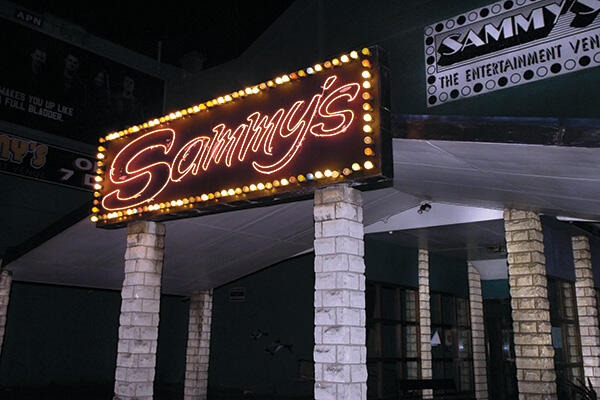
Sammy's to Be Someone Else's
After 35 years of owning Crawford Street venue Sammy’s, the Chin family wants “younger people with new, fresh ideas” to step in. Sam Chin, the owner of Sammy’s, says he wants “new energy” and is “open to any new ideas” in terms of the venue’s future. Chin is not concerned whether it is sold or leased, and would even consider simply handing over to new management. He would like to see a group effort towards managing the venue, similar to his family’s approach to date. Chin places a high value on his beloved venue, saying “we have been told we are one of the top four venues nationwide.” Critic speculates this claim may be from the 80s. Despite undergoing substantial renovation in 2008, Chin admits it will need “a wee bit of work” following a bad lessee he had a few years ago. The damage caused apparently took “two months of 100-hour weeks to [fix]. “I wouldn’t mind it being turned into a dinner-and-show type thing,” says Chin. Sammy’s used to get a full house with their $25 three-course dinner and cocktail nights, including the likes of Tony Christie and Billy T James. Chin told Critic that Billy was “a good guy,” and proudly mentioned the photo he has of the icon himself, complete with personalised message: “To Sammy, by the hair of my Edi Chin Chin, Billy.” Eddie Chin is Sam’s father. The venue was built in 1896 as an Agricultural Hall and was renamed Her Majesty’s in 1902. The Chin family called it Sammy’s in 1983 “as a bit of joke because of my name, but it just stuck for 30 years.” Since the 1980s Sammy’s has hosted a long list of acts; some impressive, others not so much. The Pogues, Dave Dobyn, Jewels, Angels, Sweepback, The Veils, Hello Sailor and, just to mix things up, Manpower Australia (who brought in the crowds with a strip show that has now made it in Las Vegas) have all contributed to what is now quite a legacy. Sam says that Hoodoo Gurus, who performed in 1986, remain “the loudest band I [have] ever heard.” For now, Sammy’s will not be shutting down. “A lot of gigs are still to come,” says Chin. Katchafire are playing next Friday, and Neutral Milk Hotel in November. Sam enjoys hosting high school after-balls at which minors are allowed a limited amount of alcohol. Police and the Dunedin City Council have agreed to the scheme, providing that parental consent and extra supervision are provided. “I welcome the police in and encourage them to stop by when they drive past,” he said. Sam also explains that the after-balls are “not to make a profit. They are just a safe place for the young ones to have a good time.” Sam welcomes the University balls (primarily because they pay the bills), and describes them as “messy but a lot of fun.” The Law Ball is the next to be held at Sammy’s and “is most probably always the worst.” As he looks beyond Sammy’s, Mr Chin says he will be helping his brother, Henry, to rebuild the recently-destroyed Tai Ping fish and chip shop. For now at least, Sammy’s will be staying put, but Critic hopes it will not head down the same path as the Cook. The Robbie Burns lease is set to expire soon and will not be renewed, and Poppa’s is also up for sale. Sadly, the future looks bleak for some of the old Dunedin favourites.
-
News

OUSA Tries to Keep Q-Jitsu Secret
Last week was OUSA Diversity Week, devoted to celebrating the diversity of Otago students and raising awareness and understanding of those who are queer or questioning. Different events, each focusing on queer support, were held every day of the week. The OUSA Queer Support group ran the week’s promotions and events. This group consists of students who offer non-judgemental support, information and resources for peers who are questioning their sexuality or gender identity. Monday offered self-defense training taught by a member of the OUSA support team who has created his own internationally recognised variant of martial art Jiu Jitsu, called “Q-Jitsu.” Tuesday hosted a writing workshop, with an opportunity for work produced to later be published. Wednesday witnessed the second semester Queer Tea Party, which was a chance to converse with friends and decorate mini cupcakes. Thursday saw UniQ Otago host a BYO at Tokyo Gardens with a dress theme of “Stereotypes,” and Friday polished the week off with some speed dating. Unlike other OUSA events like Women’s Week, Diversity Week had not been featured on the OUSA Events website. OUSA Queer Support coordinator Neill Ballantyne explained that OUSA Queer Support “find[s] that it gains better advertising traction by targeting queer-specific communities through the likes of Facebook pages and groups, newsletters, group texts etc.” The events were featured in a Facebook event and on over 100 posters placed around the university campus. The OUSA Queer Support site also promoted events, as did the UniQ Otago site. “Our target demographic is queer and questioning students. As always, we do with our means what we can to push our events which continue to get good turnouts and great responses from attendees.”
-
Columns
Rand: Human After All | Opinion
Ayn Rand was a crotchety old bitch. But that’s why I love her. Born in 1905 in St Petersburg, Russia, Ayn Rand lived through the Bolshevik Revolution of October 1917 and escaped to the US in 1925. Her books, and her philosophy, brought her both fame and notoriety: to this day, countless adults and young teens encounter The Fountainhead (1943) and her magnum opus Atlas Shrugged (1957) and claim to be forever changed. Her works, her thoughts and her life leave only love, hate or ignorance as possible responses to her legacy. I am one of those young adults, but the shine came off eventually. Hindsight has cleared away that about which she was wrong, and left only that which I originally loved. She lived the typical tortured life of someone who is clear about what the perfect world is. Try as these people might, they always have to deal with the conviction that they will never live the dream quite as they imagine it. Rand’s life is a useful demonstration of how the promise is far more delightful than the delivery. Louis CK has a scene in his sitcom series Lucky Louie in which his daughter endlessly asks questions. “Why can’t I go outside?” she asks while eating her cereal. “Because it’s only 5am and it’s still dark,” says Louie. “Why?” his daughter asks. She challenges his answers until hilariously she accepts Louie’s final answer: “because we’re all alone and God is dead.” His daughter nods and, satisfied, says, “okay.” Ayn Rand was relentlessly logical too. She hated faith, and dishonesty. She accepted that we exist on this lonely, godless boat – but together. True, she put a lot of emphasis on selfishness, but she always added that generosity and society are necessary for enjoying life. And enjoy life she did, but her cult-like circle of friends, which she ironically named “The Collective,” would show just how limited her philosophy was. Life is about joy. This is Rand’s message. But to experience joy, we must protect the values we love. She didn’t always serve hers in a manner of which we may approve, but fortunately she was, and continues to be, the only true Objectivist. Despite this she led me to the water of individualism, and it has made me a much better person. She wasn’t perfect. But she was human after all, and a heroic one too.
-
News

“Lack of Jobs Gives Students Chance to Study More, Eat Less.” – OUSA
Total Student Job Search (SJS) earnings in Otago have dropped by 12 per cent, equating to a loss of income of more than $450,000 over the course of the past year. Total weeks worked was also down 12 per cent, from 8,094 in the corresponding period last year to 7,145 this year. The corresponding average hourly rate for all jobs sourced through SJS was $11.60, significantly lower than the statutory minimum wage of $13.75. However, the reasons for this disparity are unclear. The figures were released last Thursday by OUSA, which is responsible for running SJS in the region, and were entitled “Lack of jobs give students chance to study more, eat less.” Critic speculates that such astounding humour can only be credited to working in close proximity to our own bustling office. “The figures are a disappointing read this month – all employment figures are down,” said Francisco Hernandez, OUSA President. “It couldn’t come at a worse time for students with allowance cuts already making life difficult.” The cuts Hernandez is referring to were targeted at postgraduate students, who are no longer able to take out a student allowance. The government has also placed further restrictions on student allowance eligibility, effective from the start of next year. Furthermore, the most students can borrow from Studylink for student living costs is $173.56 per week. Studylink’s calculated cost of living as a student in Dunedin is $264.85, leaving a deficit of $91.29 that can only be made up by further loans, entitlement or work. For this reason, it is unsurprising that the 2013 OUSA Student Survey ranked Student Job Search as the second most important service OUSA provides. “Students are keen to work; what we need in Dunedin are the jobs that provide a chance for students and the public to make the most of the free service,” Hernandez says. The University’s estimated cost “to live comfortably” in a flat was between $15,000 and $17,000 annually. This equates to between $375 and $425 per week over the course of a 40-week academic year – the lowest of these figures more than $110 (or 42 per cent) greater than Studylink’s estimates. However, it is likely that the University’s figure has been exaggerated to make University-owned Residential Colleges appear more attractive to prospective students. When this was put to the University, however, the University did not respond. The University’s estimated cost for these colleges comes in at $12,586.50 per year, or $315 per week for a 40-week academic year. Given that a breakdown of Studylink’s figures shows lines for expenses as varied as transport, clothing, leisure and makeup, it is difficult to imagine that the University has a valid reason for such a significant difference. Either way, this further convolutes an already difficult budget calculation for students. The SJS income drop comes soon after figures were released showing Otago’s overall unemployment rate rising to 6.3 per cent, an increase of 37 per cent in the year to June. This represents the highest unemployment rate in the South Island.
-
News

Internet Totally Shithouse
Students and staff alike have been frustrated at the University of Otago’s slow Internet service over the past few weeks, coming at a crucial time for most students who are facing mid-semester assignment deadlines. The University’s Information Technology Services (ITS) never responded to Critic’s multiple requests for comment. ITS is the central ICT division of the University of Otago and is the eighth-largest ICT operation in New Zealand, accommodating 17,000 devices on its network and processing over three million emails every day. With 155 equivalent full-time employees and an operating budget of $41.5 million, not to mention $14 million extra for capital expenditure, the longevity of the current network issues – and ITS’ avoidance of Critic’s questions – has come as a surprise. In the ITS Divisional Plan 2013/2014, “continuing to demonstrate … responsiveness to our customers” was identified as a key issue facing ITS, words that now sound very prescient. The plan also outlined a schedule for the University’s network upgrades. Although work on the wireless network upgrade (which aims to create a “wireless cocoon” across campus) was expected this year through to September, the general university network upgrade is an ongoing work in progress aimed at replacing old equipment and should not cause such significant issues as those recently experienced. These network upgrades are part of a $19 million revamp announced in 2012; however, no indication has been provided of what stage these upgrades have reached. The University has also discussed plans to provide free wireless to staff and students living in greater North Dunedin, which has raised concerns among those affected by the current network speed that it could further dilute the service and make access even more frustrating. At the time Critic went to print, ITS also had not updated their Service Statistics web page since May this year. Students reported to Critic that although the ITS system had been updated, it still will not let students print from laptops despite promises to introduce this service. Furthermore, students reported having problems with support for at least the last two major Mac OSX releases, despite most students being sent to study in Dunedin with the shining aluminium devices as parting gifts from tired-of-adolescence parents. An outage on the evening of Thursday 8 August took all off-campus networks and all connections to the Data Centre offline. This was “urgent maintenance … expected to improve the slow network response some people have been experiencing.” Critic points out that over the course of several weeks while these issues were occurring, this was the first time ITS had publicly acknowledged there was a problem with the network. Critic is also astounded by the University’s ability to shrink “all people” into “some people.” Over the course of last week, Critic tested the network speed with various online tools. Over this period, speeds of 0.1Mbps were not uncommon. Standard Dial-up internet is about 0.05Mbps. This makes life difficult when doing anything in the wonderful 21st century and is the first time Critic members have ever obtained an “OCKLA F Grade” for an Internet connection. Before going to print last Thursday, Critic tried to test the speed again. However, the Internet was so slow that the test page would not load. In comparison, the fibre broadband to which most Dunedin students now have access provides a minimum speed of 20Mbps (and hits a maximum of 100Mbps), which is at least 200x faster than the speeds currently experienced on campus. On this note, however, many students have speculated that the University is deliberately stalling its current upgrades while waiting to convert the entire network to such a fibre system. The cost of the Internet to students is separated between that allocated for course-related content, which is covered by tuition fees, and Internet for personal use, which is covered by the student services fee. The cost for personal Internet usage is set at $39.54 per student per year, and allows each student up to 30GB of use per month. Critic understands the split between these allocations is relatively arbitrary. The list and definitions of ITS-blocked websites have also been criticised after becaming even more stringent this year. As previously reported, the list of banned sites includes Critic’s App of the Week for 22 July, the sex education tool HappyPlayTime. The site is blocked as “other adult materials,” even though the University’s definition of “adult materials” is meant to exclude sex education. It remains an inadequately addressed issue with ITS whether porn should be blocked. Halls of residence, for example, are home to thousands of people. It has long been questioned why the University attempts to control what students view in their leisure and pleasure time.
-
News
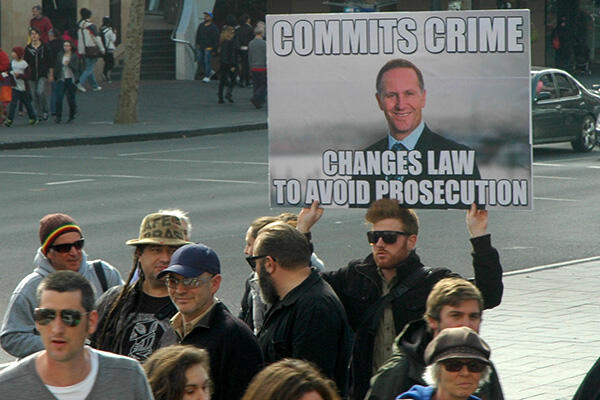
The GCSB Bill
What is the GCSB?The Government Communications Security Bureau (GCSB) is, amongst other things, New Zealand’s external spy service. The intelligence agency was set up by then-Prime Minister Robert Muldoon in 1977. It was tasked with keeping government communications and computers secure, and spying on the communications of other governments and security threats. New Zealand’s other spy agency, the Security Intelligence Service, has tended to collect foreign and domestic intelligence. The GCSB Bill is set to redefine the laws that guide the GCSB, principally by allowing it to spy on New Zealanders. Why is it in the news?The GCSB Bill has been brought into the spotlight following a series of government mishaps, which led to the amendment of the bill. The amended bill has passed its second reading in Parliament, with 61 votes for and 59 against. As Critic went to print, the bill was in the Committee stage. However, due to the Opposition’s delaying tactics and an urgent debate regarding the Fonterra contamination scare, this process is expected to take a week longer. What is it all about?In 2007, an $8 million police and SIS investigation and raid of activists in the Ureweras generated questions about the proper role of New Zealand’s spy agencies. In 2012 John Key revealed that the GCSB had illegally spied on MegaUpload founder Kim Dotcom during a police investigation that resulted in the arrest of Dotcom and his business associates by some 76 police officers. The spying operation was illegal because German-born Dotcom had been a New Zealand resident since 2010. The law then prohibited, and still prohibits, spying on New Zealand residents. In response, the government commissioned a review of the GCSB’s compliance with legislation, internal processes and systems by Cabinet Secretary Rebecca Kitteridge. In a political scandal, the Kitteridge Report was leaked to the media in April this year. It revealed that Ian Fletcher, the head of the GCSB (and childhood friend of the Prime Minister), had lied about illegally spying on New Zealanders. The report stated that the GCSB may have illegally spied on 88 New Zealanders over a 10-year period. An investigation by retired public servant David Henry, the so-called “Henry Inquiry,” then attempted to find the source of this leak. On May 8, John Key instigated the Government Communications Security Bureau and Related Legislation Amendment Bill. The bill would grant the GCSB the power to assist other National Security branches such as the New Zealand Defence Force, New Zealand Police, and New Zealand Security Intelligence Service. Simply put, the bill would allow the GCSB to spy on any New Zealand citizen with the permission of the head of the GCSB (which would be Key). This would mean, for example, that spying on Kim Dotcom would have been legal. Why should we care?The GCSB bill could remove layers of privacy and protection for citizens. But what does it matter if you have nothing to hide? The bill would allow the government to have access to all sorts of information. It would grant access to Internet search history – allowing them to view your favourite porn sites, searches on how to grow cannabis, and the ability to read personal emails and track phone calls and text messages, not to mention plenty of less obvious forms of surveillance. Otago Professor of Computer Security Hank Wolfe warned Critic that what one might think is innocent information can be trawled, and the GCSB “can go back to it in five years. They can accumulate information on anyone.” This all raises the question of balance between privacy and security. It is important for a country to maintain national security, but it is debatable whether the Government’s ability to review one’s choice of Internet porn is such a huge threat to the nation. CriticismsThe Prime Minister has declared that New Zealand faces the same security threats as any other nation. He has stated that New Zealanders have trained in Yemeni terrorist camps, and that attacks like the Boston bombing could occur on New Zealand territory at any time. He therefore implies that having access to citizens’ private information could prevent terrorist activity. Dr. Wolfe believes Key is using scare tactics. “There is no reason to institute such an oppressive law,” Wolfe claims. “New Zealand is not at risk.” Foreign correspondent Jon Stephenson agrees that “this is a sales job on a very controversial piece of legislation.” The bill has been criticised for being open to wide interpretation and flagrant abuse. In a media release dated 6 August 2013 by the New Zealand Law Society, Austin Forbes QC stated that “the Law Society is not convinced that the proposed wording of the principles provides adequate or effective safeguards.” Key has also been criticised for the pace at which the bill has been brought through Parliament, with little time being set aside for debate. Labur Party leader David Shearer has attempted to slow the process further by proposing a supplementary order paper during the committee stage of the GCSB bill. This would allow for more input from other Parliamentarians. However, it is unlikely the paper will be accepted. Dr. Wolfe explained that with the aid of GPS on smart phones and keypad sensors, extraordinary amounts of information about large numbers of people can be accumulated and browsed. Alarmingly, once a phone is bugged, the conversations around a cellphone, whether calling someone or not, can be recorded through these technologies. Keypad strokes can also be recorded. “It’s [total surveillance],” stated Wolfe, “what the communists did, and we criticised them for that.” Governments spying on each otherFormer Revenue Minister Peter Dunne has voted for the GCSB Bill, even though the full contents of Dunne’s email exchanges with Fairfax reporter Andrea Vance were made available to the Henry Inquiry against his wishes. David Shearer has declared that Dunne should withdraw his support for the bill because the government had accessed his emails without his permission. However, Dunne looks likely to provide the government with the single extra vote it needs to pass the bill. ProtestsOn July 27 2013, thousands of people took part in demonstrations organised by the group “Stop the GCSB,” whose supporters include New Zealander of the Year Dame Anne Salmond. Protestors have also waited outside Dunne’s home at unsavoury hours of the day, “to give him a taste of what it feels like to have your privacy intruded on,” according to one protestor. The protestors and other critics of the bill have alleged that empowering spy agencies to collect vast amounts of data on New Zealand citizens has the potential to turn the country into a police state. Ulterior motivesProfessor Paul Roth of the Otago Law School specialises in intellectual property. He believes that the GCSB Bill could be a case of New Zealand trying to “keep the giants happy” and gain political capital with large powers like the United States. “We have to stand back and realise the position of New Zealand in the world,” Roth told Critic. “The issue is that New Zealand is a very small, weak country.” New Zealand already operates part of the international ECHELON spying network from its Waihopai base as part of the “Five Eyes” agreement with the United States, the United Kingdom, Canada and Australia. The arrest of Kim Dotcom in 2012 also had foreign links, having been initiated by a request from a US federal prosecutor. Due to delaying tactics employed by opposition parties in Parliament, the bill is unlikely to be passed for at least another two weeks. In the meantime, opponents of the bill are hoping that massive public opposition will prevent the GCSB from being empowered to spy on New Zealand citizens. Dr. Wolfe believes urgent action is required to stop the bill becoming law. “In 1984 New Zealand stood up for what they believed in. We need to stand up again.”
-
Columns

The More Things Change | Issue 19
This week a few things go slightly wrong, but most people have good intentions. August 15, 1040: King Duncan I of Scotland, an otherwise unremarkable figure, was killed in battle by his own men. They had turned against him to fight for his scheming Duke: a guy called Macbeth (yes, the very Macbeth that Shakespeare wrote about, although the play is not exactly historically accurate). It isn’t clear what made Duncan’s troops decide to change their allegiance, but it worked out for Macbeth – he remained King until he died 17 years later, also on August 15. August 12, 1865: In a great stroke of luck for the patient, Joseph Lister performed the first antiseptic surgery. He put a bit of fabric soaked in carbolic acid on the wound, waited a few weeks, and found that the injury eventually healed with no sign of infection. This was kind of a big deal at a time when surgeons worked under outrageously unsanitary conditions. Carbolic acid is actually fairly toxic so Lister had to stop using it after a while, but the results were probably worth it. August 18, 1868: Pierre Janssen saw a weird line around the Sun during an eclipse, and subsequently discovered helium. Everybody just laughed at him because they didn’t believe you could detect an element in space before it had been found on Earth. To add insult to injury, someone else saw the same thing two months later and actually got to name the element. They never got to make their voices sound ridiculous, though, so they all missed out. August 14, 1893: France became the first country to introduce vehicle licence plates, which was very responsible of them. The first plates were made of porcelain on an iron or ceramic backing and must have been terribly impractical, but probably at least looked nice. Licence plates are useful until people steal them and put them on the wrong cars. They also gave rise to personalised versions, which are almost never a good idea. August 17, 1980: As finally proven last year, a dingo actually did take the baby. The case swept Australia and also reached the rest of the world – apparently there were people in the United States who could quote the line but didn’t know what a dingo was. For all the case has been turned into morbid comedy, it was actually a pretty good example of how media and bias can affect legal proceedings, and showed people that fabric evidence is actually important. It probably raised awareness of dingo attacks, too, which can only be a good thing.
-
Features
All As Are Equal, But Some Are More Equal Than Others
Ines Shennan obtained the University of Otago Grade Comparison Report for 2012, which outlines Standout Papers across all levels of undergraduate study. What was born out of a desire to present greater transparency regarding grading soon ballooned into a consideration of far deeper issues: Why are we at university? How can assessment structure affect the way we approach our studies? Should we as students be striving to achieve more than just an A? What you’re about to read should not be taken as advice to vigorously pursue or resolutely avoid certain papers available at the University of Otago because of cold, hard statistics. In fact, that’s the absolute opposite of what this feature intends to promote. Yes, it will serve as a reminder of how your time at university is one of assessment and grading, with figures constantly attached to our work. And that’s something that we should think about more critically. However, just as important are the less measurable, yet incredibly useful functions of higher education. The Education Act mandates that universities accept a “role as critic and conscience of society.” So while it’s possible to measure your successes (or lack of), it’s also imperative to consider the less easily measured outputs of tertiary study: creating smart, engaged, critical thinkers who can apply themselves to various situations. So don’t treat what you learn in a vacuum. Take your knowledge and build upon it and actually use it for the greater good. This leads us back to the data, and just how limiting it is. Confused? Read on to understand why. DisparateThe hypocrisy of writing an article to bring transparency to grading, without publishing the tabulated data, appears to ring loud and clear. However, the report slowly crumbled into ambiguity after various Deans and HODs provided robust contextual analysis for the discrepancies. All 100-, 200-, 300- and 400-level undergraduate papers are assessed as “focus papers.” Papers with fewer than 30 students are disregarded. A student’s average grade for other papers at the same level in the same year is compared against their grade for the focus paper. We’ll engage in a hypothetical scenario to make it more readily understandable. Say we have Mike, a second-year student, who studied MIKE201, MIKE202, MIKE203 and MIKE107 in 2012 (Mike’s a bit of a narcissist). MIKE201 is our focus paper, and Mike received a grade of 82. MIKE105 is disregarded, because it’s at a different level. Our fictitious character received 77 for MIKE202 and 73 for MIKE203. The average of these other 200-level papers is thus 75. If the grade for the focus paper is five or more marks lower than the average, it falls under the “lower” category; within five marks, it falls under the “same” category; five or more marks higher than the average, it falls under the “higher” category. Here, Mike would fall under the “higher” category where MIKE201 is the focus paper. Once all students in the focus paper have been coded, we are left with a table, looking something similar to this (purely as an example): The important figure from here is that listed under “difference.” This can be a positive or negative figure. A positive figures indicates that students generally do better in this paper than their averages at the same level in that year, and a negative figure indicates the contrary. When these figures go beyond (-)25, and particularly beyond (-)40, they are listed at Standout Papers. So MIKE201 would trigger a listing as a Standout Paper, coming in with a figure of 46. From this, it might seem a logical assumption that papers with figures well over 25 are comparatively “easy,” and those with figures heading in the other direction beyond -25 are comparatively “hard.” From year to year there are around 30 courses in the 40 per cent standout range, and around 70 courses in the 25 per cent standout range. So, does this mean we have around 100 courses taught every year that don’t stack up against the rest of the papers on offer at the University of Otago? We clearly do when numerically analysed under this system. But such a literal approach fails to recognises the nuances of teaching styles, various assessment structures, subject specialisation and student cohorts from year to year. Critic thought it was necessary to unravel the factors that lead to these disparities, so what follows is an account of some of the conversations had with various HODs and Deans. Bear in mind that while these Departments had Standout Papers on this list, we have elected not to publish the specific papers, how many papers appeared, and whether their figures were positive, negative or a combination of both. Nor has every single paper, of the 222 that appeared in 2012 (many of which had not appeared before), been deeply scrutinised; instead, we spoke with some, but not all, of the departments that appeared more than once. By the time you get to the end of the article, you’ll understand why. Various Perspectives“I think you need a more sophisticated analysis than … assuming that some papers are just easier than others,” says Ian McAndrew, HOD of Management. He agrees that assessment structure may attract different students and subsequently influence overall grades, but teaching and learning styles are also relevant. Doug Booth, HOD of Physical Education, Sport and Exercise Sciences, told Critic that any paper average that falls outside a rough 60 to 75 per cent band is closely scrutinised, both within the Major and in the wider School end-of-semester meetings. But why the Standout Papers? Student enjoyment and high levels of motivation, strong engagement with practical content, or a paper that has been newly introduced may trigger a listing on the report. In the Dentistry and Oral Health field, courses are heavily prescribed. Alison Rich, Associate Dean for Undergraduate Studies, notes that “academic” theoretical papers often see higher grades; by comparison, the “same students may do less well in the clinical papers where clinical skills which are very new … may need to be honed and developed over time.” Jacques van der Meer, Associate Dean (Academic) of the College of Education, highlights further reasons for varying grades. “In papers where students probably have a higher interest themselves in the subject, or feel more engaged, they tend to do better.” This is reinforced by Rob Aitkin, HOD of Marketing, who says that his “view of education, particularly, is [that] my job [is] to introduce you to some ideas that you may not have thought about, in relation to the experiences you’ve actually had. So we reward people’s critical reflections on their own experiences.” Christina Hulbe, Dean of Surveying, considers that students may be more “highly motivated in papers that fit the traditional ‘land surveying’ image” compared to other areas. Ultimately, though, it’s hard to say with conviction what the definite causes of Standout Papers might be; indeed, causes may vary from year to year. The BSurv is a professional degree, so the School is aware of the need to “certify a certain level of achievement in related papers. We are not setting students up for success or for continued growth as professionals if we waver on the standards relative to the statistics of cohort performance.” Broader aims of the School include assisting students in “building specific skills at a more advanced level than provided by secondary education or technical training.” HOD of Music Graeme Downes remarks that some students enter the subject without having read music notation in its NCEA counterpart. So the Department is clearly focused on providing some fundamental skills to its students; the flipside is that those who are already familiar with this practice will naturally do well in these papers. Dorian Owen, HOD of Economics, considers that certain papers are targeted at students who will go on to postgraduate study. Such papers have more rigorous content, and students will tend to find them harder. He also noted that some papers are more “challenging and technically demanding … with less subjectivity, with more clearly ‘right’ or ‘wrong’ answers.” So a switch from “verbal and graphical analysis” to more abstract content may see some struggle. Though the department wisely advises students at course approval of the differences between papers, “ultimately, the only way for students to see if it suits them is to try it.” Despite one particular paper standing out as hard, recent figures show that nearly half the class (from semester one this year) are in the A range. So while it stands out by the criteria of the grade report, it also attracts bright students who still get some very good grades. They might not be within five per cent of their average, but it shows that under scrutiny, the report may not be as useful as initially thought. Owen even alludes to this himself, asking why the differences between the average percentage grades of the focus paper versus the average of other papers at that level are not calculated. For whatever reason, it still is worth considering and may well result in data that allows “real outliers” to be identified. It’s a valid point given that many of the Standout Papers, from various departments, actually had quite “normal” bell-curves of grades within papers. Steve Duffull, Dean of Pharmacy, highlighted the difficulty in arriving at specific reasons for Standout Papers. Given that Pharmacy is a competitive-entry course, students will already be achieving well to be admitted into the programme. Likewise, Michael Winikoff, HOD of Information Technology, was unable to provide a comprehensive analysis, though he does point out that the report “is only one piece of information in the bigger picture.” Even so, the report can indicate genuinely difficult papers. Accountancy and Finance HOD, Colin Campbell-Hunt, noted out that one of the department’s Standout Papers was a new paper that had merged content from two separate papers. This resulted in too high a workload and was therefore “just too ambitious.” Since then, the Department has culled some of the material. What is appearing is a pattern; though nobody was reluctant to answer these admittedly complex questions, the data doesn’t explain itself in isolation. It’s not necessarily the case that these Standout Papers are easy or hard, but perhaps related to way the lecturer encourages students to think, and how deeply those students respond. Let's Get CriticalWe should be asking ourselves not what the “right” answer is, but why we arrived at a certain result. Downes says critical thinking is something that the Music department does “a lot of. You can’t be a performer or composer (or both) without it, nor can more traditionally ‘written’ areas of music research (musicology and ethnomusicology) do without it … it always spirals out to critical reflection and the nature of the artwork that eventually results.” This kind of critical engagement is the antithesis of techniques such as rote learning. Rote learning does occur, and may help you “get by,” but it won’t stretch you to your best ability. Academic theories and concepts are not to be simply “learnt,” but convincingly understood, applied and critiqued. Mark Henaghan, the Dean of Law, discusses what critical thinking means to him. “It means you’re able to read something, or assess something, with your own mind, rather than just receive information and pass it on somewhere else.” It’s a skill we take beyond our university years. “When you go out to the world, all you’ve got is your mind, the knowledge you have. Some dissipates very quickly, but the ability to be able to adapt and think for yourself as new situations arise – that’s the most valuable thing you have. If you’ve got that you can adapt to any job, any position, and you can be a major contributor to society.” Van der Heer says that at the College of Education “everything is framed in contestation,” to promote critical thinking. He explains that “students come into university still with [the] high school assumption that there are definites; that things are right or wrong.” So he provides “provocative statements” to force the students to think deeply about their assumptions and start a “cognitive conflict” in their own heads, and with their peers. The College of Education aims to make its graduates “develop into critical, reflective teacher-practitioners – so they don’t just go into classrooms thinking they’re going to do technical stuff, but constantly reflecting on what they’re doing, how that’s impacting on student achievement … to constantly reassess, constantly reflect on what they’re doing, and be aware that the social context determines a lot of what happens in a classroom.” For some, a degree is not always going to be the key to a specific career, and learning itself is the reward. Tony Harland admits that this, however, is a “luxury” for most students, given intensive assessment throughout the semester and the pressures of finding a job. It can be difficult to balance incredibly deep engagement with the content presented in one paper, when you have assessments piling up for two, three, four or five other papers, not to mention commitments independent of your tertiary study. Many students do manage it, and they come out with exceptionally good grades. It is worth asking yourself, however, how much that A is really worth. Think about how many papers you’ve taken and whether the grade you achieved really reflected how much you engaged with the paper. How much knowledge has crystallised itself in your consciousness? What has stayed with you over the years, or over the semester, and what has vanished? Catherine Fowler, Acting HOD of Media, Film and Communication, states that there are fundamental attributes that certain papers will try to develop, such as “communication, critical thinking and research skills,” but that discrepancies between grading may arise because of students’ strengths and weaknesses, as well as the various assessments. She notes that critical thinking can be tested to some degree, but there is always an aspect of it that “escapes such measurement.” Their successful students will be equipped to “engage critically with issues and problems in a world that increasingly organises itself around media and communication technologies.” Campbell-Hunt points out that the Accountancy and Finance Department attracts some incredibly bright students. But, he says, there are also those “who are in here for the money. [They] see these subjects as a way of earning a good level of income. They’re not attracted by the ideas.” This certainly touches on a very interesting motivator for university study, and why people not only choose to take up tertiary study, but also pick particular subjects. And let’s be fair; this is not exactly a cheap endeavour, so knowing what your job prospects are before you’ve got a degree in hand isn’t exactly rocket science. (Now there’s something to think about as a career path.) Campbell-Hunt does point out that “some people fall in love with accountancy. They get captured by the beauty of this interlocking system.” But where does the critical thinking come in? 300-level papers are incredibly focussed on it: teasing out the context, understanding managerial decision-making, reporting to shareholders and understanding the role to play in the wider scheme of things. It’s at 300-level where the more “mechanical approach,” despite its necessity, is foregone for deeper thinking. But in order to engage with the material on a deeper, critical level, students need to have a robust understanding of accountancy as “a machine with a set of structures and procedures.” This is what happens in the earlier levels, providing solid foundations for the necessary challenges of 300-level papers. Harland says critical thinking is the “foundation of university education.” Do you want to glide through your university days and get a comfortable GPA, understanding concepts well, but leaving that thinking behind you as you progress into the “real world”? Or do you want to truly engage with what you learn, build upon your knowledge, and, in the words of Harland, “have the time of your life, a good education, [then] go out and make a difference?” The Complexities of AssessmentWhat is taken very seriously across all departments consulted are the markers’ meetings, which allow for thorough scrutiny of grades awarded: the distribution of various grades, the average grade for the paper, whether that average grade sits within an acceptable range, moderation and cross-marking. Monitoring assessment criteria is no easy feat, but to at least mitigate inherent subjectivity, van der Meer explains that “really clear marking schedules” help, as does “clearly align[ing] our learning objectives with what we do in workshops and classes, and then the assessments … it never will be perfect. But we constantly have to strive towards it. That’s why there is so much research and writing about [assessment] in higher education.” Real MotivationDownes says that Bachelor of Music students “are often highly motivated and gain entry by audition if they are doing performance, so they are often very good before they even get here.” Music is an extreme example of targeted student excellence, but it’s certainly a university-wide phenomenon. Aitkin is clear on what he wants from his Marketing students: “at the end of three years doing a BCom, or any degree, I’m not so concerned whether they understand business inside out, I want them to be able to think about anything, anything they come up against.” While particular papers might sound like an easy route, if you’re not a naturally talented musician, or passionate about biochemistry, or a dancer with an instinctive affinity for fluid movement, what’s the point in electing – or avoiding – a particular paper because comparative figures suggest they might be result in a higher or lower mark than your average? And possibly a difference of only five percentage points? For this reason, Critic has decided not to publish the raw data that we have – not yet. If we’re following the mandate of what university education is really about, you should select papers (if you have that luxury, at least) because you want to stretch your mind, not because it’s an easy pass. Of course, with the shift to publishing GPAs on transcripts, it’s advice that sits uneasily with the harsh reality of a competitive job market. But maybe that’s the fundamental problem; maybe we’re thinking about university as a means to an end, when really, as Harland says, they should be some of the best years of our life.
-
Features

Wanking Anonymously: The Rise of Hacktivism
Like it or not, hacktivism is the political movement of our time. The movement’s technological savvy, libertarian outlook and mischievous methods are inspiring an otherwise apolitical generation. But where does the movement come from, and is its vision a sound one? It Began With a WANKIn 1984, Prime Minister David Lange declared New Zealand a nuclear-free zone, prompting the US to expel New Zealand from the ANZUS treaty and impose a number of trade sanctions. Soon afterwards, Lange took part in that debate at Oxford, delivering one of the most eloquent denunciations of nuclear weapons ever heard and attracting worldwide attention. The following year, French Secret Service agents bombed the Greenpeace flagship Rainbow Warrior, killing photographer Fernando Pereira. Two French agents, Alain Mafart and Dominique Prieux, were each sentenced to 10 years’ imprisonment. After France imposed trade sanctions, the New Zealand government agreed to let Mafart and Prieux serve their terms at a French military base. The frogs served two more years, and were then smuggled home. We didn’t know it at the time, but New Zealand’s anti-nuclear stance spared us from the world’s first “hacktivist” attack. In October 1989, the US Department of Energy and NASA computers worldwide were targeted by the WANK worm. WANK (Worms Against Nuclear Killers) was an anti-nuclear computer bug whose origins were later traced back to Melbourne. Machines that had been affected by the bug had their login screens changed to the WANK logo, with the legend “Your System Has Been Officially WANKed ... You talk of times of peace for all, and then prepare for war.” When the source code was examined, it was found that the worm bore specific instructions not to target machines in New Zealand. The New RevolutionariesHacktivism – a form of political protest, often militant, that uses computers and computer networks – has come a long way from these slightly puerile beginnings, and is now one of the major political movements of our time. Hacktivist ideology can take many forms, but for the most part hacktivists adhere to a libertarian worldview that emphasises antiauthoritarianism, human rights, privacy and pacifism. There are also more extreme anarchist and anticapitalist variants. The “Hacktivismo Declaration,” penned from 2000-2001 by members of hacktivist group Cult of the Dead Cow (cDc), reads in part “that full respect for human rights and fundamental freedoms includes the liberty of fair and reasonable access to information, whether by shortwave radio, air mail, simple telephony, the global Internet, or other media,” and “that state sponsored censorship of the Internet erodes peaceful and civilised coexistence, affects the exercise of democracy, and endangers the socioeconomic development of nations.” In many ways, hacktivism represents the radicalisation of the Internet generation. It is the newest incarnation of the bookish revolutionary, the Lenins and Che Guevaras of the late twentieth and early twenty-first centuries. This was echoed by Julian Assange in an April interview with Google executive chairman Eric Schmidt. “That’s the most optimistic thing that is happening – the radicalisation of the Internet-educated youth, people who are receiving their values from the Internet,” he said. “This is the political education of apolitical technical people. It is extraordinary.” Hacktivism is also a peculiarly cross-cultural phenomenon, reflecting its twin roots in North America and Western Europe. It borrows the language of the US Constitution and the American preoccupation with freedom of speech and marries it to the revolutionary spirit of 1960s and 70s European counterculture. In both of these regions, hacktivist ideals have begun to penetrate mainstream political discourse, from the iconoclastic Pirate Parties of Western Europe to the enthusiastic youth following of Ron Paul in the US (a following Paul himself never quite seemed to understand). In the movement’s first real electoral success, the Swedish Pirate Party won 7.1 per cent in the 2009 European Parliamentary elections, gaining two seats. Two years later, the German version gained 8.9 per cent in the Berlin state elections. And this year, the Pirate Party of Iceland won 5.1 per cent of the vote in the national elections, becoming the first Pirate party to win seats in a national parliament. Trolls and MoralfagsThe first wave of hacktivists in the 90s included groups like cDc, the Hong Kong Blondes and L0pht, and insisted on a strict ideological purity in their attempts to free data. This led the groups to condemn tactics like web defacement and Denial of Service (DoS) attacks. In 1998, when hacker group Legions of the Underground announced a cyberwar against China and Iraq in an attempt to disrupt those countries’ Internet access, a coalition of hackers issued a statement condemning the attacks. “We – the undersigned – strongly oppose any attempt to use the power of hacking to threaten to destroy the information infrastructure of a country, for any reason ... One cannot legitimately hope to improve a nation’s free access to information by working to disable its data networks,” the statement read. Following the statement, Legions of the Underground backed down. Oxblood Ruffin, a prominent member of the cDc, later praised the virtue of “civility” among hacker groups, and commented that “there isn’t a whole lot of difference between disabling a Web server’s ability to provide information – even if that information is distasteful – and shouting someone down in a town hall.” Since the turn of the century, however, these principled, old-school groups have been largely supplanted by more populist movements, whose vocabulary does not contain the word “civility.” These new groups arose when 4chan’s infamous “no-rules” /b/ imageboard – described by Encyclopaedia Dramatica as “the asshole of the Internets” – overflowed and spawned the hacker collective Anonymous. 4chan in general, and /b/ in particular, often resembles a roiling cesspit of pure, unreconstructed mental diarrhoea. Users refer to themselves as “/b/tards” and each other as “fags.” Misogyny and racism, though often laced with heavy irony, pervades the site. Nick Douglas of Gawker.com affirms that “reading /b/ will melt your brain,” and the New York Observer describes posters as “immature pranksters whose bad behaviour is encouraged by the site’s total anonymity and the absence of an archive.” Anonymous was first conceived as a 4chan meme, and the group itself coagulated during “Project Chanology,” a series of 4chan-facilitated attacks on Scientology websites in 2008. Composed of both politically motivated hackers (“moralfags”) and mere wind-up merchants (trolls), the group has employed DoS attacks and other forms of disruption to push its aims. In doing so the group has drawn the ire of Oxblood Ruffin, but whereas the old school still had cachet in 1998, Anonymous has far outgrown its forebears and has taken on a life of its own. Lone WolvesThe hacktivist front line, however, consists of a very small and specialised group of computer geeks, and unlike the revolutionaries of yore, it is difficult to gauge how much popular support the movement actually enjoys. Oxblood Ruffin points out that “it doesn’t take a lot of people to change anything. It only takes one good programmer.” US telecommunications company Verizon recently released a report on security breaches that bears this statement out. The report shows that political activism lags far behind organised crime and state-sponsored cyber-attacks, accounting for around two per cent of all data breaches. When it comes to hacking, the main countries of origin are China, accounting for around 30 per cent of all hacks, and Romania, accounting for 20 per cent. However, as might be suspected, political activism is associated with much larger and more audacious data breaches. This asymmetry – the ability of individual skilled hackers to wreak a disproportionate amount of havoc – works both for and against the hacktivist movement. On the one hand, it means online guerrilla campaigns can be carried out effectively with very few combatants, and it allows new heroes to spring up out of nowhere without having to negotiate the internal politics of activist groups. On the other hand, it also allows hacktivist tools to be used against the movement. Significantly, counter-hacktivist “vigilantes,” such as The Jester, have the ability to significantly disrupt hacktivist organisations. The Jester is a highly skilled, pro-US government hacktivist who claims to have served in the US military. Since the beginning of 2010 he has targeted, with varying success, Jihadist websites, Libyan newspapers, 4chan, LulzSec, WikiLeaks and Assange. In 2011, The Jester was responsible (albeit on the third attempt) for revealing the identity of LulzSec leader Sabu as Hector Xavier Monsegur, of New York. This led to Monsegur’s arrest in March 2012, after which he became an FBI informant and, in a major setback for the movement, turned in a number of leading LulzSec and Anonymous figures. As recently as July, The Jester claimed responsibility for a series of DoS attacks on the Ecuadorean stock exchange and tourism website, a reprisal for the country’s protection of whistleblowers such as Assange and Edward Snowden. He wrote that Snowden “is not a goddam [sic] hero, here to save Americans from ‘the government’ because of privacy infringements and breaches of the 4th amendment, he is a traitor and has jeopardized all our lives.” The Jester has also threatened to take control of the fire alarms in the Ecuadorean embassy in London, in which Assange has been holed up since June 2012. If successful, this would force Assange outside onto UK territory, from which he would face potential extradition to Sweden on sexual assault charges. An Uncomfortable AllianceAs The Jester shows, hacktivism can go both ways. The Jester also highlights the uneasy relationship between two of the movement’s core ideals – free exchange of ideas on the one hand, and individual privacy on the other. The Jester’s campaign against LulzSec was a campaign specifically targeted at breaching the members’ privacy and revealing their identities to the world. This tension between freedom of information and individual privacy is hardly new, and there are many examples of direct conflict between the two ideals – notably the 2011 News of the World phone-hacking scandal. Of the four legally recognised ways in which privacy may be violated – identity theft, defamation, publication of personal information, and encroaching on an individual’s seclusion or solitude – the latter three all come under direct threat from free speech. For a group like Anonymous, whose very name invokes the notion of privacy, this might seem like an ill-thought-out marriage; a product, perhaps, of its members living their lives online behind carefully maintained, pseudonymous personas. For those who choose to live and communicate in the real world, total freedom of expression can be an oppressive force, enabling bullies and giving rise to an all-pervading surveillance. On the other hand, this can also be seen as a particularly pure reimagining of the classical liberal idea of the public sphere. The public sphere, an area in which rights-bearing individuals can freely exchange ideas and debate political matters, was the dream of figures like John Stuart Mill. However, as the role of personality politics and the limits of human rationality became clearer, the public sphere came to be viewed with less of a rosy tint. The anonymity of the Internet, though, removes the problems around demagoguery: if nobody knows or cares who Topiary or Omega or The Jester are, we must focus instead on what they say. If the free exchange of ideas is hampered once personalities become involved, then the anonymity that the Internet offers can actually protect and foster that exchange. When Edward Snowden, the NSA whistleblower, went public in the wake of his leaking of confidential documents, he cited personal safety as a reason: placing himself in the public gaze would make it harder for the US government to discreetly bump him off. As prudent as this step was, one unfortunate side-effect was to focus much of the media’s attention on Snowden himself – his background, his donations to Ron Paul, the girlfriend and six-figure job he left behind – rather than the leaks themselves. In the process, much of the outrage about what the leaks themselves revealed has been muted, and apathy restored. Similarly, the impact of the Wikileaks cables became blunted amid fierce (but ultimately irrelevant) debate over the figure of Julian Assange. Assange became a lightning rod, memorably falling out with erstwhile ally the Guardian by being, on most accounts, a giant twat. Particularly regrettable was the aftermath of the Swedish rape allegations: the spectacle of so many otherwise liberal-minded Assange supporters becoming raging misogynists in an effort to defend their hero was extremely icky. But such is the nature of hero-worship, and of personality politics, and it’s easy to see why Anonymous want no part of it. This Shit is BuzzyDunedin band Left or Right recently got a taste of hacktivism, when their website was taken over by a gentleman dubbing himself “Mr. Moro: Moroccan Hacker.” Possibly in the mistaken belief that Left or Right was some kind of political association, as opposed to a roots/metal groove outfit, Mr. Moro deleted the page’s content and replaced it with a picture of a masked Jihadi holding an assault rifle. “DoN’t YoU fEaR MR. MoRo Is HeRe,” he wrote beneath the image. “No PiTy, No MeRcY, No ApOlOgY, No sOrRy.” All of which goes to show that, however switched-on and politically savvy those at the forefront of the hacktivist movement may be, your average hacktivist is more likely some overexcited teenaged geek than a badass Che Guevara type. All the more reason to be nice to the nerds – to paraphrase Bill Gates, they will inherit the earth.
-
Features

Big Brothers-At-Arms
We live in an age of surveillance, in which our lives are policed by social norms and groupthink. These social norms can use technology to imprison us – but we can also use technology for our own ends, and fight back. “You can do better than that,” barks Winston’s telescreen in 1984. “Everyone from your best friends to Barack Obama can listen,” says mine, in 2013. One of these omnipresent voices, out of context, is threatening – and it’s not the one from Orwell’s famous dystopia. Spotify, on its own and without probing, is a sweet idea. Do you discover, free of charge, music your friends like; or do you, free of charge to any government, mould yourself into a music clone, denouncing your Will Smith playlist as thoughtcrime with the label “ironic”? In itself, this is harmless behaviour; writ large, it becomes groupthink. Barack Obama probably isn’t going to follow you on Spotify, but his government can follow you in real life. With terms like “metadata,” “intelligence,” and “security” on the front page of every news source lately, we’re becoming increasingly aware that even in New Zealand, tucked away at the bottom of the world, Big Brother could be watching us. Two satellite sites – one outside Blenheim and one near Palmerston North – are part of an intelligence network that stretches across the Western world, and have been intercepting signals for years. Despite such sneaky locations for intelligence sites, our overlords require additional surveillance means: GPS in our cell phones and cars makes tracing our whereabouts easy for anyone with the authority, and it’s even easier to trace an IP. CCTVs can be accessed by a range of security organisations and remote hackers, and with the right know-how it’s possible to access and turn on someone else’s webcam. So Big Brother can watch you – but does He have to? *** In the 18th century, a philosopher called Jeremy Bentham designed a prison in which the inmates would be placed around a central watchtower from which they could be constantly observed. The idea was that they would then behave as though eternally under the eye of the warden – that is, in accordance with the prison rules. In the 1970s another philosopher, Michel Foucault, theorised that this design has formed the blueprint not only for prisons, but for schools, hospitals and a myriad of other social institutions, due to its effectiveness at controlling people. “The major effect of the Panopticon,” he wrote, was “to induce in the inmate a state of conscious and permanent visibility that assures the automatic functioning of power.” In 1984, it is never explicitly stated how many of the ubiquitous telescreens are watched at once, but everyone behaves as though they are constantly being monitored – and so do we. If you have nothing to hide, you have nothing to fear, right? University of Otago information science Associate Professor Hank Wolfe, speaking to the press, interprets this common saying as representative of surveillance technology’s use as a “tool of intimidation.” We won’t misbehave because if we do, we’d justify the government’s misuse of technology (as I write this, it’s still illegal for the NZ government to spy on its residents). There’s no need to pay for a police officer on every corner if there’s a camera, and if the camera’s there illegally … well, complaining would only make you seem suspicious. What if, though, control via surveillance wasn’t just about fear of the government’s watchful eye? Fear may be a key fundament of many a dystopia, but it’s peripheral to controlling the day-to-day behaviour of its inhabitants. Our fear of breaking the law is the wall surrounding and entrapping us, but the police inside the wall are things called “social norms.” These are the understandings we have as a group that govern what is and isn’t an appropriate way to behave. While some norms – such as the inappropriateness of murder – are enshrined in a country’s law, others are unofficial taboos: consensual cannibalism would be one. These, though, are extreme examples of norms. The ones I’m talking about are those that govern the way we interact with one another; a social norm could be anything from shaking hands to a societal preference for male leaders. Norms reinforce cultural hegemonies – or dominant groups – within our society. For example, Roald Dahl’s star-bellied Sneetches are culturally dominant over the plain-bellied Sneetches and so a beauty norm is to be “starred” – it’s the hegemonic ideal. For this reason, one can observe the plain-bellied Sneetches modifying their appearance. This kind of body modification is socially appropriate – a norm – and controls the population’s behaviour in a way that upholds or perpetuates the hegemony. *** Our behaviour, then, is subtly regulated and guided by our “innate” sense of right and wrong. It’s right to give Christmas presents, and it’s wrong to question those in charge – or at least, that’s what The Man wants you to think. He helps us to control ourselves by way of a technology that quietly co-exists with all the news corps’ super-sleuth phone-tappings and governments’ backyard satellites: social media. This is technology by and for the People, and is arguably a far more effective way of controlling the population. In recent years, the explosion of social media devices (Instagram, Twitter etc.) has resulted in a technological flood of norm-reinforcement. This is because, on top of all the norms we usually encounter, we have the added effect of being constantly watched … by one another. Facebook and Twitter encourage us to share – and edit – our thoughts; Instagram and Tumblr ask us to share – selectively – images we enjoy. To get the most out of our experiences with these technologies, we have to share only what is “right.” Sharing our every thought and vision seems liberating, but actually creates an environment of groupthink, wherein we subconsciously learn what is appropriate to think by learning what is appropriate to share. Although I’d like to believe I’m above the influence of the foolish herd of sheeple that is society, I recently found myself falling under the normative influence of Tumblr. Similar to Orwell’s Newspeak, the users of this website use a particular type of slang: an ironic kind of chatspeak. I started using my Tumblrspeak on Facebook, Twitter, and OkCupid: “dont even look @ me unless ur a starship captin,” my tagline read. This was the “right” way to communicate my desires and, I thought, made me stand out as an elite Tumblr alum. “I don’t look at girls who can’t communicate using the Queen’s English,” sent an irate user, subscribing to a norm that exists in the social group “academically-gifted twats.” Both of us had fallen under the influence of our social groups, and had found our opinions about issues as inane as writing style affected accordingly. Over on Facebook, females seeking out approval for their ability to uphold the hegemonic ideal of beauty sent their pictures to the Babe of the Day page. Males, seeking to uphold a hegemonic ideal of masculinity, made several comments on said pictures that could be construed as upsettingly aggressive. When one social group pointed out the inappropriateness of rape threats, they were told to “buy a tampon” by the dominant group, reflecting the norm that links female aggression with hormonal irrationality and thereby rendering this less-dominant social group laughable and easily-ignored. In a courtroom in Hamilton, a Maori teenager is more likely to be convicted of a violent crime than his Pakeha peers. “The more Maori you get in an area, the more violent crime you get – that’s a fact of life,” said one academic to a newspaper, reflecting the normative attitude linking Maori and violence. “It’s not that if you have got more Maori you get more violent crime necessarily, but you get higher charging of violent crime by the police,” said another, explaining the concept of racial profiling that his associate seemed to have forgotten. “It’s what the newspapers tell them,” an ex-worker at a Brethren camp told me. He taught science to the Brethren kids for a while. They’d never actually met a Maori person, but knew from the media they were allowed access to that they were “violent” and “untrustworthy.” Such norms are perpetuated simply through being expressed. Social norms have always been present, but with social media we watch and regulate ourselves and others nigh on 24/7, just like the prisoners in Bentham’s Panopticon. Although his construction is most often discussed in terms of its Foucauldian effects, at the time of its design it was intended to save the government money: “you will see,” wrote Bentham in spectacularly ominous fashion, “that the gaoler will have no salary – will cost nothing to the nation.” Because the guards are invisible to the prisoners, they don’t need to be on duty for the prisoners to behave as though they are being watched. Bentham’s design also incorporated prison labour in an effort to provide a prison system that made, rather than cost, the government money. This raises the question: how is Big Brother profiting from our normative behaviour? *** For a start, He doesn’t need to actively police all of our actions, because we’ll do it for Him. When someone breaks the law, He doesn’t need to convince the People of their guilt, because our norms have already done that. He doesn’t need to convince the People of His righteousness, because hegemonic discourses and ideas support the status quo. It all seems bleak. Darkness surrounds you as the shackles around your ankles become ever more vivid. But what’s this? The camera on your cell phone glows with a new purpose. The lump of technology you’ve just been thinking was your enemy has revealed its status as a double agent. What if you didn’t take pictures of yourself, or your friends? What if you turned those omnipresent eyes back on the Man? You can watch Big Brother! Remember when the protests in Egypt began? Probably not. Mainstream news has covered it, but most of the footage you’ve seen has probably been on Upworthy or Vine and has likely been filmed by Egyptians right there in the middle of it. One video shows an 11-year-old boy criticising his government; other films have up close and personal shots of police shooting to kill. Increasing pressure for reform in countries like Egypt and the US is, in part, due to the very same surveillance technology we’re supposed to fear. We, too, have cameras and hackers and information leakers – we can turn their tools of intimidation against them. “But the norms!” I hear you cry, “we can’t turn those against them!” Ah, comrade, but we can. How many gender-swapped “Blurred Lines” videos have you seen? I’ve seen two. Naked men prancing around a suited-up woman breaks the norm and therefore appears ridiculous, and in doing so, it reveals the absurdity of the original video. Parodies and satire have always been an effective way of criticising norms, but what can we do as individuals? As little as a decade ago, people with mental illnesses and learning disabilities were normally regarded by peers as “retards,” and not worth the efforts of the education system. As someone with a learning disability, you can imagine my joy when I found online, anonymous forums where people used videos and stories to explain their experiences and share how intelligent they secretly were. We fought back against the norm by using new terms for ourselves, at first anonymously on the Internet, then quietly IRL. Terms like “differently-abled” and “neurodiverse” are sometimes slammed as being “too politically correct” because the norm hasn’t completely changed – but it’s starting to, and that’s because we are rethinking our vocabulary. *** Though a societal norm may tell us to bow our heads and appease those in charge – whether they be school principals, prison wardens or the Prime Minister – it only takes a few going against the grain to make a community realise that norms are changing, and to demand legislative recognition of that fact. It’s now normal to accept homosexuals and women in the workplace and to not be racist, but this wasn’t always the case. Instead of walking from Selma to Montgomery for civil rights, though, we can now record injustice on our cell phones and send it out for the world to see. Earlier, I said that surveillance technology was the wall that held us in, and that social norms were the police who stopped us climbing it. In this situation, though, it isn’t the government who controls the police, it’s us – we just haven’t realised it yet. All the surveillance technology available to governments, militaries and corporations around the world seems impossible to fight. Big Brother is watching us, but what can we do about it? Winston, living in a world where everyone is well aware of their situation – only a slight exaggeration of our own – saw one possible course of action: “you had to live – did live, from habit that became instinct – in the assumption that every sound you made was overheard, and ... every movement scrutinised.” The difference between our situation and his, though, is that the tools of surveillance are in our own hands; we just need to use them. Turn Instagram off your face and onto the Beehive: it’s a revolution.
-
Features

Calling the Cranks
While reporting the news, I’ve come to learn that some so-called “important” people will always be in demand for comment. Ministers, businesspeople and academics are forever having cameras and dictaphones shoved at their overexposed gobs. Meanwhile, more marginal characters get passed over for media coverage. This week, it was time to give New Zealand’s rough diamonds a chance to sparkle in the media limelight by asking them the key questions on the real issues of the day. Richard ProsserThe Investigate magazine columnist and New Zealand First MP earned infamy when he suggested that young, male Muslims be banned from flying, and wrote that he would not “stand by while [the] rights and freedoms of … New Zealanders and Westerners are denigrated by a sorry pack of misogynist troglodytes from Wogistan.” Prosser has since retracted the statements, but has he changed his tune entirely when it comes to Muslim menaces on the footy field? We’re wondering about the upcoming NRL judiciary decision. Sonny Bill Williams is out for two weeks awaiting the decision about the alleged shoulder charge on Willie Mason – do you think that careless move could be due to Ramadan and Sonny Bill lacking meals? I’m not seeing a connection to be perfectly honest. Well as you know, Sonny Bill is a convert to Islam- So he would’ve been fasting, but yeah no, ah, all I can say is that from personal experience having, having done the odd fast in the past it doesn’t sort of affect your daily energy levels at that point that much. Even that sort of mental agility, obviously he didn’t mean to – do you think he meant to shoulder charge? I didn’t actually see the incident in question so I can’t really comment on it. So you don’t think Sonny Bill has taken any sort of militant approach to his play since he converted? What, converted to league, or converted to rugby? To Islam. No I don’t know at all mate. Who are your picks for the rest of the season? Haven’t worked them out yet. And ah, what’ve you thought of Sonny Bill’s performance in boxing? I guess if he enjoys it that’s a good thing. I’m not a big fan of it myself but there you go. Do you think we’re likely to see more of these sporting polymaths in the future, switching between codes all the time? I guess, you know, sport’s an area that’s becoming more and more professional so I suppose people who can make a living by doing these sorts of things will take their dollars where they come. Do you think New Zealand First needs to have some kind of policy which would promote code-switching? I can’t see us having that as a policy. Richard Prosser, thanks very much for your time, have a good afternoon. You too, cheerio. [Hangs up]. It was deeply distressing to hear to see this formerly self-described “freedom-loving, gonad-equipped, libertarian go-getter” embracing “the twin evils of diversity and multiculturalism.” One can only hope that Prosser sees the light and ceases to be a “weak, stupid, effeminate, erectile dysfunctional, naïve, apologist, namby-pamby, thumb-sucking, lefty pinko” before SBW runs onto Moore Park with 20 kilos of TNT strapped to his chest. Martin DoutréThis Canadian-born self-styled “astro-archaeologist” claims to have uncovered evidence of a pre-Maori Celtic civilisation in New Zealand. Along with arguing that a government conspiracy lay behind the September 11 attacks, and exchanging friendly correspondence with Holocaust denier David Irving, Mr. Doutré believes his findings about megalithic “astronomical alignment grids” in Northland are being covered up by the political establishment in a corporate Maori money-grab. What would Doutré think of the all-Maori X-Factor final? Mr. Doutré, we’d like to know your thoughts on Jackie Thomas winning TV3’s X-Factor. Um, I don’t even know anything about that. Well she beat out Whenua Patuwai and Benny Tipene in the final, and she’s now gone on to record her single “It’s Worth It,” debuting at number one in the New Zealand charts. No I’m not really into it. I’m a jazz trumpet player and I don’t know a thing about it. Well what did you think of her initial audition, singing “Skinny Love” by Bon Iver? I’m an old guy of 66, I don’t really follow any of that much, I’m afraid. Well Daniel Bedingfield effectively ensured that she’d be in the final by threatening to quit if she wasn’t brought back, do you have any opinion on that? I really, I know nothing of the whole thing … I don’t even know who she is or what she does. Well she’s Nga Puhi on her father’s side, from Greymouth, formerly unemployed – is this a success story for the West Coast? Ah, OK, what sort of music does she do? What sort of category would you put her into? Well, she started off with covers. I guess pop music. Oh, OK. Who would you have preferred to see winning X-Factor? I don’t know, I don’t even have a TV these days, I’m off in a whole different world. Thanks for your time. Doutré’s ignorance of what is arguably the most important cultural event in New Zealand ever suggests that the author of Ancient Celtic New Zealand casts doubt on his current reputation as one of New Zealand’s foremost anthropologists. One can only hope that this interview will encourage him to delve into how the “Northern Alignment Sequence” of megalithic stone structures he discovered led to the formation of True Bliss in 1999. Don RichardsDon is the founder of Positive Money New Zealand. The group aims to end fractional reserve banking and create a new Monetary Policy Committee, which, according to its website, “authorises the creation of a certain amount of new money … The government is free to use this money however it chooses. … all in all, $500m could be added to the economy in a little under 20 minutes, at the cost of just a few hundred dollars.” Did Richards see an ally in renowned rap artist Kanye West? So you’re in favour of “positive money” and you outline your views on your website. Well positive money means money is created debt-free by the government rather than private transnationals for their own benefit. Right, and in recent years we’ve heard hip-hop artist Kanye West sing “La, la, la la wait ‘til I get my money right, la, la, la la then you can’t tell me nothing right.” Is that the sort of message that Positive Money wants to send? I don’t agree with Kanye West on most things, though I don’t actually know the contents of the song. Well that was off the album Graduation. In another track, “Good Life,” he sings “Have you ever popped champagne on a plane while getting some brain? Whipped it out, she said ‘I never seen snakes on a plane,’ Whether you broke or rich you gotta get biz. Havin’ money’s not everything, not having it is.” Yep, OK. Do you think Mr. West’s recent album Yeezus suggests a new outlook on his part? The track “New Slaves” includes the lines, “What you want, a Bentley? Fur coat? A diamond chain? All you blacks want all the same things, Used to only be niggas, now everybody playin’, Spending everything on Alexander Wang, New Slaves.” That seems to suggest a kind of anti-materialism on his part, especially when we consider its pared-down production values. Without knowing the context of the songs, I couldn’t really comment. Positive money’s more about reclaiming control of our money supply away from the multinational banks and allowing the government to create money interest-free. What then, about Kimye naming their baby North West? I have no thoughts. You have no thoughts? No. Mr. Richards, thank you for your time. While Don’s frosty response to Yeezy’s monetary ruminations doesn’t look promising, Critic looks forward to the day when Kanye is put in charge of the mint, printing everyone in hyperinflation-wracked New Zealand enough dollar bills to get their rubbish-bin fires started. Sean PalmerSean is the Chair of Monarchy New Zealand, an organisation dedicated to keeping the face of whoever’s bum happens to be on the British throne on our $20 notes. MNZ’s website argues that monarchies provide a better gender balance. While this might be a little contentious now that little George has been born, there were more important questions to be asked about a very important British nobleman. Sean Palmer, I’m sure you’re all very excited about the news of the new successor? I’m sorry, do you mean the new legislation, or …? No, I mean the news that’s coming out right now about the new Doctor Who. Peter Capaldi is tipped to replace Matt Smith at the helm of the show. Ah, how does that relate to Monarchy New Zealand? Well, he is a Time Lord. Uh huh. And I notice on your website you are displaying telephone boxes. Uh, yeah, I think that’s a reference to the ones in Christchurch. Not a reference to the TARDIS? No, can’t say that it is. I’m sure we have several ardent fans in the organisation, but um, yeah, um. Is the foul-mouthed Scotsman who played Malcolm Tucker in The Thick of It really fit for this title? Um … Is it perhaps time for a female Doctor? Should the Time Lord aristocracy be modernising? … Some have suggested that Billie Piper should instead take the role. Hello? … While Sean was clearly taken aback by our questions, it’s critical that the organisation defends the latest incarnation of the Doctor. Otherwise, we could see the absurd situation whereby Doctor Who fans are allowed to vote for Daniel Rigby or, God forbid, Idris Elba, as the Time Lord. Mary ByrneThe National Co-ordinator of the Fluoride Action Network New Zealand is pretty sure she knows what’s what when it comes to assessing the evidence for water fluoridation. Celebrating after the Hamilton City Council voted to stop adding fluoride to its water supply, Byrne said she was sure that “fluoride is linked to many adverse health effects such as arthritis, thyroid dysfunction, lowered IQ and hypersensitivity.” How would this fact-focussed dental campaigner cope with the relationship reversals of a silver-screen vampire? First of all, Katy Perry has said that her meeting with Robert Pattinson after he broke up with Kristen Stewart was purely about being a supportive friend. Do you believe that? Oh, I think you’re asking the wrong person. I don’t know what you’re talking about. So pop star Katie Perry- What’s that got to do with fluoride? Well she was talking to Robert Pattinson, famous for portraying a vampire, shortly after he broke up with co-star Kristen Stewart, and said she was just providing support. Does that have any credibility? Why would you be asking me this? Are you wanting to talk about fluoridation or what? What’s the point of this? That she denies that there’s any relationship between them. Oh this is just a joke, obviously. I can’t be bothered wasting my time with this, this is ridiculous. You’re obviously not wanting to talk about fluoridation, are you? [Hangs up]. Byrne’s response is disappointing to say the least. If Fluoride Action is serious about recruiting the youth of today to their cause, they would do well to understand that the crypto-fascist dental propaganda machine is a fervent user of fang-filled films to sell their deadly message. Any sign of a break between the toothy twosome of Kristen and Rob should be a cause for celebration at FANZ. The investigation revealed a shocking lack of preparation and research by the organisations interviewed. Critic sincerely hopes that these cranks read up swiftly on current affairs like Snooki’s post-baby body and Beyonce’s latest on-stage hair nightmare before they receive further serious media attention.
-
Culture
The Deadly Ponies Gang
Rialto Cinema - Moray Place Friday 23 August 12.30pm Sunday 25 August 2.15pm This documentary follows very-best mates Clint and Dwayne: the sole two members of the Deadly Ponies Gang. The Deadly Ponies are not exactly a conventional gang. No cars, no motorbikes: these two fellas go full cowboy style on their pimped-out equine steeds. By pimped out I mean glittered, bejewelled, sunglass-clad and spray painted. Pimp My Ride watch out! Director Zoe McIntosh stresses that this film should not be confused for a mockumentary. The Deadly Ponies are no Spinal Tap. Dwayne and Clint are an honest couple of West Aucklanders who are something of local legends where they roam. The film follows their real-life journey as they endeavour to raise funds to get Dwayne a brand new set of teeth. It involves a little weed dealing, Christmas parading, and some horse-back rapping at the “Help My Mate Dwayne Get Some Teeth Gig” which was held on Ponsonby Road in May. Dwayne and Clint also express concern over whether they should let a third member into the gang. Their friend Kody is keen, but they don’t want the fact that he’s Maori to disrupt their super-fly white boy status. Also, Kody is just 12. They decide they had best give him a little growing time. McIntosh worked with a very small crew to deliver this film, and is hoping to take it overseas after the NZ International Film Festival. Although the humour is distinctly Kiwi, it also has great potential for international circulation. This film will guarantee you some dead-pan laughs, with a strong sense of Kiwi humour. Clint and Dwayne are described as naturally Flight-of-the-Conchords-esque, with awkwardness and faith in their super-coolness on level pegging. As well as providing comedy, this film promises to be highly captivating. Clint is praised for his ability to engage the audience and foster their understanding of this unconventional way of life. Overall this documentary will deliver you some laughs, some warmth, and some open mindedness. “The best ode to bromance I’ve seen in years” (Darren Bevan).
-
Culture
Much Ado About Nothing
The Regent Theatre - Octagon Thursday 22 August 8.30pm Friday 23 August 11am The Guardian has called it “the first great contemporary Shakespeare since Baz Luhrmann’s Romeo + Juliet.” Now Joss Whedon’s take on the Bard’s Much Ado About Nothing is coming to the New Zealand Film Festival. The movie premiered at the 2012 Toronto International Film Festival, which is fast becoming a big player in the industry after Oscar-winning Silver Linings Playbook premiered there. Much Ado About Nothing has gone on to win the Audience Award at this year’s Belfast Film Festival. Whedon has built up an iconic basket of television work and was the man behind the phenomenon that was 2012’s The Avengers. His next move at adapting Shakespeare looks to be another stirring success. The plot chronicles two different loves, with the central story that of Claudio and Hero – said to be so besotted with each other that they are rendered speechless. The main story is supplemented by the tale of Benedick and Beatrice, whose “merry war” provides a much wittier, wiser take on love and is what makes the play so memorable. There is love, laughter and trickery, along with a character named Don Jon. Who could resist? The story, apart from expanding the role of Ursula and switching Comrade’s gender, is kept close to the original. The movie has been shot in black and white and takes extensive advantage of natural lighting to make it feel “very found.” This seems to have paid off, with IndieWire critic Christopher Schobert remarking that “the result is an utter joy” and that it is “Whedon’s most emotionally resonant and fully realised film to date.” This promises to be one of the hits of the festival. Go check it out: the original artistic genius combines with one from the twenty-first century one to bring you Much Ado About Nothing.
-
Culture

Antarctica: A Year on Ice
Rating: 4/5 When the Dunedin International Film Festival schedule was released this year I was excited to see what would be kicking off the festival. Every year the opening film is something unique and spectacular, such as last year’s Moonrise Kingdom (directed by Wes Anderson). I was a little surprised, therefore, to see that this year’s festival was being opened with a NZ-made documentary about Antarctica – I mean, surely there’s nothing particularly special about that. However, after having watched the film I can’t think of anything more appropriate. This film is equal parts unique and spectacular. This film wasn’t made by a National Geographic or BBC film crew that spends a few months gathering footage, but by a true Antarctican (that’s what the veterans call themselves, apparently). Anthony Powell was born and raised in Taranaki, New Zealand, but has spent most of the last decade in Antarctica. Though he works as a communications expert, Powell has also spent the last decade filming the continent. This isn’t just any ordinary filming, but the most spectacular time lapses you will ever see. The film is full of stationary and moving time lapses that you really need to see to appreciate. Everything Powell films, from Aurora Borealis to the ever-shifting ices, is a visual feast that gives you the most tangible impression of Antarctica possible without requiring you to actually visit the frozen continent. These shots are all the more impressive when you take into account the complications surrounding filming in such conditions, and even more so when you consider that this was all initially compiled as a hobby. Powell created his own filming techniques and technologies to make these shots possible. In a press release, he described having to find ways around complications such as temperatures so low that they literally froze the battery and LCD screen of his cameras, and not being able to look through the viewfinder as it would freeze his eyelashes to the camera. Powell wove this incredible photography into an account of living in Antarctica for an entire year. Through his own accounts, and those of various others at Scott and McMurdo bases, Powell tells the story not only of the year’s events, but also of the psychological and emotional journey that those who live there experience. After first watching Powell’s film I was amazed that something like this wasn’t created years ago. However, this is a film that only someone with Powell’s unique perspective could pull off. Powell uses his position and relationships within the bases to acquire information and stories that would not have been possible for a visiting documentarian to acquire. Unlike seemingly every other documentary made about Antarctica, this film is without any agenda other than representing what it is like to live in Antarctica. This is not to say that it doesn’t touch on themes such as environmentalism – these ideas are present, but they’re not shoved down your throat. Because of this I walked away eager to discuss these issues rather than ignore them. All of this content is held together with the deft touch of a true documentarian. Though this is Powell’s first documentary, the film is structured perfectly and every scene evokes a different emotion, taking the viewer on what feels like a real journey. Scenes that could easily have been straight description are injected with true emotion: a scene depicting the simple unloading and loading of a boat is infused with real tension by the knowledge that this task is a race against time. This year’s International Film Festival is packed full of incredible films, but there was no better way to kick it off than Anthony Powell’s Antarctica: A Year on Ice. Make sure you catch it on re-release or DVD. The film has something for everybody: breath-taking visuals, heart-tugging stories, informative content and, unlike every other documentary about Antarctica, presents no agenda. But don’t be surprised if the movie starts a deep conversation or two.
-
Culture

The Rocket
Rating: 4/5 Viewers often engage with films in an effort to derive pleasure from an existential experience. The Rocket truly gives the viewer a chance to walk in someone else’s shoes by transporting them directly into young Alo’s (Sitthiphon Disamoe) life and culture in rural Laos. The film is a realistic coming-of-age story, set in war-ravaged Laos, that recaptures the essence of Nikki Caro’s Whale Rider. Directed by Australian Kim Mordaunt, The Rocket is a collaborative effort between Australian, Laotian and Thai studios. The film has been received positively, with awards including Best Film (Generation Kplus) at the Berlin Film Festival 2013 and Best Narrative Feature, Best Actor and Audience Award at the Tribeca Film Festival 2013. The film is seen through the eyes of poor, village-dwelling Alo – the sole survivor of the birth that killed his twin. According to legend, and to his relentless old bat of a grandmother, this makes him cursed. Catastrophic events that unfold around Alo all point to his cursed existence, but Alo is determined to prove the universe wrong. Much like in Whale Rider, we see a doomed child’s fight to regain the love and trust of their family. Australian hydro-electricity developers forcefully reposition Alo’s village. They wish to flood the land in order to create yet another dam. The villages are promised new housing, fertile land and a healthy cash compensation for their troubles. However, as predicted, they are stranded in a construction site with makeshift huts to live in and little running water. Here, Alo meets two kindred spirits in the adorable Kia (Loungnam Kaosainam) and her James Brown-loving, quirky suit-wearing, eccentric Uncle Purple (Thep Phongam). The experience of fighting to survive prompts both families to join forces. They travel to a new village where they are just in time for the rocket festival, in which homemade rockets are fired to the gods from improvised bamboo platforms. There is a cash prize for the most spectacular rocket. Here Alo has the chance to face his cursed destiny – or get burned trying. The most enduring aspect of the film is the glimpse it gives viewers into rural Laos. The film blocks out the tourist invaded areas of the country, which is refreshing, and allows you to experience the real essence of the culture – from the Buddhist monks creating rockets to send to the gods asking for rain to the horrifying encounters with the women who dwell in caves. One reason alone to watch the film is to gain an insight into a country that is not explored much in the Western media. The majestic mountains and stretching jungle is a beautiful backdrop for this reflective and action-packed journey. The Rocket is a thoughtful account of dominating Western developers and the toll that war has had on Laos’ environment and people. A harrowing moment that exposes this is when Purple explains to Alo, “they don’t care – we are the little people.” This becomes the underlying theme of the film. We see the little people trying to rise up against all odds to grasp at life. These dark themes, however, are mixed with such laugh-out-loud humour that the film forces you to experience multiple states of emotion. Humorous moments that stand out are the monks making multiple penis-shaped rockets, and Purple’s impeccable impressions of James Brown. The performances by Kia, Alo and Uncle Purple truly will capture you. Kia and Alo’s realistic innocence in their relationship will melt even the hardest cynic. These Lao children both drip adorableness as you see them struggle through life with an unfaltering smile. They both steal the screen with their talents as young actors that allow you to experience, rather than simply view, their tale. Kia’s drunk Uncle Purple and his one liner’s bring an unknowing wittiness to the film. The Rocket holds a soft sadness in its reflection upon a poorer society – a reflection that is intertwined with heart-warming acts of humanity and demonstrations of the strength that comes from the need to survive. A definite must-see at the festival, The Rocket is a gripping and emotional ride that teaches you about aspects of life that lie beyond Saturday night’s drunken bar crawl. This is a low-budget film that packs an enormous punch.
-
Culture

Blackfish
Rating: 3.5/5 The American summer draws to an end, and no doubt millions of Americans have now attended “Shamu Stadium,” SeaWorld, to see Orca whales wave their dorsal fins limply, jump through hoops and engage in bizarre aquatic acrobats with their perpetually smiling trainers. However, what those spectators would not have been aware of is the amount of complete bullshit they have been feed by SeaWorld to ensure that they go home happy, with a stuffed Shamu doll in tow. The biggest of these lies is that the whales are happy, when in reality SeaWorld’s chronic mismanagement has lead to multiple deaths of trainers and whales alike. In Blackfish, our “protagonist” is Tilikum, a young killer whale kidnapped in Icelandic waters and sold to SeaWorld. There, the threatment he recieves at the hands of his human “masters” leads him to fall into a downward spiral that Cowperthwaite argues could be a form of psychosis. Blackfish focuses on how keeping majestic beasts such as Tilikum in captivity is a sign of our cultural hubris. We reduce these animals to court jesters or, in SeaWorld’s case, profit-making slaves. Cowperthwaite is unapologetic in her takedown on of the system that has lead to Tillikum’s Titus Andronicus-like fall into psychosis, documenting over 30 years of abuses of power, sub-circus level living conditions and unreported attacks on trainers. This character study of the whales takes place through interviews with past trainers and “those that knew him best,” which at times makes the film feel like a Crime and Investigation channel special. Every trainer, whale hunter and past SeaWorld employee mentions that they saw the abuses of power that occurred and the slow descent of Tilikum into these dangerous and wild mental states. The moment when an ex-whale-napper breaks down as he recounts how he had to cut open a whale, fill its stomach with rocks and tie an anchor to its tale to avoid a “PR scandal” is particularly disturbing. These interviews are interspersed with amateur footage of whales attacking both humans and one another (something that has never been reported to have occurred in the wild) in front of hundreds of crying families. The central tenement of this mistreatment, the film argues, is that best practice often does not follow objective reality but rather the vested interest of big businesses such as SeaWorld. While the documentary’s anti-SeaWorld bias is unashamedly on display, it is worrying that SeaWorld “repeatedly declined” to be interviewed. The film may be slanted, but it certainly backs up its accusations with historical and scientific evidence that charges SeaWorld with relying on animal abuse to make a profit, putting their employees’ lives at risk, perjury and endorsing the hunting of endangered species. The documentary’s title is a reference to the name given to these animals by the Native Americans due to the majestic authority they assert in the wild. This is ironically contrasted with the way in which they are kept in claustrophobic water filled-sheds, released to a slightly smaller pond for a few hours a day to jump for SeaWorld’s many oblivious guests. Indeed, one of the film’s closing shots reveals that Tilikum is still performing to this day, leaving us to ponder whether this creature will feel the urge to “kill again.” The strength of Cowperthwaite’s film is not in making you feel for the humans who have lost their lives to the orcas, but in making you feel for the whales themselves. Tilikum comes across not as a dangerous animal but as an innocent party who has been abused, demeaned and isolated, making his actions completely understandable. As one of the many marine biologists in the film recounts: “try spending most of your life in a bathtub; see if it doesn’t make you a little psychotic.” Following on from previous festival documentaries Project Nim and Grizzly Man, Blackfish is a damning tale about how we cannot “tame” animals, given our current understanding of how these social and (undeniably) intuitive animals function. It leaves one with the feeling that watching a show at SeaWorld is tantamount to paying to watch torture.
-
Culture
This Ain’t No Mouse Music
This Ain’t No Mouse Music is a documentary film that chronicles the career of legendary American song producer Chris Strachwitz. It takes the viewer on an auditory journey through the heartland of traditional American music and showcases some mighty fine artists and their songs along the way. But what is mouse music? In the words of director Maureen Gosling, “the opposite of mouse music is easier to talk about – I don’t like to condemn different types of music. Mouse music is music that is not from the heart, not authentic, not overproduced ... perhaps the best description is music that is not polished.” It is easy to think of examples of songs that are mouse music – and anybody with a kernel of interest in the authenticity of different types of music will catch on straight away. Chris Strachwitz has had a very interesting life. In 1945, Soviet anti-capitalist persecution forced the Strachwitzs to flee their native Poland, away from their castle, aristocracy and a life they would never regain. Chris was fortunate enough to travel to the US, and was immediately enchanted by the music he heard on the radio every day. As for many migrants to the US, American culture and the “American Dream” provided both inspiration and the motivation to do something special. For Chris, that something special turned into Arhoolie Records and the pursuit of the musical heart of America. According to Strachwitz, he never wanted a “studio.” The real music was to be found on the road, hidden away and untouched by artificial influences. Aptly, this film features Chris on the job, travelling from place to place, as well as anecdotes from his rich history of recording folk music. Director Gosling reminisced that travelling on the road with Strachwitz was sometimes difficult. Accustomed to being on the production side of things instead of in front of a camera, he would try to produce the film himself. We can see, however, that Strachwitz is an almost untapped resource when it comes to the history of 20th-century American music. Without his efforts, an immense quantity of music would never have made it to the ears of the general public. As well as recording artists hidden in the depths of America, Strachwitz also collects old records and stores them by the truckload. He sees this process as “liberating” the music rather than simply collecting it. This goes hand in hand with his philosophy of putting folk music into the hands of the public. Everybody knows that blues music is deep, soulful and a powerful expression of emotion. But this film portrays its origins and development, and how easily it could have been missed. One of the early scenes is simply a cotton plant blowing in the wind while the song is about how the singer wears out his hands. This Ain’t No Mouse Music is moving, entertaining and heartwarming all at the same time. We have Chris Strachwitz and his Arhoolie Records to thank for the immense cultural impact that blues music has had on the world. In this age of careful market manipulation by giant record companies and almost instant delivery of music to our laptops, smartphones and iPods, we need to take time to appreciate that it wasn’t always like this. Folk music emerged and developed through a very organic process and only existed to entertain a subculture or to express the sighs and cries of the soul. The music industry has changed dramatically since Chris Strachwitz started Arhoolie Records, but the job he does is still invaluable. One of the final thoughts in the film is that “Chris’s actions make a pluralistic society possible and … negate the emphasis on one culture, one language, one politics, one leader, one stupidity that is ruining America.”
-
Culture
Farewell, My Queen
Rating: 4/5 1789. The people are rebelling. Versailles is about to fall. Marie Antoinette, wilfully blind to the chaos around her, spends her days perusing the 18th-century equivalents of Vogue and chasing her chambermaids. Proving there is life in the period drama still, Farewell, My Queen is a refreshingly modern take on the tired genre, dominated by performances from European A-listers Lea Seydoux (Mission Impossible) and Diane Kruger (Inglourious Basterds). Sidonie (Seydoux) plays the Queen’s official reader, a commoner with the rare privilege of participating in her love-life and luxuries. As gossip swirls around the monarchy’s decline (and threats of Antoinette’s inevitable beheading), Sidonie finds herself increasingly drawn to Antoinette, with her sense of duty and obedience crossing into something far more romantic. Their quasi-romance takes place almost exclusively within the confines of the castle, giving it a sense of claustrophobia as well as tragedy. This interpretation is no doubt racier than your usual 18th-century retread, but it’s also far from the “lesbian costume drama” some publicity has made it out to be. Instead, its creeping pace makes it an almost anthropological take on the monarchy’s dying days. We are thrust directly into the action with minimal detail, and the film’s main shortcoming comes from this ambitious attempt to blend romance, history and reality into one. But while the drama takes extreme liberties with the true events, Seydoux’s and Kruger’s performances are so convincing that little else matters. They convey their status, depth and emotions through urgent whispers and glances, elevating the story from its soap-opera origins into something far more significant.
-
Culture
Private Peaceful
Rating: 2.5/5 The tag line of this movie beautifully and succinctly describes the tumultuous relationship between Tommo (George Mackay) and Charlie (Jack O’Connell) Peaceful, two brothers living in a sleepy English town during World War I. Private Peaceful, an adaption of Michael Morpurgo’s novel of the same name, introduces us to the Peaceful brothers as two young boys intent on getting into mischief together. However, when a new girl arrives on the estate where the Peaceful family works, the boys’ relationship is put on edge. Both fall head-over-heels in love and thus begins a life-long love triangle (of sorts). Time passes, the war begins, and Tommo and Charlie are thrust into a world of blood, gore and fear in the trenches of Flander’s Fields. This film isn’t afraid of shying away from the horrors of war. It covers gas and bomb attacks, issues between the ranks, desertion, cowardice, and, of course, death. The story, narrated by way of Tommo’s flashbacks from the war, gives a unique perspective on events. The winning aspect for me, however, was the beautiful relationship between the brothers. They fought and argued but when it came down to it – on the edge of no man’s land – the young men were not just boys dreaming of a girl, but united men fighting for their country and for freedom. Unfortunately, while this movie could have been a real tearjerker, it simply wasn’t. The acting was sub-par in some crucial scenes where raw emotion was essential for the audience to be pulled in. Unrealistic calmness in the face of unemployment, war, and death, sets this movie back from what it could have been. Nevertheless, Private Peaceful is an endearing movie that deserves recognition. While it isn’t an Oscar winner, it can definitely win its way into your hearts if you let it. So grab a sibling (or anyone really), settle down and enjoy this movie of romance, brotherly bonds and ultimate sacrifices.
-
Columns

Love Is Blind | Issue 19
HumbertI’m a mature student, but a Scarfie at heart. I’m even flatting, so I should’ve seen it coming when I got signed up for the Critic blind date. My flatmates are jokers – shout out to Ryan for this one. I was worried (for her sake) that I was too old, but once there’s a bit of alcohol in us we all act like kids anyway. She actually seemed older than me: the granny doesn’t even have a cellphone! I don’t drink very much, but we managed to drain both of the bottles we were given (cheers, Critic). The last time I’d been at a BYO was with my ex-wife, so conversation steered pretty heavily that way. It was the first time I’d really opened up in a while and I was amazed at how accepting the lovely lady across the table was. She was definitely a 10/10 in the conversation department, and maybe a little more in others. We’re both fast eaters so we left the restaurant pretty quickly. I offered to pay for a film but we opted for just walking around. We’d been talking a lot about me so I asked her about her own life experiences and how she’d become a vegetarian. She was quite funny about the whole thing, but that might have just been the bottle and a half of wine. I must have lost track of where we were, because we ended up by my daughter’s old school. I have to admit that I felt a bit uncomfortable, and silly old me decided to just let out a bunch of the ol’ feelings. We found a bow on the tennis court and I pinned it into her gorgeous brown hair, maintaining eye contact the entire time. If it hadn’t been the first date I’d have been tempted to make a move. Things wrapped up pretty soon after that, and I helped walk her home as she’d broken the heel of her show. As it turned out we were far closer to my place than hers, but as we got back to mine we bumped in to some Campus Watch officers who offered to escort the young lady home safely. "Lola"I got to Critic early, for wine access reasons: they give us two bottles now and I’d brought my flask, so I added some wine to that while I waited for him. “He’s a silver fox,” the editor had told me, leading me to expect Anderson Cooper to walk through the door. He didn’t even have grey hair, you lying fucks! I took the Steve Carrell lookalike’s arm in mine, and with #yoloswag walked defiantly out of the office and to our “secret” location. It was one of the ten Thai places on George Street – he was “branching out” culturally, he told me, and winked at my Maori skin. He then reminisced enough about his saint of an ex-wife for me to empty my flask without him noticing. He offered to take me to a movie, but I’d once heard a story about someone doing anal in Hoyts, so I counter-offered with “walking the streets” where my butt was a moving target and therefore less difficult to hit. We ended up at some primary school and stood in the middle of a playground while he muttered about someone being “so small” and began to shudder violently. Once I found out his daughter had died I was really sorry for laughing at him – I swear it was because of nervous hysteria and not actual hilarity. At the time, I just worked with the childhood angle and stood at the top of a slide howling, “I’ll make a man out of you.” When I saw a tear on his face glint in the moonlight I slid to him, and he softly pinned some hairclip to my face. I maintained eye contact for like five minutes, because I was afraid that if I looked away he might lunge or cry again or something. My shoe heel broke when I lost leg control and fell into the sandpit. He began to walk me somewhere – a graveyard? His house? – so thank fuck for Campus Watch, who intervened and took me home.
-
Culture
Jay Z: The Modern-Day Picasso
For six straight hours one Wednesday afternoon, Shaun “Jay Z” Carter performed the track “Picasso Baby” from his latest album Magna Carta Holy Grail in a New York art gallery. Although the ulterior motive was to shoot a music video for the song, the entire project completely transcends this idea. It’s brilliant. It’s effective. And it’s art. Titled “A Performance Art Film,” it is one of the most inspiring videos to have graced the likes of mainstream YouTube in a very long time. Check it out. Not only will you have a meaningful art and music experience, it will give you a bit more faith in humanity. People crowded against the walls of the pristinely white gallery space cheer as Jay Z walks into the room and onto the makeshift stage. He puts his finger to his lips in response. (Art galleries are renowned for their deathly silence after all.) However, the silence abruptly broken when the heavy bass beginning of “Picasso Baby” starts emanating from the speakers and the rapper himself asks, “can you turn it up a little more?” The concept of the work is inspired by Marina Abramovic – one of the most powerful performance artists of our time – and her 2010 work “The Artist is Present,” in which she spent 736 hours in MoMa engaging one-on-one with visitors. She now features in Jay Z’s own “installation”; foreheads touching and with a small smile on Abramovic’s lips, the two create a crazy, intimate dynamic. Pitchfork describes it as “amazing” – and it was. In fusing hip-hop and “pure” art it promotes a greater understanding and appreciation of both, which is exactly what Jay Z is trying to achieve. At the beginning of the video, he explains that his goal is to bring the two worlds – music and art – back together. Both art and hip-hop, he argues, involve an element of “performance,” an exchange of energy between the performer/ artist and the audience/ viewer. Jay Z reunites the two not only by performing in a gallery with other artists and interacting directly with the audience, but by filling his lyrics with references to art. Art Basel, Rothko, Jeff Koons, Christies, the MoMa – all are invoked in what simultaneously pays homage to the art world while questioning its pretentiousness. This has been a goal of Jay Z’s for a long time. In his earlier album Watch the Throne you find the lines: “graduated to the MoMA, and I did all of this without a diploma. Graduated from the corner, y’all can play me for a muthafuckin’ fool if you wanna.” Challenging the separation between art and music isn’t a new idea. Ai Weiwei and Anish Kappor have performed “Gangnam Style” and Yoko Ono has her own band. However, although these artists are infamous in the “art world,” they aren’t mainstream. Jay Z is. Many people find art intimidating, but Jay Z’s incredible fame and influence as a mainstream rapper makes the art he is working with instantly more accessible. In this music video you see every type of person possible. Some lucky young kids rap back and forth with the rapper’s arms around their shoulders. There are old men with beards. Every skin colour and every age group is represented, and every person watching Jay Z, whether from the edges or performing right there on stage with him, looks so incredibly alive. It is an amazing thing to watch. Skip to 2:30 minutes in the video; it is a particularly beautifully diverse moment. There is a commercial side to (almost) every story. The rap “king” negotiated a multi-million dollar deal with Samsung, whereby in exchange for their funding he would pre-release his album Holy Grail to Samsung users through an android app. You could see this as undermining the entire project’s authenticity by making it feel a little fake. However, give Jay Z the benefit of the doubt, and just appreciate the way he has exploited an opportunity to market music in a completely innovative way. So in conclusion, I respect Mr Shaun Carter. He may just be the “modern day Pablo,” as he so claims.
-
Culture
The House of the Dead
Dostoyevsky’s The House of the Dead, published in 1861, explores life and death in the confines of a 19th-century Siberian prison. The book is based on the journal Dostoyevsky wrote while in prison for crimes of political and religious dissent – namely, for his involvement in the Petrashevsky Circle, a secret society of liberal utopians. He was sentenced to death but was saved by a note from Csar Nicholas minutes before being shot by a firing squad. Dostoyevsky then served four years’ hard labour in the prison he called “The House of the Dead.” Dostoyevsky’s fictionalised self, Aleksandr Petrovich, has been deportated to Siberia and sentenced to ten years’ hard labour. Life in prison is particularly hard for Aleksandr; he is a “gentleman” and therefore suffers the malice of the other prisoners, nearly all of whom belong to the peasantry. As the narrator, Aleksandr is a largely passive observer in the prison, but describes his torment in peculiar detail: the cockroaches boiled in the soup, the baffling and pitiful vanity of the prisoners, and the “terrible and agonising” lack of privacy. Aleksander enjoys not one single moment alone in the ten years he spends at the prison. The novel doesn’t have a strong plot or focus on building characters. Instead, it is organised around a central theme: the brutality of prison life, perpetrated not only by prison guards and administrators but by the captive population itself. He recalls the guards’ relish in administering unspeakably cruel punishments – often the crimes the convicts themsleves committed. The barracks are deathly cold in winter, unbearably hot in summer, and always stink of shit. Personal possessions and money are coveted and fiercely protected, but never stay with the same man for long – the owner will invariably be beaten unconscious and robbed. Some of the prisoners are kind, sensitive men, others ruthless murderers. Their ingenuity is amazing; they manage to source cigarettes, alcohol, chocolate and even prostitutes whilst labouring outside the camp. Of particular concern to Dostoyevsky is the blanket use of particular punishments to suit a wide variety of crimes. Religious martyrs, political deviants, the insane, those who killed in defence of others, innocent victims of circumstance and savage murderers are all treated identically. Dostoyevsky is preoccupied with this injustice, as well as the fact that the punishment itself is not suffered equally by the prisoners. Some are half-mad with remorse and guilt for the crimes they have committed; others brag proudly of the strangers they have murdered in cold blood without provocation. The prisoners are fed adequately; this is cause enough for some of the inmates to have committed murder, simply to escape starvation as “free” people in the outside world. It was Dostoyevsky’s freedom to doubt that led to his own imprisonment. The portrayal of the prison, with its absurd practices and savage corporal punishments, is a graphic illustration of why the members of the Petrashevsky Circle were so opposed to the Tsarist autocracy and the Russian serfdom.
-
Culture
Pikmin 3 - Wii U
Rating: 7.5/10 Clearly a new definition is needed for the term “launch window.” At the moment it’s like the phrase, “I’ll be back in a moment” – it has lost any real meaning in terms of the timeframe being dealt with. We were told that Pikmin 3 (and several other Wii U games) would be released within the launch window, but I think that we can all agree that nine months sits significantly outside of it. Finally, however, Pikmin 3 has arrived, and and a number of other “launch window” titles will be out within the next month. So was it worth the wait? Will it make up for the fact that Nintendo irresponsibly released a console nine months before they had any games of consequence to launch? Unfortunately not, but I can’t think of many games that would rectify this situation. Pikmin 3 suffers from the weight of nine months’ worth of expectations, because Nintendo has used the game as the masthead for their new console. They have been waving it around as if to say “yeah we fucked up, but this game will make up for it.” Pikmin 3 is the third instalment in Nintendo’s newest franchise – pretty embarrassing given that the franchise was introduced in 2001. Like its predecessors, Pikmin 3 is a real-time strategy game. This instalment sees three space explorers from the planet Koppai travelling to an unknown planet in search of food for their dying peers. They find food on a planet (keen-eyed players will notice that it is a future, humanless Earth) and also discover a tiny species – Pikmin – which are half plant, half insect. There are many different varieties of Pikmin, each with various strengths and weaknesses. The player uses these Pikmin to attack enemies, solve puzzles and move obstacles. Though the enemy battles are difficult, the real challenge of the game is fighting the clock: players can only explore during the day as the night is too dangerous, and so must complete tasks within the limited number of daylight hours. This is further complicated by the fact that you use up a portion of your food supply each day, and so the number of days you play must be balanced out by the amount of food you find. The biggest difference between Pikmin 3 and its predecessors is that the player plays as three different explorers instead of just one, as has been the case in past games. This introduces the element of multi-tasking. Players switch between the three explorers as they carry out separate tasks, allowing you to achieve a singular goal. This results in some pretty chaotic gameplay which is either extremely satisfying (when you have a handle on it) or incredibly frustrating (when you don’t). However, on the whole I had to play each level only twice: first to get my bearings and figure out my objectives; second to actually achieve them. To me this isn’t an example of a quirky gameplay mechanic but rather of a fairly terrible design. The problem I really have with Pikmin 3 is that it is essentially a Wii game with good graphics. The gamepad is poorly integrated, to the point that most online gaming sites are advising that people play the game with the Wii remote and Nunchuck. This just goes to show that Nintendo’s lack of preparation for the next generation goes beyond not having games ready to not being ready to offer anything new at all. It’s been a long time since we have seen anything new from them, and it seems we have a lot longer to wait.
-
Culture
Cheat’s Tiramisu
Tiramisu is Italian for “pick me up” – and after one mere spoonful of this delectable dessert it’s no wonder the creators dubbed it so. Tiramisu contains four of the most awesome ingredients known to humankind: coffee, chocolate, cheese, and alcohol. Boom! (Which, coincidentally, is the cry your arteries and/ or pant seams might make if you get a little too tirami-happy, if you know what I’m saying …) The thing is, delicious and divine as it may be, tiramisu can be a bit of a pain in the arse to make. Six egg yolks? Freshly brewed espresso shots? Marsala wine? Vanilla pods? Ah, no thanks. Like I’m leaving the house for/ spending my cash on/ wasting my time with those. Luckily for you (and everyone else you end up making this for), I’ve put together a less expensive and easier-to-make version that still retains the original flavour elements of the classic tiramisu. It’s not exactly authentic (hence, the “cheat” factor). But, from experience, authenticity is the last thing on people’s minds when they’re licking the bowl and elbowing others out of the way in order to secure themselves another helping. Those of you who are less budget-conscious can opt for the more “upmarket” ingredient suggestions in brackets (look at you, fancypants!). Ingredients:- 500mL cream - 250gm mascarpone cheese - 150mL Canterbury cream (or Kahlua, Baileys, Amaretto) - 5 tbsp caster sugar - 300mL strong coffee made with 4 tbsp instant coffee granules and 300mL boiling water - 2 unfilled sponges (or 2 packets of ladyfinger biscuits) - 2tsp cocoa powder - 1 bar of chocolate for decoration Method:1. Put the mascarpone, cream, sugar, and half of the liqueur into a large bowl. Beat until all the ingredients have combined and your mixture has the consistency of thickly whipped cream. 2. Have your serving dish ready; you are now going to layer the sponge with the cream mixture. Get a shallow dish and put your coffee mixture in it, along with the rest of the liqueur, and lightly mix. Dip in a piece of sponge for a couple of seconds, turn upside down and dip again, and then place into the serving dish. Do this until you have covered the bottom of the serving dish. 3. Now spread over half of the cream mixture. Repeat the sponge dipping process to create another layer on top of the cream and then spread the last of the cream mixture on top. 4. Decorate with sifted cocoa and grated chocolate. 5. Cover and chill for a few hours or overnight. This will last in the fridge for up to two days (yeah … right …).
-
Columns

Daily Grind | Issue 19
Rating: 3/5 After reading in Critic’s facts and figures section that drinking two to four coffees per day decreases your risk of committing suicide by 50 per cent, M and G’s first thought was “of course – you’d be getting so much done,” and second thought was that with Dunedin’s general gloom increasing their own suicidal tendencies, they’d better head out to get their next hit at Hunter Café. This café is nestled deep in the corner of the Hunter Centre – the health science students’ version of the Link. This café is essentially a carbon copy of St Davids café, but with slightly more toned-down staff and the welcome addition of soup and hot chips. The biggest plus of this joint is their regular student-friendly deals. Currently they are offering 50 cents off all hot drinks during winter (note: this ends 30 August, so get amongst the free shots asap). They also share a stamp card with St Daves, and by filling this out you can get yourself a free lunch at the Union food court (Union Grill FTW). Be warned: between 1pm and 2pm the place is frothing with uni staff and med kids itching for a pie after a tedious tute. M and G recommend visiting during off-peak hours. Hunter Centre has the same criminal single-shot standard coffee that all uni cafés have, but although their brews are kind of like heated up coffee-flavoured Primo, they do the job. Make sure to add in those extra shots, because a morning brew of piss-weak swill isn’t helping anyone. Taking into consideration how chill the staff are and the undeniably good deals, Hunter has an added edge over other middle-of-the-road cafés.
-
Columns

Science, Bitches! | Issue 19
Science has cloned a human! Well, kind of. Scientists in Oregon have successfully cloned human cells for the first time. Using a technique called Somatic Cell Nuclear Transfer (SCNT), they removed the DNA from a donated egg cell, replaced it with DNA from an adult cell, and allowed the egg cell to divide and grow. The resulting cells have the same genes as the adult cell: they are clones. The same technique gave us Dolly the sheep. The scientists have only grown some cloned cells, but in theory it is now possible to grow human organs, and maybe even a whole human! Cloning provokes extreme responses, from those who fear the repercussions of “playing God” through to evil geniuses hell-bent on creating a clone army. Admittedly, the idea of cloning a whole human fills even this geneticist author with dread (and I genetically modified something yesterday). But before you run in fear of an attack of the clones, or decide to build a clone factory on an island somewhere, let’s discuss what this research actually means for humankind. Firstly, be sceptical – a 2005 study claimed to have cloned human cells, but after intense criticism of the study the data was found to be fake and the authors withdrew the findings. Scandal. The current study seems legit, though – they’re giving cell samples to other labs for verification, which is a good sign they aren’t faking! If the result is real, what applications does it have? The main use will likely be medical. Say you need a new liver. The waiting list is long, and you probably won’t get a transplant in time. What if scientists could put your DNA into an egg cell and grow you a new liver? This idea weirds people out, but I think it’s weirder to insert a stranger’s organ into your body (although I guess people do that all the time…). It’s unlikely we’ll ever clone a whole human, however. Remember how there was a lot wrong with Dolly? Cloning whole organisms isn’t a technique we have perfected yet, but if it ever is, I sure hope we have the power to control our science, bitches.
-
Columns

Hi Dr. Nick | Issue 19
Hi everybody, I like to think I’m pretty intelligent. Because I am. I’m also athletic, sexy and humble. And incredibly well-hung. Despite all this, however, I still do stupid things – falling for sensationalist media stories, for example. Recently on my Facebook feed I saw a link describing a recently discovered cure for Type 1 Diabetes. Rather than immediately dismissing it as rubbish, I foolishly was intrigued enough to click on the link and read it. The real story was that scientists had identified a signalling molecule that might play a role in part of the pathway that might have something to do with diabetes in some people. Maybe. But the media naturally decided that “cure totez coming” sounded much better than the truth, and ran with it. After all, they’re not there to tell the news; they’re there to sell the news. It made me realise that, as an intelligent, athletic, sexy, humble and well-hung member of the student media, I’ve really been letting the team down by not publishing more sensationalist and totally misinterpreted medical “facts.” So, without further ado: 1. Warm beer gives you cancer Alcohol is known to increase your risk of throat cancer. This risk is oddly much higher with Calvados – a type of brandy that is drunk while warm – than with other types of booze. A Finnish study, “Potential mechanism for Calvados-related oesophageal cancer,” (Food & Chemical Toxicology) showed that Calvados contains significantly more acetaldehyde (a substance that increase your risk of cancer) than other drinks, but also casually mentions that higher temperature might have a role to play. They had not actually looked into this at all, however. Clearly the take-home message is: if you drink warm beer you will die of throat cancer, so keep the fridge well stocked – for medical purposes. 2. Fucking other guys in the arse makes your dick bigger (and theirs smaller) As reported in “The Relation Between Sexual Orientation and Penile Size” (Archives of Sexual Behavior), gay men have bigger dicks than straight men, averaging 6.46 inches compared to the straights’ measly 6.14. This study was followed by another, “The Association between Penis Size and Sexual Health among Men Who Have Sex with Men” (Archives of Sexual Behavior), which showed that 41.6 per cent of the pitchers had an above average dick size, whereas only 20.6 per cent of the catchers could say the same. By “say the same,” I mean literally: each participant just said how big his dick was and whether he thought he was “big” or “small.” All the measurements were self-taken, self-reported and wildly inaccurate compared with other studies, but that doesn’t change the fact that gays’ anatomy clearly operates on the “Highlander” principle: winning at butt-sex allows you to steal powers/ penile length from the loser. 3. Beef makes your boobs small According to “Urinary mycoestrogens, body size and breast development in New Jersey girls” (Science of The Total Environment), fungal contamination of many foodstuffs lead to mycoestrogen exposure in 78.5 per cent of the 163 nine- and 10-year-old girls studied. Girls with high levels of mycoestrogens in their urine tended to be short and have slightly delayed breast development compared to those with low levels, supposedly due to the extreme sensitivity of pubescent girls to estrogenic substances. Beef intake was very tenuously linked to the girls’ mycoestrogen levels, which clearly explains why the (former) Evers-Swindells aren’t rocking double Ds. 4. Country Music makes you kill yourself According to “The Effect of Country Music on Suicide” (Social Forces), listening to country music makes you want to commit suicide. Having listened to Taylor Swift, I tend to agree.
-
Culture
Zahava Seewald & Michaël Grébil - From My Mother’s House
Rating: 4.5/5 I have had a lifelong fascination with echolocation, the act of mapping an area through the use of sound. The most obvious example is sonar – the technique bats and whales use to gauge their surroundings. Echolocation is also popular among musicians, and is used by artists to give their music a sense of environment. All it takes is the splashing of a river, a howl of a wolf, the roar of train, and suddenly it isn’t just a song anymore. It’s a place. From My Mother’s House is a collaborative effort between poet Zahava Seewald and avant-garde musician Michaël Grébil. Seewald and Grébil use a multitude of different sounds – ambient noises, snippets of music, spoken word – to sketch dreamlike spaces for the listener to get lost in. As the album title suggests, the majority of these spaces are domestic: kitchens, hallways, attics. Through masterful application of more sinister sounds, Seewald and Grébil reveal these spaces to be of a dark and haunted nature. Sometimes it is a child or Seewald herself whispering into your ear, usually in a foreign language (French, German and Hebrew are the most common tongues spoken here). Other times it is bursts of white noise, turning the sonic picture into a television screen displaying nothing but static. Though for a time it isn’t clear exactly which ghosts stalk this album, a narrative slowly evolves. From My Mother’s House is loosely and cryptically based on Seewald’s own grief-ridden Jewish heritage, as well as the memoirs of Auschwitz prisoner Charlotte Delbo and Hebrew poet Leah Goldberg. Sometimes these ghosts lurk at the far end of the corridor, such as on Seewald’s rendition of the traditional synagogue song “Ono Tovo.” Other times they stand breathing down your neck, like on the chilling spoken word track “Radiant Core,” where a man mutters of cutting open veins “after the Jewish city had been torn to pieces.” I doubt any listener will be versed in all of the languages in which From My Mother’s House is spoken, and as such will not understand everything that is said. I am positive this is deliberate. Despite there being a full story told, it will only exist to the listener in fragments, echoes nodding towards a complete yet incomprehensible whole. This directly parallels the nature of echolocation on this album; disparate sounds offer glimpses of your surroundings, yet never reveal the full picture. We are hardwired to fear what we cannot see and what we do not understand, a terror Seewald and Grébil play off of brilliantly. To them, the prose and sonic locations exist in their entirety. To everybody else they exist in snippets, in half-formed images, in isolated splashes of colour and language and emotion. Like its album cover, From My Mother’s House has more negative than positive space. There are many blindspots in the sonic environments in which you’ll find yourself, and many passages spoken in languages you do not understand. This obscurity will be enough for many people to dismiss it outright. Don’t be one of them. Surrender to From My Mother’s House, allow its scattered sounds and words to cast light upon beautiful things. You will be richly rewarded.
-
Culture
Fuck Buttons - Slow Focus
Rating: 3.5/5 English two-piece Fuck Buttons have spent the last decade crafting their own assaultive brand of electronica. Drawing influence from Aphex Twin and Mogwai, they snub gloss and perfectionism in favour of songs that are loud, coarse and engulfing. Though performed on an impressive array of electronic instruments (including synthesizers, Casio keyboards and Fisher Price toys), they distort these digital sounds into walls of guitar-like fuzz. Forget nightclubs or neon dancefloors; Fuck Buttons are the sound of a hundred-foot tower of amplifiers. “Brainfreeze,” the opening track of their third and latest full-length Slow Focus, perfectly illustrates the duo’s raw, crushing approach. The song swells in volume and density for just shy of nine minutes, liquefying your brain with monolithic noise until it trickles from your nose. There are traces of fellow sonic annihilators Sunn O))) and Boris to be found in “Brainfreeze,” along with several other songs on Slow Focus. Though I share Fuck Buttons’ love for ear-splitting, face-melting noise, this infatuation comes at a cost. Slow Focus certainly rewards your attention, but for the most part it doesn’t demand it. Songs like “Brainfreeze” are so obsessed with being heavy and all-encompassing that they forget to be exciting too. They try to have a sense of escalation to them, but they often begin in such an inflated and hysterical manner that there is no real sense of drama. Unsurprisingly, the two leanest and most focused tracks (“Sentients” and “Prince’s Prize”) are the most rewarding here. By toning down the hubbub for these two songs, Fuck Buttons let their attention to detail and beat-making abilities really shine. “Sentients” is an industrial anthem hinged on a gritty, Death Grips-like pulse, whilst “Prince’s Prize” marries tense keyboard arpeggios to adrenalised synth claps. Though the final two songs head back into congested territory, “Stalker” and “Hidden XS” both end up justifying their 10-minute durations. Each track aches with a peculiar kind of melancholia, and proves hypnotically repetitive rather than wearyingly so. And although it is suffocated in synth muck, the beat on “Hidden XS” charmingly echoes that of Burial’s seminal track “Kindred.” If Fuck Buttons reigned in their love for cacophony a little bit, and perhaps took the production up a notch (they produced Slow Focus themselves), this album could have easily earned another star. As it stands, Slow Focus is an impressive yet grimy jewel that could have used a little more polish.
-
Culture
Freemium and Subscription Models Making Life Harder for Pirates
Just as with music there is a trend in the gaming industry to offer subscription models to gamers, which has had an impact on gaming piracy. Game purveyors are offering perks for players who opt in to paid subscriptions, such as free games and online multiplayer, while punishing pirates by preventing them from getting updates and playing online. Playstation Plus is Sony’s offering to gamers. Pay a monthly subscription and get free and discounted games, with new ones on offer every month – yours to keep as long as you are a subscriber. Microsoft’s Xbox Gold offers two free games per month. Both services include multiplayer online gaming, and Xbox Gold even includes a feature that matches you up with suitable opponents based on your skills. By tying users into an ecosystem that includes software updates, cloud storage, and multiplayer gaming, both Sony and Microsoft have done a pretty good job at preventing piracy. Piracy of PC games is more rampant, but software distributers Steam have had massive success offering games and, since October 2012, software. Steam offers users a huge library of games to purchase and play, including older titles (think Age of Empires) for just a few bucks. For more flexibility, Steam has partnered with Humble Bundle, a service that allows you to purchase a bundle of games on a pay-what-you-like basis. Humble Bundle also supports charities, so you can be magnanimous while playing Saints Row 2. With its non-intrusive social components, Steam has garnered a great community of PC gamers whose members go nuts over its legendary sales. Steam takes the hassle out of compatibility issues, patches and updates, making it (in many cases) a more attractive option than piracy. It also fosters multiplayer gaming through its player matchmaking service and in-game chat. As for software, it’s a blessing these days that we rarely have to rely on premium software. There’s a shitload of great, free software out there. The only two I ever hear significant whingeing about are Microsoft Office and Adobe Creative Suite (or hell, even just Photoshop). Microsoft Office prices are less obscene than they were in the early naughts – especially if you flash some student ID – but it’s still cheaper to fly to the US, buy Adobe Creative Suite there, and fly home than it is to buy it in New Zealand. Fuck you, Adobe. Pirating Adobe software is already a pain in the arse. The cracks are always dodgy and inevitably at least one of the apps doesn’t work properly. A friend of mine has to set his computer’s clock back to 2009 to make his pirated version of Creative Suite work. It’s enough to make you want to fork out some cash … until you remember that Creative Suite is pretty fucking prohibitively expensive. Adobe will soon make piracy even harder by moving to a subscription-only model called Adobe Creative Cloud. Users will pay monthly for access to up-to-date Creative Suite apps, with various plans available for students, businesses and individuals. It’s a nice idea, I suppose. Rather than a huge initial cost, you can pay monthly for an always-up-to-date suite of apps. Currently you can subscribe to Creative Cloud for about $17 per month if you can prove that you’re a student, and the full plan for individuals is just under $60 per month. That’s still a huge investment, and probably not one that the casual user wants to make. Overall, though, paid software is on the decline, with newer developers offering customers a “Freemium” model. Take a look at the software you use regularly – in many cases the software itself is free but comes with extra features that can be unlocked after handing over some cash (think Skype, Evernote etc.). Only specialist software such as powerful image and audio editing or office tools are worth paying for or pirating these days. As developers create more and more software and implement freemium models, pay-what-you-want options, or subscription options, piracy will become less “necessary” and less desirable. Until then, and unless you really need Microsoft Office or Photoshop, there are many free, legal software options that won’t give you the exact same experience but will probably do the trick.
-
Culture

App of the Week | Issue 19
Pixlr is a great web app for quick but thorough image editing. It’s better than Microsoft Paint; it’s not as good as Photoshop. This is not one for graphic designers, and if you use it, your graphic designer friends will cringe. But it does the trick. Open up the web app and you can choose to work with an existing image or create one from scratch. You can work with layers, brushes, and filters to edit your image, just as you would with more sophisticated software. It may not be as robust as Photoshop, but it does a pretty fucking good job for a free web app. Pixlr is perfect for quickly editing a picture before posting to social media. The pinch and bloat tools are particularly useful if you want to decrease the size of your nose and plump up your lips in that selfie. Just … you know … hypothetically. It’s web-based, so you don’t need to worry about installing anything, and you don’t have to make an account or sign in. Just edit your image, save it to your computer, and be on your way.
-
Columns

The Loose Guide | Issue 19
Despite all the commercials, warnings and campaigns we endure in today’s society, the fact is that smoking is still pretty cool. Admit it. If it weren’t so bad for you, most everyone would still be doing it – just like back in the day. No shame, no problem. Unfortunately, a guilty conscience and fear of death prevents many people from indulging in the coolest social activity since, well, ever. However, with some practice and the proper technique, you can trick everyone around you into believing that you are one of the cool cats – without accepting the risk of dying. To be a “smoker” you must keep up appearances. The signature stale ashtray smell that lingers on smokers’ hands, clothes and breath is critical to presenting the right image. Lit cigarettes placed in your car’s ashtray while driving or wafted over your body before you leave the house will give your personage a genuine smoker’s stench. Be sure not to wash your hands or chew gum, and feel free to tap some ash onto your clothes and rub it in a little bit. You can even burn small holes in your clothes and car upholstery for effect. If you’re really serious, tuck a smoke behind your ear “for later” once in a while. Even better if it’s half burnt – it’ll seem like you don’t want to waste a precious crumb of tobacco. Try to act like you’re really addicted to smoking cigarettes when you’re in public so that everyone will feel sorry for you. That way, you can claim to be “trying to quit” when it comes time to smoke and no one will bother you or insist that you have one. This will also give the subtle impression that you’re really holding back from your usual hardcore habits. At bars/ restaurants, nip off to the toilet after buying a drink/ finishing your meal. Stay there for long enough to make it seem legit and pass through the smoking area on the way back. Make sure you aren’t followed. Grab every chance to flash your smokes around. Always keep a packet of strong, popular-brand cigarettes with you in a visible place, such as tucked in your sock or sticking out of your pocket a little bit. Drop them on the ground occasionally and then rush back to get them as though you just dropped a baby. Offer smokes to the people you hang out with to increase your social status and impress everyone with your generosity. If you have already quit smoking, don’t even try this because you will definitely start back up again and this will lead to death 100 per cent of the time.
-
Culture
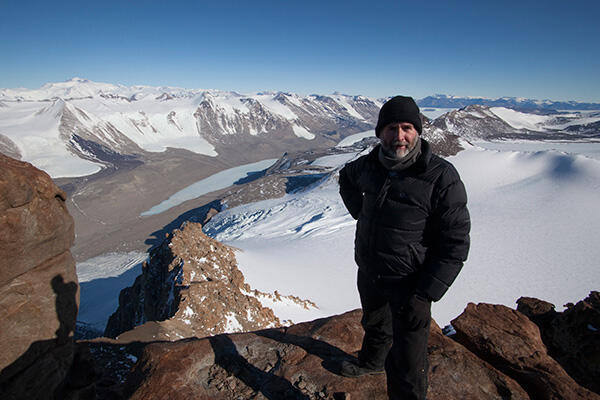
Interview: Anthony Powell
Through your film you explore many aspects of Antarctica, but did you have one encompassing goal or message you wanted to communicate? Yeah I guess my initial drive was just trying to articulate the experience, and I guess I had the “a picture tells a thousand words” cliché in my head. I just found that it was the only way I could properly articulate what I was seeing and the experience. Pretty much everyone I know that has ever gone there has just gone “oh wow, it’ll be a cool place to go and check out.” But once you have actually spent the time there, you actually develop the real appreciation and respect for it and become a little bit territorial and want to look after it and make sure it is preserved. That is sort of what we did in the film as well – we didn’t want it to be a blatant advocacy film, but it just progresses naturally after experiencing it. At the start of the film you said that you can’t put into words what it is like to live in Antarctica. Do you feel that your film accurately portrayed what you couldn’t with words? Or do you feel you still have to go there to truly understand? I think that it is the closest you can get without actually being there. That is what a lot of the feedback I have gotten from other people who have spent time on the ice [has been] – it’s basically the next best thing. There is still so much more when you experience anything in person, so you can never capture it 100 per cent, but I think it gives a pretty good sampling. In the film you not only showed the light, but also the darker aspects of Antarctica and its wildlife. Does it annoy you when you see documentaries that glamorise Antarctica? A lot of films are trying to sell a happy product. But generally my guiding thoughts were to make it real – if I ever saw something and had a reaction I put it in the film. The penguins, for example, are amazing – you can just sit there and watch them all day – but there is the other side to it as well. Most filmmakers will just sit there and show you the happy penguins, because dead penguins being eaten by birds doesn’t really sell very well. In the film you touched on, but didn’t put a huge emphasis on, environmentalism – a theme that has become really strongly associated with documentaries about Antarctica. Was that a conscious decision? Yeah, I wanted it to be there but not in your face. Because I thought that by taking the more subtle approach and only mentioning it a few times here and there, is more common to the actual experience of being there. It’s also probably making the message a lot more acceptable to people who wouldn’t want to go and see some kind of advocacy film. In the film you show all the different ways people in Antarctica entertain themselves. Do you think Antarctica has given you a new perspective on the function and importance of entertainment? Yeah definitely, there are no cell phones and limited internet access so you basically go down there with a couple of suitcases and what you bring is what you’ve got. So you really need to create your own entertainment. It forces you to revaluate some things. It’s actually quite rewarding: you suddenly realise when you get back off the ice how much you are being bombarded with consumerism and marketing. I can’t stand to watch TV now because I can’t stand to sit through ads anymore. What advice would you have for young documentarians? Just get out there and do it! I had no film school training or anything prior to doing this. I’ve always been a keen photographer and it was pretty much a case of [shooting for] a year before I thought that I was on to something. Then I just kept gathering more and more footage. It wasn’t until the last couple of years that I focused on the more human side by gathering all of the interviews. I put a rough cut together and started showing people, asking was it worthwhile, and when everybody started jumping on board, it was all go from there.
-
Culture

Interview: Gabriela Cowperthwaite
The film Blackfish: is it about orcas in captivity, or is it about the SeaWorld empire and their treatment of orcas in captivity, or is the overlap of those two so strong that it’s one and the same thing? Yeah, you know, I told a story. I came in as a mother who took her kids to SeaWorld and a documentary filmmaker who thought that this incident with the trainer being killed by that killer whale was a one-off, an anomaly, and wanted to do a completely different film about things like this and human beings and our relationships with our animal counterparts. And only then did I discover, really, what … lay beneath the surface. So I went in with a question, and I followed Tilikum’s story. Tilikum is the whale who killed Dawn Brancheau, and I go back 40 years to his capture, and just kind of follow his trajectory, and I let that be the guiding force in the film. You didn’t seem to have a problem getting hold of former SeaWorld employees to be part of the film, but it seemed to be difficult to get SeaWorld itself to be part of the film. Correct. There were some folks who had become a little bit vocal after the death of Dawn Brancheau and heard the spin that was coming out of that park and they smelled a rat. They said, “it couldn’t have happened this way, and here’s why.” … There were also people who backed out of being interviewed at the last minute and said “if I’m an upstart, I will never work in the zoological industry again, and so I need to not speak out against SeaWorld.” But I was just looking for the truth. They were part of my fact-finding, and SeaWorld was too. In fact, I tried very hard to have them in the film – I gave them my list of questions, which is unheard of in a documentary. I thought they would be a voice in the film, and look, I was interested in hearing what everybody had to say on the topic. And six months later they declined, but have recently come out with some accusations against the film, right before the film was released. So we knew they had to say something at some point. But yeah, they were welcome the whole time to be part of the film. The first time I heard of this film being made was during a conversation with a marine biologist here at the university some months ago … something that came up was the ability to trace so much of the captive orca population back to a sole progenitor, that being Tilikum. Over 50 per cent of all captive whales are his, right? His descendants? Yeah, that’s a frightening one, isn’t it? That’s a pretty shocking one to people. Yeah, over 50 per cent are tagged in SeaWorld’s collection as being sired by Tilikum. So he’s the top breeder: he’s responsible for over 50 per cent of all the killer whales at SeaWorld, and this was after he had been associated with the two previous deaths. This was after he’d killed two people. Where does that fit though, do you think, in terms of nature and nurture? That’s interesting. I mean it’s always an interesting question in terms of “okay, is this really a genetic thing that we’re so afraid to pass on?” … Alexis Martínez, in the Canary islands [was] killed by [bull orca] Keto, and Keto just turned on him and killed him in a matter of seconds, and this was just a few months before Dawn was killed. And not a lot of people know this story, but Keto was captive-born – he was not taken from the wild, this was a completely new gene pool. He was not Tilikum’s. [In] hundreds of the documented cases of whales aggressing or attacking trainers, it doesn’t matter if they came from the wild or if they were captive, if they came from Tilikum or not. They’ve all had – pretty much every killer whale has had – an incident that could be considered aggressive, heavy frustration, or whatnot. So there’s no real correlation to genetics or captive-born or wild-born, but it’s just that all of them, all of them have the capability. … I feel very strongly that killer whales are not suitable for captivity, that there’s no way we can ever give them what they need to thrive, let alone survive, and that it’s actually increasingly dangerous for us to keep trying. Is it a cause you will continue to fight for after the film? Is it a new crusade for you? I don’t think it will ever reach activist proportions, it’s just not my personality, but I believe that it’s kind of landed in my lap. As a mother who took her kids to SeaWorld, I have a very odd voice, to suddenly have this story drop right in front of me, but I do believe that the film could be an agent of change and I’m going to hopefully help it do that in whatever way I can.


