
-
News
“Action” Fran Acquires 200 Legless Chairs to Sell for Charity
OUSA were donated 200 seats from the deceased Carisbrook stadium last Wednesday, none of which have legs. They are to be sold to students for a gold coin donation, with all proceeds going to Rotary to help organisations such as the Neonatal Trust of Otago and the Yellow Eyed Penguin Trust. Joining your humble reporter on his office floor for an interview, OUSA President Francisco Hernandez reasoned that the stadium “were looking to get rid of them, and we thought it would be a good opportunity for charity to give these chairs to students who may want a little piece of history for a gold coin donation.” Asked whether he thought the availability of chairs to students was lacking, Hernandez retorted, “this is not about the chairs. It’s about owning a piece of history.” As for what would be done in the event that there were lots of chairs left over, Hernandez contested that “there won’t be any left over. That’s like asking me what will happen if the sun doesn’t rise tomorrow. “I’ll donate the gold coins myself and dump the chairs in my basement if no one wants them. I’m confident they’ll go. Otherwise, I can use all my Zentech trial money for them.” Hernandez also figured that some famous bums had sat on the chairs. “There are people as famous as the Dalai Lama to people as infamous as myself,” he said. Critic contested that the Dalai Lama had never attended a Carisbrook event, to which Hernandez responded, “it’s about arse print transfer, isn’t it? In which case the Dalai Lama doesn’t need to have sat on the seat himself, but probably sat on another chair, after which someone else sat on that same chair and went to Carisbrook, transferring his arse-print. “It’s like if someone has an STD. If I have sex with that person, unprotected, and another person has sex with me, then that next person now has the same STD. It’s the same principle.” Hernandez also contested that the practicality of a chair with no legs doesn’t matter because, for the umpteenth time, “it’s about owning a piece of history. It’s not about the chair. How useful were the bits of the Berlin Wall that people came and collected? The pieces weren’t doing their job of segregating the population, but people still bought it to own a piece of history.” Hernandez did not know at the time of the interview how many chairs had already sold, but believed they were “selling like hot cakes.” This quickly transcended into a deep philosophical discussion about the market demand for hot cakes in Dunedin, which “doesn’t necessarily mean they’re selling fast. This might be a country where no one likes hot cakes. This might be a country where there has been a big flour-poisoning scandal and no one buys any wheat-based products.” Ever the “Action Fran” (a term he coined himself), he then checked in with the Recreation Centre on Wednesday afternoon to establish that “about 30” of the chairs had been sold, having been put on sale four hours prior. “So hot cakes sell quite well here. It’s probably because it’s so cold. Actually, are they hot cakes in Dunedin or pancakes?”
-
Columns

Proctology | Issue 17
“Think a bit before you do these dumb things.” – the Proctor, every interview ever. This week in “Proctology” is uneventful. According to the Proctor, “everyone’s been pretty good.” The only reason for this would be the cold weather and the ensuing lack of general motivation. Having said this, there are one or two incidents of misconduct to report. Those flatting around the Castle/ Leith Streets area have allowed the rubbish left outside flats to “build up.” What students may not be aware of is that most of the University’s team leaders are certified litter wardens for the City Council. This means that if “after asking 55 times … it’s not cleaned up, they can issue a ticket and monetary fine.” Luckily, this hasn’t happened yet. Apparently after only being asked 40 times the message seems to get through to people. Another misdemeanor involved flatters owing their landlords rent. This includes rent owing from “2011, 2012 and so on. Fifteen hundred to two thousand dollars is often owed.” The Proctor gave some wise advice to all current and future flatters: “your bond will very, very seldom cover overdue rent. It won’t be the same amount. And if it’s not paid, then you end up with a zero credit rating, which isn’t a good way to start trying to go to a bank to get a credit card.” The Proctor also issued warnings in case a Wellington-style earthquake were to hit closer to home. “If you have a large speaker or a shelf above your bed at about head height, make sure it’s nailed down or secured. The big wardrobe by your wall should also be secured.” As for exams, there’s always someone who thinks they can get better marks once an exam has been sat. The bad news is that you can’t. For example, one student argued: “well I went in and sat the paper [but] I got zero for it, so you must have lost the papers and attendance card.” The Proctor then informed this student that in ten years that has never happened. A check of the cameras out by the lecture theatre indicated that the student must have forgotten they had not actually attended the exam.” Another attempt involved a tampered-with medical certificate. “The special consideration was for a student whose doctor had said he was extremely ill. Unfortunately we noticed the twink on the bit that said ‘mildly affected’ and the different coloured ink used on the part that said ‘seriously affected.’ Doctors don’t use twink.”
-
News

Foreign Workers Flock to Christchurch Rebuild
As the Christchurch rebuild draws workers from around the world, the city’s demographics as well as its buildings look set to change. Since the February 2011 earthquake brought destruction to Christchurch and subsequent demolitions further denuded the city of buildings, construction companies have sought skilled tradespeople wherever they can find them to help rebuild the city. Increasingly, that means looking overseas. Figures released by Statistics New Zealand show a net inflow of international migrants to the Canterbury region since the second half of 2012. In the last six months, four thousand people have moved to the region, an average of 25 people per day. Many of Christchurch’s new residents are now coming from overseas. While some visas require employers to search for Kiwi workers before recruiting from overseas, other workers may come to the city on working holiday visas to take up jobs in the reconstruction effort. Of these, Canterbury Employers’ Chamber of Commerce settlement support coordinator Lana Hart says Filipino workers recently outstripped British and Irish workers as the city’s number one source of new migrant labour. Last week, New Zealand construction company Arrow International signed a deal with the China State Construction Engineering Corporation (CSCEC). The CSCEC will supply steel and workers for major building projects on which Arrow may bid, such as Christchurch’s new stadium. Immigration Minister Michael Woodhouse says that “there is no doubt in my mind that the rebuild is going to require a significant number of migrant labourers,” and predicts that as many as 17,000 of the 35,000 workers needed in the rebuild may come from overseas. Christchurch currently has a workforce of 20,000. Woodhouse believes the city will become “a pretty cosmopolitan place probably for the next 15 years.” Rex Gibson of the Christchurch Migrant Centre has been involved in welcoming over 400 migrant workers from 12 different countries so far. He says foreign workers can do relatively well in Christchurch. Their focus on living cheaply and saving money to take home was particularly advantageous, especially when it came to accommodation. “We’ve been able to accommodate them a bit like a Castle Street flat – you can put six people in a house, whereas if they were tradespeople from New Zealand, for six people we’d have to find six houses, and that’s just not available in Christchurch at the moment.” In some cases, larger employers had refurbished old forestry lodges to house their employees and hired cooks from the workers’ country of origin to provide a taste of home. Filipino workers have also been particularly eager to work on the rebuild. Some ten percent of the Philippines’ population lives overseas, and their remittances contribute 13.5% of that country’s GDP. Leigh’s Construction reported that 400 workers applied in Manila for the 20 vacancies it advertised there. Gibson said the reason for that was clear: “you’re looking at the money being worth at least six times that much back home.” Filipino builder Abel Oaferina told TVNZ that New Zealand wages were a welcome change from the $2 per hour he received at home. For most workers, the experience of coming to Christchurch has been overwhelmingly positive. Patrick O’Connor, Director of the Pasifika Education and Employment Training Organisation (PEETO) in Christchurch told Critic that “they’re loving it. New Zealanders are pretty hospitable and a lot of employers are taking it upon themselves to facilitate smooth integration.” Community groups have benefited from the presence of foreign workers. Churches have seen their pews replenished, sports teams have gained new members and choirs are being filled with new singers. However, moving to work in Christchurch’s construction projects has not been problem-free for everyone. Some Filipino migrants have revealed that immigration agencies have charged them exorbitant fees, with some workers’ families having to lend large sums of money to cover their costs. O’Connor said he had heard of some workers taking out loans from their families to cover visa application costs and agents’ fees. PEETO encouraged workers to join unions to protect their employment rights. Cultural misunderstandings have also caused problems for some workers. Gibson told Critic that some migrant workers “don’t actually confront their supervisor because in their culture you show respect ahead of all other things.” One supervisor had cut Internet access to the workers’ accommodation at 9pm to ensure that they were up early for work, despite time zone differences which made late nights the optimal time to Skype their families. While this incident was easily resolved by the Migrants’ Centre, such problems could become more numerous as the world’s workers come to Christchurch. Mayoral candidate and Labour MP Lianne Dalziel also worries that foreign workers may be exploited by their employers. She told Critic that she was concerned about foreign workers being “ripped off” by their bosses in the absence of government oversight. “Their wages will be undercut and it won’t be seen by the Department of Labour.” Labour’s immigration spokesperson Darien Fenton has also warned that the Government’s recent crackdown on employers of seasonal migrant workers will be pointless unless the government increases the number of labour inspectors from the 35 currently employed by the Ministry for Business, Innovation and Employment. Some have suggested that immigration and labour laws should not be enforced while Christchurch remains a construction site. Former Reserve Bank governor and former ACT Party leader Don Brash has responded to reports of illegal immigrants working in Christchurch by calling on the government to issue such workers with visas. “If the government were more concerned about speeding up the rebuild, instead of hunting people who are helping with that rebuild, they’d be doing the citizens of Christchurch a great favour,” Brash remarked. Patrick O’Connor slammed such suggestions. He told Critic “there are refugees and migrants who can’t gain work, so if they see illegal migrants coming here, the implications for race relations are not very positive.” The issue of representation for non-resident workers may also arise in coming years. Dalziel admitted that “this rebuild isn’t going to happen in two years.” When quizzed by Critic on the possibility of thousands of migrants having no voting rights for Christchurch City Council and General Elections, Dalziel said no changes to representation were possible under the law. However, Dalziel said she was committed to “active engagement” of “community organisations already at work,” such as the Philippine Society, and had already met with “a number of … ethnic groups” in preparation for her mayoral run. As Christchurch becomes one of the world’s largest building sites, migrants look set to become an important part of the Garden City. How this new wave of migration will affect the city’s future remains unclear.
-
Features

This Train Carries Lost Souls
Film festivals always churn out some black sheep. However, few have been as eagerly anticipated and controversial as this year’s Thomas, a live-action adaptation of Thomas the Tank Engine directed by Darren Aronofsky. The film has bitterly divided critics: while some have hailed it as “surprisingly thought-provoking” and “an emotional roller-coaster,” others have labelled it a “train wreck” and “borderline child abuse.” The film has a Dunedin connection: Sean Baker-Haines, a Dunedin local and University of Otago graduate, has a minor role as Jones, an engineer. This was Baker-Haines’ first acting role, having worked as a production assistant on various sets since graduating, and Critic caught up with him for a chat. Baker-Haines describes the experience of working on Thomas as “humbling … Darren [Aronofsky] has always been one of my heroes, so getting to not only meet him but work with him too was incredible. “He’s a visionary who’s really breathed new life into these much-loved characters. A lot of people have been criticising how dark the film is, but that’s the way movies are going these days. Darren’s bringing the sensibilities he showed in films like Requiem for a Dream and Black Swan and applying them to this new context in a way that’s really exciting.” The film is certainly dark. Thomas (Steve Buscemi), an anthropomorphic steam engine, has fallen far from the cheerful locomotive he once was, and is now brooding and introspective. Facing increasing competition from bullet trains and other forms of electric rail, Thomas feels that his existence is under threat. This leads him to reflect on the meaninglessness of his life, a life rigidly bound to the British railway system and the coaches he is forced to pull across it. He considers himself a slave to the rails and the carriages, and yearns to roll free through the roads and meadows. But it is not to be. “Thomas is at an interesting point in his life where he’s really starting to question his life choices and where people are starting to see him differently,” Baker-Haines says. “I think they’ve really pulled off a coup getting Steve on board to play him – he’s a perfect fit.” Indeed, Buscemi’s hangdog features and sunken eyes might not be everybody’s cup of tea, but he undeniably puts a fascinating, doleful new spin on the iconic character. His is a Thomas worn down by decades of shunting, freighting, and inhalation of smoke and steam. In a last-ditch attempt to retain his relevance, Thomas gives in to the Fat Controller’s radical plan to turn him into a mobile high-class brothel. The Fat Controller – an almost unrecognisable James Franco, who donned a fat suit and heavy prosthetics for the part – is an unstable and terrifying presence, driven by an all-consuming desire to “control everything.” Franco took on the role in order to “show his range,” and has already been heavily tipped for next year’s Oscars. Thomas develops feelings for a monorail named Cindy, who is herself in the midst of an existential crisis. Cindy (Kristen Schaal) is unable to shake the feeling that she is “not real public transport,” and is simply an expensive marketing gimmick by a local government with too much cash to spare. The two bond over their mutual insecurities, but their budding romance is thrown into jeopardy when Thomas contracts gonorrhea and syphilis after having sex with Space Mountain. Although Jones is a small part, Baker-Haines says he has an important part to play in the story. “Jones really comes to the fore after Thomas contracts those diseases – he’s really important in terms of looking after Thomas, making sure he keeps running properly and that he uses only clean coal, not lignite. … In a way he’s Thomas’ closest companion – he’s not so much by Thomas’ side as he is physically inside him, all the time.” As the railway increasingly sheds customers to Noddy’s taxi service, the Fat Controller turns to one of his new brothel’s most violent and psychopathic patrons, Postman Pat (Sean Penn), to bring the failing business out of the red. Postman Pat and his black and white feral cat stalk the streets in search of Noddy (Elijah Woods). Noddy, having been framed by the corrupt policeman Mr. Plod (Paul Giamatti) for fatally running down Skippy the bush kangaroo, takes refuge in Thomas’ mobile brothel. This sets the film up for a spectacularly tense set piece, as Plod, Pat and Noddy square off inside Thomas’ plush and seedy carriages. That scene, which pays homage to such films as From Russia With Love, was Baker-Haines’ favourite to shoot. “It was brilliant, I’ve seen a lot of action scenes get shot before, but it was great to finally get in front of the camera and get to take part myself,” he enthuses. “It shows a new side to a lot of these characters – most people probably don’t think of Postman Pat as someone who’s capable of these really brutal acts of gratuitous violence, but that’s what you get in this film.” But is the film too dark? During a recent interview, Buscemi reflected that the screenplay had “perhaps strayed too far” from the source material and had become too heavy. “I probably would have liked Joel and Ethan [Coen] to write it, but they were busy,” he said. Buscemi cited the moment when Thomas passes on his syphilis to Cindy as an example of this tendency. “That’s just not something children will understand or appreciate,” he predicted, “especially when Cindy goes mad from the syphilis and crashes into a multiplex.” The crash causes hundreds of fatalities, almost driving Thomas over the edge. Baker-Haines disagrees that the film’s moodiness goes too far. “At the end of the day it probably transcends that kids-film genre into something more approaching art,” he reasons. “It’s pitched more at people who grew up with these characters, who love them dearly and hold really fond memories, and making a film about what would happen if everything suddenly became really harrowing and traumatic. “Hopefully it makes people just reflect a little bit on their childhood, and maybe replace those superficially happy memories they used to have with something a bit more grim and troubling.”
-
Features

Polyamory: Fun for you & me & him & her etc.
It Started With a KissOne night I was out drinking with my friend. As the night progressed we decided to join another group of friends to see a gig on the other side of town. As my friend and I walked we verbally stumbled onto the subject of polyamory – a lifestyle choice with which he identified. I was curious. A lot of people I know sleep with each other but I had never viewed their relationships as something beyond one-night stands. When my friend and I approached the group we were joining up with, he pointed out his girlfriend to me. He then proceeded to passionately hook up with a mutual friend of ours who was not his girlfriend. His girlfriend, however, didn’t even blink an eye. Our culture is obsessed with how we label ourselves, particularly how we label ourselves sexually. When we “discover” a friend is gay, it warrants responses that claim either that our speculations have been confirmed, or that we had no idea. Another label to be stitched onto the collar of a particular open-minded group is “polyamory.” The concept of polyamory is as fluid as the sexual lives of those who go by this label. In the book The Ethical Slut, which is seen by some as a manifesto of modern, liberal sexual identities, Dossie Easton and Catherine A. Listz comment on the vagueness of the concept of polyamory. “Some feel that polyamory includes all forms of sexual relationships other than monogamy, others restrict it to committed love relationships (thereby excluding swinging, casual sexual contact and other forms of intimacy).” Self-described polyamorist Matthew* describes it similarly. “Although people debate what the term actually means I wonder if polyamory even needs a name. It’s like atheism – it’s the absence of something and in this case, it’s the absence of monogamous fences or boundaries. Each person will have his or her own subjective interpretation about what polyamory is, but I have always understood it as that lack of physical ownership in a relationship. We’ve been conditioned by society to feel territorial over our partner’s body. It’s a removal of that body territorial idea. I had known about the concept for some time while at school and because I was young and in a full-on relationship I was very intrigued by the idea.” Rebecca*, another practicing polyamorist, commented further on the topic. “We don’t view either polyamory or monogamy as better or worse, it is just about trying to conduct relationships in ways that are fulfilling and well-suited to different people. The concept of polyamory is well-suited for people who value independence and autonomy within relationships. For me, it was really nice being able to conduct myself independently from my boyfriend at times. “Polyamory is really important for acceptance, open-mindedness and not projecting values about love and relationships and sexuality onto your partner. I also found it to be really helpful for me as well when I broke up with my boyfriend. His being with other women after we broke up held no symbolism for me of his moving on or being over our relationship.” The RootsWhile the roots of polyamory are both intertwined and far-reaching, some view this lifestyle as first being practiced in between the late 1840s and 1870s. In a 300-large commune called Oneida, based in upstate New York, a Christian minister named John Noyes pushed the boundaries of both the law and the traditional ideas of marriage in an experiment known as a “complex marriage.” The complex aspect of the marriage involved all members of the commune being considered as married to each other. As Libby Copeland wrote in an article for Slate magazine titled “Making Love and Trouble,” “Noyes believed that sex was a kind of worship, and that in order to live without sin, men and women had to be free to worship all over the place with whoever they wanted.” Practices in the Oneidan commune included older women teaching men how to practice spiritual sex, men establishing their own birth control mechanism by learning to physically resist orgasms during intercourse, and Oneidan women generally only having sex with who they wanted (a type of sexual liberation for women almost unheard of during the 1880s). Despite Noyes’ many ideological flaws – which included fantasising about and acting on eugenics and incest – his experimentations with complex marriage amounted to what Copeland describes as “remarkable progress for the women who lived there.” Rachel* explained to me how having multiple relationships can be linked to feminism. “When these ideas of polyamory and feminism are linked, the most pertinent things that come to mind for me [are] agency and a challenge to the idea of possession – agency in the sense that this is a framework that acknowledges the breadth of females’ sexual and emotional complexity by allowing us to conduct and explore a range of relationship dynamics. “Possession ties into this too in that polyamory actively challenges the notion of women being entities that their romantic or sexual partners have some sort of claim over, [a notion] that overrides their right to pursue any other bond they may have or develop with another person. The idea of women as property, and their identities being forged mostly in relation to their partner (especially if that partner is male) is a pretty ancient notion that can still quietly permeate contemporary rhetoric.” For Rebecca a polyamorous lifestyle is pro-feminist because it helped her “recognise and get over a lot of jealousy and female rivalry. I was in a longer-term relationship (and living together) and I felt pretty secure in both my relationship and the knowledge that my boyfriend loved me. I found that I stopped feeling threatened by many women, so it helped to foster better companionship and get rid of some competitiveness.” These loose ideas of polyamory and free love danced around the fringes of society into the twentieth century and became more prominent as the fight for birth control and women’s sexual self-determination reached new levels. Sociologist Elisabeth Sheff identifies a second wave of romantic and sexual adventuring into non-monogamous territories as occurring during the 1970s. Whether or not the ideas practiced in the Oneida commune can be explicitly linked to the Bohemian free-love movements of the 1970s, there are threads of similar idealism running through both that involve self-determination of identity and sexual liberation. A commune called Kerista was established in the 70s by a charismatic man called Jud the Prophet. Jud the Prophet founded a way of living that consisted of three large group marriages. In these groups sleeping schedules were regularly rotated to keep intimacy evenly distributed, and it was the entire community’s responsibility to care for the children that inevitably tended to pop up. While such polyamory movements were reduced to embers in the 1980s by the AIDS scare, a third wave was recently ignited by the Internet. Dunedin: A Nest of Multiple LoversAlthough the history of polyamory seems to have taken place in faraway American lands, there is a range of people in Dunedin who currently identify (to varying extents) as polyamorous. Matthew started toying with the idea while in a long-term relationship at school. “Personally I was emotionally attracted to other girls and I didn’t consider that my attraction was something I had control over,” he says. “Polyamory is the active decision to act on attractions like that.” When I asked Matthew if he told his girlfriend at the time about these thoughts running through his head he replied, “yeah but I didn’t state it bluntly. I wasn’t like, ‘listen sunshine I’m finding other girls attractive and I’d like to act on that.’ I talked about it in a more gentle and subtle way – expressing the very real concern that we were both still very young and these years are when we’re most sexually active before we make any big commitments to strong, serious relationships. She had been thinking the same thing but she was upset in that kind of hypocritical way to know that I had those thoughts too.” In one of Matthew’s more recent relationships he dated a girl who had already experienced the polyamorous lifestyle, but it still took him time to literally and metaphorically find his roots. “When I was in my first real polyamorous relationship I wasn’t sleeping around at the beginning – I still very much had my mask on. But my girlfriend, who already had been in this type of the relationship, was going home with different people from the get go. Initially I felt competitive. I started making this tally chart in my head, which was bad. “But as soon as I started sleeping with other people I got into the swing of things. What’s key to it working is to literally tell each other everything – communication is everything. The first time I slept with someone other than my girlfriend filled me with a sense of relief. I had been polyamorous on paper for so long but never acted on it. I got my boy scout badge.” No JudgementAs research suggests, you haven’t truly partied until you’ve poly-partied. Matthew explained the distinction to me. “There is a huge difference between hanging out with people who all know that [you are] open-minded and polyamorous compared to hanging out at your average party. This might sound strange, but being young and foolish you always get that feeling that there will be someone at that gig or party that you can go home with at the end of the night in the right circumstances – that’s how your night will ideally end. But if you are at a gig or a party surrounded by people who don’t have that same understanding the process takes so much longer and the idea of going home with someone is more of a big deal – you have to be subtle. “Hanging out with a bunch of people that feel similarly can be ridiculous because you feel so open and liberal and everyone knows that anything goes. You can just walk up to someone and start talking to them and you know that at the end of that conversation you will start making out or shoot off somewhere. You don’t have to be as subtle and you can openly express desire and attraction. This is what is attractive about it – no one is wearing any masks.” As with any relationship, consent in sexual endeavours is fundamental. But in the case of polyamory. consent is not only required by those primarily involved but also from the chain of people who may be affected by your arrangements. I asked Matthew if this type of open-minded environment could be abused. “Everyone still has his or her own way of pursuing someone and letting someone know if they are into them, but the idea is that people feel more comfortable in expressing that desire,” he replied. “There have been occasions where I have gone up to people in social situations and they have told me that they are not feeling it tonight or there is another person they are interested in. Initially you feel rejection but then you realise it’s fine, especially if you’ve been in a similar situation. There’s no judgement.” It seems that as one embraces the lifestyle of polyamory, polyamory embraces one back – from multiple directions, naked. Matthew elaborated: “the first time I had a threesome was interesting and the performance anxiety came back. When you are sexually exploring new grounds the reason you get anxiety is based on a sense of obligation. But once you realise there are no rules and procedures and what you do is your choice it becomes okay.” Threesomes and multiple lovers are pretty foreign ideas for most people, even though people seem to want them to happen. When I brought up this concern with Matthew he remarked, “I think people fetishise it, which is bad. If you are an outsider looking into the concept of polyamory you can start getting all these weird conceptions about it. Then if these ideas don’t turn out to be true then it can be really unhealthy for you, in the same way as [it is unhealthy for] someone who has been watching porn for years before having sex [to build] up all these expectations of what it will be like and what his female partner should look like. It’s hard to translate what being polyamorous is like because, say if you tried out a polyamorous relationship, you would have a completely different experience to what I’ve had.” Are You A Slut?Underlying these liberal relationships is a controversial movement to reclaim the word “slut” as a term of “approval, even endearment.” Easton and Listz assert that to them, “a slut is a person of any gender who has the courage to lead life according to the radical proposition that sex is nice and pleasure is good for you.” While Rachel is a supporter of Slutwalk and will use the world “slut” as a term of endearment with close friends, she also completely respects “the position of people who are opposed to its reappropriation. I’ve read some very heart-wrenching personal stories and social commentaries by people, especially women of colour, who by virtue of their identity have been exotified and hypersexualised throughout their lives, and therefore can’t see the word as anything but a weapon. Being a self-identified feminist, I of course try my best to conduct myself with a constant awareness of the intersection of gender with race and class, so utterly respect such opposition to reclamation.” In another of Matthew’s relationships he encountered a girl who couldn’t do polyamory for the very reason of being called a “slut.” “A girl I was seeing believed we should be hetero-monogamous and I questioned that out of curiosity. She told me that society tells me if ‘I am sleeping with someone outside a hetero-monogamous relationship then I am a slut.’ I said ‘that’s insane, that’s ridiculous’ and I asked her if she agreed with that view. “She told me she believed she should be able to act however she wanted and sleep with whomever she wanted. This was the worst thing for me to hear because this girl was aware but she was still following suit. She should have thought ‘fuck what other people think and fuck what I was brought up to think,’ but the way she had been conditioned and the whole slut-shaming thing meant that she didn’t.” Be Open (One way or the Other)Whether or not you can insert your mind into the fluid, throbbing world of polyamory, one thing that is clear is that our culture is still very much dealing with oppression – an oppression resulting from the inherent shame felt about sex, sexual desires and our bodies. The shame could be the result of being raised in a strict household, or it could be from the utter inadequacy of the health lessons taught throughout school, but as we become more educated the importance of questioning this shame and the restrictions it places on how we view ourselves and the people around us exponentially increases. At this point in human existence, opening your mind may not necessarily involve opening your legs – but don’t let your own position dictate those of the people around you. While there remain many more lessons to learn, I think that’s all we can swallow for now.
-
Features
The Great Annual Critic Fish & Chip Review
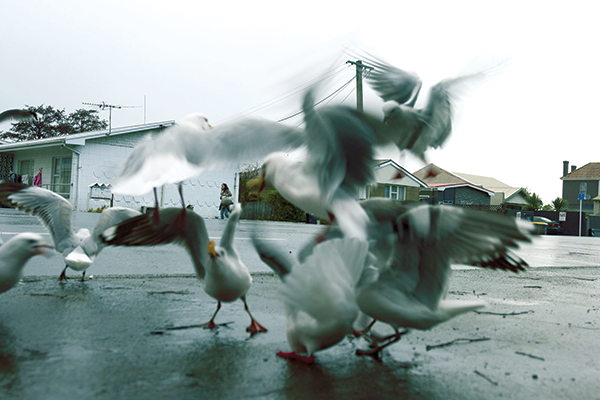
Ines Shennan spent her afternoon wandering around the realm of North Dunedin, grease gradually building up in her stomach as she sampled the various fish and chips offerings. Here are the results. The cheapest scoop of chips and cheapest piece of fish was selected from each store. Golden SunI started the annual fish and chip review with a stomach so empty it was rumbling. It was a bleak Sunday afternoon pouring with rain. The few people who had braved the dim outdoors were moving at an unhurried pace. I was slightly hung over, but ravenous, and the avalanche of assignments that arrive in an unwelcome blast near the beginning of each semester was yet to hit. (Since undertaking the review, the avalanche of internal assessment has sadly descended upon the mountain that is my almost-finished-but-not-quite undergraduate study. But you likely don’t care about that and this metaphor has also been dragged out for far too long.) The first port of call was far from costal, but the fish tasted better than expected. Golden Sun is situated on the corner of Great King Street and Dundas Street, the first outlet of many on the Fatty Lane one-way (if you’re heading North. Otherwise it’s the last). The service was very friendly, the place smelled clean, and the biggest fault was the insipid peachy-salmon interior paint job, which on the whole is no biggie. The chips erred on the undercooked rather than overdone side and were pale in colour and lacking in grease. I personally found this a welcome change from the dripping-with-oil, fried-to-buggery chips that grace many fish ‘n’ chipperies, but hey, I get that some of you savour that kind of, well, dripping-with-oil, fried-to-buggery style of cooking. A slap of tomato sauce would finish them off nicely. The fish was pretty good – a thin, crisp batter and a decent hunk of fish that flaked away nicely and tasted genuine instead of like pulverised sardine-infused cauliflower. If you’re partial to greasier, fattier chips, it wouldn’t be a bad idea to pick up your fish from Golden Sun and your chips next door at Mei Wah. Read on … Chips: $1.50. Rating: 7/10 Fish: $2 (Hoki). Rating: 8/10 Sauce: $1.80 (Rip N Dip) Fizzy: $2.30 (355ml can) Service: 8/10 Mei WahMei Wah is the quintessential fish and chip shop in Dunedin’s student quarter. The selection on their menu defies imagination, though saucy noodles and burgers weren’t on the agenda for this visit. Their chips are a deep yellow, which is quite alarming, and leave a fatty layer on the roof of my mouth. Personally, I found this unpleasant, but I also felt as though this is all part of the chippie experience and embraced a decent portion of them. The chips are wonderfully soft, although it must be said that whatever they cook them in does not leave the greatest taste in one’s mouth. But while Mei Wah’s chips, despite their flaws, are pretty good value, their fish is not. It was like eating a piece of mediocre fish triple-dipped in pancake batter: too sludgy, and far too much batter at that. Still, you can’t help but be oddly charmed by the place, with its old-school gaming machines, plentiful supply of celebrity magazines and tables seating hordes of hungry students. You get what you pay for at this place, and with an Everest-sized pile of chips and a hunk of fish in a nineties fish and chip store-type atmosphere for $3.70, you can’t really complain. It fills the spot, but it’s comfortably mediocre. Chips: $1.80. Rating: 7/10 Fish: $1.90 (Hoki). Rating: 4/10 Sauce: $2 (Rip N Dip) Fizzy: $2 (355ml can) Service: 6/10 WillowbankThe service is great, the chips are an oily nirvana and the fish is terrible. Just like the expansive lolly counter, this place is a real mixed bag. On that note, the lolly selection is quite admirable. Just like the “old days,” there are even lollies by the jar, though inflation has seen an increase from two-for-5c to 10c a piece. Steep. Anyway, back to the fried goods by which I had been lured in. The fish is a perfectly rectangular, crumbed piece of hoki and is largely flavourless; it’s not bad per se, but it’s certainly not worth the $3.30 price tag. Stick with the fried chicken. The chips, on the other hand, may sit in a warmer but boy are they perfectly soft, and coated in what is probably very unhealthy chicken salt. If you are hung over, or in the midst of a carb craving, or stuck in a rut and can only escape with a good load of grease, these are the chips for you. The portion is small compared to the likes of Mei Wah, but they are far better and come in a cute wee box. Given that the place is a dairy, there are also biscuits, pre-packaged ice creams, a plethora of scoop ice creams, carb-loaded snacks and fridges full of every possible carbonated drink under the sun. If you’re really in need of some comfort food (and I’m not talking something honourable like mum’s best roast) then this is the place to stop. All the treats you could wish for and fish and chips. Oh wait, we already established that the fish was no good. Alright. All the treats you could wish for and hot chips. That’ll do. Chips: $1.50. Rating: 8/10 Fish: $3.30 (Hoki). 3/10 Sauce: $2 (Rip N Dip) Fizzy: $2.20 (355ml can) Service: 8/10 The Flying SquidKnown as “Squiddies” by the locals, this haunt has an endless drizzle of patrons feeding in and out of its tiny premises, eager to get their fish and chip fix or even grab one of their $3.80 lunchtime special burgers. I used to be a Squiddies fangirl who conveniently lived a mere 20-second walk from the place, and would often get a jam doughnut craving around 8:15pm. Given the irritating trend of finding a new flat every single year in Dunedin, I no longer live near Squiddies. After this visit, however, I’m not particularly upset about this. Chips are available as fatties or skinnies and come in a paper bag. While pleasingly greasy, they are pretty soft and too yellow. Lo and behold, their fatties are now crinkle cuts, which is disappointing. If I wanted crinkle cuts, I would have bought a bag of frozen McCains from the local supermarket. Their fish is fairly interesting; though it’s certainly fish, its shape is a little too perfect (not quite in Willowbank fish finger territory, but getting there). The flavour is fine, and the batter is actually pretty good – crunchy and oily. Squiddies is decent enough as a fish and chippery, but it’s not quite as good as some of the other contenders. Chips: $1.90. Rating: 7/10 Fish: $1.90 (Hoki). Rating: 6/10 Sauce: $1.60 (Rip N Dip) Fizzy: $2.30 (355ml can) Service: 7/10 Fish HookThese new kids on the block could almost be pricing themselves out of the market if their fish and chips weren’t so damn good. It’s worth paying extra for them – what can sometimes be an experience that ends in regret, grimy insides and uncomfortably greasy fingers is instead delicious and actually closely resembles a meal, rather than a tragic experience of fingering around for the “good” chips. Fish Hook’s chips are hot, soft in the middle, with the slightest crunch at the exterior, and gently golden. They have all the magic of a good chip without that feeling of a lead weight in your stomach, typically left by the dense grease of many chips. Their fish is spectacular – excellent batter, crunchy whilst still having some body to it, encasing tender, delicious fish. I ordered the “house” fish (which is usually sole), it being the cheapest on the menu at $4.50. Tarakihi, brill, monk, groper, blue cod and flounder are also available (dependent on the catch of the day – these guys are always fresh), with prices creeping above the $8 mark for some. The house fish was fantastic, and I was actually given two generous pieces. Unsure whether this was a mistake or deliberate, I was nonetheless very pleased at this fortuitous outcome, and very happy with the addition of a few lemon wedges to squeeze over the fish. You can elect to have your fish battered or crumbed and chips come as fatties or shoestrings. They even have wine by the glass (from Wither Hills to Central Otago pinot noir) and various beers to choose from. It’s certainly a bit pricier than what you’d typically pay for fish and chips, but considering you can eat in, it’s worth the walk there to have what is a relatively cheap meal out. It’s definitely the catch of the Critic fish and chip review by a country mile (or an ocean, if we’re staying on topic). Chips: $3.50. Rating: 9/10 Fish: $4.50 (Sole). Rating: 9/10 Sauce: 50c (small tubs of tomato, aioli, sweet chilli, tartare, sweet chilli aioli and vinegar) Fizzy: $4 (by the glass) Service: 8/10 Botanical TakeawaysSituated on North Road in the NEV, Botanical Takeaways is your classic fish and chip shop, with the comforting aroma of grease, bright artificial lighting, and one of those soft toy prize machines with the metal claws that never actually grasp anything no matter how many gold coins you optimistically put in the slot. There’s even a small selection of prepackaged ice creams, should you crave some sugary, dairy goodness in addition to your traditional oily dealings. Their chips are fairly generous in size (though nothing seems to beat the enormous portion provided by Mei Wah), with a bit of crunch on the outside and a sweltering, soft inside. They have a flavour to them that I couldn’t quite place – must be something in the oil – though it certainly isn’t unpleasant. A bit of sauce would take them to that next level of deep-fried-potato glory. The fish was pretty good, especially for $2; while the batter had a little bit of doughiness to it, it wasn’t too thick and made a satisfying crack upon being bitten into. The fish itself is hoki and tasted enough like fish to convince me of its authenticity. It’s not quite on the level of Golden Sun or Fish Hook, but it’s still pretty decent. For those living in this end of town, the low price tag of $3.50 makes it worth keeping as your Friday night (or Sunday afternoon) regular. The most intriguing element of the place is the chiller cabinet, which houses the various battered items (from the various fish types available, to sausages, hot dogs, donuts, pineapple rings, chicken wings and wontons) much like a bakery would. In fact, I was about ready to ask for a custard square and a pie, it was just that confusing. Or perhaps hunger had made me slightly delusional. Either way, the well-stocked cabinet of goods before they are sent to their crispy demise in the deep-fryer is certainly a charming element to this place. Solid. Chips: $1.50. Rating: 7/10 Fish: $2 (Hoki). Rating: 7/10 Sauce: $1.80 (Rip N Dip) Fizzy: $2 (355ml can) Service: 7/10 Best Fish: Winner: Fish Hook Runner Up: Golden Sun Best chips: Winner: Fish Hook Runner Up: Willowbank Best Overall: Fish HookRunner-Up/Best Value: Golden Sun
-
Features

The Unfunny Business of Funny Business
I went to watch comedy. It wasn’t very good, much like this standfirst. Years ago, Comic Addiction and its “Crack-Up Den” was a platform for the funny folk of Dunedin to hone their stand-up skills. Some became national favourites, and some moved on with their lives. Unaware of the underground comedy scene in Dunedin, I’d spent years watching comics online, observing how members of the crowd howled with a unified glee that I seemed to be missing out on. There were differences between these videos and real life, too. The comics acted like people who didn’t really exist: vulgar yet hilarious, and with a naturalness foreign to someone sitting behind a desk contemplating opening an Omegle tab. Questions about why and how this behaviour emerged wracked my brain. The Crack-Up Den, recently re-instated on 7 June, and a trip backstage at OUSA’s comedy night held my answers. Live comedy comes without ads, but at the cost of your freedom: once in, I couldn’t leave. Drawing attention to oneself was proven a terrible idea by a group, drunk from a BYO, who stumbled down Metro’s stairs and into a well-lit spot to be confronted with the wrath of MC Nick Erskine. What I didn’t realise was that this piece of audience interaction would develop into a back-and-forth exchange of insults that continued until the abrupt end of the show. The increasing competency of the comics was not enough to suppress the aggression of the hecklers, who subsided briefly when a new comedian came onstage but returned with fresh vitriol as soon as “turd-sandwich” MC Nick returned. The rest of the audience became desperate for an interval. Unfortunately, said interval was bittersweet as it cut short the single best comic of the night: Lockie Rhodes, the musically rude comic. The newfound optimism Lockie inspired meant the interval was used to load up on drinks, rather than steal away into the safety of the silent street. Though headliner Travis Monk emerged partway through the second half to boost the mood, the crowd’s hopefulness rapidly lost its naiveté. MC Nick’s ability to cope with constant barraging seemed to go downhill as he admitted he’d tried to imbibe alcohol to gain confidence; weakened by this and the insults, Those People He Called Out In Act One were finally able to drive him off the stage using classic lines, like “when’s the punchline?” and “just stop.” When asked whether they thought they’d been a little harsh, the group of hecklers insisted their acts were justified: “he said Kate had a shit vagina!” There was no doubt the evening was hilarious, but only because it had left us with plenty of tales which justified our smug sense of superiority; this, it turned out, had been the point. Mania en masseThe difference between watching comedy in a crowd and watching it online – aside from the absence of ads – seemed to be the laughter level. In a crowd, even mediocre jokes received a solid sounding of guffaws. It seemed odd that we were laughing more at amateur Dunedin comics than the professionals online, an inconsistency that needs explaining. I’m cynical and insecure, so I assumed the added laughter was people’s way of showing that they were smarter than the non-laughers. We sometimes laugh at drunks or the elderly when they do ridiculous things because we want to assure people that we know better than to act like that. Laughter shows our intelligence. When you’re in a crowd, there are plenty of people to tell you’re smart, so you laugh more. I grew fond of this theory because it meant happy people were really just douchebags trying to show off their brilliant lives, and at first it made a lot of sense. For instance, some pretentious arseholes laugh at lecturers’ jokes and get involved in the lectures because they’re dickheads who want to flaunt their intelligence. Was it too much of a stretch to say that I was laughing at a comedy gig because I wanted the rest of the audience to realise that I got the jokes? Tom Furniss wasn’t convinced. Tom had an alternative theory as to why we laugh more in a crowd: the crowd saps the stigma from laughing. The audience at a comedy night has just paid money in order to laugh. That’s how miserable they are. They don’t want to be looked at, either. Nobody wants to be looked at unless it will make them look cool, and laughing does not look cool. Suddenly screaming a series of sighs through an open-mouthed smile is already weird, but the connotation is also that you liked the joke. When someone says “that joke wasn’t funny,” you look like an inadequate dick. Uninhibited laughter is definitely not a casual thing to do, but when you’re in the Comedy Den you’re expected to laugh, so the mood changes. Without the stigma you’re free to roar at anything and be celebrated for it. Comfort being key to comedy explained a lot. The self-deprecating characters and generally loser-ish nature of the comedians we saw was, I discovered, the point. Nobody likes big, outlandish characters or feels comfortable around them, but the crappy, depressed derelicts of a comedy room are all people with whom we feel equal. The improvised, casual nature of the deliveries also fitted with the theory; if it seemed as though the comedians had been rehearsing, then the whole ordeal would just be a reminder of how sad this all was. This didn’t just explain laughter in the Den, but also in the lectures. The mature student at the front of a classroom is probably comfortable asking questions and laughing at jokes because they can’t see the two hundred other students hating everything they do. The Necessity of NaturalnessMC Nick, who we saw slink off stage at the Den, says that natural delivery is even more important when MC-ing: “you absolutely have to get an audience on your side before getting a stand up out.” This is an interactive procedure, and is therefore largely off-the-cuff, which is why he’ll only write about 60 per cent of his set and spend the rest of it calling out members of the crowd with shit vaginas. The illusion of improvisation is a vital skill for any good MC: Ben Hurley’s performance at the OUSA Comedy Night during Re O-Week was an incredible feat of feigned improv. Before the show, he’d likened using puns to showing your working; they remind the audience that, at some point, the “funny guy” they’re watching has sat down in a dark room with a pen, paper, and presumably some tears, and nutted out their set. “It’s pretty sad,” Hurley admits. His sets, on the other hand, made the crowd forget what pens and trying were, as if Otago had not already deeply suppressed this particular memory. The dejected, unpretentious nature of the comics may have been helping the delivery, but it certainly wasn’t giving them much credibility. By committing themselves to “acting natural,” some of the less experienced performers seemed as though they were too lazy to prep. As we left the comedy, we heard murmurs of people saying they could do stand up just as well. Ben was quick to say this spoke well of his natural delivery, but warned that it takes a bit more to become a professional. They had to be thick-skinned to go through night after night of abuse; Nick Rado told eerie tales of a comedian who waited eight years until he was funny. Tom explained that successful comics keep trying, pulled along by the high of their first gig. Making a few of your friends laugh becomes making a room filled with people laugh harder – the ultimate social affirmation. According to Lockie, it’s like crack: the first time’s amazing, but afterwards it’s never the same. Tom explained that the first gig’s material is easier to find: you’re condensing your whole life’s funniness into ten minutes. After that, you’re forced to scrape the barrel and find more. Miserable MaterialScraping through your thoughts for comedy eventually means accepting the fact that most of your mind is miserable. Lockie, the musical crowd-pleaser from the Den, draws parallels between comedy and therapy. “Where else do you get to talk about yourself for an hour but in comedy?” he rhetorically asked while talking to me about himself for an hour. “You’re being validated by the audience.” Where else but at a comedy night would people be prepared to hear the opinions of a 25-year-old with the life experience of an aged moss? Lockie, like many others, draws on negative experiences for his material. Part of the set I witnessed covered his cat’s death, which his family hid from him for months. In Metro, it seemed hilarious; in the old armchairs of the interview office, it was a horrific, miserable story. “It wasn’t just that the cat had died,” he confided. “My dad had killed my cat because he didn’t like it. He’s a vet, but he didn’t even use that. He just used a spade.” Having strangers laugh at your bad experiences seems like a good prelude to suicide, but for comedians it seems to be the opposite. Lockie was quick to emphasise that by joking about your misfortune, “you find yourself removed, and commentating.” When you comment and profit from your misery there’s a plus side to the pain: instead of thinking about how much you loved your cat, you’re thinking about how much the audience will love his death. Terrible things get to have a purpose and be celebrated. In comedy, people often make jokes about the miserable things they think are about to happen, because then when it does there’s a funny element as opposed to just pain. Simon Amstell, a popular British comedian of Jewish heritage and homosexual tendencies, is the kind of awkward person who would probably have a shitty time regardless of his cultural background and sexual orientation. His material is so bleakly self-deprecating, I can’t help but wonder if Lockie’s assertion that you can be “removed” from the experience is a mentally unhealthy response. Amstell has revealed to press that this is the case for him: “it means that I’m not feeling things fully, and that’s part of what’s wrong with me.” When a person is prone to bad experiences to the point of sensing an imminent one, making light of their misfortune becomes not only therapy, but an anticipatory defence. However, as Amstell says, the technique has made him even more depressed by trading in the experiences that are supposed to be meaningful for an easy laugh instead. Tiptoeing Around TaboosWe can all agree, then, that dark comedy’s an odd endeavour for a comedian. What’s weirder is that we actually laugh at it. An easy way to get an audience response is by fingering the forbidden, hence the nervous cackles at dinner tables when my grandmother explains that her dentures let her give better head. Some comedy, though, goes past mere grossness and into the three Rs: rape, race and religion. Can these things get the same laughs as your garden-variety vulgarity? Ben says “yes”: anything can be made into a clever joke. It isn’t the subject matter that makes someone laugh, but the joke it’s crafted into. The appeal of the three Rs is that they build up tension in the audience, so when it turns out the rest of the statement is just a joke, they laugh. The laughter comes from the implicit idea that the risqué topics carry a lot of weight and are important, so when they are made light of the audience is relieved. Despite being “the most terrible thing I’ve ever seen” – Ben’s words, not mine – Dane Cook’s rape joke is perhaps the best example of turning a taboo subject into a funny, accessible societal critique: he doesn’t mock rape, or rape survivors, but rather the culture surrounding and supporting it. However, this was not enough to convince MC Nick that the three Rs weren’t dangerous. He explained that his greatest fear regarding his material wasn’t offending someone, but having someone agree with him. When he makes jokes about gays and nobody challenges him, he worries that someone won’t realise that the whole joke isn’t “gays suck,” but rather “wouldn’t it be stupid if people actually believed that gays suck.” Saying rude things about the gays is usually unchallenged in a comedy setting, so it’s not a big step for the audience or homophobe to think that the same things can be said unchallenged in reality, too. A Natural ConclusionWhy, with such trials and tribulations, do so many people have the chutzpah to assume they, too, could be great stand up comics? The big names on campus believe that the general populous’ mistaken beliefs are actually a result of the comedians’ talent. “The key to stand up is to make it look effortless,” Ben said, reaffirming the necessity of naturalness. “If everyone else wants to do it, it’s probably because you’re doing your job quite well.” Nick agreed, saying that he feels the droves of amateur wannabes are “the ultimate compliment.” There seems to be an overwhelming view that naturalness, or the illusion of it, is the most important part of stand up delivery. The appeal and need for naturalness in comedy have shaped it from the one-liners of the 1950s into the self-depreciating, dark, and seemingly improvised ordeal it is today. Not only is delivery changing, but, as Lockie informed us, the types of show are moving forward. Instead of stand up being the main place to see people like Ben Hurley and other NZ celebrities, TV panel shows are. Lockie’s latest show blends the audience environment and interaction of stand up with the improvisation of panel shows. The show, Relapse, pushes these new aspects of comedy and removes the chances of any show being the same. As such, everyone who seemed scripted during the comedy night will have to work with little opportunity for preparation, and plenty for failure.
-
Columns

Love Is Blind | Issue 17
CrocodileI signed up to get a feed and A bar tab – and who knows, she could be pretty good-looking, right? Luckily she was (albeit fairly pissed, as was expected really). Some signs are better than others – introducing yourself twice in the same sentence isn’t great, but hey, I forgot her name almost immediately anyway. Alcohol didn’t help, but I managed to recall it eventually. Conversation was pretty free flowing throughout the night, and she told me of her recent travels to Tahiti over the break. I offered nothing in return in terms of travel stories as all I managed during my break was a rugby trip to the thriving metropolis of Outram, something I chose not to share (along with a couple of other stories regarding my utter intolerance to alcohol). But why ruin a good night by saying “nah, Coke for me thanks, I don’t drink”? Fuck, talk about a killer blow! So I struggled my way through the bar tab without giving too much away, although I may have shared one too many stories. I have noticed (on those rare occasions I do drink) that I get very chatty and tell all sorts of stories about my life … hopefully none divulged too much about exactly why alcohol and I don’t mix. The rib-eye was worth the wait, I might add – she was smart enough to suggest that we order the most expensive meal as we weren’t paying, which was one of the best calls of the night. I’ll also give her points for bringing up State of Origin – even though I’m a Union guy at heart, any girl that knows something about one of the codes is good in my books! Beyond the restaurant is very much a blur … I remember wandering around town in the rain and not much else to be honest. Ah well, I had a good night. Cheers Critic for the food, drinks and company! SueAttending this date sober was not an option. Upon finding out my flatmates had dobbed me in for this blind date (cheers, bitches) I gave into peer pressure and downed a bottle of Dunedin’s finest merlot in 10 minutes flat “for da girlzz.” Unfortunately I grossly overestimated my drinking abilities and continued to drink until I was incoherent and white-girl wasted, requiring my flatmates to dress me and feed me toast on my lounge floor two hours before the date even started. Finally coherent, I started my stumble down to Angus. Turns out my date was 10 minutes early, dressed up in Invercargill standard town get-up (cunt hunters included) and stone cold sober. He was incredibly average – certainly not the brown sugar daddy I had so desperately longed for. Nonetheless, conversation flowed. We talked about the State of O final, his farm in Alexandra … oh, and this golden topic: “which iwi are you from?” Uh ... He figured out pretty quickly that my flatmates had come along to join the festivities and to keep an eye out in case I ended up missing in the depths of central Otago. During his bathroom breaks they would yell out encouraging advice, mostly to do with giving him a cheeky handy under the table “for the yarn.” Sadly, the most exciting thing about the date was the steak. However, when it came time for him to leave he did not get the hint. He clung to me like a bad case of scabies and ended up following me into my flat. My flatties saved the day by devising an elaborate plan to save me from my stage-five clinger: we lied and said we had a super sick exclusive flat party to go to and soz boss, but you are not invited. He did happen to hunt me down on FB the next day, joy! Thank you Angus and Critic for setting up the blind date. #LAD: sorry I wasn’t keen on heading back to the farm to met Ma and Pa, but thanks for the yarns.
-
Culture
Café Art
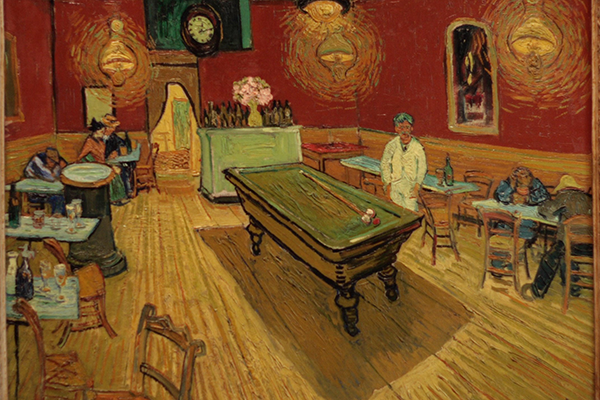
A friend of mine regularly teases me about being a “snob” when it comes to all things cultural. The best example of this snobbery I can give you is refusing to get coffee from the link – the aesthetics just don’t cut it. The counter-argument, however, is that having standards is not necessarily a negative thing. It can easily be argued that when it comes to art a line needs to be drawn between what is good and, well … average. Despite there being a grossly wide quality spectrum that varies from person to person, there are certain categories of art that most people could deem to be sub-standard – like café art. Café art usually falls well below the line, demonstrating that while anything can be called “art,” the label itself doesn’t mean it’s good. I will confess that a café or restaurant tends to instantly lose its appeal when I notice price tags next to whatever is framed on the walls. It is very rare that I find art exhibited in cafes anything other than gimmicky, tacky and exuding an air of desperation due to being painted by someone in a mid-life crisis. Typically using “kiwiana” ferns, beaches and Pohutukawa trees as subject matter, there is a distinctive style trending throughout café art that is generally amateurish – the artists may have technical capability but lack creativity. Often the works will be cheap imitations of those by prominent artists, such as the constant appropriation of Dick Frizzell’s Four Square logo works (which was itself an appropriation in the first place). If nothing else, café art frequently demonstrates the mastery found in an art gallery. However, there is always an exception to the rule. The stylish eyes of the people running Kiki Beware and Modaks admittedly prove my sweeping generalisation wrong. On their walls sit a few carefully selected works that tie in with each café’s distinctive atmosphere. For more contrast, a massive chalkboard at Mazagram – the boutique coffee roastery on Moray Place – features a different artist’s creative interpretation of the space each week. It’s a creative incorporation of art into the café, providing a non-profitable outlet for artistically-inclined locals to demonstrate what they can do. However, it seems rare for cafés to be this creative. Generally they create a sense of claustrophobia – the desire to make money overrides the desire to create a sense of exclusivity around the art and to give the viewer space to consider what it has to offer. It is necessary, of course, to acknowledge the advantages displaying art in café has for the artists themselves. Not many people venture into dealer galleries, so cafés allow art to be accessible to a more diverse audience. This can operate as a “kickstart” and, from a business perspective, is an easy way to generate a form of income. Furthermore, discussing the wall art can save an awkward conversation when on a coffee date. In spite of this, exhibiting art in a cafe is rarely successfully pulled off. Call me a snob, but I prefer to experience art as a devoted activity isolated from the potential distraction of drinking an average coffee.
-
Culture
The Violent Bear it Away
Francis Marion Tarwater was born in the wreck of the car crash that killed his mother and grandmother and drove his father to suicide. Adopted by Rayber, his school-teacher uncle, baby Francis is oblivious to the devastation he was born into. But crazy great-uncle Tarwater decides he need someone to bury him when he dies, so kidnaps the baby and sets about raising him according to his warped fundamentalist Catholic beliefs, intending him to grow up into a great prophet who will burn all the sin out of the world. The old man and boy live in isolation, thriving on their hatred of women, luxury, schools, technology, Satan, and sex. Rayber comes to try to rescue the boy, and Old Tarwater shoots him in the leg and the ear. Old Man Tarwater fails in his promise to roll to the door before he dies so that the boy can bury him. He dies at the breakfast table, with his spoon halfway to his mouth. Fourteen-year-old Tarwater starts digging his grave, ten feet deep as specified by the old man. But only a couple of feet down, Tarwater is exhausted. He hears a strangely familiar voice telling him to get drunk and forget the old man. The boy drinks himself asleep and wakes up changed, sets the house on fire with body inside, and sets off to find his uncle Rayber. So begins the journey of young Tarwater to find his way in life. The boy is pulled between the old man’s religious extremism, his uncle’s secular rationality, and the increasingly influential stranger inside the boy’s head demanding darker things. Rayber is initially delighted to have his nephew back, until he realises that Tarwater is maladjusted, maybe beyond retrieval. He tries to make Tarwater reject his great-uncle’s brainwashing, saying, “he’s warped your whole life. You’re going to grow up to be a freak if you don’t let yourself be helped.” Surely the living man’s influence should be stronger than the dead? Tarwater’s struggle is bound to the fate of Rayber’s severely mentally handicapped son, Bishop, who looks just like the dead old man. The old man insisted he should baptise the child; the stranger in his head thinks otherwise … This book is a terrifying Southern-gothic freak-show. Twisted psychology blossoms out of poverty, alienation, bigotry, religion, and violence. None of the characters are particularly likeable – all are deeply flawed and none are particularly sane. I found it disgustingly funny when Tarwater pretends to have cerebral palsy to avoid going to school, and when he has “a hideous vision” of himself sitting for eternity with his great-uncle in heaven, gorged on the loaves and fishes that Jesus promised. The weirdest thing about this book is that Flannery O’Connor was herself a fundamentalist Catholic, and wrote this as a warning about liberal religious middle-roads. But to the average reader it has to be read as the opposite – a terrifying look into sick minds created by ignorance, blind belief and lack of education and outside stimulus.
-
Columns

Daily Grind | Issue 17
Rating: 3.5/5 When marching across the museum lawn early in the morning trying to focus your foggy brain on not getting lost in the Archway lecture block, the Museum Café may go unnoticed. However, taking up the majority of the Otago Museum foyer, it is a delightful coffee shop. The Museum Café is a popular place to study for those who want a little bit of background noise but don’t want to deal with the overcrowded, sticky desks in the Link or overhear international students Skype each other. However, if you are a young male with a pedo-stache like M, sitting in a café while small children run around your legs is enough to make you feel like Stanley Tucci in “The Lovely Bones.” The baristas have the unique skill of taking the dark roasted Allpress beans and making triple shot coffees that don’t taste like Vegemite. This is ideal for those days when a double shot only brings you back up to normal levels of consciousness. Sometimes an enormous brick of caramel slice is just a bit overwhelming. M and G like the way the Museum Café sells “petite” slices that are actually an appropriate serving size and priced accordingly. The staff here manage to chop through the customers pretty damn fast – if you’re getting a quick takeaway while in Central you never have to wait an obscene amount of time. This, however, is at the detriment of the sit-in customers; you could easily be waiting up to 20 minutes for a cheeky cheese roll that really just needed to be heated up. Otago Museum Café also has pretty choice hours – they open every day except Christmas. You can grab a cup of joe and pop upstairs for a spin in Animal Attic. If you’re in Central and want a strong coffee, but can’t stomach the OTT chat from Lex, then the Museum Café is for you. It’s the best option for those around the Castle/Central area, but don’t stay for long unless you’re trying to meet your navigationally challenged Mum for afternoon tea.
-
Culture

Self-Crusting Tomato and Brown Lentil Quiche
Halt! Before you freak out at the presence of the “L” word and let memories of bland bygone quiches prompt you to move on to the next column, let me assure you that this is, hand on heart, the tastiest, most flavoursome quiche I’ve ever had; maybe even the best of all egg-based savoury dishes ever. For realz – its scrumptiousness has been attested to by the most blood-thirsty carnivores I know.* I have slightly adapted this recipe from one originally penned by Kiwi culinary legend, Alison Holst. Get your lentil on, lovelies! Ingredients:- 3/4 cup of brown lentils (soak for an hour or so beforehand) - 1 bay leaf - 2-3 cloves of garlic, crushed - 2 large onions, finely chopped - 1 lemon - 4 free range eggs - 1 cup milk - 1 teaspoon of salt - Freshly ground black pepper - 1 teaspoon of dried basil - 1/2 teaspoon of dried oregano - 1/2 cup of flour - 1/2 teaspoon of baking powder - 3/4 cup grated cheese - 2 tomatoes, sliced - Feta cheese for the topping - Oil Method:1. Soak the lentils in some water for about an hour if you haven’t already (I tried to warn you in the ingredients bit, guys. Keep up …) 2. Preheat the oven to 200° Celsius. 3. Lightly grease a quiche dish/pie plate. 4. Put the lentils in a medium sized saucepan, cover with water, and cook with the bay leaf for about 20 minutes or until they become tender. Drain and set aside. 5. Cook the onions and garlic in a separate pan with little bit of oil. When these have browned, remove them from heat and add the lemon juice and some cracked black pepper. 6. In a separate bowl, whisk the milk and eggs together; then add the basil, oregano, and salt and mix. 7. Add the grated cheese, flour, and baking powder to the egg mixture, taking care not to over-mix. 8. Add the lentils to the onions, then add this to the egg and cheese mixture. 9. Pour the mix into the dish and top with tomato slices. Crumble the feta cheese on top. 10. Bake for about 30 minutes or until the centre is firm. 11. Serve with seasonal vegetables or a green salad. *The words “bacon” and “tomato sauce” were not even mentioned. True story.
-
Culture

Monsters University
Rating: 4/5 As the “prequel” to Monsters, Inc. (2001), Pixar’s Monsters University revisits monsters Mike Wazowski (Billy Crystal) and James P. Sullivan (John Goodman) in their college freshman days, before they became “scarers.” Now, don’t be put off by this film’s “prequel” status; this movie is heart-warming, hilarious, and so visually captivating you’ll wonder if you’re even watching animation any more. Teenaged Mike is a monster with plenty of smarts and not much scare; Sully is a monster with plenty of scare and little clue of how to use it. The two start off as hated rivals, but learn to combine their strengths in order to succeed and, in the process, become friends. The thing that really stands out about this movie is the gobsmacking photorealism of Pixar’s CGI. The lighting and textures will seem so real you’ll think the scenes are filmed with a camera (despite the abundance of otherworldly monsters). Pixar’s animation has really come a long way since Monsters, Inc.. In addition to awesome effects, make sure to check out the creative character designs. Admittedly, this film lacks the originality of previous Pixar features, riding on the same concepts that made Monsters, Inc. so popular. The narrative is exciting, yet predictable, and the film conveniently slips into the structure of any other American college-movie. Despite this, the film is very aware of the college-movie genre, and cleverly plays on the (all too familiar) details of university life. Guaranteed you will recognise your lecturer, RA and fellow students in some of the minor characters. This film has clever comedy to keep you laughing and plenty of silliness to entertain a younger audience. Plus, there are plenty of warm-fuzzies to leave you feeling swell. As with other Pixar creations, audiences are treated to a beautiful animated short before the main feature, so don’t arrive late. Bonus: if you feel a sudden ambition to become a monster scholar like Mike and Sully, search online for the Monsters University website – it gives Otago’s website a run for its money! Although not amongst Pixar’s greatest work, Monsters University is undeniably warm, witty and entertaining.
-
Culture

Twice Born
Rating: 2/5 The trope of love blossoming amid war is as old as cinema itself, with many of these films achieving classic status (Casablanca, Atonement, The English Patient – to name a few). Plenty more, however, have struggled to depict romance against the backdrop of conflict without lapsing into melodrama and ham-fisted clichés (think Pearl Harbour and Cold Mountain). Unfortunately, Twice Born falls into the latter category – it is a scattershot mess of genres, attempting to be a historical narrative, fertility drama and erotic romance all in one, with wildly mixed results. Unnecessarily told via flashback, Jemma (Penelope Cruz) narrates the origins of her romance with Emile Hirsch’s American photographer – an underwritten part – as they combat infertility, infidelity and poverty amid the chaos of the Bosnian War and attacks in Sarajevo circa 1992. The war element of the film doesn’t emerge until the second half (it could have used some judicious editing and is at least half an hour too long), as the first half consists mainly of Hirsch/Cruz’s attempts to elicit some chemistry (which never really emerges). Perhaps realising the film has lingered too long on their courtship, it then attempts to cram as many obstacles as possible into the second half. Consequently, the tone veers wildly from the established romance to a commentary on the ethics of adoption, as Cruz’s son investigates his origins in present-day Italy. On paper, the talents of the principal cast and the depiction of a conflict that has hitherto received little coverage in cinema is very alluring. In reality, this is a messy, convoluted affair, whose only reason for existence is the talented performance of Cruz, who helped get the project off the ground. Unfortunately the film itself, like the conflict that spawned it, is a sad waste.
-
Culture

Pacific Rim
Rating: 3.5/5 Guillermo del Toro is one of my favourite modern directors. Regardless of whether he is dabbling in horror (The Orphanage), dark fantasy (Pan’s Labyrinth) or action (Hellboy), he brings to each of his movies a unique sense of wonder and imagination. Pacific Rim sees del Toro exploring both science fiction and the monster genre, in a big-budget blockbuster critics are calling “the Star Wars for a new millennium.” Does Pacific Rim deliver on this lofty praise? Does it live up to the hype? Sort of. I’ll start by clarifying that Pacific Rim is a big dumb popcorn flick, and it knows it. Boiled down, it is a movie about thousand-foot robots brawling with colossal monsters from outer space. There is an impressive amount of time and attention devoted to the characters who inhabit the robots (far more than in the Transformers franchise), but ultimately Pacific Rim’s focus is on its gargantuan fight scenes. It has more of a plot than most movies of this variety: in the near future, an inter-dimensional portal appears on the Pacific Ocean floor and starts coughing out huge aliens (the Kaijus). To defend our planet, the human race manufactures equally enormous mecha (the Jaegers) that, through a neural bond, are piloted by two (or in one case three) strapping young pilots. To its credit, Pacific Rim spends a hell of a long time developing the science behind all of this remarkable technology, especially when it comes to the mental link the pilots share in order to control the Jaegers. When they’re hooked up, all of their memories, secrets and fears are pooled, resulting in some interesting downtime between the massive fight scenes. Unfortunately, Pacific Rim is undone somewhat by its middling actors and dialogue. Idris Elba is fantastic as the fatherly commanding officer of the Jaeger pilots, but the mediocrity of the rest of the cast and the second-rate script they read from prevents Pacific Rim from being the classic it’s being hailed as. The action is sensational, the visuals are stunning, and the overall operatic grandeur makes for a thrilling couple of hours. But its flaws make Pacific Rim fun rather than fantastic.
-
Culture
The Life Aquatic with Steve Zissou
“The Belafonte, home to Team Zissou, skilled crew of deep sea divers, adventurers, documentary filmmakers. Led by internationally renowned oceanographer captain Steve Zissou, expert on every aspect of marine life.” The Life Aquatic with Steve Zissou was Wes Anderson’s fourth feature film, and first real encounter with negative feedback as critics complained of its self-indulgent cutesiness. With team Zissou constantly clad in red beanies (Steve even wears his to the documentary premiere to compliment his tux), all marine animals made in kitsch clay-mation, and the deadly jaguar shark being decorated by fluorescent fairy lights, Wes Anderson had just gone a bit too Wes Anderson. Having said that, The Life Aquatic holds some of the funniest, most heartbreaking and quotable scenes of his career (“Steve! They say you have crazy eye!”), and is a stand out performance from Bill Murray as the title character. Steve Zissou is a class-A dickwad, but somehow the audience still find it in their hearts not to hate him due to Murray’s dry and honest performance. However, all are eclipsed whenever William Dafoe hits the screen as Klaus, the German engineer with surprising self esteem issues. Despite being a very minor role, Klaus is often cited as a film highlight. Plot wise, Anderson has never gone so big – shark attacks, pirate kidnappings and submarine excursions all make an appearaance – and it feels strange to see Anderson’s classic character type (the lazy cynic) blowing up abandoned hotels. The film also holds an unnecessarily sad and dramatic plot twist for which it seems Anderson has spent the rest of his career trying to compensate – just think of the overly joyous Fantastic Mr. Fox and Moonrise Kingdom. Although a lot about the film isn’t quite right, this is exactly what makes it so strange and magical. Since its 2004 release, its cult status has grown steadily, and the Team Zissou uniform has become a staple Halloween costume for hipsters worldwide. For me, The Life Aquatic can be summarised by the following exchange from the film: film critic: “congratulations … seriously.” Steve Zissou: “thanks. I wish it didn’t require the ‘seriously,’ but thank you.”
-
Culture

MOTHRAs
The MOTHRAs were a way to celebrate Scarfie filmmaking, and usually featured a wide variety of submissions ranging from wacky and weird to funny but sincere. It was sort of like the Oscars, except it was probably much less grand. The Mothra is a fictional Japanese monster. It sometimes aligns itself with Godzilla, but the two are usually entangled in combat due to their fluctuating hatred of human beings and each another. According to its Wikipedia entry, the Mothra would attack by shooting silk at its enemies and using its mandibles at close quarters. It had a habit of biting its opponents’ tails, although such a tactic is “rarely effective and, predictably, is usually self-defeating.” Predictable, indeed. So why are you reading this poor attempt at chronicling the life and times of a Japanese super-monster? If you are into Japanese sci-fi, there are about 16 films that feature the Mothra. One Mothra-themed film in particular killed a director’s career, and served as the inspiration for OUSA’s student film competition, perhaps setting the tone for pioneering Otago filmmakers. MOTHRA entries had to be no longer than seven minutes and have at least one OUSA member taking part in the “team.” Racism, homophobia and sexism were banned, and anything else that common sense would suggest. Competitors could borrow filming equipment from OUSA, so there were very few barriers to entry. In recent years, the most active competitors were groups from Student Life (but there were no Passion of the Christ films made, don’t worry). In the 2011 MOTHRAs, about 40 different films were nominated in 26 prize categories. These included the usual film festival prizes, but also more niche awards such as Best Death, Best Turkey and Best Credits. The awards ceremony was held at the Otago Museum, and the films were screened over a number of days at The Church Cinema on Dundas Street. However, all this fanfare seemed to weigh the competition down in its later years. A source close to the MOTHRAs’ organisers believes that the rising cost of processing the footage, staging the awards and screening the films coincided with a decline in the number of entries. The attractiveness of other competitions such as 48HOURS also led to the MOTHRAs being dominated by entries designed for these more constrained formats, and therefore perhaps of a lower quality. The YouTube channel “Mothras” (youtube.com/user/Mothras) features the pick of the MOTHRAs from 2010. They are worth a watch, especially the music video (and winner of Best MOTHRA) “Daisychain” for the band Knives at Noon. Described as “100 per cent Dunedin,” it went on to feature on Juice TV and C4. It’s a great song and the video is a nice montage of Dunedin flats and streets. Also check out “Scott and Mark Go to the Park.” It’s kind of like Tim and Eric but on steroids, and the closest you will get to a Scarfie romcom – of sorts. Also worthy of mention is “Do You Wanna Go Out With Me?”, a musical set in the romantic North East Valley. It is accessible via the 48HOURS website, as it was runner-up in the Otago and NZ sections in 2011. However, the film is also symptomatic of an issue that plagued the MOTHRAs – many of the people involved with the film apparently did not know that it had been entered in the MOTHRAs, nor that it won Best Film. The MOTHRAs’ awkward timing meant the competition was often overshadowed by 48HOURS. The MOTHRAs were a cultural phenomenon that gave Dunedin student filmmakers, actors, directors and musicians a platform to have their work publicised and appreciated. If OUSA Education Officer Jordan Taylor’s comeback bid is successful, I am sure the abundance of comedic and filmmaking talent at this university will make it worthwhile. However, it should perhaps be staged earlier in the year than 48HOURS to avoid being swallowed up by its larger counterpart. So be prepared in case the silk strings and poisonous scales of the Mothra reappear, because it will be an interesting time.
-
Columns

The Loose Guide | Issue 17
There are probably a number of reasons why some of you hate going to class – early starts, yawn-worthy material and the droning voice of your lecturer can be enough to scare off the best of us. What the majority don’t realise is that there may be just one simple barrier between you and enjoyment of the classes you pay thousands of dollars a year not to attend: your relationship with your professors. Why is an hour at coffee with your friends so much more attractive than 50 minutes sitting in a classroom? Meaningful human interaction. Get on good terms with your professor and I promise you’ll get way more out of your classes than ever before. Nobody likes a smartarse. Just because you’re pulling straight As and always show up to class a day early doesn’t mean you’re a shoo-in for favourite. Teachers notice students who make an effort, participate and show genuine interest in the class. Ask and answer questions (in moderation, so you don’t look like an idiot or a show-off), voice your opinion and try not to yawn too much. It’s quite noticeable from up there. Even though your professors decide your grades and assign your coursework, they still sleep in a bed, watch TV, do laundry and occasionally spill things on themselves. Many even have entire families. That’s right – professors are people, too. Really, really smart ones. They have fears, aspirations and interests as well as a sense of humour. Crack a joke or figure out what makes them tick by asking them a few questions about themselves – again, not too many or they might think you’re a spy. Try to sit close to the front of the classroom so that you can see your teacher breathing/blinking/swallowing. This should help remind you that they are human. Treat them accordingly and they will definitely appreciate it. Your professor sees hundreds of students every day. Before they can like you, they must first notice you. Excellent or terrible grades will probably get some attention, but by the time you start getting assignments back it will be too late. Start now. Greet them by name when you arrive to their classroom, and they’ll have to learn your name pretty quickly to avoid seeming rude. If you’re late to class, don’t apologise or make excuses. You want your teacher to view you as a responsible adult who knows what they’re doing. Act like you’ve got everything under control. Note: Be careful. If everyone starts doing this all at once, the professors will know something’s up.
-
Culture
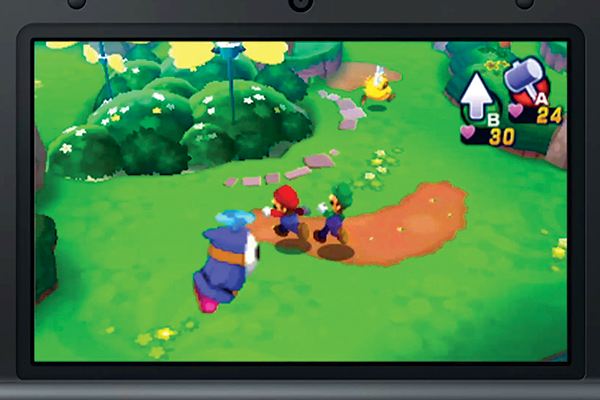
Mario and Luigi: Dream Team (3DS)
Rating: 8/10 How is it that an Italian plumber has become such an iconic and enduring figure within the gaming industry and pop culture in general? It’s a question that has been posed many times over the years, and though many have proffered possible answers, I don’t think there is a definitive one – the answer is different for every fan. I recently heard Mario described as “food for the soul,” and I think this is an apt description. I have never played a Mario game that has hooked me on its story or blown me away with its content, and yet I still play them, have a blast in doing so and walk away feeling good because of it. The latest Mario game for the 3DS is no exception. Mario and Luigi: Dream Team is a role-playing game set in the Mario universe and starring Mario, Luigi, Peach and the rest of the gang. However it introduces a new group of people: the Pi’illos. The Pi’illo’s live on Pi’illo Island, on which the game is set. The game begins with Peach receiving an invitation to come to the Island. However, when you arrive at the Island you of course uncover an evil that (surprise, surprise) threatens Peach and the rest of the island – and no, it isn’t Bowser (although he is in the game). The story has you playing as both Mario and Luigi as they explore both the Island and the Dreamworld. The Dreamworld is a new world accessed through portals that open up when Luigi sleeps on magical pillows. The game is split into exploration of these two worlds, but each offers a diverse set of locations and challenges. Though the Mario franchise isn’t known for role playing games, they have made quite a few. This game is the fourth entry into the Mario and Luigi role playing series, but then there is also the fantastic Paper Mario series. These games aren’t role playing games in the modern Skyrim-esque sense, but they have elements such as levelling, skill points and the ability to equip items. They all use a turn-by-turn combat system in which you can make your attacks or defences more effective through well timed button presses. It is a simple, yet incredibly rewarding and engaging, system. Dream Team uses this system to great effect – every enemy presents a different challenge in terms of attack and defence that demands thought in order to succeed. This combat is supplemented with a set of special moves that are learnt as the game progresses. These special moves are not only effective, but fun. They require skill and precision to perform properly, such as well timed button presses or tilting your 3DS correctly. The Island and Dreamworld both offer very different experiences in terms of gameplay and problem solving. The game has an almost absurd number of different mechanics, necessitating a huge number of tutorials. This can make the first couple hours of the game a little frustrating: every different mechanic is so cool that you just want to play with it, but before you really get the chance you are learning about something new. However, after a couple of hours, you are finally free to play and really try out all of these cool mechanics. Plus, the game is massive so you have plenty of time to get familiar with all of them. This game really was food for the soul. The fun gameplay mechanics mixed with the vibrant art and light-hearted tone made every session with this game a joyful experience. Definitely a good game to fix your winter or study blues.
-
Columns

Science, Bitches! | Issue 17
“Oh, how nice to see a familiar face!” Maybe that’s something your grandma said, but I’m sure it’s something we’ve all experienced. And it’s a good feeling, right? Unless they’re a dick, of course. Humans just love familiarity. It makes sense, evolution-wise: the people you know tend to be on your side whereas a caveman from another tribe is just as likely to knock you over the head as offer you a cuppa. It’s the same with food and drink – red wine and blue cheese are definitely acquired tastes. Again, makes sense: if you went around tasting every new berry you found you probably wouldn’t last long. This dislike of “novel stimulus” has been acknowledged since the 1800s. It has also been shown that repeated exposure to any “weird new thing” makes it more likeable each time. This is known as the “mere-exposure” effect. Eventually, the new thing becomes a familiar thing. And if you know any red wine and blue cheese fiends, the now-familiar thing can be totally awesome. The mere-exposure effect also applies to music. Why do you think radio stations and MTV have about five songs on repeat all day? They know. It may also explain the limited audience of Radio One. The coolest thing is that you can test this effect on yourself! Do try this at home! You need: A recommended song,* YouTube, headphones/speakers, and something to do. 1. Pick a song you’ve never heard, from a genre you don’t listen to. 2. Put the song on repeat and listen to it three to five times while doing something else. 3. Wait for a day, then listen again. Do you like it more than the first time? Yeahhh mere-exposure. That’s science, bitches. *Ask a friend, or try “This Charming Man” – The Smiths; “My Number” – Foals; “Can I Kick It” – A Tribe Called Quest; “So High” – Males; or, if you’re feeling brave, “Dies Irae” from Mozart’s Requiem.
-
Columns

Hi Dr. Nick | Issue 17
Those of you who aren’t studying some faggy arts degree like philosophy probably had exams before the mid-year break. In the build-up to those exams, you might have undergone what is medically referred to as “shitting bricks.” The anxiety, the stress, the fear – they’re all natural responses to the three-hour torture sessions we use to evaluate our academic worth, and it’s a given that every single person reading this has experienced that panic at some point. Next week, I want to talk about this panic when it’s unsolicited: the nasty phenomenon known as panic attacks. This week, however, I want to talk about the first sentence in this column, specifically the word “faggy.” Be honest: did you even register that word when you read it? Did you take offence? Did you throw down the column in outrage? Probably not that last one at least, seeing as you’re clearly still reading … There’s a psychological effect known as “minority stress” that pretty much defines itself. It’s the stress and mental impact associated with going against the grain in society, and rears its head in relation to gender, ethnicity, race, disability, filthy ginger-ness … a whole range of things. I’m going to spend this week looking at sexuality stress though, because, on the whole, we’re pretty bad at dealing with dem queermosexuals. Using a 600-word column to try and cover all of sexuality would be like trying lube-less anal with a tense virgin: a bloody mess that nobody is going to walk away from happy. Therefore, I’m gonna stick mainly to the psychological impact of growing up gay, with the understanding that the gender and sexuality rabbit holes go far deeper than that. Like being north of the Wall when winter’s coming, it’s a dark and scary place outside of the heteronormative box. Compared to those on the inside, you’re 2.47 times more likely to commit suicide (4.28 times when considering only gay and bisexual men) and 1.5 times more likely to suffer from depression or anxiety or have an alcohol or drug dependence. Despite the number of times I’ve been told I’m “thinking with my dick,” the brain is not actually housed in your cock, and isn’t actually affected by the physical mechanics of bedroom activities. It’s the way we consciously and subconsciously treat minorities that leads to these stress and mental health effects. To answer one question: yes, there would have been people who took offence to the word “faggy.” But they’re likely to be queer themselves or have some connection to the queer community. Without that conscious link, it’s so easy to be fine with hearing the words “that’s so gay,” or to find two guys kissing disgusting, or strange, or a noteworthy novelty. Which cover of Critic did you get last week? Guy-girl, or guy-guy? Which cover do you think caused more discussion, more snide comments, more jokes? Homosexuality is somewhat different to most of the other minority stress causes because it’s not in your face unless you’re on your knees. If you make an off-colour black joke, then you’re pretty quickly able to tell if any black people were around to hear it. Casually using words like homo, queer-cunt, faggot or “that’s so gay,” on the other hand, makes it much harder to tell if you’ve just made somebody nearby feel like arse (in the bad way). I’m not saying go march down Castle St with a leather bear and a rainbow flag. I’m just saying to try consciously noting how many times you, or others, make society a little bit less accepting of sexual minorities. In order to eliminate minority stress, the majority have to do the work and start changing their behaviours and the behaviours of those around them.
-
Culture
Jon Hopkins - Immunity
Rating: 5/5 Producing for Coldplay. Collaborating with Brian Eno. Scoring films. Over the course of the last decade, London-based producer Jon Hopkins has built himself an impressive CV. However, almost all of his work has been on the periphery of or in cooperation with other artists. This output has been admirable, but never enough to make a name for himself. Immunity changes all of that. It marks the point where Jon Hopkins steps out from the wings and boldly takes centre stage. It is the first true Jon Hopkins album, and coincidentally the finest album I have heard all year. One could describe Immunity as an electronic album, but that term betrays both the warmth and diversity the album holds. Glitchy opener “We Disappear” is something of a red herring, suggesting an album much harsher than the songs that follow. “Open Eye Signal” and “Breathe This Air” are far more representative of Immunity’s sound, the former a deep house juggernaut that subtly and thrillingly evolves over eight minutes and the latter a brooding Burial-style dub interwoven with a melancholy piano refrain. Piano is regularly the focal point, such as on stunning instrumental “Abandon Window,” where a series of heartbreaking chords are set against the distant sound of fireworks. Despite several stops into quieter, more organic territory, Immunity never loses its momentum or focus. Perhaps the album’s greatest strength is its ability to both channel other artists and yet feel wholly unique. I could identify within Immunity qualities of a dozen other musicians – the mathematical precision of Autechre, the restlessness of Flying Lotus, the ethereality of Boards Of Canada – but never do these qualities feel plagiarised. Even at the album’s most imitative, namely on the shamelessly Sigur Rós-like title track, Immunity is its own beast. Immunity is both the best album I’ve heard in 2013 and the finest example of “electronic” music I’ve come across in some time. I’d have to look back several years to find an album that struck me as quite this engaging, this colourful, this perfect. There’s a feeling Immunity gives me that few albums ever have, most potently on 12-minute rainforest odyssey “Sun Harmonics.” And that feeling is bliss.
-
Culture

David Lynch - The Big Dream
Rating: 4/5 David Lynch began his career as a solo musician with his 2011 album Crazy Clown Time, but his knack for sound design dates back a good thirty years. Lynch helped compose the unsettling ambient score to his 1977 film debut Eraserhead, and has been involved in the music for all of his films and TV shows since. Those who enjoyed “The Pink Room” – the hellish blues number he wrote for the Twin Peaks: Fire, Walk With Me soundtrack – will find a lot to love on Lynch’s second studio album, The Big Dream. The Big Dream sees Lynch tinkering with the blues music and early rock ‘n’ roll of his youth. These old-school sounds evoke a retro American feel similar to that of Lynch’s Twin Peaks – of gas stations, 1960s Camaros and diners. But with Lynch’s nasally vocals and macabre lyrics comes a deep sense of unease. These gas stations are haunted, the Camaros have bodies in their trunks, and the diners are merely illusions. Lynch’s cartoonish voice is the focal point throughout, muttering tales of oddball folk like a character from a stop-motion film. As he warbles about prostitutes (“Say It”) and crazy-eyed babies (“The Ballad Of Hollis Brown”), you can’t help but picture him in plasticine form: long-legged, his hair on end, dressed in a pinstripe suit. Adding to this surreal atmosphere are a few more modern musical influences, from the electronic realms of trip-hop and synthpop. Though applied sparingly, these beats and synths add a welcome splash of chrome amidst all the browns and greys. Beyond eerie ambience, The Big Dream also showcases Lynch’s gift for writing a compelling groove. I foresaw being engulfed by this album, but didn’t think for a moment I’d find myself nodding along to it. Yet on a number of tracks, such as the roadhouse rocker “Star Dream Girl” and the electro epic “The Line It Curves,” it takes some serious effort to keep your neck still. The Big Dream is a thoroughly impressive sophomore from Lynch, even just because of how sturdy and legitimate it feels. An experimental director in his late sixties having a stab at blues music sounds disastrous on paper, but in practice The Big Dream is a moody, infectious and even emotionally stirring album. Hats off!
-
Culture

The Many Paths to Yeezus—Piracy or Purchase?
Ten years ago, you may have been regarded with awe when you successfully downloaded the new Green Day album and burned multiple copies so that your friends could listen to “Wake Me Up When September Ends” on their discmans. No? Just me? These days, piracy is a pretty casual pastime in Godzone. Fuck those oppressive anti-piracy laws – has anything actually come of those? In the mean time we’ll keep testing the limits, because fuck paying $18 on iTunes for Yeezus. Overseas, piracy is waning due to the proliferation of services that allow legal access to material for a price that people are willing to pay. Spotify, Steam, and Netflix are re-shaping the global face of media consumption. Companies have tried several models to allow customers legal access to music. Apple had a good stab at it in 2011 when they offered amnesty to pirates via iTunes Match, a subscription service that scans your music library (including all your pirated material) and gives you the high-quality iTunes version of each file for $39.99 per year. Apple also got rid of DRM restrictions, making the deal all the more attractive. Additionally, iCloud is now so embedded into the Apple ecosystem that it makes sense for people with lots of Apple products to take advantage of the service if they’re willing to pay for it. Coming in at about $3 per month, it’s not a bad deal. The service is imperfect, though – many users have problems with iCloud not matching songs that should match up with iTunes songs. According to MacWorld.com, this is even happening with songs that have been legally purchased. iCloud also limits you to 25,000 tracks – that’s a lot of music, but there is a ceiling. And got an Android phone or tablet? Forget about iCloud then. This one only works for people who are completely devoted to Apple. Freaks. With iTunes (and iTunes Match), you own your music. It’s not physical, but those mp3 files are yours. But with services like Spotify and Rdio offering unlimited streaming, is there much point in owning the music? Spotify’s free service is … serviceable, but littered with ads. It also lacks the option to download playlists to your phone. At $12.99 per month, Spotify Premium is more expensive than iMatch, but offers benefits of its own. You can download playlists to your phone and play them offline, though you are limited to 3,333 songs. Rdio, at $13.90 per month, is slightly more expensive, but doesn’t limit the number of songs you can store offline. Spotify’s value lies in its playlists. Let’s face it – keeping up with new music is time-consuming, so curation can be a boon for anyone without a music-obsessed friend. Sites like Spotibot.com make use of Spotify’s API to suggest playlists based on your taste. Type in the name of an artist or band you like and it will spit out a mixtape of similar artists. With Rdio, you can choose to follow friends, artists, music magazines and blogs – anything that aids your music discovery. Spotify and Rdio offer access to fewer artists than iTunes, but this may change. Apple’s legal teams have been negotiating with record labels for longer than streaming service providers, but evidence suggests that streaming services are what the public want – online music sales are down while streaming service subscriptions are up. The bottom line for many New Zealanders, however, is bandwidth. Many countries don’t have to deal with pesky things like data caps, and so can stream to their hearts’ content. With last year’s upgrade to the Southern Cross Cable, most telcos have raised their data caps, but making that 100GB last a whole month in a flat of five is still a challenge. Streaming services can eat up a lot of bandwidth in a short time and, while that remains the case, good old-fashioned piracy will flourish in New Zealand.
-
Culture

App of the Week | Issue 17
Did you know that there are still people who carry their assignments around on a USB drive? It’s a risky game. Half the time you forget to bring it; the other half you leave it in a library computer. Awesome. Save yourself the pain by signing up for Dropbox. It’s a simple but powerful service that may revolutionise the way you store data. Dropbox is cloud storage, plain and simple. It’s your USB drive that you can access from anywhere with Internet. There’s an app for your computer (including most main Linux distros) and your phone, and you can access your files through dropbox.com if you need to. Start out with 2GB of free storage, which you can increase by completing various tasks (e.g. referring a friend to Dropbox). If you have a Samsung Galaxy or Note, you probably already have 50GB of free storage just waiting for you. Aside from simple storage, you can do a few nifty things with Dropbox. Set it up to sync photos from your phone so that you have them backed up. Share a folder with a friend, or your mum, to send files between each other. If you’re the flatmate in charge of the responsible stuff, set up a shared folder to store your tenancy agreement, copies of bills and what-have-you. See? Revolutionary. If you haven’t tried cloud storage yet, get Dropbox and let your USB drives gather dust.
-
News

Interview: Hilary Calvert
Local businesswoman, landlord and former ACT MP Hilary Calvert recently confirmed her candidacy for the Dunedin mayoralty and City Council. She spoke to Critic’s Jack Montgomerie about student flats, obelisks, and her plans to rein in council spending. Critic: You are running for mayor. Hilary Calvert: Yes I am. How did that come about? I was sort of hoping that some different people would stand for the Council and mayoralty, but I didn’t see anyone putting their hand up. Different how? We do seem to have people who are quite good at spending our money, but nobody who seems to have a good handle on looking after it. For example, the Council owned companies, DCHL – there’s some understanding that they’re separate and being looked after on our behalf because they’re fully-owned companies. But there’s a hundred million dollars, right in the middle of the Council, the endowment fund, that nobody seems to care about at all … It’s got some land that’s described as being used by Delta [a Council-owned company] – now does that mean it isn’t part of the Delta stuff? It doesn’t even look like it has any rates on it. There’s sort of odd stuff and nobody seems to care much. Why do you think council representatives have ignored problems such as this? I’m sort of a bit bemused that the rest of the Councillors aren’t concerned at that general level. A lot of people get on Council because they want to do stuff, create obelisks either to themselves or someone else … and I guess, partly my point of difference is, I’m not wanting to build an obelisk. Who are the obelisk builders? Well sometimes they’re not totally obelisks, it might be that they’re building cycle-tracks or other things, but the same sort of people are on the committees that give out money and do the nice, warm, fluffy things. I think there is room on there for people who look after the income and what we’ve got … It’s understandable to have environmental people who are concerned about looking after the planet and other things, and who don’t have strong financial nous. Are you talking about Jinty MacTavish? Well Jinty has got a strong environmental base and … she’s probably one of the most hard-working on Council, if not the most hard-working. I don’t think she’s got a strong financial focus, and all of her hard work falls into insignificance when we haven’t got any money … you need to have someone sitting on the other end of the seesaw, if you like. We don’t currently think of it as if it’s ratepayers’ money. The University students could, on their own, choose Council: they’ve got enough clout, there are enough students, and they’re all ratepayers, one way or another. I think there’s somewhat of a missed opportunity to some extent because students aren’t using that influence. One of my concerns is that people try to “buy” students, and I don’t think they’re so stupid as what people think. I mean all this stuff about student flats and them all being made wonderful and the quality going up. I don’t think there are any students out there who think that somehow, somebody’s going to be able to limit what they pay – it’s just a daft idea. Aaron Hawkins has suggested that regulation could be used to prevent the cost of flat improvements falling on tenants. What do you make of that? That just sounds completely bizarre. Unworkable, just bizarre. You can’t make regulations saying “you will sell bread and this will be how it is.” I was at varsity when people had toilets down the garden and no carpet on the floors … now I own some student flats, and students don’t want to live somewhere that doesn’t have a dishwasher and a heat pump. They cost a lot more, and they’ve changed a lot. Leave them to it, it sorts itself out. Would you be opposed to a liquor ban in North Dunedin? If what we want to encourage is more students to come down here, I don’t think making North Dunedin alcohol-free is a winner. But OUSA just seems to be playing prefects, cosying up to the headmistress. You think that Harlene Hayne has played headmistress? Yes I do, but that’s not my business. You were a solicitor for Stop the Stadium. What should be done with it now that it’s built? I think it is like the other assets Dunedin city owns. It’s another facility that we should be making the most out of. You’ve promoted the ideas of Affordable City, which argues for spending on the basics. What are “the basics”? There’s an official list of things that you would just automatically know: clean water in, dirty water out, infrastructural things, and libraries, for example. Are cycle-ways infrastructure? I don’t know that they are under that specifically, but I think they would come under roads. Cycle-ways are interesting and what I’d like is a lot more information about who is actually using them and what they actually want. I think there’s a temptation for people who think they know what other people want to talk to each other and not talk to users. What are your thoughts on offshore oil drilling and the energy plan currently before the Council? I think we should get our energy as cheaply as possible to do what Dunedin city does … we’re not obliged to start meddling in “are we going to create our own electricity” or tell the rest of New Zealand how we want electricity delivered to us. I think that if the government decides to allow oil drilling to happen, as fair-minded people then we’d be accepting of people working on oil rigs living in our territory. As regards any possible harm, if we have the poo, then we may as well have the puppy.
-
Columns

Editorial | Issue 17
In my fourth and fifth years I lived in a flat on High Street, south of the Octagon. It was a beautiful place: roomy and sunny, with its close proximity to numerous halfway houses guaranteeing a steady supply of oddball passers-by. In fifth year, we bought a projector and turned the living room into a movie theatre. I missed a fair few lectures that year – although to be fair I was also studying law at the time, so my motivation was at an all-time low. Unfortunately, the flat was well over 20 minutes’ walk from uni. I hate cooking at the best of times, but the thought of lugging groceries up a hill and preparing a healthy and nutritious meal after a day full of torts and cestui que and constructive notice would fill me with such an overwhelming feeling of can’t-be-fuckedness that any alternative seemed preferable. I would go hungry. I would eat Pringles for dinner. I would cook and freeze two months’ worth of beef stroganoff and chicken curry and decide two weeks later that I was going to be a vegetarian and then on-sell all my frozen meals to my flatmate at a loss. More often, though, I would go to Tai Ping, the fish and chip shop on lower Rattray Street. Actually, I only fully registered that it was called Tai Ping last week. When I lived on High Street we called it Henry’s, after its owner. Others, who were acquainted with the store through its late hours and proximity to the Octagon, called it the chew & spew. Henry’s was, I suppose, just a regular fish and chip shop. Slightly alarmingly, the fish and donuts and whatever else Henry peddled sat in a display cabinet. I never understood the point of this cabinet – unless the idea was to demonstrate the miracle that these pale, shrivelled, possibly fly-touched and in any case wholly unappetising lumps of batter could, by the mere act of immersing them in hot oil, become godly hunks of saliva-inducing heart failure. If you went at the wrong time, you often had to wait while Henry finished cooking “dinner” for his family, who lived in the back. I never understood how they all survived more than a year, let alone stayed so svelte. The reason I only recently registered that Henry’s was actually called Tai Ping is that last week, the store made the news. By burning down. Henry left the deep-fryer on too long, and the resulting fire caused smoke alarms to go off several blocks away in Moray Place. The area now looks like a typical Syrian street. Across from Henry’s burned-out shell there is the wreckage of the Dragon Café, whose roof partially collapsed in 2011. Only two businesses remain open on that stretch of Rattray Street, one of which is massage parlour Lucky Seven. The Crown Hotel on the corner, and Queen’s on the other side of Princes Street, are the only indications of what the area had once been. Nigel Benson wrote an excellent piece for the Otago Daily Times tracing the demise of lower Rattray Street. A thriving nightlife hub in the sixties and seventies, there were hopes that the area – which had once housed the city’s opium dens – would become a fully-fledged Chinatown. While Benson doesn’t lay the blame for this decay on the City Council, it’s clear that poor city planning has played its part. Lower Rattray is now on the arse-end of a fugly casino, with the nearby Warehouse bringing plenty of plebs but no foot traffic. The reason I’m telling you this is that over the years, a lot of bad decisions have been made about how to run this city. It’s not only North Dunedin nightlife that has suffered from this; students have every reason to regret the fact that lower Rattray Street never became a bustling Chinatown, or that the Exchange building was demolished, or that the city put all its eggs in the Octagon basket. Traditionally, though, students haven’t been bothered to have their say, and as a result our city is a lot less vibrant and fun than it could have been. The local body elections are coming up, and there is no shortage of candidates willing to whore themselves out to the student vote, if only such a vote existed. The time is ripe: get enrolled, play the field and score yourself a sexier city. Anyway, back to Critic. This issue houses our famous annual fish & chip review (p 26), so my tenuous attempts to weave a coherent narrative into this mess of an editorial might be getting somewhere. Then again, maybe not. Maybe it’s a lost cause. Maybe it’s actually 4am, and maybe I ran out of V hours ago and have no idea how to wrap this thing up. Bye. -Cordwainer Bird
-
News

Invisible Hand to Be Slapped on the Wrist
The need to raise the standard of student housing in Dunedin has seen OUSA, Generation Zero and the DCC team up to get a local bill before Parliament. The deteriorating state of housing in the student precinct has seen many students put up with sub-par rental properties for too long, but the local bill hopes to set minimum standards for such housing. The Otago Daily Times reported that Dunedin Mayor Dave Cull had explored the idea of pursuing a local bill to improve the standard of housing not only for students, but for the whole of Dunedin. “The Council recognises that the standard of housing … leaves a bit to be desired in some places,” Cull said. Critic spoke with Generation Zero member Lindsey Horne, who said that the group got involved with the DCC after submitting on housing issues as part of the DCC’s spatial plan last year. “We were requesting improvements on housing in Dunedin, with significant emphasis on student housing.” Generation Zero has since developed ties with OUSA. Having submitted a question about minimum standards of living for the most recent OUSA referendum, the feedback Generation Zero received from that was “kind of where [the relationship] started with OUSA.” Since then OUSA have taken the idea of sub-par housing and “run with it.” Horne, who is currently living with fellow Generation Zero members in “Dunedin’s Worst Flat” while attempting to refurbish it, said that “living in this terrible shit hole” has made her realise the need for change. “When you are living in a shit hole and paying a decent amount, you realise you are not getting a good deal.” Cull said that discussions about the contents of the bill were still in the “early stages,” and the form of any minimum standards and how they might be enforced could not yet be detailed. Horne said the most significant effect of the bill for Generation Zero at this stage is who will be spending money on heating. “A lot of [money] is just coming from students’ pockets. But if we get the landlords to front up the bills to heat up the houses … it will be them fronting the cost rather than us.” Further, she hoped the bill would give landlords an “incentive” to provide more adequate properties. “At this stage [landlords] can get away with charging heaps of money for shit flats so … why wouldn’t they do that? It’s smart on their part to not do anything.” OUSA president Francisco Hernandez indicated that he envisaged a housing “warrant of fitness” scheme, with minimum rental standards, being included in the bill. Hernandez imagined there would be a transitional period in which landlords could upgrade their flats. Although this may create annoyance for some landlords, Hernandez seemed indifferent. “I don’t care if [landlords] are annoyed, because frankly they need to up their game a little bit.” Local bills must gain approval from their local body before being put to Parliament, where they are usually passed as a formality. The bill will have its first reading before going to a select committee, at which stage public submissions are accepted. As for whether the parties would be jointly submitting at the select committee, Horne said submissions would most likely be separate because of everyone’s “different reasoning behind [the bill]” and in order to get “more power in numbers.”
-
News
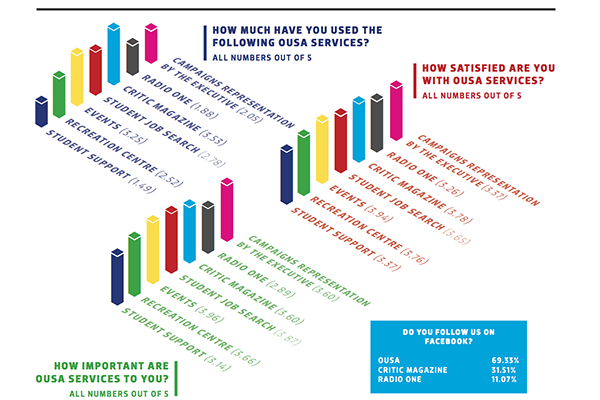
OUSA Survey Results Released
OUSA’s 2013 student survey has found positive attitudes towards all services provided by OUSA. The services surveyed were the Student Support Centre, the Recreation Centre, OUSA Events, Student Job Search, Critic, Radio One, and Campaigns Representation by the Executive. 79.85 per cent of respondents were “satisfied” or “very satisfied” with OUSA services overall, with 2,043 students responding to the survey. Critic was the most widely-used service, followed by Events. Events are responsible for the likes of Orientation Week, Capping Show and the so-called Craft Beer Festival. Critic was used “very often” or “often” by 55.4 per cent of respondents, while Events was used to the same degree by 44.17 per cent of respondents. Critic and Events also topped the user satisfaction ratings, with 27.07 per cent “very satisfied” with Events and 26.60 per cent “very satisfied” with Critic. The audit of OUSA, carried out by PricewaterhouseCoopers and released last week, showed that 2012 Events expenditure was $206,450. The Planet Media subsidy, which underwrites both Critic and Radio One, was $172,000. Both were far outstripped by the Recreation Centre, which cost OUSA approximately $600,000. Interestingly, such services as the Student Support Centre, Radio One, and Campaigns Representation, which are not as widely used as other services, were still regarded as important by respondents. There was a demographic skew towards female respondents. However, when responses were controlled for gender it was found that feedback varied only minimally. There was also a demographic skew towards first-year students, who made up 27.07 per cent of respondents, despite numbering only 19 per cent of total students. These first-year students were found to be about five per cent more positive than other year groups, all of whom were consistent in their feedback.
-
News

Fucking Hikes for Fucking Hacks
OUSA President Francisco Hernandez has tabled a memorandum proposing changes to the Executive’s honoraria. The memorandum, which was tabled on 19 July, proposes slight reductions in base pay but with the addition of large performance-based bonuses. These would result in potential pay increases of up to 33 per cent for the President, up to 30 per cent for Vice-President-tier positions, and up to 33 per cent for other Officers. Honoraria would also be adjusted annually for inflation, which does not currently occur. The President is a full-time position and currently earns $30,000, and Vice-President-tier positions (which include the Vice President, Finance Officer, Education Officer and Welfare Officer) work 20 hours per week for $13,500. The other Officers, with the exception of the Te Roopu Maori President, work 10 hours per week and earn $4,000. OUSA Executive pay is among the lowest of any students’ association in the country, with Hernandez earning less than any other President bar AUSA’s Daniel Haines. In contrast, the President of UCSA earns $41,600 and the President of VUWSA $34,500. Hernandez claims that this difference is only partially offset by Dunedin’s lower cost of living. Hernandez believes that greater potential remuneration is needed to attract a higher caliber of candidate to the Executive. Ideally, Hernandez claimed, Rhodes Scholars and their ilk would run for President, “but instead you get fucking hacks like me.” Despite this, Hernandez refused to portray the changes as pay increases, claiming that the bonuses would be reserved for Execcies who had gone beyond the call of duty. He identified outgoing Finance Officer Lucy Gaudin and Welfare Officer Ruby Sycamore-Smith as two such figures, but warned that not all of the current Executive would qualify for the bonus. Gaudin, however, rubbished Hernandez’s claim that the changes were not effective increases. She pointed out that the Executive itself would vote on the bonuses, and would therefore be unlikely to dock their colleagues’ pay. “Most of the Exec are good friends, so they’re not going to vote against the bonus,” she predicted. “The only way to do it would be putting it to the student body.” Gaudin was ambivalent about the changes. “It’s a representative role, it’s not a job as such,” she said. “It’s about representing students, so there should be a disparity between the Executive’s pay and that of a regular job. … It’s a bit sad when you get to the day that the Exec are motivated by pay.” The proposed changes will be put to a referendum sometime over the coming weeks.
-
News

Patriarchal Scooter Explodes in an Effort to Keep Woman at Home
A late night explosion in Mosgiel has left a woman “housebound” after her mobility scooter burst into flames whilst charging at her home on Green Street. The Otago Daily Times reported that Eleanor Moore (68) awoke at 11pm on the evening of Friday 19 July to find her “only means of transport” roaring with flames in her carport. A distressed Moore stood and watched from her Housing NZ flat as her $4,000 Invacare scooter came to a fiery end. Neighbour Wayne Sheridan was quickly on the scene and called the fire brigade, conveniently located two doors down from Moore’s house. Sheridan helped Moore from the house, soon after which she collapsed from shock in his driveway. After calling an ambulance, Sheridan said that Moore remained at his house for around 45 minutes with St Johns, and was “obviously quite distraught about the whole thing.” Moore came to and was able to put her scooter’s fiery demise aside and appreciate what she still had to be thankful for. “It’s lucky me and my three cats are alive.” Sheridan said the damage to the carport was quite significant: “half the fence [is] not there because it burned away and the carport is all black.” He also provided Critic with excellent directions to Moore’s house so that we could investigate the site for ourselves, alluding to the normalcy of nosy neighbours in small town Mosgiel. The Mosgiel Volunteer Fire Brigade was able to extinguish the blaze in a few minutes. Senior station officer Paul Falconer said the explosions were “most probably the tyres going pop once they got hot.” Critic’s attempts to track down Moore proved futile, although Sheridan informed us that he had already seen a replacement scooter sitting at her property. Critic suspects Moore’s inadvertent inferno nightmare has lead her to cry “YOLO” and cash in her new scooter, putting all her savings on her next game of housie. In a poll conducted after the blaze, 80 per cent of Mosgiel residents said that they now felt unsafe on their mobility scooters.
-
Columns

ODT Watch | Issue 17
Like any good parent, the ODT played its part in ensuring that little Ava didn’t find out the truth after her pet lamb Larry was found burned and dumped on a doorstep. Like the tooth fairy, Santa, and the Easter Bunny, Larry’s true story will remain untold. God forbid that the two-year-old will ever track down a copy of the ODT to see that Larry’s holiday was truly a bon voyage. But if Ava ever suspects anything untoward about Larry’s disappearance, her investigations might uncover that Fergie was lying when she said a little party never killed nobody. Princesses, fairies and angels alongside prisoners and scarecrows? No, it’s not some kinky role-play dreamed up by an intimacy-deprived prisoner. However great a dream that would be for any intimacy-deprived inmate, the only princess found here will be on the ice-skating rink. Sorry boys, you can bring that one up with the Department of Corrections. And as for the downfalls of public transport, that rascal Humphrey Catchpole can rest assured that the free bus for Gold Card holders is back. What a shame he missed the bus because the Gold Card holder’s period hadn’t begun.
-
News

Exec Has Erection Over New By-Election
OUSA is set to have ANOTHER by-election, after Finance Officer Lucy Gaudin announced that she would step down from 1 August. Gaudin resigned in order to take up a new, full time role as OUSA Accounts Administrator. Other members of the Executive were quick to pay tribute to Gaudin. President Francisco Hernandez praised Gaudin’s “dedicated and loyal service … We didn’t see eye to eye on every issue, but there is no doubt that Lucy was a committed, passionate and effective leader of the student movement.” Gaudin was sad to no longer be working on the Executive. “I’m moving on from a representative role in an organisation I feel passionately about, so I was a little sad to say goodbye to my fellow Executive members.” Fortunately, her new office is only five metres down the hall. Gaudin described her role as Finance Officer as “keeping involved in the financial aspects of the organisation, and just providing that governance-level financial oversight of the activities that OUSA does. There are a lot of other little things that I do, but they’re kind of boring so I don’t want to put you to sleep.” If anybody is keen for a kind of boring role that will put you to sleep, nominations for the by-election are open until 4pm Thursday. Voting will take place from 13-15 August. This is OUSA’s fourth by-election of the year. It is currently beating VUWSA, which will hold its first two in the coming weeks.
-
News
Otago Tops Ranking for Most Rankings Topped
The University of Otago has been ranked New Zealand’s top university in all four measures of the Educational Performance Indicators (EPIs) released by the Tertiary Education Commission (TEC) last Wednesday. It is the first time any university has been the top in all four measures, although the EPI system was only introduced four years ago. The four EPIs consist of course completion, qualification completion, student progression and student retention for 2012. “These results are a real tribute to our exceptional staff and the ability and diligence of our students. The consistent high quality of teaching at the University of Otago has once again been underscored by independently-assessed factual data,” Deputy Vice Chancellor, Academic and International, Professor Vernon Squire said. This was the first year Otago had been included in the student progression measure, as the University has only recently included sub-degree students – such as those undertaking Foundation Studies – in its student database. This measure shows progression from sub-degree courses (equivalent to NZQA levels 1-4) to higher levels of tertiary study. Otago boasted a course completion rate of 89 per cent, beating the University of Auckland by less than 1 per cent. A qualification completion rate of 88 per cent beat Canterbury’s 85 per cent, Student Progression to Higher Level Study of 92 per cent beat Canterbury’s 86 per cent, and the rate of students retained in study, at 90 per cent, beat Auckland’s 88 per cent. The median rate for these four measures was 86 per cent, 79 per cent, 85 per cent and 84 per cent respectively.
-
News

Little Girl Counts Dead Sheep
Although police once thought burning couches was a serious crime, a new form of vandalism has caught their attention. A pet sheep was stolen, bashed, set on fire, and the dead body dumped back at its original Clermiston Ave residence in Dunedin last week. Police were called to the scene when the burned sheep was discovered at approximately 1:30am last Sunday. The carcass of “Larry the Lamb” had a crushed skull and clear signs of severe burns to its body. “Whether it was alive or dead when it was burnt, either way it has met a fairly cruel and unnecessary way to die,” police said. This brutal and cruel treatment has the police looking for the culprit, who may have stolen the pet and taken it to a nearby address where a party was held that night. The lamb was a family pet to a two-year-old girl. The father described the pair as “best friends” and the young girl “absolutely loved him, loved him to bits.” The loss has hit the family hard and they are “unable to understand why anyone would do such a thing.” In the face of such horrid animal cruelty, a local farmer has offered the family a replacement pet lamb. However, the family couldn’t accept the offer due to the child moving to a different home later in the year. The father claimed that it was “the sweetest thing I have heard all day.” Critic notes that when you wake up in the morning to find your beloved pet dead, burned and smashed on your front doorstep, it wouldn’t be hard to achieve this. The father has not told the young girl what has happened to poor Larry the Lamb. To avoid telling the girl about the burned and crushed carcass, the father has told her that Larry is currently on holiday. Animal cruelty is a serious crime, and any individual with information about the event is urged to contact their nearest police station.
-
Columns
Rebooting the Politics of Poverty | Opinion
Having been on the left, and now being on what I call the liberal right, I have detected a deficiency in the way poverty is addressed. Poverty is, of course, a broad problem, and it is obvious then that the issue of where to start is possibly the most intimidating part. But for the sake of getting at least one point across, let’s just take a broad look at the electoral politics of poverty. I find it difficult to discuss poverty properly with people. When I do, I come up against walls that reject anything new. For instance, when I propose to my left-inclined friends that the welfare state may actually institutionalise poverty, it is rejected out of hand. And when I tell people of the right that their paternalism drives the poor into the hands of self-serving radicals, the warning is dismissed. Okay, so they don’t think I have an argument. I can live with that. So, more objectively, what do the impoverished hear when social democrats and conservatives open their mouths? From the left comes the idea that the poor should settle for mediocrity and blame bourgeois bogeymen, almost superstitiously, for causing poverty. From the right comes a stern, paternalistic message and the thinly-veiled imperative to accept an unforgivable guilt for what is presumed, but never confirmed, to be poor life choices. What this competition for superiority overlooks is that at the centre of the poverty problem are thinking, feeling human beings who have been made slaves to their own survival. They are human beings who hope for freedom, but for whom the way forward is blurred by politics as usual. Disagree with me if you wish, but go to the streets of the worst parts of South Auckland or Huntly West (where I went to High School) and tell me that those messages haven’t been received loud and clear and haven’t wrought the following damage. Poverty makes the poor slaves to their own survival. When that is the case, liberation is clearly the answer, not merely state handouts or discouraging those who need help from asking for it. Whether from the state or civil society, a hand up should not be offered with conditions, but as a form of solidarity with those who struggle. That, instead of harvesting the poor for votes or pretending to do something about poverty, is the solution.
-
News
Dunedin Could Be Larried at Any Moment
Following the recent earthquakes that rocked Seddon and Wellington, experts have warned that Dunedin, or anywhere else in the South Island, could be next. The most recent major earthquake in Dunedin occurred when the Akatore fault moved in 1974. However, the Akatore, along with two other active nearby faults, Titri and Maungatua, only “rupture once every 1,000 years,” according to Dr Andrew Gorman, an Otago Professor of Geophysics. This reduces Dunedin’s vulnerability significantly. However, Dunedin’s nearest fault lines are not the primary concern. Rather, the Alpine Fault, which lies along nearly the entire length of the South Island’s west coast, has a pattern of large seismic movement every 200-300 years. The last significant shake was in 1717, meaning a large earthquake could, theoretically, strike at any time. Gorman points out that “in Dunedin, you are as far away as you can get from the Alpine fault.” The possibility of the Alpine fault rupturing in the next 30 years is estimated at 35 per cent. A strong earthquake in Dunedin could cause considerable damage to hillside properties and from liquefaction, but this damage would be minor in comparison to that experienced in Christchurch. Due to many Christchurch suburbs being built on old swamps and loose ground, the sediment was huge – “some of the worst in the world,” according to Gorman. South Dunedin, despite being what some might call a “hole,” would unlikely be destroyed in the event of a large earthquake. “Even South Dunedin would be okay because the bedrock is not far below the surface,” Gorman explains, much to the relief of the wider Dunedin area. The University has added steel plates to reinforce buildings that may not have held up during an earthquake. However, the Registry office is yet to be improved. Despite the 1974 Akatore Earthquake occurring off the shore of St Clair, Gorman says that there is little chance of a tsunami occurring. “The shape of the coast is not conducive; it’s a flat coast and not a big risk.” The location of the recent Seddon earthquakes was fortunate. Had the epicentre been located underneath Wellington, things could have been fatal. “A medium-sized earthquake in a big city would be a lot different,” Gorman warns.
-
Columns

The More Things Change | Issue 17
This week, alcohol makes an appearance and breakfast changes forever. 2 August, 1377: In the name of land and power (as such things often are), a bunch of Russian troops faced off against a bunch of Mongol troops. It was at a place called Pyana River, and the memorable thing about it is that the Russians were all drunk. This gave the fierce Mongolian horde a great chance to blindside them, and in the resulting battle the Russians got absolutely destroyed – possibly because many of them drowned in the river. The best bit is that the river was originally called Piana, but after this incident was renamed to Pyana, which translates from Russian as “drunken.” 31 July, 1703: Daniel Defoe, perhaps best known for writing Robinson Crusoe, was put in the stocks because he’d written a pamphlet of political satire. The government at the time took that sort of thing very seriously, but the public evidently didn’t – the usual procedure was to pelt people with rotten food and stuff, but they just threw flowers at Defoe instead. One only hopes that he didn’t have a pollen allergy. 30 July, 1894: Two brothers working at a psychiatric hospital invented a new food, known today as cornflakes. They were too cheap to throw away some dough they’d left out for too long, so they just rolled it out into flakes and toasted it. The institution of cornflakes as a breakfast food has not escaped turmoil: the addition of sugar caused a rift between the brothers as they were originally intent on creating the blandest foodstuff possible. As you do. 31 July, 1922: The first water skis were ridden, which, considering they were constructed out of little more than a pair of boards and a clothesline, is rather impressive. Apparently speeds of about 30 kilometres per hour were achieved, but there is no word on whether the rider was ever injured during his exploits. Water skiing remains a fairly dangerous and technical sport, with the first requirement for participation being that the rider “should know how to swim.” 31 July, 1970: This was the day that the Royal Navy’s rum ration met its tragic demise. It was originally not rum at all, but beer, and an astonishing 4.5 litres per sailor per day. Rum was introduced in the seventeenth century, and after that the Navy steadily decreased the amount it gave out – it went down to 70mL per day in 1970, when some Admiral decided that it might make the sailors less capable of operating heavy machinery. Apparently there was a mock funeral in one of the training camps.


