
-
Features

Curious Insights
Ines Shennan chats with a handful of Otago University lecturers to find out what makes them tick. She discovers that exploring the local neighbourhood at a young age was a common theme, as is surfing and visiting the Dunedin Public Art Gallery. Read on to discover some curious insights. Mark Henaghan:The Bondi BodysurferNowadays, if you found a three-year-old boy roaming around the local train station unaccompanied, instinct might direct you to call the police. Back in Mark Henaghan’s day, such a response was not deemed necessary, as Henaghan himself navigated his local Timaru at this tender age for some quality chinwagging. At four years old, his mother preemptively bought him a school uniform and Henaghan’s response, naturally, was to put it on and go knocking on people’s doors showing it to them. He is still as effervescently charismatic today as the Dean of Law here at Otago. He’s always been a conversationalist, philosophically noting that “there’s always something you pick up, how the world looks from another person’s point of view.” After his Timaru schooling, Henaghan journeyed to Dunedin as a UniCol boy and pseudo-people-smuggler who would sneak people in after-hours for fellow residents through his basement floor window. Henaghan recalls the fun he had during his first year – “too much fun” – adding that it was lucky there were no exams at the end of first semester in his day, given his partying. He put his head down once August rolled around, though, and after completing his studies, Henaghan made the leap from student to teaching fellow. Despite his immense knowledge of and involvement in family law, he has never actually worked in a law firm, instead providing advice, helping with submissions, and training Family Court judges. Henaghan has an exacting email protocol. All emails are printed off at the end of the day, and he comes in early each morning to respond to them – a time-consuming task which takes him about an hour and a half. Henaghan bemoans the pervasiveness of email and social networking, steadfastly ignoring the notifications that pop up on his new iPhone. “I just don’t know how you young people can get anything done with emails and Facebook and everything else,” he says with a chuckle. During his mid-teens, Henaghan was a surfer (“carrying a surfboard at 16 was quite cool”) though he concedes that “Timaru’s waves were only about an inch tall … I might have caught one wave in Timaru in my two years of surfing there.” True to form, though, he would utilise the time bobbing on the flat water to “sit out on the surfboard having a yarn.” Nowadays, his summer adventures often include a jaunt to Sydney where he engages in a bit of bodysurfing. Henaghan jumps on a bus and tackles the clean, warm waves before “lying in the sun even though I’ve got white skin that goes pink.” For him, this is the ultimate relaxation. Once a keen cricketer, Henaghan is currently in his 54th rugby season. In the weekends he enjoys two-hour-long bike rides, roaming all over Dunedin. But there’s more: skipping. “I would advise skipping very strongly. I reckon I’ve become fitter than I’ve ever been.” Just a plain plastic rope and there you have it, according to Henaghan. “20 minutes skipping, if you go hard at it, you’ve done enough for the day.” Henaghan’s other favourite pastime is a trip to the flicks. He admits that “my eyesight isn’t good enough to sit near the back,” so he perches at the front with his jaffas, in quiet late-afternoon screenings. “I don’t really care what the movie’s about really, it’s just the jaffas and the dark. I think it’s the experience of being in a movie theatre I enjoy.” Erika Wolf:The Art Historian, Sportswoman and Coconut CollectorWolf’s interest in art was clear from the moment I sat down. Her expansive collection of books fills up her office space, and she launches enthusiastically into a discussion of her current book project. The project stems from her PhD thesis, which draws from the Soviet photographic magazine USSR In Construction. The project is currently at the stage of a “long overdue book,” though the manuscript will ideally be out next year. Even recently, Wolf came across a “whole cache of documents from after World War Two when the magazine was restarted, which tied in all of Stalin’s inner circle and tied in all of the developments and propaganda between the US and Russia.” The topic is certainly fascinating, and with relevant materials “popping up every now and then” it’s not difficult to understand how a “really huge project got that much bigger.” As well as teaching undergraduates and supervising at PhD level, Wolf is also writing a book spanning the period 1839 to the present, on “the cultural specificities of photography in Russia.” She also recently organised a symposium, a poignant reflection and discussion between viewers and artist Shigiyuki Kihara for the latter’s current exhibition at the Hocken, Undressing The Pacific. After completing her undergraduate at Princeton, where Michelle Obama was one of her sociology classmates, Wolf headed to the University of Michigan (“the great unwashed herd”) to complete her postgraduate study. Once a student who got Bs, Wolf developed an unusual allergy to pot, ditched the ganja, and became an A student. Her curiosity for art history seems to apply wherever she may find herself in the world. Wolf notes that, despite the challenges in teaching art history in terms of “where the art is,” she overcomes this by making art more relevant to the daily lives of her students, encouraging them to use local resources. Wolf sees her role as one of helping students to “develop their sense of responses to things and to help give them some of the tools ... to think about the things that are important to them.” She also urges students to understand the geographical and historical context of artworks, even though this “might take some digging.” A greater understanding of context enriches our appreciation of great art, and “we can still be completely blown away” by the frescos of the Sistine Chapel, even from the relatively alien environment of modern-day Dunedin. Amongst the dedicated research, book-writing and teaching Erika does, she is also an avid sportswoman who played rugby for America. The Touring Women Over Thirty team – or “TWOTs,” as she says with a jovial laugh – travelled and entered tournaments; and though most of the team doesn’t play anymore, Wolf did play at a Dunedin club for number of years. A warm-up would now be “a little circle dance to Johnny’s Cash’s ‘Ring Of Fire’.” She also swims at Masters level, so Moana Pool is a frequent haunt. Wolf was struck by Dunedin’s “kick-ass contemporary art scene” from the first time she came here and had the opportunity to wander around. She was impressed to see a major gallery right in the centre of town, and was also on the Blue Oyster Gallery’s board for number of years. Her experiences conversing with local and national artists is also positive, as she finds them generally receptive to discussion for research, be it hers or students’. Wolf is very much a traveller, often journeying to the likes of Russia and Romania. She notes that the food, the music and the people of any place will always make a big difference. Wolf’s excursions started as young as three. Living in Hawaii then, she was a “real wanderer … we had this pedal and dump truck and I’d just get in and take off.” Sometimes she’d be found three blocks away, picking up fallen coconuts to get her mother to make her coconut pie. Brian Roper:The Adrenaline-Addicted Music EnthusiastBrian Roper is a fixture of the Politics department at Otago, his curly hair and boyish enthusiasm his most salient features. Approachable and eager, his teaching style is famously memorable and provocative. His political persuasion is firmly to the left, and one gets the impression that he enjoys, or at least finds it necessary, to disclose this. “I have to be careful that students feel they’ve got the space to disagree and adopt a different position to whatever the position is I’m articulating at the time,” he says, explaining that he’d had “some of the most interesting discussions and debates with students who have been on the right side of the political spectrum.” Constantly aware of the fact that students forget around 70% of the content within an hour of leaving the lecture theatre, Roper uses a broad range of media in his teaching. The music videos played at the beginning of his lectures (at full volume, of course) are carefully selected, including music hailing strictly from Aotearoa for New Zealand politics, and “punk and alternative music … where everything is on the verge of falling apart” for his Democracy paper. The latter has also been the topic for his latest book, published last year and already translated into three languages. Anachronistically, Roper insists on using the overhead projector “even though it’s completely archaic, because I like to keep text separate from the computer interface.” Roper’s love of music peppers the conversation, though he admits that due to “late breeding” he is no longer a “work hard and party hard” type of character. Gone are the days when he would go to gigs and stay out “very late,” or, he says with a chuckle, “very early, depending on which way you look [at it].” Instead he gets his fix listening to Radio One and streaming independent US stations over the internet. The Phoenix Foundation is one of his favourite New Zealand bands. When he’s not keeping an ear out for new music, Roper is a self-proclaimed adrenaline junkie. He was a surfer for 30 years, even canvassing the renowned waves in Hawaii – “avalanches” of water, the friendliest of which can still result in hold-downs of 20 to 30 seconds. When applying for jobs (and ultimately landing in Dunedin), he only applied for those that were “no more than a 30-minute drive to the nearest surf break.” Despite the rush of it all, he considers surfing as being “really conducive to good mediation and productive thinking … you can think about things more clearly.” Ominously noting that “if you don’t respect the ocean, it will kill you,” Roper describes near-drownings, the last of which, at his hometown of Aramoana in 2010, made him rethink this thrill-seeking venture. Despite the seriousness of these experiences, he maintains a sanguine outlook. He describes the conditions during a dramatic ocean encounter at St Clair in the early 1990s – the right swell direction, perfect wind conditions, full tide – resulting in an abnormally large wave. “There are particular waves you’ll remember for your entire life.” While surfing has taken a backseat, whizzing around on his Honda ST 1300 has not. “I’ve discovered that adrenaline is a really powerful and addictive drug,” Roper says. “It’s helping me to experience the natural highs with a great degree of purity.” As a spectator, Roper enjoys rugby league. But it’s pretty clear that he thrives off an active lifestyle – along with his motorbike, he also has a pushbike he rides around town for convenience. “The reason I use the bike is parking, fitness, speed.” And fast it is: “I can get to the Octagon in five minutes. I’ve timed it with my stopwatch.” Hilary Radner:The Curious Cultural Observer and People WatcherTalking with Hilary Radner is a captivating experience. Her areas of research and teaching touch upon cinema and visual culture, particularly the representations of gender and identity entwined within them. She has now been teaching for 25 years, and has been at Otago since 2002. “Some people come here because they’re curious about the world. Some people come here because their parents told them it was the right thing to do. And some people come here because they’re keen to find the tools that will enable them to make a life for themselves.” “I was always asking questions that probably I shouldn’t ask,” explains Radner. When getting a passport, she had to swear an oath of allegiance to the United States at the age of 10. Her response to her mother? “Well what does that mean? If there’s a war I’m not sure I want to fight!” It’s an amusing tale, but it also demonstrates her ability to question the norm from a very young age. Radner’s appreciation for films that she “loves to hate” is fascinating. In asking whether she could ever watch a film in a very distilled, removed way, she is politely adamant that “I am incapable of passively taking in a film.” She encourages the “naïve pleasure” that comes from the “enthusiastic first viewing” of a film, all while stressing the importance of reflecting upon a movie. Though mystified by the premise of Pretty Woman, she is able to understand the film’s timeless appeal, notably the “the dream of redemption, that we can always be forgiven, that we can start over.” Cheekily, she adds to this “being a princess for a day … which in our culture I guess is having a credit card with basically no limit.” Suddenly, I was presented with an incredibly perceptive insight into consumer culture. I wanted to know more. I asked Radner if she thinks we lack choice in what we visually consume, given that we are constantly bombarded with so many images via so many media. “No, I think on the contrary,” she explains. “I think we’re very discriminating.” When people elect to interact with these visual presentations there is a reason for this, she explains. Ultimately, what we choose to engage with (“choose” being the operative word) says something “significant about the culture.” In talking about the rise of competitive talent shows like the Idol franchise, Radner taps into even greater cultural pointers. “I think we feel very acutely today that we have to work really hard, we have to be very competitive, and then we also have to be lucky to achieve anything. We do want to believe that anyone can be successful, and we’re not even sure what that means, either. I feel there’s a great deal of anxiety about whether or not, among this generation, anyone will really be able to achieve what they want out of life.” Recognising deep-rooted anxiety among a generation is one thing; getting to the issue from the likes of American Idol made it all the more intriguing. Though born in Chicago, New Zealand is very much Radner’s home, and she divides her time between both Dunedin and Central Otago. Most weeks Radner and her husband leave town on a Friday night to venture to their second home in Central Otago for the weekend. The serenity allows for life’s simple pleasures: “watch the dog chase the rabbits, chat with friends, look at the sky. It’s just beautiful there and there’s so many wonderful walks you can go on.” She also enjoys a stroll around the DPAG or along George Street. One of her favourite pastimes is sitting in an outdoor cafe “anywhere in the world and people watching … I can tell you that whether you are in Nanjing, Paris or Los Angeles, the Converse sneaker dominates.”
-
Culture
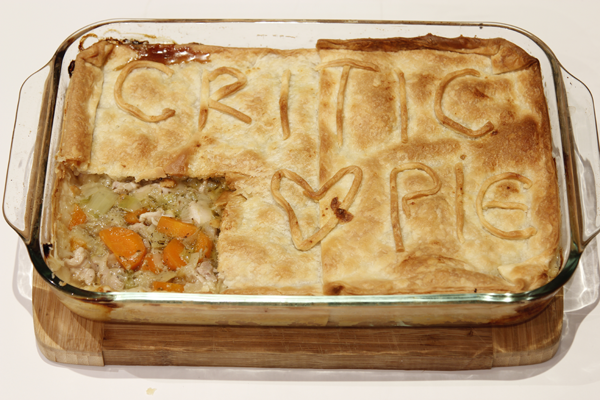
Homestyle Chicken Pie
I have a soft spot for a good pie. Perhaps it all started when my Gran would make her steak and kidney pie, a homemade masterpiece that always had me going back for seconds. Nowadays, she tends to make a deconstructed version, whereby you are presented with a generous mound of the steaming filling with a buttery round of puffed-up pastry beside it. Another favourite is the humble peppersteak pie. Huge chunks of steak in a rich, pepper-laden gravy is quite a sensation. I’ve made a few mince pies in my time, but my favourite homemade pie is chicken. Load the filling with whatever you like, just be sure to chop vegetables into smaller pieces if they will take longer to cook. Here, I’ve opted for leek and carrot. Kumara, parsnip or potato would make a delightful addition. A few rashers of bacon, roughly chopped and fried off, could also be thrown in the mix. Ingredients4 sheets pre-rolled puff pastry, thawed 1 TBS butter 1 tsp oil 750g chicken thighs or breasts, fat removed and diced 1 leek, washed and thickly sliced 1 brown onion, peeled and chopped Splash of white wine (optional) 3 carrots, peeled, halved lengthwise and sliced 2 TBS dried oregano or 1TBS thyme Black pepper 1 cup liquid chicken stock 1/4 cup milk 2 TBS butter, melted 1 TBS flour Method1. Preheat the oven to 190°C bake or 180°C fan bake. 2. Grease a large baking dish, then lay the base and sides with pastry – you’ll need to use about half of it. Bake in the oven for about five minutes, until it just starts to gain a little colour – don’t worry if it starts to puff up. Remove from the oven. 3. Meanwhile, heat the first measure of butter and oil in a large pan over a medium heat. Add the chicken and cook for five minutes until the juices run clear. 4. Remove the chicken from the pan, reserving the liquid, and set aside. 5. Add the leek and onion to the pan with a little more oil if necessary, and cook for two minutes. A splash of white wine can be added at this stage, just allow a further minute to cook it off. Add the carrots, dried herbs, chicken stock and pepper to taste. Put a lid on the pan and simmer until the carrots are tender. 6. Return the chicken to the pan. Slowly stir through the milk. 7. Mix together the second measure of butter (melted) with the flour until you have a paste. Carefully stir this through the pie filling until incorporated. Turn the heat up slightly and cook for two minutes until the sauce has thickened. 8. Pour the filling into the pie shell. Top with the remaining pastry, making sure to press the edges together. Poke a few holes in the top and bake for about 20 minutes, or until the top is golden brown and puffed up. If you dab a little butter, or brush some milk over the top of the pie before baking, this will ensure a beautiful, golden crust. Makes one large pie to serve four to six. Photo courtesy James Stringer
-
Culture
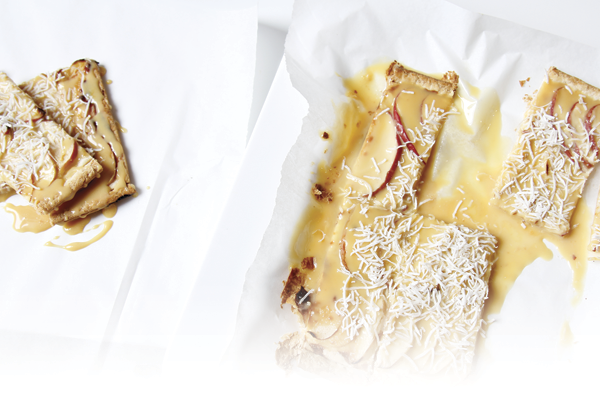
Caramel, Apple and Coconut Tart
This sweet thing is easy to whip up and looks more impressive than the effort required. Keep the peel on the apple for an extra pop of colour. I used Braeburn, though if you’re in the mood for something a little more tart, substitute these for Granny Smiths. Either way, there is something quite magical about apple and caramel together, and it’s even more exciting when you make the caramel itself. The caramel is from a Donna Hay recipe for a chocolate caramel slice (a café favourite) so if you find that such a baked good brings you endless joy (and admittedly a few sticky fingers), then this tart will be right up your alley. The recipe provides far more sauce than you need, but who said that having a leftover cup of oozing caramel in the fridge was a bad thing? The sticky, gooey, finger-licking sauce would also be divine drizzled warm over vanilla icecream. Pair this tart with yoghurt to cut through the sweetness, or play it old school with whipped cream. Puff pastry adds lightness to the overall experience, but sweet shortcrust pastry can also be used if you want a denser base. Ingredients60g butter 400g can condensed milk 1/4 cup golden syrup 2 tsp vanilla essence 1 sheet pre-rolled puff pastry or sweet shortcrust pastry, thawed 1 1/2 apples, core removed and sliced into very thin wedges 4 TBS thread coconut Method1. Preheat the oven to 225°C bake or 215°C fan bake. 2. Heat the butter, condensed milk, golden syrup and vanilla essence in a pot over a low heat. Stir frequently with a wooden spoon until the butter has melted. Continue to stir to avoid the liquid sugary heaven from sticking to the base of the pot. Cook for up to 10 minutes, until the caramel has thickened slightly. Take off the heat and allow to cool completely. 3. Lay the pastry sheet on a pre-greased oven tray. Score a 1cm border around the edge. Thinly smear 2 TBS of the caramel on the pastry. Place the apple slices on top, overlapping themselves in rows so that there are no gaps, and leaving the border untouched. 4. Bake the tart for 10-12 minutes, until the edges are brown (and puffed up, if you choose to use puff pastry). Remove from the oven and set aside. 5. When the tart is cool, pour the caramel over. Use as much as you dare - anything from 1/4 cup to 1/2 cup. Sprinkle over the coconut and leave in the fridge for a few hours to allow the caramel to firm up slightly. This is quite a sticky, runny caramel so don’t expect it to set completely. 6. Slice and serve with tea. Don’t forget to use the leftover caramel for some other fiendish delights. Or just see how long it lasts in the fridge, while people sneak past for “just a spoonful” until it’s all gone. You can use it as it is, or whip air into it with a hand beater for a fluffier caramel. Makes one square tart, with oodles of caramel to spare. Photo courtesy James Stringer
-
Features

Visual Intelligence
Visual Intelligence, a boutique, high-end tattoo and art studio located on the west side of Princes St, was established in 2004 and is a registered tattoo studio. Owned and operated by Aaron and Macaela Manuel, Visual Intelligence has a two-year waiting list that befits Aaron’s more than 15 years’ worth of experience. Brittany Mann went along one Friday to witness the man in action and talk tattoos with the best in the biz. The IntelligentsiaThe team at Visual Intelligence is a compact one, consisting of husband and wife Aaron and Macaela, and 26-year-old apprentice, Tere. On arriving at the studio, I met Macaela, a beautiful woman dressed fashionably in monochrome black and showcasing a Technicolor floral sleeve. Macaela runs the show from behind the scenes and spent the entire morning answering the numerous daily inquiries that spill in by email, as well as from the studio’s website and Facebook page. “We get a minimum of 10 inquiries a day,” she explains. “People have an idea and they want an artist to bring it to life. I write back to them explaining why something will or won’t work. It depends on size, colour, detail, time, and the body part they want to get it on – the tattoo has to fit in well.” The price of a tattoo at Visual Intelligence is decided on a case-by-case basis and is generally based on an hourly rate, but the artists do not charge for the time it takes to draw up a design. “We probably should,” Macaela says, “because it can take two days of straight drawing, sometimes. But then, that person is going to get a lot of work done and be a repeat customer. People will ask, ‘how much is a sleeve?’ It could be $2,000 or it could be $10,000 – it just depends.” Aaron has been an artist his whole life and has been with Macaela for 15 years – slightly less than the amount of time he has been tattooing – and the couple is expecting a baby in a few months’ time. The two opened Visual Intelligence nine years ago. Painting is their first love; indeed, Aaron doesn’t understand tattooists who don’t make any other art, and Michaela’s canvases and Aaron’s self-designed t-shirts are displayed for sale in the lobby. “If we could make a living off painting, then we would, but tattooing feeds our kids and pays the bills,” Macaela says. However, the couple doesn’t doubt that “it’s great to be able to work in an industry we’re passionate about and enjoy coming to work everyday. Like every job, there’s always moments where you feel like you need a break. It’s a lot of pressure. But at the same time, it’s good that we’re not just sitting here waiting for our customers to turn up. We’ve got stability.” Aaron’s 26-year-old apprentice, Tere, has been at Visual Intelligence for two and a half years and has already built up a reasonable clientele, mainly dealing in Maori and Polynesian designs. Tere was honing his drawing technique for most of the morning I was there, until a client came in for a cover-up. The space where the tattooing takes place is immaculately clean and smells weirdly inviting, thanks to the hospital-grade soap formula Aaron uses. The walls are adorned by a huge mirror, graffiti piece, and Aaron’s framed art, and a gun in a glass case sits by the sink with “In case of zombies, break glass” emblazoned on the front. The room’s focal point is a padded black leather table decorated with a few skating stickers. This is where the magic happens. Joe: the human canvasAaron’s client for the morning, Joe, is what you’d call a tattoo enthusiast – his long-term goal is to be covered in ink from head to toe, including his face but excluding his palms and the soles of his feet. A handsome guy with a good body, bald head and a nose ring, Joe was drinking what transpired to be homemade poppy-seed tea from a Kiwi Blue bottle. Joe got his first tattoo – a piece of barbed wire on his bicep – when he was just 14, because he thought it was cool. (Macaela chimed in – “It wasn’t done here!”) Joe and Aaron knew each other before the latter even began his tattooing career, but lost touch and reconnected in later years. These days, Joe pre-books appointments with Aaron months in advance, driving up for marathon sessions from Invercargill. The two display a nigh-telepathic relationship when Joe is on the table. Such pre-booking is essential, because Visual Intelligence has a formidable waiting list. “The workload is big but we’ve sort of got it down. It’s got to a point where there’s some things I just don’t want to do – it’s not going to look good and I don’t want to put my name to that, you know?” Aaron says, a sentiment that was echoed throughout the day. “I try and keep my work as unique as possible,” continues Aaron, who considers his popularity as something of a mixed blessing. Wearing a grey cap, a t-shirt he had designed himself, and green suede kicks, Aaron is nevertheless philosophical about this. “It is what it is, I can’t escape it.” MementoThe day I was there, Joe was getting his scalp tattooed with waves that would extend from the base of his skull over the top of his head, a continuation of the elements theme on his neck. This was his most painful tattoo to date. “Put it this way,” says Aaron. “It was the first time I’d seen Joe sweat.” Joe describes the piece as an “evolution,” with the hope that one day his whole body will be “one tattoo.” Aaron says that it isn’t common to plan a whole body tattoo or a massive area in advance, unless it was a back piece. “In Joe’s case, we’ve just done one piece at a time, and it’s slowly become bigger and bigger, doing small ones to fill in the gaps. With tattoo enthusiasts, they start off with a little bit, and then are like, ‘screw it, I’m going to do my whole body.’” Joe says that his reasons for wanting tattoos have changed over time. “It’s evolving – you know, as you do as a person – the ideas I had as a young boy, a teenager, and then as an adult. The body is like a photo album. The tattoos I’ve got remind me of what I was, who I was.” Joe has had positive reactions to his tattoos, although his dad did not want him to get his hands done, worrying it might affect Joe’s job prospects. However, says Joe, “it’s my mum’s favourite one – it’s her name, I got it for her. She hates tattoos, but it’s her favourite.” Joe puts tattoos’ increasing social acceptability down to rugby players. “The general public see that, if they can have sleeves and neck tattoos, so can I,” he explains. “There’s a lot more art to it these days. It used to be more stock-standard, with a criminal element to it.” Aaron agrees. “Today, you can have anything you want,” he says. “We cater for all kinds of tastes, not just the cliché skull, rose or anchor tattoos.” Joe’s advice to someone wanting or getting a tattoo is simple: “think big.” He also recommended getting professional advice, and warned against doing the “trendy” thing by copying celebrities’ tattoos. “Trends will always change,” says Joe. “You’re better off to do it because you want it, not because it’s trendy. And never get a girlfriend’s name.” Aaron admitted that he had his wife’s name tattooed on him, but also that he had recently covered up his friend’s ex’s name on the latter’s chest. “He’s getting married soon, so he kind of had to. That was the second one I’ve had to do on him, actually. He didn’t learn the first time.” Getting in the zonePreparation is an important part of a long session like Joe’s. Everyone does it differently and some do it better than others. Joe is a master. On the morning of a session, he feels as if he’s about to compete in an athletic event – “You do your warm-up and your prep, and the body’s going through a torturous thing but you have to remain still and calm.” “Everybody does that mental prep,” Aaron says. “In Joe’s case, he does a lot – takes days of work and makes sure to get a good night’s sleep, drinks lots of water … I could tattoo him for five or six hours, because he’s prepared for it, mentally and physically.” That explained the poppy-seed tea, which, according to Joe, had similar effect to kava, helping him keep still and suppressing any reflexive twitches. Aaron says that many of his clients use some sort of painkiller. “It takes a while to get into it – the needle hits you and there’s that shock of it.” Ironically, Aaron himself hates the discomfort “but loves the tattoos.” Joe is more metaphysical about it: “there’s something purifying in pain.” Suffering for your artThe session begins with Aaron drawing free-hand waves onto the back of Joe’s head with blue and purple markers. While Aaron does use stencils, such as for the tiger that adorns the left side of Joe’s neck (currently his favorite piece), “nine times out of 10, we draw it on with Sharpies.” Joe then jumps onto the table, lying on his side while Aaron covers him with a blanket and gets to work. The area of the body and the red of the ink soon make it look as if Joe’s scalp is bleeding rather profusely. There is little chatting, aside from Aaron making the occasional small talk – it is too serious a piece to risk distractions. The silence is filled with the continuous buzzing of the needles and some well-chosen hip-hop, reggae and death metal playing over the sound system. With the occasional break to use the loo (the downside of the poppy-seed tea) and survey his evolving masterpiece with an expression of pure delight, Joe’s session is over in around three hours. Tania: heart on a sleeveAfter breaking for lunch, Aaron is back with a new client, the lovely Tania, a hairdresser at The Salon at Configure Express (coincidentally, Tania did my hair a month ago and I can’t recommend her highly enough). Tania first began coming to Aaron three or four years ago, after hearing the Manuels’ name around town and eventually asking to be put on Visual Intelligence’s cancellation list. Like Joe, she now has regular appointments, and spent her session today chatting away to Aaron and Macaela like the old friends they have become. Having learnt the hard way, Tania strongly advises waiting until you have a good plan and researching tattooists before getting inked. Whilst Aaron is an exemplar of professionalism, Tania has known less scrupulous tattoo artists. “Once I was at someone’s house getting tattooed on my back, and I was sitting on a car seat that had been pulled out of a car,” she explains. “A dog brushed by my back and then three homemade needles broke on it. I thought I was going to get blood poisoning.” Tania first got a sunflower tattooed on her foot when she was 18, and has been getting them regularly ever since. I asked Tania if she was addicted. “Yes! Ink is my drug,” she laughs. “Coffee and ink.” Today, Tania is getting her sleeve refreshed, a necessity to keep tattoos looking their best after they have been exposed to the elements for some time. She and Aaron planned the sleeve together: it is a beautiful memorial to Tania’s baby son. While Tania has actually had a friend copy one of her tattoos, she generally believes “they should be individual.” Like Joe, she considers them to be art. “I think we’re creative people,” she says. “I do it for myself, and no one else. Reaction-wise, I don’t get any haters because it’s just who I am. I think when you get them, it’s part of your life and what you’re going through at the time. Every tattoo has a reason for it – your likes and lifestyle at the time. I’m wanting to finish my full sleeve, at this stage, but I don’t think I’ll ever stop.”
-
Columns

Diatribe | Free and Fair?
So, this whole thing started with a friend asking a question. As benign as it may have been, it led to possibly one of the most expletive-filled rants of my life. Given all the attention Fair Trade has been getting on campus a friend with little (read: no) background in business posed this gem: “what do you support, free trade or Fair Trade?” Let me open with a basic point: just because words sound similar don’t mean that they are similar. However, to my main issue: one of these is an economic theory the merits and issues of which deserve (and have created) huge amounts of scholarly discussion. The other is a monumental marketing swindle. And before we get confused by which one is which, Fair Trade is the swindle. Now before I am accused of everything under the sun, let me outline the basis of this claim. Yes, inequality exists and is bad. Yes, we should try to fix the issue. But no, Fair Trade is not the answer. Many of the problems are sourced from how Fair Trade operates as a business model. In order to gain Fair Trade certification for your farm, you must be small (requirements vary per crop but coffee farms for instance must be a maximum of 12 acres), have no permanent hired workers (the majority of work must be performed by the family owners), use no genetically modified crops (what constitutes a GMO is left unclear), and the certification restricts the use of agro-chemicals. 1. Fair Trade is a business just like any other. Let’s say we have a family farm with fewer than 50 workers, growing cocoa in the Ivory Coast. Well, the initial certification fee (paid prior to the initial audit) will set you back about €1,500. You’ll also need to pay for the audit but never mind that. Also, the on-going price for certification for our hypothetical farm: just over €1,100 per year. 2. Why don’t New Zealand companies bear the Fair Trade logo? This is a good question: unless you believe there is a systemic issue with abusive labour practices in New Zealand, why don’t our products have the certification? Well, this is because they don’t produce in the ways that Fair Trade requires. So products may well be giving their workers fair wages etc, but are not eligible for the certification. 3. Why don’t big companies get behind Fair Trade? Because it is nearly impossible for them to do so. Never mind the complexities of negotiating thousands of contracts with small-scale producers; if a producer wants to certify their product as Fair Trade then a certain amount of the ingredients has to be Fair Trade. So, for example, a chocolate producer could source Fair Trade cocoa and then add NZ milk and Australian sugar (how most chocolate in NZ is made), but they would not be able to certify their product Fair Trade. This is because the sugar is sourced from large Australian plantations rather than a small Third World nation producer. This, by the way, is why you see more Fair Trade products in Britain (where the main sugar supply is from Africa) and not in NZ and Australia (where the main sugar supply is from South Australia). 4. The creation of false economies. Fair Trade ensures the payment of a “minimum price” to its producers. The problem is that this minimum price, combined with the requirements of the certification, locks producers into a cycle of Fair Trade dependency and un-developed economies. While there is no figure published about how much Fair Trade growers receive, let me ask this: why bother studying to become a lawyer or working as a police officer if menial labour at a cocoa plantation pays more? Writing for Foreign Affairs, Michael Clemens argues that Fair Trade farmers “get charity as long as they stay producing the crops that have locked them into poverty.” 5. The certification opens up potential for on-seller abuse. We are less price sensitive when it comes to Fair Trade products because we assume that a higher price reflects a greater return to the producers. Well, recently it has been revealed that some Fair Trade products return less than 5% of their sales price to the producer. I think that we need to address inequality; I just don’t think Fair Trade is the way to do it. While we may get a little feel-good factor from buying Fair Trade products, really we are rewarding companies that trap individuals in antiquated and inefficient farming tactics while punishing companies that aren’t recognised for being potentially more ethical. Most of all, consumers are fooled into supporting another dodgy certification that makes money off their naiveté. If you want to feel good, donate to a charity; don’t pretend you are an economist.
-
Columns

Love Is Blind | Issue 13
YOLO BoySigning up to the Critic blind date and committing to a half-marathon all in one week, all in the name of YOLO. I didn’t know which would be worse. After a few Coronas for the nerves, off to Angus I went. A few friends bunkered down in the bar to spy and provide emotional support should my date be a filthy fresher or a fifth-year cat-lover – turned out to be a bloody brilliant date. After a bottle of wine, awesome dinner and Patrón shots, it was off to town. Chur to Angus’ Emma – fucking GC. Hitting up the nearest sports bar like the classy Scarfies we are, we decided to call YOLO and go for more tequila shots. We were in it for a good time, not a long time. Nerves were gone and the chat was flowing well. We took to the streets and before long we were dangerously close to the ocean. Finding the perfect place to chill for a chat on a jetty, this lasted all of 10 seconds before the dares began. Seeing how far we could push each other and enforcing our YOLO mantra, we dabbled in a quick skinny dip. Clothes gone, I had clearly forgotten I was in the South Island: the ocean was as cold as a nun’s cunt. After proving we were the most spontaneous mother-flippers out, we clambered back into our clothing, dying from a mix of hypothermia and laughter. On our walk back, we stopped at a random flat to meet the inhabitants and their keg. I discovered my date could keg stand longer than I, this girl is pretty impressive. We went to Macs bar for a nightcap, then wandered a bit more, discussing the deeper complexities of life with a pash or two in between. With her flatmates down the road and mine on the way, we decided to part after a surprisingly good date. Swapping numbers and arranging a second, we ended the night. I am still figuring out how we did so much in such little time. I couldn’t move until 4pm the next day. YOLO GirlEntering my third year of university single, rumours were beginning to spark among family and friends that I was a lesbian. In an effort to curb the speculation and being at a time in my life where I am ready to meet the man to father my children, the unfortunate words “Fuck it. YOLO” slipped out of my mouth as a friend pulled out of her blind date and needed some one to fill in. While a cheeky bottle of Sav was successfully taking its toll on me, I turned up to Angus where bartender Jade managed to calm my nerves, and I was greeted with probably the politest young lad I had ever met. Dinner, endless chat and the bar tab behind us, we rolled out into the unsuspecting night. Shots seemed to be the specialty of the evening; we made sure we were properly juiced up to carry us into our next adventure – a massive fucking walk to the ocean. Sitting beside a miniature jetty feeling like rebellious teenagers, we began a game of “Truth, Dare, Double Dare.” One thing led to another and we stripped down to our bare minimums. I managed to dare him into going for the full jump. It took one dip and you could tell this boy wasn’t cut out for the southern seas. I pussied out and insisted we headed back to some sort of civilisation – which turned out to be some hippies in a flat with a random keg out front. Score! Our newfound friendships got us a keg stand or two, but shit turned shady and we decided to bounce before the crack-pipe was lit. We made it back to the Octagon alive and slid into Macs bar. Some more drinks down us, we had reached a level of drunk where YOLO was a part of every sentence and mad chats were forming. We ended up aimlessly wandering and found ourselves running away from Joan the Butcher, calling for assistance from our loyal friends and parting ways after swapping necessary details and salivary fluids.
-
Columns

Daily Grind | Issue 13
Rating: 2/5 Coffee Cups M and G decided it was necessary when writing a coffee column to visit the institution that is Starbucks, KFC’s “classy” cousin. Dunedin’s branch of this chain of creamy American coffee is located on the corner of George and St Andrews Streets, a prime location for a coffee shop. The décor is generic chic with a nice fireplace, some sticky tables and comfy chairs (you can’t fault them on their comfy chairs.) With lines practically out the door, Starbucks must be doing something right. They excel in their good service, Keep Cups and merch-and-condiment-station (with cinnamon, chocolate AND nutmeg on offer), not to mention those wee cardboard sleeves that everyone loves. The baristas (who are pretty babein’) have that fantastic chain-store customer service: they’re friendly, well-trained and churn through the long lines of customers with ease. M and G were impressed at how well they can decode the strange Starbucks jargon, e.g. “grande-quadruple-shot-Oreo-dulce-orange-mocha-soy-Frappucino-cream-on-top-with-cinnamon.” G ordered a caramel macchiato as she’d heard a lot about them – a short one, about the size of a regular flat white. This macchiato was, in fact, America-speak for a caramel latte and tasted like pure glucose topped with milk fresh from the udder. It was constructed perfectly, as it was meant to be – you can’t fault the poor baristas for having to make this creamy sweet beverage that Starbucks like to call coffee. The food is all pre-packaged and processed – you’re better off getting food from the Countdown bakery – but who can resist those impulse macaroon purchases at the counter? M and G hate the eye-talian coffee sizes – venti is like a bucket with a lid. Upon claiming a free beverage, M was convinced by the barista to get the latter’s signature coffee – apparently popular with customers. He ended up walking out with a quadruple-shot venti vanilla raspberry mocha with caramel drizzle and whipped cream (WHO is ordering this and HOW is it a customer favourite?) The coffee itself normally sells for the same amount as a small hatchback, so thank God it was free. Starbucks on the weekend is hell on earth, overrun by high school students pretending they are in Sex and the City and bogan queens taking their Ed Hardy ugg boots out for a stroll. During the working week, it isn’t too bad; indeed, during exam mania last year, M even found some solace studying there. After their experience, M and G weren’t sure if they were feeling the caffeine hit or a sugar high, and scuttled out of the place with no dignity, furry teeth, and suspected diabetes.
-
Columns

Lez Feminables | Issue 13
Previously, I’ve covered asking people if they’re gay, with the conclusion that it’s not your business. But what happens when it suddenly is? How am I supposed to react when someone asks me if I’m gay? I’m not, but I don’t want to come off as a homophobe when I deny it! You’re right, a strong denial can come across as having a problem with being gay when you might not have one. You’re just not gay, and that is a fabulous thing. The best thing is just to shrug it off, à la Johnny Galecki of Big Bang Theory fame: “I’ve never really addressed those rumours, because I always figured: why defend yourself against something that’s not offensive?” If people start asking it a little more frequently than you’re comfortable with, well, stereotypers be stereotypin’, and the problem lies with them, not you! How should I react when my friend comes out to me? Assuming you’re a cool cat of an ally, this sitch shouldn’t be too difficult. You could brush it off as a non-issue e.g. “I’m gay.” “Oh yeah? I’m a Pisces.” However, this is obviously the conversation one would have in a world where LGBTQ+ don’t need so much support. Coming out can be a big deal, and having someone say, “Hey bro, I’ve got your back” can mean an awful lot. Things to do: reassure the person of your support. Things not to do: tell other people – let your friend dictate their LGBTQ emergence. Expectations of a “coming out” conversation vary from person to person, so mimicking their tone is a good idea: if it’s serious to them, take it seriously. If it’s an aside, a high-five will suffice! I don’t support LGBTQ+ people for [insert reason here]. How do I politely tell my friend I think he’s [sick/attention-seeking/going to Hell]? You don’t. I understand that you think you’re completely right, because I feel that I am completely right in thinking you’re wrong. No matter how delicately you phrase your problem, though, you will not come off as “polite.” If you tell them how wrong you think they are, it could force them back inside the closet, gloomier than ever. This is bad. If you can’t be understanding, just say “ok” and leave them alone. You don’t have to agree with someone to not be an asshole to them. One day, hopefully, “coming out” will no longer exist, and we will all be considered a-/pan-sexual until stated otherwise. Step number one to this utopia: having each other’s backs.
-
Columns

ODT Watch | Issue 13
Thus begins the saga of Otago citizen Cha’nelle Smith (e-mail: sexiihunii4u@hotmail.com). Delighted at the prospect of nabbing a bargain at Dunedin’s fashion Mecca (maybe even that stylish wee number from Pagani?), she and her best gal-pals made the trip in from South D. “A sale is just what I need,” she thought, since she had ceased employment at her local Maccas, forced to... There was also the small issue of her Chicken Chomp-induced spare tyre, though her mother had assured her between mouthfuls of nuggets that she could.. While disappointment arose when it became apparent that the ODT had misled her (and it was, in fact, Meridian Energy up for sale), she got to head home to see that... However, once again her beloved ODT had let her down, with this referring to the Australian decision regarding world trade. “Thank God,” thought Cha’nelle, that the ODT returned to its usual literal style when reporting on her favourite sport.
-
Columns

Get Out Of The Ghetto | Issue 13
Do you like interactive touch screens? Free stuff? Old stuff? Artistically-lit stuff? Then look no further than Toitū Otago Settlers Museum, handily located next to other such valuable “Get Out of the Ghetto” locations as the Railway Station and the Farmers’ Market. Toitū is something of a museum exhibit itself: it’s New Zealand’s oldest history museum, and was founded at the height of Dunedin’s heyday way back in 1898. The old girl has recently had quite the facelift (a $37.5m one, to be exact), reopening at the end of last year with a fancy new wing and completely overhauled exhibitions. It’s not quite Te Papa, but there are some pretty exciting fandangled features. Experience what it was like for hardy Scottish settlers who spent months on small and smelly ships only to end up in Dunedin (probs not the tropical paradise they had imagined, but then, the Scots never minded a bit of mist) much in the same way that fresh Aucklanders arrive annually and equally naively on their own 737 maiden voyages. Learn about life early on in our fair city, from the first Maori settlers to the goldrush glory days as New Zealand’s economic powerhouse, and back again to the Dunedin we know and love. The gift shop ain’t half bad, and entry to the museum is completely gratis. Enjoy. Get there: on foot – don’t be afraid to stray the 500 extra metres past the Octagon. Do: appreciate what a bustling metropolis Dunedin used to be. Don’t: forget to check out the giftshop – Radio One cards get 10% off non-sale items. Eat: at the café in the foyer, or guzzle some Farmers’ Market treats before/after.
-
Columns

For Fuck's Sake | Issue 13
3pm: I selected you from all the specials at New World because my math told me you had the highest standard drink-to-dollar ratio (thanks, NCEA Level One), and it was only polite to ensure that I got the most bang for John Key’s buck. I don’t need to take wine-tasting classes from OUSA to know that your “fruity aromas” and hints of “oaken undertones” will go perfectly with the fried chicken noodles from Manila Grill. 8pm: I’m drinking you out of a wine glass in the hopes of classing you up a bit but I probably shouldn’t have bothered because it’s as pointless as sending Snooki to Charm School or trying to get Lindsay Lohan to stay in rehab. This is because you taste how Joan Butcher’s breath smells; the only aroma you have is of piss on the side of a building, with some slight pubic hair undertones. 8:30pm: Hello, wine! You still taste like urine but I’m happy to tell you that it’s growing on me. You aren’t just any urine; you’re Jesus’ urine. You are what Bear Grylls would drink if he were in the Bible, which is fitting because being in Boogie Nights does feel a bit like an episode of Man vs. Wild, but with less manliness and more pelvic thrusts. 8:45pm: Did you know there is karaoke at Manila Grill?! I didn’t know that! The waiter just sang us “Uptown Girl” and it was fucking fabulous. He danced like he was on an episode of Ellen. 9:30pm: What was it like growing up in Wither Hills, wine? I bet it was nice there. Maybe you never got to see your home, though, like that snake from Harry Potter who was bred in captivity. Who knows, wine. Who knows. 10:15pm: I’ve introduced you to my friend called tequila. I know they say that three is usually a crowd but don’t worry wine, don’t worry, I’ve got this. Remember that they also say good things come in threes (which is true, for example (1) Destiny’s Child and (2) the Toy Story movies). Or is it that bad things come in threes? Who knows? 11pm: It’s definitely the case that good things come in threes, because why else would they have invented threesomes? That’s called logic, wine. And you help me use it all the time. 2:30am: Why, wine? Whhyyyyyyyyyyyyyyy. 3:30am: Fuck you wine, I hate you. You’re a mean girl. You’re a bitch. 3:33am: I’m not angry at you, wine, I’m just disappointed. 3:45am: Good night wine, I love you so much, I’ll see you next Saturday xoxo.
-
Columns

Science, Bitches! | Issue 13
This week, I’m going to teach you how to DO science, bitches. This is something you can do in your own kitchen, not something you have to take an RV into the desert for. This one is super easy, and you should have everything you need already (unless you’re so Scarfie that you don’t even have dish soap). Ever wanted to check out your own DNA? Well, now you can! Follow the steps below and you can look at your own DNA. Sweet. 1) Spit into a small glass, clear container, or test tube if you have one. That shot glass you nicked from the Cook last week will work perfectly. Make sure you run your tongue around the inside of your cheek to dislodge a few of the soft cells on the sides. And make sure it’s a decent amount of spit, otherwise you won’t see a whole lot. 2) Add a small drop of detergent (not too much or you’ll end up with a bubbly mess). Cover the top of your vessel and give it a gentle shake up. The detergent will break up the cells in your spit, allowing the DNA to come out. Add a pinch of salt, and give it another swirl. Try to make sure you don’t let it get foamy. 3) Grab your closest bottle of cheap vodka or other alcohol (make sure it’s clear). Use a squeezy bottle, or gently tip it down the side of your vessel, so it makes a layer at least half an inch thick on top of your spit mixture. Have a look at the divide between the layers – you should be able to see the strands of DNA floating up. They’ll look like tiny strands of cotton. Grab a toothpick and you can try and pick them up, or mix them around. 4) Congrats! You just did science. Put your DNA in a jar, show it to your friends, weird out your flatmates, use it for a red card. The possibilities are endless. If this didn’t work, you’re grossed out by your own saliva, or there’s just not enough DNA there to satisfy your curiosity, try mashing up a strawberry or kiwifruit and straining out the juice – just make sure to leave the lumps out. These guys have TONS of DNA in them so you should have no problems seeing it. Flop this one out at the next party and show your friends how great you are at science, bitches.
-
Columns

The More Things Change | Issue 13
This week, public health goes on a real rollercoaster ride. June 2, 1692: Quite unfortunately for her, the first suspect in the Salem witch trials went to court. Records say that she was suspected of witchcraft because she wore black clothing and “odd costumes” and had a coat that had been “awkwardly cut or torn in two ways,” whatever that means. Apparently these constituted an un-Puritan lifestyle, which was essentially code for hanging out with the devil, and did not end well for her (she was found guilty). The witch trial debacle is one of the more notorious cases of mass hysteria, ending up with about 70 people being accused and tried. Presumably, they were all innocent. For one, the majority of presented evidence was something called “spectral evidence,” which is probably not admissible any more. May 27, 1907: In a spectacularly anachronistic fashion, an outbreak of bubonic plague started in San Francisco. It had been carried on ships from Asia and Hawaii in fleas and rats, as usual. Debris lying around the city from a recent earthquake provided a very conducive environment for transmission of the disease between the local rats so, unsurprisingly, the plague took hold and caused everybody a great deal of stress. Several unsuccessful attempts were made to control the outbreak before a campaign was implemented that just involved killing all the rats. It actually worked – the guy who ran it became president of the American Medical Association. June 1, 1947: The Heimlich manoeuvre was first published, to the reported detriment of many. It’s effectively an artificial cough meant to expel any object lodged in the airway by forcefully bringing the diaphragm up, but it’s the forceful part which has caused some problems. The manoeuvre was recommended by the Red Cross for almost 20 years, but has fallen into disrepute because it turned out to be likely to cause internal injuries. You can fracture someone’s sternum or ribs if you do it hard enough, and all those vital organs near the diaphragm are a little bit delicate. The inventor of the manoeuvre actually dislikes its other name, “abdominal thrusts,” because he thinks the term abdomen is too vague and might cause people to apply pressure in the wrong place. He is also a proponent of the use of malaria to treat cancer and HIV, another fairly controversial medical technique, so his opinion seems of about as much value as the procedure named after him.
-
Columns

Hi Dr. Nick | Issue 13
Hi everybody, People often approach me on the street and say “Dr Nick, you sexy pseudonymous beast of a man, why do you spend all your columns pissing on healthcare users and never on healthcare providers?” This unsolicited pedestrian reflection has a point – whilst there are many issues with the attitudes of healthcare consumers, there are also a number of issues with healthcare providers that have thus far gone unmentioned. Consider this column a Unipol urinal then, in that all that metaphorical piss will be reflected back on us healthcare providers. After sitting in the Student Health waiting room for 45 minutes trying not to look syphilitic, it’s easy to feel pretty meek and powerless when the doctor calls you into his imposingly sterile office. We’re always on the backfoot when we ask for help, as we’re giving people control over our wellbeing. While the doctor will intrinsically have some power over us, we should never give absolute authority and power to them. Not only is this BDSM-esque relationship a bad one to have (outside of my private sex dungeon), it also relies on doctors not (intentionally or otherwise) abusing this power difference. Which many will. In any consult, you have several cuntingly-explicit rights that doctors must legally respect. You have the right to be treated decently – not only with a medically competent doctor, but also with dignity, respect and privacy. You also have the rights to not be discriminated against, harassed, or exploited; the right to open, honest and clear communication which allows you to make a fully informed, uncoerced choice; and the legal right to complain. And you know what? We should complain more. In this year alone I’ve Overheard @ Otago two or three instances of serious breaches of respect, communication and confidentiality. Particularly in a town like Dunedin, where a person’s gender and hall of residence is pretty much “identifying information” (which cannot be shared for non-essential medical purposes to people like employers or the University), it is important that we hold our healthcare providers accountable for their actions – particularly when their actions negatively impact our lives. If you feel you’ve been slighted by a healthcare worker, don’t ignore it because they have that intrinsic power and authority. Instead check out the Health and Disability Commissioner (hdc.org.nz), a service that is set up to support you, the consumer. It outlines your rights and has a very simple process for talking to advocates and lodging complaints. If you feel unfairly done by, I’d encourage you to complain unashamedly and unapologetically. As the pedestrians point out, sometimes doctors deserve a bit of pissing on.
-
Culture

The Material World: Sculpture at Dunedin School of Art 2002-2013
This week I’ve made a rather awkward mistake. Failing to think about the fact that exhibitions have a finishing point, I arrived at the Dunedin School of Art gallery on the morning of 17 May planning to write a phenomenal review of their contemporary sculpture exhibition. Then I realised it ends on 24 May, before this article will even be published. However, choosing to stubbornly stick with Plan A, there is a lot to be said about an exhibition that transcends its written critique to the point that people will be inspired to experience some art themselves. The School of Art should have more prominence in the student community. After going to the Dunedin Public Art Gallery, seeing the contemporary sculpture exhibition there, and making comparisons, the students coming out the other end of the Polytechnic have a lot to offer. Unfortunately, trying to actually find the Art School is a bit of an endeavour due to its weird location. But make the effort and get amongst Dunedin’s local creative scene. The Material World: Sculpture at Dunedin School of Art 2002-2013 exhibited works crafted by alumni in honour of two sculpture teachers who have taught at the school for 10 years. Admittedly, there was the occasional photograph, graphite drawing and video, but sculpture was the dominant medium. With such limited space and so many contributors, the gallery was inevitably too cramped, making it impossible to focus on one work at a time. Gazing at Victoria Bell’s beautifully executed sculpture of elegant flamingos hanging butchered from the ceiling, one was distracted by a not nearly as impressive video of someone taping their head to the floor in one’s peripheral vision. By the time I worked my way around half the room, I’d almost had enough, and it wasn’t until I was walking out the door that I noticed works in the corners that probably had not been given the prominence they deserved. But all this aside, there were some exceptional works of art. So often contemporary sculptures fail to be “new” by trying too hard to be so. While I wasn’t impressed with all of them (somehow, I feel we can move past some bricks on a concrete floor), for once, it didn’t feel like I’d seen all of the sculptures before. Take the bright yellow well on very green and very fake Astroturf in the middle of the room. Completely constructed out of bars of soap, it commanded attention. Then there was the spiked punching bag hanging behind it. As contemporary artworks, they moved beyond simply addressing the everyday – a norm that has pervaded art for long enough. It’s time to move on. Showing more prominent artists, the Dunedin Public Gallery also had a contemporary sculpture exhibition: Shape-shifters. Leaning against a wall is a Michael Parekowhai, and there was obviously more attention, care and (from a practical point of view) scope for curatorial finesse. Unlike at the School of Art, each work is meticulously placed in its own defined space, making it dramatically less overwhelming and claustrophobic, which makes a difference. However, while some of these works were captivating (like Daniel von Sturmer’s “Screen Test: Sequence 1” where sponges and rolls of toilet paper shoot across perpendicular screens) the students’ works made me think more – I couldn’t just assume they were about the shape of the object and its relation to the space around it. “I am for an art that takes its form from the lines of life itself, that twists and extends and accumulates and spits and drips, and is heavy and coarse and blunt and sweet and stupid as life itself …” – a quote by Claes Oldenburg plastered on the wall of the DPAG, but it seems more appropriate for the works at the Polytechnic. Watch their space.
-
Culture

Metro: Last Light
Rating: 9/10 Last year, THQ proved that even giants fall. In December THQ (one of the gaming industry’s biggest publishers with titles such as WWE and Saints Row under their belt) finally succumbed to the pressures of the economic downturn and filed for Chapter 11 Bankruptcy. I still have no idea what Chapter 11 Bankruptcy means, specifically, but what I do know is that this event has sent a ripple of anxiety through the gaming industry. Sure, THQ made some mistakes and many saw this coming, but still, when a giant falls, the whole world shakes. THQ owned both a large number of gaming developers that made really high quality products, as well as the IPs (Intellectual property) of great franchises such as Red Faction and Darksiders. Thankfully, the gaming industry is full of opportunists, many of whom were watching the fall of THQ with bated breath and wallets at the ready. One of these studios left in the lurch was the small Ukrainian developing company, 4A Studios. Under THQ’s umbrella, 4A had released only one game – Metro: 2033, a first-person shooter based on the novel of the same name by Dmitry Glukhovsky. A game full of amazing ideas but unfortunately rough around the edges, THQ saw the game’s potential and 4A were offered a sequel, slated for last year. When THQ began to fall, many thought that would be the end for this small developer. Thankfully, they were bought by publisher Deep Silver and now finally we can play 4A’s sequel Metro: Last Light. The Metro franchise is based in post-apocalyptic Moscow, 20 years after a devastating nuclear war. The vestiges of Russian society live underground in the Metro system; the radiation has mutated those left above and so mankind fights for their lives against the mutant species from above. One of these is the Dark Ones, humanoid creatures with telepathic powers and vague intentions. Metro: 2033 dealt primarily with the relationship between the humans and the Dark Ones. Metro: Last Light has taken the inspired direction of investigating the different political factions that have emerged within the underground. The game has you playing once again as Artyom, a young Russian man born in the underground, as he travels the metro and has run-ins with the factions like the Nazi party Fourth Reich and the Communists living on the Red Line. This storyline gives the game a glorious dose of retrospection, and the dystopian setting allows you to see humanity bared and truly understand the intentions of political movements from the real world. The story itself is a beautifully crafted rollercoaster; the events of the game are fast-moving and constantly surprising. The game’s best attribute is character development – not generally a strong point of first-person shooters – but Last Light presents a series of characters that are superbly written and thought out. You will end up caring for these characters and will no doubt be affected by the events around them. The gameplay itself is a well-made first-person shooting experience. You have access to a range of very Russian-looking weapons like rifles, shotguns and pistols. Layered on top of the first-person shooting experience are additional challenges like keeping a good stock of air filters for your gas masks. Travelling outside requires you to wear a gas mask; however, the air is so damaged that the filters burn out in a matter of minutes, so you must keep a constant eye on your counter and change filters regularly. The game is full of these sorts of additional challenges which give it fantastic depth. If the fall of THQ proves anything, it is that the gaming industry is willing to come to the rescue of a small but talented studio such as 4A studios. If they hadn’t, we would have missed out on the gem that is Metro: Last Light.
-
Culture

Invisible Ink? The Bastard Child of the Movie Biz
If the modern day film industry mimics Shakespeare’s King Lear then the screenwriter is Edmund, the unloved bastard child, underappreciated but still vital to the plot. As Sunset Boulevard’s Joe Gillis said, “audiences don’t know somebody sits down and writes a picture. They think the actors make it up as they go along.” As a writer, it grinds my gears how little the art of screenwriting is appreciated in the movie-making business. While every actor from Daniel Day-Lewis to Vin Diesel gets swooned over, you probably couldn’t tell me who wrote last year’s biggest blockbuster, The Avengers (Joss Whedon). Sure, I don’t know every movie’s scripter, but I know who wrote my favourites and I have favourite writers, traits that put me in the company of very few moviegoers. Though they may be part of probably the most lucrative business around, screenwriters really are the black sheep of the movie family dynasty. A glance at the Writers Guild of America’s statistics found that, on average, a working writer makes between $40,000 and $110,000 per year. To put that into perspective, a director would earn $10,000 to $15,000 a week – that’s right, a week – on a similarly budgeted film. Meanwhile, an actor or actress would probably earn 10 times that. It’s just ludicrous (incidentally Ludacris probably made more for his “acting” than Paul Haggis did for writing Crash). Writers don’t get much awards love, either – “Best Screenplay” tends to get handed out as some sort of consolation prize. You half-expect the recipient to receive their award and then shuffle off into the night so the “real” stars can carry on their party. It’s unbelievable that no writer has won more than three Oscars. Even Quentin Tarentino, arguably the greatest screenplay writer of our time, has only won twice. Why has there been such a lack of recognition, you ask? Well, long before Day-Lewis was Lincoln or Meryl Streep was Sophie, someone spent months, nay years, writing their movies. When you think, “wow, that movie was heartbreaking or funny or weird,” the actors wouldn’t have been any of those things if some poor schmuck hadn’t slaved away at a typewriter (I told you I was nostalgic) to give the glorified puppeteers something to say. Writers need some love, too, but they don’t get it. They slave away on draft after draft, in the full knowledge that they are looked upon as the bums of Hollywood. So next time you see a writer, give them a hug. Let them know that you appreciate all that they do. At the very least, tell them you know Olympus Has Fallen wasn’t their fault and buy them a cup of coffee. They’ll like that.
-
Culture

Con Air (1997)
By the time Nicolas Cage (Cameron Poe) utters the moving line “I’m going to show you God does exist” and takes a bullet without flinching, Con Air has teleported us right back to the grand (but cheesy) days of the 1990s. Watching the archetypal Hollywood action thriller of its day is quite a nostalgic experience. It made me miss the years when people were optimistic and didn’t realise bankers were wankers. Cage is probably the most ridiculed leading man in Hollywood. Unsurprisingly, he has starred in 35 films since Con Air, with another seven due to come out in the next couple of years. He’s almost addicted to making films, hence the proliferation this side of the millennium. Taking nothing away from his quirky redneck character, the rest of the main cast is what really makes Con Air tick. John Malkovich plays Cyrus (“The Virus”) who takes over a prison transport plane carrying the country’s most notorious criminals and Cage, who’s just got parole and wants to see his “baby dawta.” A bunch of thugs taking over a plane doesn’t go down well, so the long arm of the law reaches out in the form of John Cusack and Colm Meaney. While wearing the classic 90s wide-cut suits and squabbling like a married couple, the two somehow have to get the plane back. The story revolves around this premise quite nicely and introduces a myriad of entertaining yet squeamish supporting characters, all with histories that the audience is let in on – look out for Garland Greene. Steve Buscemi produces an amazing performance as an untreatable psycho who seems like going off at any time but never does, adding a huge element of suspense to the piece. The film isn’t lacking in action sequences, with plenty of punch-ups, stick-ups and shoot-ups. You’ll see some aerial combat and plenty of shots fired. And Cyrus masterminds all of it, somehow creating order out of the anarchy of these newly liberated prisoners. Overall, Con Air is about one man (or god) overcoming the world’s most dangerous brutes to reunite himself with his family. For some 90s melancholy, corny dialogue and well-timed actions scenes, look no further.
-
Culture

Daft Punk - Random Access Memories
Rating: 5/5 “Let the music of your life give life back to music.” So go the opening lines of Daft Punk’s eagerly-awaited new album, Random Access Memories. It has been eight years since the French house duo’s last studio album and 12 since they revolutionised electronic dance music (EDM) with their seminal album, Discovery. In that decade-and-a-bit, Daft Punk’s sound has been imitated to no end, gradually watered down into the mindless, bass-heavy dross that plagues the airwaves of today. Daft Punk have openly criticised modern EDM, comparing it to “an energy drink” and saying it is “energy only … it lacks depth. You can have energy in music and dance to it but still have soul.” Random Access Memories takes modern dance music back to its roots – namely the mirrorball-lit disco and funk of the 70s and 80s – to show all the hoodie-wearing EDM kids that the genre was, can and should be about more than just bass drops. The opener “Give Life Back To Music” announces the album’s scale and intent in extravagant fashion – epic guitar chords and synth arpeggios lighting up the sky like fireworks. It then slips into a retro funk groove performed on live instruments that have been given a modern neon sheen with the help of some vocoded vocals. This juxtaposition of past and future can be found on every one of Random Access Memories’ 13 songs, giving the album a beautifully timeless feel. The following tracks continue to shatter the norms of modern electronic music: “The Game Of Love” and “Within” are robot-voiced piano ballads with surprising emotional punch, the absolute antithesis of the rabble-rousing, drop-announcing Dalek shouts of the dubstep era. The nine-minute opus “Giorgio By Moroder” begins with a monologue from godfather of disco, Giorgio Moroder, about his early years as a musician, before blooming into a synthesizer-led prog freakout complete with jazz percussion, an acrobatic bassline and turntable scratching. The sounds and their execution hearken back some 40 years, to a time of freewheeling improvisation and self-indulgence, yet not once does “Giorgio” sound dated. Beginning with Julian “The Strokes” Casablancas’ collaboration on “Instant Crush,” Random Access Memories’ guest-heavy second act is the album’s most exhilarating stretch. Julian’s autotuned vocals work wonders against the backdrop of muted guitar and sympathetic synths, resulting in the most tender and convincing emotional delivery of his career. Along with an extended cut of the smash hit “Get Lucky,” Pharrell guests on album highlight “Lose Yourself To Dance,” a deliciously cheesy collision of 70s funk and 00s pop. He belts his best Michael Jackson impression over steely guitar licks from the legendary Nile Rodgers, hand claps, and channel-switching chants of “come on, come on, come on” from The Robots themselves. The result is mesmerising. Daft Punk claim that “Touch,” their mammoth collaboration with Muppets composer Paul Williams and Random Access Memories’ centrepiece, is the most complicated piece of music they’ve ever worked on. It’s not hard to hear why: “Touch” glides through a universe of sounds and ideas, from a love-starved soliloquy straight out of a West End musical to a Muppetsy midsection of ragtime piano and brass, before a sky-scraping children’s choir arrives to sing “if love is the answer you’re home, hold on.” It’s the most sprawling, bonkers, un-Daft Punk song Daft Punk has ever written. It’s also the most affecting piece of their career by some margin. Emerging from the tail end of Random Access Memories for the first time, you can’t help but feel a little bewildered. If you’re anything like me, you came expecting an album of fluoro synthesizers and chunky house beats. Instead, Daft Punk has come out with a 74-minute, genre-hopping, decades-spanning disco-prog-funk odyssey, complete with ballads, orchestral interludes and an Andrew Lloyd Webber moment. Think of it as one big history lesson for those pesky EDM kids, a grandiose love letter to the music they grew up with, an elaborate backlash against the scene they unwittingly pioneered. I’d say it’s a mixture of all three. Tired with the cold-blooded, future-obsessed EDM of today, Daft Punk chose to go back in order to move forward. The staggeringly ambitious record they’ve emerged with can be named, with some confidence, the best they’ve ever made. Giving life back to music, indeed.
-
Culture

Vampire Weekend - Modern Vampires Of The City
Rating: 3/5 A band like Vampire Weekend requires no introduction. Whether you’ve heard their hip blend of afrorock and indie pop intentionally or by accident, whether you’ve loved it or you’ve hated it – you’ve heard it. Their first two albums, 2008’s Vampire Weekend and 2010’s Contra, came brimming with catchy indie melodies and highly danceable afro-rhythms; but without the sonic adventure of bands like Animal Collective or the bite of a group like The Strokes, Vampire Weekend failed to ever appeal beyond surface charm. And now comes Modern Vampires Of The City, their allegedly deeper and more experimental third album. Gone is the party-friendly vibe that once defined them. Gone are the strands of world music and electronica that have permeated all of their material to date. Replacing them is a more spacious, focused and choral sound, the kind of pure-hearted and massive-sounding pop that evokes images like cathedrals and – yep, you guessed from the album cover – skylines. The influences on Modern Vampires are less eclectic than Vampire Weekend’s previous albums, drawn almost entirely from the vaults of Western pop and classical music. In short, it’s a hell of an American-sounding album. I’ll leave you to decide whether this is a good or a bad thing. Credit where credit’s due: Modern Vampires starts off incredibly strong. Album opener and highlight “Obvious Bicycle” does more with Ezra Koenig’s voice, a few piano chords and an indeterminable percussive loop than any quadruply-dense song in Vampire Weekend’s discography. If I were feeling particularly audacious, I’d say the open, wondrous realm the song transports you to make listening to it feel a little like re-emerging from the womb. In just four minutes, “Obvious Bicycle” sums up that beautiful and unnamed common factor that childhood, exploration and the American Dream all share. Really, the song is that moving. What a colossal shame, then, that nothing else on Modern Vampires comes even close. That isn’t to say any of Modern Vampires’ other 11 songs approach poor, each a perfectly pleasant slab of production-drenched baroque pop (Technicolor anthem “Step” being the choicest cut). But the beauty and profundity of “Obvious Bicycle” can’t help but make you wonder why the band didn’t give that sound even a second incarnation on this album. “Hannah Hunt” and “Young Lion” offer a couple patches of ambient loveliness, but the loveliness feels second-rate in comparison. It is now screamingly obvious that less is more in the Vampire Weekend universe. Why the hell can’t they see that themselves?
-
Culture

The Editor
Tales of obsession never lose their appeal. If there is a character’s flawed logic, actions ignited by the flame of desperation, and the smell of blood disrupting the logical flow of common sense, we the readers love to wait for the eventual calamity. Samuel Dansam’s The Editor reads like an unpreventable car accident. The story at the beginning is too good to last, the characters too happy not to fail, the setting too beautiful not to house something awful. Underneath the veneer of a perfectly boring town, full of perfectly similar family homes, occupied by horrifically perfect families, is a newspaper under the helm of a new editor-in-chief, the delusional, depressed, and despicable David Stein. Dave needs a fresh start. He packs up his old Dodge, writes his wife and kids a letter that leaving for a short time is the only thing that will make him better, then pays his local tavern one last visit before hitting the road. Dave’s a maintenance alcoholic, a borderline hypochondriac, and a bitter bull-shitter with an incredible eye for finding what he dislikes in just about everything: he is undeniably a fantastic editor. He arrived in Brighton, “that fucking nondescript, know-nothing of a name,” hung-over, with a piece of vomit caught in his throat. He checks into his hotel, raids the minibar, and offends the concierge before stumbling out of the lobby onto Main Street amongst the faces of Brighton – the “pretty little balloons of dumb eyes, dough-cheeks, and fudge-noses, fake down to their sheen and creasing.” The next morning, after a slew of poor decisions, Dave walks into the newspaper on the blank page of a blackout. Here, Dansam shifts the narrative from following Dave to containing him. The middle of the novel is predominantly staged in the newsroom where Dave practically lives, but does very little. He depends on his news editor, online editor, and Nancy, the hilariously vulgar columnist and sub-editor, to point him in the right direction to get the paper out on time. Dave takes it upon himself not merely to edit the works of his “hopeless and pandering” writing staff, but to re-write their work without their knowing until it arrives in print. Humorously, the whole culture of the newspaper takes a dive due to Dave’s vision. The writers adapt their style to appease Dave’s concept of a brutally honest and edgy paper bent on exposing the “dark truths” behind the happy façade of Brighton’s establishment. With a hapless publisher never present in the wheel room, Dave’s vision goes unchecked, but the outcome leads to an exodus in the advertising department and the resignation of the news editor. Growing increasingly disturbed, Dave draws and quarters the Arts Section. The food page is turned into a culinary killing spree when Dave fires the section’s 80-year-old writer of “Cooking with Claire,” and replaces her with Debbie Shoemaker, a 16-year-old bulimic cheerleader from Brighton High. The section’s new title, “Put it in Your Box: Easy microwave recipes,” brings the town to mass hysteria and leads to several local restaurants threatening suit as the section’s angle is predominantly based on reheating the leftovers from local eateries. Seemingly, the only sane person of the lot is the books editor, Diego Intrepid, due to his ability to disappear into thin air whenever he is needed. Dansam brilliantly weaves this mass of comedic excess and madness into a revenge plot based on Dave’s affair with Nancy. When the newspaper’s absentee publisher unexpectedly dies in the Bahamas and is replaced with his widow, whom Dave subsequently becomes obsessively in love with because she looks exactly like his late wife, the reader becomes privy to two very important facts: first, that Dave’s wife and children actually died in an unfortunate sledding accident two years before, and that Nancy the hilariously raunchy (but edgy) columnist and sub-editor would do anything to win back Dave’s tiny, dingy, artificial watermelon-flavoured heart. The novel’s absurdity teeters on the edge between humorous and harrowing. Yet, when the climax draws near, the darker and more troubling it becomes. The Editor’s final twist and masterful conclusion is delightfully offensive, sexy and gory –containing exactly all the things Dave wanted to integrate into the Brighton Herald.
-
Columns

Editorial | Issue 13
So we’re at the end of the first semester. It’s been quite, um, yeah. I did have an editorial topic in mind for this issue, but my lawyer advised me not to run it. It was too late for rewrites or rethinks, so a redacted version will follow. Recently _ _ __ _ __ _ __ _ __ _ __ _ __ _ __ _ _ and then he _ _ __ _ __ _ __ _ __ _ __ _ _with a _ _ __ _ __ _ __ _ __ _ __ _ __ _ _ Unfortunately, _ _ _ _ _ _ _ _ _ _ _ _ _ _ _ _ _ _ _ _ _ _ _ _ _ _ _ _ _ _ _ _ _ _ _ _ _ _ _ _ _ _ _ _ _ _ _ _ . What a _ _ _ _ _ _ _ _ _ _ _ _ _ _ _ _ _ _ _ _ _ _ _ _ _ _ _ _ _ _ _ _ _ _ _ _ _ _ _ _ _ _ _ _ _ . _ _ _ _ _ _ _ _ _ disagreements _ _ _ _ _ _ _ _ _ _ _ _ _ _ _ _ _ _ _ _ _ _ _ _ _ _ _ _ _ _ Oxford comma _ _ _ _ _ _ _ _ _ _ _ _ _ _ _ _ _ _ _ _ _ _ _ _ _ _ _ _ _ _ _ _ _ _ _ _ _ _ _ _ _ _ prepositions. _ _ _ _ _ _ _ _ _ _ _ _ _ _ _ _ _ _ _ _ _ _ _ _ _ _ _ _ _ _ _ _ _ _ _ _ _ _ _ _ _ _ _ _ _ at the office _ _ _ _ _ _ _ _ _ _ _ _ _ _ _ _ _ _ _ _ _ _ _ _ _ _ _ _ _ _ _ _ _ _ _ _ _ _ _ police _ _ _ _ _ _ _ _ _ _ _ _ _ _ _ _ _ _ _ _ _ _ _ _ _ _ _ _ _ _ _ _ _ _ _ _ _ _ _ _ _ _ _ _ _ _ _ _ _ _ _ his pet moose Gerry. After that, _ _ _ _ _ _ _ _ _ _ _ _ _ _ _ _ _ _ _ _ _ _ _ _ _ _ _ _ _ _ _ _ _ _ _ _ _ _ _ _ _ _ _ _ but we assured him that _ _ _ _ _ _ _ _ _ _ _ _ _ _ _ clean, mostly. But then, _ _ _ _ _ _ _ _ _ _ _ _ _ _ _ _ _ _ _ _ _ _ _ _ _ _ _ _ _ _ _ _ _ _ _ _ _ _ _ _ _ _ _ _ _ _ _ _ _ _ _ _ _ _ _ _ _ _ _ _ _ _ _ _ _ _ Wookie _ _ _ _ _ _ _ _ _ _ _ _ _ _ _ _ _ _ _ _ _ _ _ _ _ _ _ _ _ _ _ _ _ _ _ _ _ _ _ _ _ _ _ _ _ _ _ _ _ _ _ _ _ _ _ _ _ _ _ _ _ _ _ _ _ _ _ _ _ _ _ _ _ _ _ _ _ _ _ _ _ _ _ _ _ _ _ _ _ _ _ _ _ _ _ _ _ _ _ _ _ _ _ _ _ _ _ _ _ _ _ _ _ _ _ _ _ _ _ _ _ _ _ _ _ _ _ _ _ _ _ _ _ _ _ _ _ _ _ _ _ _ _ _ _ _ _ _ _ _ _ _ _ Boy was that _ _ _ _ _ _ _ _ _ ! _ _ _ _ _ _ _ _ _ all day _ _ _ _ _ _ _ _ _ _ _ _ writing _ _ _ _ _ _ _ _ _ _ _ _ _ _ _ _ _ _ Afro David _ _ _ _ _ _ _ _ _ _ _ _ _ _ _ _ _ _ leaked _ _ _ _ _ _ lient. But thank God that’s all over with. I graduate on Saturday, and my meandering, six-year BA has already taken me to that most prestigious of pinnacles: a three-week stint as Acting Critic Editor. It’s been an interesting experience, and if any of you fancy taking on the role long-term, applications are open until Wednesday 9am. I’d like to send out a huge, unredacted thank you to all of Critic’s staff and volunteers this semester. There’s a fantastic group of people here, all of whom have been extremely supportive and have made my job surprisingly easy. I’d particularly like to thank Sam Clark, Dan Blackball and Zane Pocock for their tireless efforts. You guys deserve a raise. Stay classy, Dunedin. - Sam McChesney
-
News
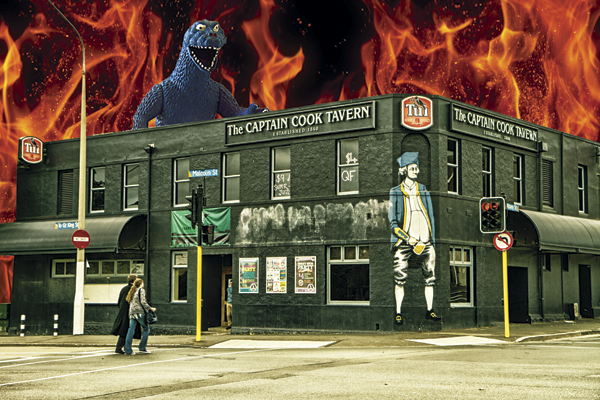
The Cook is cooked
The Captain Cook Tavern’s long history looks set to come to a close, with the pub’s lease expiring un-renewed on 29 June. James Arnott is one of the owners of Cook Brothers Bars, which has operated the pub for nine years, along with other establishments in the Octagon, Queenstown, Christchurch and Auckland. He told Critic that neither his company nor Dominion Breweries, which holds the main lease on the property, were interested in continuing the lease. Arnott said that revenue at the Cook had fallen 40 per cent in the last five years, which he attributed to a “massive change in student culture.” Students drank less frequently, and were more likely to drink at home when they did. Meanwhile, the high rent on the large property had not reduced, and “major renovations” were required to keep the ageing building up to standard. General Manager Matt Barakauskas said that the pub’s staff faced unemployment due to the closure, but that efforts were being made to secure them employment elsewhere. Arnott said he was “completely unsure” as to whether the building’s owners, Orari Street Property, would find a new tenant. Orari Street Property’s director Noel Kennedy had previously claimed his company would fight to ensure the pub remained in operation. However, the current building was “stuffed” and it was doubtful that any kind of pub was currently viable. The wiring was so antiquated that fuses had to be made to order when they blew. In recent days, roofing contractors have been observed working on the pub. If the Cook closes, it will bring to an end 153 years of operation. The establishment began in 1860, although the present building was constructed in 1874 after the original “aged wooden structure” was demolished. According to an article published in the Otago Daily Times on 8 June 1909, the pub “had always one or two permanent boarders” well into the twentieth century, and at least two people died while living in the then-named “Captain Cook Hotel.” The Cook has had a long reputation of brushing the edge of liquor licensing laws. Around the turn of the twentieth century, The Cook’s publicans were fined on multiple occasions for secretly selling bottled beer on days when the pub was supposed to be shut, and patrons who had been forbidden to buy alcohol were often hauled before the courts for having sly pints at the Hotel. In more recent years, the wildly popular “Cook-a-thon” party held at the end of lectures earned the owners a warning from the Liquor Licensing Authority for encouraging excessive drinking. As the University expanded in the 1970s, students formed an increasing percentage of the patrons. However, licensing laws that allowed the sale of liquor in supermarkets led canny students to pre-load as a “more cost effective option,” according to Arnott. He also believed, “with a small bit of confidence,” that the increasing use of other recreational drugs among students meant that patrons came to the club tripping, and interested only in drinking water. Whatever the reasons for its demise, the Captain Cook’s taps look set to run dry before next semester.
-
News

Referen-dumb?
An OUSA referendum will be held this week from Monday 27 to Friday 31 May. The referendum comprises six questions, one of which would radically alter OUSA’s governance structure. Question Six was included in the referendum after former Executive member Dan Stride started a petition and gathered the 100 votes necessary to put the issue to the student body. The question encompasses 24 amendments to the OUSA Constitution and election rules, and affects over 100 provisions. The changes are to be accepted or rejected in their entirety. Stride’s proposed changes would reintroduce Student General Meetings (SGMs) in order to deal with routine matters, such as appointing OUSA’s honorary solicitor and auditor, and as a forum for debating more controversial matters. Any motion that failed to attract a two-thirds majority either way would be put to a referendum. Question Six would also restore 2010’s governance structure and Constitution, adding representatives for each academic division as well as a Women’s Representative, two General Representatives, a Pacific Island Students’ Representative, and a Queer Representative, and removing the Administrative Vice-President role. Stride claims the changes are necessary “because I feel the Exec has abused its powers by vetoing stuff going to referendum.” Stride believes that all motions regarding external policy should be put straight to referendum, which the Exec has failed to do. Stride also feels that the Executive has ceased to be “properly representative.” “Since 2011 we’ve had Execs without science students, or Execs with only one woman out of 10 members. I can’t recall there being any Health Science students on the Exec in the last three years. That’s wrong, because the job of the Exec is to represent students.” OUSA President Francisco Hernandez believes that while Stride raised some valid concerns, a bigger Exec could “lead to more inefficient decision-making.” Hernandez had opposed the slimming down of the Executive in 2010, but told Critic that “any change to OUSA’s governance structure needs to be a part of a wider, inclusive process that goes out to the student body, asks them what sort of changes need to be made – rather than one person attempting to impose their vision on the student body without any consultation.” Hernandez is also ambivalent about the proposed reintroduction of SGMs. “Maybe you could say that giving them back some measure of power will make them relevant again and students will be more engaged with OUSA in that way. But you could also say it would allow a small minority of motivated students to dominate and guide OUSA’s policy direction, in terms of external policy.” Stride and Hernandez both describe Question Six as a “blunt instrument,” although Stride believes this was unavoidable due to OUSA’s current constitutional setup. He claims that by restoring an earlier version of OUSA’s governance structure, this will reduce any problems associated with such a radical overhaul. Hernandez recently set up a working party to review OUSA’s governance structure, one of his many election pledges. He told Critic that the working party would wait until the results of the referendum were in before beginning its inquiries. If Question Six passed, Hernandez did not rule out the possibility that the working party would seek to undo the changes before next year, in order to have an unchanged governance structure in 2014. “If Dan’s reforms pass, the working party will have the ability to suggest reversal of the reforms and put this to the student body. “I think we need to end the see-sawing of the OUSA Constitution … it’s been changing every couple of years because different people try to impose their vision,” Hernandez continued. “It needs to be a settled issue, not something that keeps swinging back and forth. These changes passing means that political battle will have to be fought all over again.” Stride told Critic that the establishment of a working party was “healthy,” but suggested that the party would fail to see through any necessary governance changes in time for the elections to the 2014 Exec. “Fran has the best of intentions, but I don’t think he’s very adept at getting things done,” he remarked.
-
News

Excessive entitlement exacerbates exams
Exam failure may be attributed to a student’s exaggerated belief that they deserve to succeed, according to research conducted by the University of Otago. The study confirms, as educators often claim, that some students believe they have a right to succeed, known as “excessive entitlement,” and that this can interfere with achieving success in the context of university study. Lead authors of the study Dr Donna Anderson and Prof Jamin Halberstadt, of the Department of Psychology, examined the entitlement beliefs of almost 300 student volunteers sitting a Marketing and Consumption paper. These beliefs were then used to predict their final exam scores at the end of the semester, revealing that students with a perceived personal entitlement performed worse than their peers in the final exam. Factors such as personal responsibility and internal motivation were attributed to the entitlement effects, as less effort was put in where required by those who believed that other people are responsible for their success or failure. Critic spoke with Prof Halberstadt, who attributed the sentiment of “excessive entitlement” to a “learned approach to the world” that is influenced by teachers, culture, peers and parents. “I would believe generally that people are more entitled than in the past but there is no reason to think Otago more so than others.” As for “excessive entitlement” prompting a low-performing student to cheat, Prof Halberstadt remarked that there was no evidence from the study that would indicate this to be the case. However, he did say he could see the “chain of logic” that starts with a feeling of entitlement and leads to cheating. “It makes sense that someone who has that feeling may rationalise it.” According to Dr Anderson, the study provides practical advice for improving learning outcomes, especially by altering entitlement attitudes around what students “can legitimately expect from their learning institutions, and what they need to expect from themselves.”
-
News

Fredric leaves Critic happy
Callum Fredric has stepped down as editor of Critic after reaching a settlement with OUSA last Friday. Fredric was suspended after a meeting with Darel Hall, the General Manager of OUSA and its subsidiary company Planet Media Dunedin Ltd (PMDL), on Friday 3 May. This suspension was confirmed in a further meeting with Hall on Tuesday 7 May. PMDL is responsible for the University’s student media, including Critic and Radio One. The terms of the settlement remain confidential. Hall refused to confirm any details to Critic, commenting only that “there was a mutually satisfactory agreement.” However, Wellington magazine Salient has cited “sources close to [OUSA]” who put Fredric’s settlement at around $35,000, slightly less than his basic salary. The suspension became public knowledge on Monday 6 May, after Fredric was asked by police to leave the Critic office. The incident led to Fredric being trespassed from all OUSA buildings by the Proctor, Simon Thompson. Blogger David Farrar was quick to comment last Tuesday afternoon, posting on Kiwiblog that the size of the settlement indicated that OUSA “didn’t have a leg to stand on,” and that it was “a pity Otago students are the ones who have to fund the employment mishaps of OUSA.” Critic understands that the settlement and OUSA’s legal fees will be covered by insurance, although the price of the excess is unknown. OUSA will presumably also lose its no-claims bonus. Farrar has been covering the dispute between Fredric and PMDL since Tuesday 7 May, soon after social media and the Otago Daily Times had broken the story. Fredric knows Farrar personally and in the past has worked for Farrar’s polling company, Curia. Fredric has denied having leaked the story to Farrar. Fredric considered the suspension “unlawful,” a position he still maintains. He alleges a lack of due process on PMDL’s side. OUSA’s employment policy, which also applies to PMDL, recommends an informal approach to disciplinary matters. However, as a company rather than an association, PMDL is bound by slightly different employment laws and does not share OUSA’s Collective Employment Agreement (CEA). The CEA explicitly allows for suspension pending investigation (article 33.2g), whereas similar suspensions for PMDL staff must rely on employment legislation. This is not the first time that PMDL has settled with an employee. In 2011, Planet Media sales representative Dave Eley left with a settlement believed to be $12,000. Unlike Fredric, Eley left PMDL as a result of restructuring and was paid a contractually set redundancy package. However, sources within PMDL believe that Eley’s case was mismanaged and that PMDL could have lessened its liability. “What we’ve been trying to do for a while now is align PMDL and OUSA policies, because what we want is one team,” Hall explained. Hall’s carefully-worded and unspecific answers to Critic made it clear, however, that juggling the OUSA employment policy, the terms of PMDL staff Individual Employment Agreements (IEAs), the demands of employment law, and the two hats Hall must wear as General Manager of both OUSA (a charitable organisation) and PMDL (a company), creates a morass of competing considerations. This leaves PMDL vulnerable in cases like Fredric’s, which may explain why OUSA was willing to settle. Critic contacted Fredric for comment. In response, Fredric compared Critic’s reporter to “North Korea” and launched into an extended metaphor about war. He later stated that, “This is like Brutus asking Julius Caesar for comment on his recent assassination.” Clearly a fan of metaphors, Fredric in a radio interview with Salient on Tuesday 7 May compared himself to “Han Solo frozen in carbonite.” Fredric spoke to the ODT for an article published last Wednesday, threatening to sue OUSA again, this time over the alleged leak of documents relating to his dispute. Critic is now looking for a new editor, and an updated job description has been written. Applications close Wednesday 29 May at 9am - see page 31 for details. $35,000 could pay for... The OUSA Service Levy of 222 students ($157.82 per student) The refilling of 1,910 Emerson’s flagons ($18.32 per flagon) The annual rent of ~7 students (Approximately $100 per week) Critic tries to inform; Fredric threatens to sueCallum Fredric has stepped down as Editor of Critic after reaching a settlement with OUSA. After an eleventh-hour letter from Fredric’s lawyers, Critic has decided to not to print the reasons behind Fredric’s suspension.
-
News

Budget provokes outrage and apathy among students
An OUSA-run forum on the Government’s budget resulted in yawns for many on Monday. Speakers from the youth wings of most parliamentary parties were generally ambivalent, although Finance Minister Bill English’s latest effort attracted criticism from even the Government’s most ardent supporters. The Government’s supporters were quick but lukewarm in their defence of the budget. Act On Campus spokesman and failed parliamentary candidate Guy McCallum thought that the Government’s subsidy toward house insulation had been “incredible” for reducing poverty, and Young National member Todd Dickens claimed the budget provided for “the betterment of the people,” and a “strong nation.” He praised the end of student allowances for postgrad students as “just one of those quite fair cuts,” but abandoned the party line in response to an audience question on changes to student allowance cuts for solo mothers, confessing that “what Paula Bennett has done … I can’t stand up here and say that I support that, because I don’t support that.” Young Greens’ George Lellow and Nyssa Payne-Harker argued that the budget should have reduced New Zealand’s current account deficit, and that a capital gains tax should be levied. Labour’s Curtis Omelvena also offered detailed criticism of the budget, complaining that the Government should have found a way to reduce power prices. Speaking for Te Roopu Maori, Gianna Leoni thought that changes to tertiary education could unequally impact Maori students. Mana Party speaker Andrew Tait was the most critical of all, saying that the “charlatans” in government were transferring millions of dollars to a “cockroach capitalist class.” Tait believed that a “working class exodus” to Australia had been the only thing preventing serious economic difficulties, and that “if Australia goes into recession, we’re fucked.”
-
News

Georgie Pie
Dunedin may be getting its own piece of the Georgie Pie, depending on the success of the New Zealand fast food favourite’s re-release in Auckland and Hamilton early next month. Critic spoke with a North Dunedin McDonald’s manager, who said it was “uncertain” whether Dunedin would be serving Georgie Pie, but if the North Island trial is successful, the product is expected to be rolled out nationwide. While a stand-alone store may be on the cards, it seemed likely that Georgie Pie would remain a menu item within the McDonald’s stores, in which case Dunedin would not be indulging for “some time” due to the necessity of “acquiring and installing the necessary machinery.” Critic spoke with several students who were happy to reminisce on days gone pie. “There really is nothing like tucking into a Georgie Pie on a chilly Dunedin morning,” said one student, while another drunken food fiend said that it is “going to be so mean on the way home from town.” Another student was less enthused about the franchise’s return, recalling that it was “some pie that Maccas brought out. I never had it. I want a pie though.”
-
News

Psychoactive Substances Bill Committee named
Associate Minister of Health Peter Dunne announced the Psychoactive Substances Bill Committee on Friday 17 May. The committee is to be chaired by Otago University Associate Professor of Medicine Richard Robson, and has been put in place to determine a safety testing regime for “legal high” products. The Committee has been created following recent criticism over the safety of psychoactive substances such as K2 and other synthetic cannabis products that were readily available for purchase at dairies. The side effects of these substances were deemed to induce “animal-like” behaviour in their consumers and lead to depression and anxiety. A spokesman for Dunne stated that “the make-up of the Committee was based on Health Ministry recommendations.” It includes professors in pharmacology, forensic toxicology experts, and the executive director of the SPCA, Bob Kerridge. While the Committee’s method of testing is yet to be determined, the involvement of Kerridge leads Critic to speculate that the new testing system could involve animal testing of the products. “Safety testing will ultimately be done on any product that manufacturers wish to bring to market under the new legislation,” the spokesman for Dunne said. “They will have to submit that product and it will go through the testing process – at their cost.” The availability of products will be significantly reduced, along with the potential harm they will cause. “Consumers will know that the products they are getting will be low risk. They do not know that today under the current regime,” the spokesman added. The safety testing process will be decided by August when the Psychoactive Substances Bill legislation comes into force.
-
News

Execrable | Issue 13
The Exec meeting began with two requests for OUSA affiliation, from the P3 Foundation on Campus and the Dunedin Feminist Collective. Lucy and Ruby asked if they needed to abstain due to conflicts: Lucy has dealt with P3 while Ruby is a DFC member. “Don’t worry,” Fran reassured them. “It’s not real politics.” Both requests were approved. Rachael reported that while the Environment Committee was getting along swimmingly, they weren’t making a great amount of progress. Fran’s explanation? “They’re hippies.” Most of the rest of the meeting was taken up by a painstaking of review of every OUSA portfolio – of which there are 36 – to confirm Officers, Deputy Officers and Associate Officers. (What does that even mean? I don’t know.) Kamil resigned as Officer of the Employment Rights Portfolio. Fran took up the role instead, pointedly noting to Critic that “students need to be aware of their employment rights.” Lucy became Deputy Officer of the International Events Portfolio, “because I’m half-Asian,” and Ruby took the disappointing step of changing the Propaganda Portfolio’s name to Communications. “Critic seems to think I have evil plans for students,” she explained, evidently hoping to conduct said plans from the shadows of a bland and unassuming title like “Communications.” In a rare moment of worthiness, “Raising awareness of mental health issues” was added to the Student Health Portfolio, and Rachael, who campaigned on that same issue, was appointed Deputy Officer. Meanwhile, Ruby became Officer for the Living Wage Portfolio, only to reveal that she had misheard and didn’t know what the living wage actually was. She was then accused by Rachael of trying to unhook the latter’s bra. Francisco “Sports” Hernandez then reported on the recent “E-Sports” tournaments, which were apparently raging successes. Critic assured Fran that no, we would not be dropping the quotation marks around “E-Sports.” The most significant development was the establishment of a working party to review the OUSA governance structure. Zac opposed the review, noting that it had only been two years since the Exec had been slimmed down to its current, svelte form. The rest of the Exec reminded him that the purpose of the review was not to reverse the changes but to assess whether the changes were working. Zac continued to grumble about “wasting our time,” so the motion passed with one opposed. Finally, Lucy delivered the first monthly Finance Officer’s report in “103 years”; and, neatly demonstrating that Critic is not alone in haemorrhaging money to feed young egos, it was revealed that $1,400 had been spent on silk ties for last year’s Exec.
-
News

Cadbury’s new product
Cadbury has announced a new product to be made in Dunedin that will be tailored to “New Zealand tastes.” It is expected to arrive on the shelves later this year. The announcement of the new product comes after Cadbury’s Dairy Milk blocks underwent a packet transformation, including a re-sealable package and the long awaited return of the rounded shape segments. While no information on the new product has been revealed, it has been confirmed that the product will be produced in Cadbury’s Dunedin factory. Products such as Easter eggs and smaller wrapped goods like Pineapple Lumps, Roses and Jaffas are also produced in this factory. Critic speculated as to whether this “New Zealand taste” would consist of some Kiwi favourites such as L&P or Tomato Sauce. However, Cadbury Dunedin site manager Judith Mair questioned the customer demand for these flavours. “We are not sure how positive the consumer response would be to the suggested flavour combinations!” she said. One student told Critic that the idea of the new product and the return of the rounder blocks with “10% more joy” had brought him “110% more joy” and was “very pleased with the acknowledgement of Cadbury’s customer needs.” Mair also stated there will “be other new products” released at the end of the year, which will be made elsewhere.
-
News

Busin’ like a bus
The Otago Regional Council (ORC) has been lobbied by several student bodies to discount Dunedin’s bus fares for both University and Polytechnic students. OUSA, OPSA and Generation Zero all submitted material supporting Dunedin bus reforms at a Council meeting held on 15 May. OPSA spokesman Mark Baxter predominantly cited the financial strain that catching a bus to and from Polytech inflicts on students, claiming that for a low-income student, a bus fare can represent as much as 20% of expenses. He then expressed his belief that “a lot more [students] would use it if they could afford to.” NZ Bus services in Auckland have introduced a tertiary discount, exclusively supported by Auckland Transport “Hop” Cards. With the card, verified students can save 38-42% on bus fares, depending on the distance travelled. In contrast, the Otago Regional Council’s current “GoCard” saves roughly 10% per trip, an obviously insufficient reduction for lobbyists. Generation Zero’s submission for reform largely focused on increased patronage. Harriet Leadbetter of Generation Zero told Critic, “the ORC should be encouraging patronage numbers through a number of measures, such as increased services on the weekends and more accessible timetables.” Generation Zero is also supportive of reduced fares, with Leadbetter stating that reductions are “a good way to encourage increased public transport use, which in turn helps to lower New Zealand’s transport emissions.”
-
News

“I hate that shit. I can’t stream Pirates anymore.”
Computer network traffic at the University decreased by over 30% last year, following the introduction of restrictions on illegal downloading through the University network. Usage dropped from 464,159 GB in 2011 to 315,847 GB last year, a difference equivalent to over 400,000 hours of torrented video. This excludes traffic from data stored within the University network. This decrease follows the University’s recent blocking of websites and downloads that breach its internet usage policy. File-sharing sites are now blocked following the Copyright (Infringing File Sharing) Amendment Act, which came into force in 2011. This allows internet users who infringe copyright laws to be fined up to $15,000. In an article by the Otago Daily Times, it was noted that “the reduction in traffic has meant an improvement in the performance of the network for legitimate users and meant it could defer increasing the capacity of its network, saving the university money.” This now means students have to wait even longer to get Korea-speed internet. The restrictions have proved unpopular with the student body. “I hate that shit. I can’t stream Pirates when I’m studying any more,” says Steph, a frustrated Otago student. In other news, students’ use of lecture podcasts has reached record numbers. In 2008, there were just 265 downloads, probably because few lecturers were making recordings. This number rose to 700,000 downloads in 2011 and more than 2.1 million in 2012. The ODT notes that “the main use for podcasts seems to be for revision, with download numbers peaking around exam times.” With increasing student use of email, SMS, Facebook and Twitter, a study of how Otago staff members interact with students is now being undertaken by an online survey. The University is looking to find out what does and does not work in regard to online communication with students. A University press release regarding the study dropped the bombshell that “students are one of the most crucial audiences the University works with.” Critic is ecstatic the University has realised this.
-
Columns

The Leek | Issue 13
As semester one draws to a close and exams loom ever nearer, many students are torn between excitement over heading home for the break and apprehension over their upcoming finals. Although Otago’s sprawling campus is home to an impressive number of libraries, computer labs, and study centres, this time of year sends students flocking to the Central Library in droves – almost as if the others didn’t exist. “Central” is an academic hub for all different types of students – be they fresh or mature, assiduous or apathetic, comatose or … territorial? It’s true – students who frequent the library during these high-pressure weeks would be more likely to bite off someone’s note-taking hand than give up their coveted study spot. The sight of row upon row of abandoned laptops and binders just place-holding while kids nip back to their dingy flats for a feed is sickeningly familiar. Many have fallen victim to the endless pacing between floors that is often required in order to locate a seat in Central – but how far would some students go to keep their prime positions locked down? A security bust has revealed that a ring of 100-150 enterprising First Year Health Science students found a way to circumvent the seating struggle. It appears that they have been living at the library day-in, day-out for the past few weeks. Since taking up residence there, they developed ingenious ways to survive undetected. A number of bookshelves in the Philosophy, Theatre and Art History sections were emptied out and converted into bunk beds, concealed by drop sheets plastered with realistic, life-size images of lame books stacked on shelves. The sneaky stowaways would hide behind these façades until the final security check was finished and the library was locked up each night. They would then emerge from their cubbies and study hard until morning, repeating the same process as the library opened before slipping out and snagging their favorite seats ahead of the masses. There is no evidence that the bunks were ever actually slept in. Household appliances including toasters, microwaves and electric jugs, along with a substantial amount of non-perishable food items, were smuggled in via the service entrance and stored inside the many drum-like coffee tables dotted throughout the library. These freshers would use the showers in the disabled bathrooms to stay fresh, or occasionally dart across to OUSA during the day for a quick spritz there. While these particular first-years are devilishly clever, reports of several older students paying otherwise unoccupied freshers to sit in their seats during mealtime absences and lectures only serve to remind us that, at the end of the day, most freshers are about as useful as white crayons.
-
Columns

Proctology | Issue 13
This week, the Proctor had “nothing of note to report.” Critic speculates this has little to do with imminent exams and is rather the direct result of the Proctor’s continued emphasis on taking caution with red cards. Reports of tea parties and board game nights on Castle Street have recently been sent to Critic, possibly indicating a successful and exhaustive destruction of student culture’s favourite pastime. Furthermore, the Proctor’s previous recommendation of painting the University in an act of harmless acrylic fun is being “seriously considered” by several groups who wish to “paint the town red.” Critic was also surprised to not hear of any noise complaints from Opoho, where recent graduates are known to nest with their partners for months of “unemployment sex.” One reminder of Scarfie days gone by was a keg stand competition held at a Hyde Street flat last Thursday night. The organisers did, however, ensure that all drinking was done safely and installed a harness system for contestants, thus reducing potential harm caused by dizziness and weak arms. It remains to be seen whether the closure of the Captain Cook Tavern will herald an emergency notice from the Proctor’s office in a month’s time, when New Zealand’s last remaining Scarfie veterans will presumably descend upon it for a poignant – and pungent – dawn service.


