-
Columns

Editorial | Issue 12
Throughout the week, I have been constantly pestered by Frodo*, one of Planet Media’s effervescent account managers, into selling Critic’s contents page to one of his advertising clients. I told him to fuck off, but what Frodo lacks in height, tact, and common sense, he more than makes up for in whorish devotion to his clients. I eventually relented and offered him the next best thing. This week’s editorial is brought to you by Lynx Africa: the deodorant that will make women want to have sexual intercourse with you while holding their nose. As a wiser man than myself once said, “themed issues are so 2012.” But they do make coming up with an editorial topic easy. Last week, I got lucky; this week, I’m struggling to weave a common thread through our feature articles. If there is a theme to this week’s Critic, it’s “Amateur Hour.” The derogatory connotations are, of course, not what I’m going for here; rather, each of our three lead features is brought to you by an unpaid volunteer. The volunteers, meanwhile, are brought to you by Spam: putting dead animals into little cans since 1937. Volunteers are the lifeblood of Critic, and we always need more. When I need more, I choose Moro. Moro gives me more-o. If you have a great idea for a feature or a column, get in touch and we’ll sort something out. If you have a shit idea, get in touch and we’ll help you make it better. This week, Matty Stroller – last seen conducting Critic’s legal highs review – shares his experiences as the cameraman in an amateur Egyptian porno (page 14). Viagra wanted to sponsor the feature, but Matty resented the implication, so another of Frodo’s favourite clients/vendors was turned away. Baz MacDonald, our sterling games editor, turns his critical gaze to the Fairtrade movement (page 20). Baz likes Fairtrade almost as much as he likes games involving zombies (page 40). On page 24, I continue my somewhat unforeseen detour into the realm of SPORTS, joining forces with SPORTS provocateur Gus Gawn to preview the upcoming Champions League final. And on page 26, Fertile Myrtle tells the story of her egg donation to an infertile couple she met online. All in all, it’s been a pretty fucking hectic week, what with checking Facebook, deciding on this week’s theme, securing corporate sponsorship for issue 13 (The Sellout Issue) and, in true Critic fashion, leaving it to the last minute to finish off my editorial. I leave you with some words from our new sponsors, Lord of the Rings: Frodo’s love for Gandalf rose above all other thoughts, and forgetting his peril he cried aloud: “I’m coming Gandalf!”
-
News

Recreation Centre facelift lacks actual lift
OUSA’s $1.7 million renovation of its Recreation Centre building (formerly Clubs and Socs) is set to give students a more modern, functional space for activities. However, one of its services will remain off-limits to some disabled students. After a consultation process including user surveys and suggestions from the OUSA Executive and Recreation Centre staff, last year’s Executive approved a major overhaul of the “tired-looking” facility. The improvements, which will be carried out by Signal Management Group, include the creation of multi-use rooms with movable walls, a movie room, an upgrade of the Centre’s 30-year-old downstairs toilet, and a new heating system. Recreation Representative Blake Luff said OUSA was “looking forward to bringing the building into the 21st century.” Work to expand the building’s offices and revamp the reception area, including the return of the reception desk to its original position, is scheduled for this mid-year break. Most of the other renovation work is expected to take place over the summer holidays. OUSA is also expected to open a café in an effort to raise independent income. Recreation Centre manager Debbie Coulter said that if construction went to schedule, students would not notice major disruptions at the facility. Staff had been working hard to ensure that most clubs that planned to meet during the construction period could be relocated to alternative practice rooms until the “modernised, more welcoming facility” was ready. However, the new set-up may not prove to be more welcoming for wheelchair users. While the ageing lift will be replaced at a cost of $23,000, an extension of the lift shaft to the second-floor sauna was not included in the plan, leaving the Swedish steam-box out of reach for some. OUSA President Francisco Hernandez was unavailable for comment on the matter.
-
News

OUSA to break world record by inventing it
OUSA’s events department last week announced part of the line-up for their Re-Orientation Week events. The night of Wednesday 10 July will see Forsyth Barr Stadium hosting the world’s largest ever paint fight, and Shapeshifter will perform in the Town Hall on Saturday 13 July. On track for its fourth sellout in a row, the annual Illuminate Paint Party hopes to attract the stadium’s full capacity of 5,000 attendees. White-dressed partygoers can expect “a midnight dousing of UV paint amidst a top line-up of local DJs and entertainment,” with three tonnes of paint being dropped over the crowd on the stroke of midnight. The title of “World’s Largest Paint Fight” has not existed as a world record until this event, and an official Guinness World Record Adjudicator will fly to Dunedin to confirm the title and present a plaque. Along with opening act AHoriBuzz, Shapeshifter’s gig is also expected to be a popular event. Part of their national tour in support of new album Delta, their performance will “incorporate elements of the ‘heavy soul’ tempered with drum and bass, jazz and funk that fans have become accustomed to.” In addition, a larger-than-usual International Food Festival will occur before Shapeshifter on Saturday 13 July. Over a dozen University clubs and multiple restaurants will operate stalls on the Otago Museum Reserve Lawn, with most food priced from $2-$6. The week will also include a Comedy Night on Thursday 11 July. Limited discounted tickets will be available for students from the OUSA main office. Shapeshifter tickets are $40 plus a booking fee and earlybird student tickets to the Illuminate Paint Party cost $35.30 plus a booking fee.
-
News
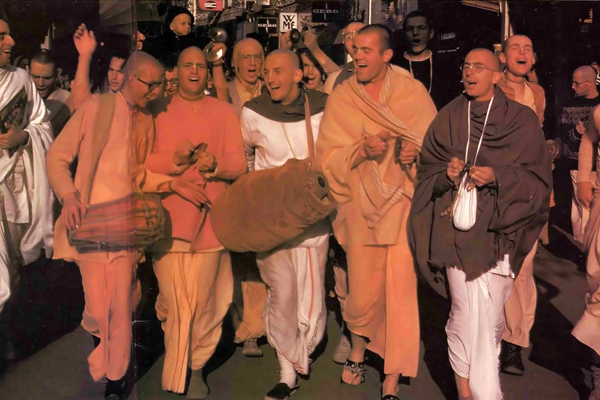
Whare Krishna
The Hare Krishna community in Dunedin has been gifted a house to call their spiritual home thanks to a gracious donation from one of the group’s members. At the end of this year, 133 London Street will become the new Dunedin Hare Krishna Cultural Centre. Hare Krishna member Jane Beecroft confirmed the acquisition, saying that it was something the group has been talking about for some time, especially to address frequent housing problems when overseas visitors of the faith were in town. The residence was donated to the Hare Krishna community following the passing of Madam Yap, the mother of Hare Krishna member Dr. Karuna Sindhu Dasa. Dasa purchased the $395,000 London Street residence in February with the estate of Madam Yap after the house had only been on the market for one weekend. The six-bedroom home will be used as “an education facility” where people are taught yoga, vegetarian cooking and meditation classes. According to Beecroft, the Hare Krishna community sees the house as a symbol for “our own sacred space,” as well as a chance to “open our doors to the greater Dunedin public.” Although the home is currently tenanted, the group will primarily use the downstairs area of the house for their public programme, while upstairs will be for residential use when they are able to occupy the premises later this year. They are also looking at offering rooms to international students, especially those from India. “Many international students find it hard putting up with noisy partying flats, so [the house] will be a nice facility and still within their culture.” As for the prospect of leaving their current meeting place at OUSA’s Recreation Centre (formerly Clubs and Socs), Beecroft assured Critic that the Hare Krishna community has a sentimental reason for the premises. “Clubs and Socs is our lungs, and this new house is our heart. And you need the lungs to pump the blood around the heart.” The move would have little effect on their spiritual presence there, and fortunately their popular $3 lunches will remain unchanged.
-
News

South Dunedin pimps pimp
An elderly gentleman from South Dunedin has been outed as a “pimp” by the Otago Daily Times after a popular YouTube video inspired them to publish an article about the man’s “pimped out” mobility scooter. While the aged hustler is far from making coin from the South Dunedin hunnies, the ODT revealed the man on the highly-modified mobility scooter, inspired by Postman Pat’s mail van, to be 77-year-old St Kilda Resident Warren Ockwell. “South Dunedin’s coolest man” became a YouTube sensation after the video showing Mr Ockwell driving the modified scooter around St Kilda was posted on the ODT website last week. At the time Critic went to print, it boasted over 8,500 views. A tip-off revealed the mobile man has been building floats for Rainbow Preschool to enter in Dunedin’s Santa Parade for over a decade, with the scooter being his latest creation for the annual event. The ODT reported that Mr Ockwell had no idea the video was online and was “humbled” by the many views it had received. Critic suspected that Mr Ockwell would be less humbled by ODT’s comparisons between the float and the commodification of prostitution. However, reports suggest New Zealand Post are looking to pimp out their own Courier Vans in an attempt to thwart the imminent collapse of the mail service, and to earn an extra buck. While the mystery of South Dunedin’s premier pimp remains a secret, the article heartwarmingly told of Mr Ockwell’s intention to keep making floats due to the satisfaction of putting a smile on the faces of the Rainbow Preschool children. According to the ODT, the children knew Mr Ockwell as “Poppa,” and Critic suspected he would love it if they called him “Big Poppa.”
-
News
Ghosts write essays for cash
A nationwide made-to-order web-based essay service marketed primarily towards Chinese students has been uncovered. Assignment4U is registered with a New Zealand domain name, and markets itself as an “academic advisory” service. A 1,500-word essay ordered by Fairfax Media last week cost $270, gaining the fictitious student a B+ mark in a COMS101 paper. The essay was emailed to Fairfax only three hours before its deadline, suggesting that the essay was intended not as a study aide, but rather as a finished product for a student to hand in. Professor Vernon Squire, Otago University’s Deputy Vice Chancellor regarding Academic and International Affairs, reassured Critic that “the University has strong policies and procedures in place to deal with dishonest practices, including that of students passing off the work of others as their own.” When questioned about the University’s awareness of sites such as Assignment4U, Squire said he was aware of another site called NoteBoat. NoteBoat does not offer customised essays to order, but instead offers notes and essay examples from previous years. These would be detected by the University’s anti-plagiarism software if submitted. Squire added that “there have been no instances of students being caught using bought assignments that have been customised for particular courses.” However, the University has “disciplined” students who have “plagiarised material from online sites that offer prewritten essays.” Squire added that even if anti-plagiarism software were thwarted, “irregularities in regard to the performance of an individual student would be detected by lecturers or tutors.” A law change in August 2011 allows NZQA to prosecute owners of websites that advertise cheating services. These laws have not yet been used, but sites such as Assignment4U could serve as excellent test cases if sufficient evidence to warrant prosecution were discovered.
-
News
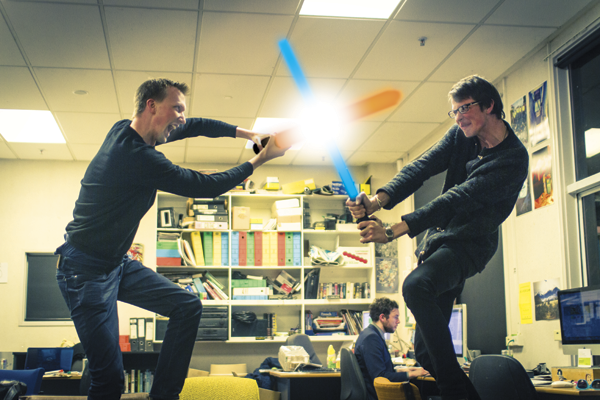
Debating Society refrain from debating their privilege
University of Otago Vice Chancellor Prof. Harlene Hayne has provided a $25,000 grant to the Otago University Debating Society (OUDS). In a letter to OUDS president Paul Hunt, Hayne recognised the society’s recent “international exposure … putting Otago on the world stage as a top ranking debating institution,” as a primary reason for the funding. The application sent to Hayne identified Auckland University’s annual $25,000 debating funding as a precedent for Otago’s; however, Hunt would not provide Critic with a reason for this sense of entitlement. When asked how it could be justified that the value of a small student loan is spent on an extracurricular hobby, Hunt told Critic “the skills required for debating are part of the academic focus of a university. The ability to articulate arguments verbally is not dissimilar to making arguments in an essay. Some universities have full-time staff dedicated to coaching debating.” Pro debater, indeed. Hayne emphasised to Critic that “OUDS must provide evidence to confirm how their funds have been expended in supporting members to attend competitions. The University will require receipts for all expenditure, and any unspent portion of this funding must be returned at year-end. A report must also be submitted at the end of the year outlining the activities undertaken, which students attended each event and the event’s results.” The University has no fixed budget for competition and event funding, and an individual student may apply for up to $500 to compete in Australia or $1,000 to compete in other overseas destinations. The OUDS is the first team to apply for this funding as a group of students, and as such, the $25,000 grant skyrockets them to the status of Otago’s highest-funded group. Hayne’s confirmation letter also outlined her desire for OUDS to work alongside the University’s Director of Development & Alumni Relations “to pursue other funding sources that might assist the Society on an ongoing basis.” “I may also be willing to contribute a similar amount of funding to the Society in 2014 and in 2015; however, this will be subject to an end-of-year review of what has happened in 2013,” the letter concludes. “The University regards these debating teams as excellent ambassadors for Otago. I am very proud to support them,” Hayne told Critic. Since July 2012, there have been 16 applications for such funding, five of which were successful. Currently, the Debating Society also has one corporate sponsor, Gallaway Cook Allan Lawyers, who provided funding of $5,000 for the year.
-
News

Daft punks ignore Daft Punk suggestion
OUSA has met a suggestion that it underwrite a Daft Punk gig with a mix of excitement, caution and derision. Radio One station manager Sean Norling’s spontaneous idea was emailed to Daft Punk’s agent Richard de la Font on Sunday evening. Norling, who has so far received an auto-reply from de la Font, speculates that with a potential booking fee of $1 million, a sell-out show at Dunedin’s Forsyth Barr stadium would still rake in a tidy profit. He hopes that a combination of OUSA and Dunedin City Council events funds could be used to pay for the gig. OUSA’s quasi-autonomous events office, however, were less than enthusiastic. When questioned by Critic about the proposal, the events team described it as “a non-event,” and “nothing to do with us.” A source close to the office said, “I’m pretty sure it’s a joke.” OUSA President Francisco Hernandez was surprised by the suggestion, exclaiming “the what?” Nonetheless, Hernandez claimed to “love the Daft Punk,” and thought that a proposal seeking to lure the French house duo to Dunedin could be presented to the OUSA Executive at its next meeting. He refused to comment further until Executive members had discussed it. Daft Punk, which formed in 1993, comprises Thomas Bangalter and Guy-Manuel de Homem-Christo. The duo’s highly-anticipated fourth album, Random Access Memories, is released Tuesday 21 May.
-
News

Budget 2013: Nothing new for impoverished students
It appears the National Party is waiting until election year 2014 to give New Zealand’s domestic tertiary students any excitement in the Government’s annual Budget. Student allowances will continue to exist only for younger students and people studying for their first degrees. Students aged over 65 will not be eligible for an allowance, while students over 40 years old will be restricted to 120 weeks of the scheme, amounting to three years of study. Students of all ages will continue to have access to the interest-free student loan scheme. National Secretary of the Tertiary Education Union, Sharn Riggs, responded that “this government is stripping money away from students, both directly through their loans, allowances, and higher fees, and indirectly by attacking the quality of their education.” While little change is expected for the average tertiary student, marketing of New Zealand’s international education industry will receive $40 million over the next four years. “International education currently contributes more than $2 billion to our economy each year and supports approximately 32,000 jobs,” said Tertiary Education, Skills and Employment Minister Steven Joyce. National aims to increase the value of international education to $5 billion by 2025. The funding is part of the Government’s $400 million internationally-focused growth strategy, which includes extra money for tourism, science and research, and development. Initiatives to increase repayments of student loans from overseas-based borrowers and reduce evasion will also be put in place. There will be a new ability to arrest the worst offenders of outstanding student loans at the border. The Parliamentary debates following the release of the Budget were unsurprisingly heated, with Winston Peters of New Zealand First claiming National has turned Kiwis into “mice on a treadmill.” In order to better demonstrate this analogy, he then presented a toy mouse on a treadmill to Parliament. “National is pinning its hopes on asset sales, pandering to rich tourists,” Peters said as he continued to stroke his mouse. David Shearer of the Labour Party said that New Zealand has a “game show Government,” and likened Peter Dunne to a contestant on Survivor who “sometimes outplays, never outwits, and somehow he outlasts.” The Greens’ response lacked any real substance, with never-ending repetition of how National look after the top two per cent: “John Key is more interested in looking after his mates than your mates.” The running response to this on Twitter generally consisted of “no one is listening,” and comments on the irony of how “Greens complained about not getting paper copies of the #NZBudget.” Key responded by describing Labour and Greens as “where fruit meets loop.” Despite the entertaining anecdotes from Winston Peters, the budget release was, as John Key described David Shearer’s speech, “like watching MySky on half speed.” Total Expenditure$82.8B (Up 0.8%) Biggest Cuts:-$2.03B CERA (Canterbury Earthquake) -$172M Ministry for the Environment -$88.5M The Treasury Biggest Gains:$877M Ministry of Social Development $672M Ministry of Health $319M Ministry of Transport Most Press Releases: Green Party. Holy fuck.
-
News

Radio 45,000
OUSA announced $45,000 capital expenditure plans for Radio One’s technical equipment last Wednesday. OUSA President Francisco Hernandez told Dunedin Television, “it is a big vote of confidence in the future of Radio One as it approaches its 30th birthday. “Research shows the listenership is older male students, which is a positive for OUSA, as its services are catered towards younger female students.” Critic speculates that Hernandez did not talk to a communications advisor before making this statement. Radio One was in danger of being sold by OUSA in 2011 as a belt-tightening measure in the face of the Voluntary Student Membership Bill. Sean Norling, the Radio One station manager, told Critic that the approval of his capital expenditure request reinforces the tireless work going on behind the scenes at Radio One. “I realised that our recording and production plant was severely dilapidated, as is often the case with student radio where everything’s held together with gaffer tape,” Norling said. “Radio One is going to sound really good, feel really good, and be dragged into the 21st Century. It’s a really great thing and an early 30th birthday present for next year. It returns our production studio to a state where we can record bands and help the emerging music culture.”
-
News

Shitty health decisions
The Ministry of Health is in the firing line of Otago professors due to its reluctance to introduce a bowel cancer-screening pilot programme nationwide, despite the programme’s proven success. University of Otago health services researcher Dr Sarah Derrett, also on the Board of the patient- and family-led charity Beat Bowel Cancer Aotearoa, stated that the pilot screening in Waitemata has in the past year alone found 60 cancers and removed many more cancerous growths that would have otherwise gone undetected until symptoms were noticed. Beat Bowel Cancer Aotearoa is calling for the Ministry of Health to begin the introduction of the pilot-screening programme nationwide before the four-year trial is up. “The government wants to take a cautious approach and wants to run the demonstrably excellent screening programme for four years before making a decision about introducing it,” Derrett told Critic. “A national screening programme could save as many as 400 people every year – that’s many more than the road toll.” The pilot has been running for a year in Waitemata and is currently targeted at people aged 50-74 years. A national screening programme would allow for all New Zealanders in this age group to take part, not just those in Waitemata. “New Zealand has one of the highest rates of bowel cancer internationally, so we should all be aware of it,” Derrett warns. On average, 1,200 people die of bowel cancer annually in New Zealand and people as young as 20 are being diagnosed with the disease. The chief benefit of the pilot screener is that it can detect cancer in people who are yet to display symptoms. Detection at an earlier stage makes the cancer much more treatable. “Bowel cancer can be a silent killer because often people do not have symptoms or do not recognise the symptoms,” Derrett says. Beat Bowel Cancer National Awareness week is being held on 3-9 June.
-
News
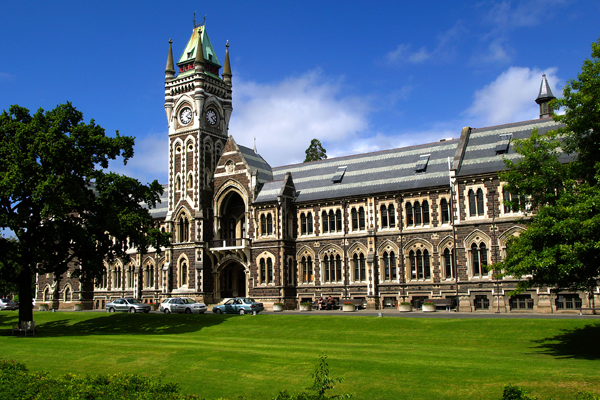
University council holds a meeting
Otago University has been deemed by the Otago Daily Times as “trumpeting” its contribution to Dunedin after the annual Economic Impact Report was presented at the University Council meeting on Tuesday 14 March. A media release by the University stated, “The overall direct economic impact of the University of Otago to Dunedin and other centres in New Zealand is now $897 million – a rise of $7.2 million since 2011,” proving the significant contribution Otago University makes to the economy. The University is understood to be delighted with these figures after recent criticism over its purchase of commercial properties, which become non-rate-paying under its ownership, had led to discussion about the University potentially detracting from the Council’s income. For example, following the University’s recent purchase of the LivingSpace hotel, the council will lose $9,844 in income. However, the University is now pointing out that these critics are failing to see contributions made elsewhere. In other business, the “E-sports” competition, organised by OUSA and recently held on campus, was discussed. While Critic struggles to describe 10 people playing League of Legends against each other in a lecture theatre, moving only their thumbs and communicating via screens, as a “sport,” the event received much praise from staff. Vice-Chancellor Harlene Hayne commended the event for proving that students can have fun without the consumption of alcohol. Give it a rest, Harlene. A memorial prize for Didem Yaman, a PhD student at Otago who died in the 2011 Christchurch Earthquake, is also being introduced for the best MA thesis in Politics. The Gopi Jain Memorial Prizes have also been altered, and will now be awarded to the highest achieving students in 300- and 400-level Statistics papers.
-
Columns

Bouncing off the Halls | Issue 12
Our column this week begins with the tale of a young lady of Cumberland Courts. She challenged herself to engage in what Critic will describe as “French kissing” and “heavy petting” while on a night on the town. This, of course, is a game plan to which a sizeable chunk of Otago University’s clutch subscribes whilst indulging themselves in or around the inner city. What makes this girl’s actions sufficiently hedonistic to appear in Critic’s noble pages was her pledge to engage in such acts with no less than five unknowing young men in the course of one night. An outrageous number in itself, the girl beat her own goal by a total of 24 individuals. The 29 victims of her obviously intoxicating charms spanned social strata, with at least three hailing from the elite Knox College. These young men were joined by at least one City College student, proving that one affliction strikes all sectors of society alike: that of a harlot’s charm. We’ll now revisit Salmond College, which by all accounts is a goldmine of weird and wonderful tales of fresher romance. It is well known that at every hall, a small, exclusive group of students arrives well before O-Week. These students often form tight-knit friendships in this fleeting moment of calm and clarity before the degrading spectacle of Orientation. At Salmond, one of these friendships was soon taken to the next level, with a covenant established between two members of the college – a health science student with a knack for study, and a voluptuous young lady. In exchange for regular intercourse with the girl in question, the young man has promised to supply her with study notes, as well as to purchase and deliver whatever consumables she pleases from Gardens New World. The most compelling condition of this agreement, however, is the young woman’s main condition that the other party satisfies whatever depraved sexual urges she has in exchange for her full cooperation with the contract. As far as Critic is aware, this agreement is still in effect.
-
Columns

The Leek | Issue 12
As this year’s Capping Show season draws to a close, OUSA executives have been forced to reconsider their rules regarding the permissible subject-matter of the numerous and varied sketches dotted throughout the show. Following a volley of complaints from a number of parents, grandparents, faculty members and some of the more prudish students, it has become clear that the powers that be really need to sit down and draw up some new boundaries. In the days before political correctness was so severely drilled into every man, woman and Jew’s head, basically any conceivable topic was fair game for the mockery, farce, innuendo and parody for which the Show is famed. In the years leading up to this one, the list of sanctioned topics has undergone a veritable rollercoaster of change. For a while, the sphincter tightened considerably – until some GC realised that kids will be kids, and a daring, naughty capping revue might be just what the doctor ordered. Finally, as taboos morphed into grey areas and grey areas slid into the mainstream, OUSA issued a decree to the writers and directors of this year’s show, stating that the only topics that they see fit to veto are “bestiality” and “rape.” With these extremely relaxed guidelines, the show was thoroughly filthy – left, right and center. Perhaps the most concerning slice of perversion that found its way into the show came at the hands of the University of Otago Sextet. The boys put forth a rousing rendition of “Paedophile’s Picnic,” which, of course, spoke only of consensual acts. While one might think that it was content of this nature that caused the older generations to storm out of the theatre in indignation, eye-witnesses reported many of them happily tapping their feet and humming along to the familiar tune. In fact, it was something else entirely that had the oldies so upset. Countless comments were made about the “disgusting, distasteful” suggestions, innuendos and displays of lesbianism – though the unhappy individuals in question professed to be unfazed by the numerous gay references (and the homoerotic tension that persisted between two main characters) throughout the show. In addition to this, some parents expressed deep-seated concern that the show made fun of Arabs, which they fear will cause terrorists to target the University in order to exact revenge. Although OUSA tries hard to strike a balance in the show between letting the young ones have their fun and upholding the University’s image, the number of offended revue-goers this year indicates that they may have been quite wrong about how much the public can actually handle. The more things change, the more they stay the same.
-
News

Israelient
Last Tuesday afternoon, Otago University hosted Shalom Cohen, the former Israeli Ambassador to Egypt, for a discussion with students and staff. Cohen is currently the acting Israeli Ambassador to New Zealand. Mr Cohen spent much of the heated discussion addressing the recent “Arab Spring”; or in his words, the “Islamic Winter.” Cohen expressed a unique Israeli diplomatic perspective on the Arab Spring, an interesting opportunity for those in attendace, since Israel’s critical viewpoint is often overlooked by the press. When questioned about the Israeli bombings of Syria’s chemical weapons research facilities earlier this month, Mr Cohen was reluctant to comment. He later maintained that Israel does not want to intervene with Syria’s domestic affairs, calling the Assad regime’s atrocities “Syria’s internal business.” Mr Cohen did however express personal regret at the situation, with one of the audience members reminding him of the extreme hardships the Jewish people have suffered in living memory. As the ambassador to Egypt from 2005-2010, Mr Cohen oversaw diplomatic relations with Hosni Mubarak’s regime, which crumbled in February 2011. Mr Cohen observed that when first appointed as ambassador, Mubarak was a “very popular leader.” According to Mr Cohen, when protesters first appeared on the streets, they called for the downfall of Mubarak’s regime, with no immediate plans for the future made clear. “They just wanted Mubarak out.” Mr Cohen believes the “beautiful” Arab Spring has been “kidnapped” by groups such as the Muslim Brotherhood in Egypt. Egypt is one of only a few predominantly Muslim states to share full diplomatic relations with Israel, an upshot of the Camp David Accords in 1978. The Muslim Brotherhood, now the largest and best-organised Egyptian political force, suggested that a referendum may be held regarding the 1979 Egypt-Israel peace treaty only last year. Mr Cohen described observing the unique emotions amongst Egyptians in the aftermath of the 2011 revolution: “It is a beautiful thing to feel free, after decades of totalitarian oppression.”
-
Features

Balls Deep in the Arab Spring
For as long as I can remember, I have had a weird infatuation with all things Middle Eastern. In late 2011/early 2012 – after a year and a half of soul-crushing wage-slavery – I excitedly embarked on a three-month tour of the “Arab Spring.” It is one thing to read about a situation on your laptop screen or in a newspaper; it is quite another to live, breath, and feel it. Salivating at the prospect of embedding myself in the emotionally-charged upheavals occurring across the region, I departed with three t-shirts, one shirt, one pair of jeans, a couple of pairs of socks and boxers, a notebook, and an open mind. General chaos ensued. The predictable close calls with bombs, bullets and machete-wielding maniacs aside, one experience in particular stands out from my time in the region as especially worthy of rendition in Critic: how I somehow became involved in a seedy, morally questionable, amateur Egyptian pornography. *** Central to this story is my good friend Omar*, a 28-year-old sex-obsessed bodybuilder. Few individuals I’ve encountered in this life have exhibited such high levels of human kindness and genuine decency as Omar the Egyptian. Some of this story’s more grisly details may throw that claim into contention, but I assure you, he has a heart of gold and the best of intentions. I met Omar while he was working at a hotel during my first trip to Cairo in 2009. Since the overthrow of Hosni Mubarak in February 2011, Egypt’s once-thriving tourism industry has been plunged into disarray. Frequent scenes of political violence have dissuaded risk-averse Westerners from visiting, in turn leading to thousands of Egyptians – including Omar – losing their jobs and livelihoods. There is a great irony in mainstream perceptions of the Middle East. Sure, the region is plagued by chronic instability, but in terms of general interpersonal violence and crime, I felt a great deal safer aimlessly wandering around the labyrinthine alleyways of Cairo, Damascus and Amman at night than any comparably large European or American city. That may be gender-specific – travelling alone in the region as a woman presents its fair share of obstacles. But based on my experience, the Middle East does not deserve its sordid reputation as a tourist destination only for those with a serious death wish. Anyway, back to my pornographic exploits. I stayed with Omar at his family home in a lively, overcrowded and somewhat dilapidated little corner of Cairo called Al-Matariyyah. Cairo is not for the faint hearted. It overloads the senses, drains whatever energy you have, and fucks with your mind in a big fucking way. In sum, it’s awesome, albeit an acquired taste. One night, after a non-stop barrage of shisha, hash and animated political discussion, Omar insisted I meet his fiancée, Fatima*. A five-minute walk later we were waiting outside her house. Omar then confided in me that he was apprehensive about the marriage. He loved her, but had heard from many friends that the high point of marriage is the wedding itself and quickly after one “begins to hate life.” I unconvincingly attempted to reassure him everything would be fine. Eventually, a young woman in traditional Muslim dress with a shy demeanour emerged onto the street. The encounter was fleeting, slightly awkward, and very formal; the complete opposite of the twisted sexual odyssey that defined our second interaction. *** It was (and still is) a special time in Egypt. The revolution jolted Egyptians out of the apathetic and cynical slumber that had characterised my first visit. The atmosphere was one of cautious optimism and palpable anger; everyone was talking politics, and a renewed sense of pride and empowerment could be felt on the streets. Omar and his friends had been on the vanguard of the February revolution, and it was an absolute privilege to hear their battle stories first hand. During my last days in Egypt, I faced a dilemma. I had arranged to visit a friend in Italy for a week or so and then head to Lebanon. The anniversary of the revolution was around the corner and Omar and co insisted that I come back and experience the events and emotions myself. After a little bit of thought, I decided that being in the middle of a small part of history was well worth the extra expenditure and booked return flights. Upon my return, it was obvious that Cairo was on edge. Most of the people I talked to in the street were adamant the anniversary would degenerate into a wanton bloodbath between SCAF, the transitional military government, and protesters unsatisfied with the revolution’s progress. I began feeling a little anxious. Omar and co promised that they would look after me in the event that everything went to shit, but when you are in the midst of a million-strong mob and things get violent, there is only so much a handful of friendly faces can do. When the much-anticipated morning arrived, I heard the familiar wolf-whistles on the street below, signalling it was time to head out into the great unknown. Then something inexplicable happened: Omar refused to get out of bed and emphatically stated he did not want to head downtown. This was puzzling; Omar’s lobbying was the main reason I had come back, and now, over the course of a few hours, he had completely changed his mind. Confused and a little concerned about my good friend, I nonetheless jumped on the metro with a decent-sized contingent of young hot-blooded revolutionaries and headed towards Tarhir Square. Another friend called Youssef* had organised an entourage of mid-ranking Muslim Brotherhood members to escort me around for the day. When it became apparent that the prophesised bloodbath was fortunately not going to happen, the brothers’ incessant, often aggressive competition for my attention became a new source of constant stress. Although there were a few violent incidents here and there, overall the day was an amazing feast for the senses. Part-protest, part-celebration, the anniversary was a testament to the colourful political mosaic that had emerged in Egypt since the revolution. I also managed to achieve one of my lifelong goals during the day: to be in the middle of a thousands-strong “Allah Akbar” mob – I even partook in a few “Allah Akbars” myself, much to the amusement of my pious escorts. Content with how the day had unfolded, my thoughts turned to Omar and I decided to go and get to the bottom of his sudden change of heart. The next 24 hours were unequivocally the weirdest of my life thus far. *** I returned to find Omar slumped in a chair in his room, listening to terrible music and looking at pictures of scantily dressed woman. He appeared fragile and a little dejected. I soon learnt that Omar’s seemingly schizophrenic apprehension about the day was more than justified. Only a month earlier, during a confrontation with the military in downtown Cairo, Omar’s best friend was shot in the face and later died whilst standing beside him. To describe the conversation that followed as “deep and meaningful” would be a gross understatement. Omar then proposed a beer in town, pedantically clarifying in the process that he was, in fact, a good Muslim and usually did not drink, but since I was his guest he had an obligation to partake in the wicked ways of the West. A night of beer, belly-dancers and aimless wandering followed, complete with a lynch mob, Arabic rap-battles and lots of sex-related chat. By the time we returned to Omar’s in the early hours of the morning, I was physically and mentally exhausted. Omar refused to let me rest, keeping me up until sunrise with some very sentimental pillow talk. Immediately after expressing how sad he was that I had not converted to Islam and therefore could not jam out with him in “paradise,” he began to systematically go through his favourite porn videos with the vigour and attention to detail of an esteemed film critic. He also informed me that he and his fiancée had been sexually active for a while and that it was great to finally have someone to talk to about it. I could have never anticipated the depraved places that talk would end up taking me. For a lot of Egyptians, and especially for Omar, I felt like my presence permitted the discussion of topics normally surrounded by taboo. I gave them an outlet to vent their innermost curiosities about sex and all its associated complexities. The recurring fascination with Western sexuality I encountered contained a great deal of cultural misunderstanding; the hyper-sexualised representations of Western women in films, music and porn appeared to have convinced many Egyptian males that the West was nothing more than a frenzied sex free-for-all. Elements of this perception are true, but the fundamental dissonance between what Omar thought was normal for me and what is actually normal paved the way for the debauchery ahead. “Matty, would you do me the biggest favour anyone has ever done?” Omar said as the sun was coming up and I was to finally get some sleep. I instantly responded in the affirmative; Omar had been an unbelievable host and we had become very close friends. “Would you film me and my fiancée with your camera?” What the fuck? Shocked at the proposition, I dismissively laughed it off and finally managed to joe out. *** A few hours’ sleep later, I awoke to Omar’s wrinkled mother standing over my bed holding the phone. It was Omar giving me directions to meet him and his fiancée after her exam finished. 45 minutes later, while en route, I had a sudden flashback to our drunken conversation earlier that morning. “Jesus Christ, surely not,” I thought. I started to get a little nervous as I entered the last leg of the journey and hoped to some God that what I thought might happen wasn’t going to. As the three of us travelled by bus to the house they intended to move into after the wedding a few hours outside of Cairo, nothing seemed too unusual. “It was nothing more than uninhibited drunken chat,” I thought to myself with relief. From the outside, the house did not look too dissimilar to Luke Sywalker’s swell pad from the original Star Wars. Inside was a different story. Apart from a mass of cigarette butts and discarded Pepsi cans, the house’s only contents were an old ragged mattress and a small stereo. I started to worry again; the place was exactly how I’d envisaged Alf Stewart’s infamous rape dungeon. I walked into the kitchen to find Omar standing behind me. “Did you bring your camera?” he asked. The dreaded confirmation had happened. I told Omar that this whole plan of his was entirely fucked and I did not feel particularly comfortable about it. “What the hell does Fatima think about this?” I asked. “I’ll tell her soon,” he replied. Shit – the already morally ambiguous situation I had found myself in had ascended to new levels of seediness. In a flustered and frustrated state, I swiftly left to buy a pack of cigarettes and think about how to handle the situation. When I got back to the dungeon 20 minutes later, I was greeted by Omar’s best Jason Gunn impersonation: a big cheesy grin and two thumbs up. My will to resist was gone. I took a deep breath, accepted whatever was going to happen in the sacred name of experience, and entered the room. The traditional Muslim dress Fatima had been wearing had been replaced with see-through lingerie, and Omar wasted no time in baring his quite impressive all. Resigned to my fate, I sat down on a speaker and turned on my camera. Things got hardcore pretty quickly; foreplay was obviously not a major priority. Once things got going, all the weirdness and apprehension dissipated and I got quite enthused about my unfolding amateur production. Omar assumed the role of actor/director, assertively dictating me around the barren windowless room. “Close-ups Matty, more close-ups!” Those words will be seared into my brain for the rest of my life. Just as I had achieved a modicum of comfort with the situation, Fatima began to lunge at me in a very sexual way. Omar actively encouraged this and started insisting that I partake in the twisted sexfest, which by this point would not have been entirely out of place on Extremetube. A sigh of indifference later, I put my camera down and reminded myself that I only live once. Several unspeakable acts followed as Omar exited the room for a much-deserved smoko. Another half hour passed and, though impressed with Omar’s superhuman stamina, I was starting to have serious concerns about making my 7pm flight. I exited the room to chain smoke and reconcile what had just happened with whatever semblance of morality I still had left. All I could think about was how absurdly divorced the whole situation was from most people’s preconceptions about the Middle East. This kind of stuff isn’t supposed to happen in a conservative Muslim society, is it? My initial politeness quickly gave way to stress and harassment. Filming had long since ceased and I kept popping inside at three-minute intervals to tell Omar to hurry the fuck up and finish himself off. When the big climax finally happened, I’d never been so relieved to hear an ear-piercing orgasm in my life. And like so often after an orgasm, the reality of what had just happened only then began to properly sink in. *** On the way back, I sat awkwardly between Omar and Fatima – for two whole hours. Very little was said and there was a sense that everyone felt a little ashamed of their actions. The awkwardness and tension may have been unbearable had my mind not been obsessively preoccupied with time, and my lack thereof. We dropped Fatima off at home and continued back to Omar’s. “I think Fatima feels weird about what just happened,” Omar said to me. Captain Obvious Omar went on: he had apparently explained to Fatima that this kind of stuff happens all the time where I’m from. It doesn’t, and I couldn’t help feeling that my lack of clarification on the subject would cause problems for both parties in the future. Unfortunately, uploading the video was well beyond the ability of Omar’s ancient computer. Without warning, Omar darted out the door, presumably to an internet café. Fuck. After a quick cost-benefit analysis I concluded I would have to find another way to retrieve the camera. Convinced I had already missed my flight, I flagged down a taxi and requested that he drive like a maniac towards the airport. A couple of kilometres down the road I saw an equally distraught-looking character darting in between traffic. It was Omar. I told the driver to stop and called out his name. Omar ran over with a hopeless look on his face. “Matty, it didn’t fucking work!” The camera had taken a minute of video and then switched to photo mode. The screen was broken so I had not picked up on the malfunction as it was happening. The entire twisted endeavour was all for nothing, and the disappointment plastered across Omar’s face reflected how much the whole idea had meant to him. I gave him a half-hearted apology, and he gave me a big hug and reaffirmed his fondness for me as a “brother.” I then jumped back into the taxi and reiterated the urgency of the situation, to which the driver reiterated his love for speed. With a maniacal grin, he started zig-zagging between traffic through narrow streets at 140km. Normally that would have scared the shit out of me, but given the context and the day I had just had, I sat back, held on, and thought to myself what a wonderful world. *** Several months later, Omar and Fatima parted ways. It may have had something to do with Omar’s general reservations about marriage, but I cannot help feeling that the events described above were somehow instrumental in the engagement coming to an end. One could extrapolate any number of themes from the events of that day; for instance, how globalisation is influencing sexuality across the world. But this story is not about greater truths or meaning: it is about the boundless limits of human weirdness and human experience. And it is about sex. And how ultimately we all like it – for better or worse, it is very easy to get caught up in the moment. It is about three people existing in strange times in a strange place with a great deal of uncertainty about what to do. But it happened. And I could never bring myself to say I regret it. I am heading back to Egypt at the end of this year and I wonder to myself what will happen if Omar has a new fiancée and the same enthusiasm for amateur pornography. I suppose I’ll find out sooner or later.
-
Features

Fairtrade Fortnight: Food for Thought
It seems clichéd, but university is a good place to question things. I’m sure that for most of you, this very notion has conjured the image of wankers in berets writing in coffee shops, but this isn’t necessarily so. Many of the people we see trashed on Thursday and Saturday nights (this may be you) are our country’s future decision-makers. So, in between studying your arse off and getting your rocks off, it can’t hurt to take a moment to think about the world in which we live and how we can make it better. It seems amazing to our generation that there was a time when women couldn’t vote. No doubt our children will also be astonished that there was ever a time when gay people couldn’t marry. It makes me wonder what their children will be astounded by. Maybe future generations will be floored by the fact that there was ever a global imbalance in standards of living. It seems a hefty challenge to address, but we live in a time of exponential change, and organisations are already working on making these wishes a reality. Walking through campus over the last fortnight, a few people may have noticed the bollards were plastered with A4 sheets advertising “Fairtrade fortnight.” OUSA and the University of Otago have been involved with Fairtrade since 2007, so although it may be six years late, it’s time we had a look at what all this Fairtrade stuff is about. Fairtrade is a social movement that seeks to promote producers in the developing world by creating solid trading conditions between them and Western distributors. What does this mean? It means that a group of people decided that it was stupid to buy products from some corporate giant who buys up half of Asia and turns it into a banana-making factory in which workers are cogs in their machine, but instead buy products from some farmer who owns and works his own crops and sells them at a local market. In more local terms, it is the difference between buying a piece of steak from your local butcher instead of the supermarket. There is no denying that there is an imbalance of wealth in our world; developed countries hoard their acorns while developing countries starve in the winter. The most obvious benefit of the Fairtrade movement is that we are moving some of these acorns to where they are needed. The Fairtrade movement is a practical and logical way to spread the wealth of the western world to developing countries instead of recycling it through developed corporations. There are many charitable organisations that are seeking to remedy this imbalance; however, Fairtrade has got a good formula that not only provides opportunities to developing countries but does so in the least patronising way. The phrase “Give a man a fish and you’ll feed him for a day, teaches a man to fish and you’ll feed him for a lifetime” is a cheesy statement that carries a poignant message. Fairtrade is a movement that provides support to developing countries not because it makes us feel good about ourselves, or because it will grant us access to some form of afterlife, but because it just makes sense. Aside from spreading the wealth, Fairtrade also offers us a chance to create the kind of social conditions we want and expect in the development of our consumables and products. The size and scope of the capitalist industry has stolen any control we can hope to have over the conditions in which products are made. Fairtrade offers us a sort of do-over where we can influence the way in which the industry continues. For example, for Fairtrade to support a farmer or company in the developing world, their products must be manufactured under a strict set of guidelines that ensure the conditions in which the products are created are as humane as possible. These are the sort of rules that we take for granted in the Western world, like occupational safety (which we often see as a pain in the arse, but which gives workers in the developing world drastically safer working conditions). A fair wage is also a necessity of this system, and the support of Western markets means that workers can be offered a higher wage. This money is then spent in their local community, so in essence, Fairtrade bolsters their whole market by injecting money into it. These rules are creating a market in which fair working conditions are expected. As Fairtrade gets bigger, corporations will have to take notice of consumers’ desires. So Fairtrade also has the potential to eventually abolish or at least diminish poor working conditions. There is a large list of products that Fairtrade supports, but generally it is cash crops such as coffee, cocoa and fruits such as bananas. These are all products that the Western world has not only become accustomed to, but dependent upon. As such, there is a lot of monetary interest in these products, and large corporations have traditionally cornered the market. But really, it is the occupants of the countries in which these products originate who should have control; Fairtrade offers them the opportunity to retain control of what is theirs. The Fairtrade movement is only the idea – all over the world, organisations such as the Fairtrade Association of Australia and New Zealand (FTAANZ) have become its enforcers. These organisations act as the gatekeepers between Western and developing markets. The FTAANZ reviews the conditions and products of developing world farmers and businesses and, if they meet the standards of the Fairtrade movement, FTAANZ offers them the Fairtrade seal and support with trading in New Zealand and Australia. However, within this setup lurks the potential for Fairtrade ideals to be skewed. Undoubtedly, it is necessary to have a facilitator like FTAANZ between Western and developing world markets; however, left unscrutinised, there is significant scope for abuse of this system. There is a growing trend in Western markets towards products that are “ethical,” such as organically-grown fruit and vegetables and organic meats. Fairtrade products come under this umbrella of ethical products. Our markets have proven not only that consumers want these products, but that they are willing to pay more for them, meaning that there is money to be made from ethical products. It is important that, as the Fairtrade movement grows, we watch the organisations controlling it carefully. Already questions have begun being raised as to the percentage mark-up being placed on these products, compared to the money the farmers are receiving. For this system to work, it is essential that the profits are passed on to these farmers instead of being stockpiled by these organisations. If not carefully monitored, these organisations have the potential to become just like the industrial entities they are combatting. So why should our University support Fairtrade? OUSA President Fransisco Hernandez has been one of the leading advicates of a Fairtrade campus. He told me, “Fairtrade was a mandate given to us by the student body in 2007 through a student resolution at a general meeting. Students have taken it upon themselves to tell the OUSA executive that this is what they want.” I questioned why the University, as a teaching facility, would support a commercial brand. “The University controls a lot of food outlets on campus, they control a lot of coffee shops and catering to their own staff,” Hernandez said. “So the University actually does own a fairly substantial commercial operation in terms of affecting the supply of coffee on campus. Second of all, the University in a strategic direction is calling on itself to be the critic and conscience of society, and supporting Fairtrade is a way of raising these important issues. “The point of Fairtrade fortnight is just to let students know what Fairtrade is and raise awareness in the student body, just to get them thinking about these issues of trade and equity.” Finally, I had to raise my doubts about Fairtrade revenue streams and the potential abuse of this system. “If there are those issues, they do need to be investigated, but the idea of Fairtrade as a concept, of guaranteeing that labour is performed fairly – it’s a good one,” Hernandez claimed. “If there are these issues, they need to be looked at closely, examined and corrected somewhere along the supply chain. Because the point of Fairtrade is to give the profit back to the producers, not to the middlemen, and if that’s not happening, we need to look at it and fix these issues.” OUSA has made several edicts in regards to Fairtrade on campus. OUSA supports Fairtrade with its wallet by providing Fairtrade products at meetings; however, it is also OUSA policy to always uphold the same employment standards set out by FTAANZ for Fairtrade farmers. Though it is no doubt easier to enforce fair wages and occupational safety in the OUSA offices than it is in a banana plantation in South East Asia, the intention is still a gracious one. I agree with Hernandez that our university’s support of Fairtrade is about more than just keeping our coffee shops stocked and lecturers’ caffeine addictions fuelled. Otago is one of thousands of universities and schools worldwide that support Fairtrade, not because they want us to buy their coffee, but because they want us to believe in their cause. By targeting educational institutions, the Fairtrade movement is ensuring that people are learning about their cause when they are most impressionable. This may sound like brainwashing, but it’s more akin to providing new generations with alternatives to the systems that are currently in place. As far as alternatives to our current economic systems go, I think this is a good one. It’s good for us because, despite the fact that these products cost a little more, they are generally of a higher quality. But, more importantly, it is good for our whole world, it is a step towards balancing out incredibly imbalanced social and financial structures as well as ensuring a better standard for products and the workers who produce them. Nothing better than a good ol’ mutually beneficial solution. So is Fairtrade going to make our future grandchildren scoff at the fact that the world used to be socially and financially imbalanced? In truth, probably not. But it’s a start. Our university is supporting this cause so that we, the future decision makers, are encouraged to think about what the next step we can take towards making these dreams a reality might be.
-
Features

May the sports be with you
On 25 May (6:45am 26 May NZ time), Europe’s top two sides will battle for the most prestigious prize in club football: the Champions League title. Borussia Dortmund and Bayern Munich are both in the final at Wembley after pulling off semi-final upsets – Dortmund saw off nine-time winners Real Madrid while Bayern thrashed favourites Barcelona – but both thoroughly deserve their places. Gus Gawn and Sam McChesney give the lowdown on both clubs. The Rebel Alliance by Gus GawnBorussia Dortmund has to win the Champions League final because it is their last chance to do so. Shortly after the game, their team will be dismantled and repurposed as the Bayern Munich development squad. The red revolution doesn’t stop there. After 25 May, the Bundesliga will be renamed “The Bayern Munichsliga” in which every team is Bayern Munich. All the fans will support Bayern Munich and all the games will be played at the Allianz Arena with the red lights on. In the business world, this process is called “consolidation,” and over the last couple of years, Bayern Munich has consolidated all the available good players into their own squad. Bayern Munich is an evil corporation hell-bent on making the Bundesliga the most Germanically efficient football competition in the world. There will be no room for uncertainty or surprise. If there is only one team, then the right team always wins. All other teams will be ruthlessly absorbed. I have renamed 25 May the Night of the Long Knives. Right now, Borussia Dortmund (BVB) is the best feeder club in Germany. Mario Götze and Robert Lewandowski are the two main reasons that BVB is in the final, and guess what? They will both almost certainly be wearing red instead of yellow next year. The €31 million buyout clause in Götze’s contract has already been activated. BVB needs to sell Lewandowski before his contract runs out or they lose him for nothing next season. At least they can feel a little better knowing that Bayern will be getting him at the peak of his value. He has never been in better goal-scoring form than he is right now and interest from across the Channel means he will cost a small fortune this summer. The path BVB has taken to get to the Champions League Final is remarkable. In 2004, the club was on the verge of bankruptcy. Without a sizeable loan from Bayern Munich, they would have been unable to pay their players and probably would have folded. From that low point, they built a fantastic team around players from their development system alongside smart and cheap transfers from Germany or nearby. The core of the team is young and German. Their coach, Jürgen Klopp, has them playing fast, possession-based football with a rotating cast of versatile attackers working off Lewandowski up front. Götze, Kevin Grosskreutz, and Marco Reus are all creative, fluid players and Lewandowski is in the form of his life, smashing four past Real Madrid in the first leg of their semi-final. They are a good watch. Dortmund has been the best side in Germany for the last two seasons. They won back-to-back titles until the evil empire reclaimed the throne this season. However, they have had trouble holding onto their best players. Shinji Kagawa was sold to Manchester United, and Lucas Barrios chased the yuan with the Guangzhou Evergrande. Reus was bought in for €17 million to cover the gaps. Dortmund itself is not an especially large city, but the club has a huge following. The Westfalonstadion seats 80,000 people in a city of only 500,000. That is the equivalent of Eden Park seating 220,000 and the Blues filling it every week. Dortmund is a feel-good club. Bayern Munich is going to win the Champions League this year. I love supporting the underdog and Borussia Dortmund is definitely that, but Munich has too many superstars in excellent form to lose. Dortmund will probably play the better game, but I can’t see them breaking down the impenetrable defence that shut out Barcelona across two legs. Bayern will be too ruthless and will win by two or three to nil. They probably won’t even crack a smile. As a side note, a literal translation of the name “Schweinsteiger” is “lover of pigs,” so there’s that as well. The Evil Empire by Sam McChesneySince 2008, FC Barcelona has been unquestionably the best football team in the world. Some suggested they were the best in history; at their peak they were totally unstoppable, and most people haven’t waited for hindsight to declare Lionel Messi the greatest player ever. On 24 April, Bayern Munich beat them 4-0 at the Allianz Arena. Two weeks later, Bayern went to Barcelona’s home ground, Camp Nou, and won 3-0. Bayern is the new best team in the world. Bayern Munich is Germany’s most prestigious and successful club. In its 113-year history, they have won a record 23 league titles as well as 15 cups and four Champions Leagues, and have been home to legendary players like Franz Beckenbauer, Gerd Müller and Lothar Matthaus. The current squad isn’t bad either, featuring a ridiculously solid defence (only 15 league goals conceded this season) and an attacking contingent with varied and complementary talents – the dribblers (Arjen Robben and Franck Ribery), the creator (Bastian Schweinsteiger), the “interpreter of space” (Thomas Müller) and the finisher (Mario Gómez). They are also rich. Very, very rich. Unlike other rich clubs, though, they don’t do stupid things with their money. Some clubs spend £35 million on Andy Carroll, or £20 million on Ashley Young (last seen taking over the streets on HBO’s The Wire). Bayern have used their wealth to assemble one of the most skilful, ruthlessly effective squads ever, with recent defensive signings Dante and Javi Martínez proving inspired. With former Barcelona manager Pep Guardiola coming on board after Jupp Heynckes retires, Bayern could be unstoppable next season. Reaching the Champions League final is more than just a triumph for Bayern and Dortmund, their opponents. It is a triumph for German football. In stereotypically Teutonic fashion, the Bundesliga is a sensible, bureaucratically-guided competition that has not only levelled the playing field but also restored the national team to its former position among the world’s elite. England’s anarchic Premier League, in which billionaire club owners splash their cash on foreign players rather than developing local talent, has left the national team shallow and weak. Meanwhile, Spain’s recent international success has been build almost entirely on Barcelona’s youth academy, La Masia, while La Liga has regressed into a boring duopoly. Over the last decade, the Bundesliga, in conjunction with the German football association (DFB), has poured over €700 million into youth development and coaching. Germany now boasts a young and exciting national side, which will only improve over the coming years. Its international players are not highly-paid club bench-warmers, as with England, squabbling mercenaries (France), or clanking geriatrics (Italy). The prospect of an epic showdown with Spain at the next World Cup has football fans everywhere salivating. Anyway, back to Bayern. The suggestion that the club is a malevolent bully is unfair. Of course, they are Germany’s richest club, and will naturally look to attract top players. But they do not simply cream the best talent from their rivals, à la Real Madrid or Manchester United; the core of the side (Philipp Lahm, Schweinsteiger, Müller, Toni Kroos) came through the club’s own youth system. Nor will the club’s purchases of Mario Götze and (possibly) Robert Lewandowski spell the end for the Bundesliga as a competitive entity. Dortmund has been shedding top players for several seasons now but keep bouncing back, and there are plenty of other strong sides (particularly Schalke 04 and Bayer Leverkusen) to keep Bayern busy. Unlike La Liga and the Premier League, there is not a huge, unbridgeable gulf between the teams at the top and those at the bottom. Although Bayern has been dominant this season, the German league’s newfound ability to churn out fresh young talent means that any long-term spell of dominance is simply impossible to predict. Like Gus, I’ll be cheering for Dortmund; unlike Gus, I’m not a hater. As for the final itself, Bayern will win 2-1 with an 85th-minute Gómez tap-in.
-
Features

21st Century Fertility
One in six New Zealand couples has fertility problems, and many have turned to egg or sperm donation in the quest to have children. For these couples, the procedure is undoubtedly life-changing. But what about the donors? Fertile Myrtle (no, that’s not her real name) is a student who donated eggs to a couple she found online. She tells us how she encountered her donees, the details of the donation itself, and her hopes for the future. Planting the seed for egg donation …It was 3am the night before my last exam, and I had exhausted all the latest episodes that Project Free TV had to offer. And so it was that I found myself typing “how to donate eggs New Zealand” into Google. Surrogacy or donation has always appealed to me – witnessing a close family friend’s struggle with infertility and multiple miscarriages left a deep impression. I don’t want kids myself, but the idea of helping someone who does seems incredibly worthwhile – the idea of a child wanted so badly that the prospective parents are willing to go to incredibly expensive, all-consuming lengths for a depressingly small chance at making it happen. Such a deliberate process of conception also seemed to me to be the very opposite of accidental teen pregnancy – a couple that are beyond ready for a child, and have hoped and planned for this for years. By 4am, I’d done enough research to know that at the ripe old age of 21, I was just old enough to legally donate eggs in New Zealand as long as I was in good health and had no history of inheritable disease. Due to strict ECART legislation, any payment for egg donation was illegal, and I could either locate egg recipients myself through an online forum or similar, or register with a fertility company, who would put me on their donor list. By 5am, I had signed up to Aussie Egg Donors, and had written the list of qualities I was looking for in a recipient couple (intelligent, educated, atheist). Membership to the AED forum is manually monitored, so it was some 24 hours before I was accepted. My enthusiasm for the idea hadn’t waned, and I found myself eagerly perusing the profiles of desperate recipients. I ruled out any profiles rife with spelling and grammatical errors, as well as any with unnecessary references to “donor angels,” “beautiful journeys,” and “planting flowers in our life garden.” I also wanted an older couple, as the idea of not deciding to have children until much later in life was one that resonated with me; and I wanted a couple that was paying for their treatment privately (as the public system has less flexibility around treatment dates, and would probably be harder to schedule around work and uni commitments). One profile stuck out to me, because the woman’s writing style was similar to mine, and while the raw emotion of what she was asking for showed through, she was direct and factual. I sent an email.The recipient replied with an email that immediately confirmed for me that I wanted this to be the couple I donated to. She was articulate and expressive, without being overly effusive: “Initially it’s a mind-bender, realising that you can’t create a child with your own eggs. Eventually though, you come to understand that the genetic material is less important than the bond or the love or the relationship you anticipate having with the child … The difficult part is that you can’t just pop down to the shops and get yourself an egg! Asking for help, as a mature independent adult, is not easy. Not just that, but to ask this of all things – and all from a perfect stranger.” The conversation that followed was stilted and awkward. Discussing one’s ovaries and fallopian tubes with a virtual stranger is like the faux-intimacy of online dating on steroids. But as a blue-eyed, brunette university graduate (just like the egg recipient) with a 21-year-old stash of mint condish eggs, I was their dream donor. A few weeks later, I had registered with Fertility Associates, and was off for the first round of blood tests, to check my hormone levels and ensure that I was free of every STD they can possibly test for. A three-month stand-down followed, along with more blood tests and a trip to Christchurch for the first of two compulsory counselling sessions and a physical with a doctor at Fertility Associates. Over New Year’s, I met the couple face-to-face. No blind date will ever be that utterly terrifying. I was hungover as hell, petrified that they would take one look at me and change their minds about wanting a child with my genetic material. The couple seemed equally nervous, but it soon became clear that we were all very much as we had come across by email. Over a lakeside lunch, we talked about anything and everything, except the reason we were there, but it wasn’t long until we were arranging the second counselling and doctor appointments at Auckland Fertility Associates. The doctors, nurses and egg donation coordinator were beyond helpful – constantly reassuring, actively encouraging me to ask questions, and making sure I had all the information I could possible need. In this regard, my research into egg donation began to show a clear disparity between donation in New Zealand versus other countries. There are three distinct (and in some ways, conflicting) concerns for the fertility company during the egg donation process: the wellbeing of the donor, the wellbeing of the recipient, and the viability of any resulting pregnancies. As a country in which all egg donation is altruistic, the New Zealand system places unparalleled importance on the comfort and wellbeing of the donors. Countries such as America, where the entire process is much more commercialised (and niche donors can attract fees of up to $50,000 per cycle), had a greater incidence of reports from donors who felt uninformed, mislead or unsupported during the process. There is little research into how donors perceive the donation process later in life, but there is sufficient evidence to suggest that those who donate for purely altruistic reasons are much less likely to regret the decision. The ProcedureAs I had chosen an older couple (PROTIP: older couples are less likely to be undergoing government-funded IVF), the procedure was being done privately, and I was able to select the time of year most convenient for me. Fertility Associates in Auckland couriered me the hormones, and I was instructed when to start injecting myself with the drugs that would stimulate my ovaries, the drugs that would prevent the premature release of any eggs, and finally, the trigger injection, to be administered 24 hours before the procedure itself. During the hormone process, I felt a little nauseous and fatigued, and my stomach was covered in small marks from the injections, making me look like a right druggie. Fortunately, I had the foresight to arrange my injections in the shape of constellations. I got all the way through Orion and the Big Dipper before my first scan. The scan showed that I had responded faster than expected to the drugs, so I would need to fly to Auckland ASAP. I happened to be in Wellington for the weekend, and didn’t have the trigger injection with me, so had to send a gay male friend on an awkward mission to Fertility Associates Wellington, a mere five minutes before closing time, to beg/borrow/steal a vial of the trigger hormone. At this stage, I was acutely aware of my drugged-up ovaries (all 22 follicles), and I felt uncomfortable and eager for the whole process to be over. Once in Auckland, I stayed with the recipient and her family. Although this sort of thing is slightly frowned upon by the egg donation coordinators and counsellors, it was lovely to spend time getting to know each other – we went for an amble along the waterfront, hung out with her stepdaughters, and met her sister over brunch. I had no expectations of any sort of friendship with these people, but it seemed to be important to my recipient, so I did my best to seem as normal and inoffensive as possible. It was a little draining, constantly being aware of what I said, worried that some passing comment might make them think I was harbouring subpar genetic material. Perhaps irrationally, I suspected that the couple might be taking mental notes on everything I said or did to determine how their child would turn out. The recipient asked if I wanted to get up at 4:30am to make it to the ANZAC Dawn Service. I didn’t particularly want to, as I don’t like mornings (or war, for that matter), but I went enthusiastically anyway, lest they think I was some sort of unpatriotic layabout. The donation process itself was relatively straightforward. I was introduced to all the medical staff involved in the procedure, and they each explained the role they would play, from retrieving the follicle fluid from my ovaries to examining the fluid under a microscope in order to locate the eggs. 15 minutes after being wheeled into theatre, the procedure was over. I was high as a kite, reclining in a comfy chair, while the nurses brought me tea and toast. A few days of slight sensitivity around my ovaries followed, and then I was back to normal. Where to from here?I don’t yet know whether my recipient has achieved a viable pregnancy (she’s a mere four weeks along), or if so, how much contact (if any) I’ll have with the child. I do know that through egg donation, I’ve become incredibly emotionally invested in this couple and their quest for a child, and that we’ll stay in touch no matter how the dice land. The egg donation process has at once been easier and more demanding than I could possibly have imagined. It’s incredible that science is helping women (and men) reclaim control of their fertility in an era of changing societal norms around procreation and frantic reminders of our ticking biological clocks. I spoke to another young egg donor, who said, “It took dozens of doctors and nurses, decades of research, tens of thousands of dollars, and massive commitment from the recipient couple to make this happen – I was just one person, making a tiny contribution to a huge process. Sure, they couldn’t have done it without a donor. But they couldn’t have done it without any of the other stuff, either.” Although donation is an incredibly small cog in the massively complex workings of the IVF process, it’s a role that I felt honoured to play. Would I donate again? Without a doubt. How to donateIf you’re thinking about donating, whether it’s eggs or sperm that you’re packing, I’d recommend getting online and doing some reading. Sign up for a New Zealand forum and read the experiences of Kiwi recipients and donors. There’s no shortage of people willing to share their stories, and there’s just as great a diversity of tales as there are recipients and donors. By registering with Fertility Associates, you can find out if you’re eligible, ask any questions and/or allay any doubts well before you have to commit to the process. If you’re young and healthy, and like the idea of making someone’s dreams come true, there’s a couple out there desperate for a child that could really use your help.
-
Columns

ODT Watch | Issue 12
High drama abounded in North Dunedin this week when union picketers made the foolhardy decision to protest outside Maccas on Sunday afternoon. Evidently, years of fast food retail had not prepared the protestors for the intense grease cravings that accompany the end of the weekend and, as Senior Sergeant Brian Benn put it, “it was a wee bit of a shemozzle.” Perhaps the hungover mob would have been better served with this delight from the ODT’s recipe section. Poor word choice was a popular theme this week, with the following cheery headline from Alexandra: Or maybe that’s just how mums get down in Alex. Meanwhile, some writer’s day was made when they finally got to make the movie-reference-cum-political-commentary of their illustrious career.
-
Columns

Get Out Of The Ghetto | Issue 12
For those who have never made the quad-burning hike past the town belt, who don’t really understand the concept of suburban Dunedin, or who simply have an aversion to leaving the North Dunedin bubble, I’ll let you in on a delicious little secret. Be warned though; it will change the way you spend every remaining Friday you have in Dunedin. Once a week, high on the hills that surround Dunedin’s student ghetto, a small piece of Paris blossoms. Highgate Bridge (or the “Friday Shop,” as it is affectionately known by its addictees) opens to customers only one day a week (can you guess which one?). It may not quite have the aesthetic charm of a Parisienne café (it exudes more hygienic efficiency chic than Amélie) but its patisserie offerings are damn fine. Some say that chef Jim Byars makes the best almond croissants this side of the Eiffel Tower, and anyone who disagrees hasn’t gotten up early enough to try them. That’s right folks, c’est dommage, but the supply/demand equation triggered by the Shop’s exclusive opening hours and classically-conditioned clientele means that these baked goods don’t last long. The bakery opens for customers at 6am, and by 9am all that remains are some lonesome croissanty crumbs and the odd bag of soup. Thus, not only must you climb a massive hill, but you must also do so at the break of dawn. Do it once, and you will do it again. And again. Every Thursday evening you’ll think, “… should I?” But if you know what you want, you can pre-order during the week and pick up your treats at your leisure throughout the day. If you really can’t be bothered, some of the treats are sold down on the flat at Everyday Gourmet, albeit for an inflated price. Enjoy. Get there: on foot (so you deserve that tasty pastry). It’s on Highgate just along from the bridge over Stuart Street. Do: accompany your treat guzzling with a coffee from Rhubarb across the road. Don’t: forget to take cash – there ain’t no EFTPOS. Roughly, prices hover around $3 for pastry and $5 for tarts. Eat: EVERYTHING (nom nom).
-
Columns

Daily Grind | Issue 12
Rating: 4/5 Coffee Cups In the midst of red cards and Otago Graduation mania, M and G found time to pop down to Kiki Beware on George Street to see what they had on offer, since they were both pretty stoked when Kiki migrated from their former faraway location up in Roslyn to Dunedin’s main drag last year. Kiki seems to be where edgy and cute meet to hook up; its trendy-cool décor is like a little slice of Auckland in our midst, although the Saturday brunch crowd was surprisingly elderly. M and G noted the change from their awkwardly small seating to svelte new booths, a dramatic improvement that enhances the vibe and practicality of the place – though don’t expect to go there with more than three friends, as four to a booth is about the limit. M and G took M’s hung over sister out to brunch to get the goss about her red card, and M had the best bagel of his young life. The bacon buttie bagel is included in Kiki’s Radio One card deal, and is simply the best you will find anywhere. M and G both opted for a long mac to see how Kiki were treating their Supreme beans, a personal fave of M’s. The long macchiatos were smooth and easy to drink – a definite must for those wanting to train themselves to like black coffee. G had a cappuccino at Kiki earlier in the week that was pretty good, but she much preferred her long macchiato. The sweet pork buns are an oriental delight and perfect to munch on between lectures on a cold Dunnaz day, but G was a little disappointed that every single item of baked goods on display was priced at $4. Is a piece of brownie really worth the same as a sweet pork bun or lamington? M and G were also pleased to see that Kiki has installed the “coffee vagrant” app, a little wooden block that you QR scan to deduct a coffee from your virtual coffee card. So much easier than carrying around a million stamp cards, but not such a bonus for those paupers without smart phones. Kiki put G in mind of Madam Puddifoot’s Teashop in Hogsmeade, the site of Cho and Harry’s ill-fated courtship in the fifth Harry Potter novel: somewhere cutesy to take your sweetheart, Kiki provides an intimate setting where you can sip on delicious spiders or Soda Streams from Mason jars and gaze longingly into one another’s eyes. With delicious (albeit rather pricey) food, classic cool décor and well-looked after Supreme beans, Kiki Beware definitely has an edge over some of the other cafes in the area on George St. M and G definitely recommend checking it out and trying the bacon buttie bagel and a long macchiato whilst perusing the stack of magazines on a sunny day.
-
Columns

Lez Feminables | Issue 12
So you’re cool with homos? You’ll fly the rainbow flag? That’s great, but there are a few other colour-combinations that supposedly open-minded people still get hostile about. Why can’t bi people just choose already? Sometimes folk see bisexuality as a kind of “transition” stage, and for a few people, yeah, it can be a way to ease into gaydom. Some people might be going through one of those infamous “phases” parents like to whine about – this is a real thing! Sometimes, we’re “curious” – that’s just how people are. However, many people are legitimately attracted to both men and women. How is that more weird than residing at one pole of the homo-hetero spectrum? Sexuality, like gender, isn’t a binary thing. There are the two ends of the spectrum, and a whole lot of sliding space in between. Do you really think asexuals exist? I do! Perhaps you can’t imagine life without the blushin’ of your muffin on sighting a sexually stimulating person? Well, I feel you there. However, I also know that I have no interest in cars. Their appearance does not excite me, nor do I ever have the urge to drive a Lamborghini. I suspect it’s the same for asexuals when it comes to sexual attraction. Disclaimer: as I am not asexual, I can’t be sure that this is a great analogy. So are asexuals doomed to be alone forever? Just because someone’s asexual, it doesn’t mean they’re aromantic – they can still have very fulfilling relationships. Some are aromantic as well as asexual and actually, you could even be aromantic, but not asexual. I wouldn’t say asexuals are “doomed” to be alone forever, because if one does end up like this, they could actually be pretty happy about it. What’s the difference between bisexuality and pansexuality? Isn’t it the same thing? An excellent question! Bisexuality is an attraction to the genders – “male” and “female.” Pansexuals are more Time Lord and wibbly-wobbly, basically being attracted to just … people. Male, female, third gender, intersex, androgyne, etc. Many people who call themselves “bisexual” are actually pan – it’s just easier to avoid explaining it all. Asexuals, bisexuals, and pansexuals all have something in common, though: lots of people still deny they’re even real. If someone identifies as Other than the norm, it’s hard enough – don’t make it harder by telling them they’re non-existent.
-
Columns

For Fuck's Sake | Issue 12
I mostly own a cellphone so that I can play Temple Run in class. (I dare you to beat my high score – I. Fucking. Dare. You.) However, I used to be one of those disgusting pre-teens who measured their self-worth based on how many text messages I could send each month. Nothing made me happier than that little blinking orange light on my Pinkalicious telling me I had received a message. I spent over $100 on polyphonic ringtones (“Don’t Phunk With My Heart” – obviously; “Hollaback Girl” – of course; “Beautiful Soul” – please and fucking thank you). Although pre-teen me and actual me still share a love of Jesse McCartney, we now disagree about texting, because I am now sort of grown-up and have absolutely no desire to hear about all the banal shit going on in people’s lives. Either entertain me, or fuck off, ya know? I don’t like having to drag my attention away from whatever worthwhile thing I am doing (eating, sleeping, etc.) in order to read about how someone is not up to much right now and about their average day. We are all having average days. So why do we need to tell each other about it? I just hate the fact that people think they need to be in contact so constantly that they literally have nothing interesting to say to each other anymore. The worst thing about texts is their lack of tone. There are so many ways in which this can bite you in the ass. 1. You make a super funny sarcastic joke, but the genius of it is lost in translation and suddenly whoever you are texting thinks you actually do have lucid dreams about anal sex with Aaron Gilmore. 2. You have a freakout because someone sends a message with a full stop at the end, which obviously means that they are mad at you and think you’re a terrible person. 3. You put an “x” at the end of a message a little bit too soon in a relationship, then panic about whether they are going to “x” you back. These days, the person I text the most is my mum because she will always “x” me back. For the above reasons, it makes me laugh when people get a text message and say something like, “Holy shit, someone loves me!” or, “Oh my God, I’m popular!” What? Someone wiggled their thumb around a little screen for you. Big fucking deal. You aren’t popular. You’re a disaster.
-
Columns

Science, Bitches! | Issue 12
FUCK! Shit shit shit. Ow. Just stubbed my toe. I don’t know about you, but I’m pretty clumsy and this happens to me on a regular basis. Swearing is an instinctive reaction to pain, but did you know that it can actually lessen the pain you feel? It’s true – Stephen Fry told me so – and it’s known as “stress-induced analgesia.” But how does it work? You feel pain for a reason. That sounds pretty morbid, but it’s important to know if something is damaged so you can do something about it. If you put your hand on a hot stove, pain will make you pull it away so you don’t burn yourself further. If you cut your foot, pain will make you stop and put a Bandaid on, so you don’t lose blood/get an infection. Pain is pretty useful, really. But there are times when there are bigger things going on than that cut foot. Like a lion. Running away from a lion is of a slightly higher priority than stopping to bandage your booboo. And this is where your brain starts to prioritise. Hormones are released in your brain when you see a lion, known as the “fight or flight response,” which override the pain signals being sent from your foot. Your brain knows that if you don’t get away from the lion ASAP, that cut foot will be the least of your worries. Where am I going with all of this? Well, swearing is an emotive response, and it turns out it also activates this “fight or flight” mode. While maybe not to the same extent as a lion, it is enough to result in some stress-induced analgesia. Cool, huh? Swearing makes things hurt less! But, there’s a catch. If you shit cunts swear all the fucking time it doesn’t work nearly as fucking well, because they become just another fucking word and not emotive at all. Shit. Just like other painkillers, swearing is most effective if used sparingly. I am aware there are some truly foul-mouthed Scarfies in this town. Is there any hope for you if you bang your funny-bone? Well, you could always rub it out. The affected area, I mean. There are a whole lot of different nerves in your skin, and different ones detect things like heat, pressure, touch, vibration and pain. When you hit your elbow, it activates the “pain” nerves, and they send signals to your brain. But if you rub your elbow, it will start sending off “touch,” “pressure,” and “heat” signals too, which can override the pain signals coming from your elbow. If you succeed, your brain doesn’t get the pain signals, and your elbow feels fine. That’s science, bitches.
-
Columns

The More Things Change | Issue 12
This is a week of memorable stories, some perhaps more so than others. May 24, 1830: “Mary Had a Little Lamb,” one of probably very few nursery rhymes based on a true story, was first published. Inspired by an incident where a schoolgirl, actually called Mary, took her pet lamb to school with her, it transpired that the nephew of the local reverend was visiting the school that day and was apparently deeply amused by the resulting commotion. Naturally, the young man wrote a poem about it, and the rest is history. One of the more notable features of the poem is that it was the first thing recorded on Edison’s newly-invented phonograph. It is also known as a favourite piece of many young pianists, though this is of some detriment to its reputation. May 26, 1897: Bram Stoker published the novel Dracula and inadvertently created the modern definition of vampires. Dracula wasn’t the first gothic vampire story but it has become the most influential: it was the first to describe vampires as having no reflections, and was big on the shape-shifting, garlic, and stakes through the heart. People have argued a lot about how much Stoker actually knew about the history of Transylvania and its folklore, but the novel was widely praised anyway. Subsequent film adaptations were fairly well-received, and Stoker also wrote a theatrical adaptation of the novel, but it was only performed once. May 25, 1977: The first Star Wars film was released, and the world has never been the same. It broke box office records pretty much immediately, but George Lucas was sceptical of its success until he saw the crowds of people waiting to see it, at which point he realised that he was going to be very rich. Star Wars’ cultural influence persists to this day: in 2012, Jedi was the most common “alternative faith” indicated in the census in England and Wales. Even people who haven’t seen the films can tell you the plot and name a lot of the characters (this has been attributed largely to the Internet), but then one of my cousins had Star Wars paraphernalia all through his room and once described one of the spacecraft to me in impressive detail, so the more traditional method of just telling people about it has probably helped Star Wars become the cultural phenomenon it is. Now we’ve just got to wait and see what Disney is going to do with it (predictions vary).
-
Columns

Hi Dr. Nick | Issue 12
Hi everybody! There’s a column that I meant to churn out during our spate of sexual sicknesses, but I’ve been sidetracked by other topics (poo is funny, don’t listen to housewives). This week I was determined to finish off the column about horses and thrush when I saw the ODT article “Therapy hope for young boy” (10/5/13). For those who don’t read religiously read the Otago Daily Times while taking your morning dump, the article outlined a Dunedin man’s planned $15,000 journey to Hong Kong so his developmentally-delayed son could receive tongue acupuncture. Now I do have the deepest empathy for the family of the boy in question – it’s an incredibly trying situation that nobody could understand from an outside point of view. That being said, y’all are fucking idiots. There’s always a bit of a tension when complementary medicines get brought up in consults. The general resolution is that the doctor politely sidesteps the issue with a line like “it probably won’t hurt, but we need to know about it.” The awkward thing with alternative medicine is that it’s absolute rubbish, but we can’t just ignore them as some do have an effect. Things like St. John’s Wort, ephedra and ginseng do have documented (mild) effects on a range of diseases and disorders. They also have well-documented side effects, risks and interactions with medications (particularly the Wort), which you won’t hear about from the hippie at Health 2000. The problem with alternative medicines begins with the fact that they aren’t regulated. When you buy 500mg Paracetamol pills from Countdown, there are a heap of laws saying that the pills have to work, they have to actually contain 500mg of Paracetamol, and the side effects have to be clearly displayed. Alternative medicines are usually classed as “food” and therefore have no such legislation. There are plenty of studies demonstrating that alternative medicines don’t play by those rules. One study from the Canadian Journal of Clinical Pharmacology showed that only two out of 54 brands of St. John’s Wort contained within 10% of the level advertised. Even more disturbing, an older study showed 85% of ginseng products contained absolutely no ginseng whatsoever. Ginseng is clearly the Ribena of the supplement world. Coming back to our Dunedin berk du jour. Hopefully, as educated students, you realise that placing 40 pins on a kid’s tongue will not fix a chromosomal abnormality, but we’re comforted by the thought that it might. That’s the thing about alternative medicine: it comforts us. It paints a picture of a life without pills, drips, surgeries and appointments. It vindictively makes us pay $15,000 for the hope of a better life.
-
Columns

Love Is Blind | Issue 12
ClarkSo the day had arrived and, much to my surprise, my nerves were at ease, only to kick in later on. I’m not a drinker, so I had to find other ways to calm my nerves. I got ready and dressed up nice. My best friend walked me, and we discussed how I would introduce myself and if I should go in just after my date arrives or before. Finally, we were at Moon Bar, just a few minutes before 8pm. Right about now, I’m super nervous, and took my time saying goodbye to my friend. Nothing exciting yet, just my nerves really bugging me. I kept wondering who it would be – will it be a complete stranger, which I had hoped, or someone I may have seen or know? Much to my surprise (and where things got exciting) was when she arrived. The minute she turned around, I was like, “Oh no, you didn’t!” Yes, turns out all along my gut feeling was right – she was someone I had recently interacted with. Amusingly, we had spoken last night about a certain topic, and to meet her that night was a shocker. We both couldn’t get over it. We quickly started chatting, I didn’t hesitate to mention I don’t drink and I’m very nervous. Soon all was well and we had a good chat, about lots of different topics. She had a lot of good stories to tell me which I was fond of and wanted to know more. I don’t think we got through our bar tab, I had two non-alcoholic drinks and she had four if I’m correct. She sounded like a really cool chick and I liked that our conversation flowed. The best part was the amaze stories she had to tell me and when she warned me about her flatties maybe dropping by for a sneak peek. And they did – I saw a bunch of people walk in and looking my way every now and then. Overall, I enjoyed the night. Good company. Chur! TizardIn the aftermath of a flat challenge gone wrong, I found myself locked into this blind date. My hopes weren’t high, considering my years of being a lesbian in Dunedin had taught me to fear the worst when it comes to surprise set-ups. So I downed a healthy dose of wine and set off for what I was convinced would be a date with a Jack Nicholson lookalike. Luckily for me, my date turned out to be a pretty good-looking girl after all. Bolstered by this small victory, I happily flipped through the drinks menu, only to be informed that my date didn’t believe in drinking. Horror. Not to be easily put off, I slowed down my drinking a bit and tried to go old-school and resort to sober conversation as a socialiser. However, after about an hour of her talking mostly about herself, I found myself hitting the whiskey and drys hard. The date wasn’t that bad – she was easy to get along with and we had enough mutual friends for a good gossip. Then she dropped the bombshell that she’s not out of the closet and still doesn’t want anyone knowing that she’s of the Jodie Foster persuasion. At this point of the date, I seriously questioned whether this was a terrible joke, but after a lot of pleading for me not to out her, I realised that I was in fact on the kind of date reminiscent of high school “I’m-totally-not-into-girls-but-how-about-we-keep-doing-this-and-just-not-mention-this-to-anyone-ever” days. Despite all this, the date was okay, the meals were pretty good and she seemed really nice and had some cool interests. After the third mention of a pretty intense crush she has on some girl, I picked up on the fact I was being nudged into the “friend zone,” which wasn’t so bad considering it seemed like she had come on the date with the hopes of meeting someone super serious. We walked some of the way home together and then parted ways, with the only action I saw being a very quick hug goodbye. Thanks Critic for setting me up with a sober girl so far in the closet she may as well be in Narnia, although I did get some decent conversation and a good meal out of it.
-
Culture
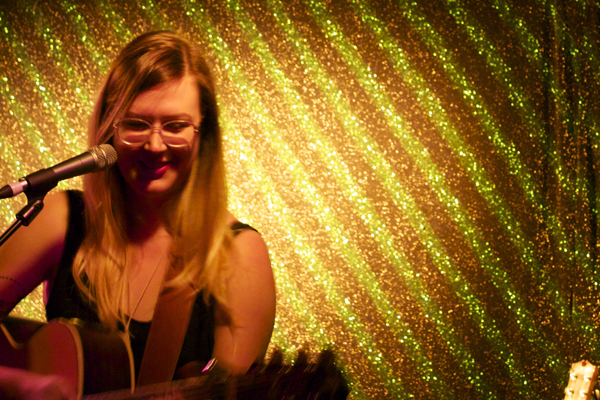
Nadia Reid and Ivy Rossiter (a.k.a. Luckless) Interview
Nadia Reid and Ivy Rossiter (a.k.a Luckless) recently performed at the iconic and allegedly haunted Chicks Hotel in Port Chalmers as part of their Ballads and Badlands national tour. Brittany Mann went along for the whiskey and good times. The girlsBallads and Badlands is Nadia Reid and Ivy Rossiter’s first major collaboration. Described by Reid as an exercise in “abrasive folk,” the Badlands tour was conceived of at the beginning of 2013 but was only put into motion a couple of months ago. “What we’re doing – it’s not overly lighthearted,” says Rossiter. “It’s not flossy and pretty, necessarily – it’s got some kind of substance to it. The idea of travelling through the badlands … it can be real badlands, like a desert road or the Linders Pass, or it can also be the badlands of your soul.” For Reid and Rossiter, life on the road is a something of a “suspension of reality.” Rossiter explains: “In real life, there’s all of these very complicated problems that need solving all the time. But when you’re on tour, everything is completely immediate and you get to do what you love doing every day.” The girls’ appreciation for their rapidly-expanding fanbase is deep. “That people would actually show up to see us play is totally insane,” says Rossiter. “They’ve got fireplaces and cats and kitchens and books and all of these other things competing for their attention and yet, they come out and they see us.” Reid and Rossiter have been playing live shows since they were in their mid-teens and early twenties, respectively, and have each released an EP (Letters I Wrote and Never Sent and Luckless). Reid is about to drop her second record. “I’m definitely feeling like I’m starting to find my groove in the last year or so,” she says. “I’m really excited about [the EP]. I totally have a clear idea of what I want and where I want to go.” The girls first met through mutual, musically minded friends in Auckland; Reid has been based there since late 2010, whilst Rossiter has recently escaped to become a “musical nomad” on tour for the foreseeable future. While both artists tend towards “introspective music with a slightly darker side to it,” the girls’ musical styles differ markedly, occasioning a curiously arresting crossover of genres that, according to Reid, is “a good point of difference for this tour.” The Chicks show was the girls’ fourth on their 15-venue national tour. “Once we did it last night, we knew we could do it,” said Reid, originally from Port Chalmers. “I like coming back to Chicks because I like seeing familiar faces, bringing some new songs and some new vibes. Every time I come here, I feel like it’s a real stepping-stone. Tonight, it’s on different grounds – we’ve never done this before.” The gigDunedin local Bill Morris, whom Luckless first met on the Interislander, opened the gig, which transpired to be more a troika of sets than a true collaborative effort. Morris accompanied himself on both the guitar and the harmonica and, according to a friend I had taken along, “clearly had a lot of feelings.” A bluesy, Kiwi Bruce Springsteen in lyrics if not style, Morris endearingly laboured under the misapprehension that experience equals wisdom for the entirety of his set. Singing passionately of working-class melancholia, Morris had relatable song lyrics that referenced things like the “Rotovegas Warehouse car park.” Indeed, my group concurred that what Morris lacked in metaphor, he made up for with raw poignancy. A friend had the shrewd revelation that, “Give a prole a harmonica, and you get that guy.” LucklessAfter 45 minutes of hearing Morris describe various places around New Zealand as “shit holes,” Rossiter took to the stage with an electric guitar and a drum machine. Rossiter’s style has been described as “distorted abrasiveness and looping chaos,” and like a darker KT Tunstall, the girl could use a Boss looper pedal like nobody’s business. There is a chance that Rossiter was once told she wouldn’t be taken seriously unless 80 per cent of her chords were in the minor key, but the intrigue and quality of the sound in no way suffered from this. Apparently having attended the class at guitar school on reverberation and arpeggio and wagging all the others, Rossiter’s set was engaging and extremely enjoyable, with songs “All I Want Is Sleep” and “The Others Fill This Room” being my favourites. Though her chat wasn’t great, when Rossiter sang, one had the sense that one was seeing the artist stripped back to her true self. And it was profoundly stunning. Nadia ReidI was looking forward to this set, having seen Reid perform numerous times in the past. With a style that has been described as “acoustic new folk” echoing artists like Beth Orton and Laura Marling, Reid showcased this exquisitely by beginning her set with an soul-stirring a cappella number. A bold move that very few could pull off, Reid executed the song flawlessly and would continue to indulge the audience with “new originals and old favourites,” as promised by the tour’s press release, for the rest of the evening. Accompanied by Richard Pickard on the double bass, Reid was on the acoustic guitar for most of her songs, including “The Rise And Fall,” which Reid wrote when she was only 17 and which was featured on the 2011 documentary When A City Falls. Reid’s set was utterly transfixing. She did not just sing, but truly performed, every last note (it got to the point where members of the crowd were cheering mid-song) and there was a haunting wisdom in her lyrics that had the crowd enchanted from beginning to end. The night ended with Reid and Rossiter collaborating on a few of each other’s songs and ended with an enchanting cover of “Long Black Veil.” After almost three hours it was over, but I left wanting to hear more. The best gig I’ve been to all year, I sincerely anticipate Rossiter and Reid’s return to Dunedin one day soon – though it was their first alliance, I hope it will not be their last.
-
Culture
Mali Mali
Mali Mali is a North Shore alternative trio fronted by singer-songwriter Ben Tolich. They have just released their debut album Gather ’round the Gooseclock (reviewed in the last issue of Critic), and are about to embark on a tour of the country. Critic caught up with Ben over the phone recently to chat about his experience of recording the album, what the hell a gooseclock is, and what he has planned for the future. How does it feel to have your first full-length record out? It’s a big load off my mind! It feels really good. I’ve been sitting on it for about a year, it’s only when other people can hear it that it becomes real, I guess. Is that a year since you wrote the album, or since you recorded it? It was this time last year that I went to record it, that took about two and a half weeks. It’s been a long time preparing to release it, getting the artwork right, getting the final mixes and stuff. It’s crazy how long it can take. Could you tell me a bit about the recording of the album? Who was involved? I recorded it with Mark Myers in Australia, he’s from a band called The Middle East. I’m a big fan of them and a friend of mine Luke Thompson gave him my EP, and he sent me an email saying he really liked it and would be keen to record. It was really exciting. I was there for two and a half weeks recording in his home studio, then he did some post-production and recorded some stuff after I left. It was a surprisingly fun time, really stress-free! Did any of the songs you’d written for the album change once you got in the studio? Yeah, there were a couple of songs I still hadn’t figured out. There’s a song called “Bury” and its third verse was originally quite a rocking, full verse, but for some reason I wasn’t happy with it. At the last minute, I decided to throw out that whole verse and make it a really slow build up – that’s now one of my favourite parts in the album. Some of it’s also improvised, like the piano at the end of “Peace In My Chest” was just off the top of my head, and again I’m really happy with how it came out. Do you have a favourite track from Gather ’round the Gooseclock? That’s hard to say, I’m really proud of all of them. The first track, “Pages” and also “Bury” – I’m really happy with how those ones ended up. I think the last track, “Swims Alone,” was kind of the catalyst for the album – it’s one of the first songs I wrote, so I have a soft spot for that one. I feel there’s two halves of the album: the first half is quite scenic, more painting a picture, whereas the second half is more honest and digging deeper into my head. Tell me about the title of the record. “Gather ’round the gooseclock” is an in-joke within the band. There’s a flat that I used to stay at and there was a goose-shaped clock just on the wall. There’s a couch under it and we’d always sit and have deep and meaningful chats, so whenever we decided we needed to talk about something important we’d say “time for a gooseclock.” Haha! What were your biggest musical influences when writing the album? Well, there’s the big guys I’ve liked for ages that always sit somewhere, y’know – Radiohead or The National. Around the album recording, I really was into songwriters like Leonard Cohen, Bill Callahan, Sufjan Stevens – people who can write a good song without lots of trickery. What’s the biggest compliment somebody could give your music? It’s always nice people saying certain songs have spoken to them. I guess that’s the main thing – it getting to people and meaning something to them … to know it’s reached someone on a deeper level, inspired them in some way, or played with their imagination, is a huge compliment. What’s next for Mali Mali? We’re finalising a tour, and we’re coming to Dunedin! On the 14th of June, we’re playing at Queens Bar. We’re just doing a small national tour – Wellington, Christchurch, Dunedin and then Auckland. Apart from that, just trying to get the album out there I guess … I’ve been so focused on this album that it’s been hard to write new songs, though I’ve got two new songs that I really like. Gather ’round the Gooseclock is quite basic in some senses, and I’m really glad to have an album like that, but with these new songs I’d like to be able to do something a bit more … crazy? It takes more effort to write stuff like that, so I need a good amount of time to figure that out. See Mali Mali in Dunedin, 14 June at Queens Bar.
-
Culture

Phoenix - Bankrupt!
Rating: 3.5/5 Similar to the Ouroboric case of Gary Numan influencing Nine Inch Nails, who in turn went on to influence Gary Numan (see 2011’s Dead Son Rising), you simply can’t ignore how much The Strokes sound like their old imitators Phoenix these days. This year’s Comedown Machine saw The Strokes singing higher and hitting gentler than ever before, seemingly in an attempt to sound like the French power-pop group that had been emulating them for years. Despite the fact they’ve been producing more convincing Strokes records than the Strokes themselves in recent times, Phoenix have broken this nauseating wheel by releasing an album that doesn’t sound very much like either band. Bankrupt! is that album. Following up 2009’s hugely successful Wolfgang Amadeus Phoenix, Bankrupt! is the most unique and experimental Phoenix record to date. It begins with the initially perplexing “Entertainment,” the cutesy Chinese melody and synth-drenched demeanour of which seems, at first, utterly tasteless. It takes a good few spins for it to stop jarring and start sounding any good, a microcosm of the album as a whole – once the bug has bitten, all of the grooves and melodies and bizarre electronic interludes become kinda irresistible. “S.O.S. in Bel Air” is one of the most three-dimensional and colourful Phoenix tracks to date, whilst “Drakkar Noir” (incidentally the Strokesiest number here) masters a strain of soulful twee few indie rock bands of the last decade have been able to pull off. Sonically, Bankrupt! is an incredibly bizarre album, its crowded, garish sound a suitable musical analogy for the overstimulating, information-glutted world in which we live. I wouldn’t go so far as to say this is the best record Phoenix have made. That title still belongs to Wolfgang Amadeus Phoenix, a far tighter and more efficient listen. But this is the first Phoenix record that feels truly like a product of their own, not just a love letter to their musical idols. For that, Bankrupt! deserves credit as the record which may go on to one day define them.
-
Culture
Patrick Hartigan - The People Will Be Healed
Standing at one end of the art gallery, we were completely entranced by a large guy in a grey fur coat, with basketball sneakers along the bottom. His mannerisms and laugh, even from a distance, were like those of a stereotypical Jewish banker. Coming close enough to listen to him, he also had some solid good-natured swearing, describing how he “started doing rap lyrics in a Maori accent” when trying to seduce a girl in an attempt to “blend our fantasy worlds so we could see into the future.” That is the nature of exhibition openings at Brett McDowell Gallery – always bursting with eclectic caricatures come to life with the guarantee of a memorable conversation. This week was no exception. Every couple of Fridays at 5.30pm, Brett McDowell (a dealer gallery located opposite Les Mills) has an exhibition opening involving drinks laid out in rows on a big wooden table and the most interesting people in Dunedin. My favourite gallery space in this city, I go partly for the gaping holes in the old wooden floorboards, which Billy Apple loved so much he even made some art about them. I trust Brett McDowell’s taste. There hasn’t been an exhibition yet where I don’t understand why the artworks or the artist caught his eye, even if there isn’t much I like about them. He has a talent for recognising artists with a unique quality to which people should be exposed, and Hartigan’s slightly depressing and confusing work was no exception. Sign up to the mailing list, if not for the kick of getting such a fancy-looking letter in the mail and telling your flatmates it’s an invitation to an exhibition opening, then at least to be part of such an interesting crowd in such a beautiful space. This week, the exhibition was slightly different. I’m used to openings at Brett McDowell where you wander from wall to wall through groups of people mingling and discussing each other, occasionally glancing at the art itself. Thus, it was unusual to find only a looped video playing on a medium-sized TV in the middle of the room with the eccentric, fun people clustered in the corners. Patrick Hartigan’s filmed work, The People Will Be Healed, had, very deliberately, been made the stubborn, sole focus of the room. Five modestly-sized portraits had been hung around the corner, distinctly separate from Hartigan’s exhibition. However, these abstract and unusual paintings’ presence put the artists’ style in perspective. Awkward and slightly macabre, they tie in with the hallowed religious Slovakian folk sculptures that feature in the video. Originally made for display in homes and small churches, Hartigan successfully demonstrates how our appreciation of these sculptures is thwarted and controlled by that which the world thinks can be “upgraded” to “art.” One screen shot taken inside the museum gave a red fire extinguisher as much attention as the glass cabinet containing it. Not only does Hartigan focus on the pieces within the museum, he shows us images of the mundane town (complete with tanned, tacky tourists) in which they are situated, forcing one to consider of the environment these sculptures inhabit, and how they have come to be there. The sculptures are beautiful, solemn, contemplative figures, which were intended to be viewed in a comforting, normal environment. Instead, as Hartigan states, they “lie forgotten by the museums entrusted with owning them,” as the museum is unable to afford to hire an attendant. We see the grime on the front of the glass cabinets, and Hartigan compares the impression made on him by the exhibition to the sight of his father dying from cancer a few weeks later. A morose piece, Hartigan seemed desperate to emphasise how aspects of our lives make transitions into “dying” states.
-
Culture
Bel Canto
I missed my bus stop twice reading this book – which really is a fair indication of how hooked you get. Ann Patchett’s Bel Canto draws you in just as its heroine, soprano Roxanne Coss, captures her audience and the entire cast. Reading this novel, I was immediately reminded of E. L. Doctorow’s Ragtime in the way the prose is driven by music, both in subject matter and style. Here, it is opera that drives the narrative. In an undefined Latin American country, Katsumi Hosokawa, head of an electrics company whom the country hopes will open business there, is thrown a birthday party starring famous opera singer, Roxanne Coss. Held in the vice presidents home, the guests enjoy the party only for it to be stormed mid-way through by a group of terrorists who plan to kidnap the country’s president. Only he hasn’t shown, opting to stay in and watch his favourite soap opera (an initially comic detail – which is just one of Patchett’s vices – that ends up being far more significant as the characters become equally hooked by the romantic screen). Immediately derailed by their lack of a sure plan, the terrorists stumble into a hostage situation, creating a siege plagued with desperation and obscurity. The holdup – loosely based on the Japanese embassy hostage crisis in Lima, 1996 – becomes a story full of emotional weight and suspense. Patchett’s sensitivity and artistry renders the novel’s characters highly defined and believable. Throughout the book we are shown the brutality present in such horrific events, but also the humanity – most significantly, the extraordinary relationships that form between people in times of crisis. The love affairs between two sets of characters are anticipated for pages within the narrative but eventually come to fruition naturally, though somewhat unexpectedly. Patchett conveys love with accuracy and warmth. When Gen, Hosokawa’s obedient translator, and Carmen, the girl soldier, meet in the cupboard each night, the power between them is so tangible you wish that their time together were infinite. It is certainly a romantic novel that wrenches your heart and has you captivated – while managing to possess wit at the same time. Mainly though, Bel Canto is beautiful. Patchett writes with grace; she captivates us with intermittent passages of intensity and smooth lulls in varying lengths that mimic an operatic score. We are made to fall into a spell just as birthday guests and terrorists alike do under Roxanne Coss’s voice – and it is precisely the vocalist’s music that becomes the focus of the novel and for the characters. Outside distractions disappear and each character in the novel is forced to turn in and focus on the richness in front of them. They are drawn by a beautiful voice, but also by the unlikely relationships forged through this unexpected scenario. So, like an opera, with sections of feeling lost and in love, of plodding along and being jolted in between, we the readers are finally slapped in the face as the final climax peaks. Like any good opera there is tragedy, and Patchett’s refusal to draw her novel to a close without a final tender note is refreshing. Bel Canto’s lead is music, and its rendition of brutality, love and humanity is gutsy and sobering.
-
Culture

Battle of the Dead
The video game has a long history of franchise adaptations. In fact, some of the most reputable developers in the industry started out this very way. Bethesda Game Studios, makers of the illustrious Elder Scrolls series, got their big break making video game adaptations of the Terminator films. Despite the fact that adaptations have built up many of our favourite studios, there remains a powerful stigma around video game adaptations. The stigma comes from the fact that a significant amount of the time these games aren’t well-crafted, but are thrown together in anticipation of the release of a film or TV show in the same franchise. You’ll see one of these adaptations for every new animated film, because kids are easy to please; but you’ll often also see adaptations of films like Iron Man for us big children. Frankly, gamers have been burned too many times to really pay attention to these adaptations any more. But this doesn’t mean that there aren’t good adaptations being made. Both gamers and game developers are ridiculous fanboys, and this means that there are also some great games being made based on existing franchises (the Batman Arkham games are an excellent example of this). This poses an interesting dilemma of how to spot the good adaptations and ignore the bad. Robert Kirkman has been releasing a monthly black-and-white comic since 2003 called The Walking Dead. I could have mentioned this publication to you a couple of years ago and you may have given me that withering look we all give hipsters who incessantly mention obscure things. After the success of Frank Darabont’s TV adaptation of AMC’s Walking Dead, the response I get is very different. The show’s success has catapulted Kirkman’s creation into the spotlight of popular culture, and as a result more and more people are trying to add their part to his post-apocalyptic universe. Several games have been developed within the franchise, including mobile and console games. Amongst these is a game that is an example of the fatal flaw of franchise adaptations, but there also stands an example of its absolute mastery. AMC’s The Walking Dead: Survival InstinctDeveloped by Terminal Reality | Published by Activision | Platforms: PC, XBOX360, PS3, WiiU | Rating: 6/10 The very cover of this adaptation is the first clue that this game isn’t going to stand on its own two feet. The NZ/AUS cover depicts the actor Norman Reedus as his character Daryl Dixon, carrying his signature crossbow. This is a big clue as to how the developers of this game are trying to sell their game: by using the AMC title and the actors from the show, they demonstrate from the very start that they are riding the show’s coattails. Both Kirkman and Darabont’s Walking Deads employ meticulous writing and character development to drive their stories, so it’s not too much to expect the same calibre of storytelling from a game adaptation. Survival Instinct has the intriguing hook of telling the prologue story of Dixon, one of the most complex characters of the TV series. The game follows Dixon from the start of the apocalypse to the pinnacle of the show’s pilot. Like the show, the story has a large cast and a variety of locations, but the game completely misses the one aspect that makes Kirkman’s universe amazing: character. The game has Dixon making the sort of redneck retorts we’ve come to expect, but there is nothing beneath them, and they are devoid of those complex relationships and thoughts that make Dixon such an interesting character in the show. For a game adaptation to be warranted, the game has to offer some sort of experience that other media cannot. The aspects that Terminal Reality decided to emphasise were first-person shooting and stealth, and these are by far the best-conceived part of the experience, though there are set moments where guns blazing is your only option. First-person shooting is an obvious direction to go with any game set in a zombie apocalypse; however, it is a genre that does not gel well with Kirkland’s universe. It is hard to create meaningful relationships when you are always staring at the person over the barrel of a gun. The lacklustre story and vapid gameplay were then bundled up into the worst graphics I have seen since Duke Nukem Forever. I am not generally the sort of person who cares about graphics, but in this case the low-quality graphics are a big indicator of how the developers saw this game. It’s the equivalent of a neglectful parent sending their child out into on a snowy morning in shorts and a t-shirt. The Walking DeadDeveloped and Published by Telltale Games |Platforms: PC, XBOX360, PS3, WiiU, PSV, MAC, IOS | Rating: 10/10 I do not give this rating lightly. This was truly one of the most engrossing experiences of my life. Nor am I alone – this triumph won over 80 “game of the year” awards last year. Telltale Games are the champions of a dying genre: the point-and-click adventure. Over the past 10 years, they have applied this genre to many existing franchises, including CSI, Back to the Future and Jurassic Park. They have honed their skills to the point where they could combine their expertise with a rich universe to make one of the greatest games of its time. The reason that this game is so amazing is because it flawlessly implements the one convention that gaming has over every other medium: choice. No doubt choice is becoming a more popular convention in the medium, but never before has it been so beautifully executed. Telltale Games’ Walking Dead has players taking the role of African American convict Lee Everett right at the beginning of the apocalypse as he is being escorted to prison. Through a series of events, Lee ends up looking after an 8-year-old girl named Clementine. I and every other person who has played this game will tell you that never has a more immediate or encompassing relationship between player and character ever been created. Though the story is a nonstop rollercoaster, your mind never wavers from the goal of keeping that little girl safe. The point-and-click genre keeps gameplay mechanics constantly varied and interesting. You will spend your time engaging in incredibly well-written dialogue with other characters in which your choices drastically alter the story, progressing the story through actions which require logic and problem-solving and desperately fighting off zombies in beautifully-crafted set moments. The game was released episodically: five episodes make up what is being called the first season (the first of many, I am hoping). The episodic structure of the game allows each episode to differ greatly in content and tone. Each episode deepens both the story and the relationships you have with other characters (for better or for worse). Gaming adaptations still carry a stigma due to games like Terminal Reality’s Walking Dead. The hackneyed writing, lacklustre gameplay and all-round mediocrity of that game are the standards that gamers have come to expect of these adaptations. It’s hard not to resent people trying to make a quick buck off of other people’s hard work and genius. However, Telltale Games’ Walking Dead gives me hope, not only for the future of adaptations, but games themselves. Telltale used Kirkland’s vibrant universe to display gaming storytelling and gameplay mechanics that were more innovative than anything we have seen in games since the jump from 8-bit to 3D.
-
Culture

Rialto Channel 48HOURS
The 48HOURS film challenge is upon us again. Nominations closed last Friday, and production will begin 7pm this coming Friday. The 48HOURS film challenge has been running since 2003 and is now in its 11th year. Contestants are allocated a genre at random, and must produce a film between one and seven minutes long. All films must also include some random element such as a prop, lines of dialogue, or a camera move. Films must be submitted by 7pm Sunday 26 May, and this deadline is extremely strict; one of the organisers’ favourite lines is “it’s called 48HOURS, not 48HOURS and five seconds.” Over 4,000 shorts have been produced for 48HOURS, attracting over 3 million views between them. The competition’s highlights have included the hilariously unnerving Jesse McCloud: The Journey; and Brown Peril, a mockumentary about a Tongan badminton player. Meanwhile, controversy reigned in 2004 when Taika Waititi’s deliberately bad Heinous Crime took out the grand prize. I spoke to Tom Hutchison, who has competed in 48HOURS on four occasions. By now, he has his schedule down pat. “You turn up at the 48HOURS HQ, and you pick your genre out of a hat,” he explains. “You get let out at seven and run back to your team, you all sit around a drawing-board with pizza, and you freak out about how you’re going to do this genre. “That’s about the first three hours until around 10pm, when people agree that they’ll make this one story happen. Most of the team at that point go to bed, leaving maybe two or three writers to try and flesh out the script overnight. In the morning, the director – if he hasn’t been up all night – will show up and the writers will throw the script at the director. The director always hates the script, but it’s too late, they just have to shoot it.” The rest of the time is spent frantically contacting actors, extras, and people with the equipment and props needed to produce the film, followed by shooting and post-production. It is this last step with which Tom has experienced the biggest problems. One year, Tom submitted his film only to find it had exported without music or background sound. Tom and his friend and collaborator Freddy fixed the sound and pleaded with the organisers to screen the fixed version out of competition. The organisers agreed. “And then we went to the screening, and they played the one without the sound anyway,” Tom recalls. “And you could hear the audience the whole way through, you could hear people breathing and stuff.” Another time, a computer glitch led to the film’s dialogue being incomprehensible. “We were almost in tears, that was brutal,” Tom says. “I think we may have left the screening before the end of it, actually, because we just couldn’t handle sitting there – that feeling of embarrassment of being one of those teams that people feel sorry for.” Two years ago, Tom and Freddy were assigned “sex education” for their genre. Tom devised a nature documentary-style plot about a lonely man who drinks himself into a stupor and hires a prostitute. Freddy, meanwhile, wanted to incorporate an artsy dream sequence. The pair decided to integrate the dream sequence into the sex scene, and Freddie, on the fly, devised an abstract light show with neon egg and sperm. When the film screened, Tom’s slavishly written plot was panned, while Freddie’s light sequence drew comparisons to 2001: A Space Odyssey. Despite these setbacks, Tom enjoys the thrill. “You kind of want to be in one of those teams that push their luck. Those are the most exciting experiences I’ve had: you do something that’s a bit ambitious, you don’t know if it’s going to work and you don’t know if it’s going to come together on time, but you know it’s going to be interesting to watch. “You hope you’ll make the deadline, but mostly you just hope you’ll make a film, and that’s the main point of it, I think – to get a film done. Because there’s not any ordinary weekend where you and your mates go, ‘alright, let’s make a movie and let’s finish it.’ That just never happens in the film industry, and you wish it did. “So when I do 48HOURS, I’m not really aiming for the glory – I just want to get something made and get it on screen, and do it with my friends. You don’t get too many opportunities to do that. So the deadline doesn’t worry me too much any more, because you know if you do everything properly and work hard enough, then you will just about always make it. Unless something goes terribly wrong. Which it does.”
-
Culture
Edward Scissorhands
Edward (Johnny Depp) is an artificial creation who has croutons for hands. (Just kidding, they’re scissors!) He lives high on a hill with his father/inventor who intends to give Edward real hands in due time. But when his father dies unexpectedly, Edward is left alone and unfinished in the big scary mansion, until Peg (Diane Weist), the lovely neighbourhood Avon lady, comes across him and insists that he come to live with her family. Edward is thrown into the weirdness of American suburbia that chews him up and spits him out again as he falls in love with Peg’s beautiful teenage daughter Kim (Winona Ryder). Released in 1990, Edward Scissorhands was Johnny Depp’s breakaway from his pretty-boy image and the beginnings of a fruitful (some would say relentless) creative relationship with director Tim Burton. The film is Burton at his best: whimsical, dark, and touching, with none of the self-indulgent wank found in the later films when he was given too much money (Dark Shadows – I’m looking at you). The film is impeccably cast and acted, with Depp making an affecting and deeply emotive performance despite playing an almost non-verbal character – Edward is like a gentle, sad dog, so present and understanding but ultimately too different from the family. For me, the real star of this film is the original score by Burton’s go-to music man Danny Elfman, who has said himself that it is the work of which he is most proud. Fantastical and heartbreaking, you definitely shouldn’t listen to it late at night in the Science Library, as you will start weeping into your Film Theory textbook and the health sci army will realise you’re a filthy arts student crashing their territory. Which brings me to a cautionary note – this film is VERY, VERY SAD. I first saw it when I was 10 and it ripped my tiny heart right out of my chest. This cult classic has a sense of sweet melancholy that is hard to find elsewhere and will remind you of what Burton does best (for the love of God, Timmy, back away from the blockbuster).
-
Culture
Gambit
Rating: 1/5 I had low expectations for this film. Just by looking at the poster, I could tell what kind of movie it would be (a bad one). I wasn’t disappointed. Starring Colin Firth, Alan Rickman, Cameron Diaz, and a variety of lazy national stereotypes, and with a screenplay by the Coens (who should really have known better), Gambit has something to do with an art heist and a long con. Mostly, though, the plot is a rickety clothes horse upon which to hang a variety of flimsy, dowdy, tweedy gags, the kind of utterly predictable piffle that makes stuffy middle-aged British women chortle and say things like “jolly good” and “that’s a bit naughty!” The plot is derivative, the writing is crap, the jokes are lame, and the crude parochialism is cringeworthy in the extreme. (Poking fun at the Germans and Japanese? Seriously?) Every actor turns in a subpar performance, even Diaz, which is really saying something given that her mere presence in the film guaranteed it would be mediocre at best. (In fact, her best acting occurs during an extended dream sequence early in the film, during which she says absolutely nothing.) I intensely disliked this film; but then again, I prefer my garbage to be obnoxiously awful rather than merely mediocre. If a film is bad, it should at least have the decency to do it properly, and Gambit goes full retard. I found myself slightly enjoying the scowl it smacked across my face, the shrivelled sensation in my balls, and the way it plastered me to my seat, mortified on behalf of all involved in this stinking turd of a production. I could be generous to this movie. I could point out that some of its jokes are mildly amusing, that some of its scenes didn’t make want to eat my own face, and that its characters, though one-dimensional, unsympathetic caricatures, occasionally said things that weren’t a viscous stew of cliché and horse shit. But I won’t, because Gambit doesn’t deserve it.