-
Columns

Editorial | Issue 11
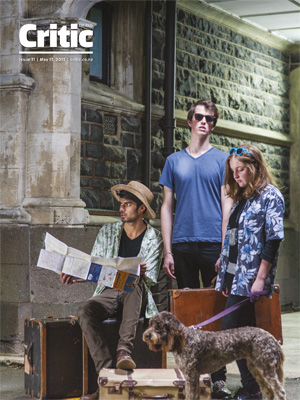
So here I am again, filling in for another editorial. No sooner had I walked out the Critic door than I was abruptly yanked back through it, sustaining slight damage to my right rotator cuff in the process. No matter; the role’s sex appeal makes its menial pay and questionable social value worthwhile, my days as a promising sportsman ended some time before they had commenced, and the ability to service myself with my left hand was a skill long in need of cultivating. This week is Critic’s “travel” issue. Travel is one of those concepts that society deems irresponsible, nay treasonous, to dislike, somewhat like apple pie, diversity, and pacifism. But I’m one of those pesky naysayers. I say, “Nay, apple pie’s gluten quotient makes me fart, celebrating diversity for its own sake masks the fact that some people are less enlightened than others, and pacifism only works until it gets pancaked by a tank.” Many New Zealanders yearn to voyage beyond our pristine shores to the wondrous places beyond. Peer-reviewed sources like The Movies tell us that foreign lands hold great wisdom that will make us better people. But in contrast to the pervasive travel-agency propaganda that fills young, impressionable New Zealand minds, Critic is here to douse your romantic assumptions with the polluted waters of misadventure. This is no starry-eyed, New-Zealand-as-Godzone paean – let’s face it, this country is boring and often quite shit, and I don’t blame people for wanting to leave. The problem is that young Kiwis are all too eager to buy into superficial overseas adventures that often amount to little more than taking drugs on a beach. (But hey, at least you got that sweet new cover photo for your Facebook page, amirite?) Perhaps this bitter tirade is merely the product of my own underwhelming overseas experiences. On the whole, my foreign adventures have been relatively few, relatively brief, and relatively tame. I went to the US for six weeks when I was nine. I remember it largely as an indistinct blur of canyons and relatives, interspersed with Disneyland, which, while great, was hardly the point. I went on a school trip to France when I was 16, to which my parents contributed at least $2000. The trip introduced me to marijuana but not, disappointingly, sex. My last international sojourn was a week-long trip to Sydney to visit my then-girlfriend, a trip from which I returned broke and single. The point is, if you’re going to travel, do it right. Do things you’ve never done before (#YOLO and all that), come back with great stories, and don’t just do the same shit you can do at home. Brittany Mann climbed Mt. Kilimanjaro (page 16) and it was the worst eight days of her life, but hey, at least she can tell people about that time she was shoved up a mountain while covered in piss and blood. My flatmate has a friend called “Jack the Crazy Italian,” who can allegedly spin a good travel yarn. I’ve never met Mr. Crazy Italian, but I’ve heard some of his stories second-hand, and if they’re true, his name is well-earned. Pure hedonism is all well and good, but don’t waste a ton of money on something you can do at home with all your friends (unless you’ve got a ton of money to waste, in which case more power to you). Dunedin’s got some beaches. Go take drugs there.
-
News
Too many cats hanging out at Murray’s
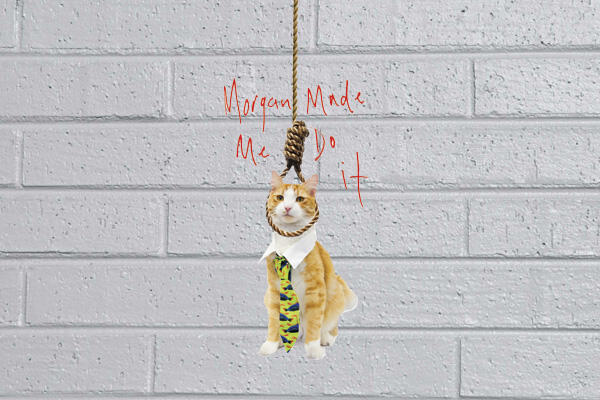
At least six pet cats have been found dead, some hung from trees, at Navy Park in South Dunedin. The ongoing suspicious deaths have occurred since December 2012, with the latest cat being found on Saturday 27 April of this year. Senior Constable Ruth Parsons says, “We’ve had this sort of thing with cats from time to time, but not found them hanging from a tree.” She believes “it is a wee bit of a concern. If they’re willing to do that to animals, then it can lead on to other things.” The incident was reported on the Dunedin Police Facebook page, asking the public to report any suspicious behaviour. Responses on the page included “Sicko needs to be caught”; “That’s just effen sick!” and the exceptionally insightful “I bet hu evas doin it is on k2.” The latest victim was Smoky, who was found hanging from a tree by his owner, Murray Shieffelbien. In light of the fact that Murray has been the finder and reporter of all six dead cats, a Facebook user commented that “serial killers often inject themselves into an investigation.” Critic has been assured that Murray is not the subject of suspicion. SPCA Otago inspector Julie Richardson says it is “sickening,” however “we don’t know how they died. The cats might have been found dead by the person who decided to hang them.” The wilful mistreatment of animals can result in up to five years’ imprisonment, a $100,000 fine, or both. There has been a nationwide increase in cat deaths since Gareth Morgan’s controversial anti-cat campaign began. His “Cats to Go” website includes statements such as “your cat is not innocent,” and “the fact is that your furry friend is actually a friendly neighbourhood serial killer.” So as to avoid looking like a killer himself, Morgan’s site does include “we don’t suggest you knock your favourite furry friend on the head.” Critic feels this statement does not make up for the whole website’s cat-hating philosophy, although we’ve become dog people ourselves since hanging Howie Staples late last year. Richardson says the case is still open, but “nothing has come to light.” She urges people to “keep their cats inside at night,” and to get in contact if they see anything suspicious.
-
News

World record attempts
Otago University students are in the running to break 10 world records during Re-Orientation Week at an event organised by OUSA. Students who are interested in breaking records have submitted their record idea to OUSA, who have then gone on to co-ordinate with Guinness World Records. So far, 10 ideas have been submitted which include grape throwing/catching, Marmite eating, a nerf gun battle and a bouncy castle marathon. The event is being organised by OUSA’s Administrative Vice President Zac Gawn, who will also be entering the event. He has submitted the challenge of eating the largest quantity of Weetbix in a certain time frame, a feat that has never been attempted before. Although he is still waiting on confirmation from Guinness World Records, Gawn is hoping to fulfil his dreams of adding a world record to his CV. When Critic asked Gawn why he had not entered for a world record in his outstanding ability to scull a bottle of wine, as proven in his electoral campaign, he stated that records must be “non-drinking-related.” This is unfortunate for most students, as that is really their only skill. One member of the grape throwing/catching duo, Laurie Evans, said one of the reasons he wants to break this record is because “the guy who has the record at the moment spends his whole life breaking records, and the grape one is one of his favourites. It’s kind of the reason I wanted to take it off him.” Aside from having the world record in his name, Evans admitted the real reason behind this attempt: “I basically decided to go for the world record because it would obviously pull all the middys,” he said. This is the first year that OUSA have been involved in an event to break world records. Gawn stated that “it’s a good activity to get out there, it enables mingling.” Gawn also said that anyone who is interested in breaking a record should contact him at adminvp@ousa.org.nz
-
News

Lama drama harms Cull’s karma
Dunedin Mayor Dave Cull has retracted what he calls a “dismissive and unnecessary slight” he made against the Dalai Lama, but still will not meet him when he visits Dunedin on 11 June. After describing the Lama as “the leader of a minority sect” last week, Cull now says that the community regards the Dalai Lama with “affection and respect.” Cull declined to be interviewed by Critic, claiming to be busy with hearings on the DCC’s Annual Plan. In a written statement, Cull said he had “nothing much to say” on the visit, other than it being “the Dalai’s gig.” Cull will instead be attending a Local Government New Zealand meeting in Wellington. While Cull insisted that the event was not a civic function, he pointed out that Councillor Jinty MacTavish would be welcoming the Lama “on behalf of the city.” When asked about the visit, Cr. MacTavish said the Mayor had formalised an earlier commitment she had made to greet the Lama in her capacity as a Councillor by contacting the trust in charge of the visit. She believes that the public lecture about ethics and happiness “has to be a good thing for our community.”
-
News
Dunedin – New Zealand’s Detroit
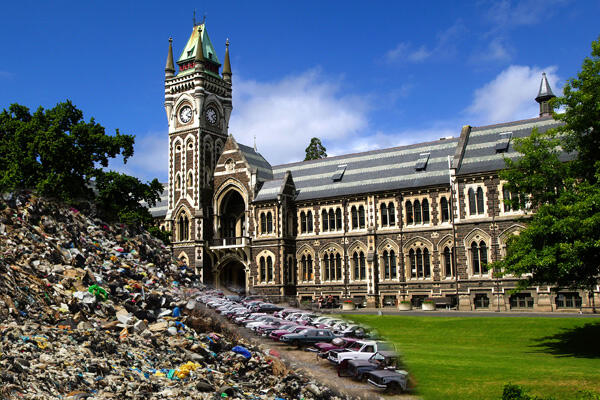
Students are to Dunedin what Instagram is to a tween: #important. Or, as the ODT wittily put it, Dunedin is New Zealand’s Detroit, if postgraduate and international student numbers are compared to car manufacturers: lose them and the economy loses, too. University of Otago lecturer Paul Hansen said, “It could be that young people in general are questioning the value of further investment in their education – weighing up the costs (e.g. fees and foregone income while they study) against the benefits of getting a university degree. Perhaps the balance has shifted away from a degree being as good an investment as it used to be. Perhaps going to university isn’t seen as being as fun as it used to be?” Due to the number of student enrollments falling since its peak in 2010, universities may begin to suffer. “If student numbers keep falling, the financial pressure on the University will increase. Fewer students mean less income.” Green MP Holly Walker believes the drop in postgraduate enrollments is related to the Government’s cuts to student allowances for postgraduate students. “Declining student numbers are bad news for universities and for the country as a whole,” Walker told Critic. “The universities need postgraduate students to attract funding and boost their research reputation, and they won’t be happy if the downward trend continues.” Hence Walker’s doomed Members Bill to undo this legislation, covered in last week’s Critic.
-
News
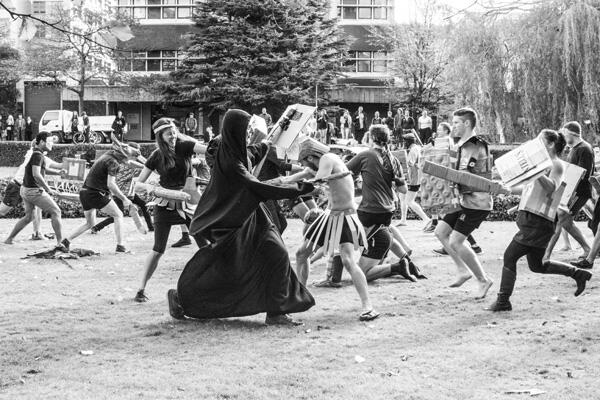
Cardboard swords slay selwyn’s hordes
Selwyn College’s residents flogged one of their favourite dead horses last Wednesday afternoon when they took over the Clocktower lawn for the annual Lindski Battle. A dozen ex-residents were pitted against more than 100 Selwyn “knights” and “nurses” in the annual pacifist skirmish. The battle, named after its original faux-imperial Russian combatants, began with a customary exchange of flour and water bombs between its cardboard-armoured belligerents across the Leith. The Selwyn-knights then crossed a footbridge to attack the motley crew of “exies”. Lab coat-clad nurses like Molly Reynolds dispensed a life-preserving concoction to those struck down by a variety of swords, spears and flails. “We can feed them whatever we want,” chuckled Reynolds, clutching a drink bottle filled with an unspecified red mixture. Despite their numerical inferiority, the ex-residents put up a spirited fight, but a final showdown on the museum lawn left them defeated until next year. Morale-boosting chants followed from the Anglican residence, including such gems as “Walking through the park and what do I see / Fourty fuckin’ Knoxie bitches staring at me / I fucked thirty-eight then my balls turned blue / So I whacked it off and jacked it off and screwed the other two / When I die I’m goin’ to hell / And I’ll fuck the devil’s daughter and his wife as well.” Charming.
-
News
A degree from Otago might just get you a job
The 2013 QS World University Rankings by Subject have been released, with Otago ranked among the top 100 institutions in the world in 12 subject areas. Psychology, History and Archaeology, English Language and Literature, and Law also placed in the top 50. Professor Harlene Hayne, Vice Chancellor of the University, says, “We are delighted, especially to have improved our rankings in 11 of the 30 subject areas QS considers, and to have 12 subject areas in the top 100 worldwide.” The QS Rankings are decided by academic peer reviews, citations of published research per faculty, and assessments of each subject by major employers. Prof. Hayne believes “this ranking is directly positive for students as they look ahead to becoming graduates.” The Otago Psychology department has been ranked 15th worldwide and is New Zealand’s top-ranking department of any subject. This follows the recent distinction in the New Zealand Performance-Based Research Fund (PBRF) quality evaluation, in which the faculty was found to be the highest-scoring academic unit for research quality of any discipline in New Zealand. Otago also ranked highest in New Zealand for History and Archaeology, at 24th. The Faculty of Law came 32nd worldwide, behind Victoria (19th) and Auckland (24th). However, Prof. Hayne says “Otago was ranked clearly first in the field of legal research in PBRF, which is a more rigorous measure,” and described Otago’s Law faculty as “world-class.” “Simply to be ranked already places you amongst the best of universities worldwide,” Prof. Hayne continued, “and to be ranked in the top 100 in any subject areas is outstanding.” Auckland was featured in the top 50 in 17 subjects, making it New Zealand’s highest-ranked university overall, but did not make the top 20 in any one subject. Otago, Auckland, Victoria and Massey universities all featured in the top 50 of this very competitive ranking system. “Our students should feel confident that, when they graduate, they will be more than prepared to take their place on the international stage with their peers from around the world,” says Prof. Hayne.
-
News

Government throws more money at research
Otago University is hoping to get their hands on a chunk of the Government’s $73.5 million budget for research purposes following the announcement of 10 National Science Challenges. The budget was announced on 1 May by John Key and will be added to last year’s $60 million budget to fund these challenges, three of which are set to be implemented by the end of 2013. The challenges, which were set by Key and Education Minister Steven Joyce, have been “designed to take a more strategic approach to the government’s science investment by targeting a series of goals, which, if they are achieved, would have major and enduring benefits for New Zealand,” a press release from the Ministry of Business, Innovation & Employment stated. Deputy Vice Chancellor of Otago University, Professor Richard Blaikie, likened the challenges as equivalent to some of history’s biggest moments. “It’s a bit like the moon-landings in the 1960s. Everyone’s aware that Kennedy said that ‘by the end of the decade we will have an American on the moon.’ He set the challenge and this is a bit the same,” Blaikie stated. “We set goals and we achieve them and it’s a better place for that.” While Otago will be competing against other universities and organisations for the funding, co-operation between organisations will be required to achieve good results. “None of these challenges will be funded to a single organisation,” Blaikie stated. The challenges range from “Ageing well” to “Resilience to nature’s challenges,” covering a wide range of areas and research demands which will require resources from not only universities, but also government organisations and other specialist groups. Bailkie believes that research is important in order to be “educated with current knowledge that comes out of research, rather than just out of textbooks that are out of date, so it’s really important to have that research for discipline-based research and scholarship.”
-
News
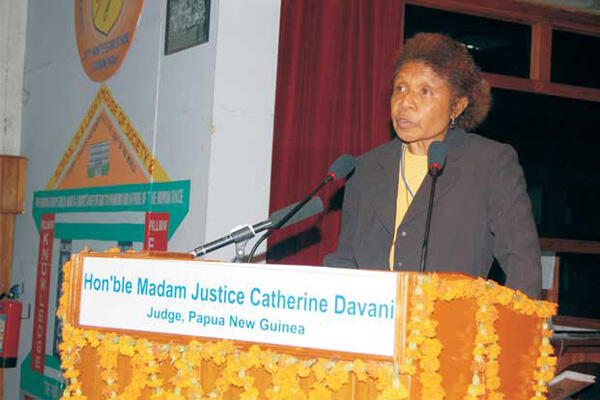
Justice Davani
The 17th New Zealand Law Foundation Ethel Benjamin Commemorative Address was given by Justice Catherine Davani, of the Papua New Guinea Supreme Court, on 8 May. Her thought-provoking talk in the Dunedin Public Art Gallery touched on the pressure to repeal sorcery laws in PNG. A recent, highly-publicised spate of killings has cast light on the horrific murders of women that occur frequently in PNG. 2009 saw the largest number of massacres. Police commanders confirmed 50 killings related to acts of sorcery, but Justice Davani believes more were not reported or recorded. According to Justice Davani, sorcery, a subject unfamiliar to most New Zealanders, “is a belief. It is deeply engrained in the emotions of people, in almost all regions of [PNG].” Whilst sorcery was once a “localised secret and protected practice governed strictly by custom,” ranging from healing to magical powers, it is now at the cusp of abolition due to public pressure. “The Government believes that the repeal of the present Sorcery Act will somehow enhance prosecution of [sorcery killings], and eventually secure convictions.” In February this year, 20-year-old Kepari Leniata was stripped naked and burned alive on the outskirts of the Western Highlands Capital of Mount Hagan, due to suspicions of witchcraft. Justice Davani drew attention to an editorial in a PNG newspaper, which condemned the attack and stated that the “frequency in occurrence of these barbaric acts warrants the intervention of our political leaders.” Justice Davani, who has 28 years’ legal experience and was appointed to the National and Supreme Court of PNG in 2001, questions the move to repeal, noting that there are already “laws in place that deal with people who kill.” She remarked that the distinction between evil and innocent sorcery needed to be drawn, as in some cases it would not be necessary for the law to interfere. Davani spoke about the dilemma faced in PNG as to whether the rights of people who are called sorcerers should in fact be properly addressed by the courts. “PNG is now at a crossroads. There is a clash of custom and western laws … although there is talk about repealing the Sorcery Act, the criminal law has always been there to deal with these serious issues.” Davani drew attention to a case involving two men who went into a woman’s house, tied both her hands, blindfolded her, and then decapitated her using a machete. The two accused argued that the killing was justified because the woman had killed both of the men’s parents through witchcraft. The criminal law in PNG does not provide for sorcery as a defence to murder. Rather, it is a custom that the courts have to deal with. In this case, the court imposed the maximum penalty for murder – the death penalty – for what was deemed to be an “execution” or “payback killing.” As one of 25 judges in a country of more than eight million people, Justice Davani has delivered a breadth of judgments throughout her career. She maintained that there were means to punish sorcery killings and that depriving the country of a custom so embedded in their culture may not be the best answer. “Although the Government and non-government organisations are calling for this Sorcery Act to be repealed, it is obvious that accused persons who kill persons suspected of being sorcerers and witches can be arrested and charged with manslaughter, willful murder or murder.” The address was organised by the Otago Women’s Lawyers Society (OWLS), in conjunction with the University of Otago and the New Zealand Law Foundation.
-
News
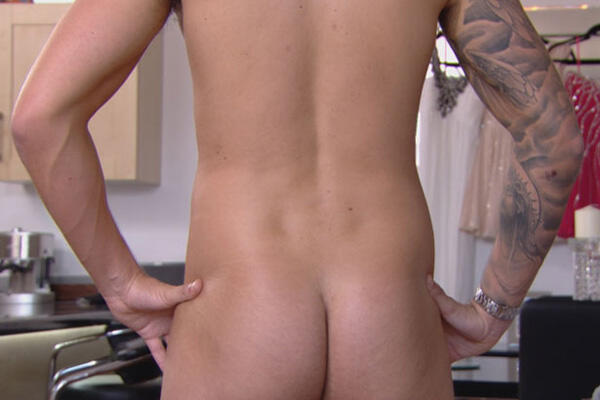
ODT exposes exposer
Last Tuesday 7 May, the ODT published their best article of the year. Entitled “Dunedin teen shakes bare bottom at police,” the 64-word piece exposes a 17-year-old Dunedin man who “allegedly [shook] his bare bottom at police officers while standing in the middle of Eglinton Rd.” Here, Critic aims to more than double that word count, making a mountain out of the molehill the ODT made out of a bum. Police told the ODT “he dropped his pants and shook his behind at police,” before completing an about-turn and exposing the family jewels. One commenter on the ODT’s website questioned, “Was it the bare bum or the subsequent bobbleys that got him in trouble?” – a question Critic implores police to answer as they have seen both sides of the story.
-
Columns
Bouncing off the Halls | Issue 11
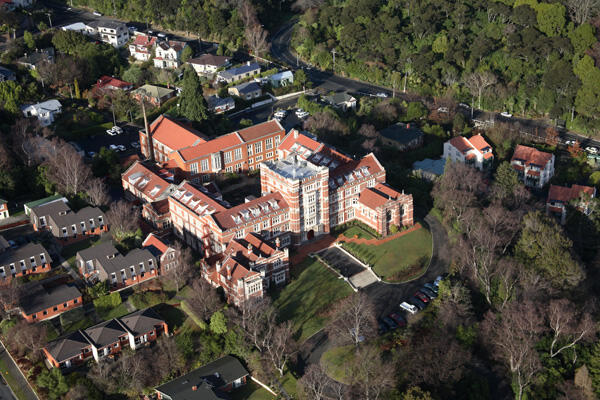
Due to unforeseen circumstances, the much-venerated “Bouncing off the Halls” column began a prolonged hiatus in October 2011. For those unfamiliar with the column, it served as a weekly summary of unsavoury acts in student hostels throughout Dunedin. Thankfully, Critic has elected to resurrect the column. Be warned – stories contained in “Bouncing off the Halls” are often disturbing and sometimes downright depressing. A male resident of Salmond College chose to visit the Monkey Bar on a Thursday night, something Critic (or any civilised person) cannot begin to comprehend. After prowling the dance floor for some time, the gentleman in question settled for a mysterious mature Maori lady and proceeded to invite her back to his room. After engaging in pre-coital trivialities, the lucky lady sprawled her nude body on his bed, spreading her legs wide. At this point, she invited the hunk to “chuck it in boss,” a command he soon obliged. Perhaps the strangest part of this harrowing tale was that The Boss did not regret his actions and was glad to recount his experience to fellow residents the following morning. Top marks. Meanwhile at St. Margaret’s College, a female resident was feared missing for 24 hours by her friends and minders. After finally investigating her room (Critic notes this would be an obvious first place to look), a Residential Assistant was shocked to discover the girl in question had in fact been engaged in sexual relations with an unknown male for the entirety of her disappearance, and was still going at it upon discovery. Critic further speculates that a real-life demonstration of the reproductive process is rarely witnessed in the hallowed halls of St. Margaret’s and the College’s many male Health Science students would have been happy to take a break to watch it, if only their study timetable allowed for such a blatant indulgence. Even the illustrious Knox College is not spared from sexual intrigue. What follows is a special mention of some amusing events that took place in O-Week. A couple of first-year Knox residents were characteristically smitten with each other’s company and accordingly conducted sexual intercourse in one of their rooms. Upon realising their neighbours were engaged in strikingly similar activities, the two couples converged and participated in what could only be described as the smallest orgy possible – a foursome. This “awesome foursome” was convened for some time, until one of the female participants grew tired of the orgy and departed elsewhere. Her partner maintained his presence, but refrained from joining in, remaining only as a self-pleasuring voyeur. After these three enthralling pieces of fresher erotica, there is no doubt readers will be asking for more. Unfortunately, a young lady of Cumberland College will be the final focus of this column and her story is not sexual in nature. After overindulging in alcoholic beverages, the girl decided to relieve herself in public while her friend acted as a guard. As her relief soon escaped her urethra, urination became defecation. The stench of her faecal matter appalled her friend’s senses to the point of vomiting, undoubtedly assisted by her intoxication. Thus followed a scene that presumably revolved around four unique bodily fluids, the fourth being both the girls’ tears.
-
News
Police render point-proving tactics irrelephant
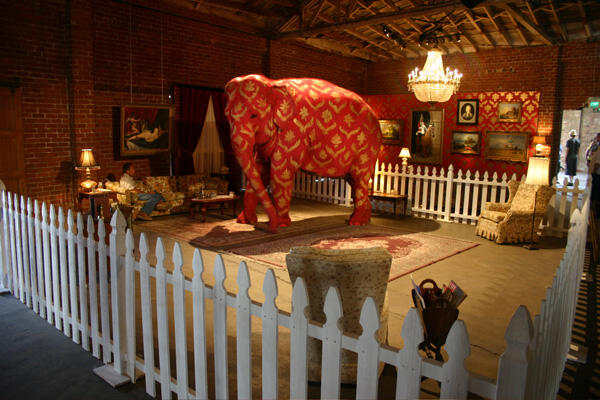
An elephant was discovered in the Critic office last Thursday. The elephant appeared in the room while the Critic staff were writing that week’s news. It is unclear what the elephant’s motives were. The elephant was eventually removed by the police, and has declined to comment on the incident. Senior Detective Frank Bowden of the Dunedin Police yesterday confirmed to Critic that elephant sightings were rare in Dunedin. “I haven’t seen an elephant this size in some time,” he said. “How it managed to fit in that room is beyond me.” Police removed the elephant, whose name is believed to be Dennis, after its presence was deemed disruptive by OUSA management. There were concerns that the floor of the Critic office, which was constructed to bear the weight of spindly wannabe hacks rather than enormous proboscides, would collapse and crush OUSA’s events team. However, Skye Rayne of PETA criticised the police’s actions, saying that Dennis the elephant had every right to be there. “Dennis is the official elephant of that room,” she said. “If Dennis was removed from the room without warning, Critic may be on shaky grounds legally.” The story was picked up by the Otago Daily Times, which ran with the headline “An Elephant in the Room at Critic.” This was a play on the idiom “elephant in the room,” which is used to describe an obvious or awkward truth that is deliberately ignored. In this case, it also referred to the fact that an elephant had literally been in the room. It is believed that Dennis will never forget the incident.
-
News

Ferguson finally fucks off
The big news in sport over the last week has been the retirement of Sir Alex Ferguson, the manager of Manchester United. We’ve been here before – Ferguson announced his retirement at the start of 2002 only to perform a U-turn at the end of the season – but this time it’s for realsies. Ferguson’s successor, Everton manager David Moyes, has already been confirmed. To its detractors, Man Utd has become synonymous with favourable refereeing decisions; arrogant, bandwagon-jumping fans; and a frustrating ability to keep winning things year after year. Inseparable from all of this has been the gum-chewing, purple-faced Ferguson, a man adored by Man Utd fans and grudgingly respected by all others. When Ferguson arrived at Man Utd in 1986, the club had not won the league in 20 years. After a slow start, he won the inaugural Premier League in the 1992-3 season, setting off a two-decade era of Man Utd dominance. The club has now won 13 league titles under Ferguson’s management (five in the last seven seasons), as well as five FA Cups, four League Cups, two Champions League titles, and the Club World Cup. So it’s farewell to the greatest manager of the modern era. The big question now is how Moyes will fare in the role. Long considered the frontrunner to take charge after Ferguson, Moyes has been the manager of Everton for 11 years. During that period, the club has consistently punched above its weight, finishing in the top seven on seven occasions and recently supplanting Liverpool as Merseyside’s top club. Moyes therefore has plenty of Premier League experience and, at 50, is still relatively young. The main reservation, however, is his lack of experience running a big club. Everton operates with a small stadium, a limited budget, and an owner looking to sell rather than invest. Bigger clubs regularly snap up Everton’s top players, recent examples including Mikel Arteta and Jack Rodwell. In contrast, Manchester United has huge revenues, huge debt, and huge players on huge wages. The pressures on the manager are, correspondingly, huge. Ferguson was famous for his strict man-management and his principle that no player was bigger than the club. He had no problem with letting star players leave – Jaap Stam, David Beckham, Roy Keane, Cristiano Ronaldo – when their egos grew too large. Now it appears that Wayne Rooney, whose career began under Moyes but whom the latter ended up suing over remarks in Rooney’s autobiography, wants to move away from Man Utd (Bayern Munich seems the most likely destination). How Moyes deals with this situation will be his first big test. So what can we expect from Moyes? Expect him to strengthen Man Utd’s midfield, long identified as the club’s main weakness. His selections will likely be prudent and youth-oriented. Everton’s star midfielder, Marouane Fellaini, would seem an obvious choice to follow Moyes to his new club. Ryan Giggs, who is now 39 and has played his entire career under Ferguson, is unlikely to feature prominently, but Moyes will look to get the most out of Michael Carrick after the latter’s impressive 2012-3 season. Finally, expect less injury time and less gum-chewing.
-
Columns

The Leek | Issue 11
As the three-month-long duck-shooting season commences for 2013, hunters across the nation are heading out in anticipation of another good haul. This popular recreational pursuit has long been an autumn tradition for locals and tourists alike –every year, New Zealand welcomes tens of visitors who travel here for the express purpose of bagging some premium waterfowl. This year, however, Fish and Game NZ have broadened hunters’ horizons by adding an additional bird species to the list of acceptable game: seagulls. Due to the fact that our towns and coastlines are currently overrun by these abhorrent pests, the Department of Conservation and the Ministry of Justice have given seagull hunting the go-ahead for this season, graciously offering the possibility of an extension into early springtime “if a decent percentage haven’t been taken out by then.” Although many citizens are thrilled by this recent development, others question the point of wasting bullets on the feathered parasites. While seagull meat is generally rumoured to be “almost inedible” and “downright stringy,” biologists report that seagulls’ carcasses usually contain enough inorganic material that they could conceivably be used as “an efficient alternative fuel source,” and encourage people to make the most of the opportunity to keep their petrol expenses low this winter. Seagulls are notoriously aggressive scavengers and the bane of beachgoers everywhere. Gulls often procure food from humans through handouts and theft (including rummaging through trash cans), and will ruthlessly swallow smaller birds whole when given the chance. They have even been known to land on live whales when they surface for air, in order to gouge pieces of flesh from the whales’ exposed backs. It is predicted that the inconvenience presented by seagulls’ steadily climbing numbers and incessant pestilence will be enough to spur Kiwis to hunt them mercilessly. Indeed, since the new regulations were issued, many enthusiastic sportsmen have begun preparing for a bountiful season. Duck hunters often build elaborately camouflaged blinds (known colloquially as maimai) to conceal themselves from ducks – it appears that the same approach is now being applied to seagull hunting, the only difference being the environment that they are attempting to blend into. Instead of lying in wait for their prey beside rivers, lakes, and ponds, these enterprising hunters are building their blinds next to beaches, children’s playgrounds and McDonald’s parking lots. Despite widespread consternation at the prospect of firearms being used in such populated areas, government officials wish to assure the public that all hunters are responsible, licensed gun owners, and that the safety of their friends and loved ones is unlikely to be endangered. Much.
-
Columns

Proctology | Issue 11
“A number of our University departments have tea, bikkies and cakes in their tea rooms,” the Proctor kicked off this week, “and they noticed that these were going faster than normal.” After obtaining in-house CCTV shots of lone figure pilfering the delicacies, Campus Watch heard a shower going whilst walking around campus one night. Thinking it odd, the Watchers entered to find a young man had been living on campus. “He was a student quite some years ago, isn’t anymore, and I think things have got to him. Now he’s got an appointment with the courts and won’t be coming back to University for a while,” the Proctor told Critic. “Another resident of Dunedin was found walking out of the Central library with a laptop and some sunnies,” the Proctor continued. “As it happened, the owner of the gear was coming back as he was walking out with it, to whom the gear-grabber said, ‘Oh, is this yours? I was picking it up and giving it to my mate, I thought they were his.’ “We’ll see if the judge believes that one,” the Proctor concluded. In College news, one group of freshers were “quite startled when they were sitting there watching TV in the common room and a naked man wandered in, sat down, and said he was there to watch Dr. Who. Campus Watch was called and they gave the man a towel, commenting “He was obviously in need of the time police, so we called them, and now he’s getting some help at a mental health agency.” The Proctor’s final piece of advice was to “be careful fetching balls from roofs. One young lass was up on the roof and went through a skylight. Luckily she wasn’t injured, but unluckily it will cost her more than $500 for the damage.” Wise words indeed – may this be a lesson to us all to keep our balls within reach at all times.
-
Features
Mann vs. Wild
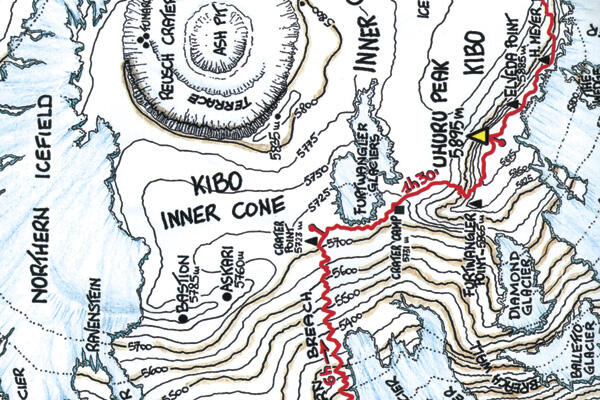
Although the prospect of doing so was all that got me through the experience, it has taken me months to work up the nerve to write about what I now refer to, usually in a sepulchral whisper, as “the worst eight days of my entire life.” The following is an account of my experience climbing Mount Kilimanjaro, a 5895m dormant volcano in Tanzania, over New Year’s, 2013. How hard could it possibly be?After hemorrhaging US$2,500 on an eight-day package (roughly $1,800 too much and three days too long, I would realise), I looked up Kilimanjaro’s Wikipedia page. “Some estimate that more people have died to date trekking up Kilimanjaro than Everest,” the page said. “In August 2007, four trekkers died within a week.” To quell the trepidation rising within me, I called my friend, Sam, who had convinced me to sign up. “Don’t worry,” he reassured me. “It’s not a technical climb.” I had never actually been hiking before; indeed, an ex-boyfriend had once even used this as an excuse to break up with me. But Sam was confident that with a bit of training, I’d be fine. (I may as well mention now that my “training” ultimately consisted of heaving myself from Cargill St to the NEV in the dead of night all of once.) While it would have been better for my nerves had Sam not concluded the phonecall saying that he “wouldn’t let me die out there,” I hung up the phone, fears assuaged. How hard, really, could it possibly be? A rough startThat was in August, but the final week of 2012 rolled around soon enough. Having spent Christmas getting horrifically sunburnt in Zanzibar, I flew north to the town of Moshi in the shadow of Mt. Kilimanjaro to meet Sam the day before our climb. To say I arrived in a state of emotional and physical compromise would be an understatement. The day before, I had been discharged from a Zanzibari hospital in which I had been certain I was going to die. In my fragile state, I then proceeded to miss my flight and arrived late at night, hours behind schedule, to find out the tour company had overbooked the hotel. Somehow, though, the next day Sam and I managed to get ourselves on a bus that would take us from Moshi to the mountain. Our Tanzanian guide, Tom, soon informed us that despite having paid to do the priciest, most scenic route with the highest chance of summit success, weather conditions meant we now had to take the cheap and nasty route. My crushing disappointment was soon replaced by sheer, unadulterated terror as the “weather conditions” resulted in our bus careering backwards down the very steep and muddy road with alarming regularity. And so, it beginsAfter hours of white-knuckledly clenching the seat in front of me and making anguished eye contact with other passengers, we finally disembarked. The landscape was grey as far as the eye could see: rocks, gravel and dirt, occasionally interrupted by splodges of snow and tussock. Trying to breathe a sigh of relief, I found I couldn’t. The lightheaded breathlessness associated with high altitude would last throughout the trip and my dependence on altitude sickness medication would reach almost shelveable levels. Before setting off, I had my first experience with a squat toilet. Despite having spent the preceding two months alone in godforsaken central East Africa, I had somehow managed to avoid this experience until now. The “toilet” was a tiny, stinking hole surrounded by piss and shit in the floor of a doorless wooden hut covered in Kiswahili graffiti. Having made my contribution to the mess but not the graffiti, we set off – me, Sam, our guides Tom and John, and our ten porters who were never actually introduced to us. These men would haul all our gear plus enough food, water and tents for all of us through the pissing rain, hail and snow for the next eight days. The seemingly ridiculous luxury of not carrying your own stuff was something I had scoffed at in the months prior, but I soon realised that, had I needed to carry anything other than myself up that mountain, I would have wandered off onto the frozen tundra like an Inuit elder who has become a burden to her tribe, never to be seen nor heard from again. Nonetheless, the arrangement felt like neocolonialism at its worst. The poorly-paid porters, wearing endearingly odd combinations of weather-inappropriate clothing, would balance up to 40kg loads on their shoulders whilst trotting ahead of us, mountain-goat-like, up sheer cliff faces. Soberingly, throughout the week we would pass freshly cut grasses and flowers laid in memoriam where porters had recently died, a bit like Ginger in Black Beauty, of overwork. Although I had been assured it “wasn’t a technical climb,” within the first hour I had removed my socks and boots to wade thigh-deep through a fast-flowing river. I had been under the impression the rainy season was on its way out. It wasn’t. After a few hours, we arrived at our campsite, signed in and went to shelter in our tent, which had been put up in record time by our porters who somehow kept the inside dry despite the deluge. The day ended with a multi-course hot dinner served by our softly spoken “waiter” whose name we didn’t catch on the first day and never did find out. Our guide, Tom, paid us a visit and outlined the plan for the week. Keen to get a good night’s sleep, we went to bed straight away. I had forgotten to bring a pillow. A long day’s journey into nightAwakening bright and early, I discovered the tent was frozen. I surveyed the camp: we were above the cloud line, which felt strangely claustrophobic. Damp mist swirled and a score of various-coloured tents were dotted across the stony landscape. Bleary-eyed trekkers were stretching and yawning, while their crewmembers milled about bringing them basins of hot water (the ratio of trekkers to Tanzanians was roughly 1:5). After breakfast, we packed up our stuff and began our day’s hike to the next camp. In my memory, the days blur into one. I would start the day feeling chipper, if only because I had survived another night and was one day closer to getting off the mountain. We would set off with John in the lead while Tom would supervise pack-down and then catch up with us. The landscape became increasingly alpine, with more snow and fewer plants. We would often stop to let porters pass us, and, conversely, speed up to overtake larger groups. Sam referred to these occasions, on which we would mosey past a group of trekkers inching along with their redundant hiking poles, as “snail races.” By the end of the day, my morale would plummet to depths of which I had been hitherto unaware I was capable. Inevitably, it would begin to rain and the day’s trek would conclude with a desperate scramble down a hillside/up a cliff-face/along a creek. Doggedly putting one foot in front of the other on the uneven, slippery rocks, there would be no thought in my mind other than getting to the shelter of the sign-in hut. I found this daily violent oscillation from one emotional and physical extreme to another very draining. Near-death experience #2 in as many weeksDay five was particularly traumatising. Our camp for that night was situated on top a cliff. We trooped down one side of the valley and began our ascent up the other. The rain was bucketing and I was soaked to the skin. Not normally frugal when it comes to clothes-buying, I had, unfathomably, decided to skimp when it came to purchasing attire appropriate for climbing Africa’s highest mountain. In contrast to other trekkers who would not have looked out of place on a lunar expedition, I ended up climbing the tallest freestanding peak in the world in little more than a Pack-a-Parka and what I used to wear to pump class at Les Mills. The stuff I had bought was beyond crap quality and accordingly, my thoughts were often consumed with ways to exact revenge on the staff at Kathmandu who sold me their life-threateningly shitty gear. The rain soon morphed into giant Jaffa-sized hail, which pounded us relentlessly to the accompaniment of thunder and lightning. It seemed to be generated directly from the cloud in which we were engulfed. I had found Tanzanians to be a particularly cheerful bunch, but on this occasion Tom gave me an uncharacteristic, thin-lipped grimace and admitted that “I don’t like the rain, man.” I resignedly thought that in the highly probable event that I was struck by lightning, at least I would maybe die swiftly. Maybe. We made it to the sign-in hut and I poured the litre of water that had collected in the bottom of my impotent day pack-cover onto the floor. In the tent, I sat shuddering involuntarily from the cold. Sam – incurably positive, long-suffering Sam – gingerly put his arm around my shoulders. After a while, I looked at him. “You can’t honestly tell me,” I said between shivers, “that you thought that was fun.” Summit nightI would find out the next day that a man from the UK had actually been killed by lightning in that storm, making me feel both vindicated in my terror and that the whole thing really wasn’t worth it. But the worst was yet to come. On the night we were to climb to the summit, we went to bed at 5pm, the idea being to wake up at 11pm and climb for six hours through the night to watch the sunrise from “the roof of Africa.” Packing myself with the fear of death and/or failure, I barely slept. Awakening from a fitful slumber, I immediately sprouted an impressive bleeding nose. But outside, the snowy mountaintop was bathed ethereally in moonlight beneath billions of stars, and a stream of headtorch lights could be seen winding its way, uninterrupted, to the summit. I had that bit from Coldplay’s “Fix You” playing in my head and, in that moment, I found myself inexpressibly touched by the gravity of the undertaking, and what it would invariably mean to all the different types of people summiting that night. Maybe this wouldn’t be so bad. I was struck down instantly by a UTI. Due to the horror of the Kili toilets I had purposefully dehydrated myself for the entire week and because of this, I would piss myself all the way to 5895m. Fuck Coldplay – in no time at all that night turned into a Mandingo-esque battle between my competing basic needs: I was thirsty, but reluctant to drink the water that had frozen in my bottle because I was also numb with cold; and I was hungry, but eating made me feel nauseous and was, in any case, impossible because my mouth was so dry. The exhaustion from the altitude, dehydration and hunger was like nothing I had ever experienced and I kept needing to rest, despite knowing it would only prolong the horror. Sam, I would find out later, was very worried about me. At one particularly low point, I sat down on a rock and, with my head in our guide John’s chest and hands in his armpits, and murmured at the ground that I “didn’t want to die.” Climbing Kili proved my theory that everyone, religious or not, prays when they think they’re going to cark it. I found myself shamelessly whimpering Bible verses aloud, including (I wish I was kidding) that old classic “Though I walk through the valley of the shadow of death …” It feels cringefully melodramatic to recall this now, but death from dehydration/hypothermia/altitude-induced pulmonary edema seemed like a very real possibility at the time. I was informed later that my uncharacteristic display of vulnerability on this occasion was endearing rather than pitiful, but I have my doubts. Even apart from my bloody face and urine-soaked lower half, there were a number of factors that conspired that night to turn me into the world’s most objectively repulsive human. Having forgotten my gloves, I looked down at my peeling hands to see they had turned that sort of blackish color of a rotting corpse. Having forgotten tissues, Tom kept handing me them with thinly-veiled disgust as my nose steadily expelled globs of snot. My lips were cracked, my breath was rancid and, thanks to another unfortunate symptom of altitude, I was farting like a demonic Clydesdale. It got to the point where I could only utter a single word – “push” – at which Sam would dutifully put both his hands firmly on my arse and shove me up a particularly steep bit. I would make it to the summit like this, half-draped on Tom’s shoulder with his arm around my waist, while John hauled me by my other arm and Sam hustled from behind. It was the least dignified experience of my life (surpassed only by recent Hyde St antics) and a good lesson in humility. We arrived at the top, having passed other trekkers who were literally doubled-over with exhaustion. This was all that got me through that week: knowing that almost everyone, regardless of age, experience or fitness, was doing it tough. We achieved what Sir Edmund Hilary could not, but any sense of pride or awe I might have felt was drowned out by one all-consuming thought: “How the fuck am I going to get back down?” I had just climbed for six hours and was staring in the face of at least another three. I barely waited around long enough for the obligatory photos before turning around to start the long journey back to the tent, which I managed with an artful combination of falling and being dragged by the arm, once again, by John. The beginning of the endWe made it back to the tent, had some kai, slept for a few hours and then hiked for another four to that night’s camp, bringing the total number of hours hiking that day to 15. The next day, with the end in sight, I was a new woman, and I hurtled down the mountainside past other trekkers still using their goddamn superfluous hiking poles, shedding layers of clothing and peeled skin as the ecological zone became more monkey-filled rainforest and less Arctic tundra. We made it to the bus and I collapsed into my seat, delirious with relief. John initiated a particularly enthusiastic rendition of “The Kilimanjaro Song,” and everyone on board clapped and sung along. Though I would normally pretend to be above such frivolity, I decided to not be a joy-killing fucktard, and joined in.
-
Features

Getting Around the Orthodoxy
There is a possibility that I wrote this entire feature in order to begin with the fact that I was in New York over the summer break. With that in mind, I was in New York over the summer break. One night, I found myself in a SoHo loft, deep in conversation with an architect. In an alignment of bizarre coincidences, I soon discovered that this architect was part of the firm that designed Otago University’s Information Services Building (or as normal people like to call it, the library). Since returning to university, it continually strikes me how much history exists, not only inside the University’s walls but also literally within, on top of, and around them. Furthermore, the process of creating a university campus involves such a variety of ideas and people that, like the design of the Archway Lecture Theatres, it is barely comprehensible. PreludeWhile the Otago settlement developed, one-eighth of the profits from the sale of land in Otago was kept aside for “religious and educational uses” but funds remained limited due to the slow economic growth of the area. This changed after the discovery of gold in 1861, which briefly turned Dunedin into an industrial centre. Otago University was conceived in 1869, when the Otago Provincial Council provided 100,000 acres of pastoral land as an endowment and authorised the University to grant degrees in Arts, Medicine, Law and Music. In July of 1871, the University’s three Professors opened the doors to students for the first time (the opening party must have been awkwardly empty) and the University has since developed into a 20,000 student strong institution. Although you may not realise that Dunedin extends beyond the Octagon, the University was originally housed in the William Mason’s Post Office building (later the Stock Exchange) on Princes Street. However, with the completion of the Clocktower and Geology buildings in 1878 and 1879 respectively, the University moved to its present site, previously known as the Botanical Gardens Reserve. The Clocktower and Geology buildings represented a Gothic revival style of architecture inspired by buildings on the Glasgow University campus in Scotland. The TunnelNow don’t get me wrong, Dunedin is a very important city and I’m sure that the rest of the world views it this way. Thus I am certain that Dunedin’s fear of a Japanese invasion or bombings in WWII were well founded. However, only two words came to mind when I heard that, in anticipation of this catastrophe, our academic ancestors built a tunnel beneath the University. Those two words were “paranoid schizophrenia.” This lesser-known tunnel is located underneath the Quadrangle and Geology buildings. The RichardsonC ritic’s editor convinced German tourists that Richardson was a product of New Zealand’s short-lived communist era. Another Critic staff member heard that this building was modelled on a prison for detaining overzealous students, from back in the glory days when riots were common and today’s apathy had not yet spread throughout the student community. The Richardson, completed in 1979, was formerly known as the Hocken building, but the Hocken ended up moving to an old dairy factory on Anzac Avenue. The building’s current name comes from John Larkins Cheese Richardson, who was the first Vice-Chancellor of the University. There was appropriate uproar within a sector of the public when the building wasn’t called “Cheese.” This late Modernist building was designed by the Dunedin firm McCoy & Wixon – apparently the use of precast concrete panels interlaced with glass passageways avoids the ruthless gridded feel that is typical of high rises. Although architect Ted McCoy was determined to avoid a diagrammatic and bland outcome when creating such a large building, I have yet to meet one person who admires it. Commerce BuildingFurther on from this area is the comparatively modern Commerce building. Speculation abounds that the building was originally designed without a roof for somewhere either in Fiji or Hawaii. When the project fell through, the University bought the plans instead but had to retrofit a roof to the original design. This faulty collaborative effort has been used to explain the building’s occasional leaks in heavy rain. A warning to you – allegedly the Commerce building is prime real estate on the post-town bonk circuit so those puddles you slip in on a Monday morning might not be made of raindrops. The ArchwayEvery day when you walk onto campus using one of the university’s infinite entrances, you’re entering wrong. Since its completion in 1914, the Archway between Archway Lecture Theaters and the Quadrangle was the formal entrance to the University. The Archway used to be called the “Tunnel of Tears,” a nickname adopted from times when the notice boards that line its walls were used to post exam results. However, both the enactment of the Privacy Act and practicality (with around 20,000 students to deal with) has meant this was discontinued. The mysteries of the Archway continue if you walk through it towards the Archway Lecture Theatres then turn to face it. You may be surprised, as I was, at the extent of your inability to be observant. Carved in stone above Archway are figures more grotesque than your ethereal aunt’s collection of Troll Dam dolls. Each figure represents the various branches of learning, from Law to Mining (from the days when subjects that provided students with practical skills weren’t a sign of social inferiority). The final mystery of the Archway may have you mistrusting everyone. It turns out that only one of the towers on the Archway gatehouse is actually real – the rest are solid concrete. Archway Lecture TheatresThe Archway Lecture Theatres have to be one of the most polarising buildings on campus. At least twice a week back in second-year law, this circle of identical-looking lecture rooms would spew a confused, non-law student into our lecture theatre. In another class, it was reported that a student spontaneously threw up in one of the theatres and ran out. The bizarreness of Archway was embodied in a surreal, David Lynch-esque incident when the theatre’s emergency phone rung. After our lecturer questioned us as to whether he should answer it, he did so, and then proceeded to ask us whether anyone in the theatre was quietly dying. Nobody, including the dead person, had any idea what was going on. McCoy & Wixon designed archway as well, in 1974. Either the firm’s architecture doesn’t age well, or they were specifically employed to stimulate critical thinking. Although the building looks like a concrete spaceship discarded from the set of Startrek, it was actually modelled on Louis Kahn’s Tenton Bathhouse. Unfortunately, the intended central courtyard was discarded in favour of a poorly coordinated toilet block. The terror continues to the outside of Archway, which features a cluster of outdoor spiral staircases, jail-like toilets continuing the prison theme of the Richardson and four 1970s graphics painted on the building’s external walls. The four arrow graphics are waiting for a Da Vinci code assessment and I am certain the theatres have a central control where a squat alien resides, living out its days smoking cigarettes and wallowing in the repetitive grief of Property Law. ClocktowerThe Clocktower is a complex similar to Helen Clark – it is fun to take a photo with but most students don’t want to go inside. Although it was built in 1878, it was not until 1931 that it obtained its first clock, which was donated by the University Chancellor at the time, Sir Thomas Sidey. Between completion of the Clocktower and the addition of its clock, New Zealand’s first radio programme aired from its basement in 1921. Today, the Clocktower houses only the University administration, but over the years it has been the focal point for the odd student protest, including in 1996 when the Council Chamber was occupied by students for several days to protest student fees. If you are a classy person (which you must be because you’re reading Critic) and you have accidentally splattered mud on your boots, the Clocktower has a boot scraper right of the front steps (which were initially necessary because Dunedin’s streets were not paved until 1879). Finally, if for some reason you find yourself actually inside the Clocktower, try and find the Council Chamber where old desktops from lecture theatres with student carvings are displayed. One generation’s graffiti is another generation’s artifact. Burns BuildingI am morally torn whether or not to tell you about this architectural quirk. Oh – you’ve convinced me. The Burns Building, named after the University’s first Chancellor, Rev. Dr. Thomas Burns, has become rather less holy than its namesake. One Monday last year, I had a three-hour gap between lectures and I decided to use the time to catch up on study in the library. I tightened the straps on my canvas backpack, feeling my books hot against my spine, eager to be caressed by my studious hands. However, as I made my way to a spare desk that had a direct view of the Burns building, I saw something that meant I could never go to that side of the library again. The head of a man was hunched over his body, moving back and forth. A coldness went through me. After a few more head bobs, the man stood up, pressed something behind him then washed his hands and I realised I had just witnessed a staff member choking the snake. I looked up to the next floor and saw another staff member doing the same. The one-sided glass of the Burns building is one-sided no more. Information Services BuildingDespite ten years of thorough planning, the library is not safe from oddity. There are two seat structures on the centre of the second floor that may cause you to re-think your study spot. Keeping with the theme of political movements predominant in the WWII, the two identical study spots with four bent walls resemble Swastikas from above. In stark contrast to the communist design of the Richardson building, these fascist structures were the only way the University could subtly encourage balanced political thinking. This is Not a Phone BoothBehind the Clocktower complex, facing onto the Quadrangle is an emergency phone. This phone is not just for ordinary emergencies: it also takes calls for cross-dimensional troubles. Some believe that this phone is actually a TARDIS; and everyone knows that a properly maintained and piloted TARDIS can transport its occupants to any point in time, anywhere in the universe. However, when I viewed the TARDIS for the first time, I wasn’t sure if it could be categorised as “properly maintained.” If it were a TARDIS I’d go back in time to tell myself not to make the effort in searching for it. I’d also warn McCoy from McCoy & Wixon architects to stay away from Wixon. Marples BuildingThe science buildings on Great King St also have their wonders. Near the Cook is the Marples Building where the Zoology department now resides. The top floor of this building has a deliberately sloping floor ending at a drainage gutter. This setup was arranged to wash away blood and other fluids from the times when the building housed the Dental School – giving rise to the phrase, “head in the gutter.” Annexed to the Zoology building is the most exciting place on campus, the Glassblowing Unit. The Glassblowing Unit makes an array of glass products. One of the unit’s recent projects involved making a replica glass snail shell to observe how a hermit crab fits inside a shell. Take your friends along – it’s open from Monday to Friday between 9.30am to 5.00pm. Lindo Ferguson BuildingFurther down Great King is the Lindo Ferguson Building. This building was originally designed in 1901, but due to lack of funds and the distraction of WWI, the building was only completed in 1927. During construction, the building had a railway track built on top so a steam crane could move across the site to install the roof trusses and lift building materials. The Lindo Ferguson Building was designed with two lift shafts – one of which was originally used to move bodies up from mortuary in the basement. The bodies were elevated using a hand-operated rope lift system. The rope lift was too narrow to move bodies up on a gurney so instead, they were propped up vertically, prompting ongoing complaints. The wonders of the Lindo Ferguson Building continue in its accommodation of the W.D. Trotter Anatomy Museum. The museum, established in 1874, displays an almost 50/50 ratio of donated bodies and models. Despite it being a lesser-known institution, it retains international significance thanks to its extensive collections. Students and staff of the Department of Anatomy can bring friends and family members into the museum, but students have to ask the Museum Curator for permission before they do this.
-
Culture
Juicy Steak and Lime Salsa Bundles
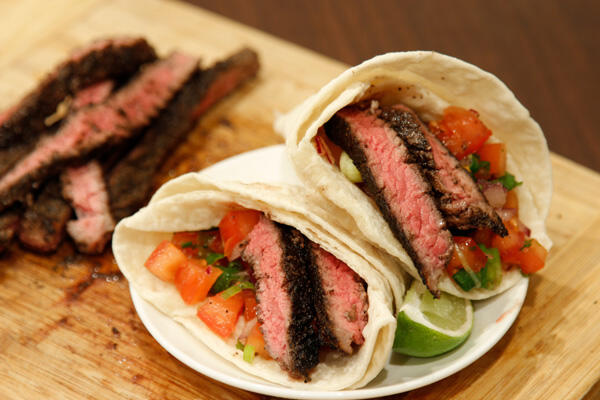
I was always under the impression that to enjoy a truly succulent, medium-rare, flash-in-the-pan steak, the only route to success was via the pricey eye or scotch fillet. I was wrong. Both supermarket chains carry “tenderised BBQ steak” in their chillers and I was initially sceptical as to whether MSG or some other unwanted intruder had somehow snuck into this tenderising process, or if this cut was an offence to self-proclaimed steak lovers. But, as long as you avoid any cuts that are slathered in suspicious-looking gelatinous brown sauce, or indeed sauce of any kind (don’t even get me started on the abomination that is apricot chicken), the treatment of the meat appears to be limited to its physical appearance. The steak had long indents running through it, which was ideal for this recipe. Similar to the pulled pork recipe of weeks gone by, the meat was treated to a similar black pepper crust. Be sure to thoroughly massage the pepper, salt and cumin into all of the indentations in the meat. The heat of the pan, minimal oil and cooking time are all significant factors in the process and I cannot stress enough the importance of resting the meat once you remove it from the heat – leave it for 15 minutes. In the words of The Beatles, “let it be.” After this, you can slice it into lengths, deep black on the outside and a lovely soft pink in the middle. The steak I’ve recommended is super cheap (the piece I selected cost an embarrassingly low $2.70), but handles the high heat where other cheap cuts would not. By all means, splash out on an indulgent piece of $30/kg steak if you so wish, but trust the power of the “tenderised BBQ steak.” I was wrong to consider it ominous and nasty – it actually lends itself perfectly to these bundles of deliciousness, inspired by the Mexico restaurants in Auckland that serve up individual soft tacos in brightly-coloured bowls with heavenly combinations of ingredients that dance in your mouth. My favourite garnish is freshly-torn mint leaves. When you make this, go all out with the mint, don’t hold back on the lime and savour the spicy, soft steak. Ingredients250g piece of tenderised steak Cracked black pepper 1 tsp salt 1 tsp cumin 1 tsp rice bran oil, plus extra for cooking 2 tomatoes, diced 1/2 small red onion, very finely diced 3 spring onions, very finely sliced 1/2 lime – zest and juice 4 tortillas Method1. Coat both sides of the steak with pepper until completely black. Evenly massage in the salt and cumin. Rub 1 tsp of the rice brain oil into the steak. 2. Heat a large frying pan or girdle pan until smoking hot. Drop the steak into the pan and cook for two minutes on one side (add a very small amount of oil if the pan smokes too much). Turn the steak over and cook for a further two minutes, but no more. Remove from the heat and set aside to rest at room temperature for 10-15 minutes. 3. Toss the tomatoes, red onion, spring onions, lime zest and lime juice together. 4. Once the steak has rested, carefully slice it into lengths. 5. Warm the tortillas in the microwave for 10 seconds each, then roll into a cone. Pack with the salsa, top with a few strips of steak and pack into your hungry gob. These are handheld and messy and a perfect way to finish a long, relentless week. Makes four mouthwatering bundles. Photo courtesy James Stringer
-
Culture
Chorizo Quesadillas
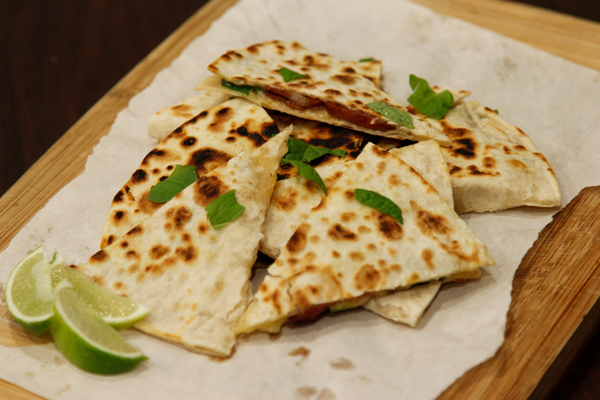
Whether or not you have already picked up on this, I’ll take a moment to remind you of my complete and utter obsession with chorizo. Up until recently, I was a devout ready-to-eat, smoked chorizo kinda gal. Those deep burgundy sticks of chorizo were firm and incredibly salty with glorious marbles of fat running through them. I’ve since had a change of heart – the plumper, softer, raw chorizo sausages have swept me away with their juicy glory (once cooked, of course). Admittedly, it was somewhat of an amateur move when I mistakenly purchased this terracotta beauty, similar in size to a saveloy. “Oh!” I thought. “All that extra time I would have to spend cooking it.” My first world problems soon dissolved when I reminded myself of the ease of preparing quesadillas. They are quick enough to whip up for lunch, but make an equally tasty dinner. For extra nourishment, warm through a can of drained black beans with some chilli sauce and chopped coriander, then roughly mash. Serve your quesadillas with the black bean mash and a generous blob of homemade guacamole. Ingredients1 soft chorizo sausage 4 tortillas 2 spring onions, roughly sliced diagonally 1 cup grated cheese (edam, cheddar or mozzarella) Method1. Place the chorizo under the grill (or in a hot frying pan with a little high-smoking point oil) until cooked through and the skin is blistering and golden. You may like to turn the heat up in the final stages of cooking to get the skin extra crispy. Slice into 1cm thick rounds on an angle. 2. Place a tortilla on a plate. Top half with some grated cheese and chorizo. Microwave for around 30 seconds until the cheese is mostly melted. Sprinkle with some spring onions. 3. Fold the other side of the tortilla over so you have a half-circle. Place in a preheated, very hot frying pan with no oil. Cook for 1 minute, flip over, and cook for a further minute. Slice in half. 4. Repeat for the remaining tortillas. Serve with a squeeze of lime and some roughly torn fresh mint. An ice-cold beer on the side wouldn’t go amiss, either. Makes 16 quesadilla wedges. Photo courtesy James Stringer
-
Features
Get Out of the Ghetto: Queenstown Edition
When Phoebe Harrop of “Get Out of the Ghetto” fame found herself unable to “research” this feature, she selflessly passed the torch on to me. Go to Queenstown for the weekend, I was instructed, and try out some of the fun stuff on offer. I was forcefully reminded of how awesome this job is. Inexcusably, I had made it to my fifth year of university having never been to Queenstown before. I wanted another virgin to accompany me on my maiden voyage to central Otago, but my rudimentary inquiries as to the existence of such a person yielded no results. So I did the next best thing, and took two flatmates and a really expensive camera. FridayOn Friday, we set off in my trusty Nissan March. The scenery was vaguely Martian at first but became increasingly beautiful, with all the fiery autumnal colours out in full force and the turquoise Clutha River shimmering beneath the setting sun. One German hitchhiker and about four hours’ drive later, we arrived. A twinkly winter wonderland suffused with tourists and consumerism, Queenstown struck me, a Christchurch native, as the Merivale of the South (on steroids). Base Backpackers, 47-49 Shotover St.Two nights at Base in an eight-bed dorm with ensuite cost us each $30 (it seems to cheaper if you book online, as we had). We left the car overnight in the Man St Carpark building, located in the street adjacent to Base, $10 for 12 hours (and a rip-off – we parked on the street the next day). The reception is manned around the clock and is attached to Altitude Bar, which was to be the first stop on our “Big Night Out” bar crawl on Saturday. Our room was clean, warm, and spacious, with a fridge and a balcony overlooking the main street, and we had it to ourselves for the first night before being invaded by incestuous, sex-crazed Brits on a “Kiwi Experience.” The bed was comfy and the linen crisp, although the bunk structure itself was disconcertingly wobbly, giving one the precarious sensation of being at sea. The shower was one of those push-button affairs (parsimony masquerading as environmental concern), and according to my flatmate, provided “the worst shower I’ve ever had.” Fergburger, 42 Shotover St.We ventured across the road to Fergburger, that bastion of culinary greatness of which I had heard countless friends speak in hushed tones of awed reverence. My astronomically high expectations were, of course, met. It was 8:30pm, but the place was still pretty packed. Barry at Fergburger had kindly arranged for Kim, a pretty English lass, to take care of us, and she proved extremely friendly and attentive. After she took our orders (a Codfather for me, Cockadoodle Oinks for the others, and chups), we managed to nab a seat. The burgers arrived in record time and delivered what they promised. Simple, fresh, quality ingredients perfectly cooked and enticingly presented, I was impressed that Fergburger has clearly managed to maintain a very high standard of service and fare without falling victim to its own colossal popularity and success. The atmosphere was lively and positive, and the staff seemed to be enjoying their work. We left only too happy to nurse our new and prominent Fergbaby bellies. No. 5 Church Lane, 5 Church Ln.The next stop was No. 5 Church Lane, a five-star boutique hotel with a bar and restaurant attached. The bar has a fireplace at one end, a DJ at the other, and a chilled atmosphere that meant you’d feel at ease dressed up or down. The menu boasted 20 unique cocktails and punches and no classics (which can be made on request). The drinks featured exotic ingredients like apricot jam and homemade coconut icecream and were served in things like milkshake tins and ceramic ducks. I wanted to try them all. Hovering around the $14-$20 mark, you definitely get your 2+ standards’ worth – the cocktails were soul-warmingly strong (we had a Monk’s Sabbatical, a Thaipirinha and a Chignon between us). You could easily sit on one drink for an hour, so it was nice not to guzzle it back and be left wanting another. While perhaps not the first place students would think to stop on a boozy weekend to Queenstown, No. 5 would be the perfect venue for a special occasion like a birthday or grad, or just to start the night off classily. SaturdayVudu Café, 23 Beach St.For brunch, we ventured down to Vudu Café, #3 on TripAdvisor for restaurants in Queenstown (Ferburger, of course, was #1). It was busy and the cabinet food was probably the best I’d ever seen anywhere. I ordered off the menu – free-range eggs with haloumi on Turkish bread with tomato, dukkah and rocket, and a rooibos chai for $21.50. The food was delicious – I’m going to try to recreate it at home – and while the portions weren’t massive, it was definitely enough to sustain me until dinnertime. Gently Used Clothing, 75 Beach St.Tucked away a few shops down is Gently Used Clothing, which sells one-off vintage and designer pieces. It has less stock than Modern Miss but is more reasonably priced – I bought a chiffon cardy for $35 and my flatmate bought a wool cape for $40. Cash only (but there’s an ATM next door), GUC is worth a visit if you’re after a less conventional Queenstown memento. Just beware the “fitting room” – the window looks directly onto the street. Queenstown Botanic GardensAfter brunch, we meandered along the waterfront through the market (a disturbing number of people flogging their wares seemed to have Otago degrees), past the freakishly talented buskers, to the Queenstown Botanic Gardens, where I spent a happy hour writing in the sun looking out over the lake and the flatmates went off frolicking with the camera. A lovely spot for a picnic or a cheeky shag, I’m also told you can play something called “Frisbee Golf” there – worth looking into. The Shotover JetThen it was off to the Shotover Jet. You can either drive yourself to the River Base building on Gorge Road, Arthurs Point, or take the free bus from the information center on the corner of Shotover and Camp Streets, as we did (the drive takes about 10 minutes). Despite my best efforts not to be uncool, I was a bit nervous (having flashbacks of white-water rafting on the Nile), but I needn’t have been: the Shotover was a lesson in good, clean, non-scary fun from beginning to end, all for the reasonable cost of $129. The Shotover Jet is adventure tourism for wimps like myself and my male flatmate (who squealed like a teenaged girl), and therefore a great outing for the whole family. You don a long raincoat thingy and a lifejacket, and are given a preliminary safety briefing before spending 30 minutes zooming up and down a narrow stretch of river at the bottom of a canyon at 90 km/h. Our charming driver, Ian (another Otago graduate) performed thrilling 360-degree pirouettes at a moment’s notice and I had lots of fun cackling madly at the thrill of Feeling So Alive. Coyote Grill, 1/66 Shotover St.Given the tragic deficit of Mexican restaurants in Dunedin, I was keen to get amongst in Queenstown. Coyote Grill is tastefully decorated with South American wall hangings and the cool Reggaeton playing over the sound system contributed to the feeling of authenticity, as did the fact that our babein’ waitress may well have actually been Mexican. Coyote Grill has an extensive drinks list showcasing a pleasing juxtaposition of Central Otago wines and Mexican beers and tequilas, along with the usual margaritas and sangria. You can order many of the items on the menu entrée size, which comes with one wrap and salad; or main size, with two wraps, beans and rice. My flatmates ordered an entrée-sized duck mole enchilada and a meal-sized chicken one, which they both thoroughly enjoyed. My seafood fajitas ($31) would turn out to be a struggle to finish. Totally worth the price, my dish – calamari, prawns and fish marinated in Mexican herbs and spices – came out on a sizzling hot plate, accompanied by three flour tortillas as well as guacamole, salsa and sour cream. The bathroom was possibly the nicest I’ve ever had the good fortune to come across – sparkly clean with a huge mirror surrounded by faux frangipani lights, and a Barbie and Ken stuck on the appropriate WC doors. Coyote Grill is therefore worth a visit, at the very least, for a luxurious wee. Below Zero Ice Bar, Searle Ln.As soon as I was asked to write this feature, I realised I was going to have to give up having given up drinking, bringing a recently-instated teetotal policy to a premature end. Ah well. It doesn’t count if it’s for journalism. Given Queenstown’s nippiness, the thought of going out of my way to make myself even colder was unappealing. But Below Zero, the bigger of the two ice bars in Queenstown, beckoned us. Made from 20 tons of hand-sculpted imported ice, adults can pay $32 for the entrance fee and one cocktail or $42 for the entrance fee and two. You can do this online, or just bowl up. At reception, you put on a fur-trimmed jacket and gloves with grips on the palms, and then you head through to the bar. The room itself can fit 50 people and is available for hire for private functions. It’s full of intricately carved solid ice statues and furniture, including a chandelier, a fireplace, a carriage and numerous seats. Ever-changing coloured lights offset the sculptures beautifully. Upon entering, you order a cocktail from the list of about 10 options (I got a Blue Gondola which contained lychee and was delish). The drink is served in a glass made entirely from ice, which you are instructed to hold with both hands at all times. Honestly, the novelty was almost overwhelming. People tend to only stay for about 30 minutes, but the Irish barman told me that an NZDF soldier who was training for a mission once stayed in there for three hours, and that he himself did a nine-hour shift without a break on New Year’s Eve. Below Zero often has GrabOne deals, so it’s definitely accessible to the financially challenged, and totally worth a visit. Indeed, I have every confidence that you could find a way to creatively incorporate it into a Queenstown-based red card. Big Night Out Bar Crawl, begins at Altitude Bar, 49 Shotover St.Whilst it is not something I would ever (ever!) have paid to go on myself, I tried to have an open mind about this bar crawl. The deal is: you pay $25, go to five bars for about 45 minutes each, and get a “free” shot on the door and 30% off subsequent drinks bought at the bar. Food is provided and there is a 10% on any subsequent food ordered, as well as 10% off Fat Badgers pizza. Book online at bignightout.net.nz, and pay on arrival. We began at Altitude, where, alarmingly, Saturday night was “Fluoro Night.” Trying to fight back visions of my first-year self dancing maniacally at The Break wearing attire similar to that of the bar staff, Altitude struck me as the kind of bar at which it would be fun to end up “ironically” at the end of the night when you no longer care about the respect of your fellow man (à la Monkey Bar), but starting the night there was just mildly depressing. We milled about for an hour before traipsing to The Boiler Room, which was cosy, rustic and would have been a nice place to settle in for the night. Chico’s was similarly cosy but self-described by the Irish barman (they’re everywhere) as a “restaurant for old people that turns into a bar because it’s licensed till 3am.” Winnie’s is a pizza restaurant that has a few branches in Christchurch, but the Queenstown branch is by far the nicest I’ve been to and was vaguely reminiscent of pre-earthquake Mexican Café in Christchurch, with an attic/loft-ish-type feel and a bar lit by Technicolor fairy lights. The Skybar has a ceiling painted like, well, the sky; ambient pink lighting; and a balcony overlooking the central green. Buffalo’s was a spacious establishment with wooden panelling and floors, a big ol’ pool table and a hot tub by the entrance. Apart from The Boiler Room, none struck me as somewhere I’d ever go again on purpose. Despite World Bar’s infamy, we didn’t check it out due to not-in-the-moodness resulting from overexposure. Also, having heard from a local source that Rape Crisis’s Queenstown branch gets at least one World Bar-related complaint every week, I didn’t feel like spending the rest of the night fending off sexual predators. There was already a line up both sets of stairs at 9:30, though, so apparently there were lots of people who did. Maybe next time. The night went by in a blur and before I knew it I was back in the dorm, where I happily swapped my Kate Sylvester dress for PJ pants and my flatmates proceeded to enthusiastically join in an illegal drinking game with the Brits (at Base, you can only drink until 9pm and only in the kitchen, not in the dorm). I am not and have never been a bar crawl kinda gal, but the people in our group seemed to be having a whale of a time; and for only $25, it’s a great deal. It would be a fun idea for a birthday weekend away – shout your flatmate for their 21st – and a good way to work your way through some of Queenstown’s 150+ bars and restaurants. SundayIvy and Lola’s Kitchen and Bar, 88 Beach St.The day dawned cold and rainy, and a thick fog lay across the basin in which Queenstown is situated. It was disappointing, because we had a booking at the Skyline Gondola and luge. The lack of visibility, combined with the fact that the world had morphed into a swimming pool, made us disinclined to go, so we went to Ivy and Lola’s for brunch instead. Ivy and Lola’s is rated #20 on TripAdvisor, and I was attracted to it by its name. When we arrived we were some of the only customers there, but by the time we left the place was filling up fast. The kitchen was open to the dining area, meaning we could see the chef preparing our meals, which was a nice touch. I was impressed by the menu – it had all the usual breakfast suspects (my flatmates got eggs bene and pancakes), but also had things like “smoked fish with traditional bubble and squeak, poached eggs and hollandaise sauce,” as well as a big breakfast accompanied by a “virgin Mary shot.” I got the three-egg omelette with spinach, pumpkin, mozzarella, pine nuts and, somewhat ingeniously, rhubarb chutney. At $15.50, it was cheaper than Vudu and just as delicious, not to mention being roughly 100 times the size. Just a stone’s throw away from the lakefront, Ivy and Lola’s was the perfect note on which to end the trip. EpilogueI drove back to Dunedin feeling like Steve Carrel at the end of The 40-Year-Old Virgin, having waited so long to experience that which many my age take for granted. Sufficiently deflowered, I had finally encountered Queenstown in much of its glory and look forward to returning in the future. To those remaining three or so students at Otago who haven’t been to Queenstown yet and who would have inevitably gone regardless of my having written this feature – lemme tell ya, you’re going to love it. ThanksCritic would like to specially thank Barry and Kim at Fergburger, Chris at No. 5 Church Lane, Nigel at Shotover Jet, Jonny at Below Zero Ice Bar, Jay at Big Night Out and Skyline Gondola for their generosity and hospitality.
-
Columns

Love Is Blind | Issue 11
HillaryI knew when my date didn’t want to stay to finish the bar tab that things hadn’t gone well – but I figured that, since I had endured well over an hour of his appalling chat and pointless conversation, I might as well make the most of the free drinks and drown my sorrows. He had told me repeatedly how much of a drinking expert he was throughout the date (another of his fascinating stories) so now was his time to shine. He didn’t shine; in fact, the only thing shining was the floor, at which I stared intently to avoid any eye contact and distract myself from the awkward silences. Don’t get me wrong, he seemed like a nice guy, but I was more after Vanilla Ice and he was leaning way too close to the vanilla side for my liking. Vanilla – a term in America for those individuals who although may seem pleasant enough, make very little impact on your life and are forgotten almost instantly. What was I talking about again? Oh yes, my date … I’m sure he’ll understand the term “vanilla,” being American himself, which instantly put him at a disadvantage, as I was looking for a Kiwi to satisfy my American appetite for New Zealand meat. And I’m not talking about the lamb variety. Critic – if I wanted to meet an American, I would have stayed in America … common sense. Arseholes. At least I enjoyed the food. My date, on the other hand, did not: he had an allergic reaction half way through the meal. Not the sexiest thing I’ve ever seen, though it may just have been his attempt to escape. Regardless, I persevered, determined to make the most of the bar tab, and I feel like it was utilised enough to make the evening worthwhile. I drank enough to send myself straight to sleep, anyway … or was that his boring conversation? Needless to say, no phone numbers or bodily fluids of any kind were exchanged. Not quite the night of rampant sex I was after, but never mind. I’m sure he’ll be the vanilla to someone’s pod one day – just not mine, unfortunately. BarackWhen you’re in New Zealand you often hear about the “two degrees” of separation. You can usually find a quick connection back to anyone you meet. This phenomenon was more evident Friday night than any other. On Thursday, I got a last-minute call to see if I had time to fill in for someone who had bailed on their date. To a broke-as student like myself, I couldn’t have been happier – plus I’d have the chance to maybe meet a nice Kiwi girl. Sorry Critic readers, but Americans are more condensed down here than I thought. While I had good chat on the date, I didn’t come halfway across the world from the USA to chat up Americans. But hey, when we’ve already spent all our money on a plane ride and the undeniable urge to throw yourself off a bridge (with a bungee rope tied to your feet), you’ll defiantly be glad for a yarn, a shouted good meal, and some drinks together. We went over everything we knew about where we were from in the States and told stories about some crazy grandparents, who are apparently a more racist/sexist generation than we generally like to believe. I also learned some serious lessons about economics being the force that influenced British people to drive on the left side of the road because they apparently have a subconscious need to be in correct jousting form (I’m still trying to work that one out myself). After dinner was finished, we had some extra funds left over to hit the bar. We asked the bartender for his favourite shot and that was probably the best call we made all night. Before now, I’d never seen five types of alcohol and a banana go into a shot, but damn was it a good recipe. After roasting marshmallows on the bar and second shot, we walked back toward out flats. We said our goodbyes and I went to grab a pie from the Night N’ Day (never-ending hunger), and ended up running into some friends and had a crazy night with duelling guitars and a lot of weed. I would have invited her along if I had known where my night was going, but sometimes shit happens when you go with the flow.
-
Columns

ODT Watch | Issue 11
C ritic had only one issue of the odt to work with this week. for some reason, our supply of papers has dried up somewhat in recent days. Perhaps the result of some kind of toilet paper shortage resulting in the emergency redirection of bundles of Dunedin’s second-favourite rag, Critic expects the situation to be resolved swiftly and for things to return to normal as soon as possible. Anyway. This week in the ODT, fascinating and skilled journalism is revealed: A description of a politician ruining a couple’s romantic dinner follows. How unusual. The ODT clearly doesn’t know what year it is: Clyde is probably going to need much more than a brochure to convince people to visit. Another article of significant content, gumboot sales, gives a stellar pun.
-
Columns
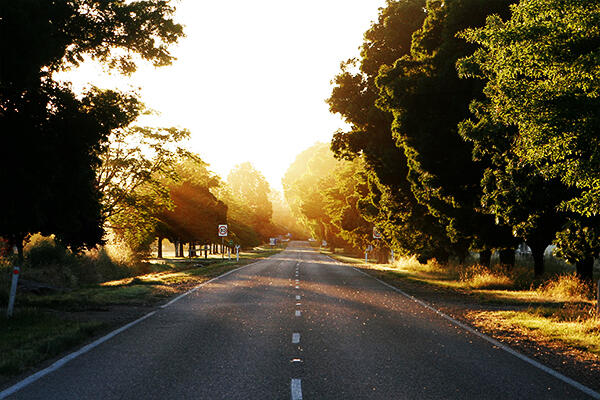
Get Out Of The Ghetto | Issue 11
Aramoana is more than just the site of New Zealand’s deadliest criminal shooting (how’s that for a tempting opener?). If you’d like the details of that particularly gruesome and disturbing event, detailing the massacre of 13 Aramoana residents by AN UNEMPLOYED GUN COLLECTOR in 1990, watch the movie Into the Blue. My advice? Watch the movie after you visit. The thing is, if you see the movie first, you can’t help but think there’s something a wee bit creepy about Aramoana. And maybe there is. Even on the most beautiful bluebird day, there is a palpable air of unease around the overgrown cribs and oddly-named streets (Plucky Street for example, I mean what’s that about?). Push through the creepiness, though. If you drive through the settlement, a tangle of low-lying buildings huddling behind the sand dunes in the shadow of the headland, you’ll find yourself in a most beautiful spot. To the north, gaze up the coastline to Seacliff (which, from a historical point of view, gives Aramoana a run for its money in the creepiness stakes). To the south, look across the narrow harbour entrance to the albatross colony – just a stone’s throw away. Watch out for seals (some cute, all smelly) and surfers (some cute, some smelly). If the tide permits, go for a stroll up the beach and past the rock with a romantic heart cut out of the top. Just don’t loiter too long … enjoy. Get there: by car. Drive out along the Port Chalmers road – it’s about 25km from the Stadium. Do: walk along the massive breakwater out into the sea. Don’t: make any gun jokes. Eat: at Carey’s Bay Pub on the way out, or take a picnic.
-
Columns

For Fuck's Sake | Issue 11
I have two assignments due tomorrow, so naturally I decided to write my column instead. Ha! Fuck you, university. When the going gets tough, the tough get going. And the rest of us say FUCK OFF and watch videos of sloths online. I watched one today that had baby sloths getting shaved, lathered in butter and wrapped in pink bandages. At the end, the two baby sloths hugged. But the beauty of procrastination lies in more than just slow-moving tropical mammals embracing: when we procrastinate, we flirt with danger. It’s both rebellious and relaxing. It’s like eating an entire bag of Doritos and not regretting a single thing. For those of you who are too boring to discover such joys on your own, I have decided to list some of my best procrastination tips. You’re welcome. Quizzes are really great. If you’re boring and smart, you can do the daily Stuff Quiz. If you are fantastic and awesome, you can do other quizzes. Because there’s no point in knowing anything unless you know which Michael Jackson dance move you are. And what your spirit animal is. And which Game of Thrones character you are. Online quizzes are also perfect for telling you if you are a good kisser and how long you would last in a zombie apocalypse. Today, a quiz told me whether or not I could date Justin Bieber (I couldn’t). And whether I will be successful (I won’t). Also my future home (a cave). Playlists are also great. If you are new to the whole procrastination thing, playlist-creation is a particularly good tactic because it technically counts as study preparation. And it is so much fun that you will forget that you were meant to be studying in the first place. Win-win! I have a wonderful friend who likes to procrasti-bake. As in baked goods. As in cake. This is a very good form of procrastination because it makes nice smells and nice food and people will love you. Fuck it, go out on the town. You know you aren’t going to study anyway. If you’re going to procrastinate, why not get off the couch and go out and do exciting things? It’s okay to be a lazy fuck. Just don’t lie to yourself about it. It is an absolutely shit time of year because there are shitloads of assignments, the crappy weather is setting in, and exams are looming. But don’t let that turn you boring. Instead, procrastinate! I procrastinated for five hours whilst writing this column about procrastination, and it was a blast. Try it. You know you want to.
-
Columns

Science, Bitches! | Issue 11
The oceans cover most of the Earth, so arguably it could be called Planet Ocean, right? It contains 99% of the living space on Earth, covers nearly 71% of the planet’s surface, provides about 50% of our oxygen, and gives us 20% of the world’s protein. Yet we’ve explored less than 10% of its mysterious depths and we provide it with almost 0% protection. Let’s wave in marine conservation; it’s all about protecting this vast ocean and all the creatures that live in and around it. Just trawling the net, we can see there is some great stuff happening around the place. You can catch the Dunedin-based marine conservation group Our Seas, Our Future (OSOF) making a difference one small step at a time. When you open up a can of OSOF, what you find is a group of passionate marine conservationists making a difference at the grass-roots level. And rest assured, the contents of this can are not only dolphin-friendly but also sustainably caught. OSOF is a part of a national campaign called the New Zealand Shark Alliance working at saving our sharks. 98 countries have now banned shark finning and New Zealand is one of the few countries that still tolerate this brutal practice. What is so good about shark fins? Apart from helping sharks go about their daily business, not much! They’re mostly used for texture in shark fin soup, and symbolise wealth, prestige and honour to some, while others think it will help them get lucky in the bedroom. With all these magical properties, shark fins can fetch up to US$1000 per kg. Bad news for sharks. OSOF is also encouraging people to use fewer plastic bags, because plastic is both resource-hungry to manufacture and ends up in our oceans, choking marine life, starving baby birds and polluting the environment. A part of OSOF’s campaign is organising kick-arse coastal clean ups, removing man-made rubbish from coastal areas, while at the same time educating people about the effects of plastic on the environment. Speaking of plastic, you may have heard about the 19-year-old Dutch student, Boyan Slat, who plans to remove more than seven million tons of plastic waste currently polluting the world’s oceans. Boyan designed the Ocean Cleanup Array, a device that will travel the ocean while filtering out bits of plastic. He got the idea from a school paper he wrote looking at plastic particles found in the oceans. So help out the world and get studying science, beaches!
-
Columns

Daily Grind | Issue 11
Rating: 4/5 Coffee Cups While sauntering through the mall M and G were drawn to the eclectic hub of Marbecks in Wall Street. After perusing the jazzy selection of music and literature on offer, they decided to hit up the café in the corner, as M had a free coffee to redeem. Marbecks is the perfect place for those lone rangers out there who need a break from study or their flat to grab a cup of joe in peace. They also have some pretty sweet food on display, with big piles of the brownies and blondies for which they are well known. While M ordered a long black, G was inspecting the wall art, clad with posters of cult classics and band tee shirts. Marbecks definitely has a cool factor, generated by the tasteful décor that isn’t too in-your-face. There is always something new to discover, whether it be the upside down teacup lights they have over the counter or the enormous fripples on one of the paintings on the wall. M was very pleased with the customer service at Marbecks – the male barista was chatty and friendly, and demonstrated some excellent coffee-crafting skills. M and G’s coffees came in cool art deco gold and white Supreme cups, topping off the funky décor. G’s only complaint was that the tables and chairs were kind of close together, making it hard to move around when the place is bustling with mums on coffee dates. Being able to browse the latest novels and listen to some choons while you sip on your mach is glorious. M’s coffee had the perfect balance of flavour and smoothness; the Supreme beans made for a lovely experience. He was happily sipping away while people-watching from the seats located outside the main shop. G is a fan of sitting at the wooden benches by the window and watching the patrons of Maher try on the latest pair of eye-talian crocodile skin cunt-hunter shoes. You’d be surprised at who you spot in there. The main broad who works there is also always up for a chat about their perpetual stock of Keep Cups. Marbecks is a good place to buy into this latest trend, with a huge collection of eco-cups on offer. They’ll help you find some pleasing colour combos, fill your cup with espresso and send you on your way.
-
Columns

Lez Feminables | Issue 11
It’s time to talk about personal boundaries, and how to navigate them. I promise, consent can be sexy! Why is it okay for a gay guy to slap a girl’s butt, but not me? First of all, it’s not okay for anyone to slap anyone else’s butt if it makes them uncomfortable. If a girl is comfortable with certain people touching her butt, and you are not one of those people, then you’re gonna have to suck it up. Gay guys can sometimes get away with this kind of behaviour because they lack the predatory air that this question (and those I have heard it from) effuses. Slapping butts without permission has been known to cause shock and distress, and I’ve never seen it work as a pick-up move. Don’t make someone uncomfortable just because you feel stripped of your right to slap a butt. You don’t have that right. Slap your own butt. So how do I go about kissing/sexing/butt-touching with consent, whilst retaining an aura of sexy? It seems impossible! Far from it! I shall procede to describe just a few techniques you can use: 1. Expression of desire. Try saying “I want to [insert action here].” Whisper it, or make eyes. (Or not. I don’t know about you, but I tend to look murderous when I’m trying to “smize.”) It informs the other person of your intentions, and gives them an opportunity to respond with what they want; if your desires match up, get in there! 2. Invite. Tell them what you want them to do to you! Not only is this a cornerstone of “talkin’ dirrty,” it also takes away the need for asking questions you may find awkward. “Slap my butt” is a pretty clear “yes” to that particular action. Note: these are invitations, not orders. 3. Body language. This can be less clear, but probably happens the most often. Those of you trying to get your mack on in the bowels of Monkey may find verbalising your desire to slap a person’s butt difficult over the shrill screams of “POUND THE ALARM.” Look into their eyes – are they smizing? Touch their face/arm – do they move closer? Look at their lips – is there a smile? Then touch those lips with your lips! Once you’ve got that going on, you can let their hands guide you to their butt. Or wherever. Also! It’s really important to remember that people’s comfort levels may change. A “yes” to butt-touching is not a “yes” to sex, and people could even change their minds and realise they don’t want any more butt-slaps. One “yes” does not equal forever “yes.”
-
Columns

The More Things Change | Issue 11
This week, fixtures of the modern world are born, and a truly ambitious voyage is undertaken. May 15, 1940: Richard and Maurice McDonald opened their first fast-food restaurant, and probably had no idea that it would end up being such a big deal. A few years later, the guy who sold them their milkshake machines bought the restaurant out and started opening restaurants all over the place, thus beginning the ascent of McDonald’s. (The same guy initially refused to open a restaurant in New Zealand, because “I never met a more-dead-than-alive hole in my life”. Go figure.) McDonald’s is now the single most advertised brand name in the world, due to its relentless marketing – the golden arches and catchy slogans have made a significant impression. The McDonald’s franchise is also known for its willingness to adapt to what its customers want: in Germany, they sell beer. May 16, 1960: In one of the more visually entertaining triumphs of physics, Theodore Maiman won the race to operate the first optical laser, which was made with a synthetic ruby and produced light of a deep red colour. As well as looking cool, lasers have contributed to a whole host of useful technology like barcode scanners, printers, and DVD players (that great technological achievement of the early noughties). You can use them to perform surgery, or any other sort of cutting your heart desires. Apparently, the biggest disappointment of laser technology is that nobody has yet created a functioning lightsaber, but presumably there are safety issues that have to be considered. The physicists responsible for this probably wouldn’t like it if people started using the results of their hard work to remove each other’s limbs. May 17, 1970: Thor Heyerdahl, one of the more ambitious explorers of recent years – which might have had something to do with his being called Thor – set off from Morocco to sail across the Atlantic in a papyrus boat. He was trying to demonstrate that ancient people could have done it, which he managed on his second attempt by making it to Barbados. Heyerdahl had previously sailed from South America to Polynesia under similar conditions because he wanted to prove that Polynesia had been settled by South American people in pre-Columbian times, but most modern-day anthropologists think his theories were wrong. Heyerdahl persistently ignored the linguistic, cultural and archaeological evidence that contradicted his ideas, and carried on sailing his little boats. Such dedication is admirable, especially in light of experts who said that the evidence for such voyages could just as easily have been carried by birds.
-
Columns

Hi Dr. Nick | Issue 11
Hi everybody, This week, I want to talk about New Zealand’s Got Talent. Specifically, I want to talk about the odds that the show will actually demonstrate that New Zealand has any talent: bloody shit. Despite the fact nobody talks about pooping, a study by Tarō Gomi showed that everybody does it. Brick-laying might be a universal phenomenon, but we still get flustered when forced to talk about it. There’s a question I’ve fielded numerous times, usually asked by small children and drunk people (two largely interchangeable groups): “What is the funniest thing you’ve seen in med school?” People generally expect an answer involving a kitchen utensil and the words “I tripped...” but my funniest memories come from those golden moments before general anaesthesia kicks in (“I’m a fucking awesome jockey. Zzzzz”) and the vindictive glee one can get from asking “the poo questions.” Now, you probably don’t often discuss crap (beyond informing your flatmates that you gallantly slayed the toilet after a night of curry and beer) but healthcare workers discuss poo a lot. You might even say we discuss it … a shitload, if you were a douchey “puns-are-funny” twat. Point being: a doctor can ask dozens of questions about your latest poo and medically justify each and every agonising, chair-squirming, face-flushing one of them. Returning to NZGT – there’s something that causes huge amount of worry in a huge amount of people: blood in the toilet bowl. There’s a crap-ton of ways bum blood can look (mixed in with the poo, in the water, on the toilet paper, bright red, dark red, black, sticky, clumpy, runny ...) but probably the most terrifying is the bright red spray on white porcelain. People see that and they freak. Often, that freak-out doesn’t translate into seeing a doctor, because people fear they’ll face a douchey “puns-are-funny” twat of a medical professional who will ask them dozens of awkward questions. Here’s the thing, though, the questions themselves aren’t actually embarrassing or entertaining – the only funny part is the squirming awkwardness that some people exude when talking turds. Without that, it’s a very unremarkable subject matter, as “the poo questions” are actually a very cruisey set of yes/no tickboxes to make a diagnosis. Bloody poo is way more common than you’d think and, if you’re young enough to read Critic, it’s incredibly unlikely to be the cancer or whatever you’re freaking out about. But like everything, if you’re worried, it’s far better to see somebody about it than letting it driving you mad. Ultimately, letting the fear of awkward questions impact your health is a shit idea. And puns are funny.
-
Culture
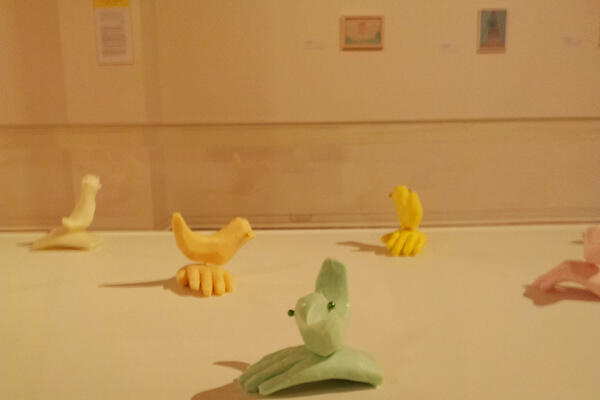
Saskia Leek’s Desk Collection
Saskia Leek’s solo exhibition Desk Collection at the Dunedin Public Art Gallery is a true testament to her evolution as an artist. Seeming to almost celebrate Leek’s personal journey as an artist, the exhibition didn’t just present this to the viewer, but swept them along for the ride through an extremely effective installation of her work. Leek’s paintings are not outrageous, controversial or aesthetically draw-dropping, but there is a serene surrealism to her small, intimate works that leaves a lasting impression. The title Desk Collection refers to Leek’s having created every painting at a desk, alluding to the exhibition’s “timeline” structure and putting the paintings’ size into perspective – they are unobtrusively small. Paintings of this scale run the risk of being swamped with expanses of white wall, but any sense of intimidation was offset by the installation itself: the paintings were placed at eye level on partitioning walls creating intimate, enclosed spaces, much like those depicted in the works themselves. As a result, the paintings and works of other media (a sculptured caravan and cabinet of beautiful soap sculptures) tie together seamlessly. The layout of this exhibition was exceptional, guiding the visitor in the right direction, but giving them the freedom to form their own interpretations. Combining quotes from the artist herself with considered observations, the writing on the accompanying placards avoided convolution. The installation enhanced the beauty of the paintings, something that many galleries often, bafflingly, fail to do. Recently shortlisted for the prestigious Walters Art Award, Saskia Leek has a prominent presence in the New Zealand art scene. Admittedly, her works initially failed to grab me. However, suffused with intimacy and unimposing in their scale, these paintings are designed to affect the viewer gradually. If one were simply to flick from one painting to another, their subtle grittiness would go unnoticed. A reasonable amount of time is required to discern these paintings’ beauty, and understand why Leek deserves the title of “success story” to which this exhibition pays homage. The opening wall describes Leek’s works as a shift “from junk shop to old master.” While there is a noticeable change in her style and painting formula (with a somewhat side-tracked venture into abstraction), underlying the whole exhibition is an otherworldly and slightly dark tenor. It begins with Leek’s earlier popular culture-oriented works that elevated her to prominence as part of a group exhibition Hangover in 1995. These works present a critique on contemporary culture that references the artist’s own teenage experiences and the American iconography she was influenced by, exemplified by a self-portrait of Leek as Sandra Dee. With strong colours, witty commentary and bold figures, these works reflect the extent to which the artist’s painting style has developed. Leek settles into a thoughtful and genuine style, with most of her paintings containing relatable subject matter like horses, houses, cats and fruit. However, the success of her works is their edgy, surrealist nature embodied in the environments in which she places these objects. The penultimate painting depicts a gathering of Victorian figures, seemingly lost in deep, green bush. Vaguely sinister, you wonder why they are there, why some figures are distorted, and just how that one little man ended up in a clearing all by himself? From a technical point of view, the works are deceptive. Seemingly simple, there is a lot the paintings provide the viewer beyond the first glance, offering the viewer not just a scene, but a story.
-
Culture
The Magic Mountain by Thomas Mann
Thomas Mann’s production of such an intricate, thought-provoking work as The Magic Mountain is a monumental achievement matched only by that of the casual reader actually managing to finish it. You not only need time to get through its 700 pages, but also a large amount of mental energy. Those looking for an easy read or a dramatic page-turner should give this book a wide berth. The actual plot is very straightforward and the action mundane. Hans Castorp, a young German of a prosperous merchant family, is about to begin a ship-building career in Hamburg. He goes on a trip to the Swiss alps to visit his cousin, Joachim, who is living in a sanatorium in the mountains to treat his tuberculosis. Hans intends to stay for two weeks, but ends up extending this after falling ill himself, staying there for seven years. He eats lots of meals. He goes skiing. He has a dream. He talks to people. Ultimately, he leaves to fight in the First World War. And that, friends, is basically it. The strength of the novel lies in its dialogue and ideas, which are primarily developed through a series of discussions and debates involving Hans’ fellows at the sanatorium, who form something of a microcosm of the socio-political environment of interwar Europe – Freudian impulses, class conflict, the rise of totalitarianism; it’s all in there. Alongside these societal allegories runs a more introspective exploration of Hans as an individual, mostly played out through his seemingly futile fascination with, and courtship of, Claudia Chauchat, the closest thing to a love interest in the novel. However, for most of the novel, Hans is as much a spectator as the reader, observing lengthy discussions by stronger characters –an Italian and a Jew – which make it hard for the reader to feel involved in the action. Stylistically, Mann manages to maintain a dark, ominous tone throughout the novel, which is the most likely thing to keep a reader engrossed. One interesting motif is medicine, with descriptions of things even as abstract as human emotion often broken down to a scientific level, making the reader feel as if they, too, are in a medical institution. The Magic Mountain gives up artistic and aesthetic enjoyment to philosophical thought and contemplation. Technically, this is a very, very good book. But I hesitate to recommend it to just anybody. Someone wondering when their knowledge of Greek mythology would be put into practice, or history lovers wanting a first-hand illustration of that ferocious melting pot of ideas bubbling away in a war-ravaged Europe, or even someone in the advanced stages of a personal spiritual crisis, could find great satisfaction in this book. If you are not one of these people, then start with Death in Venice and see whether you or not you and Thomas Mann get along before committing yourself to this mammoth work.
-
Culture

Interview with Tim Nixon
I recently got the opportunity to interview the game director at Runaway Play, Tim Nixon, about Flutter.
-
Culture

Flutter: Butterfly Sanctuary (free)
Rating: 8/10 The gaming industry as a whole has grown incredibly quickly. But no other branch of gaming has seen more exponential growth than mobile gaming. It seems like a blink of an eye ago I was being enthralled by Snake on my dad’s Nokia (which was the size and weight of a brick), and now I can play games on a smartphone that can often stand toe-to-toe with console titles. Credit where credit’s due to the technology that made this possible, but the growth of this particular industry is a testament to the innovation and creativity of the game developers who have embraced and rapidly evolved this medium. Every day, new mobile games are being released, not only changing the way that we see and use our cell phones and tablets, but the way we see gaming in general. Just past the Exchange right here in Dunedin is a beautiful building emblazoned with the letters “NZHS.” This acronym stands for Natural History New Zealand. This building houses some of the most creative and accomplished work being produced in New Zealand, including a games studio called Runaway Play. Runaway Play seeks to make mobile games inspired by nature that are both informative and fun. Their latest game, Flutter, exemplifies why the mobile industry is as strong as it is. Flutter is a game in which you attract, care for and collect butterflies – a simple premise which contains a rich, fulfilling and informative experience. Set in a vibrant and colourful section of the rainforest, you begin the game with just a few branches and what looks like an egg incubator made from the trees, which you use to attract your first butterfly egg. The incubator randomly generates an egg based on three criteria: region of origin, size of butterfly and rarity. After waiting for an allotted time, your egg will then hatch into a caterpillar. It is your responsibility to feed these ridiculously cute caterpillars leaves so that they can grow into butterflies. Once well fed, the caterpillars form cocoons from which eventually burst forth brilliant butterflies that fly around your rainforest generating honeydew, which acts as a currency in the game. These are the basic mechanics of the game but, as all good games should, it introduces more complex features as you progress through it. Eventually, you must clear away sections of leaves to expand your forest and butterfly collection, which requires that honeydew generated by your butterflies. A levelling system allows you to upgrade your butterflies dew production, enabling you to clear your forest faster. There is a huge variety of different species of butterflies to collect, which are organised in sets by which country they are from. Rewards and a personal sense of accomplishment encourage you to complete these sets. To make this possible, you can influence the kind of egg the incubator produces by collecting flowers which might, for example, give you a 50 per cent chance of producing a rare egg. For those of you who have played games like Dragonvale and been frustrated by the random species generation, this feature is great because it offers the player more control as well as challenging them to be creative. The game is free to download and, like many mobile games, offers the opportunity for gamers to make micro transactions within the game for additional content or perks. This is by far one of the most addictive mobile games I have ever played and it makes me so proud to see such a high quality game coming not just from my country, but from the city in which I reside. My recommendation: play it for a week, then go to the butterfly exhibit at the Otago Museum and see how much you’ve learned.
-
Culture
Star Trek Into Darkness
Rating: 2.5/5 I arrived at the midnight premier for Star Trek Into Darkness, two equally bewildered friends in tow, to encounter a menagerie of costumed oddities standing in the Rialto foyer. Trekkies have always been something of a mystery to me; I watched my first Star Trek film only last week (the 2009 reboot), and I kind of saw the point, but it was a bit baffling all the same. Star Trek Into Darkness picks up more or less where the last film left off, with Captain Kirk (Chris Pine) and Spock (Zachary Quinto) exploring the galaxy on the USS Enterprise and and engaging in various special-effects-laden adventures. Before long they are called on to track down John Harrison (Benedict Cumberbatch), a “terrorist” (all action villains are “terrorists” these days) who has declared a one-man war against Starfleet. Into Darkness is a well-conceived and slickly produced but ultimately uneven film. You know there’s something wrong when Leonard Nimoy out-acts most of your cast in a 45-second cameo. Karl Urban in particular gives one of the worst acting performances I have ever seen, delivering every line like a fifteen-year-old taking the piss (although the script does him no favours – “You’re putting him in a high-stakes poker game with no chips and asking him to bluff!”; “Damn it, man, I’m only a doctor!”, etc). Female characters are also an obvious and sadly predictable weakness, portrayed as emotionally-driven pieces of meat and subject to innumerable gratuitous leg shots. Despite the general incompetence of those around him, though, Benedict Cumberbatch gives a masterclass. His strange, angular handsomeness, surprising physicality, and overall quality of menace make him a magnificent and utterly compelling villain. Perhaps too compelling: I spent much of the film wishing he would stick around long enough to finish off Bones, Scotty, Chekov and the rest of the Enterprise’s infuriatingly hammy crew. On the whole, Star Trek Into Darkness is an entertaining and worthwhile film, but J. J. Abrams needs to do better when he takes on Star Wars. That’s the one I really care about.
-
Culture
Jurassic Park 3D
Rating: 5/5 As you may or may not have heard, Steven Spielberg’s seminal Jurassic Park was recently rereleased in theatres in 3D to celebrate the film’s 20th anniversary. Though many films that were shot in 2D and later converted into 3D look like shit (Clash Of The Titans being the classic example), Jurassic Park’s retrofitted 3D is genuinely dazzling, adding a depth, richness and clarity that does nothing but complement the original film. Everything on the screen is sharper and warmer and thus has more impact, from the gory dinosaur-related deaths to the ripples of movement in the undergrowth, even to the subtle expression changes on the faces of our protagonists (a smile or an eyebrow raise suddenly seems doubly significant). So yeah, the 3D was dope. The film itself I hadn’t actually seen in about a decade, so my memory of the characters and plot was hazy. I remembered a handful of iconic scenes, such as the T. rex flipping the car with the kids inside, the same kids being hunted by the velociraptors in the kitchen, and the girl getting sneezed on by a brontosaurus. Christ, I must’ve really had it in for those kids as a younger person … anyway, the intricacies of the plot were essentially new to me, as were the many profound themes worked into the whole dinosaur-theme-park-slash-petting-zoo-gone-horribly-wrong thing. Never did I realise just how often the film addresses the ideas of sexism, evolution, God, and chaos, or how well the film is separated into two fairly distinct halves, the first looking at the concept of man attempting to play God as wondrous and groundbreaking, the latter demonstrating it to be arrogant and disastrous. You end up both loving and despising Jurassic Park’s mastermind John Hammond (incidentally played by David Attenborough’s brother, Richard), simultaneously sharing his love for the wonders of science and loathing his pomposity that he could ever possibly conquer or control nature. As Jeff Goldblum’s irresistible character quips, “life finds a way.” Twenty years since its initial release, Jurassic Park remains as thrilling, amusing and awe-inspiring as ever, reminding us that Steven Spielberg is and always will be the king of blockbuster cinema.
-
Culture

American Psycho (2000)
The story behind American Psycho’s adaptation from page to screen is almost as troubled and manic as the titular character. Based on Bret Easton Ellis’ seminal work on the moral and materialist woes of 1980s Wall Street America, the work was initially labelled “misogynistic garbage” and “snuff” by the New York Times. Publishing mammoth Simon & Schuster reneged on their obligation to print the book due to its controversial, uncompromising subject matter. When Ellis finally found a home for the novel, he received numerous death threats from rampant feminists on its release (oh the irony). Mary Harron’s 2000 adaptation, enhancing the satirical elements of the novel, is that rare page-to-film adaptation, succeeding where the novel failed. Its female director summarily dismissed the misogyny claims as erroneous, and employed an A-list cast to portray the hedonism of Reagan’s America. Patrick Bateman is the consummate Wall Street yuppie, whose vacuous daily routine consists of grooming clients, interns and himself. His only interests are restaurants, his figure, and, in an assertion that falls on his insipid colleague’s deaf ears, “dissecting girls.” Bale, in a part that he claims was inspired by Tom Cruise, is simultaneously hilarious and horrifying, sinister and pathetic. He is perfectly cast as someone whose good looks cross into being just plain creepy; and age-appropriate, given the majority of serial killers are statistically white males in their 30s. Bale’s manic intensity in American Psycho is so perfect that the film ultimately launched his career, when most thought it would have ended it. Despite the sadistic violence, Harron’s comedic tone is as consistent as Bateman’s unhinged smile, the laughs increasing with the body count. The easy combination of comedy and horror is probably best exemplified by his Huey Lewis monologue, delivered to an oblivious corporate victim, axe-in-hand (it has over half a million views on YouTube). Upon release, American censors found not Bateman’s graphic mutilation of women to be offensive, but rather the sex scenes – only by cutting 18 seconds of the latter did the film achieve an R16 rating. This decision in itself is more misogynistic than any of the film’s content. If all this merely makes American Psycho sound like a pretentious horror film, then a viewing should dismiss such concerns. As that rare success, a “horror-comedy,” it explores the dangers of rampant vanity and competitiveness within the corporate environment. The late Roger Ebert encapsulated this best: “Most men are not chain-saw killers; they only act that way while doing business. ... Their sexual insecurity is manifested as business card envy.” Ultimately, though, the film is not about understanding Bateman or drawing comparisons between 80s materialism and sadistic violence. Rather, one enjoys the performance while also revolting at the spectacle.
-
Culture
The Company You Keep
Rating: 3/5 The Company You Keep, directed by Robert Redford, was based on a novel of the same name, and a novel it should have stayed. The story revolves around Jim Grant (Redford) a former Weather Underground militant, who becomes a wanted fugitive after his identity is exposed by a journalist (Shia LaBeouf) who is reporting on another Weather Underground member’s (Susan Sarandon) confession to being part of a bank robbery gone wrong decades earlier. The setup had potential, but the film failed to ever really get going. In the spirit of fairness, I was willing to suspend disbelief that the 70-year-old Redford could have a young daughter, but the effort it took to do so almost instantly spoiled the movie. The experienced cast do an okay job of portraying people whose youthful convictions have withered with age, but any chance The Company You Keep had of being an adequate thriller is diluted by a pathetic and largely predictable ending. Stanley Tucci is the standout, along with LeBeouf, as the editor of an Albany newspaper struggling to pay its bills. Equally, Julie Christie’s short stint as a fiery anti-establishmentarian bucks the trend of the older actors turning to grey blobs. Yet none of these performances is enough to free this film from the shackles of its mediocrity, and only served to remind me how easily talented people get dragged down with rubbish writing. Nothing was more indicative of this than Brendan Gleeson’s part as a retired detective. The screenplay, written by Lem Dobbs, suffers from the symptoms of most book-to-movie adaptations. It lacks character development, nuance and a satisfactory ending. I felt like I didn’t care for a single character, apart from LeBeouf’s, purely because there was no time to get to know what makes them tick. If anti-Vietnam War activism is your thing, my advice is to go read the book.
-
Culture
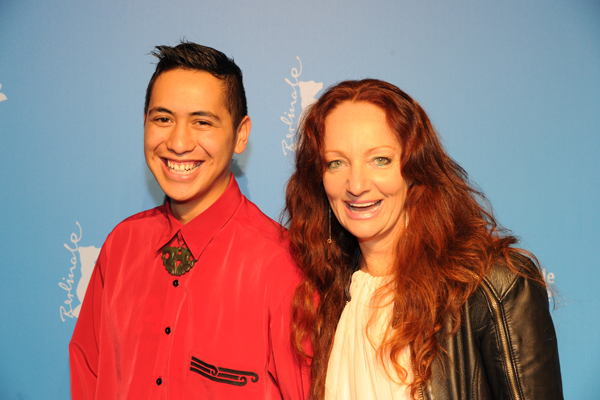
Pietra Brettkelly
Maori Boy Genius examines a year in the life of 16-year-old Maori boy wonder, Ngā Raūira Pumanawawhiti, an adolescent, Yale student and future Prime Minister. The film’s director, Pietra Brettkelly, discusses Ngā Raūira’s life pathway, the gamble of documentary filmmaking, and the racial politics in his story. How did you discover this unique story? I wanted to follow up on this story my friend found about Ngā Raūira in the local Hawkes Bay newspaper, and knew there was something interesting about this boy. We flew down to Hawkes Bay to initially meet him and his dad … I met this remarkable, confident, very charismatic young man, and wanted to make sure that he wanted all these things. He had fabulous pressure on him from his iwi and his hapu and his whanau, but he had to want this education and this pathway as well, because I’m not really interested in doing a film on helicopter parenting, with parents living through their children. I wanted to do a story on a young man finding himself and his political voice – and Ngā Raūira did want this, did want all these things. Why do you think this story is such an important one to be told? Because he breaks through some of the worst statistics in the world. When young Maori men leave school, over 50% have no qualification at all. They make up over 40% of our prison population. There are high incidences of suicides. It’s a terrible realm of statistics, and for him to break through all them is extraordinary in itself. … That’s why it’s done so well internationally, I think – because it resonates on so many levels. It resonates for many people – not just indigenous people, not just Maori – it resonates for anyone who is trying to go beyond what the statistics tell them they could achieve, whether it’s gender, ability, culture, race, geography. Has the process of getting the film from television to cinema been a difficult one? Absolutely, because I’ve had to fund it all myself as a feature film. I went to Denmark to do the edit; I work-shopped it overseas and really made it into an international film. It was released at the Berlin Film Festival last year, and to be selected for that festival, which is one of the top five in the world, is a huge acknowledgement. Documentaries require a delicate balance between letting the story tell itself, and giving the film structure – what are the challenges involved in this? The main challenges are having confidence that a story will evolve. With documentary, it’s kind of a wing and a prayer really, and the prayer is that something will happen, because we can’t just make it happen. So the more that I’ve been in the industry and been making films (which has been for 16 years now) I know I can trust my gut. I can read the situation and understand the person and what is surrounding them and that something is going to happen. … Thankfully, I haven’t made a documentary that hasn’t had some kind of beginning, middle and end – that would just be a disaster. Depiction of Maori culture in our cinema has evolved over the years, from the heavy-handedness of Once Were Warriors to the lighter touch of Boy – how do you think it has changed? What do you think, if anything, needed to change? I think there’s been a bigger picture happen, in that Maori are telling their own stories and they are also a much bigger part of our industry. And that’s been the combination of a bunch of things – the film commission making a considered effort to have more Maori filmmakers and Maori stories … Also Maori Television has, of course, given a presence to Maori media and broadcasters and filmmakers. But having said that, I’ve come up against some degree of challenge that I shouldn’t be telling this story, that a Pakeha person shouldn’t be telling this story. But you know, there’s always that debate as well. I just think that hopefully New Zealanders, all of us, are becoming more aware of the complexities of our own society, and want to see and hear and be educated more about all of these issues that make up our country. The film is entitled Maori Boy Genius: Volume One – what do you envisage for the second half of this film? Your website references the 7Up documentary series, do you think that is an approach you would be interested in taking with Ngā Raūira? I don’t know, really. I think the reason why I called it Volume One was just to hint at the fact that this is just the start and there is so much more to come. Whether I document it or not, I’m not sure. We’re still in contact a lot and now that I’m travelling the country, he’s trying to come to some screenings and he’s terribly supportive of the film, but I think I should leave him alone for a little while.
-
Culture
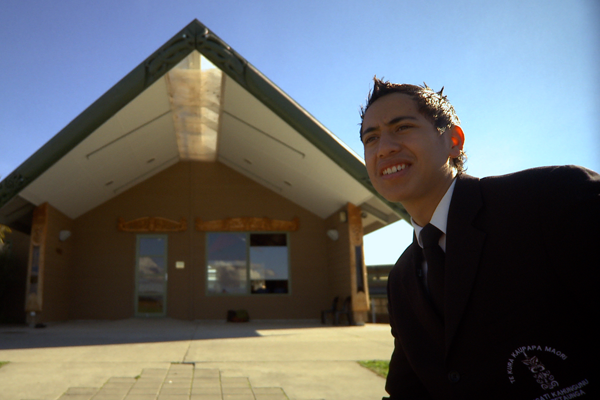
Maori Boy Genius
Rating: 3/5 Documentaries often struggle to find the delicate balance between good storytelling and mere exploitation – a challenge made all the more difficult when the subject-matter revolves around children. Such is the difficulty faced by Maori Boy Genius, a competent, intelligent examination of Ngaa Rauuira, the titular 18-year-old boy wonder, who finds his path to wisdom marred by politics, poverty and puberty. Brettkelly’s conscientious approach to Ngaa Rauuira, as she naturally tracks his rise from completing his first degree at age 13, to enrolling at Yale at 15, means the film never venerates or worships its subject (despite the title implying otherwise). Instead, it is the “supporting cast” that proves more worrisome – parents willing to max out credit cards for $45,000 in school fees, an iwi with a political agenda – with many seeming eager to simply exploit his talents. Brettkelly sheds light on the ambitions not only of the prodigal son, but of his elders and impoverished community. The weight of expectation on this boy’s shoulders is palpable (thrust upon him since the significant appearance of a “double rainbow” at his birth), and it is testament to Ngaa Rauuira’s considerable charisma and maturity that he carries the film without ever coming across as precocious or pretentious. Indeed, at the risk of sounding woefully PC, it’s refreshing to see a New Zealand film approaching a Maori subject without any agenda. Whether it’s the heavy-handedness of Once Were Warriors, or the satire of Boy, subtlety has never been our strong suit when depicting indigenous issues on the big screen, but Brettkelly’s natural documentary style lets the story tell itself. The film’s title is evidently something of a hyperbole – the director herself confesses that the term “genius” is something of a misnomer. But in terms of what Ngaa Rauuira could, or will, represent to his community, it is entirely accurate. And it’s Brettkelly’s examination of these heavy expectations, whether held by his iwi, his friends, or the film’s audience itself, which makes the film worthwhile.
-
Culture

Tahuna Breaks
Rating: 1.5/5 Tahuna Breaks have taken their time with this one. Their newest album, Shadow Light, has been five years in the making, and Tahuna Breaks seem to be mighty proud of it. They themselves describe it as being “bigger, darker and heavier” than their earlier releases – if you define “darker” as meaning “more funky” then that’d be pretty accurate, but I don’t think most people do. The album starts off with a fairly standard 14-second intro before dropping into danceable but unremarkable track “Lady,” which runs for almost six minutes for no apparent reason. The next track “Smooth” is almost identical, but only four minutes in length. This cycle continues for the remainder of the album, with the same song essentially varying slightly in length repeatedly, only deviating on the power ballads “Brand New” and “Fearless.” I don’t mean to be a cynical hipster, as the turn-ups on my jeans might suggest. The tracks are danceable and likeable if you’re not looking for a challenge. But I get the impression that the fairly extreme seven-man lineup the band has adopted led to a proportional dilution of their vision. Seven guys arguing about how the music should sound is only really going to lead to a very safe compromise, of which this music seems to be the result. Personally, I’d rather they’d had a few more raging arguments to shake up the terrain a little more. Even on the first listen, my index finger was hovering over the skip button just to check if the songs really were all like that (spoiler: they were). Two of them are actually remixes of songs already on the album, which is cheating, really. The genre my iTunes came up with was “reggae,” and I’ve heard them referred to as “roots,” but that’s really more appropriate for their earlier music than the direction of Shadow Light, which is more standard dance-funk. In fact, they seem to have abandoned their roots in roots (a change I wasn’t rooting for – sorry), seemingly catering for the drunk and bored demographic on a standard Saturday night. It doesn’t suit them. I don’t want to scare you away – there may be some of you out there whose lives would be changed by listening to this album. But if that is you, I’d recommend reassessing your life, because you really mustn’t do much in your free time.
-
Culture
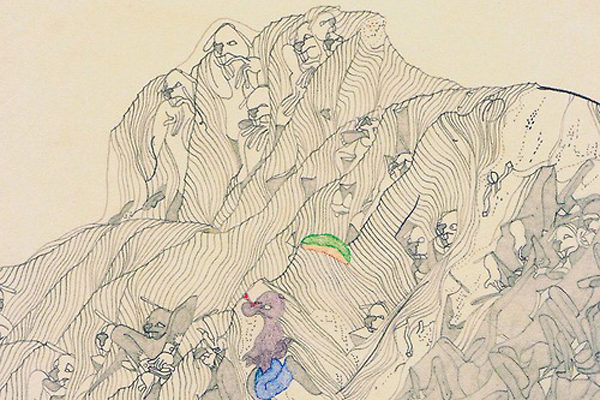
Mali Mali
Rating: 3.5/5 Despite a lack of diversity or adventure, Mali Mali has produced an impressive debut. Mali Mali is a North Shore trio fronted by singer-songwriter Ben Tolich. Drawing influence from artists such as The National, Sigur Rós and Bon Iver, Tolich writes acoustic, vaguely folky music with a knack for sentimentality and atmosphere. Gather ’round the Gooseclock, Mali Mali’s debut album, is by no means groundbreaking or innovative, and truthfully, it never really tries to be. Tolich aims for a more ambient, eclectic incarnation of the style of acoustic music made in New Zealand over the last couple of decades, and he succeeds. Gather ’round the Gooseclock opens with “Pages,” which, after a number of listens, is probably my favourite track. A stuttering lo-fi beat lays the foundations for a series of slow, melancholy piano chords, soon complimented by acoustic guitar, violin and Tolich’s pleasant but undistinguished voice. His lyrics don’t seem to say much in particular, simply painting a series of pretty panoramic pictures, all trees and birds and slow-moving rivers. The second track and lead single “Song For The Sun” veers a little close to that Don McGlashan kind of saccharine softness, but is saved by a genuinely beautiful falsetto chorus that is likely Gooseclock’s finest moment melodically. The differences between the following seven songs are slight, generally distinguished by an instrument (such as the pattering brushes of “All The Sky Will Congregate” or the gossamer synth that whispers in the background of “Bury”). The only real exception is “Magnetic North,” the complex beat of which wouldn’t sound out of place on Massive Attack’s first album Blue Lines. For the most part, Gooseclock is 35 minutes of predictable yet perfectly lovely acoustic music that, due to its sleepy nature and lack of drastic variation, ultimately becomes a pleasant blur. From this promising start, Mali Mali can either jettison the glints of experimentalism and evolve into yet another that-song-from-the-NZ-Post-ad band, or bring a few more exotic elements into their sound and become one of New Zealand’s finest contemporary bands. Let’s thumb them up on Facebook, do our best to head along to one of their shows, and hope for the latter.