
-
Columns

Editorial | Issue 10
IntroductionLast year, the Ministry of Social Development released its flagship White Paper for Vulnerable Children, containing a raft of recommendations for protecting New Zealand children who are at risk of poverty, neglect, and abuse. Now, the Ministry of Misopedia has been tasked with a parallel, yet equally important task. The White Paper for Invulnerable Children sets out the Ministry’s recommendations for protecting society from invulnerable children who are at risk of causing large-scale devastation. The recommendations are the result of four months of research and discussion, including a public submission period and dozens of hui held across the country. It is hoped that this policy document will provide a framework for moving towards a unified response to stemming the carnage of the past four months. The grim realityThe emergence of a gene-altering virus causing children to become invulnerable is a critical concern for our society and the future thereof. At present, it is estimated that 0.06% of children fall into the category of “dangerously invulnerable,” while up to 2% show risk factors such as extraordinary strength and high pain tolerance. Our generation has a moral duty to ensure that no invulnerable child is left behind and allowed to run rampant. At the same time, we have a duty to treat the invulnerable children humanely, given that they are not to blame for their superhuman powers. Invulnerable children can be defined as those who exhibit the following symptoms: 1. Imperviousness to physical harm; 2. Imperviousness to criticism, emotional abuse, and other standard parenting techniques; and 3. Up to 80 times the normal strength for a child of the same age. Major risk factorsGiven their eighty-fold strength, invulnerable children are capable of causing immense damage to structures and human internal organs with simple punches and kicks. The children’s lethality only increases when they obtain weaponry such as conker nuts or wet towels, which have caused hundreds of deaths from blunt force trauma and hypovolemic shock respectively. Many of the older (10- to 12-year old) invulnerable children have the intelligence and concentration span to systematically destroy crucial support beams in skyscrapers and other large buildings, in order to bring down the entire structure. Damage report for four months to dateAfter investigation, the Ministry of Misopedia found: – An estimated 600 invulnerable children; – 19,249 reported cases of children displaying one or more risk factors; – 935 people killed by invulnerable children; – 113 buildings destroyed; – $800m estimated economic damage. The Ministry’s recommendationsOption 1 (preferred): Humane concrete bunkersField tests have indicated that the children, while extremely strong, cannot break through reinforced concrete without the aid of a makeshift hammer or other similar object. Invulnerable children who used their abilities to the detriment of society could be lured into bunkers via a trail of boiled sweets, and sealed away for the greater good. Conditions in the bunkers would be humane, with Sega Dreamcast video game consoles provided, along with a plush Barney the Dinosaur toy for companionship. Option 2: Psychological programmingWhile the unfortunate parents of invulnerable children may have lost the ability to control their offspring using conventional techniques such as belittling and white lies, the government has the ability to unleash a veritable propaganda machine. Anecdotal evidence suggests that the “It’s Not Okay” TV ads are sufficiently moving to stop an abusive husband’s fist mid-arc; these ads could be expanded to condemn violence by invulnerable children. Option 3: Leave the free market to sort it outThe majority of the Ministry’s policy analysts are strongly opposed to this option, and would in fact recommend the expansion of the Ministry’s budget and personnel. However, a significant minority are of the belief that the invisible hand will give the invulnerable children a metaphorical spanking and put them to bed with no dessert.
-
News

We’re off to see the wizard
The legendary University of Otago Capping Show will kick off on Wednesday. This year sees the 119th iteration of the world’s second-longest-running (and longest continually running) Capping Revue. For all you freshers out there, allow Critic to educate you. The Capping Show, a yearly event, is made up of comedy sketches, dance, singing, and a themed storyline, and is likely to offend every single one of you. This year’s show revolves around The Wizard Of Oz, and is appropriately entitled The Wizard of Capping Show. Dorothy, a recent graduate from the University of Otago, is taken by a freak tornado to a magical land where there is always employment: Aus(tralia). With a group of friends, Dorothy ventures to the Emerald City in order to find her place in the world, encountering the Wicked Bitch of the West and her flying monkeys along the way. The past three months of writing, acting and dance preparation have been leading up to this moment. Like previous years, and in keeping with its reputation for hilarity, the show will involve numerous and varied sketches, vocal groups Sextet and Sexytet, and the babeing Selwyn boys’ ballet. Critic caught up with the show’s main character, Dorothy, for her insight to the show. “Well, it would definitely be the classical heroine story, like the Hobbit, but with Bilbo as a woman, who is super smart, and doesn’t have hairy feet. I totally wax.” The show is running for twelve nights, from Wednesday 8 May until Saturday 18 May. Described as “the kind of thing that would make Barney Stinson and Lewis Carroll seem as tame as St Margaret’s,” it will surely be one to remember. Critic will leave you with some last words of encouragement from Dorothy herself. “Everyone should come to Capping Show; it’s on campus at the College of Education. You can get your tickets from dashtickets.co.nz and the OUSA main office. … Bring your brother, and your father, maybe not the grandparents, I know they survived the war, but I feel some content may upset them. Who am I kidding? My grandma comes and laughs her head off … but I think she may be a racist?” All money raised from the Capping Show will be donated to Youthline Otago, following a Facebook poll held by the OUSA Executive.
-
News
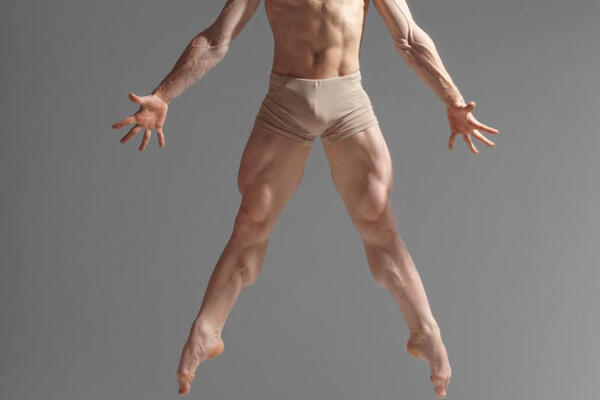
Selwyn Ballet to thrill audiences for 86th year running
Capping Show audiences are once again set for five minutes of top-quality entertainment at the end of the first half of the show, as the Selwyn Ballet makes its 86th appearance. The ballet’s distinctive humour comes from the visual juxtaposition between short-haired, rugby-loving young men and their frilly, feminine outfits. Some of the boys’ leotards are noticeably too small for them, providing a further layer of subtext to the performance. Critic spoke to a second-year Selwyn girl, Alicia, who said: “The Selwyn ballet is soooo good. Me and the girls went twice last year to see the boys dressed up in their leotards and pigtails. It’s so funny ‘cos Rory is a real blokey bloke, you would NEVER imagine him in a tutu, but there he is wearing one and dancing to Swan Lake!” The ballet is not without its naysayers. When the ballet first appeared in the 1928 Capping Show, audiences were scandalised by the cross-dressing Selwynites. Even in 2013, the ballet is one of the more controversial aspects of the Capping Show. Critic spoke to a member of the 2012 audience, who said: “I don’t like it. Guys in tutus? It’s so goddamn edgy. There’s a line, and they’ve crossed it.” Last year, Critic polled audiences after five Capping Show performances. On average, 17 of the 473 members of the crowd described the ballet as “enjoyable” – a total of 3.6%. When Selwyn residents’ responses were excluded from the results, zero audience members gave the ballet a positive review. One respondent wrote a comment in his own tears, describing the performance as “a six-minute in-joke.” That poll aside, audiences can sit back and enjoy the ballet, knowing that it will not be re-treading the same ground as in previous performances; this year, they are dancing to “The Nutcracker.”
-
News

Critic culls Cull
Dunedin Mayor Dave Cull has refused to partake in a debate with legal high lobbyist Grant Hall after calling for consumers to boycott businesses that sell synthetic cannabis products. While defending his position, Cull alluded to a fear that his opponent-to-be had been “imbibing a bit much,” in a blatant case of defamation. Critic speculates this is due to Cull’s own shady past with synthetic cannabis, which saw him mistake hallucinations earlier in the week for a Holy Moment in which God told him not to engage with the Dalai “Demon” Lama. This recent speaking impediment does not bode well for Cull in an election year, with his own culling looking increasingly likely. He has, however, attempted to bribe the minimal student vote by agreeing to finally recognise students as citizens of Dunedin, rather than visitors.
-
News
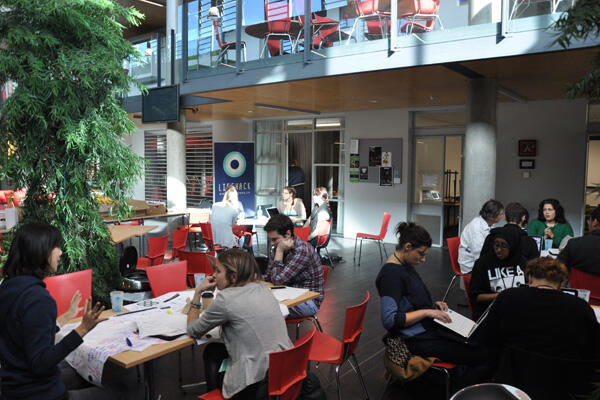
Apps to make sad kids ‘appy
A texting blob, a digital bin in which to put feelings, and a site full of videos to cheer kids up won the Dunedin round of the Lifehack competition last Sunday evening. Lifehack (not to be confused with the website explaining how to “Make Your Own Fresh Home Fragrances”) is an organisation that the Ministry of Social Development (MSD) has funded to improve New Zealand’s youth mental health record. In recent years, New Zealand’s male and female youth suicide rates have topped OECD league tables. Lifehack’s founder Jason Armishaw said that when the MSD wanted to use mental health funds for “another awareness-raising conference,” he argued for a “bottom-up” approach. Lifehack enlisted young people, including students, as designers of technological solutions to this serious social problem. After 48 hours of brainstorming, the six teams had each designed and in some cases produced a website or application to improve youth mental health. They then pitched their ideas to a high school student, a teacher, and a web developer at the Hunter Centre on Sunday evening. University of Otago Vice-Chancellor Harlene Hayne was pleased with how the students had spent their weekend, but urged them to test their designs. Speaking after the presentations had been given, she expressed her concern that many youth programmes were ineffective, but were still implemented because no one bothered to check if they worked. “Globlet,” an animated pet to which children could type messages about their issues, particularly impressed the judges and audience. “Upside,” a website hosting videos for youths to watch when they were feeling sad or lonely also received high marks, as did “Trash It,” a website and app where users write their feelings and then throw them away, or share them anonymously. These winning teams will each receive $2000 to produce a video for the national round of the competition in May, where the winners will have their designs put into production. Asked if at-risk youth were likely to have access to personal smartphones, local coordinator Thomas Mitchell said that while socioeconomic status was “a factor” in depression, tablet computers were “getting cheaper all the time.” The teams were also optimistic about the potential of their programmes to break down stigmas and improve youth mental health. Josie Adams, one of Globlet’s inventors, suggested that Globlet could be the next John Kirwan. “Or,” she countered, “the next Clippy.”
-
News
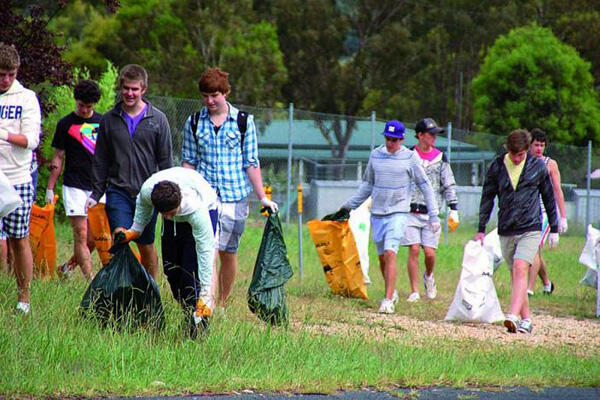
Colmar Brunton says 80% of students keen to work for free
Student Job Search is set to introduce a trial “unpaid” section from June this year, after widespread enthusiasm for volunteer work was expressed by students around the country. A Colmar Brunton poll commissioned by Studylink last year revealed that 80% of students interviewed expressed interest in such work. OUSA President Francisco Hernandez supports the move. “There is potential for any not-for-profit organisation to be involved,” he told Critic. Hernandez followed this up with a captivating example: “an environmental organisation could organise cleanups at the beach.” He also addressed concerns that the site may be swamped with unpaid work. “It will be in a different section, so paid work will be just as easy to find as it was before,” said Hernandez. Enthusiasm for volunteer work has extended beyond OUSA, with the Master of Knox College Dr Selwyn Yeoman expressing interest in bringing his residents closer to the Dunedin community as a whole. Dr Yeoman had organised numerous volunteer agencies to appear at Knox College on Sunday evenings to talk to Knox residents about volunteer work. “Perhaps the easiest way for students to volunteer would be at local schools,” said Yeoman. “The North East Valley community offer a range of volunteer opportunities in particular for Knox.” Yeoman is a self-described environmental advocate, and is excited for such conservation work mentioned by Hernandez. “I have no personal experience with the website, but it sounds like a good idea,” said Yeoman. The trial is part of Hernandez’s election promise to increase the availability of volunteer work for Otago students.
-
News

He’s Dunne it again
Associate Health Minister Peter Dunne has come out of leftfield and banned a further two substances, both found in the popular synthetic cannabis brand K2. The totally unprecedented move by Dunne will see a Temporary Class Drug Notice issued on BB-22 and 5F-AKB48, bringing the total number of substances banned under Temporary Notices to 35. Dunne confidently hailed it as “another blow to the industry and one of many we have delivered.” He hoped that the ban would help to force more of the K2 product, which was “clearly bad for people,” off shelves. Dunne further revelled in his continued success by promising that the “killer punch” will come in August when the Psychoactive Substances Bill becomes law. This latest triumph for Dunne saw him not only condemn the synthetic cannabis industry itself but also the wholesome outlets, such as Willowbank Dairy and Balmoral Hill Dairy, that sell the product, accusing them of having “no integrity whatsoever.” The ban will come into effect on Thursday 9 May, from which time it will become illegal to import, manufacture, sell or supply the substances, with penalties of up to eight years’ imprisonment. Although the substances are under a temporary ban, if found to be low-risk then they will not be illegal under the new legislation. Submissions on the Bill closed on 1 May, and the Health Select Committee is due to report back to Parliament in mid-June.
-
News
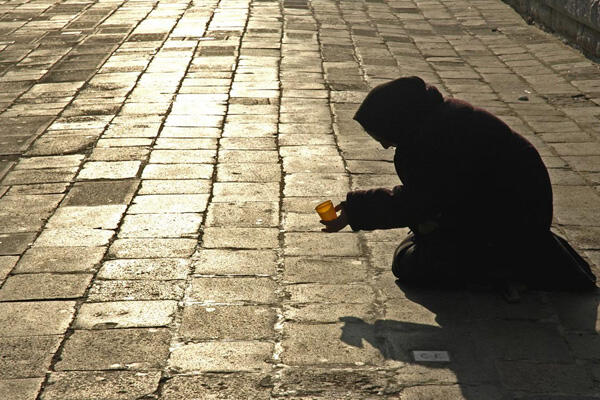
Shit students help students in the shit
Figures recently released by the University of Otago show that misconduct cost students $14,860 in 2012. This is up 40% from 2011, when total fines issued by the Proctor were $10,670 for the year. The increase has occurred despite a decrease in the number of misbehaving students from 136 in 2011 to 106 in 2012. The average fine has gone up to $140 per student in 2012, compared to $78 per student in 2011. 34 of the fines were for breaking glass and 30 were for setting fires, with two of the fire starters recieving fines of $250 and $300. Community service and charitable donations were also ordered by the Proctor when students breached the University’s Code of Conduct. In more serious cases, the Proctor referred students to the University’s Vice-Chancellor Harlene Hayne. From here, six students were excluded from the University during the second semester of 2012, four of whom for lighting fires. Unsurprisingly, O-Week proves to be the busiest time of the year. A third of all students seen by the Proctor during 2012 were seen in the first two weeks of the academic year. The steeper student fines issued by both the Proctor and the courts reflect the recent crackdown on student disorderly behaviour. One student was fined $900 by the courts earlier this semester for starting a fire, the highest fine yet. The money collected by the Proctor is put towards the University’s Student Hardship fund which assists students in times of “unforeseeable emergencies,” such as having to urgently fly home due to a family crisis. Unfortunately, the Proctor assured Critic that this fund is “not for if you just run out of money and can’t pay your rent, as that is foreseeable.” So don’t bother trying to get some alcohol funds when Studylink fails to process your loan in time for Re-O-Week.
-
News

Ex-Critic editor puts up pointless, doomed bill
Green Party list MP Holly Walker has introduced a Private Member’s Bill for the next ballot at Parliament, which aims to reinstate student allowances for postgraduate students. However, with little hope of majority support, the bill appears to be purely symbolic. In 2012, the government changed regulations to prevent postgraduate students from claiming the student allowance. The change came into effect in January this year, and Otago’s postgraduate enrolment rate has dropped by 8.5%. Tertiary Education Minister Steven Joyce claims that an improving economic situation is encouraging students into the job market, but Walker claims that the figure “is not in line with trends we’ve been seeing.” She says postgraduates have been priced out of study, especially those who had begun study last year and did not expect the changes to come into effect until later in the year. Walker argues that urgent action is needed to reinstate the allowances, and has drafted the Education (Student Allowances Availability) Amendment Bill, a Private Member’s Bill which she hopes will be drawn in a ballot to be held on 16 May. Asked if the bill had any hope of passing its first reading, Walker said “I don’t want to pre-judge,” but admitted that getting support from the same government that cut the allowance just last year was unlikely. Although John Banks was ruled out as a supporter of the bill, Walker thought that the Maori Party might be supportive because Maori students have also been affected by the allowance cut. Walker says she wants to use her bill as a political tool to force Parliament to debate the issue. Despite the fact that Walker has already questioned the government on the scheme to no avail, she says the bill is worthwhile because “it means the government actually has to vote against it.”
-
Columns

The Leek | Issue 10
Following the graduation ceremony at Dunedin’s Town Hall this weekend, the University of Otago has officially rescinded the degrees awarded to a number of graduands of Arts and Commerce. The graduation ceremony, while by no means intended to be a completely staid event throughout, has long excluded the age-old tradition wherein students fling their caps up into the air at the conclusion of the ceremony. Though it is widely acknowledged that graduation is an occasion for excitement and celebration, in the past students have been urged to go and open a bottle of wine or six rather than hurling their headwear around. During this particular ceremony, a total of 47 students chose to revolt against a policy that they viewed as “unfair” and “ridiculous,” throwing their caps into the air at what they felt was an appropriate time. Unfortunately for these well-meaning students, what started as a simple act of jubilant defiance has now ended in tears and heartbreak. Shortly after the outburst, University officials declared that the degrees these students had been handed just moments before would be made null and void, explaining that this type of behavior “just cannot be tolerated.” This was deemed to be the necessary course of action, given that these students “probably wouldn’t even notice” if they were instead expelled or suspended from Otago. When asked why they decided to go against orders and throw their caps anyway, one distraught young lady involved in the incident told Critic that “it looked like fun in the movies,” while a couple of lads had hoped that it would “catch on” with others around them if they did it first. The long-standing tradition of cap throwing at graduation can be traced back to 1912, when upperclassmen at the United States Naval Academy in Annapolis, Maryland, were being appointed as officers. With this new rank, the caps that they once wore as sailors would be replaced with officers’ hats, so they tossed their old caps into the air to show that they no longer needed them. Since that momentous day, this symbolic ritual has spread worldwide and been handed down from generation to generation. A spokesperson from the Graduation Office attempted to explain why the stifling ban exists. “When you see it in the movies, it’s all well and good. But they don’t show what comes after that moment. No one ever thinks about the aftermath.” Indeed, the mad scramble to get your hat back when it lands (or even taking an errant cap corner to the eye) is a much less enchanting scenario than the image of hundreds of tasseled black squares sailing into an azure sky, but seriously – fuck it.
-
News
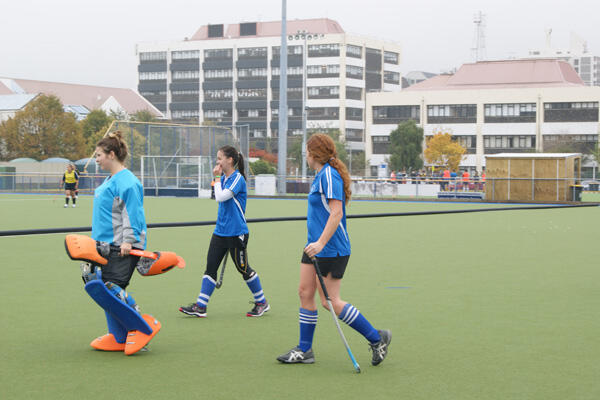
“Everyone a winner at Uni Games”
Team Otago reclaimed the University Shield at the Uni Games held in Dunedin two weeks ago. Otago boasted the largest team at the 2013 event with 142 competitors, and made their numerical advantage count by collecting the most points and taking out the shield. Prior to the games it had been intimated that Otago would be ineligible to win the shield, as the university is currently not a member of University Sport New Zealand. As it turns out, no other universities are members either, so Otago was able to claim it. The Uni Games Committee (led by OUSA) said they were very pleased with how everything ran during the event after surviving a couple of early hiccups. This year OUSA had dubbed the event the “Austerity Games” because of efforts to cut costs to competitors and cutbacks on expensive social functions. The Otago team performed well across the board, taking out the Badminton, Netball, and Touch, and performing strongly in the other events. Organiser Blake Luff told Critic that “the whole event in general went very well. There were some things that we could not plan for that tripped us up but they ended up being relatively easy fixes. We had reasonably good numbers from all the universities in New Zealand. The weather wasn’t really on our side at all throughout the week but there isn’t much that we could do to change that.” One of the more outstanding efforts by an Otago side came from the netball girls who had to face AUT three times before reaching the final. Each match was a tight contest before Team Otago eventually finished Auckland off in the final, prevailing by 13 goals. Otago teams also managed 2nd in Basketball, 3rd in Tennis, 3rd in Ultimate (Frisbee), and 3rd in Lawn Bowls. Hockey was the only sport in which Otago teams failed to make at least the semi-finals. Team Otago finished with 69 points overall, 18 ahead of Canterbury in second place who pipped Auckland by a point. Canterbury University picked up the team spirit award, Massey (Albany campus) won best small campus and SIT won a prize for not being a University. Otago basketballer Rens Smeerhoff was happy overall with how the games turned out: “Uni Games proved again to be a great way to compete between universities. The games were well run with the limited resources OUSA had available.” He was a little disappointed with the social side of things: “It was all right, but not much more than that. I can see why the organisation chose not to get involved in organising a social programme, we’re old enough to come up with our own plans. But even just some more promotion of a venue that had specials on for Uni Games that night would have helped with getting the crowd together at the end of the evening.” According to OUSA President Francisco Hernandez, “It was a fantastic event. Well done to Blake Luff, the GC Volunteers, Unisports and James Grubb for making it a successful event. Congratulations to all the people who took part, whether you took home gold, silver, bronze, or tin – everyone was a winner at Uni Games.” What a soundbite.
-
Features

My Summer in Corporate Purgatory
On Thursday, the big law firms will make offers of summer internships to students across the country. Callum Fredric gives the young clerks-to-be an unglamourised account of what a summer in a top-four law firm is actually like. Congratulations, aspiring summer clerks. On Thursday, you’ll find out which law firms are offering you the chance to spend summer in their prestigious marble-floored and copper-sculptured offices. Over the past month you’ve been primed by propaganda pieces in various law publications, and plied with free drinks and lavish canapés at meet-the-firm functions. The world of corporate law seems glamorous and action-packed. Work hard, party hard. Litigate by day, live large by night. But insincerity is infused into each and every word of the average “My Summer at McTavish Sweeney” puff piece. The coerced authors dare not write a single negative word in their fawning advertorials, lest the hellfire of the HR department descendeth upon them. You’d be more likely to find a critical review of a lucrative holiday destination in Air New Zealand’s Kia Ora magazine. At the end of my clerkship, I was asked to write a glowing testimonial, and dutifully unleashed my inner sellout. A sample: “I enjoyed my time in the Banking & Finance team. My work included finding cases to support a client’s position, drafting documents to be filed in court or served on a defendant, and sitting in on several High Court hearings.” Seems legit. As well as the obligatory “I thought it was just going to be photocopying, but I ended up suing Bill Gates in my first week!” drivel, you may also have heard dire warnings from friends who clerked last summer and hated the ultra-competitive, hierarchical nature of the corporate law world. Fair enough, but my experience was neither a Road to Damascus District Court nor actively unpleasant – just surreal and soul-crushingly boring. What follows is a real account of summer clerking, without embellishment either positive or negative. Paving the Road to PurgatoryI studied law to avoid becoming yet another English/Politics/History grad with no career prospects – I figured law would be a decent career if nothing else took my fancy during my time at uni. Shortly after the start of third year, I decided I wanted to work at a top law firm. I wanted the prestige, the security, the respect. Mostly, I wanted the money. I wanted to travel in luxury, drink only the finest craft beer, and hire expensive specialists to indulge fleeting impulses to learn arts or skills. Several people tried to warn me off with variants on the term “YOLO,” telling me there’s more to life than money, and imploring me not to waste my talent by selling it mercenary-style to the highest bidder. I listened, but forged ahead with my plan. Unlike a lot of law students, I was under no illusions about a corporate law job being fun, rewarding or fulfilling – it was a job to get cash money. It’s not Boston Legal, it’s not Suits, and the “intellectual side” of the law does not feature heavily in proof-reading contracts for misplaced apostrophes or getting folders spiral-bound for the company archives. I was well aware that the culture would be hierarchical and distinctly corporate, and it didn’t bother me. Nor did I delude myself that I would “just do two to three years to get some experience, then go work at the UN or Save the Children.” That is not a thing. No one does that. Anyone who claims otherwise, even if they stoke the fires of their unrealistic daydream with occasional attendance at “Law For Change” lectures, is delusional. I was quite happy to spend my career bankrupting widows, helping multinationals avoid tax, and finding loopholes allowing nuclear waste to be dumped in the ocean – or whatever corporate law firms do for their money. Overall, I felt infinitely more prepared than my less cynical colleagues for the underwhelming reality of life as a summer clerk. With such bluntly “managed” expectations, I surely would not be in line for crushing disappointment or soul-searching. I would simply do the job, get paid, and enjoy my downtime. Summer in purgatoryMy summer in corporate purgatory began in mid-November, 2012. On our third day, we were informed that, in an unprecedented clerk-culling, anywhere between 5-50% of us would not be offered grad jobs at the end of the summer. This put an immediate damper on the carefree summer experience. In the previous summer, the only clerks who didn’t get offers were legendary figures like the Wagyu Steak Guy, as well as the Date Rape Duo, two young men who claimed they had been roofied and date-raped as an excuse for being late for a Friday morning meeting, and Scuba Gear Guy, who spent his $1000 clothing allowance on scuba gear. The five weeks of my clerkship before Christmas were occasionally tolerable. My team was genuinely pleasant. Learning about the sequence of documents required to bankrupt useless debtors was moderately interesting, and, as described in a rare truthful sentence in my summer clerk writeup, “After helping with a day of urgent work on an application to the High Court, it was satisfying to get forwarded a copy of the judgment in our favour a few days later.” It totes was. Sadly, these moments were to be few and far between. During our first week, we were taught the ancient art of “court-copying” – photocopying judgments from law reports in a way that conformed to the standards of anal-retentive judges. If, due to the vagaries of the photocopier settings or the formatting of a particular publication, some stray black smudges were to appear, the summer clerk’s job was to cover these smudges with Wite-Out and photocopy the case once more. The fact that this task, which comprised a not insignificant portion of the summer clerk experience, could have been performed by a Western hoolock gibbon with rudimentary training put the relevance of our law degrees into sharp perspective. Interaction with the exalted Partners of the firm was practically non-existent, despite previous summer clerks’ advertorials swearing everyone sat down together every morning with a freshly-toasted bagel to chat and discuss career goals. Of the three partners in my first team, only one would have been able to name the summer clerks on his floor. This is not a criticism of the partners, who are busy, but merely a reality check. An unlikely highlight was the thrice-daily stroll to the Auckland High Court to hand-deliver an endless stream of inconsequential documents along with cheques for negligible filing fees. Although it was swelteringly hot on a summer’s day in a suit, I enjoyed these brief escapes, and took the opportunity to play relaxing music on my iPhone before returning to the drudgery of the office. My summer reached its nadir when I was sent on a journey to the in-house printing company to downgrade a single capital R to its lower-case incarnation. As the lift descended, I pondered my life choices. A summer sans sincerityThe best thing about the five weeks before Christmas was that the summer clerks were invited to the various end-of-year parties occurring at the time. The parties were genuinely fun, and we were provided with hundreds of dollars’ worth of free food and alcohol each time. But after a requisite number of drinks, the carefully constructed façade of happiness maintained by senior employees would come crashing down, unleashing a torrential outpouring of their latent despair. One guy wanted to be a musician, one a journalist, and another a social justice crusader. Many of them were deeply, desperately unhappy – longing for a more fulfilling career, yet locked into a never-ending cycle of incentives to stay at the firm. “Just until I finish my Profs exams and get admitted to the bar” transitioned into “two years is great for the CV,” which in turn became “three years and I become an Associate, then I can do a placement with a London law firm.” Few of them will ever snap out of the schedule of reinforcement and leave. The firm had an overwhelming atmosphere of complete insincerity and forced, relentless positivity. You’ve read the “summer clerk experiences” published in the unctuous pseudo-magazines run by law students’ associations. The authors have little choice but to toe the line and say what they’re meant to say, like a hostage converting to Islam with a gun to his head. If not, they’re fired. Now imagine that for every single conversation at the firm. An offhand remark professing only 98% certainty that law was your true calling would be swiftly picked up on by the ever-vigilant HR department. If anyone from within the firm asked you how things were going, you had to summon up the energy for a smiling monologue about your passion for whatever menial task you were currently completing. Insincerity is actually quite exhausting when done multiple times per day, but given that your performance and attitude were assessed by your whole team, you couldn’t ever afford to dial it back with a B-side spiel, even when talking to a recent graduate. It was a truly surreal environment – with each clerk facing five or so polite queries per day, thousands of standard-form positivity proclamations rang out through the firm’s corridors throughout the summer: “Oh yeah, it’s great. Everyone is so welcoming, and the work is really stimulating. And I’ve only been in the team two weeks, but I can already tell Paul’s a real character, haha.” The insincerity wasn’t limited to interactions between clerks and permanent staff. Clerk-to-clerk conversations should have provided a much-needed hit of conversation that wasn’t processed through the rosy filter of forced exuberance. But whenever five or more clerks were gathered in one place, the conversation inevitably degenerated into a vapid faux-fest. Clerks from different teams competed to feign familiarity with their partners, talking at length about their superiors’ minor personality quirks (like running on the treadmill every lunchtime while reading a magazine), and why their team was totes wacky because they had a competition every morning to see who could make the loudest animal noise. Such antics. A summer of soul-selling and spin“My time with the Commercial team involved a lot of fine-tuning of contracts, writing briefs on companies who were potential clients of the firm, and summarising new legislation to keep the team up to date. I also drafted letters to clients providing them with advice on specific topics such as employee share schemes and their obligations under financial service providers legislation.” - Callum Fredric, Summer Clerk 2012/13.
-
Features
The Great Annual Critic Pub Crawl 2013
At last! It is time – the Great Annual Critic Pub Crawl has arrived. Last weekend, the Critic staff set off on a magical journey to ruthlessly assess the bars and watering holes of Dunedin, while welcoming Critic’s four news interns of 2013 – Josie Cochrane, Jamie Breen, Jack Montgomerie, and Thomas Raethel. Initially, the editorial staff dreamed of themed reports from the interns: the Brine Report with Jamie Breen (in which, Homer Simpson-like, Breen spends the night imbibing brine), the Grapes of Raeth with Thomas Raethel (in which Dunedin’s nightspots cower before the wrath of this Knox fresher’s LAWS101-honed poison pen), Jack and Coke with Jack Montgomerie (in which Jack drinks only Jack and Coke), and Joed Out with Josie Cochrane (in which Josie passes out in each bathroom to assess the amenities). Sadly, all these lofty conceptual reports save the Grapes of Raeth were abandoned in the haze of intoxication. Happily, Critic has asked around, and it turns out the Editor’s uncle keeps a well-stocked brine cabinet. Be afraid, Breen. Be very afraid. *** As the interns, it’s our job to write up the pub review for 2013. We agonised over whether to A) write it on the night of the crawl at 4am, or B) leave it until the next day and get some nap time. Tiredness set in and we went with option B, so please bear with us for the next few pages as we hungoverly tell the tale of Critic’s piss-up. The Critic crew started off the night with pre-drinks at the Critic office. 12 litres of Emerson’s and three litres of wine later, we were all on pretty good form and ready to proceed to the first destination – the Captain Cook Tavern. Captain CookRating: 2/5
-
Features

A Game of Faculties
The Seven Kingdoms of Dunderos and the Free Cities of Taerios are lands of sadistic mediocrity. When you play the Game of Faculties, you neither win nor die: in the end, there is only the swift abandonment of convenient tutorial-based friendships and dismal remuneration. School of Business Qarth School of BusinessThe Qarth School of Business claims that great riches lie within the massive locked vault beneath the Commerce Building. In fact, the vault is empty save for the death rattles of 10,000 creatively fulfilling, morally sound careers. Qarth is home to the nefarious Warlocks of Finance, whose lips are turned blue from a potion called “the shade of the evening,” and the Sorrowful Accountants, a guild of fiscal assassins named so for whispering “I am so sorry” before bankrupting their victims. The Qartheen Women of Marketing wear gowns that leave one breast bare. Geography, Geology, Tourism The Red WasteThe Red Waste is a great desert-like area. Little is known about it, since its alumni almost never later appear as functional members of tax-paying society. The only known settlements in the region – Geography, Geology, and Tourism – are in ruins. Design The ruins of ValyriaMany summers ago, before the Doom, the great Design City of Valyria ruled over all of Dunderos. Now, the ruins of the City are described as “demon-haunted.” Even the most intrepid souls dare not venture too near. Surveying House Targaryen of SurveyingThis once-great House was forced to flee over the Narrow Sea of Leith after the Mad Dean was brutally slain by Nigel “Kingslayer” Jamieson. Now banished to the Free Cities of Cumberland Street, its two surviving students suggest that it may yet rise again. Med House Stark of MedicineHonourable but dour, the Starks of Medicine are wont to frequently opine the bleak words of their House: “Cancer Is Coming.” They say it grows so cold on Cumberland Street in winter that a man’s laughter freezes in his throat and chokes him to death – uncertainty about whether their fellow students can perform basic CPR is perhaps why the Starks of Medicine have so little humour. Pols House Baratheon of Politics House Baratheon of Politics believes itself to be a great House of both high enrolment rates and intellectual prestige. In truth, almost all “Baratheons” are Lannisters of Law donning their “Liberal Arts Student” hats, which inevitably fail to hide the telltale blondness of their hair. South Dunedinites and Mosgielites WildlingsLed by Murray Kirkness, ODT editor and King-Beyond-the-Wall, the brutal and anarchic Free Folk are widely feared and reviled by the civilised denizens of Dunderos, who refer to them as “wildlings.” Law House Lannister of LawThe law firm recruitment wineries and cheeseries located on its lands make House Lannister of Law the richest House in Dunderos, though contrary to popular opinion, Lannisters do not always pay their debts (just cast an eye over the House’s budget for the last couple of years). The House is highly incestuous – not only are the SOULS executive selected on the basis of their success at wooing their older siblings at Minter Ellison Rudd Watts cocktail evenings, but all intra-House conversations ultimately serve as mutual masturbation. College of Education House Greyjoy of EducationHouse Greyjoy of Education rules over the cold, damp, and windy Iron Islands of Union Street East. It commands a universal lack of respect. The words of the House are “We Do Not Sow.” Phys Ed HODORHODOR.
-
Features

The Boston Marathon
University of Otago student Carys Goodwin is on exchange at Boston College. In true Otago style, she was engaging in some mid-afternoon drinking when she heard about the bombings just five miles away. She gives a first-hand account of the aftermath. It was my mum who first informed me about the Boston bombings. At first her vague but frantic text had me confused, as I wasn’t sure my day-drinking habits warranted quite that much concern; but after loudly asking the people around me what had happened, it came to light that “oh there was an explosion at the finish line.” The flippancy with which it was said meant that most continued knocking back their afternoon PBRs, and after a few minutes there was an intense frisbee game being played outside to the croaky wailing of Adele. Not being one for extreme sports, I took to my iPhone and began to browse news headlines. For lack of a non-clichéd expression, my stomach dropped. At that stage, the New York Post was falsely reporting that 12 people had died, and amid a flurry of Facebook messages from people checking I was still alive I expressed to my friends something along the lines of “shit guys, this is real serious.” We halted. The music cut off, as the owner of the phone struggled to get through to his dad in Australia; a girl nearby burst into tears; and I texted everyone I knew with friends or family nearby. It’s often pointed out that people of our generation can be with a group of people and still be glued to their phones – but in a crisis, it is invaluable to be able to contact everyone instantly. I can’t imagine the fear of those who couldn’t get through to their loved ones due to network difficulties. The party died fairly quickly, and I joined one of the last groups to wander through the eerily empty school before it was put on lockdown. Shivering from a combination of fear, sudden sobriety, and cold, we took refuge in a hall of residence and crammed too many people around the TV. It was the first footage I’d seen, and it was shocking; I had walked past the Walgreens from one of the most widely-shared videos just two days prior, happily examining a free hummus sample and thinking about where I could buy a new pair of jandals for the summer. That sort of familiarity is not something I’ve experienced in a crisis, and it’s not comfortable. We couldn’t watch the news for long, as I think we all felt an urge to be safe in our flats, so we left, taking the least crowded way home. Although I knew my flatmates were safe, it was still a relief to see them in their normal places, all with that dizzying not-quite-drunk-but-can’t-be-sober demeanour as we discussed the events. Obama came on at 6:10pm, and while the authorities clearly had no idea what had happened, I liked knowing that the White House was thinking about us. The evening was spent reading the news, Facebook, Twitter, and any form of social media that would provide something fresh for me to absorb. It wasn’t the end to the day I’d expected, but my flatmates quietly decided that even though it ended in tragedy, “this was the best Marathon Monday ever.” Through wide eyes and constant checking of our closed road, we gave each other a run-down of the day’s antics, having been split up after our third party. Boston College, you see, sits on the twenty-first mile, and Marathon Monday is the biggest drinking event of the BC year. Taking place on Patriot Day, it’s a chance to excessively celebrate Freedom! with 9am shots of the world’s worst vodka in as many pieces of fluoro Nike apparel as you can acquire. It has the same anticipation as Hyde Street, and the same convergence of thousands of drunk students on one street. Imagine a Hydelanders after-party, then imagine a bomb going off on George. It’s the closest comparison I can make, and I was lucky not to know anyone injured or affected strongly by the blasts. But there were rumours and stories, warnings and conspiracies, messages and emails. I knew people who knew people, and it was enough for the atmosphere to be tense and sombre. A few comments in particular stuck with me. There was the classmate of mine, who was scared for a friend she couldn’t get hold of, and told me, “it was really not real. I threw up a couple of times before we found out he was safe. Everything was like a movie. When he finally called, it was ‘I love you I love you I love you,’ but it wasn’t even relief, it was more like everything was so surreal still that it didn’t register until I saw him a couple of days later.” Then there was my flatmate, who when an aerial-view map appeared on the TV, pointed to a building and said mildly, “my mom works there.” And the Irish exchange student who ran the marathon and, if it weren’t for an old knee injury, would have been in the immediate vicinity. This is the second time I’ve really realised the gravity of living in the strongest, most politically targeted country in the world; the first was when North Korea had a hissy fit. What it feels like is an almost ineffable sense of doom. It’s not quite strong enough to be fear, but more jarring than discomfort. It is not a feeling I’ve ever had back home. The response has been interesting. Of course, this being the USA, there is the inevitable horror of racist retaliation. The story of the Saudi student tackled to the ground in the immediate aftermath of the bomb; the worrying email sent to all BC exchange students expressing support for those feeling targeted. It was a relief to find that the suspects weren’t Middle Eastern extremists, because the backlash to the wider community would have been disgusting. However, there was an incredible amount of good to outweigh the bad. Boston College itself had a bit of limelight, as its church, St Ignatius, opened its arms in true Jesuit fashion to the runners diverted from the race. There was also a Facebook event planned called “The Last Five Miles,” during which people would walk from BC to the finish line. Unfortunately it was unable to take place, as there was concern the city would not be able to handle the 12,000 people who clicked attending. One initiative I particularly liked was in response to the Muslim backlash – a banner hanging in the quad saying “Don’t meet hurt with hate – love Islam.” BC has undoubtedly been a tower of strength, balancing appropriate urgency with an outpouring of support for those involved; a real sense of community that represents the student solidarity I know and love at Otago. The Watertown shootout, and the events that transpired, were almost a relief. To be fair, I was busy making my way to Coachella Music Festival in California (shameless boasting here), but I was glued to the Internet waiting for updates as we set up our tents. The sense of finality with the capture, and the lifting of another BC lockdown, left students with such a reprieve from fear that there was a massive on-campus party. It’s those celebrations, and the huge number of Instagram #wearebc #bostonstrong pictures, that are what I wish I could end this story with. But I can’t, because the reports haven’t stopped. Despite the realisation that it’s often attention that leads psychopaths to go on killing sprees, the media is now turning its focus to the men behind the crimes. I’ve learnt more about them than I would ever wish to, heard more speculation about their motives and drive than could possibly be necessary. The media has been flooded with anecdotes and pictures, with John Kerry speaking about the younger brother’s trip to Russia and a friend claiming “he was such a good person” on a Wednesday night-time news show. It’s over, but I wish it would be let go. Remember Martin and the other dead; remember Carlos and the double amputee Jeff. Share the anecdotes and recoveries and experiences, and share the pictures of people as they start to smile again. But don’t remember the killers, and don’t share their stories. They don’t deserve it.
-
News
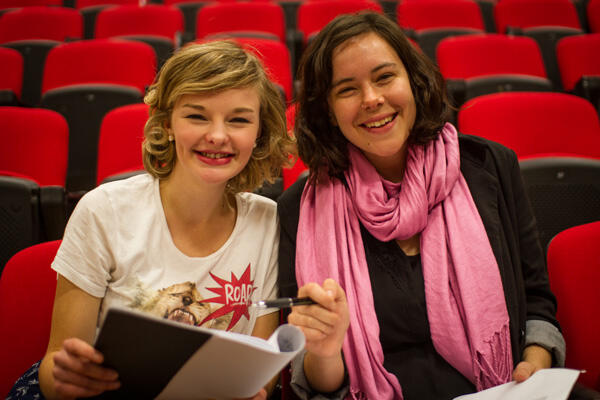
The Wicked Witches of Union Street East
Abby Howells (Left) and Caitlin McNaughton (Right) are directing 2013’s Wizard of Oz-themed Capping Show, which kicks off this Wednesday. Bella Macdonald interviewed them during one of their nightly rehearsals. What do you see as the purpose of the Capping Show? Caitlin: I guess it was originally to celebrate the graduation; it kind of still is, but it has moved away from that a bit. It brings a whole bunch of students together – all the students that are in the cast, not just theatre students. How often do you rehearse? Abby: It starts off about three to four times a week and then it builds up to every single night. Caitlin: Three hours a night for rehearsal, and the weekend probably 20 hours-ish. What are some of the minority groups that the Capping Show will be offending this year? Abby: The gays. Actually we are quite pro-gay. Jetstar, Margaret Thatcher. We have an Indian member of cast this year… Caitlin: He has been typecast in a lot of roles. We never go out to offend, it just happens. And Suzanne Paul. How did you get the role as directors? Caitlin: I was in the Capping Show from 2010, and co-directed it last year and I sort of just volunteered to do it again because I wanted to do it with Abby. Abby: I started in 2011 and I was assistant director this year and moved up to director this year. It’s been really great working with Caitlin. We’re possibly the first two female co-directors. What motivates you to keep being involved with the show? Caitlin: You just get like 22 new friends each year. And everybody that is involved is without fail a fantastic group of people to spend every night with. It’s a pretty stressful time but it always pays off the moment you get the first laugh on opening night, it’s just like the best feeling in the world. Abby: It’s where I’ve met all my friends. I’ve never really fitted in anywhere else, and I do this show with a bunch of weirdos who like Monty Python and The Office and stuff like me. So that’s why I keep coming. What can viewers expect from this year’s show? Caitlin: We were astounded by the quality of sketches this year, so they can prepare themselves for a slightly more cleverer show than normal. There are really a lot of great character sketches and people doing funny things on stage. Abby: Caitlin and I don’t like the pun groan sketches so you’ll find very few of them this year. Caitlin: Abby’s and my style of comedy differ in some ways from the typical Capping Show. We like to think that we are kind of being kinder to the audience by assuming they are smarter than people have assumed them to be in the past. How many people are involved in the show? Abby: Including everything, the ballet, Sextet, I think it’s 120. Caitlin: Our part of the show is 16 actors and six writers so that’s sort of who we are in charge of. And then there’s the crew like video, lighting … How many people auditioned? What was the talent like in the auditions? Abby: We had about 80 audition and we had to choose 16. Caitlin: The auditions are really hard, they have to do a lot of improvising by themselves, it is really tough. How do you see the future of the Capping Show? Abby: I think every year it gets more and more professional in terms of standard of acting and writing and the people they have on board, like our props guy this year is an actual artist. The guy who is doing sound has written a manual on doing sound. Hopefully it’s going to get better and better. In the old days it used to sell out the Regent. Would be cool if it just expanded even more. Caitlin: As well as getting more professional it’s getting more and more clever each year in terms of writing, there’s been more of a focus on how to write sketches so the quality of sketches has been improving. So hopefully that will continue to improve in future years.
-
Columns

For Fuck's Sake | Issue 10
Let me tell you a story. Once upon a time at 4am, I was in McDonald’s for some late-night chicken nugs and I saw a girl pee her pants. I literally had lingering eye contact with this chick as urine ran down her leg, and then I helpfully pointed to the puddle at her feet and told her that she had pissed herself, in case she hadn’t noticed. And then I got my nuggets and walked home. Don’t get me wrong: I completely believe in a woman’s right to get totally Lindsay Lohan’ed and make bad decisions. But we all need to accept (myself included) that sometimes when girls get drunk, they become particularly annoying (think high-pitched shrieks and uncanny amounts of face-planting). We need to start making changes to ensure we don’t end our nights all alone in a puddle of pee. Our first step towards dignity should be to ditch drinks of a questionable colour. We can’t keep drinking Raspberry Cruisers like they’re Diet Coke on a school night – everyone knows that respectable pissheads don’t need sugar to mask the taste of alcohol. Wine and spirits are much more respectable and classy (class not guaranteed). Gin and tonics are a good gateway drink for those of you who need a couple of weekends to wean yourself off Archers. That being said, alcohol is a depressant so please stay away from it if you’re feeling sad. Actually, just stay away full stop. Do not come out. When people are trying to party they don’t want to have to deal with some bitch sobbing in the corner. No one cares about your emotional crisis, they only care about singing along to R Kelly’s “Remix to Ignition.” If there’s a chance of getting weepy on the piss, do it like Bridget Jones: at home, in flannel pajamas, with Celine Dion and a bottle of vodka. As much as I shudder to see girls with their boobses hanging out, I don’t think it’s bad to bring out our inner slut every now and then. That’s fine. But please stop grinding on whatever you feel behind you on the dance floor. Creepy middle-aged men, and a million other things, are why this is a bad idea. But also, chances are that it’s not a dude at all, just some poor girl who just wants to make it to the bar without getting used as a stripper pole. We are at the stage in life where it’s pretty standard to end the evening hugging a toilet bowl. But the McDonald’s floor is not an acceptable substitute. Stay fabulous, bitches.
-
Columns

Science, Bitches! | Issue 10
Oh man, I just walked into a spider-web! Gross! Or fashion? While some runway fashion may look like the model just escaped from Shelob’s giant spider web, scientists are taking that idea a bit further. I’m sure you’ve heard that spider silk is way stronger than steel – the only reason you can break a spider’s web with ease is because the strands are so fine. It’s also more elastic than rubber, and can stay that strong and stretchy below -40°C! This shit is pretty much magic. And if you get silk from the Golden Orb Spider it is, in fact, golden! Seriously, Google “Spider Silk Cape.” Goddamn majestic. Also, the silk is biodegradable, has antibacterial properties and your immune system doesn’t recognise it. See where I’m going with this? It could be invaluable in medical applications, as well as making better-than-kevlar vests and glorious eco-friendly capes. And violin strings, because why not. The problem is that it’s difficult to get a lot of spider silk out. Farming spiders, as it turns out, is not very successful: they eat each other, and don’t make much silk anyway. If only we had Spider-man. Scientists are working on ways to make spider silk without the spiders, but it’s a complicated process. The spider makes a coiled mess of protein in the spinning gland, then passes it through a series of specific chemical conditions that make it into the silk we know and love. The sticky stuff is just a coating added as it comes out. So far we have been able to make the basic unprocessed protein, but not a whole lot further. As soon as scientists figure out how to do that, spider silk will be everywhere. And spiders will finally get the recognition and adoration they deserve! Well, recognition at least … Not weird enough for you? How about hagfish slime? Yeah, that’s as gross as it sounds. Hagfish are really ancient creatures that kind of look like eels. If something grabs onto them they release a shitload of snot-like slime then squirm out of its grasp. Turns out, this slime is made from a protein that forms threads – that can be woven into fabric! The protein is smaller and easier to work with than the stuff made by spiders, so bacteria can make it in huge quantities. This potential fabric is not only way more eco-friendly than current synthetic materials (made from petroleum), it’s stronger too. So fewer ladders in one’s tights, and Captain Planet will be happy too! I don’t know about you, but I can’t wait to chuck on a hagfish-slime dress and spider-silk coat every morning! That’s science, bitches.
-
Columns

Daily Grind | Issue 10
Rating: 4.5/5 Coffee Cups Smack-bang in the middle of George Street lies Modaks Espresso, a Dunedin student institution. This alty two-roomed café has a seriously nostalgic feel with crochet blankets, retro kitsch decor, and vintage Atari arcade games. Modaks is a little slice of Wellington cool in our midst. Being a fan of Mexican/southern-style food, it is one of G’s favourite places to grab a bite. M is an enormous fan of Modaks’ long blacks. These lords of the coffee-realm serve their LBs in awesome pastel mugs with a slice of lemon peel inside. The diffusion of lemon oil into the coffee makes for one of the most well-distinguished drinks in the Dunedin coffee scene. Modaks is always pretty busy and is the perfect place to take your fussy eating friends as they have a wide range of vegan, gluten and dairy-free options. For G, eating dairy is like downing a packet of Mentos and a bottle of diet coke (YouTube it), so being able to have one of their dairy-free smoothies was glorious. These dietary options are well-advertised with their sharply redesigned menu. The new menu has some pretty “funky” typography that soothes the eye, although M and G couldn’t help but notice that their stag head logo kind of looks like an upside-down veiny scrotum? The smoothies and milkshakes served in mason jars are in hot demand around town, with flavours including snifter and peanut butter. Modaks is also famous for their Cajun spiced fries, perfect to peck on while you discuss the weekend’s goss over a hungover brunch with the flatties. When M and G recently visited, G was so hung over she was tempted to butt chug her short macchiato in order to get the caffeine in her system ASAP. The chorizo and Modaks beans were pretty effing good and did wonders curing her hangover. Modaks is pretty good for slowing down the pace of your afternoon with a coffee and a chat. Their cabinet food is top notch with some amaze brownies and pinwheels, along with their vegetarian pizza slices on tap. The only negative point M and G really have to say about old Modaks is that when waiting in line one of the staff members gave their flatmate L a two-handed push out of the way. At least the whole situation was more alarmingly funny than it was offensive. Everything about Modaks is a little edgy, a little alty, and a little sloppy. These things combined make it so quintessentially Modaks. The décor and the artwork all pave a trip down nostalgia lane. M and G have always held this place in high esteem and it almost tops their rating scales at 4.5 coffee cups. Make sure to try their godly MF Doom! Brownie with a zesty LB next time you’re passing by.
-
Columns

Lez Feminables | Issue 10
I wish to attract all the hotties. I need to be an Alpha Male. How do I achieve this status? I think that gorillas have alphas, or “silverbacks,” so let’s use our ape brethren as an example. In order to become a silverback, one must be old – old enough to have grey back hair. They make important decisions, and beat up young upstart wanna-be alphas. In human society, “alpha males” are often referred to colloquially as “douchebags.” Those who aren’t arrogant usually have great wealth and/or power. You don’t have to be like that to attract the hotties, though! You could be your funny, charming self (unless you aren’t funny or charming, but I think there are self-help books for this), or you could try to be more confident. Try intimidating those around you using stature, sarcasm, or wisdom. In conclusion: to be an alpha male you should be old, mean, and rich. A figure you could consider emulating is Mel Gibson. Do you really want to be an alpha? How do I deal with all the material shit left behind after a breakup? Is it weird to keep it? Oprah tells us that you should be comfortable in your home, and therefore rid it of everything containing bad memories. Although I like to retain some bad memories in order to fuel my fire, I recognise the logic in this. I suggest you keep any of the material goods you’re able to mentally disconnect from the relationship, and throw away/donate the rest. A friend of mine recently cleaned out his room, and although a massive teddy bear he’d been given had bad memories associated with it, it was a really good teddy bear. We decided to cut off its arm and use it for storage. You see, when you break up with someone part of moving on is being willing to create new memories; you can do this with possessions, too! How do I save face after being rejected? You have three options, as I see it: a) run, just run; b) scoff and “omg did you think I was being srs lolol”; or c) nod, smile, be understanding and un-hateable. I have to be honest, I suspect that there isn’t “someone out there for everyone.” However, this doesn’t mean you shouldn’t have a look! “Getting to know” a wide range of people (staysafekids) can help you figure out what you want from your relationships, even non-romantic ones. Learn what you find attractive in yourself, create happy memories – date yourself – and the hottays will flock to you, you confident Alpha Human, you!
-
Columns

The More Things Change | Issue 10
This week, people everywhere disagree with each other. Results vary. 9 May, 1671: In an act of defiance against the English government, a guy called Thomas Blood dressed up as a clergyman and tried to steal the Crown Jewels. He’d already gotten into trouble for attempting to kidnap and assassinate a couple of people, but this didn’t deter him; he spent some time ingratiating himself with the jewel-keeper’s family and showed up one night to carry out his daring and nefarious plot. He and his accomplices subdued the jewel-keeper and proceeded with the theft: blood hammered a crown flat and hid it under his coat; one accomplice filed a sceptre in two and put it in his bag; and another put a jewelled orb down his trousers. They were caught soon after, but not before a few stones had become loose or missing, which might have been enough for someone of lesser ambition. Bizarrely, they were eventually pardoned by the King, and no one knows why. 6 May, 1889: The Eiffel Tower was officially opened to the public. It was originally built as the entrance arch for the 1889 World’s Fair, to the displeasure of lots of people who thought it was ugly. There was one important figure in the arts establishment who allegedly ate his lunch at the bottom of the Tower every day because that was the only place in Paris from which he could not see it. (The cliché that you can see it from almost any window in Paris, however, is not true given the size of the buildings these days.) The Tower was supposed to be dismantled in 1909, but proved to be useful for communications during World War I: there were transmitters fitted to it that jammed German signals and helped prevent the intended invasion, which is presumably one of the greater French military successes. 10 May, 1893: In what actually became a reasonably memorable case, the US Supreme Court ruled that the tomato was a vegetable. The whole thing started because there were customs regulations requiring that tax be paid on imported vegetables, but not fruit, so naturally some guys working at a port tried to claim back the duties they’d paid on tomatoes because they’re technically fruit. The Court essentially told them to lighten up, but only after lengthy arguments involving dictionaries, which one assumes were not unlike half of LAWS101 tutorials. It was eventually decided that the ordinary meaning should be used rather than the technical botanical one, so as not to confuse the general public who all thought tomatoes were vegetables anyway. There’s no word on what botanists thought about it.
-
Columns

Hi Dr. Nick | Issue 10
Hi everybody! Being an old man with a prostate the size of a beachball, I find it difficult to celebrate birthdays. Once you pass 21 they’re just reminders of the inevitable march towards death upon which we are quickly forgotten, relegated to fleeting thoughts scattered through the years. But hey, its pretty neat that this is the tenth Dr Nick column! Let’s be honest though, of the 4,500 words of health advice offered, roughly 0% will have filtered through because you’re fucking shit at taking health advice. This isn’t a “haha some readers are bad at this” sort of “you,” I mean you are shit. Dick. To be fair, so am I. So is everybody. Don’t believe me? Raise your hand if you actually drink eight glasses of water a day. This isn’t a “haha, Dr Nick is joking to prove a point” sort of thing, I mean you should raise your hand right now. I don’t care if you’re in a rectal exam class and the lecturer just asked for a volunteer – if you actually drink eight glasses of water then raise your hand. Now if you do see someone with their hand in the air, looking douchily chuffed for proving some people do follow good health advice, I want you to douchily tell them that Dr Nick is never wrong. Ever. There’s absolutely no point in drinking that much water a day: it has no proven benefit. That health advice has no medical background, yet it’s widely accepted in the community. As I said, we’re all shit at taking health advice … but often it’s not our fault. The brain is a pretty awesome kilo and a half of fat, but it’s not perfect. We filter huge portions of information down to what we absolutely need to know. We quickly forget framing statements and information sources, only holding onto bits of the information that resonated with us. Suddenly we end up with all this bullshit information being accepted as true, with most never questioning it. Often it’s pretty trivial (“is your personality left- or right-brained?”) but sometimes it crops up in more serious debates. Vague, citation-less statements used to “prove” a point are constantly thrown around in the debates about legalising drugs, gay marriage, abortion etc. My health advice is this: never trust “facts” you haven’t personally verified, particularly those that begin with “studies show …” I’m not saying systematically review the literature on everything you hear, but be aware if you haven’t actually read the studies you could be looking like a twat for acting under, or proclaiming, a falsehood. And studies show that’s bad.
-
Columns

ODT Watch | Issue 10
It was all puns and pictures in the last week of the ODT, beginning with this unfortunately titled misplaced photo. The intended photo was meant to be of a helicopter pilot and his wife, but somehow the mix-up managed to slip through the eagle-eyed attention of the editors, who thankfully had a sound explanation for the mistake: Meanwhile, Dave Cannan’s column finally solved the mystery of pheasant sightings in South Otago, with the reliable source of “an unnamed Peninsula wild-bird fancier,” which could really be anyone. Seemingly without explanation, the ODT ran this clip art explosion, the meaning of which is unclear. Certainly the depictions of Dunedin schoolchildren doing anything other than loitering in the Meridian food court on a Friday evening or trying to use poorly-made IDs at the Cook are woefully inaccurate. Luckily the ODT shows no signs of boosting its quality, and thus its readership, because its staff find...
-
Columns

Get Out Of The Ghetto | Issue 10
Dunedin is not just a Scarfie mecca of couch-burning occasions, Hyde St shenanigans, bars with floors so sticky you can’t even dance, and ten-day long spells of rain. Ho no! It has a secret cultural underbelly of which many young students are not aware. Down towards (and beyond) the Octagon, things like film festivals, iD Dunedin fashion week, ballet and orchestral performances and many more things that your Grandma would probably enjoy doing on a wet Thursday afternoon take place with surprising regularity. If you are ready, young grasshopper, to dip your toes into the rich pool of Dunedin’s cultural offerings, look no further than the Dunedin Public Art Gallery. Situated familiarly close to such favourite spots as Alibi, Mac’s bar and the 24/7, the DPAG looks loftily over the Octagon, casting an artistic eye over the hordes of marauding Dunedin locals that sift around the grass. Apart from its many interesting and varied exhibitions throughout the year, its plush wooden floors and bright, airy atrium entrance, arguably the best thing about the DPAG is that entry is completely gratis! On the ground floor, there tend to be historical art exhibitions – everything from early settlers’ depictions of NZ in its pristine virgin beauty, to European masters’ works on tour. Upstairs are more contemporary (read: more bizarre) exhibitions – lots of video art, installations, and photography. You can point, nod your head knowingly and make erudite observations like you have a BA in Art History. Enjoy. Get there: on foot. Do: check out the superlative gift shop – your Radio One card gets a cheeky 10% discount on non-sale items. Don’t: slide around in your socks on the wooden floors. Tempting, but not allowed. Eat: next door at Nova.
-
Columns

Love Is Blind | Issue 10
NedI gave my permission for my flatmate to email Critic and plead my case for a chance at love and to break my extensive dry spell. On the night of the date I got dressed to the nines and nailed a bottle of wine to calm my nerves. My overly-excited flatmates dropped me off in the mechanical masterpiece “The Rage.” After a quick prep talk and spotting my date walking into Angus, I quickly followed and after quick introductions we got a few drinks and started chatting at the bar. Conversation seemed to be flowing along fairly well, she turned out to be a second-year local girl. We were finally seated and had our meals delivered to us. The food was delicious and she relieved me of my mushrooms, as I firmly believe the only fungi that should be ingested are of the magical kind. By this stage the bottle of wine and the bar tab started to kick in and things began to get a little hazy. After finishing the bar tab and a couple of ciggies I began to get bored of the date and wanted to carry the party on elsewhere. We decided to go around the block to the backpackers party and meet up with my friends and watch their band play. My date came along and hung out. It was around this time that I completely blacked out apart from a few flashes of being in the Craic and walking back to her house. However, upon waking up in a strange flat, I realised that it was neither her flat nor her – somewhere along the line I had swapped my date for some other woman. I tried to escape before the hangover kicked in but was a little slow off the mark and had to have a cheeky spew on the way out. Embarrassing. Cheers to Critic and Angus for the free feed and bar tab, it was a great start to a sick night. CatelynI arrived at Moon Bar feeling confident and excited. As I was arriving I saw a carload of rowdy-looking males pull up. I knew my date was amongst them. I knew as soon as he sat down and awkwardly hugged me that I wouldn’t be sleeping with him, although he looked handsome. He wasn’t my type; he was in dire need of a pie. Personally I need a masculine man who can throw me around and dominate me; this guy looked like he could barely throw a twig. We made pleasant conversation while eating and drinking, at the time looking at my meal thinking pretty sure my lamb shanks had more meat on them than him. We then proceeded to have an interesting conversation about the mushrooms on his plate, which made very clear to me he didn’t like them, so I ate them for him. I was interested to hear that he had a bottle of wine before turning up, seeing that I was sober as a judge on arrival. Four Steinlagers later, his eyes were glazing over a little. One thing that did bug me was the fact he kept twitching and fidgeting, which made me uncomfortable; body language conveys a lot on a date. I started to come to the conclusion that his flat had an infestation of fleas. I asked him why he came on the blind date and he said that his friends entered him (sure). Later that evening, while I was at a party, I heard from his friend that he tried multiple times last year to go on the Critic blind date – so much for the “friend”. I said goodbye and thanked him for the date – he was a nice guy. Later that night I was in town dancing with a guy and looked over to see him sucking face with another girl. I guess we were both winners.
-
Culture
Facebook cover photos
Coverslike.com provides internet users with endless freedom to “customise your Facebook timeline cover” (just in case no photos of you and your friends seem pretty enough). For serious pug lovers you can have one which states “the day God made Pugs He just sat down and Smiled” next to a pug puppy with its nose in a daisy. There seem to be no limits to the extent of originality with this particular Facebook feature. While most cover photos are not “art” (as much as you try to stretch the definition of the word), there is an art to your choice and the consequences of the impression you leave with those stalking your page. It is a daily, potentially very personal, creative outlet with much to answer for. Different people devote their cover photos different amounts of attention and care. For many it’s simply a nice, fun or cute picture to fill the gap. For others there are many more considerations. Does the cover photo colour scheme tie in with your display picture? What does your cover photo say about you? Is it too radical/outrageous/politically active? The cover photo hasn’t been around long; however, it has become an ingrained part of our online experience and for many it is a novel phenomenon. It provides an opportunity for people to think about themselves from a creative perspective when they might not have done so before. Cover photos are rated by their viewers. Mashable.com recently uploaded a slideshow of the “Ten most engaging cover photos” including that from the page of Mitt Romney. People are judged on how aesthetically pleasing their choice of photo is. There is an opportunity for artists and other prolific figures to exploit this space to a further extent. It also provides the potential for an exhibition space where people can display their own photography or art. As an outlet for individual expression, there is a lot a cover photo can say about someone. Cover photos are mood focused, often changed to fit how a person is feeling even if done subconsciously. Last year, often out of sheer boredom, my cover photo would erratically change multiple times a week – enough for friends to comment. It would range from a close up of Azealia Banks’s face to a stunning photo of intensely blue waves. In this way cover photos are a record, keeping track of how you felt at a particular time and the reasons behind the choice of that particular photo. There are endless websites providing suggestions on the perfect photo. Embedded in the internet is an infinite world of cover photos to choose from for those struggling to fill this creative outlet with their own intuition. However it can be artistic in being used as an opportunity to advertise or expand your creative capability. Simply uploading a scenic picture of some gorgeous place you’ve travelled to is heading in the right direction.
-
Culture

Mrs Dalloway
Virginia Woolf’s novel Mrs Dalloway begins like this: “Mrs Dalloway said she would buy the flowers herself.” This opening sentence is about as simple as this book gets. From here, we are plunged headfirst into this swirling, teeming-with-life ocean of a book. At its most basic, Mrs Dalloway is a portrait of an upper-class woman as we see her on a hot summer’s day in 1920s London, but in reality, Mrs Dalloway is, among many other things, an exploration of memory and the constraints of time; an indictment of the treatment of the mentally ill; an exuberant love letter to London; and a meditation on the ways people change, how they stay the same, and how they seem like one thing to one person and like something totally different to someone else. If Mrs Dalloway is at its heart a portrait of a character, it’s a portrait done in the spirit of Clarissa Dalloway’s own declaration that “to know her, or anyone, one must seek out the people who completed them; even the places […] our apparitions, the part of us which appears, are so momentary compared with the other, the unseen part of us, which spreads wide.” Woolf’s exploration of Clarissa Dalloway reaches well back into Clarissa’s past via both her and her friends’ memories, and reaches out from Clarissa herself to her friends, her enemies, her employees, to people she passes in the street, all the way to Septimus Warren Smith, a shellshocked ex-World War I soldier who seems to have nothing to do with Clarissa whatsoever. The six-degrees-of-separation vibe that runs throughout the novel is made possible through Woolf’s incredibly deft writing. Somehow, she moves us from one character’s mind to another, from the present to the past, from reality to memory to fantasy, in an amazingly seamless way, never jolting us out of the world of the story with a clumsy or awkward transition. The fluidity of her stream-of-consciousness style (which this book helped to pioneer) makes you feel as if you’re some kind of friendly ghost, sliding into people’s minds, eavesdropping on their thoughts as they think them, then effortlessly sliding out again. The facility and ease apparent in Woolf’s technique doesn’t mean that her style is necessarily easy to read. Woolf fills her sentences up with complex clauses, making them elaborate and somewhat baroque, and I found myself doubling back to the beginning of many of her sentences and re-reading, just to figure out what was going on and what Woolf was trying to say. The complexity of her sentences makes the novel rich and dense, but also hard to get through. Reading it was like eating a slice of chocolate cake so rich that you can’t gobble it down in one go; you have to take it one small, slowly savoured bite at a time. So much is going on thematically beneath the surface of the words and plot that Mrs Dalloway is also impossible to fully appreciate on a first reading. But every great album or painting or piece of art is deep enough that you are rewarded with more every time you go back and re-experience it. Mrs Dalloway is no different. Full to the brim with imagination, electric with metaphor, and soaked in curiosity and love for humanity, Mrs Dalloway has untold depths to plunge into, and each dive in – each re-read, and this novel deserves many re-reads – will yield to you new and unexpected treasure, every time.
-
Culture
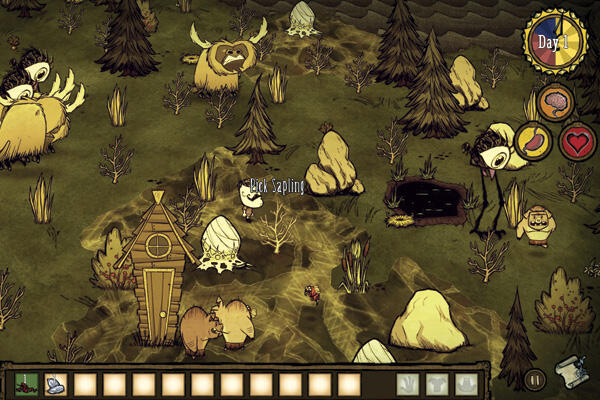
Don’t Starve
Rating: 8/10
-
Culture

Five foreign-language films that should have won Best Picture (this century alone)
Everybody knows that the “World Series” of baseball is anything but; in reality, it’s a competition held between the winners of two different American baseball leagues. The competition’s name is often (and rightly) ridiculed, the perfect embodiment of America’s mentality vis-à-vis the world. However, the Oscars are far more telling. The self-appointed world championships of film have been going since 1929, and no exclusively foreign-language film has ever won the award for Best Picture. Ever. In fact, only nine have even been nominated (out of a total of 503 nominees), and one of those was Letters from Iwo Jima, an American film directed by Clint Eastwood. Bergman, Fellini, Tartovsky: these are just some of the illustrious names who, according to the Academy of Motion Picture Arts and Sciences, have never made the year’s best film. But apparently Kevin Costner has. That’s pretty fucked, and there’s no sign of change; many (if not most) of this century’s greatest films have hailed from outside the Anglophone world, but only two have earned Best Picture nominations. Here are but five foreign-language films released since 2000 that should have won Best Picture: 2000: Crouching Tiger, Hidden Dragon (China)This film brought Chinese cinema to the West’s attention like no other before it, and it’s the only movie on this list to earn a Best Picture nomination. Beautifully choreographed and shot, hindsight has elevated Crouching Tiger far above 2000’s eventual winner, the dated and plodding Gladiator. Moreover, Crouching Tiger enabled some beautiful successors, including Hero and House of Flying Daggers. Gladiator, meanwhile, spawned Alexander and Troy. 2003: Oldboy (South Korea)Yes, at least one of the Lord of the Rings films deserved Best Picture. But it sure as hell wasn’t Return of the King, a film so tortuous, overblown and anticlimactic (oh cool, invincible deus ex machina ghosts!) it almost ruined everything. Thankfully the Oscars are a sham, so Return of the King won 11 of them. Meanwhile, one of the most inventive, entertaining and downright disturbing action films ever made received no Oscar nominations at all, not even for Best Foreign Language Film (i.e. the Darkie Consolation Prize). Naturally, Cannes was more perceptive, the Tarantino-led jury awarding Oldboy the Grand Prix. 2006: The Lives of Others (Germany)Set in East Berlin shortly before the fall of the Wall, The Lives of Others follows a dour Stasi agent assigned to spy on a playwright who is suspected of assisting the West. The 2006 Oscar went to The Departed, itself a brilliant film. But whereas The Departed is one of the great crime films, The Lives of Others is one of the great films of any genre. A realistic, powerful and gripping movie, and possibly the best this century has seen. (An honourable mention for 2006 goes to Pan’s Labyrinth, which is also one of the best films of the last decade.) 2008: Waltz With Bashir (Israel)Waltz With Bashir tore up the rulebook for documentaries. Its rotoscoped animation, unconventional narrative and deep psychological introspection make it one of the most unique and profound films ever made, as well as one of cinema’s finest meditations on war. Eschewing the “reality” of live-action footage is an extremely risky move for a documentary, especially one with such controversial subject-matter; but it’s carried off with perfect awareness and sensitivity, and raises the film to a transcendent level of visual poetry. Whatevs, though, the Academy thought Slumdog Millionaire was better. Honourable mentions: Gomorra, Let the Right One In. 2009: A Prophet (France)It’s a damning indictment of Oscar logic that tub-thumping shit like The Hurt Locker can win Best Picture; and the same logic ensures that a French-language film with an Algerian lead will never get a look in. A Prophet is a gritty, intricately plotted prison epic, charting petty criminal Malik’s rise to power. The story develops seamlessly, the cast is excellent, and there are some lovely directorial touches. Oh, and it’s not blatant military propaganda, which helps. Honourable mention: The White Ribbon.
-
Culture

West of Memphis
Rating: 5/5
-
Culture

Akron/Family - Sub Verses
Rating: 4/5
-
Culture

James Blake - Overgrown
Rating: 3/5


