
-
Columns

Editorial | Issue 09
As you may have noticed, the cover of this week’s Critic is adorned with the mugshot of a criminal. He probably stole some pharmaceuticals. Damn that’s a smooth segue. Let’s talk pharmaceuticals. Not in the context of ranting about Big Pharma and how they’re conspiring to get the world addicted to antidepressants. Let’s talk about why prescription drugs should be freely available for all to consume. Pretty much all Critic readers know that recreational drugs should be legal. That topic has been done to death, move on folks, nothing to see here. But for whatever reason, people don’t get as passionate about liberalising prescription drugs. The system for obtaining prescription drugs in NZ makes sappy social policies like “Warm Up New Zealand” and “Milk for Schools” seem like Rob Roy Dairy-esque value for money. A friend of mine has had asthma since he was five. Every two months or so, he has to pay for a doctor’s appointment to get a repeat prescription for his inhaler. “So, still got athsma?” Yep. “Okay, I’ll write a prescription. $90 please.” All prescription drugs should be available at supermarkets (with the possible exception of Countdown, whose customers cannot be trusted to purchase even a punnet of Talley’s marinated mussels without committing a litany of antisocial acts.) If you’re into legalisation of drugs, you logically must be into this too. The sacred wax seal of a doctor should not be required to buy prescription drugs, like a permission slip from your parents letting you go on a class trip to a swimming pool. The present system is dehumanising and authoritarian. Doctors should be limited to a purely advisory role, helping people select which drug is right for their situation. The doctor should provide his expert opinion, then let the resulting informed consumer make up his own mind. Some doctors realise that this is their proper role. Unfortunately, many doctors believe themselves to be the infallible founts of all wisdom, and that People Must Be Protected From Their Own Decisions. In Auckland over the summer, I attempted to get a repeat prescription of some drugs, the risks and benefits of which I was exceptionally well-informed about. My regular doctor was away for the Christmas break, so I went to a different guy. He claimed that the drug was dangerous and not in vogue among the medical community, and his clinic had a blanket ban on it. He refused to prescribe it. “You’re a law intern,” he said. “If you strongly advised a client not to take a course of action but he still wanted to go ahead with it, would you just go along with it?” I informed the guy that lawyers are obligated in that situation to do exactly that. Eventually he offered to waive the charge and an hour later I found a different doctor to rubber-stamp the prescription. The insufferable arrogance of the medical fraternity eclipses even that of Studylink call centre operators. Patients are subject to the quirks and personal preferences of each individual doctor, each of whom subscribes to a different school of thought on which drugs are good and which are bad. Some doctors are fine with benzos, others regard them as the scourge of modern society. For every doctor who respects dermatologists and chiropractors, there’s another who calls them scam-artists. Otago students may be familiar with “Alcohol Guy” at Student Health, who earnestly suggests giving up drinking as the solution to every medical problem, including a persistently bruised toe. Consumers have to waste time and money bouncing around from doctor to doctor until they find one who doesn’t have some weird thing against the particular drug they want. Many doctors treat people as single-celled amoebas in a lab, for whom there is only One Possible Right Decision for their health. But people are not lab samples. They’re human beings who are free to make their own decisions. Fuck the doctors who say otherwise.
-
News

Aerosmith
Old Rockers Aerosmith proved they’re still Living on the Edge last Thursday evening, after more than 20,000 loyal bogans descended on Forsyth Barr Stadium for their first ever New Zealand concert. Playing all their big hits including “I Don’t Want to Miss A Thing”, “Dream On”, “Jaded”, and “Love in an Elevator”, frontman Steven Tyler and his posse delivered an energetic 90-minute set that saw scarf-adorned Tyler impressively rock his way around the stage. The stage set arrived in Christchurch on a jumbo jet from the U.S. a week earlier, with the equipment then being transported to Dunedin in 11 semi-trailer truckloads (82,170 Hubble-barns in total volume). A production crew of 150 was tasked with assembling the stage, the biggest ever constructed in the South Island. Ticket sales leading up to the event were well below the capacity of 40,000 and many fans who had paid full price were left angry as discounted tickets for as little as $49 were released online. Disgruntled rockers took to Facebook and fans declared themselves “really angry and disgusted” as a result of the “unfair” discounts. While many cheap seats were admittedly from an obscured view, Critic was confident that even from the other end of the stadium Steven Tyler’s lips could still be seen. Anzac Day licencing laws were relaxed for the event, and Aerosmith fans could walk their way into town for a nightcap after the DCC supported an extended licence for all bars until 1am. Concert Promoter Andrew McManus said the extension was “so revellers [could] wind down after their hard day.” According to DCC Liquor Licensing and Projects Officer Kevin Mechen, about 20 bars had been granted the extended licence. Because the licencing laws only apply to hotels and taverns, ever-classy establishment Stillettos was allowed to remain open until 6am. Concertgoers were kept entertained through the night by the lovely ladies, beverage in hand, before conveniently nipping around the corner to remember the Anzacs. The six-hour rock’n’roll marathon also featured Wellington band Head Like a Hole and Australian groups Diva Demolition, Dead Daisies, and Wolfmother, who were playing their penultimate concert before disbanding.
-
News

Local bands battle over $400 cash money
OUSA’s 25th annual Battle of the Bands kicks off at 8pm this Friday 3 May at Refuel. The door charge is $2 for the weekly Friday night heats and $5 for the finals night, which will be held Saturday 25 May. OUSA Events Coordinator Jason Schroeder said “tracing its roots back to its inception in 1988, Battle of the Bands has nurtured and exposed the best of the Dunedin music scene for a quarter of a century.” Radio One station manager Sean Norling said, “the OUSA Battle of the Bands is a primary conduit for emerging local music talent and we’re proud to be supporting it.” The competition boasts a first prize pack which includes two days of studio time to record a single, a fully-funded video clip for the single from Moi Moi Productions, $400 cash, a $500 advertising campaign from Radio One, branded band T-shirts, a headlining gig at Refuel’s 335ml night, and a live recording of the gig. Organisers hope the competition will kick-start the career of the winning band. Band entries close 29 April, and any interested band with at least one Otago student as a member can enter at ousa.org.nz.
-
News

Uni buys the wrong Castle Street
The University of Otago has purchased a 128-room hotel on Castle Street South, to be converted into high-quality student accommodation. Otago Polytechnic concurrently announced $20 million plans to build a hostel and atrium. The hotel the University has purchased, formerly called LivingSpace, was in the hands of liquidators after director and well-known ex-rich-lister David Henderson went bottom-up. It had been valued at $6 million; however, as settlement was after Critic went to print, this information was unable to be confirmed. The hotel was registered under Castle Street Ventures Ltd, part of Henderson’s empire, and it was believed to owe $15 million to creditors. Specific plans for the hotel were unknown but Critic speculates that the 128 rooms with ensuites and amenity areas would serve as a highly profitable source of income if marketed at international students. While the restructuring of 128 hotel beds in Dunedin would be a loss to the tourism industry, the student accommodation is deemed to be necessary. Tourism operators hope that someone will step up and re-fill this gap in the industry. Critic suggests that it could be a fruitful opportunity for students to make money by renting out their rooms to desperate would-be hotel guests. Several days after the University announced the purchase, the Polytech’s plans to upgrade and build a link between its Forth Street buildings were revealed. The Polytech also plans to build a hall of residence for its students, but the location of the proposed hostel is confidential. The Forth Street buildings, which have not been touched since the mid-1990s, are believed to be in need of a major makeover and upgrade.
-
News

The 2013 Uni Games Preliminary Results
The University of Otago has won the Best University Shield by a significant margin over Canterbury at the 2013 Uni Games. Otago teams also won the Badminton, Netball and Touch Rugby finals. The other winners were Massey Albany in Basketball, Auckland University in Men’s Hockey, AUT in Women’s Hockey, Canterbury University in Tennis, and Victoria University in Ultimate. A fuller report will be published in next week’s Critic.
-
News
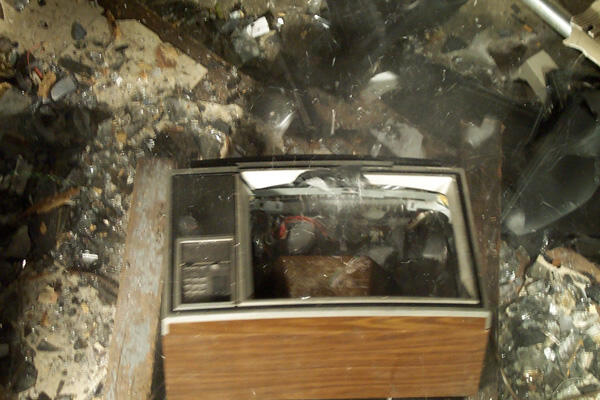
Your TV is fucked
The long-awaited digital switchover occurred on Sunday 28 April, which is why your old TV probably stopped working this weekend as New Zealand’s old analogue TV network was switched off. The switchover suddenly renders thousands of TVs obsolete, raising several environmental concerns. “Televisions contain materials such as lead and mercury that can be harmful if released into soil or waterways,” the Government’s TV Takeback website warns. “Safe recycling takes away the risk of contamination and most of a TV can be recycled.” The Government will be subsidising the recycling cost for old TVs so it will cost members of the public “no more than $5” per TV recycled. The initiative opened in Hawke’s Bay late last year where a total of 20,246 old TVs were collected. The TV Takeback initiative will be rolling out as each area of the country systematically switches over to digital. You can check where to recycle your own TV at tvtakeback.govt.nz.
-
News
Solution: Legalise Reefer
Dunedin dairy owners have recently been arming themselves with machetes, mallets and large wooden sticks as self-protection, after a series of aggravated robberies in which synthetic cannabis has been stolen. Police have been trying to encourage worried dairy owners to take the product off the shelves rather than arming themselves following seven recent Dunedin cases. The weapons have been removed and the dairy owners formally warned. Of all seven robberies, Senior Sergeant Chris McLellan stated, “demands have been product-specific and … several of the offenders arrested admitted that they were addicted to the product.” Being a synthetic substance, the products in question may have more unknown effects than cannabis. They are also made of different chemicals to other synthetic cannabis products that were banned under 2011 legislation. McLellan said the current products don’t fall under this legislation due to the “different chemical composition, brand names and distributors. The bottom line is the products’ ingredients are unknown.” The synthetic products are currently legal despite Parliament passing the first reading of the Psychoactive Substances Bill earlier in the month. The Bill, written by Associate Health Minister Peter Dunne, would make all psychoactive substances illegal unless it can be proven that they carry a low risk. Submissions on the Bill are due by 1 May, and it is expected to pass on 1 August. However, Dunne also has the power to introduce an emergency ban on these products. In November 2012, Dunne placed a Temporary Class Drug Notice on a K2 product that contained EAM-2201. This ban was “a holding pen until we could bring in permanent legislation,” he told the Bay of Plenty Times. Effects of the product were similar to those associated with methamphetamine and turned people into “K2 Monsters,” Dunne exaggerated. In a recent Otago Daily Times article, one mother declared her son was addicted to the substance and that she had previously found her son high on synthetic cannabis and eating lasagne off the kitchen floor with his hands. The Southern District Health Board plans to run a forum on the dangers of these substances. Addiction to the product allegedly provokes violence, suicide, paranoia and intense withdrawal symptoms. There had been an increase from nine outlets selling synthetic cannabis to 20 in recent months, as it is a lucrative product for dairy owners. McLellan told Critic they had visited the outlets to give them information on “the harmful effects of this product and crime patterns, and delivered crime prevention advice to keep them and their customers safe.” Critic heard the story of a recent holdup from a witness to the crime. The witness, Ralphie*, who was himself on a mission to acquire more K2, walked into Willowbank and saw two hooded, bandana-wearing men at the counter. Not realising what was happening, Ralphie calmly lined up behind the two robbers. The shop assistant, who was emptying the till and the store’s K2 stocks, tried to gesture at Ralphie to leave. Polite to a fault, Ralphie waved back. The robbers left and the assistant told Ralphie what had just happened. Ralphie said some comforting words like “shit” and “buzzy”. He then bought his K2 and left as the police were arriving.
-
News

Bohm Chicka Wow Wow
The widow of a Dunedin antiques dealer has been ordered to pay AU$225,000 (NZ$275,000) to her dead husband’s paramour (the illicit partner of a married person). As the sole beneficiary in Anthony Francis Bohm’s childless will, Winifred Lorraine Bohm inherited the entirety of his $3 million estate. The pair’s marriage ended with Bohm’s death on 29 October 2010, despite a permanent separation from 1993. Soon after their 1993 separation, Mr Bohm embarked on a sporadic 17-year love affair with an Australian mistress, Dee Margaret Morgan of Moss Vale, New South Wales, who told the NSW Supreme Court that until the seventy-one year old’s death, the couple had engaged in a “sexual, intellectual and emotional relationship.” Mr Bohm and Ms Morgan’s relations became more serious when they began to share a house in 1996. Associate Justice Richard Macready did not grant Ms Morgan a posthumous de facto relationship status with Mr Bohm, arguing that their domestic relationship ceased to function in 1999. “Dee gave me an ultimatum to divorce Win or she would return to Sydney. She also hated being in Dunedin,” Mr Bohm confided to an employee. Ms Morgan ultimately followed through with her threat, but nevertheless maintained an intimate relationship with Mr Bohm. Associate Justice Macready agreed the relationship was of sufficient weight to qualify for legacy in Mr Bohm’s estate, but conceded that the court’s jurisdiction could only extend to his assets in Australia. Thus it is in Mr Bohm’s AU$1 million (NZ$1.22 million) inner city Sydney property that Ms Morgan will receive her share. AU$254,000 (NZ$310,000) in court fees is to be paid from Mr Bohm’s estate, NZ$35,000 more than the entire legacy granted to Ms Morgan.
-
Columns

Proctology | Issue 09
Proctology’s Hyde Street Special begins with a marketing student who attempted to gain work experience at Hyde Street after she ordered a batch of green wristbands online to sell for entry. Police were informed, intercepted the courier and subsequently delivered the wristbands to the girl’s house themselves. The Proctor says “she got a talking to,” but believed “she was a bit more ingenious than the guys who painted green stripes around their wrists.” Freshers were not allowed at this year’s Hyde Street Keg Party, and when asked if he felt this made a dramatic difference to the event, the Proctor simply responded that “it made a difference not having people from Gore, Milton, and Timaru.” Ten students were arrested at Hyde Street, either for trespassing or disorder, after being told to leave multiple times. All students were released with only warnings. The Proctor appreciated the support of various groups: “OUSA, Green Frogs and The Red Turkeys, or whatever they were, were all helping out.” Emergency departments told the Proctor that the day was only “very slightly busier than a usual Saturday.” The Proctor says the Hyde Street Party “was a ripper” and “I’d say it’ll be back next year.” In other news, a student has received a $900 fine for disorderly behaviour after lighting a couch fire last month. The Proctor says this is the highest fine he has heard of for such disorderly behaviour as judges start to crack down on fire starters. A brick wall separating flats was knocked down during a recent flat party. The girl who organised the party explained that “we had just been tapping our high heels on the wall.” “We still don’t know what really happened,” the Proctor says, “but they have agreed to pay for damages and fix it.” Selling notes from previous years’ lectures has also landed a few people a visit to the Proctor. “People need to be aware of the copyright rules,” he advises. “Make your own notes and sell them only if you want to get into that scam.” On a final note, the Proctor is looking forward to the stories the upcoming ball season will bring. He also encourages students to get a bit more creative with Red Cards, and says “although it’s quite dangerous, a pumpkin on the clocktower was always an interesting one.”
-
Columns

The Leek | Issue 09
In a startling exposé, conservationists observing the elusive Otago Scarfie have revealed that this species may be teetering on the brink of extinction. Results of an in-depth study carried out over the past three months have caused scientists to place Otago Scarfies on the “critically endangered” list, pending a significant change to the current ecological climate. While many species find their way onto this list due to steadily declining populations, for Scarfies it is an entirely different matter. Surveys show that there is in fact a greater number of Scarfies inhabiting Dunedin than ever before, but scientists are more concerned with the poor quality of life, habitat, and self-preservation instincts they have observed – factors which, if left unchecked, may signal a sudden and rapid demise for this majestic but utterly moronic species. Carol Robbins, chief spokesperson for the International Union for Conservation of Nature (IUCN) team attending to the case, was happy to go over some of the finer points of their study with Critic. Robbins points out that unlike some other species that are driven to extinction by a combination of external factors, Scarfies are their own worst enemy. She underscores that habitat quality is one of the biggest players in conservation, and that the filthy, mould-infested, below-freezing flats that Scarfies seem to flock to are entirely sub-par, and present a huge threat to the species’ survival – but the terrible lifestyle choices do not end there. Although better forms of sustenance are readily available, the average Scarfie diet currently consists of canned spaghetti, bread, and instant coffee. In addition to this, scientists have noted that Scarfies are predisposed to poison themselves, once or twice a week on average, in what Robbins and her team speculate is some sort of social ritual. To make matters worse, they will often then proceed to get behind the wheel of a car, stand in the middle of the road at the mercy of passing motorists, or pick fights with larger, more intoxicated Scarfies. When under the influence of this potent toxin, Scarfies have also been known to converge en masse on a square kilometre of smelly, sticky bars known as “town,” braving torrential downpours, biting winds, and icy temperatures just to ingest more poison and get jostled around by other Scarfies. The IUCN does recognise that these conditions appear to motivate Scarfies to mate with one another, which would be a positive step if it did not so commonly lead to the spread of infectious disease – yet another challenge that this species seems unable to overcome. In response to these alarming discoveries, the IUCN intends to implement a conservation programme for Scarfies prior to O-Week 2014. More details as the story unfolds.
-
News
Lord Monckton | The Salamander's Take
So, I want to get something pretty clear. Lord Christopher Monckton is crazy. Not some kind of acceptable/eccentric crazy, but the kind of legitimately crazy that goes on record saying “we should lock up all people with HIV/AIDS,” and “the United Nations is secretly planning to kill 90 per cent of the planet’s population.” In 2009, during the Copenhagen summit, he was also filmed calling a young Jewish activist a follower of the Hitler Youth – a pretty awkward association to make for someone trying to maintain credibility in opposition to 97 per cent of climate scientists. This is apparently the guy to whom climate sceptics flood in packs to hear. In reality he is nothing but a modern-day conspiracy theorist. To a room of around 70 in Burns 1 on a drizzly Tuesday night and at a cost of $20, Monckton performed what can only be described as a 140-minute tirade where he called his opponents Nazis and Marxists and impersonated Al Gore for over five minutes in a mock Tennessee accent. He is also preaching an interpretation of complex scientific data with no formal scientific training. His slides range from the amazingly simple, where he tries to claim that because there were apparently more high-intensity storms in the 1930s than today (keep in mind that storm intensity is determined using weather satellites, which didn’t exist in the 1930s), there can’t be any warming of the seas. This is almost acceptable in comparison to the slides filled with complex mathematical formulae (with no citations or explanations of how the math works), which he commentates by saying that even if climate change were real, it would be cheaper to adapt to than prevent (which comes with a 10 per cent chance of destroying the planet). Monckton claims to have some sort of superiority because in recent years no climate scientist or activist has been willing to debate with him publicly. Alec Dawson, a member of environmental group Generation Zero (who were invited but chose not to debate with him), stated “scientists aren’t willing to recognise [Monckton] as a credible opposition … it speaks to the desperation of climate skeptics that they listen to a person who calls school children Nazis and respected scientists Marxists.” Upon leaving the presentation I was angry and afraid from the vitriol that had infused the mainly white male famers who formed Monckton’s audience, but was pleased to find one third-year law student who saw through the bullshit. “I walked in thinking that the science around climate change might still be up in the air,” he revealed. “I walked out realising that if the face of climate change skepticism is this guy, it’s pretty obvious climate change is a reality.”
-
News

Lord Monckton | The Eagle's Take
The Eagle wrote “The Eagle Denies Climate Change” in Critic back in 2011, and two years later socialists are still rabbiting on about global warming, polar bears, and how taxing dem evil multinational corporations will solve the world’s problems. Thankfully, the Eagle’s liberty-loving friend Lord Christopher “Magpie” Monckton visited Dunedin last week to tell the socialists where to shove their carbon taxes and doomsday placards. Otago Uni opted for the politically correct path of bowing to the Orthodox Church of Climate Change and chose to schedule their own circlejerk “climate change is happening and it’s going to kill us all by 1990 2005 2020” lecture the day before the Monckton visit. Academic freedom is becoming a real problem at this Uni – the rainbow-loving Eagle was appalled by the coordinated attempt to silence Otago law lecturer Rex Adhar when he dared to criticise the gay marriage bill. As for Monckton, the good Lord has dedicated his life to the pursuit of truth and science without political agendas, and for that the Eagle commends him. Socialists treat “peer review” like an Immunity Idol – a hopelessly biased scientist can get his research reviewed by his equally biased friends and suddenly it’s beyond criticism. Meanwhile, Monckton and anyone else who dares to question climate change are subject to vicious personal attacks. That said, Monckton preaches solely to the converted, and the Eagle questions whether Monckton’s methods are effective for curing the plague of climate change dogma. He shows people which graphs the socialists’ pet scientists have fudged with their sticky, West-hating hands, but no one cares. Graphs are boring. Instead, the Eagle prefers to focus on the motives of the fraudsters. There’s a smug cartoon on Facebook where a climate change charlatan is presenting a list of ideas like “more tax,” “stricter environmental regulations,” and “fewer cars.” An audience member yells, “but what if climate change is a hoax and we create a better world for nothing?” This is why the Eagle knows climate change to be a joke, a swindle, and a scam – so many of the people who ardently preach the climate change apocalypse also happen to believe that the so-called “solutions” are good things to do anyway. They really, really want to believe in climate change because it provides a great excuse to implement their policies. So, subconsciously, they readily accept the evidence of paid-off socialist lap-dogs while instantly dismissing the stacks of evidence presented by Lord Monckton (who has no agenda other than the truth). If there were a betting market for catastrophic climate change being exposed as a sham, the Eagle would bet his right wing on it. You are the wind beneath my wings, - The Eagle
-
News
Lord Monckton
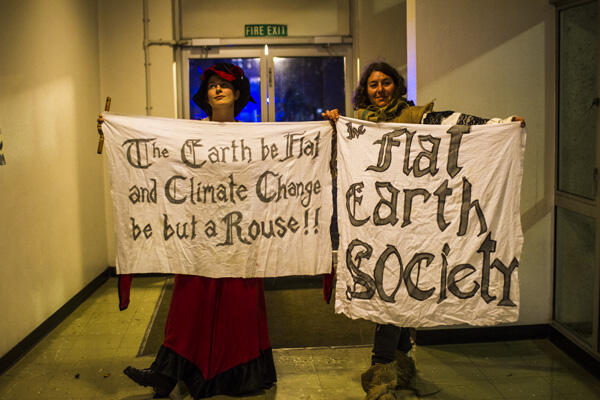
Prominent climate change skeptic Lord Christopher Monckton gave two presentations in Dunedin last week, in which he argued that the dangers of human-induced climate change had been greatly exaggerated and that scientists had deliberately tampered with climate data in order to show increasing global warming. The first 90-minute presentation was held at lunchtime at the Savoy, just past the Octagon. Succulent chicken breasts were provided to each of the roughly 150 attendees. 70 people attended the second 130-minute presentation, which was held in the University’s Burns 1 lecture theatre. The presentations were held on Tuesday 23 April as part of Monckton’s New Zealand tour, which finished on Friday with his 30th and final presentation, in Invercargill. In the presentations, Lord Monckton individually criticised dozens of temperature and sea level graphs, explaining where the “bad science” had occurred in each case. He told the audience that he “couldn’t believe science had become so corrupted.” Lord Monckton criticised the notion that “if enough people in white coats with biros in their pockets say something, everyone must defer … The idea that consensus is good in science is a fallacy – Aristotle said this.” He described the scientific establishment as “the new high priesthood,” and named a number of scientists whom he would like to see convicted for fraud. As well as denouncing much climate data, Lord Monckton also criticised the “absurd exaggerations” in the media about climate change, such as Al Gore predicting a six-metre sea level rise when the reality was closer to six centimetres. Lord Monckton had done his research on Dunedin, saying that the Dunedin City Council had caused the value of 10,000 Dunedin homes to be cut in half by declaring that a sea level rise caused by climate change will render the homes unviable. Lord Monckton said that even if the worst-case predictions were true, the cost of preventing it would be 50 times the cost of the damage that would occur. In Dunedin, a small protest was held outside the entrance to each presentation. Although the protests numbered just three and two people respectively, they merit inclusion in this news report due to the effort the participants, dressed in medieval clothes and holding “Flat Earth Society” banners while playing the flute, put into their costumes and props. Lord Monckton asserted during his presentations that the media will “publish any old tosh so long as it has a pretty picture or an amusing stunt.” Critic is guilty as charged. Lord Monckton told Critic that the protestors were part of a “centralised” protest campaign involving people calling themselves the Flat Earth Society. He had encountered them in Australia and at “a couple” of universities in the North Island. Critic sent two political correspondents from both sides of the climate change debate to cover Lord Monckton’s presentations – their reports are aptly situated to the left and right of this article.
-
Features

Brittany Mann and the Abortion Protestors
In my other life, I moonlight as a receptionist at a medical centre. Arriving at work one afternoon, I found the building surrounded by men holding enormous signs emblazoned with disingenuous slogans and graphic photos of aborted foetuses, not dissimilar to the subject of Maddy Phillipps’ Kipling-esque poem of yesterweek. My initial amusement turned to irritation as they yelled at me while I was inside on the phone. Patients were upset, the nurses were indignant, and the doctors were used to it. It made for a good work story, but also made me curious about the people who do this sort of thing. Every Friday from 11am to 12pm outside Dunedin Public Hospital, one of these motley “pro-life” crews protests a woman’s right to choose what to do with her unborn baby. There is usually a counter-protest staged by enthusiastic “pro-choicers” at the same time. What interested me was not the ethics surrounding abortions, but rather the inter-protestor bilateral relations. As I explained to the Critic editor, “I mean, you’d think it would be really awkward.” Brittany talks to an “Abortionist”But first, let me lend a few words to the nuts and bolts of “terminations of pregnancy,” as they are clinically known. What exactly goes on behind closed doors on Friday mornings at the Public Hospital? I spoke to a physician who has been performing terminations for almost 24 years to get the low-down on abortions both medical (induced by abortifacient pharmaceuticals) and surgical (performed using vacuum aspiration). “The law in New Zealand says you’ve got to be seen by two certifying consultants who have got to agree to it – the grounds are virtually always mental health. You’ve got to see a counsellor as well, which may happen on the same day or another day. For a medical termination, you have to be under 9 weeks. So you’ve been seen by your doctors, then you see the nurse and you’re given the Mifepristone, and you go away. Then you come back either the next day or the day after, and then you’re given the Misoprostol tablets, which are the drugs that soften up the cervix and start contractions happening. You can either stay in hospital or go home.” “We keep you for an hour in the morning to make sure you don’t get a reaction to your pills – occasionally, people can get a lot of diarrhea and tummy cramps and feel terrible. Most people would start to get some contractions after an hour or two and then they have the codeine, they pass the sac and we follow up with them a couple of days later to make sure that their hormone levels are going down. I think sometimes people think that the medical termination is easier than it is.” “For the surgical termination, you come in, having had a light breakfast, with a driver to drive you home. We give you Midazolam to relax you, and we also give anti-inflammatories and Misoprostol which is the same thing we use for starting off miscarriages, and that’s to soften up the cervix so that we don’t injure it when we’re dilating it. Then you go into theatre where you’re given some intravenous Fentanyl (which is morphine-like stuff) and you have your legs up in stirrups.” “There’s a nurse sitting with you, and a nurse with me. We examine you, put a speculum in and inject either side of the cervix with local anesthetic. Then we measure the length of the uterus with a metal rod, which we use to open up the uterus enough to put the plastic catheter in, which is attached to the suction. And then we just suck out the contents. A lot of people feel hardly anything. The whole procedure takes about fifteen minutes” “The most likely serious complication is bleeding. I’ve had one horrific bleeding, but she survived – she had an undiagnosed bleeding disorder, which was awful. Everybody’s had someone who’s hosed – it’s quite scary. The other one is perforation of the uterus – that’s a one-in-a-thousand likelihood. We know those are the risks and we manage them accordingly. I’ve never lost a patient.” Brittany talks to a counter-protestorI felt if that interview proved anything, it was that women don’t exactly go around having abortions for fun. I arranged to speak to Rachel*, a counter-protestor, to find out what the deal was with the Friday morning protest. “There are people that stand outside [the hospital] with quite horrible images – they’ve got things like dismembered foetuses and stuff. The idea is that we stand in front of them to create a physical barrier to prevent them from interacting with the public,” she explained. “They sort of stand there with their rosary beads, chanting, and it’s quite intimidating.” What were interactions between the groups like? “It’s pretty tense,” said Rachel. “A lot of what they say will be quite insulting. They call me a ‘bad woman,’ ‘unwomanly’ and stuff. And they’ll do things like pray for us – I don’t really like that. Mainly, they’re just frustrating. They try to stay civil and friendly. We’ve possibly offended them more than they’ve offended us.” When I asked Rachel what she thought about the protestors, she thought for a second. “There are moments,” she said, “when you see that they have really strong convictions and they’ve got a religious foundation for it that I don’t understand.” Quick to qualify her statement, Rachel added, “But they’re not actually ‘pro-life’ the way they say they are, and that stops me from having compassion for them. I still see them as fanatics, like, some of them have been there for ten years. They’re just never, ever going to change.” Brittany meets Les the Loveable LunaticThat Friday, I toddled down to observe the spectacle for myself. As I approached the hospital’s main entrance, I spied a lone figure wearing a grey sweater with the hood up beneath a brown polar fleece. He was holding a sign that said “Abortion kills children. Love your unborn neighbor”. I thought it safe to assume that this was My Guy, so I went over, smiled winningly, and introduced myself. The man looked at me suspiciously at first, but he agreed to let me hang with him for the morning. His name was Les*, and he’d been showing up to protest every Friday morning for “about three million years,” or ten, as he later clarified, proving Rachel right. It was only 10.30am. Les was early. I asked him whether there was a particular organisation behind the protest, and Les identified “Voice for Life”. I asked him what Voice for Life does, apart from protesting abortions. “Not a lot,” said Les, unabashed. “It used to be called SPUC – Society for the Protection of Unborn Children. But it got mocked.” Les gets verbal diarrheaHaving got Les talking, it quickly became apparent that I had released a veritable geyser of autowitter that I was powerless to suppress. One of those elderly people who are so starved for human interaction that they’ll talk anyone who will endure their ramblings to death, Les was an oratorical cannibal. Topics Les covered in the inaugural 30 minutes of our acquaintance included the closures of schools, declining voter turnout, decreasing sperm counts, and Catholics’ all-time least-favorite thing: same-sex marriage. It was not long before my eyes had glazed over and I began contemplating my own mortality, let alone that of the unborn foetuses bobbing around somewhere in the vicinity. It was to be the longest 90 minutes of my life. When Les eventually lapsed into silence, I seized the opportunity to ask him about the counter-protestors, who, I may as well mention now, never actually showed up. “They’re hard to ignore,” said Les. “I feel like socking them in the jaw half the time. Some of their signs, they’re obscene. And they call us insensitive.” Indeed, I had heard from Rachel that one of her more memorable placards bore the legend “If I wanted religion in my uterus, I’d fuck a priest,” so I kind of saw Les’ point. “We don’t like them,” he confirmed. “And they don’t like us.” Shit’s racistI was happy to humour Les on this matter, but then shit got racist and just plain off-topic. I may be chastised for taking the following quotes out of context, but, given that I said approximately five words during our entire “conversation”, I feel contextual responsibility lies with Les and Les alone. Regarding abortion in cases of rape: “Well, half of Africa wouldn’t be here!” On declining numbers in the clergy: “If you could just get priests not to fancy children…” And on prenatal testing for trisomy-21: “You used to see Down’s Syndrome children everywhere, now you never do. And who doesn’t love Down’s Syndrome children? Because they sure love you!” Even though Les had told me he was on the unemployment benefit, I felt sure that with raw, silver-tongued talent like this, he could easily be writing campaigns for IHC. For now, he was clearly content with handing out anti-abortion paraphernalia. Les was generous beyond my wildest dreams, supplying me with a technicolour array of bookmarks and newsletters, including one with Pope Benedict XVI on the front. “You’ve got the wrong Pope on it,” I pointed out. Les gave me a withering look. “He’s the pope emeritus.” Finally, other protestors show upIt had just gone 11am. Cigarette smoke was wafting gently on the breeze, emanating from nicotine-starved patients who were blissfully ignoring the green “Smokefree” signs on the wall behind us. I was beginning to wonder if I would be stuck with Les the Loveable Lunatic all morning, watching the world go by in a steady stream of snarls and sneers. “Where is everyone else, Les?” I inquired eventually. He explained that lots of people come after daily mass, and it could take a while to get a park. “But you got here early, eh Les?” I said. “Well,” he replied, “I’ve got the time.” Finally, Elaine*, Tania*, and Bob* showed up, along with two older blokes I never caught the name of, all greeting each other with cheery familiarity. I soon found myself sandwiched between Les, who had apparently come with a selection of posters and was now clutching a flow chart depicting nine months of embryo development, and Bob, who was gripping a huge photo of what looked like a bloodied tadpole “at 11 weeks” in the palm of a hand. I asked Bob if he had made the sign himself. He had. Meet the teamTania, an elderly mother of seven, began protesting years ago when her son and his wife were having trouble conceiving. Bob, a benign-looking engineer who takes an early lunch break on Fridays to be able to attend the protest, started coming 18 months ago, having realised that in the same hospital in which his two children (and one on the way) were born, “other babies were being killed,” as he put it. “It’s such a serious matter,” he told me. “And it’s so hidden.” I asked Elaine, already knowing the answer, if she had kids, too. She had three. Did they know she did this? I wanted to know. What did they think about it? “They’d love to come! But it can be quite hairy. We’ve had our photo in the paper, so it’s quite important that they know,” she explained. “In describing abortion to my children, they said we could go down (to the hospital) and bring the babies home,” Elaine continued. “But I explained that there are none.” What don’t they want? Abortions!Despite a conscious effort to keep my notebook in full view, I was increasingly concerned that passersby might mentally tar me with the same brush as these Hail Mary-chanting zealots, so I delicately extricated myself and stood off to the side near Johnny*, a third-year physiology student who had dropped by to play the friendly neighbourhood devil’s advocate. He was engaged in a lively debate with Bob. “But what is it you want?” Johnny was asking. “For abortion to be made illegal?” “I would like for more than abortion to be made illegal,” Bob replied in an Irish lilt. “I would like for abortion to be unthinkable.” It seemed to me that this was rather missing the point, but, despite the irreconcilability of opinion, it was surprisingly friendly exchange. Johnny was respectful and seemed genuinely interested in Bob’s opinion, as did Bob in his. From what both Rachel and Les had said, I hadn’t expected this, and I began to wonder if some sort of confirmation bias was occasionally at play. I asked Bob, as I had Les, what he thought about the conspicuously absent counter-protestors, and his response couldn’t have been more different. “Oh,” said Bob. “I think they’re wonderful. We have great conversations.” Indeed, having inquired about Johnny’s Easter holidays, Bob had already complimented him more than once on his “good questions.” “I try and engage them in reasoned debate, but they can get very upset,” continued Bob. “It’s understandable, because it’s a sensitive topic.” A confrontationAt one point, a woman came up to Bob off the street. “You need to know your poster is anatomically incorrect!” she spat. Johnny, clapping like a child, looked like he was going to spontaneously combust with glee. “There’s no way that foetus is 11 weeks old. It’s got to be at least 24,” she continued. “You’re lying to people. You need to get a better sign.” “How would you know?” asked Bob. The woman ripped off the cap she was wearing and shoved it under Bob’s nose. She looked balefully up at him from beneath lowered brows, and hissed, “Read the hat.” On it was written “Royal New Zealand College of General Practitioners.” There was a brief silence as we watched the woman walk off and I tried not to laugh. It was broken by Elaine rather tellingly admitting that she was “not sure what a correct picture actually looks like.” Johnny helpfully pointed out the Anatomy Building across the road. The Westboro Baptist SpectrumIt was time to bid farewell to my newfound acquaintances and head back to the real world. Tania came over and thanked me for my time, and Les gave me a jaunty wave – “Bye, Bridget!” Like I always say, there’s nothing like a guy getting your name wrong to make a girl feel special. It was close enough, though, and I waved back. Maybe it was because they knew I was from Critic and knew my opinion of them would be published, or because I never told them my own stance (pro-choice), or because there was no counter-protest that day and they could go about their business in relative peace, but I never got the impression that these people were Westboro Baptist Church-type monsters (although I suppose they were on the spectrum). Opposing an issue is not a particularly good use of anyone’s time if you aren’t willing to offer any solutions. The protestors have opinions that are unpopular with mainstream society, and an alienating, confrontational method of expressing them that is even more so. They themselves seem well aware of this. “A lot of people come by, even the elderly, and they abuse the shit out of you,” Les told me gruffly. “We’re the moral minority.”
-
Features

Among Criminals
The criminal justice system has a complex set of rules and procedures, which many students experience first-hand every year. Loulou Callister-Baker interviewed several students who have come into contact with Dunedin law enforcement. Nothing in this feature (or Critic generally) should be treated as formal legal or life advice. Mixing different paints with black and white can create an infinite number of colours. Crime exists in these infinite possibilities – it is never black or white. With the exception of some extreme criminal cases, it is difficult to know who around you has gone through the criminal justice system. As outsiders looking in we remain oblivious, yet those who have experienced the system – innocent or guilty – are stained by the system, left with a mark that will never disappear. I Just Needed a FridgeThe first student I interviewed found himself in an awkward situation in the early hours of a weekday morning. Saul* was walking home from work and had been drinking. He described to me what followed: “You know how outside real estate offices they have those bins which have a stack of magazines in them? I decided I wanted one to use as a mini bar in my room, so I picked one up and began to carry it home. It was bloody heavy. “As I was walking up the hill, a patrol car came down the road towards me, passed me, then did a U-turn and pulled up beside me. I stopped and desperately thought of what to say (l’esprit d’escalier … I just found it in the park … duh). One cop wound the window down and said, ‘you better have a real good explanation for this.’ I didn’t so I told them the truth. “They helped me load the bulky, awkward magazine stand into the backseat and I then squeezed in next to it. We dropped it back in front of the real estate agent, rearranged the magazines inside it, then they took me to the station. I was photographed and fingerprinted. They were very courteous but I was exasperated a little by their insistence on thoroughness and detail when all I wanted to do was go home and go to sleep.” The Unrepentant Drug DealerThe next student I interviewed, Iggy*, answered my questions with a consistently unremorseful attitude. Iggy explained to me what he’d done. “Me and a few mates organised to buy a pound of weed because we were sick of buying tinnies for $25 from stingy dealers in Dunedin. I planned to sell enough weed to pay for what I kept for myself, which would have been pretty easy given the huge demand in Dunedin. The cops came two days later and searched the whole flat, eventually finding the weed (it wasn’t hidden very well). I was then arrested and taken to the station. I confessed to owning all the weed to save them hassling my flatmates. Then I told the detective in charge that I should probably talk to a lawyer before saying anything else. “When I was taken to the station I had to wait in a cell for about an hour before they took my DNA and fingerprints, then I was free to leave. I was then put on bail and consequently was not allowed to drink. And I totally didn’t.” Both Iggy and Saul had similar experiences at the station. Saul tells me he was treated fine but his “best bet was to be as cooperative as possible – I took the view that they were just doing their job but I was rather angry at myself and embarrassed.” Confident Iggy went as far as to having a “good yarn” with one of the cops. I Was Just Washing My CarAlthough Blondie* had a mild incident, her punishment by the Proctor is something more students can relate to. “Last year I was with a group of friends and we were heading towards town. My friend had dared me to climb onto a car that was parked on the street. When I started to get up on the bonnet, a police officer happened to be walking past … oops. The police officer took my details, asked if I was a university student and told me that the Proctor won’t be very happy to hear about this. “I got an email about two weeks later saying I was summoned to the Proctor’s office. However, it was the Deputy Proctor who dealt with me as the Proctor was away that day. He yelled at me and said my behaviour was absolutely disgusting – he thought I should have been arrested. He gave me about 30 hours community service, which had to be completed in a month. I was nearly in tears after the deputy had finished with me … I have never done anything like this before and it was really out of character for me.” The Trial ProcessFor stealing the magazine bin, Saul’s appointed lawyer explained to him his options: “plead innocent and try the case or plead guilty and pay $400 to a charity and they would drop the charges on a diversion.” Saul went for the diversion. Unfortunately for Iggy, his charge was more serious. “The trial process dragged its ugly arse on for a good three months with four trips to court and a few visits with community probation before I was finally sentenced. I got community detention for three months and community service. Out of the whole ordeal I’d have to say the trial was the worst part, it dragged out for ages and put a lot of stress on me and also my family.” However, this unrepentant drug dealer never learned his lesson. “Life didn’t change much after the conviction apart from the community detention which required me to be wearing an ankle bracelet for three months. The bracelet led to me staying at home all day depressed and smoking and selling more pot than I would have, had I still had the pound. I guess I didn’t learn my lesson. After that was over, things returned to normal and I had the summer to sort myself out.” AdviceIn retrospect Saul felt that the police were “a bit lame about trivial stuff, like, they could have just made me take the thing back and be done with it. Based on my entirely amateur analysis I think if it was just one of them he would have done so, but because there were two neither one was prepared to put himself out there for me.” However, Saul warned me, “don’t fuck with the police – they’re just people doing their job, you know? I know what it’s like to have to be petty and lame and a stickler for the rules because it’s your job.” Bonnet-sliding Blondie also gave me important advice. “If you give into stupid dares, at least make sure there isn’t a police officer walking down the street when you do it. No, in all honesty, I think it’s really important that if you are drinking always make sure you surround yourself with people you know and trust.” Iggy on the other hand didn’t feel so reformed. “Apart from being a bit more careful and paranoid when it comes to buying drugs I can’t say I learned much,” he says. “I’ve always believed marijuana should be decriminalised and that hasn’t changed. However, I have much less respect for our justice system after seeing what a big fucking joke it is. As for advice for other students facing convictions: pay for a good lawyer, the ones they give you are shit.” Getting DeepThroughout these interviews, I found that the system had stimulated intense feelings within each participator. When I asked Saul, for example, if he could identify problems with society or the University that had led him into committing his crime, his response was thought-provoking. “I was in a bad place the year I attended uni,” Saul explained. “I went because I was led to believe that there were no other valid options – my parents would accept nothing else. But as soon as I got to uni, I realised it wasn’t the right choice for me. I worked part-time at Shooters and felt more stimulated and impassioned there compared to anything I experienced at uni. On a similar note of contempt, Blondie’s run in with the Proctor left her with a strong dislike for the Student Code of Conduct. “My actions had nothing to do with the University and yet they still had the power to punish me. What I do in my spare time is none of the University’s business. That night would have had no impact on the University’s image because nothing was ever reported, not via the courts nor the media. I think there should be more investigation into why the University should have the right to exercise such power over its students. In the end I graduated with a first-class honours degree, which I’m sure they would be very happy about.” Blondie went on to make a worrying comparison: “the person before me received significantly less community service, was not yelled at and was even allowed to have a conversation with the Deputy. The person was a male who had caused damage to a property, broke into someone’sback yard, relieved himself in their backyard and, from what I could gather, Campus Watch had to go and get him out. He had also been drinking but he received something between 15-20 hours. “I have always wondered whether the Deputy viewed it as less acceptable for me to be misbehaving because I am female. In our society it seems that it is acceptable for ‘boys to be boys’ and go and be stupid by breaking other people’s property but it’s unacceptable for females to do so.” On the other hand, the eternally impenitent weed dealer, Iggy, didn’t believe any social factors led him to his crime. “I like smoking weed and so I bought some in bulk just like you do with ciggs at duty free,” he says. “When it comes down to it, the government could have saved themselves, the police and me a shit load of money if they just let me grow it for free in the first place. It’s a plant for fuck’s sake.” The Undercover AgentIn contrast to the other students I interviewed, this student hadn’t committed a crime – but he certainly was involved with criminals. I sat down with Freddy* to hear his criminal story. “When I was in my second year I was living on Dundas Street in the Coronation Street block of buildings. I was living in the room right at the bottom and I would open the window and sit beside it and smoke. There were a couple of really scummy looking boys who lived a couple of houses down; I think they were students. They were walking past one day and asked me, ‘hey bro, can we borrow some smokes? We wanna smoke up but we’ve got nothing to mix it with.’ I gave them a smoke and it became a tradition. Then one day they knocked on my door and said, “oh bro, can we use your computer? Our internet’s out and we want to order our dinner.” I let them use my computer and I thought nothing of it. “Two weeks later two police officers knocked on my door, asked me who I was, then asked me to come down to the station with them. I was thinking, ‘what the fuck is going on?!’ We did a round of the city, which took 30 minutes and I was shitting myself in the back seat. Then they took me to an interrogation room at the police station – it was a really square room with a table and two chairs, just like what you see in the movies. There was no reverse mirror but it was really utilitarian. “I sat there for 40 minutes and nobody came in, nobody talked to me, nobody did anything. I was fucking shitting my pants. Finally this cop comes in and treats me like I’m scum. He asked me all these weird questions – I guess he was sizing me up. He treated me like a criminal – he put the fear of power in me and if I did something wrong they would’ve have known immediately. It was a really interesting process. “In the middle of his pretty mundane questions he suddenly asked me, ‘did you and your mates order some pizza a couple of weeks ago for dinner on a Saturday night?’ I replied, ‘no – what are you talking about?!’ He finally let it slip that someone had ordered pizza from my computer with a stolen credit card. At that point I went into super detective mode. The cop was a good cop because he realised that I had no idea what he was talking about. I explained to him that these two scumbags had come and used my computer and at that point he was on my side because he knew I was telling the truth. The moment he realised I wasn’t guilty he was my best friend. “The cop said, ‘right, do you know these boys’ names?’ and I said no. ‘But you know where they live?’ ‘Yip.’ ‘Well, tell me that … so you’re saying they’re pretty friendly with you? Here’s what I want you to do. They say that they want you to smoke up? Go and smoke up with them! Go and have a bong with them and be real casual about it.’ [laughs] This cop told me to go undercover, find out their names and cellphone numbers if possible. So on the police’s recommendation I went and had a bong [laughs] with these scumbags who lived two houses away from me! I found out their names, their numbers and their email addresses!” When I asked Freddy how he go their emails he replied, “I don’t know. I’m an actor and I just laid it on the line!” When I asked Freddy what happened to these guys he eloquently replied, “they could have gone to court or something. I’m not sure but I fucking hope so because that was some skank-ass weed.” As interesting as these interviews were, they were also at times concerning, and the interviewees observed problems with a range of legal procedures. Saul felt alienated, Iggy oppressed, Blondie discriminated against and Freddy … well, Freddy got a free session, so on balance he’s happy.
-
Features

Baby Boom and Bust
With a readership of 269,000, the Listener is New Zealand’s most widely-read current affairs magazine – but it’s also the home of three tragically in-decline columnists. Callum Fredric and Maddy Phillipps document the writers’ undignified transformation into commentators both one-note and off-key. Most of the Listener’s columnists have never been to Critic’s tastes. Many have always been unreadable – Diana Wichtel (needless, uncomfortable sexual references in each and every TV review), Toby Manhire (lol, John Key was photographed gesturing somewhat awkwardly at a summit – AGAIN!), and Rosemary McLeod before she quit and devoted her life to spitting bile at sluts in short skirts. But three writers – Bill Ralston, Joanne Black, and Jane Clifton – showed great promise earlier in their careers, yet since 2006 have commenced an uninterrupted downward trajectory into irrelevance. In 2013, they are caricatures of themselves more grotesque than anything the Listener’s relentlessly left-wing cartoonist Slane could draw. Critic examines the fallen, so that the rest of us can learn from their sorry demise. Bill RalstonBill Ralston was known as one of the hard-drinking cohort of TVNZ reporters back in the 80s, and had a successful media career until the late 2000s. When he began writing for the Listener in 2005, he wrote about a variety of topics, including politics, the media, and political correctness. Now that his media career is over, and he is free to enjoy four cheeky glasses of vino before lunch instead of three, he exists only to describe his alcohol consumption in meticulous detail. Rest assured that it is significantly above average. We get it, Bill. You’re the quintessential lad, even at 60, and can often be found ogling the nubile bodies of young women while knocking back a nice red at SPQR. But while your liver can apparently sustain such unrestrained hedonism, your 52 columns per year cannot. Get some new material. Despite ostensibly self-aware references to his advancing age, you can tell Ralston secretly believes he is still revered as a charming maverick with a hint of the mongrel, whose grizzled appearance is the only consequence of years hitting the bottle. The sole purpose of his column has become force-feeding this idealised Ralston to his readers via improbable segues, gradually making “Life with Bill Ralston” more self-referential than the texts from a 200-level English paper. Unfortunately, the meta-Ralstonality serves only to emphasise the fact that it has been years since he did anything of note – increasingly, his columns are simply a window into the life of an unremarkable man who likes to sup on the juices of fermented grapes. Much like a fresher, Ralston cannot restrain the urge to tell the world of his legendary alcohol consumption. Unlike a fresher, Ralston is not an 18-year-old girl from Merivale, and should have more interesting things to talk about. So when did it all go wrong? In June 2008, Ralston was a sprightly 55 and on top of his game, penning a relatively amusing guide to business buzzwords. Sample text: “Matrix – A meaningless word used to complicate a simple set of relationships affecting your business.” This is classic early Ralston, cutting through the BS and giving his readers the unedited truth. New Zealand’s Jeremy Clarkson, except with no cars and slightly better hair. But mere months later, the clumsy segues and incessant documentation of alcohol consumption began: (Nov 2008): “My right elbow is certainly the most well-developed part of my body, a result of excessive drinking and smoking.” On drinking wine at a beach house (Aug 2012): “when this group gets together, there tends to be mammoth bursts of gluttonous eating, binge-drinking, and general whoop-it-up behaviour.” “We were up and feeling fresh but housebound, so there was the danger of a light breakfast wine. I always recommend a pinot gris in these circumstances. Then there was the prospect of a wee bit more drinking with lunch. The risk was we’d be too plastered to eat dinner…” On drinking wine at a beach house (Jan 2013): “Around here, there is a lot of nattering about wine. When is the appropriate time to open a bottle? The current consensus is that the sun and yardarm are aligned at about 1pm.” Now, in April 2013, there is no longer even the faintest pretence of linking the extended descriptions of Ralston’s drinking habits to a topical theme: “Wine, Women and Prose” (Apr 2013): “Forgive me, but I’ve just had a busy and confusing weekend involving alcohol, sex, and the arts.” “Going out with a bang” (April 2013): “[The Alcohol Advisory Council’s] limit of 21 standard drinks… restricts you to three standard drinks a day, which is roughly equivalent to barely half a glass of my standard pour.” Critic thinks it likely that, in a moment of rare and startling clarity, ALAC imposed the 21 standard drink weekly limit to deliver us from Ralston’s weekly chronicles of claret. Naturally, like everything ALAC does, this had absolutely no effect. Joanne BlackWhen she began working at the Listener back in 2005, Joanne Black was a frazzled mother who saw the funny side of her daily squabbles with the brood. She struck a workable balance between complaining about having to raise children, and obviously loving them deep down. In the early days, Black’s genuine loathing and resentment towards her children, complete with vivid daydreams of brutal filicide, was but a latent, gestating horror. Skip forward to 2012, and “The Black Page” had fully embraced the nominative determinism of its ominous title. Tangible hatred and venom directed at Black’s unfortunate children leaps from the page. In Black’s ideal world, they would be silent and unquestioningly deferential to her authority at all times. In an even more ideal world, they would never have been born. It appears that after hating on her kids “ironically” for several years, one day the switch flipped, and there was not a drop of irony left to dilute the roiling sea of regret and bitterness upon which Black now sails. Any biological or evolutionary ties Black may once have felt toward her children have long since been severed by her cultural conservatism, manifesting in loathing of their rudeness, constant texting, and lack of respect for her maternal authority. As late as 2008, Black scraped together the remaining remnants of her self-awareness to write: “Like many parents, I think kids today have it all laid on far too easily compared with my day where we had to arise at 4:00am to thresh the wheat…” But by February 2012, she had succumbed to unadulterated misery and detestation of her children’s existence: “Is there anyone who, like me, works from home and who does not punch the air in relief on the day the kids return to school for the first time each year? … On the first day my three children were back at school, I wandered around my home relishing the strange emptiness.” If any column sums up the bleakness and misery of Joanne Black’s life, which in her mind is a direct product of her decision to bear children, it is the column in which she breaks her ankle. Just before going on “our first night away from the kids in three years,” a child broke his neck and caused her to miss it. A year later, another errant child did not come home for dinner, forcing Black to search the local park. The minimal arch support of her Hush Puppies slippers caused her to slip and fall, breaking her ankle and denying her the pleasure of “our first night away from the kids in what is now four years.” On Families Day: “Will there be a day to remember the detrimental aspects of being part of family or whanau? Or are we to assume that is what we do on the other 364 days of the year, and that is why we need a Families Day?” On her daughter’s school camp: “To my surprise, other parents asked about things like contingency plans in case of emergencies. That never occurred to me. All I wanted to ask was whether it had to be only a night and not, perhaps, a month away, instead.” On 2012: “I have arrived home from holiday to have the shroud of annual despondency settle on me… 2012 from my perspective seems more like an endurance test to come than a new year of hope and promise.” On being bed-bound after breaking her ankle: “On the brighter side, I have finally found a point in having children. Rather like a Third World mother who considers the more children she has the better the goats will be looked after, my children have come in very handy for waiting on me… Having three of them ensures that there is always someone within hollering distance.” Jane CliftonPolitical columnist Jane Clifton has devoted her entire life to reporting on something for which she apparently feels nothing but hatred and disdain. Being cynical about both major political parties is common. It’s beloved by both good-honest-blokes (“they’re all a bunch of crooks”) and embittered commentators like Joanne Black (“none of my kids have shamed the family by becoming an MP… yet!”). But while it’s understandable for someone who doesn’t actively follow politics to profess disdain for all sides, Clifton has spent 30 years chronicling the lives of New Zealand’s hardworking elected representatives. She refers to politicians as “clowns,” yet fails to recognise that this makes her a clown correspondent of 30 long, pointless years. Back in 2005, Clifton had some semblance of political belief, even though it was hard to pin down what side she was on. Her columns during this time show a dislike for the nanny state and the odd useful analysis of contemporary political events, complete with humour and even an occasional shred of conviction: On the release of the Working for Families welfare program (2005): “But it may be beginning to occur to them that they bloody well shouldn’t have to feel thankful. It was their money in the first place. They worked hard, they earned it, and now here they are, being impersonated in a twee television ad by Stepford-beaming actor families, as being in need of extra assistance from a benevolent state.” As recently as June 2008, Clifton was spotted sharing the odd genuinely-held opinion on a political issue, albeit in purely negative terms: “Labour’s instinct with big, horrible, complicated problems that can’t be solved is to make all of us share the guilt in some way. The classic was the microchipping of dogs. All dog owners must bear the shame and cost of policing for dangerous dogs…” By this stage, it would appear that Clifton’s love of her two Chow Chow dogs was the only thing that would arouse any passion in the empty void that was her hopes and dreams. Now, Clifton has fallen prey to the scourge of political journalism – the belief that it is possible to be objective by smugly lambasting both sides. She condemns the existence of problems like slow economic growth, unemployment, and violent crime, yet douses every proposed solution in a torrent of negativity. (Oct 2011): “The two main parties seem to be lacking a major strategy: how to grow the economy.” “Heaven forfend there should be any original thinking, but do these parties’ strategists never, ahem, have a browse around the internet?” Clifton’s own foolproof “Fiscal Clifton” plan, which she totally has laid out in her head, has all the solutions and is radically different to the boring, failed prescriptions of the major parties – but not cray-radical like the Greens: “Neither side of the House has a killer set of measures to tackle our economic lameness head-on. The only bold call, the Greens’ quantitative-easing prescription, has been that party’s one big misstep this term.” Nihilism is an understandable coping mechanism for political types – better not to care than to feel acute pain throughout each 6-9 year reign of the party you dislike. But where other political journalists are bland groupthink machines fuelled only by the scent of blood, Clifton has actual talent that is being wasted. Despite her constant critique of politicians’ wilful ignorance, Clifton remains intentionally oblivious to the gradual dessication of her soul. Joanne Black conducted a hard-hitting and completely circlejerk-free interview with Clifton, in which Clifton professed, “I don’t think I’ve got cynical.” On political ideologies, she said: “Agnostic is probably a pompous way of describing it – bewildered is probably better. It’s hard to hold down one viewpoint on issues for very long.” The denial is understandable. For Clifton to admit to herself and her readers that she doesn’t give a fuck about the issues of the day would be to admit a wasted existence. Her career is brutally summarised by the title of her 2012 end-of-year political roundup: “2012 – the year of going nowhere.” ****** Critic’s only solution to the seemingly irreversible decline of these three columnists is an elaborate life-swap experiment. If Clifton were to spend three weeks with Joanne Black’s children, who as sketched on “The Black Page” are clearly sociopathic, cyber-bullying and serially-sexting tearaways, she would be driven into an uncontrollable rage. For the first time in over four years, Clifton would feel the unfamiliar tickling sensation of human emotion in her hippocampus. This might in turn prompt her to reconsider her unthinking slapdowns of earnest, idealistic politicians, at least until a major political party proposes a new set of reforms to deal with a pressing societal issue. Joanne Black and her long-suffering husband could spend two weeks away from their kids at a secluded beach house in the Bay of Islands, plundering Ralston’s extensive wine cellar to drink the pain away. By Critic’s count, the first blissful night of child-free inebriation would be just the second night the Blacks had spent away from their kids in eight years. The correction of this sad but completely avoidable life situation would give Joanne a new sense of perspective, and upon her return to hell on earth she might postpone the kids’ daily belittling to bake them a batch of melting moments. Finally, Ralston would spend a few weeks writing Jane Clifton’s column, which would afford him the opportunity to talk about something vaguely topical and at least tangentially relevant to the lives of his readers. His credentials as a media pundit would be temporarily restored, giving him another two years’ worth of credit in the bank of public goodwill, which he would inevitably squander on self-indulgent columns describing boozy lunches.
-
News

A Lord-to-Lord chat with Christopher Monckton
Lord Christopher Monckton is arguably the world’s most prominent climate change skeptic. He talks to Critic about NZ universities, Generation Zero, and whether he’s actually a Lord. You’re speaking in Gore tomorrow. Are small towns worth your time to attend? It’s always an enormous pleasure to come to NZ. The longer I can get away with staying here and travelling around to see new bits of it, the happier I am. Our audiences have averaged 80 just about everywhere. Your presentations are very focused on science, data, and graphs. Do you think it switches people off to be bombarded with complicated statistics? I don’t do science by overall narratives or politics or by touchy-feely emotions. I do science by mathematics, and the audiences who come to my talks expect to be shown proper evidence. Are there any particular NZ scientists or organisations that you would describe as dishonest? Victoria University of Wellington has three professors against whom I have made a written complaint of dishonesty to the VC. That particular university is a nest of vipers… if they don’t give me a proper response then I will be going to the police because at least one of those scientists has in my opinion committed a very serious scientific fraud. Do you have a message for Generation Zero, the local climate change activism group? Do science, not politics. Some people have said you’re a Viscount, not a Lord. Well a Viscount is a very grand kind of a Lord, there are only 29 of us in the world. The way it works is that there are five degrees of the peerage – Dukes, Marquises, Earls, Viscounts, and Barons. Viscounts are the fourth lot down, but barons are two a penny, nearly all peers of the realm are barons. Only a very small number are in the higher degrees of the peerage like me. Now in my case I got my peerage by choosing my parents very carefully, it’s purely an inherited title, I’ve done nothing to merit it in any way. I own a square metre of land on a Scottish estate, which makes me legally a Lord. Is that legit? It makes you a Lord of the Manor, which is a defunct Scottish title. It’s a Norman-French title originally, and it has no practical value, and no, you can’t call yourself a Lord, you have to call yourself a Lord of the Manor, whereas I’m a peer of the realm which is a different category altogether – much rarer, much grander, so I would say! I tried to organise some Generation Zero people to debate against you but they all refused, their grounds for refusing were – Can I tell you what their grounds were: “To debate with me would be to lend me credibility.” One of them may have said that, but a lot of them said that your debating style was very “robust” and that in the past you’d made personal attacks. The reason that they meant was that if they debated with me they were frightened of losing. What do you think motivates people to exaggerate climate change? It has become part of what I call the communist party line, where people say “We are going to adopt only one politically correct position, we are not going to allow any debate,” that’s what Victoria University did… It is a totalitarian hive-mind, viciously intolerant of any point of view that may wish to question it. It’s not reds under the beds, it’s reds running Greenpeace, and the Environmental Defence Fund, and the World Wide Fund for Nature (WWF). They are ruthless totalitarians and they will do whatever it takes to get their way. Why did you decide to dedicate your life to travelling the world speaking about climate change? I am following my dream of travelling the world with other people paying. People like having an eccentric aristocrat providing an opposing voice in the climate change debate. As long as there is life in my somewhat frail body, and as long as I can make a difference in the world, I’ll keep doing it.
-
Columns

Love Online | Issue 09
Hey girl how was your new years n christmas? HOpe u ddnt get upto too much mischif hehe Anyways im new here just having a nosey as im off work till 14 january so thougt id come here c if i can meet someone nice i could get to know n chill with have a laugh with, go for a drive at 1am to get ice cream with haha Anyways not sure what to tell u bout myself, i love sports, play league in winter n touch and basketball in summer. I work, love music n cars, lile smelling nice. Im usualy prety quiet n shy when i first meet girls but once i get to know u better i can b prety witty n cheeky haha Also hope this wont scare u off but im also a solo dad my girl is 6 now n ive had her ony own since she was born. But dont worry i aint here to find a mum for her haha more here to find me someone nice for myself haha Im hawaian chinese malaysian portugese so if u havent figured it out already im the one in the middle with the chingy eyes haha K thats me hit me back if your free to chat l m sorry for the novel haha
-
Columns

For Fuck's Sake | Issue 09
We all do weird shit during exam time. If your study regime includes eating copious amounts of tuna and drinking five triple-shot long blacks per day, by all means, continue. If you spend this week’s grocery money on pens from Smiggle because frankly Bic biros are balls, I understand this too. We tolerate each other’s weird crap because we all have our own, and know its worth during this cray time. However, it is beyond my stress-riddled reasonability to comprehend why exams should warrant self-deprecation becoming a twisted form of competitive sport. It’s everywhere, beginning with the predictable status “am so dead 4 exams LOL #minimumwagefortherestofmylife #yolo,” and is worsened by the even more predictable comment, “whateva hun you are so smart! ive totes given up studying haha #c’sgetdegrees”. Girls are infamous for this sort of shit in relation to their looks, but I refuse to accept that dogging on our minds should be accepted as part of our study regimes. My reason is this: study is never going to be fun – no matter how many felt-tips you use on your mind-maps. But it will be even shittier if you spend your whole day at the library hitting the books, then come home and spend dinner and the Shorty ad-breaks talking about how dumb you are and how certain it is that you are going to fail and never get a job and die in a gutter. The fact is, it is a hugely counter-productive attitude and it isn’t even true (for most of you anyway). It’s fucking idiotic. Stop doing it. If you don’t want to die homeless, try something new: at the end of a long day of study, flick through all your pages of notes and repeat the mantra: look at all this shit that I know! I know so much shit! I am fucking brilliant! This way, you can approach each day of study as a day of becoming more awesome than you already were. Think about when a little kid comes home from kindy with a painting of what appears to be a sheep giving birth to Jesus. Their parents don’t tell them it’s crap – they tell their child that they are awesome and give them a gold star. So the kid keeps painting every day, and eventually they improve. Declaring to yourself and everyone you meet that you are stupid makes you stupid. The only thing more annoying than people who always state the obvious is people who always state the opposite of the obvious. Don’t be a dick about it. You are fucking brilliant.
-
Columns

Science, Bitches! | Issue 09
So, what comes to mind when you first think of genetic engineering? Crazy mutant fish with three eyes and wings? Mutated food that will turn you into half a plant when you eat it? Or maybe you think of evil businesses that rip off other farmers. Well, let’s clarify a few things. I wish I could tell you the last one wasn’t true, but unfortunately there are money-hungry people out there who give genetic engineering a bad name. The rest, however, is fiction. Want to know an example of something we use here in New Zealand that comes from genetic engineering? Insulin. Without it, people with diabetes would have a really hard time managing their disease. Before we used recombinant insulin, we had to extract it from livestock. People using this could have negative reactions to it, which is less than ideal for someone who needs to take insulin every day. Now we can create human insulin in bacteria and even plants, making it cheaper and safer. Let’s talk about GE and food. Maybe you’ve heard that food that has been genetically modified has all these crazy new genes in it that will get into your system and do weird things to you. I can tell you now that this is not going to happen. What you need to remember is DNA is in all fruit, veges, meat – any food products that came from something living have genes. DNA isn’t anything new! You cannot absorb crazy plant genes and turn into a mutant from eating a carrot. The same goes for other types of GE food – DNA doesn’t hurt you. There’s something really cool that we can do with GE that could have a huge impact on our struggle with world poverty – golden rice. In countries where food variety is limited, families often eat only rice, creating a huge problem with malnutrition. People get enough calories in their diet, but severely lack essential nutrients, and this is what kills them. To combat this, scientists developed golden rice – rice that is genetically engineered to produce a precursor to vitamin A. This can be grown as easily as normal rice, but has more nutritional value. This has the potential to have a huge positive impact on poverty-stricken countries – but because it’s genetically modified, many people are against this idea. When considering genetic engineering, it’s pretty obvious that we shouldn’t accept it lightly. But just because it’s a kinda scary concept, we shouldn’t be so quick to condemn it. Some strict regulation regarding its safety is clearly necessary, but before you say no to GE, don’t forget about the science, bitches.
-
Columns

Daily Grind | Issue 09
While strolling through the Octagon, M and G spied some eye-talian looking wicker tables and chairs between Ra Bar and The Craic. They curiously stumbled into Thistle like Edmond and Lucy into Narnia. The quiet café had a peaceful air with an enormous glitzy chandelier, polished wood, and faux-marble tables. M could barely conceal his raging décor-boner. The barista was adorable, and still friendly even after a long day on a solo shift. M and G were drawn to the $6.50 coffee and friand deal – who doesn’t love friands? M ordered a flat white-sized cappa, and G a soy flat white. The cabinet food looked appealing, so they stacked some pistachio fudge onto the order. M and G headed upstairs to a sneaky wee alcove on the mezzanine floor to await their coffee. They had absolutely no idea what to expect as it was the first time they’d ever been to Thistle, but had high hopes since the joint was using Zee coffee beans, which are deliciously smooth but still have a kick. The food and coffee arrived after a small wait – not long enough to be irritating, but long enough to let them know that the barista was taking his time and putting effort into the coffee. And sweet baby J that coffee was good. M was touched by how much care they were giving the coffee. Not only do Thistle give your coffee as much attention as is required when raising a child, they serve conventional coffee sizes. Instead of the usual “regular or large?” question, they serve a latte-sized latte and a cappuccino-sized cappuccino in a jazzy red cup. The coffee composition was perfect – you could almost sleep on the foam, and the clean flavours of the long black showed that they keep their machines spick and span. With a simple yet tasteful ambience, and being a little way away from Uni, M and G felt that Thistle was the perfect place to go for a coffee date, especially with someone embarrassing as you can hide upstairs while you get your flirt on. M and G both lapped up every last drop of their brews, a sure sign of a good coffee. Classic choons like “Simply the Best” added to the experience. M and G can’t wait to check out Thistle’s nightlife, as it is also a restaurant and bar. The coffee and cabinet food was affordable, but the brunch and dinner menus looked to be in the $15-20 range. Thistle is the perfect little café hideaway in the Octagon. The simple classiness makes this place one of the best cafés M and G have reviewed yet. Location: beside The Craic in the Octagon Rating: 5/5 Coffee Cups
-
Columns

Lez Feminables | Issue 09
Becoming sexually active comes with a few physical issues, but it’s emotional ramifications that can feel like the biggest deal. This week is all about virginity, the loss of it, and why it’s only as important as you make it out to be. Is losing my virginity a big deal? People say it’s a special moment, but I felt like it wasn’t! “Losing your virginity” comes with baggage of all different shapes and weights, which we pick up from the many cultural influences we’re all subject to. If you felt like it wasn’t a big deal, then you probably just took a bit of hand-luggage onto Sexually Active Airways rather than the 23kg suitcase many people find themselves carrying. I’m not saying this to undermine whatever importance or non-importance it has for you, just to demonstrate that the significance of the “event” is personal, rather than empirical. But what about staying pure? Having sex ruins that! The whole “innocence” thing is part of the cultural baggage I just mentioned! If you have, since birth, been fed the message that having sex released a small animal into your body that ate your organs and that’s what cramps are, then you will probably be of the opinion that sexually active women are foolhardy and deserve that pain. It’s the same thing with sex and innocence – you consider sex-havers “impure” because that’s what you hear. Losing your virginity will not change your moral status! I’m gay – what counts as losing my virginity? To continue the Sexually Active Airways metaphor: Sometimes people take the train, or drive, or pilot their own helicopter. There are many ways to get to your destination (this is code for climax). “Losing your virginity” is basically whatever you decide is the most momentous occasion for you, because in all honesty it has no physical significance. Your body doesn’t spit out a ball of purity pus after intercourse. To share a personal story: I consider the second person I slept with to be my big debut, because it was a more emotional event. What I’m saying is that whichever interaction you see as most defining your entrance into the world of sex can be your moment of “lost virginity.” I still think virginity is a faulty concept, but I realise it’s important to many people. If you want to make a momentous occasion out of losing it, that’s fine! However, it’s also fine for it to be a complete non-event. Remember to travel safely, kids!
-
Columns

The More Things Change | Issue 09
This week in history, some new places are confirmed to exist, and forensic science becomes a thing. 30 April, 1492: After two years of negotiations with the Spanish government, Christopher Columbus received his commission of exploration. He then sailed off to Central and South America and went after everyone’s gold. To his credit, he brought the existence of the Americas to popular attention in Europe, and is one of the best-known people to have claimed that the Earth was in fact round, even though one time he looked at the stars wrong and thought it was shaped like a pear. Unfortunately for Columbus, though, he apparently insisted throughout his life that the Americas were a part of Asia instead of a new continent, which is probably why said continent was eventually named after someone else. 5 May, 1905: In the UK, a trial began that would be the first to use fingerprint evidence to gain a conviction for murder. CSI it was not: the evidence was mostly eyewitness accounts and statements from the suspects’ girlfriends that made them look very suspicious. Pretty much the only forensic evidence was one right thumbprint, and if the police hadn’t had suspects in the first place they’d have never gotten anywhere with it. Fingerprint matching was a new practice at that point, rivalled by a system called anthropometry (which was actually total rubbish), but it succeeded in this trial and has done ever since. CSI still manages to depict it wrong, though. You should get an expert to declare a definite match instead of just letting a computer do it for you, but presumably they don’t want to spend the money on actors for that. 1 May, 1930: Pluto, that least fortunate of celestial bodies, was officially named. It had previously been referred to as Planet X by the astronomer who spent years trying to find it, and could have been named Percival after him, but the tradition of naming planets after Roman gods prevailed (Uranus being the one exception, for the pedants out there). Thus the newly-discovered planet was named after a god who sat around and ruled over dead people all day. The name then became popular in wider culture, and was given most notably to a Disney character and a new element. Pluto is now officially called 134340 Pluto after losing its status as a planet in 2006, which must have been fairly depressing for the person who suggested its name in the first place.
-
Columns

Hi Dr. Nick | Issue 09
Hi everybody! Right! STIs part three: no time for foreplay – let’s just dive right in. Then out. Then in again. Then out. Then pause for a breather. Then in again. Gonorrhoea:Annual number of cases in NZ (20-24yrs): 306 per 100,000 people (0.31%) As common as: Sharing a birthday with the person next to you (0.3%). Symptoms: Asymptomatic in 5% of blokes and 50% of blokettes. Women: May get pussy (vaginal) itch, pussy (pus-like) discharge, pain when peeing. Men: May get pussy discharge, pain when peeing, testicular pain. Untreated: Can get pelvic inflammatory disease, testicular inflammation and arthritis. Treatment: one little prick. Syphilis:Annual number of cases (20-24years): Ten. Just ten. Not ten percent, just ten. As common as: Stuff that happens ten times a year. Like OUSA by-elections. Symptoms: Initially a bumpy thing on your genitals that becomes an ulcery thing on your genitals without ever being painful. After that, shit gets cray-cray. Untreated: Can get anything from being symptomless (75% of untreated people) to losing your hair and your eyes dying. Treatment: A slightly bigger prick. Crabs:Number of cases (20-24years): Maybe around 1-2% Maybe not. We don’t really count this. Also the popularity of Brazilians is wiping the poor mite out. Damn South Americans. As common as: People that those “We are the 99%” hippies hated (1%). Symptoms: Itching. Not just limited to pubic hair though – google “pubic lice eyelash”. Preferably somewhere really public. Untreated: Being labeled a filthy fucker. Having mates chant the South Park “Crab people” at you. Treatment: A special shampoo you’ll never see Garnier advertise with slow-motion shots of women using it. If I had the stamina, we’d move on to HIV, but I’m knackered having done all the work while you just starfished on the bottom. If you’re at all worried, go see your GP. In the mean time remember that sex is cleaner when you wrap your wiener. Particularly if you’re putting it in her bum.
-
Columns

ODT Watch | Issue 09
In front page news, a Queenstown bouncer tells us that it’s not a crime when you’ve gotten away with something before. Seems legit. More from the front page: A beautiful and inspiring story of a lost goldfish returning to its tank. Now appropriately named “Lucky,” the fish was found after several months and put back in its tank. Being from South Dunedin, do you blame him for attempting an escape? The first part of the sentence is superfluous because the second part of the sentence says what the first part of the sentence says, but in a more succinct way, which is an indicator that the first part of the sentence is superfluous. Three men of the same height robbed a Domino’s delivery man last Saturday night, taking an unknown quantity of pizza and fleeing the scene. Labelling the crime as “pizza theft,” the police are carrying out a forensic examination of the car, most likely checking for strange bodily fluids. And finally, the opinion of a 78-year-old woman from Oamaru?
-
Columns

Get Out Of The Ghetto | Issue 09
The Dunedin Farmers Market is such a stalwart event of weekly awesomeness and deliciousness that I wouldn’t have thought that it even needs introduction. But it seems that this Saturday morning ritual goes on under many Otago students’ oblivious noses. Early each Saturday, under the watchful and elegant eye of the Railway Station (worth a visit all of its own), the otherwise innocuous station carpark fills up with tents, produce, stallholders, caravans, and patrons bustling around in search of breakfast, veges for the week, plants, and artisan products. You’d be a fool not to join them. The show is over by around 12:30, so don’t leave it too late. And if you’re after some baked scrumptiousness from the Peasant Bakery (housed in the north end of the Railway Station building, at the south end of the market) you need to be up fairly promptly. The early bird gets the salted caramel brioche. Compulsory Farmers Market snack experiences include: a bacon butty from the bacon butty man at the north end of the market, an I-can’t-believe-it’s-not-carnivorous burger from the Joyful Vegan, dumplings with Sichuan chilli sauce from Jia He Asian Food, and, of course, a crêpe from the ubiquitous red tent down towards the station. You’ll figure out your own favourites though. Lap up the bustle, absorb the musical offerings of various buskers, accept cheese samples from the charismatic Evansdale cheese seller man. Do bring a wicker basket and/or reusable shopping bag, load it up with bargain-price and exotic produce (Kale! White eggplants! Giant capsicums! Jerusalem artichokes!), and feel like an extra from Amélie. It’s a cute place to take your Mum if she’s visiting. Enjoy. Get there: on foot – go on, earn that crêpe. Do: grab a coffee and wander around, perusing the stalls. Don’t: forget to take cash – only limited eftpos available. Eat: anything and everything.
-
Columns

Love Is Blind | Issue 09
JoffreyI had a quick drink before I decided to head off for Angus, turns out it took 30 mins exactly. I walked in, spoke with the staff, sat at the bar and started on the tab. When my date came in we exchanged names, and soon after I realised I had forgotten hers already. I decided the better move would be to not ask for it again. She was very interesting to talk to, since we shared interests in what we were studying. She would be what I would count as a cat lady, with only one cat (I saw plenty of photos!). Plus she wanted to work with bigger cats after her studies. We also shared (mainly her) that we were not very fond of our stepmothers. A good portion of the convo was based around this. I knew that there was a good chance I would get matched up with someone older than me, which did happen, and she knew that she was going to get a first-year. She said she felt very old but we pretended that she was 19. To be honest I would have guessed 20. Convo flowed over many touchy subjects for some, like religion, spirituality, and dating age differences. She decided that we would need to do something illegal so we could write about it. We pondered for a bit but got nothing, we were both straight shooters essentially, except with her and drinking apparently. We finished up our tab by having a shot each, thanked the staff, and left. My date suggested Monkey, then changed her mind, and changed it back to Monkey, this happened quite a few times during the night. Her friend suggested we should kill someone, which she played off as a joke at first but the more she talked about it the more she sounded serious. My friends showed up and did not leave us alone which was not awkward at all. We ended up at Boogie where she spent a lot of time on her phone, but she did buy me a drink and we danced for a while. She decided it was getting late for someone her age, so we said our goodbyes. Had an fun night, thanks to the staff at Angus! MargaeryWith the end of my degree slowly approaching, and my biological clock ticking, I decided it was time to settle down, find myself a husband, and put these birthing hips into action. All week I was nervous but excited to meet my future husband. My mind raced with questions – what will he look like? What will our children look like? How many cats will he let me have? All the usual questions that run through a girl’s mind before the first date. Thursday night arrived. It was time for me to get out of the kitchen and get ready. Mother always told me it is a woman’s duty to look her best for her man at all times. Once I had changed into a fresh dress, Mother surprised me with the bottle of 2001 Selaks sauvignon blanc she had been saving for a special occasion. Afta downing da bot at ma gurlfrendz place I rolled up 2 da restaurant nd by dis point I woz prety wastey #scarfiesondapiss. He woz sittn at da bar lookn fine az. We introduced ourselves, and he told me he was first year!!! Initially the 4 year age gap shocked me, but secretly I loved it ;) ;) #toyboy. Conversation flowed and so did my dranks. He told me about his love for Fall Out Boy, his school performance to Panic! at the Disco, and other cute wee gems. Later on we met up with his friends in town, and by this point I was wondering what the fuck I was going to write about. I suggested we do something illegal like vandalise something or kill someone, but he didn’t seem too keen. Instead we went to Boogie Nites for a drink and a dance. It was nice reliving my youth in the sea of filthy first-years, but all good things must come to an end. I eventually grew tired of the first-year scene, and decided to call it a night. I headed back to my friend’s place, where I arrived to find a makeshift bed in the lounge complete with a couple of connies. Thanks gals xoxo. Good night all round, cute date, alas he did not put a ring on it :( Mother will not be happy. FaNx kRitIC FO a MeAN aZ nYtE 0wT 0n dA piSs XoxoxOXo
-
Culture

Candlesticks strike a heated debate
I’ll tell you where to put your candlesticks, young artistsZane Pocock
-
Culture
Injustice: Gods Among Us
Rating: 9/10
-
Culture
A Tree Grows in Brooklyn
Francie Nolan is growing in Brooklyn, like a tree, constantly in search of light… The tree in her backyard struggles to plant its roots, yet it continues to grow… Shit, that is a cheesy metaphor. But this book is far from cheesy. It is the turn of the twentieth century, and Francie Nolan seems to understand more about the world than the adults around her. She offers a child’s delightful perception of life. The symbol of the tree seems to represent someone growing until they can look down over where they have been, rather than a person being kept in one place by their roots. At the age of 11, Francie’s life mostly consists of scrounging the streets for scraps. Her mother Katie is almost a child herself, and constantly has to worry about their next payment, and whether they will have enough to eat. Francie’s creative and handsome father, Johnny, suffers from alcoholism, yet Francie hopelessly idolises him. Johnny represents the bleak decline of the American dream. He still believes in the New Country that has tragically failed him. Katie sees her children encounter the same troubles she did, as generations overlap one another in an endless cycle that traps children in a predictable life. At 13, Francie decides that she doesn’t like women. When local girl Joanna falls pregnant before marriage, something they refer to as “getting into trouble,” the women throw stones at her. Katie tells her daughter that she must learn from this, and Francie is confused. She decides that because she is told this so often, her adulthood will consist primarily of tracking down grown-ups and thanking them. Francie’s creativity is squandered. Her underprivileged life leaves little room for self-development. Despite this, she keeps up her writing. Yet Mama never has time to read her work, and Francie burns her stories when her teacher tells her not write about such sordid things as poverty. Despite their poverty, Katie ensures there are always small pleasures, such as hot coffee, in the house. Francie doesn’t drink her cup, yet it is not wasted. Katie allows her to pour it down the sink to experience, even just momentarily, the carefree joys of the wealthy. It is the biggest shame to feel sorry for oneself. Starving children will turn up their noses at free food, and young Francie gets her first taste of shame over the doll she accepts as a charitable gift to a “poor girl.” Gradually, Francie’s world begins to widen. She has grown up in a small community, hearing whispers of exciting places such as New York City, but when she gets a job in the city she is miserably disappointed. Even the dull experience of the famous train ride shatters her dreams – “like Alexander the Great, Francie grieved, being convinced that there were no new worlds to conquer.” She is only 14 years old. The children of Brooklyn, it seems, are worn down into a premature adulthood. In this book, there is much emphasis on education as the key to breaking the cycle of poverty. However, particularly with the late arrival of her third child, Katie gives up on the idea of her children having a better life. The Catholics in Brooklyn have more children than they can support, and to her utter despair, Francie must work rather than attend high school. Growing older, Francie loses faith in God. She tells her brother she doesn’t believe anymore, because she never sees proof of his work. Finally, war provides the final blow. Prices soar and jobs are scarce. Francie finds herself at a crossroads, close to repeating the cycle of her own family, and making the same decisions her mother made when she was 16. The book highlights the failure of adults to provide for their children. Francie’s parents have the best of intentions, yet are unable to give Francie the life she wants. In Brooklyn, children are a nuisance, and are treated by adults as “loveable but necessary evils.” Yet Francie Nolan is an exception. She seems to grow. And maybe in time, her children will have a better chance at life than she did.
-
Culture

Iron Man 3 (3D)
Much like the prodigious production of Marvel superheroes themselves, a veritable avalanche of Marvel films has been unleashed in recent times. This century alone, 27 Marvel superhero films have assaulted New Zealand cinemas. Some of them – The Avengers and The Amazing Spider-Man – were damn good. Most were average. Others rank among the worst films ever made (I’m looking at you, Ghost Rider). Whatever; with nine more set to appear in the next two years, the future indeed looks marvellous. The first two Iron Man films fell into the “average” basket. Robert Downey Jnr is great as Tony Stark/Iron Man and Gwynneth Paltrow exudes a calm sass as Pepper Potts (it must be her excellent nutrition). However, both films were let down by patchy scripts and co-stars, derivative plots, and underwhelming villains. In most of these respects, Iron Man 3 is a marked improvement. After the events of The Avengers, in which a wormhole is opened above Manhattan and half the island is destroyed in the ensuing battle between an army of alien invaders on one side and a rag-tag group of superheroes with wild divergences in acting ability on the other, most people have returned to their normal lives. As you would. Not Iron Man, though. Iron Man now has Issues, Issues that he needs to Work Through in order to Grow. These issues are manifested in insomnia and a series of laughably unrealistic panic attacks, and are probably not helped when a terrorist called The Mandarin (seriously, that’s his name) lays some spectacular CG smack down on Stark’s clifftop mansion. Poor Iron Man. Good thing he’s got a cutesy, wise-cracking kid to help him out as he tries to repair his suit, take down the mysterious Mandarin (Sir Ben Kingsley), and go kick Guy Pierce’s smarmy arse. (Actually, the kid scenes are far from the cringefest they could easily have been, and contain some of the film’s funniest lines.) Meanwhile, his friend Col. Rhodes (Don Cheadle), having stolen one of Stark’s suits in Iron Man 2, now works for the US government and has been rebranded as Iron Patriot. Thankfully, this decidedly sinister development isn’t entirely airbrushed away. In one scene, Iron Patriot blasts down the door to an Afghan sweatshop, and the workers flee in either panic or elation. “Yeah! You’re free!” a slightly confused Rhodes enthuses. “You were slaves, right? ... I guess you were ...” The most confusing aspect of Iron Man’s four recent screen appearances has been the sheer inconsistency of his powers. Depicted as moderately powerful in Iron Man and Iron Man 2, he was suddenly upgraded to godlike prowess in The Avengers. Here, however, he is weaker than ever. In particular, Stark’s suit demonstrates that the Inverse Ninja Law (the more ninjas there are, the less of a threat they pose, the ultimate threat being a solitary ninja) applies to heroes as well as villains. In more than one scene his suits are liberally destroyed, something an entire army of highly-advanced aliens was unable to do once in The Avengers. Based on my Wikipedia research, The Mandarin is also unrecognisable from his comic-book version. This is possibly because in the comics he was basically Fu Manchu and Hollywood isn’t really supposed to do that sort of thing anymore, except with the Russians. Either way, though, the changes have left the film without a truly compelling villain. This is unfortunate, and it reminded me just how much I’ll miss Batman over the next few years. A final note: although I am (slowly) coming around to the merits of 3D, in this film the 3D adds absolutely nothing to the experience save for a greater lightness of pocket. See in 2D and save yourself some Benjamins. Rating: 3.5/5
-
Culture

Eternity
Eternity is a Kiwi sci-fi thriller written and directed by Alex Galvin. Set in the near future, it stars Elliot Travers as Richard Manning, a Hong Kong-based police detective who makes a right mess of things in the film’s tense opening sequence. His only shot at redemption is to travel to New Zealand and enter a simulated world in which he must crack a seemingly unsolvable murder, that of wealthy property investor Martin Donovan (“strangled while family members and guests are in the room next door.”) What ensues is a genuinely intriguing Agatha Christie-style whodunnit, but with an added sci-fi twist – the simulation becomes infected with a virus, and suddenly Richard is fighting against the clock for his very existence. At a succinct 78 minutes, Eternity is an absorbing and thought-provoking little movie. I found myself truly invested in its central mystery, and was surprised at how wrong my initial suspicions as to the identity of the murderer turned out to be. Hopefully you fare better than I did. Aside from a couple of incompetent cast members (I’ll leave you to discover who), the performances are solid and convincing. Most impressively, this movie transcends the amateurish feel of many local flicks with its glossy finish and sumptuous colour palette. This is no doubt the result of Galvin’s success with previous film When Night Falls, which was released to critical acclaim in NZ, Canada, and the US. It isn’t groundbreaking in concept or execution, with more than a few nods to layered-reality thrillers such as The Matrix, Inception, and the TV show Life On Mars, but Eternity offers enough intrigue and suspense to justify its existence alongside these influences. Despite a couple of issues with pacing and momentum, Eternity is a rollercoaster ride worth taking. Rating: 3/5
-
Culture

The Room (2003)
The Room – the “Citizen Kane of bad movies” – brings me unprecedented joy. An American romantic drama concerning the love triangle of Lisa, Jonny and Mark (all wonderfully underdeveloped and wooden characters), it is one of the greatest gifts in my life. The bearer of this gift is Tommy Wiseau. The writer, director, producer and star of the film, his thick European accent, permanently half-closed eyes, and extreme mood changes make him perhaps one of the most mysterious and unintentionally hilarious leading men of our time. Produced in 2003 completely out of Wiseau’s own pocket (he says he made the $6m selling leather jackets – I say he’s a crack dealer), the film opened to terrible reviews and patrons asking for their money back. Once the film was prematurely pulled from theatres, a group of friends emailed Wiseau requesting midnight screenings, which he helpfully provided (for he is giver), thus sparking what eventually became a worldwide sensation. “But what’s sensational about it?” you ask.What isn’t sensational about it? Not only is the acting the most unconvincing you will see outside fifth-form drama assessments (especially from Wiseau, which is concerning as he wrote all the lines), but there are sex scenes that are repeated shot-for-shot, framed pictures of spoons that appear on screen regularly, and subplots that are never expanded upon. (At one point Lisa’s mother says she has breast cancer. Never mentioned again.) But I don’t want to ruin it for you. See it for yourself at Rialto, where the film plays to sold-out crowds at 9pm on the first Friday of every month. Be warned – screenings of The Room operate on a strict hierarchy. The crowd participation is dictated by specific rituals and practices and if you’re a newcomer, for God’s sake don’t try anything wacky. Too many times have I heard a novice do an impersonation of Tommy Wiseau only to be verbally knifed by a veteran. That kinda shit is for your thirteenth viewing, man. Do your homework, bring lots of spoons, and prepare to witness your new obsession. Rating: 2/5
-
Culture

The Veils - Time Stays, We Go
The Veils are one of those cult bands I always wanted to get into, but never bothered to properly investigate. Though the number of people aware of the London-based indie rock outfit is seemingly small, what I have heard of them has been almost unanimous praise. Not counting a couple of promising snippets I’ve overheard in social occasions, new album Time Stays, We Go was my first proper taste of their music. Unfortunately, despite the promise from its accompanying press release that The Veils’ latest record is their best to date, I emerged from the far end of Time Stays, We Go disappointed. Said press release talks of the band hurtling back from their recent hiatus with renewed vigour and vehemence, and for the first fifteen seconds of Time Stays you really believe it. First track “Through The Deep, Dark Wood” shoots for urgent and massive-sounding alternative rock, featuring a galloping drum beat snapping at the heels of a Horrors-y wall-of-sound riff, but the song is sucked of all momentum the moment Finn Andrews opens his mouth. Maybe it’s the unevocative nature of his voice that is his downfall, maybe it’s his unconvincing attempt at world-weary lyrics (Andrews is still in his 20s), or maybe it’s the paper-thin production that plagues the album as a whole, rendering his vocals in particular grating and lifeless. Whatever the cause, “Through The Deep, Dark Wood” runs out of steam shockingly quickly. By the time the song draws to a close you are not left feeling excitement for the album ahead as much as exhaustion, and unfortunately Time Stays fails to ever really make up for this false start. The three-song suite of “Candy Apple Red,” “Dancing With The Tornado,” and “The Pearl” provides the listener with twelve minutes of solid, groove-driven goodness, but the rest of the record fails to rise above the arid production and glaring lack of engaging lyrics. Most of Time Stays’s songs simply aren’t musically captivating or original enough to bother with, trapped in a hackneyed style of alternative rock done better by groups like Editors and The Libertines a decade ago. Time Stays, We Go is not a terrible record, simply a huge letdown considering The Veils’ massive reputation. The legendary band I’ve heard such wonderful things about may still be out there somewhere, awaiting me on a previous album with open arms, but they’re certainly nowhere to be found on this record. That’s the last time I pay any fucking credence to a press release. Rating: 2/5
-
Culture

Aerosmith
To call my experience at Aerosmith’s gig last Wednesday night a surreal one would be an understatement. Due to the incompetence of and poor communication between the staff scattered around the Forsyth Barr Stadium, it was not until final support act Wolfmother had wrapped up their set that I actually managed to get a hold of my tickets and make my way inside. As I scanned the miscellany of attendees around me (everyone from CEOs to metalheads to teenage girls), I tried in vain to gauge the overall vibe. Were these people excited? Dubious? Hostile? My contemplation was broken by a sudden dimming of the lights, followed by a large surge of smoke and Aerosmith themselves striding grandiosely onto the stage. Despite the energy exhibited by the band, it was evident from the very first note that they’d be battling the stadium’s notoriously poor acoustics for the entirety of their show. The sound, even from the favourable distance and elevation of the VIP lounge, was a muddy, reverb-y mess, each second of music smothered under the echo of the last. Even when massively-mouthed vocalist Steven Tyler was yelling brazenly at the audience between songs (e.g. “HOW DO YOU LIKE THAT, HAMILTON?”), it took some serious effort to work out what the hell he was saying. Only a handful of songs managed to stay afloat amidst all the sonic detritus, such as the hook-heavy classics “Walk This Way” and “Rag Doll.” Everything else sank to the stadium floor, merging with the urine and lukewarm Speight’s that had already made its way there. But even if I and a good half of the audience were struggling to get into it, the sixty-somethings on stage were having a whale of a time. Steven Tyler pranced around the stage vibrantly all night, swinging the silver mic stand around him like a broadsword, even leaping onto the piano at one stage during the melodramatic encore of “Dream On.” Unfortunately, his back gave out after doing so and he had to be helped back down onto the stage by four large security men (okay, that’s not quite true). They ran back on stage for a second encore, playing what sounded like the start of a U2 cover, at which point I exited the building out of self-preservation. The other cover they played earlier that night, an unfathomable hard rock rendition of The Beatles’ “Come Together,” warned me that they do not treat other people’s songs with much reverence. Their approach to their own material was loving and artisan though, hammering out all of the hits (“Dude Looks Like A Lady,” “I Don’t Want to Miss A Thing” etc.) with gusto and panache. What a shame then that each song hit us as little more than an obnoxious blur, making Aerosmith’s much-anticipated Dunedin show an underwhelming one. Forsyth Barr, sort your shit.