-
News

Whyte Men Can Run
Not much about Andrew Whyte would lead you to think that he is one of the fastest men in New Zealand. For a start, he is white. Really white. The kind of white that comes from growing up on a farm in Clinton, Southland rather than the beaches of the Caribbean. He is also not particularly athletic-looking. More wiry than muscular and only about normal height. Usain Bolt or Michael Johnson he is not. The only things that would make you suspect that Andrew Whyte is faster than your average Commerce student are his suspiciously shaved legs and a little bit of the trademark sprinter’s swagger. Andrew Whyte is the fastest man over 400 metres in New Zealand. In 2012, straight after 10 weeks off with a stress fracture in his shin, Andrew was fast enough to come third in his semi-final at the World Junior Athletics Champs, a race won by eventual London silver medallist Luguelin Santos. Last week he added the Open Men’s New Zealand 400m title to his previous Junior title, as well as a second in the 200m. Otago University’s Andrew Whyte is one of the fastest blokes in the country. You would imagine that to get to this point Andrew would have progressed smoothly through the age group ranks, but it hasn’t really been like that. “I’ve only been competing seriously for 18 months. I stopped doing Athletics when I was 13 and then took it up again towards the end of seventh form. It was injuries that stopped me and also that I lived on a farm, so there were no real training facilities. I also had Sever’s disease, which causes your heels to fuse together a bit while you’re growing. Once I got older I wanted to give running another try and see if I was still quick.” Without many people outside athletics noticing, Andrew has quietly become one of New Zealand’s most promising young athletes. “At the moment I am level two carded. That means the only people receiving more funding than me in athletics are athletes like Valerie Adams. I am also on the Prime Minister’s scholarship which pays for my university.” Despite scholarship offers from prestigious US colleges such as UCLA and Florida State, Andrew decided to stay in New Zealand. “I thought I’d be better to stay here if I wanted to make it to the Olympics. I seriously thought about it, but I don’t really like the idea of running ‘for’ a university. They want you to run every week even if you don’t want to. Over here I’m not obligated to do anything if I don’t want to.” It is tough to find regular high-class competition in New Zealand. “There aren’t many serious events. There are the [NZ] Nationals but you have to go to Aussie for events. They have a circuit with five big races. I’ve been injured so didn’t go last year, but I’ll go this year in April. It’s a lot better to go to Europe. There you can have three or four big races in a row rather than just a one-off.” The long-term goal is the Rio Olympics in 2016, with the Commonwealth Games in Glasgow next year a stepping-stone on the way. Andrew will be 22 when Rio comes around, just entering his prime as a sprinter. Until then a steady diet of physio, massage and training with the Hill City club are all Andrew has time for when he’s not working on his Commerce degree.
-
News

Bros at da Footy
This report on the All Whites’ match with New Caledonia the other day is in two parts. The first involves me complaining about why the match was so disappointing. The second is a collection of quotes that I jotted down from the students behind me who used me as a shield so they could drink their smuggled diesels. Part OneThe All Whites returned to Dunedin for the first time since 1988 on Friday 22 March to play New Caledonia at Forsyth Barr Stadium. You would only have needed to cast your eye around the stadium to work out why it had been so long. Slightly more than 7000 bothered to attend. Those that did show were kept mostly in the larger south stand to trick television viewers into thinking the stadium was full. Make no mistake, 7000 is a dismal turnout. In theory this is a high point in the history of New Zealand football. We have a (formerly) competitive club playing week-in, week-out in the A-League and the All Whites have a real chance of heading to their second World Cup in a row. Apparently that positivity doesn’t extend this far south. The combined attendance for the two best games of football Dunedin has seen or will see for quite some time didn’t even come close to matching the attendance for the Highlanders season opener. Dunedin is a rugby town. Unfortunately, the football on show was nothing to write home about. Watching European football on TV has unfortunately left me with high expectations for professional footballers. I expect them to be able to control a ball, maybe make a pass or possibly test the keeper if they get through on goal. The All Whites struggled with all three. Unfortunately what we get down here is a something masquerading as professional football. What I saw was on a par with League One (third division) English football. Then again, the average attendance for League One is approximately 6000, so maybe the crowd was about right. The All Whites won 2-1 but were inferior to New Caledonia by all traditional footballing criteria – touch, agility and vision. New Zealand had the advantage in fitness, height and strength and made it count with two headed goals, one from a set piece and another from an injury-time goalmouth scramble. Part TwoWhat follows is a selection of quotes I overheard from the lads sitting behind me in the “Zoo.” It was the most interesting part of the game and a baffling insight into how stupid some students are. Maybe they should make UE harder. I apologise for their racism. Five minutes into the game: “If I go to the toilet will you watch my Diesel?” So far, so scarfie. When New Caledonia mounted their first real attack of the match: “Go hard you Zulu cunt.” Where do you think New Caledonia is? New Zealand has a corner: “Man, if we score I’m gunna go nuts. I’m just gunna skull my drink.” (New Zealand scores; he doesn’t skull his drink.) Fraud. When an All Whites defender dispossessed a New Caledonian in front of us: “See you later black boy.” You have to be pretty dumb and racist to think this is okay to say. Soon after: “Man this game is buzzy. Imagine how good all the passes would be if we were blazed.” Shakes head. Shortly after, when the big screen shows a portion of the crowd: B1: What are you doing? B2: Waving to my mum, she’s watching this. She must be so proud of you … Goalkeeper Mark Paston takes a goal kick: B1: Paston you’re a wanker! B2: Why are you yelling that? B3: I thought that’s what you’re supposed to do at the football. Can’t help but laugh. New Caledonia enjoy some quality time in possession: “Man, these cholos are killing us.” Wow, just wow. A bubble floats past: “Bro, look at that bubble (bubble bursts) I swear the bass just dropped.” I think a bit of snot just came out. Pointing towards the “White Noise” supporters club in the main stand: “Bro, those guys are the only ruckus ones here. How the fuck do we get over there? I’m gunna make a run for it.” Pleeeeeeeeeeeeeease do it.
-
Features
U Late
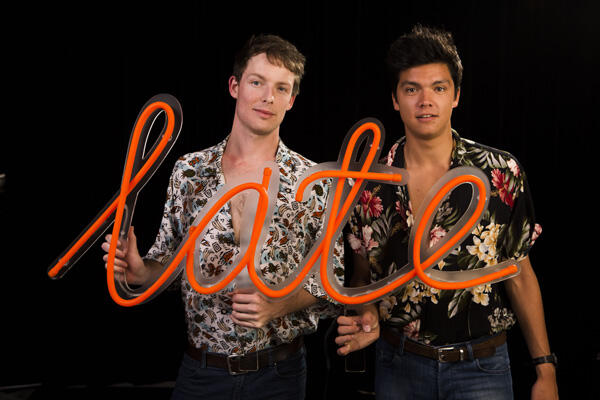
The launch of U late on 1 April sent a flurry of joy to insomniacs who have been deprived of late-night entertainment ever since That Guy vanished off our screens. Critic reporter Bella Macdonald caught up with U late presenters Guy Montgomery (Left) and Tim Lambourne (Right) to ask them about the show, themselves, and how they got involved in showbiz. What is U late about? G: It’s a late-night talk show that’s aware of its restrictions. We are going to play to our strengths, we’ve got a great interactive element. We’re looking to fill the void that’s been left by Eating Media Lunch, Moon TV, Back of the Y etc, so pretty much going to try and make a late-night show for the current crop of high school and university students that’s worth staying up and watching. We don’t really have any competition. Our biggest competitor is bed. What should viewers be looking forward to? G: Our news segment of the night is called “Today’s Genitals” and its just a way to discuss the news, stripped back down to nuts and bolts with some genitals on screen. And it has to be daily news stories. So people have to send us a photo of themselves with their genitals out and a laptop, or a newspaper if they’re old school. But we don’t want you to hold up the newspaper with a story about 70 casualties in Afghanistan, because I feel like maybe your penis might detract from the fact it’s serious. But if John Key does anything, please send it in. Anything with John Key, we would like a photo of it with your penis or vagina in it. Or Gerry Brownlee. T: We also have a segment called “Flat of the Week.” We’ll Skype in live to a flat each week, ideally one of those well known, disgusting ones. Sort of get to know the flatmates, what their living situation is, whether they’ve put everything on hire purchase and they’re living the dream or there’s six to a room eating Maggi noodles with cold water. Maggi is the pits, if you’re not on Mi Goreng you’re a sucker. And then at the end of the month we’ll have done four flats and we’ll decide which flat is the flat of the month. How and when can U late be viewed? G: U late will be on-air Monday to Friday from 10.30pm-midnight on the U channel, which is on Freeview and Sky. How did you get into comedy/TV presenting? T: My sister’s girlfriend was a camerawoman for TV3 and she was like, “bro there’s this real mean job going called ‘cue,’ where you sit in the 3 News studio and turn this little wheel which controls the speed of the words that the news presenters read to the nation.” So in my first semester at university, I was casually leaving class to go and just stare at Mike McRoberts and Hilary Barry, mostly Hillary Barry. G: I bumped into Guy Williams outside the Vic Uni library one night and told him that I recognised him from TV, and told him I had always wanted to give it a crack. And he was like, “well you just got to get out there and do it.” And I never did until I ran into him again in Auckland a year later. Do you think your breakthrough into the industry happened by coincidence? T: To an extent, you make your own luck if you’re working and you hang around long enough. As Woody Allen said, “success is just turning up.” You can’t really expect to be given a story on Nightline if you haven’t been working for free for six months, showing that you’re keen and you’re not a moron. Make yourself known and people respect it. And the other thing is that people inherently want to help people – if you tell them what your goals are and what you want to achieve, they will go out of their way to help you because they’re nice. How did you two meet? G: In first year, I came up to check out AUT and caught up with a now mutual friend. Most of the boys weren’t convinced about me, but Tim and I got on, and he stalked me on my Myspace and we both had the same background pictures. Which was mental. T: The boys were pretty bro-ey back then. Like pretty jock-ey. And Guy was fucking fruity. I was big. Real big. I came in big, came in hot. And we got on pretty well. How would you describe each other? G: Tim has a good metabolism. Can eat but doesn’t put on the weight. T: Guy has a good metabolism too, but he does work for his body. Did you see yourselves having your own TV show at this stage in your lives? G: It’s the dream job, pretty much we’re making it. If I was 14 at high school and someone asked me what I wanted to be doing in 10 years, if someone said you could be hosting a late-night talk show with one of your best friends I would have said “that sounds cool, pretty much close to ideal mate. How do you find me?” T: Three years ago in the news room I was pretty miserable and I was driving somewhere with my girlfriend at the time, having a whinge and a moan and she was like “well what do you want to do?” and I said I just want to make television with Guy. But we weren’t very serious and didn’t quite know anything then. And then a few years later it comes to fruition and I’m making television. What has been the highlight of your media career? T: It was presenting a news story when my dad and sister were there, I was 20 and working on the news desk and I got asked to do a news story live while they were in the studio. It was pretty loose actually. I am a terrible son, I always ask for money, I always forget to get a warrant of fitness so it was good to show that I was actually doing something. G: Tim and I used to have a show on George FM, called Monty and the Face. One night he was away and I played the Derek and Clive clip, “This Bloke Came Up to Me,” without receiving one single complaint. [Critic advises readers to YouTube the clip, ideally in the presence of young children or the easily offended.] And lowlight? T: When I had to report for 3 News and I was sitting outside a house with the cameraman. There had been a murder/suicide in Pakuranga on a Sunday morning on 23 December, it was a domestic violence story and it was so bad. And I was thinking, “This is the pits! Why would I want to tell the country about this?” G: I was working at the Canterbury A&P Show one year, promoting Popsicles. I was the only one who could fit the outfit of the female Popsicle band member, Sporty. We had to do a song and dance for the kids and hand out Popsicles. But I had to wear sheer tights and all the famers would yell out to me “nice legs.” Do you find it easy to become emotionally attached to news stories? T: No, it’s incredible how easy it is to not become emotionally attached, you’re so caught up in the competition doing the stories, getting it on air and making it better than your competitors, even in the news room, you just become a robot. You both seem like pretty confident people, what is something you have done that you have actually been embarrassed by? T: Matt Gibb took me to Fashion Week castings as we were covering Fashion Week and I was interviewing models. Then he said, “I think what we need for this story to work is for you to walk down the runway.” In front of all of New Zealand’s top designers, just trying to do their job, trying to find the look for their fucking brand. And he made me walk down there as if I thought I was a model in front of all of these people and it was just so terribly embarrassing, not one callback either. I suppose my cheekbones could be a little higher. How does being a comedian affect your love life? Good or bad? G: It hasn’t, there are just as many trains coming into the station as there were, which given New Zealand’s history of public transport isn’t as good as it could be. Are you planning any trips down to Dunedin? T: We haven’t booked anything but ‘cause we don’t have a social life we will be yearning for it a bit more. Bugger it, why don’t we just say yes. Hold us to it, put it in print. We’re coming. Make me accountable for it. We could do a live “Today’s Genitals.”
-
Features
The Strange Phenomenon of Christian Flatting
With Easter behind us and the mid-year break just around the corner, soon it will once again be the time of year to embark on that perennial venture we all love to hate: the flat hunt. For some, particularly newly-rounded freshers, decisions on flat group formation will involve fraught, Survivor-like exercises of conspiratorial whispering and furtive glances across the dining room, rapidly escalating into scampering up and down Dundas Street between classes, tapping feverishly on knock-weary doors. For others, however, the decision is more clear-cut. I refer to the strange phenomenon of exclusively Christian flatting. What are they so afraid of?I have always assumed that Christian flatting was largely a natural progression of what some at my hall unimaginatively dubbed “The God Squad” but which I presume to be omnipresent year after year in colleges across campus. I think you know what I’m talking about (eyeballing you, St. Margaret’s): those kids who stay home on Saturday nights transfixed by the TV, enjoy giving high-fives, fist-bumps and side-hugs, and seem to be unusually proficient at a vast array of sports. I had assumed that these individuals’ underlying paranoia about being corrupted by The World would exponentially increase outside the confines of the hall, and thus would logically translate into living in wholly Christian households. After all, there’s safety in numbers. But the know-it-all in me loves to be proven right and I wanted to find out for myself whether or not this was true, so I went about tracking down some Christian flatters. They weren’t hard to find. It turns out that they tend to coagulate in unofficial communes, comparable to the Centrepoints or Jonestowns of yore. These flats were well-known enough that I could show up unannounced to request an interview, having made only rudimentary inquiries at the Critic office about Dunedin’s georeligious landscape, and be fairly certain that these inauspicious dwellings would indeed be inhabited by people who loved Jesus. My first stop was a four-man flat on Duke Street. From what I came to understand, there were no fewer than five flats brimming with evangelical fervor within a rough 500-metre radius of their house. While these charming lads insisted that this was “a coincidence,” I could not help but muse on whether some sort of religious pheromones exist that attract these people to populate the same territory. Was it a biological survival mechanism? Not exactly. Those I interviewed said it was important to them to share the same morals and values with their flatmates, which allowed them to keep each other accountable. Martha* put it this way: “a Christian girl is less likely to be bring home random boys or steal or drink excessively. You expect more from a Christian person.”(It was at this point that my brain chose to incongruously remind me of a friend who took his Christian girlfriend’s bottom virginity because anal “doesn’t count.” Christians are known for a lot of things, but consistency of canon and conduct is not one of them.) It was not just about shared morals and cracking the whip when someone had sinned, though. In the same way that med students often end up flatting with and/or married to each other, through sheer overexposure and the loss of the ability to interact with regular humans, my interviewees also pointed out the obvious: that people, Christian or not, generally prefer to live with likeminded individuals. This little light of mineThat didn’t sound particularly conspiratorial. But given the obligatory Student Life component that featured in every flat I visited, one would have thought that these, ah, enthusiastic individuals would be foaming at the mouth to live with heathens. I mean, talk about a literally captive audience – the flat would be an inexhaustible opportunity to rack up points on God’s heavenly scoreboard. You know, the one that keeps a tally of how many jandals and sausages Student Lifers give away, and how many quizzes they lure people into filling out. Indeed, Samson*, whose girlfriend Delilah* is the only non-Christian in an otherwise all-Christian flat (cue “only gay in the village” reference), suspects Delilah’s flatmates of doing exactly this. When I asked if he thought exclusively Christian flatting was a good idea or not, he thought for a moment. “I think as long as everyone knows what they’re in for, it’s fine,” he said. “But the fact that they sort of roped in my girlfriend – probably in order to convert her – and then started putting limitations on her, wasn’t very good.” When I suggested the aforementioned idea to my Christians flatters (perhaps not using quite those exact words), they all agreed with me as I smugly recited some Bible verse about being a “light unto the darkness.” While they concurred that light-shining was undeniably important, they did not think that living in an all-Christian flat prevented their ability to do this effectively. The Duke Street lads explained (in fluent Christianese) that “living together as a Christian flat, we find strength in our home place – where we rest – where we can actually encourage each other in the faith, and that means that we can still be a light to those around us.” To be sure, the virtues of both cleanliness and hospitality were things these guys took deadly seriously. I had nary crossed the threshold before I was being offered a cuppa and a seat. The flat was spick-and-span, and the flatmates had a palpable sense of pride about this. Indeed, I was assured that, “all I did to tidy up before you got here was fold up that blanket.” Later, as I was being plied with a plate of freshly-baked cookies that rested atop not one, but two Bibles (“there’s also another one behind you,”) they explained to me: “We always open the door for anyone to come in, so we invite a lot of people over for dinner, Christian or non-Christian. We always buy extra food at the supermarket and stuff, just for people who come round. We’re having a barbeque tonight,” they added. “You should come, if you want.” Scarily, had I not had prior commitments of the pre-St. Patrick’s-drinking-and-blazing variety, I probably would have gone. They left me, I’m ashamed to say, with a warm, fuzzy feeling in my heart but also, more notably, a lead. “We do feel that we need to be a light to people, show them who we are,” they said. “We actually have friends on Castle Street that are Christians, and they were very intentional in flatting there so that they can be a light to the people around them. Are you planning to interview them?” I hadn’t been, but I did. Like many other Castle Street flats, the house was almost entirely devoid of furniture, although this was not, regrettably, due to the tenants having burned it (I was sure to inquire about this). Unlike many Castle Street flats, there was a cleaning roster written neatly in green on the side of the fridge. The flatmates met through Student Life. When I inquired as to whether they chose their location to gain maximum exposure to the unsaved market, this is what Simon* said: “A lot of my friends live on Castle Street and it was really important to me to set an example for them ‘cos most of them take it way too far … I wanted to support them, show them that there was an alternative to just going out and getting trashed to the extent that those guys do it.” Christians are people, tooIs life in an exclusively Christian flat fundamentally different from your average Scarfie dwelling? In contrast to the chronic TV addicts of my first year, the people I interviewed seemed to spend their Saturday nights much the same way most students do. The Duke Street flat said, “It’s definitely a social night for us. We generally aren’t even here – we’re just, like, socialising.” Apart from the cleanliness and the intentional hospitality, the differences in lifestyles seemed to lie in the little things. When asked their opinion on mixed flatting, for example, the Duke Street guys said they were fine with the idea, but would have to be conscious about things like “walking around with your shirt off.” “You mean you wouldn’t do that if you lived with girls?” I asked, incredulous. Without hesitation, there was a unanimous and scandalised “No!” “She’d stumble!” they cried. “Have you seen us?” Hell hath no fury like a Christian flatmate scornedDisappointingly, all the interviewees said their households didn’t have hard-and-fast rules about things like getting drunk, having sleepovers, or masturbating in the shower. When pressed, however, Martha admitted that if one of her flatmates brought a boy home she would “probably tell him to leave.” Having roared with laughter at my very question, she added “there’d be some serious problems if that happened.” Samson has been That Guy. Before meeting him, I was told that that his girlfriend, Delilah, had “a Christian landlord who has some specific rules about what can go on in the house, and the flatmates actively police those rules.” Chillingly, this turned out to be true. On one unforgettable occasion, Delilah’s landlords, upon discovering that Samson had slept over, rang his parents. “I thought that it was a bit of an abuse of their power, because Delilah is paying to live there, it’s her home, and she should be able to do whatever she wants in her room,” he said. Evidently, some landlords have not improved one skerrick since that one time when Mary and Joseph were refused lodging at all the inns in Bethlehem. And we all know how that turned out. Still clearly disconcerted by the whole fiasco, Samson added, “At 26, I just don’t need it. A lot of the time I have to turn up quite late and come through the window. It’s pretty sad.” Ironically, one of Delilah’s flatmates now has her long-distance boyfriend staying with her in her room. When I asked Samson how he felt about this, he paused, before saying quietly, “I’ve just found them to be really hypocritical.” The whole notion of student Gestapos policing their Nazi landlords’ diktats runs completely counter to the traditional student-landlord divide on which North Dunedin flatting culture is founded. Bitching about our landlords is one of the most important sources of student bonding, providing endless rant fodder when we earnestly discuss our marginalisation as second-class citizens of this city of broken dreams. How could Delilah’s flatmates have so shamelessly defected to the Dark Side? Never were these “morals police” more visible than in an interview that did not actually end up happening. On the morning my first interview for this feature was scheduled to take place, I received the following text from the girl: “Hey Britt, I’m in a wee bit of an awkward situation. None of my flatmates will help with the interview and they’re telling me I shouldn’t be doing it because I’m not a very good role-model Christian.” My jaw dropped. I didn’t even have to do an interview and I already had soundbite gold. But my feeling of hand-rubbing glee didn’t last for long. My worst fears had been confirmed – and I wished they hadn’t been, for the girl’s sake. If you’re reading this, flatmates of my interviewee that wasn’t, shame on you for proving the student body right about Christians. Who’s the poor role model now, bitches? Martha could relate to the above story. She flatted with non-Christians in her second year, but since then has lived in exclusively Christian households. While this year has being going well, she was miserable in her third-year flat. “Something happened, there was an altercation … You don’t expect a Christian to treat you really badly, because they’re supposed to be living with God in their life. But I was treated better by non-Christians who don’t have God in their lives, so how does that work?” Martha thought for a moment. “I was very disillusioned. We’re friends now, it’s fine … But they never apologised for it.” While the relationship between Martha’s shitty flatting experience and its monoreligious overtones is one of correlation and of not causation, she did add that, “I wouldn’t expect anyone to do what they did, even if they weren’t Christians, but because they were, you don’t understand how they could do that to you.” It’s not the Christianing, it’s how they’re ChristianingI feel that I encountered the best and worst of what Christian flatting has to offer. I met true gems of humanity who were open-minded, socially functional and nice to each other. I also met people that had known oppression by tyrannical flatmates who used God as the justification for their bad behavior. Christian flatting is a strange phenomenon indeed. It would seem that, like other types of flatting, it can go either way.
-
Features
Mapping Out the Friend Zone
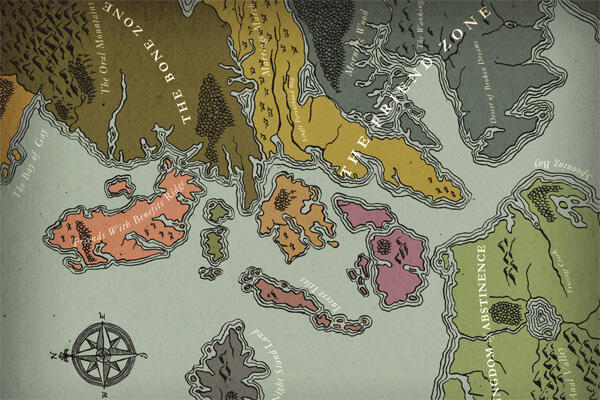
“You waited too long to make your move and now you’re in the friend zone ... if you don’t ask her out soon you’re going to end up stuck in the zone forever.” – Joey Tribbiani, Friends
-
Culture
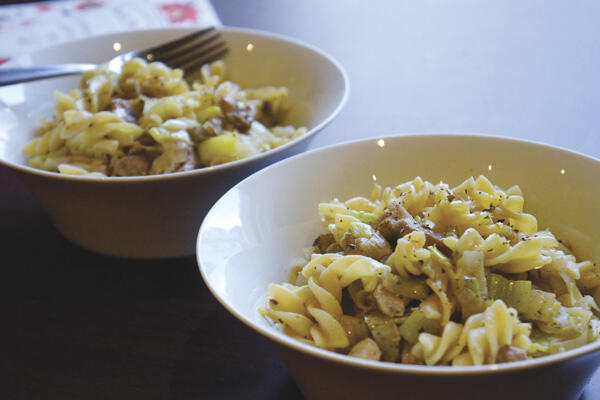
Leek, Chicken And Balsamic Pasta
Pasta is easy to prepare and always filling – cheers carbs. Chicken and leek paired together with a splash of cream makes for a comforting and indulgent meal, with balsamic vinegar offsetting the richness with a slight tang. It’s easy to adjust the quantity to feed a large group of people too, and would be extra delicious with some roughly sliced marinated artichokes folded through also. Season it well and you’re set. Ingredients250g pasta spirals or penne 2 TBS butter 1 brown onion, peeled and diced 1 leek, halved, washed and finely sliced 500-600g chicken thighs, diced 1 TBS dried oregano or basil 3 TBS full cream milk, or cream A splash (or two) of balsamic vinegar Method1. Fill a large pot with water and add a pinch of salt. Bring to the boil, then add the pasta. Cook for 8-10 minutes, or until firm to the bite. Drain. 2. Meanwhile, melt 1 TBS of the butter in a large pan over a medium heat. Add the onion and leek, and cook for a few minutes, stirring. Turn the heat to low and cover. Stir occasionally to prevent the leek and onion from sticking to the pan. Cook until soft. 3. Melt the remaining 1 TBS of the butter in another large pan over a medium-high heat. When it starts to bubble, add the chicken and oregano. Turn the heat down slightly and cook for 5 minutes or until cooked through. The chicken should be tender and only just starting to brown. 4. Remove the leek and onion from the stovetop. Add the milk or cream, stirring to incorporate. Add the balsamic vinegar, stirring to incorporate. 5. Toss the pasta, leek and chicken together. Drizzle with a little olive oil, some cracked black pepper and even some fresh basil if you feel the need.
-
Culture
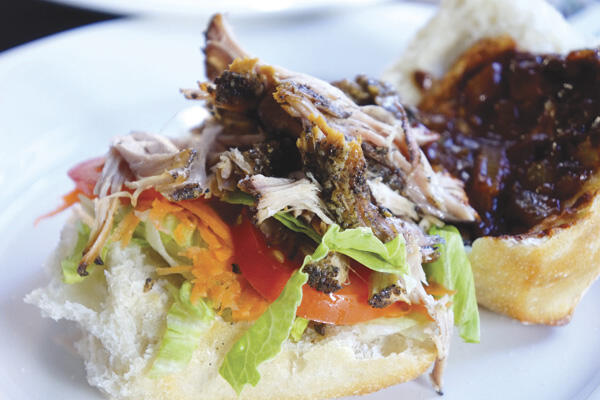
Pulled Pork (Round Two)
This pulled pork with a naughty black pepper crust is so tender it should be illegal. Juniper berries, which are typically used to flavour gin, are lovingly bashed to release their fragrant pepperiness and are combined with tropical, flirty pineapple. Hours upon hours of cooking time gently allow the fat in the pork to break down while all the flavours intermingle. The resulting pork is wickedly soft, with the cooking liquid serving as the baddest gravy out. Pack it inside soft ciabatta buns with crunchy lettuce and grated carrot to contrast its delectable texture and let the juices dribble down your hands as you wolf it down. Ingredients1.5-2kg pork shoulder Loads of ground black pepper 4 tsp salt 10 juniper berries, ground 1 can pineapple chunks in juice (not syrup) 2 tsp cumin (optional) Soft ciabatta buns, iceberg lettuce and grated carrot, to serve. Method1.Rinse the pork, then slap it down on a large plate. Pat it dry with a paper towel if possible. 2. Coat the pork in pepper all over until it is completely black. Shake over the salt and press into the pork. 3. Place the pork in a slow cooker, or large pot with a tight fitting lid. Add the juniper berries, pineapple juice and chunks, and cumin. Swirl everything together. Set to high initially – for an hour if using a slow cooker, or 15 minutes on the stovetop. After this, set to low and leave for at least 7 hours with the lid on. 4. Remove the pork from the slow cooker – some of it will have broken apart but you may well have some very large pieces intact. 5. Place the cooking liquid in a small pot and boil until reduced by half. This should take about 10 minutes. Pour this lip-smacking, runny gravy over the pork to keep it moist. 6. To serve, grab a chunk of the meat and shred it with two forks, or even your hands, you wild thing. Place it in a warmed, split ciabatta bun with a spoonful of the juice, a handful of iceberg lettuce and some grated carrot. Devour. Repeat.
-
Culture
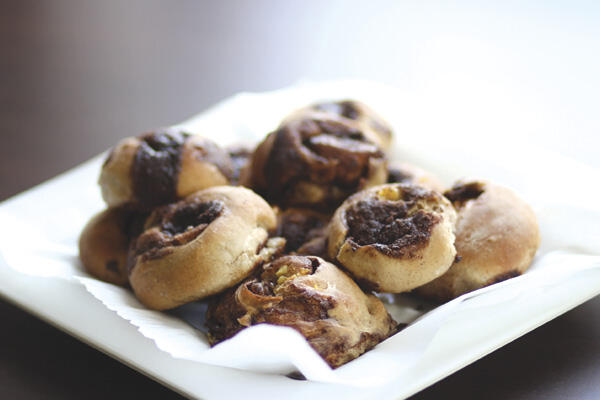
Cinnamon Buns
I adapted a pizza dough recipe from blog The Londoner to create the buns. The result is a pile of fluffy, sweet cinnamon-laden goodness. Citrus peel adds welcome bitterness, but leave it out if it ain’t your thing. Throw in a handful of slivered almonds for crunch, if you wish. Most importantly, try out the dough recipe for homemade pizzas – omit the cinnamon in the dough before rolling it out then spread it liberally with a mixture of 4 TBS tomato paste, 2 TBS olive oil, 2 tsp sugar and 2 tsp dried oregano. Top with a few handfuls of fresh baby spinach, crumbled feta and grated edam, and bake per the instructions below. Ingredients2 1/2 tsp dried yeast granules 1 TBS white sugar 2 TBS light oil (e.g. canola) 325ml tepid water 2+ cups white flour 2 tsp salt 3 TBS ground cinnamon For the filling: 75g butter 5 TBS sugar (soft brown or caster) 5 or 6 TBS ground cinnamon 75g glacé mixed peel (optional) 50g slivered almonds (optional) Method1. Preheat the oven to 180°C bake or 170°C fan bake. 2. Mix the yeast, sugar, oil and water in a bowl. Leave for 10 minutes at room temperature. 3. Mix 2 cups of the flour, the salt and cinnamon in a large bowl. Make a well in the middle and pour in the yeast mixture. Mix thoroughly until you have a consistently smooth dough. 4. Flour a board and tip the dough onto it. Knead it for about 10 minutes or until springy and elastic, adding more flour if it gets sticky. You may knead in anything between 1/4 cup and 1 cup of additional flour. 5. To make the filling, soften the butter at room temperature, or for 20 seconds in the microwave. If you use the microwave, don’t melt it completely (the residual heat will soften the rest of the butter once you beat it). Add the sugar and cinnamon and beat with a whisk until thick and creamy. 6. Split the dough in half and roll each piece into a rectangle about 20cm by 8cm. Spread 1/3 of the length with half the glacé peel, roll over, then spread the next 1/3 with half the cinnamon filling (directions below). Roll up completely and repeat with the other rectangle of dough. Slice into 5 cm lengths, then press these down. Place on a greased baking tray, gooey side up. Leave for 40 minutes in a warm place, covered with a damp tea towel. 7. Bake the cinnamon buns for 20-25 minutes. They should be golden on the outside with the filling bubbling, but still a bit doughy on the inside. Dunk in strong black coffee or serve with a steaming mug of tea. These are perfect for breakfast, afternoon tea or as a late-night snack.
-
Columns

Love Is Blind | Issue 06
Critic’s infamous blind date column brings you weekly shutdowns, hilariously mismatched pairs, and the occasional hookup. Each week, we lure two singletons to Angus Restaurant / Moon Bar and ply them with alcohol and food (in that order), then wait for their reports to arrive in our inbox. If this sounds like you, email news@critic.co.nz or FB message us. We just want to help our readers find true love. RomeoAfter finishing a box of beer to get me in the mood, my flatmates had to drive me to the date resulting in me showing up 20 minutes late. Upon arrival I showed her how truly uncoordinated I was by running into two tables on the way in. This would have been fine had she been drunk as well, but no: she was completely sober, much to my dismay. I started laying the foundations of this glorious relationship; I would divulge my secrets, but to be honest I cannot for the life of me remember them. After ordering the cheapest bottle of red wine on the menu we bonded over how disgusting it was and that’s when the texts began. My flatmates were continuing to pester me with questions about her and how it was going, and she too was being bombarded. At this point we decided to show each other the texts. This would have gone well if she didn’t take an eight out of 10 – and the fact that my flatmate said she should just get drunk and make it easy – as an insult. I got salmon for dinner with couscous, for I felt it made me seem more mature due my lack of sobriety. This same lack of sobriety got me hopeful for an adventurous evening; she kept pouring me more wine, saying I needed it because she’d had more than me. This was to no avail. She proceeded to take our relationship to the next level, which was not the level I wanted to go – having to talk about her. She started quizzing me about her and what I’d learned when truthfully I was more distracted by whether this eight out of 10 was going to make an eight-inch out of this three-inch. At the end of the night we both decided to go our separate ways. As it was for Romeo and Juliet, our mates both wanted us to themselves and were not as encouraging of our newly-formed relationship. So we left and I decided to go find my fill elsewhere, only to see each other later in Fever for one last dance. JulietAs part of a classic flat bucket list my name was entered into the Critic Blind Date. Unbeknown to me, my flatmates sent the request from my own email. One flatmate kindly lingered outside to check the date’s suitability – super sleuth dedication considering he arrived 20 minutes later. I heard him before I saw him – he walked straight into a table behind me and straight into the muffin tray on the counter. He soon told me he had already had a 15-pack. Despite this he ordered a beer, I had a cocktail, and we shared a bottle of red wine. He couldn’t finish his half so poured it into mine – not complaining. Small talk quickly turned into what he expected to hear in speeches at his upcoming 21st. He’s unsure if he wants his mother to know he began watching porn at age 8. He even extended an invitation to me to his 21st. Food soon arrived and stand-out quotes from him included “hah I am not a fine diner” and “what the fuck is this!” as he flattened a pile of couscous. Awkwardness was minimal as we traded texts asking how the night was going – his included “how hot?” and “banging later?” I was unimpressed with his sent text rating me 8/10. After dessert I was ready to find my friends, despite his friend’s order to “bring the duck to Queen St.” He soon text saying “def 10 out of 10,” very gentlemanly of him. He had told me he hated Fever, my regular, so it was a curious coincidence when I found him there, slumped on a couch, four hours later. He kicked me as I walked past and offered me notes in exchange for pole dancing/a work trial for Stilettos. I gapped it to the other side of the d-floor and ended the night in the safe confines of friends. It was a hilarious night – thank you Critic, the American girl who signed him up and of course the romantic staff at Angus Restaurant and Moon Bar.
-
Columns

Daily Grind | Issue 06
On St Patrick’s Day M and G thought it would be a fab idea to do wine before nine. With two pinot gris down and stomachs roaring they drunkenly staggered with the flat down to The Bog – a must on St Paddy’s. Stumbling through the door, their noses were assaulted with the scent of bacon and Guinness. They found themselves on tables and chairs fit for leprechauns next to the jovial live music. Swaying on their feet and waiting for a fry-up M spotted some other patrons sipping on a hot black handle dripping with cream and laced with whiskey. They had to have that thing between their lips. While G inhaled some hash browns off her plate and knocked back a Jameson, M slouched over to the bar and requested two Irish Coffees. To a drunken M and G it felt like an eternity waiting for these festive coffees. In the meantime, G even had time to go for a durrie run, get lost on George St and send an SOS text to M, who found her floating around Cosmic Corner. Once they made their way back to The Bog at roughly 10.30am, they nabbed the first Irish Coffees that landed on the bar and headed out the back. What followed can only be described as an Irishman’s hazy nirvana. Irish coffees are essentially two shots of whiskey mixed with an Americano coffee, topped with cream and a sprinkling of coffee beans and served in a glass mug. The thick cream sat contentedly on the black coffee, which somehow enhanced the whiskey – in a good way. We decided to mix the cream into the coffee and whiskey, which was a good call. After an early morning start, this hot delicious bev gave us the boost to get through to an afternoon of beer pong. While trying new things and on a coffee-alcohol buzz M and G thought they might suss out the pokies that the Bog had on offer. They swaggered over to some sort of Arabian-themed machine and chucked $2 in (which the bartender kindly withdrew for a bleary-eyed M). The pokies turned out to be about as fun as the potato famine. The atmosphere of The Bog on St Patrick’s Day (the friendliest day of the year) was unbeatable. The live band was cranking out the hits like “Danny Boy,” “When Irish Eyes Are Smiling” and “It’s a Long Way to Tipperary.” Even at 10am, the Bog, which is rumoured to make its yearly budget solely on 17 March, was cranking from opening. The old girl was chocka with green-clad students carousing with a few oldies. M and G give The Bog and their Irish Coffees a drunken 5/5. Fuck the poms, up with the IRA! 5/5 Coffee Cups
-
Columns

Lez Feminables | Issue 06
I don’t understand this gender/sex difference you keep going on about. A person’s sex is male, female, or intersex; is biological; and dictates the form a body will take. Wait! I know someone is reading this and assuming this means that being feminine/masculine is an inescapable fate! And you! That other person who is now thinking that trans* people are clearly crazy! You’re wrong! You’re ignorant and you’re wrong! Someone’s gender is their identity as male, female, or something else, and can be completely different to their sex. Though people used to believe in biological determinism and keep women in kitchens and men in garages, we have now realised that most people are a little bit “masculine” and a little bit “feminine.” I met this girl but she keeps saying she’s a he, what the hell? What’s going on with her? Or him? So at first glance he seems like a girl, yes? But he says to refer to him as a male? Well, before I go any further, here’s the golden rule for every interaction you ever have: respect the other person’s identity. If he has said to call him “he,” then do so. It can be really upsetting to have a very integral part of your identity ignored. That’s what I’d guess is happening here: the person you met has a gender identity that differs from what you assumed it was. Because we’re enlightened folk, we’ve figured out that our mortal shell bodies don’t always fit our minds, and this guy here is telling you his mind identity. His mindentity. Fuck I’m clever. Respect his identity. I swear my flatmate’s got hysteria. What’s hysteria? So many chicks are totes hysterical about the stupidest things! If your flatmate went to a gyno back in the nineteenth century and got a bit angry then yeah, she’d defs have hysteria. However, modern medicine has proved that your average uterus does not, in fact, sometimes go for a wander up to the brain and infect it with crazy babymaker juice. Which is what “hysteria” is, BTW: it’s when a woman’s uterus detaches and floats up to her head, causing her to become irrational. A quick spot of research will prove that this has never happened to anyone, ever. When it comes to the mind, our bodies can often be the temples of religions we don’t fancy. Our flesh clothes can’t always keep up with our brains, and that makes interaction with other brains and their ill-fitting bodies confusing at times. The key to navigating all this is to listen to people. It’s really not that hard. Respect the mindentity.
-
Columns

The More Things Change | Issue 06
This week, a masterpiece is uncovered, and science prevails. April 8, 1820: On a small Aegean island that nobody had previously heard of, a peasant discovered a statue that would subsequently become one of the most famous pieces of ancient Greek art ever. It is now called the Venus de Milo, and its arms are still missing. It was also discovered with a plinth inscribed with the name of the sculptor, but this has been lost because it put the statue into a different time period to what the scholars had originally thought, and they didn’t want to look stupid. Despite these minor issues, the Venus de Milo is celebrated to this day as a shining example of ancient Greek artistic beauty. I had a classics lecturer who expressed his great distaste at it always being surrounded by other tourists taking pictures, which has so far prevented him from fulfilling his dream of getting close enough to properly “feel it up,” in his words. (If you find yourself with similar ambitions, there’s a replica in the Otago Museum.) April 12, 1831: The British Army’s 60th Rifle Corps marched over the Broughton Suspension Bridge, and made it fall down. Apparently, while the corps were crossing it, they were amused that it began to vibrate in time with their footsteps. Presumably to enjoy this further they started to walk a bit differently and “whistle a marching tune,” and then the bridge collapsed. The water beneath the bridge was only 60 centimetres deep, so fortunately nobody drowned. There were a few concussions and broken bones, though, which was enough for the British Army to introduce a rule stating that all troops must break step when crossing a bridge – all for a story nobody’s heard since sixth-form physics. April 14, 2003: The Human Genome Project, the first attempt to sequence and characterise the entire human genome, was announced complete. It took 13 years and a large number of laboratories, and didn’t tell us nearly as much as some people thought it would. It uncovered a few features that seem to be human-specific, and gave some insight into the amount of similarity between our genome and those of various other organisms, but that was pretty much it. Even the approximate number of genes in the sequence hasn’t yet been definitively pinned down (it seems to be far fewer than initially estimated). Some thought it might be a kind of illuminating discovery that would tell us why we have complex social customs and make art and write poetry, but science has yet to explain any of these.
-
Columns

Hi Dr. Nick | Issue 06
Hi everybody! Weclome back! While home for the holidays, many readers would have gotten the “how’s uni?” and this week’s column is all about that question. Rather than the usual grunted “fine,” I want to get deep about it; deeper than a deep sea diver with a massive knob gets inside his girlfriend. Now some of you will be wondering why the hell the diver part of that simile was needed. In this instance it was to set up your expectations for some sort of diving related punchline (“Mariana? I barely know ‘er!”) so I could subvert that preconceived idea in a thematic link to the column. Also all deep sea divers have massive knobs. Probably. Anyway, let’s talk subverted expectations. See, we come to Uni with these preconceived ideas of what things are going to be like, usually spurred on by siblings’ or parents’ embellished war stories. Newcomers generally think uni will be a fairly liberal place where you can reinvent yourself and be a “Scarfie, bro!” and returners generally have expectations about flatting and partying in the Octagon for the first time, having rightly stayed away during first year. Thing is, uni is never what we expect and our expectations trap us in boxes tighter than a hot air balloonist’s. (All hot air balloonists have tight vaginas. Probably.) Grossly simplifying, we get trapped in one of two ways: 1) Things aren’t what we expected and the ensuing disappointment means we retreat into ourselves mentally, blaming ourselves for the situation. The classic example is the closeted kid expecting the campus to be more gay-friendly than San Francisco during Mardi Gras. While they’re likely to find uni a bit better than school, Otago’s not exactly Emerald City: your problems aren’t magically solved when you get here and that realisation can be devastating. 2) We try so hard to make things like what we (or others) expect that we end up doing stuff we hate doing, feeling guilty and worthless for it. The classic example is the kid who gets the reputation as “the party animal” and feels pressured to always be the drunken life of the party even when they just want to relax. Both traps are ridiculously common and can wreak havoc on your mental wellbeing if left unchecked. So be aware that expectations and reality are always different, and don’t be afraid to say if this divide is taking its toll on you – the OUSA Support Centre is great at helping with this. Right – that’s enough mental health stuff for a while! Next week let’s talk Small Dick Syndrome (divers need not read it). Till then!
-
Columns

For Fuck's Sake | Issue 06
This week I’m going to try to help some of you poor ignorant wretches out there who are embarrassing themselves on Facebook. We are young students, frequently engaging in shenanigans and debauchery, often vomiting in public places and having awkward sexual experiences – our lives are pretty embarrassing as it is. So please take this as a gentle nudge in a much less shameful and idiotic direction. In other words, everyone please stop being such fucking annoying Facebook twats. I cannot believe we have come to the point where hordes of people can piss me off while I am safely tucked up in bed. Firstly, stop clogging up my newsfeed with boring statuses about boring shit that is happening in your boring lives. I don’t know why you think the rest of us would care about how you are feeling all the time. The people who care will ask you themselves. And the rest of us don’t give a shit. If your lives were actually interesting, you wouldn’t feel the need to tell the world all about it because you would be too busy being interested. Thus, by posting all those statuses, the world can tell that you are both boring and annoying. My advice is to stop. Next, I want to talk about selfies, which in recent times have become cool again in a sort of ironic, Snapchat kind of way. But this doesn’t mean that all selfies are acceptable. There are some pretty simple guidelines to selfie-ing without looking stupid: (1) don’t take photos of yourself in bathroom mirrors; (2) don’t duckface; (3) don’t post pictures which very obviously show off your boobies, and then be like “oh my gosh! So embarrassing!” when all of your guy friends point them out; (4) don’t post a picture of you looking seriously hot with a caption that says “#justwokeup #suchanuglymutt” and then sit back and wait for all your friends to tell you how pretty you are; and (5) don’t have a “Me” album. These are all pretty simple principles. If you follow them maybe people will un-hide you from their homepages. Lastly, to all of the people who comment on stuff and think that the rest of us care about your opinions: we don’t. The only time unacceptable Facebook behaviour is acceptable is when it is committed by the people with whom I am friends purely so that I can be a spectator in their vastly foreign lives: the girl from school who now has a baby, the one who regularly posts passive-aggressive shit about whomever they are currently having a bitchfight with. For the rest of you, please, it’s just embarrassing. You’re all so much better than that.
-
Columns

Science, Bitches! | Issue 06
By now, many of you have probably fallen victim to the infamous Fresher Flu. With winter soon approaching, the last thing anyone wants to deal with is the (real) flu as well as the cold. The best thing you can do to help get you through, flu-free, is to grab yourself a flu shot. And before you stop and tell me that you’ve had the jab before, and still got the flu, make sure you’re not just talking about a nasty cold. A common rumour that flies around as soon as people start talking about vaccines, particularly as part of a school program, is that vaccines aren’t safe and can give you autism. What happened was this: a scientist called Wakefield did a study on MMR (measles, mumps, rubella) – that’s the shot you would have got at school at roughly age 10. They published a paper that claimed to have linked the MMR vaccine to autism. This was quickly retracted by the journal, because the claim could not be verified. This was a case of some pretty shoddy science. To begin with, they only looked at twelve patients – nowhere near enough from which to draw reliable conclusions. Secondly, they used self-reporting from the parents, who claimed that their kids developed signs of autism about six days from the shot. This could be biased in many ways. Finally, autism is a spectrum disorder – which means it can be different between patients, and occur for different reasons. A huge number of papers published since have completely disproved the claimed link between the MMR vaccine and autism. The problem we have now is that people continue to believe this, even though science says no. Hype has an incredible way of hiding the real facts. Let me be completely clear here: there is NO evidence supporting the link between the MMR vaccine and autism. So now that we’ve clarified that vaccines won’t give you autism, what about their safety? Well, a vaccine has to get through a huge number of clinical trials to even reach the public. If it isn’t safe, it doesn’t get through. Let’s not forget how vaccines have changed public health. You know how polio is such a problem around the world? I don’t, and that’s because the polio vaccine has done such an incredible job at almost completely wiping out the disease. Thanks, science. So, apart from the needle (which is tiny!) you actually have nothing to worry about. If you want to avoid the flu this season, just head down to student health and get yourself a shot. It costs next to nothing, sometimes free. Don’t worry, this winter you’re covered by science, bitches.
-
Columns

ODT Watch | Issue 06
The ODT sought to get right amongst the spirit of the holidays, reporting on key Easter issues such as the number of New Zealanders who claimed rabbit, egg, and hot cross bun-related injuries last year. Apparently (incorrectly) assuming their average reader has an intelligence level above that of the average hot cross bun victim, the front page on 1 April depicted the “world-first pest eradication program” of trained hawks picking off feral cats. Needless to say this provoked three responses: hysteria, smugness (for those wily old folk who got the “joke”) and those who apparently subscribe to the Gareth Morgan school of thought and wanted to know why the plan hadn’t been put into place earlier. It has also been an exciting week for the previously little-known ODT work car, which evidently gets out a lot more than any other ODT employee. And a handy hint for those of you who can’t hold off until you’re safely home: claiming that pissing in a drive-through is “normal back home” should see you away from any public urination charge. Critic suspect this excuse is particularly valid if “back home” is (insert whatever city you feel needs insulting).
-
Columns

Get Out Of The Ghetto | Issue 06
If your only means of getting out of the ghetto any time soon is the old waewae express, look no further than Dunedin’s local Mount Lee (that’s where the famous Beverley Hills Hollywood sign calls home). Signal Hill is a prominent finger of hilly goodness that rises sharply up from the Harbour, just to the north of the Stadium and Logan Park. Now I’m not one to make a mountain out of a molehill, but at the heady heights of around 350m above sea level, this puppy ain’t no small fry. If Signal Hill were in Auckland, it would eat smaller, lesser hills like Mount Eden for afternoon tea. So make the most of Signal Hill’s dramatic elevation, as lots of runners, walkers (often complete with Camel Baks and Leki sticks – I told you this was serious) and particular mountain bikers – who tend to drop off the top down the off-road tracks – do every day. From uni, you can head up Lovelock Avenue to Signal Hill Road, which takes you pretty much straight uphill. Along the way to the lookout you’re likely to observe: a) sleepy Opoho suburbia (discovering residential/non-student Dunedin is an adventure in itself); b) paddocks and farm animals; c) many buses of tourists passing you as you shuffle up the slope; d) a pretty sweet lookout and monument from 1950, featuring some carvings commemorating the signing of the Treaty of Waitangi; and e) a kickass view. Just to further emphasise the incline: Baldwin Street essentially sits on the North East Valley side of Signal Hill, and barely gets up one quarter of the total climb. Don’t let that put you off though: the view is absolutely amazing, and worth the burning quads. Enjoy. Get there: On foot or by bike. You can do it young grasshopper! Do: Take snacks (if you’re walking and might be a while). Don’t: Forget your camera. #greatview #adventure #YOLO Eat: Something you’ve brought yourself, maybe from Gardens New World on the way up.
-
Columns

Kant Stop Husserling | Issue 06
Some people want a ritzy inner-city apartment, in which they can recline on a bespoke eight-seater couch upholstered in the finest polar bear pelt, snort mountains of cocaine, and sit on their balcony dining on poached Galapagos tortoise and stroking their pet snow leopard while observing the plebs below. Others want nothing more than bowling, marijuana, White Russians, and a rug that really ties the room together. At the close of a particularly materialistic and megalomaniacal decade, 1999 film The Big Lebowski injected a shot of modesty back into the public consciousness. The film championed life’s simple pleasures, throwing back not only to the sixties through hippie protagonist The Dude, but to third century BC philosopher Epicurus. Like all ancient philosophers of note, Epicurus lived in Athens. There he founded a school in his garden, which was imaginatively dubbed the Garden. Here Epicurus and his students would mill around, talk philosophy, relax, drink lattés and watch experimental German films. The Dude channels Epicurus’s philosophy, living a simple life in the company of friends (even if one of these friends tends to fly off the handle and brandish pistols during bowling competitions). The Dude is buffeted through the story by our culture’s more tempestuous, un-Dude elements – vain capitalists, gold-digging libertines, porn barons, rug-pissers, German nihilists – and only a strict drug regimen and an impending bowling match against pederast nemesis Jesus keep his mind limber and his soul grounded. The criticism can be levelled, though, that The Dude’s lifestyle is propped up by others’ hard work. Someone built that bowling alley, someone distilled that Kahlua, someone wove that rug – and it sure as hell wasn’t The Dude. “Are you employed, sir?” the capitalist enquires of The Dude. “Employed?” he blankly replies. Later, The Dude is asked what he does. “Oh, you know ... bowling ... driving around ... the odd acid flashback,” he reveals, before choking on a Thai stick. Similarly, Epicurus could maintain a comfortable garden-based existence because ancient Athens ran on the labour of slaves and metics (non-Athenian workers). Therefore, the Epicurean way of life is arguably an incurably self-indulgent, middle-class ethos, which teaches us nothing about how to run society at large. Not everybody can live off welfare, for obvious reasons. It’s easy to see the virtues of The Dude’s way of life, but it’s also important to puncture its egalitarian hippie pretensions. The discerning Dudeist can’t realistically claim to be against elitism when his way of life relies on the existence of free rides. Then again, if people like The Dude exist, they are well worth the cost of my taxes.
-
Columns

The Leek | Issue 06
Amid tight government funding, falling enrolments and increased operational costs, the University of Otago has had to accept a rather tight budget for 2013 in order to continue to provide students with the high-quality services we’ve grown so accustomed to. At a University Council meeting, Vice-Chancellor Prof Harlene Hayne said that that given this environment, the budget “was not easy to balance.” Despite this pessimistic statement, it seems that the cuts and money-saving techniques the university has implemented to date have gone almost entirely unnoticed by staff and students alike. On account of this observation (and perhaps as a desperate bid for attention), the powers that be have deemed it appropriate to make further and more drastic changes regarding the university’s resources. The vast expanses of grass that cover our campus have been identified as a waste of space. In order to optimise the use of this land, it will soon be leased as pasture to small farm owners who wish to raise livestock in an urban environment. Areas that will be affected include the Union Lawn, Logan Park, the bits on either side of the river, and that weird part in front of the museum that everyone hurries through. In subjects that change very little with time, location and social climate (e.g. law, economics, politics, neuroscience) lecturers will soon be substituted with educational videos sourced from the archives of the former Soviet Union and the Communist Party of China – subtitled where possible. Further efforts to decrease faculty size will see the skilled but unnecessary doctors at Student Health dismissed in favour of a solitary veterinarian and our diligent Campus Watch replaced by a fleet of possums. Immeasurable success is predicted in this venture. The University’s 1,247 printers are to be auctioned off, usurped by a taskforce of Vietnamese children who will handwrite any documents you require on the spot, in about half the time a printer would take to procure them. These changes may seem extreme, but the university recognises that the little things count, too. With this in mind, a new ban on students bringing their own food and beverages to campus will be strictly enforced with routine bag checks, and online resources such as Blackboard and PIMS will only be accessible with a valid credit card. In addition to this, a 50¢-per-turn charge will be applied to all drinking fountains, sinks and toilets on campus and the expensive 0.5-ply toilet paper in the restrooms will be replaced with unlimited free copies of Victoria University’s student magazine, Salient. Go to town on it.
-
Culture
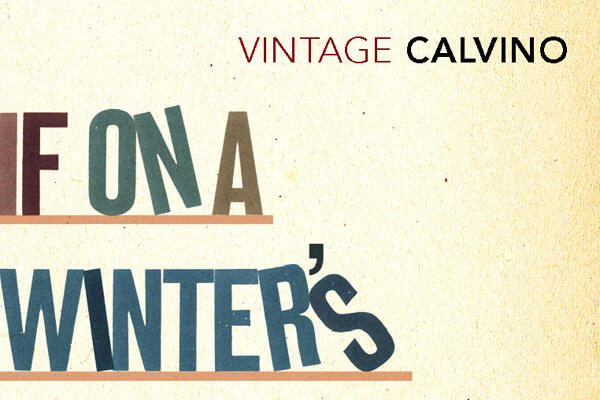
If on a Winter’s Night a Traveller
“You are about to begin reading Italo Calvino’s latest novel. Relax. Concentrate … Let the world around you fade.”
-
Culture

Bioshock Infinite
I could have written this review in five words: fucking awesome, go play it! However, it’s probably my responsibility to explain what exactly about Ken Levine’s new masterpiece Bioshock Infinite elicits this response. Despite the massive steps the video game industry has taken in the past 20 years, the truth is that it is still very much in its infancy. Nowhere is this more apparent than in the writing of video games. Not because it is bad, though sometimes we can all agree that is the case, but because it is derivative. When games stepped out of 8-bit graphics and into 3D storytelling, developers were faced with the predicament of how to approach an interactive story and the obvious, easy direction was to derive storytelling techniques from the film industry. Only now are we finally starting to break the chains of the film industry and discover the potential video games hold for truly powerful storytelling. On the frontline of this endeavour is Ken Levine, creative director of Irrational Games. Irrational Games released Bioshock in 2007 to high praise, for its conceptual depth, stunning graphics, and mind-melting story. The game mixed philosophy and science with a unique fantasy, while also maintaining a rollercoaster of a story and fascinating characters. Bioshock Infinite takes all of these successful elements from the series and expands them beyond your wildest expectations. The once inconceivable underwater city of Rapture from the first two Bioshock titles now seems like a cute idea compared to the staggering complexity and beauty of Columbia, the floating city in which b is set. Though based on twentieth-century British architecture and style, the flying vista feels like nothing you’ve experienced in real life, creating tourist-like moments of exploration. Everything you see is fascinating, whether it’s watching the intricate details of a nearby floating section of the city, or a shop front advertising the latest entertainment. The mood of the city is ever-changing with the elements; one moment the city is bathed in sunlight and the next it is plunged into a dreary fog. The combat retains the series’s mix of classic weapons such as rifles, pistols and shotguns with an array of psychokinetic powers known as vigors. Though “abilities” are hardly a new mechanism in first-person shooters, Irrational has a gift for making them unique. For instance, one of my favourite vigors is aptly named “murder of crows”; it allows me to send out a gang of murderous crows to attack my enemies. All weapons and vigors are upgradable, allowing you to augment your powers (e.g. any enemy killed with murder of crows becomes a “crow trap” in which any nearby enemies will become ensnared). The game’s best new mechanic is the skyhook. This accessory’s primary purpose is to attach to sky rails around the city. This creates amazing moments within the game where you soar through the sky and city. It feels a lot like those videos on YouTube of first-person rollercoaster rides – except you get to shoot people while you ride. The skyhook’s secondary function is as the most brutal melee weapon ever. It would be a crime to reveal any aspect of Irrational’s beautifully-crafted story. From the moment you begin every line, every picture, and every frame will having you deciphering the world around you. Decipher away, the story will still take your breath away. Rating: 9.5/10
-
Culture

Jack the Giant Slayer
Don’t we bloody love our expensive fairytale re-boots? Hansel and Gretel: Witch Hunters, Mirror Mirror, Snow White and the Huntsman – all released within 18 months. And I think it’s fair to say they’ve hardly been instant classics, despite the obnoxious lineup of stars that sign on (I would assume this is so they can afford to do Wes Anderson films and avant garde theatre). Jack the Giant Slayer is no exception. It’s a big, silly film with a butt-ton of famous people paying for their second home in Maui. That’s not to say it doesn’t have any value – the CGI is an absolute visual feast! The beanstalk is GODDAMN AWESOME. It was my favourite character, and it wasn’t even a character. You could make all kinds of secret club houses in its crevices. For some reason I got the vibe that it would smell great – earthy but fresh. The giants were also impressively grizzly, looking like especially big and dirty Urban Factory bodyguards. Unfortunately, the CGI fails to cover up the weak script and inconsistencies. For example, I doubt people of medieval times would say “I’m a bit keen” and wear Hallensteins-esque leather jackets (no matter how stylishly rustic they are). Although it was possible to laugh at such lameness (I certainly had an ironic cackle at the lines “don’t spill the beans,” and “you’re barking up the wrong beanstalk”) it was harder not to get annoyed that the only female character, Princess Isabelle, spent the entire film being repeatedly saved by Jack. During one of the 53 rescue missions, she even said to him “hold me,” which did not sit well with this reviewer. My advice is to view this film with a take it or leave it approach: shrug off the plain stupid stuff to enjoy its simple pleasures (“Take it” – Ewan McGregor being wrapped up in pastry like a lovely Scottish puff. “Leave it” – the beanstalk having perfectly placed hand holds for climbers). At the end of the day, one should take every opportunity to hear Bill Nighy voice mythical creatures. Rating: 2.5/5
-
Culture
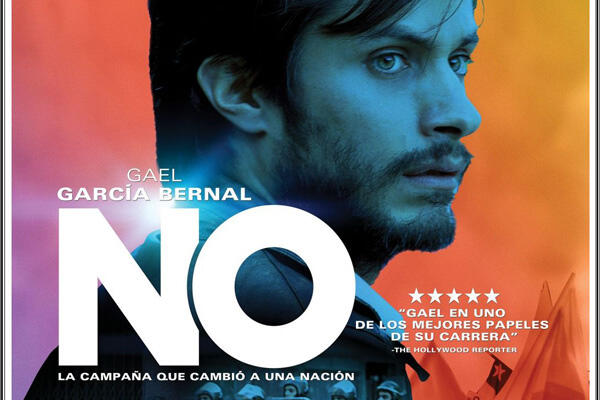
No
Those movies nominated for the illustrious Oscars are a typical bunch of tales (many think there are only seven tales) that take us on similar journeys, all similar but slightly different, and return us safely at the end. And for No, which was nominated for the Best Foreign Language Film Oscar, it is no different. This one involves the slaying of a monster; the monster in question is Augusto Pinochet, the Chilean army general and dictator of Chile from 1973-1988, and the sword-slinging hero is advertising executive René, played by Gael Garcia Bernal (The Motorcycle Diaries). The tale opens in 1988 when, following increased international pressure, a plebiscite of the Chilean citizenry is held as to whether Pinochet should have another 8-year term as President. From here the story plays out in the usual fashion: René is challenged to direct the No campaign, which will bring him and his family into the sights of a heavy handed and deadly regime. And to add more muddle to the picture, René’s boss is working on the Yes campaign, while unsubtly sliding threats his way. From here, the film’s novel elements are meant to set it apart from all those other generic stories in which a monster is conquered – be it dragon, blonde, or giant. Sure, there are a few of these elements, such as the film’s home-movie feel, but overall the pacing of the film is too slow. The director seems to have fallen in love with slow shots of people walking down streets as lens flares wash out the screen, and neglected what should be at the heart of a potentially powerful piece – the pacing. No is bloated by drawn-out shots that attempt to convey deep emotional intention, but simply drag it down. It is a shame that a memorable story of true importance about an ad man who helped to take a stand against a dictator was not crafted into something catchier. Rating: 3/5
-
Culture
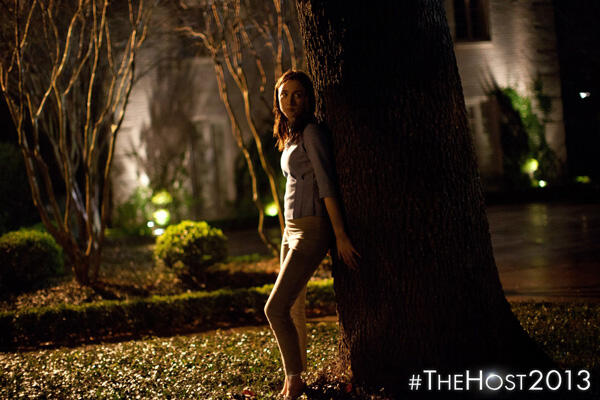
The Host
Considering the Twilight saga brought over 10 hours of sparkly humans and pained expressions to our cinema screens, it’s fair to say I didn’t have huge hopes for The Host, the film adaptation of the sci-fi/romance novel written by Stephanie Meyer in 2008. It didn’t help that it was a Sunday morning, I was hung over and after a long walk to the Octagon had missed the first 10 minutes. Once I’d got up to date on the back story (an alien species called “Souls” have inhabited the minds of humans and are slowly taking over Earth) I found myself actually quite enjoying it. Saoirse Ronan (think Lovely Bones but less ginger) is Melanie, a human girl fighting against the invasion who is captured and whose body is taken over by one of these souls. Souls are portrayed as spidery, silver “balls of light” that enter a human body through an incision in the neck and proceed to command its thoughts and actions. Once present in a human, the Soul’s main distinction is a disturbing silver iris and tendency to dress only in white. Melanie’s rebellious and determined consciousness survives within her mind and wrestles with this new Soul, named Wanderer, for control of her body. This leads to plenty of scenes involving internal arguments between Mel (portrayed as an ethereal voiceover) and Wanderer (speaking aloud), which can border on tedious. Generally, though, she pulls off the role pretty well, one perk of which must have been filming the unnecessarily large number of romantic scenes (Mel is in love with one guy while the new mind of Wanderer is after another, resulting in a bit of an awks love triangle). These scenes are inserted at regular intervals, often as dreams or flashbacks and involving rain, dancing and/or bedsheets. Luckily for Saoirse both suitors are very easy on the eye and leave you feeling that the end of the Earth can’t be that bad. With the all the embraces and long sweeping shots of desert terrain, there isn’t much time left for action, despite the lengthy two-hour running time. A conveniently happy ending even implies the possibility of a sequel, oh the joy. The Host shouldn’t be judged by its Twilight association and is worth a watch, if only for the boys. Rating: 3/5
-
Culture
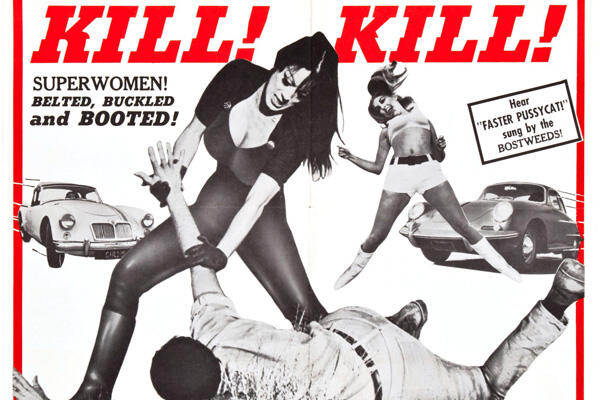
Faster, Pussycat! Kill! Kill! (1965)
Russ Meyer really liked boobs. His favourite Hollywood actress was Dolly Parton, he described 39DD-toting Anita Ekberg as “the most beautiful woman I ever photographed,” he had a penchant for casting women in their first trimester of pregnancy (gross), and his two favourite expressions were “gravity-defying” and “cantilevered.” Meyer was the most famous exponent of the film subgenre known as “sexploitation.” Sexploitation had a very simple formula: a) boobs; b) campy dialogue; c) violence; d) boobs; and DD) boobs. Faster, Pussycat! Kill! Kill! is Meyer’s most celebrated creation, an 83-minute slab of brutal, overblown, ridiculous male fantasy. Following an afternoon of playfighting and driving fast cars, three thrill-seeking go-go dancers (their hierarchy clearly established by boob size) encounter an all-American car enthusiast and his scantily-clad girlfriend, Linda. After beating Ken in a race, Varla (Tura Satana), the trio’s aggressive leader, kills him with her bare hands. The dancers then take young Linda hostage and bring her to an isolated ranch. While they hunt for the lecherous rancher’s hidden fortune, the rancher tries to use his gargantuan, retarded son Vegetable to keep Linda at the ranch as a slave. See what I mean? Meyer’s obsession with “Amazonian” or “Junoesque” women tended to overshadow his actual work, and by his later films (when, ah, surgical techniques had improved) he was heavily criticised for turning women into mere “tit transportation devices.” Faster, Pussycat! Kill! Kill! is the only Meyer film that non-fans will recognise, partly because it has had an easier ride with the censors (there is no actual nudity, just light years of cleavage) and partly because it basically represents the Meyer ethos in excelsis – in particular, Varla is seen as the epitome of Meyer’s tastes in women (by most accounts, Satana basically played herself). For the finest in campy dialogue (“you look to me like a gal with a big appetite for everything”), cars driving around in circles and hitting things, and mammarific warrior goddesses, look no further than this consummately trashy gem.
-
Culture

David Bowie - The Next Day
Upon learning that David Bowie was to release his twenty-fourth studio album this year, my expectations weren’t altogether very high. With Bowie recently entering his sixty-sixth year on this planet, my mind instantly feared a lifeless and desperate-sounding record, the sound of an old man trying in vain to squeeze back into the leather pants he wore 30 years prior and “rock out” again. Surely at best it’d be a passable album, a wheezy victory lap ran out of vanity or boredom; at worst, it’d be a cringeworthy flop. Heartened by but skeptical of the torrent of five-star reviews The Next Day garnered prior to release, I got my hands on a physical copy and stared at it long and hard. The artwork, a minimalist defacing of the cover of Bowie’s classic album Heroes, offered no clue as to its contents. With no idea what was in store for me, I took a deep breath, put the CD in my computer and hit “play.” The Next Day kicks off with a species of song well-known to Bowie fans: a dance tune you couldn’t possibly dance to. Despite being propelled by a thumping four-on-the-floor beat, opener “The Next Day” is dense with detuned guitars and pitch-black lyrics; try as you might, you simply cannot boogie along to Bowie growling “here I am, not quite dying, my body left to rot in a hollow tree.” This is not the sound of an old man masquerading as a young one, fleeing from the notions of age and mortality. The song, like the rest of the album, is rife with the stench of death. The first third of The Next Day is drenched in the same grey melancholia as the opening song, from the sleazy and King Crimson-esque “Dirty Boys” to the slow-motion ballad “Where Are We Now?” before culminating in the irresistible and heart-rending album highlight “Valentine’s Day.” Only when the frenzied “If You Can See Me” comes hurtling through the speakers does The Next Day get a sudden jolt of adrenaline, snapping out of its morose stupor. The subsequent few songs are wide-eyed and vigorous; suddenly, Bowie doesn’t sound aged and pensive, but well and truly young again. He even references this uncanny youthfulness on the psychedelic anthem “I’d Rather Be High,” chuckling that he’s “17 and (his) looks can prove it.” Ziggy, it’s been a while. After this headrush Bowie guides The Next Day back down to earth for a masterful, flawless third act, as solid as any four-song suite in his discography. Beginning with the glorious “How Does The Grass Grow?” Bowie descends back into the dark introspection in which the album began. “You Feel So Lonely You Could Die” is a suitably melodramatic penultimate song, Bowie declaring he “can see you as a corpse hanging from a beam” over an epic backdrop of strings and a choir. The song ends with a sly nod to Ziggy opener “Five Years,” concluding with the drum pattern with which the song begins. But no song on The Next Day, or any Bowie album for that matter, is as bleak or as harrowing as closing track “Heat.” Dealing with lyrical themes such as prison, the apocalypse and his hatred for his father, this cavernous hymn feels less like the work of the Thin White Duke than Michael Gira of Swans, and would have fit comfortably on their last album The Seer (coincidentally, Bowie declares himself “a seer and a liar” towards the song’s end). By the time The Next Day fades from your speakers, you are left feeling like you’ve just stepped off of a rollercoaster. I entered the album praying it would be satisfactory, and instead got a musical and emotional tour de force as grand as any Bowie album to date. Simply put, The Next Day is a masterpiece, a testament to Bowie’s undying creativity and a fitting swansong to his four-decade career. Rating: 5/5
-
Culture
The Strokes - Comedown Machine
At this point in their career, The Strokes really don’t have much to lose. After releasing two near-perfect, critically-acclaimed albums in quick succession, the New York quintet stumbled on their overlong third LP First Impressions Of Earth, and have since failed to reignite the music world’s faith in them. Taking a more experimental approach on 2011’s Angles yielded excellent and torpid results in equal measure, leaving many Strokes fans doubtful of the band’s future. And now, with little warning and even less anticipation, fifth album Comedown Machine has hit the shelves. At this point nobody really gives a damn what direction they go from here, whether they continue their nerdy 80s aesthetic of late or go balls-to-the-wall crazy and do a dubstep folk album. The promising metallic guitar squall that opens first track “Tap Out” suggests a heavier, more abrasive direction, but it doesn’t last; no more than five seconds in, the band locks into yet another nerdy 80s groove à la “Macchu Picchu.” Sigh. Things are shaken up ever so slightly on this song by Julian Casablancas singing in falsetto for the first time, but this sonic addition is too slight to distinguish “Tap Out” from any song on Angles. That, and he sort of sounds like shit when he does it. Across its 40-minute duration, Comedown Machine awkwardly switches its objective between trying to sound like classic, early-00s Strokes and a different band altogether, resulting in a diverse but utterly confused record. Lead single “All the Time” does an adequate job of recapturing that Room On Fire kind of effervescence, but is instantly succeeded by the corny “One Way Trigger,” an unintentionally hilarious attempt at ripping off A-ha’s “Take On Me.” Really, guys? Not every new creative venture is deplorable though, to which the restrained funk of “Welcome To Japan,” the technicolour pulse of “80s Comedown Machine” and the vintage wireless crackle of “Call It Fate, Call It Karma” can attest. But even for these intermittent bursts of fresh air, Comedown Machine remains simply too flawed and inconsistent to truly satisfy. For the Strokes diehards out there, or those curious as to what the once-esteemed band sounds like in the present day, Comedown Machine is worth a listen. But only just. Rating: 3/5
-
Columns

Editorial | Issue 06
I’m always up for a solid money-making rort. My car is adorned with dozens of parking receipts, designed to deter parking wardens from checking whether I have actually paid for parking on a given day. If I do pay for parking, I only buy 10 cents’ worth, limiting my liability to a $10 “expired ticket” fine instead of the dreaded $40 “no ticket” fine. This system has saved me hundreds of dollars over the years. So that’s why I would never judge the opportunistic entrepreneurs responsible for claiming the 4G spectrum under the Treaty of Waitangi. Right on, sistahs. I would do the exact same thing were there but a single millilitre of Tangata Whenua blood in my lily-white veins. But it’s always amusing to see the moralistic comments trotted out in the media in support of the latest claim for water rights, taniwha relocation fees, or newly-created telecommunications spectra. One can only presume the would-be MLKs don’t actually believe their own hype. Words like “justice,” “mana,” and “historical redress” are thrown around liberally by the more showmanlike claimants. Others choose to go down a more blasé commercial route, arguing simply that the precise wording of particular Treaty clauses entitles iwi to cash money, regardless of any moral considerations. The fact is, the vast majority of major Treaty claims are nothing more than naked money-making schemes. Iwi CEOs are laughing all the way to the bank. Repeat claimants such as Maori Council co-chair Maanu Paul have my absolute respect for remaining poker-faced during negotiations about the 4G spectrum – presumably bursting into uncontrollable laughter as soon as they leave the boardroom. Does anyone really believe that Maori tribes in 1840 grudgingly ceded sovereignty on condition that the profits from unforeseeable technological advances 160 years down the line would be immediately payable to their descendants? Does anyone really believe in taniwha? Admittedly, religious groups are running a rort of their own (tax-exempt status in New Zealand), and the concept of giant sea monsters that totes physically occupy profitable waterways without ever having been seen in the 173 years since the Treaty was signed is no more ridiculous than any other superstition. But again, I’m not judging. The money is there for the taking, and the iwi CEOs are seizing the day. Carpe diem. Choose wagyu. While recent Treaty claims are among the most lucrative and publicly visible rorts, there are plenty of other swindles occurring each and every day, disguised in moralistic language and backwards rationalisations. For example, politicians who preach against material excess and greed invariably pocket their $200,000+ salaries with the rationale that they “need a certain level of material comfort in order to have the strength to save the poor.” Keep telling yourself that, guys. Rorts are an inescapable part of life, and there is no better place to embrace this fact than university. You will be left behind if you don’t take every advantage. Get your hands on lecture notes from an A+ student, there’s always a set floating around. Target your study towards your exams rather than studiously learning the entire syllabus. Know thy lecturer, and whether they tolerate dissenting views – if not, toe the party line and regurgitate what they want you to say. If you ignore my Machiavellian counsel through some misguided idealism, you’re selling yourself short. This is your career we’re talking about. Don’t be the kid with the righteous halo and the B-minus. Don’t be the sucker who pays for an adult ticket when the stadium turnstile is unmanned and automated. As the fourth Congressional District of Illinois shows, boundaries are made to be warped.
-
News
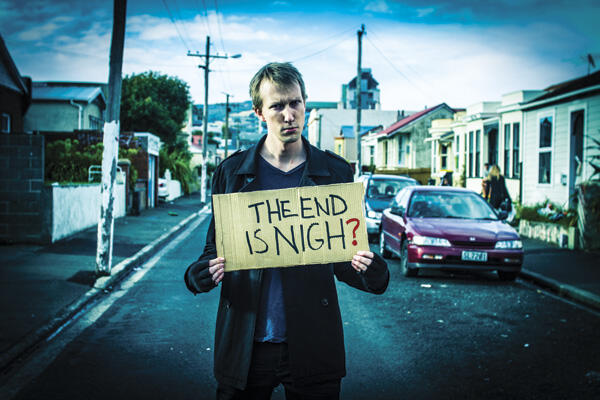
Large student party tipped to occur on local street
Students are gearing up for the 2013 Hyde Street Keg Party as OUSA, the University and the DCC nervously look on. The event has come under heavy criticism in recent years, and it is widely believed that any serious mishaps will spell the end for the party and potentially lead to a North Dunedin-wide liquor ban. The format of this year’s event, which will take place on Saturday, has been the topic of heated debate, and OUSA has stepped in to help residents ensure the safety of revellers. At the same time, figures within OUSA are acutely aware that any negative publicity arising from the event will now reflect badly on the organisation. While the DCC and the University had hoped to cap attendance at 2,500, around half that of last year, OUSA has made up to 3,500 tickets available. This will make the party the second-biggest in its history. Tickets will take the form of non-transferable wristbands in order to limit the event to students, residents, and friends of residents. Residents of Hyde Street have each been given an allocation of 11 tickets to give to their friends. Residents of surrounding the surrounding area, including lower Leith Street, lower Clyde Street, and sections of Albany and Frederick Streets, have also been given tickets. Approximately 1,000 tickets will also be sold at $5 apiece from the OUSA office. Half will be sold on Monday 8 April and half on Tuesday 9 April, from 11am. Purchasers must be Otago students in second year or above and show a current student ID. According to OUSA President Francisco Hernandez, “proceeds of the ticket sales will go towards paying security, covering the cost of the emergency services there, and providing food and first aid.” OUSA has taken a number of steps to improve safety at the event. Hernandez told Critic that the organisation has “increased the number of security personnel from four last year to 22. We’re putting on more food ... Meatmail are coming at lunch to provide a pig on a spit, we’ve got student health on site as part of the St John’s crew, “Are You Okay?” volunteers will be there, as well as first aid.” When interviewed by Critic last month, University Vice-Chancellor Harlene Hayne was clear that the University would oppose future iterations of the event if numbers were not reduced and safety improved from last year. Prof. Hayne attended the 2012 Hyde Street party, and described “carnage literally spread from Hyde Street almost to the botanical gardens with students passed out because they’d had way too much to drink. “They had no ID on them, we had no way of knowing who they were or where they belonged, so I was very, very concerned about the safety of the individual students.” Hernandez predicts that any mishaps at Hyde Street this year will have drastic implications for student culture in Dunedin, saying a North Dunedin liquor ban would be “80 per cent likely” in such a scenario. However, Fran also emphasised that OUSA is “not expecting Hyde Street to be a balls-up. We’re expecting it to be a safe and fun event.”
-
News
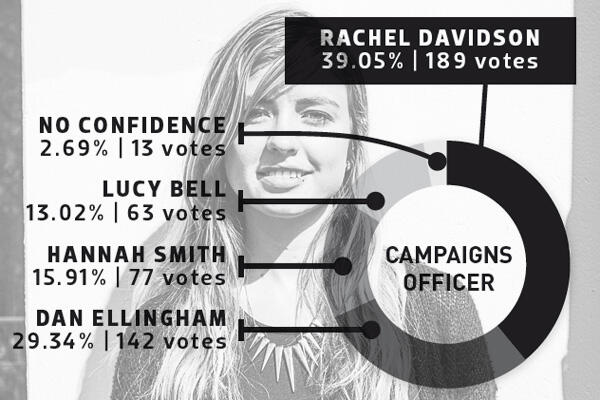
Logic prevails in OUSA by-election
No Confidence crashed to a stunning defeat in the OUSA Campaigns Officer by-election, collecting a meagre 2.7 per cent of the vote as Masters student Rachael Davidson swept to victory. Davidson collected 189 votes, or 39 per cent – a margin of 47 votes (9.7 per cent) over second-placed Dan Ellingham, who even with a three-way split in the sensible vote was unable to ride the meathead constituency to victory. Davidson ran on a platform of opposition to the North Dunedin liquor ban and increasing awareness of mental health issues in the student body. Her campaign was notably better-run than those of her competitors. According to an OUSA spokesperson, “this shows that more advertising of your candidacy works.” OUSA President Francisco Hernandez was happy with the result. “I would say the best candidate won,” he said. “The voters are never wrong.” Critic asked Hernandez whether this extended to John Key and Hitler. He awkwardly answered in the affirmative. 484 students voted in the by-election, a slight improvement on the 451 who voted in the Welfare Officer by-election. Hernandez said the turnout was “good, but it could have been better,” noting that “ideally, [at least] 50 per cent of the student body would vote in these elections.” Critic wonders how a turnout less than one-twentieth of the “ideal” number could reasonably be described as “good.” The result means that OUSA will finally have a full Executive after its third by-election of the year. The Campaigns Officer position became vacant in mid-March after Ruby Sycamore-Smith, the former Campaigns Officer, won the Welfare Officer by-election. “I’m looking forward to working cooperatively with my executive to make a difference to students,” Fran said, reading from his Soundbites 101 notes.
-
News

ODT makes shit up for the last time
The Otago Daily Times reported that seven fires were lit in the student area on Saturday 23 March. The 25 March article “Students blame authorities” also claimed that 300 people had gathered on the street by 11pm, and that revellers had to be dispersed by “more than a dozen police officers, including a dog handler and two paddy wagon crews.” However, OUSA have slammed the claims as “exaggerations.” President Francisco Hernandez described the incident as “complete media hype. The only thing [the police] did was take away a bale of hay … from what I’ve been told, it was a complete media beat-up.” OUSA has told Critic that Campus Cop Max Holt can corroborate their claims as to the lack of disturbance. They pointed out that no students were arrested that night – a fact that would have been highly unusual had the ODT’s reporting accurately reflected the mood on the night. Holt could not be contacted for comment before this article went to print. If he supports OUSA’s claims, Critic intends to seek a retraction from the ODT, and will pursue a Press Council complaint should this retraction not be made. While Critic understands that some fires were lit, most had been extinguished by midnight when the police arrived. The ODT’s photographer also failed to capture any of the “disturbance,” instead taking a picture of some miscellaneous char on the road. Police officers and a couple of students were visible in the in the background, but appeared to be interacting entirely peaceably with each other. The fires were lit after a Castle Street flat party was shut down by noise control at around 10pm. Students were forced onto the streets and took their discontent out on furniture. This resulted in a fire services callout at around 11pm, who in turn contacted police. By the time police arrived the crowd had already largely dispersed and all fires had been extinguished. The ODT claimed to have interviewed 20 residents of Castle Street the following day. However, none of these sources’ quotes directly corroborated the paper’s version of events. A fourth-year student who was a witness to the fires told Critic, “it’s a tradition I don’t want to see gone, back in my second year it was just what you did. Now it’s becoming an act of rebellion.” When asked whether he thought that lighting fires in public places was unsafe, he replied “Nah, not really, it’s just fire. God gave us fire for a reason. If you are quick enough with the execution, it’s all good.”
-
News

Ironic lack of fringes among festival winners
Dunedin Comics proved to be surprisingly hilarious after taking out eight of the 12 awards to celebrate the end of Dunedin’s tenth Monster Fringe Festival. The Festival, which ran from 14-24 March, held its awards ceremony on Monday 25 March at Queens. The ceremony featured comedian Simon McKinney and local band Kill Martha. The Yellow Men (Dunedin) laughed their way to victory, taking away the Best of Fringe award for their performance art series Re: Perform, as well as Best Visual Art. Jed McCammon and Clarke Hegan of the Yellow Men were commended by judges for their “inexhaustible supply of creativity” and the way they “consistently engaged with audiences in multiple spaces throughout the festival.” Award nominee Lockie Scott was up for a nod for Most Promising Work for Comic Addiction Presents: Relapse, and despite eventually losing out to Break In by Ad Hoc Productions, Scott said it was “great to see another Dunedin team taking top honours.” He also commended other Dunedinites including the ladies of “What Is This, Woman’s Hour?” for winning best Comedy and the Yellow Men for winning Best in Fringe for their awards. “It just shows that no matter what the rest of New Zealand and the world can throw at us in fringe arts, Dunedin can match it.” Festival Director Paul Smith hailed the artistic programme of this year’s Festival as “outstanding,” and commended the “huge effort” judges made to see so many shows. Critic wholeheartedly agrees; being force-fed culture or comedy really must be a heavy burden to carry.
-
News
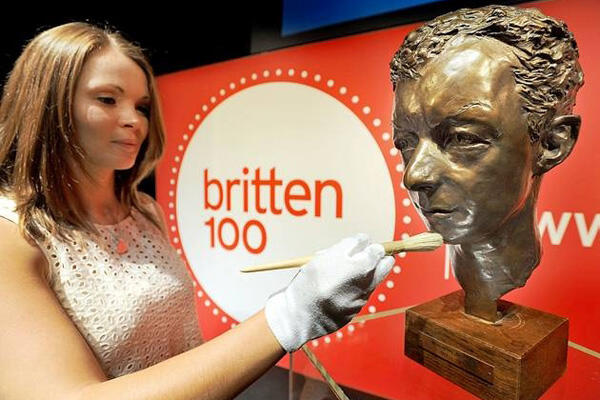
Hail Brittennia
From 12-24 April the Department of Music is hosting a festival to celebrate the centennial birthday of the renowned English composer Benjamin Britten. Britten was a key figure in twentieth-century British classical music, composing music for opera, film scores and more. The festival, directed by Tessa Petersen and Judy Bellingham, comes courtesy of the Britten100 Festival organisation in the UK, which has provided funding to the University. The organisation has confirmed that this will be the southernmost Britten100 festival in the world. There are a great many events taking place over the two weeks of the festival, including illustrated lectures from Professor of Irish Studies Peter Kuch, Professor of Scottish Studies Liam McIlvanney, and Professor of Music John Drummond, as well as lunchtime concerts featuring chamber music by Britten and a performance of Alan Bennett’s play The Habit Of Art, in which a central scene depicts a meeting between Britten and his colleague and friend, poet W.H. Auden. Admission to most events is $5 for students, with booking essential for the events on Friday 12, Tuesday 16, Friday 19 and Sunday 21 April. A festival programme can be found at otago.ac.nz/music, and tickets to each event can be purchased at the Music department office in Sale/Black House, corner of Leith and St David Streets. Season tickets to all events are also available from the Music department office for $60.
-
News
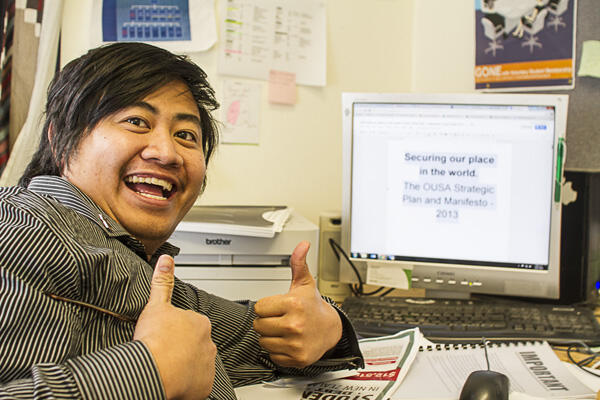
Hernandez hard at work
OUSA President Francisco Hernandez has released his first quarterly report, containing a detailed breakdown of the progress he has made toward his plethora of campaign pledges. The report, which stretches to 15 pages, has been kindly summarised by Critic in this 265-word article. The first five pages include Fran’s report on the day-to-day aspects of his job. The last 10 pages comprise his pledges (of which there were 96) broken into five categories – “Active Engagement,” “Provide Relevant Services,” “Increased Accountability,” “Financial Responsibility,” and “Environmental Sustainability.” Fran considered his pledges to be around one-third complete. After quibbling with his scoring system and a couple of his claims, Critic put the figure at around 30 per cent. Significant progress had been made on environmental sustainability, with about 40 per cent of pledges delivered; and on active engagement, with around 35 per cent delivered. Finances were also healthy, with OUSA looking certain to run a budget surplus. The category with the least progress was accountability, at around 23 per cent complete. Most of these pledges concerned political campaigns and engagement with the union movement, areas that will presumably now be addressed by the appointment of a permanent Campaigns Officer. One of Fran’s setbacks has been the abandonment of plans to create a student council which would have “broadened the OUSA governance structure” by introducing a second body beneath the exec. Clearly not a fan of the whole “collective responsibility” thing, Fran laid the blame for this failure at his fellow execcies’ feet, speculating that they were opposed to the scheme because they “didn’t want to share their power.”
-
News

Standbys stood down
Air New Zealand has decided to scrap its popular standby flights system from 6 May. The system, which was introduced last year, allowed passengers to catch last-minute flights around the country for $69-$89. The move will hit Dunedin flyers particularly hard, with the lack of competition in the Dunedin aviation market making standard flights notoriously expensive. Many students have come to rely on the standby system, which allows them to fly home at short notice, often at a fraction of the cost of a standard fare. Air New Zealand claimed the move was driven by consumer demand. A spokescunt told the Otago Daily Times that “the vast majority [of passengers] prefer cheap confirmed tickets over the uncertainty of stand-by travel.” OUSA President Francisco Hernandez slammed this rationale as “nonsense” and “PR bullshit.” He described the end of standby flights as “tragic. I always take standby if possible because it’s cheaper. It saves money on the OUSA credit card.” “Aviation commentator” Peter Clark told the New Zealand Herald that any objections to the move would be “a storm in a teacup,” claiming that “there are so many cheap fares out there now anyway that it doesn’t matter. Those fares have become redundant and I don’t blame the airline at all.” Critic would like to point out that “aviation commentator” isn’t a thing, and that even if it were, Mr Clark is clearly terrible at it.
-
News

Minimum wage plummets!
Student wage slaves are set to be worse off after a raft of changes to the minimum wage, student loans and Kiwisaver came into effect on Monday 1 April. The minimum wage went up to $13.75 per hour, an increase of 25c. However, the minimum student loan repayment rate increased from 10 per cent to 12 per cent of income over $19,084, and the minimum Kiwisaver contribution rate increased from 2 per cent to 3 per cent for those who choose to sign up for the scheme. The controversial youth wage, which is aimed at lowering New Zealand’s highest youth unemployment rate in 30 years, has also been introduced. The youth minimum wage is set at 80 per cent of the adult minimum wage, or $11 per hour, and can be paid to anybody under the age of 20 for the first six months of their employment, except where the job involves supervision or training. The wage has been heavily criticised as youth discrimination. The cumulative effect of the changes means students in low-paying jobs are unlikely to see any increase in real income. OUSA President Francisco Hernandez commented that “we haven’t been directed by the student body to take a stance on that issue, but I don’t think the change is good for students.” A spokesthing for the Labour Party slammed the changes. “The real value of the minimum wage has hardly moved under National. Since 2009 our lowest paid workers’ pay packets have only increased by 14 cents an hour in real terms, or just $5.60 a week ... under Labour, the minimum wage increased by 36.2% in real terms in the decade from 1999 to 2009. Under National, it has increased by only 1.85 % in real terms. “Labour would immediately lift the minimum wage to $15 an hour, restore adult rates for all workers and champion the living wage of $18.40 an hour.” Critic understands that Labour is also offering a plot of land on the moon and a free lorikeet to anybody willing to vote for them.
-
News
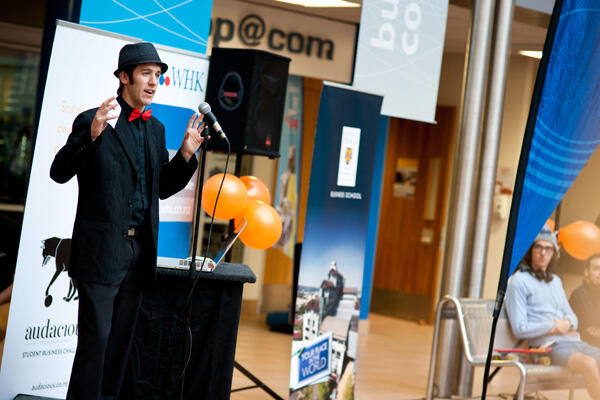
Debating thieves show audacity
Stilt walkers, prowling lions and some hilarious misuse of the word “advice” helped to kick off another successful year for business incubator Audacious. Taking place in the Business School Atrium, the evening saw entrepreneurs Alex Dong and Logan Elliot, both from vastly different business arenas, offer guidance to the next wave of students looking to go through the program. With cheeseboards rather than boardrooms on show, past Audacious contestant and now successful businessman Elliot spoke about his entertainment company, Highly Flammable. Elliot showed the crowd how passion, creativity, ambition, and sideburns to rival even Wolverine have allowed Highly Flammable to “add an extra layer to the atmosphere” to any kind of event. Now with over 80 performers around the country, Elliot wisely encouraged people to “give [Audacious] a go” and to prepare for an “awesome roller coaster, epic adventure.” Following suit, but with vastly smaller sideburns, was guest speaker and “serial entrepreneur” Alex Dong. Dong’s successes include selling his bookmarking site, Trunk-ly, to internet company AVOS which is owned by YouTube founders Chad Hurley and Steve Chen. While Dong may have conquered the Internet, he proved his computing abilities vastly outstrip his linguistic abilities after spectacularly offering his three “advices” to would-be entrepreneurs. Most worthy of a mention was his second of three “advices” that “idea is like arsehole. Everyone has one. It’s the execution that matters.” Audacious organiser Jessie McKay was “really pleased” with the event. “It was fantastic to see so many new faces. Hopefully this means lots of new exciting ideas will be flowing through this year,” she said. The Debating team across the hallway particularly enjoyed the evening, their key debate being how much of the Audacious liquor supply they should steal. The affirmative team’s “drink as much as possible” platform was the comprehensive winner. One debater hailed the alcohol haul as “fantastic,” and “just another reason why you should come to debating.” After being found out, however, the team had to clean up their mess and apologise, an ordeal almost as humiliating as that time they had their clinically sterile and passionless “Debatable” column cut from Critic.
-
News

ODT fails to clean up rubbish journalism
The Otago Daily Times has officially jumped the shark, reporting on the efforts of a heroic Dunedin trash vigilante. A full eight days before April Fools’, the ODT ran a story entitled “Rubbish dumper made to clean up.” The story was penned by the same reporter responsible for February’s daring gonzo article on mobility scooters, who decided to up the ante and take on the growing menace of relatively inoffensive abandoned rubbish. After several full DCC bags were dumped outside his property, concerned resident Terry Hickling decided to sift through the bags in search of clues. Eight eggshells, two dead rats and a used condom later, he had found his perpetrators. The diabolical mastermind behind the rubbish had made a fatal mistake, disposing of a speeding ticket and some student loan balance sheets in the laughably naive belief that nobody would dig around in rancid garbage to uncover the mystery of a few bags that the local council would have taken away regardless. Checkmate, fool. After contacting the police (!) and being told that, no, the students responsible would not be placed in the stocks for their crime, Hickling went to the Independent Voice of the South and became the subject of a fawning article, complete with “before” and “after” photos of the rubbish and its successful removal. A timid interjection from the Council that people should avoid disembowelling full rubbish bags in a rampant quest for justice was grudgingly included. However, the following paragraph in the article commenced with the word “however.” In a rare act of public service, Critic decided to help the ODT in its quest to reinforce negative stereotypes of Dunedin students, and hit campus to find the most offensive and antisocial reactions to the article. “Fuck society, the world is my dustbin!” yelled a Commerce student as he defecated on a burning couch. Others were more circumspect. “This just goes to show that you should always dispose of rubbish properly,” said a Studholme College resident, lurking suspiciously beside a dumpster with a miscellaneous bundle in her arms. If you find rubbish outside your flat, please contact shawn.mcavinue@odt.co.nz.
-
News
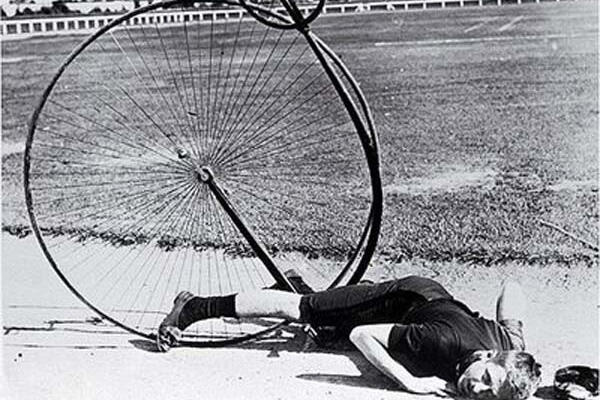
University set to continue annual offering of a lecturer's life
Expectations that the University would put a bicycle lane through campus in order to get cyclists off Dunedin’s dangerous labyrinth of one-way streets have been shut down, due to “pedestrian safety concerns” and the University’s current cycle ban. Speculation started after the death of cyclist Dr Li Hong “Chris” He, a 34-year-old lecturer at the Dentistry school, who was hit and killed by a stock truck outside Dunedin Hospital last November. The New Zealand Transport Agency (NZTA) and DCC began a review of cycle safety in Dunedin following the incident, and it was thought that a cycle lane through campus would prevent similar accidents. Members of the University had previously expressed their support for a campus cycle lane. Professor Hank Weiss told the Otago Daily Times he has “been an advocate of [the cycle lane] for several years.” According to Prof Weiss it would not be difficult to avoid clashes between cyclists and pedestrians. OUSA President Francisco Hernandez told Critic that although he could understand the University’s concerns, “there’s probably a constructive middle ground to be found. “I would be an advocate of path restructuring to ensure there was adequate room for both cyclists and pedestrians,” Hernandez said. The cycling ban has been in place since 1986, and was introduced after an Anthropology professor, Peter Wilson, was struck by a cyclist outside the Archway lecture theatres. Although the University’s stance is proving counter-productive, measures are still being taken to improve road safety for cyclists. Bicycle lanes throughout the central city are likely to be widened by NZTA, which is also looking to make more drastic improvements following consultations scheduled to occur in June this year.
-
News

Rabbits take revenge
A 26-year-old man ended up in hospital on Saturday 30 March after an attempt to make his own hot cross bunnies turned sour and resulted in a gunshot wound to his own hand and the removal of two fingers. The man had been attending the Great Easter Bunny Hunt in Central Otago, trying to intercept the furry bastards before they could bring chocolatey joy to children nationwide. While Critic had initially assumed him to be the victim of a co-ordinated assault by a vicious gang of angry leporids, it emerged that he had merely lost his footing, after which the gun discharged at his hand. The self-inflicted wound was a shock to event organiser Dave Ramsay, who said that it was the first incident in the 23-year history of the event. With over 400 participants this year, Ramsay said it was just a freak accident. “This was just one out of a box. They already have a pretty thorough safety briefing from Police before they leave,” Ramsay told TV3. While the event may seem like an entertaining way to cull rabbits off the land, Hans Kriek, executive director of animal protection group SAFE, told Investigate magazine that they “had concerns that inexperienced hunters would cause a lot of suffering for the animals.” “If they have to be controlled for whatever reason, that needs to be done by professional people in the most humane way possible, and the Easter bunny hunt is neither,” added Kriek. The hunt resulted in the culling of 18,000 animals. The total number of body parts and whiskey bottles that were expended remains unconfirmed.
-
News

Still the best place to defecate on campus
Renovations to the University’s staff club facility are expected to run about $150,000 over budget, bringing the total cost of the project above $750,000. The building is more than a century old, having opened in 1907, and has been the staff club since 1980. Because of the club’s highly exclusive nature, Critic is not allowed to report the specifics of the renovations. One student speculated that the newly-pimped-out club contained “a coffee waterfall, an academia-themed roller coaster, and a tower made of ivory.” Another student, having snuck inside to perv at the changes, described it as “the most beautiful thing I have ever seen,” before quietly starting to weep. According to an OUSA spokesperson, the staff club is “still the best place on campus for a cheap coffee and a sneaky poo.” Despite the overspending he was supportive of the renovation, claiming that “unhappy lecturers make dumb students.”
-
News
Hör∂ur Torfason
Hör∂ur Torfason, widely credited as “the man who brought participatory democracy to Iceland,” delivered several open speeches in Dunedin on 27 and 28 March. Held in the Burns 1 Lecture Theatre, the last of these speeches was entitled “Modern Democracy and the Iceland Experience,” and was enthusiastically attended not by members of the University's hippie population, but predominantly by open-minded elderlies. Torfason's activism began decades ago at the age of 20, when he turned down a management position in the store he was working at because he didn't feel comfortable there as a closeted homosexual. After studying in Copenhagen, he felt that Iceland could be just as liberal as Denmark and in 1975 he came out as “Iceland's first gay man.” A household name at the time, Torfason went from popular singer-songwriter to an object of public ridicule overnight. “Icelanders thought gay people were child molesters,” he told the audience. “Mothers used to pick up and hide their children from me.” The situation was so extreme that members of the organisation he established needed to wear hoods when speaking in public “about being a human.” His effort has been emotionally rewarding, however. One member of the audience – a woman in her 60s – stood up and thanked him for being a key figure in the international movement that helped her come out as a lesbian and find the partner now sitting next to her. After his gay rights activism, Torfason went quiet for decades. He only came crashing back into the public eye in 2008 when Paul Ramses, an asylum seeker from Kenya, was arrested and awaited deportation back to his certain execution. After giving the Minister of Justice a month to recover the situation, “Paul Ramses was not back in Iceland, but I was.” Ramses was brought back to Iceland soon thereafter, but it was at this time (6 October 2008) that the Iceland Financial Crisis occurred. “The Prime Minister was a very typical politician,” Torfason says. “He didn't tell us anything when all the banks suddenly closed.” The few people who initially turned up to these protests soon became thousands calling for the Government, the Financial Advisory Panel, and the Board of the National Bank to resign. But people began to lose hope when faced with a particularly cold winter and no response from officials. With everyone returning after a Christmas break spent with family, Torfason had a PR revamp to undertake. First, he gave a two-minute speech on the value of silence. Immediately after this, he proceeded to protest by silently lighting candles in front of Parliament. It worked. Police officers tried to move him on because he was distracting people inside. “I moved halfway back to show them that I could listen to others,” he said. On 20 January 2009 the movement's most significant demonstration occurred: the so-called “Kitchenware Revolution.” Armed with pots and pans, protesters surrounded Parliament on the Government's first day back after the Christmas break, making as much noise as possible with their kitchen utilities. Just a few weeks later, everyone they were calling out had resigned. Torfason stepped down as the leader soon after, because “these movements need to become 'we,' not 'me'. I did it as an artist, not as a man seeking power.” The result of his work, however, was the later rewriting of the Icelandic constitution by Icelandic residents, some even chipping in via Facebook and Twitter. When all the Government politicians were tried in court following the upheaval, they inevitably pleaded “I didn't know,” “I wasn't there,” “I wasn't told,” and other such variations on the theme of ignorance. As Torfason says, “all these people lost their memory.” Only the Prime Minister was found guilty of not alerting Ministers to the situation, but he was acquitted of anything that would imprison him. So has anything changed? “Before 2008 you weren't invited to parties if you talked politics,” Torfason said. “Today if you're invited, you get told not to but everyone does because that's what matters.” “The main thing is that people woke up,” he concluded. “It takes time to change society, but you can.”
-
Columns
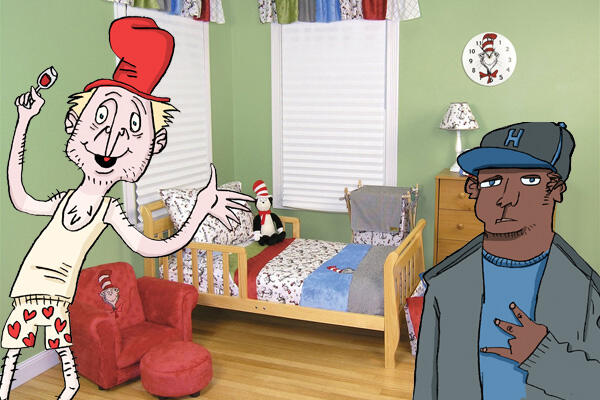
Love Online | Issue 06
Critic created a female internet dating profile expecting a low standard of suavity. But not even we could be prepared for the barrage of sheer ineptitude that followed, each new suitor representing a new nadir in the evolution of mankind. This column is a word-for-word transcript of an actual message received by Critic’s online dating profile. You can’t make this shit up. Subject: whitty and kinky well whitty is my middle name and kinky well don’t even start haha still some time of summer hols left isnt there and if your not all “entertained” out im gaging to help out. ( a lil pun intended) check out my profile pics are there too and let me know, im a westie too free most days and if you find a day om not horny n keen I must be sick. happy hunting x Subject: pop quiz summer or winter? red or white wine? heels or handbags? lingerie or dresses? length or girth?