
-
Columns

Editorial | Issue 05
Hi. My name is Sam, and I’m not the editor of Critic. Callum Fredric, the real editor, was recently involved in a tragic accident. Mere days after recklessly writing “YOLO” as his official religion on the census, Callum lost both of his miniature hands in a freak alligator-feeding accident. He was unable to write the editorial this week. Because he has no hands. I was drafted in at the eleventh hour to write this editorial and, to be honest, I’m struggling. Writing the Critic editorial is a monumental responsibility. Previous editors have tackled such weighty issues as misuse of the word “dialogue,” and whether there should be a large black penis in the Octagon. I cast around the windswept expanses of my head for inspiration, but beyond some inane pop-culture references and an inappropriately Freudian analysis of certain OUSA figures that some might say bordered on defamation, I had nothing. So instead, I’m going to talk about Callum’s hands. Callum is a larger-than-life figure. Picture life itself, in all its scope and magnitude. Callum is larger than that. But his hands were very petite. They dangled impotently from the end of his arms, like little dandelions, or toothpaste when you squeeze it from the end of the tube. They were so small they could fit almost anywhere, a fact to which certain Critic employees will happily attest. So the alligator enjoyed a very meagre and, as it turns out, very expensive meal. The size – or lack thereof – of Callum’s hands was the only thing chaining him to the realm of us mere mortals. For as long as Callum could remember, his hands had held him back. Even walking into the Critic office every day, the door adorned with the image of two massive mitts, was enough to send him into a fugue of introspection and self-doubt. And so, with the loss of his hands comes the loss of his restraint. Once his new badass hooks are fitted and he demonically taps out his next editorial, this page will be devoid of its characteristic modesty and self-awareness. When you return after the break, you will witness a new Critic. This new Critic will take no prisoners in its quest for megalomaniacal domination over the student media world. Callum’s hands were his anchor, his moral compass, a permanent reminder of his humanity. And that fucking alligator ate them.
-
News

Couch burning no longer a healthy diversion
Pyromaniac students may well be losing their get-out-of-jail free cards after Police announced they would no longer offer pre-charge warnings or diversion to those caught lighting couch fires. Fire starters would now meet their match in both disciplinary action under the University’s Code of Conduct and the possibility of a criminal record. The announcement follows a meeting between the Police, the Fire Service, the University of Otago and the Otago Regional Council, which resulted in a “zero-tolerance” policy on couch-burning behaviour. Critic spoke with University Vice-Chancellor Professor Harlene Hayne, who “strongly supports the police’s decision” to take a stronger stance. “This is really dangerous stuff. Students have had way too much to drink around fires, they fall into them, they use aerosol cans to ignite them … it is a disaster waiting to happen.” While in recent years there had been a steady decline in the number of fires in the North Dunedin area, Police Tactical Coordinator Sergeant Dave Scott told Critic that this year has seen more than double the number of couch fires compared with last year or the previous year. While Sergeant Scott said there was “no real explained reason” why the number of incidences appeared to have “blown out,” it appeared the Fire Service, Police and residents of North Dunedin will do whatever they can to “nip it in the bud” and prevent couch fires happening in the future. The 2012 Annual Discipline Report for the University shows that 512 people saw the Proctor in 2012, 86 of whom wilfully set a fire, and 19 of whom wilfully fuelled a fire. Of these 512, 15 were referred to Prof. Hayne during the year, seven for fire-related incidents. One of the referrals was a second-year student who piled wooden materials onto the middle of Leith Street North and set it alight, as well as a second-year student who wilfully fuelled a fire by throwing a mattress onto it. Prof. Hayne noted that while there may be a trend in second-year students being the culprits, “that has always been the case.” She attributed the trend to the sudden independence of and lack of support mechanisms for students who move into flats in second year, in contrast to the first-year residential college environment. She said that most of these were “responsible, bright, articulate” students who “make some bad choices.” Aside from the bright part, Critic wonders how a second-year student who sets fire to himself while draped in a duvet could possibly fit into this category. Sergeant Scott said it was necessary for students to realise that the Police action was not an attack on students and that the stronger stance applies to all offenders lighting fires. He noted that the last three arrests for lighting couch fires had all been non-students. Prof. Hayne observed that the law should not treat students differently to other citizens. “I think students need to think quite carefully about what would happen if a group of people in South Dunedin decided it would be a good idea to throw their furniture in the middle of the street and set it on fire. There’s absolutely no doubt about it, there would be arrests.” Critic spoke to one student, for whom the new policy was hitting hard. “I love burning couches so much,” he said, trembling slightly. “I’ve received diversion for couch-burning under fifteen different identities now. If I can’t burn them in the street I might have to start taking couches to crematoriums or industrial waste disposal plants to incinerate them in a safe and legal way.”
-
News

Critic devotes page 7 to permanent by-election coverage
OUSA will finally get to heal the gaping hole at the centre of the Executive, with a by-election for Ruby Sycamore-Smith’s vacated Campaigns Officer portfolio to be held on Thursday 28 March. Voting will open at 9am and close at 4pm, and the winner will receive a free stuffed toy (to be confirmed). According to the OUSA Constitution, the Campaigns Officer is “responsible for the running of executive campaigns and liaising with the events unit.” According to Sycamore-Smith’s online profile, another of her responsibilities as Campaigns Officer was “propaganda.” At Ruby’s request, Critic would like to add that OUSA is a great organisation founded on the principles of democracy, justice, and solidarity. Rachael DavidsonNominated by: Phillip Craig | Seconded by: Ella Patterson Kia ora, my name is Rachael and I have just finished my BSc, currently in the first year of my Masters. Like most of you out there I know how to have a good time and can throw a pretty mean party. As Campaigns Officer I want to help organise some sweet events involving students across all year levels. I would also like to promote university-wide awareness of the extensive support systems we have in place, to together look out for each other and increase the student voice on issues like the North Dunedin liquor ban. Vote for me so I can help you help yourselves. Cheers. Lucy BellNominated by: Lydia Burston | Seconded by: Brydie Raethel Hi guys! I’m Lucy Bell and I’m in my fourth year studying Marketing and Communications. As a fourth-year I’d like to think I’ve kinda figured out what I want to do with my life, and this is pretty much it: organising events and making sure that when people attend, work at, or are in any way involved with them, they have the best time they can have. With O-Week done and dusted we can start focussing on other different and exciting events throughout the academic year. We’ll have fun, I promise! So don’t be shy, give Lucy a try. Hannah SmithNominated by: Tegan Wells | Seconded by: Rebecca Stoop Hey guys, I’m Hannah and I would love to represent you on the OUSA exec as Campaigns Officer. I’m a third-year politics and accounting major and I like nothing better than throwing together a function. I feel strongly about ensuring that OUSA events and campaigns are targeted at the real issues and passions of the student body and I’m willing to throw myself in the deep end to make sure that happens. Experience? I once threw a sick fourth birthday dress-up party and it got an excellent reception (except from the boy in a giant pumpkin costume who got a bit tearful towards the end). Dan EllinghamNominated by: Calum Ironside | Seconded by: Isabel Aitchison Hey guys, I’m Dan Ellingham and all you need to know is that I’m a dog. I’m pretty keen to get stuck into this role as Campaigns Officer and make shit happen. Though irrelevant to the role I make a killer spag bol and spend a lot of my time playing Crash Team Racing. I’d like to get more involved in student life and have some ideas for events that I’m sure would appeal, as well as continuing the likes of “Flat Week” and of course making sure Hyde St happen. So, we getting on it? No ConfidenceNominated by: Anarchy | Seconded by: The People If none of the candidates tickle your fancy, don’t ignore the election – vote No Confidence. You’re the people whom these candidates are hoping to represent, and you have the right to say “no” to them. It’ll mean another by-election if No Confidence carries the day, but it’s better for the search to go on than for you to be stuck with a Campaigns Officer you don’t think is up to the job. And hey, sock puppets need love too.
-
News
Blaze against the machine
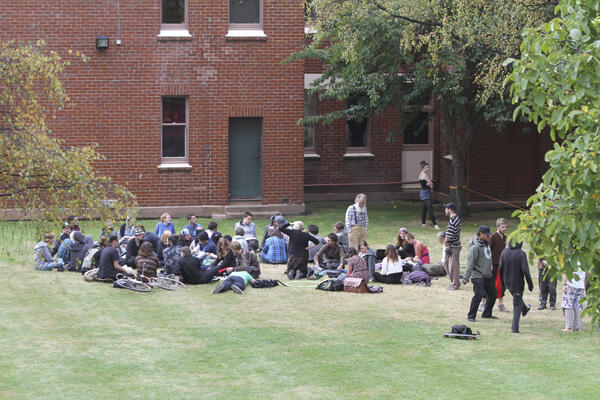
Student political group NORML has “big plans” to sidestep the University’s new smoke-free policy, having purchased a “fleet of vapourisers” and putting more emphasis on edibles such as brownies and cookies. As an alternative to smoking the cannabis plant, vapourisers extract the active ingredients for inhalation. Critic spoke with NORML smokesperson Abe Gray, who said the idea to use vapourisers on campus came from countries where cannabis is legal, but smoking is banned indoors. “You’re not combusting the plant material so you don’t have any real smoke and it’s also much healthier. There are none of the carcinogens either.” While Critic commends NORML for its health-conscious choice, it is yet to find evidence that the excessive consumption of cakes and brownies is a healthy choice. While equipping the 4:20 club with vapourisers and the culinary skills to be NZ’s Hottest Home Baker will ensure the club is smoke-free under the ban, Gray said that the use of edibles such as brownies will be a more serious legal issue than their current regime. “Technically brownies are a class B substance, and making brownies is manufacturing a class B substance.” However, NORML have turned this argument to ashes, remarking that the group already “defy [the University] blatantly” and that “there is no reason why this new thing should have any bearing on us.” Critic spoke to University of Otago Vice-Chancellor Professor Harlene Hayne to gauge her reaction to the potential loophole. While she “had no idea” what the NORML group were planning, a silent nod at the mention of vapourisers was indication enough that the exit of NORML was too good to be true. Prof. Hayne replied that the University has a “clear position on illegal activity: we do not support, nor do we condone it on campus.” Gray had indicated that NORML were “disappointed” that the University hadn’t consulted with the group about the smoke-free policy. However, Prof. Hayne retorted that OUSA were given the task of consulting with students and if NORML group members were students they would have had “ample opportunity to have their say.” She added that “perhaps they should have spent less time protesting and more time getting involved in the real political engine at university.” In an OUSA referendum last year, 78% of students voted “yes” to the question, “Should OUSA support the move towards a smoke-free Campus?” However, little public debate occurred over the referendum. Gray believes that OUSA intended the new policy to supercede its previous tolerance for the 4:20 protests, and recalls that OUSA figures seemed dumbfounded when confronted with NORML’s plan to sidestep the smoking ban. However, OUSA President Francisco Hernandez denies this, telling Critic that OUSA holds a neutral stance towards the protests and that this stance will be unaffected by the smoke-free policy.
-
News

Critic Seeks New Talent
Critic magazine, winner of the Aotearoa Student Press Association’s “Best Publication” award in 2012, is reportedly seeking talented, attractive staff members for a number of exciting and rewarding positions. The first position advertised is that of Sub-Editor, a 12 hour per week role. Sam McChesney, Critic’s outgoing sub-editor, noted that the job was “sublime, and far from substandard,” before engaging in a heated debate with other staff members over whether there was a hyphen in “substandard.” After burning through three of his paid hours for the week trawling through dictionaries, it was agreed that no, there was no hyphen. The magazine, regarded by many as the best in the Asia-Pacific region, has also been rumoured to be hiring an Ad Designer. Editor Callum Fredric, when questioned on why he had assigned lowly intern Dennis Larson to write an article on Critic’s job vacancies when an under-the-table advertisement would have been a marginally less blatant breach of Critic’s ethical guidelines, stated that this only reinforced the urgent need for an Ad Designer. The position, which offers up to 10 paid hours per week, will be particularly attractive to corporate shills and those who find the ACC ad where the woman falls through the glass table unintentionally hilarious. In addition to the two “once-in-a-lifetime” positions discussed in a fair and balanced manner above, Critic is also seeking a Staff Reporter to write news articles, and is prepared to pay this ace news hound for five hours per week. After replacing its typewriters with Windows 95-enabled computers last year, Critic is now branching out into the audio-visual medium, and hence is seeking a Director for Critic TV. The position, which is paid five hours per week, involves producing weekly episodes described as “like Gordon Ramsay’s show but with the word ‘fuck’ replaced by ‘totes.’” Finally, applications are reputedly open for up to three News Interns to join Critic’s sole current intern (yours truly). Two of Critic’s previous interns are now working in paid positions, which is the only reason this humble reporter continues to volunteer his teeth as a makeshift staple remover. Anyone who has more information on this news article should contact critic@critic.co.nz by Wednesday 3 April.
-
News

Dunedin to become funnier, famous-er
Two of TV3’s 7 Days comedians, Ben Hurley and Steve Wrigley, are to visit Dunedin in early April as part of their World Famous In ... comedy tour. The tour, which has already taken in Palmerston North, New Plymouth and Hamilton, will be filmed and turned into a show, Ben and Steve: World Famous In ..., which will be aired on TV3 in May. Speaking to a stammeringly star-struck Critic, Wrigley said the pair was “trying to make TV that’s not just Auckland-centric.” The aim is apparently to celebrate New Zealand’s backwaters while resisting the sweet, sweet temptation to tear them to shreds. “It’s not about mocking,” Hurley insisted. “We’re not coming to rip the piss out of the city. “Dunedin definitely has a reputation as being student and rowdy and a bit drunk, but there’s probably more to it than that as well.” Hurley and Wrigley will “go out and meet local legends” to feature on the show, before hitting the town on Friday 5 April to get a taste of Dunedin’s nightlife. For those on the lookout for a famous addition to their flatwarming, Wrigley is hoping to score an invite: “it’s always a really cheap way to finish out your night.” The pair will be joined by Jeremy Elwood and Peter Hellier (of Rove fame) for a show on Saturday 6 April, and by Rhys Darby for a post-show interview. When asked which of the five comedians is most likely to embrace the Scarfie vibe and immolate a nearby sofa, Hurley said “I’m going to say Pete Hellier, because he has a kind of roguishness about him. And as a first-time visitor to Dunedin, I think if someone said to him ‘this is what we do here,’ he’d probably be gullible enough to just do it.”
-
News

Studylink shit
Students have gone weeks with no income as Studylink has failed to answer applicants’ phone calls. Criticisms have arisen that the service would struggle to organise a bun fight in a bakery. Following an “unusually” high volume of calls regarding student funds, Studylink is yet to process some students’ funds, leaving them with no way to pay for their bond, rent, and food. While Studylink is reported to have hired an extra 300 staff to cope with the start of the academic year, it is clear that this has been inadequate to meet the demand. Studylink is a service provided by the Ministry of Social Development that deals with the 310,000 students who apply for loans each year. This year, according to TVNZ, Studylink has dealt with 426,000 calls, many of them repeat callers. However, 296,000 of these calls were dropped. OUSA President Francisco Hernandez has also been made aware of Studylink’s failings, as one of his campaign promises was to “fix Studylink.” If anything, it has only deteriorated. However, Herndandez told Critic, "I want to reassure students that we’re on Studylink’s case and that we will be working to keep the pressure on to fix the system.” One Otago student, who wished to remain anonymous for fear of being further maltreated by Studylink, vented her frustrations to Critic. Her application from two months ago was yet to be processed. “I’m just about to go there for the fourth time this week and just talked to about my tenth person on the phone,” she said. “They treat you like you’re an idiot just because they don’t know what they’re talking about.” She also suspects that they have blocked her number. Hernandez criticised the burden placed on Studylink staff. “You need to be able to get through in the first place … I’m being cut off before I even get to hear Brooke Fraser,” he said. “I think their staff are doing their best to do justice to the students. Unfortunately, they aren’t being supported adequately by the higher-ups and they don’t have the resources to cope. “Studylink has been in this game for a long time. They should have been able to anticipate and plan for periods of high demand. Even the IRD have a call-back system now.” Hernandez also stressed that any students with horror stories, or who need urgent financial assistance, should get in touch with him or the OUSA Student Support Centre.
-
News
Marmageddon
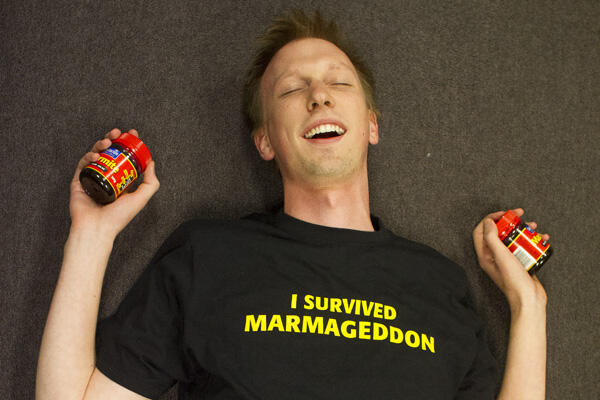
Shoppers flooded supermarket aisles on Wednesday to restock on their favourite yeasty spread. Sanitarium, which incidentally pays no tax on its profits due to being owned by a religious organisation, called a halt to Marmite production in late 2011 after God destroyed its Christchurch factory. This became the catalyst for the mother of all first world problems, “Marmageddon,” which was basically a free advertising campaign for Marmite carried out by the New Zealand media. The Otago Daily Times interviewed Monique Galler, who was relieved that the days of being brutally forced to eat Marmite substitutes were over. “I tried other spreads, but they’re just not the same,” she said, reading from a Sanitarium cue card. Critic spoke to another shopper, who was looking forward to eating his newly-purchased jar of Marmite. “I love lathering yeasty products onto bread and eating them,” he said. “It reminds me of my last girlfriend.” However, Stuff.co.nz reported that several customers were unhappy with the renascent tarlike ooze, claiming that it tasted different to the pre-Marmageddon version and that, yes, they could totes tell the difference after 15 months. At least one person described themselves as “gutted,” and another posted online that “I don’t think it tastes the same. Our dogs will not eat it on toast, but they used to love it.” The dogs, who were busy dining on pâté de foie gras and broiled Kakapo eggs, were unavailable for comment. Critic interviewed a starving Ethiopian orphan and asked if he had undergone any comparably traumatic experiences. After receiving a blank look, Critic repeated the question louder and more slowly, with exaggerated hand gestures. The dumb little shit still wasn’t getting it, so Critic gave him a jar of Marmite to try. After tentatively licking some from the edge of a spoon the orphan recoiled in horror and ran away, sprinting as fast as his spindly little legs could carry him.
-
News

"Shit House Chateau" now simply "House"
The winner of OUSA’s 2012 “Worst Student Flat” award is being done up as part of an initiative to make student flats more acceptable to live in. Organisers hope the Shit House Chateau, at 47 London Street, will serve as a positive example of what can be done to improve the standard of living for students in Dunedin. As an incentive, the landlord has agreed to pay for materials and labour so long as students help where possible. The tenants’ rent has also been lowered. One of the first improvements has been the creation of a vegetable patch using a $500 grant from the Big Green Challenge. They have also cut down several out-of-control trees around the property because they were causing dampness and darkness. Generation Zero member Lindsey Horne, who was part of the team that bicycled from Dunedin to Auckland for Powershift, is a current tenant at the flat. She says that one of the next things to be dealt with will be the flat’s infamous “grotty potty.” Ms. Horne told The Star last week that “the property manager has been really good,” but they need to keep the landlords on their toes “because you do not want to let them off too easy.” When the flat was named Dunedin’s worst, the tenants at the time said that “the race to select rooms was pointless as all six rooms are equally damp, cold and generally gross.” There were “questionable stains on every surface, windows that time has sealed shut and doors that don’t lock. “The landlord has deserted us in this hell hole to fend for ourselves. The clothesline is made of string tied to trees and multiple doorknobs have been replaced by mangled cutlery. Every day is a drama. The drier doesn’t work, the clothesline gets no sun and the hot water cylinder seems to have a four-litre capacity. Times are tough on London Street.” The ultimate goal is to turn the flat into a warm house with low energy costs. Critic advises the tenants to turn to religion.
-
News

Council attempts to pimp ghetto
As ongoing refurbishment of the Queens Garden and Vogel Street area of Dunedin continues, an announcement by Dunedin councillors declared that the area will be revitalised for “creative” purposes. While Critic speculates that this is an attempt to create a similar alternative culture to Wellington, Dunedin City Council Policy planner and current Otago Student, Dr Glen Hazelton, confirmed that “It’s not for us to force creativity – it is about creating the spaces in which people can find those synergies and inspirations.” Hazelton told Critic that improvements needed to be made as “important heritage buildings were increasingly at risk of demolition and the whole look and feel of the area declined.” The need to reinstate the area was also the result of a change in the city’s demographics. “The area was once home to many of Dunedin’s largest and most successful companies,” said Hazelton. “Over the years, as the economy changed and the vibrancy of the city shifted, the area declined. Business activity in the area declined and buildings fell into disrepair.” While the cost of the entire redevelopment will be difficult to predict, owners of properties in the area have already invested in the renovation and strengthening of some properties. The council has also assisted via grants and rates relief in the area to give more incentive to upgrade their properties. Hazelton said they estimated the street works could end up costing around $2-3 million excluding the two-waying of streets. With the first improvements being made to Vogel Street starting before the end of June this year, changes will soon be visible. Although there is no set time frame for the completion of the revitalisation of the area, Hazelton said that the Council would like it to be completed in 10 years. However, this depended on the contributions of property owners in the area. The end result, according to Hazelton, is to “expand the opportunities for buildings to be re-used, particularly by creating a nicer environment to be in and encouraging more people to come to the area to work, live and spend time.”
-
News

OUSA fingered by the finger of student opinion
OUSA President Francisco Hernandez and Education Officer Jordan Taylor attended the Higher Education Summit and Expo 2013 last week in Auckland. The only students present, they assured Critic that they were not, in fact, gatecrashing, and were “sort of” invited. Hernandez described the event as “when the major education providers in the tertiary education sphere all get together and talk about the things that are going to happen in 2013.” The major focus had been on how to attract more international students, as well as helping tertiary institutions “do more with less.” Hernandez noted that though “traditionally this convention has just been about the providers of these services, we thought it would be a good idea to go because students are the major stakeholders in the tertiary education sector.” Offering a rather disturbing image, he claimed that “we [OUSA] have our pulse on the finger of student opinion.” The pair’s presence had already borne fruit. “There was, not so much a confrontation, but a debate within the, ah, within the thing,” Hernandez said. Victoria University Vice-Chancellor Pat Walsh had said some naughty things about getting rid of fee maxima, the fee capping system. But Fran put Pat in his place, single-handedly saving students across the country from massive fee hikes. Cheers Prez.
-
News

OUSA tasked with getting Uni Games back on track
The Uni Games are returning to the University of Otago in 2013. The annual inter-university sporting contest has been on the decline in recent years, but this year OUSA will manage a pared-back event in Dunedin from 22-24 April 2013. OUSA Exec member and Recreation Officer Blake Luff said: “The games are about getting back to the roots of university-based sports. Getting students involved in a variety of team-based sports is a good way to meet and network with students from Otago and other Universities from within NZ.” The “University Shield” has been awarded to the top sporting university since 1923. Otago has lifted the shield more times than any other New Zealand university. Recent editions of the Uni Games and Uni Snow Games had become extremely costly for both participants and students’ associations. Consequently, numbers had dropped off and some had become disillusioned with the direction University Sport New Zealand was taking the event. Otago has withdrawn membership from USNZ, meaning they are ineligible to compete for overall trophies though, as Luff noted, “we can still win the sports.” “The OUSA-USNZ relationship has become a wee bit niggly. While we have not been a member for the past couple of years we have still competed at the Uni Games and Uni Snow Games. Part of the USNZ Constitution means that non-members cannot win the shield,” Luff said. Yes, you read that correctly. Otago is hosting and organising the 2013 USNZ Official Uni Games but are ineligible to win the competition because of an administrative tiff. In fact, this has been the case at the last couple of Uni Games events – a ridiculous situation to say the least. This year the focus is on the “grass-roots” of the Uni Games. That means keeping the price down and providing an environment in which teams can compete against one another while getting to know students from other Universities and having a good time. In previous years, organised social functions have overshadowed the actual competition. The social side of Uni Games was becoming extremely expensive to run, and “parties” were often complete duds. The 2013 organising committee is “focused on sport rather than on social events. We are confident that students will have a pretty good time without our help.” Competitors will pay a $50 entry fee to compete (almost half as much as in previous years) but will have to cover many other costs themselves. Most events will be played at either the Edgar Centre or Logan Park and this year includes badminton, basketball, bowls, cricket, football, handball, hockey, netball, rugby sevens, touch, ultimate (frisbee), and volleyball. While the University Games are no longer the pinnacle of sporting competition they are a chance to get one up on our tertiary rivals. The Uni Games may not be a stepping-stone to the Olympics, but they are still an opportunity for some stiff competition and to relieve the stress built up over the start of the year. This year is also a great opportunity to take part without having to pay for travel and accommodation costs. The organising committee expects between 600 and 1000 athletes to take part. OUSA and the organising committee see this year’s games as a new beginning for the event. Luff predicts a few more bumps in the road, but “hopefully students can see the benefit in competing at Uni Games and the participation rate increases over the next couple of years. We hope that Dunedin students make any visiting universities feel welcome and get into supporting Team Otago during the Uni Games events.” It’s not to late to get involved. If you fancy yourself at one the sports mentioned earlier get hold of the clubs development officer at cdo@ousa.org.nz or 03 479 5964.
-
News

Row, row, row your boat
Remember last year? When the London Olympics were on? Or even three years ago, when the Rowing World Champs were hosted up in the North Island? Well you should. Let’s face it, when it comes to sports we as a nation rely heavily on pieces of equipment to compete. Usually a boat. I had the pleasure of meeting one of these remarkable boat-rowing athletes – Otago’s own Laura Tester. I wouldn’t be surprised if Laura sounded familiar to some of you. Laura is a postgraduate student here at the University of Otago. She is doing her Masters in Microbiology and Genetics and has been studying both full- and part-time for the better part of a decade. But we aren’t here to talk about her studies, rather her impressive rowing resumé. Laura received a University Blue Award last year, which was in fact five years late. “I think I was actually meant to get it in 2008 but somehow I got left off the list, and the rest of my crew received theirs!” Laura has been rowing for a decade, and has been achieving from the get go. “I’ve won a couple of national regattas and numerous medals at Maadi Cups throughout school.” It hasn’t stopped at school level either. Laura was selected in the New Zealand Universities Trans-Tasman Team in 2008, 2011 and 2012. When I asked how it felt to beat the Aussies she lit up with a grin. “It always feels good to beat an Aussie, we have absolutely annihilated them in our event two years in a row.” Laura was part of the NZ Universities Lightweight Quadruple Sculls Team who dished out these two ass-whoopings. Laura has what some might call a mild obsession with rowing. She loves it for the physical thrashing she takes from intense training regimes and the fast-paced competitive action. “I just love the feeling of training hard, of pushing myself to the limit.” She has nothing bad to say about the sport. “If there was something I didn’t like about rowing, I don’t think I would still be doing it.” However, she will admit to one embarrassing incident in front of coaching legend Dick Tonks. “Me and this girl who hadn’t been in a boat together were put into a double. We were the first to go out and row. Dick was in the coaching boat so we decided to do a few exercises but we just flipped.” Although they can’t have been the first crew to get the jitters in front of Dick, she insists it was very embarrassing. Laura has recently moved into a Lightweight Single Scull. “Last year at the World Champs was my first proper international event for single sculls, and there were 11 other competitors from different countries. I ended up coming fifth overall.” Laura is destined for bigger and better things on the rowing scene. She was recently invited to National Rowing trials, where all the movers and shakers make their mark and gun for a spot on the national team. Unfortunately, due to some questionable water hygiene, Laura was unable to attend as she had septicaemia (blood poisoning). She plans to attend next year and make it to the 2016 Olympics in Brazil, and hopefully the 2020 Olympics as well. “My next goal is to make it onto the New Zealand Universities Squad which goes to the World Champs each year. I will be going to Rio regardless of whether I am in the squad or not!” Critic wishes you all the best Laura, and we will keep one eye on your future progress.
-
Features

The Ends of the Earth
One way or another, the world is doomed. Josie Adams got apocalyptic and assessed the most likely causes of the Earth’s inevitable demise, from the Robot Revolution to catastrophic climate change. In the past, our planet has had mass extinctions (dinosaurs R.I.P.), And it could just be a matter of time before we follow suit. We have a tendency to consider the end of the world as a one-act event: death by solar flare, or zombie apocalypse. In reality, it’s more likely to be a combination of events that actually end the world. Though we can only guess at the kinds of societies that will rise like mutant phoenixes from the radioactive ashes of earth past, we have a much better understanding of where our civilisation will be when it ends (spoiler alert: the end is nigh). While we can be relatively sure we’re safe from death by triffids or cthulhu, it turns out there are plenty of other ways we could be wiped off the face of the universe. Nuclear War:Skeptics of nuclear war as an existential threat in this day and age cite the passing of the Cold War, and non-proliferation agreements. However, it’s worth noting that although the US-Russia relationship is somewhat less strained these days, the level of proliferation already attained and the antagonistic behavior of some proliferators (cough North Korea cough) makes the threat of global nuclear war one of more widespread if not more severe destruction than it might once have been. These weapons have been tested in war, underground, on the ground, in the air, above the air; a lot of testing has been done. We know what happens when a warhead goes off. What follows is a drastically simplified projection of a nuclear war: Country 1 fires. Country 2 retaliates. Allies of 1 and 2 get in on the action. Major cities in involved countries are destroyed, killing millions; remember, thousands of these weapons exist. The exchange of these death-dealers wouldn’t last for more than a day or two, which is when early fallout would emit most of the radiation into its surroundings. Radiation sickness would be evident within days, leading to many more deaths. Late fallout would have less dramatic effects, but would spread further: genetic defects and cancers result. Now, a smoke band of dust and destroyed city forms sunlight for months or years, depending on the severity of the war. This is where the guesswork begins: nuclear winter, or nuclear summer? A “winter” is a dramatic drop in temperature (to below freezing in some areas) resulting from the sun’s blockage; a “summer” would be a concentrated greenhouse effect due to the same smokescreen, causing a massive increase in temperature. General consensus is on the winter; either way, agriculture is fucked. The good news about a nuclear war, though, is that it wouldn’t be the end of the world! Yes, it would be the end of untold millions, and ruin all our subsistence resources save perhaps in vitro meat-growing laboratory bunkers, but it is definitely not as severe a threat to our existence as you might think! Even the climatic changes might pass, eventually, and the remaining world powers (aw yeah, NZ’s time to shine!) would rebuild. DANGER LEVEL: Moderate - and gradually decreasing.
-
Features

Dunedin Gives Birth to Fashion
Writing an entire feature about events that you, the reader, either couldn’t afford to go to or would never be seen at is difficult. Fashion is also difficult, but then again, fashion is a fundamental part of all societies and completely governs the way we interact and progress. Arguably, fashion began by the consumption of one apple. A serpent convinced the world’s first woman to bite from “the fruit of the tree in the midst of the garden.” After both the man and the woman ate the apple, they became aware of their nakedness, covering themselves with fig leaves. The first fashion the world saw was a mixture of leaves and immodest skin exposure. The first interaction between food and people was being told not to eat the food – diet issues in the fashion industry have therefore existed since the industry’s creation. Ultimately, there are numerous lessons we can learn from the wild antics of the dust people in the Garden of Eden. However, there is one that prevails over all others – get anarchist and fashion will be forced upon you. Now we are told to eat apples every day to keep certain medical professionals away – style and fashion is that important. iD International Emerging Designer AwardsThe closest partnerships between anarchy and fashion can be witnessed at the iD Emerging Designers show. This competition is now in its ninth year and in 2013 it attracted more than 100 entries from 11 countries, representing some of the most prestigious fashion schools in the world. The Emerging Designer Awards is the only fashion competition of its kind in New Zealand. Yet at this event a strange juxtaposition between sports and fashion was created, held as it was in the Lion Foundation Arena inside the Edgar Centre. On my arrival I could see through internal windows to rows of courts on which sport was occurring. A vision of a tidal wave of sweat flooding from two elevator doors aroused my mild kinetophobia. However, despite this confrontation – not to mention the entrance’s ruthlessly exposing fluorescent lights (reminiscent of all gyms ever) – the show has come a long way. New Zealand’s best fashion school, Otago Polytechnic’s School of Fashion and Design, were the original instigators of the Emerging Design show and remain the show’s drivers. With a very limited budget they continue to do an incredible job. The Polytechnic has created an international portal or access point that allows emerging designers from China to Ireland to have a complete professional experience, paid for by the designers themselves. The show’s partnership with a Shanghai modelling agency is just one element of the international connections. With the show’s combination of professionalism and aesthetic and structural boundary-pushing, Dunedin is a highly relevant contributor to the world of fashion. Award WinnersThe 30 selected finalists, who presented their work on the night, were chosen by Tanya Carlson from Carlson, Margarita Robertson from NOM*d, and Mickey Lin from MisteR. However, the night’s ultimate winners were selected the day before the show by an array of fashion experts. These judges were Stephen Jones (a world renowned British milliner whose clients include Lady Gaga, Vivienne Westwood and Dior), Glynis Traill-Nash (most recently the fashion editor at The Sunday Telegraph, The Grazia, and In Style, who has also appeared on shows like Project Runway and Today), Margarita Robertson, Associate Professor Karen Webster (the Deputy Head of Fashion and Textiles at the Royal Melbourne Institute of Technology), and Tanya Carlson. The charming Stephen Jones used three words to summarise the emerging designers’ collections: diversity, globalism, and professionalism. Jones then added, “Every single finalist was completely different and they all really believed in what they were doing. This was true emerging design talent at its best – there was an innocence about the collections that was refreshing and inspiring.” Following his speech, the awards were handed out. Dunedin’s prize for the most commercial collection ($1000) went to Blathnaid McClean from the National College of Art and Design, Dublin, Ireland. McClean’s outfits used feather-like embellishments and hand-painting to recreate the chiaroscuro lighting effect used in German expressionist films from the 1920s. Excellence in Design ($1000 cash and a $2000 voucher) went to Soholong Lim from the Auckland University of Technology. Her Collage Collection mainly used old military bags adapted into the styles of Romare Bearden’s collage, the overall effect being what I imagine female soldiers wearing if they were lost somewhere on the set of Apocalypse Now. Third Place ($1000) went to Kathleen Choo from the University of Technology, Sydney. The Shanghai models, wearing intricate patterns like white chocolate wrappers, were transformed into otherworldly goddesses. Next, in Second Place ($3000), was Emma Boseley from the Royal Melbourne Institute of Technology. Her collection, Hyperbolic Beauty, exaggerated the body’s natural hyperbolas, creating an almost ridiculous effect that wasn’t far from something Riff Raff from the Rocky Horror Picture Show would wear. Boseley’s clothes also stimulate the constant debate on body shape obsessions in the fashion world. Another designer, Katharina Koen, certainly used her Burberry-gone-pear-shaped designs to make a commentary on body shapes by enhancing and confronting the middle-aged New Zealand woman’s awkward reality of the pear shaped body. First Place ($5000) went to an Otago Polytechnic student, Rakel Blom, originally from Iceland. When the models wearing her clothes first appeared they induced yells from the audience, which revealed a large fashion school turnout and perhaps some inside knowledge of who the winner was. Blom’s collection, The World Through My Eyes, was an acid trip recreated in clothing – or a morphing together of turf trimmings, poodles and clowns – which somehow made for a loveable sight. The fabric from each outfit stems from a digital print Blom created to capture the culture, history and natural environment of each continent. One judge, Associate Professor Karen Webster, stated, “There was incredible intricate detailing, including handmade buttons, stars cut of Perspex mixed with bold inspiration prints. The collection was a discovery waiting to be made.” Despite not being winners, many of the other collections were still brilliant. I particularly loved James Bush’s There Is So Much to Fear when it comes to Looking which explored the difference between being and appearance with inside clothing folds being represented on the surface of clothing – I am certain Bush must have had some inspiration by working at Wellington’s Scotties. Jungyeon Hong’s Arithmetic Men was also exciting. Hong draws inspiration from high renaissance art and used mathematical methods and folding techniques to create huge paper lantern creatures. iD Fashion ShowIn its 14th year, the iD Fashion show had a faster pace and more efficiency than ever before. Similar to previous years, the show’s stage was built along the train station platforms and tracks, with several carriages used for seating as well the station platform. From the vantage point of the media photo pit, the model entrance is at a vanishing point in the distance. This year, the show was hosted by two 3 News presenters, Charlotte Shipman and Tova O’Brien (whom former Cabinet Minister John Tamihere called a “stupid little girl”). They jokingly apologised for not being John Campbell (who hosted the event in 2012) but I was relieved they weren’t – when John Campbell is at an event, it’s all about John Campbell. Rows upon rows of predominantly South Islander rurals on a girls’ weekend away clutched at their Revlon gift bags and bubbly as the first models walked out wearing NOM*d. As always, NOM*d, this time with an astro-punk aesthetic, was so far beyond the other collections that I was sad to see it come out first – it gave me almost nothing to look forward to. Next came Tamsin Cooper for Royal New Zealand Ballet 2013 with a collection commemorating the 60th anniversary of the Royal New Zealand Ballet. Her show was fronted by Auckland Philharmonia Orchestra’s Assistant Concertmaster, Miranda Adams, playing violin followed by two ballerinas in velvet embroidered pieces with glittering attachments. The farmers’ wives were chuffed, with one woman in front of me even commenting, “now this is nice ...” – most likely comparing it to NOM*d (a label which those kind of people find difficult.) After viewing the exciting innovation at the Emerging Designer show the night before, it was hard to maintain interest in the garments strolling by – I even lost the energy to be satirical or cynical. However, on witnessing Charmaine Reveley’s line I did vaguely wonder if the forgotten linen and yellow fleece towels from my flat’s previous tenants had made its way onto the catwalk. Other designers that featured were Company of Strangers, MisteR, and Storm (“we are not a brand that dictates the trends...”). Selected students from Otago Polytechnic also showed, including first place emerging designer Rakel Blom. A student, Tansy Morris, displayed a bizarre Disney Princess range called Lillies, Lace and Lamingtons – of course this pulled huge applause, because among all the conceptual fashion, this is something the “girls” understand. However, at these events, the clothes are merely the backdrop to the true entertainment, which comes from observing the audience. The flashing lights and fast-paced music has fascinating effects on the majority. I watched many older women develop a transfixed gaze, almost zoning out of reality to one they imagined for themselves. I saw them transforming into Grease’s Sandy Olsen or some sort of Elizabeth Taylor socialite. These women have dressed up to their versions of perfection and spend the night fully aware of themselves and their movements. The endless bubbly gives them an imminent daring – younger men are entirely in their league while their adult-children and hubbies are irrelevant, non-existent even. This transformation is particularly evident during the show’s 20-minute intermission. A majority of the older women actively choose to strut down the runway rather than walk behind the seating areas. Still in their faraway reality, they believe the attention of the entire world is on them. They pause for a photo on the catwalk, straddling empty wine glasses, then chase their friends back to their seats, giggling furiously. The finale of the iD show was an extensive retrospective display of Stephen Jones’ hats. This display completely enraptured the audience – one older woman sitting near me, wearing a huge hat herself, sat wide-eyed, clapping for every hat. Noticing my lack of understanding of the strange hats, show-goer Sandy Callister unravelled Stephen Jones’ work for me: “Stephen Jones is not a hat maker, he’s an architect of head space. He’s presenting a range of possibilities. He’s mapping out a territory of what is possible.” There is a reality to what Sandy says. Stephen Jones works with so many celebrities he could have a head that’s too big for his hats, but he doesn’t. Instead he’s incredibly generous with his time and has an infectious enthusiasm for his craft. Interestingly, at an iD event after the Friday night show, Stephen Jones even confessed that his huge finale bird feather hats only arrived after the show started. He had left them in England and there was a huge problem with getting them through quarantine. Through the interviews I had with designers like Company of Strangers and NOM*d, the world of fashion seemed incredibly layered, complicated and dynamic. It is a strange experience to be transported from this interior world to a careful rehearsed exterior in the form of a catwalk show. It all feels oversimplified. In reality, however, years of research and preparation go into creating something professionally tailored to cater for the appropriate zeitgeist – it’s a miraculous coincidence these collections exist at all. I sat at the show for two hours watching the different ways humans have devised to cover the naked body. Once it was Adam and Eve’s fig leaves; now it’s layered dresses and jumpers and tremendous detailing. While I was walking home after the show finished a thought struck me - if the fashion world is the consequence of the sin of disobeying, perhaps I should disobey a whole lot more.
-
Culture

Slow and Spicy Chicken
A few weeks ago I bought a slow cooker and am now left wondering how I have survived four years of student life without one. The benefits are twofold. Firstly, slow cookers allow you to haphazardly throw a selection of ingredients together and leave them gently simmering for half a day or longer – the absolute opposite of high maintenance. Secondly, if you choose to cook meat, you can transform cheap cuts of beef (such as blade or chuck steak) into unbelievably succulent morsels. For those who want the science, slow cooking softens the connective tissue, without allowing the meat to become tough or dry. Liquid is a necessary element, but remember that most of it will not escape from the vessel, so don’t use more than necessary and don’t be tempted to water a sauce down if you have otherwise achieved the right balance of flavours. This recipe takes chicken and makes it as tender as the likes of pulled pork. The sriracha chilli sauce can be found in most supermarkets and specialty grocers, is cheap and adds both heat and a tang. Use extra if you’re a spice demon. Ingredients3 TBS mussaman/matsaman curry paste – try the Exotic Foods version 3 TBS sriracha chilli sauce 2 TBS tomato paste 2 tsp white sugar 400ml coconut milk 500g chicken breast or thighs 400g tinned tomatoes Method1. Mix the curry paste, chilli sauce, tomato paste, sugar and 1/4 cup of the coconut milk together until smooth. 2. Slowly add the remaining coconut milk, stirring constantly until completely incorporated. 3. Chop the chicken into large chunks. (If using breast, chop it into thirds but try and buy thicker pieces to begin with. If using thighs, chop them in half.) 4. Place the chicken in a slow cooker dish and pour over the sauce. Give it a stir, cover, and leave in the fridge overnight. 5. The following morning, stir the tinned tomatoes through the chicken. Pop in the slow cooker and set to low. Cook for six to eight hours with the lid on. 6. You can serve the chicken on rice, like a curry. Some finely sliced fresh chilli on top works a treat. Alternatively, shred the chicken and pile it into soft tortillas with plenty of the sauce, shredded lettuce, cucumber, and grated carrot.
-
Culture

Grilled Pepper, Squid and Sesame Salad
Squid is incredibly easy to incorporate into exciting dishes due to its tender texture and ability to be complemented by a range of flavours. You can pick up 500g of squid from the supermarket for $7 on special and when accompanied by the udon noodles, this meal will stretch out to feed three or four people. The noodles with their natural softness also enhance the divine texture of the squid achieved by flash frying it. This “salad” can be served hot from the pan but is equally as good cold after sitting in the fridge for a few hours. Though there are a few separate steps to its preparation, it is by no means complicated to make and the udon, squid and dressing can all be prepared while the peppers and tomatoes face the grill. Lemon or lime juice is essential to cut through the otherwise delicious oily and nutty dressing. After a long day, smashing together the garlicky dressing with a mortar and pestle is a guaranteed stress reliever. The most fun of this dish is piling it onto a plate with a whole roast tomato (which are wonderfully cheap at the moment), then splitting the tomato open over your individual meal and allowing the juices to mingle with the spicy, garlic-infused dressing. Ingredients2 red peppers, halved 3-4 tomatoes (one per person) 1 packet udon noodles 500g squid tubes (about four) 5 TBS olive oil 6 TBS sesame oil 1-2 fresh cayenne chilli, chopped 3 cloves garlic, peeled and roughly crushed 1/2 tsp salt 1/2 tsp white sugar 1 lemon or 2 limes Method1. Preheat the oven to 180°C on the grill setting. 2. Place the peppers (skin side up) and whole tomatoes on an oven tray lined with baking paper. Drizzle with 1 TBS of the olive oil and a pinch of salt, and grill for about 20 minutes. The tomatoes should be blistering and soft, and the peppers blackened and soft. If the tomatoes are particularly large, they may take longer than the peppers. 3. Once cooked, place the peppers in a bowl and cover with a plate. Leave for a few minutes then you’ll have no trouble peeling the skin off. Slice the peppers into thick strips. Keep the tomatoes whole. 4. Rinse the squid tubes, then slice into rings about 1 cm thick. Pat dry with a paper towel to get rid of as much excess moisture as possible. Set aside. 5. Grab your trusty mortar and pestle and bash the remaining 4 TBS of the olive oil, 2 TBS of the sesame oil, chilli, garlic, salt and sugar. This is a great way to work flavour into the oils, but if you don’t have access to a mortar and pestle simply chop the garlic and chilli very finely and allow it to sit in the oils, salt and sugar for at least 10 minutes at room temperature. You can pick up a generous bag of chillies from the farmers market for just $5. 6. Heat 2 TBS of the sesame oil in a wok or large frying pan. Add the udon noodles and a splash of water. Cook over a medium-high heat, stirring with a wooden spoon to separate. Set aside. 7. Heat the final 2 TBS of the sesame oil in a wok or large frying pan. Add the squid rings, tossing frequently. Cook for just a few minutes over a high heat until tender – any longer and they will become tough. If a large amount of excess liquid appears in the pan, you can quickly drain it off through a colander and return the rings to the pan, but it’s easier to avoid this in the first place by making sure they are dry when you initially add them. 8. Toss the squid rings, udon noodles, peppers and garlic dressing together. You may like to add some baby spinach for colour, or some roughly chopped coriander. I like both, but opted for spinach out of convenience, having a bag in the fridge. (Coriander would probably blend with the flavours better but it seems to be frequently despised, the most hilarious criticism being that “it tastes like bugs.” So go with whatever works for you, or skip the greens altogether.) Pile onto plates with a whole tomato and a good squeeze (or three) of lemon or lime juice.
-
Columns

For Fuck's Sake | Issue 05
Mark Wahlberg once made an awful movie about Earth taking revenge on humanity because it was pissed off about global warming. So, every time a special wind blew, people everywhere compulsively committed suicide. I’m reminded of that movie whenever I see a Public Display of Affection, because the sight alone makes me want to stick pins in my eyes. However, I’m going to give couples everywhere the benefit of the doubt, and suggest that their “love” has made them blind to their own eye-bleedingly disgusting ways. Thus I decided to helpfully list some of the places where displays of their mutual devotion really suck, in ascending order of insufferability. Firstly there is town on a Saturday night, where PDA is unavoidable. If Monkey Bar were an animal kingdom (which it already kind of is), sloppy pashes would be the necessary mating ritual, like when dude hippos spray poo on their girlfriends’ faces to get them horny. Unfortunately, whenever I witness such a ritual, I feel less like David Attenborough and more like a Fear Factor contestant who has just done a shot of donkey cum. But without the obligatory dance-floor face suck, most people’s chances of taking someone home are greatly decreased. Everyone needs some action every now and then – so I grudgingly accept that this is one PDA that should be allowed. Not so for library PDA. Not fucking so. This may surprise some of you love-struck fuckers, but most of us go to the library to get shit done and we cannot highlight while you are canoodling in the corner. The worst thing about library PDA is that it is very distracting and hard not to look at. So not only are we prevented from working, we all inadvertently become perverts as well. But it can’t get worse than living room PDA, which usually occurs when a flatmate brings their other half around for the evening. Guys, we know you are touching each other’s bits under that unsubtly placed blanket. What the fuck? I want to say “get a room” but that would be silly because you already have a room, so please use it and leave your flatmates to watch Criminal Minds in peace. Couples of Dunedin, I know you think that what you have is beautiful and should be shared with the world, but please know that it isn’t, and it should not. No one thinks you are cute. Everyone is thinking of ways to quietly murder you. Fucking stop.
-
Columns

Science, Bitches! | Issue 05
If you’ve been to any of the cafés about town lately, I’m sure you will have observed the following puzzling phenomenon: the letters “GF” on various cakes and menu items. No, that doesn’t stand for “available on girl-friend bread”; those little letters mean “gluten-free.” “Of course!” you say. “Gluten-free, the diet of the hippie band-wagon jumper!” Or you might be saying, “Nooo, wheat is the devil’s grain! Gluten-free is gospel!” How can we separate these two compelling arguments? Science, that’s how. A quick Google of “reasons to go Gluten Free” clearly indicates that there is a whole lot this hippie bullshit (sorry, I mean “misinformation”) floating about. Advocates of the GF diet say it helps to improve gut problems like bloating and gas. “Health” websites proudly tout studies “linking” gluten to all sorts of horrid-sounding conditions; gluten has been linked to infertility, eczema, back problems and schizophrenia. Or this wee gem of a conspiracy theory: “Because my blood type evolved earlier than wheat itself, gluten will poison my brain.” There are actually good reasons, soundly supported by science, for some people to follow a GF diet. But it’s important to separate these legit medical reasons from the childish pseudoscience (read: verbal diarrhea) that can muddy the waters of dietary choice. So what are the scientifically sound reasons for removing gluten from one’s diet? Firstly, there’s Coeliac Disease. This horrid condition is caused by the gluten protein inducing the immune system to attack the intestinal lining, which leads to an inability to absorb nutrients, as well as pain, diarrhea, and increased risk of intestinal cancer. For Coeliac Disease patients, a gluten-free diet is the only treatment. This is serious shit. Secondly, there’s Irritable Bowel Syndrome (IBS). IBS has similar symptoms to coeliac disease: bloating, diarrhea, pain, and gas are common. It’s not caused by an immune response – science hasn’t agreed on what causes IBS. But science has invented a clever treatment! There are some sugars that the human gut can’t digest, that our gut bacteria love to nom instead. This causes gas (e.g. think baked beans farts). If IBS patients don’t eat these sugars, they reduce their symptoms. It just so happens that wheat contains some of these sugars. Many people who “self-prescribe” a GF diet following the advice of “natural health experts” probably do see some benefit: they have less gas because the gas-causing stomach bacteria get less food. Gluten isn’t poison, it’s just that wheat is a gassy food! So, if you find yourself flatulent after feeding, you might benefit from going gluten-free. But for gut’s sake, go and ask your doctor before you try it – they’ll know about the science, bitches.
-
Columns

Daily Grind | Issue 05
Many of you caffiends may be familiar with The Fix café on Frederick Street, but you may surprised to find there is a hidden kiosk in the Centre for Innovation – the large mirrored building that you check your outfit in on your way to class. It’s a small kiosk with the same outdoor tables as St David café, but for some reason it seems to work in this space-age building. The option of outdoor seating is a great opportunity to sneakily spy on your science lecturers. When reviewing this joint, G and M invited their friend “GC” to get a better gauge of their barista abilities. This little stall in the corner of the ground floor has a lot to offer. The Fix kiosk has some awesome little treats on tap – Lindt balls, gum, and biscotti that’s bigger than your ex-boyfriend. What more could you want? The service here is just phenomenal. M and G (and guest-star GC) were greeted by a friendly blonde at the counter, and were astounded by her service. She provided excellent chat and when she forgot to put cinnamon on M’s capp she replaced it with a new coffee – what a champ. We thought there were no good people left in the world. G was pleased to be able to use her Radio One card for a free size upgrade and that she could use her Fix loyalty card at both the Centre for Innovation and Frederick Street locations. Usually M finds large coffees a little bit like doing the milk challenge but deemed this free upsize worthwhile. Although the Fix isn’t the cheapest way to nab a cup of joe, they are bloody consistent and consistency is key in judging a café. Another plus with the Fix is the quickfire service when you’re in a hurry. Before a stressful exam last year M wandered around a few cafés in a daze looking for a coffee that was just right. Searching for a caffeinated elixir to bring him back to life he trotted past the Fix to get a long black and a biscotti to take back to his damp flat. This black magic gave him new life. For anyone giving The Fix a go, we would seriously recommend getting a long black and their signature biscotti. It will change you. Service, warmth, atmosphere, and people-watching potential; The Fix has it all. You can buy their beans on site for the home barista, but we recommend stopping by the Fix on a cold day for some coffee care. Location: Ground floor of the Centre for Innovation 4/5 Coffee Cups
-
Columns

Lez Feminables | Issue 05
Talking loudly and incessantly at people, sadly, can’t always solve some problems. Here are some private issues answered, so you don’t have to talk to people you actually know about your sordid secrets. So my best mate just came out, what if he has a crush on me? What do I do? I’m not into him! He’s probably not into you, either! Jesus H Christchurch, are you attracted to every female friend of yours? Sorry, sorry. This is just such a common question, mostly received from people who are not Fabio. He’s the same old mate of yours that he was before he came out. If he’s flirting outrageously with you, yeah, maybe he’s got a crush! But friends can move past that, right? Talk it out with pizza, the world’s best mediator. When should I lose my v-card? I’m not in high school anymore, and I’m not sure what’s expected of me? Losing your virginity can be a big deal for some (and for others it isn’t, which is also fine, because the concept of “virginity” is mostly socially constructed and deeply flawed – but that’s a rant for another day). What you choose to do with another person (or yourself) and when you choose to do it are dependent on how comfortable the two (or one, or five, whatever) of you feel. You don’t have to have sex ever, or you can have it on the first date! It’s completely up to you, and anyone who judges your decision can fuck right off. Don’t pressure anyone into sexual activity. Oh, and stay safe, use protection, don’t share needles etc. etc. I think I might have an STD or something. Can I get that checked at Student Health? Is it awkward? Yes, you can go to Student Health and no, it won’t be awkward. When I got my first cervical smear I asked them to scrape a little extra for an STI check, and made a point of telling the nurse that her small talk about the wonderful weather we were having wasn’t distracting from the metal speculum stretching my insides open (this does not happen in your average STI inspection, dw). Speaking openly about whatever’s awkward for you will fill the silence, if not totally lessen the tension. The team at Student Health is friendly and efficient, and they seem to be pleased when students take responsibility for their sexual health, so go on, kid! Make their day! Tip: drink water before you go, as there is a high chance you’ll have to pee into a cup.
-
Columns

Love Online | Issue 05
Critic created a female internet dating profile expecting a low standard of suavity. But not even we could be prepared for the barrage of sheer ineptitude that followed, each new suitor representing a new nadir in the evolution of mankind. This column is a word-for-word transcript of an actual message received by Critic’s online dating profile. You can’t make this shit up. From: swetguySubject: hi Jhello how has your week been you been busy. names ---- I'm a jouiner by trade am a nice guy respects woman treats them.rite I play sports goto gym enjoy nite its as much as nite in also doing Random things at random times like just go for a drI've somewhere get out of town or trying something new. so what things you like Todo in your spare time . well if you like to chat check me.out. From someone else:I wishd i was ur favioriot guy, i wish i was the reason im in ur world. Wish i was ur faviort smile and i dressed for faviourt style
-
Columns

ODT Watch | Issue 05
Ironically, given the ODT’s penchant for terrible puns, they found grounds to mock some other publications in their Weekend story, “Pig on a Mission”: Clearly gutted to have missed out on the opportunity to utilise any of the above hilarious titles, the ODT relegated this story to the third page. Or perhaps it was to make space for the breaking news that yes, Dunedin has couch fires, and those are BAD. Luckily the ODT is all over the flammable furniture issue plaguing Dunedin, as the DCC is fully occupied contending with its biggest challenge to date: birds shitting on their stuff. Wednesday’s news saw the ODT tackling a more “modern” topic: are people having enough sex? This woman wants to know: And before you mock her sassy fedora or preference for multiple shirts, bear in mind that she confessed to having sex at least once a day for her 20-year marriage, a goal that even the most ambitious of Unicol sluts might struggle to maintain once they escape the fetid cesspit that is their hallowed hall.
-
Columns

Get Out Of The Ghetto | Issue 05
If you feel like getting out of the ghetto in pun-tastic style, look no further than OUTram (get it?). This fine town lies not far OUTside Dunedin City – in fact, Wikipedia reckons it’s actually a suburb of Dunedin, despite being 30km along the road towards Middlemarch. There’s not too much happening in Outram. Its most exciting moment undoubtedly occurred back in 1888, when (thanks to gold rush prosperity and technological advances) it was the first New Zealand town to get electric street lighting. (This claim is, however, hotly disputed by Reefton, “the town of light” – another place that shares the dubious honour of having peaked in popularity somewhere in the late 19th century). Mostly though, it’s a sleepy little one-street, 600-resident settlement, tucked under a hill on the edge of the dusty Taieri Plains. No visit to Outram is complete without coffee and snacks from The Wobbly Goat café. Easily locatable on Outram’s main (read: only) street, this local hub is popular with tourists like yourself, as well as cyclists zipping around the Plains. Check out the surrounding vintage shops and the lovely old Outram Hotel façade while you’re there. Then, walk off your afternoon tea along the peaceful river track, signposted off the main road. It’s pretty, there are birds, it’s all very natural and soothing. OUTrageous! And you know what? From Dunedin, visiting Outram can be something of a tropical holiday. Once over the hill, the thermometer starts to climb and you know that good times are ahead. Outram isn’t just what you find if you go the wrong way to the airport. It’s an exciting adventure destination! Enjoy. Get there: in a car, or maybe by bike if you’re really keen. Do: hunt for bargains in the second-hand shops. Don’t: go on Monday or Tuesday – nothing is open. Eat: raspberry coconut slice at The Wobbly Goat café.
-
Columns

The More Things Change | Issue 05
This week, there is some very bad behaviour and a serious conflict about punctuation. 27 March, 1915: Public health authorities arrested and quarantined Mary Mallon, who is better known as Typhoid Mary, so named because she was the first known healthy carrier of typhoid fever. Because of her lack of symptoms she refused to accept that she could be the source of the outbreaks that seemed to follow her, and in her job as a cook she moved from city to city and left a trail of pestilence and death wherever she went. She also managed to evade the authorities for several years, which does give her a mild sense of mystery. In the end, though, she caused at least a dozen outbreaks of typhoid fever and possibly as many as fifty resulting deaths, which makes her rather less dark and enigmatic and more of a terrible, heartless criminal. (And she died of pneumonia, so there wasn’t even any poetic justice.) 28 March, 37: A couple of weeks after the death of his predecessor Tiberius, Caligula was made Roman Emperor. The first several months of his reign were peaceful and uncomplicated, but then he fell ill, and after he recovered he started to behave in fairly bizarre ways. He started by killing or exiling people he was close to or felt threatened by, sparing only one member of his family so he could keep him around to laugh at. This was only the beginning of a reign that made him one of the more notorious Roman emperors: he very quickly spent the fortune Tiberius had amassed, claimed to be a god and had the Senate worship him, caused the people to starve because he’d deliberately wasted money building a bridge, and had innocent people eaten by animals because he was bored. He also happened to kick off the chain of events that led to the fall of the Julio-Claudian dynasty, which is perhaps why he was the first Roman emperor to be assassinated. 29 March, 1990: After the fall of Communism in Czechoslovakia, its parliament was officially unable to agree on what to name the country. This was the beginning of the lengthy debate known as the Hyphen War, which might just be the least dramatic name for a political disagreement ever. It divided the country, sparking conflict about dashes, hyphens, and capitalisation; the “war” was resolved in 1993 when, after much linguistic wrangling, the country was divided into the two states of the Czech Republic and Slovakia. This event was called the Velvet Divorce, at which point everyone presumably started wondering who names these things.
-
Columns

Hi Dr. Nick | Issue 05
Hi everybody! Last week we talked a bit about STIs and, like herpes, that’s a topic that will be coming back in the future. For now though we’re treating STIs like Dexies and shelving them for a bit. This week I want to talk about a bigger topic. A much bigger topic: fatties. That’s right, it’s the Fresher Five. For those who don’t interact with others outside of academic discussions (*cough* St Marg’s), the “fresher five” is the colloquial term for the weight students put on in their first year of uni. For those who don’t interact with others in any academic capacity (*cough* UniCol), “colloquial” means slang. The fresher five isn’t anything unique to Otago; it’s so well established that it even has its own Wikipedia page (though so does Critic, so legitimacy clearly isn’t a requirement for page allocation). Really though, the idea just makes sense. First year is the first time most kids leave the nest and suddenly you’re living in an “all-you-can-stomach” hall, have a reliable weekly income, live within walking distance of Willowbank’s chips, no longer have to do school sports, are stressed out and, perhaps most blame-ably, are drinking a lot of a-a-a-a-a-alcohol (which has a stonkingly high calorie count and the ability to overload your body’s ability to break down fats). Now that’s a pretty solid six-comma list and I could just leave it there and knock off early; but as an academic I’m simply not content cutting corners in order to save time, so let’s back up the theory with evidence. I’m not gonna reference any sources though, ‘cause fuck doing that much work. After a quick lit search, it seems the jury is still out on whether freshers become fatties any faster than others. The general consensus of the few more reputable articles seems to be that first years do gain a bit of weight (around 1.3-2.3kg) and this might be slightly faster than non-freshers of the same age. Bear in mind, smug second years, the trend doesn’t stop after first year. A longer study showed that after four years of uni around 70% of students gained weight (average 5.3kg). So the fresher five is a real thing, but it’s like a tourism degree – it takes most people four years to do one year’s worth of work. Let’s be clear; this isn’t exactly stem cell or cancer research, so the studies are pretty piss-poor. At the end of the day though, the theory makes sense and you’ll see it happen while you’re here. So keep an eye on your food intake and consider hitting up Unipol once or twice this year.
-
Columns

Kant Stop Husserling | Issue 05
Imagine you get a new job. You sit in a room all day with a book containing a detailed code. Occasionally, a piece of paper is pushed under the door with indecipherable squiggles written on it, and you must find these squiggles in your book of code. The book will then direct you to write a new set of squiggles, which you transcribe and push back under the door. Unbeknown to you, the squiggles were actually Mandarin, and you have been taking part in a conversation with the person on the other side of the door. This is John Searle’s “Chinese room” thought experiment, which argues that programmed robots are incapable of “thinking” in the conventional sense. Although you have been performing intelligent-seeming actions, you have been doing so unthinkingly, the way a computer would. The argument, while superficially attractive, doesn’t hold much water. For one thing, the person in the Chinese room is merely the computer’s processor, not the computer as a whole. It might be plausible to claim that the room as a whole is a thinking entity. This is equivalent to the claim that human thought can’t be separated from all the inputs that inform our thought, such as emotions, brain physiology and physical sense-data. For another, it doesn’t address the possibility of constructing synthetic brains that “learn” in a similar way to humans. This is the vision of films like Blade Runner (incidentally, the second-best film ever made). If we discount the existence of immaterial “souls,” then the mere fact that humans are made from biological material whereas robots are not doesn’t really matter. The problems with defining the idea of “thinking” inform the influential “Turing test.” In 1950 Alan Turing claimed that the idea of “thinking” is so vague that the only meaningful test of a computer’s ability to think is its ability to imitate humans. If we can have a text-based conversation with a computer and not be able to tell if it’s human or not (an idea picked up on, again, by Blade Runner), then we have no basis for claiming that that machine can’t “think.” So how close are we to designing such machines? Not very. The 2012 Loebner Prize, an annual competition based on the Turing test, featured some hilarious entries. “Hi, how are you?” asked a judge. “Please rephrase as a proper question, instead of ‘Jim likes P,’” came the reply. Another machine asked, “Did you hold funerals for your relatives when they died?” A third asked for a hug. “I really like Lady Gaga,” said a fourth. “I think it’s the combination of the sound and the fashion-look that appeals to me. I’m a cat.”
-
Columns

The Leek | Issue 05
You’ve all heard of “fresher flu.” It’s the reason you can’t make it to classes/hand in your essay on time, and has recently been responsible for reducing the average number of lecture attendees to 3.5. Yes, we all fear catching the inevitable illness spread by filthy freshers crawling all over each other in their halls like hamsters in a box. Thanks freshers. Until now, the fresher flu was the greatest danger to our wellbeing. That won’t be true for long. A new threat to our debatably meaningful existence has arisen over the weekend – a momentary lapse in security by the ever-vigilant microbiology department has resulted in the escape of a highly dangerous virus that was being studied under strictly controlled conditions. Unofficial statements from the Head of Department revealed that the virus managed to flee the building when Steffanie,* a third-year micro student, was conducting experiments with the virus and left the room briefly to consume an apple. The virus, referred to in scientific circles as Neverus corripio [nay-VEHR-oos cor-EE-pee-oh], requires supervision at all times unless locked away. Experts are unable to confirm the full extent of the effects of the virus, but advise that there are a number of confirmed symptoms of contraction that students and faculty should be aware of. These include an inability to attain any level of intoxication regardless of the amount of substance consumed, an overwhelming compulsion to attend classes and complete coursework, the sudden desire to dress appropriately for the current weather conditions, a profound improvement in financial sensibility, and total revulsion upon contact with packaged, processed and generally unhealthy foods. From these terrifying symptoms, it is clear that this virus presents a massive threat to life as we know it, and should be avoided at all costs. Unfortunately, this may prove more difficult than it would seem – the virus is mainly contracted via the benches/seat cushions of lecture theaters, toilet seats, door handles of any conceivable material, glancing at infected persons, and breathing. Although scientists are working around the clock to develop a system to manage the spread of the virus, samples taken from infected individuals show that the virus is mutating rapidly, meaning that any cure developed would be rendered ineffective within hours or even minutes. In the meantime, students are advised to inform a science or health professional if they observe any of their friends or classmates displaying the symptoms listed above. As of yet, no official name has been assigned to this crippling disease – hopes remain high that it will be eliminated before it becomes a “thing.” *For reasons of public shaming, name has not been changed.
-
Columns

Love Is Blind | Issue 05
Critic’s infamous blind date column brings you weekly shutdowns, hilariously mismatched pairs, and the occasional hookup. Each week, we lure two singletons to Angus Restaurant / Moon Bar and ply them with alcohol and food (in that order), then wait for their reports to arrive in our inbox. If this sounds like you, email news@critic.co.nz or FB message us. We just want to help our readers find true love. Meg RyanSo of course I start my evening with a couple of drinks before heading out on the date. My flatmate and I arrive at the restaurant early and decided to give in to our stalker urges and hang around in the car to see if we can scope out the lucky guy. As we are waiting, we notice that another car has also been waiting for a while, a guy jumps out of the car and runs towards the restaurant. “Oh crap that’s him … never mind, he’s going into Paasha … damn, with a face like that I wouldn’t have minded the fact he wasn’t wearing shoes.” Time ticks over to 7:31 and my flatmate and I agree it is a better idea that I be the first to arrive. I walk in, am warmly greeted by the manager, and take a seat at the bar, starting on the bar tab with no hesitation. The best part of my evening at this point is that the staff are more nervous than I am! Excitement gradually turns to woe as the many minutes pass by and I start to accept that I have been stood up. Lo and behold! A tall and attractive young man walks in and greets me with a hug – my waiting was worthwhile. We begin chatting away about random things such as our funny experiences in Netball and unfortunate accidents with our cherished cars and other words and things and stuff. Turns out he was a competitive swimmer; just take your shirt off already! After draining the tab and then some, we thank the bar staff for their patience and service and start on our way. My date (being the gentleman that he is) offers me a ride home, which I gratefully accept since I really wasn’t keen to make my way to Moana Pool on foot. I say goodnight and am lucky enough to get a goodnight kiss, STOKED! Oh yeah I forgot to mention – Critic’s match for me didn’t show, I ended up organising myself a back-up date and considering how it ended looks like he missed out. Why be sad when you can be awesome? Tom HanksI was really looking forward to this date. Ever since I broke up with my sex doll last August (she left me for a Hallensteins mannequin called Fred) I’d been trying to play the field. But now, having been rejected by every sheep in Outram, it was time to play a less literal field. It was time to return the world of real human courtship. I sent Critic a quick email – “Hi Critic, I’m a sad and unpleasant loser and I would like to sit awkwardly across the table from a girl way out of my league before going home and having a wank, thanks. #YOLO.” Thinking that I was joking, they emailed me back with a date. The night came. I had a shandy to calm my nerves, listened to some power ballads and a bluegrass cover of “Old McDonald Had a Farm,” and composed a few passive-aggressive notes to leave my flatmates when the mood took me. I checked my messages and there was one from Cindy, my sex doll ex. “Hi, just wanted to say I’m having the totes bestest time with Fred! Hope you’re doing good babe, how’s that sheep of yours? Fred, stop it! Soz, gotta go babe, Fred’s a bit frisky tonight! Bye!” The pain of that break-up returned with a vengeance. I screamed aloud, and threw faecal matter against my flatmate’s door. It hit the door with a wet slap, and chunks of corn stuck to the surface while dark, marshy streaks trickled down toward the carpet. I felt hungry. I was halfway to Angus Restaurant, my thoughts still with Cindy, when it struck me. I wasn’t ready for this. I was still lusting after a sex doll and various farm animals, I hadn’t had a normal human interaction in months, and there was shit all over my hands. Whoever the poor, sweet girl Critic had set me up with might be, she was better off without me. Off to Outram I went, noses wrinkling as I lumbered past. ^ This is what happens when you stand up your date. You have been warned.
-
Culture

On the Road
In the autumn of 1957, Jack Kerouac picked up an early edition of the New York Times from an all-night newsstand in the Upper West Side, Manhattan and read Gilbert Millstein’s review of On the Road. Millstein declared the novel “the most beautifully executed, the clearest and the most important utterance yet made by the generation Kerouac himself named years ago as ‘beat,’ and whose principal avatar he is.” Indeed, Kerouac coined the phrase; ameliorated its original colloquial meaning of being “tired-out” and “worn-down,” to imply instead the upbeat and beatific nature of a stranded generation striving to be free from the restrictive conservativeness and conformity that characterised American society following the Second World War. The postwar rhetoric went: work hard enough and you can have anything you please – a house, an automobile, a refrigerator – all the material features emblematic of success and domestic tranquility. But Sal Paradise, the novel’s narrator and main character, is in search of something else after divorce and illness has left him feeling empty. Sal finds Dean Moriarty. Dean’s spontaneity, recklessness, and peripatetic lifestyle inspires Sal to leave home and hit the road. He busses and hitches across the county to meet Dean in Denver. They have their “kicks” together until Sal pushes on to San Francisco, then Bakersfield and Sabinal. After a job on the docks and a relationship with a Mexican farm girl, Sal eventually returns home, hungry and penniless. By Part One’s end, it’s apparent that Sal’s internal struggle to choose between having kicks or the domestic life is a central theme of the novel. At first just a free spirit, Dean Moriarty’s character swells, and his role within the narrative carries the bulwark of the action. He’s the pilot: a madman whom Sal follows. From New York to New Orleans, New Orleans to Denver, Denver to San Francisco, Dean becomes increasingly erratic. He marries women, makes babies, and leaves them for the road. He too cannot settle down for long. But the impact his decisions have on others does not go unnoticed by Sal, especially after Dean ditches him in in San Francisco. Still, Sal defends Dean, and the deeper they travel into America and through her guts, Dean – the juvenile delinquent, son of a hobo father – evolves. He becomes a sweaty, blabbering saint. An angel chained to the present that cannot recognise the past or future. The kicks, the jazz and the drugs take Sal, Dean, and all the other characters in the novel along roads that connect and fissure. The intense experience of “living life to the fullest,” which living on the road bequeaths to the traveller, is counterbalanced in the novel by hunger, fatigue, and selfishness. In On the Road the reader recognises the dual function of being “beat.” Bliss and starvation intermingle in the narrative, permeating its latter pages with the perfume of a climactic vision quest. Mexico happens, and then something big happens in Mexico. After Mexico, Sal has to make a choice the next time he sees Dean – and he does when he sees him in New York months later. On that early morning in 1957 after reading the Times’s review of his novel, Kerouac appeared to his friend and future biographer, Joyce Johnson, as less than upbeat. The author appeared surprisingly underwhelmed and empty. He awoke the next morning a literary star, a burning roman candle modeling the “beat generation,” the “king of the Beatniks”: a title he felt uncomfortable with for the remainder of his short life. “I’m not a beatnik,” he once said to a reporter. “I’m a Catholic.” Kerouac did not write an autobiographical account of his adventures on the road between 1948 and 1950 in order to spark a cultural shift. Nor did he intend that On the Road would eventually be deemed a novel that defined a generation. He wrote something that was true to his experience, and set out to communicate that truth to the best of his ability. Kerouac’s emotional honesty is what makes On the Road an artifact, nothing else. Read this novel from within the confines of its cover, and it will feed you for years to come.
-
Culture

God of War vs Gears of War
Back in the days of Playstation vs. Nintendo N64, when choosing a console most people would pick the opposite console to what their friends had, so that you and your mates had access to all the games being released. Now, in the age of PS3 vs. Xbox 360, factors such as online gameplay have created a culture of buying the same console as your mates so that you can play online with them. So now the determining factor as to which console you buy is really determined by which first-party titles you want to play. First-party titles are games developed for only one console. This week the war of the first-party titles intensified with the release of God of War: Ascension for Playstation 3 (PS3) and Gears of War: Judgment for Xbox 360. Coincidentally (or perhaps not) both games have the acronym GOW with a subtitle, both games are prequels, and both came out in the same week. Both God of War and Gears of War were originally slated as trilogies, both of which concluded two years ago. However, both series were huge moneymakers for the companies and so prequels were the best way to keep flogging that cash cow. God of War: Ascension7.5/10Developed by Santa Monica Studios | Published by Sony | Platform: PS3God of War: Ascension has players playing once again as their favourite god-killer Kratos, though the game is set before his god-killing days had begun. The first two God of War releases showed us glimpses of how Kratos became the general of Ares, the Greek god of war, how he came to have his skin covered with the ash of his fallen enemies, and the death of his wife and daughter. This information and other glimpses of his past in the PSP spinoffs gave us a pretty clear picture of Kratos’s past, making many fans skeptical of the story that a prequel would tell – a skepticism not entirely without cause. The creators of Kratos’s latest escapade have had to delve deep into Greek mythology to pull together a tale. Turns out that before the gods of Olympus, before even the Titans, the universe was created by the Primordials. Ascension has Kratos facing off against the Primordials’ guardians, the Furies, who seek to punish Kratos for breaking his word to the gods. To be honest, the story is pretty haphazard. The God of War trilogy had an equally lacklustre narrative but, unlike Ascension, it also had the central driving goal of killing the gods. Ascension lacks the resolve that kept Kratos fighting in the trilogy, and because of this the whole thing seems fairly pointless. Despite this, the game is still full of all the staples fans have come to expect from the series. Combat is still challenging, with Kratos facing off against a variety of different mythological creatures and finishing them off in truly grotesque fashion. This is intermingled with areas of problem-solving and exploration. Kratos is introduced to new weapons and magic as he progresses and can level up with the typical red orbs. The game has exceptional graphics and brings the tone and look of God of War to life more than ever before. The set pieces for which God of War is famous are as well choreographed as ever, and Kratos squares off against some truly horrifying bosses. I have no problem with sequels, prequels, reboots and every other attempt at prolonging a franchise’s profitability – so long as each instalment progresses. This is something God of War has always failed to do. Every game since God of War 1 has offered the exact same experience with very small differences. Ascension exacerbates the problem, because without an interesting premise the repetition is painfully apparent. Gears of War: Judgment9/10Developed by People Can Fly | Published by Epic Games | Platform: XBOX360Gears of War: Judgment seeks to use its status away from the core series to offer gamers a refreshing new narrative experience. Developers in the gaming industry are always tentative to make drastic changes to core games in a series due to gamers’ occasionally massive backlashes. However, spinoffs can inspire developers to explode their innovation all over it, and make a product better than or at least equal to the core series. Examples of this are games like Killzone: Liberation for the PSP, Halo 3: ODST and now Gears of War: Judgment. With this prequel, People Can Fly made the very wise choice to mix up the narrative style. The story is set before the events of Gears of War 1 and sees familiar characters Baird and Cole (a.k.a. the Coletrain) in action once again. The story begins with the four protagonists being dragged in chains by COG agents toward their trial. A huge pillar of smoke can be seen in the background and cheeky glances by Baird indicate that they are somehow responsible for this destruction. The story has the four characters recounting the events leading up to their trial. With each retelling, the player fights as the character currently recounting events. This gives the game multiple perspectives as well as giving the player multiple playing styles. The story is superbly written, truly interesting, and always exciting. The gameplay has players once again storming through the battlefield in search of cover while firing wildly at raging locusts (an alien species, not the insect). There are few new weapons, but the gunplay does feel a lot more polished than in any other GOW title. The enemies are a similar story but the AI is responsive and at times overwhelmingly intelligent. People Can Fly has also added a “declassified” gameplay option. This allows players to choose whether the narrator divulges certain information about the mission – this makes the mission more difficult, but allows players to achieve higher scores. I would hate to add fuel to the fiery war between Microsoft and Sony, but releasing these two games in the same week begs comparison, and so I must say that Gears of War: Judgment is the clear winner. God of War is a celebrated series and in the past I have thoroughly enjoyed the games’ gratuitous violence and mildly informed stories, but if the gaming industry is going to drain a franchise of every last dime they need to be innovative. Developers need to understand that although we love the worlds they create and will gladly exchange our money to experience them again and again, we also expect them to make these entries change and evolve, much as we would a TV show (hear that, How I Met Your Mother?) So well done Microsoft, you’ve won the First Party title belt. But this was just one battle in a never-ending war; I’m sure that the two companies will go head-to-head again soon, and who knows who will be the victor then?
-
Culture

Wuthering Heights
To physically represent the angst at the heart of the story, the opening of Wuthering Heights shows Heathcliff banging his head against a brick wall. This is precisely what I felt like doing for the first half of the movie. The characters are unlikable, the shaky camera technique made me nauseous, and the content was disturbing and painfully slow-moving, spanning out for a mammoth two hours and nine minutes. However, the irritating languidness slowly became strangely mesmerising as the film progressed. For a film to make such an impression is undoubtedly powerful, and left me thinking about it long past the end credits. The scenes full of earsplitting silences and sweeping shots of the moody English moors were skillfully crafted, and director Andrea Arnold has really constructed a piece of visual art. The benevolent Mr Earnshaw, Cathy’s father, invites a young orphan boy into the family farmhouse in windy, muddy Yorkshire. The members of the family treat him with revulsion – all except Cathy, the younger version of whom is played by Shannon Beer, and the older by Kaya Scodelario (a.k.a. Effy from Skins). Their relationship intensifies throughout the film. It would seem unnecessary to have another remake of Wuthering Heights (there have been over 30 adaptations of Emily Bronte’s novel, each dryer than a statistician’s sex life) and yet this is the first that somewhat controversially cast a black man to play the “gypsy” Heathcliff. This cogent decision by Arnold creates an even more potent gulf between Heathcliff and the Earnshaws, particularly Cathy. Solomon Glave’s portrayal of the younger Heathcliff is utterly convincing and charming; and as the older Heathcliff, James Howson encapsulates the nasty, misunderstood character. Unfortunately the stunningly evocative visual feast cannot compensate for the execrable central romance between Cathy and Heathcliff. The film does justice to the story by not cushioning the intensely consuming and violent passion between the pair. The two main characters are so selfish, jealous, moody and hateful, it makes Twilight look like Mary freaking Poppins. Arnold has reimagined the classic story and brought out its most visceral, passionate elements. The film has been criticised for misunderstanding the storyline. I don’t see it as a misunderstanding but a beautiful interpretation of Bronte’s classic. The final scene with Mumford and Son’s eerie, husky tones playing over a flashback of Cathy and Heathcliff playing in the muddy moors is gut-wrenchingly powerful and left me feeling mildly depressed. On a cheery note, it’s always a bonus to see a period drama without Keira Knightley’s single pained expression wincing back at me the entire time. Rating: 3.5/5
-
Culture

Liberal Arts
Hollywood doesn’t tend to capture the “university experience” (for lack of a less cringeworthy term) with much accuracy or success. Mostly consisting of American Pie-esque comedies or 90s trash like The Skulls, the genre doesn’t quite work. Liberal Arts (the stateside term for a BA) succeeds where many have failed, and is in equal measures charming, witty and insightful. The film opens with Jessie (Josh Radnor), an English graduate stuck in the tedium of an admissions position, receiving an offer from his favourite lecturer (Richard Jenkins) to speak at his retirement dinner. Jessie, an articulate, well-read, but stunted 35-year-old, seizes the opportunity to visit his alma mater and understand where he let himself go. There he meets 19-year-old Zibby (Elisabeth Olsen), and the two bond over a fervent, mutual love of literature and their similar levels of maturity. From there the film mostly consists of their witty exchanges, which is a joy to watch played out. Despite the film’s limited box office success, it will likely go down as the film that proved Olsen’s acting chops. She steals the film and, as with any good romantic comedy, the audience falls for her just as swiftly as Jessie does. Likewise, Richard Jenkins and Alison Janney have a huge amount of fun as Jessie’s cynical old professors. Janney’s Romantic Lit professor delivers a speech on the pretentiousness of English students that is both incisive and upsettingly true. While the script’s playful banter might invite comparisons with Woody Allen or the Before Sunrise movies, the film’s depth lies in its cynical depiction of age and disillusionment. Radnor assesses the meaning of being young, middle-aged and retired with equal insight. It’s a rare accomplishment that the film manages to be mature without ever being navel-gazing or conceited. Jessie has a rose-tinted viewpoint of his college days, which the film simultaneously mocks and celebrates. The film’s treatment of “liberal” education, reading, and employment will hit home for anyone studying a BA. Radnor abandons the neurotic tone of an Allen film and has instead adopted his own intellectual brand of humour, which bodes very well for his future efforts. Rating: 4/5
-
Culture

Broken City
Having recently seen Russell Crowe’s sensitive side in Les Miserables, my inner Crowe-Bro yearned for the gladiatorial, UFO-spotting, phone-throwing Russell that we have all come to love over the last 10 years. Crowe teams up with Mark Wahlberg in a gritty political thriller that disappointingly falls short of its lofty goals despite one or two good individual performances. Allen Hughes, known for his work on The Book of Eli, ambitiously attempts to capture the corruption and the plight of the urban poor in the Big Smoke of New York City. The setting provides an excellent backdrop, and some great cinematography captures the film’s grittiness. However, the downside is that the viewer has to endure a plethora of Noo Yok accents; some, like Mayor Nicolas Hostetler’s (Crowe), are a little too authentic to the point of unnatural. To Crowe’s credit though, he plays the role of jealous lover/seasoned politician/money-hungry maniac well. He enlists the help of disgraced former cop Billy Taggart (Mark Wahlberg), who escaped a murder charge on a technicality, to stalk his wife Cathleen (Catherine Zeta-Jones) whom he believes is unfaithful. Mark Wahlberg delivers his usual superb performance as Mark Wahlberg, carrying it off with the precision of a veteran typecast actor. His violent outbursts in an otherwise slow-moving piece seem odd. And it really is slow. About as slow as the annual Slug-Snail one-metre sprint – it just takes far too long to cover not much. By the time Taggart uncovers a greater conspiracy reeking of the corruption that doesn’t surprise anyone in big-city career politics, the film has introduced subplots that are cruelly left undeveloped and supporting actors worthy of more screentime – but has satisfied any bloodlust in the audience with Wahlberg smashing some heads. The film doesn’t really keep the viewers up to speed with the many plot twists, a hallmark of films that just try too hard. Overall, it was easy to expect more from Broken City – a talented cast with a controversial premise – but with the exception of the omnipotent Mayor, the film fails to tick many boxes. Rating: 1/5
-
Culture

Six60 Interview
Six60 is everybody’s favourite New Zealand roots band. Born and bred right here in Dunedin, the whanau-loving, roots-remembering bunch of bros have recently been enjoying some international success, with audiences in the US and UK reportedly finding them “amazing,” “awesome,” and “incredible” (sources to be verified). Let’s just hope the band doesn’t forget where it came from. Critic recently caught up with Six60 over the phone. Here’s what they had to say. So you’re in New York at the moment, have you just played a gig there? No, we just did South by South West down in Austin, Texas, and are in New York for a couple days having a bit of time off. Then we’re heading over to Toronto, and then back here for a show. How do you guys feel you were received at SXSW? Oh, it was amazing (x2). We did nine shows over the course of four days, and it was awesome man ... everyone who saw us was really into what we were doing and loved the energy of the live show. They felt a lot of things we’ve been searching for as songwriters, you know? That sort of electronic-rock-full-of-soul sort of stuff we’re going for really works. It was refreshing to hear, it’s amazing the amount of praise we get here. Yeah, how do you find your music is digested and appreciated internationally compared to locally? I always thought a big part of Six60’s brand was that very, uh, “Kiwi” thing, I wasn’t sure people outside of NZ would get it. Well if you LISTEN TO THE ALBUM, there are only a few songs we give the Kiwi vibe to. I think that’s why it’s been received so well over here, the range of stuff we do is ... has been ... uh ... really well received. On your official website your music is described as “as dynamic, versatile and unexpected as your backstory.” I was wondering what about a backstory could be called “unexpected” and “versatile”? “Unexpected” because we all have different musical backgrounds, and that’s what we incorporate into all of our music. Some of us have hip-hop backgrounds, some of us rock, some of us punk. It’s the combining of all of those genres at any time during a song or during the album that makes our music “unexpected” ... I guess that’s the best way to answer that. That mix of genres is described quite colourfully on your Wikipedia page as “a blend of soul, rock, dubstep and drum ‘n’ bass, extended singer-songwriter ja-” Mmm. Who wrote this? Was this a really big fan or did you guys write this yourself? It was actually a review we got by an Australian after we did an Australian festival, this guy wrote a really big spiel about us on a blog site. We just copied that and put it on the Wikipedia page (laughs heartily). So “hard-rocking guitar work duels with synthetics and low-end bass over percussive rhythms,” this is what that Aussie guy wrote? Yeah. Also on your Wikipedia page, it states that “Dunedin is like Palmerston North in the way it is renowned for its drinking party culture and loosely behaving females.” Was this also the Aussie guy? A crazy fan maybe? I have no idea, people change it all the time ... we have a guy who keeps going on there and making himself a member of the band as well, it’s been funny. It must’ve been him. So you have some insane fans then? Yeah a couple of crazies, but for the most part they’re pretty good. Speaking of your fans, how many chads does it take to change a lightbulb? How many what, chads? What’s a chad? Chads! Kinda like a Scarfie? I think you’d recognise one if you saw one. Well, I dunno (giggles). Well how many members of Six60 does it take to change a lightbulb? Uhh, probably just the one. Just the one? Quite efficient then. There’s an urban legend floating around that on the lease of 660 Castle Street now it’s written that any time you guys play in Dunedin, the after-party has to be at that flat. Is this true? Well one time we played the Union Hall and we brought a keg, uh, I mean a couple kegs to the people living at Castle Street. I don’t know about official after-parties, but we did do that that one time. I’m not sure if that still happens (chuckles). We don’t get to come down there anymore as much as we want to, it’s a bit of a thing that’s all like that. Are you a fan of Critic back from your uni days? I do vaguely remember it, but I don’t think I read it too often. I was drinking a lot too, so... Right. That’s probably a while ago you guys were at Otago. What was it you studied? I went down for design, Maitu went down for law ... but we ended up leaving to do the music thing. Do you think you’ll ever come back and study at Otago? I think I will ... though I don’t think at Otago. But I’ll definitely continue to study at some point. How do you guys self-promote these days? Just recalling how in your early days you handed out business cards after your gigs. I think we tried a lot of things when we were starting out, that’s where that business card thing came from. For the most part we focus on social media sites, we’ll promote our entire NZ tour just through Facebook and Twitter. And you’ve found success through that? Yeah, definitely. It’s been incredible. Your Wikipedia page also describes you guys as “a powerhouse in New Zealand music.” I’ll assume you guys didn’t write that? No (irritated). Do you consider that a fair statement? I don’t know, I guess there’s a lot of big bands in New Zealand, a lot of different genres. I don’t think any band would describe themselves as that, not in New Zealand anyway. So you guys didn’t write that particular line? (After a long pause) Mmmm. You say in your most popular song that people shouldn’t forget their roots. I was wanting to see if you subscribe to your own philosophy by asking you – what’s the best root you’ve ever had? (Chortles) Ummm, I’ll probably just have to say my girlfriend. (Cackles) I don’t think I’ll (guffaws) be able to do any better than that. That’s a fairly easy answer, playing it safe. (Still laughing) Yeah I think I’ll play it safe. I have a friend who was wondering if you were planning on bringing out something a little more heavy? It’s hard to say ... we’re definitely writing material at the moment, trying to stick to the whole outlaw (?) genre kind of thing. I don’t think we’ll be going heavier, I can’t see that in the immediate future anyway. We’re always open to new ideas, so we’ll just have to wait and see. What change (musically) can you foresee? I think we’re looking for a middle ground, obviously we’ll have the heavy and we’ll have the light, but I think we’ll stay and come up with new ideas within that level of heaviness and softness. And you guys are coming back to Dunedin in April to play a gig at the Union Hall? I imagine your return to town will be a fairly big deal. Yeah I’m really looking forward to it, we always have a pretty big night after a show there. I can’t wait, man. Are you gonna try have the after-party at 660 Castle Street? Yeah, are you gonna come? Yeah, no definitely! I’m Rising Up at the very thought. What do you guys have planned for the next couple days? Mate we’re actually on our way to the Rangers ice hockey game in Madison Square Gardens. We’ll probably go there, have a few beers, see where the night takes us. Awesome, hope you enjoy that. Take care mate, I’ll hopefully see you in Dunedin. Do yourself a favour and see them too at Union Hall on 20 April.