-
Columns

Editorial | Issue 26
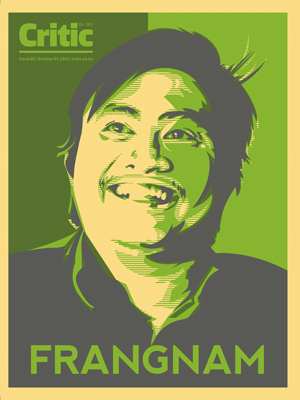
And so just like that, the Logan Edgar era comes to an end. Francisco Hernandez – a career student pol if ever there was one – has come down the middle of a Scarfie vote split by Ryan Edgar and Zac Gawn to claim the OUSA student presidency for 2013. You have to wonder how Gawn and Ryan feel about each other right now. Undoubtedly they were competing for the same voters, the larrikin Scarfies who want another larrikin fronting OUSA. Put together that’s 2000 votes, more than enough to have defeated Hernandez. Whatever you think of Hernandez, he’s probably the most qualified for the role. He’s been inside OUSA for a while, he knows how the place runs, and he’s actually interested in politics. It was all well and good having a populist Scarfie running the show, and Logan the man met his hour with the advent of the VSM era. But OUSA without politics is like meth without a crack pipe. There has been a constant refrain this year that student’s aren’t political enough; that they aren’t even standing up for their own rights and abilities. They aren’t, not nearly enough, but this is the result of a lack of leadership from OUSA. Last year when VSM was coming down to the wire, the OUSA executive staged a pretty successful protest. This year there hasn’t been a single protest, a single event, a single campaign. But worse, this year there was no disagreement on the executive, no dissent, no conflict. OUSA, like all political spaces, should be a place for political debate, not assent or blind agreement. Hopefully in 2013 we’ll see an OUSA exec that isn’t afraid to have the debate, and where necessary, to ask student’s what they think. And while Edgar isn’t on the exec at all, Gawn won the Vice President’s role. Whether Gawn and Hernandez can work effectively together remains to be seen. They are on polar opposites of the asset sales debate, but have both campaigned on getting student flats up to scratch. However, we should hope that to an extent they disagree. The exec is at it’s strongest when there is a competition of ideas, not just a rubber stamp exec that does what the president says. Two things to leave you with: 17% of the student body voted against OUSA supporting gay marriage; I guess you have to hope that they were voicing their opinion that OUSA shouldn’t be taking political opinions. And in a cosmic coincidence, 17% of the student body voted. Not bad, but not fantastic either.
-
Features
Hernandez Wins
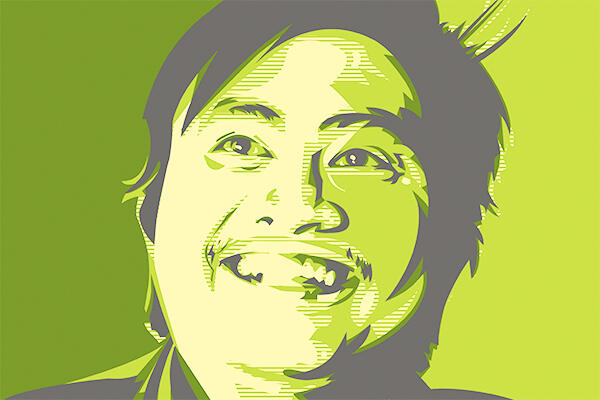
Francisco Hernandez has been elected as OUSA President for 2013 after a hard-fought campaign. Hernandez received 1163 of the 3620 votes cast, with his nearest rival Ryan Edgar receiving 965 votes, closely followed by Zac Gawn with 842 votes. The election results were announced on Thursday September 27. Gawn will gain some consolation from being elected as Administrative Vice-President, triumphing over Mat Jordan with 1667 votes to Jordan’s 1529. Several candidates won their elections unopposed: Lucy Gaudin for Finance and Services Officer, Pippa Benson for Colleges and Communications Officer, and Ruby Ann Sycamore-Smith for Campaigns Officer. Current exec member Blake Luff was elected unopposed for a second term as Recreation Officer. Kamil Saifuddin was elected as International Students Officer with 93 votes, despite a decent showing from No Confidence, who gained 44 votes. Education Officer was the tightest contest, with Jordan Taylor winning the position with 1159 votes, just 16 more than the unfortunate Mat Jordan. Dan Stride received 691 votes for the position. As well as winning the Presidency, Francisco Hernandez was elected unopposed as Welfare Officer. As he cannot fulfil both positions, there will be a by-election for a new Welfare Officer in early 2013. Hernandez said: “Lisa Pohatu has promised me that she will run for the Welfare position in the event of a by-election, and I want her to commit herself to that.” As no candidates stood for the position of Postgraduate Representative, a by-election for this position will also be held at that time. Francisco Hernandez – El PresidenteSoon after he was announced as the next OUSA President, Hernandez described the feeling of victory as “unreal! It’s like you’re floating on a cloud, and it’s like cocaine!” Meditating on why he won, Hernandez compared himself to past US President Richard Nixon: “He wasn’t particularly charismatic or well-liked, but he persisted with good policies, and he just kept trying. And the voters essentially respected that. I ran on my own merits as a candidate, and the $3 dinner was a big part of it.” As laid out in the Presidential debate, the first thing Hernandez says he will do is “lock the incoming exec into a room with me, so I can set down a list of their promises on paper so we can get to work straight away in fulfilling and achieving them. That’s my key goal for this year. And then next year, I’m going to leave my banner up [above Union Lawn] so I can remember what my promises are, and I can get to work fulfilling them one by one.” Hernandez admits he was concerned about competition from Presidential hopeful Ryan Edgar “because obviously he’s the charismatic and popular brother of a very charismatic and popular OUSA President.” But he believes that “Zac Gawn and Ryan split each other’s votes quite substantially.” Although Hernandez thinks “it was a very civil and respectful campaign,” he didn’t “like the way that Caleb attacked me and Dan Stride in his campaign blurb. I think that was ill-done, especially because me and Dan have quite substantial records when we served as exec members. But obviously the voters rejected that negative style of campaigning.” Responding to current OUSA President Logan Edgar’s offer to outfit Hernandez in a new Presidential suit “without all the cum-stains,” he says he will only take up the offer if Edgar carries through with another promise: “To find me some ‘presidential pussy’.” In an interesting development, Critic Editor Joe Stockman later overheard Hernandez speaking on the phone about “the shackles coming off OUSA in confronting this National Government”. Presidential Election Stats 17% of total eligbile voters (from 20792 OUSA Members) The Defeated FiveRyan Edgar told Critic he was “disappointed” not to win the Presidency, “but life goes on”. He admitted that he may have left the launch of his campaign a bit late, which may have contributed to the defeat. Edgar was undecided as to whether he would stand in the Welfare Officer by-election next year: “Dunno if I’m a welfare man, but we’ll see.” He planned to drown his sorrows with his supporters that night, “and then I’m going to treat myself to a ‘posh man’.” Critic recommends that confused readers search for the term on Urban Dictionary. Zac Gawn seemed less disappointed with his unsuccessful bid for President: “I’m really happy. Fran and I make up the perfect face and brain combo.” Critic will leave readers to make up their minds on which is which. Gawn is supportive of Hernandez: “I enjoy his passion.” He will consider running for President again next year: “I’ll see how my studies go.” Sam Sinclair, who came 4th with 201 votes, did not show up to the announcement of the results. Caleb Wicks, who received 194 votes, said he was not disappointed by the result: “I decided about halfway through the week that I wasn’t the best man for the job. I haven’t had as much exec experience as Fran or Ryan.” He will consider standing in the Welfare Officer by-election next year. Dan Stride, who received 119 votes, said he was not expecting to win the Presidency, but was disappointed not to win the Education Officer position. “I ran for President to gain a higher profile and get a bit of exposure for the Education race.” Stride’s campaign was damaged by a series of negative posters and chalk messages containing statements of a personal nature about Stride, which were put up all across campus by an unknown detractor during the election period. “Clearing up those chalkings was more distressing than the election result, it took me two hours to clean them up. I was in tears.” Stride has lodged a complaint with the OUSA Returning Officer, who has jurisdiction over election candidates and can deduct votes or disqualify candidates if he deems that a rule has been breached. Stride has also complained to the Proctor, compiling photographic evidence of the posters and chalk messages. The Proctor has the authority to deal with conduct by general students that breaches University rules. The OUSA Returning Officer confirmed to Critic that five complaints had been laid in total; Stride said he submitted two of these complaints. Details of all the complaints are not yet available to media, as the appeal window is still open. Aside from the “smear campaign”, Stride conceded that other factors were at play in his failed run for Education Officer: “I may have outlived my voter base; the people who remember what I did on OUSA have graduated.” He says, “Fran will make a fine President.” Stride does not intend to run for Welfare Officer next year, but may apply to be Returning Officer for the next OUSA elections. The election also included nine referendum questions, all of which were successfully passed with “Yes” votes. See the full results in our epic infographic, it’s spectacular. Executive Election StatisticsInternational OfficerKamil Saifuddin - 67.4% (93/138) Welfare OfficerFrancisco Hernandez - 86.0 (3057/3582) Finance & Services OfficerLucy Gaudin - 84.8% (3036/3554) Campaigns OfficerRuby Ann Sycamore-Smith - 84.9% (3013/3550) Recreation OfficerBlake Luff - 81.6% (2889/3542) Colleges OfficerPippa Benson - 86.8% (3059/3526) Education OfficerJordan Taylor - 33% (1159/3560) Mat Jordan - 33% (1143/3560) Dan Stride - 19% (691/3560) Administrative Vice PresidentZac Gawn - 46% (1167/3593) Mat Jordan - 43% (1529/3593) Referendum Stats(percentages = voters answering yes) Should the proposed OUSA budget for 2013 be accepted in its entirety? - 83% Should the amendments to the OUSA Budget for 2012 that were made after signing the Service Level Agreement with the University of Otago be approved? - 83% Should OUSA support the Marriage Equality Bill currently before Parliament? - 84% Should OUSA Support the move towards a smoke-free Campus? - 78% Should OUSA actively support student representation on the governing councils of tertiary institutions? - 96% Should OUSA actively support Post-Graduate students receiving a Student allowance? - 83% Should section 19.10 of the OUSA Constitution be amended to read: “Any referendum at which fewer than five (5) percent of the total number of members cast their vote will be indicative only, except where the issue is about any or all matters listed in sections 19.11 or 19.12, where the threshold shall be one (1) percent of the total members, a figure the Secretary will ascertain at the commencement of each semester and report to the Executive and the Student Media.” - 81% Should the OUSA constitution be amended to rescind sections 19.3, 19.13 and 20.2(d)(ii) and insert a new section 19.3 that reads: “Any Referendum involving finance or administration matters other than any or all matters listed in sections 19.11 or 19.12, shall be indicative only and not binding on the Association.” - 75% Should OUSA oppose the privatisation of state-owned electricity companies? - 63%
-
News
City Councillor Edgar Putting the GC in DCC
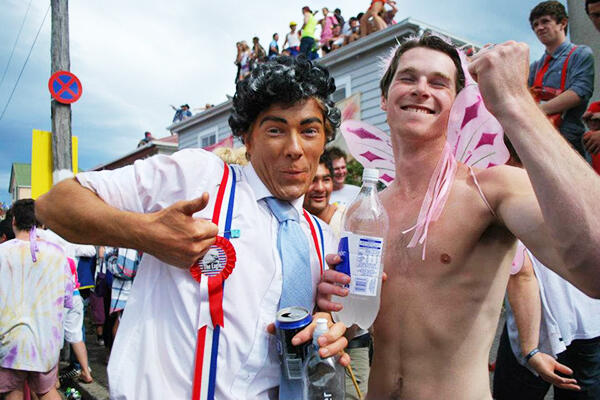
OUSA President Logan Edgar has backed away from claims made on Radio One last Thursday that he is starting a campaign to be elected to the Dunedin City Council next October. He is, however, “really considering it”. In the meantime, Edgar is meeting this week with the Mayor and the Electoral Office to “see how we can get students enrolled to vote and make it as easy as possible.” He points out: “If you vote for the candidate with the STV system they have, it's very easy for students to sway an election.” To this end, he wants to get an electoral office on campus. Edgar says that although he and his predecessors have been “pretty effective” at campaigning on various issues such as warmer housing and better parties, “for things like those to really fly you need it to happen at the higher level.” He has “had a lot of people come up and talk about it, knowing that if we wanted to get someone into the highest level of council, the fact that I've had two terms as President and my media profile has become reasonably well up-there, I'm probably in a privileged position to represent students.” He says he would continue to study if he was elected, as being a councillor is a part-time role. “Councillor Edgar. It's got a nice ring to it aye. Sitting up the back of my marketing class, and the tutor could be all 'Councillor Edgar, what do you think about this?’” “I don't have a left-right political leaning, I'd just have to start the Logan Edgar Party.” As the Council acts now, Edgar believes that “it works quite well with the University, but it doesn't work very well with the students. But I think there's a willingness there,, they just need a bridge.” “The opportunity only comes around once in a blue moon. That's not a good line. Go with the willingness and the bridge. Fuck man, I'm a fucking boss. Yeah, I'd probably still run with the “No Natural Disasters” policy. I'd probably run on similar values. You wouldn't see me going around kissing any babies. Maybe I'd kiss some skinny scarfies on Castle Street or something.”
-
News

Mental Health Nurses Define Yelling as Assault
The increasing use of synthetic cannabis is being cited as a reason for the rising number of assaults on mental health workers. In the first seven months of the year there were 131 reported assaults on Otago Southern District Health Board mental health services staff, a rise of 37% on the same period last year. Mental health nursing director Heather Casey says that although she cannot pinpoint exactly how much the use of synthetic cannabis has influenced the increase in assaults, she claims that “it is having a significant impact on wards”. On the other hand, Casey acknowledges that the reported increase in assaults is at least partially due to a new policy whereby staff are encouraged to report anything that they consider to be assault, including verbal attacks, rather than only reporting incidents that fall within health board definitions. Meanwhile, despite a temporary ban being placed on 28 synthetic cannabis substances, a new legal high product “K2” has become available both in shops and online. The Dunedin police have warned consumers to be wary of the new product, with Senior Sergeant Steve Aitken telling the ODT: “With K2, we see violent, irrational behaviour, mood swings and aggression. Most people that come in [to the police station] under the influence of cannabis are pretty mellow.” Associate Health Minister Peter Dunne has indicated that he hopes to have K2 off the shelves by the end of the year. Dunne says that new measures surrounding synthetic cannabis will mean “manufacturers of these products will have to prove they are safe before anything can come on the market.” A local student reviewed K2, and told Critic that he would give it a 7 out of 10. “My arms and upper body felt like they were floating. It did fuck me up, but it didn’t slow me down physically, it just made simple tasks a bit more difficult to deal with mentally. I could see people getting anxious on it, but I had no feelings of anger or violence whatsoever. If someone was being violent on K2, it would probably be the person, not the drug.” Excellent.
-
News
Man Commits Suicide. Oops, Critic Broke the Law
New media reporting guidelines released last year by the Chief Coroner have been called into question by University of Otago Professor David Fergusson and Auckland's Dr. Annette Beautrais in an editorial published in the New Zealand Medical Journal. Prof. Fergusson and Dr. Beautrais say that the new guidelines will set New Zealand on a path which “deviates from international best practice” by loosening the restrictions placed on reporting suicide. They say that the more open approach set out in these guidelines is known to increase suicide risk through “copycat” suicides. The editorial claims that “the risky practice proposed in the new resource has been reinforced by the claims made by the Chief Coroner and his colleagues that greater media publicity about suicide will have beneficial effects. In turn, their advocacy has led to an increase in prominent stories about suicide.” Speaking to Critic, Fergusson urged media to “take a cautious and muted approach to this topic” and only report on positive “mastery of crisis” stories. Fergusson claims that at the time the original 1990 guidelines were produced, Ministry of Health officials were strongly advised that it was important to enlist the support of the media before promulgating the guidelines. It was suggested that the best way of doing this was organising a meeting which brought all parties (media representatives, research workers, and Ministry officials) together to develop a consensus. “This advice was not followed and the media guidelines were imposed on the New Zealand media with minimal consultation . The consequence of this was bickering by media spokesmen about the validity and worth of the guidelines.” “This process culminated in the Minister responsible for suicide prevention, Peter Dunne, convening a round table meeting in 2011. This included limited research support and was over-weighted by media representatives [which] resulted in a watered-down version of the guidelines.”
-
News
Student Artists Actually Explain the Meaning of their Work
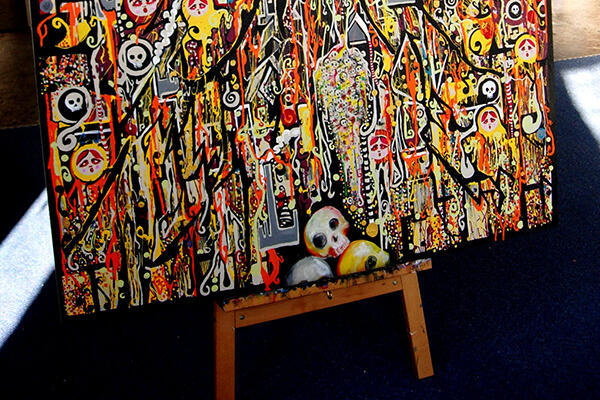
The 5th Annual OUSA Art Week put over $3000 into the hands of Dunedin’s student artists, with 56 out of the 200 pieces on display were sold. Students viewing the artwork were encouraged to vote for their favourite piece in the People’s Choice Awards. The winner was Chelsea Thomson’s work “Troubles”. Thomson said of her work, “It represents my time living in Christchurch. The snake coming out of the person’s mouth represents the feeling I would get as I heard each earthquake coming. After it hits, your insides feel numb, until adrenaline floods your system, then after that the rest becomes a blur. The heavy line work represents the blur, the car represents the sirens and alarms, the cellphones are a comment on communication breakdown, the brown figure is the brave-faced side of ourselves, and the blue figure is the opposite one who represents what we actually feel. The rats down the bottom represent what the people in charge have become now.” Second place went to Trent Davis, who said: “The work ‘Good Dog’ is based on my flatmate’s Black Labrador named Rock. Although Rock is sick and deteriorating in his old age, my flatmate Mikey describes him as being his very loyal, faithful and dedicated friend while he was growing up. The messiness of his body in the work signifies that he is growing old and fading away, while the sharpness in his face, especially his eyes, shows his innocence as he remains a good-natured, obedient and cooperative dog.” Franky Strachan, who won third place with “This is not a Harvest”, described her painting as “essentially about doom and chaos. It is about greed and the insatiable hunger for ‘more’, the repugnance which I personally hold for the rapacious culture in which we live, and the rubbish – verbal and material – which is constantly pumped into the ether from the powerful elite. I think things are rapidly heading in a dangerously unmanageable and impersonal direction. The death references are literal. Doom and gloom aside, the evolution of society is exciting, and I hope the painting shows the energy and vigour of modernity.” Other events held during Art Week included a late-night art gallery crawl, a wrap party, and an art scavenger hunt, which was won by Christian McNab. No art was actually created during art week.
-
News
New Apps for the Intolerant, Autistic, and Musically Illiterate
Millions of dollars were thrown around in the dragon’s den of Castle 1 Lecture theatre during the APPSTAR Showdown on Wednesday September 26. The event was the final stage of a competition in which entrants came up with an idea for a smartphone app to be developed by Otago Innovation Ltd. The people behind the top five ideas out of the original 108 entries each had five minutes to present their idea before being grilled by the panel of eight knowledgeable judges, including Vice-Chancellor Harlene Hayne. The winner was “Read, See, Sing” by Judy Bellingham from the Department of Music. Her app would teach people to sight-sing. Bellingham’s idea was inspired by her passion for music, and the noticeably decreasing number of students coming out of school with the ability to read music. “We all have the ability to sing,” Bellingham told the audience. Critic’s karaoke nights at Vivace cast serious doubt on the truth of this statement, but with her prize of up to $20,000 to have her app idea developed and monetised by Otago Innovation, along with a share in the profits, we could well be proved wrong. The winner of the People’s Choice award and the prize of a new iPad was postgraduate exchange student Xavier Vanwelde. His app “Intollerapp” is designed to facilitate supermarket shopping for people suffering from the growing trend of food intolerances. Barcode recognition of products would identify ingredients, and the app would inform people whether they were intolerant of the product, and if so, suggest alternative products. Another finalist was iPos, an app to enable people suffering from dementia to identify their location, and to help them achieve tasks supporting independent living. Another app, Autism iSchedule, was designed to encourage physical activity in Autistic children. Rounding out the five finalists was Neurosense, an app designed to support the studies of biology and health science. With over 2500 apps uploaded to the iPhone’s app store each day, one of the criteria for the top five apps was that they had to stand out from the rest, particularly as Otago Innovation aims to charge $30 per download for each of the apps they choose to develop. The applicants, who included University of Otago academic and research staff as well as students, were encouraged to make use of specialty research conducted by the Uni.
-
News

“I didn’t have any injuries except a brain injury”
What’s not to like about Nitro Circus? Action sports athletes who are equal parts talented and unhinged throwing and contorting themselves off enormous jumps on both conventional and improvised toys… it’s a great concept! The same sadistic curiosity that enticed people to attend events in the hope that Evil Knievel would maim himself in the 70s is alive and well in 2012. Plus, these guys are doing things on motorbikes that Evil couldn’t have even conceived of in his lifetime. The Nitro Circus Live World Tour is making its second appearance in New Zealand early next year, stopping at five stadiums around the country, including Forsyth Barr on 25 January. In a plan in no way related to the free tickets I have received, I spent some quality time on the phone with New Zealand’s own Nitro Circus ring-in, Luke Smith. We talked about how excited we were for the Nitro Circus to roll into town and his own ridiculous motoX career. Luke Smith is a stalwart of the relatively uncelebrated New Zealand freestyle motoX scene. He has been risking his health for well over a decade. He even had a gig as a stunt double for the Power Rangers back in the day, and before you ask, he didn’t get to keep a suit. Luke was a key member of the Crusty Demons of Dirt, a group who pioneered a lot of what we call freestyle motoX today. “10 years ago, Crusty Demons was the new age thing. They took what was on videos and DVDs and bought it to a live show. Nitro isn’t just about MotoX, it’s got everything: skateboarders, the world’s top BMX riders, it’s got a guy doing a front flip in a wheelchair. With Travis Pastrana leading the crew, they have the biggest action sports star in the world. Nothing is going to be bigger than that.” Crusty Demons was all about a blokeish counter culture where the riders all wore menacing black, were heavily tattooed, and had suspiciously stripperish girlfriends. Nowadays, freestyle is veering dangerously close to a mainstream sport (though precious few have the inclination to give it a go). The boy-next-door charm of the likes of New Zealand’s own Levi Sherwood and international ring leader Travis Pastrana combined with the sugary gloss of an enormous Red Bull can has taken freestyle motoX out of the strip clubs and tattoo parlours and into the family living room. Luke says: “Crusty Demons was a bit more raw. It was a great show at the time, but with Travis and the Nitro guys it’s a lot more clean cut and much more of a family orientated show.” For the New Zealand tour, Luke will play the role of local hero and comeback kid, and fair enough too: “In 2008 I had a freak accident. I was out practicing and a stone flicked up and locked my front wheel. I ended up going face first into the ground. My helmet exploded on the ground, that’s how hard my head hit the ground. I didn’t have any injuries except a brain injury. I had bleeding and swelling on the left hand side of my brain, and I was in an induced coma for 8 days. I got moved to a brain injury hospital for the next four months where I had to relearn all my motor skills. I’ve spent the last two or three years recovering. It’s been a long road, but I started riding again this year, and I can’t wait to get back out in front of a NZ crowd and show everybody that I’m back.” His horrific accident hasn’t stopped Luke trying to keep up with the craziest guys around. “Nitro Circus is great, because the energy from all the athletes is combined and pushes you into doing what you want to do. If you want to go for something the crowd and all the riders will get behind you. You’ll see riders go for things that they’ve never done before because they’re thriving off the energy of the other guys. Its a great environment to be in if you want to push yourself.” On this year’s Nitro Tour, Luke says we can expect some ridiculous tricks to be attempted: “Clinton Moore always does some crazy body varials on a motor bike. Every one of the athletes is throwing it down. Bilko Williams is doing superman Indian air 360s, and Cam Sinclair has a double backflip. It’s computer game tricks now. Mark Monier does a 360 front flip. It’s ridiculous. Who knows where it will stop. People are doing even crazier stuff into foam pits. There are front-flip and double backflip variations going down.” All this sounds frankly ridiculous. If you want to see Luke and the other idiots risk their lives for your amusement, check out the tour dates at http://nitrocircuslive.com/new-zealand-tour-2013/, and if you want to win tickets to the Dunedin leg, tune your dial to Radio One and leave it there.
-
Features

The Good Book
There are many things in the world that simultaneously confuse and disgust me. Gherkins, overheard conversations between pairs of girls in the Link, the very existence of Brimstone — all disturbing, but none quite so much as the great unbelievable fact of the modern era: that the presumably-atheist Mark Zuckerberg has pulled off an unprecedented feat and created a lifestyle/belief system as illogical, self-indulgent, and simultaneously self-aggrandising and self-esteem destroying as each of Abrahamic faiths combined. Proof? Read, if you will, the following passage, stolen from a fundamentalist Christian website: “God is love. He loves you more than anyone else ever has or ever could. In giving your life to Him, you invite His love into every aspect of who you are. His love is transforming, and His forgiveness is complete. God will transform you and make you a new person in Him. You will find the joy-filled life you’ve always longed to have.” Now read that again, but replace “God” with “Facebook”. Um, yeah. Facebook is the new fundamentalism, except worse. Christianity requires only that we please one simple God, who has the kind of reassuringly low standards that are satisfied by simple things like not murdering people and avoiding rimming rent boys on Sundays. Facebook, on the other hand, requires the constant production of audiovisual content carefully crafted to incite an appropriate mixture of jealousy, empathy, and intrigue, in up to 5000 hard-to-please lifestyle connoisseurs. This overwhelming pressure has led to the rise of a variety of intra-Facebook denominations. Each approaches their faith differently, with levels of devotion ranging from Church of England to Mormon all the way up to Amish and Westboro Baptist. Let’s break them down, in order from least, to most sinister: The Church of Latter-day BrosThis is the faith of the BRO whose entire Facebook identity, from photos to wall posts to statuses, is built around his loyal cadre of BROS. Said BROS are generally staunchly malty, middle-class guys who the BRO met at his hall in first year, got on ok with, and subsequently flatted with/drank with/participated in the odd extra-curricular activity with for the rest of his time at Otago. However, the true function of the BROS is to reliably provide a steady stream of in-jokey comments on any given status/photo, links on any given wall, and to be available for occasional photographic documentation of said flatting/drinking/extra-curricular activities. This the faith of the BRO who is so insecure in his BROness that he feels the need to hit every one of his 1000 or so Facebook friends over the head with the fact that HE IS A BRO and HE HAS A TIGHT AS GROUP OF BROS and they DO COOL SHIT TOGETHER and HAVE ALL THESE COOL IN-JOKES RELATED TO ALL THAT COOL SHIT THEY DID TOGETHER. The overwhelming BROness of the group of BROS is confirmed by the carefully-selected locations to which the BROS will travel together, to get on the waste, go “slut hunting”, and acquire a new cover photo depicting the entire group of sweaty HOLIDAYBROS, who can number up to 20, wearing lat-baring baggy singlets, shorts, and Wayfarers. Acceptable BRO holidays include New Year’s trips to South East Asia and weekends away to Parklife, Summadayze, or Splendour In the Grass, mainly because of the obvious inference of casual sex, recreational drug usage, and general “loose times”. Yes, the douchebag is strong in the BRO, but ultimately he is a harmless creature. All he wants is to reassure the world that he is here, he is not queer, and he is BRO. The BRO aspires only to be ever-so-slightly cooler than the absolute mainstream, and compared to those who feature further down this list, such a lack of social ambition is almost charming. evilness rating 1/10 The Parish Church of Feigned InternationalismDisciples of this denomination like to think of themselves as “international”. This is willful self-delusion on a par with the bumper sticker on my flatmate’s car which reads “Invercargill — Where Dreams Come True”. The average Parishioner has done a reasonable amount of travelling, probably taking in most of South-East Asia, Europe, and at least one of India, South America, the Middle East, or North Africa. This apparently entitles them to craft a Facebook identity based entirely around the nomadic, freewheeling lifestyle that inexplicably brings them back to Dunedin for four 7-week blocks of time each year. A fresh 100-photo album will be devoted to each locale the Parishioner travels through. Initially the album titles will be a little quirky — “Cancun — the birth of Los Gatos”, “Vegas — cigarettes and daddy issues”, “Up to no good in Singapore”. As the Parishioner travels more, they realise that the best way to project the image of an insouciant globe-trotter is via minimalist album titles in caps lock — “CROATIA 2011”, “LAOS 2011”, “THAILAND ‘12” — in order to better demonstrate that they are a sophisticated, world-weary traveller who has seen so much of the world they now lack the energy for album title quirkification. On arriving to a new city, the Parishioner will check in on their phone, while adding a token caption like “Why hellloooooo [insert popular tourist destination here]!!!”, possibly including an image of a beach, a plate of food, or an attractive person they hung out with for 10 minutes just to get a photo for Facebook. Subsequent updates are carefully crafted and monitored to ensure that that Parishioner is projecting precisely the right combination of wild gonzo spirit and cultural sensitivity. If there is a place the Parishioner particularly likes, they may even update their profile so it says that they “live” there, and “like” a brand of local beer. The Parishioner’s cover photo will be either a photo of the back of their head as they gaze at a turquoise sea/mountain range (likely locations: Bali, Nepal), or a photo of them diving impressively into a body of water (likely locations: Greece, Laos). Slightly more irritating/deluded than the BRO, the Parishioner genuinely believes that by crafting a profile around their travels they situate themselves firmly outside normal constructs of social judgment. They are wrong. evilness rating 5/10 World Babeness FellowshipThe BROs and the Parishioners are laughable, but at their worst, they are like Jehovah’s Witnesses — irritating, but taking only time, and leaving only footprints and a pamphlet. No, the most dangerous domination is a greater evil than trans fats and high-fructose corn syrup combined. It has brainwashed half the population. It has set the cause of feminism back at least 500 years. I refer, of course, to the World Babeness Fellowship, of which nearly every female on Facebook is a member. Oh, WBF. WTF? We have regressed to the point where any sane observer would be quite forgiven for feeling that women are, in fact, not fit for much more than childbirth, cookery, and needlepoint. Is it really possible that women are collectively so insipid that no comment or caption is complete without a
-
Features

A Beginner’s Guide to the American Presidential Elections
WARNING: This article is an attempt to decipher the American Presidential elections. Depending on your level of interest in politics, it will either provide you with entertainment or act as a light sedative. Regardless, it will contain violence, drug use, and offensive language.
-
Features
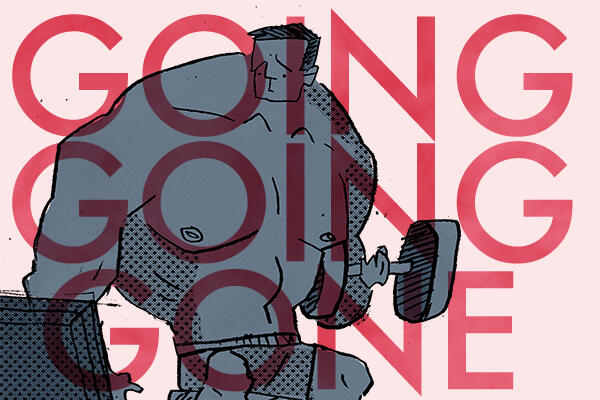
Going Going Gone
We live in a predominantly sedentary, appearance-obsessed society. The media alternates between promoting food products and bombarding us with idealised images of thin, toned figures. Obesity is the First World’s leading cause of preventable death, but despite this, a small population are bucking the Western weight-gain trend in the worst way – they’re literally dying to be slim. I’m sure you’ve heard of anorexia nervosa and bulimia nervosa, the famed eating disorders of supermodels and Hollywood stars. Unfortunately, these eating disorders are becoming more common and, as interviewees reveal, much closer to home. Tisha*, a second-year student at the University of Otago who is suffering from anorexia, says that her family and friends are still grappling with the complexity of her eating disorder. “They know I have a problem, but they don’t really know what it is, or what to do.” “THEY KNEW I HAD A PROBLEM...”It’s difficult to estimate the incidence of eating disorders, as only a fraction of sufferers seek treatment. However, statistics indicate that the lifetime prevalence of anorexia among females is 0.5%, and the prevalence in males is one tenth of that. Anorexia and bulimia are the most common types of eating disorder. In the Diagnostic and Statistical Manual of Mental Disorders, anorexia is characterised by the refusal to maintain bodyweight at or above a minimally “normal” weight for one’s age and height, intense fear of gaining weight, undue influence of body shape on self-evaluation, denial of the seriousness of the current low bodyweight, and (in females, when relevant) the absence of at least three consecutive menstrual cycles. Bulimia is characterised by regular (“at least twice a week for three months,” according to the DSM) binge eating, and inappropriate “compensatory methods” to prevent weight gain. Such methods include fasting, excessive exercise, and purging. Although rare, both anorexia and bulimia lead to serious health concerns, making eating disorders among the most lethal of all psychiatric conditions. NOT JUST A GIRL THING:In his book, First Person Accounts of Mental Ilness and Recovery, Craig LeCroy interviews a 27-year-old male, recently diagnosed with depression and bulimia. “Do I have a problem? I guess so,” he says. “I work so hard at my body, but underneath I still hate the way I look. In my mind I know that I am bigger than most of the guys on the street, but I still feel inadequate. I don’t like undressing in front of my girlfriend, and I don’t enjoy sex because I’m too busy worrying about the way I look. Even just looking at my body in the mirror when I come out of the shower makes me feel horrible.” Although 90% of people with anorexia are female, another more recently identified eating disorder, muscle dysmorphia, is predominantly associated with males. The condition was first termed “reverse anorexia”, describing male bodybuilders in the early 1990s. It is characterised by a preoccupation with the idea that one’s body is not sufficiently muscular. Studies show that up to 95% of college-aged males may be dissatisfied with some aspect of their body, but of course this doesn’t qualify them as having a dysmorphic disorder. In response to this self-dissatisfaction, someone with muscle dysmorphia will rearrange their lives around their compulsive need to work out, diet, or use ergogenic substances (such as steroids), despite harmful physical or psychological consequences. MEDIA INFLUENCEResearch suggests that the media is partly to blame for the increase in eating disorders among both males and females in Western countries. Thinness is constantly emphasised on television and in movies, while overweight people are underrepresented. Characters in today’s media are thinner than ever before, and significantly smaller than the average person. Viewers are led to accept these often unhealthy portrayals as representations of reality. Adopting this reality can cause decreased satisfaction with one’s own body, and people – particularly women – begin to engage in behaviours aimed at meeting this ideal (such as dieting, bingeing, purging, and skipping meals). Tisha admits that “That sort of media encouraged me, and pushed me to keep going. I felt better in my own skin, and I could wear clothes I wanted to. I knew that I could go into any store, pick a size 8, and it would fit me.” JESS’S STORY:Jess* can hardly remember when she began to suffer from anorexia. She was only a toddler when she first felt self-conscious about her weight. She remembers being at kindergarten, “hating” herself because she was “fat”. The onset of anorexia is typically a deficient coping strategy for dealing with deep emotional issues, in response to stress or a traumatic life event. Evidence suggests that eating disorders come under the broad anxiety disorder spectrum, as many sufferers of anorexia and bulimia display an intolerance of uncertainty not only regarding food intake, but also in other areas of life. “I was only 12 years old, holidaying the summer before high school began, wearing a bikini on the beach, when a boy compared me to a whale. I didn’t cry, I didn’t try to disagree with him, or defend myself. Instead, I took it as a sort of constructive criticism, and internally vowed that I would lose weight, so I could look like everyone else. Looking back now, I can see how much being teased affected me.” As she began shedding kilos, “cutting out foods here and there”, and training hard for a sports team, Jess says she didn’t realise the extent of her weight loss until her mother said, “You’re looking thin, too thin.” “I couldn’t believe my ears,” Jess says, “Too thin! There was no such thing as too thin. That was like telling someone they were too pretty, or too nice. It was the ultimate compliment.” During her first year of high school, she continued to lose weight, and shrank to 45 kilos, but was still far from satisfied. “By this point, I had become a shadow of my former self. The anorexia had fully consumed me.”As her dangerous restriction of food continued, Jess says that “Mum’s crying at dinner time became an everyday thing. I became desensitised to her pleas, and heartless to her tears. I was walking around completely numb of any sort of emotion... I hardly ever saw my friends. I knew everyone was worried about me, but I didn’t care.” It wasn’t until her mother made her go to the doctor that Jess realised the severity of her physical condition. Straight from the doctor’s clinic she was rushed to hospital for tests. As a 13-year old, her weight was lower than it had been in the past five years. “They explained that my heart rate was so slow (40-45 beats per minute), and my body was so weak, that I could have dropped dead at any second.” Jess spent over two months in hospital, and she gradually got better. “My friends and family were incredibly supportive during this time... It was through happy times with my friends and family that I started to have positive connections with food. My friends showed me how fun living could be, and genuinely put the light back into my life.” “IT’S NOT JUST A CASE OF EATING MORE”It’s imperative that treatment of eating disorders focuses not only on increasing calorie intake, but also on the psychiatric roots of a patient’s condition. If rapid and effective professional treatment isn’t sought as soon as possible, the consequences are potentially fatal: 10-20% of individuals with anorexia will die within 20 years of its onset. Although most of these deaths are due to health complications, over a quarter result from suicide. Eating disorders are mental disorders; immeasurable by scales, unfixable by forced feeding. Cognitive distortions and beliefs about food and bodyweight must be remedied before the patient can fully recover from an eating disorder. Tisha sees a huge gap in society’s understanding and acceptance of mental health, especially regarding eating disorders: “Growing up, we’re taught to not share germs, because germs make us sick. But we are never taught about depression, or schizophrenia, or eating disorders, and how mental health is just as important as physical health. There’s a lot of fear, and a lot of shame associated with anorexia and bulimia.” Tisha’s disorder developed later than Jess’: “I got anorexia when I was around 16 years old. I was a bit overweight at the time, and started dieting. I became obsessed with the number on the scale, and I would weigh myself four to five times a day, trying to get that number down. It just snowballed from there.” Through purging (vomiting), she attempted to empty her stomach after eating. “I hate the feeling of food inside me,” she says. “[Bingeing and purging] has landed me in hospital, because of my potassium levels.” Tisha wishes that people would realise that “there’s a lot more to an eating disorder than simply the need to eat. Some people say, oh, it’s not good for you, you should probably eat more. And I’m like, really? I’ve been through three years of treatment, and that’s all I needed to know? Yes, I knew that what I was doing wasn’t good for me. I still know that it’s not good for me. But, in the moment, it’s hard to change.” TREATMENT AND PROGNOSIS:Tisha says that Dunedin provides a “pretty shocking service” for those with eating disorders. “They’ve got limited information, and limited care.” As a result of this, her parents sent her to spend three months at Christchurch’s Eating Disorder Clinic. “Within the ward there are a few different programmes... It definitely helped through teaching me techniques for situations when I have a strong desire to binge and purge. It reminded me of what a normal diet was like. One fantastic thing about the ward was being surrounded by people who could actually relate [to anorexia]; it was so good being around people who knew what I was going through.” Early intervention, support from family and friends, lower levels of depression, and avoidance of drug and alcohol abuse all increase the likelihood of treatment success for those suffering from an eating disorder. The outcome of anorexia is highly variable; some individuals fully recover after a single episode, some suffer with weight fluctuation followed by relapse, and others experience a chronically deteriorating course of the illness over many years. After gaining weight during her time in hospital, Tisha is now back at university. She still meets with her counsellor, and admits that while one’s bodyweight can benefit from intense physical treatment, the psychological element of eating disorders requires a more long-term approach. “Body image is one thing that I’m working on. It’s important to realise that it’s normal to have curves, and wobbly bits, as such.” From here, Tisha’s future looks positive as she continues towards a normal weight range and a healthier mindset. Through sharing their stories, both Jess and Tisha hope that people will realise how serious anorexia is, and, as Jess says, “how much it affects not only the sufferer, but everyone around them.” Jess emphasises an anti-bullying message: “It may not mean anything to you, but your harsh words could result in someone dying.” *Names have been changed to protect interviewees’ anonymity.
-
Columns
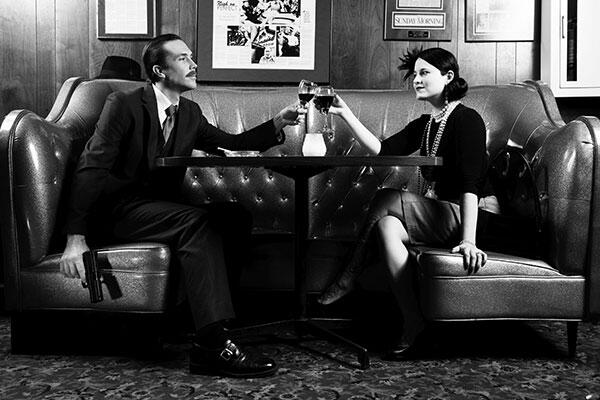
Me Love You Long Time | Issue 26
None of you read this anyway. It’s just that little weird standfirst bit above the action below. But anyway ... The Blind Date has been at Metro bar for the last few weeks, and it sounds like they’ve been putting on quite a show. Great feed, good drinks, excellent service etc etc. If you want in on the action, email critic@critic.co.nz with your details. Carly RaeAfter downing a couple of pills (probably just Panadol) to banish the signature ‘why the deuce am I doing this’ butterflies, I emerged from my stakeout point at a nearby coffee shop and made my way to Metro. Already not-quite-fashionably late, I proceeded to stall in the car for a further five minutes, sitting low in case I was being watched and arguing with my friends about whether the boy or the girl should ideally arrive first to a date. We concluded that I’m not hot enough to keep anyone waiting for longer than I already had, so I hustled up the street and into the dark folds of Metro. Casually propped at far end of the bar was a lone ranger who I knew had to be my guy, but I awkwardly curtailed my approach and introduced myself to the bartender instead. Mostly to avoid prolonged staring—I’d definitely lucked out, people. Tall and fit with light eyes, (blue perhaps?) topped by a mop of curly hair and sparkling with enough boyish charm that all my misgivings had melted away before our menus were even in front of us. The alcoholic in me scrambled for the wine list, mainly in order to secure a prop with which to occupy myself if eye contact proved too difficult. The gentleman was already nursing a Beck’s, which falls under my approved drinks list for males. So far, so good. It soon came out that neither one of us had much of an appetite, so we settled on a selection of appetizers—probably a good move, as in hindsight I’d hate to have been trying to wrangle slippery carbonara during the conversation that ensued. The discourse was rather thorough—no stone was left unturned—we covered everything from hangovers and personal nomenclature to linguistics and complex moral dilemmas. At one point, some comedic relief came in the form of an imperative viewing of a recent body piercing that was mentioned. No, not mine… When the bar tab had been exhausted and the ambient volume switched from date to disco, we decided to take to the streets and walk off our heavy meal. Despite being too cold to properly form a sentence (is ‘northest’ a word?) I walked him most of the way home while probably rambling chaotically. I guess he finds good conversation to be as much of a turn-on as I do, because somewhere between exchanging numbers and saying sayonara there was a rather spontaneous and lovely goodnight kiss. Critic for the win—thanks y’all. BieberOver the last few weeks I’ve been stepping out of my comfort zone. From getting a piercing up to some casual stripping, but to be honest I’d never done a blind date before. I was a little apprehensive about it at first until I was told that ‘she was hot’, ‘its pretty casual,’ ‘you get some nice food and a few beers.’ My idea of casual turned out to be a little different to that of my flat mates, as when I tried to leave the house in a t-shirt they forced me to change my entire outfit, shower and shave. So there I was, bang on time sitting at the bar in my flat mate’s clothes, hoping that this would read like the male version of 50 Shades of Grey. She was a little late, but after the bartender assured me that he had seen previous girls turn up 25 minutes late so I wasn’t too unhappy when she was only 10 minutes past the deadline. She was pretty easy on the eyes, so in retrospect, I was quite happy I had been pressured to put in a bit of an effort into my appearance. We seemed to get along pretty well right off the bat, with not a single silence through the date and the talking split pretty evenly 50/50. The beers were cold, the food was good, although my bright idea of eating dinner beforehand in order to make the most of the bar tab/dessert tab turned out to be a bit of a failure as I just managed to make myself look anorexic by not being able to eat anything. Luckily this week turned out not to have a twist, or not that one i could figure out anyway, so there were no video cameras etc to intrude on our romantic evening. When she told me that she didn’t usually drink, immediately thought I’d landed myself a health freak until she asked if I would mind if we headed outside for a dart, which turned that on its head. My flat mates had been telling me that the critic date needed spicing up as it had been a bit tame recently, but unfortunately ‘nailing her in the bathroom’ and ‘showing her my penis for a pick up line’ did not happen and we finished it off with a stroll down George street and a pash. While this was happening though a few friends of mine walked past and caught us in the act. Numbers were exchanged and I’d say we will catch up again at some point. Cheers Critic for making Monday mornings and a Tuesday night a whole lot more interesting.
-
Columns

Yes We Might! | Issue 26
Last week, Mitt Romney pulled out of the presidential race, to be replaced by a fresh-faced Tea Party ticket of Paul Ryan and a Dalek. The latest scandal to hit the Romney campaign proved too damaging: Mitt was caught on camera dismissing the 47% of Americans who pay no federal income tax as “dependent upon government” (read: bludgers – bear in mind this group includes military veterans and retirees) and conceding that such parasites would never vote for him. At an emotional press conference, Romney, flanked by his wife and his retinue of robot minions, announced his withdrawal, declaring: “herp derp derp derp” while emitting odd beeping sounds. Except, that last paragraph isn’t actually true. Romney is still very much in the race. This latest scandal, while possibly the single biggest of the campaign, probably won’t change much, for one simple reason: Anybody who didn’t already know Romney was a heartless oligarch has their head buried so far in the sand that nothing, not even video evidence, will change their mind. Just consider Romney’s rap sheet (due to space constraints, this has been heavily edited – but you get the idea): With inequality at a historic high, Romney plans to cut taxes for the rich, and pass the costs onto the middle class. Romney’s net worth is over US$250m.Ignoring decades of precedent, he has refused to release multiple years of tax returns. He released returns for 2010 which showed that he paid only 14.1% tax; it’s a fair bet the earlier returns would show even lower rates.He is the sole owner of a shell corporation in the Bermudas. Shell corporations are a common vehicle for tax avoidance.Until recently he kept his money in a Swiss bank account. He closed it in 2010, while the IRS was offering amnesty for those with criminally undeclared Swiss accounts. Whether Romney shut the account as part of this amnesty is unclear, because (see above) he won’t release his tax returns.(My personal favourite), when he started Bain Capital, 40% of the investment came from families linked to Salvadorian death squads.He allegedly assaulted one of the guys from LMFAO in the first-class area of a plane. Actually never mind, I can totally get behind that one. Romney’s supporters are those people who can read that list and not care/doublethink it away/consider that getting rid of Obama is worth it. Adding one more item isn’t going to change that.
-
Columns

Notes on a Scandal | Issue 26
When I was getting travel vaccinations recently, the nurse administering them said she had not heard of the recent Ebola virus disease outbreaks in Uganda and Democratic Republic of Congo (DRC). I made no real effort to veil my scorn (hello, she is a nurse at a travel medicine clinic…) and wasted no time in telling her the truth. She apparently lives under a rock when she isn’t working at Pitt St Medical Centre, but I have been receiving regular updates on the outbreak from my mum (incidentally, probably the only person who ever reads this column – hi Mum). Indeed, a month or two ago nary a day went by without some Ebola-related article appearing in my inbox in link form or, if my mum was being particularly overzealous, as a .jpg, scanned freshly from the pages of that last bastion of journalistic integrity, the Christchurch Press. Ebola was confirmed in Uganda on July 28 of this year, after villagers were dying in a remote western corner of the country. Ugandan officials were slow to investigate because the victims did not show the usual symptoms. Delays in confirming Ebola allowed the disease to spread to more villages deep in the western district of Kibale, and at least 16 Ugandans have died of the disease. Doctors Without Borders and the Centres for Disease Control and Prevention have been helping Ugandan officials to control the spread of the disease. In the DRC, the Ebola death toll has gone from 14 to 31 since September 5. All of the cases are in Orientale Province in northeastern Congo, and are blamed on local consumption of dubious “bush meat”. In conversations of the “would you rather die from … or from …” variety, Ebola haemorrhagic fever has always near at the top of my list. Symptoms include the usual gastrointestinal unpleasantries, plus backache, fever, headaches, rashes, bodily swelling, and increased sensitivity to pain. Ebola’s real kicker, though, is the ol’ bleeding from every orifice trick, in the manner of a low-budget horror movie’s special effects. Best of all, there’s no vaccine, and there’s no cure. All doctors can do is give you intravenous fluids and hope for the best: you either pull through, or you don’t. And most fall into the latter category – up to 90% of cases, in fact. No wonder my mother took great glee in ringing me up one day to assure me, in a voice quivering with poorly suppressed mirth, that my travel insurance included a zinc-lined coffin. That way my sullied corpse won’t infect those poor, unsuspecting souls charged with its safe delivery to back where it belongs in the Southern Hemisphere. Happily, Uganda will actually be officially declared Ebola-free on October 4 of this year. No such luck for the DRC, which seems to have been having an even worse run of things recently than normal – Ebola deaths have doubled in the past week.
-
Columns

Straight Up | Issue 26
In this one short sentence, I will possibly extinguish what’s left of my queer cool cred: I’m a country fag, and I like it. I am not hard country. I’m more the soft, lifestyle block, grow-heirloom-roses kind. I like the smell of silage, flower shows, and shingle roads. I like to have space to move, breathe, and think. It’s not that I dislike cities; I just don’t love them. This admission can be met with incredulity in some queer* scenes - where being rural (or worse, choosing it, liking it, and not wanting to leave) is profoundly counter-cultural. Often it seems that in NZ, like elsewhere, the city is constructed as the “natural” environment for modern queer life. The city is imagined as a place of community, ripe with non-conformity and sexy queer potential. Whereas the rural is just butt-fuck nowhere. Or supposedly no butt-fuck at all. This is what someone waaaay smarter than me has called the metro-normativity of queer/trans scenes – a collective investment in the idea that The City is a better, queerer and generally more fabulous place, and that rural life is backwards and avoidable. But newsflash, honey! Rural living has awesome queer possibilities too. Living rurally is not necessarily a hotbed for hostility. And we country queers are not all self-hating, backward victims of fashion (and geography) who long to escape to some urban centre for shopping, loving, and community. In my experience, queer rural life can be awesome. Lots of my queer/trans community are accessible online, and I don’t feel disconnected. Country life can also be important to us. I have made the decision not to live in the city because living close to my family is something I prioritise right now. Country folks can also be hot as - I have an undeniable and persistent desire to have all kinds of sex with the country-butch salesman who works at CRT. I am sure it’s got something to do with the moleskins, blue check shirts, and steel caps. I appreciate that for many queer and trans folks leaving rural and provincial spaces is a really good decision. When I was younger, I couldn’t wait to leave them myself. But now that I am back, I guess I see it as less black and white. There are many paths to a loving, luscious, meaningful queer/trans life, and country life may be the path some of us take.
-
Columns

For The Record | Issue 26
The xx are three British twentysomethings who dress in black and create stripped-down minimalist pop with haunting melodic precision and a zealously apathetic atmosphere. Read that last sentence again. Now go and beat your head against a fucking wall to get that PR-spun marketing dross out of your skull. Ready to start fresh? Good. There are two kinds of people in this world: those who loved The xx’s debut album, and those who did not. It was that kind of album; it polarised. I belong to the first group. I loved pretty much everything about the record: from the instantly-iconic cover to the pitch-perfect production from a then-unknown Jamie xx. I listened to xx hundreds of times over the summer of 2009, and can vividly remember lying on my bed with the curtains drawn, headphones on, eyes closed, wholly enveloped by the sparse music. I listened. And the sun rose and set, and the moon orbited, and I listened. Months passed and I listened less. Slowly but thoroughly, The xx disappeared entirely from my musical landscape. Invariably “Crystalised” would be played at a party, and I would gently nod along and remember those sepia summer days, but when the song ended I wasn’t unhappy about it. The xx came out of nowhere and released a fully-realised pop album that surprised pretty much everybody. Then they vanished as suddenly as they arrived, in a puff of insomnia and reverb. Now almost exactly three years later, The xx have steamrolled back onto the scene with their sophomore recording Coexist. The world gets 37 minutes and 12 seconds of self-conscious “atmosphere”. And I get a press release in my inbox reintroducing me to “three British twentysomethings who dress in black.” This album was destined to dishearten. The xx’s debut was so unanticipated that we had no time to prepare ourselves for the Londoners’ sonic somnolence. But we’re ready this time; we know what to expect. In much the same way I wish I could re-watch The Sixth Sense or Fight Club with fresh eyes, I’d love to go back to the moment I held xx in my hands, completely unaware of the beauty inside. But Bruce Willis is a ghost and they’re both Tyler Durden, the magic is gone, and what remains is an empty shell of disappointment and nostalgia. This is Coexist: an obvious and uninspired sequel, predictably succumbing to the sophomore slump. It’s a crude replica of xx, yet entirely lacking in the innovation and wonder of the band’s debut. For the record, I don’t hate Coexist, I just wish it was so much more than it is. There’s a part of me that wants to remain hopeful for a third xx recording, but I don’t know if I can take the disappointment again.
-
Columns

Microbiographia | Issue 26
Last week we chronicled the rise of Heshen, a Chinese official who became absurdly wealthy in the late 18th century. This week, we bear witness to his fall. Last week ended at Step Two of “Heshen’s guide to amassing inappropriately large stashes of treasure”, and we’ll pick up at Step Three after a brief recap. Heshen was clever, good-looking, and insanely lucky, so found himself securely in the Qianlong Emperor’s favour. Though a large part of Heshen’s obscene wealth came straight from Imperial gifts and appointments, a lot also came from the way he managed said appointments. His was a management style best characterised by the application of… Step Three: Show a flagrant disregard for common decency. Heshen was unashamedly corrupt. His favour with the emperor was such that he could get away with pretty much anything – a power he made good use of. As controller of both the Boards of Revenue and the Civil Council, Heshen was able to continuously raise taxes. He then stole large sums of money from the resulting revenue. When this failed (or just when he was bored), Heshen was not above blackmail, torture, and other fun forms of extortion. Though these methods served him well for a time (recall: he had 24 solid gold beds), they also led to his ultimate downfall. With a heavy heart, I present the final step of Heshen’s guide. Step four: don’t get caught. By the time the Qianlong Emperor died in 1799, Heshen’s corruption was obvious to all. People were starving in the streets, the combined result of Heshen’s taxes and severe flooding (though the flooding was also kind of his fault – he stole money intended for the maintenance of dams and flood-banks). So he was promptly prosecuted by the new Emperor and convicted to “death by a thousand cuts” (also known as “slow slicing”). This is pretty much the nastiest way to die ever. First, the victim is tied to a post. Then the executioner slowly slices bits of them off. At this point, various drugs might be administered to prevent the victim from passing out. Eventually, sometimes after three days of slicing, the victim dies. Oh, and parts of their sliced-off flesh are sold for medical use. Fun times. Fortunately for Heshen, he was able to parlay his sentence into the more noble death of suicide, so he hung himself with a rope of golden silk. The people were starving, and he was just like “Na, Ima kill myself using a rope that could feed your village for a week.”
-
Columns

Sex at The Dinner Table | Issue 26
It’s hard to draw boundaries between art and pornography when representing sex. Erotica seems to go back forever - the earliest known man-made sculpture is the 26,000-year-old “Venus of Willendorf”, widely interpreted as a fertility symbol with its large breasts and accentuated vulva. In our context, there is nothing at all pornographic about it. It appears to begin a very long history of “Venus” figures being used to celebrate the God-given human form and act, presumably, as a divine medium to increase fertility - our most primordial human desire. But could this sexy, voluptuous little sculpture once have been held in the left hand while cave people sat in their stone masturbatoriums having a fap with their right? The beauty of this piece is that we’ll never know for sure, which is probably a lucky thing considering our latest trend towards the supposed sexiness of hairlessness. So how do we differentiate between a celebration of sex and media which is produced primarily to get off on? Or, to be a classy wanker, can porn be seen as art? Well, the Japanese really rock with the erotic shit - not only do they have Hentai, but also its predecessor Shunga, those centuries-old woodblock prints which can include octopi giving a vaginal rub. In more recent times, the Japanese have made a name for themselves in erotic art again with S&M photographer Nobuyoshi Araki. But few realise that his work spans three decades and includes still lifes, the documentation of his wife’s death from cancer, and the 2011 earthquake in Japan. As always, art and sex are great for challenging boundaries - even more so together. But how does this relate to the flat? Earlier in the year, I considered buying a photograph from the “Origins” series by Rohan Wealleans. It featured a naked woman confronting you with her legs spread, her vagina decorated by paint chips. Strictly speaking, I do not deem this pornographic, although the idea is certainly present in the cultural background of those admiring the piece. The values of the photo, to me, were a) the feminist and art historical connotations which I won’t even begin to describe, and b) it would seriously, SERIOUSLY challenge and confront anyone even slightly conservative who was observing it. In the end I settled for a more subtle painting which featured a black guy receiving head - which you only realise on, like, your fifth look at the piece. Maybe I’m not so liberal after all…
-
Columns

ODT Watch | Issue 26
Holy shit. We’re getting pretty close to the end of Critic for the year, only one more to go. And I really didn’t think that we would get some of the ODT’s greatest work this close to the end. But they literally stopped me in my tracks this week, and in the business section, no less! (yes, I take ODT Watch so seriously that I read the business pages). Okay, so there was an article on the NZ Brush Company. The options for puns here are really unlimited, and the ODT sure wasn’t able to limit itself: Good start. But don’t stop there, ODT. Hit us with your opening sentence: Oh yeah, got the double. Nice work. Now take it home: BOOM! Trifecta. You might worry that they’d be all out of witty wordplay after such an effort. But they still had this gem from Eileen: and of course, they continue their careful coverage of the evil that is Zumba:
-
Columns

In 'da House | Issue 26
Regular readers will know that I am always looking for excuses to visit Dunedin, so I was delighted when my former POLS lecturer and academic idol Janine Hayward invited me to speak to her POLS102 class about life, politics, and everything else last week. I took that brief pretty literally and prattled on about myself for most of the lecture, but I restrained myself enough to take the opportunity to talk to a room full of politically-engaged young people about how we can increase youth voter turnout and make politics more interesting to young voters. Based on the dismal turnout at last year’s election, I think we can agree that we’re not getting it right at the moment. The class had some great suggestions on this topic, including more and earlier voter education in high school, parties taking the time to consult young people on the issues that matter to them, and making it easier to actually vote by exploring online voting methods. Reasons given for why young people don’t vote included that they don’t see the difference between political parties, don’t like all the policies of any single political party so find it hard to choose between them, and don’t feel a strong affinity with any particular political party in a way that people perhaps have in the past. This observation was confirmed when the class was asked if they already knew who they would vote for in the next election, and only 5-10 hands went up in a class of around 80. In that context, politicians like me face the serious challenge of making politics more interesting for young people, and engaging with them in an authentic and respectful way. This is important not only to ensure that young people are represented in Parliament, but also to make sure that we don’t alienate a whole generation from engaging in future elections. That’s why I was stoked when two students came to present to the Justice and Electoral Select Committee’s Inquiry into the 2011 General Election this week on their online youth engagement tool “On the Fence”. This tool helps young people engage with politics and figure out which parties they might agree with, based on a series of values statements. It’s fun, engaging, thought-provoking, and not at all party-political. Check it out at www.onthefence.co.nz. My National, Labour, and NZ First colleagues were most impressed. Perhaps there is hope yet.
-
Culture
Mark of the Ninja - REVIEW
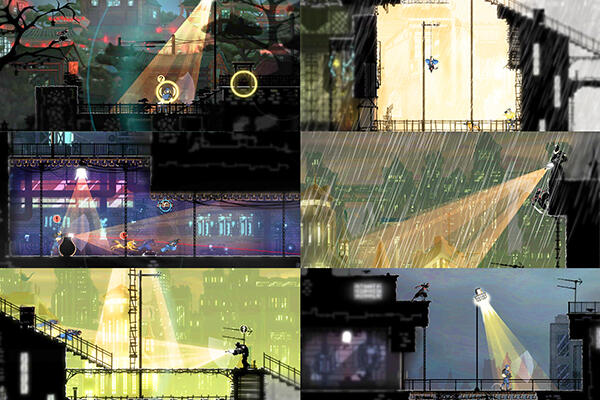
"Other” ninja games, and developer Klei Entertainment refuses to name names, are very un-ninja-like. Why spend all that time shrouding yourself in stifling, shadowy rags if you are going to blunder into the middle of a swathe of foes and paint the walls in their bright red blood just to show, unmistakably, that you’ve been there? Mark of the Ninja takes the idea of the feudal Japanese assassin back to its roots: silence is paramount, blackness is comforting, and dogs are the worst thanks to their acute sense of smell. 3D stealth games are problematic. How many times has a player been caught, not due to recklessness or bad timing, but because they didn’t quite know the exact, arbitrary route that an AI guard might be taking at that moment? A perfect plan is executed perfectly only to be screwed over right at the end by a meat-bag stumbling around a corner. In 2D games this isn’t as much of a problem, because the whole screen is visible at once. The angle of swinging beams of light, the direction that guards are looking, even the noise-circumference of birds that you scare and the “smell-range” of animals – it’s all laid out for you. Mark of the Ninja has terrific visual design. When you are clouded in shadow, properly “hidden”, the detail of your ninja’s black jim-jams fades away. There’s no need to keep track of noise meters or illumination icons; it’s all there, integrated into the art-style, right before your eyes. The game has simple, cartoony art punctuated by violent death animations. It is subtle and stylish. The way your character darts, slinks, and clambers up walls is quite pleasing to the eye. Aesthetically, the level design does a great job of showing the climbing texture of walls. You always know which ones can be vertically traversed, and which ceilings can be swung from. Stealth mechanics are as complex and refined as they would be in a fully-fledged console game. Your observant foes have a couple of levels of alertness. If they glimpse your shadow darting through a brief moment of light they will investigate, but they certainly won’t raise an alarm. It could have just been their over-active imagination. Bodies can be dumeds in vents, they make a satisfying squelching noise when they do, and you gain a handful of points for being so careful. Birds can be preemptively taken out with darts, and ratcheting noisemakers can be used to momentarily distract guards. Be careful though, you have a limited number. Progress through a level is thoroughly score-based. You can, technically, engage in combat with guards after they’ve seen you, but you feel profoundly stupid if you have to. The way the ninja spins and darts loudly through the air punching and kicking looks elaborate, but is so much less elegant than a stealth takedown. And it nets you fewer points. Mark of the Ninja has light RPG mechanics. I say light, but completing a level well can often grant you skills and items that are extremely useful, such as the ability to pull foes to their doom from a vent beneath their feet. The power you gain from doing so is the best possible incentive to go back and complete an earlier level. Mark of the Ninja is, in many ways, the ultimate stealth game. It’s all about timing and skill, slipping in and out of the shadows expertly in a way that leaves nothing to chance. There are many paths through levels, and they can be completed as clumsily or as expertly as the player wishes. 4.5/5 stars
-
Culture

Smoky Repose
A young woman poses in profile against an indistinct backdrop, a cigarette propped just so in her mouth as she gazes coolly into the unknown distance. Another girl’s hair is drawn tightly back as she clenches her face into an expression of what could be pain or pleasure. The cigarette makes another appearance in the hand of a third young woman, who is biting her lip provocatively as she avoids the gaze of the viewer. A fourth portrait establishes a subject who is most unusually staring straight out of the artwork, her eyes beautifully rendered but seemingly elusive, her expression inconclusive. These are some of the portraits that make up Jon Thom’s recent collections, which he has been exhibiting both privately and publicly in the last four years. A self-taught artist hailing from Christchurch, Thom’s study at the University of Otago has spanned an impressive variety of visual and verbal arts, including film, music, graphic design, and art history. He also co-founded Motion Sickness Studio, a company that provides art direction for clients in the art and music industry, as well as creating designs for the clothing label Moodie Tuesday. He has clearly found his stylistic niche in the art world, as evident through his smoky portraits of insouciant young women that are highly suggestive of a kind of modern noir. His technique is self-assured, with the use of charcoal and pencil on paper creating controlled and evocative images of an alluring and elusive youth. The more I studied these portraits, however, the more I found myself subconsciously dividing them into two categories. The first comprised those images of pouty-lipped young women, coyly seductive in a seemingly accidental way, with glimpses of their breasts peeking through oversized shirts and long tank tops. While certainly these girls were a) hot, b) skillfully rendered and c) appealing to the student demographic Thom creates for, I found them to be somewhat lifeless. Art-wise, a (probably male) viewer is far more likely to dwell on their scantily-clad forms than on the technical expression of the body, or the mood or disposition of the subject. The second category of Thom’s artworks, however, provoked me far more as an art enthusiast, prompting me to become wholly immersed in these young women. These were the portraits that captured some indefinably compelling quality in the eyes of the subject, or in the defiant angle of the chin, or through the curlicues of hair that suggested life, energy, zest! Do I sound like a crazy person? Probably, but I hope you understand what I mean when you study Thom’s body of work. This latter “category” (these speech marks are meant to convey my uncertainty over using such a definitive division, as this is after all my personal opinion) contains images of women that portray a visceral state of mind or emotion more than a beautiful physical form. The young girl whose gaze directly assails the viewer is the most stunning of Thom’s portraits, as her ambiguous expression seems to belie the quiet intensity of her stare, creating a heightened mood of intrigue. Fingers crossed there’s a Moodie Tuesday t-shirt with my name on it (and her face on it) that I can snap up ASAP.
-
Culture
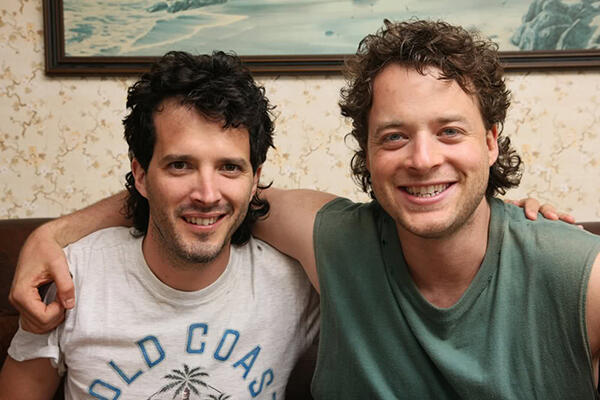
Two Little Boys
Two Little Boys is the story of Nige and Deano, two best mates from Invercargill. Nige (Bret McKenzie) finds himself in way over his head when he runs over a Norwegian backpacker. He confides in his friend Deano (Hamish Blake), despite their recent disagreement over a toasted sandwich. However, in the foolish fashion typical of two friends, Deano decides to make a bad situation worse by convincing Nige to hide the body. Deano later hacks the remains of the backpacker into small pieces without consulting Nige and becoming obsessed with killing Nige’s only other friend, Gav (Maaka Pohatu). These insights into Deano’s character and his persistent bullying give the film an increasingly disturbing air, which the audience is expected to brush aside in order to embrace the “Kiwi humour”. Nige’s incompetence and inability to stand up for himself stretch the film’s credulity beyond breaking point. The three characters take a trip to the Catlins, the home to many fond memories for Nige and Deano, and end up jumping off a cliff, not suffering any injuries. At this point, though, it’s difficult to see how the audience can be expected to be in the mood for laughter. Another issue with this film is its lack of commitment to the Southland setting. Its portrayal of the Catlins is fantastic, yet the characters, who are supposedly Invercargill born-and-bred, don’t speak with the obvious Southland “r”. Surely the filmmakers are able to portray a small amount of diversity in New Zealand cinema? Two Little Boys’ only redeeming qualities are a superb performance by Maaka Pohatu and its imagery of the Catlins, which conveys a true sense of Kiwiana. The creative folk behind this film deserve kudos. The screenwriters don’t.
-
Culture
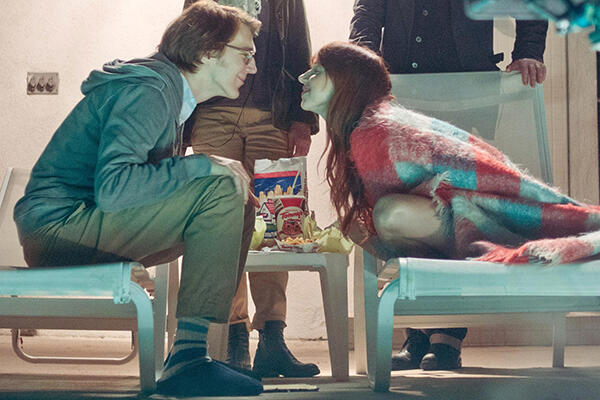
Ruby Sparks
My expectations for this film were pretty non-existent, although I’d heard it was directed by the same duo that made Little Miss Sunshine, which gave me hope. I was also vaguely aware that it was about an author whose female character comes to life as his girlfriend, and anything he writes about her becomes true. This made me think it might be creepy. It was. The film’s protagonist, Calvin, is played by Paul Dano, who was Dwayne in Little Miss Sunshine. His love interest, the film’s namesake, is played by Zoe Kazan. At first I thought the casting was odd, simply because Kazan also wrote the screenplay, and who makes themselves the love interest? But then I Wikipedia-d the film, and it turns out she and Dano are in a long-term relationship. Makes sense. In real life, Kazan wrote the screenplay and Dano acted a character she’d written; in the film, he writes a novel, and she’s a character in that novel. This is getting too meta for me. I like to think in parables, so here’s what I think this film is saying – if you are an artist, you are in a position of power in your relationship and you can use your art to manipulate your partner into being the person you want them to be, as opposed to the person they are. I found this film disjointed, yet very disturbing simply because of its implications. It’s advertised as a “romantic comedy-drama”. That’s misleading. There were five people in the cinema when I saw this film – myself and two couples. I was the only person who left smiling. Don’t take your partner. 2.5 / 5 stars
-
Culture

Madagascar 3
I arrive at the theatre with great anticipation, unopened popcorn on my lap, just waiting for the ready-set-go. I haven’t seen a kids’ movie since way back, and nothing is better than trailers to get you in the mood. But we all remember the sheer awesomeness of Madagascar, right? Let’s move it! Madagascar 3 continues the story of the gang of former Central Park zoo animals shipwrecked in Madagascar. The cosmopolitan zoo animals can no longer tolerate the thought of being stuck in Africa. Times Square’s “modern corporate lack of character” is a happy thought for Alex, who continues to reminisce about his days of bygone fame. Some friends of the gang, the penguins, are in Montecarlo, and hold the key to getting them back to New York. Instead of waiting for the penguins, the animals decide they will make their own way to Montecarlo. I expected that we would spend half the movie following the animals to Europe. This didn’t happen, and my post-teenage brain started to analyse the narrative and logical sequence of the film. A 12-year-old might find it normal that they crossed the second-largest continent and swam to Europe without any problems, and that from there the four went from action scene to action scene without a breather. My mind couldn’t handle all the excitement at once, and I can’t help but think that most kids would get dizzy too. In fact, most of the pop culture references in the film would go straight over most children’s heads. The film borrows elements from Mission:Impossible, The Matrix, old-school music, and James Bond’s exciting trip through Europe. But hey, maybe kids these days are much smarter these days – you know, the Flynn Effect and all that jazz. Watch it for the old times? 2.5 / 5 stars
-
Culture
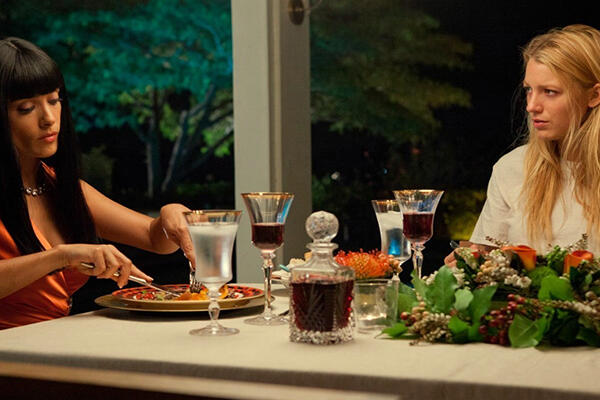
Savages
It pretty obvious from the get-go what kind of movie this is, because we’re told in direct narration by the sultry voice of main character O (short for Ophelia), played by Blake Lively. She explains that she’s a hot rich girl whose parents don’t love her, but who happened to win the affections of two best friends Ben and Chon (also hot), successful marijuana growers. She also says that she might be dead at the end of the movie (mysterious). After Ben and Chon have lots of sex with Ophelia, they get into some hot water with a Mexican drug cartel, and subsequently Ophelia is kidnapped and held to ransom by their leader Elena (Selma Hayak). This becomes a test of both Ben and Chon’s love for Ophelia, as they must now heroically get her back using force. Luckily Chon is a soldier with some useful friends, and Ben’s really nice. There’s also a 2D appearance of John Travolta as a crooked DEA agent. I found the character development in this film pretty average, as emphasised by O telling us that Ben and Chon are “two men that make a whole”. Considering O’s character carries the emotion of the film, it’s a pity that the writing is so poor, and she comes across whiny and dim. It’s kinda just your typical action movie, with the obvious shock factor. It’s a shame, as Oliver Stone has put out some decent films in the past, like Natural Born Killers. It does cover all the bases though – it has sex, some hand impaling, people getting stabbed and shot, rape, revenge, and so on. So yeah, if you’re into those things you will enjoy this movie. I’d like to point out the most annoying part of the film, but it’s vital to the plot, so I won’t. 2 / 5 stars
-
Culture

The Marriage Plot
After he focussed on mass suicide in The Virgin Suicides and then hermaphrodism in Middlesex, I was curious to see what Jeffrey Eugenides had in store for us with his latest novel, The Marriage Plot. Unlike his other novels, The Marriage Plot does not trade in shock value. Instead, the plot centres on the love triangle between three college graduates. At the focal point of this love triangle is Madeline Hanna, an English major ironically studying the marriage plot in the novels of Jane Austen and George Elliot. Her two “suitors” are Mitchell Grammaticus and Leonard Bankhead. Mitchell is a somewhat lost soul, who searches for his religious identity in the novel. He falls for Madeline when they first meet — the clichéd “love at first sight”. Throughout his travels through Europe and India, he continues to pine after Madeline, but his love is unrequited. Leonard, on the other hand, is a misunderstood loner who captures Madeline’s eye during a course in semiotics. A relationship develops between Leonard and Madeline, which is later complicated by Leonard’s manic depression. Ultimately, Madeline must make a decision between Mitchell, the great friend who has always loved her, and Leonard, a vulnerable and in-need-of-help individual. Admittedly, I was rather sceptical when I first picked up the novel. It all sounded so clichéd: girl meets boy, girl meets another boy, she must make a decision between the two, just like another terrible Hugh Grant movie. And to add to this onslaught of banality was the irony that Madeline, a hopeless romantic, studies the marriage plot that she herself becomes a part of. However, although Eugenides’ novel orientates itself around the clichéd marriage plot, his stylistic charm and approach leaves the reader refreshed and somewhat disassociated from the classic plots of Austen and Elliot. Eugenides’ approach is more critical, and he works to deconstruct the romanticised notion of marriage and love. Madeline herself gets wind of this notion of deconstructing love when she enrols in a semiotics course. The focus on the literary theory of semiotics and structuralism put forth by Derrida and Barthes segues into Eugenides’ own critique. What I believe Eugenides is attempting to do in this novel is to see whether the classic, canonical marriage plot that was presented by Elliot and Austen would survive in a modern context. We no longer find ourselves in a Lizzie Bennett situation, having to find an appropriate suitor with enough money and social standing to ensure our family and estate are supported. There is room for more of a focus on love — but what is “love”? Is it the developing love within a close friendship, or is it the love of saving someone from depression? Eugenides picks up where Austen left off with her focus on love, and modernises some of the themes she began to develop in her texts. He presents an accessible, readable, hilarious, and heart-warming narrative. Although the literary theory can be a little heavy in the beginning, it is an excellent read for anyone who enjoys a good ole love story but is looking for a bit of a twist on this classic plot. And who does Madeline chose in the end? You’ll have to read it and find out.
-
Culture
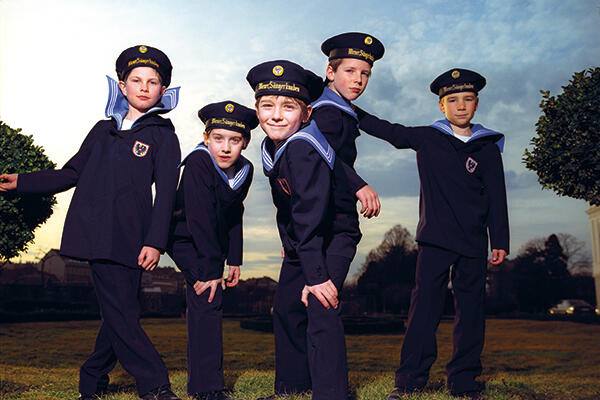
Otago Festival of the Arts
I think we often forget, or rather overlook, the privilege of living in a culturally assimilated city like Dunedin. We always have a production on somewhere, be it professional or student-led, so if we feel like it we can take the evening off to enjoy a show. We are also lucky enough to have a variety of festivals take place every year, such as the Fringe Festival and the fast-approaching Otago Festival of the Arts. Commencing on October 5, Otago Festival of the Arts will take over Dunedin with a variety of performance mediums from visual arts to dance. For nine days we will be treated to groups from all over New Zealand, and the world, coming to show off their talents. You can find brochures around most cafes and advertising hotspots, but for those of you too lazy to read the whole thing, I have chosen five highlights from the festival. What makes them highlights? Um, I like the sound of them? ChalktagonOn the first Saturday of the Festival, the entire Octagon will be blocked off to vehicles, leaving the space free to use as a huge, eight-sided canvas. The general public is encouraged to come along and, to the theme of “My Favourite Things”, decorate the ground in beautiful creations. Students from the Art School will be around to lend a hand or inspire you. It’ll be interesting to see how it turns out! Though you can never really go wrong with chalk. Vienna Boys’ ChoirIf the poster doesn’t make you want to go, then I guess you’re just…I don’t know, immune to advertising featuring pictures of cute children? I mean, come on, they’re dressed as sailors. That’s cute. And they’re talented too. The Vienna Boys’ Choir performs over 300 shows a year, with the choir being made up of approximately 100 boys between the ages of 10 – 14. Who knows why they’re not in school, the point is they’re good. And in the Regent Theatre they’ll sound even better. HatchedThe brochure states that those who love The Addams Family (yes), Edward Scissorhands (double yes) and Harry Potter (oh dear god yes, always yes) will “LOVE Hatched”. Now, that seems quite the reputation to live up to, but I’ll give it a go. If I’m promised love in caps, I’ll go. The show is performed largely by old and slightly creepy marionettes, and tells the story of a somewhat grim fairytale of magic and grief. The show has been touring internationally since 2008, and is definitely worth seeing. PlayWritten by Samuel Beckett, the father of crazy theatre where words are the heart of the performance and even they don’t make sense, Play is a combination of performance and instillation art. Someone once described Beckett to me as “a symphony”, and that’s certainly true. Confusing yet beautiful. This performance, only 20 minutes in length, runs repeatedly for an hour and a half, giving audiences the opportunity to pop in and out or stay for the whole duration. The BeatgirlsSwing Time! A blast from the past in the form of beautiful swing music, military uniforms and three part harmonies. What more could you ask for? Taking place in the HMNZS Toroa Hall, these three women will be taking us back to the 40s and entertaining the troops. Think Christina Aguilera’s “Candyman”, but better. For more information on the festival, check out their brochures yourself! Study break excuse? I think so.
-
Culture
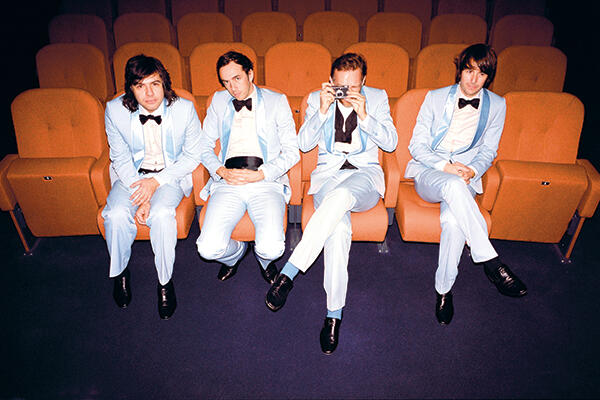
Soulwax
My good friend Tom Tremewan may have changed my life. Searching for a sense of sanity on a recent excursion to Captain Crunch’s World of Weird and Wacky, situated just 5 hours north of Dunedin, he turned to me and fumbled for the only topic that could save us from the Netherworld – music. “Have you seen Part Of The Weekend Never Dies? The Soulwax documentary?” No, I muttered honestly, feeling awfully ignorant conversing with my musically superior friend. “Who the fuck is Soulwax?” I thought. Probably some lame funk/hip hop crossover from the blogosphere, AKA classic Tremewan content. “Oh man, you have to see it. I’ll give it to you.” I obviously assumed that he would never give it to me. Not because he’s unreliable, but because it was a very late-night conversation, in a situation all too familiar to most of us, where many things are said, and more things are forgotten. But he did remember, and he did visit me, lowering the CD/DVD combo gently into my hand, slowly caressing my finger as he disengaged, our gaze holding for that extra second. You know, guy stuff. I loved it. Not my moment with Tom, although that was very special, but the documentary itself. The music. The band. The cinematography. But most importantly, I liked the ideas of the two brothers behind Soulwax. Soulwax is a rock band. James Murphy, of DFA Records/LCD Soundsystem, announces that to the camera at the beginning of the film. They don’t really sound like a rock band – they are more like LCD Soundsystem than Grinspoon (old irrelevant rock band reference!), but hey, I’m not going to argue with King Murphy. Maybe he means in attitude or ambition, because Soulwax has a lot of both. Long story short, this documentary covers a tour called Radio Soulwax, featuring 2 Many Djs, which is the two Soulwax brothers on the decks playing other people’s music, and Soulwax Live, performing electronic remixes they wrote, of their own popular album and renamed “Nite Versions”, live. Add a bunch of their famous friends including Klaxons, Digitalism, Justice, and of course Murphy, and you have a Radio Soulwax night. Confused? Basically, Soulwax does whatever they like. Now, big nights with lots of famous musicians are cool, but that’s not the concept that enchanted me, it was the idea of self-remixing. I get bored between releases from bands. Most people do; that’s why Six60 exists – to fill the gaps between Shapeshifter albums. And while Soulwax reimagining their own album with a newly discovered electronic bent is satisfying and exciting, it’s still too long between sounds. Live self-remixing is where the party is at. Daft Punk’s Alive 2007 is the textbook example. A live set consisting of only their original material, mixed-up, sampled and mashed together. It’s amazing, mind-blowing, and energising. Kanye saw it live and just had to use its excellence to make up for his own shortcomings, and “Stronger” was born. Babies were probably conceived to it. Justice, our generation’s Daft Punk, do much the same, just with more dark, baroque, rock’n’roll energy and less helmets. DJs and electronic acts seem to be the only bands attempting this live, maybe because the instruments they perform on give them the unique ability to do so. Maybe it’s the different crowd expectations. Fans of rock bands want to hear the song they know, the “hit”. The songs are generally written with varying but full structures, songs as stories with beginnings and ends, played one after another. Electronic music has none of these constrictions, however, and sometimes makes me wonder if electronic DJ gigs are actually more fun than live bands. There is still a beginning and end, but the path between is more of a mystery, more dangerous, more exciting. Songs and samples could be bought in and out of left field on a whim. Master Of Puppets can be combined with Slam, creating pure chaos. DJ fans expect a smorgasbord of different artists or songs they love, and they are less focused on “the song” than enjoying the ride of the whole set. It is this unknown space that can be acceptably filled with anything that makes remixing and self-remixing extremely enjoyable to both the fan and the artist. Both offer the chance to hear old songs in new light, in different contexts and with different preambles. Metallica and Pendulum. Soulwax and Soulwax. Because it’s not the familiar that really gets the blood going, it’s the unknown.
-
Culture

Mini Raspberry Citrus Cheesecakes
I’ve got something to share with you. I haven’t been entirely honest this year. From the recipes featured, my tastebuds would appear to lean towards the savoury; clearly I am a carb-consuming, meat-eating, spice-loving, caramelised-onion-obsessed lunatic. What have failed to grace these pages are the recipes that satisfy my uncontrollable sweet tooth. Usually I will tame my sugar cravings with a comical quantity of chocolate (anything with nuts in it, be they almonds or macadamias, is a sure winner), but sometimes you need a more indulgent vice, requiring dedicated preparation, but which absolutely tells that sweet tooth of yours who’s boss. These miniature cheesecakes are one of the many dribble-inducing desserts gracing the pages of The Delicious Cookbook. Tart raspberries, zesty orange, and a velvety filling are held together by a very naughty chocolate base. For the latter, I acted on an extravagant whim and used Lurpak, a Danish butter which, I swear, is delicious enough to eat on its own. A word of warning: if your flatmates see these, you will have to share them. Ingredients250g packet Krispies, wine biscuits or digestives 100g Whittaker’s Dark Cacao Chocolate, or similar 50g butter 250g tub cream cheese, softened at room temperature 5 tbs icing sugar 140ml cream Juice and zest of one orange 250g frozen raspberries, thawed at room temperature Method01 | Place the biscuits inside a plastic bag, then this inside another plastic bag. Tie a knot at the top of the bag. Bash vigorously with a wooden spoon, or similar, until finely crushed. A few larger chunks of biscuit are fine. 02 | Break up the chocolate and place it in a saucepan with the butter. Heat over a low heat, stirring occasionally until melted. Remove from the heat and add the crushed biscuits. Mix to thoroughly incorporate. 03 | Line a tray with 20 cupcake cases. Place about a tablespoon of the mixture into each cupcake case then press down firmly with the back of a spoon. Refrigerate for 15 minutes. Any leftover biscuit mix is delicious with yoghurt and sliced bananas. 04 | In a large bowl, whisk together the cream cheese and 4 tablespoons of the icing sugar until lump-free. Add the cream about 50ml at a time, whisking to incorporate. Slowly add the zest and 2 tablespoons of the orange juice, and whisk until soft peaks form (if you lift the whisk upwards from the mixture, peaks will form but will fall over slightly). Use a fork, or a whisk for this whole process, rather than an electric beater. Divide the mixture between the cases, and refrigerate for at least an hour. 05 | Place all but 20 of the raspberries, the remaining icing sugar, and the remaining orange juice in a saucepan. Place over a medium heat and stir until the icing sugar is dissolved. Simmer for a few minutes. Set aside to cool. 06 | Top the cheesecakes with the remaining raspberries, drizzle over the sauce and eat.
-
Columns
Year’s End
In many ways, your time in Dunedin is a gift. I am especially aware of this when former students make contact and share that as they look back on their years in Dunedin, they feel very grateful. A core part of this Otago experience is the friendships we have here. Every now and then, we need to look after our friends. Our year together is moving towards its end. For some of us it may even be the conclusion of our studies and time in Dunedin, and for all of us it is the conclusion of the 2012 academic year. But before we pack the car up or head out to the airport, we need to give exams our attention. I want to encourage us all to take care of one another during this time. It can be so easy to become so focussed on “our wee world”, and forget to reach out to others. Our days can end up becoming determined solely by the exam schedule, and larger concerns are ignored, so if someone seems more stressed than usual or withdrawn, consider reaching out to them in some way. By doing so, we might be able to offer them the help that they need, and in a strange way we will end up helping ourselves as well. We at Chaplaincy are mindful of you all through this time. You are in our prayers and thoughts, and as always we are available for support. But remember to try to timetable study wisely or creatively, get some good sleep time, make sure you are eating and drinking well, and take time for some breaks and exercise. All of this can help with self-support during this time. Fr Mark Chamberlain See www.otago.ac.nz/chaplain/resources/chaplainsstudyguide.html for the Chaplains’ Guide to study and exam preparation.


