-
News

QUAN dethrones COMO as Most Failed Subject
Full table of pass rates by subject available here: >>University of Otago Pass Rates by Subject 2009-2011 Picking papers has become even easier at the University of Otago after figures stating the average pass rate for each subject were released under the Official Information Act (OIA). The release came after student Sam Wagener’s request under the OIA for “a statistical breakdown of the average grade distribution by course subject code for the last three years.” By law, public authorities have 20 working days to respond to any request, from police search warrant results to whether or not regional councils open meetings with a prayer. The authority must give a “good reason” to refuse a request, such as commercial sensitivity or risk to national security. Wagener stated that his request to the University, made on July 19, was “to try to gain an understanding of how “easy” or “hard” different subjects mark, as I have heard rumors that different subjects are known to grade easier than other subjects.” Disappointingly, the University did not provide data on the average grade for each subject code, which means Critic’s assertion that COMP111 is the go-to paper for an easy A+ is based on anecdotal evidence rather than hard facts. However, the pass rates for the nearly 100 undergraduate subjects with over 10 students enrolled were released on August 24. University Registrar Jan Flood provided a word of caution along with the data: “We must emphasise that this data does not take into account the nature of student cohorts in the various subject areas, variations in course content, variations in the nature of course delivery, difference between professional programmes and general areas of study, and a range of other variables all affecting pass rates.” The subjects with the lowest pass rates in 2011 were Finance and Quantative Analysis (68%), Computational Modelling (72%) and Mathematics (75%) - a clear indication that numerical subjects don’t add up to an easy degree. On the other hand, Dentistry and Design for Technology, despite being quite different subjects, both had 100% pass rates for the past three years. The 2011 University of Otago Annual Report notes that the academic pass rate for all students increased to 89.3% in 2011, up from 88.4% in 2010 and 87.7% in 2009. Of the four core academic divisions, Sciences had the lowest examination pass rate with 85.8%, while Humanities topped the list with 91%.
-
Columns

Editorial | Issue 23
It’s not unusual to hear people say that they don’t care about politics (“don’t give a fuck” might be a more precise quote). However many times I hear it said, it never ceases to amaze me. Failing to care about politics is a fundamental misunderstanding of how we control our lives. Politics is how we all come together to decide what kind of society we want to live in. How much freedom do we want? How much do we want the government to take care of us, or if not us, then those who are unable to take care of themselves? Very roughly, the “right” wants government to be as small as possible, to allow people the freedom to run their own lives and force them to take responsibility for their own decisions. Laws should be limited to those required to prevent people from causing harm to others while they exercise their freedoms. The “left” wants government to be large enough to take care of those who society and the market leave behind. They believe that people cannot be forced to take responsibility for situations that were forced upon them by the inequalities inherent in the system. The state should step in and help them. Arguments occur when the left tries to raise the money to do so. In the mind of those on the right, the left is trying to take their hard earned money – money that they took risks to earn, and which they should be allowed to enjoy benefits of. What the right chooses to forget is that capitalism does not care whether wealth goes to one person or one hundred. Yes, people should be rewarded for their hard work, for gaining higher education and training, and for taking risks. But the market will not decide fairly how much they should get paid, as it will always be biased to those who control wealth in the first place. Society must collectively decide how wealth is divvied up. We cannot allow those who stand to gain the most to decide who should benefit from the system. We must make these decisions fairly and without bias. Capitalism should not set the limits of society, but be a tool that society uses to make itself better. We all benefit from everyone being wealthier, healthier, better educated, and free from crime and violence. So care, vote, support candidates that you believe in, and if you don’t believe in any of them, run yourself.
-
News
Asset Sales Delayed by Water and Wind Claims
In a move that is bound to have special resonance for students, the government has decided to delay the controversial partial sale of Mighty River Power (MRP). Following a Waitangi Tribunal report that was delivered to the government on August 23, but is yet to be made public, the sale is now expected to go ahead over the March-June period next year. The government will use the intervening period to consult local Iwi on a proposal by the Tribunal, known as “shares plus,” which would give Maori purchasers of shares special rights above other shareholders. Despite agreeing to consider the “shares plus” proposal, Prime Minister John Key has been critical: “The tribunal basically came up with a concept they didn’t know much about.” Critic decided to go all out on this totally-relevant-to-students story, and contacted some real-life MPs. National’s Michael Woodhouse said he “absolutely” supported the delay. Given the issues raised by the Tribunal’s report, “it was a sensible decision.” Labour’s asset sales spokesman Clayton Cosgrove also supported the decision, noting that “nobody really knows what the shares plus proposal is” and that the longer MRP remained unsold and in the hands of NZ taxpayers, the better. Labour has been a vocal opponent of asset sales. The government is “firmly” against shares plus. It is unclear whether the consultation period will be used to reconsider this position, or to try to talk the New Zealand Maori Council out of any further legal challenge to the sale. Woodhouse suggested both elements were at play: “While the Government’s position is firmly that it doesn’t support Shares Plus, it will listen very carefully to any new submission that is made on its merits.” It is believed that a legal challenge, as well as any lingering uncertainties over Maori water claims, could negatively affect the price of shares if and when the float occurs. Delaying the sale and consulting Iwi is designed to avoid both contingencies, helping the government get the best possible price for the shares. Critic prowled the university to gauge reactions, roaming as far and wide as Café Albany and the toilets in the Link. Most interviewees seemed totally oblivious to the obvious impact this news would have on students, giving Critic a series of blank looks and shuffling awkwardly away. Only one student offered her opinion, shouting “this is the ladies’, fuck off!” Critic obliged, muttering darkly about “student apathy” and “this affects us all” as it stormed off. Meanwhile, Ngapuhi leader David Rankin has launched a claim for the wind, saying Maori should be compensated for the use of wind for commercial electricity generation. Rankin insists that the claim is “not a pisstake at all”, a radical turnaround from back in May when he slammed the water claims as “pure greed” and said: “These claimants need to be honest. What they are after is a slice of the pie. This is not about culture, it is all about profit and personal gains… It is only the elite few manipulating the masses who get to enjoy the money that flows from these settlements”. Rankin’s press release about the wind claim invokes spiritual concepts, stating: “Traditionally, the wind was regarded as a deity in Maori society”. However, in an interview with Newstalk ZB, Rankin said the claim was “not at all” about a spiritual relationship with the wind. “You’re trying to class me as some sort of pakeha hippy, a pot-smoking hippy, I’m not into that PC carry-on… When you’re dealing with those born-again PC pakehas or those tribunal people, they live in that airy-fairy world, so if you go and negotiate with them, that’s how you talk. When I’m talking man to man… I’m talking a commercial deal, I’ll talk tough.” Rankin has been a vocal critic of the Government’s asset sales program, saying it will put future revenue “into the hands of some Chinese investor”. Critic’s expert political team has determined that Rankin’s wind claim is an innovative political stunt with the dual motive of further delaying and complicating the asset sales process, and highlighting what Rankin regards as the absurdities of the water claims. This theory is backed up by Rankin’s suggestion that aerospace might be the next resource to be subject to a claim, as well as his tongue-in-cheek response to the Newstalk ZB interviewer’s question of whether he would be claiming solar power next: “You’ve given me an idea there Larry!”
-
News

Rabbi’ng Shoulders with Alternative Faiths
The ninth annual open Peace Lecture was held last week in the St David Lecture Theatre. Israeli Rabbi Adi Cohen, who is part of the Wellington Progressive Jewish Congregation, delivered the lecture, entitled “Words, Concepts, Deeds. Peace as a way of living”. The lecture was organised by the Dunedin Abrahamic Interfaith Group and the Otago Tertiary Chaplaincy. Rabbi Cohen, who is the only progressive Rabbi in New Zealand, stressed throughout his lecture the importance of interfaith communication. Cohen challenged the audience to consider how we can overcome our religious differences and what kind of dialogue needs to occur. While the lecture was delivered from a Jewish perspective, the main themes of peace and communication worked to transcend religious boundaries. Cohen noted that in some cases people could be “very, very different. But we are all human”. This concept was displayed during the question time that concluded the lecture, when a Palestinian woman asked the Rabbi how interfaith discourse could be used to help the Israeli-Palestinian conflict. Cohen replied that it would be very hard to start such discussions in the midst of this conflict, but pointed to the fact that both he and the audience member were here in New Zealand, and suggested that maybe it would be this neutral ground that would allow for the beginning of interfaith communication. The Rabbi also stressed that people often tended to regard their spiritual view as “religious” while those held be others were “superstition”. However, Rabbi Cohen explained that it is only when people “try to listen” rather than “wait for their turn to reply” that they gain a crucial understanding that all religions are valid. Rabbi Cohen’s humbly told the sizeable audience: “I don’t want people to remember me as a Rabbi. I want to be remembered as a father, a husband, a human being”.
-
News
Beloved Bars Bullied by Bureaucracy
The future of many local bars remains uncertain as substantial fee increases under the new alcohol law reforms threaten their livelihood. New legislation will see bar owners fronting the full cost of licensing applications, which are currently 50% subsidised by ratepayers. Critic spoke with Council Liquor Licensing and Projects officer Kevin Mechen, who is assisting Dunedin city councillors to prepare an impact report concerning the new legislation. Mechen conceded that the new rules may well have a negative effect on the hospitality community: “Licensees may need to assess the viability of their businesses. [But] those premises that have a ‘good product’ shouldn’t be too affected.” Mechen remarked that although councils generally subsidised licensing processes, with some areas subsidised by more than 50%, the reduction on the rate burden made possible through the licensing changes could only be seen “favourably”. The current system sees bar owners pay $793.24 for a licensing application but the new fee regime would see this double to about $1600, although specific fees had not yet been set by the Ministry of Justice. The reforms would not mean bar owners would need to reapply for their licences straight away. “[Existing bar owners] will continue with the current regime, albeit with greater fees being involved,” Mechen said. However, the new rules require bar owners and off-licence liquor sellers to renew their licences more often. Otago President of the Hospitality Association Mark Scully expressed his concerns to the ODT about the pressure the proposed changes will put on bar owners, especially given the current climate and already “difficult conditions”. Newly created District Licensing Committees would replace the current District Licensing Agencies under the reform. These committees, which are to be chaired by an elected council member and two community representatives, would deal with all applications for liquor licences within the area. However, Mechen remarked that these changes will mean “even greater responsibility [is] placed on the Council” and a lack of resources may make it difficult to meet the obligations under the new legislation. Jennie Connor, Chair of the University’s Alcohol Implementation Group, expressed “disappointment” on behalf of the AIG that the drinking age was not raised to 20, but again refused to disclose the intentions or views of the AIG with regard to any other aspects of alcohol law reform.
-
News
Shady Sheik speaks at Islam Awareness Week
Last week, the decadent city of Dunedin was treated to the spiritual guidance of hard-line Islamic Sheik Shady Alsuleiman. The sheik was invited by the Muslim University Students’ Association (MUSA) to deliver guest lectures for Islam Awareness Week on Friday, Saturday, and Sunday in the Castle and Burns lecture theatres. Alsuleiman, who is based in Australia, attracted controversy in 2009 when he invited radical cleric and Al Qaeda recruiter Anwar al-Awlaki to give a private sermon to hundreds of Muslim youths in a Sydney Mosque. Al-Awlaki was linked with two 9/11 hijackers, the Fort Hood shooter, and many other terrorists, before being killed by a US drone strike in September 2011. US President Barack Obama stated: “The death of Awlaki is a major blow to Al-Qaeda’s most active operational affiliate. He took the lead in planning and directing efforts to murder innocent Americans.” In addition to his decision to invite Al-Awlaki to speak in Sydney, Alsuleiman is known for his hard-line preaching. The Guardian reported that Alsuleiman “has supported the stoning of adulterers”, and the sheik probably won’t be buying a Rhythm & Vines ticket while he’s in New Zealand given his comments: “A New Year’s party, it’s worship of Satan. A Christmas party, it’s worship of Satan… It’s a party in the fire of hell. It’s a party with the anger of Allah.” Alsuleiman has also condemned homosexuality as “a major, major sin”, saying “homosexuality [is] spreading all these diseases. Let’s not deny the fact. Don’t call it the name of freedom… These are evil actions that bring evil outcomes to our society.” Critic asked several campus groups what they thought about Alsuleiman being invited to give lectures on campus. Representatives of the local Young Nats and Young Labour branches both said they disagreed with the sheikh’s views, but that university societies are entitled to invite speakers of their choice. OUSA President Logan Edgar said: “I think university campuses are always a good platform for student activism and freedom of thought, a good place to be a bit fucking out there in the way you think, so good on them for being different, but he’s certainly not someone I’d invite over for tea. My comment there would be that they probably need some better role models.” Edgar continued: “I guess we’re an international campus and we’ve got to be a wee bit lenient, a wee bit accepting because it’s sort of a home for everyone. But fuck I hate those people that make women wear veils and shit. That’s just fucked.” MUSA President Mostafa Amer told Critic he had never heard of Al-Awlaki, and was not aware of any controversy involving Alsuleiman: “My understanding is that the sheik is well recognised amongst the scholars as a trustworthy man.” When asked whether it was inappropriate for Alsuleiman to have invited Al-Awlaki to speak in 2009 given Awlaki’s Al Qaeda connections, Amer said: “It entirely depends what that speaker was there to talk about…. If he was there just to preach violence towards civilians, ‘you should go out and bomb places’, that’s unacceptable. But if he was preaching the importance of being active in the community, of not just being sedentary, then that’s acceptable.” Furthermore, “Islam forbids homosexuality”, so Alsuleiman’s negative comments about gay people should come as no surprise. Amer said the purpose of Islam Awareness Week is “to promote NZ’s awareness of Islamic beliefs and practices, and it’s also to tackle misconceptions which are often portrayed through the media. We want to be able to represent the true image of Islam.” LIFE ACCORDING TO SHEIK SHADYThe term “Haram” means an act that angers Allah (God). “Haram” actions are seriously sinful and totally forbidden. Alsuleiman’s Sydney Muslim Youth online forum has a section called “Ask the Sheik”, where he answers questions about what’s haram (forbidden) and what’s halal (legit). The Sims (video game)Haram. “This game is made to destroy the kids and the youth.” Music?“It’s haram to listen to music at all times… It is haram to use all musical instruments except the duff (drum).” WhistlingMakrooh – not as sinful as haram, but should be avoided. MasturbationHaram, although the Sheik causes some confusion by inadvertently creating the best double-entrendre ever: “Allah said the believers are those who protect their private parts from any unlawful sex except [with] their wives and what their right hand possesses.” In the Qur’an, “what your right hand possesses” refers to slaves rather than what immediately springs to mind. Plucking EyebrowsNormally it’s haram, and both the plucker AND the pluckee will be cursed. But “if the eyebrows are excessive that makes her look like a man” then it’s okay. Mixing with the opposite gender at university?“A Muslim should keep away from places that Allah hates and one of them is mixed environments, in case of uni or schools you should be in mixed environments only when necessary for studying or giving or taking something important.”
-
News
Slutwalk II: The Sluts Strike Back
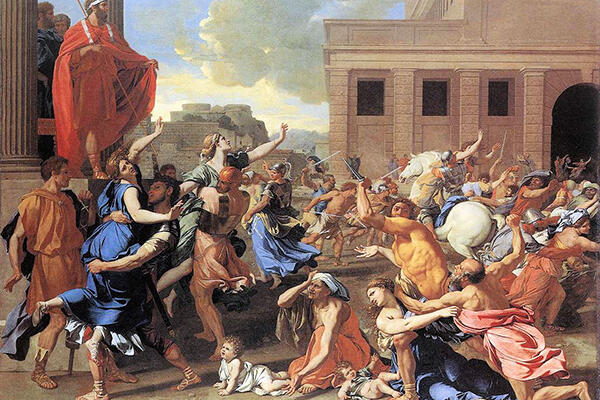
On Saturday September 1 Dunedin’s second annual Slutwalk hit the streets. Beginning outside the Dental School, the marchers progressed along George Street to the Octagon, where they were addressed by speakers on the topics of slut-shaming and victim-blaming. The “Slutwalk” movement began last year, after a Toronto police officer recommended that to decrease the incidence of rape, “women should avoid dressing like sluts”. The message of Slutwalk was that anyone can be a victim of rape, regardless of what they are wearing; that the victim should never be blamed. Dressed in an array of outfits, from the stereotypically “slutty”, to jeans and t-shirts, to a young woman in full Little Bo Peep garb, roughly 150 men and women of all ages walked with the purpose of drawing attention to victim-blaming and the irrelevance of clothing to a rapist’s motives. Loren Ferrel of Rape Crisis said: “Sexual abuse is a societal problem. One in three girls before the age of 18, and one in six boys before the age of 18, will have experienced some form of sexual abuse.” Speaking to Channel 9, Georgia Knowles, who is the National Co-ordinator of Rape Crisis, said that alongside Slutwalk’s message to stop victim-blaming was the idea that “people should be able to operate with a diverse range of sexualities… dress ‘slutty’ one day and not the next… and that should be all right.” She pointed to societal norms regarding sexuality as the source of rape culture, rather than clothing or drunkenness: “There is nothing inherently violent about male sexuality and there’s nothing inherently victimising about female sexuality. It’s about the way that we talk about it, and it’s about the way that we practice it.” Rape Crisis Dunedin said in a statement that “awareness-raising of this sort is invaluable for holding our culture to account for the prevalence of rape and victim-blaming. The march also helped to let survivors know that they are not alone and we are on their side.”
-
News
A Week to Green Out with your Buds
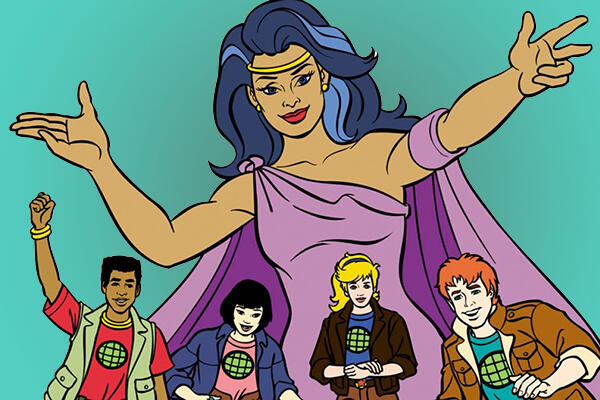
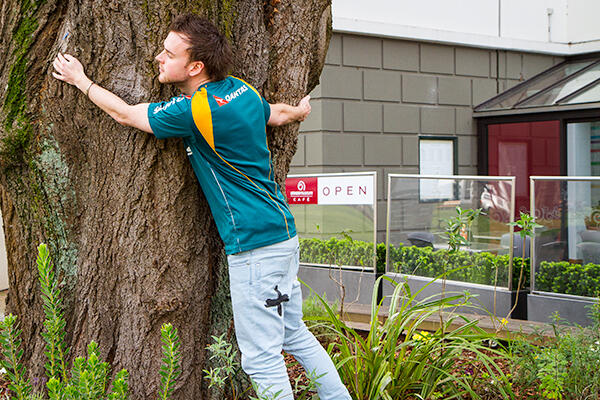
OUSA will be keeping the Greenies happy with the inaugural Environment Week starting on Monday September 10, being held “in an effort to raise student awareness of critical environmental issues, and inspire them to take action.” Scitell, a new series of lectures being launched by the University, will kick off the week at 7pm on Monday in the Castle 1 lecture theatre. Leading scientists from around the country will explain cutting-edge scientific concepts. Monday’s lecture will include a controversial presentation called “New Zealand's 100% Pure Clean-Green Delusion”. On Tuesday Generation Zero will put on a $3 Dinner at OUSA Clubs and Socs between 6pm and 8pm. If keen beans finish by 7.30pm, they will be in time for the Otago University Debating Society's event “The Great Green Debate”. Held in the Richardson building's Moot Court, a distinguished panel of commentators, including Mayor David Cull, will participate, and a team of top debaters will contest that “the environment should be our number one priority.” The $3 meal theme will continue between 6pm and 8pm on Friday, also at Clubs and Socs, with a Dinner and Movie Night featuring Captain Planet. Thursday night will see an illuminating exposé on the University's use of lignite fossil fuel for power, hosted by Generation Zero in St David Lecture Theatre at 5.30pm. Critic speculates that this will be presented by candlelight, using only lantern projectors for AV assistance. The week will draw to a close with the SEA Otago Organic Festival, from 7pm on Saturday at St Martin's Hall on Northumberland Street. Now in its 8th year, the festival will showcase the best of Dunedin's organic output, from beer, wine, and food to community groups and music. “There's an activity for everyone,” says OUSA VP Jono Rowe. “It's about giving us a chance to get involved around campus and learn a thing or two at the same time.”
-
News
Joyce to The World
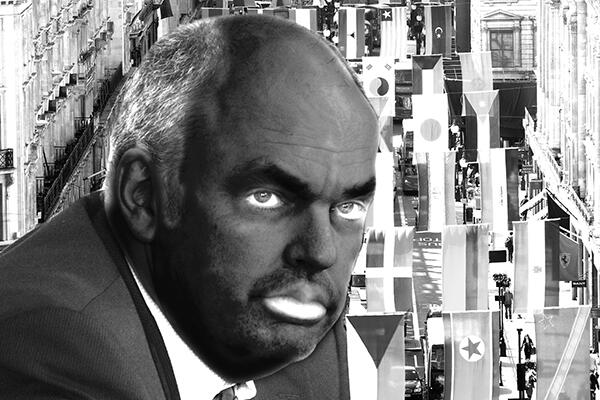
The University of Otago is under pressure from Tertiary Education Minister Steven Joyce to increase international student numbers. With international student enrolments at Otago falling by 18.8% between 2007 and 2011, Mr. Joyce called for the University to look “very closely” at its efforts to attract more international students, and believes there are many further measures it could take. Joyce cited the University’s 12% cap on international students as one element he would like to see changed, despite International Pro-Vice Chancellor Sarah Todd claiming that an international student has never been turned away because of the cap. Despite this, a recommendation has been made to the governing council calling for the cap to be increased to 15%. This would only partially placate Joyce, however, who would like the cap to be as high as 20% if the economic value of education in New Zealand is to hit the targeted $5 billion by 2025. Joyce told the ODT, “I met the Chancellor and the Vice-Chancellor some weeks ago and they told me that they were working on it, so I am looking forward to seeing the progress there.” The Minister did, however, concede that Otago was not the only university to have such problems. David Thomas, the University’s director of planning and funding, has said that attracting international students is proving difficult at the moment, a claim which the International Pro-Vice Chancellor backs up. She blames the lack of international enthusiasm on the Christchurch earthquake, with potential imports proving difficult to convince that Dunedin is not an earthquake risk. But with numbers falling since 2007, Critic speculates that the rest of the world must have some kick-ass earthquake warning systems in place and wonders why they are never used for anything slightly more useful, such as saving lives.
-
News

Uni Games
Photo Caption: This is Mikey. She did real good at Uni Snow Games. That’s why there is a photo of her. Not cause she’s blonde. Promise. For the first time in eight years Otago University did not win the Michael Forrestall Memorial Shield for the best team at the Uni Snow Games. Numbers were significantly down at this year’s event. Only 92 competitors from around the country represented their university this year, compared to almost 300 in 2006. Voluntary Student Membership is the most likely reason for reduced numbers. Student associations were unable to offer subsidies to competitors this year, and the problem was exacerbated by the fact that Otago University is also not a member of the New Zealand University Sport Association, forcing Otago competitors to pay more than those from member teams. The Otago team shrunk to 14 competitors this year, mostly because the event has become too expensive for poor students to afford. To make matters worse, many competitors Critic spoke to indicated that they would probably not compete next year unless the cost came down. It looks like organisers are going to have to seriously think about how the Uni Snow Games are run if they want the event to return to form. Auckland University emerged the best overall team, making them the reigning champions of both winter and summer university sports. Otago disappointingly relinquished the title for the first time since 2004. Though the Otago team as a whole seemed to lose its way this year, there were still some excellent individual performances. Mikey Austin was the standout performer for the Otago team, winning gold in the women’s ski Big Air, Slopestyle, and Half-pipe, and a silver in the Gravity X. Marc Andri Reidi also performed extremely well, picking up gold in the men’s Half-Pipe, Gravity X, and Slalom. Arran Stewart won the men’s ski Big Air and came second in the Slopestyle. Henry Schikker and Katie Logan managed third-place finishes in the Gravity X, as did James Webster in the Cross-Country. Events were held in Wanaka over the mid-semester break. Treble Cone, Cardrona, and Snow Farm hosted events, with the last day being taken up by cross-country and a casual version of biathlon (a sport combining cross-country skiing and marksmanship). By all accounts competitors had a good time, not allowing the larger problems the event is facing to impact on their fun. Otago University teams competing in national University Sport have been disappointing this year. In the past Otago consistently dominated University sporting fixtures, but less competitors, less funding, and poor results have resulted in a fruitless 2012 for our OUSA-backed teams. Organisers have the tough job of getting Otago students excited about University sports again, and getting Otago teams back into a position to clean up in all the competitions as they have in the past. University sports are often as much about the participation and the party as about winning titles, but with less and less students signing up much of the attraction there is fading as well. I would recommend that as many students as possible sign up for University events like Uni Snow Games, because they can be a fantastic experience, but I can see why many do not. Realistically, the prices need to come down and OUSA or the University need to find some funding from somewhere to keep Otago students interested, or team numbers will continue to fall. I was hoping to use some interesting quotes from members of the Otago team in this article but somewhere along the line they must have got a little over-stimulated, as the comments they provided were on the whole unusable. It’s a shame, but I remember when I had my first beer and it was pretty exciting, so I’ll let them get away with it.
-
Features
Two Little Boys
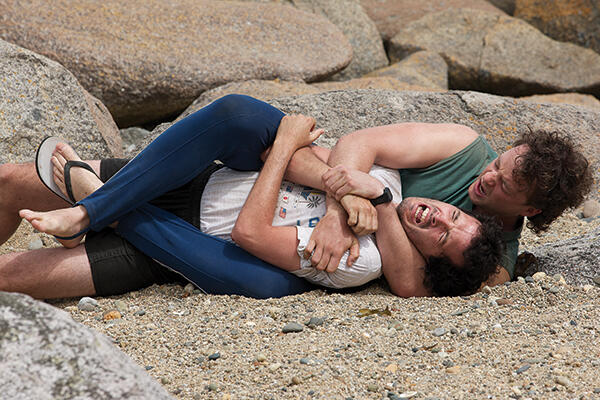
New Zealand’s best known film-making duo Robert and Duncan Sarkies have teamed up with Oscar winner Bret McKenzie and Aussie comedian Hamish Blake, of Hamish and Andy fame, for their latest Kiwi movie, Two Little Boys. Joe Stockman indulged in an early screening of the film and caught up with Bret and the boys for a gab prior to the movie’s release next week. The Sarkies brothers are back on New Zealand celluloid once again with their black “bromance” comedy Two Little Boys. Set in early 1990s Invercargill, the film begins with Nige (McKenzie) accidentally killing a Norwegian backpacker. Unable to deal with the body alone, he’s forced to turn to his ex-best mate Deano (Blake) for help. They’re ex-best mates because Nige has left Deano after years of doing everything together. The story devolves into an epic adventure around the Catlins, as they try to get rid of the body and as Deano attempts to rekindle their friendship. Deano and Nige can seem a little bit simple, especially when contrasted with the simplistic pop philosophy of the third wheel of their adventure, Nige’s new mate Gav. But the Sarkies brothers say the characters have real weight behind them. “The characters are all quite complex, but they appear stupid on the surface. These two characters, who are still little kids at heart, are trying to figure out these complex emotions, and trying to figure out how to end this long relationship.” Deano is a big fish in a little pond, perfectly happy living out his life in a small flat in a small town, working a small job. Nige is looking at stepping out into the wider world, and Gav is the gatekeeper who is showing him new ways of thinking. Deano identifies Gav as Nige’s real problem, and decides he has to take him out to keep Nige for himself. McKenzie had been interested in working with the Sarkies brothers on a project for a while, especially after being disappointed by the quality of the scripts that had come his way in Hollywood. “I’d been reading a bunch of fairly uninteresting Hollywood films, and I wasn’t very excited about them, then Rob and Duncan sent me this script, and I was really keen.” Though that’s not how Duncan remembers it: “Bret had been stalking us for a while, it was getting a bit embarrassing. Once he started having success with the Conchords we realised we could probably use him somehow.” Adding Hamish, half of Australia’s best-loved comedy duo, to the cast could prove to be a masterstroke, especially when it comes to selling the film to an Aussie audience, which Robert recognises as key to making Two Little Boys a commercial success. “Any filmmaker wants as many people to see their film as possible, that’s always the point. But we weren’t willing to make compromises to make that happen. We would love for it to be an NZ and Australian hit, and a cult hit around the rest of the world.” The biggest barrier to Australian box-office success might be the quintessential Kiwi-ness of the entire film. From the mullets to the amazing early 90s clothes, it’s as Kiwi as buzzy bees. Hamish enjoyed the experience of filming in Southland – apparently he enjoyed cheese rolls so much that he put on a few kilos. But mostly he enjoyed the mullet. So much so, in fact, that he had it removed in one piece so that he could rent it out as a wig to raise funds for charity. That’s right, it’s even on YouTube: http://youtu.be/jze1NsH2RE4 Oh, and once you’ve finished watching that, go see the movie. Supporting the Kiwi film industry is important and all that, but in the end it’s worth seeing Two Little Boys just for laughs.
-
Features
21st Century Scarfies: Too Cool to Care?
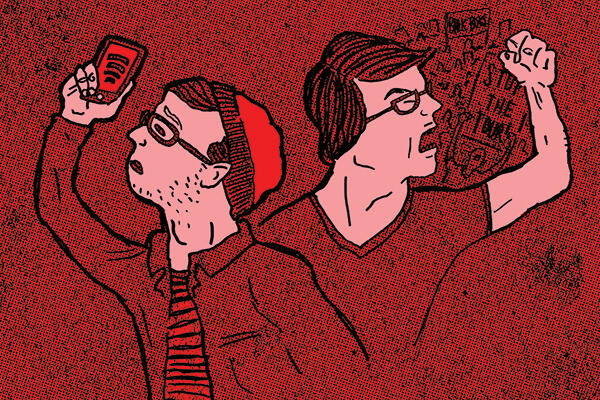
“If our colleges and universities do not breed men who riot, who rebel, who attack life with all their youthful vim and vigour, then there is something wrong with our colleges. The more riots that come on college campuses, the better the world for tomorrow.” - William Allen White, influential American journalist from the early 20th century When I first came to university as a wide-eyed first-year Law/Politics student, I arrived with visions of mass student protests demanding change in the world. Students hold a powerful position in society: the combination of being young, free and engaged in learning enables us to think and perceive of the world differently. History shows a rich connection between students and politics. The 1960s saw students at the forefront of anti-Vietnam War protests and various other left-wing movements. Students led the famous May 1968 protests in Paris, which sparked left-wing movements all around the world. Here at the University of Otago, students were national leaders in anti-war and anti-nuclear movements, Springbok Tour protests, and more student-related protests in the 1990s. As White points out in the opening quote students need to perform their roles as societal bad-asses to create a well functioning world. We need to be radical, to demand change, to not simply accept the status quo. Without us performing this role, the world would be a sour, bitter, downright depressing place with the older, cynical establishment dictating the world we live in. Ex-Otago student, and current Dunedin North Labour MP, David Clark believes students “are given a privilege of a certain way of understanding the world… and of advocating on behalf of what is right,” which he believes makes students the “critic and conscience of society.” As I have progressed through university it has become apparent that students today really couldn’t care less about being the “critic and conscience of society.” Which begs the question: why not? The Scarfie of the 21st CenturyOUSA President Logan Edgar reckons that an almost anti-political atmosphere has developed. “There’s a real thing like it’s cool not to care, which is fucking bullshit” says Edgar. Dan Benson-Guiu, a “politically active” student, goes further. “People on campus are not political at all. Full stop.” Many older people I spoke to for this article shared a common message: “I remember when universities were a hotbed of radical student activism; not anymore.” On the surface, it certainly seems that scarfies today have traded politics for pingers, and are more likely to be seen munching their faces off on the d-floor than out in the streets demanding change. But if you dig a little deeper it is clear that life as a student today is vastly different to what it was in the past. Clark argues that students today have less time than when he was at university to be politically informed. “ … today, it’s very difficult to be politically informed, successful at University, and afford to live.” There is a much heavier workload now than 20-years ago, with internal assessments, and more pressure to get higher grades. And with the burden of student loans, most of us devote any free time to working part-time jobs simply to get by. From these various pressures, a strong sense of apathy towards anything political has developed. We’re not happy with having mortgage sized student loans, living in third-world style flats, and we certainly don’t like the fact that most of today’s politicians went to university for free and received an allowance. But this is the way it is, and we seem to think we can’t do anything about it. Dr Roper, a senior lecturer at Otago and former student, argues it doesn’t have to be this way. “When I was a student back in the eighties, I paid $176 in fees all up, and I had an adequate living allowance.” That all changed in 1990, and fees have been rising steadily ever since. With the University of Otago attaining a record $26 million surplus last year, clearly someone is feeling quite happy about the changes, but I don’t believe it is the students. A Day in the LifeIn the 1990s, life as a student at the University of Otago was alive. It was a hotbed of student political activism and at the forefront of societal change in New Zealand. Students were awake to the issues of the world, and they made their voices heard. On a typically cold, wintery day in August of 1993, 300 brave students stormed into the University of Otago registry to prevent the council from meeting and raising university fees. Fees had been increasing steadily each year and students had had enough. The students blocked the hallway and prevented the council meeting from taking place. Dr Roper was a key member of the group: “We shut down the council meeting and we all left feeling really pumped.” The incident received national publicity, and several months later a stronger, more determined group blockaded the clock tower to prevent another meeting. This time the cops were prepared, and a violent struggle ensued. Roper recalls that, “The Police unit basically assaulted and injured a significant number of students.” Rather than quell student discontent, this police brutality radicalised a large portion of the student population and gained nationwide sympathy. Over the next few years this vanguard group continued to grow, and at their peak they led a four thousand strong army of students and supporters down George Street to culminate in a mass rally outside the Department of Inland Revenue. Another occupation of the registry in 1996 lasted an entire week, again gaining nationwide attention and spurring student protests all over the country. They didn’t stop the introduction of fees and the removal of allowances, but they did put a dent in the government’s agenda, and helped prevented universities from becoming privatised. Interestingly, following the protests of the 1990s, the University changed the date for when they announce the fee increases to after the exam period, when most students have left Dunedin for the summer. Subsequently an occupation of the registry “1993 styles” may be out of the question. Time to join the partyA quick look in the world news will show you that Otago, and New Zealand students generally, are being left behind as students all around the world rise up against oppressive university administrations and governments. In the last five years students in London, Santiago, Quebec, Mexico City, and all over the United States, have taken to the streets to protest against rising fees, privatization of universities, and lack of job prospects. In the state of Quebec in Canada, a student strike has been going for over five months in protest of government plans to raise fees. Cami La is on exchange from Quebec, and was involved in the movement that at its peak had over 300,000 students on strike. She explains that students in Quebec have always paid very low fees for university, and they have kept them low due to active opposition to government plans to change it. Opposition began on a small scale, but quickly gained momentum, and this year they have had marches of over 200,000 people. Cami La explains “There would be protests every day, thousands of people in the streets everyday.” She was very surprised to see, and to learn how students mainly come here simply “for a good time”, especially given Otago’s rich history of activism. Trine Riis Jensen, an exchange student from Copenhagen, Denmark, is also shocked at the lack of student activism here at Otago. She describes Denmark’s tertiary education as a dream-like situation where, “There is no tuition fee and we get government support, which is around $1200 a month.” While this may seem like some distant utopian dream world, it needs to be remembered this was essentially the system in New Zealand up until 1990. Hey, this is crazy… student protest maybe?Dr Roper believes students today shouldn’t be too disappointed with the lack of student activism. He views the history of political “struggle” as coming in waves. In high periods of struggle, like in the 1960s and 1970s, there were multiple areas of society involved – women’s liberation, civil rights, anti-war, and so on – and they were all interconnected positively and mutually reinforcing of each other. Dr Roper explains: “Once you get an upsurge in struggle, the struggles that are going on in different parts of society start to positively reinforce each other.” As one group succeeds in gaining ground in one area of society, other groups see they too can pursue their political struggle. In the low periods of struggle, like today, you can observe apathy and complacency, where people may not be happy with the situation, but don’t feel they can do anything about it. Benson-Guiu believes the OUSA is largely to blame for the low levels of activism. “You see it in the OUSA exec, it’s not throwing out the issues to students, and students don’t know what is going on.” However Edgar argues that as a result of the Voluntary Student Membership Act, passed last year, the Union “has their hands tied.” However the recent cuts on student allowances are a prime example of OUSA keeping their mouth shut, with barely a murmur of opposition from students down here. Hard to see how Edgar’s hands were tied there. Edgar believes the gradualness of the fee increases today makes it hard for a student movement to get traction. The protests of the 1990s were a result of drastic fee increases of 30 to 40 percent, instead of the gradual 5 percent or so increase we see each year. Edgar believes there is only one thing the government could do to get students back on the streets: “If interest went back on interest loans, then I reckon everyone would get out and protest; if they didn’t, they’d be fucking idiots.” Edgar says to look out over the next few months for some form of opposition to “Super-Minister” Steven Joyce’s plans to cut down the University Council from twenty members to eight, and make them all his own appointees. “Hopefully students care about this one, otherwise what the fuck is going on.” The Times They are a-Changin’?While there is an obvious lack of student activism on campus today, climate change focused group Generation Zero is an example of a more activist student group. Spokesperson Louis Chambers says “from a Generation Zero perspective, I think we are helping students to “wake up” and to engage with big issues like climate change.” He explains the general sense of apathy in the student population has been hard to overcome, but they have been focusing on ways to get students involved and believe they can make a difference. “The feeling that ‘I can’t do anything’ is really just because the world is so complex these days. If you can give people a vision for how they can get involved, then they’re more likely to feel empowered to do something.” From her experience in Denmark, Trine Riis Jenson also believes we should not lose hope. “It’s not because people can’t do anything, it’s because people don’t realize they can do it. If you organise things in the right way you can make some huge protests where it wasn’t expected at all.” In her opinion, students at Otago, and in New Zealand as a whole, have no right to be apathetic: “If I was a student here I would be protesting all of the time because there are just so many things!” Her main concerns are the that we pay so much for university, and also the state of our student flats, which she experienced first hand: “In Denmark it would never be accepted that you have to live in such bad conditions in your house!” Dr Roper too sees no reason why we can’t demand a return to the free tertiary education the older generation received, the generation who are today giving themselves enormous tax cuts. “The only way we are going to get back to something like that, is when we see thousands of students protesting on the streets and occupying registries, and saying enough is enough.” According to an old Chinese proverb: “The best time to plant a tree is twenty years ago. The second best time is today.” It’s never too late to get involved. Being a student is your one chance in life to get loose and demand positive change in the world. We are young, and idealistic, and have not yet been soured by the stark realities of the world. We have not yet become shriveled up cynics like our mainstream politicians. They are not going to make the world a better place, we are. Real change comes from the streets. So it is time for us students to wake up from our slumber. Or are we simply too cool to care?
-
Features
Is The Treaty Dead?
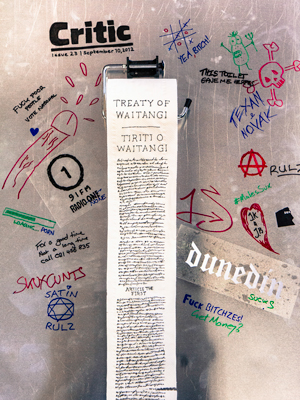
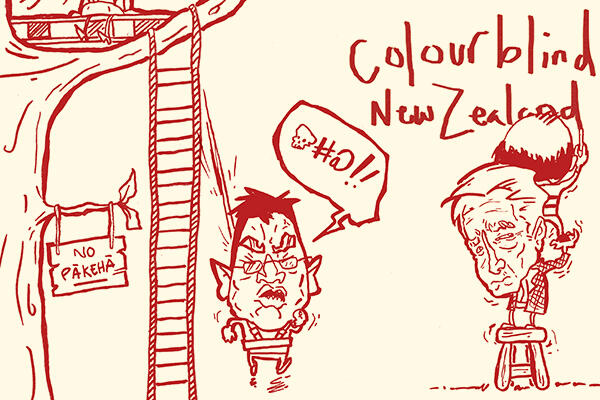
I know what you’re thinking – not another article about the Treaty of Waitangi and race relations in New Zealand. Bring back the blind date lesbian sex! The only people who even have to deal with Treaty stuff are law students and people who study it, right? Wrong. As New Zealanders, we enjoy the benefits of the Treaty of Waitangi every single day. The only reason we function as a country is because New Zealand’s original settlers, Maori, agreed to share. The reciprocal partnership that is embodied in the Treaty is one that many, if not all, of us take for granted. Why then, do so many Kiwis continue to question whether the Treaty really matters in this day and age? Why should the typical scarfie care about something that was signed over 170 years ago? Full disclosure: I’m white. I don’t have a particular axe to grind, and I like to think that I’m not racist. I also like to think that I, like many other New Zealanders from all kinds of backgrounds, am willing to look at all the facts and decide what to think without taking racial prejudice into account One Maori? Or many Maori?Firstly, we should remember that Maori are only a “race”, but a variety of individual cultures. People who identify as Maori but live at different ends of New Zealand have very important cultural differences. By classifying Maori people as one homogenous group without taking into account their differences, you’re losing before you even begin. The fact is the people, customs, and histories of Maori are so vast and varied that they can’t can be chucked into one big pile. But I’m getting a bit off topic. Why does the Treaty of Waitangi matter to you (whoever you are) and me? Kara Dentice, an Otago student and member of Te Roopu (The Maori Students’ Association), thinks the Treaty is just as important to Maori as it is to non-Maori. “Even though the Treaty might affect them in different ways, there needs to be a greater understanding of the Treaty by everyone.” He thinks that cultural discrimination in New Zealand is seen as a bit of a sensitive topic, because no one wants to be called a racist, but that a bicultural New Zealand should be something so widely accepted that it isn’t even talked about. “Because we [would] live in a world which is built on the desires and hopes of the Treaty… a truly equal New Zealand, where Maori values and tikanga (cultural practices) are imbued at the same level as their Pakeha equivalents.” Tihema Nicol, another student I talked to at Te Roopu, also thinks it’s important that we remember that the ideas of giving in the Treaty are reciprocal and it’s not all about taking land, money, or whatever else. “I think there’s a misconception in normal society that Maori are just taking… it’s important to understand that Maori are not the sole beneficiaries of the signing of the Treaty. A lot of people see Maori as getting Treaty claims, getting their land back, getting multi-million dollar deals with the government, and yet they don’t see what’s happening at a local level where… [things have] been put back into the community not just for Maori, but for better wellbeing of the community as a whole.” Kara agrees. “Maori are the most giving people in this country. Even people who have nothing will give everything they have.” When the Treaty was signed, Maori at Waitangi gave their food to the European settlers, even if it meant going without themselves. Treatygate?But what about this Treatygate thing? For those of you who haven’t been reading the Critic lately (naughty!), there’s this guy John Ansell who is calling for New Zealand to become a “colourblind state”, with no race-based prejudice or recognition of race in general. This means no Treaty, no seats in Parliament based on race, and a completely different New Zealand. It could also mean some pretty bad things for Maori people. Dr Paerau Warbrick is a barrister and lecturer here at Otago. He believes that “the media needs to ignore [John Ansell] as an extremist”, but the same applies to Margaret Mutu and Hone Harawira, who are “extremists on the other side”. “John Ansell has made a lot of money out of pitting New Zealanders against New Zealanders. Why should we, as a nation, give him the time of day?” Warbrick also argues that the Treatygate idea isn’t pragmatic, because people do things and understand things differently. “Let’s take race out of the equation. Do you really think that the people of Dunedin and the people of Hamilton are the same? There are different cultural and historical settings for the two cities.” In essence, the same could be said for all the different groups of people in New Zealand. The Maori students at Te Roopu agree. “It’s perspective without understanding,” says Kara. “I don’t think we have come to a time in New Zealand where we can say ‘We don’t need Maori seats… in Parliament, on the council, we don’t need to recognise Maori as a special culture of New Zealand,’ because if we do that, what’s going to happen to Maori? By virtue of [removing Maori seats from Parliament], we are removing the Maori voice.” And by removing the voice, we’re removing particular tikanga and customs from these institutions as well. But David Round, a law lecturer at the University of Canterbury, has a different perspective. We already know what John Ansell is campaigning for – a society free from racial bias – but Round has a slightly less inflammatory approach. He says the most important thing is “what the Treaty actually says… simply that the Queen is sovereign, Maori are her subjects like everyone else, with the same rights as everyone else, including the enjoyment of their property. That’s it. No special privileges, no ‘partnership’ with the Crown, just equality of citizenship.” And here’s where the debate REALLY kicks off: what does “equality” mean? Equal?Lisa Pohatu, President of Te Roopu Maori, says that wanting equality versus equity is the main difference between the sides of this debate. Kara agrees: “The Treaty of Waitangi is about ensuring that we live in a New Zealand where there is a partnership between two different cultures, and an equal society.” Kara says that this is not an issue of race, but of equality. He thinks it’s important to ensure that “Maori values, cultures and views are upheld, because the minute we take away what might be imbued to be special rights, the dominant hegemonic group (in this case, Pakeha) sort of overtakes.” In 2005, David Round quoted Metiria Turei as saying that “Maori want two things. They want independence, and they want more funding.” This contradiction certainly doesn’t help the situation. So they want to be given money, so long as they can be independent with it? Who in their right mind would give someone funding, then let them do exactly what they want with it? The problem here is that people have different perspectives, and are arguing for different things because they see words like equity and equality differently. To Maori, it’s about maintaining their culture, upholding their values, and having a functional bicultural society. Kara says this means “recognising there’s more than one way to do something. There is a Maori approach to everything and let’s see what that brings, even if you’re not Maori. There is a Maori way to do everything as there is a Pakeha way. Or let’s combine the two without the loss of one or the other.” He believes that in New Zealand society there is a silo effect, where “we gotta do this, this, oh and we gotta do the Maori stuff as well”, instead of integrating Maori culture with everything else. But there’s always a flipside to the coin. There’s a common view in modern society, especially among the older generation, that the Treaty is now just a tool for the Maori people to take land and claim rights. You can see how this happened – many European families migrated to New Zealand, bought land off the Crown and worked it for generations, only to have it taken away from them. Sure, it technically wasn’t theirs in the first place, but you can understand how the sentiment arose. And you can understand where people like David Round and John Ansell get their ideas from. New Zealanders seem to have an opinion on everything. whether it’s race relations, gay marriage, or raising the drinking age. But it’s important to understand how the things you’re talking about are affecting you. Everyone knows a little bit about the Treaty (signed on February 6, right?), but a lot of us do not realise just how much it underscores all aspects of New Zealand society and government. Were it not for the Treaty, European settlers might have taken New Zealand by force (well, more force). But the Maori people decided to share; they decided to give the settlers somewhere to live in return for various things and a reciprocal relationship where everyone does a little giving and a little taking. Unfortunately, it didn’t quite turn out that way. So why shouldn’t people who had their land taken from them have rights to it? And why shouldn’t the native culture of New Zealand be upheld? There’s one thing people seem to forget: New Zealand may be a society full of heaps of different people, but it’s the only place in the world where Maori are the native people. So if they lose the right to their own culture, what do they have left?
-
Features

The Great Critic Politics Quiz
Are you jealous of friends who describe themselves as “progressive,” “right-wing,” or “conservative”? Do you desperately yearn to categorise your political views into a neat little box? If so, good news! Critic’s resident political scientists, Callum Fredric and Sam McChesney, have studied the behaviour and customs of a tribe of bonobo monkeys in the politics laboratory over the past 28 months, and devised an academically rigorous test for students to find out which side they stand on. In the world of politics, everyone gets labelled on not one but TWO dimensions. Are you economically right-wing (like National) or left-wing (like Labour)? On the social spectrum, are you anarchist, progressive, liberal, or conservative? Take the quiz now to find out! The Economy1. Do you support welfare for the unemployed? A | Yes, CYFS cradle to pauper’s grave, bitches! (5 points) B | Welfare is for winners who just need a helping hand, you can’t spell WINZ without win, right? (3 points) C | My neighbour is on the sickness benefit because he claims to have Tourette’s syndrome, but I saw him fixing his roof and he hit his hand with the hammer and only yelled “FUDGE!” I think he’s ripping us off. (1 point) D | Let’s just say that when people call me a beneficiary-basher, they don’t mean it metaphorically. (0 points) 2. Should speeding fines be based on the driver’s income? A | Yes, wealthy speedsters can ignore a $150 fine but they can’t ignore a $1m ticket. Take that, suckers! (4 points) B | No, we shouldn’t punish important people for speeding to their high-powered meetings, they’re just in a hurry to create wealth! (0 points) C | We shouldn’t have incomes at all. Bring on the universal wage! (6 points) 3. What does fair trade coffee taste like to you? A | Tastes like the unbridled joy of a struggling Nicaraguan farmer. (3 points) B | Tastes like deadweight loss. (0 points) 4. What is “the environment”? A | A free lunch. Get in quick before it runs out! (0 points) B | A magical place. We belong there; but also, we don’t. Peace man. (5 points) What do you think of when you hear the following phrases:5. “Big business”? A | McDonald’s (3 points) B | Enron (5 points) C | Google (1 point) D | “I swear I didn’t have this giant erection five seconds ago.” (0 points) 6. “Taxes”? A | Good while they’re paying for my student allowance, bad once I graduate. I am a cynical human being. (3 points) B | All tax is theft. Once I save up enough to buy an abandoned offshore oil platform, I’ll start a tax-free utopia. (0 points) C | A win-win – the fat cats get brought down to size, and the innocent starving orphans get shoes and nutritious wholegrain cereal. (6 points) 7. “Trade unions”? A | The only thing stopping the bosses from turning the break room into a torture chamber. (5 points) B | Lazy extortionists who hate productivity and efficiency with a burning passion. (0 points) C | No better or worse than business owners – both sides are just in it for the money. (2 points) 8. “Socialism”? A | Like Pink – just missundaztood, man. (6 points) B | Great in theory, terrible in practice. Kinda like rolling down Baldwin Street in a wheelie bin. (3 points) C | In North Korea, everyone is equal. Equally starving! Zing. (1 point) D | I can’t even wear red t-shirts, they give me nightmares about classless societies and solidarity. (0 points) 9. “Sir Roger Douglas”? A | Dinosaur cunt, but I don’t really know why. (2 points) B | Dinosaur cunt. I heard he, like, totally ruined the country before I was born. (4 points) C | Legendary dinosaur cunt. (0 points) Tally up your total! 0-14: Right-wing.You love capitalism, and think the government should stay out of the economy. Inequality probably doesn’t bother you much, and besides, poor people could totally be rich if they just worked as hard as you. You probably study commerce or law. 15-29: Centrist.Capitalism isn’t perfect, but it’s probably the best option we’ve got. You like some amount of welfare and public services. You tend to side with the majority on controversial issues, and you use the word “ideology” in a negative sense. You probably study science. 30-45: Left-wing. You have a hazy mental image of a post-capitalist society where everyone is happy and equal and gets along. Contrary to what you’re told, you don’t see why getting a job would improve your understanding of the economy. During arguments, you often mention Scandinavian countries, though you’ve never actually been. You probably study arts/humanities. Society1. What does the Treaty of Waitangi mean to you? A | I heard that the chemical element Ununoctium, should it ever be synthesised in a stable form, will belong to the local iwi. I’ve never heard of Unonoctium, but I’m outraged! (5 points) B | New Zealand’s a pretty big place. There’s plenty of room for our two sovereign, equal nations to exist side by side. (0 points) C | I don’t know where the phrase “gravy train” comes from. Seriously, gravy is never transported via train, it’s mixed manually in individual kitchens. But yeah, the Treaty is a rort. (4 points) D | Okay, so I’m Pakeha. I know – I’m pretty cut up about it as well. But I’m really culturally sensitive! I say “kia ora” instead of “hello,” I refer to KFC as “kai”. I respect the tangata whenua! (1 point) 2. Drugs: yea, nay, or mm’kay? A | Down with paternalism! Drugs for everyone! (0 points) B | My cousin knew a girl whose classmate was brutally murdered by some machete-wielding psychopath whacked out on E. (4 points) C | Decriminalise them, but don’t legalise them. Ouch, I think a fence-post went up my rectum. (2 points) D | People who abuse drugs are harming themselves. Therefore, everybody who uses or sells drugs should be thrown in jail and suspended from their toenails. (6 points) 3. You are walking down the street and spot a minority. What do you do? A | Call the cops. (4 points) B | Play that one rap song on your iPod, he might overhear it and be impressed. (2 points) C | Give him some money. (0 points) 4. You are walking down the street and meet Bones, a local criminal. What do you do? A | Soil yourself. (3 points) B | Give Bones a hug, all he needs is love! (0 points) C | Lock it up and throw away the key. Or kill it. Actually, yes, kill it, before it breeds. (5 points) What do you think of when you hear the following phrases: 5. “Single mothers”? A | Starfishing tirelessly to breed the next generation of juvenile delinquents. (5 points) B | It’s all about the Benjamins. And no, we’re not talking about children. (3 points) C | Struggling heroes who deserve a medal. The DPB is like the Victoria Cross. (0 points) D | Don’t judge them. Not out loud, anyway. (1 point) 6. “Political correctness”? A | A bigot’s “get out of jail free” card. (0 point) B | A vital insight about the namby-pamby oppression we labour beneath. (4 points) C | I like freedom of speech and stuff, but I can’t help noticing that everybody who uses the phrase “political correctness” is an idiot. (2 points) 7. “Liberty”? A | Rugged men in duster coats gazing off into a picturesque vista. (2 points) B | Louis XVI with his head chopped off. (0 points) C | Trump Towers. (3 points) D | The restless masses in revolt. Please, just let them eat cake! (6 points) 8. “Family values”? A | If you like packing the fudge or drinking from the furry cup, you are clearly incapable of raising children. End of. (5 points) B | Some “family values” are good. For instance, “it’s bad to beat your children.” You know, stuff like that. (1 point) C | The family is an instrument of oppression! Everybody should be raised in a hippy commune, otherwise the fascists win! (0 points) 9. “Smokers”? A | Every time I inhale their toxic fumes, they should be prosecuted for attempted murder. (5 points) B | Smokers are the most persecuted group in our society, despite paying $1billion in taxes each year. Only the sweet, sweet flavour of a Malboro can cure the hurt they feel. (0 points) Tally up your social perspective total. 0-4: Anarchist.You believe that man need not be governed. You fight the power by going to marches, publishing zines, and engaging in abstract, performance-based protests. 5-14: Progressive.You think all people have something to offer, and consider yourself open-minded and inclusive. You often feel wracked with guilt about your comfortable, middle-class background. 15-29: Liberal.You have quite strong views on what people should do, but by and large you think people should be left in charge of their own lives and be free to make their own mistakes. 30-45: Conservative.You’re pretty confident that the values you were raised with are true and valid for most people. You consider your own cultural group to be the most enlightened, so you don’t mind enshrining your moral views in law.
-
Columns
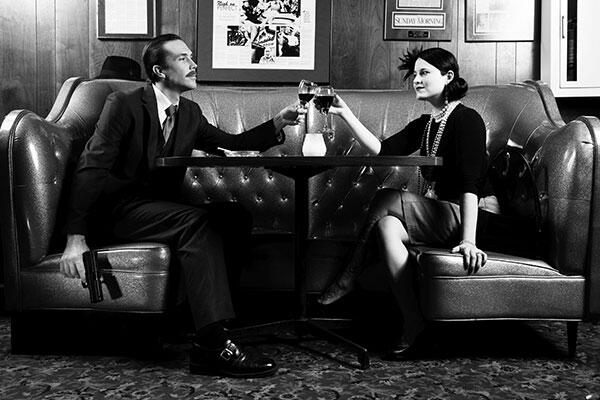
Me Love You Long Time | Issue 23
None of you read this anyway. It’s just that little weird standfirst bit above the action below. But anyway ... The Blind Date has been at Metro bar for the last few weeks, and it sounds like they’ve been putting on quite a show. Great feed, good drinks, excellent service etc etc. If you want in on the action, email critic@critic.co.nz with your details. AshtonInitially, I had this fucking terrible feeling that I would be shafted with an awful human, like some first year who decided that her studies compromised her ability to socialise. However, I ended up with this bloody tops girl, a forth year who not only had a great demeanor but also had awesome chat, varying from her love of Disney movies to her hatred of shrimp on pizza. Either way, the lass was alright. After a bit of pizza and some hilarious comments about how the blokes sitting across from us were having marital problems (yes we thought they were extremely into each other’s appendages) we did some shots and by christ they were fucking potent. If I didn’t mention, they shifted the date to Ratbags... if you ever get the chance to go there, ask for the Bartender who makes Backdrafts, that shit is awesome, set it on fire and shit. Anyway, we watched a few crackup music videos being put on and then decided to move our little rendezvous to any place that serves drinks. Well the bog was open and it had some seriously shit poetry going (some lady loved her cat heaps... yea like to the point where she wrote poetry about it) and had some super in-depth chat about why the life of a scarfie was so tough at times. Well, we bought a few more beers and watched a bit of the the Dally M ceremony, but with the mute on it was hard to hear Darren Lockyer’s rape voice, but instead decided to leave the poets on and a bit of the average guitar playing hippies. So we left the ol’ Bog and moved off to Maccas. Yea Maccas, whilst on the way doing some community service by moving some cones around and, well, the cheesy was bloody good. So after that decided to walk her home, not because she was on the way, but because she was an awesome character. In the end, numbers were exchanged, and both agreeing that it was a good night but both not ready for serious shit. Good night, shot Critic for a free feed and piss, plus not setting me up with a cunt. DemiI had my cougar on and a bottle of Chardonnay forced down me by the scheming but well-meaning flatmates. I was ready as ready could be. My flatmates were actually more excited about this than I was. At Metro an apologetic manager and a team of leering builders redirected me across the road to Ratbags, where I was again redirected to upstairs IB. Being the first to arrive a strong gin and tonic was on the cards, along with a small pep talk from the babin’ bartender. I can’t really recall my first impression. I remember a blue puffer, a strong handshake and a cheeky grin. I’m okay with that. We drank the bar tab as fast as the conversation flowed, which thankfully started with acknowledging the awkwardness of the situation. We then decided it didn’t matter and braved the garlic prawns pizza anyway. He supplied the best banter and hilarious stories, whilst maintaining a sweet boyish charm. We bonded over his inability to burp (runs in his family), our original hometown of Wellington and Justin Timberlake’s frosted tips. He’s such a sweetheart and it turns out I know his cousin; it’s a small world after all. After pestering the bartenders at IB we roamed the streets causing some road sign tomfoolery until eventually The Bog was the only place left open. Cool. Did you know it was poetry night on Tuesdays? Neither. But poetry was apparently open mic night and a talented duo singing The XX saved the night. It was here in the dim light with cheap beers that we poured out our hearts to each other. Despite this we both ended up admitting no attraction (initially he reminded me of my little brother). But somehow he sneaked in a sneaky kiss or so after plying me with more beer and those Listerine fresh mint strips. NOT brotherly at all. Awks, I take back the friend zoning. Ever the gentleman he treated me to the finest food McDonald’s has on offer, let me wear his puffer and even walked me home. I would definitely hang out with this guy again, yet I feel friendship is on the horizon rather than romance. But then again… High five to the Critic team for the great night and to the bartenders for being awesome and letting us dominate the playlist. Everybody loves the 90s right?
-
Columns

Yes We Might! | Issue 23
Tonight, after finishing my politics reading (yes, I study politics – just thought I’d drip-feed a small teaser of the wildly popular “Who Is Creepy Uncle Sam?” meme that I’m sure will exist one of these days), I found my brain utterly wearied – the result, no doubt, of trying to infer the existence and features of a particular theoretical bush by observing the manner in which Dr Arturo Escobar limply beat around it. No matter – Dr Escobar, with his poignant impersonation of an extremely disoriented moth, has well and truly earned his membership to the Hegelian Society of People Who Write Pretentious Bollocks to Confuse Undergraduates; and you, dedicated reader, have well and truly earned a respite from the cutting intellectualism that usually graces this page. So let’s talk about reincarnation. Most people think they’ve got reincarnation sussed. They figure that coming back as a fly or some other sort of lowly insect would be the ultimate punishment. But being a fly is a cinch. After all, the average lifespan of a fly is only around 20 days and contains a bare minimum of morally questionable behaviour, the odd typhoid epidemic notwithstanding. Basically it’s cheap karmic credit, an easy path to a middling mammal. Believe it or not, the ultimate karmic retribution would be life as a great white shark. Yes, you’d be a totally badass killing machine. But it’s not like you get to watch Jaws with your dogfish pals and bask in their adulation. Instead, you have to swim for your entire life, all 100 years of it, with no company, constantly hungry, getting laid once every five years or so, and all you get to eat is rubbery seals and slippery Australians. Or dolphins, which definitely wouldn’t help your karma. So why this sudden interest in metaphysically suspect Dharmic doctrines? Well, I’ve been worrying about Clint Eastwood. I’d always supposed he’d done some amazing good deed in his past life, like curing polio or inventing Indian food. And for his extensive services to awesomeness, I figured he’d get another great gig in the next life – the lovechild of Tina Fey and Hugh Laurie, say. Now I’m not so sure about either of these assumptions. When Clint turned up at the Republican National Convention, most people probably expected him to just go on stage, glare silently at the audience, and shoot a hole in the wall. After all, he built a career on it. But what we got instead was so much worse. It’s always a little sad and disappointing when you find out one of your idols is nuts. I guess now we know why Clint’s characters always say as little as possible.
-
Columns

Notes on a Scandal | Issue 23
I once did some volunteer work for a guy who was a thalidomide victim. In a departure from my usual linguistic prowess, I came home from my first day and announced with appropriate gravitas, “He was a formaldehyde baby, you know.” Whilst I still struggle to pronounce the name of the infamous drug that caused thousands of birth defects in the 1950s and 60s, I was recently reminded of it after reading that the German drug company Grüenthal, who manufactured thalidomide, has officially apologised to the now-adult victims of yester-century, 50 years after the drug was taken off the market. In comparison, it was 25 years after the Holocaust that West German Chancellor Willy Brandt fell to his knees in remorse at the Warsaw memorial. Invented (somewhat ironically) by a former Nazi party member and hailed as a “wonder drug”, thalidomide was given to pregnant women to treat morning sickness. Many of their babies were born with phocomelia, which is characterised by shortened or missing limbs as well as ear, eye, heart, lung, gastrointestinal, and genitourinary deformities. The guy I worked for wore enormous shoes like those worn by Bart Simpson in the episode where he is too short to audition for the role of Fallout Boy. Most of his fingers were also missing, making the requisite handshake a rather humbling experience. In total there were more than 10,000 cases of “thalidomide syndrome” reported across 46 countries, including New Zealand but excluding the United States, by the early 1960s. Thalidomide was withdrawn in 1961, but research is ongoing regarding its ability to treat leprosy, AIDS, and cancer. The apology was too little too late for the victims who have long called for acknowledgement and compensation. By way of explanation as to why it took so long, Grüenthal said, “We ask that you regard our long silence as a sign of the shock that your fate caused in us.” It seems odd that there were no offers of compensation. An apology seems like the absolute barest of minimums. Drug companies make a lot of money, and thalidomide syndrome is an expensive condition: cars and homes must be adapted, and musicals must be written and performed – you do the math. Hang on, musicals? Yes, in a courageous expression of reckless creativity, in 2005 Mat Fraser wrote and starred in the semi-autobiographical “Thalidomide! A Musical”, which features numbers such as “Monster Babies”, “I’ll Be His Arms”, “Talk to the Flipper (‘Cause the Face Don’t Care)”, and my personal favorite “It’s Hard To Hitch Down Life’s Highway With No Thumbs”. I suppose there’s a reason for the saying “laughter is the best medicine” – overdue apologies sure don’t cut it.
-
Columns

Straight Up | Issue 23
It seems like rape has been all over the news recently, and often in ways I find problematic. I don’t want to write about Julian Assange or Hell pizza; others have done a brilliant job of tearing those two issues apart already. Instead, I want to look at rape from an intersectional queer perspective. In the past, I have heard people say that rape isn’t a “proper” queer issue. I felt so sad when I heard this that I couldn’t bring myself to respond, so I am going to say it here, loud and clear: rape is a queer issue. Rape is a queer issue because queer and trans* people can be survivors and/or perpetrators of sexual violence. Rape is a queer issue because rape culture – the attitudes and practices which normalize, excuse or condone sexual violence – can be perpetuated by people with an investment in the queer and trans communities. Rape is a queer issue because the logic that delegitimises the experiences of survivors, and blames them for their own victimisation, is eerily similar to the logic that blames queer and trans folks for bringing beatings and bullying upon themselves. And above all, rape is a queer issue because the single-oppression framework doesn’t work. I have been a friend, lover, and family member of survivors of sexual assault. In 2009 I became a survivor of attempted sexual assault myself. The reasons I disclose this information are twofold: 01 | I want to bust the myth that adult people with the junk I have cannot be sexually assaulted. We can. 02 | I am both queer and a survivor. I want others in my community to know about the pain it causes me to participate in community spaces where rape jokes, victim-blaming, and standing idly by are tolerated. I want my community to know the pain of absences, like absent discussions about what consenting to sex really is, and the absence of any information on how to talk about perpetrators of sexual violence (they aren’t all strangers who hide in bushes; they can be our partners, friends, colleagues, and family members). The bottom line for me is that any queer community that I am a part of must be against rape culture. It must be, because I refuse to separate questions of gender, sexuality, and queerness from questions of rape and sexual assault. I want to participate in spaces and movements that are committed to interrogating gender and sexuality norms, while also challenging rape culture. Rape is a queer issue.
-
Columns

For The Record | Issue 23
As a society, we’re obsessed with labels. So it’s no surprise that we’ve given names to the past few generations. We’ve pigeonholed and generalised, using war as a simplistic reference: the “Greatest” lived through it, the “Boomers” protested it, and “Gen X” ignored it. I recently read an article that labeled my generation – those born in the dying light of the twentieth century, coming of age in the face of the new millennium – the “Noughties”. Yet save for a rough birth bracket, the journalist in question struggled to define us. I think I can help broaden the description. We’re a digital generation. Films will be replaced by YouTube channels, newspapers by blogs. We don’t want to press a button, give us a touch screen. We don’t know how to use a phone book, a dictionary, or an encyclopaedia; there’s an app for that. We can’t read a map or send a letter; hell, we can barely manage a telephone conversation. “Social networking” is a cruel euphemism. We’re a generation of planned obsolescence; it’s in our blood. We subconsciously know that our iPhone will need to be replaced within the year, but that’s okay, because our phones are smarter than we are. We don’t shop in physical stores anymore, how quaint; the Internet fuels our rampant consumption. We’re not a target market, we’re the only market. We remember the Nineties, but don’t dwell in the past. We’re denizens of the present, caught in the awkward decades of a young century. We have the newsfeed of the world at our perpetually-scrolling fingertips, but we’re unaffected. We’re too cool to let ourselves get drawn into the passionate world of the protester, too cool to speak fervently on an issue, too cool to take a side. Irony is our weapon, and we’re not afraid to use it. We fear history, so we don’t look back. We fear the future, so we don’t look forward. We don’t believe in the apocalypse, and have seen enough science fiction movies to know that humanity can survive any kind of natural disaster. We don’t fear nature; we own nature. We are the Noughties, hear us roar. This is our world now, but don’t expect anything to change. Even though it’s impossible to maintain exponential growth with such finite resources, we’re not slowing down. For the record, music is a pretty decent way to shut out the harsh realities of the world. So for some quality escapism, have a listen to Brian Eno’s “Ambient” collection. Close your eyes, turn off your brain, let the sounds consume you. Everything will be all right.
-
Columns

Microbiographia | Issue 23
Royalty, some might think, ought to be excluded from the class of “obscure historical figures” by default. Ruling an empire, nation, duchy, or whatever no doubt entails a fair measure of celebrity during the time that you rule, but the caveat “during the time that you rule” is important. The sheer number of European principalities that have existed at different times, coupled with the rapid “rate of replacement” for rulers, means that the list of European heads-of-state is longer and more incestuous than the list of Unicol hook-ups. Somewhere on that list, sandwiched between a British King and a German Duke (her brother and father respectively), is Sophie-Charlotte of Hanover. Sophie-Charlotte was born in 1668 to Ernst August, Elector of Hanover, and Sophie of the Palatinate. As a girl she was proposed as a possible bride for both Louis the Dauphin (heir to the French throne) and his father, Louis XIV. Both sets of negotiations fell through, and Sophie-Charlotte ultimately married Frederick, Elector of Brandenburg. When the electorate was made a kingdom in 1701 she became the first Queen of Prussia. During her time as ruler, Sophie-Charlotte surrounded herself with philosophers, scientists, musicians, and artists. Gottfried Leibniz, who had been a friend of her mother’s, became a close friend and possible romantic interest (evidence is limited) of Sophie-Charlotte’s. Leibniz, independent inventor of calculus, among other things, was made the first president of the Prussian academy of Sciences that Sophie-Charlotte helped to found. When she died suddenly in 1705, her last words are said to have been: “Do not pity me. I am at last going to satisfy my curiosity about the origin of things, which even Leibniz could never explain to me, to understand space, infinity, being and nothingness…” On a scale ranging from book-burners to Plato’s philosopher-kings, Sophie-Charlotte was about as Platonic as they come. Her death, at the (reasonably) tender age of 36, was a devastating blow for both Leibniz and philosophy at large. For a time, Leibniz was so distraught that he feared serious illness – it was only after much grieving and cathartic poetry-writing that he eventually recovered. Regrettably, I’ve been unable to find an English translation of the German poem he wrote about her. Darn. Sophie-Charlotte’s death was cause for some suspicion – although pneumonia was officially held responsible, rumours of poisoning were rife in the Prussian court. One might suspect that such rumours surround almost all royal deaths, and this may well be true. As it happens, I can’t find any substantive evidence for the regicide of Sophie-Charlotte. On the other hand, it is speculated about in a generally trustworthy book I’ve been reading.
-
Columns

Diatribe | Issue 23
Political shit happens every day at uni. The views, debates, and petitions are endless, but most students shy away from issues that truly concern them. “For fuck’s sake”, you’re thinking, about to turn the page. No, stop! I’m not telling you what political party to vote for or what to believe in, I’m just saying that everything – EVERYTHING – is political. So you should listen. Your dinner has a spicy tinge of politics, your shoes walk on it, your friendships are bathed in it, and you unknowingly observe it every day. Uni is the time to get political and informed. After this extended holiday we fall into the world of work woes and responsibilities. In a couple of years’ time, we’ll have to vote for people we don’t know to represent us on policies we don’t understand. But we’ll have to pretend, right? This is why you should spare a sec or two now to listen to the handful of politicos around campus. Some of us are loonies, but we’re kind of a laugh, right? You’ve seen us around spreading our propaganda, so have a read. The few of us involved in student politics keep students informed, try to save foreign territories, and push the uni to become environmental- and gay-friendly. In all, we try to make things a bit fairer. We stand up for your rights, even if you don’t. The problem is, there aren’t many of us, so we have to sacrifice a lot of time to the cause. Activists are more dependent on coffee than anyone else in the world – true story. But think about it – is catching that show on TV really worth the fee rises and lax student representation? Activists are relatively happy to please. In fact, we go out of our way to make things simple for you. Our info can often be found online, or else we’ve made a short waffle-free version on a tiny piece of paper. Protests only require attendees; we’ve done all the hard work! So next time you see any of us smile at you, pretend you’re interested and you may find out that we’re not batshit crazy and that you actually do care about the issue. At the end of the day, politically active students have achieved big things for students in the past. We don’t want current or future scarfies to get fucked over.
-
Columns

Sex at The Dinner Table | Issue 23
Tearing apart the terrifying yearnings of a middle-aged woman that make up the novel Fifty Shades of Grey is an endlessly amusing pastime for my friends and I. The novel’s pages, which ooze with post-pregnancy-sexually-repressed fantasies and E. L. James’ overuse of the terms “inner-goddess” and “oh my”, reduce me to simultaneous laughter and choking. Yet despite all the ridicule of the novel, I not only illegally torrented and read the entire series but also realised that I crave sexual domination. The plot of Fifty Shades of Grey revolves around sexual dominance and subservience, and the character Anastasia Steele’s ability to have earth-shaking orgasms every two seconds. Despite my criticism, the dom/sub relationship is fascinating and, on further research, apparently extremely common. Dom/sub relationships can consist of anything from anonymous phone sex to a complete lifestyle change, but the fundamental idea remains the same: one individual gives another individual complete control over him or her. Those who take the controlling position are called dominants, and the controlled are called submissives. As Fifty Shades of Grey will teach you, consent and “safe words” are vital; they mean that subs never completely lose control. Common sense tells me that having complete power over someone would be a great ego trip, but it’s the idea of being a sub that really gets me slippery. Study, work, and relationships often make me feel out of control and therefore anxious, so being told what to do would be a relief (plus, when is sexual confidence not a turn on?). Rules have never been more sexy. Further research informs me that a great dom learns to read their sub carefully, to understand their limits, before the safe word can be used – it takes experience in both roles to reach this level of perception. A dom/sub relationship as a lifestyle choice doesn’t solely revolve around orgasms. Often, it is about the dom taking complete care of the sub’s daily needs and making the process highly eroticised. With the increasing breakdown of gender constructs, men and women have equally complex reasons to be a dom or a sub, and sometimes the subsumed role is chosen solely because it’s a stark contrast to who the person is ordinarily. Going into the second half of the second semester, with looming exams and failure to organise a flat for next year, the thought of being a sub is incredibly alluring. If only getting bad marks was such a sexually charged disciplinary process. Now, which flatmate should be my dom?
-
Columns

In 'da House | Issue 23
One of the cool things about being an MP is that you get to do stuff you would never otherwise do. If you express an interest in something, usually someone is only too happy to show you around, provide you with information, or host you for a visit. It’s a privileged position, and it still weirds me out that I get to do it, but I figure that I might as well make the most of it while I can. During the recent debate on the alcohol purchase age, a number of MPs talked about spending the night in A&E and seeing first-hand the harms of excessive alcohol consumption. I haven’t done that yet, and to be honest, I’m not sure I’ve got the stomach for it, but I did spend last Saturday night out on patrol with the Lower Hutt Police. In six hours every single call was alcohol-related, from a drunken fight behind a panel beaters’, to a shouting match between ex-partners, to a bowling club left unlocked by drunk members. When I left at midnight the cells were just filling up, mostly with drunk men, many of whom were angry, aggressive, and some in real mental and emotional distress. The youngest person I saw was a 16-year-old girl, who was very intoxicated and aggressive. But she was the only one under 18. The vast majority were young men in their 20s and 30s; the oldest, and most intoxicated, was a 59-year-old grandmother. I know this isn’t a scientific sample, but for me it reinforced that Parliament made the right decision to keep the alcohol purchase age at 18. Binge drinking is not a young person’s problem in this country; it’s a problem in this country, full stop. Excessive drinking makes people sick and unhappy, it breaks relationships, it costs us millions of dollars in health costs, and it chews up most of our frontline Police resources, even as they try to focus on prevention and community policing. As someone wise from Saatchi and Saatchi once said, it’s not the drinking; it’s how we’re drinking. After my night out with the cops, I’m even more convinced of this.
-
Columns

ODT Watch | Issue 23
The ODT sometimes struggles with the difference between the literal and the figurative. See, when someone says something like “I could literally eat a horse”, they actually mean “I could figuratively eat a horse”. You can see how things get confusing. But when ol’ Justin Stonelake got figurative, the ODT got confused as fuck: You see, if he wasn’t kidding, he’d be dead. The ODT also struggles with the use of suffixes to create abstract nouns. Hell, who doesn’t? But you see, the ODT gets paid to use words correctly, to like express ideas and shit. In the end, they made poor Lloyd look like an idiot. Positivity was what you were going for there, guys. Nearly there … We’re sure you’ll get it next time. Our very own President Logan Edgar has been known to trip over his words from time to time. He was in the ODT last weekend talking about his “career” as student pres. Somehow it came out a bit overtly sexual: Even though words are hard, ODT Watch can always trust the ODT pun machine to punch out some winners:
-
Columns

Poetry | Issue 23
The pieces, they project into the hearts of those surrounding me. Slicing through their thin delicate chest cavities. And when my heart-pieces collide with their whole hearts, they explode, and so do the hearts. And then their pieces fly into others’ hearts. And it is a fractal pattern of heart-shattering. Except opposite of fractals. More like a ripple effect. For fractals shrink and ripples grow.
-
Culture

Resident Evil 6 - PREVIEW
Resident Evil 5 was like a rousing game of impromptu beach volleyball: sand underfoot, a baking sun above, and a loyal partner by your side at all times. No matter how many prolapsed eyeballs and massive crocodiles it contained, the game had a hard time invoking fear in the bones of its players. It was packed with action, which could have been a whole bunch o’ fun but ultimately rooted your feet to the ground whenever you chose to unload a clip. Occupying a middle ground between pure, visceral action and tense survival horror, the game failed to please fans of either genre. The sixth game in the series, or so it appears from previews, is aiming to embrace the action leanings of earlier games wholeheartedly. Nowhere is this more evident than, in the words of developer Capcom, a “stress free” combat system. Stress free?! In Resident Evil 4 I vividly remember the intense stress that grew from the combination of a combat system that rooted Leon Kennedy to the spot and a chainsaw-wielding Spanish fellow wrapped in gunky bandages, who triggered the most brutally terrifying death animation in the history of videogames. It was astonishingly stressful, and engaging for exactly that reason. In Resident Evil 6, players can run and shoot simultaneously. The adrenaline-fuelled fight-or-flight decision (because doing the two simultaneously is impossible) that defined Resident Evil has been scrapped; replacing it is the ability to edge, in a chilled-out sort of way, away from the snapping jaws of zombified foes. Every preliminary description of the game’s combat seems to cry “mobility”: all of Resident Evil 6’s many protagonists can roll like Gears of War, slide like Bulletstorm, and take cover behind chest-high walls like damn near everything. One technique that, at least aesthetically, sounds incredibly cool is the protagonists’ ability to drop onto their backs and fire from the ground while shuffling desperately backwards. Enemies have their own arsenal of jumpy tricks too. It sounds as if bullets will be sprayed on a hair trigger as both sides attempt to outmanoeuvre each other – you could be forgiven for thinking that this is the description of a typical action game. One such monster, the J’avo, sounds like a nightmarish everyman. A C-virus(it’s a new kind of bad old virus)-infected human is granted the ability to regenerate lost limbs, not simply into boring old arms and legs, but also other more specialised implements like lobster pincers, mantis scythes, and delicate moth-wings. Creepy sequences, and they have been described, will be discrete sections, walled off from combat. How could you be frightened when you are effectively distracted by a combat system that sounds so, well, fun? Weird supernatural-looking modifications to the environment happen before your eyes, and combine with plinky dissonant piano music to establish a certain atmosphere. Resident Evil has historically been famous for its campy dialogue. The fourth game sort of changed things, with quite a gritty serious story, but still insisted on a having a plot that involved a melodramatic conspiracy about kidnapping the president’s daughter. Resident Evil 6 takes this a step further by infecting the US president and transforming him into a zombie, just casually. The sixth game in the series has three protagonists, each with their own backup partner, who navigate an intertwined Pulp Fiction-style tale (although that analogy may turn out to be extremely generous). Look out for it in early October.
-
Culture
Heroes
Directed by Lara Macgregor | Written by Gerald Sibleyras | Translated by Tom Stoppard | Featuring Peter Hayden, Geoffrey Heath and Simon O’Connor The Fortune Theatre does a fantastic job of balancing out the programming for its seasons, making sure there’s something for everyone, and this was no different. Each production seems to contrast and complement the last, their global breadth making you forget that we’re stuck at the bottom of the world. The last production, In The Next Room or the vibrator play, set in 1880s America, was a hard act to follow, and Heroes doesn’t quite manage to hold its own. Set in a French post-WWI military hospital, the all-male cast of three did a great job of keeping the audience engaged throughout. The entire play is set on one outside patio, which was asking for boring, static scenes, but this was deftly avoided. The director, Lara Macgregor, explained that her (successful) strategy was to evoke a hand-painted photograph of the time. However, there were also moments of great energy on the stage. Simple physical humour went down a treat, especially when Gustave simulated a piggyback ride across a river with Philippe on his back: simple but effective. I found some of the content a little wordy, with some conversations seeming a little irrelevant, while other scenes seemed to have misplaced the comedy. The character Philippe had a habit of passing out halfway through conversations, which had the whole audience laughing, particularly when it was halfway through a sentence. However, we later found out he had shrapnel in his brain, hence why he just switched off from time to time, which made me feel a little sad. The whole play had a strange combination of humour and sadness, and we were set up to laugh at people who were really in quite a sad state of affairs. But perhaps that’s the point; that even in moments of sadness you’ve got to see the funny side of things. The set was sweet, with beautiful ivy growing up the walls and a rather large stone statue of a dog taking centre stage. The lighting was simple but also enjoyable, giving the flat patio a warm and welcoming touch. A highlight for me was the soundscape of the garden and land outside of the hospital walls. The geese flying overhead were authentic and believable, and transported the audience to a peaceful, idyllic springtime. O’Connor, Hayden, and Heath’s performances were fantastic. The three of them carried the show beautifully, each all the more lovable for their well-defined characteristics. O’Connor’s ability to hop around the stage at speed was particularly impressive! Heroes is a good night out. Not my favourite from the Fortune’s season, but still a quality piece, although I think I missed a few references that went over my head due to my own ignorance and age. Next on the seasons’ list is Calendar Girls, another very different piece for the theatre.
-
Culture

White Noise
Do you guys know about the iTunes visualiser? If you do, nod vigorously – we are on the same page. For those who don’t, I am about to change your life. Press Ctrl+T the next time you’re playing a song in iTunes, and VOILA! Colours, sunbursts, fireworks, rainbows galore! The first time I was (drunkenly) entranced by this spectacle, it struck me that the magically glowing circles were actually moving in time to the music. I don’t know why this was such a revelation, but it caused me to fall off my chair in shock. Or perhaps that had something to do with my inebriation, who knows. Either way, this is the only frame of reference I really have for Monocline: White Cube. This interactive exhibition comprises part of Sound Full, a major display of sound in contemporary Australian and New Zealand art at the Public Art Gallery. Does “monocline” sound vaguely futuristic to you? Well, it did to me, and this impression was only confirmed when I stepped into the gallery space that housed the exhibition. The large, dimly-lit area is dominated by a huge projection displaying strange, interconnected cubic shapes. The viewer is invited to stand in a particular spot in front of the projection. When the artwork “recognises” their body, the shapes begin to move, intimating a 3D space within the work that the viewer can then navigate by moving their arms and torso. The most interesting thing about interactive artworks for me is the technology behind them, and Monocline: White Cube was no exception. I spent a good 10 minutes walking around the space, trying to determine exactly how the artwork was so sensitive to the movements of my body (I suck at technology, so I still have no idea). But there is always that embarrassing aspect of interactive art that can dim my enthusiasm: you sometimes look like a fool trying to engage with the artwork, especially when it doesn’t respond to you. Think about the last time you stood in front of an automatic door and it didn’t open – yeah, that’s the same kind of awkward humiliation. Standing completely still with your arms frantically wind-milling about you is not the most composed I’ve ever felt in a roomful of strangers, but luckily the exhibition did verify my existence by moving. I thought it was particularly noteworthy that the sound aspect of the exhibition was actually not very prominent. You wouldn’t consciously pick up on its significance or even its existence if you weren’t concentrating solely on it. The best description of the tonal quality I can think of is a persistent combination of hum and monotone jangle. While I noticed this sound immediately upon entering the exhibition, the time in which I was navigating the white cubes was so immersive that I literally forgot that aspect of the artwork. It was only after observing other viewers that I realized this sound was key to realistically conveying the movement within the world of the white cubes. Silence would have rendered the projection as mere film, but that softly piercing sound transformed its very essence, offering a fantastically absorbing physical interaction between the artwork and the viewer. DETAILSDunedin Public Art Gallery Monocline: White Cube by David Haines and Joyce Hinterding 7 July – 7 November
-
Culture

Little Sister
There are two sentences – or beginnings of sentences, anyway – in Julian Novitz’s psychological thriller Little Sister that encapsulate everything this novel is about. The first, “To live is to battle with trollfolk”, from Henrik Ibsen, is quoted by the alarmingly volatile teenager Shane. The second sentence, “Something happened”, is in Shane’s own voice, and it kicks off the whole book. Little Sister unpacks exactly what happened, why, and how this central, bloody event affected everyone else. And as it turns out, this event (to summarise: moody teenager with saviour complex + sharp sword = not a good time) is all about the “battle with trollfolk”: the battle with the darkest, most twisted depths of the human soul. It’s a big theme to bite off and chew, but Novitz generally handles it well. This kind of book revolves around questions (What the hell did Shane do? Why? What exactly did his girlfriend Eileen tell him? How is their high school English teacher Mr N involved in this? And what the bloody hell is going on with his little sister?) and for the most part Novitz answers them well, while maintaining dramatic tension. The best moments of the novel, like the section told in the voice of Eileen, generate a building ZOMG-WTFness that make you keep reading, cos goshdarnit you’ve got to know what happens next. The section told in the voice of Eileen is particularly good in this regard. It helps that every character is fully and convincingly realised, and subject to their own realistic agendas and predispositions, making the book even more engaging. It’s a shame, then, that there are more than a few major inconcistencies in the narrative that jolt the reader out of the world of the book and back to reality. For instance, what’s with all the Americanisms? Even though this book is set in New Zealand and Australia, and is about Kiwi characters, for some reason we’ve got high school students writing “book reports” (don’t we do “essays”?) and high school teachers talking about students’ GPAs (last time I checked, New Zealand high schools don’t calculate GPAs). There are also times when characters don’t speak in a distinct voice, even though they always act in a distinctive way. For instance, it’s completely understandable that Shane would buy a samurai sword, but to my mind it doesn’t make sense that the same 18-year-old high school boy would use the word “melancholy” in a sentence. Even most 20-year-old Arts students would only do that ironically. The book also suffers from what I call “the OoTP problem”, which is when a book is named after something or someone that ends up feeling weirdly tangential to the actual plot of the book (see Harry Potter and the Order of the Phoenix). In the same way, the “little sister” of the title, though tantalisingly mentioned throughout, only actually shows up halfway through, and the final revelation concerning her is pretty obvious and so becomes anticlimactic. Speaking of anticlimactic, there’s also one hilarious/awkward sex scene, which, unfortunately, I’m not sure is supposed to be hilarious or awkward. Case in point: there are references to Eileen’s “small, tender mound of intimate flesh”, and how “her wet thighs rub[bed] faster and faster as her interior self-contracted around me”. Mmm. Sexy. I suspect these slips were so disappointing to me partly because the rest of the book was pretty satisfying. The characters are compelling, and apart from one twist you can see a mile off, it’ll keep you turning the pages pretty much all the way through. It would be a great summer read if it weren’t for all that murder.
-
Culture
Bernie
Lots of films get laughs by poking fun at hicks. However, few do so in as affectionate and poignant a way as Bernie, a quirky sleeper hit in the vein of Juno or Little Miss Sunshine. Set in Carthage, Texas – which, as its townsfolk reliably inform us, is in the non-liberal, non-Mexican part of the state – Bernie tells the story of the eponymous funeral director, churchgoer, singer, murderer and philanthropist. Yes, you read that right. Bernie Tiede (a rotund and remarkably restrained Jack Black) is popular with the folks in Carthage. If you have kids, he’ll always remember to ask after them; he takes good care of elderly widows, bringing them flowers and care packages; and when you die, he’ll have you looking real nice in your casket. All of which could of course be slightly unnerving, but so sincere is Bernie, and so faithful are the townsfolk in their affection for him, that nobody thinks twice about any of it. Yes, there is idle speculation about Bernie’s sexuality – he might be gay; he certainly wears his pants awful high – but at the end of the day, that’s between him and God. Bernie is so popular that his reputation survives his shacking up with rich, miserable old widow Marjorie Nugent (the wonderfully sour Shirley MacLaine). Accompanying Marjorie around the world as a sort of glorified eunuch butler, Bernie is gradually worn down by her jealousy and possessiveness. One day, he shoots her four times in the back and hides her body in the freezer, beneath the jam tarts. Remarkably, his reputation survives this as well – though, as the townsfolk openly concede, she was a nasty old bitch anyway. In fact, and much to the dismay of the self-aggrandising District Attorney (Matthew McConaughey), some refuse to even believe Bernie did it, despite his confession to the crime. Most are simply bemused at Bernie’s failure to cover his tracks, proposing a series of alarmingly detailed ways he could have killed Marjory and disposed of the body without being caught. Bernie is a fantastic movie, and I don’t expect to see a better one this year. The film is based on real events, chronicled in a Texas Monthly magazine article entitled “Midnight in the Garden of East Texas,” and skillfully blends fiction, mockumentary, and documentary. It earns most of its chuckles during the “interviews” with Carthage’s inhabitants, and the juxtaposition of their blunt observations with the more subtle overtones of the enacted scenes. The result is quite extraordinary – a charmingly morbid film which keeps sneakily breaking the fourth wall, constantly winking at its own folksy naiveté. Many of Bernie’s actions are consistent with those of a psychopath, but that’s not the film’s angle. Then again, the film’s angle is constructed so deliberately that we can’t help wondering whether we’re being fed a line. Director Richard Linklater bites his lip as he protests his own wide-eyed innocence, and recognising this is half the fun. Jack Black gives his best performance yet, and anybody who dislikes Jack Black will probably agree. His Bernie is a soft, mild-mannered man, the kind so humbly virtuous that in his hands selling overpriced coffins, devising funereal gimmicks, and beautifying corpses seem the very highest of callings. The polar opposite of Black’s normal purview, Bernie gives Black the chance to show the full range of his acting – and singing – abilities. An Oscar nod would not be beyond the realms of possibility. 5 / 5 stars
-
Culture
Hope Springs
Hope Springs is best described as a quirky comedy for the 30-plus demographic. Meryl Streep is a dazzling yet obvious choice as housewife Kay, and Tommy Lee is well cast as her somewhat dim-witted husband Arnold. The plot is simple: Kay feels trapped in their stale marriage, but Arnold is oblivious and refuses to acknowledge any problems. When asked by their children what they got each other for their anniversary, there is an awkward silence until Kay replies, “Oh! We got each other the new, uh, cable subscription. A lot of channels.” After much coaxing, Kay eventually gets Arnold to accompany her on a week-long holiday to Hope Springs, in which they will undergo intensive marriage counselling with specialist Dr Bernie Feld (Steve Carrell). The film retains an even balance of comedy and insight as we witness the couple’s genuine struggle to repair their marriage. Dr Feld’s frank questions about the couple’s sex life serve as a comic foil for Carell’s characteristic awkward humour, particularly when Kay and Arnold attempt intimacy with disastrous consequences. For the majority of the film we are acutely aware of Kay’s unhappiness and Arnold’s lack of action. Undoubtedly female viewers will relate to Kay’s character, and there is a definite sense of relief when Arnold finally begins to understand the situation and takes some action. I went into this film knowing that it had Meryl Streep in it, so it would be palatable at the very least. Frankly, my expectations were not that high, and I wasn’t disappointed. Although the film has a definite target audience, it is still refreshing to watch a movie that centres on the love lives of the older generation, a rarity in mainstream film. 4 / 5 stars
-
Culture
Total Recall
Going into this, I was very sceptical. The original Total Recall (1990) was a classic Paul Verhoeven glossy violence-fest, not to mention one of Arnie’s best films (though admittedly this is a bit like saying that Harry is one of the hottest royals); remaking it was a dangerous game. Plus I’d heard this new version was shit. However, I was pleasantly surprised, proving yet again that the key to happiness is low expectations. Douglas Quaid (Colin Farrell) is a factory line worker in a post-apocalyptic world. His life is generally quite dull, and he’s troubled by a recurring escapist dream. To get it out of his system he visits Rekall, a company that offers “virtual experiences” – “Olympic athlete,” “millionaire playboy,” “badass spy” and suchlike. As per his dreams, he picks badass spy. But in the middle of the procedure it turns out that – surprise! – Douglas already is a badass spy, who’s had his memory wiped for reasons unknown. His visit to Rekall blows his cover, and he’s pursued across what’s left of the world by Kate Beckinsale and her army of robots. At times the film looks like an amalgamated banquet of great sci-fi action flicks. The first half-hour or so is pure Blade Runner, with a side helping of Bourne Identity, then Minority Report for the main course followed by The Matrix and 12 Monkeys for dessert. Several of the action sequences are extremely clever and well-made – one involves parkour through a futuristic Chinatown, another an inventive mind-bender involving high-tech lift shafts, where the constant gravitational shifts recall the video game Portal. Some, like the hovering car chase, are just inane and boring. Unfortunately, the film doesn’t play nearly enough with the “is it all an illusion?” theme, largely wasting a great concept. After a fantastic first half it runs out of ideas somewhat, devolving into yet another mindless effects-driven slice of bombast, replete with pointless explogasms. Seriously, who the hell decided that a giant explosion is always adequate closure for an action film? They deserve to be blown up. 3.5 boobs stars
-
Culture
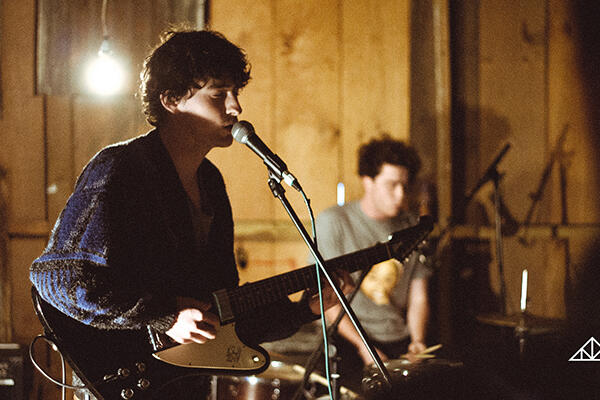
Dunedin’s Gig Heydey
Whenever I go to a gig these days I leave feeling a little disappointed. It’s not that the bands can’t play, or that the venue is shit, or even that I can’t stand the people who are at the gig, even though those are often problems too. What I am continually disappointed by is the lack of atmosphere and excitement from the crowd. When I first started attending gigs about six years ago, it wasn’t the music that made the night great – it was the crowd, the size of the mosh pit, how many people fainted, the stench of sweat, blood, and spilled beer. The bands were often amazingly terrible, the venues even worse, and the majority of people borderline criminal, but the atmosphere was better than any drugs I have ever been on. Sadly, all good things must come to an end, including that incredible gig atmosphere. A mere two years after my introduction to the live music scene I felt like a disillusioned elderly man, lamenting about what things were like back in my day. We have left the gig equivalent of the 60s and 70s and entered the 80s and 90s – the decades that left us pining for the good old days and wondering how those who loved the Beatles and Bob Marley could let themselves be swayed into listening to, and enjoying, the soul-sucking vortex that is the boy band. Now, don’t get me wrong, I think Dunedin’s current crop of musicians is amazing. Bands like the Dead Sparrows, Two Cartoons, TLA and Males are all exciting to listen to and watch, but that’s the problem – all anyone ever seems to do is watch. Barely anyone dances, half the time fuck-all people turn up, and most people who do turn up are more interested in reaching the bottom of their jug or that hot girl at the back of the room than the music. This worrying phenomenon is not restricted to students, who most people accept are generally apathetic. No, this disinterest has even seeped into our high schools. Not that long ago, I took my best mate’s little brother to his first gig. There was no difference between this gig and any other gig I have been to as a student, aside from the lack of alcohol and the fact that I was the only one in the room who could grow facial hair. I imagine that soon even preschoolers will do the zombie bob to the Wiggles instead of flailing their limbs in weird distorted patterns. What worries me most is that I have only witnessed this decline in Dunedin. Gigs in Christchurch, Wellington, and Brisbane have all had the great atmosphere I remember. At a small bar in Brisbane in 2008, I had one of the best nights of my life. The music was amazing, and the crowd responded in kind. Admittedly an ambulance turned up and a pool table somehow collapsed, but the crowd of less than 50 people went absolutely crazy for every single one of the bands that played. I walked out of that gig with my shirt torn, somebody else’s blood streaking my face, and a girl who was convinced I was her ex-boyfriend hanging off my arm, none of which would happen in Dunedin these days. Even our biggest concert ever, Elton John, saw barely anyone dancing. I will concede that there was a fair amount of elderly people, but they seemed to be getting up and dancing more than anyone else. I had a great time skankin’ with this old guy from Ross Home Retirement Village, and he was a fan of the Specials! So instead of standing back and watching these amazing bands play, get out there. Dance until you faint, crowd surf, and scream until you lose your voice instead of politely clapping at the end of every song. Jump on stage and be smacked in the face by a guitar (true story), and dance like a three-year-old on crack. Trust me, you’ll enjoy it.
-
Culture

Pancetta Macaroni Cups
This week we pay homage to my lifelong friend, cheese. When I was a young, spritely thing, Saturday lunchtime saw a steady stream of cheese melts flow from oven to table (not literally, mind you). I stuck with the classic cheese and oregano combination, while my mother would get all inventive with sliced beetroot and spring onions. With the advent of flatting came the discovery that I could eat whatever I liked, whenever I liked – no longer did I hear cries of “Why are you eating that, I am about to serve dinner” – including cheese toasties at 2am and whole wheels of brie in one sitting (double cream, please). This recipe reinvents classic macaroni cheese, turning it into a grown-up party food – well, sort of. Salty, smoky pancetta acts as a crispy case, and panko breadcrumbs add crunch. Too good. Recipe adapted from Chow.com Ingredients250g dried macaroni elbows 1/4 cup panko breadcrumbs 3 tbs butter 2 tbs white flour 1 1/4 cups milk 2 cups grated cheese – edam, cheddar, mozzarella or a combination (mozzarella has wonderful melting properties but is fairly mild in flavour; you could also throw handful of parmesan into the mix for extra zing) 2 tsp Dijon mustard (optional) Salt and pepper 12 thin circular slices pancetta Method01 | Fill a large pot with water. Add a pinch of salt and a splash of oil. Bring to the boil and add the macaroni elbows. Cook for 8 –10 minutes, or until firm to the bite. Drain. 02 | Add the panko breadcrumbs to a medium-hot saucepan and cook until golden, stirring constantly. 03 | Heat the butter in a large saucepan over a low-medium heat until it starts to foam. Add the flour and whisk until smooth. Cook for two minutes. 04 | Very slowly add the milk to the thickened flour, whisking as you go. Once you have added all of the milk, continue cooking until the sauce is smooth and thick. This will take about five minutes. 05 | Remove the saucepan from the heat. Add the grated cheese. Whisk until the cheese has melted. Add the mustard and salt and pepper to taste. Stir to combine. 06 | Fold the drained pasta through the cheese sauce (if you’re being traditional, you could bake this mixture in a large baking dish, with a generous sprinkling of grated cheese on top, for 20 minutes at 190°C). 07 | Press the pancetta slices into the wells of a well-greased muffin pan, covering the bottoms and sides as evenly as possible. Divide the macaroni cheese between the wells and top with the toasted panko breadcrumbs. Bake at 190°C for about 30 minutes, until the tops are golden brown and the macaroni cheese is bubbling. 08 | Remove the muffin tray from the oven and allow to cool for 5 minutes. Use a knife to loosen the pancetta macaroni cups, then carefully remove them from the pan. Serve with a salad. Photo courtesy James Stringer
-
Columns
Te Roopu | Issue 23
“With your basket and my basket the people will live” This whakatauki refers to the co-operation of all in order to get things done. This was exemplified during the mid-semester break at Te Huinga Tauira. A small contingent of 50 tauira of the 1600-plus Māori students enrolled at the University of Otago worked hard to host 150-plus students from all over New Zealand to make Te Huinga Tauira the success that it was. Te Huinga Tauira taught us a lot about ourselves and other people. It isn’t until we are put in situations like these that we can learn to better ourselves, and for this reason Te Huinga Tauira is always a memorable event on the Te Roopū Māori calendar. I would like to take this time to acknowledge those sponsors who made this event possible: the University of Otago Division of Sciences, Division of Health Sciences, Otago Community Trust, The Stadium Sports Bar and Café, Ako Aotearoa, Veggie Boys, Kotahi Mano Kaika, One Heart Many Lives, OUSA, BNZ, Office of Māori Development, and Te Huka Matuaraka, as well as various stakeholders within the Uni. A further acknowledgment also goes to the tauira of Te Roopū Māori for your collective effort. As a result we have come closer together, and will remain so to strengthen our relationships within our Roopū. There are only a few weeks until exams, but before we farewell one another for the summer there are many Te Roopū activities that we hope that you will get amongst. We will be holding nominations and elections soon for the 2013 executive. New roles have been created to help share the workload. Feel free to come and have a chat with me or the current exec about the positions. Don’t get caught up in the ideology of the roles. Instead, have a realistic view of what the roles consist of. Keep an eye on Facebook and your email inbox for dates. Other events to be aware of are the study retreat, exam breakfasts, and random kai throughout the semester. Also, congrats to all the Māori students who graduated in August. All the best with studies whānau, Lisa xx


