
-
Columns

Editorial | Issue 13
In 1913 Henry Ford had a problem with his new Model T. There simply weren’t enough people who could afford to buy it. He also had issues with worker attrition. Overworked and underpaid staff would quit, or simply fail to turn up. What Ford did revolutionised industry in the US. He doubled the wage of his workers to $5 per day, and cut their hours to eight per day. All of a sudden his worker attrition rate plummeted, and at the same time his sales surged, as his workforce was suddenly able to afford their very own Model T. The point, dear Uncle John, is that trickle-down economics is a crock of shit. It is workers who drive the economy, through not only their labour, but also their consumption. The world got it horribly wrong in the last few decades. Rather than increasing workers’ wages so that they could continue to consume and create demand, they gave that money to the wealthy – those who needed it the least. Meanwhile, they came up with a new product for workers to consume: debt. Levels of personal debt skyrocketed, and bankers made fortunes on the back of the interest payments. And when it all came tumbling down like the house of cards it was, it wasn’t the banks that had to pay, but once again the working class, the taxpayer, as governments declared the banks “too big to fail”. We need to return to an economy that is based on worker consumption, and the only way to do so is to have a real minimum wage. We cannot rely on business, or individuals, or unions to fight for this. We need the government to defend workers’ rights and drive the economy, by ensuring that workers are paid well enough to be the consumers that propel our economy. Uncle John, this isn’t a rejection of capitalism. It is a wholehearted embrace of it. Capitalism has proven itself time and time again to be the most effective method of creating new wealth. I’m not arguing that you need to put up the minimum wage because it’s unfair to pay people too little to live rich fulfilling lives (though it is). I’m not even saying it because the top 1%, like yourself, live in extravagant wealth that sickens the stomach when compared to the poverty of New Zealand’s most unfortunate (although it does). I’m arguing that you must put up the minimum wage because it makes the most economic sense. And as I understand it Uncle John, economics is something that you’re supposed to be good at. Sort it out Uncle John, that’s what we pay you so well for. - Joe Stockman
-
News
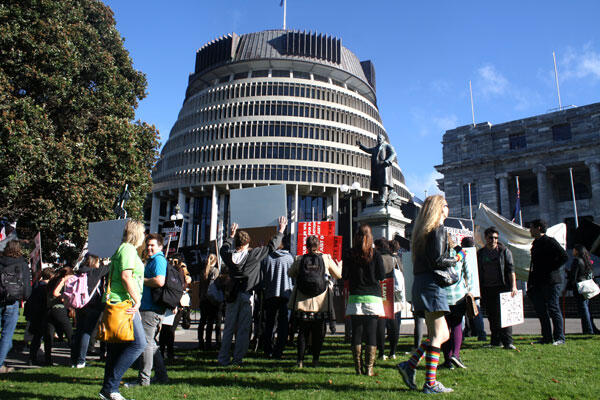
Zero budget provides zero funny headlines
The National Government announced the 2012-2013 Budget Thursday 24 May amidst student protest against the changes to the student loan and allowance system. While Bill English’s ‘zero’ Budget was generally described as political commentators as “forgettable”, “dull” and “boring”, Auckland students attempted to prove otherwise, with 400 protestors blocking the central Auckland intersection of Symonds St and Grafton Road for most of the afternoon. The protest was supported by the Auckland University Students’ Association and was organised by Blockade The Budget, a group that opposes the budget on the grounds that it will negatively affect students, as well as middle and lower income citizens. The protesting students gathered at Symonds Street at around 1.30pm and remained until 6.30pm, diverting traffic flow and disrupting public transport. In Wellington 100 protestors gathered outside Parliament, including a group of students who had marched from Victoria University to voice their opposition to increases in student loan repayments. Students from Dunedin were suitably apathetic, preferring to quietly attend lectures or consume a sneaky afternoon SoGo rather than exercise their democratic right to freedom of assembly. Changes affecting students were announcd in a pre-budget announcement on May 3. Graduates will now have to pay off their loans at 12%, rather than 10%, on any earnings over $19,084. Any additional voluntary repayments will no longer benefit from a 10% discount after National cancelled its loan repayment incentive scheme. The parental income threshold on student allowances will be frozen until 2016, and eligible students will only be able to claim the allowance for 200 weeks. With the academic year consisting of 38 weeks, this will allow students to receive the allowance for five years of study, enough time to complete most double degrees but insufficient to cover medical postgraduate and medical qualifications. Further announcements affecting the tertiary sector were included in the budget last Thursday. Fee increases will remain at the current limit of 4% per annum. Universities will get an extra 8.8% in funding for equiavalent full-time students in professsional engineeing courses, and 2% extra for full-time science students. Funding for other courses remains the same, with no rise to account for inflation. Universities will pick up another $9 million in 2013 to fund enrolment growth, but they will lose the last $5 million for adult and community education. Tertiary education commentator Dave Guerin told Critic the budget sees a shifting focus by the government from its previous strategy of reducing support to students who do not perform well in courses or fail to pay back their loans. “The cut for allowances to postgraduate students is one of the first examples of the Government cutting student support for ‘positive’ activity. Over the last couple of years they’ve focused on recent NZ residents (who often don’t stay), students with poor pass rates, and the over 55s (who don’t pay back their loans). The Government is making a call that incoming postgrad students will be committed enough to continue study and see future opportunities – it remains to be seen whether it works.”
-
News

Alty student attempts to import Class B
In a brazen attempt to become the coolest kid on his hall floor, an Otago student has attempted to buy ecstasy over the Internet. The 18-year-old appeared in Dunedin District Court last Tuesday, and admitted procuring the Class B drug. His lawyer has asked for an adjournment to allow for an application for a discharge without conviction. The Court was told that the student organised for a friend to order the pills off a TradeMe-style website that sells drugs, and to have them sent directly to his Dunedin address. The 165 pills were then intercepted in transit by the NZ Customs Service’s International Mail Centre in Auckland. When police spoke to the student he said that he planned to sell the pills in order to fund a 12-month exchange to Canada. The student accessed the pills from a website found via TOR, or “The Onion Router”, a routing network originally designed by the US Navy, which bounces communications through multiple servers around the world to avoid detection. The website sells a wide range of illegal substances for shipping around the world, with customers paying using “Bitcoin”, a digital currency that allows for near total anonymity for both buyer and seller. Critic spoke to one student who had regularly couriered drugs from Auckland to Dunedin: “It’s pretty easy really. You get someone you know up in Auckland to purchase some pills, chuck them in a courier bag and send them down. Most of them are sold before they’ve even arrived.” However, the purchase of stock from overseas allows authorities to more easily pick up on the couriering of illegal substances through border control measures. A police officer that Critic spoke to said that the student in question was very lucky to be charged with procuring the drug. If he had instead been charged with the importing of a class B controlled substance, he could be facing a maximum 14-year jail sentence. The student has been remanded without conviction until June 5.
-
News

Edgar Woos Ladyhawke to Re-O
OUSA has announced the line-up for Re-Orientation 2012, which is to be held in the first week of Semester Two on 11 – 14 July. OUSA President Logan Edgar is “pretty fucking excited” about the line-up, which will include Ladyhawke, Kora, Chopper Read and Paul Ego. Re-Orientation will coincide with the re-opening of a newly renovated Union Hall, where many of the events will be held. OUSA President Logan Edgar has promised the new venue “is going to be special.” Edgar was particularly impressed with himself for attracting “pretty prominent” London-based Ladyhawke as this year’s lead act. The Wellington-born singer has just finished recording her new album “Anxiety”. Speaking to Critic, Ladyhawke described the “energetic live show” she will be performing in Dunedin as “a bit more rocky and raw than it is on the recording.” Critic is hugely disappointment at OUSA’s decision not to include a Carnival Day in this year’s line up. The promised Carnival Day, which was successfully organised in 2009, failed to take place as advertised during Re-O Week last year. Unfortunately, OUSA’s inability to source sufficient dwarves and ponies to meet the demands of University of Otago Students has left organisers with no choice but to abandon the event. Critic has received reports that OUSA considered hosting a University Ball, but did not receive enough positive feedback for the event to go ahead, with the prospect of sustaining a romantic courtship for the length of an entire evening thought to be too much of an effort by most. Some students have been quick to criticise the line up, with a second-year commenting, “it’s looking pretty unimpressive.” In response, Edgar pointed out that “it’s not seven nights of partying like O-Week. Just a couple of good nights and a laugh.” Non-OUSA run events have also been planned for the week, with 900 guests confirmed on Facebook for the Castle Street Keg Race when Critic went to print. Edgar scoffed at claims that the Keg Race would outshine OUSA’s attempts at events planning. “It’s never going to be Hyde Street. Last year, it was just cold and shit.”
-
News

Otago Students Named Most Alternative: Wellington students weep
A team of University of Otago Students has won the 2012 Alternative Budget Competition. The competition, sponsored by the Independent Policy Institute, required students to develop their own national budget in the lead-up to the Government’s announcement of the 2012/2013 budget last Thursday. Final year law students Nathan Blane, Oliver Hornbrook and Kishen Kaurah flew to Auckland to present their budget to a panel of judges at the Auckland University Business School on 22 May. The team placed first, receiving a prize of $3500 and beating the three other University of Auckland teams that had made the final round. Hornbrook told Critic, “We’re pretty ecstatic. It vindicated the fact that decent ideas and innovative ideas won over good speakers.” Hornbook said he entered because “it looked interesting. It was the opportunity to present what you think the government should put in the budget to achieve the measures they so often try to achieve, but without any political considerations. So not caring about getting re-elected, but more about getting results.” The team’s budget included the introduction of a capital gains tax, means-tested superannuation, the introduction of public-private partnerships and the incentivisation of student loans. Critic can only speculate as to how many Auckland streets would be clogged with protesting students if, in an unconstitutional twist, the winning team’s budget were imposed on the nation.
-
News
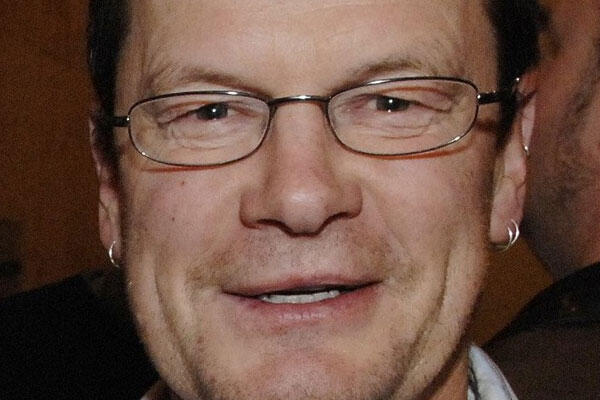
Missing University of Otago employee found dead
The body of missing Health Science Library Team Leader David Palmer has been found after a two-week Search and Rescue operation in the Ahuriri Conservation Park. Mr Palmer’s body was located in a creek bed at the bottom of a 60m-high steep bank in the Canyon Creek area on Saturday 19 May. He was first reported missing after failing to return from a three-hour expedition on the Dingle Burn Track on Saturday 5 May. Police confirmed to the ODT that the place of discovery was within the wider search area, but that “extremely steep ravines, rocky boulders, overgrowth and ground cover” had made the search extremely dangerous and difficult. Family and friends of Mr Palmer extended thanks to the many people who contributed to the search. Close friend Elisabeth Lukeman expressed her gratitude and relief to the ODT, saying “we deeply appreciate [Search and Rescue’s] dedication and determination to bring Dave home.” Constable Nayland Smith of Omarama praised Search and Rescue volunteers and police staff, who had proved to be “more than 100% committed to bring Mr Palmer back to his family” in what had been a “huge” operation. Mr Palmer’s death would now be referred to the coroner to determine the cause and time of death.
-
News

Breaking the cycle of broken cyclists
In a move that could save the ratepayer up to $4.7 million over the next decade, the Dunedin City Council (DCC) decided last week to reallocate its road-sealing budget towards improving Dunedin’s cycleways. While a pre-draft budget created in January had initially reinstated part of the seal extension programme, Councillor Jinty MacTavish stressed that the money would be better spent on improving the city’s cycleways. MacTavish told Critic, “the desire for cycling infrastructure is evidenced by the number of submissions we have had on the topic to our Annual Plan in the last two years. If you put cycleway submissions together, they number far in excess of any other topic…there are hundreds of submissions at each Annual Planning round. On the other hand, I counted about three submissions on the need for seal extensions this year.” A number of Otago students from youth organization Generation Zero were among those opposing the road-seal budget, with members of the Dunedin group presenting oral submissions to the DCC on 10 May calling for improved active public transport systems in the city. The organiser of Generation Zero’s transport submissions, Letisha Nicholas, said increased funding to cycleways would benefit both motorists and cyclists. “If cycleways are improved then drivers and cyclists can both feel more at ease on the roads, as there is currently a horrendous amount of injuries and deaths of cyclists in Dunedin each year.” Nicolas said the diversion in funding may be a case of the Council listening to students, and encouraged them to become further involved in local council issues. “In the DCC's current position with the Stadium debt, they can’t afford not to listen to public opinion. Also, given that the students are a massive part of this city, they certainly can't ignore us.” The new proposal was put to vote on 15 May, and passed 7 votes to 4.
-
News
University studies coronial impotence
A major research study by University of Otago researchers will review whether recommendations and findings from coroners are currently being heeded to prevent further loss of life. University of Otago Faculty of Law researchers Professor Mark Henaghan and Dr Jennifer Moore will collect and analyse approximately 1,000 recommendations from between 2006 and 2011, as well as interviewing approximately 16 coroners and at least 45 agencies, to find out why coroners’ recommendations were or were not implemented. Chief Coroner Judge Neil MacLean recently commented on TVNZ’s Q+A that there is a “sense of frustration that what [coroners are] saying seems not to be making any difference.” Judge MacLean said that coroner recommendations should result in mandatory responses, as is the case in other countries, and the current system in New Zealand regularly sees recommendations “die in the ditch”. Dr Moore told Critic that the goal of the research was not to judge anyone, but “to try to maximise the coroners’ preventative roles.” She hoped the study would help identify principles that may be beneficial when formulating recommendations. “Coroners currently receive little constructive feedback on the effectiveness of their recommendations.” The purpose of the coronial system is to make recommendations after unnatural or violent deaths, to reduce the occurrence of further deaths in similar circumstances. However, the death this year of 12-year-old Darius Logan Claxton from butane inhalation in a Christchurch car park highlights the impotence of coroners’ recommendations, with coroners having already encountered 28 butane deaths from 2007 to 2011. Dr Moore, who will be presenting a paper at Harvard in August on the topic, said the needs of families were important. “A common refrain of those who have lost family members is that they want the coronial system to ensure that this doesn’t happen to anyone else. New Zealand families believe and hope that coroners’ findings and recommendations can make a massive difference to saving people’s lives.” The Law Foundation is fully funding the research at a cost of $138,000. The project is expected to be completed in late 2015.
-
News
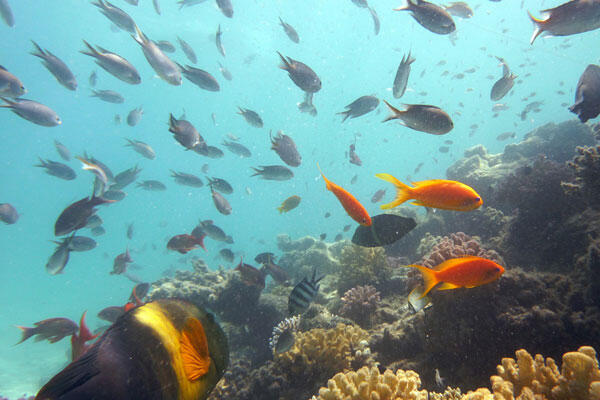
Fishing in Dunedin no longer confined to Monkey Bar
The Leith River is now home to 4000 juvenile salmon, after the New Zealand Salmon Anglers Association released the fish last week to support the “put and take” system of recreational fishing in Dunedin. Salmon have been released into the Leith annually since 1984, and as a result Dunedin is one of only two cities in the world that can offer salmon fishing within a 10 minute walk from the CBD (Critic’s journalistic merit was undermined when its team of investigative journalists were unable to establish the second city in which salmon farming is undertaken 10 minutes from the CBD, we presume it is Ulan Bator). The Dunedin Community Salmon Trust started a salmon hatchery to breed these salmon in Sawyers Bay in 2005, after sources of salmon from NIWA were sold to commercial farms. The hatchery operates out of a redundant sewage plant. Salmon are transported to the Leith in beer tanks that previously belonged to Gardies. Critic is unsure if either of these elements contribute to the salmon’s flavour. The Salmon Anglers Association will release another 20,000 salmon into the Leith on 10 June, to provide students studying for exams with an opportunity for a study break other than Facebook. Given that Critic has heard that in past years some fish have been observed getting frisky outside the Clocktower, this excursion is particularly recommended for biology students.
-
News
Critic pretends to give a shit about postgrads
The University of Otago will host the inaugural Postgraduate Research Conference on Power and Politics (PRCPP) on 2 – 3 July. The Conference, sponsored by the New Zealand Political Studies Association, will give postgraduate students the chance to present material from their disciplines for approximately 15 minutes, after which there will be further time for questions. One of the organisers of the conferece, PhD student Maria Pozza, told Critic she instigated the conference to provide a “practice run” for posgraduate students, many of whom can feel overwhelmed at the prospect of presenting their research internationally. PhD students usually receive funding to present at at least one international conference during the course of their research. Other postgraduate conferences exist in New Zealand. However, they are intended for smaller groups and specific fields. The PRCPP is open to all students of the humanities and sciences. Pozza told Critic she chose the topic of “power and politics” because it was “as wide as I could think of, and it can be interpreted broadly to apply to as many different students’ work as possible.” Students doing postgraduate research in the humanities and social sciences from around New Zealand are invited to apply by 1 June, submitting a 200-word abstract to the Postgraduate Conference Organising Committee.
-
News
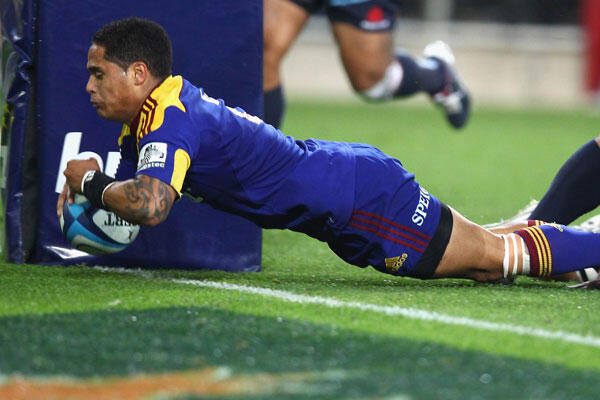
Critic’s favourite Highlander is now Critic’s favourite All Black (trialist)
Critic’s favourite Highlander Aaron Smith has hit the big time. Just as we predicted, Smith’s form has been too good to ignore, and he has been selected for the All Blacks training squad from which the team to play Ireland will be fingered. While Aaron is not getting too excited just yet, here at Critic we are predicting a long and celebrated All Black career for the little halfback, starting 9 June at Eden Park. Smith has been pretty busy recently with all the excitement of being the next great All Black halfback. Luckily he found the time to sit down with Critic at a freezing Logan Park to talk about the exciting times ahead. It’s fucking cold, how are you handling the start of real winter? I don’t think anyone really enjoys the cold. We’ve got a fire and a heat pump at home but I’ve still needed some extra blankets. It was pretty hot in Africa, hot as hell. We were all at the beach. Most important matters first, tell us about your hairdressing skills … I trained for two and a half years to be a hairdresser when I first got out of school. When I made it into the New Zealand U20s I had to cut my course short (ha). Then I made it into the Turbos so I haven’t been able to do it since. I used to enjoy colouring womens’ hair, but a nice fade is most popular with the boys. How does it feel to be named in the All Blacks squad? It was definitely a shock. I feel very proud to be named in the initial squad. I don’t want to get my hopes up too much. I just want to go and learn as much as I can. What indication had you been given that it was going to happen? I got a text on Sunday night confirming that it was my phone number, then about ten minutes later I got what looked like a group text that said “congratulations you’ve been named in the squad”. It was probably the best text I’ve ever gotten. A text? Really? Yeah, I still haven’t really heard from the coaches. I’ve had a couple of emails about where to be and what to do but that’s about it. It’s all pretty boring. I did have a meeting with Steve Hansen and the other coaching staff a few weeks ago. They just wanted to meet me and that was about it. When I walked out of the room I didn’t know what was going on. Like a job interview? Yeah, a little bit. It was quite weird. The office was a bit of a dungeon. All the coaches just sat round a table and listened to me talk. It was pretty intense. How scary is Steve Hansen? Obviously the fact that he is the All Blacks coach is pretty intimidating. I don’t really know him as a person but he seemed like a really nice guy. It was hard to tell. The halfbacks in the squad are Weepu, Ellis, Kerr-Barlow and yourself. What do you bring to the team that’s different to those other guys? I’m a bit smaller than those other three. I rate my passing game as different to theirs. Those guys run it a bit more but my game is about getting the ball wide and flat to the first five. I like to bring a good tempo to the game. Those other three guys are some of the best half-backs in the world so it’s really exciting to be in that group. I’ve played against Andy a couple of times. I’ve only ever played against Piri once, a couple of weeks ago. Tawera is always a tough cookie to come up against: You always have to keep your eye on him, he’s dangerous. I’ve noticed this year that the media seems to start pumping up whichever players are playing in the Saturday timeslot every week. What role do you reckon the media plays in whose names get pushed for selection? I don’t think what you guys say makes much difference to anything really. My family always try text me and tell me what someone said but I don’t really care what you guys say about me. I just try to show [the media] who I really am. If you like me you like me, if you don’t you don’t. How impressed have you been with the crowds this year, and in particular the Zoo? It’s been great. Getting the Otago faithful back has been really good. Hopefully they turn up for the next couple of games. I’ve been really enjoying the Zoo. There isn’t a better atmosphere at any rugby ground in New Zealand. It’s really loud. I love it. What are your long-term plans with the Highlanders? We don’t want another Israel Dagg situation, where you play one really good year then transfer to the Crusaders … I really love being down here. The Highlanders gave me my shot. Getting some accolades this year has been pretty buzzy but I want to pay the Highlanders back by staying for another couple of years. Hopefully we can build a team that we can be proud of and get close to winning the title.
-
News
Top 5 - sportspeople who changed their sport
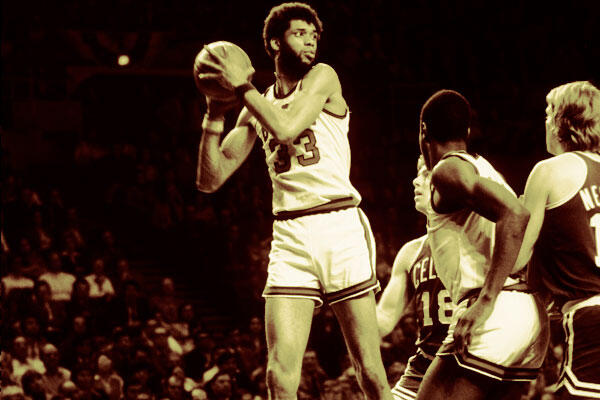
When Anna Harrison of the Northern Mystics performed the “chair lift” or “lady lineout” to reject the Melbourne Vixens shooters, she changed the game. This manoeuvre had never been performed in competitive netball before, and people didn’t know what to think. The obvious road for netball to take would be to outlaw the practice and get back to “normal netball”. What a shame. Still, this got me thinking about those rare times in sport when a player or tactic comes along that changes the game. Here are some of the best (and worst) game-changers in the world of sport. Lew Alcindor (Kareem Abdul-Jabbar) too good for college basketballKareem was so dominant in college that the rules were changed to disadvantage him. Over seven feet tall with athleticism to match, Kareem was a rare athlete at the time. College basketball had never seen anything close to his skills before. After the 1967 season, which Kareem dominated while playing for UCLA, the NCAA inexplicably outlawed the slam-dunk, the shot that Abdul-Jabbar (then called Alcindor) had used to dominate the competition. At the time he didn’t seem to mind too much and used the rule change as motivation to develop his hook shot, which he used to dominate the NBA for 20 years and enter the hall of fame. After he left college the officials changed the rules back to allow dunking again. Ridiculous. Youtube: “Lew Alcindor College Basketball’s greatest” Ben Johnson – drugs in athleticsBen Johnson was already a good sprinter before the ‘roids. He won a bronze at the 1984 Olympic Games, but that wasn’t enough. By the time Seoul 1988 rolled around, Johnson was juiced to the eyeballs and setting world records all over the show. He smashed Carl Lewis in the 100m final, setting a world record of 9.79 seconds, but something wasn’t right. Looking back at the old Youtube footage, Johnson is the epitome of ‘roid rage. Sprinters look a bit freaky anyway but Johnson was on another level: bloodshot eyes, ridiculously veiny, and unbelievably angry-looking. After the race his urine test was found to be full of stanzolol, and his gold medal was taken from him. Ben Johnson was the first high-profile drugs cheat to get caught, which woke the whole world up to drugs cheats at the Olympics. Youtube: “Ben Johnson Seoul 1988” Jardine, Larwood, Voce and the Bodyline seriesDouglas Jardine, the captain of the English test cricket team in 1932, was a hard-ass. Sick of losing to the Aussies and getting belted around by Bradman, he devised a new tactic. He would instruct his two fastest bowlers, Harold Larwood and Bill Voce, to direct fast, short pitched deliveries at the body and head of the Australian batsman (helmets weren’t used at the time). Jardine then positioned heaps of fielders on the leg side to wait for catches as the batsmen tried to defend themselves. It was hugely successful. The fall-out was massive. The Aussies kicked up a stink. Political relations became strained and Jardine became the most hated man in Australia. The end result was that the Marylebone Cricket Club changed the rules so that only two fielders could field behind square on the leg-side at any time. Bodyline was outlawed, but cricket changed forever. Youtube: “Bodyline series” The Harlequins Rugby Club’s fake blood capsules – BloodgateThe rules of Rugby Union allow unlimited substitutions for players who start bleeding. So what did the HRC do when they wanted to get their best player (ex-All Black Nick Evans) back on the field? They gave a player a fake blood capsule to bite on and got Evans straight back out there. Only problem was the player supposed to do the acting got caught winking at the physio, there was no evidence that he ever actually got hurt, and the blood was ridiculously bright. Nearly everyone involved lost their jobs. An enquiry was launched and the Harlequins become football pariahs. Youtube: “Bloodgate” Helmet-to-helmet hits in the NFLFeared Pittsburgh Steelers linebacker James Harrison had an interesting party trick. When a receiver, running back or quarter back came anywhere near him he would viciously tackle them in the head – with his own head. While rugby players would regard this as extremely poor technique, the helmets that NFL players wear combined with Harrison’s recklessness made it his favourite method of toppling hapless attackers. Several sickening hits later, the NFL wised up to the danger Harrison posed and changed the rules to discourage helmet-to-helmet contact. Harrison didn’t care though. He just kept doing it and ended up with some big suspensions. Evidence that playing NFL eventually turns you into a drooling vegetable means that players like Harrison are a probably a dying breed. Youtube: “James Harrison hits Colt McCoy”
-
Columns
Red and Starry Eyed | Issue 13
Queen’s Birthday Weekend is arriving soon, although we students may not get to enjoy our expensive holiday. Why do we celebrate it anyhow? Red and Starry Eyed gets no holiday when it’s his birthday. Who is this old dinosaur the Queen? I have certainly never met her, so it boggles my mind that we should be paying her family’s expenses. You’d think that by now we would have progressed to a new age where the old hierarchy no longer matters. Of course we have a new hierarchy, but why does the old one still have power? In the late eighteenth century, the French people rose up to get rid of a system that oppressed and enslaved them. Apparently the British liked being slaves. It seems the royals form part of our “identity” even if they do nothing at all. Our government constantly criticises dole-bludgers, but we are ruled by the biggest bludger of them all. Aren’t we meant to follow the example of our elders? If so, I too want to receive taxpayer money to pretend to have blue blood and half-assedly wave at the public. There is a group in New Zealand called the Republican Movement of Aotearoa New Zealand. They are slightly misguided, but they are right in thinking that we no longer need the Queen or her relatives. The royals are no more special than us. The Republican Movement wants us to elect the Governor General the Queen has until now appointed. Red is confused as to why we would want to elect someone who has no real power. The Governor General currently appoints the Cabinet and the Prime Minister, but in reality he just ticks the voter’s choice. He can also call for early elections and refuse bills, but in reality he does neither. Though I couldn’t find out how much the Governor General earns, whatever the amount is it could be better spent on charity. He’s useless! The Queen receives at least 41.5 million pounds a year from the taxpayer. This figure doesn’t take into account her personal wealth, or what she receives for the Duchy of Lancaster. Currently there are 160,000 unemployed people in New Zealand, and many students that could do with a note or two in their wallet. If we divided up the Queen’s annual income between these people, each “dole-bludger” would get around $265! Sweet. I would rather pay less in taxes than pay for a system that represents the opposite of freedom. –Red and Starry Eyed
-
Columns
The Tory Templar | Issue 13
Rule Britannia may be consigned to the Youtube clips of sixth form history, but Britain’s presence still looms large over this country. With Queen Elizabeth celebrating her diamond jubilee and the Queen’s Birthday holiday around the corner, the question will undoubtedly arise: “Should we be a republic?” In short, no. No we shouldn’t. This country not only survives on the monarchy, but thrives on it. Regardless of our views on it, we are defined by our relationship to it. Look at the fervour that the recent royal wedding created, and the disappointment that the Diamond Jubilee tour didn’t send us William and Catherine. The position of Governor General, the Queen’s representative, is the highest public office in New Zealand. Disagree? Well, here’s more proof: so desperate are we to maintain our connection with monarchical traditions that we re-established the knighthood. The Templar remembers the clamour to give Sir Graeme Henry and Sir Richie McCaw the biggest honour this country can offer. New Zealand continues to show it has no desire to be a republic, despite what John Key calls the “inevitability” of it occurring. Perhaps what makes the monarchy not merely desirable but necessary to us can be summed up in three simple words: Treaty of Waitangi. Yes, the much debated, much hated document on which our troublesome race relations are blamed. This Treaty, be it unfair or not, is a Treaty between the Crown and Maori. No Crown, no Treaty. It’s that simple. How would iwi feel about that? No settlements, no payments, no scholarships, nothing. Our society is built on the monarchy. Remove that, and the Templar foresees descent into chaos and potentially similar stunts to Tuhoe’s. We are not big enough or strong enough to handle a civil war. Ironically, without our ties to Britain we would be left to our own devices should a conflict arise. The Templar will always be a monarchist because he is realistic about a future without it. Becoming a republic would be like picking at the stitch that holds us together. Once that begins to unravel it’s a slippery path to conflict, mayhem and abandonment. There’s a reason why Canada, New Zealand and Australia have been safe and sound since independence, and it’s because we never left the safety of the crown that rules us. – By The Tory Templar
-
News

The Eagle’s Alternative Budget
Liberty-lovers rejoice, the Eagle’s back! Socialists, drop your copies of Das Kapital and The Spirit Level and run to the only place you can hide – the state houses of Corstophine, where the aura of welfare dependency and mediocrity saps the Eagle of his powers. Yes, the Eagle’s back with a vengeance, and more liberal than ever. Your winged hero is outraged by the failure of the 2012 Budget to curb NZ’s rampant socialism, and has swooped down from his mountain fortress to claw some sense into NZ’s economic policy. The NZ government is currently $50billion in debt, an inevitable consequence of unconstrained democracy, which encourages governments to spend lavishly to buy votes. Although National is not as fiscally reckless as Labour, the Government is still spending $73.7b per year, while taking $69.2b in revenue. Governments are like a developmentally-disabled mother hen who, instead of letting her chicks just eat their own food, insists on eating it on their behalf then regurgitating it into the chicks’ mouths. Some of the food is lost along the way, and the final product is far less satisfying than if the mother hen had just kept her beak out of it. The Eagle’s Alternative Budget will hunt down the rodents of wasteful spending and tear them to shreds with the talons of economic efficiency: Working For Families and any other dysgenics (google it) schemes that pay people to breed – $3.12b saved, not to mention ensuring that the next generation is conceived out of love rather than greed. The dole, the DPB, “accommodation assistance”, and half of the sickness benefit – dole-bludgers don’t deserve $4.57b to sit on the couch and watch Jeremy Kyle. Student allowances, interest-free student loans, and university fee subsidies – $4.31b saved. University is a self-interested choice, and should not be subsidised by taxpayers. Housing New Zealand – shut it down and put the state houses on Trademe. The government is not your mother, it doesn’t owe you a house. $1b saved per year. Public broadcasting – taxpayers don’t need to fund The GC, Go Girls, and other such vacuous tributes to intellectual ineptitude. State-run media belongs in North Korea, not New Zealand. $150m saved. Cut film subsidies to save another $106m. $14billion per year is currently sucked into the black hole of the Ministry of Health. Privatise every last defibrillator; the Eagle’s tax cuts will allow people to easily buy health insurance with cash left over. Te Puni Kōkiri and the Ministry of Pacific Island Affairs – $277m of race-based spending saved and given back to eaglets of all the colours of the rainbow. The $4.4b of new spending from the 2012 budget. Now’s not the time for extravagant new spending. It’s time for rail transport to go the way of telegraphs and VCRs, especially the $250m “Kiwirail turnaround plan”. Kiwirail is a rusted pile of junk with a cringeworthy name cynically designed to arouse patriotism. All the turntables on the Island of Sodor couldn’t turn it around. Savings: $581m. ACC is a failed experiment. Sell it off and open up the accident insurance industry to competition, and listen to the sweet, sweet sound of lawsuits being filed. Savings: $3.18b. Thanks to NZ’s $50b debt, we’re currently paying $3.65b per year just to keep the repo men out of Parliament. The Eagle recommends asset sales that will make National’s look as inconsequential as a Briscoes sale. “Warm Up New Zealand” – sappy name, stupid policy. The only thing it’s warming is the Eagle’s blood. $100m saved. The Eagle’s brilliant, economically liberal budget provides savings of $35.2billion, which allows the Eagle to abolish income tax and company tax, with $300m left over. Not bad for a day’s work. This includes savings of $180m from taxpayer auditing, since there’s nothing left for the taxman to audit. Socialists beware, the Eagle is still watching over Dunedin with sharp eyes, and will not tolerate any attempts to harm liberty. Expect a few more guest columns next semester. You are the wind beneath my wings, – The Eagle
-
Features

Dare to be Wise?
CONTROVERSY AT CANTERBURYIn 1993 Canterbury Master of Arts student Joel Hayward completed his thesis, entitled The Fate of Jews in German Hands: An Historical Enquiry into the Development and Significance of Holocaust Revisionism. Although the content is as controversial as its title suggests, his thesis was awarded an A+ and judged “the best history thesis of the year”, winning him the Sir James Hight Memorial Prize for Excellence. In 1999, Hayward’s work was made publically available, and quickly sparked a media debate. The New Zealand Jewish Council accused him of Holocaust denial, and called on the University of Canterbury to revoke his first-class degree. The University appointed an independent working party to investigate the claims, and the committee reported that Hayward’s research was faulty, lacking judgement, and of dubious methodology. However, their report did not recommend withdrawal of the thesis (it was not considered “dishonest” work), and they did not agree with allegations that Hayward’s argument was racist. Hayward went on to pursue a Ph.D., and later became a lecturer at Massey University. In 2000, Hayward apologised for any harm or distress that he might have caused, and agreed to attach an appendix to his thesis, modifying his findings. The addendum admitted that the work “failed to place adequate analytical weight on the motivation of numerous authors on the Holocaust.” He stated that his research was “an honest attempt to make sense of events [he] wanted to understand better,” and that he “regret[s] working on such a complex topic without sufficient knowledge and preparation.” Although Hayward recognised that his thesis was inappropriate, he defended his right to research Holocaust revisionism, stating that he “remain[s] convinced that any individual, regardless of ethnicity, nationality, and political persuasion, should be able to investigate any aspect of the past, and to form and express conclusions based upon his or her own understanding of the evidence, without fear of punishment or ridicule for deviating from accepted wisdom. To deny an individual this right is out of keeping with the spirit of our age.” Such obstruction of academic pursuit is not only considered “out of keeping” with the cultural zeitgeist, it is illegal under the New Zealand Education Act 1989, which enshrines the right of academic freedom. FREE THE ACADEMICS!Academic freedom credits freedom of inquiry by students and faculty members as essential to the role of tertiary institutions as the “critic and conscience of society.” It allows scholars the freedom to teach or to communicate unconventional or unpalatable ideas and facts without fear of repression, job loss, or imprisonment. It is not, as some have argued since the Hayward case, an excuse for puffed-up professors to promote personal prejudice concealed beneath a veneer of academia. Academic freedom means that as academic staff and students, we can legally “question and test received wisdom, put forward new ideas, and state controversial or unpopular opinions.” It enables us to “engage in research [on a topic of our choice]” and allows the University to “teach and assess students in the manner they consider best promotes learning.” It encourages freedom of the institution through its “chief executive[’s ability] to appoint its own staff.” The exercise of these freedoms, however, must comply with “the highest ethical standards.” This involves respect for the different cultural and religious beliefs and practices of others, and an obligation to be sensitive to what may be considered offensive to other members of society. Professor Gareth Jones, Head of the University of Otago Bioethics Centre, has written about academic freedom for the New Zealand Universities Academic Audit Unit (NZUAAU). He says that academic freedom allows “academics, within their broad area of expertise (that’s important to note), to be testing conventional opinion, questioning, putting forward other viewpoints, simply because they have a right to do so. The Vice Chancellor isn’t going to come down and tell you to shut up! That’s basically what it comes down to.” Essentially, academic freedom provides staff with a sort of enhanced version of “freedom of expression,” above and beyond one’s regular right to freedom of speech. In Professor Jones’ opinion, this is something that many staff “take for granted.” Arguably, it’s also a concept unknown to most students, as is the University’s system for hiring and assessing the lecturers eligible for such freedom. So, what does it take to become a member of this prestigious community? HR: HARD PLACE vs ROCKAccording to postgraduate student Matt (not his real name), the University of Otago teaching community is not only prestigious, but also political. With a Bachelor of Science, a Postgraduate Diploma in Science, and a near-completed Masters, Matt reckons that his qualifications may hinder rather than help his applications for Teaching Fellow positions. “It’s assumed that those jobs go to people with undergraduate qualifications. Basically, if they can hire someone that’s maybe a little less educated, but on a lower pay rate, then they’ll go for them. I know that quite a few people applied who were from similar [educational] positions as me, and none of them were hired, either.” In Matt’s experience, there’s a surprising amount of involvement from other staff in hiring: “[My lecturer] said that they generally stick to hiring people from [their own department]. ‘To keep their own,’ he said!” Human Resources rejected my interview request, so their position on the matter remains undefended (my journalistic ego is still smarting from this unexpected blow). It remains unclear how anyone really gets hired. However, due to the Performance Based Research Fund (PBFR) tertiary education funding process, redundancies are on the rise. INTERNAL BUSINESSBasically, PBRF ranks individual staff members, departments, and tertiary institutions according to their research performance. Tertiary Education Union branch co-president Dr Brent Lovelock explains how the model is affecting the roles of academic staff: “The PBRF process has certainly changed the way we do things. I guess the University will argue that most of us were taken on as researchers, and we do put a lot of weight on research-informed teaching. We agree that that’s important, but the goal posts have shifted a little bit for some staff members, who were taken on because they might have some special skills in some areas; they may be amazing teachers, or highly qualified practitioners working in areas such as design, social work, or education. For those people, the goal posts shifted when PBRF came along and said, ‘Okay, you’ve all got to do research now, and if you don’t do research, well, there’s the door.’” The impact of PBRF on teaching quality can be both “positive and negative,” according to Dr Lovelock: “Obviously we want teaching to be research-informed, so that students can share the cutting-edge knowledge that research provides. But PBRF puts pressure on staff to produce more and higher quality research, which compromises the 40/40/20 model.” That’s the University’s ideal distribution of a staff member’s time spent on research/teaching/community service, respectively. A recent academic audit report conducted by the New Zealand Universities Academic Audit Unit (NZUAAU) criticised this workload model: “The audit panel does suggest that the principles underlying an institution-wide workload model need to be more detailed than simply a 40/40/20 allocation.” Dr Lovelock adds, “PBRF means that staff are now much busier in terms of doing research, so whether they dedicate as much time to things like lecture planning, I don’t know. And community service? Pfft, it’s dropped off the edge somewhere!” However, “management see [PBRF] in a wonderful, glowing light, because it’s a source of funding. Even though it’s not a huge source, it’s still substantial, and it’s a great tool as well, because suddenly every staff member is delegated a score.” Supposedly, these scores are confidential, but Dr Lovelock suggests otherwise: “To say that the process is confidential is complete nonsense, but it was founded and sold to us on the basis of confidentiality – we were told that nobody would ever know, not even our Heads of Department would be privy to our personal PBRF scores. And that’s a load of crap.” As far as hiring people goes, Dr Lovelock admits that “these scores are hugely influential on the type of people who will get employed by the University.” But a good researcher isn’t always the best teacher, is he? “No,” Dr Lovelock asserts, “not at all. And a good teacher isn’t always the best researcher.” FREEDOM FOR STUDENTS?Only time will tell whether PBRF pays off eventually, and not just in the literal sense. Meanwhile, the ever-increasing emphasis on research places academic freedom at the forefront of tertiary concerns. You might be wondering how much academic freedom students enjoy. According to Professor Jones, the priority of students within a university is learning, but they’re increasingly involved in teaching, scholarship, research, and publication at higher levels. So it can be argued that students are entitled to their fair share of academic freedom in these areas. Before any Politics students race off to change the world, however, let’s clarify the term “fair share.” Going back to Hayward’s Holocaust thesis, should such topics be available for students’ academic exploration? Professor Jones thinks so, although “it’s one thing to examine a position like that, to critically analyse it, and it’s another thing to then say well this is the position that I’m putting forward. If you want to publish a political type of pamphlet, you’re free to do that. But with [an academic qualification], you have to analyse everything you say, and in turn, everything you say will be questioned. From an academic standpoint, whatever you say must be well argued, and it must be credible.” One of the major limits of students’ academic freedom is our lack of expertise. Even staff, Professor Jones argues, shouldn’t speak out willy-nilly on issues beyond their academic area: “Some academics think that they can talk, and be controversial, about absolutely everything. This becomes highly questionable. Once you get into controversial areas, you’ve got to be very careful about how things are phrased. With the ability [of academic freedom] comes, of course, responsibility. You have to be responsible in that what you are saying can be backed up, and that it’s a valid position, and not just something that can be used for expressing personal opinion for no good reason.” CAUTION ADVISEDThe inclusion of academic freedom in New Zealand law demonstrates its importance in our country. Academic freedom allows our tertiary institutions to remain the untainted “critic and conscience” of society. “You only have to look at other societies,” Professor Jones points out, “to see that this isn’t always the case. Some universities today have party officials as senior staff members, and clearly that’s going to have implications on what people can say. In that sort of society, academics would be more or less public servants who do as they’re told, whereas that’s not the case with us.” Regardless of professional and legal protection, one can’t assume that the public will accept all academic pursuits without protest. Indeed, it would be rather concerning if they did. It’s important to recognise that not everything that can be freely expressed is worthy of expression. Isn’t it, Dr Hayward?
-
Features

Wasted Time
A couple of years ago, Tommy was at a birthday party in an Auckland hotel room. It was someone’s 18th, and by all accounts it was rowdier than an average Saturday night in the Botans. Lots of people texted their friends, who texted their dodgy friends, who texted their even dodgier friends. The whole thing quickly spiralled into the kind of situation that might result if the Rolling Stones, Keith Moon, and the residents of George St’s “Bro Flat” all checked into a hotel room simultaneously. Unfortunately for Tommy, the fallout from the night was a lot worse than a smashed TV and singed upholstery. A fight erupted which rapidly turned into a massive brawl. Before it was over, two partygoers had been stabbed. Tommy and another unfortunate party-goer were charged with wounding with intent to cause grievous bodily harm, and wounding with reckless disregard. The first charge carries a maximum sentence of 14 years; the second a maximum sentence of seven years. The co-accused was discharged. Tommy was convicted of both charges and sentenced to five years at Spring Hill Corrections facility. His only previous brushes with the law were a couple of minor convictions for graffiti. Now he was condemned to spend the next 1,825 days in a high security prison with 650 other inmates. He didn’t think things could get any worse, until he was told that his home-away-from-home for the next half-decade was in the Waikato. Tommy didn’t stab anyone. No-one saw him stab anyone. His conviction was based entirely on the testimony of a single witness who claims to have seen him holding a small knife a couple of hours earlier. Well that clears everything up then! See you in five, Tommy! PRISON: A FAILED SYSTEMThere are nearly 9,000 prisoners in New Zealand, giving us the second-highest rate of imprisonment in the Western world. Locking people up has become a national pastime. Sometimes it seems like New Zealanders’ passion for punishment is surpassed only by our inexplicable interest in Sally and Jaime Ridge. The inconvenient truth is that our penal policy (heh) is fucked (double heh). Conservative zealots like the Sensible Sentencing Trust (SST) cynically play on the public reaction to isolated cases to call for harsher sentences. The National government inevitably responds by passing pathetic kneejerk legislation that doesn’t reduce crime, but destroys the lives of offenders who could be rehabilitated, and - worst of all for a right-wing government - costs the taxpayer more than the millions they spend on waterfront plastic wakas. Apparently everyone in the Beehive is happy to willfully ignore the fact that more prisoners and lower taxes go together like China and food safety. All of this might be justifiable if we were in fact achieving “safer communities together”. We’re not. In 90% of cases, prison is useless. For people like Tommy, it’s worse than useless, kind of like the Ridges’ upcoming foray into reality TV. The answer isn’t longer sentences, or more of them. It’s social support and rehabilitation. We need to end our emotional investment in the prison system that has been proved repeatedly to be a spectacular failure. MAD CUNT MCVICARThe Sensible Sentencing Trust (SST) is an organisation devoted to “the creation of a patriotic, crime free New Zealand through the promotion of personal responsibility and a better deal for Victims [sic] of crime”. The trust, led by Garth McVicar, pushes for outrageously harsh sentences. It believes that they deter criminals from committing crimes in the first place (sample logic: “Crime rates are very low in Arab countries. Whatever else you might say about Sharia law, the harsher sentences certainly work!”). A senior criminal lawyer Critic spoke to describes McVicar as “exploiting and faning the flames of public emotion”. He “preys on the anger and grief of victims”. The SST website is an eerie juxtaposition of Old Testament-style blood-baying and Microsoft Word Clip-Art. The evilness is confirmed by the presence of Comic Sans. It would all be kind of cutely batty if it weren’t for the fact that the National Party has made a disturbing habit of allowing McVicar to ghostwrite its legislation. 2, 4, 6, 8, SOMEONE DIED, LET’S LEGISLATE!If someone, somewhere does something really, really horrible, you can count on McVicar to parade it before Parliament as an example of why all those nasty criminals should be thrown in a windowless dungeon beneath the Waikato and left to rot. The Clayton Weatherston case was repulsive. It still did not justify the kneejerk removal of the defense of provocation. Of course there are people who do horrible things simply because they are horrible. However, most of us do horrible things because we are drunk, or high, or poor, or unhappy. Prison makes the poor poorer, the high higher (#prisoncorruption), and the unhappy much unhappier. Crime is the visible symptom of deeper social problems. Treating every offender like the worst kind of offender will simply turn every offender into the worst kind of offender. In 2010 Parliament passed the infamous “Three Strikes” bill. Under the legislation, if you commit one of 40 “serious” offences twice, on your third “strike” you’ll get the maximum sentence, often around 25 years. The bill was inspired by a similar Californian law, which created such appalling prison overcrowding that 6,500 prisoners were released before the end of their sentences. Three Strikes was the pet project of Mad Cunt McVicar and former Act MP David Garrett. Garrett, it turns out, is no less of a mad cunt. He resigned from Parliament a few months after the bill was passed, after revelations that he had fraudulently used the name of a dead baby to obtain a passport. He was also convicted of assault in 2002 after getting into a bar fight in Tonga. So not just a mad cunt, but an incredibly hypocritical mad cunt. The whole thing smacks of Christian fundamentalists who turn up to church on Sundays still smelling of cum. WHAT’S THE POINT OF PRISON?So what are these mad cunt-endorsed longer sentences meant to achieve? What is prison itself meant to achieve? The idea is that it simultaneously punishes the offender while protecting the rest of society by removing the prisoner from circulation, and rehabilitates them to prevent future reoffending. In reality it succeeds only at punishing the prisoner. At Spring Hill, Tommy was housed in a double bunk, despite the prison cells only being built for a single occupant. Breakfast was two Weet-Bix. Lunch was a cabbage or grated carrot sandwich. He thinks inmates are starved in order to save money - the only way of getting enough food was asking your family to send you money, conveniently taking the pressure to provide humane living conditions for inmates off of the Corrections Department. Everything at Spring Hill was designed to force inmates’ families to pay up in order to subsidise a vaguely tolerable standard of living. If no money was sent, the only shoes available to the inmates were prison jandals. If prisoners gave dirty clothes to the laundromat, they weren’t returned, so everyone hand-washed their own clothes in their cells. The prisoners were forced to spend hours a day at a workshop making trophies, for which they were not paid. Tommy sees this as a way for the government to squeeze as much money as they can out of prisoners. Unless you complained, nothing got done - Tommy had to write to the Ombudsman to get some critical dental work. The Ombudsman acquiesced, but instead of getting the fillings Tommy needed, the dentist simply ripped out two molars. It was cheaper that way. PLACEBO PROTECTIONAs far as protecting the fretful public goes, prison fails miserably. The Sensible Sentencing Trust frequently cites crimes that would not have been committed if prisoners had been kept behind bars for longer. It’s counter-intuitive, but longer sentences actually have almost no effect on crime levels. One study suggested that a 25% increase in prison population led to a 1% drop in crime. Only 5% or so of crimes result in a conviction, so prison sentences are never going to have much of an effect on crime levels. Crimes are overwhelmingly committed by young, slightly stupid, boozy men: Throw these offenders in prison and they’ll simply be replaced by the next generation of young, slightly stupid, boozy men - a demographic that everyone in Dunedin can agree we have no shortage of. REHABILI-WHAT NOW?Much as the SST might like to, it is not possible to permanently incarcerate every two-bit weed dealer. After all, some of us need to remain in gainful employment to fund the Department of Corrections’ ever-growing budget. At some point nearly every crim has to re-enter society. The test of prison’s effectiveness is whether or not they re-offend. Prison cannot be said to work unless re-offending falls. A year into his sentence Tommy was granted an appeal. A retrial was ordered and he was released from prison. He received no support whatsoever from the government. His first benefit payment took over a month to arrive. Luckily, Tommy was able to stay with his mother. If he had not had family to stay with, he would have had no choice but to borrow or steal or do whatever it took to feed himself. How can we hope to reduce re-offending if we are not providing the most basic support to prisoners upon release? It costs around $80,000 annually to house a prisoner. The more prisoners we have and the longer they remain behind bars, the less money we can invest in helping each individual turn their lives around. The rehabilitative element of our prisons at the moment is, according to a senior criminal defence lawyer, virtually non-existent - “it’s undeniably punitive, not rehabilitative”. The costs, she says, “far outweigh the benefits”. The common element behind most of the crimes her clients commit is alcohol. She believes a comprehensive programme of drug and alcohol counselling and rehabilitation would go a long way towards reducing reoffending. Tommy’s mother told Critic that prison “never leaves you”. The friends and enemies her son made in prison have followed him back into the real world. In spending ever more money on putting offenders behind bars for longer and longer, and refusing to offer them support upon release, we are virtually condemning them to commit more crimes. No wonder 50% of prisoners are back within four years. PLEASE, NO MORE MAD CUNTSEven more than the prisoners, it is the justice system itself that is in dire need of rehabilitation. As it currently stands, it is a national embarrassment on a par with The GC. In any society there are going to be a few mad cunts. But we cannot allow mad cunts to write the book on how to deal with those we perceive to be mad cunts. Especially because many, like Tommy, are not mad at all. With comprehensive rehabilitation programs, we might even succeed in turning them into, well, good cunts.
-
Columns

Diatribe | Issue 13
I assume that when most of you walk round uni you appraise your peers at least vaguely holistically – “That chick has a great rack!”, “God I hope those errant lip hairs are for movember and not a perennial thing”, “Shit he smells eerily similar to Kapiti Kikorangi Blue!” – that kind of thing. Me? I observe the entire Otago campus only from the waist down. I wish that statement was a euphemism for bisexual nymphomania, but actually it’s several thousand times sadder and more banal. You see, my name is Simone, and I’m a leg-a-holic. I despise my legs. I think them more aesthetically offensive than the bastard lovechild of People of Wal-mart and the Silver Porn section on Redtube. Looking at my legs in the mirror after ingesting so much as a kale frond brings on nausea and tachycardia like that normally experienced the morning after a hard night on the Lindauer Special Reserve, not least because the generous dimpling of the skin evokes the bubbles of a freshly poured glass of sparkling. My inner thighs cosy up to each other so closely a single proton would struggle to worm its way between them. Repulsive blobs of adipose tissue cling to the insides of my knees, ensuring that absolutely no skirt length will offer the illusion of normally shaped limbs. My calf muscles are simultaneously underdeveloped and freakishly long, offering a unique riff on the concept of cankles wherein the lower leg extends in an uninterrupted straight line from just above the posterior cruciate ligament to the Achilles tendon. To add aesthetic insult to structural injury, even freshly shaven and slathered with Brazil Nut Body Butter and Airbrush Legs my legs remain defiantly matte and, um, “textured”. You know how supposedly men think about sex every 30 seconds? I think about legs approximately every ten. Nanoseconds, that is. I dread walking through Central lib because there are so many skinny legs there. So many perfectly skinny legs encased in perfectly skintight denim. So many inexplicably taut and shiny sets of pins protruding from short floaty skirts. I don’t understand how it’s possible for so many “triangles of hope” to exist in one 2km radius. How are all the girls at Otago blessed with legs so suited to the current fashion for baggy tops and skinny bottoms? Sure, some of them have fat stomachs, but at least then you can wear a louche Left Bank-ish open-knit sweater and skintight chinos and still look effortlessly thin. When I attempt the same I look like a pear perched atop two inverted parsnips. I don’t even want to talk about what happened the time I tried on a pair of beige high-waisted “Riding Pants” in Ruby. At this point I feel I should insert the obligatory “first world problems” disclaimer. Yes, I know there are children dying of malnutrition in Mali. And of course I know that there are people out there with far fatter legs than mine, and everyone has something they hate about themselves, and as “real women” we all need to learn to love ourselves, “wobbly bits and all!” I know this, because I have read it in Cosmo and seen Gok proclaim it over several seasons of forcing the lumpen underclass of England into MILFy waist belts and platform slingbacks. I also know that such a trivial obsession is pathetic, narcissistic, and boring in the extreme. But none of this changes the fact that I fucking hate my legs. I hate them but I can’t escape them, even if I do sometimes wake up in a cold sweat at 2am clutching and scratching at my thigh fat like a madwoman. Maybe one day I’ll grow out of such pathetic fixations, or alternately finally get down to 52kg, because that is the weight at which I am convinced all my insecurities will finally vanish into thin air with that last stubborn blob of knee fat. But in the meantime, leg-ahol is my poison and the Link is its purveyor. – By Simone de Moro-bar
-
Columns
Me Love You Long Time | Issue 13
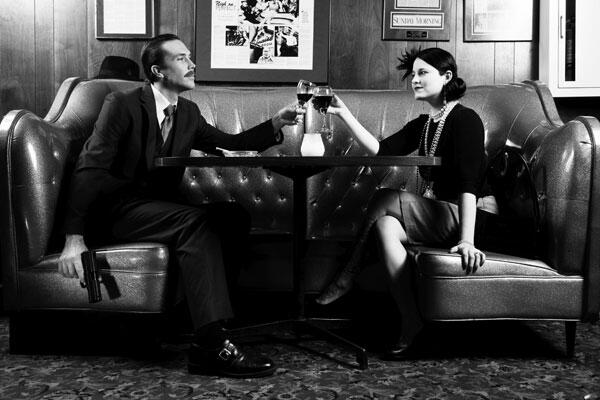
Critic’s blind date column has been running for a while now. We’ve all got some good laughs out of it, and at least a few people have scored themselves a night of romance. But here at Critic we feel that it’s time that we stepped it up a notch. The date is now at Little India to add a little more spice. But that’s not all; each week our blind daters will have an extra challenge to deal with, which they won’t be told about until they arrive for their date. If you want in on the action, email critic@critic.co.nz with your details. This week Critic gave the male blind dater three girls to choose from. However, he was blindfolded while he met each girl for 15mins, and then had to choose on who would be joining him for dinner at Little India: TomThere I was going about my daily routine of deciding the manner in which I would treat myself for the evening: would I elect for a ‘Towlie?’ (The first Google search result for “How to make your own fleshlight” – Seriously worth a watch) or would I light a couple of candles and go traditional? The world was my oyster. To disturb my evening plans there was a knock on my door and a rather cheeky looking Joe Stockman to ask me whether or not I could be at The Cook in 20min for a blind date. I chucked on my sexy man-panties and headed down. As I entered I saw a sight which stopped me in my tracks: There was Joe Stockman. My mind flicked to a steamy shower scene, just the two of us, though before I could ponder this scenario further he told me the nature of his visit. I was to be dating not just one, but three women tonight, and then choosing one in a “bachelor” sort of deal. The trouble was I had to cover my face with a bag so neither could see the other; did Joe think I was truly that ugly or did he have Islamic tendencies? The first Shela was a chirpy young girl; had great chats, though was apparently in some sort of pre-marital set up, so if I was to avoid Mrs. Palmer for the evening she was out. Next was a girl who claimed to be a 200-level accounting tutor, and as much as the thought of getting with a teacher got all my pistons firing, I had to move on to date three. Lucky last (more on the lucky part later) was a girl who claimed to have already drunk a bottle of wine. I had found my date. With my bag removed I realised I’d made a good choice (GoiiiGeN). We shared some lols over a butter chicken at Little Indian and (here’s the cute part) I was thinking how much I was enjoying our date. After watching “The Dictator”, which is Sacha Baron Cohen’s latest Rom-Com, she invited me back to hers (Here’s the less-than cute part). We kept drinking and throwing down some inebriated chats when she decided it was time to head up stairs. I obliged. Now any good gentleman knows not to kiss and tell… and though I am far from any definition that would be inclusive of the term “Gentleman” I’ll let you kids work it out . PenélopeAfter sculling half a bottle of wine and turning up to the cook, I had no idea what I had gotten myself into. My date was not only blind folded, he had a white cotton bag over his head and looked like a KKK member. This called for a tequila shots. I was last in line for the pleasure of getting to meet my eligible bachelor, but things definitely heated up quickly - I would have taken him for a science student with the amount of chemistry between us (LOL), but it turns out he was doing a BCom or something. Sexy. Just when I thought our connection couldn’t have been any stronger, he started talking about his love of cats, and I knew straight away we could bond over my pussy. My date finally revealed himself, and I was pleasantly surprised to find his only similarity to elephant man was in the trunk department (penis... get it...) He was a lot taller than me, which left me wondering how such physics would play out later in the evening... but I’ve done yoga before, so I knew I was up to the challenge. I thanked my opponents and off we went to Little India, accompanied by a soundtrack (mainly consisting of Matchbox 20’s “Time after Time”) that my flatmates thought it would be appropriate to blast while driving at 10km next to us. The restaurant was really nice, and the conversation flowed as freely as the wine. My date had some great chat, and while I don’t quite remember the specifics, I’m pretty sure I was having a good time. After dinner we drunkenly made our way to the movies, where we were slightly disappointed to not get back row seats to fondle in as requested. He paid for the movie, so it was only fair I that I take him back to mine to show him my appreciation. We continued to drink all the wine I could find in the pantry whilst discussing Finding Nemo with my flat mate – I love a man who knows his Pixar. We took the party upstairs, and again I’m pretty sure we enjoyed ourselves judging by the marks on my neck. I was a bit apprehensive about what was to come, as he’d told me he hadn’t had sex in a while (not my idea of traditional dirty talk) but he took control of the bedroom and removed all traces of doubt. The good news is we are now Facebook friends, so the natural next step is making it Facebook official... Cheers Critic!
-
Columns

Classic Film | Issue 13
Directors: John Carpenter, Matthijs van Heijningen Jr. A husky dog runs full tilt across an Antarctic plain. Two Norwegians take shots at it with a rifle from a helicopter. As the dog nears a small American research base, as the Norwegians become more desperate. They drop explosives, to no avail. That’s the opening scene of The Thing (1982) – henceforth referred to as “the old Thing”. It’s a great scene: attention-grabbing, intriguing and vaguely disturbing. Just what you want in a horror film. The rest of the movie lives up to the promise of its opening scenes. It takes a pretty good premise, which will remain undisclosed, and uses it to generate a string of clever and horrific plot developments. Classic stuff. If you haven’t seen it, you should. So why bother with a re-make? First, despite the identical title, The Thing (2011) is actually a prequel. This is good. They’re not trying to re-invent the wheel. It also means there’s some stuff we know will happen. I like that. It makes you feel clever noticing the stuff from the old Thing. It’s done pretty well, too. In terms of effective homage-ness, the new Thing is remarkably on the ball. But I’m getting ahead of myself. You probably have no idea what the movie is about. In brief: A bunch of Norwegians discover something remarkable buried in the Antarctic ice. Things go awry and horror ensues. Where the new Thing wins is its lead character and a few neat plot-twists. I found the female lead surprisingly sympathetic, though it may be because she played Ramona Flowers in the Scott Pilgrim movie. After the old Thing, you’d think the premise might be wearing thin. Not so. Though it falls short of the original’s ingenuity, the new Thing does manage to squeeze a few nice ideas from the same old premise. Where it falls down, however, are the classic horror pitfalls. Basically, they show a little too much. Just because you’ve got CGI doesn’t mean we need to be aware of it all the time. Plus the characters split up (face-palm). So, worth a look? Well, I enjoyed the new Thing. It wasn’t mind-blowing, but it certainly exceeded my (admittedly not very high) expectations. –Toby Newberry
-
Columns

Straight Up | Issue 13
If anyone has followed this column you will realise that it has been a rough time in my family of birth A family member has been very unwell, and I have become their primary carer. Throughout this time I have been thinking a lot about family, what it means to me – and what queer/trans folks have done to redecorate the concept of kinship. Alongside my family of birth, who live in Christchurch, I have queer kin of choice residing in many different countries. These are people who may have entered mine and my partner’s lives as friends, lovers, colleagues, acquaintances or co-conspirators - but now we have developed sustained and durable bonds that resemble family relations. Queer kin are my cousins, brothers, sisters, sister-brothers, mama’s and daddies. I have grandfolks, and aunties. My queer kin will make me an auncle (of furbabies or the furless kind). We might live together, holiday together, have children together, maybe even share accessories (you know I don’t share scarves with just anyone). When I am at the end of my life, I hope my Q Fam will be there with me, alongside my birth family. This is not unique to me and my Q Fam. Alternative models of kinship exist for many queer/trans folks. Sometimes they arise because of troubles within our birth families, from a lack of acceptance or understanding. Sometimes they are an act of survival – being together is the best way to navigate through a hostile world. For many of us these families aren’t a reaction to our families of birth, we develop queer families because they enrich our lives. Period. The thing I want to get across is – this is an active choice I have made: I am not interested in replicating the failed model of the precarious and isolated nuclear family. This model of creating a life doesn’t work for me, I want more. I guess queer kinship is something that cis-hetero’s could take from us queerbo’s – what possibilities for family relations exist outside of blood? Is it really your dream to emulate the kind of family relations you grew up with? Could you dream it otherwise? I guess in the end this column is a simple act of appreciation. Thank you to all of my family who have been here while times have been tough. – La Di Da
-
Columns

Swillable | Issue 13
This week I thought I’d review an interesting little cocktail that I came across via a Peruvian accquaintance of a friend’s sister. The Pisco Sour is the most popular way of consuming Pisco, a Peruvian spirit produced through the distillation of fermented grapes. Its conception was the result of Spanish settlers’ desire to no longer be reliant on the importation of spirits all the way from home, a piss-money-saving solution to which any home-brewing scarfie can relate. The result was an interesting and very tasty drink that has risen in popularity in its native land. The Pisco Sour is made by combining half a cup of Pisco with two tablespoons of egg white, four tablespoons of sugar, a dash of bitters and the juice of a lime. The ingredients are blended together and poured over crushed ice. The drink was invented by an American bartender in Lima during the 1920s. It quickly rose to prominence among the Peruvian upper class, and became popular over the following century. The result is a deceptively potent lime cocktail that looks like a cup full of semen. It took my friend a solid 10 – 15 min to convince me that he wasn’t fucking with me and I should give it try. It was actually pretty good. A nice smooth cocktail with that delicious limey after-taste. The ingredients do a great job of making the drink taste like it contains far less alcohol than it actually does, an essential quality of any great cocktail. The jizzy appearance and consistency also provided a great deal of banter amongst those partaking, adding to the fun factor. Despite my initial skepticism, due in no small part to the drink’s appearance and the inclusion of egg white, I actually really enjoyed the Pisco Sour. It was a refreshing addition to our “round the world” night of drinking, spicing up the usual selection of tequila shots, wine, beer and sake. The Pisco Sour takes a bit of effort to make and I haven’t investigated the logistics of obtaining more Pisco, but if you feel the urge to try something new I suggest you give it a go. Your boy, – Pillbo Swaggins
-
Columns
Scarfie Chronicles | Issue 13
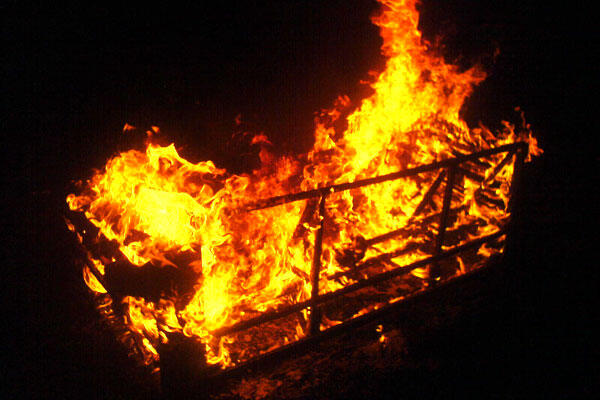
The past week has seen some pretty freaky business go down, and for once, we’re not talking sexually. Cumberland College has fallen prey to the Grey Lady, the ghost of an unfit mother, and the first years aren’t handling it so well. Some have tried to communicate with the spirit of Rowena Ravenclaw (oh, come on, we all know that’s what everyone’s first thought was) through séance. There have been no comprehensible verbal responses, but the group reported “strange noises” and “bumping” on the night they attempted the séance. One of the students’ neighbours was emphatic that the noises were paranormal in nature; she knew of no other reason she might hear the sound of a bed moving at night. The Grey Lady was apparently first spotted by two Health Scis at the college, who saw the ghost on their way back from studying. This should be enough of a clue that this entire story is bullshit. Health Scis? Cumby? Studying? This does not seem to have deterred the ODT from pilfering Critic’s reporting on the incident last week. The ODT then happily accepted newspapers around the country incorrectly attributing the story to them in a national media frenzy unseen since the likes of Possum. More superhuman than supernatural, and yet to hit licensed premises here in Dunedin, The Avengers cocktails have apparently been invented, allowing even the manliest man to enjoy his Midori and slice of kiwifruit safe in the knowledge that he just poured The Hulk down his throat. Actually, wait, no. Stick to the SoGos, bro. In non-ghost news, two boys down for graduation got more than they bargained for last weekend when they woke up wearing only their regalia on the Union Lawn. It is thought that the boys were being sorted out for a prank from last year that the victims had not had the ability to pay them back for until now. And lastly, some Otago students have decided that they can keep it scarfie and be good cunts at the same time. One of the boys has pulled his red card and forced the others “to go without something they truly cherish for 40 hours”. Each of the guys is going without something different, from clothing, to food, cellphone, or hygiene, and the sponsorship money they earn is going to the 40 hour famine to feed hungry kids in Mali and Niger. Check out http://www.famine.org.nz/g/thebrothershyde if you’d like to donate. – Josie Adams
-
Columns

Uncle Howie | Issue 13
Hi Howie, I need some more advice, this time about threesomes. Everybody jokes about them, but I actually think it’s something I would like to experience. So I was thinking about trying to arrange one for next Saturday. I’m sure there are plenty of guys in Dunedin who would be willing to help out, but I’m curious about what to expect. Is this something I should actually be considering? Three’s a crowd. Gyday mate Threesomes in general are far less erotic and exciting that you may imagine. Often one person is forgotten during the proceedings, left to pleasure themselves awkwardly on the side of the bed. The act of wanking to completion whilst watching two other people have sex is not the most dignified moment in anybody’s life. Many people leave threesomes with a feeling of confusion, wondering exactly who and what went down in the horrible sticky mess. If the right people are chosen for the job, it may be an eye-opening and thoroughly enjoyable experience. I would consider choosing two men who you don’t come into contact with much on a day-to-day basis, as you are probably never going to be able to look at them in the same way again. It can be difficult to resume normal friendly banter after you’ve seen the two brutes share a conspiratorial glance whilst penetrating you simultaneously. So, let’s say you’ve located two gentlemen to accompany you. Have some drinks. Lots of drinks. Arrange a location and give it a crack. Remember, threesomes often involve a lot of fluids being swapped around, so please encourage safe sex. It’s all fun and games until someone goes home with Chlamydia. Finally, I would recommend leaving a small reading lamp on during the festivities. There will be lots of hands clumsily rubbing and reaching at crevices. It’s best for all involved to be able to see whose/which crevice you are touching. Good luck buddy, don’t take it lightly as it may be more terrifying than arousing. Myself and the readers of Critic would love to hear how it goes, so feel free to write me back. Potential pen pal? Howie
-
Columns
How To: Cram for Exams
So we’re one week out from exams, and you haven’t been to class since before mid-semester break. You can’t even remember if your paper was about interpretations of classical art in the renaissance or the cell structure of archaebacteria. But fear not! With Critic’s guide to cramming for exams, you’ll be just knowledgeable enough to pass, without ever actually learning any of the information properly. Step One: Procrastinate. You’ve waited this long to get started, so why not wait a little bit longer? We all know that the greatest potential we possess is not let loose until the very last moment. We suggest that the real study should begin no earlier than 24 hours before the start of your exam. Step Two: Get Notes. Don’t worry about where you get them from – a friend, a lover, a flatmate, the Internet – just as long as they’re written by someone who got an A in the class. Your mission for the next 24 hours is to temporarily implant this information into your brain. You don’t get extra credit for remembering it after the exam; you just want this stuff to sit there for exactly as long as you need it. Get out that highlighter, and start compressing. Step Five: Stimulate. Caffeine is the stimulant of choice for most crammers. It’s easy, legal, and massive consumption to the point of poisoning yourself only really results in shaking and loose bowel movements. You have multiple options for your delivery method –V, coffee, No-Doz – and you’re pretty much guaranteed to be able to get some at any hour of the night. Of course there are other stimulants that you could choose to indulge in, but Critic isn’t allowed to tell you about them. Google it. Step Six: Sexy Breaks. A little bit of sexy time can be a great motivator for study, and since most scarfies only require a couple of minutes, it won’t take big chunks out of your study time. If you know that one hour of study equals two minutes of sexy time, you’re much more likely to stay motivated. If your study buddy isn’t down to be your fuck buddy too, you can always take matters into your own hands, so to speak. Step Seven: Cheat. Accept that you’re fucked. There is nothing that you can do about it now. Cheating is the only way out of your predicament. [DISCLAIMER: Critic in no way suggests or endorses cheating.]
-
Culture

Borderlands 2
Platform: PC, PS3, Xbox 360 Genre: Shooter, RPG Borderlands 2 ostensibly contains all the ingredients necessary for a game to be tremendous, addictive fun. It begs to be assessed on its prettiness. The first Borderlands had a tendency to litter its desert fields with identical, Jason-inspired rebreather masks and chitinous arachnids. Even then its aesthetic was fairly ageless: a cartoonish but gritty palette that made no attempt to be realistic. The second game is saturated with colourful organic and robotic foes that flail chaotically. Explosion and class-unique skill effects all look strikingly vibrant, even with months of development still to come. It was the piles of guns, mostly useless scrap metal that fell from the corpses of the fallen, which contributed most to the addictiveness of the first game. It wasn’t a new formula then (the obvious comparison is Diablo), and it doesn’t seem to be refined much in Borderlands 2. Other than a nice upgrade in aesthetic variety, loot mechanics have evaded consideration by developer Gearbox. This is odd – imagine never discussing the driving mechanics of a racing game – but it indicates where the real upgrades lie. Basic, monotonous shooting mechanics are the bane of any impure FPS. Borderlands 2 does everything it can to avoid that trap. Remember all the flailing limbs? It turns out they can be removed one-by-one, rendering the cretin utterly disabled. Mobility is imperative too. Enemies take advantage of tough environmental obstacles and swarm in groups. Certain mechs must be flanked to prevent your own fire from being deflected right back at you. The game attempts to marry a shooter with a grindy, loot-based RPG. The latter requires a handful of contrasting character classes, which Borderlands 2 aims to provide. A hefty gunzerker, with a plaster that binds together a nose that is perpetually shattered, can duel-wield any two in-game weapons. His clever ambidexterity complements the stealth of the assassin and the wound-management of the siren.
-
Culture
Sir Ian McKellen on Stage
We know all too well about the damage and devastation that has hit Christchurch over the last few years. Buildings remain dilapidated, and large sections of the city are still uninhabitable. Sir Ian McKellen, who’s been in and around New Zealand for the past decade filming the Lord of the Rings trilogy and The Hobbit, has found himself back in Christchurch with a hard hat on. After performing in the Isaac Theatre Royal in Beckett’s Waiting for Godot, Sir Ian’s love for this theatre has grown. Going back there now is heartbreaking, with the roof in tatters and rubble strewn throughout the 104-year-old theatre. McKellen has taken it upon himself to restore the theatre as soon as possible, using his own name and skills in the best way he can – theatre. In May and June McKellen will undertake a tour of New Zealand, including main cities and small towns. The show will be exciting and fun. It will be set out more like a meet-and-greet than a classic theatre show. The audience will be taken on a journey through the great man’s life as he recalls stories and recites passages from his favourite works. Fans of McKellen should hold onto their hats for the next part – throughout the show, audience members are encouraged to ask questions about his life. He will be an open book! Whether you’re interested to hear about how cool it was working with Peter Jackson or more about McKellen’s personal life, all will be revealed in this audience-led piece. We, the audience, can guide the performance in any which way we want and may even have the opportunity of acting on stage with him. For any theatre nerds out there, that has got to get your juices flowing. Sir Ian McKellen. Just hanging out. In a theatre. And you can ask him ANYTHING. I’m just gonna let that sink in for a while… Sir Ian is managing to fit his whole tour around filming The Hobbit during the week, with shows happening on Saturday nights or Sunday afternoons. All proceeds go towards the restoration of the Isaac Theatre Royal. Venues are even offering up free hire so that all the money can be given to Christchurch instead. It’s a fantastic effort all round to keep this kind of fundraising work going after such a long time, and must have taken a lot of hard work and dedication from a lot of people. Kudos! Although the tour is not gracing our fine city, surely McKellan can be forgiven. He’s Gandalf, for God’s sake! The closest shows will be in Christchurch and Wanaka. Check it out, this can’t be missed! How many times do you get to hang out and chat with Magneto? Yeah, exactly.
-
Culture
Honey, how you thrill me
Gallery De Novo, 101 Stuart Street 18 May onwards Odd curlicues, elongated vines, mysterious coiling shapes emerging out of the darkness, splatters and drips and all sorts of misted forms presented through a matte and muted colour palette… Ben Webb's exhibition is a peculiar combination of beautiful and creepy. I can't decide which feeling dominates, but there's something powerfully compelling about these portraits of what I call “nature-but-not”. What I mean is that, sure, Webb's artworks depict various plants and flowers and so on, but there’s much more than that going on here (isn't there always? "Overanalyser" should be every art writer's middle name). Webb's process of layering various textures and mediums over a base picture, generally a photograph, creates both a literal depth and an intellectual depth that leaves ample room for subjective interpretations of his work – a Rorschach inkblot painting, if you will. I asked a friend to make sense of what was ostensibly a portrait of an unusual rose-coloured flower. She took one look at it and pronounced it to be "vaguely sexual". Not having a clue what she was banging (pun fully intended) on about, I remembered that said friend generally finds everything to be vaguely or explicitly sexual. But in all honesty it just looked like a flower, not a Georgia O'Keeffe rip-off. Despite the ability of Webb’s artworks to inspire such differing responses, a sense of nostalgia unites the works. This is perhaps inspired by their vintage, old-timey appearance, which is shockingly created without the aid of Instagram! Scratched surfaces, interesting marks and paper creases infuse Webb's works with history, memory, and posterity. This look is common to all Webb’s artworks, not just the "Wild Honey" collection. It appears even more profoundly in his earlier portraits of people, which distort faces and limbs in a strange yet fascinating manner. As a self-taught artist, Webb's style is highly distinctive, and has been lauded by international art critics and writers. Webb is the youngest New Zealand artist to exhibit in a public art gallery overseas. He has perfected his craft over the last fifteen years, gaining national and international renown through exhibitions in different areas of New Zealand, Australia and Germany. In more recent years he has taken an interest in New Zealand fashion, and collaborated with designer brands such as Nom D and Carlson. His most recent collaboration featured Elza and Nellie Jenkins, Dunedin's very own Next Top Models. While I find "Wild Honey" to be less emotionally provocative than Webb’s earlier portraits of people and figures, Webb's unmatched skill and eye for colour and detail are present in all his works. The gritty build-up of ink and watercolour on paper creates an aesthetic mess that reassures the viewer that nothing's perfect, and messiness is okay. Sometimes it’s even preferable.
-
Culture
A Clockwork Orange
The first thing you need to know about Anthony Burgess’ A Clockwork Orange is something that no-one ever told me: it’s amazing how much slang there is in the novel. Before I read it, all I knew was that it was a well-known book that had been adapted into a cult classic film with an epically named anti-hero. The Anglo-Russian slang, or Nadslat, that the narrator Alex uses is unlike any slang I’ve ever heard. Some terms make sense, but most are just plain bizarre! I like to think that I don’t use slang to the same extent as the teenage characters in A Clockwork Orange, but even moving from Wellington to Dunedin showcases the diversity of slang within New Zealand. One can only imagine the struggle people from different countries or age groups must have. Fortunately, most of the slang words in A Clockwork Orange are repeated, and make sense in context. The book is actually surprisingly easy to read once you get used to the Russian argot. The plot is simple enough to follow, and all the violence seems less extreme when you don’t know what “tolchock” means. The story follows the life of Alex, a fifteen-year-old delinquent living in a dystopian future England. He is the leader of a group of “droogs” who roam around committing unjustified acts of “ultra-violence” for amusement. The first part of the book covers two or three days in Alex’s life where he is involved in multiple beatings and rapes. The scenes are brutal. The reader learns that Alex is very intelligent and a lover of classical music. However, these qualities only confirm his sociopathic nature. Alex’s crime spree ends with his arrest. The second part of the book covers Alex’s time in prison and his torture via “Ludovico’s Technique”. He suffers horribly, and the reader begins to sympathise with him. Alex attempts to escape prison by putting his name forward for a new method of “rehabilitation”. At this point the dystopian nature of the novel becomes totally apparent. Alex’s world takes on the shape of a society that is only a slight exaggeration of our own. The reader can only hope that the methods of psychological torture Alex experiences are no longer used. Brainwashing is a common feature of dystopian novels, but what Alex is subjected to is extreme: forceful suggestion to encourage mental association. Scary stuff! The third part of the book is the most troubling. Alex commits terrible acts in Part One. He experiences horrific things in Part Two. But the effects of the brainwashing, and what it means for the world in which Alex lives, make Part Three the most frightening. You feel sorry for Alex when he is unable to defend himself, even when he welcomes the pain of a beating. It is disturbing that the government views Alex’s torture as a “success” and proof that “Ludovico’s Technique” is a viable and efficient way to manage the criminal population. The consequences are unthinkable: hundreds of thousands of criminals would feel physically sick every time they contemplate violence, never fully escaping the terror of a police state. Unfortunately for Alex, but fortunately for the rest of his society, events transpire which bring public attention to his fate, inciting general outrage. This brings an end to “Ludovico’s Technique” as a method of punishment, and of controlling Alex’s brain, and he is restored to his former self. The final chapter of A Clockwork Orange is omitted from the original American version of the book, and also from the movie. I won’t spoil it for any potential readers, but I do recommend that you watch the movie after reading the book, and decide for yourself which ending is better. – Alex Stevenson
-
Culture
Midgets, Rap Music & Meth
Some cities are synonymous with a musical movement. Seattle and grunge are as inseparable as Cobain and angst. Country music would hardly exist without Nashville, or at least it would be a hell of a lot less profitable. And some would argue that rap music came ‘straight outta Compton’ (see what I did there?). Even our tartan-spangled township of 120,000 spawned a school of musicians that would become some of the most influential independent artists of the ‘70s. Fast-forward 40-odd years, and the “Dunedin Sound” is as strong as ever. While there has been a shift away from the grungy ethos of their forefathers, Dunedin’s premier musicians still have a certain je ne sais quoi that makes them stand out from the rest of New Zealand and the world’s musical talent. It has been far too long since a list of Dunedin Sound purveyors has been published. Critic is proud to present our round-up of the top Dunedin artists of 2012. Opposite SexMembers: Lucy Hunter (Bass & Vocals), Fergus Taylor (Guitar), Tim Player (Drums & Vocals). Years active: Two years. Key releases: Self-titled debut LP released on Fishrider Records. Achievements: Having Marc Riley play us on BBC6. Having Stephen Pastel write us fan mail. Self-description: “Noisy, pop-length songs… An unapologetic band.” On the horizon: Playing at venues all over the country in July, finishing new album. Favourite albums of 2012 thus far? The Doyleys, Shifting Sounds, Toy Love Live At The Gluepot. Three things you absolutely couldn't live without? Oxygen, water, food. Who would win in a fight between Samuel L. Jackson and Optimus Prime? I'm not sure. Maybe it'd be a stalemate… Lightning BellsMembers: Christy (Vocals & Keys), Emily (Vocals, Cello & Keys), Nick (Guitar), Phil (Bass & Guitar), Luke (Trumpet) and Sarah (Drums). Years active: One year. Key releases: Self-titled debut EP released on Kingsford Road Records. Achievements: Getting the video for our first single "Pockets Full Of Gold" played on C4, sttarting our own record label, and getting our first official noise control warning. Self-description: "Gravel pop." On the horizon: Gigs in Auckland, recording new material… Favourite albums of 2012 so far? Bruce Springsteen – Wrecking Ball, Leonard Cohen – Old Ideas, Jack White – Blunderbuss. Three things you absolutely couldn't live without? Our mates that never fail to turn up to our gigs, the sound proofing in the basement where we practice, and the old family piano. Would you rather get in a fistfight with Neil Young, or a rap battle with John Lennon? Definitely a rap battle with John Lennon. Black Boy PeachesMembers: Tom Mepham (Drums & Backing Vocals), Hamish Mepham (Vocals & Guitar). Years active: Three years. Key releases: Slasher EP (2009), Company Feel Good LP (2010), new single “Apocalypse Sun” released this month. Achievements: Headlining the Regent Theatre and playing to a crowd of over 600… Touring around NZ. Self-description: "Foo Fighters meet Muse meet The Killers. Cranked guitars, big drums, big synths…Catchy anthemic rock songs." On the horizon: Touring later in the year, recording new material, organizing nationwide tour for December. Favourite albums of 2012 so far? Ed Sheeran – +, Foster The People – Torches, Foo Fighters –Wasting Light. (Editor's note: none of these albums were released in 2012…) Three things you absolutely couldn't live without? Hamish: My wife, my fender telecaster, hope. If you could make a phone call to your 10-year-old self, what would you tell them and why?Tom: When you're about to stop music practice, just go for 5 minutes longer. Swaren "Dhalsim" VeygalMembers: Swaren Veygal is a one-man musical force... Years active: Six years. Key Releases: The Amalgamation EP (2012). Achievements: OUSA 'Future DJ' winner in 2010. Shapeshifter National Remix Competition winner in 2011. Opening for a plethora of international superstars. Self-description: "Somewhere between Breaks, Electro, Glitch, Garage and Hip Hop." On the horizon: Releasing of a collection of Six60 remixes, recording second EP, summer. Favourite albums of 2012 so far? Jessie Ware – Running EP, KOAN Sound – Funk Blaster EP. 3 things you absolutely couldn't live without? Music collection, Tim Tams, Nutella. Would you do crack with Nicholas Cage? Obviously if he was buying... Ink MathematicsMembers: Benjamin Cochrane (Saxophone), Matthew Collins (Bass), Dan Hoffman (Guitar), Matthew Hoffman (Vocals), Paul McMillan (Drums & Vocals). Years active: Three years. Key releases: Boredom, You Conqueror EP (2011). Achievements: Playing at Feastock, and Circle Jerk. Touring with Cult Disney. Self-description: "A frightening collage of The Melvins, the cleansing self-hatred of Tom Waits, and Nick Cave. Basically, Beer Rock." On the horizon: Currently working on new EP. Favourite albums of 2012 so far? Alizarin Lizard – The Weekend Went Without You, Left Or Right – Buzzy, Osmium – The Misery Harvest. Three things you absolutely couldn't live without? Warm socks, Modaks chippies, Facebook likes, 27 bucks (Editor's note: we realize this is 4 items but we made an exception as having '27 bucks' is a basic human necessity…). Who’s your favourite Avenger? Definitely Ant-Man… He’s a great team player, can carry eight times his weight. And he shrinks down to the size of an ant. Useful stuff unless your foe is a colony of ants. Left or RightMembers: Seedy Marshall (Bass & Vocals), Callum Hampton (Guitar, Trumpet & Vocals), Metua Marama (Drums, Percussion & Vocals). Years active: Six years. Key releases: Nuggety (2009), Buzzy (2012). Achievements: 10 National Tours, releasing two albums on Vinyl. Self-description: "A buzzy mash-up of genres resulting in a musical journey and mind fuck." On the horizon: Currently on Buzzy NZ Album release tour. Dunedin release party at Sammy's on the 2nd of June… then touring Australia later this year. Favourite albums of 2012 so far? Alizarin Lizard – The Weekend Went Without You. Osmium – The Misery Harvest. Three things you absolutely couldn't live without? Beer, Maccas, Shortys. Would you rather travel to the moon, or have an all-expenses-paid trip to the Bahamas? All expenses paid trip to the Bahamas… as long as Jaws is long extinct. Simple ThievesMembers: Ross Stewart (Lead Vocals & Guitar), Shaun Coombe (Bass & Vocals), Connor Williams (Lead Guitar & Vocals), Dave Carter (Drums). Years active: Two years. Key Releases: Half a Step Up EP (2012). Achievements: Getting on TV3 for playing at Hyde St, finishing EP. Self-description: "A blend of jazz, hard rock, alternative and folk… Modern Rock n’ Roll." On the horizon:Recording new material, playing at ReFuel on June 13th… Favorite albums of 2012 so far? Jack White – Blunderbuss, Foxy Shazam – The Church of Rock and Roll, The Shins – Port of Morrow. Three things you absolutely couldn't live without? Peace, love, mung beans. Who would you rather strangle to death: a terminally-ill baby, or an extremely healthy 80-year-old? Is both an option? Alizarin LizardMembers: Paul Cathro (Guitar & Vocals), Chris Bugs Miller (Bass), Ben Sergeant (Drums), The H Bomb (Keys). Years active: Three years. Key releases: The Weekend Went Without You LP (2012), Oh, Colour EP (2011). Achievements: Completing two massive tours of NZ, getting funding from NZ on Air, having an onstage 3-way jam with An Emerald City and The Checks. Self-description: "Like a Monkey being baptised in a lake of banana, cookies and cream real fruit ice cream…” On the horizon: Playing at Left or Right's Buzzy album release show at Sammy's on 2nd of June. Writing and recording new material in the next few months. Favourite albums of 2012 so far? Tono and the Finance Company – Up Here For Dancing, Beach Pigs – Beach Pigs, Left or Right – Buzzy Three things you absolutely couldn't live without? Midgets, rap music and meth. Would you rather have dinner with Joseph Kony or Barack Obama? Obama, 'cos he knows Jay-Z, who knows Beyonce, who knows Austin Powers, who knows Garth from Wayne's World. Cult DisneyMembers: Olivia "O!Lala" Canny (Vocals & Synth), Kaine "Dadrock" Harington (Drums), Jamie "Nirgali" Macdonald (Bass). Years active: Three years. Key releases: Post-Industrial Dance Music of the Late 1980s debut EP. Achievements: Playing two Feastocks, recording and releasing our EP, writing and recording with Dr. Glam, recording with The Verlaines, touring. Self-description: "Violent grooves with soaring vocals." On the horizon: Intensive writing for new album. Favourite albums of 2012 so far? Maps & Atlases – Beware and Be Grateful, Tono and the Finance Company – Up Here For Dancing, Death Grips – The Money Store. Three things you absolutely couldn't live without? Antibiotics, Mums, and Dads. Who would win in a fight between Samuel L. Jackson and Jesus? It’s hard to fight your imagination (Editor's note: we take this to mean that Mr. Jackson would reign supreme). – By Lukas Clark-Memler
-
Culture
Chinese Takeaway
Chinese Takeaway opens with a Chinese man preparing to propose to his lover on a boat. This proposal is cut short when a cow falls from the sky and kills her. After seeing Jun (Huang Sheng Huang) thrown out of a taxi while watching aeroplanes, hardware shop owner Roberto (Ricardo Darin) reluctantly acknowledges that he should help the guy out. He tries and gives up. The weather intervenes, and Roberto tries to help out again. Conscience [HUH??]. Though the two do not share a common language, they get on with trying to find Jun’s uncle via an outdated address tattooed to Jun’s arm. Roberto leads a boring life: counting packs of 350 screws, trawling piles of newspapers for absurd tales of death, and turning off his light at exactly 11pm each night. The arrival of Jun doesn’t actually interfere too much with these daily routines, although it does spice up the rest of his mundane life. Jun gets Roberto head banging with a police officer and exploring the city. He also clears up the mess in Roberto’s house, which symbolises the two men’s confused interaction. A Chinese takeaway delivery boy, the inspiration behind the title of the film, helps to clear up some of this mess by playing translator. Roberto asserts that “life doesn’t have meaning” and justifies this bleak outlook with the newspaper stories that he has collected over time. One of the examples he gives involves thieves stealing cows by loading them into an aeroplane. Though the farmers do not catch them, they do manage to shoot holes into the aeroplane’s ramp which then drops and provides an exit for the cows. At this point the relevance of the film’s opening scenes is revealed. Jun disagrees with Roberto, arguing that everything in life has meaning. – Sam Allen
-
Culture
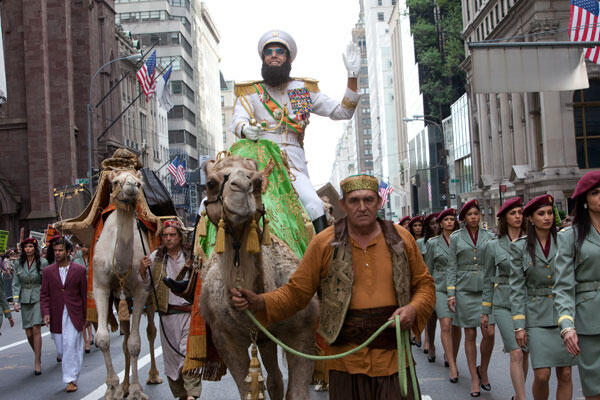
The Dictator
This is Cohen’s third appearance as the lead in a film after the hit Borat and the less successful Bruno. The movie is closer in style to Borat than Bruno, although unlike Borat the movie is fully scripted. The movie follows North African dictator Admiral General Aladeen, ruler of the state of Wadiya. Aladeen has been in power since he was 7 years old. He hates the West and Jews, and hands out executions like candy. Aladeen travels to the US to explain the United Nations that rather than developing nuclear weapons, he is using Wadiya’s nuclear programme to provide household electricity. He gets kidnapped and his beard is shaved off, making him unrecognisable to his own people. Meanwhile, his uncle Tamir attempts to use Aladeen’s body double to sign a democracy agreement that would open up the Wadiyan oil market to international investors. As Aladeen tries to get back to his hotel to prevent the democratisation of his country, the rudest laugh-out-loud jokes begin. Cohen combines his satirical observations with gross comedy and leaves no group untouched. His targets include homosexuals, feminists, Bin Laden, Hollywood stars and most ethnicities. Don’t get me wrong, some jokes did fall short but overall the movie was genuinely hilarious. If you don’t like toilet humour or didn’t enjoy Borat then you probably won’t enjoy this film. On the other hand, if Baron Cohen’s style of comedy is your cup of tea then I highly recommend The Dictator.
-
Culture
The Grey
In The Grey, Liam Neeson stars as yet another unlikely hero – the leader of a group of “blocky” working men who are trying to survive after their plane crashes in the middle of the icy Alaskan wilderness. If you have a fear of flying I suggest you sit this one out. The opening scenes leave little to the imagination. The film follows the group as they struggle to survive the bitter conditions and a pack of carnivorous wolves. The result is an unforgettable Man vs. Nature film that will have you on the edge of your seat. Scene after scene of unrelenting tension shows the main characters struggling to survive the harsh conditions. The viewer leaves feeling taxed and traumatised, but in a good way – the suspense is what makes the movie! I couldn’t help but notice that several scenes could easily have been pulled straight out of the movie Alive, with the notable absence of cannibalism. If you liked that one, you will enjoy The Grey. The film’s cinematography is exquisite which makes it a stunning watch, but the philosophical undercurrents are a bit oddly placed. Its haunting events and depictions are hard to shake long after the film has finished. If you are weak of stomach, you might want to go with someone who will cover your eyes. The anti-climatic ending seems like a let-down at first glance, but after the credits a bonus scene appears which clears up the viewer’s burning questions. All in all, a gripping watch! – Taryn Dryfhout
-
Culture

Dark Shadows
I remember when Tim Burton brought out the new Alice in Wonderland film a few years ago – the pre-watch excitement, then the gradual slide into mediocrity which climaxed with the final, excruciatingly lame dance sequence. My expectations for Burton’s latest adventure, Dark Shadows, were low. Dark Shadows is based on a gothic soap opera which aired in the late 1960s. The story follows Barnabas Collins (Johnny Depp), who was turned into a vampire then buried in the ground in the 1770s by a jealous witch. In 1972, almost 200 years later, Barnabas is dug up again by construction workers. He returns to his estate, which was once a centre of power but over time has become neglected, now housing the few remaining Collins family members. After a suspicious reception from the 1970s Collins family, Barnabas convinces Elizabeth Collins (Michelle Pfeiffer) to join with him in restoring the Collins line to its former greatness. But Barnabas soon discovers that Angelique (Eva Green), the witch who cursed him, is still around and more powerful and desperate for sex than ever. Dark Shadows also features teen It-girl Chloe Grace Moretz as a moody teenager with her own secrets, Bella Heathcote as the charming governess who catches Barnabas’ eyes, and Helen Bonham Carter as a doctor with alcohol issues. While the visual world of Dark Shadows is enchanting, the film remains one-dimensional. The rushed-through plot feels like it was filmed on autopilot. Perhaps I was waiting for that Edward Scissorhands edge that first drew me to Burton’s films? My fingers/scissors are crossed for next time. – Loulou Callister-Baker
-
Culture

Gnocchi Al Nonno
Although relatively labour intensive, homemade potato gnocchi is incredibly cheap, very rewarding and shows that with a little time you can easily make restaurant quality meals on a student budget. “Al nonno” means served in a classic Italian tomato sauce “just like grandpa used to make.” It is slightly spicy and deliciously creamy. The gnocchi recipe is adapted from Alexandra Tylee’s beautiful new cookbook from the Havelock North restaurant Pipi, which serves some of the best gnocchi in the country. Ingredients:For the gnocchi: 1 kg potatoes 1 ¾ cups of flour Pinch of salt 1 egg, lightly beaten ½ tbs olive oil for pan-frying For the sauce: ½ tbs vegetable oil 1 onion, peeled and diced 2 cloves of garlic, peeled and crushed ½ tsp chilli (or to taste) 1 tsp dried mixed herbs 500g bacon, cut into strips 2 cans crushed tomatoes ¼ cup vodka (the alcohol will cook off but it brings out flavours in the tomatoes that would not otherwise be released) A good squirt of tomato sauce 1 cup of cream Salt and pepper to taste Grated cheese Method01 | Boil the potatoes until tender, drain then mash until there are virtually no lumps (you can use a food processor for this if you like). 02 | When the mashed potato has cooled, tip it out onto a clean, lightly floured surface and knead in the flour and the salt. 03 | When combined, make a well in the middle of the dough and pour in the egg. Knead until forms a light sticky dough, but try not to overwork it. 04 | Cut the dough in half and roll each half into a tubular shape about 2cm high and 3 cm wide. Cut the tube into pieces of about 2cm and place on a tray ready for cooking. 05 | Bring a large pot of water to the boil. When the water is gently boiling drop in the gnocchi, about a dozen at a time. When they are ready (this will happen very quickly) they will float to the surface. Take them out immediately with a slotted spoon. Once cooked they can be refrigerated overnight or frozen for a later date. 06 | Now make your sauce: add the oil to a large pan and brown the onions and garlic with the chilli and herbs for approximately 5 minutes. 07 | Add the bacon and cook until evenly browned. 08 | Add the tomatoes, vodka and tomato sauce and stir well. Bring to the boil and leave to simmer for about 10 minutes before adding the cream and simmering for a few more minutes. 09 | Season with salt and pepper and set aside. 10 | Add the olive oil to a clean pan and lightly fry the gnocchi in batches until lightly coloured. 11 | Distribute the gnocchi between 6 plates. Add a good ladle of the sauce, a sprinkling of cheese and pour yourself a glass of wine for your efforts! – Maeve Jones
-
Columns
Dharma Diaries | Issue 13
Dear Friends, This is my first article for Critic, and I want to address an issue that creates a great deal of stress for many students – examinations! Examinations are a fact of student life, but how can we do our best if we are nervous and stressed? Buddhism offers clear guidelines for reducing stress in daily life and for keeping our minds and bodies in a healthy state, and I want to review them here. There are many reasons we become stressed or respond to the challenges of everyday living in a stressful way. How can we reduce stress or turn a situation that we find stressful to our advantage? The key is how we think and act. As the Buddha’s teachings, known as Dhamma, point out: “By effort and heedfulness, discipline and self-mastery, let the wise one make for himself an island which no flood can overwhelm.” Practicing being energetic, being diligent, being disciplined, and relaxing the mind are virtues that will make a difference. Examinations require energy and enthusiasm. This means being properly rested, getting out of bed in good time to work on assignments, and eating nutritious food. Examinations require us to be diligent and disciplined. List and prioritise your tasks, and ensure you complete one activity before going on to the next. Try to avoid chatting to friends, watching TV or going out until you have completed the task you have set yourself. Sitting for long hours in the library or staring at a computer is unlikely to help. Cramming at the same time as eating your meals is unlikely to help either. Engage in one activity at a time, and try to breathe and relax the mind between finishing one task and starting another. A few minutes’ quiet contemplation at the beginning and end of each day will help still the day’s “chatter” and calm your thinking. Finally, stop worrying about exams before you have even taken them. Exams are only one small part of the longer examination we face in our lives. As the Buddha said: “Don’t get caught in the past, because the past is gone. Don’t get upset about the future, because the future is not yet here. There is only one moment for you to be alive, and that is the present moment. Go back to the present moment and live this moment deeply, and you’ll be free and more relaxed.” Try it! With metta (loving kindness), – Ven Dr. Maithree maithreem@yahoo.com


