
-
Columns

Editorial | Issue 12
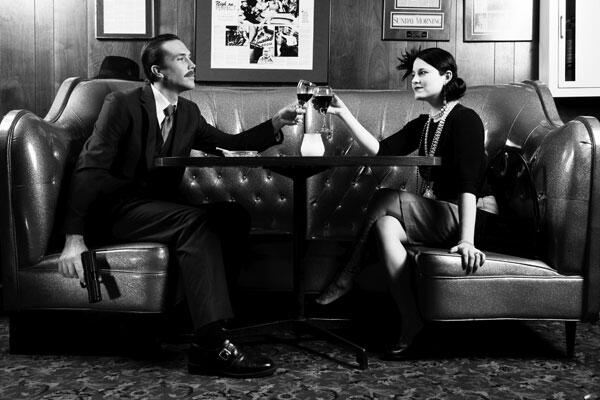
As you can (maybe) tell from the photo, I finally graduated on Saturday. It was a long and at times hard road, and it is pretty satisfying to be done. And while the actual graduation ceremony can drag a bit, the expensive alcohol and gourmet food afterwards made it all worthwhile. Graduating usually marks the end of your time here at Otago. It is unusual for a graduate to either want or be able to stay in Dunedin. I have been lucky to have the chance to cap my time here with the a year at the helm of Critic, but chances are that this time next year I’ll be in greener, more northerly pastures. Though after watching Target last Tuesday, I fear I may have missed my calling to enter the fascinating world of carpet cleaning. I never get to masturbate in the office. Which is a shame really. Dunedin has collapsed in the last ten years, from a legitimate city with serious industry, to a provincial town that is ridiculously lucky to have a massive University. Without the Uni, Dunedin would be lucky to be much more than Invercargill. The City Council and the University are trying to get more graduates to stay in Dunedin, but it is fighting a losing battle. The pull for young qualified graduates to at least move to Wellington or Auckland, if not Melbourne, London, or increasingly Berlin, is all too often overwhelming. So I think we should look on the bright side of this so-called “Brain Drain”. A substantial proportion of these young Kiwis return to NZ after their overseas experience, often because they view it as the best place to bring up their own children. They come back with more experience, more skills, and a wider understanding of the world. This is pool of talented, experienced workers is a huge asset to New Zealand, and one we should be thankful for. This issue of Critic is loosely themed as the music issue. Our young (and not so young) musicians are some of those that see the amazing opportunities available overseas, and quickly take off to greener pastures. Critic Music Editor Lauren Wootton has written a great article this week on the challenges of breaking into the New Zealand music scene. In our other feature, Zane Pocock has written an article on the important cultural role of alternative radio in a vibrant and healthy society. And though you’re probably not thinking about it yet (a few pesky assignments and exams to get out of the way I would imagine) the Re-Orientation line up just got announced: Ladyhawke is heading down to play her new album, and with support from Kora and Left or Right, it should be a great week. - Joe Stockman
-
News

Cumberland College Terrorised by Ghost
Cumberland residents have been sleeping with the lights on and sharing rooms after multiple sightings of a ghost known as the “Grey Lady”. At 1am on Tuesday May 8 two female Cumberland students encountered the ghost as they made their way to a laundry on the college’s first floor. According to a resident, the students “smelled something weird and turned around, and saw this massive figure in the middle of the hallway. It was dark, and glowing at the bottom.” There have reportedly been “multiple sightings” of the ghost, including by “the kitchen staff and at least one RA”. The story of the ghost of the Grey Lady derives from a tragedy rumoured to have taken place at Hayward College in its previous role as a maternity hospital. According to local legend, a young mother died at the hospital soon after her baby was taken from her due to her being deemed an unfit mother. The woman’s ghost contined to haunt the nurse who removed the baby, who lived next door at Cumberland, which was then a residence for nurses. In an attempt to restore calm among residents amidst the “hysteria”, Cumberland College called in some outside talent. On the morning of Thursday May 10, University Chaplain Reverend Greg Hughson and a local kaumātua visited the College to lead a prayer and bless both the area and freshers of Cumberland, in order to “reaffirm the presence of God” in the College. Speaking to Critic, Hughson stressed that this was not, repeat not, an exorcism. Pranksters have been taking advantage of the climate of fear by “fucking with people, rattling doorknobs and stuff, trying to freak people out. It’s working pretty well” said a Cumberland resident. Another resident Critic spoke to was too scared to sleep alone after the ghost sightings, and sent a text message to her friend saying how “freaked out” she was. She did not want to be identified by name, presumably fearing retaliation from the Grey Lady. This is reportedly the third time Reverend Hughson has dealt with ghosts during his time as Chaplain. Reverend Hughson requested that the issue be treated sensitively rather than sensationalised, and although this reporter fully intended to utilise the phrases “utterly petrified”, “sheer terror”, and “it’s only a matter of time before the ghost possesses a resident”, Critic Editor Joe Stockman cut out all the best adjectives due to concern over Critic’s legal liability for trauma counselling bills.
-
News

Second bestest thing to ever happen to Dunedin!
A proposal for a 28-storey five-star hotel on Dunedin’s waterfront was revealed at an event in the Forsyth Barr Stadium on May 11. The developers of the $100 million venture have remained unidentified, with Steve Rodgers of Rodgers Law acting on their behalf to announce the hotel. Dunedin Mayor Dave Cull and Tourism Dunedin chief executive Hamish Saxton joined Mr Rodgers in fronting the announcement. The hotel is expected to be completed by 2015 and will be situated on Wharf Street, at the Dunedin waterfront. The organizers of the project are currently in the process of applying for resource consent from the Dunedin City Council (DCC). Curiosity has risen over the unidentified developer of the hotel and the developer’s ability to finance the enterprise. According to the National Business Review, the land for the proposed construction is owned by Arthur Barnett Properties. However, it is possible that this information is out of date, or Arthur Barnett Properties holds title to the land on another company’s behalf. Tim Barnett, who is associated with Arthur Barnett Properties, has filed for consent to develop a number of sites within the vicinity of Wharf St, including a 3105sq m office block. Successful South Island based businessmen Sir Eion Edgar and Sir Michael Hill have lent their support for the hotel, with Sir Edgar saying “this announcement is one of the most exciting bits of news I’ve heard for the future of Dunedin and Otago. This $100 million development will be best thing that has ever happened to Dunedin after the building of the Forsyth Barr Stadium.” In the wake of the Stadium’s construction leaving the DCC responsible for $26 million worth of debt, the hotel has been quick to attract criticism. “I think it’s just a ploy to keep our minds off the other issues,” a Dunedin property developer told Critic. The DCC’s financial deficit means that the project will have to rely on funding from outside of Dunedin. The announcement of the proposal to build the hotel was followed by a video, complete with sweeping helicopter shots of Dunedin and an artist’s impressions of the high-rise luxury accommodation. The video claimed that the hotel would put Dunedin on the map as a five-star destination and widen the tourism market to a different level of clientele. It also suggested that the facilities would be used for other functions, such as graduations, and to complement events at Forsyth Barr Stadium. Hotel beds would be increased in Dunedin by 20% and the building would include residential apartments and a penthouse suite, allowing hit bands such as Coldplay to enjoy the 5-star trappings of a jet-setting lifestyle if only the Dunedin airport runway were long enough.
-
News

Turangi tragedy claims three lives
A car crash near Turangi on Saturday May 12 resulted in the deaths of three Boston University students. The students who were studying on exchange at Auckland University, were on SH46 on their way to walk the Tongariro Crossing when the crash occurred. Daniela Rosanna Lekhno, Roch Jauberty, and Austin Brashears were killed and a 21-year-old woman remains in a critical condition after six hours of surgery at Waikato Hospital. Two other women remain in Rotorua Hospital in a stable condition. It is unclear exactly what caused the crash but police said early indications were that the vehicle drifted into gravel then over-corrected, causing it to roll and throw several of the students from the van. The tragedy has affected both the New Zealand international student community and Boston University, where a candlelight vigil was held the Sunday after the accident. The families of the students have flown to New Zealand. A student who was also part of the Tongariro trip, which involved a number of international students, told media, “It hurts a lot. Last night we all dragged our mattresses into the common room and slept in the same place just to show solidarity. We are just talking about it and trying to be very open.” While Boston University is not one of Otago University’s exchange partners, Otago does share an exchange program with Boston College. The International Student Office at Otago has offered support and help to the Auckland campus and condolences have been sent to Boston University. A student from Boston who is currently studying at Otago told Critic, “It is a tragedy to hear what has happened. I do not think it will stop people from studying in New Zealand in the future because it could happen anywhere. Also it is a wake up call because I have a car here and drive a lot.”
-
News

Dunedin lacks length
The financial affairs of Forsyth Barr Stadium received a further blow last week, with news that shortcomings at Dunedin International Airport may be hindering the economic benefits originally promised by the stadium. The Otago Daily Times reported last week that British band Coldplay considered playing in Dunedin as part of its Mylo Xyloto tour in November this year. The show would have been the most profitable and high-profile event hosted by the stadium since Elton John’s concert in November 2011. Coldplay reportedly pulled out of a southern detour when it was realised that the band’s wide-bodied jet would be unable to take off from Dunedin International Airport. The plane, which is used to transport Coldplay’s lighting rigs, is a Boeing 747, which are unable to fly fully laden from Dunedin’s sole 1,900-metre runway. Dunedin Venues Management Ltd (DVML) chief executive David Davies told the ODT he had been “actively involved” with Coldplay’s promoter over bringing the show to the city. A representative of Coldplay’s Australasian promoter Chugg Entertainment later denied such a discussion had taken place. Davies then declined to comment further, claiming he did not want to put “that relationship [between DVML and Chugg Entertainment]” at risk. Though Critic wonders how you damage a relationship that doesn’t exist. At a Dunedin City Council meeting last Tuesday, Mayor Dave Cull proposed giving the public a say on the future of the stadium. A Council subcommittee with Mr Cull as its chairperson will be formed to give Dunedin residents a chance to share their views on future uses of the stadium, and on whether its governance should be transferred from Dunedin Venues Management Ltd (DVML) to Dunedin City Holdings Ltd (DCHL). A cost review released two weeks ago revealed the venue cost $8.4 million more than originally anticipated, bringing the total cost of the stadium to $224.4 million and producing an operation loss of nearly $2 million for the last six months. The stadium’s operating losses have forced the DCC to borrow $7.5 million and has left the councilors trying to find ways to make further savings in order to maintain the 5% cap on rates that council has promised residents. Critic speculates that the DCC would be better off shifting its attention towards enhancing Dunedin’s aeronautical assets, in an attempt to woo Coldplay’s jet plane with the impressive length and girth of its strip.
-
News

Councils to be replaced with cronies, re-Joyce!
Tertiary Education Minister Steven Joyce has revealed reforms planned for the country’s eight university councils, saying they are large and unwieldly. The changes would likely see the size of university councils shrink and council personnel replaced by government-appointed members. Joyce said work had already begun on the review and that changes may be necessary, saying, “I want universities to take a more entreprenurial approach. We need them to step up and take advantage of some of these opportunities.” Tertiary Education Union National President Sandra Grey has criticised this reasoning, saying it is a myth that good business leaders make good leaders of public institutions such as universities: “And it is even more of a myth that just because someone is a business leader they are good at governing – we need look no further than the global financial crisis to see what a good job publicly-governed democratic and representative university councils have been doing compared to so-called entrepreneurial and streamlined business directors.” Grey also argued that government-appointed members on councils would lead to the politicising of councils: “Universities have a legal duty to challenge received wisdom and be the critic and conscience of society – including challenging government. How can they do that when the majority of their council owe their seats to the minister who appointed them?” Joyce claims that the government reform of polytechnic councils in 2009 “turned around financial and academic performance in that sector.” Those changes reduced councils to eight members, four of whom are directly appointed by the Minister with the remaining members chosen by the first four. The Minister appoints the Chairperson and gives her or him the casting vote. Council members may also sit on multiple councils. Staff representatives, student representatives, union representatives and iwi representatives all lost their seats on the new councils. Otago Polytechnic Students’ Association spokesman Mark Baxter said the changes made to polytechnic councils had left the student association “out of the loop” of the decision-making process. He said the changes, through no fault of the Polytechnic, had resulted in less diversity on its council and were about shifting institutions to a business model. Otago University Students’ Association president Logan Edgar called on Mr Joyce to ensure that mandatory student representation is not removed. “If Steve’s issues are costs and improving academic performance, then which group of people is more focused on this than students?” Edgar asked. “Students want to keep costs down to keep fees down. Students want the best education. We have the greatest interest in ensuring excellent teaching and excellent research to inform teaching.” Edgar was one of two students elected to Otago’s Unviersity Council last month. Critic questioned whether the full-time president was in fact a “student” but Edgar assured Critic readers that his 100-level marketing paper qualifies him as such.
-
News
University of Otago Employee Missing
The search for Health Science Library Team Leader David Palmer was scaled down last week, nine days after Mr Palmer failed to return from a tramp on Saturday May 5. As Critic went to print last Thursday, police said the chances of Mr Palmer’s survival were “very low”. The 53-year-old, who has type 1 diabetes, was originally reported missing after he failed to return to his vehicle from a three to four hour tramp on the Dingle Burn Track in the Ahuriri Conservation Park. Constable Nayland Smith of Omarama told the Otago Daily Times that the search was now dependant on the “availability of search and rescue personal” although those involved remained determined to find Mr Palmer in order to give family and friends closure. At its height, the search involved up to 60 people, as well as dog teams, an RNZAF Iroquois helicopter, seven army personnel and a private helicopter. Constable Smith would be working over the weekend with Omarama Search and Rescue, personnel from Twizel, friends of Mr Palmer and two dog teams to conduct a more extensive search of the area. University of Otago Librarian Howard Amos told Critic, “David Palmer is well known and respected among staff and his colleagues at the University of Otago. Our thoughts are with his family as they await further news at this time.”
-
News
Tibet to be freed following protest in the link
Fudan University’s open day was interrupted by a protest from Students for a Free Tibet (SFT) on May 11. The silent protest began during the opening ceremony when seven SFT protestors displayed a banner reading “Save Tibet Now” and featuring the Chinese, Tibetan and SFT flags. The protestors then operated a stall in the link, where Fudan’s delegation was situated, for the remainder of the day. Fudan University, which was last year ranked the second top Asian university by the New York Times, is situated in Dunedin’s sister city Shanghai and is one of three Chinese universities to have signed a memorandum of understanding with Otago University in 2010. Representatives of Fudan were at Otago to emphasise the close relationship between the two universities and to stage an educational presentation to inform students of exchange options to Fudan University. SFT is an international student-run organisation that supports the Tibetan people in their struggle for independence, following the Chinese occupation of Tibet in 1950. Dan Benson-Guiu, the President of the Dunedin Chapter of SFT, said the group had protested to highlight the contrast in access to quality education levels between Tibet and China. Benson-Guiu said that 55% of Tibetans are illiterate in comparison to 20% of Chinese, according to the United Nations Human Rights Development report in 2004. SFT used the protest to launch a petition for a “free Tibet”, which received 187 signatures. Benson-Guiu described the petitions as the beginning of “a big campaign that we are going to build around in the long-run”.
-
News
NZUSA wades into debate without mandate
The New Zealand Union of Students’ Associations has thrown its support behind the citizens’-initiated referendum campaign against state asset sales without consulting or informing members. Confusion has arisen after the national union presented justifications for the decisions in private correspondence that markedly differed to those aired in public. On Thursday May 11 NZUSA Vice-President, and Auckland University Students’ Association President Arena Williams, spoke on behalf of NZUSA at the official launch of the campaign in Wellington, alongside representatives from several political parties, unions and Grey Power. NZUSA’s mandate to oppose asset sales has been questioned, with NZUSA failing to consult the students associations it represents, who in turn were unable to consult their members on the issue. Williams was adamant that the issue had been discussed with the University Sector Council of students’ association presidents – of which she is the chair, and subsequently a member of NZUSA’s governing board. She said that involvement with the campaign was NZUSA policy, and had “been through the NZUSA policy processes.” “We have talked about it at a Board level and at a sector council level. And it’s been NZUSA policy last year, and this year,” she said. But neither Victoria University of Wellington Students’ Association President Bridie Hood, or Massey Wellington Students’ Association President Ben Thorpe, who both sit on that Council, could recall the issue of state asset sales ever being discussed at a meeting. NZUSA claimed the justification for supporting the campaign was because they saw it as a way of re-connecting young people with political processes, as they were concerned with falling levels of political participation by young people, particularly in the 2011 election. Otago University Students’ Association President Logan Edgar disagrees and has called on NZUSA to withdraw its support from the Keep Our Assets Campaign. “Regardless of intentions around opening up a political debate for students and providing information and a choice, we are now perceived to be a key backer of the ... largest and most controversial political issue of the year.” Edgar said that until members instructed students’ associations to oppose asset sales, it was inappropriate for NZUSA to support the Keep Our Assets campaign because, “this is not an education issue. There is NZUSA policy that opposes privatisation, but we also know without needing to do any research that that isn’t something all students agree with, and we have no idea if it’s a majority. I would be happy to explore those questions.” The citizens’-initiated referendum has reached Otago University, with a stall at last Thursday’s OUSA Market Day encouraging students to sign the petition. The Keep Our Assets supporter operating the stall told Critic that she had received a number of signatures, but equally, “there have been quite a few students not keen to sign.” Edgar says this is proof that NZUSA should be “refocusing on major student issues”, telling Critic, “NZUSA has better things to be doing at the moment. It’s not a student issue, it’s a New Zealand issue and we cannot take sides when the country and, by degrees, our own students are so ideologically divided.”
-
News

“Find your own jobs, you lazy bums” – SJS
Figures released by Student Job Search (SJS) this month reveal that while students who have jobs are working more hours and earning more money, it is more difficult for those students looking for jobs to gain employment through the student job matching service. The number of Dunedin students being placed in jobs decreased by 19.2%, with 1,314 students receiving employment through SJS in the first four months of 2012, compared to 1,626 in the corresponding period last year. Nationally, SJS reported only a 5% decrease in the number of students it was placing in jobs. SJS Chief Executive Paul Kennedy said this was due to an employer who had listed hundreds of one-off jobs with SJS last year no longer requiring workers this year. Otago University Student Association President Logan Edgar told the Otago Daily Times that, “the numbers show more students are signing up; we just need more businesses and the public to get on board.” The figures also show that those students in employment are in a better position; the average earnings of students who find jobs through SJS have increased by 60% to just over $2,000 per annum. Paul Kennedy recognised that this would not be of comfort to all students, with “anecdotal evidence” suggesting that short-term jobs were important for students in financial difficulty. A second year law student who spoke to Critic agreed, lamenting that that he was unable to find a job anywhere in Dunedin and was having to “work his arse off” in the mid-semester break to keep himself stocked up on two-minute noodles for the rest of the semester. Edgar, who also sits on the SJS National Council, sympathised with the plight of unemployed students, and said that both OUSA and SJS are doing all that they can to increase their chances of employment. “Due to the cost of placing a job for SJS, the odd sort of jobs that scarfies love have unfortunately been pushed a wee bit out of the picture. That’s not to say you won’t find them on our amazing new SJS website, it’s just that there’ll be fewer of them. However there’ll be more jobs that you’ll tend to hold on to for longer and therefore bring you more coin and also get quality references from. CV building sort of shit.”
-
News

Foreigners rejoice! Democracy for all!
It’s by-election time yet again! Oh yes people, yet another chance to demonstrate your zeal for practicing democracy, if you’re an international student anyway. OUSA needs a new International Student Officer, and voting is open (to international students) from 9am May 28 until 4pm June 1. It shouldn’t be too hard to decide, there is only one option. But she still has to beat no confidence, so get voting foreigners. Nominee Yee Min Chua (Min) Nominated by Catherline Suleen Fletcher Seconded by Tong Seng Teh Hi everyone My name is Yee Min Chua from Malaysia and a third year Pharmacy student at the Otago University. Yes, that means business. Being a Pharmacy school student made me realise the need for students to learn to have fun while studying and how to gain the most out of the whole university experience. Many international students who have just enrolled at the university may feel intimidated by the new atmosphere that Dunedin has to offer. I think that it is about time somebody steps up to the challenge of being the International Rep and let everyone know about the awesome learning experience international students can get while studying at the university. I am currently the International Cultural Council (ICC) President and we are working on a few projects to showcase the variety of international cultures assembled here in Dunedin. We have hosted the ICC Sports Day few weeks back and achieved out target of ‘multinational peace through sports’. I also feel privileged to have the opportunity as ICC President to work with OUSA in hosting the upcoming International Food Festival and International Cultural Night which I know are among the most anticipated events for many international students. No matter how far away you are from your hometown, my aim is to make everyone feel at home in Dunedin. If I get elected as the OUSA International Students Officer, I promise to do my very best to cater to the welfare of all international students and I believe that my involvement working with OUSA will help. I am easily approached and by being the voice of international students here at the university, I believe that as a team, we (all the international students) can make the whole Scarfie experience amazing.
-
News

Four Thoughts on City Winning the Title
You can still buy the titleJack Walker did it for Blackburn Rovers in 1995. Roman Abramovich did it for Chelsea in 2004 and 2005. Now Sheik Mansour has done it for Manchester City. The easiest way to turn a mediocre team into Premier League Champions is to spend shitloads of money on new players. The “price” of the premier league trophy has grown considerably. It cost Jack Walker £25 million’s worth of new players. Abramovich spent around £110 million on his first title winning squad. Sheik Mansour has spent an outrageous £400 million on transfer fees to assemble a team capable of beating Manchester United. £400 million! Plus a further £500 million on salaries. That is one costly little trophy to have on the mantelpiece at Abu Dhabi United Group. The Sheik himself didn’t even attend the decisive final game against QPR, preferring to “maybe” watch it on TV. This might be the last time we see a foreign investor spending their way to the Premier League title. UEFA’s “financial fair play” regulations are set to be enforced in the near future, preventing clubs (like Man City and Chelsea) running at massive losses except for huge cash injections by ridiculously wealthy owners. You need a deep squad to win the EPLIt’s no longer enough to have one or two world-class players supported by small cast of decent-quality players (take note Arsenal). To win big trophies you need a large squad of entirely top quality players. When the season gets busy teams involved in four competitions at once can be playing two or even three games a week. That means the backup players are going to be playing some pretty important games. City won the Premier League title because they have a squad in which every player is basically good enough to be a starter. They were able to keep a quality team on the field right until the end of the season (although bombing out of the Champions League helped a bit). Of the other teams which threatened for the title only Manchester United were able to stick with City until the end. Injuries and fatigue derailed Spurs and Chelsea. Arsenal sleepwalked through the first 3 months and never had a chance and Liverpool insisted on overpaying for mediocre British talent so ended up with a worse squad than Everton who spent almost nothing. City ended the season with four fit strikers who would walk into most teams in Europe. United had Rooney and … umm … Welbeck? United performed remarkably well with the players they haveThis was the worst United team that I can remember. Yet they still came within a minute of winning the title. There can be only one reason: Sir Alex Ferguson. In England a lot of attention is paid to transfer values, goal tallies and which owner is buying which player. Coaches are hired and discarded with reckless abandon, sometimes before they have had time to unpack their toothbrush. It’s no coincidence that the club that has won the most titles in the Premier League era (since 1992) has had just one manager. Outside of Sir Alex there have been 258 different Premier League managers appointed. 258! United managed to almost win the title with a team that consisted of Wayne Rooney and pretty much nobody else. Apart from Wayne Rooney I can’t think of a single player who would make it into the Man City team (maybe Vidic when he isn’t injured, so never). Carlos Tevez is the worst thing to happen to football in a long timeSometime in the 80s, somewhere in the squalor of the Buenos Aires villas miserias a new type of footballer was invented. A player with undeniable skill and enthusiasm. A bulldog of a player, who would endear himself to fans through effort, energy and sheer weight of goals. A player so skillful he would be yearned after by the biggest clubs in the world. This player was Carlos Tevez, and he would become a magnificent tool used to rip off the richest men in the world and make football agents ludicrously rich. Carlos Tevez is the embodiment of everything that is wrong with professional footballers. He bitches and whines. He plays for himself and not the team. He is ridiculously overpaid (£250,000 a week). He is so selfish and arrogant that no player or manager has been able to tolerate him for more than two years at a time. He is two-faced and a liar. He could have cost City the title, yet he celebrated like he had won it on his own. The worst part is City will keep paying him as long as he keeps banging in the goals, or they will sell him to the Italians who want him so badly and make his despicable agent Kia Joorabchian even richer than he already is. Your job is to kick a ball Carlos and you are paid handsomely to do so, now shut up and do it.
-
News

Pucking Great
This week we go back to talking about students doing well at sports you don’t know much about … Ice Hockey. If New Zealand were a few degrees colder ice hockey would be our national sport. Just like rugby it is rough, tough, fast and exciting. Unlike rugby, nobody gets paid. In fact even the best players have to pay to play. Cheers SPARC. The Dunedin Thunder is an amateur organisation that competes in the NZIHL (NZ Ice Hockey League). Three teams from the South Island and two from Auckland compete for the title. The Thunder play and train at the Dunedin Ice Stadium out by the beach. Critic went out for a visit to talk to student players Cameron Frear, Rick Parry and Paris Heyd as well as Finnish import Matti Haapakoski about the upcoming season. The Dunedin Thunder are a young and exciting team with a good mix of locals and imports. Otago student and Thunder stalwart Parry thinks they can aim for the top. “We are the team to beat this year. We’ve got a professional coach, a really good core of local guys and the imports add a good amount of flair and personality in the locker room.” Frear adds, “we think we can definitely make the final. We’re a uni-based team so we have our individual goals to beat the places we are from. Rick’s from Auckland so he wants to beat the Auckland teams. I’m from Queenstown so I want to go over there and beat the Southern Stampede. They get big sold-out crowds and it’s always good to go and beat the boys that I grew up with.” Watching ice hockey in person is a completely different experience to watching the NHL on TV. It’s so much more exciting. Parry agrees: “It’s definitely a catchy sport but nobody knows about it. The international hockey series in Dunedin last year sold out three games. To people who know the sport, that wasn’t a very high standard of hockey. They threw 100 grand promotional budget at it and made it a great spectacle. Unfortunately the Dunedin Thunder weren’t allowed to be involved at all so we didn’t really get any benefit out of it.” It’s no surprise if you haven’t heard of the Dunedin Thunder, let alone been to a game at the Ice Stadium. “We have no promotions budget so it just comes down to the players wanting to put the time in to promote the team,” Parry says. The Thunder have been making an effort to increase their visibility. Last week a fundraiser game, Locals v Imports attracted a crowd of around 400, but money remains tight. The financial problems of the club make it tough for the players who have to entirely pay their own way. Even the imports have it tough. Matti Haapakoski flew all the way from Finland to play for the Thunder. “I just play for the experience. I don’t get paid. I come because I want to play all year round. The team organises me a job while I am playing. The reason I came to Dunedin is because they have a great rink. Rick takes really good care of us, everything is done really well. When I was coming here we could tell that everything is done with passion and love for the sport.” Funding problems exist even for those good enough to make the Ice Blacks. Dunedin-raised student and Ice Black Paris Heyd (who has also played at a high level in France) said, “playing for the Ice Blacks is a massive financial commitment, so a lot of people can’t play. There is no funding by SPARC. It’s all funded privately, by our parents, our summer jobs, however we can get the money.” The Ice Blacks currently struggle to gain ranking matches in Division 2b. The Thunder boys think that with a bit of extra funding there is easily enough talent in New Zealand to be competitive at world tournaments. The Thunder are training hard under their new coach, ex-Hungarian international player Janos Kaszala. After watching these guys train and seeing first-hand their commitment to the sport I would highly recommend heading to the Ice Stadium on Saturday June 9 at 5pm for their first game of the season. Ice Hockey is an unbelievable sport to watch live and these guys deserve a bit of support. They might even let you ride the Zamboni. Critic has some free tickets to give away for the Thunder’s opening game. Facebook us if you’re interested and I’ll arbitrarily decide who gets them.
-
Columns
Red and Starry Eyed | Issue 12
Dunedin’s stadium, far from being “world-class”, may be overshadowed by a stadium in Christchurch that will also be covered. Shame. It seems future Dunedinites will look at Forsyth Barr from afar and see it as a relic of a council that did not listen to its voters, and spent well out of its budget, affecting Dunedin for 40 years. Many will say debate about the stadium should stop, they say it’s done so we better use it now. While I agree we better use it, we must be aware that it will be a drain on our rates, including our university fees. Here are a number of issues: 01 It will not be a multi-sports arena. It is too small to hold cricket, too large to hold ping-pong. It will likely only serve rugby and the odd (and really bad) Otago United soccer games. 02 It will not attract big bands. Let’s face it, Dunedin is a small city. It makes more sense for an international band to go to Christchurch, Wellington, Auckland or even Hamilton than here. Other than Elton John, only country music rumbles in the hinterlands of Dunedin. The stadium has terrible acoustics anyway, and Red and Starry Eyed has been told the stadium is badly set up for bands. 03 It has cost more than $224 million so far, and some people are already claiming “Rugby is a cancer on Dunedin”. 04 It is ugly, it would not be a good idea to stick that shit on to a postcard. And who sends postcards anyhow? Gone are the Stop the Stadium days: Red and Starry Eyed isn’t going to say it’s still a viable option to scrap it, but the DCC has to look at all options. What Red has heard is that the stadium is chucking out hundreds of litres of booze every weekend, and managers have complained. If the stadium wants to fix its debt, maybe it should look at cutting down on the waste, or passing it on to scarfies on Castle Street. At least they’ll be happy. Dunedinites and passers-by can only hope they are listened to in the future; as I’ve said before: Democracy is the cornerstone of a working society. The last DCC forgot who it represented and went well against the wish of the majority, alas karma bit back. Is neo-liberal capitalism in danger of going down the same route? –Red and Starry Eyed
-
Columns
The Tory Templar | Issue 12
Whilst the world worries about whether the Eurozone will last the month, and the rest of New Zealand worries whether our women are truly the sluts that Colin Craig claims they are, we here in Dunedin are rather preoccupied with a certain fiberglass-like structure. Yes, the stadium, built as the symbol of a new era for Dunedin where students and locals alike could gather to create an atmosphere many in the world would envy. But what’s that you say? Not everyone’s happy? It’s a white elephant? Bollocks! The fuss has all risen from DMVL’s admission that it will make a $2.4 million loss for this year. But it notes that this includes a late opening, no rugby world cup money, and an economic climate the likes of which has not been seen for many a decade. It also said that it would like make profits to the tune of $91,000 this year and follow that with profits in 2013 and 2014. This is no white elephant. Yes the initial costs are high but the long-term economic benefits of having a world class stadium are immeasurable. The truth is that this very week a new hotel is being talked of. The Templar is sure that this is in no small part thanks to the world-class venue we now have. But the stadium represents more than just a bright economic future of concerts, sporting events and conferences. It is the true unifier of a (if we’re quite honest) divided city. The stadium has brought students and the greater community together. We are at last partners in a venture whose success rises and falls on our continued support. Together we have become stakeholders in this bright future. Surely that is something to be thankful for? Surely we should rejoice that this stadium could start to mend, in some small way, a quite fractured relationship? Students are attending games, OUSA are holding events and all players seem happy with the stadium. Long before we will know the true dollar value of this venture, we have seen the social value. Again, this is no white elephant. It is a symbol of hope for a united future. The Templar truly believes that we all need to get behind DVML, Forsyth Barr, and all stakeholders involved. The potential of this venue is enormous. Besides it’s done now, get behind it or bugger off. We won’t make a success of this if we are obsessed with its failure, that’s for sure. – The Tory Templar
-
News
New Legislation Aims to Deter Unnecessary Legislation
New research by the University of Otago’s Wellington branch has put a dollar value on the rampant time-wasting, political point-scoring, and other such shenanigans involved with law-making in New Zealand. According to the study, each new Act of Parliament costs an average of $3.5 million, while a new regulation costs $530,000. That’s an average of $44,000 per parliamentary page. Critic spoke with the lead researcher, Associate Professor Nick Wilson of the University’s Department of Public Health, about the reasons behind these high costs. Firstly, Wilson criticises the tactic of filibustering. Labour stalled the progress of the VSM bill for months by endlessly debating the Hamilton City Council (Parana Park) Land Vesting Bill, offering such high-quality public discourse as “When I was a child, [we] often would walk our dog down to Parana Park.” ACT, meanwhile, delayed the Foreshore and Seabed Bill by proposing hundreds of amendments clarifying the Latin name of each and every marine mammal in New Zealand. While amusing, filibustering wastes parliamentary time. Parliament’s time is also taken up by MPs entering bills into the private members’ ballot that have no chance of making it into law, such as Sue Moroney’s recent Paid Parental Leave Bill. Wilson says: “It would be better if there was a system for opposition parties to have an opportunity to choose bills that they thought were plausible for the ruling party to work with them on.” Wilson hopes his research will enable politicians to make more informed choices about whether to propose laws. “We’re trying to make the whole process more rational with cost-effective estimates”. So far, so uncontroversial. But this leads into a wider debate about the quality of legislation and regulation. What makes a law good? What should governments have to consider when passing new laws? Critic spoke to ACT Leader and Minister for Regulatory Reform John Banks, who “welcomed” Wilson’s report. However, Banks noted that study did not take into account the “wider costs of regulation”, such as “the costs that consulted parties face when new laws are being considered and they engage in that process; and the costs of the regulation itself, whether that be: implementation costs, enforcement costs for the Crown, or compliance costs for impacted parties.” The Regulatory Standards Bill, currently being shepherded through Parliament by Banks, aims to “reduce wider regulatory costs by improving the overall quality of the stock of regulation.” The Bill will do this by “specifying [six] principles of responsible regulation” that must be taken into account when making laws. These principles are designed to make governments consider traditional liberal principles of law-making that the National/ACT government believes are being increasingly ignored. Firstly, the legislation should comply with common notions of the rule of law, such as not imposing obligations retrospectively. This principle won’t be too controversial. Secondly, laws should not take away the liberty of people unless it is necessary to protect the liberty of others. Thirdly, laws should not take property from people unless they are compensated for their loss. This is a well-established constitutional rule in the USA and Australia, but the principle is strongly opposed by public health advocates such as Wilson, who don’t want to compensate alcohol and tobacco companies when they suffer losses due to regulation. Fourthly, the government is not to impose a charge for goods or services (such as passports) unless this charge is a reasonable one. Fifthly, legislation should not interfere with the role of courts in reviewing decisions made by government departments. Finally, governments should take into account principles of good law-making, including conducting a “careful evaluation” of the costs and benefits of the legislation. If a proposed law would be incompatible with one of these principles, the Minister in charge of the bill must acknowledge this and give reasons for the incompatibility. Courts will have the power to declare laws to be inconsistent with the principles; this will have no legal effect but will put pressure on the government of the day. Will the Regulatory Standards Bill be good or bad for law-making in New Zealand? That depends on your ideological perspective. If you want governments to pass fewer laws and prioritise property rights over other public concerns, you’ll love it. If you like governments being able to pass without fuss any laws they believe are in the interests of society, this bill is not for you. Either way, the Bill will likely be passed by the end of the year.
-
Features

Justice Kate O'Regan
Justice Kate O’Regan was invited to speak at the annual New Zealand Law Foundation Ethel Benjamin Address on April 23. The address is held in memory of Ethel Benjamin, who in 1987, was the first female Otago University graduate admitted to the bar. Justice O’Regan’s experiences as a woman working in the challenging and changing South African legal sector reflects the skills and determination that Ethel Benjamin herself displayed, and which continue to be recognised by the annual Ethel Benjamin scholarship, which honours outstanding New Zealand women law graduates. In 1994, At the ripe old age of 37, Justice O’Regan was appointed by Nelson Mandela to the first South African Constitutional Court. As the youngest member of the Court, and one of only two females, O’Regan stayed for 15 years and left as one of the most experienced judges on the panel. The advice she gives to anyone working in such a diverse environment is, “develop a thick skin, don’t take offence too easily; and, develop a thin skin and don’t give offence” – a stark dichotomy that she seems to have mastered. The creation of the Constitutional Court was instigated after South Africa adopted a constitutional democracy following the fall of apartheid. Justice O’Regan explains that the main purpose of the Court was “to limit the power of the legislature and the executive to prevent the unjustifiable nature of human rights [abuses] and the unlawful use of power.” Apartheid in South Africa was legalised racial segregation, enforced by the National Party Government, which was in power from 1948-1994. The rights of non-whites in South Africa were severely limited during this period, as white supremacy and Afrikaner minority rule was upheld. Legislation written after the 1948 elections classed inhabitants into four racial groups: White, Native, Coloured and Asian. This led to residential areas, educational facilities, beaches, restaurants, cafes and sports teams being segregated, with Blacks having inferior access. In 1970, all non-white political representation was abolished which resulted in Blacks being denied their citizenship and being forced to assign themselves to one of ten self-governed homelands created by the government. Living in South Africa during apartheid posed many struggles. However as Justice O’Regan notes, these were “often invisible to white South Africans.” She recalls a time when she was working with a Black colleague and they simply wanted to get a sandwich together in Pretoria. “All sandwich bars in the Pretoria City Centre were for whites only, and we could not even share a bench in the city park in Church Square. We ended up with me buying sandwiches at a take-out and eating them in the car in the underground parking garage!” These harsh racial stances created enormous conflict and were condemned by many countries. New Zealand became involved when the South African rugby team was touring New Zealand. Prior to the 1981 tour, All Blacks team selection kowtowed to apartheid policies when travelling to South Africa, as “coloured” Maori players were excluded from the team. Protests such as the “No Maori, No Tour” campaign were initiated due to disgust over New Zealand’s co-operation with the apartheid regime. When the Springbok tour of 1981 was given the go-ahead by the New Zealand Rugby Union, many called for Prime Minister Robert Muldoon to step in and cancel it under the Gleneagles Agreement (a Commonwealth agreement that discouraged sporting contact with South Africa). However, Muldoon stood by the Union’s position of “no politics in sport.” Riots and protests ensued; two tests were cancelled, and protesters went so far as to drop flour bombs from a plane during the final test in Auckland. Justice O’Regan had been visiting New Zealand just before the tour had started: “I spent a lot of time arguing about it because they all thought I was South African and assumed I would support the tour. They were horrified when they found out that I didn’t,” she recalls. “My own sense was that it was not appropriate for the team selected, that came from a country that was committed to racial discrimination, to be accepted into an international community.” Apartheid policies in South Africa’s government and judiciary have all but disappeared since the 1990s, although racial and gender discrimination still exists. The Constitutional Court consists of 11 judges. In the first Court, four judges were Black and two were female; today, seven are Black and two female. A motion to increase the number of Blacks and women in the judicial system has occurred (Blacks make up around 80% of South Africa’s total population); however, the judiciary has to contend with a small selection pool for these groups, with only 17.5% of the total pool Black and less than 20% female. As for finding the balance in society outside the courts, Justice O’Regan says that there is still a considerable level of poverty and continuing racism: “The reality of poverty and disadvantage persists for Black South Africans, and is really deep. We have not been successful in eradicating that. Statistically, your racial category is an accurate predictor of your education level, your wealth and your longevity, which is really depressing.” Not only has South Africa had a difficult history of racial discrimination, it has also faced ongoing issues around sexual equality. The University of Cape Town’s (UCT) first female law graduate, Frances Schreiner, graduated in 1914. “Schreiner evinced extraordinarily bad timing as she graduated just after the Appellate Division had decided that women were not eligible to be admitted as attorneys,” says Justice O’Regan. “The issue of the case was whether women constituted ‘persons’ as provided for in the legislation that governed the admission of attorneys.” Although the legislature intervened in 1923 to allow women to be admitted to the bar, this saw only a slow increase in female lawyers. In the 1930s, only seven women graduated from UCT with a law degree. It wasn’t until the 1970s that women started to graduate in any serious numbers – over one hundred years after law was first offered as a subject at UCT. Since finishing her 15-year term in the Constitutional Court, Justice O’Regan has taken up various other part-time jobs, including positions as Honorary Professor at UCT, visiting professor at Oxford University, and Chair of United Nations Internal Justice System. She is currently the top Judge of the Namibia Supreme Court. Having also raised two children, who are now in their early twenties, she seems the epitome a successful and well-balanced woman. Otago Women’s Law Society Convenor, Allie Cunninghame, has nothing but praise for O’Regan. “Her championing of Black rights would have made her very unpopular in the time of apartheid and yet she advocated on behalf of the marginalised, which she continues to do today. Someone like Justice O’Regan reminds us that it is possible to achieve at the highest professional level, without sacrificing one’s family obligations.” As for planning this extraordinary career, Justice O’Regan admits, “it was entirely bizarre.” She had planned on studying journalism – “I wanted to use my skills in a way that would assist the process of the struggle against apartheid” – and had heard law was good training. However, once she got stuck into law, she realised it was for her. Justice O’Regan is full of encouraging advice based on her experiences as student. “I always say build a big foundation, do lots of things which will deepen your knowledge, understanding and skill levels, then look closely at the opportunities that arise.”
-
Features

Breaking and Entering
It’s not easy being a musician. An artist. There’s constant pressure – to write new songs, record, release an album, tour (and tour well) and just be an all-round GC. And there’s even more pressure if you’re a musician in New Zealand; the music industry just isn’t that big. New Zealand Music conjures different images for different people. Think summer beer-drinking: The Black Seeds, Fat Freddy’s Drop, Salmonella Dub, Six60 … blah, blah, dub and roots blah. There’s stuck-in-your-head pop people like Dane Rumble and Midnight Youth; and the transformation of alternative music, from the Mint Chicks through to its absorption into the mainstream and the resulting Naked and Famous. Rock veterans Shihad and The Feelers have been around longer than I have, and let’s not forget Studylink’s playlist from hell: Crowded House, Bic Runga, Don McGlashan, Dave Dobbyn and that song about nature and leaves (“nature, enter me”?? Rude). But let’s be honest, Nature’s Best and Conscious Roots CDs aside, that’s about it. It’s only recently that hip-hop has emerged considerably – see the bankruptcy and later revival of Dawn Raid Entertainment – and except for a few guys like Scribe, Savage and P-Money, New Zealand hip-hop hasn’t really been out there in the past few years. Then independent hip-hop labels came on the scene, followed closely by Home Brew and David Dallas. Labels are an important and complicated part of being a musician. There are two main types: Majors and independents (also known as indie). Major labels are the big guys like Sony Entertainment, Warner Music and EMI. Independents are many and varied – NZ’s oldest independent label is Flying Nun Records, and there are countless others. Indie labels can be a bit sneaky though – some claim to be independent but are actually being funded by the big guys behind the scenes. It’s actually these big guys that are partially responsible for that pain-in-the-arse anti-piracy law that got passed last year – by not buying the music they represent, you were making it so much harder for them to buy their second Ferrari, and you know how shitty rich people get when you mess with their stuff. Musicians also have another choice; to record and release their music themselves. This is especially popular with hip-hop artists: PNC and David Dallas released their albums online for free, cutting out the middle-man entirely. Home Brew have previously released their songs for free through HazBeats and the collective of artists known as Young, Gifted and Broke, and their most recent album debuted at number one last week – the first independent hip-hop record to reach number one in the NZ Charts since Scribe’s Crusader in 2003. For them, “we need to have creative control. And so it only made sense to stay independent. In this day and age you don’t need a major to reach your fans. As long as you have communication with the people you’re sweet.” And even though it’s about as internationally influential as John Key, there’s a lot to be said for the current state of the NZ music industry. Mike Fabulous from The Black Seeds reckons there is no easier time for musicians to get their music out there, thanks to the super-influential phenomenon that is social media. Home Brew frontman Tom Scott agrees: “It’s healthy. The power is back in the hands of the artists. People find out about things themselves – it’s not shoved down their throats. And they can decide what they want to buy. Without the new model of music in place, we wouldn’t have sold shit.” But just because a few people have heard and like your music, doesn’t mean you’re going to be a superstar. A few Facebook likes and YouTube views isn’t going to pay off your student loan. But with more artists having power over everything to do with their music comes more control over the costs of being a musician. It is becoming more and more financially viable to make a living as a Kiwi musician. Social media means they can be more self-sufficient, marketing and promoting themselves through Facebook and Twitter. Direct communication with the fans means the fans feel more involved, and suddenly the god-like musician is on their level, sitting behind a computer and updating their status like everyone else. Added to that, you can pretty much do anything via email today, from booking gigs, to setting up interviews, to distributing your music. We’re seeing the evolution of the new, self-sufficient musician – the musician in almost complete control. This new self-sufficiency is a bit of a double-edged sword though. It’s not just about how many people follow you, but who those people are. If you’re an obscure underground band with obscure underground followers, it doesn’t matter how many of them you have, you will always be an obscure underground band who are liked by some freaky people. The key here is quality, not quantity. So being a musician is all about making choices; who will represent you, whether you want a label and who you want that to be, and most importantly, choices about your music. Do you want to keep making music that matters to you regardless of how it sells? Or do you give up that creative control in favour of cash monies and somewhat temporary “success”? The industry is volatile, especially in New Zealand. With its five-year rises and dips, you might appear and disappear in a matter of months. Take The Mint Chicks for example. A few years ago, they were huge. They were going from strength to strength, cleaning up at the Tuis and really making a name for themselves. Five years down the track, and they no longer exist in their original form. After them came the emergence of pop with Dane Rumble and Midnight Youth, and then alternative music meshed with the mainstream and begat The Naked and Famous, who dominated last year’s NZMAs. Recently, we’ve seen the reappearance of The Mint Chicks in some of the coolest music to come out of New Zealand in years. Kody Neilson, ex-singer, is the mastermind behind new collaboration Opossum, while his brother Ruban is storming the US with Unknown Mortal Orchestra, recently receiving a Taite Prize for his efforts. According to Mike Fab, “the music industry is changing almost every day, for the most part … I think Gotye and Kimbra is a good example. It’s certainly all possible. But I think it’s almost easier to make a career in New Zealand than it is in say, London, where there are so many other bands that you’re competing against for the same amount of exposure or whatever … it can be really difficult.” It really all depends on how you define musical success. For some, simply making music and having people listen to it is success enough. For others, it’s about the stardom, the groupies, and the money in the bank. Remember Fast Crew? I bet you didn’t know that one of their main rappers is now the Top 20 sensation playing at a rugby half-time near you – that’s right, the one and only Dane Rumble. But what possessed him to go from fully sweet rapper to not-so-sweet mainstream “superstar”? I doubt he’d be well received in his fancy sunnies if Fast Crew were to make a comeback. His image, his sound – his entire genre – completely changed. And he’s probably enjoyed a little more “success” than he ever would have as one of the dudes from Fast Crew. Home Brew’s Tom thinks “it depends on what defines success though. Most of the time when New Zealanders ‘make it overseas’ it’s them selling huge numbers of one single that’s a fad for a couple weeks and then they’re forgotten. I dunno if I’d call that success.” Which brings us to the next generation of Kiwi musicians that are bringing some really exciting things to the industry. Martyn Pepperell, a Wellington-based blogger, music journalist and radio DJ, reckons there’s a whole group of 16-to-18-year-olds making music at the moment that no one really knows about. And even here in Dunedin, there are a whole lot of people going that extra mile to showcase local musicians. Take The Attic for example – this venue on George Street is currently booking some of the best talent Dunedin has to offer. And even some of the industry veterans – Mike Fabulous, Barnaby Weir, Connan Mockasin, Liam Finn, the Neilson brothers … the list goes on – are collaborating on brand new sounds that are guaranteed to cause some nationwide (and maybe even international) accidental pants-creaming. So maybe “making it big” isn’t the incentive any more. Sure, for some people, it’s not as much about the music as the money and the fame. But as the realisation that creative control is more important than mattering to people who will just as easily drop you for the next new thing has dawned on the burgeoning talent in New Zealand, we’re seeing the birth of a new incentive. As the wise Mike Fab says, “music should be something that you purely do just because it makes your life better – if that’s the main reason you do it, then whether you make it or not, it’s always gonna be there. I’d say, don’t be a fucker and don’t follow silly trends – just keep playing, keep playing and don’t stop.” Big ups to Tom Tremewan for his essential contribution to the making of this article.
-
Features

Altered States
Lets face it, listening to mainstream radio feels more and more like getting Rick-Rolled. An alternative is vital, both for your sanity, and to maintain any sense of culture in society. Threatened with sale last year, Otago Uni's other student voice - Radio One - has come under a lot of fire. Critic's Zane Pocock delves into what alternative radio means to New Zealand, and why we should continue to foster it. Not Just For HipstersAlternative radio sources like Radio One are commonly perceived as fostering the pain-in-the-arse “I liked them before they were cool” sorts of people. But it’s so much more than that. Radio One totally got me this year when I heard them playing “Gin n Juice”. But it wasn’t Snoop Dogg’s version. It was the banjo-infected country remake by The Gourds. Now, I listen to a lot of music - partly due to the fact that I play five instruments - yet this, without a doubt, was my listening highlight of the year. Sean Norling, station manager at Radio One, says that the role of alternative radio is “to promote regional, national and international music that other commercial networks or stations won’t promote. It generally gives a platform for those kinds of acts that are emerging, ascending and gaining local popularity. It’s the stepping stone across to the mainstream.” Norling says the 2012 Orientation line-up was a good example of “a long list of artists that would have got their chops off the back of alternative radio. The paradox is that those artists wouldn’t have enjoyed the support of the mainstream radio stations until they were mainstream. “So your Shapeshifters and your Homebrews need us in the mix to gain that popularity. We tend to pick those bands early on, when people don’t know them from a bar of soap, and we believe in them,” says Norling. It’s too risky for commercial radio to spot this talent, but sources like Radio One champion it. “I think that’s the most important, primary role of alternative radio: To champion that underground, emerging music scene, particularly in NZ, and get it to the point where it’s recognisable to a really cool bunch of people. Then through that network of listeners, that manifests in bigger live shows, and those artists essentially become household names a few years down the track.” As for the attraction to listeners? “We’ll keep them on the edge of their seat with emerging forms of music and emerging artists. They’re ahead of the curve, basically. So, if they want to listen to the sound of now as opposed to the sound of a couple of years ago, they need to be listening to alternative music platforms. Commercial radio will play a few things lots of times. Alternative radio will play a lot of things a few times.” It’s not just about the music, either. “We’re a student radio station as well,” Norling explains. “We have the job of giving a voice to the academic part of the university which, let’s be honest, you’re not going to hear those messages and themes on commercial radio stations. Music is one thing, but the more talky content as well is a very important component of alternative, independent radio.” Brendan Smyth, New Zealand Music Manager at NZ On Air, says that alternative radio “has always been a really important part of the NZ On Air music portfolio.” They’ve been funding alternative radio since 1991, when they started funding six student radio stations around the country. This year, they are putting $700,000 into it, “not just into the surviving student radio stations, but also alternative stations like Base FM.” He sees alternative radio as important because it “champions difference and diversity in New Zealand music, and so it offers opportunities for musicians who are working outside the mainstream to be heard.” But it’s more than championing difference, diversity and new music; Smyth agrees with Norling that it’s also an incubator for new New Zealand music. “How many great New Zealand bands got their first break on alternative radio?” Smyth asks. “As we all know, yesterday’s alternative is tomorrow’s mainstream and so alternative radio is a critical part of the New Zealand music eco-system.” Graeme Downes, Head of the Music Department at the University of Otago, is the singer, guitarist and founder of The Verlaines. They were at the forefront of the 1980s emergence of Dunedin Sound – a style of indie pop championed by Flying Nun Records – and the emergence of this genre coincided with the birth of Radio One. Downes says that the role of alternative radio is “venturing to give a voice to anything remotely new, as opposed to being happy with ever the same – which sometimes the new is as well.” For The Verlaines, it got them “audiences big enough to finance making albums and touring Australia and the US. Without that support and exposure, we would have gone nowhere and probably given up. It is that simple.” Internet Killed The Radio Star? With the birth of Last.fm and Pandora, it’s a common speculation that radio will more or less be squashed by online sources. But the way Smyth sees it is that although “online is an important a part of the music and broadcasting eco-system … it’s not a case of either/or... It’s both. These days, it’s all about multiple impressions on multiple platforms. Besides, any radio station worth its salt is simulcasting online.” According to NZ On Air’s research, “radio is still the place where most people discover new music and where most people still get their daily music fix. It’s true that radio’s power and influence is reduced these days, especially with younger demographics, but radio will always have its place, in my view.” Downes agrees that radio is supplemented by online sources. “Youtube allows amazing access these days at no cost. Students more savvy than myself can find almost anything in one format or another on the web. But, as was the case with a student last week and a rare Randy Newman song, they would not have gone looking for it and succeeded in finding it unless they knew it existed (prompted by my knowledge of its existence).” Downes says there will always be a need for culture filters who put in the hard hours of searching for things that maintain some cultural value, “so that others don’t have to wade through the dross and the rightly-consigned-to-the-dustbin-of-history. Cultural gatekeepers who manage to establish a bond of trust with a wider audience will probably always have a place in this regard. Whether it be radio in its current format or some other technology, who knows.” Norling points out that “the rise of the bedroom artist has given rise to a lot more music. If anything, it makes our programmers more discerning about what they’re picking. But the reality is that we have to move with the digital age as well. So things like podcasting are really important to us – that we have that dual media output. The industry is moving along with the digital age; it’s another kind of output that definitely has some value and that will become more of a primary focus as more people consume music online as opposed to their car stereo.” On the same note, Norling also recommends streaming other alternative radio sources, such as college radio from the US, “which has had its fair share of trouble as well. They’ve had commercial operators come in and sweep up their licences, and they’ve had their programming replaced with religious or classical content which has really taken the frequencies of the students out from underneath their feet. But stations like WFMU in New Jersey just run an amazing free-form programme, similar to us in its playlist culture with a lot of genre shows. Then you’ve got a lot of amazing, unusual, contemporary alternative music as well that they splash through. I’m a big fan of streaming those types of stations.” Helping the LocalsThe biggest element of Radio One is support of local music, and local bands know where to go to have their music play-listed. But Radio One is “definitely proactive as well,” Norling says. “So if we hear things, if we’re in the venue when that band is playing their first show and we spot that potential, then we like to pursue that, flush singles out of them, support them any way we can because local music, for us, is of primary importance. We’ve been around long enough for people to know that if they have a piece of music which isn’t a polished 3-minute-40 pop song, then we can see past the superficial, listen to something on its merits, and give it airplay when other stations wouldn’t.” They help local musicians through live events, too. “We definitely play it, but then we’re very down with it … We ran a series this year called the 91 Club, where we will get out-of-town bands to rub shoulders with hot local bands, so there’s that cultural exchange that happens. Things like unabridged live-to-airs will give bands some slots to do their thing, booking it with a talking piece and let them go for it. That kinda thing doesn’t happen on commercial radio.” Here to StaySmyth concludes that “in the context of the NZ On Air music reforms of the last 12 months or so, alternative radio is now more important to us than ever.” These reforms are about greater diversity, both in terms of the music that they fund and the platforms for delivering that music to the audience – on radio, on television and on line. “We believe that student radio, as the backbone of alternative radio in New Zealand, is essential to the music life of the country. It is vital that the commercial is balanced by the alternative to create a healthy music culture and music economy.” Norling reckons that “the threat of sale really consolidated our listenership and forced people to get behind us, because I think that kind of institutional knowledge can go out the door in an association like this. It’s looking at the cost of something but not really working out the value of something.” Radio One has been around for 27 years, and are one of the last true-blue student stations in NZ. They’re still on campus, and they still have 75% of their volunteers as students. It also enjoys a good reputation, not only in the alternative networks but in the mainstream ones as well because volunteers frequently go on to be anchors on television or national radio. “I would love to see us be here forever,” Norling concludes. “It would be a very cruel thing to say ‘well, they cost a bit of money because they’re not a commercial enterprise.’ But Radio One exists on a non-commercial licence so therefore we have to source funding, and people get twitchy about the amount of money something costs. We’re relatively inexpensive, we’re efficient, we’ve been through austerity measures already. We run a pretty tight ship. But personally, the thought of Radio One not being around really pains me, to be honest, and I think that’s going to be very bad for the local music scene. You’d expect a dip in things like attendance numbers at shows, because they’re not going to get promoted. That’s our job. We’ve got to stick around.”
-
Columns
Me Love You Long Time | Issue 12
Critic’s blind date column has been running for a while now. We’ve all got some good laughs out of it, and at least a few people have scored themselves a night of romance. But here at Critic we feel that it’s time that we stepped it up a notch. The date is now at Little India to add a little more spice. But that’s not all; each week our blind daters will have an extra challenge to deal with, which they won’t be told about until they arrive for their date. If you want in on the action, email critic@critic.co.nz with your details. We’ve mixed things up again this week: Rather than let the blind daters report back on their own dates, we sent the Critic interns along to play third and fourth wheels, and report back on the awkwardness … CarmenShe had really wanted him to be a doctor. Instead, she got a PE student who had fucked her flatmate in first year and left her with bruised thighs. Apparently it had something to do with his big hips. She started sensibly, opting for only a few pre-drinks to calm the nerves and resisting ordering the garlic naan, all the while we encroachingly observed from across the table. But when he snuck away to the bathroom and the meals had arrived, her impatience shone through: “Can I eat without him?” Upon his return, a romantic attempt to feed her a bit of mango chicken dipped naan exposed her distaste of the evening: “Your meal is pretty fucking average.” But regardless of her rapid transformation into a decisive and demanding she-devil, and her declaration that he was the “cockiest cunt I have ever met in my life”, talk of marriage was already on the table. She coaxed him into a public display of affection and had him down on one knee placing her very own Karen Walker bow ring upon her newly expectant left hand while she blurted out a half-arsed “I will.” The wine began to drain, and she was now on his lap. It was time to talk about the technicalities of marriage. (1) The prenup. They say always use protection. (2) The in-laws. She was curious about her future father-in-law: “Is he hot. Like fuckable?” Upon hearing he looked like her date with darker hair she said that she “could work with that.” We all scurried out of the ethnically appeasing Little India for her first ever venture to “Vice-a-versa” (or Vi Va Ce for the more culturally aware). But not before a bit of bus-stop lip-banging for us to froth over. She suggested that they head in the direction of home and “see what happens”. The happy couple managed to ditch us somewhere near the Rob Roy. But our peeping from behind a picket fence seemed to expose an imminent breakdown. There looked to be kisses, the draping of arms around one another, and maybe even tears. After several minutes she turned her back on him. There would be no parting of legs tonight, just a parting of ways. But there was always her father-in-law … DennisArriving fashionably late seemed classy after he put down his no-label bottle of wine “straight from the vines.” His pre-date preparation of “throwing some tin” Geordie Shore-styles had paid off however. He looked pleasant. We arrived just in time to interrupt their flamboyant conversation, presented them with their wine and told them that we would be tagging along, which went down as well as some of his pick-up lines. Him: “How do you like your eggs?” Her: “um … I don’t know, like boiled …?” Him: “No… poached, scrambled or fertilised?” He was soon regaling us with stories of life on Hyde Street, and how the Hyde St Party was the best week of his life: After taking two pingas and being up for 36 hours, the come down was mad. He admitted to crying when he heard Coldplay’s “Fix You” during this very depressing period, proving he had a deeper side to him contrary to his tin-throwing appearance, which he enhanced by a wearing a shirt one size too small. He then spilled out that he had hoped to meet his soul mate on the blind date. With this tactically skux move, they both agreed that they most definitely should get married just for the night. Not knowing her intentions, and only having $7 on his eftpos card, he asked for a pre-nup so he could keep all his shit. He got down on one knee and proposed. Stoked to get an “I will,” mummy’s boy decided to call his mum on his parents’ 30th wedding anniversary to tell her of his joyous news. She was not quite so ecstatic. “Would you concentrate on your bloody studies?” and hung up. Much to his despair his date stated the obvious – they were probably having Anniversary Anal. After finally pouring his date’s wine like a true gentleman, they sifted off to Vi-Va-Ce’s where he wouldn’t even fork out $4 for a song. We decided to give him one last opportunity to pull out any remaining hymen-breaking chat on his bride-to-be. Even in the dark and hidden behind a fence we witnessed his walk of rejection home. Maybe she did really believe in no sex before marriage. Or perhaps she was turned off by him slipping “LMFAOmayonaise” into the conversation.
-
Columns

Diatribe | Issue 12
How do you write a diatribe on music? A rant. An angry opinion. Complaints. How can you passionately be upset about anyone’s opinions on a subject that is entirely subjective, a subject that is all opinion? Upset or angry are words that should not crop up in music discussions. It’s like getting pissed that your friend likes pumpkin soup and you don’t. Don’t like it, then don’t eat it. You can be confused, or repulsed, but not offended. We all have music that we dearly love that others think is stupid at the very least. I have something to tell you. A guilty confession of sorts: I hate P Diggs voice. He’s the singer from Shapeshifter, and his vocal tone is one of the most annoying things in music. I know its heresy in Dunedin but I would rather listen to Six60 than Diggs, and Six60 are incredibly terrible in almost every way. Enter my flatmate Simon Ward(y). He loves Shapeshifter. Heaps and heaps and heaps and heaps. Ask him what his favourite part of the band is, and quite in opposition to me, he will say Diggs’s voice. We are still friends. I think. Because music is all opinion. You would think that would be obvious but increasingly I think it needs to be said. We all may forget it at some point in our lives when we get carried away with a certain song or band, but it’s a point that cannot be escaped. So again, how do you write a diatribe on music? I guess the only thing to complain about in music is, people complaining about music. I read the music section this year in Critic, and all too often I get disappointed by the content, by the subjects, by how little importance it seemed to receive from Mr Stockman. But instead of complaining, making a Facebook group, or challenging the Critic office to a duel I decided the best course of action for me to be happy with the content inside the pages was to have an influence on them myself. Put up, or shut up. So I did. I had an opinion that I wanted to be heard, so I voiced it in a positive and contributory way, and anyone could do the same. Radio One. I seem to hear complaints constantly about how weird it is, how they never play any good music, how that Jamie Green guy is secretly really, really old. Now while that last one may be true, the first two definitely aren’t. They play and promote a huge amount of different tastes. Homebrew for example has been, and will even more in the future, be thrashed on R1. They play Odd Future. They play Hot Chip, Queens Of The Stone Age, Liam Finn. There is a metal show. There is a dnb show. I love all this music, or most of it. And I love Radio One. But that’s my opinion. I always wonder what kind of music people who complain actually want to hear on R1. Are they talking about the in vogue house banger artists of the day, Guetta, Rihanna, LMFAO, Carly Rae Jespen? Although I understand you may like this music, it already dominates most of the student area available at nighttime. Monkeybar. The Cook. Starters. Even Metro when it’s not playing the Lion King song on repeat. You can listen to them there, or even on The Edge, you don’t need to dominate the student radio with that retarded nonsense as well. Sorry, I mean in my opinion. Still aggrieved R1 won’t play “Don’t Forget Your Roots” even though you request it every minute because, you know, roots are super important obviously? Apply for a DJ position, they are a student radio station, you are a student. Be the change you want to see and all that. So maybe you can’t write a music diatribe about complaining. But what about one of hope? It’s New Zealand Music Month. My hope would be that everyone who doesn’t ever venture to gigs, does. You might find a new band or sound that opens a metaphorical door to a sonic love of your life, or a literal door to a new lover for the night. And at the very least you would have supported a local or New Zealand band just by showing up. Because it’s all opinion. Except for my opinion, which is the right opinion. Obviously. –Isaac Mcfarlane
-
Columns

Classic Film | Issue 12
Director: Terrence Malick I do not write this piece as a Terrence Malick fan. In fact I find his films insufferably pretentious: The “profound” voiceovers delivered invariably by a murmur, a child, or a murmuring child; the randomly-interspersed Beautiful Shots Of Nature (which for all we know could just be stock footage); the lack of narrative structure; the repeated casting of Sean Penn. It’s true that no other director matches Malick’s rapturous style, but even rapture wears thin after two-and-a-half hours. In fact, rapture can be highly soporific after just a few minutes: Making it through The New World with my consciousness intact took me six attempts. Badlands is the exception, the Malick film I love. It’s probably no coincidence that it’s also Malick’s least Malick-y film – being his first, it was made before he disappeared up his own arsehole. But enough sneering – a film of this quality could exonerate any director of their later sins (even Brett Ratner). Inspired by the Starkweather & Fugate killing spree – which ran from 1957-58 and left 11 dead – Badlands follows young murderer Kit (Martin Sheen) and his girlfriend Holly (Sissy Spacek) on their grisly road trip through South Dakota. Refreshingly, the film doesn’t seek to portray Kit as an ordinary villain or to scrutinise him with pop psychology. Instead the film paints a portrait of two simpleminded and instinctive young lovers; Holly in particular is simply too naïve to grasp the significance of what happens to her, and copes by constructing a whimsical, romantic account of her flight from the law. The audience follows Holly into this breathless narrative, and occasionally even revels in it, but is repeatedly jolted back by Kit’s brutal murders. Herein lies the power of Badlands: The viewer is constantly forced to reconcile Kit’s unassuming civility with his violent actions, and Holly’s apparent innocence with her complicity. The victims are dispatched for no real reason, except that their deaths are necessary for the story to continue. And by the end of the film, we feel bizarrely grateful. – Kathleen Hanna
-
Columns

Straight Up | Issue 12
So Obama has outed himself as a supporter of marriage equality. I am not really queuing up to shake his hand for this. Really, that should have been a given, if there was to be any consistency with the rest of his message. I have written previously that gay marriage is not my priority – it is the most obvious (and in my opinion one of the least important) frontiers for change. I put my energy into trying to make sure I don’t attend another funeral for a dead queer person by improving access to, and outcomes in education, healthcare and social welfare. I see marriage as bound up with gaystream corporate and assimilationist agendas that make me sad. I see marriage as a site laden with the violence and oppression of children and women. And, while I’d love some of the benefits that marriage brings, I don’t understand why we in queer/trans movements would stop from demanding full citizenship for all (why should only married people be able to visit sick partners, adopt, split their incomes for tax purposes?). Is this really a priority? Who is left out? How much difference will a pretty tiered wedding cake make to homeless trans kids? I am happy to have the marriage “debate” – I just wish that there was some balance to it. Not all queer folks long for marriage – so balance doesn’t simply mean lining up a socially conservative right-winger, and a pro-marriage homo to have a predictable no/yes argument. One thing that sticks with me out of all this is the dominance of the US in the queer/trans cultural-political landscape. Often in Aotearoa we view the US as the centre – meanwhile remaining disconnected from important events in the majority world, or at home. I despair that in current gay marriage activism in New Zealand, organisations like “Legalise Love” make more reference to rights struggles in the United States than the examples the Māori civil, political and cultural rights struggles afford us. Rather than our own heroes it is characters like Harvey Milk, and scenes like Stonewall that hog the limelight. I find this a) boring, b) offensive and c) an opportunity missed. I find it sadder still that I myself can’t identify a whole swag of local queer/trans/takataapui heroes (even though I know they are out there). At the same time as Obama was making his (rather weak) comments, awesome news came from Argentina. Access to transition related healthcare became a human right. This is news I am excited by, and the kind of change I want to see more of. – La Di Da
-
Columns

Proctology | Issue 12
This week in Wacky Student Antics™, two young gentlemen decided to climb one of the 30-metre lighting towers by the railway station, presumably to gain a panoramic view of the picturesque landscape of car repair shops and courier depots. Police arrived to negotiate their return to ground level, which in an ideal world would have resulted in an epic week-long siege ended only by hunger, given that the tower is only accessible by a narrow ladder and is thus very difficult to storm. Disappointingly, the lads descended to earth without resistance, and got off with a “pre-charge warning”, which means their names are in the police database but their diversions are intact. A group of students went to a restaurant for a meal, presumably to bond over their common membership of the MENSA High-IQ society. Someone in the group apparently felt the service was not worthy of any additional remuneration, and ran off with the tips jar. This would have been the perfect crime, except that the group gave their addresses and phone numbers at the start of the meal. Police dispatched a crack squadron of detectives who, despite the lack of leads, were somehow able to track down the guilty party. The owner of the restaurant has agreed not to lay charges so long as the tips jar is returned with more moolah than it left with. The owner himself may be in line for a trip to the Proctor, as Critic’s best legal minds all agree that this is blatant blackmail. North Dunedin’s peeping tom is still on the loose. The Proctor definitely did not implore Critic to form a vigilante group to hunt down the creep and ensure that the next window he looks into is in an intensive care ward. Finally, a tale from years gone by: Three flatmates, including a certain senior (in both senses of the word) member of Critic, stumbled home drunk on the Saturday night of O-Week, and started cooking a massive fry-up, when they were rudely interrupted by the sudden arrival of a half-naked man. After asking the man what the fuck he was doing in their kitchen, he asked them the same question. Turns out the flatmates had instinctively headed back to their flat from the previous year, and had cooked up all the new tenants’ food. The Proctor mercifully opted not to order a public flogging, which was the standard punishment back in those days. – Callum Fredric
-
Columns

Objection Overruled | Issue 12
Copyright exists by virtue of someone having authored or created a work. It exists in literary, dramatic, musical or artistic works, sound recordings, films, communication works and typographical arrangements of published editions. Copyright attaches automatically to all original works. You wouldn’t steal a car would you? What about a handbag? It seems that the majority of us would. Illegal downloading has proliferated in recent years, prompting new legislation to prevent it. The Copyright (Infringing File Sharing) Amendment Act 2011 is directed at those who repeatedly infringe copyright by downloading via peer-to-peer file sharing technology. The new legislation operates as a 3-strike system under which Detection (first), Warning (second) and Enforcement (third) notices are issued. The account holder incurs the absolute liability for infringements. A rights owner who detects an infringement from an Internet Protocol (IP) address, informs the Internet Service Provider (IPAP). The IPAP then decides which strike to issue, based on its records. Subsequent to an Enforcement notice, the Copyright Tribunal can levy a penalty of up to $15,000. Note that each copyright owner allows three strikes so it is possible to incur, for instance, warning and detection notices simultaneously from different rights owners. There is a 28-day “on-notice” period after the issuance of each notice, and notices issued within this period do not count towards your next strike. They will, however, be considered by the Copyright Tribunal in determining your penalty if things go that far. The Act also allows for a District Court order to suspend a person’s internet account for up to six months, after an Enforcement notice has been issued. Such orders cannot be made under this section until the Governor-General authorises, which is not expected to happen until at least next year. The reason for this may be a United Nations report, released in May 2011, which stated that such suspension is a human rights violation. Even if a person had violated intellectual property laws, cutting off their internet was a disproportionate response and thus contrary to one’s freedom of expression and freedom of association (International Covenant on Civil and Political Rights). The report urged countries not to adopt such intellectual copyright laws and to amend any already in existence. I wonder what Kim Dotcom would have to say about this, he’s not able to crone the internet whilst on bail. –Alice O’Connell
-
Columns

How To: Be a Muso
Breaking into the music scene is a huge challenge, especially in a country as small as NZ. You need the right sound, the right look, good timing, and that certain something that sets you apart from the crowd. But fear not aspiring musicians! Critic has put together an easy guide on how to be a muso … Step One: Carry around an instrument. It’s not essential that you know how to play it. In the long term that is going to help of course, but for now we are working on image. A guitar is an obvious choice, but a little bit clichéd. Even Ukuleles have become a bit passé. You want to be easily identifiable as a musician while still standing out from the crowd. Think an obo, or perhaps a harpsichord. Step Two: Smoke rollies. True musicians don’t give in to big tobacco telling them to smoke uniform perfectly-tailored cigarettes. Learn to roll your own skinny as fuck cigarettes, and spend far far longer than you need making them, while telling stories about the last groupie that you banged. Step Three: Wear black. That your jeans will be skinny pretty much goes without saying. Whether you are a dustbowl rocker or an indie hipster, skinny black jeans are essential. Once you make it big, you might be allowed to throw a little bit of colour in. Step Four: Sex and Drugs. We all know the old cliché, but sex and drugs really are essential elements of the muso story. What are you going to have your autobiography ghostwritten about if you didn’t slam a shit load of cocaine off the nubile breasts of 17 underage groupies, and then spend years battling your addiction? Step Five: Hang out with Jamie Green. No Dunedin band has avoided Mr Green on their way to stardom. Some say he is older than time itself, others argue that is just his jeans. But whatever the truth, you never really know you’ve made it until Jamie “the scenester” Green has dropped you on your face outside Re:Fuel after one too many tabs. Step Six: Not really essential, but you should probably have some talent, learn to play a range of instruments, create a funky new sound, and work your arse off for several years. Good luck with that.
-
Culture

Fabulous
We’re all familiar with the rhythmic reggae dub that has sound-tracked many a Kiwi summer, known as The Black Seeds. It’s been four years since their last album and their latest release – Dust and Dirt – is a wee bit different while still being completely the same. With a slight emphasis shift from vocals to instrumentals, and the addition of a little bit of psychedelia, Dust and Dirt brings a little bit of something new to the table, while still managing to deliver that authentic Black Seeds sound. Always reliable for their trademark beats, but even more so for their excellent chat, I had a yarn to guitarist Mike Fabulous about all things Dust and Dirt. You guys seem to be going from strength to strength – massive tour, a new album – how are you feeling about it all? Really good, obviously. We’re really happy with the album. We basically just made an album that we were happy with – that we liked – which isn’t always the case so we did well on that front. Then it’s been a real bonus because it’s doing well and people have liked it. You can’t always guarantee that just because you like it, it will be well received by everyone else. It’s nice, especially since we’ve been in the game for a while now, that people still care! It’s been four years since Solid Ground – what have you guys been doing? We’ve been touring and working on other projects – I guess it’s just really easy for a couple of years to slip by and to not have another album, if you haven’t booked in to record it and I think that was part of the reason. We’re going overseas as well as touring New Zealand and Australia, our other side projects and having families so it wasn’t hard for a couple of years to slip by. And when we did book in time we wanted to do it differently to Solid Ground, in terms of giving ourselves more time and not having pressure from the bloody label wanting it to be “pop-y” and all that kind of thing so that’s why it took a longer time. But I think we really went from that and it was better to take a bit longer and make a better album – you feel so much better about the whole thing. You’ve been described as “barbecue reggae” – how would you describe your sound? I think it’s a very amusing term – it’s a source of a lot of jokes within the band. But it is ill-informed and I think it was probably quite accurate circa 2003 but it’s not relevant ten years later. But I like BBQs and I do like reggae so I guess that can’t be too bad! It’s hard to describe – it’s music whose main ingredient is reggae, but that isn’t pretending to come from Jamaica, and is influenced by many other sounds. How would you describe the development of Dust and Dirt compared to Solid Ground? There’s definitely some new sounds in there – a few reviews have compared it to Pink Floyd, which amuses me and I quite like – it’s not something I would have thought of but I think it’s to do with the slightly more psychedelic nature of some of the songs. I think we could have made this kind of record around the time of Solid Ground if we had’ve had more time. It’s a far better representation of the band – everyone has had a better input into it and we’ve had more of a chance to stretch our legs. Tell me about recording in your own studio compared to other experiences you’ve had? It’s pretty awesome – pretty spectacular. I can’t explain how much nicer it was not having to look at the clock all the time. When we recorded our other albums, you’re booked in for two weeks, you have to have it done in that amount of time and there’s always that pressure there. Not having that has totally changed the game. And then there was fresh air and sunlight, which you take for granted most of the time in your life, but when you have to go without for a few months when you’re recording an album, you start to get studio-itis – you go a bit nuts after a while. When you’re working long hours and you don’t know what time of day it is outside, it gets a bit toxic, so it’s really nice to be able to just smell the flowers as it were. Mike Fabulous – that can’t be your real name? My real name is Michael John August. The Fabulous thing started with a RockQuest idea – I dreamt up this idea of having this group called Mike Fabulous and the Star Factory Orchestra – I would be the conductor of this industrial-type orchestra with people banging and crashing pieces of corrugated iron and needless to say, that never happened. But for some reason, the name stuck. The Black Seeds are playing their Dust and Dirt release tour at Sammy’s on May 24. Tickets are available from Cosmic Corner and Eventfinder.
-
Culture

Trials Evolution
Platform: Xbox 360 Genre: Puzzle, Racing Trials Evolution is frustrating. Not just because it’s really hard, but because the art-direction of its levels loves to poke fun at you. A Nitro Circus-inspired motocross rider can slide effortlessly along a thin girder on a partially constructed skyscraper. That’s no trouble. Yet he tends to bite the dust, over and over again, thanks to timid-looking bumps on featureless dirt tracks. The player controls a rider through a 2-dimensional track packed with dips and jumps. It all starts out suspiciously simple. The pitch of the rider can be shifted forward and back with a control stick and the triggers control braking and acceleration. Initially the goal is merely to man-trol the bike through the air so that it approximately matches the angle of the landing ramp. Things ramp up. Part of what makes the Trials games addictive is the idea that it’s possible to complete a level, but it’s also possible to complete a level: A bronze medal might be awarded for merely stumbling past the finish line without your bike exploding, but a gold only comes to players who players who micromanage their landing angle to optimize their speed every single time. The very second license test has you riding up a concave ramp and back-flipping onto a second platform. Tracks test pretty different sets of skills. Sheer speed might be imperative in one, immediately followed by a sort of lateral thinking puzzle on which paths are the best to find. The tracks are varied and gorgeous – even if they are purely aesthetic changes and every level can be distilled down to a single line with ups and downs. Some are subtly pretty exercises in light and darkness, with the light level blooming and fading with the height of the bike. Others are completely ridiculous, surrounding you with detonating munitions dropped from visible bombers and vicious barbed wire. The motion of the wheels triggers everything, so stunt planes ands explosions tend to arrive at exactly the right time. Trials HD, the 2009 predecessor, is one of the best selling XBLA titles but Evolution seems to make it fairly redundant. Everything is bigger, brighter, louder and faster.
-
Culture
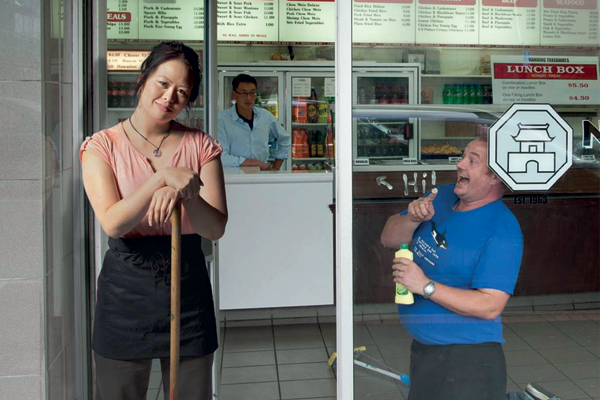
Two Fish ‘N’ A Scoop
May 19 - June 9 Directed By Patrick Davies Starring Hweiling Ow & Chris Parker Written By Carl Nixon Two Fish ‘N’ A Scoop began its debut in Dunedin last year as a successful Read Out Loud in the Fortune Studio. After a great audience reaction and a clear vision for the play’s potential it was picked up by the theatre to be produced as a full-fledged production this year. After the most recent production RED, Two Fish is definitely a change of tune for the Fortune’s season, by combining comedy and insightful themes for audiences. On the surface it’s a lighthearted love story between a pair of young Kiwis but underneath that there’s something more serious that is brought to the table. While being entertaining the play also manages to be informative by discussing serious issues, which are often in the forefront of Kiwi society. As the main characters are young this does mean that a lot of the issues are aimed at that demographic, without giving too much away! Despite this it is definitely something that will be applicable to large audience, and entertaining to all. Something that makes Two Fish stand out from the ordinary is, not only new comers Parker and Ow, but also their ability to take on the challenge of playing 16 different characters in the space of 90 minutes. The actors morph into a variety of people, focusing on their physicality and vocal patterns. This kind of fast-paced action keeps you on your toes, always alert to what’s happening on stage and also leaves you in awe at the actor’s ability to change so smoothly and believably from character to character. This style of theatre is something you don’t see every day, as it’s often easier to source a large cast. It’s also a very tiring process to create, having to focus on making each character unique and different. You’ve got to really appreciate Two Fish for being so vibrant and respect the team for managing to create numerous well-developed characters in a matter of weeks. The piece really does have a lot to offer to audiences, and a variety of viewers also. While being set in a fish and chip shop – Kiwi as – the story is guided by pieces of verse depicting the rhythm of the shop at the time. This adds another interesting element to the script and also keeps the tempo and energy quite fast-paced. To see the piece yourself head to the Fortune from the May 19 and buy your tickets. It’ll be a great night out, funny and entertaining! To top it all off the cast are touring the show around Central Otago from the June 13-24, so if you’re not around town then you can catch it elsewhere!
-
Culture

Beauty and the Beast (3D)
Tale as old as time… Beauty and the Beast was actually my favourite movie as kid; and now as an adult I can fully appreciate all of Disney’s racism and sexism, which is cool ... The storyline basically goes like this: Belle is a beautiful lady who likes to read books (shock, horror!) and lives in a small French town with her father who is an eccentric inventor. She is being pursued for her hand in marriage by Gaston the village stud (who knows it) but she’s not really interested due to his pretty blatant misogynistic tendencies. Whilst on a trip to the fair, her father gets lost in the forest and is captured by a beast in an enchanted castle. Belle goes to find him, and decides to take his place as prisoner, therefore living the rest of her life with the beast. Little does she know that the beast and the castle have actually been cursed and the only way in which the spell can be broken is if the beast finds true love … I’m sure you can guess (or probably already know) the inevitable outcome. However, it’s made much more pleasant through the charm of Disney, random bursts of song, and that certain brand of slapstick humour (although it’s maybe not quite as entertaining when you’re an adult?). The main highlight for me was the song Gaston sings – “No one hunts like Gaston, no one eats ten dozen eggs like Gaston, no one is roughly the size of a barge like Gaston.” Basically Gaston in general – he’s just so manly. I’d like this film better without the “morals” – bestiality just doesn’t make sense, especially if the beast is really grumpy. If you’re a fan of this film already, then go and see it! It’ll be nice and nostalgic and 3D and stuff. 4 / 5 stars – Michaela Hunter
-
Culture

The Five Year Engagement
The Five Year Engagement opens with Tom proposing to his girlfriend Violet. As the pair start to plan their wedding, Violet is accepted into a graduate psychology program in Michigan, an offer she can’t resist. Tom selflessly drops his career and moves to Michigan to be with Violet on the agreement that the program will take two years, after which they will finally get married. As time passes, Violet’s program ends up being extended, while Tom’s life goes down the proverbial crapper. The rest of the plot largely focuses on Tom’s depression and resentment towards the situation, and his adjustment to the climate in a town with winters that would rival those of Dunedin’s. Unlike typical “boy meets girl” rom-coms, the film opens with a relationship that is already in progress and follows through its hurdles and obstacles. Amongst these hardships is a backdrop of quirky family members, awkward moments and unexpected twists while the main duo strive persistently to live “happily ever after”. However, despite the attempt to embed the film with crass comedy, it becomes too heavy as the viewer watches the couple endure complication after complication in a plot that is emotionally draining. By halfway, the film has become utterly gruelling and it starts to feel as though the two would be better off apart. The film contains several scenes which will leave animal lovers nauseated, and for this reason it should not be viewed by anyone who is offended by hunting and/or interior décor made from deer carcasses. Other offensive details include a scene with a carrot, as well as Emily Blunt’s overbearing teeth which are quite obviously porcelain veneers and distract throughout the entire film. All in all, it was two hours of my life I will never get back. 1 / 5 stars – Taryn Dryfhout
-
Culture

French Onion Soup
Here we go with another recipe from the eloquent, food-loving madame that is Sophie Dahl. The soup itself has a mere four ingredients, but lacks nothing when it comes to flavour. Rich and earthy, with a gentle tang creeping through from the balsamic vinegar, it is one for the cooler nights. The process is a bit of a waiting game given the leisurely pace at which the onions soften up in the butter – but don’t be tempted to speed the process up. This is slow-cooking minus the slow-cooker; a heavenly soup glorified by ciabatta topped with cheese; warm, inviting and perfect for winter. You can use half beef stock and half chicken stock to mellow the flavour, though pure beef is traditional (and quite delicious, may I add). A baguette sliced into angled rounds could be substituted for the ciabatta buns also. Top the bread with your choosing with whatever cheese pleases you, as long as it has a tendency to melt well. For this reason, mozzarella would be the perfect accompaniment, given its gorgeously stretchy nature. Other than that, respect the simplicity of the dish – and don’t forget the balsamic for that much-needed edge! This soup can also be frozen in individual portions, and reheated later for belly-pleasing convenience. Finally, aside from all its decadent glory, it’s also incredibly cheap to make. Ingredients3 TBS butter3 large brown onions, peeled, halved and finely sliced8 cups of liquid beef stock1 TBS balsamic vinegar A ciabatta bun, per personA small handful of grated cheese, per person Method01 Melt the butter in a wide, deep saucepan until it starts to bubble. Add a few lugs of olive oil too, if you have it on hand. 02 Add the onions to the pan, stirring to coat. Turn the heat down as low as possible, cover, and sweat the onions for between 40 minutes to an hour, until they are completely soft. Stir the onions occasionally. The wider the pan, the more evenly the onions will cook. 03 When completely soft, turn the heat up and continue to cook the onions until they develop a deep brown glow. Good French onion soup gets its flavour from the onions being well caramelised, so be patient. 04 Add the stock and balsamic vinegar to the pan, and bring to a gentle simmer. Cook for a further 15 minutes. 05 Halve the ciabatta buns and sprinkle generously with cheese. By this I mean absolutely overload them with cheese. Grill at 200°C until the cheese is bubbling and golden. 06 Ladle the soup into bowls and plonk the toasted ciabatta on top. They will slowly absorb up liquid. Magic. $15, serves 5
-
Columns
Te Roopu Māori | Issue 12
Working away in my office at Te Roopū Māori whare you hear a lot of things. Mondays are usually interesting hearing about the events of the weekend; but of late so are Thursday mornings due to the new “reality” TV show The GC. For those that don’t know, it’s a show that follows a group of young Māori living the high-life in Australia’s Gold Coast. The creator quotes that the cast of this new series depict Māori people today. I’ve talked to people, some who even know the cast, about their thoughts on the show, and the opinions vary considerably. Having had a brief look at some of the feedback in news articles and from friends I can’t help but mention some of the good and the not-so-good. THE NOT SO GOOD: Why is money being invested to shoot a show in Oz, trying to depict a revised definition of Māori when obviously it’s not even a true reflection? Wouldn’t it be better if we used that money towards shows that have true Māori with mana. Congratulations to TV3 for providing this country with the most appalling, low-rent, pointless piece of crap I have ever seen in my life. Furthermore, this show is absolute rubbish. Wannabe Jersey Shore type shows that makes Māori look like an absolute joke. Can only but think about the $420,000 spent, and how it could have been better spent. THE GOOD: Most shows portray Māori in shows like Police Ten 7, rising statistics in obesity, smoking and crime all stacked against them. But here is a show at the other end of the scale. The cast are Māori and are proud of whom they are. Some say “good on them”; they are not supposed to be role models, just young Māori going and living the life, making a few dollars and having fun at the same time. Not to mention my ultimate favourite, the boys are HOT – why not watch them? All in all take from it what you want; bad publicity is better than no publicity and it’s a hit or miss in some cases, you either hate it or love it. It shows the importance of staying in school and getting a good education, life is made of choices so take your place in the world whānau. Not too much longer until exams and hope studying is going well, today we are having free kai at the whare for lunch between 12:30pm-2pm so haere mai whānau. Ma te wa –Lisa
-
Culture
White Noise
White Noise hisses between radio stations, on the TV, between life and death. It permeates the airwaves. It’s the death knell that slips into the caverns, the subterranean passages that “distinguish words from things.” The unimaginable weight of death presses on Jack Gladney’s shoulders. He is a professor, the head of Hitler Studies at the College-On-The-Hill, located somewhere in the Midwest of the US. He has been married five times, and with his current wife, Babette, they live with four young representatives of their previous failed marriages, Heinrich, Denise, Steffie, and Wilder. Gladney can’t speak German. White Noise, Don DeLillo’s eighth novel was published in 1985. Most things from 1985 are old now. But like fashion, hairstyles, fads and music they can be resurrected, given a new label, become new again. This is partially due to our keen sense of nostalgia, our ceaseless urge to retell old stories in new ways, to perhaps ground ourselves in the now through what came before. But what if there is more to it? What if in fact you are a materialistic zombie that only knows your hat from your arse because mass commercial culture has made the distinction for you? At this point do you really think that you contain even a teardrop of an original thought? Do you think of yourself as part of a counter-culture? How do you identify yourself then? Stripped down, are the means you use to identify yourself truly any different from the mainstream? Or do you really believe that you get your information from a subversive channel, one where white noise divides you from the others and gives you agency? Gladney finds peace in the supermarket. He runs into a friend in the isle, Murray Siskind. Murray’s basket is full of generic, non-brand food and drink items, packaged in white, void of the colour schemes, lovable designs, and clear windows we love to stare into to form an emotional attachment with our food. “It’s the new austerity,” Murray says to Jack. “Flavorless packaging. It appeals to me. I feel I’m not only saving money but contributing to some kind of spiritual consensus. It’s like World War III. Everything is white.” They leave the supermarket together having completed their individualised personal grocery lists. Gladney and Babette are terrified of death. It consumes them. “Who will die first?” They ask one another. They agree that Babette will, not because she is physically any weaker, but she is afraid to be alone, and for Jack there exists a strange gentlemanly repose in being able to comfort Babette in that way. Then the Airborne Toxic Event happens. At first it was classified as a “feathery plume”, then a “black billowing cloud”. The family has trouble keeping up with the toxin’s damaging symptoms. Sweaty palms, vomiting, déjà vu – why must the TV and the radio do this, change their minds? The family needs to be told what to do. However, Gladney doesn’t seem worried. “These things happen to poor people who live in exposed areas. Society is set up in such a way that it’s the poor people and the uneducated who suffer the main impact of natural and man-made disasters … I’m a college professor. Did you ever see a college professor rowing a boat down his own street in one of those TV floods?” Upon evacuation he is exposed to the toxic cloud while filling his gas tank. A representative of SIMUVAC is on sight to judge Gladney’s mortality. It doesn’t look good for Gladney. But first he has to know why an organisation that specialises in simulated evacuations is on hand for a real event. “We know that [it’s real]. But we thought we could use it as a model.” Gladney responds, “A form of practice? Are you saying you saw a chance to use the real event in order to rehearse the simulation?” “We took it to the streets,” the representative says. Gladney has been exposed. Death is inside him now. The simulation is the ideal. White noise. With his death internalised the narrative refocuses on the fear of death that both Gladney and Babette share. She has been sleeping with a scientist that invented Dylar, a drug that cures the fear of dying. Gladney wants the drug, but also to kill its creator. The contradiction of killing your dealer is juxtaposed by our own longing to escape the mediums we choose to define us. DeLillo’s White Noise identifies the flimsy fabric that makes up the simulated reality we call real. Gladney’s son asks him early in the novel: “WHAT good is my truth? My truth means nothing. … Is there such a thing as now? ‘Now’ comes and goes as soon as you say it.” It has been a long time since 1985, but what has changed, maybe only the speed of acceleration of our society’s entropy, the breaking down of identity? Listen to your friends when they tell you that you think too much. It’s safer that way. Keep your fear of death to yourself. Love the noise that defines you.
-
Culture

(CAUC)ASIAN
Lui Petti Mint Gallery, 32 Moray Place Ongoing until May 24 Did you hear about Frankenstein? No? Well, I heard he likes to stalk through cities full of high-rise buildings at night, sporting an Adidas jumper and a rope necklace, blasting tunes from the boom box. At least he does in the pop art-esque paintings of Lui Petti; though I’m not sure his original creator Mary Shelley would completely agree. Pop art’s not exactly a new thing. I feel like everyone today is generally quite familiar with the 1950s art movement, and consequently has a kind of “been there, seen that” attitude towards it, which is fair enough. The only problem here is that it can make it quite easy to dismiss works like Petti’s, because the first glimpse of his paintings does tend to convey the impression of “just” pop art, with little other intrigue or provocation. Luckily, like the trusty art nerd I am (and the not-so-trusty arts editor who also just needed an exhibition asap, oops), I stuck around the gallery and gazed and gazed until I gleaned more than I originally thought my first acquaintance with the paintings would ever yield. It became clear that Petti’s works deal with a multitude of interplays and juxtapositions: Cultural, social, commercial, artistic/aesthetic, and so on. Not sure what I mean? Just take a look up at that girl right thurr. Traditional Japanese kimono, tick. Traditional Japanese pale make-up and bright lips, check. Traditional Japanese cherry blossoms chilling in the background, check. Plus … traditional bright pink headphones? Not quite so Japanese, I’m guessing. And she’s making that gesture, you know, the one that doesn’t have an official name as far as I can tell, but it’s what drunk people do in mosh pits, implying “rock on” or something musically hardcore like that; whatever it is, again it doesn’t strike me as being distinctly Japanese. All up it’s a pretty whimsical and playful painting that quite comically contrasts conventionally Western ideals of orientalism with modern Western cultural signs and tropes. On a deeper level, what does this really do? Hopefully, it forces the viewer to consider not just racial stereotypes, but ALL stereotypes, and how they manifest and function socioculturally in their own lives. Murray Eskdale, owner of Mint Gallery where Petti’s paintings are currently being exhibited, agrees with this idea of cultural juxtaposition, commenting that certainly Petti is concerned with “typical” images of Asian culture in these artworks. Not only is it evident in the portrait of the Japanese girl, but in his other paintings too; one depicts a tiger’s face imposed over a background of blood orange bamboo shoots and scarlet red Chinese characters; another portrays a koi fish leaping energetically over what is instantly recognizable as a copy of the famous woodblock print by Japanese artist Hokusai, The Great Wave off Kanagawa. Not all his works are so culturally charged, however. Alongside Frankenstein the boom box enthusiast is a portrait of what looks like a topless Levis model (with her back conveniently turned from the viewer, sorry boys) sporting some fake Ray Bans and an incredibly detailed and extensive star tattoo, just shy of being located in the prime tramp stamp area. No matter how I tried, though, I couldn’t seem to read anything deep into that one. Seems like some people just enjoy having pictures of hot, half-naked girls hanging on their walls, I guess. Weird, huh? I can’t think of anyone I know who fits that description.


