
-
Columns

Editorial | Issue 11
As you may have been able to tell from the cover, we’re having a look at drugs this week. Just as I am not allowed to print anything in Critic about people peeing on each other for sexual pleasure, I’m also not allowed to say anything that might incite or promote drug taking. So I won’t. But I can tell you a little about my personal experience and thoughts on the subject. I have taken maybe a slightly wider range of illicit substances than most: Travelling in Asia and Eastern Europe both facilitate the flow of substances, at much lower prices than NZ, and especially Dunedin. I have had amazing, fantastical experiences on drugs, and I have had some fairly terrible experiences as well. I would never recommend to anyone that they take any drug. But I am more than willing to talk about what different drugs are and what they can, and probably will do to you. I think that what is missing in New Zealand is any serious debate about what different types of drugs do, why some are okay, some are kind of okay, and some are just straight up terrible. Alcohol has the potential to be an incredibly harmful drug. There is absolutely no difference between alcohol and other narcotics; it was simply decided that alcohol would be legal, and most other narcotics would not. You would hope this decision was made because it was thought that alcohol caused less harm, and that its harms could be better managed. But you have to question whether this is still true in New Zealand, especially in comparison with cannabis. Can anyone really argue that more harm is caused, or would be caused if it were legalised, by cannabis than alcohol? I’d find it this hard argument to swallow. There is a reason people get hangovers; your body is recovering from being poisoned. Other drugs can have similar come down affects, but we know that alcohol is horrific for our bodies, and that it does long-term damage. And we don’t seem to be making smart choices about using it. I am as guilty as anyone else. I drink to excess, and find it hard to break the habits that I formed as a young scarfie, regularly on the piss with my hard-won Studylink coin. The point isn’t to ban alcohol, or to support changing the drinking age – I think that is a lazy and ultimately unsuccessful solution to change our drinking problem. We need to think about why we are getting into the habit of drinking so much – far more than we need in order to have a good time – and what we can do to change this. Another drug that New Zealand is struggling to decide how to deal with is nicotine. This week Sasha Borissenko has written a piece on the maltreatment of smokers in society, and how NZ is attempting to deal with the social harm of smoking. And a mystery contributor has put together a pros and cons list of why drugs are, or aren’t cool. And if you’re up for a laugh at my expense – and who wouldn’t be – flick to page 26. – Joe Stockman
-
News
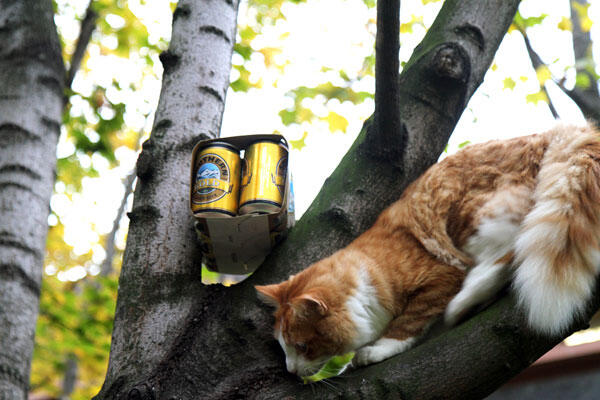
Scarfies find their place in world is up trees, wasted
The iconic scarfie drinking game “possum” has gone global after an Otago Daily Times article reported concerns that growing popularity of the game is causing problems in the Dunedin Botanic Gardens. The story was subsequently run by The Guardian and The Sun in England, Fox News in the United States, The Bangkok Post in Thailand and Le Point in France, among other media outlets. The news piece reached the most-read story in the world section of The Guardian’s website under the headline, “Possum tree-drinking game too trunk and disorderly for Dunedin parks.” (Perhaps Critic has been too harsh on the ODT after all.) The article, originally published in the ODT on May 3, first made it outside of New Zealand when Auckland freelance journalist Toby Manhire passed the story on to The Guardian. Manhire located the original article “via the ODT via the Herald via a tweet.” The international media coverage has reported the objective of the game as drinking in excess in a tree until one falls to the ground. However, Critic understands that the traditional principle behind the game is to consume a certain amount of alcohol while staying up a tree, rather than falling out of it per se. French publication Le Point detailed the game as “the rage” in Dunedin, saying it was causing “inconvenience to pedestrians” as a result of “empty bottles, broken glass and soiled lawns”. Coverage of the craze on the website of current affairs channel France 24 included a windswept photo of a tree on deserted farmland, captioned “photo illustration of a tree in a field in Dunedin.” Critic Editor Joe Stockman found himself at the centre of the international media frenzy, after being approached for comment by various news outlets, including The Guardian and CNN, to comment on the scarfie pastime. According to Stockman, “We were just wrapping up print night when my phone started ringing off the hook with international press seeking comment on the possum problem in Dunedin. CNN rang when I was totally blazed the next day. Shit got awkward.” Stockman’s newfound international celebrity status backfired when he attempted to promote a French possum fad by suggesting Parisians scale the Eiffel Tower with cans of Speights. “I tried to be cool and interesting when answering all of these media enquiries,” says Stockman. “All I managed was cliché and douchebaggery. Or douchebagérie, as the French might say.”
-
News

Degree factory churns out more WINZ applicants
The University of Otago is divesting itself of nearly a tenth of its students this month, releasing 1,755 graduates into the empty void of unemployment. Graduation Ceremonies to mark the event are being held from May 6 to 19 in the Regent Theatre. 1,345 students are expected to attend the ceremonies, while 410 will graduate in absentia. The Science and Biomedical Graduates’ ceremony was held on May 6, followed by the Commerce Graduates’ Ceremony on May 12. The Graduation Ceremony for Humanities students will take place on May 19. Speakers including Suzie Muirhead, Professor David Paterson, John Judge, Professor Andrew Bradstock and Professor Helen Nicholson have been invited to provide inspirational advice to students facing a bright future of job searching. Findings from a Ministry of Education survey released in 2011 showed that 39% of graduates did not earn any sum of money for at least one of the first four years after graduating. 11% did not earn any money at all during that four-year period. Critic spoke to one Otago marketing graduate, who agreed that finding a job with his qualification was proving a challenge. “The only well paid job I can get is in the mines. And I wouldn’t say mining creates a huge marketing industry.” Grad Parties will also take place on the evenings of May 12 and 19 at Sammy’s, giving graduates one last chance to lose any remaining dignity.
-
News

House damaged: Fire involved
A student flat on Pitt Street was engulfed by flames on the evening of Tuesday May 9, sparking rumours of malicious arsonists and resident ghosts. Emergency vehicles, including four fire engines and one ambulance, arrived at the property at around 10.45pm, by which time the blaze was well involved. Emergency fire services were able to put out the fire and two residents from the ten-bedroom house were taken to hospital to be treated for smoke inhalation. The entire house was damaged by smoke, with one bedroom particularly badly affected by the blaze. The Otago Daily Times has reported that the fire is being treated as suspicious and a police communications spokesperson confirmed to Critic that the case has been referred to the Dunedin Crime Information Bureau (CIB). Critic has received reports that the car of one of the students living in the house was set on fire earlier this month. The house is also rumoured to be haunted. Critic speculates a mad wife locked in the attic may be the solution to the mystery and has passed on its theory to the CIB.
-
News
Media get information right second time around
Criticism has continued in response to the changes to the student loan and allowance schemes announced by Tertiary Education Minister Steven Joyce earlier this month. On May 3, Joyce revealed that student loan and allowances systems would be overhauled in the national budget, to be released on May 24. The major changes include a repayment rate of 12% of earnings over $19,084, higher than the current repayment rate of 10%. This rise is expected to force 500,000 students to pay their loans back more quickly. In addition, students will now be able to receive the student allowance for 200 weeks only. Currently students are able to receive the allowance for this length of time; however, they are also able to seek an extension for postgraduate study, and this extension is now to be dropped. Because the academic year is 38 weeks, this means that in practice students will be able to receive the allowance for five years of study, not four years as reported by national media and Critic last week. This means students studying for five-year double degrees will remain largely unaffected by the changes. However, students studying for medical or postgraduate degrees will have to turn to student loans once their 200 weeks is up. New Zealand Medical Students’ Association president Michael Chen-Xu told the New Zealand Herald that the changes to the student allowance would discourage those from poorer backgrounds from taking up medicine. 20-25% of medical students gain entry to medical school after studying for three years, meaning they will see their allowance income cut off before they are even halfway through medical school. When asked for comment, an Otago med student told Critic that “money is hard enough to come by, just to meet living costs; I’ve spent more on textbooks than rent this year. The government is just asking us to go overseas.” Responding to a question in Parliament last week, Joyce acknowledged 4,000 to 5,000 masters and doctoral students would be affected by the policy change, but noted that “those students will of course remain eligible to borrow from the interest-free student loan scheme.” Joyce then argued that students who gained postgraduate degrees would have the advantage of a higher income when they left tertiary study. Critic speculates that Joyce has clearly not spoken to any holders of philosophy PhDs recently.
-
News

Student Revue offends all, entertains some
This year’s capping show, entitled Capocalypse, opened May 9 to packed crowds at the Teachers’ College Auditorium. Organised by OUSA, the show takes place annually to coincide with Otago’s graduation ceremonies and will run this year until May 19. The Capping Show is notorious for its offensive humour and incorporation of topical issues, and 2012’s performance is set to be no exception. Co-Director Aaron Mayes warned students, “You can’t come and expect not to be offended.” “It’s a really funny line-up this year, with the main cast dealing with Prime Minister Ron Key’s ideas on how to save the economy from the ‘Capocalypse’ predicted by the Mayans for 2012,” Aaron Mayes said. “We’ve picked a load of great sketches, song parodies and videos to add to the crowd favourites.” Approximately 60 students from the University of Otago and Otago Polytechnic auditioned for the show in early March, with 16 students being selected to form the main cast. Students involved claim to have balanced up to 60-hours of rehearsal a week on top of their studies. As hoped for by the cast, last Wednesday’s opening night was a near sell-out performance and, according to one cast member, “it went down like a sex-powered rocket ship.” One audience member described the show as “hectic and confrontational,” but thankfully she showed no signs of permanent scarring. The Capping Show began in 1894 and is the world’s second-longest-running student revue, beaten only by Cambridge University’s Footlights. However it does take the title of longest continuously-running student revue, due to other universities halting their performances during WWI and WWII. Given that Footlights’s alumni includes three of the six members of Monty Python, Stephen Fry, Hugh Laurie, David Mitchell, Robert Webb, Peter Cook and Sacha Baron Cohen, among many other illustrious names, the Capping Show clearly needs to claim whatever victories it can.
-
News

Feral freshers frantically flock to filthy flats. Fuckers.
Second-year students living in the scarfie quarter have reportedly been stalked by first-year students declaring their love for flats such as “the Cuntry Club”, “The Eight Man” and “the Piss Stain” and seeking tours as the annual freshers attempt to lock down their second year accomodation as early as possible. Critic has heard rumours that the Proctor’s office has been inundated with cases of first-year students called in for harrassing inhabitants of the Castle Street area while they sit down to watch The GC with a bowl of Mie Goreng. Masters of University halls and Otago University Students’ Association campaigns have discouraged first-years from searching for flats too early, citing an increase in demand for flats as a factor in landlords’ unreasonable rent hikes. It seems that this demand is only being felt by a limited number of landlords, with more flats than usual up for sale this year. This increase is believed to have been partly fuelled by landlords whose flats have remained vacant through January, February and March, with a handful still vacant last week. Students usually start signing up for flats towards the end of the year, and agree to year-long leases from January 1. However the small but significant number of flats that have remained vacant has left a number of landlords unable to cope with the unexpected loss of income, forcing them to put their properties on the market. OUSA president Logan Edgar says the sale of flats is probably due to supply outstripping demand and that, “because there were more vacant flats for longer, this year would be a really good opportunity to tilt the balance the other way in favour of students.Wouldn’t it be amazing if this was the year landlords knocked $20 off the rent per room, because students held the negotiating power?” With first-years heading to Castle Street in droves to stake their claims on flats, this $20 reduction in rent has little chance on succeeding in North Dunedin. However, Edgar continues to hold out hopes for Corstophine, Kaikorai Valley and Pine Hill.
-
News
Upstart seeks token student for “diversity”
Upstart Business Incubator last week announced the opportunity for a student to join its Institute of Directors. The successful applicant will undertake the directorship for 12 months and “bring the voice of the student to boardroom discussions,” according to Upstart chief executive Steve Silvey. The idea of incorporating a student representative onto Upstart’s board was originally raised by University of Otago Vice Chancellor Harlene Haynes when she was on the board. Silvey remarked that students’ entrepreneurial talent makes them a key stakeholder for Upstart. “Gone are the days when board members have to be grey haired and reaching the end of their careers. Now it’s about ability and diversity of perspectives.” The current board consists of senior representatives from the University, the Polytechnic and the City Council, meaning the student selected would likely become the youngest sitting member. Silvey maintained this would in no way be a disadvantage. “[The successful applicant] will receive top-notch mentoring and support, and the experience will look great on the CV of someone who wants to kickstart a career in governance.” Interested students from either the University of Otago or Otago Polytechnic can apply online on Upstart’s website (www.upstart.org.nz) until 8 June.
-
News

Edgarzibit hosts Pimp My Clubs & Socs
OUSA is splashing out half a million dollars to pimp out the Clubs & Societies Building. President Logan Edgar says that most of the money will be spent on “boring” maintenance rather than brand new features. The big-ticket item is an “eco-friendly, sustainable heating system”, which will cost $200,000, while the bathrooms may be in line for marble tiles thanks to a $100,000 upgrade allocation. Aside from the routine maintenance, several rooms are being upgraded and revamped. Edgar says, “anyone can walk around Clubs & Socs and see that it’s quite outdated; it’s quite 70s, especially the Rec Rooms. Also, when you walk in off Albany Street, it’s a bit dingy, it’s not that inviting. We want to do it up so it’s opened up really flashy and you walk in and there’s a really nice meeting area.” As well as making Clubs & Socs more aesthetically pleasing, Edgar wants to make it into a “casual Rec Centre where students could just walk in off the street and do something cool. As a student I want to be able to rock in there, ‘cos you know I’m bored, it’s a Sunday, and watch a movie in a really nice movie theatre area.” The building may be renamed in light of this new focus on non-club recreation. Edgar has suggested the “Student Centre” or the “OUSA Centre”. Critic thinks the word “Crib” should feature in the title. OUSA is asking for “as much student input as possible … if a student comes to us with an amazing idea like ‘hey let’s put a shooting range in, or a go-kart track’, there’s no reason why we can’t fully investigate it.” Edgar encourages students to email their ideas to president@ousa.org.nz by Friday May 18. The Exec will make its final decision on May 29. To recoup the exorbitant costs of the upgrade, $3 lunches may be replaced with $30 gourmet lunches, which will cater to a “higher class of scarfie”.
-
News
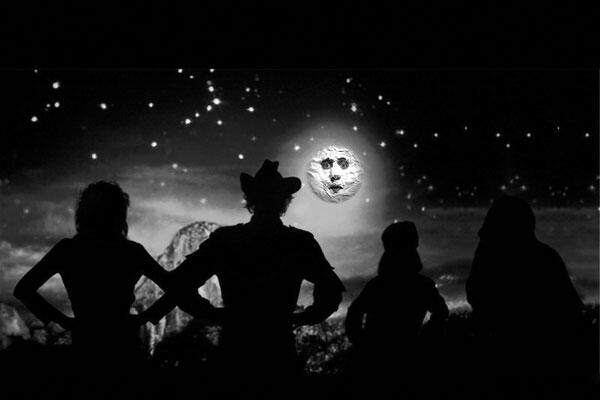
Hello I am the moon
A super perigee moon terrorised man and beast alike early last week. The event occurs when the moon is at its closest point to Earth, making it appear 14% bigger and 30% brighter than a standard full moon. The moon reached its fullest point at 3.35pm on Sunday 5 May. However Grant Christie of Auckland’s Stardome Observatory told the Otago Daily Times, “it does reach its closest moment in a particular point in time, but in terms of the visual impact … you wouldn’t notice a difference half a day either side, frankly.” Despite the wide array of phenomena associated with overly-luminous moons, few abnormal events were recorded. There was no noticable rise in the number of lunatics on Dunedin streets, nor did any tidal waves occur. Local vets were unable to confirm whether more pets suffered injuries due to the full moon. Critic didn’t want to waste the time of the staff at the Dunedin Hospital Emergency Room but we can speculate that many, many students reported to the ER with a variety of injuries, just like every other weekend. One student did report to Critic that he struggled to sleep during the moon’s recent proximity; however, further investigation revealed that the student simply needed to invest in curtains. Disaster predictor and “moon man” Ken Ring experienced more excitement than most in response to the perigree moon. Ring claimed on his website that supermoons can “exaggerate whatever else is going on in weather”. He added to his dubious scientific analysis with earthquake predictions. “The higher tides also bring risk of seismic activity again to NZ, with potent dates May 5 and May 11.” Ring continued, “Sea mammals have already started beaching in Peru which portends earthquake activity in that region.” Ring told Critic that he would recommend trampers avoid rivers that may be affected by the massive high tides. Despite rivers not having tides, Critic has duly notified Clubs and Socs.
-
News

Even Elton couldn’t save us
The Forsyth Barr stadium is running at a loss of nearly $2 million with the Dunedin City Council considering whether to step in and help foot the bill. Dunedin Venues Management Ltd (DVML), the company running the stadium, revealed a loss of $1.9 million for the first six months of the 2011-12 financial year. The forecast of the loss for the full financial year is at $2.4 million, followed by $1.2 million, $1.1 million and $1 million for the following three years. DVML chief executive David Davies said that the loss was due to “really challenging” trading conditions and the difficulty of getting more events such as the Elton John concert. DVML has changed its tune since last year when its forecasts predicted a profit of $91,000 in 2011-12, with profits continuing for the following two financial years. Dunedin Mayor David Cull said in a press conference on Wednesday May 9, “the financial funding and operating model of the stadium was put in place to convince people to build it,” he said. “Clearly, it was optimistic.” Cull, along with many other Dunedin residents, staunchly opposed the building of stadium when it was proposed in 2009. Cull said that a comprehensive review of the stadium’s operating model was needed, as well as a scrutiny of DVML’s budget. Councillors are expected to consider how the Council can help DVML overcome its current deficit at the next finance, strategy and development committee meeting on June 13. “Clearly the facility is owned by the ratepayer, and if there’s a loss it falls to the ratepayer ultimately,” Cull said. Local vanilla rap crew Posse In Effect are planning to immortalise the stadium’s financial difficulties in their upcoming single, “Homies Ain’t Got No Financially Viable Venue (Makes Them I-rate(payers))”.
-
News

Americana
“Football”Surprise! NFL coaches can no longer reward players for intentionally injuring other players. The New Orleans Saints have been busted for a running a bounty system where players were rewarded for injuring key members of the other team. Bounty prizes varied according to how important the opposition player was, how badly they were hurt and whether or not they were able to return to the game. This is quite shocking even for a sport as violent as NFL. The assistant coach who ran the scheme has been booted out of the League. Head coach Sean Payton has been suspended for the coming season and some players have also been suspended. Apparently the scheme reached its peak when the Saints won the Super Bowl in 2010. In the recent NFL draft the Colts picked guaranteed superstar quarterback Andrew Luck first. The Redskins picked a fast and exciting quarterback second called Robert Griffin III. At this point it’s too far out from the start of the season to say which teams will be worth watching, but NFL commissioner Roger Goodell has spent most of his holidays trying to make his sport safer and therefore less fun to watch. Ice hockeyI am not going to pretend that I know anything about the NHL. It’s down to the final four teams, two of whom will compete for the Stanley Cup. An interesting fact about the NHL play-offs this year is that two of the four teams that remain are from so-called “warm-weather” cities, which means they aren’t traditional ice-hockey cities (they have no frozen ponds to play on). No franchises from Canada even made the final eight. Unfortunately the “Mighty Ducks” didn’t make the playoffs this year, so the bash brothers will not be making an appearance. In hockey-related news, Wayne Gretzky’s daughter has been posting some raunchy pictures of herself on the internet recently. Apparently “The Great One” is less than impressed. Who will win the Stanley Cup? Who knows, let’s say … the LA Kings, that sounds fine. BaseballMost Major League Baseball clubs are around 30 games into their 162-game seasons (yes you read correctly, 162 games in a season). The MLB regular season is so long that predicting who’s going to be around at the end is almost impossible this early on. Four teams have started well and are sitting on 19-10 records (Orioles, Rays, Rangers and Dodgers). Matt Kemp has the most Home Runs with 12. The biggest news this season has been Albert Pujols (poo-holes, haha, I know) who accepted a reported US$254 million contract to move from the St. Louis Cardinals to the LA Angels. Pujols won the World Series with the Cardinals last season and has been one of the best home run hitters in baseball for the last 10 years. Cardinals fans will be happy to know that it’s taken Pujols 110 times at-bat to hit a home-run for his new club, the longest drought of his career. NBAIt’s playoffs time in the NBA. By the time you read this all the conference semi-finalists will have been decided and we’ll be down to eight teams. The Eastern Conference has been ruined by injuries to the two superstars who could have dragged their teams past the evil alliance in Miami (I know Dwyane Wade isn’t evil but Bosh and LeBron are just terrible people). Dwight Howard and Derrick Rose are gone for the season, which leaves the geriatric Boston Celtics as the only team with the roster and enough playoff experience to call themselves contenders. The West is more interesting. The Spurs and the Lakers have the wily veterans but can either team stop Kevin Durant of the Oklahoma City Thunder? From what I have seen it just isn’t possible this year, plus he’s developed a habit of coming up big in the clutch (yeah basketball jargon). OKC sneak past the Lakers, then the Spurs but are beaten in 6 by the Heat. LeBron chokes in the finals again but Dwyane Wade carries the team on his back to an NBA title.
-
News

Critic Goes To Fight Night
The last golden era of heavyweight boxing is over. Mike Tyson is still in Vegas but he’s inexplicably hosting a one-man show. Evander Holyfield would get back in the ring if they would let him (he has at least nine kids to at least six different women so he needs the money for child support). Our own David Tua can’t knock anyone out anymore (Shane Cameron doesn’t count). The Klitschkos won’t fight each other. The heavyweight division has never been more boring. The only thing keeping professional boxing alive is the prospect of Mayweather v Pacquiao. A fight that looks like it may never happen. Enough about boxing, this is about MMA (Mixed Martial Arts). The UFC (the company that runs events in the States) has stepped into the void left by boxing and turned MMA into the marquee combat sport in the world. UFC dominates the pay-per-view market in America. Champion fighters such as Jon “Bones” Jones are rockstars and the UFC brand generates billions in revenue. In the last five years the sport has spread around the world. Australia is obsessed with it, but here in New Zealand we have been a little slow on the uptake. The sport has a loyal underground following but threatens to go mainstream at anytime. Fight Night 8 – Demolition, hosted by Hammerhead MMA was held at the Caledonian Hall on April 28. This was the first MMA I had ever seen live. The UFC has occasionally piqued my interest on TV but I would never claim to have an intimate knowledge of the sport. Still, free tickets are free tickets. The cage dominated the centre of the sold-out hall. It was all black and a lot bigger than it looks on TV. Every time the fighters entered the cage the door was symbolically bolted, the ring girl did a lap with the card and then they went at it. Hardly any rules, man-on-man action. Fighters varied widely in size, style and skill. The rangy Muay Thai style fighters put on a completely different show to the hulking grapplers and brawlers. Some of the best action came in the lower weight divisions; sometimes it was like being at a cockfight. I expected to see Mexicans tossing paper bills into the cage. From a spectator’s point of view the best fights to watch were those where the fighters gave up on defence and just tried to beat each other up. These tended to be between the older fighters. I’m sure MMA purists will disagree, but the younger fighters seemed over-coached on defence and ended up not really doing a lot in the ring. Mike Pascoe and Joe Blee showed the young guys how it was done in a bloody brawl which I thought was the most exciting of the night. There were too many fights to mention them all here. To the untrained eye Chase Haley looked a cut above everyone we saw. He destroyed his opponent with a vicious head kick. He also had the best entry music. Team Hammerhead (the locals) won all five fights they competed in. Many of the fights were close enough to be decided on points but there were enough knockouts and submissions to keep the young and bourbon-fuelled crowd happy. Quote of the night goes to James “Pitbull” Bishop whose strategy consisted of “don’t stop till the cunt’s dead.” There’s another fight night scheduled for July so get your tattoos now.
-
Columns
Red and Starry Eyed | Issue 11
Despite the ACT Party receiving almost no support in the last elections, it got an MP and four portfolios paid for by a cup of tea. The famous tea tapes that Key didn’t want to talk about are now online under “Two Johns one cup”. Listen to them; the two politicians show utter contempt for their own voters. They will tell us that they know better than us. One thing voters don’t want is charter schools. ACT does, and by now we should know that whatever ACT wants goes against the people’s interests. Charter schools have failed everywhere they’ve been trialled. Even then we’d have to pay for them … Moreover, business and religious organisations will be able to throw in more money and devise their own curriculum. These schools, which have a success rate of 17 per hundred, will serve to indoctrinate children. Both ACT and National believe a five-year-old is training just to be another brick in the wall, and that schools have no purpose but to serve business. Charter schools certainly will give a couple of jobs; they will provide a job for former ACT party President Catherine Isaac. It is often said that there is a revolving door between political legislators and those implementing the new regulations. There is no revolving door here; it is a tax-paid highway. The government says the appointment isn’t politically motivated, even if she has close connections to John Key and no experience in the job. Isaac’s appointment is pure nepotism. Meanwhile we will have businesses running our schools, churning out a profit and frying our brains. New Zealand will not benefit from charter schools, though John Key and his cronies might. Instead of subsidising schools run for elites, or by religious institutions, why don’t we invest in the education system we already have? If there are problems with it, allowing some kids to avoid them isn’t the solution; all kids should. The first step is to improve teachers’ salaries; then we can start asking them, not the politicians, what we should do to improve our education system. The teachers work at school at least five days a week, they’re the ones who know what can be improved on. National forgets democracy is about having more of a say. It’s common sense to have those who actually know have a say. –Red and Starry Eyed
-
Columns
The Tory Templar | Issue 11
The ACT Party may be tying its own noose but it will still be able to get its pet project passed into law. Charter schools are a pretty simple concept. They receive the same per-child government funding as state schools but have the freedom to set their own curriculum and qualifications, teacher pay-rate and school-day length and school terms. The Templar is excited by this trial. Charter schools act as a laboratory of reform, identifying successful practices that could then be used by traditional state schools. This extends to the most prohibitive practices which can be identified and eliminated in all schools. In short, the Ministry will save time and money by getting the private sector to identify the best and most productive ways of educating our children, and then implement these nationwide. People with innovative educational ideas can use these schools to put them into practice without being hampered by bureaucracy. Parents have the choice to send their kids to these schools and so you will find that children are at schools they want to be at, whether that is more religion-based education, Rudolf Steiner institutions or other specialist education institutions. They may even provide competition for state schools that encourages innovation in our education system, which is in dire need of some shock therapy. One size does not fit all when it comes to education. All parents have the right to choose a school that best meets the needs of their child. Charter schools stress a more personalised approach to education, and are more flexible in meeting children’s individual needs and more innovative in trying new ways to improve student achievement. These include gifted children, dropouts, and children with learning disabilities. While most parents would need to pay thousands of dollars for such specialist education, public charter schools make choice possible for low‐income families, so everyone is happy. The idea has long been used in Europe and North America. In the States more than a million students attend more than 4,000 charter schools in 40 states. We need to be fostering a more diverse education system where individual children are treated like the customers of education, which they are. We need the private sector to provide a product that suits its consumers, all its consumers. As for the likely claim from the left that it creates an educated elite or champions religious dogma; well, that wouldn’t be so bad after all now would it? –The Tory Templar
-
News
NZ Political Roundup
Critic’s market research has revealed that 70% of students get their news exclusively from messages chalked onto the ground on campus. So not only are you missing out on the political happenings that are so hot right now, you’re probably also contemplating whether Student Life can help you fill your gaping spiritual void. To solve the existential problem, congratulations, you’re actually a brain in a jar. To make a dent in the iceberg of political ignorance, here’s a roundup of the political issues currently on the public agenda. John Banks ft. Kim Dotcom – ScandalIn 2010, ACT Party leader John Banks received five donations of $25,000 each to his Auckland mayoral campaign, which he declared to be anonymous. Two of them turned out to be from Kim Dotcom. Banks and Dotcom had met earlier in the year, in June. Coincidence? No. But the question is whether Banks knew for sure, rather than merely suspected, that Dotcom had made two of the five donations. If so, he’s goneburger. But the best part of the scandal is the amusing sideshows. When a radio host asked Banks if he had a “relationship” with Dotcom, Banks angrily told her that Dotcom was a married man, and hung up the phone. If they do have a relationship, it’s probably pretty strained after Dotcom released a rap video dissing Banks. If Banks ends up resigning from Parliament, National will almost certainly win the Epsom by-election, so no problems there. But if John Key decides to sack Banks as a Minister, Banks might retaliate by not voting with National, which would make National dependent on the Maori Party to govern. Conservatives RisingDominion Post journalist Tracy Watkins has made another of her annual announcements that ACT is dead; due to the Banks saga it looks like it might be tenth time lucky for Watkins. This is bad news for National, as Parliament’s a lonely place when you don’t have a right-wing BFF. As potential fillers of this vacancy, the Conservative Party and their leader Colin Craig have started to get some rare media coverage. The Conservatives received 2.65% of the votes in the last election. As their name suggests, they want to conserve what they perceive as New Zealand’s traditional values – for example, they’re opposed to asset sales. This contrasts with ACT, who think National’s economic reforms don’t go far enough. The Conservatives, being a Christian party, also have significantly more old-fashioned views on moral issues than National and ACT. In spite of these differences, the Conservatives are more in tune with National than Labour overall, so could be a key ally for National in 2014. National’s second term – business timeBecause of National’s lack of definite partners, Critic is tipping Labour as the narrow favourites to win in 2014. A lot will depend on whether NZ First gets over the 5% threshold again. But there’s a long way to go yet. The point is that National may well be serving their last term in government, and will presumably want to stamp their mark on the country rather than risk being voted out without really having done anything. So get your miniature New Zealand flags and sad bugle music ready folks, it’s time to say goodbye to 49% of five state-owned assets. The next 18 months will tell whether this is as bold as National gets. Will the Real Labour Leader Please Stand Up?It’s never a good sign when the media start talking about leadership challenges. Even if there’s no basis to their gossip, it can quickly become a self-fulfilling prophecy. Labour leader David Shearer has been criticised for being too moderate, too indecisive, and for failing to develop headline-grabbing policies for Labour. He may not last until the election. The two names being thrown around as potential replacements are: Grant Robertson, the current Deputy Leader of Labour, is Helen Clark’s protégé – quite left-wing economically, but with an equally strong focus on social issues such as supporting gay marriage and opposing VSM. He’s regarded as the favourite to replace Shearer, and could make history by becoming NZ’s first gay Prime Minister. David Cunliffe is more of an old-school Labour politician, preferring a megaphone and a fired-up working-class crowd over a student forum. He’s all about the economic issues, and wants to develop a wider gap between Labour and National on economic policy. This could enable him to win back the more militant left-wing voters who deserted for the Greens in 2011.
-
Features

Up in Smoke
The Ministry of Health recently issued a paper calling for $100 packets of cigarettes, in an effort to make NZ smoke free by 2025. Combined with moves to plain packaging, and a massive and continuing advertising campaign to get smokers to quit, it appears smokers are under siege in the land of the long white cloud. Critic’s Sasha Borissenko looks into the Ministry’s plans, the state of anti-smoking efforts, and what it’s like to be a smoking social pariah. The Smoke-free Environments Act 1990 was passed to prevent the effects of passive smoke by restricting cigarette smoking in certain places. While it is New Zealand’s most instrumental smoke-free policy, it arguably cultivated a hostile attitude towards smokers. Bystanders ask smokers not to smoke for fear of their own health, rather than promoting an environment that encourages smokers to quit for the benefit of the community. This selfish, individualistic proposition might be a little leftfield but stigmatising and treating smokers as inherently bad needs to be addressed. Perhaps it is the early programming of Mummy dearest uttering the words “you’ll die” or a backlash against enduring Catholic schooling that compels me to bat for smokers in general. Nonetheless, it should be noted that unlike alcohol, narcotics, poverty or mental illness, Jake the Muss never beat up his kids after downing a packet of Marlboro Reds. What’s the dealio with big bad smokers?Personal autonomy and freedom of choice tend to be the neo-liberal buzzwords for anti-smoke-free hipsters. As of February 2013, a Pennsylvania hospital in the USA will no longer hire smokers in a bid to fully implement its smoke-free policy. Nicotine tests will be used to screen applicants for cigarettes, smokeless tobacco, nicotine gum and patches. This seems like overreaching into the private sphere. Will the government next be trying to regulate sugar, fat or, heaven forbid, alcohol intake; will rowing, high-heeled shoes and one-sided handbags be restricted for the sake of reducing ACC claims? Still, there is overwhelming evidence that smoking is bad for you. The Ministry of Health states, “Tobacco use is the leading cause of preventable death in the world and New Zealand. It is responsible for the death of one in ten adults worldwide. It kills over 4500 New Zealanders every year, including around 350 from exposure to secondhand smoke”. With this in mind, staunch Otago graduate Mark Norman claims that “smokers are a drain on the health system and are bad”; or, better yet, “if you smoke you deserve to die a slow and painful death.” New Zealand’s tobacco control programme spends $85 per smoker per year. Arguably, however, putting a price on the cost of health belittles the problem and dehumanises smokers. One could equally argue that smokers benefit the economic community because they tend to die earlier and fail to reach the pension age. Sensationalist arguments are endless. Slaves to the cigarette must of course quit, but how can this be done in a non-discriminatory and productive way? In an attempt to find and interview victims to the butt, a self-proclaimed smoking enthusiast (we’ll call him Don Draper, Jr) offered his services. The Dunhill lover “[has] always enjoyed the act of smoking … the skill set [of rolling your own] always appealed to me.” He says, “it’s an outsider sort of thing, an outlet for contrariness. It’s kinda cool again.” Draper Jr feels apathetic towards the current strategies in place, concluding he would “probably end up crumbling under the great weight of the man” when asked whether he would quit the habit. “I am at peace with the potential health ramifications … it is almost a fatalist attitude. [But] I don’t see myself smoking indefinitely, I plan to quit sooner rather than later.” How to get ‘die-hards’ to quit? Suppose Draper Jr were to quit? Critic spoke to Quitline’s Senior Communications Advisor, Sarah Woods, to assess his options. Quitline offers a three-step programme for the 52,000 smokers who seek help annually; this seeks to manage the addiction through 1) chemical substitutes, 2) habitual replacement therapy, and 3) making infrastructural changes to one’s emotional attachment to the drag. Emotional attachment to cigarettes, argues Woods, is attributable to the fact that “higher levels of smoking is prevalent in lower socio-economic demographics.” In fact, “increased stress felt by low status groups in in-egalitarian societies have relevance to smoking since it has frequently been argued that smoking is a way of relieving stress,” says University of Canterbury’s Ross Barnett. In other words, it is the oppressed or most financially disadvantaged members of society who tend to steer towards cigarettes. If it is not for financial, family or health reasons, Woods believes one of the reasons there are fewer quitters stems from the belief that there “needs to be an environment that encourages people to get help … people wishing to quit might feel quite alone. People sometimes feel embarrassed to seek help so we want to encourage them to come to us. We are not here to judge them.” Furthermore, while chemical replacements such as nicotine patches are subsidised through certain health providers, the Ministry-funded agency says such substitutes are not free over the counter or at local retail outlets. Of the people who suddenly decide to quit by themselves, they have only 2-5% success rate, compared to a 20% success rate of those who seek support services. Hark! Media frenzy over plain packaging. Thanks to the wrath of Maori Party co-leader Tariana Turia, Cabinet has agreed in principle to introduce a plain packaging policy as part of New Zealand’s smoke-free strategy by 2025. The big corporate giants squirmed with school playground rhetoric when plans for the New Zealand government to follow Australia set sail. Philip Morris, Imperial Tobacco and British American Tobacco (BAT) are all of the belief that plain packaging is an “ineffective strategy” and will lead to the expansion of a New Zealand tobacco black market. British American Tobacco New Zealand stressed the company would “take every action necessary” to protect its “intellectual property rights.” Meanwhile, Philip Morris believes the proposition “violates numerous international laws and trade treaties.” New Zealand could face serious opposition by US companies who could directly challenge the actions under the Trans-Pacific Partnership Agreement. The US Chamber of Commerce threatened the initiative might lead to a “possible impact on New Zealand exports, such as dairy and wine, should other governments feel emboldened to take similar measures”. With great gusto, Turia, the Associate Minister of Health, has insisted the regime would not be contrary to any international instruments and “we shouldn’t be allowing tobacco companies to determine our domestic law. Our interest is not in profit, it is in the health and well-being of our communities.” What about the ‘quitting’ quitters?While using a standardised font with simple health warnings would logically reduce the appeal of smoking for teenagers in principle, is there actually a need for this recent development? If the appetising gangrenous foot on the back of most packets doesn’t deter the stereotypically indifferent audience, wouldn’t a dull pack be more likely to bore the Bieber-loving demographic into submission? Draper Jr believes plain packaging “misses the point.” The 19-year-old believes “it is insulting to think we do not realise the effects of marketing … it is just one of the many facets of belonging to a nanny state.” The initiative fails to actually address the problem of “die-hard” smokers. The prospect is aimed at preventing new comers to the trend whereas slaves to the “butt” are unlikely to give a “fag” about plain packaging. If anything, the kids seem to be alright according to the Anti-Tobacco Charity’s 2011 Year 10 smoking survey. Results show youth smoking rates are the lowest recorded since 1999, showing 4.1% in 2011, compared to 5.5% in 2010. What’s more, the annual-increasing “sin tax” indirectly targets the large proportion of addicted smokers who are subject to financial strife. An all-time controversy high occurred recently, when the Ministry of Health issued a discussion paper proposing that the price increase annually until it reached $100. Since the 12% excise hike in 2010, however, tobacco sales dropped by 14.7% according to the Ministry of Health. Tariana Turia argues, “With 44% of Maori still smoking … the party makes no apology for tax increases that hit the poor hardest.” Despite the worthy cause, the status quo and recent packaging developments are just further examples of the underdogs of society being indirectly targeted. Arguably, tobacco sales can be ended by 2025 by making cigarettes less affordable, less available and less satisfying. More importantly, however, the perception and emphasis must change its course towards a more supportive environment for smokers, so that quitting seems more attractive. Which begs the question, if Johnny Depp can pull off the electric cigarette and command the likes of Angelina Jolie, why can’t those unfortunate individuals who stand below the giant Smoke-Free sign at Dunedin Hospital, durry in one hand, IV drip in the other?
-
Features
ARE DRUGS COOL?
THERE ARE FOUR TYPES OF PEOPLE AT OTAGO UNIVERSITYThe first type, often a Castle Street resident, is septum-deep in their “drug phase” – that sacred, rarefied time in most people’s lives in which drugs are the pinnacle of cool, and the user believes themselves to be equally cool by association. They will boast incessantly to anyone under the age of 30 about how they’ve taken “every drug there is, except P”. When you point out that there are more drugs than weed, pills and P, they will mumble something about how they can “definitely get some acid”. May dabble in dealing to subsidise the Fear and Loathing poster on their TradeMe watchlist. The second type, likely a fresher, is pre-drug phase. Drugs kinda terrify them, but they have just purchased a really crappy pill (“definitely MDMA, bro”) from a super-cool second-year friend of someone on their floor for the bargain price of $60. They will save their purchase for re-O, awaiting this pyschoactive awakening with a mixture of excitement and trepidation, and possibly reading decade-old MDMA “trip reports” on Erowid. Sadly, the likelihood of said pill containing 3,4-methyenedioxy-N-methylamphetamine is equivalent to the likelihood of said fresher getting into their restricted-entry course in second year. The third type, usually third-year or older, is post-drug phase. They have abused the shit out of their nostrils and lungs for a solid, sustained period of time at some point; the novelty of substance use has almost entirely worn off; they no longer consider drugs particularly cool, especially at Dunedin prices; they may even purport to be “kinda over drugs” and reminisce about the good old days when pills were “totally worth the comedown”. None of this actually precludes them from both getting baked and snorting mephedrone on a semi-regular to regular basis. The fourth type does not need an age bracket. There are no age limits on being a codehead Neanderthal from Riverton who hates drugs more than the Crusaders but consumes three boxes of Speights and a bottle of CC every week before staggering home from Alibi to shove his semi-soft dick into his missus’ stubbly snatch. Drugs: They’re kinda like burgundy pants. You’re either wearing them, or you have your eye on a pair, or you’ve just listed your old ones on TradeMe, or you think they’re for “fags” and stick to Canterbury trackies. Whichever camp you fall into, you’re always too personally involved to objectively assess their coolness. Ask a Type One and Type Four about the coolness/uncoolness of drugs and you’ll get some wildly disparate answers, and not just because Type Four’s response will be a series of unintelligible grunts with an occasional “cunt” thrown in. Who is right? Is anyone right? Basically: Are drugs cool? Commentators from Confucius to Chomsky have agonised over this perennial issue, but the moral significance of the question defeated them: ultimately they wished not to deal with such weighty matters, preferring to discuss lighter fare such as the meaning of life and genocide in Darfur. But unlike those lesser minds, Critic is not afraid to ask the hard questions. We cast a critical (see what I did there?) eye over the popular arguments for and against the coolness of mind-altering substances, and even made them up into a handy Pros and Cons list. Because there’s nothing like a Pros and Cons list to clarify your thoughts on everything from the classic break-up dilemma to whether or not you should apply for second-year law (answer – not unless you want to spend the next four years marinating in Karen Walker-swaddled blondes from the North Shore with upward speech inflections). PRO – Drugs get you laid.Sex in Dunedin is a simple equation: Basic hygiene + not entirely repulsive appearance + ostensible presence of penis or vagina + confidence = guaranteed bone. The equation still works without the hygiene and appearance parts, so basically all you need to ensure filthy one night stands on demand for the rest of your university career is a little confidence boost. Yes, there’s alcohol, but booze has too many rogue variables to be a truly safe choice when on the pull. There are horny drunks, angry drunks, happy drunks, and sad drunks, all of whom can easily turn into vomiting or coma’d drunks. The margin of error is too great. Conversely, when it comes to stimulants, everyone is horny and nobody falls asleep! Woohoo! Pills and penises for everyone! CON – Drugs get you laid.First, compared to Pill Goggles, Beer Goggles are practically vision-enhancing. Second, whisky dick has nothing on eccy dick. Third, cottonmouth is not conducive to any form of mouth-to-genital action. Fourth and most disgustingly, Critic is reliably informed by a friend of a friend that when she takes stimulants her vag starts to smell distinctly like a South Auckland P lab. PRO – Lots of cool people take drugs.Hunter S., Bob Dylan, Bob Marley, Steve Jobs, the Situation … drug use and misuse has always been popular among the undeniably talented/cool. It is a well-known fact that a Bob Marley poster, a lovingly-constructed homemade bong, and a proper “Acid Changed Steve Jobs’s Life!” anecdote are all you need to experience creative success on a par with your idols. And all those pensive evenings in with Bob and the bong will form perfect material for a future ghostwritten autobiography. CON – Lots of uncool people take drugs.There are certain rules of physics that you mess with at your own peril. For every Bob Marley, there is Toni from your local health food store whose herbal deodorant mingles waxily with her ganja-sweat, dripping from her unshaven armpits in a fragrant mélange of cumin and patchouli. For every Steve Jobs, there is Uncle John who dropped acid and continued on his path to mid-level-management at Bunnings with nary a whisper of a successful start-up in Silicon Valley. For every Hunter S., there is a pols student who thinks a couple of Tramadols on a Saturday arvo plus the ability to string a sentence together makes him a gonzo journalist. Shall I go on? PRO – Drugs are really quite fun.There’s something intrinsically cool about an instant change in your mental state, courtesy of you. Happiness or sleepiness or horniness on demand is pretty fucking incredible whichever way you look at it. Why go through the agonising process of self-improvement (admitting own flaws as a human being, pursuing open and honest communication with loved ones, setting achievable goals, exercising regularly etc) when you can simply swallow a pill, snort a line or smoke a joint? It’s all about effective time management. CON – Drugs are really quite boring.The instant mood change most often associated with drugs is actually the nosedive into boredom that accompanies other people’s drug stories. You know what’s fun? Being high as a kite. You know what’s not fun? Hearing about how someone else was high as a kite. And you know what’s not cool? Boring other people and stopping them from having fun. Unless of course you’re a member of Student Life, in which case preventing fun is probably your raison d’être. So, in conclusion: Drugs get you laid (except when they don’t), are taken by cool people (except when they’re not), and are fun (except when they’re boring). Not much of a conclusion, but there’s a good reason for that. Drugs are just inert substances: not as amazing as a drug phase-r thinks they are, but definitely not as evil as an anti-drugger thinks they are. Ultimately, drugs are as cool as whoever’s taking them. Unless, of course, the person taking them is a cop or customs officer. Nothing brings on a comedown quite so quickly as losing your diversion.
-
Columns
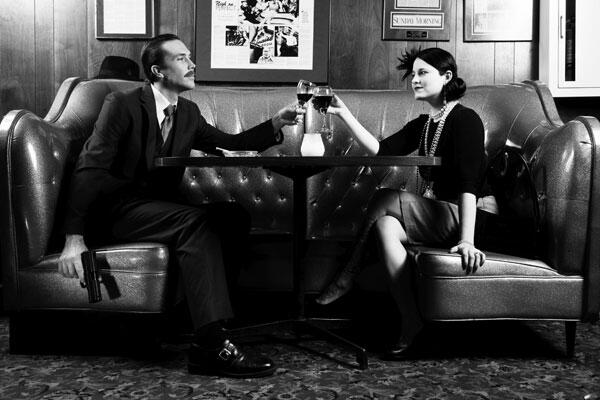
Me Love You Long Time | Issue 11
Critic’s blind date column has been running for a while now. We’ve all got some good laughs out of it, and at least a few people have scored themselves a night of romance. But here at Critic we feel that it’s time that we stepped it up a notch. The date is now at Little India to add a little more spice. But that’s not all; each week our blind daters will have an extra challenge to deal with, which they won’t be told about until they arrive for their date. If you want in on the action, email critic@critic.co.nz with your details. VIVIANSorry in advance if this write-up’s a bit rough. I’ve spent the last couple of hours curled around the toilet revisiting last night’s lethal combination of curry and wine. Spent the entire day yesterday studying every “totally normal, tall, good looking, smart” male I passed by as this is what Joe, Critic’s editor, had told me my date was in the emails leading up to it. I’d been told there was going to be a twist to my date and the change of venue to Little India made me think there might be a Vindaloo or something in there, a few cheap laughs for the readers. Alas, no Vindaloo. Instead, my date was Joe Stockman himself. First thoughts are ohfuckohfuckohfuck my chat quality is going to need to be x100000 better than what I’d prepared for. I think back to the emails. Modest yet reasonably accurate self-description. Then – wait. How old is this guy? We play the age game – I’m too young for him according to the “half your age plus seven” formula (he explains that this comes from Islamic origins). I realise this is all very one-sided as he had the opportunity to Facebook stalk me beforehand. He orders fish and garlic naan, has me thinking he’s writing off a pash early on in the night. We share respective Indian food horror stories. Go to bathroom, have 12 texts from flatmates: “Who is it? Is he a creep? Want a pick up?” Send generic reply to silence them. Nosy bitches. Move on to Albar. Halfway through our drinks he surprises me with a sneaky pash. Not complaining, also pretty good kisser. Traipse off to IBs, recommend for him a Jager and Ginger Ale. Doesn’t find his drink too pleasant. Then comes his classic line, while staring into my eyes: “God, it’s so hard not to kiss you” followed by another pash. Wow. But a bit too intoxicated to care at this point. We begin the walk, buy another bottle of wine. Terrible call. Decide to have a naughty stopover at Critic HQ. All gets a bit ridiculous from here. Apologies to those Critic staff who are sitting on the couch with their morning coffee. Also apologies to Howie. I do hope the rumours about your amnesia are true. Now if you’ll excuse me, I need to go and deal to my pash rash. EDWARDWhy am I doing this? I was of course, cajoled and pressured into it, but still this can only end badly. And you have to question the morality of the Critic editor going on the blind date. But I feel that I have to do it once. I need to know the terror that I am putting everyone else through on a weekly basis. Plus, working 70-hour weeks doesn’t leave much time for a love life. The first issue was whether to Facebook stalk … of course, I already have her email addy. I make it three days before caving in: One mutual friend and I can see her profile photos and – thank god – she’s hot. But really, isn’t that just more pressure? I only just have time after work to shoot home, shower, didn’t shave; hope she likes the slightly rugged look, not going to help with making me look younger though. Smash a few Jagermeisters in the office with Howie, then head on down. Am I underdressed? Do I smell? Is there shit in my teeth? Why do I care so much about making a good impression on someone that I have never met before, and possibly never will again? She turns up, looks great, smiles, and sits down: Here we go. Dinner goes well, and the Corbans is gone quickly (why the hell did I make myself drink Corbans?) and she’s keen to carry on for another drink. We head to Albar for the Tuesday night Celtic band. I’m guessing she probably hasn’t spent a lot of time here (second-year law, living on Castle, probably more of a Cook fan). A cheeky whiskey, a cheeky half pint, and a cheeky pash … it’s going well. Another drink at Alibi, another cheeky pash, and her reason for coming on the date becomes clear: “So, do I get to meet Howie now?” Seriously? You’re more interested in my cat than me? Damn you Howie. But yes of course you can meet him. Back to the office, we chuck some music on, and pop open another bottle of wine. Now, Howie is basically the most chilled out cat in the world, he loves everyone. But for some reason he is seriously unimpressed by this girl being on his turf. We have to leave before he kills her, and I walk her back home. A kiss goodbye and I’m walking back to mine, already thinking about tomorrow’s meetings and print deadlines. At least she was cute. Thanks, ah, me?
-
Columns
Geekology | Issue 11
If there’s one foodstuff that everyone should be required to consume at least once in their life, it’s guaranteed to be chilli peppers. Maybe a cayenne pepper or perhaps a habanero? If you’re particularly brave, you could opt for the one of the world’s hottest chilli peppers, the Naga viper or the Trinidad Moruga. The idea is probably daunting for a lot of unaccustomed chilli eaters out there, so I expect the following meticulous breakdown of the science behind chillies will rid you of any apprehension! Basically, the “hotness” you experience when you eat chilli is a product of the naturally occurring alkaloid, capsaicin. Capsaicin is actually a mixture of related compounds including dihydrocapsaicin and homocapsaicin which all contribute to that well-known burn. They’re all very stable compounds so are unaffected by heat, hence why chillies stay extremely hot, even when cooked! When you eat a chilli, these compounds bind to the sensory receptor, TRPV1, which sends a nociceptive (pain) signal to your brain. In some cases the TRPV1 receptor is expressed on temperature-receptive nerve fibres, so although it might feel as though your mouth is on fire, there’s most probably no tissue damage; it’s your brain playing a cruel trick on you. So then, the age old question – how do you get rid of the burn? First of all – and a lot of you probably know this already – WATER DOES NOT HELP. At least not initially; once you’ve ingested the capsaicin it probably does help, mainly due to its coldness. Remember, capsaicin is lipid-soluble, meaning it dissolves in fatty things. Hence the reason for many chilli-heads chowing down on frozen yoghurt and full cream milk after a contest. If you’ve got a strong stomach I’d suggest having a shot or two or olive oil, considering it is made almost entirely of fatty acids. The rating system for chilli heat is the Scoville heat scale. Your humble jalapeño pepper sits at around 4000 scoville heat units (which is still relatively hot for some people!), and the Tabasco pepper at approximately 40,000. The Trinidad Moruga, however, tips the Scoville at almost 2,000,000! That shit is whack. Funnily enough, the pepper sauce used on Hell’s “Pizza roulette” is from a special reserve, called Blair’s 3am, and is reputedly in excess of 1,500,000 Scoville heat units. Give it a go, and don’t forget your olive oil! – Geekology_qanda@live.com
-
Columns

Classic Film | Issue 11
Director: Mary Harron American Psycho tracks the life of Patrick Bateman. He is 27 years old, has a group of work-hard-play-hard Wall Street friends, a fiancée (Reese Witherspoon) and listens to Huey Lewis and the News. He has a meticulous morning regiment of facial scrubs. But like the herb mint facial mask he puts on in the morning, Patrick Bateman is but a successful yet anonymous front to a malign psychopath. The film is adapted from the novel by Bret Easton Ellis which was condemned for its relentlessly distasteful content. Released in 2000, under Harron’s direction, it draws on themes of the artificial consumer existence and the illusion of the American Dream. There’s something unnerving about Christian Bale’s insidious performance, blurring sanity and insanity. A typical night out for this guy involves playing Huey Lewis and the News’s “It’s Hip to be square”, while giving a thoughtful summary of the album, before plunging an axe in to his colleague and nemesis, Paul Allen (Jared Leto). The seemingly arbitrary switch between scenes of apparently normal conversation and horrific violence brilliantly exhibit Bateman’s perturbed psyche. As the authorities haplessly fail to close in on him, the violent acts escalate and he loses all sense of reality. All those around him remain unresponsive to his unusual behaviour. The often upbeat script gives a sense of emotional disconnection between all the characters, in which sense it is completely faithful to the book. They tend to care more about securing a dinner reservation or the subtleties of their colleagues’ typeface on their business card than any emotional nuances, psychotic or not. The only respite from this comes from Bateman himself as first-person narrator. The soundtrack, scored by John Cale, skilfully brings depth to the film – a range of 80s feel-good classics through to chilling full orchestral scores that perfectly accompany the serial killer’s manic crescendo. The film explores what is real and what we are numb to as the viewer progressively loses a sense of timescale and even reality. – Theo Kay
-
Columns

Straight Up | Issue 11
My friend Sam had this awesome idea last year. Instead of buying decorations for his Christmas tree, he and his partner decided to make sparklies of their own. Rather than plastic angels and itchy tinsel, Sam created special queer/trans Christmas decorations. His Christmas tree kind of became a pine-scented altar to famous, and not-so-famous-but-inspirational queer/trans folks (and allies). I thought this was an excellent idea, and something that I could do with in my living room all year round (but pine trees are so messy…). So today I’d like to reflect on the figures who would make it as baubles on my own Chrissy tree. The first person who would definitely be there is Project Runway’s Tim Gunn. Oh Tim. Not only are your gorgeous suits irresistible – you give me strength by allowing me to bear witness to your gentle, caring, nice-smelling masculinity. I’d also include a contestant from last season – Mondo – because he is the most adorable human I have ever seen. The next person I think of is Oscar Wilde (played by Stephen Fry to catch two babes with one bauble). I was nourished on Oscar’s writing as I was growing up. He was the one queer author I could easily identify on our bookshelf at home. I carried around that book in my bag for years. In recent years Stephen has also made it onto the bookshelf. Next would be Missy Elliot. There is something irresistibly genderqueer about Missy. She would be a musical decoration, so every time someone moved nearby Get Ur Freak On would play. One whole branch of my tree would be taken up by thinkers like Kate Bornstein, Jack/Judith Halberstam, Judith Butler and Gloria Anzaldua; people who have prompted me to question, and ultimately change the ways I live my life and practice my politics. The angel at the top of my tree, in a glittery silver body suit (that she had to be sewn into) is Cher. A cliché I know, but I can’t think of any other queer icon/elder who would be more pissed off if she wasn’t on the top of the tree. I am intimidated by Cher. And I like it. I guess any exercise like this will always be a challenge – all of these people probably hold beliefs with which I would disagree. Still, for who and what they are they inspire me. – La Di Da
-
Columns

Swillable | Issue 11
Taste: 8/10 Price: 12 for $20 (on special) Percentage: 5% As winter creeps in the ease with which a cold beer can be consumed increases noticeably. With many Scarfie flats dipping below the temperature of the fridges in them it becomes convenient to just leave the box in the lounge, not even having to leave the TV to get another. Possibly the one advantage of living in a shit-hole flat in a sub-Antarctic climate. This week’s subject is easily one of my favorite mass-produced beers. I first came across it as a thirsty young fresher when Cumby Superliquor was selling 4 packs of 500mL cans for $6. The appeal back then was that it was something like 9 or 10 standards for well less than that many dollars; it was just a nice little perk that I was also buying a premium imported Dutch lager. Even though this awesome deal ended around a month later it had sparked my taste for Grolsch and I still keep a keen eye out for specials. These days I’ll usually pick up a box or two from the local supermarket when it’s cheap. It’s not exactly stunning value like my little first-year find but in my opinion it’s well worth the upgrade from SoGos. The bottled version, unlike its canned counterpart, is not brewed in Holland. Instead it’s imported from Aussie where Pacific Breweries does a pretty good job of getting it right. It is a delicious light golden lager with beautiful malty flavour. It provides a slight bitterness to complement the taste and a sniff will provide you with that epic “skunky buds” smell that reminds us how closely related Cannabis and Hops are. At 5% a box will get you pretty drunk as well. While $20 a box may not fit the bill as a scarfie beverage for every night out it’s ideal if you feel like treating yourself. If you see it on the shelf for a similar special price as Heinekin or Carlsberg I’d well recommend branching out and giving it a go. You never know – you might discover a new favourite. Your boy, – Pillbo Swaggins
-
Columns

Diatribe | Issue 11
Every week a small group gathers on the Otago Union Lawn to openly smoke cannabis as a group. Many people can’t understand why we do this. Some people support us, but think we are crazy for putting our necks on the line and risking arrest. Others just think we are degenerate criminals. Either way, our strategy is working, because the question we are trying to provoke is, “should cannabis use really be considered a crime at all?” First of all, there are no victims, except potentially the user themselves. And let’s not beat around the bush (no pun intended), cannabis does have SOME harms for SOME people who use it. We should be clear that we don’t think those people should use cannabis. If you don’t find the experience of cannabis consumption relaxing and pleasurable you probably shouldn’t partake anymore. But as for those of us who do find it euphoric, and are able to use it responsibly and in moderation – why should we be punished for the potential mistakes of the few who can’t? Let us also remember that there are many other harmful and even life-threatening substances that the state allows people to use under certain regulated circumstances. Prescription drugs are allowed because we trust a person’s doctor to exercise sound judgement when deciding what treatment is right for a particular patient. Even drugs with a high potential for abuse and morbidity can be dispensed to any person if their doctor thinks it will benefit them. Strangely, doctors are forbidden from prescribing their patients cannabis even though it is widely known to be medically beneficial in numerous scenarios. An elderly woman experiencing chronic pain and medicating herself with all-natural herbal cannabis under the supervision of her doctor is as legitimate a target for Police as a patched-up Mongrel Mob member. In fact many police would choose to bust the grandmother over the mobster because it would be much easier and less risky. And in case some readers are thinking this is just a hyperbolic exaggeration for dramatic effect, no, this type of situation happens every month in New Zealand. The court records make for a particularly sickening read, and this is one of the most disgusting effects of our current cannabis prohibition laws. Other obvious examples of legally regulated harmful substances are of course alcohol and tobacco. Both of these substances will unquestionably kill you at the right dose, and yet you don’t even need a doctor’s supervision to use them. In fact billion-dollar multinational companies are allowed to advertise them and you can pick them up at your corner dairy. We recognise as a society that individuals have a right to engage in demonstrably risky behaviours for pleasure as long as they are endangering nobody but themselves. It is legal to bungy jump, go skydiving, or even, heaven forbid, to play rugby. But there is a double standard when it comes to cannabis. You can actually die from the aforementioned activities. Alcohol actually causes brain damage every single time you use it. Cannabis cannot kill you or your brain cells. That’s the difference between a Physiology textbook and “The Great Brain Robbery”, facts. None of this is new information. The New Zealand Law Commission spent years examining and reviewing the Misuse of Drugs Act, and in 2010 they produced a report of recommendations that included legalising cannabis for medical use, and decriminalising cannabis for personal recreational use. Unfortunately, because cannabis is used as one of the classic political wedge issues in this country, the politicians have done nothing. Just like they did nothing the last several times official government reports have recommended ending prohibition over the past three decades. But just because the politicians won’t act doesn’t make the expert recommendations less correct. In fact the New Zealand public, and increasingly the judiciary, have moved on. We all know what’s coming, and the politicians are only serving to further prove their irrelevance. We have smoked in public twice a week on campus continuously for eight years and we hardly ever see the cops. We have smoked inside the Police station with no arrests. The Daktory operates a cannabis vending machine in Auckland. And Judges have been giving lenient sentences to, and even discharging without conviction, people who have been cultivating cannabis on a relatively large scale. Clearly someone’s not taking this whole prohibition thing very seriously. Maybe it’s time we tried something different. – The 4.20 Crew
-
Columns

Scarfie Chronicles | Issue 11
This week in scarfie shenanigans: increased nudity! As the days grow colder, one man seemed to feel the need to fight his developing winter blubber: He was spotted running naked up the Dundas hill one crisp Friday evening. The current theory as to why is eyebrows. Witnesses reported that he seemed unperturbed by his state, possibly because of a development in the “eyebrows” game that we were unaware of – it turns out that if you successfully complete the task you were “eyebrowsed” into doing, your eyebrowser must complete a similar challenge or shave their eyebrow. A disgruntled second naked runner is expected on Dundas soon after this is published. In further nude news, a young man has been reprimanded by his college for revealing his nether regions to a crowd of fellow freshers. A conversation arose regarding the size of his endowment, and after “at least forty minutes” of nagging, a little forced porn-watching and some “stretching” the meat sword in question was shown in its full glory. We hope it was a sight worth waiting for, because the college admin are apparently not in favour of a repeat showing. The antics of horny freshers aren’t limited to just one college, with both Selwyn and Carrington having hops over the weekend. I think we know which one got more carnal: That’s right, apparently a couple of C-towners got their dirty dance on and bumped pelvises through clothing. We are shocked and appalled. Surely Selwyn, one of the fresher bastions of tradition and sound morals, would never stoop to such levels. But no; their weekend was described as a “cultish orgy”. In other college news, Salmond’s Master Bruce Cowan told the Otago Daily Times this week that they “are not dealing with drunk students any more … they don’t overdo the consumption.” This seems an astonishing feat considering the rumours of unlimited alcohol at their ball on the weekend, but we have to keep in mind that compared to those crazy cats at the other halls, even the Castle/Dundas region looks tame. Naked running man? Try a hundred and sixty of them crammed into a tiny room, their skinny hipster hipbones swaying to their own college band. Yes, Selwyn is definitely cultish. – Josie Adams
-
Culture
Howl (an excerpt)
I saw the best minds of my generation destroyed by madness, starving hysterical naked, dragging themselves through the negro streets at dawn looking for an angry fix, angelheaded hipsters burning for the ancient heavenly connection to the starry dynamo in the machinery of night, who poverty and tatters and hollow-eyed and high sat up smoking in the supernatural darkness of cold-water flats floating across the tops of cities contemplating jazz, who bared their brains to Heaven under the El and saw Mohammedan angels staggering on tenement roofs illuminated, who passed through universities with radiant eyes hallucinating Arkansas and Blake-light tragedy among the scholars of war, who were expelled from the academies for crazy & publishing obscene odes on the windows of the skull, who cowered in unshaven rooms in underwear, burning their money in wastebaskets and listening to the Terror through the wall, who got busted in their pubic beards returning through Laredo with a belt of marijuana for New York, who ate fire in paint hotels or drank turpentine in Paradise Alley, death, or purgatoried their torsos night after night with dreams, with drugs, with waking nightmares, alcohol and cock and endless balls, incomparable blind streets of shuddering cloud and lightning in the mind leaping towards poles of Canada & Paterson, illuminating all the motionless world of Time between, Peyote solidities of halls, backyard green tree cemetery dawns, wine drunkenness over the rooftops, storefront boroughs of teahead joyride neon blinking traffic light, sun and moon and tree vibrations in the roaring winter dusks of Brooklyn, ashcan rantings and kind king light of mind, who chained themselves to subways for the endless ride from Battery to holy Bronx on benzedrine until the noise of wheels and children brought them down shuddering mouth-wracked and battered bleak of brain all drained of brilliance in the drear light of Zoo, who sank all night in submarine light of Bickford’s floated out and sat through the stale beer afternoon in desolate Fugazzi’s, listening to the crack of doom on the hydrogen jukebox, who talked continuously seventy hours from park to pad to bar to Bellevue to museum to the Brooklyn Bridge, a lost batallion of platonic conversationalists jumping down the stoops off fire escapes off windowsills off Empire State out of the moon yacketayakking screaming vomiting whispering facts and memories and anecdotes and eyeball kicks and shocks of hospitals and jails and wars, whole intellects disgorged in total recall for seven days and nights with brilliant eyes, meat for the Synagogue cast on the pavement, who vanished into nowhere Zen New Jersey leaving a trail of ambiguous picture postcards of Atlantic City Hall, suffering Eastern sweats and Tangerian bone-grindings and migraines of China under junk-withdrawal in Newark’s bleak furnished room, who wandered around and around at midnight in the railway yard wondering where to go, and went, leaving no broken hearts, who lit cigarettes in boxcars boxcars boxcars racketing through snow toward lonesome farms in grandfather night, who studied Plotinus Poe St John of the Cross telepathy and bop kabbalah because the universe instinctively vibrated at their feet in Kansas, who loned it through the streets of Idaho seeking visionary indian angels who were visionary indian angels, who thought they were only mad when Baltimore gleamed in supernatural ecstasy, who jumped in limousines with the Chinaman of Oklahoma on the impulse of winter midnight streetlight smalltown rain, who lounged hungry and lonesome through Houston seeking jazz or sex or soup, and followed the brilliant Spaniard to converse about America and Eternity, a hopeless task, and so took ship to Africa, who disappeared into the volcanoes of Mexico leaving nothing behind but the shadow of dungarees and the larva and ash of poetry scattered in fireplace Chicago, who reappeared on the West Coast investigating the FBI in beards and shorts with big pacifist eyes sexy in their dark skin passing out incomprehensible leaflets, who burned cigarette holes in their arms protesting the narcotic tobacco haze of Capitalism, who distributed Supercommunist pamphlets in Union Square weeping and undressing while the sirens of Los Alamos wailed them down, and wailed down Wall, and the Staten Island ferry also wailed,
-
Culture
On the removal of my toenail and the music that helped me get through it
Last week I had my toenail removed. What started out as an ordinary ingrown nail became infected and pus-filled until my entire toe turned a disturbing shade of mauve and swelled to a rather inconvenient size. This condition made wearing shoes difficult and, since Dunedin is pretty cold this time of year, I decided to risk emasculation and ventured into the nefarious corridors of Student Health to get it checked out. After an initial consultation the nurse deemed my toe “concerning” and booked me in to see a doctor. I love medical euphemisms. Doc took one look at my poor hallux and deemed it “incurable”. No euphemisms there. I got called into a treatment room and met my surgeon for the day: a sixth-year med student who tells me she has never done this kind of procedure before, but spent a long time watching “how to remove toenail” videos on YouTube … In all fairness, she was efficient and gentle, but watching my nail being slowly pulled away from my toe was a fairly vertiginous experience (which is a euphemism for fucking nausea). I was offered to keep the bloody nail as a souvenir. I declined. Every cloud has a silver lining however, and I found myself in possession of a potent dosage of codeine. But every silver lining has its cloud: Namely, codeine can’t be mixed with alcohol. Thus, I spent my weekend numbly sober, with nothing but a stack of new CDs and a rapidly decreasing codeine supply for company. Lights flicker in a sterile changing room, a topless jock pumps iron as an oddly dressed pixie girl sways to a tuneless beat. Scene change. A dirt-biker flies through the air as the crowds cheers, no, it’s a football game, and the odd girl now has pink hair and a boombox … I must have been asleep. No, I would never dream of a topless dude, this fantasy sequence is actually the video for Claire Boucher’s (better known by her performance moniker Grimes) latest single “Oblivion.” If I were to describe Grimes’s fourth LP, Visions, I would use phrases like nihilistic, self-indulgent, phosphorescent ecstasy, or Kafkaesque escapism. But then I would just sound like some pompous jackass with a thesaurus. One would need to splatter oil on a canvas or dance to the sound of orcas mating in order to describe Grimes’s masterpiece. It is bizarre art that can only be described by other bizarre art; art that revels in its eccentricity and refuses to submit to contemporary taxonomy. Grimes’ hyper-reality is unlike anything you’ve ever heard, but for a vague idea, imagine Crystal Castles doused in oil, fused with the sounds of orcas mating. Get the picture? Grimes’ psychedelic mindfuck almost pushed me over the edge. I briefly contemplated downing the half-full bottle of vodka sitting beside my desk. Luckily Visions is a relatively short record, and my next port of call was cut from an entirely different cloth. The opening chords of The Black Seeds’ latest, Dust and Dirt, are anything but suicidal, and frontman Barnaby Weir’s salty dub filled me with visions of sun-drenched beaches, exotic cocktails and hammocks. This is the most experimental Black Seeds release to date, melding their classic reggae-roots sound with a 70s funk aesthetic. Flawlessly produced and infectiously chill, Dust and Dirt is the perfect soundtrack for a day at the beach, mellow party, buddy road trip, or, 2am codeine come-down. Suddenly I’m all too aware of the fact that I now only have nine toenails and am probably addicted to these pain-pills I keep on popping; a future of snide comments, “hey look at that freak with a missing toenail”, and codeine-dependency lies ahead of me. There’s only one thing that can get me out of this rut: A guitar-heavy blend of Southern rock and Memphis soul. Oh, what a fantastic coincidence that my next album to review is Alabama Shakes’s gritty throwback Boys & Girls. In an age where true authenticity is something few musicians can claim, Alabama Shakes are as “real” as it gets. Let’s start with influences. Lead singer Brittany Howard is Janis Joplin incarnate, if Joplin was making music in the 30s and was … black. Throw in a bit of Otis Redding, the guitar prowess of Keith Richards, and the lyrical stylings of Aretha Franklin, and we begin to see the beautiful form of Alabama Shakes take shape. This is rock music at its most pure and noble. Respecting their roots yet progressing beyond them, Alabama Shakes have produced one of the tightest and most listenable recordings of the year. Boys & Girls is an album of raw power, packed with songs that affirm the human spirit and shed light on the darkest of times – just what the doctor ordered. – Lukas Clark-Memler
-
Culture
Angels and Aristocrats
When you enter the lower galleries of the Dunedin Public Art Gallery, until the end of June, you will not be able to avoid the withering stare of “Charlotte Countess Talbot”, whose eyes follow you around the room. This large piece by Thomas Gainsborough and John Hoppner takes centre stage in the opening gallery of the exhibition and is one example of the fine pieces that make up the large national exhibition being currently showcased. The collection contains various elements including children, animals, royalty and sculpture (“Bust of a Lady” may be of particular interest to some!) and ultimately traces early European art in New Zealand collections. The pieces range from the fifteenth through nineteenth centuries and Dunedin is lucky to be the first gallery in the country to host the exhibition. Angels and Aristocrats has been a long time in the making, and being such a sizeable group of collected works it occupies the majority of the ground floor galleries. The exhibition was assembled with the collaboration of Auckland Art Gallery and sees these works assembled together for the very first time. The exhibition has a companion in the form of a book, bearing the same title and penned by Mary Kisler, an art historian and a senior curator of the Mackelvie Collection at the Auckland Art Gallery. Dunedin curator Aaron Kreisler spoke about the origins of the exhibition, explaining that “the works, and in particular number eight in the exhibition, generated the book which has led to the show.” Because of this, the book is intended to be a visual aid to the exhibition itself, both complementing and deepening the audience’s understanding of the European sensibilities found in the collection, therefore it would be of benefit to anybody particularly taken with the exhibition to also consult the accompanying book. The exhibition itself follows suit from its literary predecessor and is displayed within the same genre groupings of religion, history, landscape and portraiture. The book’s author, Kisler, felt that the richness of these works scattered throughout New Zealand collections had been lost, and the aim of her book is to re-establish these works back to their former place as a significant piece of our national history. – Taryn Dryfhout
-
Culture

Dragon’s Dogma
Platform: PS3, Xbox 360 Genre: Action RPG Dragon’s Dogma has you forming a ragtag band of roguish adventurers, traversing an awesome untamed landscape and killing large fantastical beasts like griffins and chimeras as an afternoon’s work. “But wait!” you might cry, “isn’t that like every other fantasy videogame I’ve ever played?” The answer, at least at this stage, is: Sort of. The principal difference between Dragon’s Dogma and your bog-standard open-world fantasy game is that is that, first and foremost, it is a game about combat rather than a developing story or leveling up an avatar. Its development team includes Devil May Cry alumni, and it claims to take influences from Shadow of the Colossus. The latter, especially, are colossal shoes to fill. If Dragon’s Dogma can replicate the thrill of climbing over the bodies of tremendous monsters half as well as Shadow then that would be quite an achievement. At this point it is, at the very least, possible to cling to a griffin’s ragged mane and wail away at its head as it flies chaotically though the air. Your party, too, are not a group of characters that are worth becoming emotionally attached to. The game refers to them as pawns, which hints at their intended purpose. Your one permanent pawn develops as you do, and exists (if you have an internet connection) in a cloud where other players can recruit him or her. Your loyal lackey makes it alone, and returns to your party with the sparkling loot and invaluable practical experience that they gained in their own adventures.
-
Culture

Fez
Platform: Xbox 360 Genre: Puzzle It’s a fez. Fezzes are cool. In this case Gomez, the over-sized oblong-headed protagonist, is granted magical powers by a felt hat he finds in his two-dimensional pixel home. It grants him the insight to see his world in a whole new way. Gomez is a “protagonist” in the loosest sense, because Fez doesn’t have much of a plot. It’s never explained why Gomez’s home is floating, alone, in a void in the middle of space. On the other hand, Fez’s pixels are packed with more intricate details than almost any fully fledged 3D title. Messages scrawled on blackboards in rooms that you have no reason to enter, a seemingly useless guide and artifacts with elaborate patterns that serve no obvious purpose all add to a second layer, simmering away quietly below the surface – their enigma can suck in a player who takes the time to examine them. Fez’s central mechanic twists dimensions like a Moebius strip, but it does so in a way that’s immediately intuitive to the player. From the basic 2D perspective, the camera can be rotated 90°, providing four independent views of a single level. Essentially, the game ignores depth. If Gomez is standing at the far right of a level, and you flip the perspective, he can saunter forth, smugly, as if he’s on the far left of the immediately preceding view – simply because he looks as if he should be able to. The first time you take advantage of this, and traverse an empty void, is incredibly satisfying. It never gets quite as tough as you might expect it to. Most often, levels require you to climb a column by rotating it at each tier, until platforms line up in such a way that you can gain altitude. When you attempt to traverse a more complex piece of geometry, Swiss-cheesed with doorways and alcoves, things get more complex. Don’t get me wrong, it remains joyous and satisfying for the duration of the game, but is nothing like as punishingly taxing as, say, Braid. There are technical problems. An inconsistent frame-rate and bugs that kick you to the Xbox dashboard are frustrating, especially in a game that so cleverly uses “pretend” bugs as part of its charming aesthetic.
-
Culture

Lovepuke
Written by Duncan Sarkies Directed by Emma Feather Shaw “We’ll make you laugh, cringe, and maybe you’ll even find that you see a little bit of yourself in the characters.” The Globe Theatre is opening its doors, surprisingly, to a new youthful crowd this month, as Duncan Sarkies’s Lovepuke takes the stage. While the Globe is usually known for its older crowds and somewhat traditional plays, this one is definitely a change of tune. Promising to take us on a “whirlwind tour of true love” we see all traditional archetypal characters in a new and innovative setting, as we’re treated to a rare glimpse into the lives of three couples, watched over by Glen the cynic, as they’re taken through their paces, from start to finish. Shaw takes the script and makes it her own, using simple and effective setting and props. “A stage filled with chairs – some tall, some broken, some glamorous, some comfortable, some unstable …” These chairs are used as a clever and subtle indication of the characters on stage and with this simple setting, it leaves the audience time to appreciate the new and exciting talent which makes up the cast. The show opens on May 17 and runs until May 26, with all performances on at 7:30pm. This decent run gives you plenty of opportunity to take a hike up London St to have a watch, and a delightful $15 concession if you grab some friends and take a group of five along. Sweet!
-
Culture
2012: CAPOCALYPSE
Capping Show returns this year with a strong and entertaining performance that is the talk of campus this week. Haven’t already seen it? Where have you been? With a constant flow of punchlines, crazy bright costumes and interesting sets, it’s a must-see. Aaron Mayes and Caitlin McNaughton direct the cast, a variety of students of all ages, who have created the topical and humorous script. As someone who’s never seen a Capping Show before, I didn’t really know what to expect, but I’d heard many rumours, mainly “it’s very offensive.” This rumour turned out to be true, and I can guarantee almost everyone will end up cringing at some joke, but there’s some sort of strange talent in that. You’ve got to be a good writer to be able to target literally every audience member. Some skits made me feel quite uncomfortable but with the fast pace you’re already on to the next scene and laughing at something else before you know it. Don’t be put off. The cringes are heavily outweighed by the comedy. The one-liners and clever puns are out of this world funny. Some of those puns really made my day. I could list them all now for you but that would just ruin the fun of it. The surprise factor is definitely one of the best things in the show. You never know what to expect, or what will be said next. It’s that atmosphere which really keeps you entertained and on the edge of your seat, which is something I really enjoy. I was reminded quite strongly of Mitchell and Webb; with a sort of Number Wang or Posh Jaws-esque skits and the classic joke set-ups, which make the performance. Definitely a good thing, I’m a big Mitchell and Webb fan. The production quality is at a very high level. The lighting, videos and sound are incredible – including a live band! The talented band add another layer to the performance as they cleverly master a number of parody songs, including “We Found Love in a Homeless Place”, which is still stuck in my head. Tickets are $15 and available from OUSA. Get in fast and make sure you grab a seat as it’s always a sell-out production. I can personally vouch for that. I missed out last year because tickets sold out. Classic. If you’re a fan of puns, like me, you’ll definitely be a fan of Capping Show 2012.
-
Culture

Stuffed Baked Potatoes
These easily prepared stuffed potatoes are the ultimate comfort food. The potatoes take at least an hour to cook, but little other preparation is required. Go Mexican and fill ’em up with chilli beans (I like the hot varieties because I’m a sucker for spice), cheese and fresh chilli. Or play it a little more sophisticated with glorious basil pesto, sour cream and a throw-it-together sort-of-salsa. Beyond this, the combinations are only limited by your imagination. Pull out the canned goods, be it spaghetti or creamed corn. Crispy bacon, flash-fried mushrooms and a few cheeky slices of brie would also go down a treat. Attempt to demolish the potatoes without the filling dribbling down your chin. Ingredients8 large, floury potatoesA few lugs of olive oilFreshly cracked sea salt2 tomatoes, quartered and de-seeded then finely diced½ small red onion, finely diced½ tsp white sugarA few pinches of salt220g tub of light sour creamSmall container of basil pesto420g can of chilli beans2 large handfuls of grated cheese 1 small fresh red chilli, sliced Method01 | Select floury potatoes which are well suited to baking. I usually go for a red-skinned variety such as Red Rascals. Keeping the skin on, give them a quick wash and a pat dry then coat liberally with olive oil. Place on a baking tray, crack the sea salt over the potatoes (use a few pinches of regular salt if you don’t have this) and bake at 180°C for 1-1½ hours, or until completely tender when pierced in the middle with skewer or knife. 02 | Meanwhile, prepare the salsa. Combine the tomatoes, onion, sugar and salt in a bowl. Cover with cling film and leave at room temperature for at least an hour. The tomatoes will release a lot of liquid, so drain the bulk of this off before you use the salsa. 03 | When the potatoes are cooked, remove them from the oven. Allow to cool slightly, then slice the tops off and carefully scoop out a few tablespoons of the flesh, keeping the sides of the potato intact. 04 | Heat the chilli beans in the microwave for about two minutes, or until piping hot. Alternatively, play it old school and heat over the stovetop until piping hot, stirring frequently. Divide the beans among four of the potatoes, top with cheese and return to the oven for about 10 minutes, until the cheese is golden and bubbling. Top with the chilli. I usually cheat and rehydrate dried chillies in freshly boiled water for a few minutes, then slice those up. They are cheaper, but still pack a punch. 05 | Top the other four potatoes with the tomato salsa, sour cream and basil pesto. 06 | Serve with a green salad or some freshly steamed vegetables. $18 - Feeds four
-
Culture
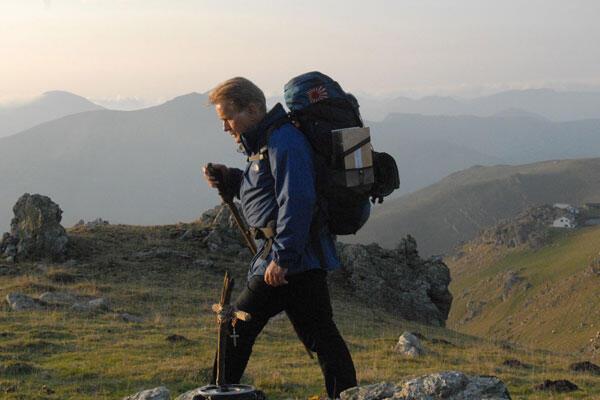
The Way
The Way is a fictional story about the “Way of St James” or “El Camino Santiago”, a pilgrimage from the French Pyrenees to the cathedral of Santiago de Compostela in northwest Spain. The story is about Tom (Martin Sheen), an ophthalmologist who isn’t interested in seeing the world (how ironic) and his son Daniel (Michael J Fox), who cannot see enough of it. After Daniel is killed in an accident at the outset of his journey, Tom travels to France intending to retrieve a body but instead discovers the life of the son he never really knew. For absolution, and as tribute to Daniel’s feverish love for adventure, Tom embarks on the 800 kilometre journey alone, scattering Daniel’s ashes at significant points along the way. Contrary to Tom’s intentions he finds support, both literally and thematically, in the shape of companions. The story, which could easily have been over-whelmed by the tear wrenching, syrupy combination of a heartbroken father and beautifully shot landscapes, is saved by three jolly (or not so jolly) fellow travellers: Sarah the angry Canadian, Youst the high-spirited Dutchman, and Jack the word-strapped Irish Poet. Four damaged strangers/friends on a pilgrimage makes for an overtly inspirational plotline but The Way doesn’t sink into trying to solve life’s mysteries or even the four characters’ problems. It works from Daniel’s sentiments from the beginning of the film: “You don’t choose a life Dad, you live one.” I don’t want to go overboard on praise, but this is a super movie. It is a rare gem in the current film world, a world lacking any original thought (name one blockbuster out right now that isn’t a book or a sequel, I dare you). It is a 123-minute journey in which you worry not once about the destination. 4 / 5 stars – Lulu Sandston
-
Culture

Spud
After some preparatory research before watching this film I discovered that the historical context of Spud was 1990s South Africa, a pivotal time for South African people. The 1990s saw the abolition of apartheid, the release of Nelson Mandela after 27 years’ imprisonment, and the birth of democracy. However, after arriving at the film and seeing a lone figure slumped in the dark, I prepared myself for an underwhelming two hours. Spud is based on the gawky and undeveloped figure of John Milton (Troye Sivan), later named Spud because damn puberty has forgotten to tell his balls to drop. Spud leaves behind his overly eccentric middle class parents to start a new beginning at an exclusive all-boys boarding school. After being sectioned into a dorm with a bunch of alpha males, Spud considers himself to be deficient in desirable masculine qualities. He finds solace in the unlikely figure of his exuberant alcoholic English teacher, “the Guv” (John Cleese) who encourages Spud to find himself and his inner sex god through inundating him with classical novels. Through literature Spud finds his inner confidence by not only pulling the lead role in his school’s musical, but also pulling two girls. I felt the intentions of this film was to recount an inspirational boy-to-manhood story; I left thinking it was simply bizarre. The characterisation seemed to be way off, Sivan a little too feminine to play this role, and when he was paired up with his onscreen girlfriends (who looked twice his age) I couldn’t help feeling like I was witnessing paedophilia. I don’t know if it was the fact that I was far removed from the boy-going-through-puberty-story but, all in all, like the other lone audience member I happened to converse with after, we will not be returning to see it anytime soon. 1 / 5 stars – Emma Scammell
-
Culture
A Dangerous Method
Based on the play The Talking Cure, David Cronenberg directs this drama based on the true story of the turbulent love triangle that developed between two towering intellectuals – Sigmund Freud (Viggo Mortensen) and Carl Jung (Michael Fassbender) – and a troubled patient (Kiera Knightley). Seduced by the challenge of an impossible case, Dr Jung decides to take on Sabina Spielrein (Knightley) using Freud’s new weapon, the “Talking Cure”. Spielrein’s problems are quickly traced to sexual fixations on being beaten by her father and on defecation. Gross, but true. However, it turns out that once calmed, she has a brilliant analytical mind. The film centres on Jung getting to meet his idol Freud and together they discuss Spelrein’s case. However, Jung leaves out the important detail: His ongoing affair with her. She is, she claims, “vile and filthy and corrupt” and her greatest desire is to be tied up and spanked. Jung, with a pained, frowning diligence, duly obliges. The scenes with Freud and Jung are clever, unexpectedly funny and pretty enjoyable. The portrayal of their troubled relationship is spot-on, both historically and cinematically. However, the scenes with Spielrein fall flat. Partly, this is because while Mortensen and Fassbender play their parts brilliantly, with easy wit, Knightley’s attempts in early scenes to feign madness, her facial tics and contortions, are a tad disturbing and unconvincing. It is also hard to sympathise with the two intellectuals. At one point, when it looks as though Freud has had a stroke or heart attack, Jung doesn’t seem upset in the least. All in all, this is a serious film. Great for its historical context, but probably don’t buy maltesers or skittles for it, you will likely choke in Knightley’s “madness” scenes. 3 / 5 Stars – Eve Duckworth
-
Culture

The Avengers
Several years in the making, The Avengers concludes a long journey that Marvel began with the hit Iron Man in 2008. With such a well-orchestrated tease through the previous movies, the question remained whether the hype of The Avengers could be met. The answer to that is a gamma radiated, super serum-filled “hell yes!” The greatest army of Marvel superheroes ever assembled under “The Avengers Initiative” are gathered to save the world from impending doom when the demi-god Loki (the perfectly scornful, sinister, yet at times hilarious and mysterious baddie) looks to wreak havoc on Earth and Nick Fury (Samuel L Jackson) of S.H.I.E.L.D has no choice but to bring these fiery and egocentric personalities together. Fury, along with Agent Coulson, find the biggest challenge threatening the world may not be Loki and his pursuit of this almighty power of the Tesserect, but the issues within the team itself. With these characters already established in their own films, director Joss Whedon focuses on other character elements, namely the trust issues these superheroes have with one another. The cast complies with strong performances and each and every character gets their moment to shine; however Iron Man, Captain America, and Thor prove once again their mettle as the power trio. Special mention must go to Mark Ruffalo who brings wit, intelligence and pain to the hot potato role of Bruce Banner (aka The Hulk). That said, the biggest star is Whedon, who brings a great balance to all the different on-screen personalities whilst adding drama, wit and some serious action without losing popcorn-munching escapism. Overall, a kick-ass true-blue Marvel film. It will make both diehard Marvel fans salivate and regular punters feel emotionally invested in a feel-good action film. 4.5 / 5 Stars – Nick Hornstein
-
Columns
Every Day I’m chapil’n | Issue 11
What do you notice? What do you notice as hold this copy of Critic in your hands; as you start to read this column? Take a minute to look around. Who or what do you see; the colours, the light and shadows? Listen. What do you hear; close by and further off? What smells do you notice? And what do you feel against you skin, and beneath your feet; heat or cold, the textures rough or smooth? Now turn your attention inwards. Notice your breathing – in and out. How rapid or slow is it? And the beat of your heart; what do you notice? How tense are you? How relaxed? What is your mood? How do you feel …? Welcome to the moment! This moment! This all important quantum of space and time, here between your immediate past and your next future. Actually it’s all the space and time you have, since the past, your past with all its joys and sorrows has gone (although you might continue to experience the consequences of past actions and choices of course) and your future, even what happens in the next few minutes, is uncertain and yet-to-be. But if this present moment is all we actually have, how much time and attention do we give it? Most of the time we’re reviewing the past; maybe wishing we could relive it again, or change it in some way …. Or we’re planning our futures: What to cook for tea tonight, which party to go to this weekend, how to ace that next assignment, how and when to hook up, or break up, with that girl or guy we’ve met, what job to get over the holidays, or what career path to choose …. How often are we in the moment – just for a moment? But why this focus on the moment; why this call to notice? Because this moment is the place of encounter and discovery – of ourselves, our real selves behind the masks; of the wonder and sacredness of Life; and of the wonder and sacred otherness of God (however we conceive him/her/it). Socrates claimed that “the unexamined life is not worth living.” Our great University challenges us to “Dare to Be Wise.” Both of these endeavours start with noticing in the moment – just for a moment. I invite you to do just that – and often. Let me know how you get on. – Mike Wright, University Chaplain chaplain@op.ac.nz www.otago.ac.nz/chaplain.


