
-
News

Burning Down the Castle
Otago students have returned to the streets of Dunedin in full force. Following an impromptu street party and several couch fires last Monday at around 10.30pm, police arrested six students involved on Castle Street. A crowd spilled out from a flat-warming and gathered around the fires, which were lit near the corner of Castle Street and Howe Street. By the time fire service arrived at the scene, the crowd had grown to over 400. Police arrived soon after. While at first they were content to speak to the suspected fire lighters, after more police resources arrived, they began a controlled push down Castle street to disperse the crowd. The host of one of the parties argued that “it wasn’t our fault our party was pumping.” Not impressed by this excuse, the Proctor had the boys in to his office, and issued an official warning to the occupants of the flats involved, and has indicated that fines will be applied if similar events take place again. Similar disorder in previous years has spurred the University to crack down on such behaviour, in order to both protect the safety of its students and ensure that emergency services are put to good use rather than being wasted on deliberate fires. Five students involved with lighting fires are due to meet with the University Provost, who has the power to exclude students from University for offences of this nature. Otago University Vice-Chancellor, Professor Harlene Hayne, expressed her frustration over the incident. “It was extremely disappointing considering (Orientation) events so far have been so well attended and students for the most part have been enjoying themselves in a sociable and lawful manner.” The Proctor shared this sentiment, pointing out that “people who light fires are either crazy or don’t like being at university very much.” Having observed one young man jumping over a fire that was expelling pieces of shrapnel, the Proctor commented that “his chances of fatherhood may well have been limited.” But worse consequences are feared: “At some point, someone’s going to get killed.” The Police Sergeant at the scene seemed to have similar fears, commenting: “We don’t want to arrest anyone but someone is going to get hurt here.” He felt that his job had degenerated into “Basically babysitting” 2nd Years. Campus Cop Max Holt believes that the fuel behind the fire was out-of-town students from other universities, wanting to enjoy the full scarfie experience. OUSA President Logan Edgar admitted that “Old Loges loves being scarfie but couch fires put other students’ health at risk so it’s fucking dumb. It just means in the future The Man’s going to be tougher on students.”
-
News
Knox Knocks. Who's there? Change.
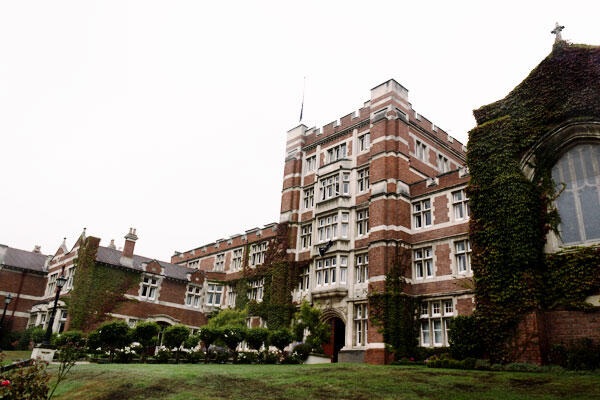
2012 looks to be a vastly different experience for residents of Knox College, following a review by the University of Otago and the New Zealand Presbyterian Church, which privately runs Knox in affiliation with the University. The review involved interviews with students to analyse the culture of the College and has resulted in a Commission being appointed by the Church “to oversee the governance and management of Knox College in 2012”. Issues around alcohol consumption have been identified as the primary concern at the College, which has become widely known as one of the heaviest-drinking Halls of Residence affiliated with the University. Rev. Martin Baker, Assembly Executive Secretary of the Presbyterian Church in New Zealand, but not a member of the Commission, affirms that the Commission “are working through a number of changes, primarily around issues of health and safety [and] alcohol policies”. This follows hot on the heels of “the bath” being removed from the College grounds last year, amid health concerns about the water into which students in breach of traditional rules would be dumped. The Master of Knox College, Bruce Aitken, has been placed on leave, and his role is being temporarily filled by Jamie Gilbertson, the Warden of Arana College. Rev. Baker and Mr Gilbertson were both unwilling to comment on the future of Mr. Aitken. Mr. Aitken has also been unavailable for interview. However his relatives, James and Emma Aitken, have been heavily involved in an open Facebook group calling for letters of complaint and a petition to the Commission. Entitled “CALLING ALL EX KNOX COLLEGE STUDENTS” the group now has more than 1,270 members, and serves predominantly as a forum for those unhappy about the proposed changes to express their discontent. On the 15th of February, a letter from Dr. John Kernohan, the Commission Chairperson, responded to the unrest by circulating a message to past and present residents about the changes, for “clarification and assurance”. In that message, Dr. Kernohan states that the Commission is simply “looking at ways to improve the physical fabric of the College”, (Critic suggests perhaps by using a gentler cycle, or possibly softener). He reminded residents that the Commission “is mindful of the rich history and special character of Knox,” and also reassured that “the Acting Master ... is working in close collaboration with KCSC [Knox College Students’ Club] to develop an exciting and informative orientation.” Yet past residents have seen this message as having “so many words, so little substance”. The student response has included a petition to the Commission, asking the Presbyterian Church to “Consult Your Community”. The petition has more than 500 signatures at the time of going to print. In the accompanying description, they admit that “some changes are necessary to ensure health, safety and responsible behaviour,” but go on to say that they are “concerned that such changes may sweep more broadly than is necessary to achieve these legitimate objectives.” Residents and “exies” of the College have also voiced concern at the KCSC losing control of its budget this year. In the wake of last year’s controversial Voluntary Student Membership bill, the KCSC was absorbed by the College to keep recreational activities financially viable, but students see this as “breaking down the established hierarchy… [to] create a rift in tradition, culture, and behavioural patterns that can then be established anew.” Despite all the feared changes, Knox College O-Week activities appear to have gone ahead as usual. One second-year resident confirmed that “I’m having the time of my life … nothing much has changed.” Other residents reported that another had to be taken to Dunedin Hospital to have his stomach-pumped, after he consumed two bottles of wine and was then challenged, and consented, to drink half a bottle of spirits on the Tuesday night of O-Week, when Knox had its own Toga Party-themed dinner at which the Commissioner of the recently appointed Council was present. Knox Student President, Mr. Milne Riley, has demanded that residents not talk to the press, and has himself declined to comment until after O-Week. Residents have, however, still been available for interview. One commented that “whether the impact the Commission is having on the College is good, or bad, is a bit subjective [based] on why you go to Knox … I get it for study reasons, but from a social perspective and the way that Knox traditionally is, it’s kind of bad.” Another commented that “whenever there’s less alcohol, there’s a better academic focus.” There is also criticism among residents that the KCSC is “a little unorganized” and needs “to be more direct and strong-willed”. However, this has been difficult for the KCSC Executive because, when questioned, the new Master and Commission have “avoided all the questions”. Residents do, however, still feel that “Knox is awesome” and will maintain its special character. When asked for comment, a University spokesperson said “As Knox is an affiliated College of the University of Otago and a home to our students, the University is naturally interested that Knox College residents can enjoy their time in a safe, caring environment. The University supports the Presbyterian Church in its moves to implement changes that provide increased support for College residents in this regard.” The University also clarified that “there has been no request to reduce the number of second year students returning”, despite online claims by James Aitken to the contrary. Among the changes “of a more minor nature” that the Commission are bringing is the renaming of certain roles and areas of the College. The Buttery is now “the Canteen”, and the Ab Epistulus has been renamed “the Administration Officer”. Rev. Baker said that these changes primarily concern “the clarification of purpose”, going on to say that most people couldn’t really be expected to know what “ab epistulus” actually means (it means “in charge of letters”, duh). The Buttery/Canteen has also had its licensed bar removed. In the past, Knox College had required students to dress semi-formally for dinners. This has been loosened and students are now only required to dress formally for Sunday dinner, at which musical performances by residents will still be present. Rev. Baker confirmed that some changes are still being negotiated, and former students “have been quite involved”. He also stated that “there’s a lot of discussion going on between the commissioners and those students who are back at Knox now”.
-
News

Dunedin Remembers Christchurch Quake
A contingent of 400 Otago students and Dunedin residents gathered on the Museum Reserve, united as one in red and black, to commemorate the first anniversary of the February 22nd Christchurch Earthquake. The memorial service was organized by OUSA, which had also initiated a similar service last year, held the day after the quake struck. The sombre and misty Dunedin day appropriately reflected the mood of many present. The service began with a greeting in Te Reo by Huata Holmes, followed by a speech from Dunedin Mayor Dave Cull. Cull spoke of the importance of remembering those who were, and continue to be, affected by that “ghastly day.” He said that the devastating and deadly events that panned out have had a lasting impact on communities in Christchurch and in Dunedin. “Our hearts go out to you. Our thoughts go out to you.” University Chaplain Greg Hughson remarked that the service gave Dunedin families and the University a further opportunity to show that they continue to care and support one another one year on from such a tragic event. Christchurch resident Jane Clutha represented those who were personally affected by the earthquake. She extended her thanks to the Dunedin community for its initiative in sending help to Christchurch. She wished to emphasize the help OUSA has provided, which has largely gone unnoticed by the media. Two minutes of silence was observed at 12.51pm, the time the earthquake struck, and the service then closed with an emotional rendition of Amazing Grace. Paul Gourlie, an “earthquake refugee” who attended the memorial and who was a member of OUSA’s executive in his university days, also extended his thanks to OUSA and the student population. “Students have this bad reputation, but students, including Dunedin students, were the first to get stuck in and help out after the quakes.” With 200-plus volunteers, OUSA packed over 17,000 lunches in the days following the quake and extended countless services to victims through its “Christchurch Embassy”. OUSA facilitated the move that many Christchurch students undertook after the quake, and helped them easily integrate into student life in Dunedin. OUSA President Logan Edgar advised any students still struggling with the impact of the Christchurch Earthquakes to “head to the OUSA Student Support Centre and they’ll help you out.”
-
News
Proctor Chokes Freedom of Expression with COC
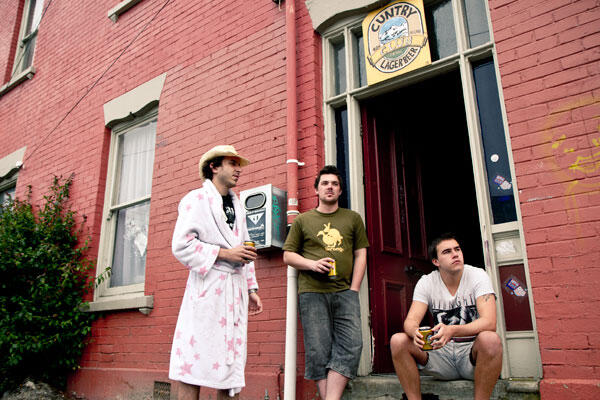
A student flat has received a warning from police over the controversial name of their flat. As is common practice among scarfie flats, the residents of 584 Castle St erected a sign to announce their flat’s identity to the North Dunedin community. This particular group decided to name their flat “the Cuntry Club” with the convenient omission of the “o”. Campus Watch first approached the flat last week, followed by Campus Cop Max Holt, after senior members of University staff, who use a public carpark within sight of the flat, made an informal complaint. No official complaint has been made to the police. However, if one were laid, “the sign can be seized as evidence if the Campus Cop chooses to charge them.” Charges could be made under the Summary Offences Act, which provides for fines of up to $1000 for ‘offensive behaviour or language’. The word in question “is still significantly offensive”, according to Campus Cop Max Holt. When asked whether the sign was a reasonable expression of student creativity or whether it overstepped the mark, OUSA President Logan Edgar replied, “Fuck, I don’t know what to think of that.” Mike Giampetro and Ethan Mudford, occupants of 584 Castle St, report that they have since taken the sign down.
-
News

Break out your flat-peaks, the Octagon just got gangsta.
A gang-related stabbing occurred near the Robert Burns Statue in the Octagon early on the morning of Saturday the 18th of February. One man was hospitalised with stab wounds and another was arrested and faces charges. It is believed the long-standing rivalry between Black Power and Mongrel Mob gangs was the cause of the incident, although no parties were known to be wearing gang patches. Inspector Sparrow of the Dunedin Police said that he was “not expecting any escalation in violence in the near future. The offenders have been locked up.” Police will be maintaining highly visible foot patrols in North Dunedin and the central city throughout the Orientation period, and students should not be concerned about their safety. Inspector Sparrow stressed that “students should look out for their mates, especially young females, and watch how much they drink during O-week.” Dunedin is not renowned for extreme gang violence, though gangs are present in the city. Last year a man was shot in the arm near Pine Hill, prompting gangs to increase their numbers in the city in preparation for conflict. Police successfully mediated the situation and the rivalry had cooled recently. After recent events Critic advises freshers to avoid the Octagon on Saturday nights at all costs. Editor Joe Stockman released a statement early yesterday, noting that “the Octagon is only meant for grownups anyway. First-years should really stay at the Cook or MonkeyBar.”
-
News

North Dunedin Street Drinking Culled?
Beverage-loving students are breaking down in tears after the Dunedin City Council took the first step towards a permanent ban on drinking in North Dunedin streets. The ban, if it goes ahead, will cover the area bordered by Queen Street, Opoho Road, Logan Park, and the railway line. Currently, drinking in the street is only banned in the CBD area. The proposed liquor ban, which is supported by police and the University, has been considered by the council several times since the first Undie 500 riots in 2006. But this time, it appears the DCC means business. On 8 February, the Council voted to send the proposed ban to the public for consultation. Dunedin Mayor Dave Cull says the ban is primarily designed to reduce “unsafe behaviour” in the student area. The DCC and the University are also concerned about drunken street parties damaging Dunedin’s reputation. Cull suggested that police “would be required to warn [rather than arrest in the first instance] so as long as someone complied, I imagine there would be no further consequences. Much as it works now.” OUSA President Logan Edgar says “OUSA recognises that some aspects of Dunedin’s alcohol culture are harmful, and we condemn couch fires and any behaviour that ruins things for the rest of us.” But he criticised the proposed ban as a “sticking plaster” that would not stop alcohol-related harm. “It’s going to do nothing, except stopping people having a bottle of wine in the park with their girlfriend or boyfriend.” The proposed ban is particularly targeted at large student gatherings such as the annual Hyde Street keg party, which the DCC regards as dangerous in its current form. Edgar is confident that the liquor ban would “not stop Hyde Street” due to the difficulty of actually enforcing the ban. Cull says the DCC is “absolutely” prepared to work with OUSA to come up with ways to make events such as the Hyde Street keg party safer, rather than shutting them down entirely. But he wants to “do that within the liquor ban. That way we can have more control over rules that would make it safe. For example, you might only be allowed to have kegs so no glass bottles can get thrown around.” The 2012 Hyde Street Keg Party is scheduled for Saturday 24 March. Edgar argues that stricter penalties for behaviour that is currently illegal would be preferable to a liquor ban: “I’m more comfortable with that than taking away students’ liberties”. Edgar will meet with Vice-Chancellor Harlene Hayne over the next few weeks to discuss potential alternatives to an outright ban. He also hopes to engage the Mayor in debate. The public can make submissions on the proposed ban from 25 February to 26 March. Edgar is writing a public submission on behalf of OUSA, and has also started a petition opposing the liquor ban, which as of 23 February had already been signed by 3000 people.
-
News

Freshers run about in meaningless bid for physical prestige
Last Tuesday hundreds of freshers packed Logan Park in their colour-coordinated and wittily-branded hall T-shirts, to take part in semi-formal passive-aggressive athletic pursuits. Plenty of skills were on show in volleyball, touch, netball and soccer but many chose to keep it casual to avoid being branded a hard out. The day also provided an opportunity for University dignitaries to mix with their newest customers (otherwise known as “students”). Vice-Chancellor Harlene Hayne was tasked with manning the catering gazebo. She spent the day handing out sausages like they were tourism degrees, along with a friendly word and a smile. OUSA president Logan Edgar took it upon himself to organise first-years who were not in Halls into a 40-strong team. They even had their own T-shirts with the word “locals” on the back, thus clearly labelling them as the unattached misfits that they are. Clad in a fetching kilt, Logan strode around Logan Park (which, Critic would like to clarify, is not actually his park) dishing out iceblocks and classic chants such as: “Locals yo, locals yo, we’ll take you down like a $10 dollar ho.” Sophia Mackie of Studholme responded with “Dicks out for the girls! Dicks out for the girls! [repeat until fade],” Sadly for Sophia, it didn’t catch on. First-years (especially Arana kids) were gutted to find out that no scores were kept from this year’s event and no overall winner was crowned. A Unipol spokesperson claimed that “it’s just a social thing”, but Arana RA “Big Boy” added the caveat that “we all know who won”. Fuck Arana indeed.
-
News
Re-Union
Otago students are about to receive a snazzy new space to study and socialise. Those in the know, including a certain Student President, have hinted that the space will be well worth the interim annoyance from the construction currently covering the heart of the campus. The Student Union, which was built in the 60s, is undergoing a major upgrade in order to keep up with the adjacent Link, which was completed in 2000. The ground and the mezzanine floors will be opened up, connecting the buildings on two levels. The Union will also receive a new front entrance. All up, the upgrade will provide additional social space and an extra 54 study spaces for those students who tend to receive disapproving glares for talking in the library. The front entrance of the Richardson building is also undergoing construction to create a new “wind lobby” to reduce the effects of the gales that often blight the lives of law and geography students on windy days. The upgrade will also provide better access to the building for people with disabilities.
-
News

Remember the Highlanders
Whatever happened to the Highlanders? They were a force to be reckoned with at the start of last year and then disapeared into a green oblivion. Well, this year, they are your new favourite rugby team. They have new, better players (cheers Mark Hammet), including an experienced campaigner to do the grunt work in Andrew Hore, and finally some speed and excitement on the outside in Hosea Gear and Buxton Popoali’i. Colin Slade, Adam Thomson, Jamie Mackintosh, Jimmy Cowan, Ben Smith and Jared Hoeata are all international quality players, with loads of experience between them. This squad is looking unusually strong. They also have a big shiny lunchbox to play in right down the street from your flat (no excuse not to wander down), and a returning coach (Jamie Joseph) ready to lead this young and excited team into a renaissance year. Better yet, Joseph was a player the last time the Highlanders were decent. But wait, the biggest difference for Highlanders SuperXV 2012 is that you, yes you, will be going the games. This year the students are coming back to the Highlanders. Ticket prices have been slashed (as little as 15 bucks for the “Zoo” section). You can walk to the game. You won’t get wet, and best of all the Highlanders are going to win some games (maybe not the first one against the Crusaders but some, I promise). Be there. Inspired by all this brutally arousing anticipation, Critic’s newly-minted sports reporter went for a star-struck sit down (well I stood up for half of it) with two of the highest profile ring-ins for the resurgent franchise. Ex-Hurricanes, and World Cup winning All Blacks, Andrew Hore and Hosea Gear tolerated Critic long enough for a quick chat. What was behind your transfers to the Highlanders? Hosea: Jamie [Joseph] was a big draw-card for me, and the stadium. I just needed a bit of a change, something fresh and new. Things were looking pretty exciting down here. Andrew: I’m good mates with Whopper [Jamie Mackintosh] and Jimmy [Cowan]. Home’s just up the road, also the pitch is pretty flash and there’s a buzz around the city. Hosea’s huge obviously, he’s world class. Where is your favourite spot in the world for a little drink? Hosea: Wellington after the Sevens, [Gordon] Tietjens banned drinking there though, because Las Vegas 7s is the next week. Andrew: Capetown’s best for a beer, also Dublin. Best place for a meal in Dunedin? Hosea: Jizo, that Japanese place. Andrew: The Mornington Tavern. Who has the hottest girlfriend in the team? Hosea: I do. Andrew: Bronson Murray. First car you wrote off? Hosea: People from Gisborne are good drivers. I have never written off a car. Andrew: Totaled a Telstar in my youth. Will there be any events held at the “Hore house” this season? Hosea: Nah shit no, I’ll be avoiding the Hore house I think. I try to stay away from that guy he’s rough as guts. Andrew: Anyone who wants to come up to the Hore house is gold mate. We’ll get the slippery slide going, we’ll be racing. Would you be willing to try Scrulse (Scrumpy and Pulse mixed together)? Hosea: Nah don’t think so mate. Andrew: Sure, I’ll take it on. Who would win a dance off between Andrew Hore and Jason Rutledge? Hosea: Jason Rutledge is an excellent dancer. He’d probably win. Andrew: It’d be a draw because neither of us would get off our seats. How do you feel about the possible introduction of female refs? Hosea: Yeah that would be OK. Would be a bit odd though, wouldn’t want anyone taking the piss. Andrew: I have to be careful what I say here, we’ll keep rugby to the lads please. Which member of the Highlanders would best suit the DJ Forbes style, bald-head, full bed combo? Hosea: Definitely Andrew Hore. Andrew: No way. Wouldn’t mind the beard though, but the hairs a bit thin on top. Hosea, you’ve been a part of the NZ 7s team recently – Andrew, if Gordon Tietjens called you up would you be keen? Andrew: No way. I’ve seen them train man, no good, too old.
-
Columns

Editorial
Kia Ora and welcome to Critic 2012. Founded in 1925, Critic is your student magazine. It is our job to reflect student society and culture, and allow you guys to see yourselves, and your issues, in your own media. We keep an eye on OUSA and the University to ensure they’re behaving themselves, and bring you some entertainment to get through your Monday morning lectures. If nothing else, keep us next to the bog and you’ll never run out of TP. For those of you that have been around a while, you will probably have noticed that Critic has changed its paper. Go on, give it a smell, it’s bloody gorgeous. And that’s not the only change that’s happened around these parts. As of Monday morning the all-new Critic Online has gone live at www.critic.co.nz. Bringing you all the good shit that Critic usually brings, Critic Online provides you with up-to-date news during the week, filling you in on the weather, and hosts a treasure trove of pictures from all the goings-on around campus. And the pièce de resistance, next Monday Critic TV will be returning to the web, with its first up episode covering all the best shit from Orientation. Our news pages are full to the brim this week with info and comment on the important happenings around town. Past the news section you’ll see we’ve got pretty political, with interviews with some of our local MPs, our very own Vice Chancellor, and a discussion about the new relationship between OUSA and the University. But we haven’t forgotten about the lols. “Eat Pray Hate” is a fantastic piece to get you through that lecture that you just don’t want to be in, and hopefully our columns and reviews will leave you either entertained, alarmed, enthused, or informed. You probably noticed that cool cat on the cover. Personally I don’t see the appeal in standing on a burning desk in stubbies and jandals. This was the scene on Castle Street last Monday night, when 14 of Dunedin’s finest had to stop protecting the city to go and babysit a few hundred drunk 2nd years who felt like burning some shit. The thing is, whether we like it or not, the glory days of couch-burning are behind us. While you used to be able to torch a couch over a beer with your mates, nowadays you’ll find yourself out of the Uni and back at Mum and Dad’s quicker than you can say “Code of Conduct”. If as a community of students we can’t find better things to do than light shit on fire, we should probably be taking a good hard look at ourselves. There are some brilliant aspects of the student experience that are under serious threat, and if we won’t give up on the frivolous shit we’ll end up losing everything that makes our time here so unique. And yeah, that’s me with some new Fresher friends who saw me outside the Toga Party (I was working … seriously) and wanted to check I was okay. The very best of Dunedin right there: scarfies helping scarfies.
-
Columns
Red and Starry Eyed
While freshers are still hiding behind their maps, the scarfie lifestyle is yet again being frowned upon by the DCC. This problem isn’t new – they have wanted to impose a liquor ban in North D since 2006. They want to drop the last drip of our SoGos; probably cause they haven’t been invited to a party for 100 years. Both the Uni and our beloved DCC, pushed on by the ODT’s riveting coverage, want to stop our parties. They have already banned the Toga Parade and the Undie 500, and the armed police presence at keg parties increases by the year. If they really wanted to come to our parties, they could just ask. It’s part of a two-way policy: The University wants more committed students, with better grades, to attract more funding; the Council wants to give the city a better image to attract tourism. Neither of them are really interested in our well-being – the world has been written out in economic formulae, often bypassing human interest or value. The University doesn’t understand that a grade is only half the game, and while the DCC portrays us as irresponsible criminal youth, this town’s main industry revolves around us. And student crime is decreasing, and we clean up our own mess. Though New Zealand does have a bit of a binge drinking problem, this isn’t the real issue. Students have and probably will always drink – it’s an easy way to socialize. The University and Council want us to behave, to give them a better image. Meanwhile our workloads increase, our loans rack up and our houses are only going to get colder. As long as the University is part of the degree industry, we can’t discover ourselves. We are barcodes with a potential output. This view of the world is seriously wrong. How are we meant to find “our place in the world” when we are viewed as a commodity? A liquor ban will not stop people from drinking, just like restrictions of O-Week sponsors won’t stop great bands from coming. If anyone is serious about cleaning up North Dunedin, and making it a pleasant, and more importantly warm, place to live, they should ask for student input, or do something about student housing. They could pay us to paint them! In protest against the DCC’s short-sightedness, crack open a beer. And if the ban comes through, open two.
-
Columns
The Tory Templar
The nanny is back and she’s letting her nanny-state culture bleed into every sector of our lives. The University’s recent actions have shown that in loco parentis, the Uni’s right to act in place of your parents, is making a comeback. The idea that the University should be allowed to dictate how young people live their lives is outlandish. It has no right to act as a surrogate for the family structure. Whilst considering the legitimacy of one Latin term, in loco parentis, let’s remember another Roman doctrine, patria potestas, or a father’s right to raise his children as he sees fit. Ever since this doctrine first appeared, the priority of the family has been cemented. The Templar is stupefied as to why this institution sees itself as a parent-like body. The job of a university is to educate, it’s what we pay for and what we expect. The job of a university is not to supplant the role of parent. No matter to what extent the government and its institutions attempt to run our lives, they will never, and should never be able to overtake the family as the core unit of society. By acting in loco parentis the University fosters acceptance of authority, a herd mentality and, ultimately, dependency. It may claim it is preparing its students to become contributing members of society, but by taking away their freedoms they act like the opposite is true. The Templar finds himself concerned that the bright-minded inhabitants of this campus should be made to adhere to the rules of the big stick-wielding institution. The recent move taken by the University to curb the lifestyles of students has gone so far as to destroy valued traditions at at one of our oldest colleges, Knox. The Templar is most concerned, that long-standing traditions that in no way undermine the social structure of this city, are being targeted, as part of the vendetta that the University and others have against student life. Such actions point to a desire to punish rather than do any good! Destroying such traditions will inevitably lead to more problems. Take it from me, leave the parenting to the parents and keep your hands off the traditions. Unless of course laws are broken, in which case you have The Templar’s blessing to throw the full weight of the law at the perpetrators. Just don’t go butting in when no wrong has been committed.
-
News
Summer Political Roundup
Summer isn’t all backyard cricket, beer and barbecues. In fact, New Zealand’s politicians have been working hard all summer to take away your freedom to engage in those activities. Here’s a roundup of what happened while you were away over the break ... Tea tapes Biggest letdown of 2012. The infamous voice recording of John Key and John Banks having a yarn over a cup of Dilmah was leaked to the public in January. The tape was about as interesting as a trip to Hamilton. Mojo MathersAs with Moonbeam Jones, Mathers’s name made it inevitable that she would join the Green Party at some point. Now she’s an MP, but since she also happens to be deaf, she needs an assistant in order to carry out her duties. Unfortunately, Parliament’s rules are out of date and don’t provide for that sort of funding. A public outcry ensued, and though Mathers couldn’t hear it, the rules are likely to be changed. ACT is deadWell, technically they’re still alive, but in the same way as a UniCol fresher’s medical school ambitions will be after their mid-year exam results. Yellow PerilA Chinese company wanted to buy the privately-owned Crafar Farms. Labour wanted National to block the sale, but they refused. The High Court stepped in and said National had to go away and start the decision-making process again because they hadn’t properly complied with the Overseas Investment Act. Critic understands the Government is sick of the bad publicity, and the decision will be made by paper-scissors-rock next week. ScalpedLabour MP Trevor Mallard was busted selling Homegrown festival tickets at an inflated price, after having passed legislation to crack down on ticket scalping. Lol. Now Critic just has to catch Jim Anderton popping party pills … Republican PrimariesNo one in NZ cares about any of the nominees except Ron Paul. But despite the fact that Herman Cain quit the race, Critic is endorsing him for 2012 US President based on his resignation speech, which contained the immortal line “I believe these words came from the Pokémon movie”. Pikachu impersonations may or may not have followed. We are the 99%The Occupy the Octagon campers were full of nice-sounding yet ultimately meaningless slogans like that one. But now they’re gone. WINZ case officers are gutted that they now have to visit clients at various houses across the city rather than conducting all their interviews in one convenient location. Drink up me heartiesOnline pirates, be ye warned. The Copyright Amendment Act has made it three strikes and you’re out for illegal downloading. And the joys of Megavideo.com were brought to an end by the capture of pirate captain Kim Dotcom. That’ll teach him for putting a 72-minute limit on streaming per day. Fairness at workA good old-fashioned waterfront strike by the Maritime Union has brought the Ports of Auckland to a standstill. To quote the smash-hit union ballad Solidarity Forever, “Is there aught we hold in common with the greedy parasite/Who would lash us into serfdom and would crush us with his might?” Apparently the union workers earn an average of just $62.50 per hour, so you really can’t blame them for getting fed up. Australian coupIn June 2010, Kevin Rudd was given the flick as Australian Prime Minister because his colleagues were sick of being treated like shit. Now he’s coup-ing Prime Minister Julia Gillard right back. Critic can only imagine how badly Rudd would treat his colleagues this time round, and the hilarity that would ensue if details of his trademark rants were to be leaked to the public … oh wait.
-
Features
Business Time
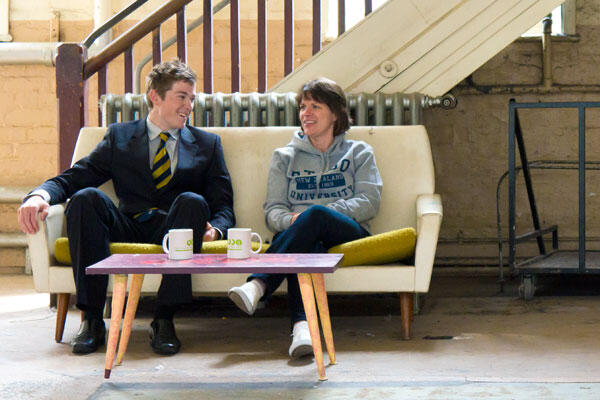
The University and OUSA have forged a new relationship to counteract the threat of the VSM legislation. From now on, the University is going to take your money, and then give it to OUSA for you. Critic’s Callum Fredric investigates the ins and outs of this budding romance. For as long as anyone around here can remember, war has raged between the University and the Otago University Students’ Association (OUSA). When the Uni raised its fees in 1993, OUSA activists occupied the Clocktower building. And they did it properly too, getting smacked with riot police batons for their trouble, unlike the wimps recently camping in the Octagon. OUSA also didn’t take kindly to the Uni’s introduction of a student Code of Conduct, which allowed the Uni to punish students who broke the law in their own spare time – they took the Uni to court. But times have changed. Under the regimes of OUSA President Logan Edgar and new Vice-Chancellor Harlene Hayne, OUSA and the Uni have become BFFs. In slightly more technical terms, they’ve signed a Service Levy Agreement (SLA) whereby the University will fund OUSA for the whole of 2012, and possibly beyond. VSM comethFor all the freshers on the block, here’s some history. In 2011, the Government passed the Voluntary Student Membership Act (VSM), meaning membership of all students’ associations is now voluntary. Without compulsory membership, OUSA was facing a huge drop in members and therefore revenue. Initially, OUSA resigned itself to passing a “black budget”, with significant cuts to its services and spending – but in December, the Uni and OUSA made a last-minute deal. Under the SLA, (Students Love Acronyms), OUSA will get basically the same amount of money as last year, except this time OUSA has zero fees – the Uni collects the money from students and passes it on to OUSA, thus nimbly sidestepping the VSM legislation. And what the hell does this all mean for your average student you ask? The Gospel according to Logan EdgarCritic sat down on the classy new executive couches for a chat with OUSA President Logan Edgar about the SLA. After a brief discussion as to whether the conversation was to be a yarn or a sharn, the slightly more formal “yarn” was chosen due to the statistics and charts being referred to. First elected in June 2011, Edgar knew that the VSM bill would almost certainly be passed into law, and he was expecting to have to make some tough financial decisions. “When it was just me handling it, blindly just come into power… I was just going for the old your-mate-JK [John Key] big fucking asset sales, it was all go as we saw with Radio One” (which Edgar considered selling off in 2011). But just when all looked bleak for OUSA, “lo and behold this wonderful new VC has come to the party and helped out good old OUSA.” “The SLA was the University recognising that the services we provide are crucial to this vibrant unique Otago University experience and hence why they’ve come to the party and contracted our services.” The next step was to take the proposed agreement to the University Council to see how much was in the “honeypot” for OUSA. As it turned out, there was a lot of honey. In 2012, OUSA will be receiving roughly the same amount as in 2011 (around $190 per student), and providing similar services. Theoretically, if the Uni thinks OUSA is doing a bad job of providing services, the Uni could cancel the contract with OUSA and get another company to provide the services, or cancel the services altogether. However, Edgar suggests that the supposed threat of the Uni going elsewhere is emptier than the Highlanders’ trophy cabinet: “It’s gonna be ongoing…. we’d have to be pretty shit for them to leave us in the dark for next year.” The Vice Chancellor was less certain: “First of all, we’re going to have to see if this works. We have to decide if we’re happy. Secondly, we have to make sure that we can afford this. We think we can… [but] we’re not 100% sure that we are going to be able to maintain this complete level of service.” Independence Lost?One of the downsides of the SLA is that the University is raising its non-academic service fees from $580 to $672 per year to cover the money being given to OUSA. Normally, OUSA would be stocking up on megaphones and banners to protest this sort of fee hike, but since OUSA were the ones who set up the agreement, they can’t complain on behalf of students. Young Nationals Southern Region Chair James Meager says OUSA has lost its independence. “OUSA are in an incredibly precarious position – how can OUSA sit there and argue against rising fees for core academic services, but then go cap in hand to the University to fund their Future DJ Competitions and refurbish their squash courts?” ACT on Campus Otago President Kim Hannah provided even stronger rhetoric: “OUSA has lost any legitimate claim to being a representative of student views… [OUSA] has no moral authority to pretend to students that it is protecting them against its University paymaster.” Edgar accepts that to a certain extent the SLA “compromises our position to speak out”. But he’s confident that for 2012 at least, he can safely criticise the Uni without fear of repercussions: “I’m not gonna let a dollar or a contract get in the way of opening my mouth and letting the wind blow my tongue around.” Edgar cites his current campaign against the University’s support for a liquor ban on North Dunedin streets as an example of sticking it to the Uni. Edgar did express some concern that “in the years to come the purse strings could tighten, and the execs could be made to keep quiet by things that were popping up in the Uni”. He would “love to think that 10 years down the track we wouldn’t have to have an SLA”, and is “working towards decreasing dependency on University money”. OUSA has also built up a large stash of treasure over the years, thanks to “penny pinching” by previous execs. At this point, the interview was interrupted by OUSA Welfare Officer Francisco Hernandez, who burst into the room saying “sorry, just getting my lube”. After retrieving the relevant lubricant, Hernandez left the room, having provided Critic with some cheap laughs. Edgar insisted Critic “run wild” with speculation as to Hernandez’s motives, and a full-length feature article on the subject is planned for Issue #4. Poking the Beehive – prepare to be stung?As the University acknowledges in its 2012 budget, the National-led Government “has brought a greater focus to the return the Government receives for its investment in tertiary education… given the current national and fiscal outlook”, which is a tactful way of saying the Government is reining in the horses of tertiary expenditure. Tertiary Education Minister Steven Joyce wrote a “Ministerial Direction on Compulsory Student Services Fees for 2012”, which restricts the types of non-academic services universities are allowed to charge for, with the objective of ensuring “accountability in the use of compulsory fees for student services”. The University is required to report their non-academic service spending to the Government at the end of 2012. But it appears the Directions are about as effective a deterrent as a “beware of the dog” sign at a poodle sanctuary. The Vice-Chancellor says the Directions didn’t actually prevent the University from charging for any services they wanted to charge for. Right-leaning student groups have expressed disappointment with the SLA, with ACT on Campus Otago arguing that the Agreement “fundamentally undermines the purpose of the legislation”. Hannah argues that it is the “right of students to choose for themselves what association, if any, will receive their money in return for the services and representation they want”, rather than being forced to fund OUSA via the Uni. The Young Nationals Southern Region are similarly miffed, with Meager describing the SLA as perpetuating the “unjust waste of students’ money”, where the majority of students are forced to pay for “ski trips and rowing facilities for the minority”. “What does funding a radio station that nobody listens to, or an Aquatic Centre which only a minority of elite rowers use, have anything to do with getting a degree at the Uni? The Uni could find themselves under very close scrutiny by the Minister.” Edgar countered that “the Ministry wanted this mechanism to be in place. It’s perfectly legitimate.” The VSM Act specifically allows students’ associations to be contracted by universities. The University also argues that OUSA’s “very valuable” student support services are a key part of the university experience. Only time will tell whether the Minister will crack down on SLAs like the hammer of Thor, or whether the battle of the students’ associations is over with victory to OUSA. Heartwarming conclusionAccording to the Vice-Chancellor, the University now has a “real trusting relationship” with OUSA. The VC is even running a barbecue for OUSA on sports day. Edgar says OUSA is in a “honeymoon period between us and the University.” Awww. Edgar is now aiming his guns on what he calls the “real anti-student villains” – including Studylink’s terrible customer service. Now there’s a battle we can all support.
-
Features

Oh Harlene,
You know the Vice Chancellor right? That lady in the big fancy office by the Leith? She basically runs the entire University, and well, let’s face it, is far too busy and important to sit down for an interview with a little old student magazine. Or so you would have thought. Without a second thought, Prof Hayne invited Critic Editor Joe Stockman to sit down on her oh so comfy couch for a yarn about her job, her role in organising Orientation, and her thoughts on So Go’s. How are you enjoying your new job so far? I absolutely love the job; it’s the best job on the planet! I loved my time at university so much that I decided to never leave. This job allows me to celebrate all the things that I love about universities. What on earth does the Vice Chancellor do? The Vice Chancellor is essentially the Chief Executive Officer of a very large company. Basically, I’m responsible for the buildings, the staff, the finances. But we’re not making cars; we’re here to inspire young minds. So I am also ultimately responsible for the academic side of the university. So, you’re the first female Vice Chancellor – is that a big deal? When it was first announced that I would be the Vice Chancellor, that’s what everyone wanted to talk about. I hadn’t reflected on it too much, because being a female had never really been an issue in my career. Ironically, my status as the first American Vice Chancellor and as the first psychologist Vice Chancellor is probably more diagnostic than my gender. One of the great things about the University of Otago is that it was the first university in Australasia to admit female students. A number of the first female students, such as Caroline Freeman and Ethel Benjamin, were the women who fought the hard fight, and paved the way for gender to no longer be an issue. You’ve taken an active role in Orientation. Why are you so passionate about this? OUSA does a great job of introducing students to the social aspects of the University, and that’s vital. It’s important for them to come here and to realise that they’re adopting a new way of life. First and foremost however, universities are academic institutions. Many students come here without a clear understanding of what it is that they’re supposed to do. The University is becoming increasingly selective regarding student admission. For the individual student, the cost of failure has increased over the last few years. I actually do research in this area – on students settling into universities – and we know that students are most successful when they have an opportunity to learn the rules of the game very early on. I think it’s really important for the University to get in there and to help students get off on the right foot from the very beginning; that’s what we’re trying to do. We’ve heard you talk about the need for an Academic Orientation. What are you on about? An Academic Orientation reminds students of their obligations. Even though students pay tuition to come to university, 75% of their bill is paid by the New Zealand taxpayer. Most students don’t realise that they pay only a small fraction of the total cost of their tertiary education. So, we’ll talk about some of the exciting opportunities that the University provides for students to give back to their community, to New Zealand, and to the world. Do you think that your research on memory development has shaped your views on youth alcohol consumption? From my research on memory, the biggest message that I can give undergraduates is that there’s a phenomenon called the “reminiscence bump”. When looking back on our life experiences, there’s a huge bump in the number of memories between the ages of 18-25. When I work with masters of colleges, or lecturers, I remind them that they’re going to feature in the autobiographies of thousands and thousands of students. It’s important that they think about how they’d like to be remembered. The issue about alcohol is slightly different. I’m very concerned about the high susceptibility of young adults’ brains to the negative aspects of alcohol. The risks of permanent brain damage, and a whole host of other social and emotional outcomes, come from prolonged, extensive alcohol use at this age. Do you think there has been a shift back towards in loco parentis treatment of undergraduates? One of the fantastic things about the University of Otago is the huge amount of pastoral care and additional educational opportunities that are offered through our residential colleges. I was the chairman of the board of UniCol for a decade, so for at least the last fifteen years here, we’ve done a pretty darn good job of in loco parentis! What we haven’t done, however, is spread that out into the academic community. Research shows that the more we involve adults (whether it’s lecturers, professors, or parents) with undergraduate education, the easier it is for students to make the transition to university. A large number of students are disadvantaged because they’re homesick, they’re depressed, or they’re anxious. These are things that we can deal with, but we must take responsibility. Do you think that students should think of universities as “service providers”, from which they are “buying” a degree? I think that’s an extraordinarily sad way to view the world. We are not the Harvey Normans of the educational world. Universities are ways of life. The three, four, five, six years that students spend at university will ultimately be some of the best years of their lives. What do you think of the relationship between the University and the student body? I think that it is important to keep in mind that at Otago, the Vice Chancellor and the deputy Vice Chancellors are all still active academics. For us, there is no line between “out there” and “in here”. We all still conduct research, supervise students, and take lectures on a regular basis. What does it mean to an undergraduate that Otago is “Research Led”? Once students get into their classes, they’ll discover that their lecturers are internationally recognised leaders in their areas of expertise. Our teachers are not only transmitting knowledge and information, but they are actually the people who are creating that information. Our undergraduates will have the opportunity to learn about things that may not even be published yet. Being educated at that cutting edge is highly valued here. What were your thoughts on the VSM legislation? Personally, I’m not in favour of any kind of mandatory unionism. I like democracy and free will, and it’s important for people to make choices. Putting that aside, I’m not sure that students’ rights were being overlooked through compulsory OUSA membership. This is why we, alongside OUSA, opposed VSM. Now it’s important to figure out how we are going to make it work in this brave new world! What do you think is the role of student media on campus? I think it’s the same as the role of media everywhere; it’s designed to educate and to entertain people. In terms of the university environment, student media provides a great training ground for budding journalists and radio presenters. I think that universities are the critic and the conscience of society. In fact, NZ is one of the only countries in the world that has this enshrined in legislation. Student media, like every other aspect of the university, should play a vital role in that. Speights or Southern Gold? Neither. I’m not a teetotaller; I do enjoy NZ wine. Particularly wine that comes from vineyards owned by University of Otago graduates. Are you on Facebook? I am on Facebook.
-
Features

Eat Pray Hate
The late, great Christopher Hitchens said that the most overrated things in life are champagne, anal sex and lobster. The man was right about most things (the absence of a god for one), but on these points I cannot agree. I enjoy a nice glass of Veuve, and I am quite happy to be fucked in the arse provided sufficient lube is involved, particularly if preceded by overindulging in said Veuve. No, the most overrated thing in life doesn’t really even exist; it shouldn’t really be “rated” at all. I am talking about “enlightenment”, and the thousands of fat, lonely, middle-aged Western women that flock to India after a quick read of Elizabeth Gilbert’s whiny, self-indulgent collection of overwrought New Age trash that is Eat Pray Love. Fuck enlightenment. But let me backtrack a little. While backpacking through India over summer, I was unable to avoid constant interaction with glow-faced yogis, insistent on giving me henna tattoos of the Hindi symbol for “om”, while the stench of their unwashed cotton kaftans wafted up my nose. Every day I came across another “New Ager”, recording their deepest thoughts in a tooled-leather journal despite being a beet and ginger juice-quaffing vegan. Something had to change. But dirty hippies in India are like South D sluts at Metro on a Saturday. No matter how repulsive the normal world may find them, they’re a permanent fixture of Indian travel, spreading their venereal diseases and generally being aesthetically and intellectually displeasing. And so it occurred to me that maybe I had to change; god knows I’m more than capable of slipping into trashy-slut mode if the situation (read: my clitoris) requires it. Surely I could also be embrace yoga, patchouli and bongo drums. And so I booked myself into the Sivananda Ashram Yoga Retreat in tropical South India. Their week-long programme comprised a full schedule of yoga, chanting, meditation and lectures designed to allow me to emerge, phoenix-like, from the ashes of casual sex and substance abuse, as a purged, glowing and yoga-toned Miranda Kerr-esque figure. In hindsight, I probably could have booked myself into a cell at Paremoremo with a smacked out Headhunter, and my mental state in the end would’ve been much the same. Arriving at Abu Ghraib the ashram, I was presented with a list of rules. Smoking, alcohol, mobile phones, sex, revealing clothing, meat, fish, eggs, garlic and onions were banned. Attendance of the entire ashram daily schedule was mandatory. It began at 5.20am with two hours of prayer and meditation, followed by two hours of “karma-yoga”, a euphemism on a par with “love handles“. After karma-yoga were endless lectures and prayers, followed by – you guessed it! – more yoga. The day ended as it began, with prayer, meditation and chanting for two hours until 10pm. Grim funereal bells announced each event of the day. By the end of my stay, the fear I felt at the ringing of each bell was akin to the fear one must feel heading to your first session of electroshock therapy. Naturally I was paying an exorbitant sum for the privilege of this daily self-flagellation. Two meals a day were included in the price, but “brunch” and “dinner” varied only in their alternating resemblance to either the vaginal discharge of a chronic yeast infection, or partially digested Budget Wheatmeal Sandwich Bread. Not included in this package was the (tooled-leather) journal we were forced to purchase at a grossly inflated price from the ashram boutique, along with a set of flowing white robes, a yoga mat, and a meditation cushion. The opportunity cost of these items was roughly a finger of quality Kashmiri hash. I wept inwardly as I handed over my rupees. To counter the inanity of daily existence, and to make use of my leather tooled journal, I recorded my day to day thoughts and experiences for posterity: Day 1 10:00 am Just arrived and have made the requisite purchases. Clad in white flowing robes, my eyes bloodshot from daily hash and Malboro Lite smoking, I look not unlike Silas from The Da Vinci Code. Surely things can only get better from here. (Author’s note: As has frequently been written on my marked legal opinions, my reasoning was ultimately baseless and thoroughly flawed). 12:00 pm En route to a meeting with other newbies. At the front of the hall are enormous gilt-framed pictures of H. H. Swami Sivananda and Swami Vishnudevananda, the ashram’s gods gurus, draped with wreaths of fresh-cut flowers. They are indistinguishable from the creepy elderly hippies offering young women massages on the beach in Goa, on the basis that their root chakras need to be aligned via the release of pelvic tension… 1:00 pm Meeting is over. It began with the white-robed figures at the front of the hall chanting “Om Shanti” over and over until, apparently, they had placed everyone in the room on the same karmic wavelength. We are assigned our “karma-yoga” tasks: mine is this week’s “special project”. We are told that the laws of cause and effect mean doing good deeds for our fellow cult members ashram guests will ensure that people do good deeds for us in the future, but only if we do our chores with an open and generous spirit. 4:00 pm Have just spent two hours scraping moss off a pavement using a small piece of broken coconut shell in blazing South Indian 35 degree heat and 95% humidity. Fuck karma. My mind and spirit are officially more tightly closed than my legs at the thought of a spit roast with Rodney Hide and Michael Laws. 6:00 pm Yoga. The marble-floored meditation hall is so crowded that my head is half buried in the crotch of the dreadlocked French hippie front of me. We are so close in fact, that I spend the 2 hours engaging in Napoleon-Dynamite-level mouth breathing to avoid the rotten stench of the Calcutta fish markets overwhelming me. Honey – it’s called bacterial vaginosis, it happens to everyone. Get yourself to a pharmacy and invest in a broad-spectrum antibiotic. And maybe give your paisley parachute pants a wash while you’re at it. 8:00 pm Meditation and chanting in the main hall. I sit silently and uncomfortably cross-legged on a bamboo mat as the rest of the students chant every possible combination of the words “Om”, “Shanti”, “Hare” and “Krishna” for an hour. The elderly American leading the chanting is practically frothing at the mouth as he spits out each word. This is followed by an hour of meditation, time which I use to reflect that if enlightenment is standing in front of a crowd of white-robed, dreadlocked losers reeking of BO, while shaking a set of maracas, grinning stupidly, and chanting monosyllables in the manner of my 10-month old nephew, then count me the fuck out. 10:00 pm Bed-time and silence. I toss and turn all night; it may just be the caffeine, alcohol, nicotine and cynicism withdrawals, but the huge mosquitoes swarming towards every exposed skin surface seem to be chanting “Om Shanti”. Ugh. Day 2 5:20am Morning satsang (prayers) and meditation. I gaze around the hall. The eyes of my fellow yogis are glazed with Michele Bachmann-level fervor. Previously bleary-eyed, I suddenly awake with a horrified jolt; for the first time in my life, I am not only in the presence of, but am fully immersed/participating in, organized religion. A Senior Silas at the front of the hall yells into the mike, “Only when you have control of your mind can you be free”. What he really means is that only when the gurus have control of your mind can they be free to liberate you from your cash. Not only are we paying to be at the ashram, “karma-yoga” provides a convenient excuse to avoid having any paid staff at all. 11:00 am Brunch. I sit cross-legged on the bamboo mat in the dining hall, shovelling the bowel of thin gruel into my mouth, and attempt to distract myself from its pre-masticated taste and consistency by chatting to my neighbour. She looks at me like I have just commented on Skrillex’s recent Grammy wins, and points to a sign on the wall prohibiting talking while eating. Apparently our energy must be focused on digestion while eating, for optimum health. The thought of focusing energy on digesting what I can only assume is cottage cheese imported from New World’s countrywide budget bins is almost enough to make me snap and throw the bowl at the wall. But instead I smile beatifically. Inner peace, Maddy. Inner peace. 2:00 pm More moss-scraping. I start to wonder whether a stay at Sivandanda predicated the genocidal impulses of Idi Amin, Nicolae Ceaucescu, Slobodan Milosevic... 8:00 pm Evening meditation. Instead of closing my eyes and finding inner peace, I keep them wide open and scan the fetid pit of ovine guru-worshippers with the same sense of grim foreboding with which I check PIMS every July and November. I wonder if I am having an acid flashback from my most recent trip in Goa. The wall hangings of Hindu deities seem to have spontaneously transmogrified into Impressionist renderings of L. Ron. Hubbard. Day 3 9:00 am I have officially snapped. This cannot go on. I gaze fervently around the ashram looking for a Sikh student who might have a ceremonial dagger with which I can act out a sort of Dexter-like ashram cleansing for those who have enslaved millions to the cult of bullshit. With no turbans in sight, I opt for Plan B (a sentence I repeat far too often; I am meant to be an adult now, have got to start getting responsible about contraception) and pop a couple of Valium. Ahhhhhh. When are pharmaceuticals not the answer? Day 4 5:20 am More Valium. Suddenly, the morning satsang become more akin to the soothing ambient electronica I am partial to, rather than the insanely aggravating indoctrinating drone it once was. Was everyone else just pilling up the entire time? Is this what I was missing? Day 5 5:25 am More Valium, but this time it’s not working – the Tom-Cruise-Brian-Tamaki-L.-Ron-Hubbard-Destiny’s-Church-Movementarians mélange of cult-like bilge is seeping through my sedative haze. Perhaps Valium isn’t strong enough – if religion is the opiate of the masses, maybe I need an actual opiate to counteract it. I consider a quick run into town for some Afghani black tar heroin, but, my mental faculties still somewhat intact, decide against it. Fulfilling my pre-paid week at the ashram is probably not worth cultivating a raging smack habit. 6:00 am I pack my bags and flee. The world is rendered in vivid Technicolor, after days of white robes and white floors and white buildings and blank pages which were intended to inspire inner peace, but instead resulted only in intellectual, emotional and physical desolation. After a mere five days at the ashram, I am a broken shell of a woman, my limbs languid but more from the sedative effects of copious amounts of benzodiazepines than any newfound flexibility. The moment I arrive back in the nearest city I gorge on Domino’s, whose vile pizza seems to be the gastronomic antithesis of the “spiritual” slurry I have been force-fed for the last few days. Ultimately, what was meant to achieve enlightenment, weight loss and general physical and mental wellbeing, led only to insanely strong cravings for high-GI refined carbs, and a crippling benzodiazepine addiction. Frankly, I would rather co-star in a Kiwi remake of “2 Girls 1 Cup” with a Topp Twin than ever repeat the experience. You want enlightenment? Seriously, drink some Perrier and invest in a butt plug. Those baggy-panted yogis who float around with beatific grins on their faces? Don’t mistake that expression for inner peace. The grin is really more of a grimace. Each of them has a shit-smeared meditation cushion stuck so far up his or her own ass it’d have to be surgically removed.
-
Columns
Me Love You Long Time
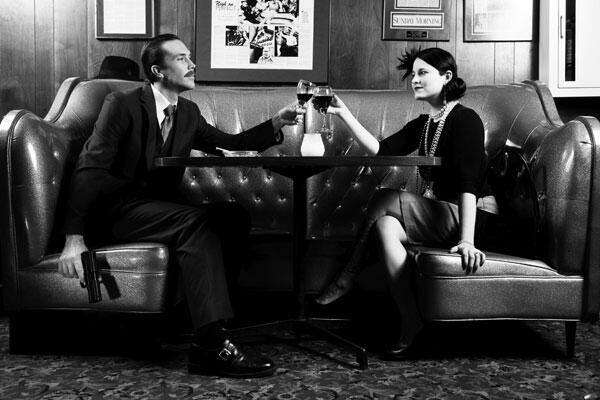
Dunedin is renowned for many things, but its dating scene is not one of them. Getting boozed and pashing people on the dance floor is hardly anyone’s idea of romance, so Critic wants to sort you out. Every week we’re sending two loveless loners on a blind date to Tokyo Gardens (with a bottle of wine to ease things along of course) to see if we can make some sparks fly. If you want in on the action, email critic@critic.co.nz. BOBBYI arrived fashionably early to Tokyo Gardens, a place I’d only been to twice before for BYOs, and on neither occasion did I get laid. Third time’s the charm I guess. My date arrived a little later and was easy to spot as we were the only two in the restaurant at the early hour we’d agreed on. Fortunately she had brought the Critic wine, and the conversation began to flow. She was studying zoology; I made a joke about bestiality which was perhaps too much. I told her I was fourth year med (as opposed to my actual third year gender studies – it’s a degree, look it up – I find people instinctively trust doctors and the extra year added sophistication). We yarned for a bit about this and that, and then ordered some food. I forget what I had now, but it was squiddy. She told me that’s a cephalopod (Zoology mother fucker). She got some sizzling platter hot stone affair and ate it in about 45 seconds, at some points forgoing the chopsticks and using her fingers which I can respect. The bottle of wine had disappeared a long time ago, so we headed to a house party she knew of up the road. Being the calculating medical mind I am I had deduced my date was high so I promptly joined her. The party was mean, in some grungey Fight Club-esque basement where everyone seemed heavily medicated. My date and I left for some fresh air just as noise control arrived. We were pretty buzzy by this point and set to climbing trees to look out over Dunedin and shit. Cute. Or it would have been until she started blowing me up like a hand grenade. Being a gentleman, but not acrobatic enough to return the favour in the foliage of Queen St, I invited her home for tea and crumpets. I went into last night with the expectation of an awkward couple of hours with a top-knotted bimbo, possibly of the Law Barbie variety. However, I ended up having a mean time, and, whilst neither of us are proponents of the whole “monogamy” thing, I’d definitely like to see more of her. I’m going to have to buy a stethoscope. Thanks Critic for the wine, the meal and the orgasms. WHITNEYMy flatmates managed to convince me that a couple of cheeky spots would settle my nerves before my first blind date ever, but alas it only caused me to be late and super slow. I had my sexiest undies on, you know the pair you wear when you intend someone to get in close proximity. Naturally they’re my most uncomfortable pair. On the walk to town they rode up my arse like dental floss through butter. Classic first world problems. He was sitting alone at a table in the corner. Well of course he was alone he was waiting for me, could have got awkward if there was another date with him. He was already half way through his bottle of wine. I like the way this man thinks. On to catch up time. He studied med and was a fourth year, so I’d hooked me a smart mo-fo. I hope he took my 3-second delay to respond to any questions as pensive rather than just mindless. By this point I was hungrier than a wolf in the winter time, and about ready to prey on some villagers. Fortunately, food was brought before me. Unfortunately, it was of the greasy finger-licking kind and I was in no mood to screw around with decorum. Having polished off the meal and the wine, I suggested we continued the night at a flat warming I knew of. At the party shit got a little messy from the moment we arrived. The liquor was flowing and my date, accurately guessing the mood, produced a joint; the rest of the night flew by in a haze of drum n’ bass and sneaky gropes. It was when he offered me something a litte heavier, saying “Trust me I’m the Doctor” that I knew he was the man I am destined to one day marry and spit out a whole gang’a kids for. A bunch of shit led to a bunch more shit, and before I know it I was hanging from some branches like my ape ancestors before me, giving pleasure to a man I’d just met. Ladies don’t undertake this lightly, that shit was fucking difficult. We went back to his and whilst and I’d definitely like to see more of him in the future it’d be difficult to see more than I saw last night. Cheers Critic. Free Tibet. right. A special thanks to Tokyo Gardens for the grub.
-
Columns
LILF
Hello, Peter. May I call you Peter? Whenever I ask you this in my head, you say that I can call you anything I like, and wink roguishly. Of course, I am more than willing to call you “sir”, if you would prefer. In my first year of study I had the delight of being in your CELS191 lectures, and oh boy, did you get my gametes excited or what. I’d sit a few rows from the front, close enough to see the lights of the lecture hall glint sexily off your spectacles, surrounding your face in a radiance I thought only an angel could possess, but far enough away that my giggles of infatuation could not be heard. I tried to make my BA friends come to lectures with me so that they could hear your delicious voice utter its cries of “Craig Venter is a wanker!” You don’t need to be a wanker, Pete. My body is willing. I sat there, my raucous laughs at your brilliant jokes disguising my bosom, which heaved with a passion so heavy I sometimes thought I’d be unable to walk. I might have stumbled with the weight of it, and fallen against the button-up shirt that concealed your Adonis bod, accidentally tearing it. I might have fallen to the ground in front of you, and my legs might have accidentally fallen apart, or something. Accidents happen, sometimes repeatedly. Of course, I understand that objectifying someone to such a sexy degree without respect for who they are as a person is wrong. It really is, and those who think such nasty, hot thoughts should be flayed in the groin for their disrespect of the mind within. That is why I feel it necessary to point out that your mind is a thing of beauty. It is a biological supercomputer in a room full of hamster ovaries; an aura so strong, hippies are repelled at 200 metres; it is an entity worthy of respect, if not full-blown worship. It is not mere lust that drives me to your office window at night, hoping to find body fluids for sequencing/cloning. It is respect. Respect for the brilliance that resides within your bonus body. May you be reproductively successful, Mr Dearden, for your loins possess a random assortment of some seriously advantageous traits. P.S. I saw you with Tony once. Are you friends? Are you more than friends? If not, could you be? P.P.S. Did you get the haiku I wrote on your evaluation form?
-
Columns

Uncle Howie
Dear Howie, I recently met a stunning redhead named Suzy outside Metro one balmy Saturday night. Needless to say, the attraction was instant and things got hot and heavy fast. The thing is, Suzy would like me to perform something in the bedroom, and I’m not exactly confident in my abilities. She wants me to, you know, go down … there. Frankly, I am worried the end result will be less than sensual. Anyway, round two is fast approaching. I tried to practise on a Rob Roy ice cream, but I think I was a bit too aggressive. I ended up with chocolate running down my chin and hokey pokey all over my chinos. Any tips would be greatly appreciated. I hope you can help. I only want to please a woman. Not a cunning linguist. Well for a start, it sounds like Suzy is a keeper. Red hair, mystique and craving cunnalingis? Blimey. There’s no point in beating around the bush ... it’s best not to just dive straight down there like a dog over hot chips, some grace is needed. Don’t be overzealous with the tongue. There is absolutely no need to be stabbing around below like a mad man. A gentle and rhythmic approach can be a crowd pleaser, but in general it is best to simply discuss with your partner what they like. Take your time, communicate with Suzy and most importantly just enjoy it. . Good luck young man. Howie.
-
Columns

Geekology
The human brain is a complex beast, with approximately 100 billion cells and perhaps 100 trillion connections between them. These connections form information “highways”, which pass electrical currents from one part of the brain to the next. Almost everything you do as a human is dependent on these connections. Studying how the pieces of the brain interact requires some pretty complicated computers and math, and some exciting research is happening here at Otago. PhD student Paul McCarthy is investigating how brain networks in Alzheimer’s patients differ from those of normal people. Working off images taken from fMRI machines (like MRI machines, but with an f bit), Paul can see the level of activity in specific areas of the brain by measuring the change in blood flow to that area. Paul divides the whole brain into tiny regions called voxels – 30,000 in total. Each voxel has a number of “edges” – or “highways”, leaving that particular area. Using a Pearson’s Correlation Coefficient (PCC) Paul tests the probability that two separate voxels have a highway between them. If both areas increase activity in unison, the correlation would be high and Paul can assume a relationship between these areas. Not only does the PCC show correlations, it also shows anti-correlations, or where the brain voxels inhibit the activity of others. When the PCC is applied to all of the voxels within the brain you can start to see an entire network of functional connections between different brain regions. The most amazing thing is that Paul does all of this without even touching a brain! Paul is starting to find out some pretty funky stuff. For example, aged brains work a lot harder than young brains. The aged group showed a higher level of blood flow, which means that their brains are potentially expending more energy, probably because they lose brain cells, so the remaining cells have to work overtime to accommodate. Interestingly, patients with Alzheimer’s disease showed a reduced functional connectivity. Essentially, they had fewer highways, or a less efficient spread of information than younger brains or brains without Alzheimer’s. The tools Paul is developing while studying Alzheimer’s brains will hopefully be applicable to all brains in the future. This is an important case study, and part of what could ultimately aid us in learning the secrets of the mind.
-
Columns

Straight Up
So, the first queer column of 2012 is about marriage. No surprise there. The happy dyad of gay marriage and adoption reform seem to dominate queer media, community and social spaces at the moment. I hear it all the time: “gay marriage is the next step/last frontier”, “it’s the rights issue of our time”. Bullshit. That’s the thing about marriage – it is so gay. It is the issue of white fags and dykes who crave the status and privileges of cis-heteros. It comes at the expense of the concerns of oppressed queer and trans people who are occupied with trying to make liveable lives for themselves and others. For me, marriage doesn’t even make it on to the “top 100 issues for social change” list (which I am happy to share should you be interested). Why would we, as a broad queer and trans community, dream of focusing so much energy on the tacky plastic bauble of marriage when so much of the potential of queerness is in troubling the state and how it defines/controls with whom we love, live and fuck? If we do want to talk about legislative change why aren’t we talking about including trans people in the Human Rights Act? If we want to talk about serious issues why don’t we talk about rape culture? Or body fascism and fat phobia? Or the economic exclusion of poor queers? Why don’t we talk about the harms of alcohol abuse and drug dependencies within our communities? Why don’t we talk about how sometimes it is fucking hard to be queer, trans, takataapui, genderqueer, mahu, vakasalewalewa, palopa, fa’afafine, akava’ine, fakaleiti, or fakafifine. That shame doesn’t neatly translate into pride. That sometimes we hate ourselves and hate our bodies – and that this is not OK and needs to change. Darling fagglings, you can have your marriage – it’s just called a civil union – be creative with it. Girl, if you want to get dressed up in white, have a big cake and live the Hetero dream like mummy and daddy, by all means do it. Just don’t talk to me about it. I have more important things to do. And don’t speak on my behalf telling others that this is really all queer folk want. I can speak for myself. And I want much more.
-
Columns
How to: Be a Fresher
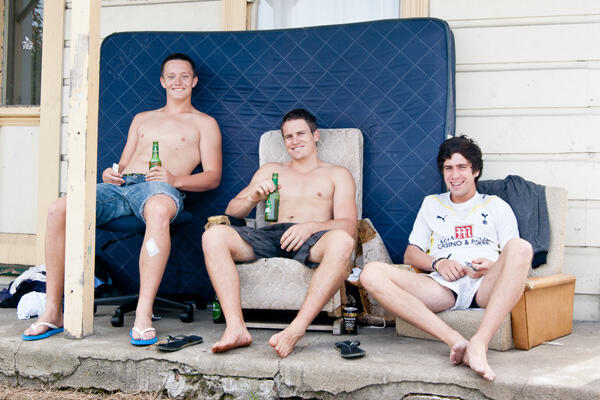
Now, you might not think that you need a guide to being a fresher – it should just come naturally, right? Wrong. Being the best fresher that you can be is the result of hours of hard work and preparation. It is not a challenge to be taken lightly. To help you on your way, Critic has compiled the following easy guide to freshness. Step one: Never admit to being a fresher. This may seem counterintuitive, but a good fresher will always claim to be something ridiculous, for example “Yeah I’m third-year Health Sci” or “I’m second-year Med”. No one has ever met a second year Med student, because they don’t have time to frivolously spend doing anything other than studying med. Step two: Wear your leaver’s jersey everywhere. This is especially effective when combined with step one. Your leaver’s jersey was the coolest fucking thing on the planet when you had just left high school. Now that you’re at uni, it simply indicates that you know nothing, and will be exceptionally annoying. However, not wearing it would be rude. The leaver’s jersey warns the rest of us that you are near, giving us time to get the hell away from you. Step three: Definitely don’t carry a jacket. The weather in Dunedin is reliably awesome, and it definitely doesn’t change from one hour to the next. There really is no need to be prepared. Step four: Talk loudly in the library. Personally, I think it is very important that I hear what you thought of that super skux guy that you totally made out with on the dance floor but didn’t go home with cause you were hoping that the other guy from Cumby would call. I want to hear about this as loudly and in as much detail as possible. Preferably while I am attempting to study tax law. Step five: Go to the Cook, and only to the Cook. Seriously, nowhere else in town comes close to providing the level of service and hospitality that the Cook provides. It’s the perfect bar, and it’s right on your doorstep. Why would you ever go to the Octagon? It’s so far away, and the drinks are so expensive. You’ll get sore feet walking home, and it’s probably going to rain anyway. Seriously dude, the Cook is all you need. Step six: Don’t burn stuff. Okay, so back in the day, Marc Ellis burnt a couch, and it was hilarious. Nowadays, all that’s going to happen is you’ll get suspended from University, pay a fine to the council and another to the Proctor, and have explain to your parents why you’re living with them again.
-
Features
Dr Clark & Mr Woodhouse
Critic invited Dunedin based MPs Dr David Clark, and Michael Woodhouse to Eureka for a cheeky pint, and a chat about their student days, their politics, and their new roles in parliament. (Full Interview Transcript available at critic.co.nz/1574) Critic What was your time as Otago students like? Clark I came here in 1991, and lived at Selwyn College for the first two years. I had a great time, made some great friends, and later worked there on staff before returning many, many years later to be the warden. Woodhouse I was a late starter at university. I didn’t get here until ‘91, and I was about 24 or 25 by then. I went to Helensburgh House a few times. We had some brilliant parties in the basement down there, quite loose parties. We may be one of the reasons that skyrockets are no longer legal. It was at one of the parties on Clyde Street... You get your vacuum cleaner pipe, and your skyrocket, and your insert the skyrocket so it becomes a horizontal bazooka. This went on for hours, until the fire brigade was eventually called… Clark I remember being ‘countrified’ in my first year... we were blindfolded and left in our underwear in the middle of a forest, with an axe in our hands, and had to find our way back to the college. A ute came past, and we actually made it back to the college before the people that dropped us off. We were able to exact our revenge before they returned. The story after there gets more grim… Critic Thoughts on the proposed North Dunedin liquor ban? Clark Jury’s out for me. It might just push some of the behaviours out of the student zone and into the communities close by. Woodhouse I support the ban, but I don’t think it’s going to change a lot. I don’t think it’s going to be a significant constraining factor on student life, so I’m more than comfortable with it. Clark Let’s not kid ourselves that this is just a Dunedin student problem. Our wider society has an alcohol problem. The Royal Commission report said clearly that the clearest way to address it was through price and advertising. My challenge to Michael would be to really push that. Woodhouse Minimum prices don’t work, we’ve had them in the past. If we can’t agree that getting really pissed, throwing up and falling down is not cool, then no amount of law change in Wellington is gong to change that. I think the government’s response is a balanced one. Clark Ruling out two of the big levers is a very disappointing start. Critic Obligatory question: Your thoughts on liberalisation of drugs? Woodhouse I would oppose it. I don’t believe in overly punishing those who are addicted. I am all in favour of punishing the dealer. Clark I’d like us to take a hard look at things. Research shows that some drugs currently classified pretty highly do less harm than others that we have a very liberal attitude towards. Critic Would you support a bill to decriminalise marijuana for personal use? Clark Most likely, yes. Critic Which society would you prefer, one where everyone earns $50,000 per year, or one where half the people earn $70,000 and the other half earn $300,000? Clark The wealthy society of course, providing that society took care to ensure that even those of modest means had access to good and free education, health, and all those things. Woodhouse That question has a really straightforward answer. What’s important is the issue of social mobility. Clark There are places like the Nordic countries that have relative income equality and they are very good and healthy societies. Woodhouse If I had a dollar for every time someone on the left mentioned a Nordic country… Critic What about Scarfie flats? Part of the fun of living in Dunedin? Or would students be better off paying slightly more for a better flat? Clark Preventable health conditions result from students living in damp cold flats. Minimum standards could be put in place… it’s an issue that desperately needs to be addressed. Woodhouse I want to make sure that landlords who are being proactive and insulating their flats are rewarded, both with demand for their stock and perhaps a higher weekly rent. But the key for Dunedin North is to make sure there is sufficient housing stock to enable students to have a choice. Critic Favourite beer? Both Emerson’s Pilsner. Critic What projects are you both working on at the moment? Clark My ‘Mondayising’ Bill is taking a fair amount of time – Woodhouse Haha, you jammy bastard! David’s been fortunate [to have a bill drawn from the private members ballot], but that’s just the luck of the draw. Clark I have had the luck of the draw. The bill corrects an anomaly that only happens two out of every seven years, where we get fewer than the allocated 11 public holidays. But most of my work is actually around revenue, developing a fairer tax system. I’m also Associate Tertiary Spokesperson. Woodhouse I’ve got two bills in the ballot, one is to increase the amount of financial support for live organ donors to the same level as ACC… I’m also Senior Government Whip, so I have 58 colleagues that I need to make sure are in the right place at the right time and voting in the right way. Critic What are your thoughts on the University’s new funding agreement with OUSA? Woodhouse OUSA needs to be very careful what it wishes for, not to sell down its sovereignty for a buck. It was a kneejerk reaction born out of a belief that students were too stupid to decide what was valuable to them. Clark We think that students are old enough and mature enough to set their own governance arrangements and have their own organisations on campus. OUSA is a well-organised association and I have every faith they will make a good fist of this. Critic Let’s wrap up with a heartwarming conclusion. Woodhouse At the end of the day, both David and I want the same for Dunedin. We’re going to disagree, sometimes quite strongly, about the path to that destination, but actually I don’t think we’re that far apart on a lot of things. Clark I agree. I got into politics because I have a set of values and a certain range of principles that I believe represent a constituency and I believe I can represent well. And in my experience those from across the political spectrum are there because they think they’ve got a contribution to make, they’re there for the right reasons
-
Columns

Classic Film
Director: Roman Polanski Chinatown is a blockbuster that would never get made today: main characters die off-screen, the plot has something to do with the Los Angeles Department of Water and Power, there is a light-hearted visual gag about wife-beating, the protagonist spends half the film with a ridiculous bandage taped to his nose, and it’s directed by Roman Polanski. And it’s also one of the greatest achievements in the history of Western culture. Hired to gather evidence of a prominent engineer’s extra-marital affair, private detective Jake Gittes (Jack Nicholson) is quickly drawn into a complicated political intrigue set in sun-drenched 1930s California. Shot entirely from Gittes’ perspective (Nicholson appears in every scene), the film’s suspense is based on the gradual drip-feeding of information. Through revelations which are often genuinely startling, Gittes’ and the audience’s conclusions are constantly challenged and revised. This approach is mirrored in, and partly created by, the film’s use of clichés and archetypes. At the outset, Chinatown seems packed with film noir conventions – the hard-boiled private detective, the femme fatale (played by Faye Dunaway), the murder-mystery, the complex storyline, the cynical outlook. Yet these stock devices are gradually rejected over the course of the film. Nicholson’s character becomes a genuine tragic hero, Dunaway’s an emotionally complex figure, and the film’s cynicism gives way to something altogether less glib and more moving. Released in 1974, Chinatown was nominated for 10 Academy Awards, including each of the “Big Five”, but won only one (Best Original Screenplay, to Robert Towne). Polanski and co could rightly feel robbed – even though they were up against The Godfather Part II, which is a great film because, well, it’s really long and it has Robert de Niro in it. “Classic” films are often weighed down by their reputations. Citizen Kane is often named the greatest film of all time – but Kane is dry, overly technical, and hasn’t aged well. The mantle truly belongs to Chinatown, a film still as beautiful, sad, thrilling, funny and mysterious as it was 38 years ago.
-
Columns

World Watch
Kia Ora and welcome to the very first World Watch, a whimsical look at the stranger goings-on in the world. I was pretty lucky to get to write this column, considering that Critic already boasts a little short of seventeen thousand volunteers. But I somehow cornered our sprightly young Editor, and marvelled him by being the first technologically-challenged Indian. So without further ado… A Spanish nun was expelled from her order - where she had wasted 35 years of her prime in seclusion - after she apparently blasphemed by having an Facebook page with 600 friends. This late bloomer is now staying at her mum’s house, watching Oprah, and embracing her newfound freedom. Demonstrating a clear technological edge over the rest of the world, China unveiled their latest transport solution: A trailer drawn by a mighty ram is China’s answer to air pollution, fuel consumption and greenhouse gas emissions. And showcasing the perfect communist discipline, the ram is also trained to head-butt anyone who skips or refuses to pay the fare. In a remarkable feat displaying the strictest sense of propriety, three Indian politicians of a morally conservative party, were caught watching porn in a state legislature. The trio included the Women’s Affairs Minister, who vehemently denied the charge, insisting that he was researching the exploitation of women. A high-level meeting between US Vice President Joe Biden, and his Chinese counterpart Mr. Xi Jinping, was used to strike a deal for – wait for it – Hollywood movie distribution. Classified sources within the White House confirmed that unleashing the gaffe-prone Mr. Biden was part of a US strategy of coercion. Mr. Biden cracked his notoriously terrible jokes until the Chinese premier-to-be gave up and signed the deal. Finally, there was happiness all around in the Philippines when the Government decided to grant autonomy to the fighting MILFs, or the Moro Islamic Liberation Front rebels. The MILFs will now dedicate all of their time to escorting tourists and appearing in men’s magazines. A Philadelphia man who hit it lucky on the blackjack tables, to the tune of $3,000, quickly had his luck run out when he tried to cash in his winnings. A quick scan of his ID showed that he was wanted for drug offences, and he was promptly arrested. The unlucky mug told police that he thought he was going to be arrested soon, and was playing blackjack to try and come up with bail money.
-
Columns

Swillable
Taste: 7/10, Percentage: 5%, Price: 12-pack, $23.99 on special (RRP: 26.99), Standards per vessel: 1.3 First produced during the summer of 1998, and re-released in batch form every summer since, Monteith’s Brewing Company refers to this particular brew as “a fresh, bright and lively beer made with lightly kilned malt and a touch of rata honey.” The use of a single, spicier variety of hops during the brewing process results in Summer Ale’s unique flavour, an almost ginger-like sensation on the palate. This little golden marvel is best enjoyed ice cold. A very satisfying thirst-quencher, one can add a wedge of orange to the neck if feeling particularly zesty or adventurous. I must admit I would usually prefer a more boring and conventional beer. However like a UniCol girl at a sausage festival, Monteith’s Summer Ale is fittingly comfortable and content at the great Kiwi BBQ. I was fortunate enough to be given a 12-box of this beer for my 21st birthday and I have found that it compliments seafood and sunshine in a fucking marvellous manner. Perfect with a lovely fresh summer feed of scallops and crays. While this beer is a little pricey to have any chance of becoming a regular feature on the drinking schedule of the garden-variety piss-swilling scarfie, a box could be considered a wise investment for the (hopefully) sunny summer days to come. A fitting addition to any upstanding member of the student body’s stomach; an ale to savour, along with the warmth, before we all begin to freeze our nuts or ovaries off again in this sub-Antarctic alcoholics’ Amsterdam we choose to call home. At 5%, a box of these bad boys will get you decently ripped, but I’d frugally recommend a more economically-minded choice for your regular nights on the piss. At $25 a box even a conservative Thursday/Saturday combo will suck up close to a third of your Studylink income each week. All in all, a quiet and subdued beer to make you feel that little bit classier, more refined and, of course, refreshed. Cheers to Superliquor Cumberland for the hook up.
-
Columns
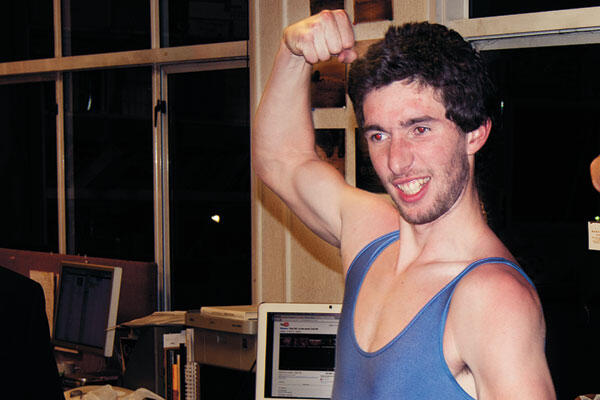
Lozz's World
Kia Ora and all that shit. Welcome to the first installment of Lozz’s World. Throughout this completely self-indulgent column I will discuss current events (yeah, not really), express my opinion on everything relevant to scarfies, pass on the silliest yarns from around campus and generally rant about who or what has fucked me right off lately. I honestly have no idea why Joe is letting me write this. By the time this goes to print, Orientation Week will be over and all you unpleasant little shits will be trying to return that stolen kitten, or cleaning the dried cum off your pillows. I recommend lukewarm water. Undoubtedly one of my favourite parts of O-Week has to be the arrival of a brand new batch of first years. These garden-fresh morsels are yet to be tampered with, and oh-so-fun to fuck with. It’s a scary thought that this latest influx were year-9s when I was in my final year of high school. Heck, they’re almost as good looking now as they were then. I mean what... Anyway, I look forward to observing their progression from awkward mid-pubescent stains on society, into semi-respectable but slightly fatter stains on society. Until then though, I invite you to embrace and enjoy the misfortunes they come across in their debut year as Otago scarfies. On the topic of misfortune, last year I made the sloppy mistake of signing the same tenancy agreement as OUSA president, Logan Edgar. Due to this, my column will frequently provide an up-close and often all-too-personal insight into the life of the overachieving Southland simpleton. Already, in just the first few weeks of flatting, I have learned much about the boy from Te Anau, who’s in way over his head. For example, believe it or not folks, Logan gets his dear mother to do his washing. Yes, that’s right, a 20-year-old male responsible for a $20 million dollar organisation hands over his soiled sheets and clothing to his mum (god bless you Jan) whenever she pops in to check up on her eldest son. Not embarrassed in the slightest about the situation, Edgar attempts to justify it by informing us that Jan “just has a magic touch with the fabric softener.” Stay tuned my lovelies, next week I am going to disprove God. Until then, keep it scarfie and remember, lukewarm water! – Lozz Holding xoxo
-
Culture

Hello Saucy
Move beyond frozen meals, mi goreng and toast, into a world of simple, delicious meals which you’ll enjoy cooking. Stock your freezer with meat as it comes on special, use vegetables in season and don’t buy one of those shitty $2 can openers, because tinned food is now your friend. Here are the basics I stock my pantry with. See you next week with our first recipe. Short grain rice (arborio if you’re splurging) is essential for risottos - the ideal comfort food to which an array of vegetables and meat can be added. Dried pasta is super cheap and typically takes 8-12 minutes to cook in boiling, salted water. Long grain rice such as basmati or the fragrant jasmine will keep your curries authentic and your stir fries gorgeously balanced. Use the absorption method to cook it as stated on the back of the packet. Chickpeas are not just for vegetarians. Buy these protein-rich legumes tinned, drain the brine off and whizz into hummus or add to salads, pastas and stews. Red kidney beans are a must-have for Mexican fare. Canned corn kernels make for tasty Sunday morning fritters. Crushed tomatoes are probably the most versatile tinned item you can buy as a student. Mince can be transformed into a crowd-pleasing spaghetti Bolognese and casseroles stretched to feed many. Tomato paste adds depth to sauces. Fresh garlic and brown onions. Chicken or vegetable powdered stock. Neutral cooking oil with a high smoking point such as canola is ideal for frying or grilling. Slightly fruity olive oil is excellent for dressings and low-temperature cooking White flour thickens sauces and makes bread. White sugar caramelizes onions and sweetens tomato-based dishes. Soy sauce and fish sauce are salty flavour-boosters. A few drops go a long way. Chilli sauce is sweet, hot and tangy all at once. Dried whole chillies, chilli flakes or cayenne pepper will take you spice fiends on a trip to hell. In a good way. Dried herbs such as oregano or basil are cheaper than fresh but still pack a flavour punch. Use with chicken, beef, fish, eggs, mushrooms and aubergine (eggplant). The addictive, chargrilled, sweet intensity of smoked paprika makes it worth buying. Curry powder is a wise starting point for curries, and more. Turmeric will stain your fingers yellow, but will turn curries, rice dishes and stir fries into a perfumed wonderland. Cinnamon lends itself to both sweet and savoury dishes. Great with spinach, pork or beef. Peppercorns (and accompanying grinder) and salt will take your food from bland to brilliant. Add salt sparingly during cooking. Milk, eggs, frozen peas and potatoes aren’t featured, but they are exceptionally useful.
-
Culture
The Artist
Director: Michel Hazanavicius You may think that the silent film genre is basically Fever Club in black and white - the background music increasing in intensity as a stray cougar approaches the object of your desire… It’s not. If you’re interested in film, you should reset those ideas and go to see The Artist. Following the story of silent film Hollywood star George Valentin (Jean Dujardin), The Artist explores the issues he faces when advances in technology prompt the replacement of silent film with ‘the talkies’ (motion pictures with recorded sound). The excitement and contrasting pain of this change is shown through the romance between Valentin, and a young, up-and-coming star of talkies film, Penny Miller (Bérénice Bejo). The romance is charming and filled with comedic moments, like the repeated reshooting of a scene where the two must dance together but cannot do so without bursting into laughter. The film is not all about romance. In many ways, it serves as commentary on the use of sound (or the lack of) in film. It draws attention to how clever choreography doesn’t need to rely on dialogue to stir an emotional response. The lack of diegetic sound highlights the beauty of brilliantly planned shots, superb acting, an incredible set and beautiful costume design. The Artist is interlaced with clever references to other silent films, but it is not meant to be a personal joke that only a few understand. Perhaps its ten Academy Award nominations (including Best Picture) are proof of its universal appeal. If vinyl records, vintage clothing and film cameras can all make such a eagerly invited comeback, then why not extend that welcoming embrace to old school film genres? Going to The Artist is the perfect place to begin.
-
Culture

The Descendants
Director: Alexander Payne The Descendants opens with Matt King (George Clooney) - the wealthy descendant of Hawaiian royalty - sitting with his comatose wife Elizabeth questioning how he is going to raise his two daughters, having been the “understudy” parent for the last decade. A rocky situation gets even rockier with the arrival of the as yet absent 17-year-old daughter Alex, who drops the bombshell of Elizabeth’s infidelity. The interlocking story shifts between Matt’s sale of the historically owned ‘King family’ land, and each individual character coming to terms with the betrayal and subsequent death of the matriarch of the family. Alex, the angst-ridden teen, is less saddened by the loss of her mother than the relationship that never was. Ten year-old Scottie copes by text-bullying her classmates, and throwing the word ‘whore’ around a lot. King is stuck between both hate and love for his wife, displayed by Clooney as a (kind of annoying) hesitant indecision that he displays throughout the film. The Descendants is a masterpiece of cinematography, especially the brilliant footage of untouched and native Hawaiian landscapes, and the loose wandering style of filming in each scene. Although it has a reasonably poignant narrative, is punctured by hilarious moments, and is incredibly filmed and littered with great performances, the film somehow didn’t quite hit the spot. The family melodrama was weakly portrayed, and avoided delving into the multiple central themes of the film - death, infidelity and Alzheimer’s disease. My first reaction, when I finally had one, was to laugh, which seems a bit strange for a film hailed as one of this year’s best dramas. Instead of exploring and resolving the issues at hand, the message the film left came across as “it’s ok when someone dies as long as you were mad at them.”
-
Culture

Second Skin
Dunedin band Knives at Noon sat down with Critic reporter Lauren Wootton to pop her interviewing cherry, and discuss their new EP. Opening for Shihad at Orientation last Friday, Knives at Noon were amping to share the stage with a band they have looked up to since before they were freshers sweating it up on the dance floor in The Cook. I met up with vocalist Tim McCartney and guitarist Paul Gauvin for lunch the week before the show. They’re half of Knives at Noon, the other half being Tim Couch (drums) and Oly Wilson (Keys). So there I was chilling in the sun outside Everyday Gourmet waiting for the boys, and I was shitting myself. It was my first interview, I found out about it half an hour before hand, and I had no idea what these guys looked like. Just when I thought I’d picked them out, they went straight inside, came back out and sat at a different table. Right next to me. Shit. After watching Tim for ages (side note: sunglasses are ideal for staring like a ninja) I was almost sure he was who I was looking for, and I was ready to make my big move. Then a moment of hesitation struck - holy shit, holy shit, I actually have to talk to these guys – and in the meantime he pulled out his phone and rang the other Tim. All I heard was “Yip, I’m staring right at her.” Oh My God. Awkward. From there on in though, it was gravy. We yarned in the sun and the boys enjoyed their pies, while I learnt a whole lot about a band that I couldn’t wait to hit up at O-Week. Apparently their gig with Shihad was to be their first in a long time. They hadn’t played together since the Rugby World Cup, so Friday’s show was a big deal. Not to mention they were opening for one of their idols. “Shihad, you know, shit,” Paul said, “when I was at high school I loved Shihad man. It’s like one of your high school kid’s dreams, to play with someone like that.” But as terrifying as that may sound to you and me, they said they were really eager to play with Shihad, especially at the new stadium. While Forsyth Barr might be a new experience for them, these guys have been playing Dunedin venues since way back, and their favourite is still ReFuel, “Just coz it’s standard old ReFuel, we’ve played there so much. Good memories. It’s kinda grimy down there and shit, it’s good old home for us really.” Sadly, it wont be home for much longer: Knives at Noon are heading to Auckland to focus on reaching a larger audience. “Basically, we had a bit of a radical change for this album from what we were doing last year,” said Tim. “We recorded a whole bunch of songs but then we kinda decided we didn’t really like some of them.” So they’re headed north to work on some new ones and get more involved in the New Zealand music scene. In the meantime they’ve picked some of the songs they liked best and made their new EP “Second Skin”, which you can buy on their website. But there’s a catch: you also have to buy a t-shirt. Sweet idea, right? You buy one of their t-shirts online or at their gig, and it has a unique download code attached which allows you to go online and grab the EP. No longer do you have to worry about buying your CD at the concert and then leaving it in the toilets at Monkey whilst embarking on your latest foray into the wonders of the opposite sex. All you have to do is keep your shirt on, and you get a new t-shirt, new music, and a cheeky wee one night stand to boot. Score!
-
Culture

Skyrim
Skyrim should come with a warning: do not start playing lest you are willing to sacrifice body, soul, and hundreds of hours to the cause. Skyrim is the fifth installment of a long-standing series in which freedom and scope are as important, if not more so, than gameplay and storytelling. Thus it was with a sense of anticipation and slight trepidation that I settled in to begin the epic struggle Skyrim offers. The game is set in Skyrim, the northernmost province of Tamriel (where Morrowind and Oblivion took place). Like the previous games, there is a detailed character creation system providing for a plethora of potential characters, ranging from realistic humans, to furry catlike creatures called Kahjiits. However, unlike past games, there is no choice of specific ‘class’. Your character develops much more organically, gaining proficiency as you practise various skills giving more freedom to the gameplay and a far greater replay value. If you want to play as an Orc firing fireballs from heavily armoured fingers, or as a small wood elf sneaking around wielding a battleaxe twice their size, you can. Moreover, the combat is a stark improvement on previous games, as is the ability to duel-wield spells and weapons to give fluidity to any style of play. Skyrim’s frigid setting evokes a real sense of gravity and impending doom. This is exemplified by the first few minutes of the game where you are taken to a town to be executed, only for it to be attacked by a dragon, or as they are called in the vernacular of Skyrim, “dovah”. The entire town rallies up to fight the hopeless battle, which ends with you, and only one other, escaping alive. After leaving the decimated town, the game does what it does best: leaves you to do what you want. If you want to continue to the beautiful alpine town of Riverwood and fulfill your destiny as dovahkiin (dragonborn), you can. However, if you want to live life as a hunter and part time explorer, or get married and work at the mill, there is nothing stopping you. There are problems however. The glitches, which marred previous games, remain. It is not uncommon to get stuck behind an inch high ledge forcing a reload, or to see a dragon skeleton thrash permanently after death. At least I expected that from a game so detailed. What really got to me was the laziness of the story. In past games one rose from plebeian to hero after a noticeable struggle. However, in Skyrim there is an unsatisfying sense of immediacy. For example, the leader of a local militia group will not talk to you (let alone trust you) but after one simple quest he is willing to reveal the group’s greatest secret. Likewise the amount of basic (and meaningless) fetch quests is monotonous. The quests themselves often don’t feel like they add anything to the development of the tale; rather, they feel like menial chores that you are required to complete before the story can progress. In this regard you may find that Skyirm’s best moments occur when you least expect them. It’s when you are stopped in your tracks by the beauty of the Northern Lights flickering across the plains, or welcomed by the banter flooding the tavern that you realise what a truly fantastic game Skyrim is. Then, when you look at the clock and it’s 4am, and you haven’t eaten since you started playing hours earlier, you know that you’ve been sucked into the Elder Scrolls once again.
-
Culture

Karam Kazam!
Before we start, I have a question for you. Do you want a book review, or an opinion? I find it amazing how often people want a book that affirms their beliefs, rather than a book that challenges them. Joe Karam’s fourth book on the David Bain saga, Trial By Ambush, will no doubt challenge some beliefs, both in Dunedin and in New Zealand generally, as we remain divided over how to deal with an exonerated murderer. In truth, the mysterious and subjective behavior of our justice system really is a bitch, and I sympathize. As you have most likely already made up your mind about the case, or at least know the bullet points of the drama, it would be pointless to rehash what happened that “fateful day”, or to give you a play-by-play of the retrial; you can find that information in the book, if you dare to open it. And I think you should. What you need to understand is that nothing in this book is value-free. There is always a slant, always an edge, or a truth that any narrative will try to convey. Karam is a master of constructing a logical progression of facts. His painstaking attention to detail makes up for the fact that there is nothing exceptionally stunning about his prose. Knowing who the writer was, I approached the book skeptically. There were stylistic clichés and several trite statements that left me unimpressed at the start. However, what I couldn’t shake was that after reading the first section – a laborious 182-page reconstruction of the first trial – and almost threw the book into the rubbish, the following sections unveiled a truly gripping structure of counter evidence, cast in the shape of a formidable wrecking ball. Karam’s systematic thrashing of the prosecution’s case against David Bain was convincing, not because of the destruction of one or two aspects of the prosecution’s evidence, but the obliteration of every one of the CIB’s theories prescribed to the evidence collected. Karam’s harsh treatment of the CIB is probably fair, considering how he presents the miscarriage of justice against Bain. Yet that is just it: no matter what packaging Karam chose to put his knowledge of the case in, no matter how many facts, truths and bricks of evidence thrown to the skeptic, there will always be the argument that “Joe Karam wrote it, so objectivity is impossible.” Time to look in the mirror.
-
Culture
Finding the Loophole
Dunedin Community Gallery, 20 Princes Street 15-29 February Rob Piggott’s “Loop Series” works 1999-2012 You can’t help but be impressed by the bold nature of the “Loop Series”, a collection of paintings by Dunedin-based artist Rob Piggott. Large canvases, cut into interesting but seemingly senseless shapes, feature bright blocks of colour - scarlet reds, azure blues, mustard yellows and pale pinks - juxtaposed with spiraling lines that swirl energetically across abstract space. The name of the series is apt, as each painting within the group displays the looping curls that have featured in one form or another throughout Piggott’s career. It began as a fascination and experimentation with shapes - which marked Piggott’s paintings from the 1980s - but only during the 1990s did this evolve into a fully-fledged focus on the spiral shape. Representative of the fluid rhythm and movement of life, the spiral emerged as a significant motif in Piggott’s artwork, eventually transforming into the quirky loops seen in his current exhibition. Piggott spends a great deal of time shaping his canvases into their unique forms and outlines before actually painting on them, then uses acrylic and oil-stick on canvas to achieve the look and colour of the “Loop Series”. The response to the series has been mixed. Piggott notes that among the many positive reviews, he at times receives comments that remark disparagingly on the simplicity of the paintings. However it is this simplicity that he strives for in his work. Indeed, it is one of the three self-proclaimed elements of his art, alongside “emotional content” and “patience”. Asked to explain what he means by “patience” Piggott explains that the thought process behind his work is far more complex than it may at first seem. Subtlety is what makes his paintings so unique and intriguing, and it takes patience - a lot of looking, Piggott remarks with a chuckle - for people to see the emotional thrust behind what may at first appear to be “standard” artwork. In particular, Piggott refers to the act of viewing his paintings as a kind of “meditation”; and indeed, absorbing yourself in the abstract curves and coils that spiral across such carefully crafted canvases does appear to be a sort of visual experience of patience; a quieting exploration for meaning. And exactly what meaning is there to be gleaned? While he strongly believes his art should always be open to the interpretation of the individual viewer, Piggott has his own ideas on what his energetic loops convey. The visual exploration of human consciousness and sub-consciousness is expressed through conflicting colours and twisting lines that hint at the hidden turmoil of the mind and of human life, beneath the veneer of civility and sensibility often shown to the world. It is this mask of so-called normality that Piggott sees as being visually represented by a perfectly straight line, the ultimate visual demonstration of precision and control. The exhibition displays an incredible thirteen years’ worth of Piggott’s loop work. Whether or not he will continue to work with this same motif is for the moment uncertain, though Piggott emphasizes that he would never close himself off completely from the idea. With a good-natured shrug, he explains that after all, those constantly looping lines have “never-ending potential, like everything”.
-
Culture

The Motor Camp
Written by: Dave Armstrong, Directed by: Conrad Newport Any comedy with a “Dutch fascist” issuing orders limiting the maximum weight of children allowed on the trampoline is going to be a winner in my book. Add to the mix that this is a quintessentially Kiwi story, put together by a truly professional cast, and you’ve got a play for all ages. The premise is simple; two neighbouring caravans in a motor camp, two very different families holidaying side by side. The whole thing has a touch of Fawlty Towers, (you’ve seen Fawlty Towers right?). A lot of students can probably relate to the characters from their own personal experiences. The conflict centers around the relationship between blokey, typical Kiwi male Mike, and the nerdy, physically inept academic Frank. All in all, the play reads both funny and true, an impressive achievement. The Motor Camp might be finished up in Dunedin, but keep your eyes out for it, it’s definitely worth your time.
-
Culture
Be | Longing: A Verbatim Play
Written by: Theatre Studies, University of Otago Directed by: Hilary Halba and Stuart Young From the makers of Hush comes a new documentary play focusing on stories from people who have migrated to New Zealand, and asking what it means to belong to a country and culture. This unique kind of theatre demands a lot from the actors, who mimic interviews from real people, perfectly reproducing every mannerism from a small movement to a slight intonation of the voice. With a variety of accents to take on board it sounds like a challenging piece of work but will be gold to see on the stage. After their glorious return from taking the piece to Auckland you know it can’t be missed, so book now! Allen Hall Theatre, 1 - 4 & 7 - 10 March Students $12
-
Culture
Lunchtime Theatre Round One!
Allen Hall Lunchtime Theatre is back with a bang! After a soothing summer break we’re straight back in to it with the newly-named CIA Stand Up Comedy (formerly known as AntiSocial Tap) heading the LTT programme. For those of you who have been living under a rock, Lunchtime Theatre is arguably the pride and joy of the Theatre Department at Otago. Student-run shows are on every Thursday and Friday at 1pm in Allen Hall, so there’s no excuse to miss it. Come along and see a large variety of performances showcasing the department’s best and brightest! Opening the programme this week, CIA will be tackling the age-old question that has plagued us al: when will the world be ending? If you believe the Mayans (and in turn Hollywood moviemakers), it could well be this year. Or are they all just out to scare the pants off you? Head on down to Allen Hall on the 1st and 2nd of March to see these two shows. Who knows, you might just find some real words of wisdom – and at $3 a show, who’s complaining?
-
Columns
Te Roopu Māori | Issue 1
Tenei te mihi ki a koutou nga tauira hou o Te Whare Wananga o Otakou! Nau mai, haere mai, rarau mai ra ki raro i te tahuhu o Ngai Tahu ratou ko Ngati Mamoe me Waitaha. Kia Ora koutou and welcome to Otago Uni! Hope you have all got amongst O-Week, made some new friends, joined some clubs, checked out the night life and just generally had a great time. For those of you who didnt manage to come over to Te Roopu māori whare (523 Castle Street), Nau Mai haere mai tauti mai. If you need a quiet space, cuppa tea or some good banter come on over when ever you want, the door is always open!. So you might be thinking, what and who is Te Roopu Māori, so here is the lowdown. Te Roopū Māori emerged from the need to provide a social network of support for Māori students at Otago University to advance tino rangatiratanga within the context of tertiary education. Over the years Te Roopū Māori grew from a kapa haka group in the 1960’s into an incorporated society in the mid-1990’s with three basic aims: recruitment, retention and results for Māori students with the core function of Te Rito (the executive) to facilitate access to tertiary education. As Te Roopū we fulfil many functions on campus. As a political body we strive to represent Māori student’s interests within the University. This is achieved by Te Roopū’s representation on committees at all levels within the University. As well as the political aspect Te Roopū provides for the cultural and social needs of Māori students on campus. Socially Te Roopū organises social and sporting events throughout the year. We also work to provide a sense of whanaungatanga for Māori students at Otago. Kei konei tatou katoa mo te take kotahi, hei whai matauranga, hei whai i te ara tika mo to tatou nei iwi Maori! mo o tatou nei tamariki, mokopuna hoki! A, anei he whakatauki hei timata i to tau “Ma te rongo, ka moohio; Ma te moohio, ka maarama; Ma te maarama, ka maatau; Ma te maatau, ka ora!” Through resonance comes cognisance; through cognisance comes understanding; through understanding comes knowledge; through knowledge comes life and well-being. No reira, whaia te iti kahurangi! A, he mihi maioha tenei ki a koutou mai i matou nga tauira katoa o Te Roopu Maori! Mauri Ora
-
Columns

VC's Letter
The beginning of the new academic year is a very exciting time. One of the reasons that I became a professor (and ultimately a Vice-Chancellor) is that I have always been hooked on that “back to university” feeling. I love everything about this time of year - the renewed energy in town, crisp new stationery, - but mostly the sense that absolutely anything is possible. As I have made my way around campus this week, I can see that “back to university” feeling reflected in your eyes as well. From my vantage point, it looks as if each and every one of you is holding a brightly wrapped package that you can’t wait to open. As the new academic year begins, I would like to issue three challenges. First, I challenge you to be the best student you can possibly be. Our goal at the University of Otago is to push you farther than you have ever been pushed before. Your obligation is to work harder and learn more than you ever thought possible. Second, I challenge you to be the best person you can be. A university education is about much more than what happens in the classroom - it is also about all the other life lessons you learn along the way. During this year, I challenge you to stretch your wings in non-academic ways. Pursue an old sport or pick up a new one - join a club, or volunteer your time to help someone who needs you. I also challenge you to make new friends and to actively seek out people who are different from you. During the course of this year, find someone with religious views, or political views that are different from your own; meet someone from another country. Have a cup of coffee with them and listen to their perspective on the world. Finally, I challenge you to be the best citizen you can be. Help us in our efforts to make this campus more environmentally friendly. Turn off lights when you aren’t using them, print double-sided, and remember to recycle. Some of you have just arrived in Dunedin; others of you have lived here for a long time. Either way, we want you to treat this city like your home. Please take advantage of all of the wonderful things that Dunedin has to offer, and while you are doing so, remember that you shouldn’t do anything here that you wouldn’t feel comfortable doing on your own front doorstep. You are about to embark on a new year in one of the greatest journeys of your lifetime. I am pleased and honoured that your journey takes place here. I wish each and every one of you an outstanding year. Welcome to the University of Otago.
-
Columns

Presidential Column
A bloody good welcome to ya, Here lies the first yarn of the year (apart form all those Orientadium yarns you saw before this). This is where I set about having a rant about what’s going on with the Executive so you know what we’re up to or sometimes just have a big whack on about the week. It’s awesome to see how epic Orientation went (well right now it’s still going so fingers crossed you all have a sick time) thanks to all of you who came out and got amongst, whether it was the Hypnotist or Shapeshifter it was a pleasure having you involved! Defs a big shout out to the volunteers who helped make it happen and those other helpers; Red Frogz, Are You OK? The Police, Forsyth Barr Stadium, and the DCC. On that note, make sure you’ve signed the petition about the proposed Liquor Ban so we can make sure the DCC know what’s up about all this hoohaa. Market Day is happening today (Mon) so get on down and check out what goods the locals and students have on offer; there’s always some sweet budding student designers flashing their wares for cheap! Anyway, for now I’ll let you read the funnies while you ponder all the mistakes and magic moments of your first week in Done Eden. Love, Your Prez.
-
Features
Dr Clark & Mr Woodhouse Interview Transcript
22 February 2012 C = Critic | D = David Clark | M = Michael Woodhouse Callum: Can we start off with both of you having a bit of a chat about your time at Otago? What you studied, where you flatted, did you go to halls, etc. David: I came here at the start of the nineties, 1991, and I think you were a year before that, were you Michael? Michael: I was that year, yeah. D - Yeah. I lived at Selwyn College for the first two years of my time at university. I had a great time, made some great friends and later worked there on staff, before returning many, many years later to be warden there. I flatted at various locations, including up in Opoho and up North East Valley and Crown Street, and generally had a good time. I spent a long time as a student and enjoyed every minute of it. M - My first university experience wasn’t actually as a student; I worked for the National Bank before I left school, and I flatted, actually, in a – well, it was a student flat, but it’s where the National Bank is now – here on the corner of campus. The Star newspaper that year, which was about ’86 or something, did an article on the dilapidated state of student housing, and on the front page they put a big photo of our flat on the headline article, and we weren’t even students. I was a late starter at university, I didn’t get here until ’91, and I was about 24 or 25 by then. I flatted off campus, I was in Caversham just above Carisbrook, so I didn’t experience hostel life when I was in Dunedin, except I had been to Helensburgh House, which doesn’t exist now, but it was up at Wakari Hospital. It was a fairly interesting hostel. D - I remember eating there, did you – M - Yeah I did eat, I ate there a few times. D - I had some potatoes; they hadn’t been mashed very well and hadn’t been reheated very well either. M - I don’t think it’s what you’d call one of the greatest hostels in the world, but ah, we had some brilliant parties in the basement down there, just really… quite loose parties. So yeah, I kind of got a little of the flavour of hostel life. C - So was that some kind of a student hall that was shut down later, or something? D - It transferred, I think, to Hayward. M - Yeah, it did. D - Just the basic management, because the hospital wanted it back. M And so I think they traded off by giving them Hayward, which is where I was born, by the way. On the second floor of Hayward, I think. It was Queen Mary Hospital, of course. D - They had hospitals back then? M - They did, yes, thank you! C - Well the next thing I was going to ask is would you each be able to provide, for the Critic readers, one incident of student wackiness that occurred during your student years? M - Ah, we may be one of the reasons that skyrockets are no longer legal. It was at one of the parties on Clyde Street, just opposite where the Commerce building is now. It descended into a little bit of a… You get your vacuum cleaner pipe, and your skyrocket, and your insert the skyrocket so it becomes a horizontal bazooka. This went on for hours, actually, until the fire brigade was eventually called, and I think that was the last year skyrockets were ever legal in this country, so… C - Coincidence? M - Oh, pure coincidence, yeah. D - I saw this on your list of questions, and the thought that immediately sprang to mind, and I don’t know whether this is a good one to share or not, was I remember being countrified in my first year, which was back before things were quite as sensibly regulated as they are today, which involved a mate of mine and I had been throwing buckets of water at each other in a corridor or something, which was deemed to be inappropriate in a hostel setting and detrimental to the furnishings and fixtures. We were blindfolded and left in our long johns in the middle of a forest, with an axe in our hands, and had to find our way back to the college. We actually did quite well, a ute came past, and we actually beat the people who dropped us off there back to the college and were able to exact our revenge before they returned. The story after there gets more grim, but those were the kind of… they were interesting times. M - It’s a bit of a risk to hand the person you’re trying to punish an axe. D - Yes! M - Trusting of the punisher, I suppose. C - A sense of fair play, maybe. D - They thought we would struggle to hitchhike back into town in the possession of an axe and in our underwear. C - Well, our readers love this stuff; do you have any other wacky stories? M - How long have we got? We could go all day, all the memories are flooding back. I was an accountant. I studied accounting and I hated lectures, particularly in year one, so I’d drop my own lectures and go to the law lectures. I never wanted to be a lawyer, but I loved the lectures. And that was Henaghan who was in his first year at Otago - maybe his second year. It’s interesting to see that he’s still teaching the first years and now he’s Dean of Faculty. D - I did my first degree in afternoon lectures, it was my particular flavour, and one of the main reasons I ended up majoring in German. I think in your first degree, your priorities are slightly different, and you become more focused as you go along. As I say, I just focused on the afternoon lectures to start off with. M - It had been seven years since I’d been at school, and my first ever lecture was Statistics. They give you these handouts, and it might as well have been German. I had no idea what I was looking at, and all these 7th formers who had just come from school were leaving to come back in a few weeks when it got a bit harder. I’m terrible; I didn’t even know what an integer was, but a very sensible person said to me, “ah well, one lecture at a time”. Managed to master it, and actually that the paper I’m most proud of. I think it was a B-, but I’d felt so dumb, and finally got it. I guess that’s what university’s all about. D - I remember doing Jim Flynn’s first year politics – Does he still offer that? M - I knocked on Jim’s door during the campaign! Didn’t secure a vote, though. D - I’d have taken my hat off if you could secure his vote. I remember doing it, and my younger brother tutored me, because he was reasonably bright and had done some politics and philosophy before. I beat him by a whole grade, I think it was, and I swear it was because the marker couldn’t read his handwriting. It was very satisfying. It’s always good to beat one’s younger brother. C - Beat him into Parliament as well! M - You’re not twins, are you? D - No, he’s three years younger. M - So he stood in North Shore? D - Yes. C - All right, that’s good material. I’ve got a question for you, David: Have you got any stories from your time as Warden of Selwyn? D - I have lots of stories, but it’s probably too soon to tell them! M -Good answer. D - I think if I held on to some of the letters of apology, they might make interesting pieces in twenty years’ time, but they’ll have to be judiciously chosen. M - You’ve got a question about Knox there. I must say, some of the students I spoke to thought you were a bit of a wowser when you were at Selwyn. Now I’m seeing all of that in a slightly different light; now that I’m hearing about some of the risks of the more dysfunctional elements that can occur in hostel life. Did you get a sense that you needed to keep a fine line between giving the residents a decent experience without promoting alcohol abuse? D - I think the science around alcohol is a whole lot more advanced than it used to be, and we kind of knew it probably wasn’t that good for us; now there’s sound evidence of what it does to your brain and so on, and that’s developing all the time, so I think we have a responsibility to make sure we take that science seriously, and not in the kinds of ways we organise ourselves and promote our student communities. At the same time, students are of legal age and choose to drink. It’s just about making sure they have appropriate pastoral care and access to good support as and when they make mistakes. C - You’ve touched on two of the questions I was going to go for. You’re both aware of the changes to Knox College, what are your thoughts? D - There’s a lot of talk in the media about traditions, and I think it would be a shame if good traditions were lost, but every now and then it’s a good time to do a stock-take of your traditions and heritage. There comes a time when traditions lose their meaning and become dead traditions. If you know why you’re doing them and they’re about building good communities and bonding; if they have a purpose and articulate that, then you should keep them. Each community has a time to have a good, hard think about that, and that’s what’s going on at Knox right now. M - I don’t have much of an experience with hostel life, so it’s really hard for me to speak with much authority, but what I do think is that a lot of what people call tradition, particularly around alcohol culture, isn’t tradition. It’s just stuff that’s sprouted up in their memory, or slightly longer than their memory, and that doesn’t necessarily make it a tradition. The Hyde Street keg party was never around before the nineties. Even the toga party, when I was here in the eighties, was very much contained within the Union building, and it’s grown as a tradition. Even couch burning! I mean, that was around, but getting really trollied and setting fire to a couch to me isn’t a tradition, it’s just a dumb thing to do. They’ve got to be careful at Knox that they don’t throw the baby out with the bath water; there are things that have been around for hundreds of years: The nomenclature and… Who cares if you’re called a fresher? You’re a fresher, people know what that means, and I don’t think there’s any real value in chopping them out. But, you know, they’ve got a process to go through, and I’ll watch with interest. D - I think new traditions can develop, and I guess I agree with Michael that burning couches when trollied is not that clever. At the same time, things like the Hyde Street party… Another way of looking at that is saying that it’s possible to re-frame that; that could be done differently. You have carnivals in different places. It depends where the emphasis lies, and whether you’re making a positive change and taking ownership of it, and whether it’s intended to be a good thing. M - I agree with that, but I do also think that sometimes you need a circuit breaker, and the Undie-500 is one of those examples where you actually needed to cut it out for a couple of years, because it seemed that every year was trying to outdo the year before, making it bigger and more public and more drunk. So now the City Council’s just moved the liquor ban further north. Frankly, I support it, but I don’t think it’s going to change a lot. You’re still allowed to sit in your back yard and have a few beers, crank up the BBQ. The Hyde Street keg party could still carry on. The question is, then – because they still need the Council’s permission to close the street – and if the Council really wanted to be bastards, that’s what they’d do. The alcohol ban isn’t going to affect whether or not the keg party goes ahead, it might affect how it’s run. Action taken there might be a moderating force, and dampen down some of the more dysfunctional aspects of that day. But at the end of the day, it’s just a big piss-up. There’s very little else to be said about it. D - The things that will make a real difference, and let’s not kid ourselves that this is just Dunedin student problem, our wider society has an alcohol problem, and there are things that can be done to address that. The Royal Commission made a report, which said really clearly that the clearest way to address it was the price and advertising. Distribution was the next item on the list. Now, as far as I understand, there’s still legislation that’s trickling along through the House, does make amendments to distribution, which I commend, but doesn’t address the price and advertising, or address the wider cultural issue we have as a society, and my challenge would be to Michael to really push that, because if we do want to make a positive difference across our society then we do need to make note of those leaders that will make a difference, otherwise those students will just end up being scapegoats for something that’s actually a wider cultural problem. M - Price actually has two dimensions: One is the market setting a price, and there seems to be this myth that people involved in the distribution of alcohol want to sell their product as cheaply as possible. That is a diminishing market. By volume, we are drinking less, not more. D - Those that are drinking, are drinking more. M - That’s a slightly different issue. But it’s not as if the market is unfettered, and as long as you keep it cheap enough, volume will take care of your profits; these guys actually want to make money. And this whole myth about Countdown using alcohol as loss leader, it’s nonsense. Loss-leading is when you sell your Portobello mushrooms for $3.99 a kilo, it’s not when you sell alcohol at below cost, because people, particularly this week, will be coming in with trolleys, filling them with alcohol, buying nothing else and then leaving. They’re not going to allow that to occur unless there’s a profit in it. D - Do you think a minimum price on alcohol would address some of the issues? M - Well, I don’t support a minimum price, but what I do support, and the Ministry of Justice are still having a look at this, but it doesn’t appear as if the dominance of the supermarkets, a situation created under the previous Labour government, albeit that it was the Commerce commission that approved the purchase of Woolworth by Progressive. If we had three supermarket chains in this country, I think life would be a lot different. But these guys are so dominant they’re forcing price constraint on providers. So the Ministry is looking at putting that as a point of sale, in the same way that GST is, so there is truly an effect on the price rather than dampening down the margin. That could have an effect. D - So less price, but just doing it through tax. M - Well, I don’t think you put price controls on products any more than you – D - No, no, I agree with you, I think that’s the right way to do it. M - Minimum prices don’t work. We’ve had them in the past. It was the Muldoon government, which is one of the strongest socialist governments we’ve had in this country, actually, and it didn’t work. C - For the purposes of publication, can I just ask both of you to summarise what governmental changes about alcohol you’d like to see? So David, you’d like a minimum price, is it $2 per standard drink? D - Well, I’d like to see these issues taken seriously, I haven’t looked at the numbers and what makes that difference, all I know is that those are the strong levers to pull. There is a price effect in there, whether it’s through excise as Michael suggests or some other means, say, restrictions around advertising. My area of expertise is not in marketing of alcohol, but those who did the research say those are the two areas where major changes could be made if the law was clearer. I also want to say that changes regarding distribution, like the government’s proposing, go some small way towards it, but it’s a change that those bigger leaders have put off the table, because that’s what’d make the real, serious changes. And as I say otherwise, students end up being scapegoats when it’s a societal problem. M - Yeah, I think the young are feeling a bit put upon in that regard. I still haven’t decided how those returns to age of purchase, but I’m probably leaning toward a split age. It’s one of those areas where you can legislate all you like, but you can’t legislate attitudes, so if we’re to make a meaningful change away from a binge-drinking culture, particularly among our young, then the law’s not going to do that. Places like the University can actually have more influence in the short run than the law change will; its messages about safe drinking and support for the keg party… if we can’t agree that getting really pissed, and throwing up and falling down is not cool, then no amount of law change in Wellington is going to change that. D - I think most people understand that, and we have to take evidence seriously. The Royal Commission’s report was pretty clear, and people still have freedom to choose, but we take the sensible sets of regulation – and the unfettered free market probably isn’t selling its promise that- M - It’s far from unfettered, there’s quite a lot of fetter in the system already, and it’s worth pointing out that the last time this was done was done by a National government, and ten years of Labour government did nothing about the sale of liquor. It’s all very well to get all pious now – but it did do one thing, it precipitated the Law commission’s report after the Indian liquor store owner in South Auckland was shot by robbers. Then the National government asked the Law commission to speed up the process of feedback. D - You’ve got to be a bit careful about blaming everything on us, it’s some time ago now and it’s certainly before half-time. M - I used that as a shield, not a sword, because it’s not me that’s standing here saying the government’s not doing enough. I think the response is a balanced one, recognizing that we took eighty years to get to the situation we’re in; we’re not going to solve it with one law change. And 126 of 152 recommendations I think is a bloody good start. D - I think ruling out two of the big levers is a very disappointing start. M - That’s a value judgement that I don’t agree with, and I think there are plenty of big levers in there that have the potential to moderate behaviour. D - What are the other big levers? M - Well, I think the aspect of parental responsibility is a very important one, because we can talk about the age of purchase all we like, the fact is that people that are drinking underage, which is not illegal, three-quarters of these people obtain their alcohol from their parents. The simple fact is now that if my teenage daughter wants to bring her netball team around for a few drinks, I need the complied or express permission of the parents of those participants, and it’s on my neck if the shit hits the fan. I think that’s going to have a significant moderating influence on the way in which young people drink. The power of the community to choose the nature, number and opening times of the liquor outlets is a significant lever, unless councils don’t want to take it. In Dunedin we have the second most liberal hours of drinking in the country, and you’ve really got to ask yourself whether the bars need to be open until five in the morning. The council has the power to change that. These are quite powerful levers to be pulled. The government’s having its ass kicked by the anti-alcohol lobby for things that I think are still quite reformative. C - With regard to the proposed liquor ban in North Dunedin streets, are you both in support of that? D - Jury’s out for me. I want to look at the evidence, but it really is those big levers that I’ve mentioned that affect wider behaviours, so doing a student liquor ban may have unintended consequences. It might push some of the behaviours out of the student zone and into the communities close by, so I’m cautious about it. M - I’m relaxed about it. The city’s got to decide the kind of city it wants, and the alcohol ban has worked in the CBD, and I don’t think it’s going to be a significant constraining factor on student life, so I’m more than comfortable with it. D - It’s interesting to hear what the OUSA say, because they’ve taken a very responsible line on alcohol issues, and where they end up sitting will largely determine how students respond. They are concerned about people who are genuinely disruptive. M - They are vocally and rabidly opposed and have 3000 signatures on a petition to go to the city council asking them to overturn it. That’s a knee-jerk reaction. Coming back to comment you made before, David, I actually agree with you that there is a risk we could push student events into the margins of the campus and into parts of the community that didn’t really want it inflicted upon them. It’s no good reason not to have the liquor ban, but I agree that it is a risk. C - Speaking of Law Commission reports – I’m trying to segue into a new topic, the Law Commission, a couple of years ago, released a recommendation that the government look at liberalising some drugs, and as you know, a lot of students are really pro-liberalisation of drugs; what are your thoughts? M - I would oppose it. I’m aware of the health issues, I’ve spent fifteen years in the health sector, and I think that the difference between alcohol and drugs is that there’s nothing good about drugs, and the wowsing researchers say there’s some academic literature that says alcohol has no harm and may have health benefits, when used in moderation. Cigarettes and marijuana and other narcotics don’t fall into that category. I don’t believe in overly punishing those who are addicted; I’m all in favour of punishing the dealer, and have no problems with strengthening the laws to crack down on dealing. D - I’d like us to take a hard look at things. I think the laws would be different if we started from scratch. It’s true, that research has been done in the UK, that some drugs currently classified pretty highly do less harm than others that we have a very liberal attitude toward. M - You’re talking about alcohol. D - Yeah. What would be good to do is scientific research; statistics show the amount of violence that results from alcohol, and that doesn’t necessarily correlate with some other drugs. Yet some drugs are really nasty, too, so on that I would support legislation that is more based on harms than on current practices. C - If there were a bill before Parliament to decriminalize marijuana, would you be in support of that bill? D - As I understand, the law currently allows people to have small amounts for their own use, and they’re not punished, is that right? C - I think the police tend to not enforce it. M - That’s not written in the statute, so any amount of marijuana is illegal. It may be constabulary discretion. D - Well, I’m in favour of that discretion. I think if people have a small amount for their own use and do not share it with others, then that’s less harmful than some other things that we otherwise currently have or do. C - Would you support a bill that decriminalized it for personal use? D - Most likely, yes. I’d like to look at research about harms, and the trade off is saying other drugs are more harmful and we should be more careful about them. We should do things more equitably and more evidence-based. C - I have a hypothetical question for you both. In a hypothetical society, which society would you prefer: One where everyone earns $50,000 per year; or one where half the people earn $70,000 and the other half earns $300,000? D - It depends entirely, in my view, on the other conditions of the society. Whether the healthcare, education services and other public services are available- C - It stays the same. D - And there was social mobility between the two income brackets? So these are weighted averages rather than absolutes? Because otherwise we’re talking about absolutes, and you’ve got two classes in the society. M - All other things being equal, I think is the question. D - All other things being equal, then of course you’d want the one where there are greater resources and were able to share them. M – Hang on, he didn’t talk about tax rates or redistribution. He just said income. DC – It would be a mistake to think pure income was the measure of society. Entrenching class structures where you have two elements of wealth, either very wealthy or not very wealthy, are not healthy. So in general you’d say the wealthy society of course, providing that society took care to ensure that even those of modest means had access to good and free education, health services and ACC and all those things that mean everyone gets to live in dignity and reach their full potential. MW – Which is an answer I would suggest reflects the confusion the left has around the issue of income inequality. It’s a really straightforward question, with a really straightforward answer. Either you agree with the proposition that as long as you’re better off, it’s okay for other people to be even more better off in society, all other things being equal. I personally think the question is moot… The question was about income inequality. All other things being equal, would a society where everybody is better off but there is greater income inequality be a better society than one where everyone is equally impoverished? I’m going to quote my new colleague Dr Jian Yang who grew up in china. And in his maiden speech said by 1968 when he was 6 years old, china under Mao Zedong had reached its utopia. Everyone was equally impoverished, and on his tenth birthday his present was two eggs for breakfast. So we can go to the statistics that David loves quoting and say that according to your argument, we would be better off living in Afghanistan or the Czech republic than we would be in NZ and I simply reject that proposition. What’s important is the issue of social mobility. So fair pay for work. And some could argue that we don’t have that in some scales which is why the previous Labour govt sought to compensate through working for families D – Which national called communism by stealth... M – Well it was in the form initially introduced into the house… this was very open socialism and wealth redistribution. It’s very difficult to unring the bell. But while you redistribute wealth to the degree that we do… D – There are countries like the Nordic countries that have relative income equality and they are very good and health societies, people live longer, they have high levels of satisfaction. And we have other countries that have high income disparities. In the Nordic countries there’s redistribution that allows higher social mobility, which actually encourages higher productivity because those from modest households are not excluded from gaining their potential through access to education and so on, which are barriers to people from poor backgrounds in this country. Some of them do well, but a lot of them don’t. Redistribution and provision of opportunity so that people can develop their full talents is a really important part of the picture. There is a much wider picture than just the pure levels of income… M – If I had a dollar for every time someone on the left mentioned a Nordic country I’d be a very very wealthy person. Of course I’d have to pay quite a bit of tax on that wealth, but that’s okay. And the biggest problem with that is if you take a country like Norway, which is one of the richest countries in the world, they have two very significant factors that we don’t. One is they exploit their natural resources like we have never done, despite being one of the richest natural resource countries in the world. They drill for oil, they drill for rare earth metals, they extract (safely) all of the things that we have but that we’ve become afraid to touch. And we’re afraid to touch them because Labour are afraid of the greens. So we will watch with interest that discourse unfold over time. I think it has a lot to do with the rhetoric that’s coming out of Labour at the moment, because they’re afraid of actually saying if we want to increase our wealth, if we want to have a better society, if we want to pay for the public services… D – Tell us what national party policy is M – It is to extract and exploit our natural resources safely and responsibly in order to provide for a better country. It’s pretty simple, that’s what Norway’s been doing since the war. The other thing those Nordic countries have which I think is very relevant is they have one of the purest populations in the world in respect of that they are not a cosmopolitan country. And I think that does make a big difference. We are a pacific nation, with nearly every single country in the world represented, al lot of them are struggling in this generation, the last two generations, to pick up the skills that are required for a modern economy, and that’s an issue we need to start talking about. Now we had that in the 1970s with Samoa mainly, and the 2nd generation Samoans are very very productive kiwis. But let’s not pretend Norway and NZ are the same populations, it’s ridiculous. D – They do very well in Silicon Valley, it’s a less homogeneous population but they’ve built a type of cosmopolitanism that people buy into, and I think that’s what we as a country ought to do better. I agree with Michael that there’s a high correlation between relatively homogenous populations and economic growth rates… that is one good reason why we should be as a country looking to have high levels of education and access to education for the whole population, that means better funding for tertiary education, and I would note that that’s something national has cut, funding for tertiary education, that’s something students should be taking note of. Access to loans has become more difficult, student allowances are worth less in real terms, national have introduced an administration fee on student loans, all of those things actually matter in terms of the type of society we shape and the social mobility we make sure people have access to. Social mobility is important to ensure every citizen has the opportunity to make their best contribution. What we have here is a prime minister who’s more and more out of touch with ordinary NZers, and our society’s getting to the point where it’s just beginning to defend the privileges of the wealthy, and making those things like tertiary education only accessible to those from wealthy backgrounds, and that’s not the way it should be. M – I will accept that some cuts were made to some tertiary education courses, because we don’t really believe you should continue to fund dead people or people who don’t even bother to turn up to their courses, or the number of ITOs which was really where the problem was. Those were the only cuts that were made to tertiary education. D – You’re being disingenuous; those are not the ones I was referring to. Steven Joyce has admitted there were cuts. M – He put it in to the legitimate tertiary institutes, he set an expectation that people should come out the other end with something, and when they don’t, they need to be cut. D – Over the next five years, things are going to get tighter for the tertiary sector. M – You know what, that’s okay, I’ll buy that, because we still have one of the highest proportions of funding for tertiary education in the OECD. Student allowances went down dramatically in real terms under the Labour govt. they gave student allowances to the really poor and the really rich because nobody did anything about farmers and the wealthy… and we haven’t done anything yet, but at least we have announced that we’re going to close those loopholes so the people who get student allowances are the people who deserve it, not people who manage to structure their affairs in a way where they can get them and people earning $60,000 a year can’t. So there’s a hell of a lot going on in tertiary education, and that’s really good news. Because there are more bums on seats in our tertiary institutions than ever before. D – I believe that as a proportion of the population the numbers are dropping. The principle though is that we should be investing in our future, (M – I will never disagree with you on that), we should be funding our tertiary institutions properly, and that funding is dropping over time, it’s set to drop further, and that shows the difference in priorities between what a Labour govt would do and what national will do. They have said very clearly in our last policy, in real terms, funding would increase over time. C – What’s the progress of that student allowance change Michael? D – One thing that’s proposed is that the student loan repayment holiday of 3 years be cut back to 1 year when people are travelling overseas… M – isn’t that fantastic? We’re gonna ask people who don’t live in this country to repay their loans, and they never were before. We’ve got tens of millions of dollars in the last 6 or 8 months since that policy came in from people who weren’t expecting to have to repay their loans. D – it’s a waste of parliamentary time. C – Run down scarfie flats – part of the fun of living in Dunedin, or would students be better off paying slightly more for a better flat? D – I remember in my first scarfie flat in Crown Street in north east valley, it was one of those flats where if you couldn’t see your breath in the morning when you woke up then you knew you were dead. There must have been some insulation because it was genuinely colder on the inside than the outside. There is some fun in that, there’s some anecdotes in that that are good and some memories that are positive, but ultimately there’s plenty of research that says there are preventable health conditions that result from living in damp cold flats. And there are things that could be done such as minimum standards that could be put in place, a star rating system that gets handed on with land titles that I would like to see. And maybe one day when I’m finished passing my current members bill I’ll draft another one, because it is an issue that desperately needs to be addressed, we have some really poor quality flats here. And the other thing that has happened here is that ECA had some good programs around this, I believe those programs have been cut, they should conversely be ramped up because the public health prevention stuff, prevention is better than cure, it’s much less expensive than cure. Preventable health conditions cost the country, they have huge personal effects on people who suffer preventable disease as a consequence. Dunedin can and should do better. C – If you did put in a minimum standards regime, you wouldn't be able to get the cheap $85 per week student flats any more, there would be a minimum price of $100… D – There’s no such thing as a free lunch… but arguably the country could save money in the health system by investing in student flats, so in this funny sense there is a free lunch. And if the govt was willing to invest in supporting a wider spread of housing initiatives, it’s possible that you actually save health dollars overall. There needs to be more proactivity in this area, and I would encourage the govt to do that. M – It is true to say that no govt of any hue has poured as much money into home insulation as this one has. The greens have taken the credit for that… There is an issue with the willingness of landlords to take up the warm up NZ program and there isn’t a clear cost benefit that they’re seeing, and I want to make sure that landlords that are being proactive and insulating their flats are rewarded, both with demand for their stock and perhaps a higher weekly rent. But the question for Dunedin north is to make sure there is sufficient housing stock to enable students to have a choice. We’re constantly under pressure for student flats down this end of town, it’s eased a little over the last few years, largely because students are feeling less compelled to live from Frederick street down to the gardens, and you’re seeing a lot of people moving up into the town belt and the city rise area, even out to south Dunedin. There will always be an element of people thinking it’s cool to have ice on the inside of their windows, I guess I’m getting old because I’m not one of them… D – The current govt has been very careful to repackage existing funding as new funding by cutting programs that it doesn’t like and then rebranding them and reissuing them as new programs, so I urge some caution around those numbers. I’m concerned that the program has stopped because home insulation is important, and more could be done. M – Housing’s a big issue, nationally, not just for students… D - I genuinely think there’s public health benefits to spending in that area. M – Well they won’t save us any money. This is the myth of public health… while it still might be the right thing to do, don’t ever expect it to save money. C – Favourite beers? Both – Emerson’s pilsner. C – Rugby or cricket? D – Cycling. M – Rugby C – What projects as MPs are you both working on at the moment? D – My mondayising bill is taking a fair amount of time… M – Haha, you jammy [lucky] bastard! It’s very tinny this game, and David’s been fortunate I suppose, but that’s just the luck of the draw. D – I have had the luck of the draw. It’s a bill that I chose to pick up, grant Robertson drafted the original bill, when it needed a sponsor I thought right I believe this is a sensible thing to do, it corrects an anomaly that only happens 2 out of every 7 years when we get fewer than the allocated 11 public holidays. It’s a bill that makes sure people get the holiday they deserve. M – I’ve got two bills in the ballot; the one in my name is to increase the amount of financial support for live organ donation. The previous govt put in place policies which provide for the equivalent of the sickness benefit for 12 weeks after surgery if someone donated a kidney to a loved one. And I’m proposing to increase the level of that support to the same as ACC, so 80% of your wage for 12 weeks after surgery. The other one is just a minor technical amendment to the land transport act which means that if you give an evidential breath test on the side of the road then you elect to have blood drawn and for any reason the medical professional can’t draw blood, at the moment the door is closed to going back to reliance on the breath test, so basically they get off the hook. So basically I’m reopening that door. I’m also working on some stuff around fines for theft of wildlife… I’m also looking at 4 or 5 other bills… D – Most of my work is actually around revenue, developing a fairer tax system. Labour proposed a capital gains tax last time round as a way of broadening the tax base. So you can potentially have lower tax rates but have a fairer system so that money’s directed towards the productive economy. And my job is to have a good hard look at those policies and also other potential revenue sources. At the moment some people are able to hide their wealth in capital and avoid paying tax. And with the increase in GST it’s becoming increasingly difficult for people on low incomes to make ends meet. And so there is a pressing need to have a good look at our tax policy. I’m also associate tertiary spokesperson, and that means I’m getting around the university and others around the country to understand what things they would like to ensure we’re investing money in the right places and to make sure students and staff get the best possible outcomes for our country as a whole. M – The thing that dominates my world at the moment is the fact that I’m senior govt whip, so I have 58 colleagues that I need to make sure are in the right place at the right time for the right reason and voting in the right way… D – with their conscience! Shouldn’t be hard to convince them to do that surely? M – Absolutely. That’s called collective caucus responsibility which you’ll come to know very well. While the govt in this term of parliament has fewer moving parts, that presents a challenge when the practical elements of making sure we’ve got numbers on select committees. C – With regards to tertiary education spending, are you both aware of the uni’s new SLA with OUSA? What are your thoughts? M – OUSA needs to be very careful what it wishes for, not to sell down its sovereignty for a buck. I also think it was a kneejerk reaction born out of a belief that students were too stupid to decide what was valuable to them. And I’m not even sure if it’s legal, because I’m pretty sure we passed some legislation last year which limited the amount of influence the council could have over the add-ons they could charge students. D – Labour obviously opposed VSM last year. We think that there could have been tweaks made to the legislation that would have given students the autonomy to make their own decisions, we think that students are old enough and mature enough to set their own governance arrangements and have their own organizations on campus. The govt obviously disagreed, but that said, I think that OUSA is a well-organised association and they will actually make the best out of this, they are set to be a model for the country in many ways as to how the current situation can be made to work best for students and I have every faith that they will make a good fist of this. M – At the end of the day, both David and I want the same for Dunedin, we’re going to disagree sometimes quite strongly about the path to that destination, but it behooves us actually to work quite closely together on some of those local issues, and we will over time I’m sure. So we can go hammer and tongs if we want, but actually I don’t think we’re that far apart on a lot of things. D – I agree with Michael, there’ll be some fundamental differences that we have about things, but a lot of them are around the way to get to solutions. And I’d like to think that what I’m doing is evidence based and what he’s trying to do is ideology, but he might beg to differ on that. M – I agree exactly in quite the opposite way, but the fact of the matter is politics is part ideology part evidence part public perception and public clamouring. And somewhere in amongst all of that you turn your hand at an outcome, things that you believe is the best thing to do. And generally you please nobody, but that’s the game. D – I’m getting into politics because I have a set of values and a certain range of principles that I believe represent a constituency and that I believe I can represent well. Those values around equality of opportunity and valuing the least amongst us, making sure the most vulnerable are looked after, and about access to education, health, legal representation regardless of your material wealth are values that I think need to be represented strongly, so I make no apologies for coming from that particular point of principle. And in my experience those from across the political spectrum are there because they think they’ve got a contribution to make, and they’re there for the right reasons. M – And just to reinforce that, there isn’t a thing that David just said that I would disagree with. We’re gonna go hammer and tongs on the details but the destination’s a shared place. In NZ that’s as good as it can be, citizens who are able to fulfill their potential, be socially mobile, and not have unnecessary interference from the state. And even David would agree with that, it’s just a question of where on the spectrum that degree of intervention should go.
-
Columns

ODT Watch | Issue 1
If you’ve never read the Otago Daily Times, you and I could probably be friends. I have to read it, but out of that hard slog every morning comes the glorious ridiculousness that is ODT Watch. You see, the ODT is no ordinary daily paper. Its dedication to bad puns and dad jokes is unsurpassed in NZ media. They are obsessed with Shrek the Sheep, icebergs, AMP shows and Scarfies behaving badly, and in no way do they find this embarrassing. Each week, ODT Watch will bring you just a little taste of the ODT, so that you know what you aren’t missing out on. That’s right, a kitchen sink joke. See, Kitchen is a cricketer, but if you put Kitchen next to sink … yeah, well, you probably get it … From reading the article, Critic wasn’t able to figure out exactly how alcohol could be used as a tool in pregnancies. We assume they were trying to attract the South Dunedin market. Critic’s very own Editor came down with a bad dose of the ODT yips, when he was interviewed for a piece about changes to the oversight of student media. Instead of whipping out an awesome quote, Stockman ended up sounding like a washed-up hippy with three kids and two mortgages. Mayor Dave Cull got in on the act too, ripping on the residents of Milton and Balclutha for being simply uncontrollable: And it wouldn’t be the ODT without a daily update on the goings-on of the happy royal couple. The ODT was visibly upset that the two lovers should have to spend Valentine’s Day apart …


