Must-sees at the World Cinema Showcase
from Issue 8 ()
from Issue 8 ()
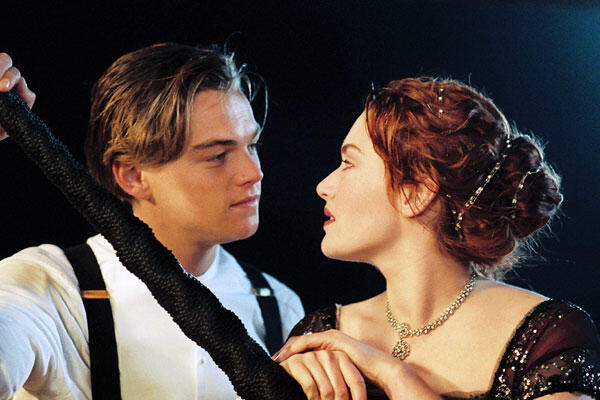
Titanic appreciators should definitely go and experience this classic film in 3D. Seeing Titanic for the first time in years was enjoyably nostalgic, despite the slight cringe factor of the cheesy lines and the accompanying Celine Dion soundtrack. I got far more involved in it than I thought I would. Writing a synopsis of this film seems a tad pointless – if you haven’t already seen Titanic you’re missing out on some vital pop culture! But just in case – the film is about Rose (Kate Winslet), a beautiful upper-class woman travelling on the HMS with a fiancé she secretly detests. A suicide attempt results in her meeting (and inevitably falling for) Jack Dawson (Leonardo Dicaprio), a poor artist. Admittedly, much of the dialogue and events are very unrealistic and it’s difficult at times not to feel like you’re being hit over the head with obvious moralistic themes about the human condition. However, I really didn’t mind. I loved Titanic as a kid when it first came out. I remember seeing it at the movies with my Dad and being completely in awe of the historic tragedy that it was, and a little bit embarrassed by the love story. Re-watching it, it is easy to see that it truly is just a Hollywood blockbuster, albeit with grandiose surrounding hype. Maybe it’s just the young Leo and a ridiculously smoking Kate, but I have a soft spot for this film, and I know others who might admit it too. Maybe. I feel like it should be pointed out that Titanic is three and half hours long – which is long, and an especially long time to be watching a 3D film (not that I personally had an issue with this). It therefore could be a tad draining for some. Happy nostalgia everyone! Michaela Hunter
Footnote is a comedic satire that explores the awkward rivalry between two Talmudic Scholars, Eliezer Shkolnik and his son Uriel Shkolnik. Director Joseph Cedar pieces this award-winning film together beautifully, rendering it extremely engaging and surprisingly insightful. In the process of wrapping up 30 years’ worth of Talmudic research, Eliezer Shkolnik’s thesis submission is beaten in by only a month, by the thesis of another researcher and thus left worthless. His greatest achievement becomes a footnote that cites him. After 20 years of being nominated for the esteemed Israel Prize, Eliezer gets a call informing him that it is his lucky year. The call, however, was meant for the other Shkolnik. Uriel and the Israel Prize committee, in the smallest possible room, discuss and throw a few punches over this mishap and Uriel eventually leaves with the coveted task of telling his father about the mistake. Eliezer is a grump whose resentment for his son’s achievements in the Talmudic field is obvious from the beginning of the film. The media attention Eliezer receives for this award provides him with the prime opportunity to rip into the new generation of scholars and their methods of research, his son included. Though sacrifices are made on Uriel’s behalf, his own flaws and vices are not exactly excluded. Revelations are made throughout the film, though the final one during the award ceremony is left for the viewers to uncover. Footnote explores human nature and our inevitable flaws which are not always overcome. There is no magic, idealism or heroes. Footnote instead provides honesty, antagonists and a dedication to sneakers on the part of Eliezer, who also offers the wisdom that “one cannot draw evidence from fools. In reality, nothing is nice.” Sam Allen
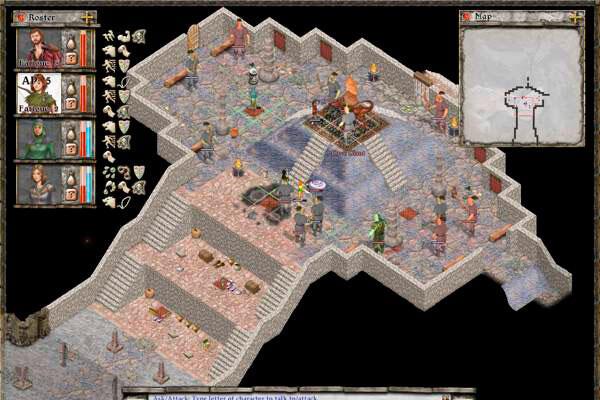
Remember when, in well-supervised playground games, you had to take turns? Avernum taps into all that nostalgia, as well as all the comfort that comes from navigating a series of isometric cubes. This RPG is deliberately generic – so it’s equal parts charming and predictable. After committing some undisclosed crime, to some petty monarchy, a party of four characters are imprisoned underground. The setting of Escape From the Pit is, quite literally, one enormous dungeon packed with gruesome monsters, glittering loot and quests to kill monsters and/or bring back loot. The personality of each character is not specified, which I like. You can forge a deeper connection with an avatar that has nothing but a portrait and a name and never ever speaks. It’s a shame the same minimalist attitude isn’t extended to advancing the story. Big text boxes are dreaded, popping up with frustrating regularity. This would be okay if the draw of the game was a unique, genre-deconstructing plot, but the whole point of the game is that it’s not. Why would you bother describing a wall as being “roughly hewn stone” when a) that’s demonstrated by the graphics and b) every single wall in every single piece of fantasy media is made of stone and roughly hewn? The turn-based combat has a heap of depth. Even something as simple as positioning your small party on the battle grid is important. There’s a real sense of economy to the spare, unflashy turn-based encounters. There are subtle problems with the interface, which is an issue for a game that attempts to make an archaic aesthetic accessible. The only way to close the inventory screen, for example, seems to be to press escape (not g, which opens the screen). That is going to infuriate strategy RPG fans, who rely on hotkeys. At $10 on Steam, Avernum is also a little pricey.
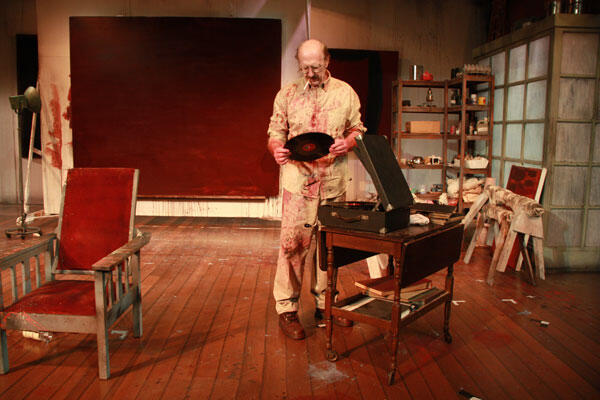
Written by John Logan Directed by Lara Macgregor Starring John Bach and Cameron Douglas Performing until May 5 The Fortune Theatre’s latest award-winning production RED is a fierce and intriguing look in to the life of Mark Rothko and his assistant, over the space of two years, as he prepares to create a selection of murals for The Four Seasons Restaurant. John Bach brings Rothko to life beautifully as he storms around the stage ranting about art and life. The self-centred, twisted soul lays the whole of the art world at our feet in a combination of comparisons and insults while his patient assistant listens on with us. Cameron Douglas’s complementary actions allow the assistant to grow throughout the piece; he is believable in his slow, yet newfound confidence and voice to speak against Rothko. This confidence leads to a lot of arguing (though this happens often enough with Rothko always having something to disagree with) yet it never gets boring, as we see Douglas crawl his way up to the top where he hopes to seek respect, as a man and a struggling artist – a struggling artist who doesn’t even expose his name, leaving the enjoyable mystery of “who is he?” The tension and use of silence between the characters is a highlight. In one of the final sequences a stunning image is set before us as we see Rothko kick a bucket of water across the stage and for the first time Douglas doesn’t back down. Their eyes are locked and they are stoic in their silence as the only sound to be heard is the bucket rolling and stabilising. It’s these eerie moments that reflect Rothko’s creations hung around the space, uneasy and dark. The set was fantastic, a huge kudos to the team who must have spent weeks deep in paint attempting to replicate those humongous images, which leads me to another highlight of the piece – live painting on stage! Douglas and Bach danced around each other as they bounded from side to side covering a massive canvas in maroon paint. It was so satisfying to see this kind of live action, and a mess made and not swept up by a stage manager in the interval. Every movement on the set affects the set. Every drop of paint is left to build the landscape of the studio. Everything about the piece is natural. The scene changes are smooth, believable and intriguing. The audience sits in silence as we watched and wondered what would happen next. These scene changes were aided nicely by the use of music, Rothko’s record player dictating the mood and speed of the scene. I would highly recommend RED to anyone. Granted some people (art history majors perhaps?) will gain more from the piece, and it is very wordy, but don’t let that hinder you from attending. I love that it is packed full of references to the art world, which occasionally go over your head and yet sometimes are used as punch lines which make you feel gloriously educated as you laugh along with the crowd at Pollock’s expense.
Dunedin’s own Girl in Stilettos is in town next week and playing at Sammy’s on her national tour. Annah Mac will perform on April 28 as part of the tour to promote her single, as well as her album released in September last year. I caught up with her to find out all about her bowls skills, and how she’s feeling about her first national tour. Annah went to school in Dunedin, and coming back is exciting because “everyone that supported me there hasn’t seen the work I’ve been doing for the last three or four years now … the last time I was there I was just a girl with my guitar, playing in cafés and things like that, and now I’ve got a full band, and an album, and I’m really excited to share that with everybody.” Her national tour kicked off on April 20 in Auckland, and features gigs in Auckland, Wellington, Christchurch, Dunedin and Invercargill – a pretty big deal for a 20-year-old small town Kiwi girl. Speaking from Auckland, she said she’s “really excited, a little bit nervous, but everything’s going to plan so that’s cool. No last minute [issues], and the band’s all here and ready!” The “Girl in Stilettos Tour” is named after her hit single, which reached number two in the New Zealand Top 40 charts. The video clip features Annah at Hillsborough Bowls Club – an idea that came from video director Florence Noble who Annah describes as “very clever … when we met with her she sort of pitched the idea, and I thought ‘this is really great, it’s really awesome, it’s going to be really funny’ … and we kind of just went with that.” And as for her bowls ability? Many of us have grown up playing bowls in some form or another, and Annah is no exception. “I have at school, a couple of times, but I didn’t know very much until I got there that day. All the people in the video clip apart from two of the men were actually Hillsborough Bowls Club members … and they were very excited to teach me as well, so I sorta had a whole day of training during the video clip.” The song’s unprecedented success in the New Zealand charts has opened a lot of doors for Annah – she released her debut album Little Stranger in September 2011 and her time in the top ten has enabled this tour, as well as another single. Her successes are “pretty incredible … it’s been pretty amazing for myself and also for the team that’s been working with me. It’s a pretty exciting time.” And just like many New Zealand artists, Annah writes her own songs – yet another trait that proves her mad skills as a musician. So what inspires Annah Mac? “Everything you know, I’m constantly drawing inspiration from other artists, and my family and friends and situations that they’re going through, so everything really. Life.” You can see Annah play live on April 28 at Sammy’s, and tickets are available from the venue beforehand or on the door for $26 – all ages.
Marina Lewycka’s Various Pets Alive and Dead delves into the development of a slightly dysfunctional family who have taken very different lives after growing up in a left-wing liberal commune. Set in 2008, the novel moves between Doncaster and London, exploring both the present lives of the characters, and also their memories of growing up in the commune. The narrative reveals that the mother is the only person in the family that still believes in the radical politics and lentil-eating philosophy of their past. The rest of the family now work in corporate finance and are sex-crazed, rejecting the ideals she had tried to instil in them. And as the title suggests, there are various pets; some living, some dead. The book is focalised through three different characters: Serge, whom the family believe to be doing a PhD in Mathematics at Cambrige when in actuality he is selling his soul to the corporate world; Clara, a slightly neurotic primary school teacher who has the worst luck with keeping pets alive; and Doro, the hippy mother of Serge and Clara, who still tries to live a life of free love and protest. The other characters in the novel include Maroushka, a beautiful ditzy girl from Zhytomyr whom Serge wants to sleep with; Oolie-Anna, Serge and Clara’s Down’s Syndrome sibling; and Marcus, Doro’s soon-to-be husband whose first person narrative is expressed in the epilogue. I found the characterisation effective in highlighting how each family member had chosen different life paths. Doro was my least favourite of the characters because her intrusive, nagging and opinionated personality got tiresome and added little to the effect of the story. However, I loved Serge, who spent most of his time piecing together poetry about Maroushka, and fantasising about sleeping with her. He tries so hard that it’s slightly cringe – like sniffing shoes cringe. The chapters are nice and short, so I found the novel to be an easy and quick read. There were many points where I actually laughed out loud at some situations the characters found themselves in and the memories they recalled. Lewycka paints fantastically funny childhood memories for both Serge and Clara. My favourite belongs to Serge, in which he, unable to comprehend the speed at which rabbits procreate, believes that the rabbits that keep coming back after he has buried them must be zombie rabbits: “It seemed like the rabbits which kept on appearing so inexorably were in fact zombie-bunnies linked in some supernatural way with those little hairless corpses they’d buried.” The “zombie” rabbits that seem to take over the commune end up being donated, unbeknownst to the vegetarian animal-loving members of the commune, to Randy’s Reptiles. Lewycha’s novel is an easily accessible read that everyone can relate to in one way or another – be it through pining for a girl way out of your league or eulogising at pet funerals. If you want to realise you aren’t that weird after all, definitely give it a read! Bradley Watson
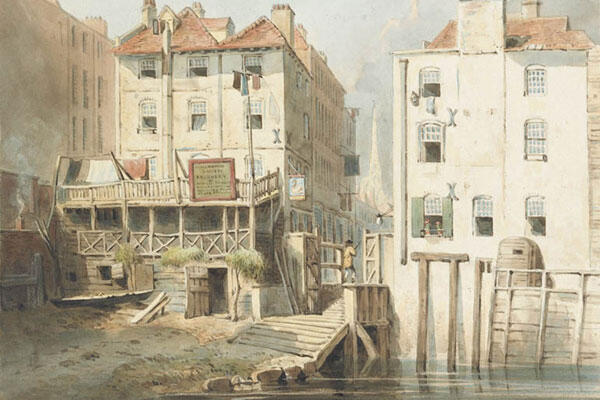
Haunts of Dickens is a collection of almost 60 watercolours painted by British artist Paul Braddon (1864-1937). The exhibition is part of Charles Dickens’s 200th birthday celebration and contains scenes from Dickens’s novels, ranging from Great Expectations to The Old Curiosity Shop. The illustrations were gifted to the Dunedin Public Library in 1956 by A. H. Reed, a well-known literary figure in New Zealand. The exhibition comes with an interesting story: The watercolours were discovered last year by librarian Anthony Tedeschi, concealed between some rare books at the Dunedin Public Library. Curator Lynda Cullen says they were found wrapped in “fairly ordinary folders made of cardboard, tied with string”. It is estimated that the watercolours are worth $100,000. The illustrations consist mostly of pencil sketches which have had watercolours added to them. The artist’s work was typically of an architectural nature and this is reflected in the exhibition. The main focus in every piece is on buildings and structures with a few figures, most of whom have walking sticks. The curator Lynda describes the watercolours as having three kinds of identifiers – Charles Dickens, the artist, and the scenes, which “often are representative of buildings that Dickens borrowed from real life for his novels.” Because of this, Lynda goes on to talk about the lovely nuances of the works, in the way that “story and reality is folding in and out of this exhibition.” For this reason, the exhibition has been drawing in not only those interested in the artistic breadth of the works, but also those with a keen interest in their literary nature. The exhibition is showcasing a number of events in association with the works, including readings by local actors and talks on related topics such as Victorian fashion and health, the architecture found in Braddon’s works, and women in Dickens’s novels. Each reading has attracted a crowd of around a hundred people and this number appears to be made up of largely older people. Lynda suggests that this may be because Dickens is not studied in high schools or universities at the moment. Had had he been, the demographic might be more varied. The exhibition itself is organised into a “bookcase” arrangement with the watercolours hung in order of the novels, as they were written. Because the pictures have been unexposed to the elements for such a lengthy amount of time, they have retained their colours beautifully, as well as a transparency that allows the underlying sketches to shine through and showcase the intricate architectural sketches underneath. Because of this, the sketches have beautiful layers that make the exhibit enchanting to view. The luminous quality of the watercolours make the illustrations really “pop out” and the number of images in the exhibit provides a wonderful effect, as there are subtle distinctions between the paintings. “Haunts of Dickens” would be of particular interest to those attracted to all things literary, but also to anybody with an interest in the Victorian era. Included in the exhibition are some items associated with the era as well as some first edition copies of Dickens’s novels. This addition complements the artwork well and adds variety to the overall effect of the display. The whole exhibition is really quite striking, and I would recommend it to anyone, but it would have further appeal to those interested in Dickens or majoring in English (such as myself!). This exhibition can be viewed at the Dunedin Public Art Gallery and runs until May 6. It will then travel the country, visiting six other galleries, from late June through 2013. Taryn Dryfhout
This week we have a slightly different but incredibly delicious way to cook your cheaper cuts of meat, sure to beat all other beef stews. Tagine is a North African dish where meat is cooked slowly in various spices until it is fragrant and tender, usually in the clay pot that goes by the same name. However, it can also be made in any vessel that locks in steam (thereby retaining the moisture in the meat). A slow cooker, which seems to have become a regular feature of scarfie flats, is perfect. Traditionally tagine would be made with a spice mix called ras-al hanout, which means “top of the shop” and is a mixture of the spice merchant’s best spices. Because this always varies a little, use the spices listed below as a guide, but feel free to experiment with a little “ras-al flat”. Then sit back and relax while the cooker does all the work and the house is filled with mouth-watering aromas. Maeve Jones IngredientsFor the tagine:1 tablespoon of olive oil1 large onion, diced 3 cloves of garlic, chopped600g chuck steak, cut into 1cm cubes 1 cup of liquid beef stock1 tablespoon of honey2 teaspoons each of cumin, coriander powder, ginger, turmeric and cinnamon 1 can of chopped tomatoes 2 carrots A wedge of pumpkin ½ cup of raisinsSalt and pepper Fresh herbs such as mint or coriander and sliced almonds to garnish (optional, though highly recommended as they make all the difference).For the couscous:500g packet couscous 3 cups of boiling waterEither the zest of 1 lemon or 1 chicken stock cube MethodPreheat a slow cooker to high. Add half of the oil to a pan over a medium heat. Fry the onions and garlic until they become translucent, then add them to the cooker. Add the rest of the oil to the pan. Brown the beef in sections and add it to the cooker as it’s ready. Mix the beef stock with the honey and the spices. Pour into the cooker with the can of tomatoes. Finely chop the pumpkin and the carrots and add to the cooker with the raisins. Season and stir the mixture before placing the lid on and leaving on high for 8 hours.Prepare the couscous about 15 minutes before you wish to serve the dish. Pour the boiling water into a bowl with your lemon zest or stock cube. If using stock, make sure it is well dissolved in the water. Stir in the couscous, cover and set aside for 10 minutes. Fluff with a fork a little before serving with a ladle full of the tagine and garnish with mint or coriander, and almonds.