

Salad Boys are a band from Christchurch, and this album features some incredible chill-out pop songs. Featuring members of T54, the guitar playing is magnificent. Eight songs, lo-fi, dreamy and fun. Sometimes surfy, sometimes upbeat, bringing to mind Flying Nun glory days.
Salad Boys is now available for a name-your-price download from saladboys.bandcamp.com.

Culture
More Culture from Issue 13
-

Form and Void
Mint Gallery Exhibited until 29 May 2014 “Form and Void presents a study in contrasts by staking out a liminal territory between cadence and dissonance, presence and absence, potentiality and actuality. While eschewing iconographic elements, the work of this collection continues to engage with wider thematic narratives concerning the nature of creation, being, apocalypse and redemption.” I have been going to Mint Gallery a lot recently because their exhibitions have been developing strongly all year, and I have been really enjoying my time there. I recommend joining the mailing list for opening nights (free wine); often the artists are at the openings and can sometimes string together an inspiring sentence or two, which is nice. The current exhibition on display is Form and Void by Brendan Jon Phillip. It’s morbid and anxious, passive and introspective, and the artist continues to expose his growing interest in the physical and the metaphysical; what exists, and what is devoid, and what does it all mean. As a creative existentialist continually questioning life and death and everything else, I’m really into his moody metaphysical aesthetic and love his work. Phillip studied at Whitecliffe College of Art and Design and Elam School of Fine Arts, as well as receiving Distinction in Film and Media Studies at the University of Otago. He has been a practicing artist engaged with experimental aesthetics through a variety of projects, spaces and media for over 15 years in Auckland, Wellington and Dunedin. His previous exhibition, Holy Ghosts and Talk Show Hosts, re-imagines the symbolism of the Dutch vanitas tradition (a tradition that has been explored often in contemporary art) of the 16th and 17th centuries through the utilisation of plaster skulls, candles and bubbles that serve to remind us of life’s brevity, through an altogether more contemporary and disparate perspective. The recurring use of skulls and cartoonish ghosts in Holy Ghosts and Talk Show Hosts brings together the mundane and the metaphysical, the divine and the day-to-day, through a vibrant layering of iconography, pure form and textual elements to generate a palimpsest of human experience, and these ideas have been simplified and transferred to Form and Void, which elaborates on the narrative of dissolution and dissonance as an impetus of liberation that has become characteristic of Brendan’s practice. Form and Void comprises a series of paintings, which are mixed media, using various hues of black and white, red and blue – contrasting colours, for obvious reasons. The horizontal and vertical contrast of the canvas surface and media also works as an underpinning aesthetic for Phillip’s interest in binary oppositions. The trial and error process by which he works is also informed by Phillip’s interest in relational dialectic theory and process. What I found most interesting about the whole exhibition are two conceptual ghost pieces that hang in the window of the gallery. These black and white ghosts (made out of what appears to be raw-hem sheets) literally linger in the gallery space, becoming an iconographic key to opening a new aesthetic and ideological territory surrounding notions of presence and absence. Each work appears tactile and abstractive, with ghost-like traces of form suggesting a balance between such opposites. Such a fixation upon such morbid iconography, at such a simple level of production, signals a sense of liberation from the exhaustive, meditative and philosophical act of painting. The inclusion of the ghosts confronts the reality of death and mortality and the sensational effects from such an experience affects the way we view our own flesh and existence.
-
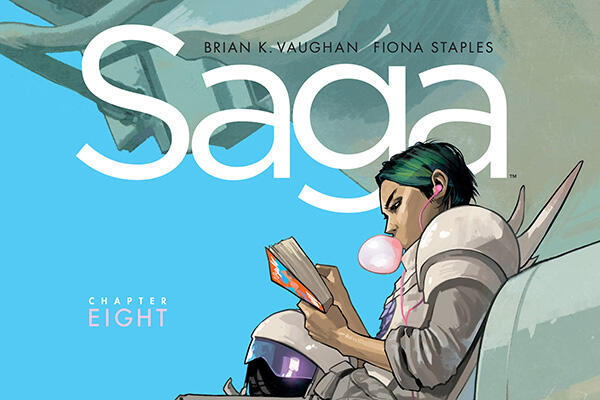
Saga
Saga is the new comic book series from Brian Vaughan, who wrote Y: The Last Man, Ex Machina, and Runaways. He was part of the scriptwriting team for Lost, seasons three through five, and he’s currently show-runner for Under the Dome, a TV series based around the 2009 Steven King novel. I’ve not read much of Vaughan’s stuff before, so when I was first introduced to Saga, I was expecting the sort of pubescent power fantasy that I’ve come to associate with those quirky sci-fi/fantasy crossovers. Turns out I’m entirely wrong. Vaughan is a remarkably mature writer, and although the first volume is not entirely free of the male gaze, there are a couple of moments that just blow you out of the water. At one point, a male character goes to “Sextillion,” which is basically just a massive space station brothel. He wanders around, people are boning, and I’m resigning myself to the upcoming gratuitous sex scene. Suddenly, a pimp appears! Oh, great, here we go. “You decent in there, Slave Girl?” “Anything but, master.” “I taught her to say that. Anyway, have fun …” I roll my eyes and turn the page, and there’s a six-year-old girl, looking scared and awkward. What the fucking fuck. So Saga unexpectedly dropped child prostitution on me, and after that I started taking it a bit more seriously. One of the best things about this volume is the way that things have consequences. Normally when you’ve got empowerment fantasy, you don’t want unpleasant realities messing up your plot – consider, for example, the inexhaustible supply of goons in every superhero story ever. So far, Saga’s going to admirable lengths in its mission to bring real consequences (emotional and physical) to bear on the characters. The real test now for Vaughan will be charting their emotional development over the course of the series. It’s a shock to discover child prostitution in a sci-fi/fantasy comic book, but now that it’s in there, I want to see how this weighty issue affects and shapes the characters involved. In terms of narrative structure, there’s about half a dozen main characters in three different places revolving around the same game of cat and mouse. It’s not desperately original, but I’m willing to sit back and see what Vaughan does with it. He spends most of the first volume playing with expectations of empowerment. Sure, some characters can fight off massive nasty creatures from the abyss; they can also get murdered by a bunch of thugs in a street fight – it mostly depends on who gets lucky. There’s potential for battles to go either way, and that’s a significant plus. Characters aren’t off-limits: they can die, and they do die. It’s not quite George R.R. Martin, because nobody is quite like George R.R. Martin, but it’s heading in the same direction. The one difficulty that Saga encounters is that it’s trying to depict an intergalactic conflict from the inside. The focus is on a series of individual characters, and the narrative never pulls back to display the supposedly breath-taking scale of the conflict. The two sides clash once or twice “on-screen” but only briefly, and only as the background to the relationships between main characters. That’s fine for something stylised, like Shakespeare or the opera, but Saga feels like it’s trying for a realism vibe (at least as realistic as sci-fi/fantasy mash-ups get). Perhaps a grittier tone would have better suited the content, but it is only the first volume. I’ll be keeping a close eye on Saga to see how it develops.
-

The Observer
RUBY’s Autumn/Winter 2014 collection, “The Dreamers,” was inspired by the cult classic films of director Sofia Coppola and the rebellious youths of the 1968 student riots in Paris. Having taken over RUBY in 2008, designer Deanna Didovich has seen the label grace its first catwalk at New Zealand Fashion Week and find its feet with a footwear line. This week the Observer caught up with Deanna to find out what the journey has been like and what we can expect from RUBY in the future. “The Dreamers” was inspired by the films of director Sofia Coppola. What elements of these films inspired you? I love the way her films transport you onto the screen. They are not overtly over the top, but just really beautiful works of art. Dunedin is the southernmost RUBY store. Which pieces from “The Dreamers” would you recommend for a typical sub-zero winter’s day on campus? Definitely our coats and knitwear, of course. We have a dreamy cashmere blend jumper that is perfect layered with one of our coats. We also have some fun, chunky scarves and beanies that are an essential to get you through the cooler months. RUBY was born in 2002 and you took over as designer in 2008. Talk us through your journey to becoming the designer of New Zealand’s most youthful and adventurous labels. Have there been any highlights? The time has gone so quickly that looking back over the past few years sometimes amazes me how much we have built and grown the brand! A highlight for me would definitely be the first show we held in 2010 at New Zealand Fashion Week, as well as being named designer of the year by Metro Magazine. Otago Polytechnic offers an acclaimed Bachelor of Design (Fashion) course with strong connections to iD Fashion Dunedin. What advice can you give to aspiring designers wishing to forge a successful career in the industry? Get as much work experience as you can, and take it seriously, as work experience can sometimes turn into a full time job! How would you describe the RUBY girl? Cheeky and charming, with effortless confidence and a sense of fun. What pieces from past RUBY collections do you still love to wear? My Benvolio Cardigan in black and white. Perfect for the cold Dunedin climate! Since opening its flagship store in Auckland’s High Street, the RUBY empire has expanded to seven self-titled boutiques throughout NZ. What can we expect from the label in the future? A lot more exciting projects both nationally and internationally! Stay tuned.
-

Street Style | Issue 13
Jamie (Microbiology and Commerce) Wearing Beau Coops boots, Ruby dress and coat.. Lydia (Commerce) Wearing New Balance shoes, Levi Jeans, Witchery jersey and Zara coat.
-
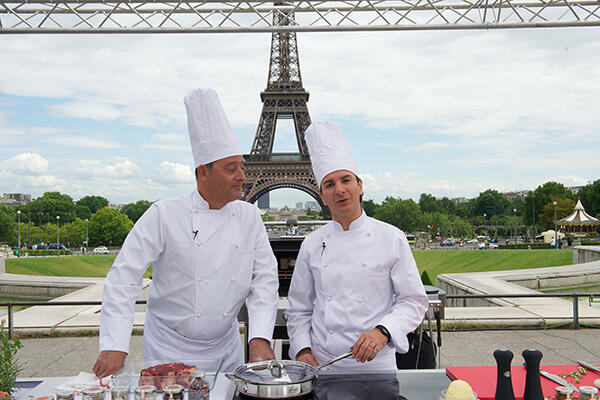
Chef
Rating: B- One should always be wary of a film that was written, produced and directed by the starring actor, and Chef is no exception. Jon Faverau is the guilty party in question, as he occupied all the major production roles to bring us a film we could quite frankly do without. The story follows Carl Casper, a talented but creatively stunted chef, who, after some bad reviews and a nervous breakdown, buys a food van in order to make the kind of meals he’s passionate about. Which turns out to be sandwiches (bit of an anti climax, to be honest). It’s obvious that Favreua decided this was going to be a “cool” film: almost every actor had a stupid tattoo tacked onto them; there was an abundance of fedoras; barely a second without salsa music; and the men all referred to each other as “dude,” “main man” and, my personal favourite, “big chef dawg.” I think it goes without saying it all felt a bit forced. And by a bit, I mean a lot. However, the real problem with Chef is that it’s straight up boring. Although Carl experiences some troubles at the beginning of the film, these are resolved quickly and weren’t earth shattering to begin with. The audience is then “treated” to ninety minutes of Carl leading a rich and fulfilling life. Don’t get me wrong, I’m no sadist; but this is not the reason I watch movies. There has to be some form of drama or conflict to engage the viewer. You can’t base a film around a middleclass, middle-aged man being reasonably happy – that shit’s everywhere. I can hang out with my dad if I want to see that, and I don’t have to pay him $13 to do it. The one redeeming feature, other than Robert Downy Jr.’s wonderful and very welcome cameo, was the incredible food porn. Before Carl ditches everything to make grilled sandwiches (I was not impressed), I got to feast my eyes on everything from berry desserts to marinated squid. Watch Chef if you love food; but stay away if you love films.
-
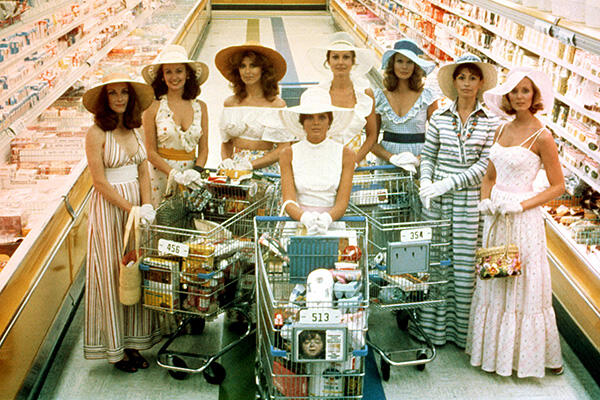
The Stepford Wives
Cult Film No, I am not referring to the 2004 Nicole Kidman monstrosity that left us all cold and more than a little bit confused. The original 1975 The Stepford Wives was everything the remake was not – brave, tense and extremely unnerving. Unlike the (attempted comedy) of Frank Oz’s remake, Bryan Forbes was loyal to Ira Levin’s book of the same name and made the town of Stepford a hauntingly bizarre and dangerous place. Joanna Eberhart (Katherine Ross) is a smart and politically minded young mother who is persuaded by her husband, Walter, to move from New York to the idyllic suburb of Stepford, for the benefit of their two children. As soon as they arrive it is obvious that something strange is going on: all of the husbands belong to the mysterious and overtly sexist Stepford Men’s Association; the women are completely preoccupied with housework; and the town has taken a suspicious interest in Joanna and her apparent free-will. Joanna is lucky to meet Bobby, a sassy as hell new Stepford resident who is also shocked and dismayed by her neighbours’ behaviour. The two of them begin to investigate the dark secrets of their peers, but not without fatal consequences … That’s right; women are being slaughtered in this film, much unlike Oz’s diluted remake, in which all of the lady robots can be switched back to consciousness in a press of a button (is that optimistic or pathetic?). Perhaps one of the most disturbing scenes of the original is when Joanna and Bobby overhear their neighbours having sex, and are scared shitless by the wife’s disturbingly subservient bedroom talk; a moment Oz destroyed in his own version by posing the situation as hilarious. It’s a real pity most people of our generation associate the title The Stepford Wives with Oz’s pointless, pretty powder puff of a movie, as the original took such brave narrative measures to deliver a raw and very scary social commentary. That’s not to say the 2004 version isn’t worth a watch – it is unintentionally hilarious – but be warned, it is also highly offensive to women, the LBGT community and people with eyes and ears.
-
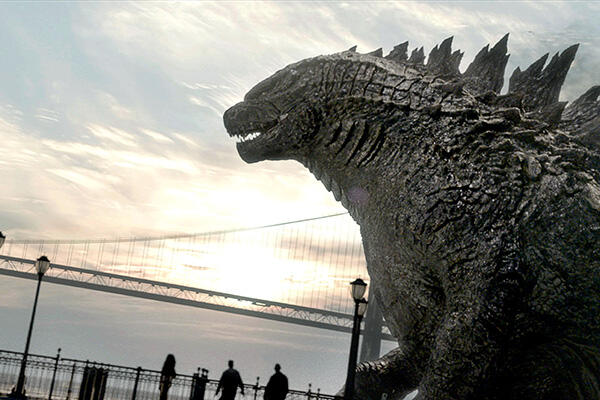
Godzilla
Rating: A- For those unfamiliar with one of film’s longest living monster icons, the eponymous creature first appeared in the 1954 Japanese film Godzilla. A lizard mutated to colossal proportions by radiation, Godzilla allowed Japanese moviemakers to express their concerns about mutagenic radioactive power in a way that would both speak to Japanese audiences, while also being sensitive to the fresh wound of the destruction of Hiroshima and Nagasaki. 70 years later, director Gareth Edwards too is using Godzilla to voice concerns about our global attitude towards radiation, while also creating one of the most spectacular monster movies ever made in the process. You often hear the term “jaw-dropping” being thrown around. I always thought that it was just one of those silly hyperbolic phrases which people use to describe something spectacular. However, Godzilla has given me a new perspective on the phrase, as there were moments in which my mouth literally dropped, leaving me staring at the screen in amazement while probably looking like a slack-jawed idiot. Gareth Edwards’ Godzilla truly nails the scale, spectacle and grandeur that these genre films hope to incite. The true beauty of the movie came from how much thought had been put into the physiology of the monsters and how that affected their movement, both in travelling and in combat. This creates some incredibly dynamic action sequences, which feel both mind-bogglingly epic in scale, while also being firmly grounded in physics. Unfortunately the human stories revolving around these monsters are not at all awe-inspiring. Either the action follows the human characters in a way which feels very forced and strangely coincidental, or the characters make decisions which puts them in the middle of the action, which is absurd considering the carnage awaiting them. The exception to this is Bryan Cranston’s portrayal of Joe Brody. The narrative behind Brody is by far the most engaging and organic, and is brought to life by Cranston’s continued unmatchable acting calibre. Godzilla has set a new standard for monster films in terms of the thought and execution behind CGI creatures. It is a shame that the human aspects of the story didn’t always live up to this standard, but this is still a spectacle you don’t want to miss.
-
Rio 2
Rating: B- People love animated musicals; why else does Disney practically run the entertainment industry? A great Disney musical is like a grand opera with a huge orchestra and people singing their feelings into the sky. But if Disney musicals are like operas, Rio 2 is like Top 40 pop music. The soundtrack in Rio 2 makes you feel like you are listening to The Edge and, like most pop music, Rio 2 also lacks any sense of emotional depth or nuance. Rio 2 picks up a little while after the first film ended with the only two remaining Spix McCaws, Blu (Jesse Eisenberg) and Jewel (Anne Hathaway), who have started a family in Rio. But when they discover that they may not be the only Spix McCaws left in the world, the family and their friends begin a journey into the Amazon. The plot is void of any interesting characters, emotions or motivations. Instead everything feels like a pastiche of all of the animated films we have seen over the past 10 years, most notably Ice Age. Rio 2 tries hard to be meaningful and carry a bigger message of environmentalism. But when all of your character development is based on cheesy and overused phrases and “hip” (and out of place) lingo, you’re never going to succeed in communicating anything of significance. Fortunately, there are a few brief moments of joy in what is generally a celebration of cliché and painfully overused tropes. Most notably, the side story of Nigel the Cockatoo (Jermaine Clement), the villain from Rio, and his quest for revenge against Blu. Nigel is a hilarious character, brought to life by the always-fabulous Clement. Even more interesting is the unrequited love story that emerges between Nigel and poisonous tree frog Gabi. And, of course, despite the script and music, Dreamworks as always did a stunning job of animating the lush rainforests and stunning creatures that live there. If Rio 2 has anything going for it, it is that it is always a joy to look at, but offers little else.
-
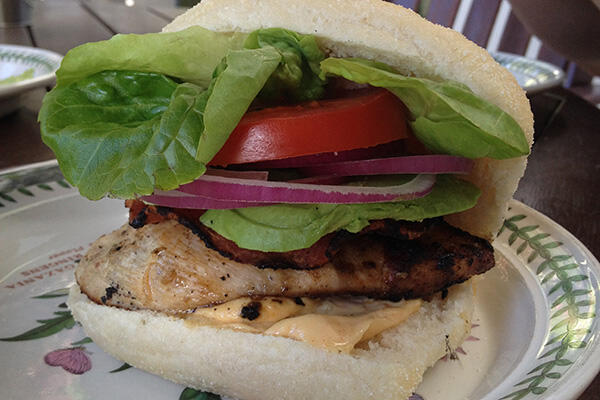
Chipotle Chicken Burgers
I made up this recipe over the summer after I was inspired by a delicious Ferg Burger I ate. Ever since I made these for my family it has become one of Mum’s staple meals on the weekly rotation. My brother, who usually loves these burgers, actually complained about the frequency of their appearance on the weekly menu. For Mother’s Day, Mum and Dad were in Bora Bora and so my brother, his girlfriend and myself convened upon the family home and had a “family” dinner sans the parents. To celebrate the day of maternal appreciation I made these favourite burgers of hers (funnily enough, at my brother’s request). I use chicken breasts and slice them into two thinner breast pieces then marinate them in a good sloshing of chipotle sauce and a bit of salt. Give it a good cooking in a frying pan along with some well-cooked bacon. Then slap that between two halves of a ciabatta bun along with some aioli, relish and a few rogue salad vegetables and you have yourself a winner of a sandwich. Look down the international aisle for a good chipotle sauce. I like using the Culley’s one. I think these burgers tasted the best when I made them at my friend’s house using a charcoal barbecue. But this was back in summer so barbecuing is now not a thing, but keep this in mind when the sun returns to Dunedin in November. IngredientsServes 4 2 medium sized chicken breasts 4 slices of shoulder bacon 4 ciabatta rolls 3 tablespoons chipotle sauce ½ teaspoon smoked paprika A pinch of ground cumin ½ teaspoon salt Aioli, chipotle sauce, tomato chutney Lettuce, avocado, tomato and sliced red onion Method Slice the chicken breasts lengthways so that you have four thinner breast pieces. Marinate the chicken in the chipotle sauce, smoked paprika cumin and salt. Cook the chicken and bacon in a medium-to-high heat frying pan until the chicken is cooked through and nicely browned and the bacon is crisp. Toast the ciabatta rolls and slather them with aioli, tomato chutney and a bit more chipotle. Fill the buns with the chicken, bacon and other salad ingredients.
-
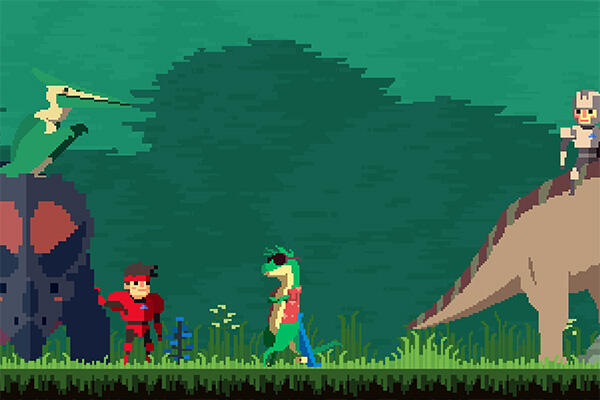
Super Time Force
Rating: A- After five minutes of scrolling through Reddit posts, you’ll be certain that the world’s about to end – what with all the doom and gloom that abounds online. The trolls of the Internet have infected everything with a disgusting degree of cynicism and negativity. Unfortunately, when the post is related to video games this effect is often amplified. There are few trolls worse than the gamer troll. If you were to believe these trolls you would think that all innovation is gone from the world and that every game produced is the same sort of thing that has always, and will always, be done. But avert your eyes from these posts, my friends, because game developers haven’t even begun to scratch the surface of what is possible in video games. Case and point is the latest game from Capybara studios, the talented folks who brought us Superbrothers: Sword and Sworcery EP. Capybara’s latest game Super Time Force is so chock full of innovation that it should be enough to turn any troll into a believer. Super Time Force, as the title suggests, is about a military group whose objectives are to correct events in the past and future in the hopes of creating the greatest earth possible. The insane and hilarious Colonel Repeatski, the scientist/military mastermind who created the time machine and got your team together, leads you through time and space to do this. The whole game has a charming tongue in cheek humour, which though the dialogue is never particularly well written still gives the game a fun and light-hearted tone. Where the comedy lands is in the game’s design, in which the ridiculousness of the enemies, environments and events exponentially grow as you play. The whole game is realised in a superbly designed retro eight-bit style, with an equally great retro soundtrack to match. The art style gave Capybara license to really mess around with some truly weird and wonderful designs, the likes of which I haven’t seen in games before. You begin the game with only three different soldiers, all with their own approach to combat and skill sets. However, as the game progresses, you can rescue additional team members, all of which have hilarious names such as Jeff Leppard and a raptor called Zackosaurus. The game itself is a classic side-scrolling shooter. However, the gameplay rests upon one of the most brilliant and innovative gameplay designs I have seen in a long time. Each level is a race against a clock, not a mechanic I normally enjoy. However, you have the ability to rewind time on a whim, and in doing so add another character to the timeline. The result is kind of like a ghost in a racing game, where you see what you did last time, but then you can support or complete additional tasks with the new character you have added to the timeline. An example of this might be that you spot a secret pathway branching off; you don’t have time to go for it, so you have your character move on ahead towards the end of the level. But you can then rewind time and send a character for the collectible, all while maintaining your progress with the character that moved ahead. The applications for this mechanic are vast, but the most satisfying moments with it is in the boss battles. At first you just have one character fighting these bosses – rewind time a couple of times, however, and suddenly you have an armada of characters destroying the boss in seconds. This is even more satisfying when you are racing the clock, as you have to try and discover the fastest way to destroy the boss to still complete the level within the time limits. Another level of strategy is added to this through the different abilities that each character has, and the fact that if you use the addition of a new character in the timeline to save a character that died, the powers of those two are combined. So for those of you who think that every mechanic has been used, I invite you to look at the work of Capybara and Super Time Force. Time is a device that has been used extensively in games, but there still are new and innovative ways to implement it. Plus, beyond being an incredibly unique and inventive experience, Super Time Force is a bloody funny and entertaining one.
-
New this week / Singles in review
Sharon Van Etten - Every Time the Sun Comes Up The second single from her upcoming album Are We There Yet. Sharon Van Etten crafts yet another melancholic folk song, this time over an affected drum machine. Her voice is full of substance and carries a heaviness that is beautiful, as well as rare. Parquet Courts - Instant Disassembly Brooklyn band Parquet Courts return with “Instant Disassembly.” A stoner ballad, woozy and as hungover as Andrew Savage’s delivery. As melodic and as emotionally honest as they have ever sounded. They pull it off well. White Lung - Face Down I think this is verging on metal, but still retains the brashness of punk. White Lung are a band from Vancouver set to release their album Deep Fantasy. “Face Down” is energetic and whoever is playing that guitar line is a god. Okay. That is all. The Pains of Being Pure at Heart - Simple and Sure This band was the darling of indie pop two or three years ago, with a stream of solid singles and two solid albums. Lately they’ve sort of disappeared, maybe for no apparent reason other than music is sometimes a game of trends. “Simple and Sure” is a catchy, polished, pop song. Lacking in character a little, but still well crafted. Amen Dunes - Lonely Richard Amen Dunes is Damon McMahon set to release his debut album, Love, on Sacred Bones records. “Lonely Richard” is a simple song, acoustic guitar, simple-tribal percussion, and a cool drone in the background. Sounds sort of like Love or The Velvet Underground.
-
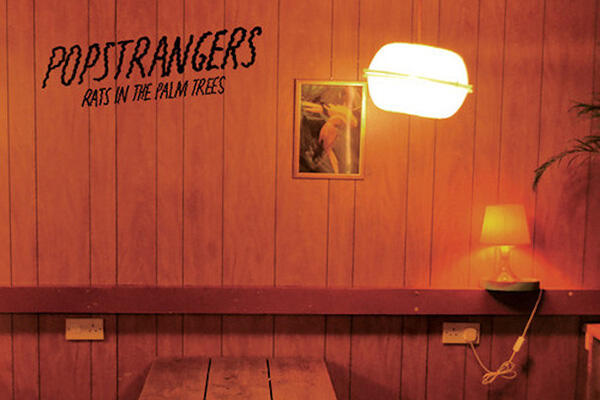
Pop Strangers - Fortuna
Popstrangers are serious about this music thing, and so they should be. Since 2012 not only have they signed to Carpark Records, they’ve also made the bold decision of moving all the way to London. With a slew of strong singles since then (“Country Kills,” “Don’t Be Afraid”), I’ve found myself eagerly anticipating their sophomore offering. Unlike their first album Antipodes, Fortuna seems to have ditched a lot of the dissonance. Instead this collection boasts a sixties psychedelic flair coupled with large sweeping choruses. Not saying the band have turned their back completely on their trademark sound. In fact, returning are the intricately textured guitars and soulful rhythm section. Not returning, however, is the slight unpredictability and sense of chaos that laced the outskirts of Antipodes. However it seems, this has been traded for an immediacy and a gleaming sonic luster which has greatly benefited their new material. Sure, from song to song the album sometimes borders on formulaic. Off-kilter verses lead to catchy pop choruses, then an instrumental, then repeat. But there seems to be enough charm and pop craft to justify these decisions. Some of the best songs ever written follow this simple formula; there is no reason why Popstrangers shouldn’t buy in. Especially if they continue to do so with such style and conviction. Production-wise, Fortuna sounds pretty outstanding. Guitars shimmer and swoon, the low end is full, crisp, and rough enough around the edges, the vocals are slightly washed out and with just the right amount of added reverb. Nothing is buried, yet the songs retain a certain edge. The perfect coating for a collection of tunes that flaunt so much melody, allowing the songs to simmer rather than burn. Overall, Fortuna is a more than worthy statement by a trio looking to stabilise their musical footing.
-
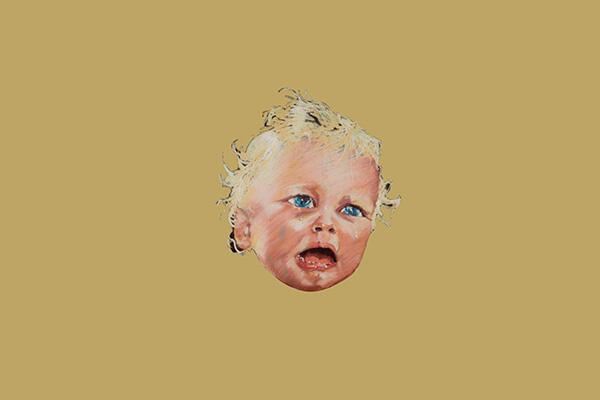
Swans - To Be Kind
Rating: A+ Since their inception in the 1980s, experimental rockers Swans have attracted many superlatives: biggest, loudest, darkest, heaviest. To many folk, Michael Gira and company epitomise music as an extreme experience. Whether percussively punishing as they were in the ‘80s, or gothic and elegant as they were in the following decade, Swans have always aimed for transcendence through intensity. And unlike many older bands who’ve reformed recently, Swans have only grown more potent with age. 2012’s The Seer was one of the best albums the band ever made, a two-disc opus of churning post-rock and cavernous blues. Gira described it as the culmination of all the music he’d “ever made, been involved in or imagined,” and rightly so. The Seer wove together the nauseous repetition of Swans’ early days, the grandeur of their ‘90s work and the voodoo-Americana of Gira’s other project, Angels of Light. The result was astonishing. Now, less than two years later, The Seer has a sequel. It’s hard not to think of new album To Be Kind as a companion piece to its predecessor. Both albums are 120 minutes in length, each with a song in excess of a half hour. To Be Kind even has similarly-composed artwork, its distressed infant echoing The Seer’s grinning wolf. Musically the two albums overlap, though To Be Kind has a slightly expanded palette of flavours. Added to The Seer’s rather meat-and-potatoes instrumentation are careful sprinkles of brass, synthesiser and Egyptian piano. To Be Kind also operates on a somewhat lighter ethos - see manic, half-melted cuts “Oxygen” or “A Little God in My Hands.” To say To Be Kind is a “happy” album would be a grievous overstatement, but it certainly isn’t as sludgy or unrelenting as an album like Filth. Since their debut EP, the close cooperation of Swans’ instruments has been crucial to their sound. It is through this precise interplay that Swans are able to build, stretch and drive home their songs. At this art, they’ve never been more adept. Just listen to the band dance around one another on hypnotic opener “Screen Shot,” or build to a volcanic crescendo on album highlight “Nathalie Teal.” In its less thunderous moments, To Be Kind can be deeply affecting; those who call Swans “noise without a heart” needn’t look far for a pulse. On “Just a Little Boy,” Gira pleads “I need love” into the void around him. Does he receive this love as requested? Well this is a Swans album, so fuck no: his prayer is met with a Greek chorus of derisive laughter. On “Some Things We Do,” life is reduced to a series of futile acts - “we eat, we work, we fuck, we love” - over sighs of violin. Closing track “To Be Kind” even borders on romantic, as Gira cries “there are millions and millions of stars in your eyes” as the whole world trembles. It may take two hours of Swans delivering blows to your head, but by To Be Kind’s end, you’ll be seeing stars too. No matter how violent or protracted, a Swans album is always ultimately a beautiful experience. Gira has himself said that his goal isn’t to deliver pain, but ecstasy. Just see The Seer’s spaghetti-Western closer “The Apostate,” on which he repeatedly exclaims “we’re on a ladder to God.” It may be a daunting ladder, but To Be Kind reaches higher than just about any Swans album to date. Dense, diverse and cathartic, To Be Kind is well worth the climb.
-
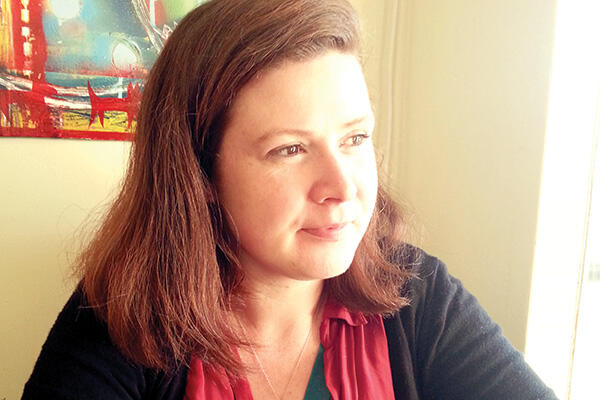
Interview: Majella Cullinane, 2014 Burns Fellow
What was it like receiving the Burns Fellowship/how did you actually go about getting it? Well, the Burns Fellowship comes around every year. I was pretty unsure whether I was going to apply for it or not, ‘cause I have been in New Zealand for just over five years, and it’s New Zealand’s oldest literary award and I thought maybe it’s too soon, what would be the chances; something like that, I imagine, is very competitive. So I was kind of um-ing and ah-ing about applying for it. Then I met with an Irish friend of mine and she said, “Oh, just apply for it.” My mum has always been like, “if you’re not in, you can’t win.” So I put in an application about a week before the deadline, which involves a CV, a sample of your writing, and a project plan. You’ve done other fellowships in Ireland and Scotland; what is it like here, comparatively? The first one I did was after my MLitt at St Andrews. I did a MLitt in creative writing and applied for a creative writing fellowship with Aberdeen City Council. That was very different because part of the fellowship involved going into primary schools and teaching creative writing. Part of the remit of that was to get reluctant readers and reluctant writers, who were mainly young boys, actually, and to encourage them to write. So those were three-and-a-half days of pretty full-on [work] going to five different primary schools – but it was great fun, it’s great fun teaching 10, 11, 12-year-olds. They’re fantastic. Some of them had really great imaginations. Then you only had a day and a half to work on your own stuff. So it was a yearlong fellowship, but three-and-a-half days [of] every week was in schools and one-and-a-half days you had for your own work. The second residency I did was in Glasgow. That was a shorter residency – that was about five months. And that was, I think, two days in schools so it was more part-time. And then just other little “mini residencies,” we call them. You might get a couple of weeks here in a house with the stipend or something like that. So this one [the Burns Fellowship] is definitely the best because your time is your own, you can do what you want to; there’s nobody checking and saying, “have you reached this word count today?” [And] there’s no report to fill in so you’ve got complete autonomy, which is absolutely unique of any residency anywhere. Usually there’s some kind of outcome that you’re expected to produce something, but that’s not the case with this one. I read that you’re planning on writing a novel this year and I know you’ve also written a lot of poetry. Which do you like writing more: prose or poetry? Obviously writing is writing, but they’re both quite different. I would say the mind-set is quite different – for me, anyway. It’s different for everybody. People will say that’s not what it’s like for me, because everybody has a different process. For me poetry is a quieter, stiller mind-set. I’d almost call it like autumn or something. There’s something very still about it, cool. And for me prose is far more fluid. So when I write, because I can get terribly distracted by the Internet, I tend to try and write by hand. I turn off the computer, I’ve tried lots of ways – it’s very old fashioned and probably silly – but it’s just more fluid and you’re less likely to censor yourself. Now, I have friends who would be horrified because as they write, they edit. I can’t wear the two hats at the same time. So I just try to turn off all the distractions and just write the story and then type it up and that’s when I edit. I know there are people who can do it, who can wear the simultaneous creative and critical hat at the same time. I have found that when I try and do it, what happens is the critical starts to take over and goes, “that’s not very good.” Whereas if you just go with the flow, which is, essentially, “what are you trying to do here; you’re trying to tell a good story?” And you’re not even thinking about the reader, you’re thinking, “I want to entertain myself first.” If you’re being entertained or you think that’s quite moving you’re more likely to continue with the story. Obviously, sometimes I deviate from that if I don’t have a notepad and have a computer then I’ll go on the computer. There are certain Irish writers, like Banville and O’Brien, that all write their novels in longhand before they type them up. Banville can spend a whole day on 50 words; he’s a perfectionist, a great writer. Everyone does it differently. Do you have a particular method you use to write? With poetry I tend to read a lot of poetry. I think that’s a very important thing. I think reading and writing are inseparable. You get a lot of beginning writers, including myself – ‘cause I started dabbling when I was 14, and I would write lots but I wouldn’t read anything. But you have to – one informs the other. Reading really helps me and then you can get an idea of what is it I want to write. With poetry, for me anyway, I do a lot of free writing. Looking out the window and describe the window and keep going for a certain amount of time and see if there is anything that comes from that. It’s a subconscious thing. Then you start to craft it and find a form and figure out at some point, it could be draft 30, what it is you’re trying to say. With prose I used to get quite overwhelmed. I think it’s better if you take it almost like a film; scene-by-scene. And then you try and get that flow and connection between scenes, rather than thinking, “ah, I have to write a novel.” I’ve done that before, “I have to write a novel,” and then you get half way through and go, “oh, this is really bad, I should do something else.” So just taking your time, I suppose. Who or what inspires you most to write? It’s difficult to name names, because there are so many. I suppose it’s easier to say what: Good books; good music; a beautiful day. I think if you’re writing, most people who do write would say that if you don’t write, you don’t feel right about it. You feel antsy. Well, that’s at least how I feel. I’m always writing in my head even if I’m not writing writing. It just never goes away, never switches off; it’s always there. I suppose my first influence that I remember being really affected by was James Joyce. When I went to Uni it was Mary Shelly’s Frankenstein. I loved James Joyce’s Dubliners, not Ulysses. Some of Ulysses is great but it’s quite a difficult book. I love magical realism – Gabriel Garcia Marquez, Salman Rushdie. I like a lot of Irish short story writers, [like] John McGahern. Lots and lots. I did Italian at university and I studied Dante. I like Dante a lot. I do remember someone once asking me, “who do you read?” Now, I never thought who was so important as what. All writers have stories that just really stay in your head. And then there might be something else that they write that you don’t like or you don’t connect to. It’s more about “what” than the “who.” When was the moment you first realised that you wanted to be an author, and what encouraged you to strive towards this goal? That’s an interesting one. Certainly back when I grew up in the ‘80s in Ireland – pretty economically depressed in the sense of 30 per cent unemployment, most people immigrating to America – to say you were going to be a writer was kind of a nutty thing. People might think it but they wouldn’t really say it. My dad worked in a hospital and my mother was a housewife so it wasn’t a bookish family or anything like that. I always loved writing in English class. I think the first time I felt like writing was when I read Emily Dickinson. I think a lot of teenage girls go through a sort of Emily Dickinson/Sylvia Plath phase. So I started writing in the style of Emily Dickinson, with the big dashes and stuff like that. I definitely started writing poetry first and then I got to write short stories. I always think I wanted to be, but reality is, well, at least at that time – or maybe because of the background I came from – it was something you would do as a hobby. That it wasn’t really something you could pursue full time or seriously because you had to find a job. It’s all about finding a job. If you go to university, what are you going to do then? Are you going to do this, this or this? Some people will disagree with what I’m about to say, but I do think it is a good idea, and many writers have, to get a sort of profession to keep the lights on, to pay the bills. In the sense that a lot of writers, especially poets, are librarians or they’re teachers or they are civil servants. Just keep that at the side, and if you do get an opportunity, like this year where you get paid, it’s a once in a lifetime kind of opportunity. If someone said to me that they would like to be a writer, I would say absolutely go ahead with it. Just have something to depend on. The reality is that most people can’t make a living by writing or by art or by music. I had a bit of a crisis just before my 29th birthday and I was living in a pretty dull town in Ireland and I had a pretty dull job and I thought to myself, “What am I doing? I’ve always wanted to write and here I am doing something I don’t want to do. If I don’t do it now, I’m never going to do it.” So it just happened that I was made redundant, which for many people would have been disappointing, but I was like, “Yay!” So I just started to write. I was on the dole for a few months and I started to write again and I thought, maybe I should apply for one of those creative writing things. I had applied when I was very young, right out of college, and I didn’t get anywhere. So I thought I’d just apply for a few, and I got all of them and then I thought, “how am I going to fund this?” So I applied for an Irish Arts Council grant. I thought that the chances of getting this are pretty low, but then I got that, too. So that funded it. As soon as I was in St Andrew’s I was meeting people with similar obsessions. I really felt that this was what I was meant to do and always meant to do and I’ve just taken so many diverting routes. I did a Masters in publishing, I thought, “Oh, I like books, I’ll do publishing” but publishing is not the same as writing; it’s the creative versus the analytical. Not to say that publishing is not creative, what I’m saying is that it’s about producing a book and not writing a book. Anyway, then I got the fellowship in Aberdeen and I did little mini gigs along the way. Also, it always helps to have a champion. What I mean by that is that there is usually someone in your life that is really encouraging and I was quite fortunate in that my partner is incredibly encouraging. Also by going to creative writing workshops I would meet other people who you encourage them and they encourage you and it does help. I think writers are notoriously insecure creatures. That’s just part of it and they think, “Oh, it’s not very good,” or they tend to doubt themselves. I suppose you can get the few odd ones who are very sure of themselves, but most aren’t. Poets in particular are delicate souls sometimes. I recently did an article on the connection between Scotland and Dunedin. How do they compare in reality? Is it a similar city? Did the similarities make it easier to move to New Zealand? I was only in Scotland for three years, and I was living in three different parts of Scotland. So, St Andrew’s is in Fife, and Aberdeen is in Aberdeenshire, and Glasgow is in Lanarkshire. Scotland is very like Ireland in the sense that, depending on where you go, the local identity or personality can be very different. It’s probably like New Zealand. In the sense of probably Northlanders are quite different than, say, down south. We started off in Wellington then we lived in Kapiti. This is my first time in the South Island, and all the names are Scottish. The first time I came to Dunedin I thought the outline of the city was very Scottish. The way things are up in the hills, the old buildings, the old railway station, and then when you walk down George Street it’s a very Kiwi town. It’s sort of a balance between the old and the new, which I hadn’t come across before in New Zealand. In a lot of other old towns in New Zealand, a lot of the buildings are really gorgeous, but they’re colonial New Zealand buildings. Whereas the railway station here and St Paul’s Church and those kind of things very much remind me of the old world. Certainly the weather is very similar. A lot of people have Scottish heritage and Scottish names. I think what will be interesting in the future here is that, of course this was founded by Scots, but I think more will come out about the Northern Irish influence in Dunedin. Because I know about my partner’s family, they came out in the 1860s to Otago, the gold-rush, and they were from Northern Ireland. Certainly there were people from what we call the Republic, which wouldn’t have been called the Republic back then, there would have been people from the south, but mainly a lot of them were from the north. I think a lot of that is starting to come out. And also, of course, the English. People forget the huge influence of the English in New Zealand, with maybe a smattering of Welsh, too. There’s a little bit of everything. I think New Zealanders are becoming more and more interested in their history. Do you have any sage advice to offer young budding writers like myself? Read, read, write, write, write. You can’t have one without the other. It’s like having two arms – if you just write you’re not really informing the writing by reading. Experience is good, too; it doesn’t have to be travel necessarily, or international travel, could be just going somewhere new and getting ideas. Even to a park. Because at a certain point the mind empties out and you have to fill it again. A self-belief is important and for some people that comes quite young, because they’ve been encouraged a lot, and for other people it comes later. I honestly don’t think that if I’d – say if this had happened to me 10 years ago – I don’t think I would have been ready. It doesn’t matter how old you are. A big thing has been made about Eleanor Catton winning the Man Booker at 28, but some people are very mature at 28 and I think this is the case here. Some people haven’t got a clue what they want to do at 28 – some people don’t have a clue what they want to do at 48. So it’s really more about the individual.


