More Culture from Issue 8
-
Exorcise (E)
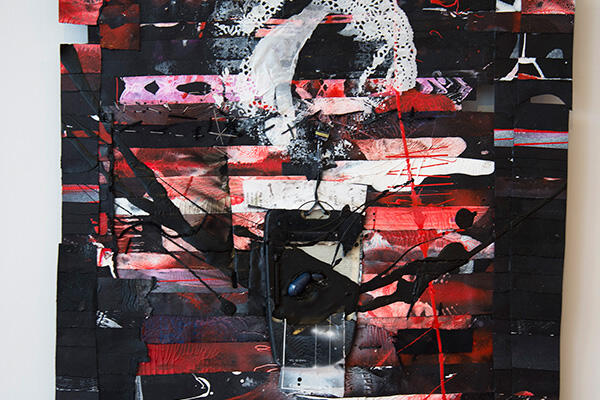
Mint Gallery Exhibited until 18 April Mint Gallery is currently exhibiting EXORCISE (E) by award-winning artist James Robinson. Robinson was born in Christchurch in 1972 and currently lives in Dunedin. He completed a Bachelor Of Fine Arts at the Otago School of Fine Arts in 2000, and a Foundation In Fine Art at Nelson Polytechnic in 1990. Since then, Robinson has exhibited regularly in private and public galleries both Nationally and Internationally and his work is held in numerous public, private and corporate collections throughout New Zealand and Australia. Working as the William Hodges Fellow in Invercargill over the past year (which also resulted in a six-month New York residency), James has created drawings, paintings and collages in a methodical large series across a broad range of mixed media and technique as seen in EXORCISE (E). Robinson’s works in the past deal with trauma and elevated levels of emotion, and his most recent work exhibits the same level of refined skill application, as each work leaves some kind of stain in one way or another. In his previous exhibition, Astral Weeks, exhibited last June, Robinson questions the crucial questions of life, existence and meaning, presenting his wonders in images of crystal skulls, pagan symbols, sci-fi images and obscure annotations which hint to his own uncertainty and misunderstanding. Similarly, in EXORCISE (E), we see a range of stylistic innovations and obscure annotations. Robinson is clearly motivated by the complexities of his own intellect and life in the creative sphere, and his works seem to offer a balance between the conscious and unconscious; and the material and immaterial world. The anxiety and doubt of the modern world is revealed through the flurry of brightness and brilliance of his work, but it is disrupted by an insistent nagging commentary of constant uncertainty and questioning – i.e. the cynical annotations which ask the big questions, “why do I exist?” and “what does all this mean?” Robinson does not necessarily provide these answers and it is unclear which side he falls on or whether he has decided for himself. The works are sincere, but not definite. Robinson says, “In the end, I don’t know if the works are meaningful or not ... whether there is ‘meaning’ or not at all ... it’s a kind of back and forth, an argument, but it’s a process that I need to be with right now.” Robinson describes this body of work as a continuation of his New York series, integrating the nature of identity and globalism and what it means to be human in an increasingly inhuman world. Also inspired by nature and music, sex and movies, the works are described in the artist’s statement as “the horror of human evil and degradation on most fronts ... The failure by design implemented by our masters for want of a better definition … Covert, totalitarian, spiritual enslavement via self administered mind control surveillance, police-state of the planet and all them other silly irrational trifling paranoias I have as one of the mentally ill bio-chemical consumers gone faulty for some reason.” The series is in close dialogue with Robinson’s on-going spiritual investigation between the more primal Eastern ideas of the mind and body, against the Western cultural values of materialism. The surfaces are built up through various layers and processes of icons, texts and found materials, including string woven sacks, bottle caps, newspaper pages, straws and even HAIR. Using a variety of brightly coloured wet media, including pastel acrylic colours and water colour variations – as well as the blank areas of untouched surface, which reveal gaping holes or burnt, stitched and ripped out areas of inverted eruption – the paintings become a physical experience in themselves. Not only is there a strong sense of the artist’s actions in what is seen, the surface is so varied, pitted and textually excessive, there is visual complexity that one must weave in and out of in order to be able to take everything in. The agitation and anxiety of the artist is inherent, and this self-investigative oscillating work reveals the journey of the tortured soul within. Robinson invites the viewer to participate in the search as we trawl through his trivial statements, symbolic forms and weird surreal vistas, trying to decipher any meaning. I couldn’t help but think there is no real meaning, and perhaps the works are just a manifestation of Robinson’s personal experiences, emotions and thought processes, recorded at the times in which they were felt.
-
Zine of the week - Midnight Cowgirl
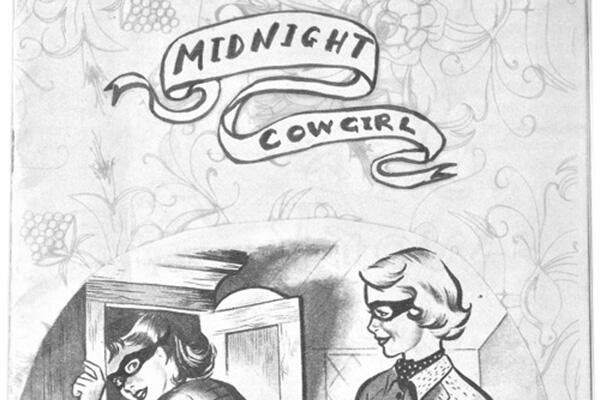
22 A5 Pages - Diary format Available at Blackstar Books Now, let me tell you about a friend of mine who knew the value of meeting people without judgment. His name is Jesus. Yes, there is such a thing as Christian Anarchism and some people practice this. Midnight Cowgirl is one account from the source and free from politicians, pimps or hypocritical priests. It is not a zine about a sex worker who needs “saving” - it is about someone who deserves control of their own life, to think for themselves and to make their own decisions. Let’s be clear: sex work is work. All workers deserve their rights and those rights are ultimately human rights. Sex work is historically, and today still, one of the most steadily in-demand yet dangerous and marginalised lines of work. This is true the world over and to a somewhat lesser extent in New Zealand. New Zealand is considered a world leader for recognising that sex workers deserve the same labour protections as any other worker as a result of the Prostitution Reform in 2003. These protections include protection from sexual harassment, which constitutes abuse and any attempts to control sex workers. This was highlighted in a recent Human Rights Review Tribunal decision, which awarded $25,000 to a young woman when to quote the decision: “Over a three-month period, the older man belittled and frightened the 22-year-old woman until she felt unsafe and on edge, became depressed and turned to alcohol. His overtures included telling her he could do what he liked with the girls who worked for him, and threatening to take her out of her comfort zone.” Midnight Cowgirl emphatically argues for the solution to justice in the sex-sector that was given then, and is still given now: that it can be achieved through collective support and solidarity, with organisations such as the New Zealand Prostitutes Collective. Zines of the week are chosen by volunteers at Blackstar Books, Dunedin’s own anarchist-inspired community library and social space since 2003, located on Moray Place near the Octagon. Come by sometime – details and directions are available at cargocollective.com/zinefest
-
The Ocean at the End of the Lane
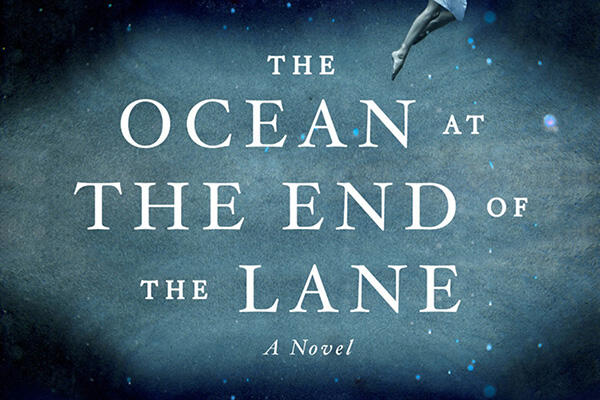
The Ocean at the End of the Lane is the latest novel from best-selling author Neil Gaiman. If you’ve never read any Gaiman, he’s sort of like the modern day Grimm Brothers, except there’s only one of him and he’s not German. Generally his works are modern day fairy tales with a great deal of dark, adult content – part of which ties back to his strong influence in Alan Moore (Watchmen, V for Vendetta). Some of his works are child-friendly – in Chivalry, an old lady finds the Holy Grail in an op shop and takes it home. Sir Galahad comes looking for the Grail, and thus the story begins. It’s sweet and unassuming, and that’s pretty typical of Gaiman. On the other hand, there are stories like American Gods, where you get women with teeth in their vaginas who eat the men they’re screwing (mantis-style). That’s pretty typical, too. The Ocean at the End of the Lane falls neatly in between the two categories. It’s about an unnamed male narrator who returns to his childhood home, remembering the crazy mystical shit that happened when he was seven. It began with a lodger stealing the family car and committing suicide in it, which is pretty hefty stuff for a seven-year-old – but that’s one of the interesting things about Gaiman. He doesn’t shy away from the fact that kids aren’t insulated like we’d like them to be. There’s also a sort of emotional buffer for the reader because you’re hearing about it from the perspective of the narrator forty years later. That distance between childhood and adulthood is a key theme of the novel, explored through the gap between the narrator and his younger self, but also through the child’s relationship with adults around him. Some of them commit suicide and some of them are powerful ancient monsters out to rule the world. Discerning the wheat from the chaff is part of the development into maturity, although, again, the adult narrator provides an unspoken assurance that the child will turn out okay. The plot of the novel revolves around the ancient powers stirred up by the suicide. One of the powers sneaks through into the real world, and attaches itself to the narrator’s family in the form of a bustling nanny. The narrator immediately sees through the façade, and tries to persuade his family that the nanny is evil, but they all ignore him and the nanny sets about doing evil things. It’s an intricate way to explore the feelings of frustration and helplessness that a child experiences, and it’s mixed with a growing awareness of the very human flaws and failings of the narrator’s parents. The refuge from these insecurities is found in three women who live on a farm at the titular end of the lane. They are supernatural figures who’ve popped up from time to time in other Gaiman novels, but here they’re all brought together as one cohesive family. Their magical abilities are quickly revealed, and they are established as secure, reliable people. Where the narrator is terrified by the nanny, who appears to hold the power of life and death over him, the women aren’t really all that bothered. They certainly set out to deal with her, but she’s always considered more of a nuisance than anything else. It’s a rather touching way of espousing myth and the supernatural as the emotional foundation of humanity – a sort of bastion against the pressures and difficulties of life. It’s a nostalgic novel, but at the same time it’s very aware of the difficulty of negotiating a path through a treacherous, uncertain world.
-
Mr. Peabody and Sherman
Rating: A- If you were anything like me, your childhood was full of cartoons. A personal favourite of mine was the 1960’s Rocky and Bullwinkle, a charming Cold War reactionary cartoon about a moose and a flying squirrel on the run from Russian spies. The show was made great by its excellent writing including witty puns, topical and intelligent comedy and self-referential humour. The show had a variety of additional characters, one of which was Mr. Peabody, the smartest dog in the world, and his adopted son, Sherman. 50 years later, Mr. Peabody and Sherman have gotten their own film and, thanks to Rob Minkoff, it is everything it should be and more. If the name Rob Minkoff sounds familiar, it’s because he was the co-director of The Lion King, and that same prowess shows in this film. Mr. Peabody and Sherman is a delightful mixture of a long-dormant, but excellent, comedy style with a modern children’s film narrative. Children’s narrative sounds condescending, but it’s not. Mr. Peabody and Sherman is a film that stands with the revolution of clever, poignant and emotionally evocative children’s films that the Pixar generation has given us. Mr. Peabody and Sherman’s latest adventure sees them travelling throughout time, visiting a variety of superbly conceived locations and moments of history. This partly allows for the expression of the cartoon’s function, which was for Mr. Peabody to teach Sherman about the world, but it also ties into a greater narrative. Though the narrative is excellent, the real charm of the movie comes from its tone and humour. It is refreshing to see something that feels so different from everything else being released. All of these fantastical locations are held together by the movie’s breath-taking art style and finesse. Every scene has something different and beautiful to look at, and there are moments of truly innovative directing that bring the world to life. Minkoff has successfully resurrected a classic with Mr. Peabody and Sherman by retaining what made these characters so great while also bringing them into the 21st century in a big way.
-
Noah
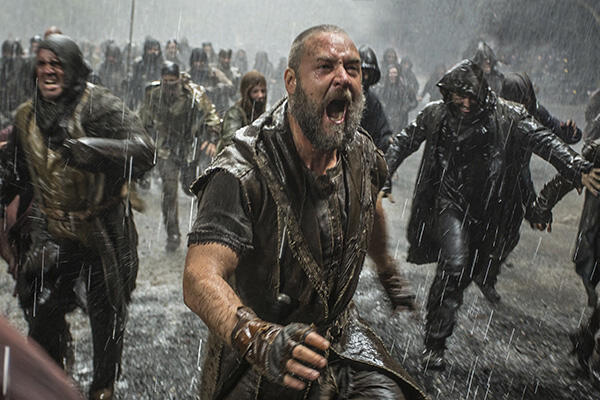
Rating: B+ Rather than a faithful and preachy account of the Bible jazzed up into a feature-length, Aronofsky attempts a blend of biopic, CGI fantasy, gritty reboot, and ecological fairy-tale which moulds the well-known story of Noah into something entirely new. Any moral preaching is reserved for environmental rather than biblical causes; a good fit for a story about a man who saves a boatload of animals, but delivered with such unapologetic bluntness that it feels ... well, preachy. Crowe is well cast in this complex and dark take on the biblical character, explored in unforgiving depth. The muffled screams of those left to die heard through the walls of the Ark is something left out of most children’s books, but it makes powerful and thought-provoking cinema, well-suited to the harsh morality of the Old Testament. Dealing largely with the emotional, moral and existential dilemmas facing Noah’s family, the film leaves many of the practical questions of the story (food and basic reproductive biology) untouched. Though possibly more sensible than trying to fill every plot hole in Genesis, this tempers the powerful angst Noah otherwise paints beautifully, and the result is a confusing sprawl that teeters between a human drama that makes no sense and a fairy tale that takes itself far too seriously. Puncturing suspense of disbelief in an entirely different manner, some of the CGI – the parade of the animals, the Lord of the Rings-style battles – isn’t quite up to standard. That said, the beautiful time-lapse shots of the creation of the universe are almost worth the ticket price alone, and the CGI destruction of the world is delivered with all the pomp Hollywood can muster. There’s a lot to enjoy, as a spectacle, and even as fuel to a good discussion about religion or environmentalism, but Noah itself never quite gels into a coherent film. All in all, it’s a miss, but a near one; genuine ambition and vision played out with big blockbuster money. That has to be worth something.
-
Stand By Me (1986)
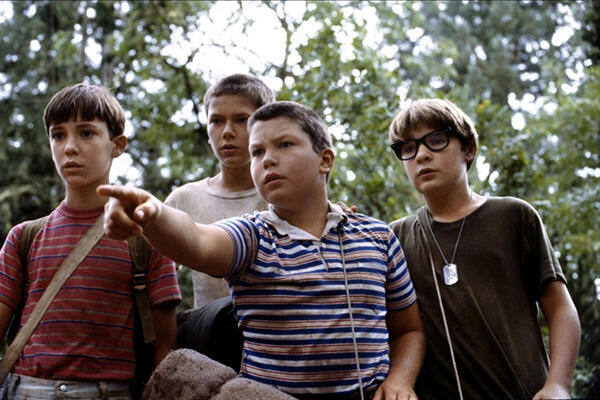
Classic Film Alongside To Kill A Mockingbird, Stand By Me is by far the best film about children, for adults. Based on the Stephen King Novella The Body, Stand By Me tells the story of a ragtag group of young friends in the All American town of Castle Rock in 1959. After hearing about the rumoured location of a local missing boy’s dead body, the four 12-year-olds set out on a dangerous journey to witness it for themselves. The boys are a motley crew: there is the bookish and sensitive Gordie (Wil Wheaton), the chubby and timid Vern (Jerry O’Connell), the eccentric and unpredictable Teddy (Corey Feldman), and the cool kid Chris (River Phoneix). There are so many iconic moments in Stand By Me it’s hard to know where to start: the boys getting attacked by leeches; the imaginary pie-eating contest; the near fatal train incident; Chris’ teary confession to Gordie that he doesn’t want to end up like his family … the list goes on. But there’s no denying the magic of this film comes from the four hilarious and touching child actors. Wheaton, who played our protagonist Gordie, stated in a 2011 interview that the genius of Stand By Me was how Rob Reiner cast boys who were basically their characters: Wheaton was “awkward and nerdy,” Jerry was “funny,” Corey was “incredibly angry,” and River was “cool, smart and really passionate.” At the end of Stand By Me, the audience hears what the boys become when they grew up and, hauntingly, many of the actors followed their characters fates: Wheaton became a writer, Feldman went off the rails with drug addiction and a questionable relationship with Michael Jackson, and Phoenix became the “it” boy of Hollywood, only to die of an accidental drug overdose at age 23. The big surprise is that the chubby, annoying O’Connell would grow to become a smoking hot babe. Who’d have thought?! At 28 years old, Stand By Me is all grown up, but still one of the most revered films of all time.
-
Romeo and Juliet
Rating: C It’s clearly not easy to adapt a classic from the stage to the screen. Many have tried and very few have succeeded. When Shakespeare is involved, these adaptations invoke the question: do you try and stay loyal to the context and language of the original text? Or do you modernise it to make it relevant to today’s audience? Unfortunately, in Carlo Carlei’s adaptation of Romeo and Juliet, he thought that there was a middle line between these two concepts … turns out there isn’t. Carlei’s adaptation of one of the English language’s most famous love stories made too many mistakes to outline, however, its greatest flaw was its attempt to combine a terribly edited version of Shakespeare’s text with modern Hollywood conventions. This included all the clichés you would expect from a modern Romantic film, such as a sickening abundance of make out sessions and a truly awkward sex scene. The real trouble with these particular conventions is that Carlei made the decision to emphasise the age of the characters, who are both supposed to be 13. Unfortunately, the Romeo (Douglas Booth) looked at least 20, and the Juliet (Hailee Steinfeld) truly looked 13, or, at the very least, like a young woman just entering puberty. This made every “romantic” moment overly creepy, undermining the whole point of the film: i.e. to be romantic. This was made even worse by the truly horrendous performances that almost every actor gave. The film felt like a high school play that had way too big a budget. Every moment was horribly overplayed, with actors finding openings to scream, wail and cry at every possible moment. The one shining light in this film came from the great Paul Giamatti as the Friar. His beautifully heartfelt performance was a real contrast from every other, but unfortunately highlighted the pitfalls of the other actors. If you’re a fan of Shakespeare, then this film will break your heart. If you’re new to Shakespeare, please, for the love of God, find another way to be introduced to his work.
-
Mini Bacon and Egg Pies
There may or may not be an embarrassing video on the Internet about me making pies. You could say I am somewhat of a bacon and egg pie expert. Last year, I frequently made and delivered these beauties to my favourite Critic employees, Sam, Alex and Dan, for their lunches. I did tend to get some odd looks as I walked down George Street holding boxes of hot and delicious smelling pies. These make great picnic date food (my brother can vouch for that), a good substantial party food or even a quick and easy dinner option. Make the most of the remaining good weather and pack a batch of these up, take them outside and munch down on them whilst sitting on your favourite moth-eaten blanket from St Vincent de Paul’s. All you need is a few sheets of flaky puff pastry, eggs, bacon and a couple of onions. Feel free to add greenery in the form of parsley or peas if you so wish. I like to use Texan muffin pans for these (find them in the baking section of New World) as it makes a nice substantial pie. You can use normal muffin tins but you will have to cut the pastry a little smaller and you get less filling in them. I tend to only eat two of these things but the boys seem to be able to nail at least three when I make them. It’s really easy to make more or less depending on the number of mouths you have to feed. IngredientsServes 4 (three pies each.) 3 sheets pre-rolled flaky puff pastry, cut into four squares 16-18 eggs 8 pieces of shoulder bacon 3 onions, sliced into thin wedges 1⁄2 cup frozen peas (optional) Chopped parsley (optional) Salt and pepper to taste Cooking spray for the tray Texan muffin pan Method Preheat the oven to 200 degrees. Spray your Texan muffin pan with the cooking spray. Lay the pastry sheets out to defrost to the point they are malleable (DO NOT MICROWAVE). Sauté the onion wedges until translucent. Put to one side. Pan fry the bacon and, once cooked to your liking, chop up into pieces. Generously spray the insides of each muffin pan well with cooking spray. Once the pastry has defrosted, gently press each square into a well of the muffin pan. You will get a triangular edge poking out but that is ok. Make sure it is well fitted into the bottom. Sprinkle the bacon pieces and onion evenly across the pies. Do the same with the frozen peas and parsley if using. Gently crack two eggs into each pie. Don’t worry if they slightly overflow. Season with salt and pepper. Bake for 25-30 minutes or until the pastry is golden and the egg is firm when gently pressed. Pop out of the tins with a butter knife. Repeat the pie production until you have all the pies you need. Serve with a good dollop of good old tomato sauce!
-
Mercenary Kings
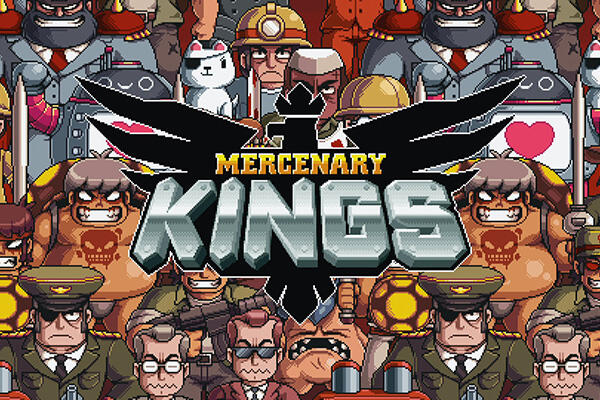
Over the past couple of years it has made me overwhelmingly happy to see video games being inducted into museums all over the world, including the illustrious Smithsonian museum. I’m sure every gamer has their own reasons for why they consider video games art, however, it may surprise many of you to hear that one of the biggest reasons for video games receiving these high honours is, in fact, Pixelart. Pixelart is exactly as it sounds: art (or graphics) comprising of pixels. The video game industry started with this art style out of necessity and as technology progressed so did the number of pixels that a video game could be comprised of. However, despite the fact that we have become capable of creating almost true to life visuals, there are still a plethora of games being developed using the Pixelart style. Now, there are many reasons for this – such as it being a cheaper development option and less demanding on technology. But the real reason you still see so many of these games is for the same reason that Museums recognised games as art. Pixelart is an art style that has been developed by the video game industry; we created it, we refined it. It is our own. One such developer that proudly recognises this is Tribute Games. This team is comprised of developers who created the Scott Pilgrim vs. the World video game, a series based on the culture Pixelart has inspired. Once again this team is displaying their reverence for Pixelart with their latest game, Mercenary Kings. Mercenary Kings is a side scrolling shooter that looks and feels like some of the Pixelart generation’s greatest games. It brings many tried and true mechanics together to make something familiar but new. Think Metal Slug meets Contra, all wrapped up neatly within some tasty RPG mechanics. Like Metal Slug, there isn’t a great emphasis on story. The basic premise is that you are a group of mercenaries sent to an island to take down a group of terrorists. Despite the fact that you will never know, or particularly care, what exactly is going on, the game is full of colourful characters that keep things interesting. These characters occupy the base of operations where you return after every mission. It is here that you get to choose your missions. Much like an RPG, the commander offers you a series of missions that you can undertake at your leisure. Each mission has a main objective with, possibly, some optional and secret objectives as well. These missions are pretty straightforward, taking the form of “Fetch 10 of this” or “Rescue the Hostage.” But, in true Metal Slug style, the main objective is really just acting as a platform for you to create havoc on. The real joy of Mercenary Kings comes from the gameplay. There’s something truly satisfying about a ridiculously over-the-top side-scrolling shooter. As you explore the map trying to achieve your objectives, you encounter a wide range of characters – from your classic foot soldier to a litany of goofy mechanical and animal foes. It is these foes that you get the pleasure of mowing down. Some may just fall, however, a well-placed shot will result in them exploding in some fashion. Almost every foe will drop a material of some kind. This is the introduction of the upgrading system, which is what gives the game its real longevity. By collecting materials and money you get the opportunity between missions to upgrade and modify your weapons and armour. Starting the game with a measly pistol, it is a great feeling to trade it in for a big ass shotgun or rifle. My time with Mercenary Kings was largely focused on constructing the most brutally awesome weapon possible. The game is great to play by yourself, however, what makes it really special is its multiplayer. You have the option of playing with up to three friends online or locally. This turns what can be a tactical game into a bloody free-for-all. What would have been a traversal, in which you had to plan encounters and time your shots well, becomes a murderous spree throughout the map. This becomes less possible as the difficulty of the game progresses, but there is something overtly appealing about storming through the map like this, meaning that even if it’s to your detriment, you’ll probably still play this way. After all, this game is not meant for thought provocation, but for brutal fun. Mercenary Kings is a great homage to past games that still offers a new experience in a familiar skin. The game can be fun alone, but is best played with three friends at your side screaming at you. Plus, it’s free on PlayStation Plus this month.
-
Pixies - Indie Cindy
Rating: B I could talk about buttoned-down shirt Dads shyly squeezing into old pairs of their black pipe jeans. I could talk about how the waistlines of their jeans pinch at their beer bellies, causing them to initially suck in for the “big gig night” with their old university buds (and how, after a few pints, they’ll let it all out). I could describe the Pixies’ new album, Indie Cindy, as a confident and unconstrained roll of beer belly. But that’s both mean and places the legendary Boston band into a suffocating regime dictated by strict (and naive) rules of how they should sound. Who cares how they should sound? Just let them sound! Indie Cindy is the Pixies’ first studio album since Trompe Le Monde came out in 1991, and consists of a mix of tracks from their EP-1, released in 2013, as well as their EP-2 and three songs from EP-3, which were both released earlier this year. With Black Francis, Joey Santiago, David Lovering and Simon Archer on bass (Pixie co-founder Kim Deal left the band in 2013 and does not appear on this album), the resulting album has a classic Pixie-style in its shifts from loud to quiet both within songs and throughout the album, but it never quite achieves an edge that’ll keep the listener replaying. “What Goes Boom” opens the album with a rock metal urgency (chilling out slightly as Black Francis pays tribute to Kim Deal, singing, “Kimmy and her bass/She really likes to get rockin’”). It is hectic - with an energy really only achieved again in “Blue Eyed Hexe.” In “Greens and Blues,” Francis’ enduring attachment to the extraterrestrial makes an appearance as he sings, “I said I’m human but you know I lied, I’m only visiting this shore.” This song provides the first hints of the tired-romantic sound that persists (and threatens to entirely embody) the album. Building on the first two songs, “Indie Cindy” grounds the mood of the album. This is a mood that conjures up an image of an older man road tripping across the States - driving during the night and spending the days in a worn down motel. He’s either running from or chasing a love that is never going to work out. At times the protagonist is overcome with almost a child-like frustration, but more often he slips into an exhausted state as he watches the dull, fluorescent lights of fast food chains pass by - over and over again - into monotony. This tired mood is particularly felt in the downbeat vocals and guitar of songs in the second part of the album. While “Bagboy,” with its masculine spoken-word bite, and my personal favourite, “Magdalena 318,” with its sad, echo-y sound that drifts into moments of unearthly guitar by Joey Santiago, are interesting, Indie Cindy lacks something. Perhaps it’s the eclectic, sudden (and exhilarating) frenzies that youth, relative anonymity and Kim Deal (with her harmonies and eccentric bass) brought to the Pixies in the past. Or it could be a lack of inspiration. While repeat listenings in different settings and approaching it with a fresh mindset is recommended, keep in mind that the lonely driver may have come from somewhere but now he’s not going anywhere in particular.
-
Tweens - Tweens
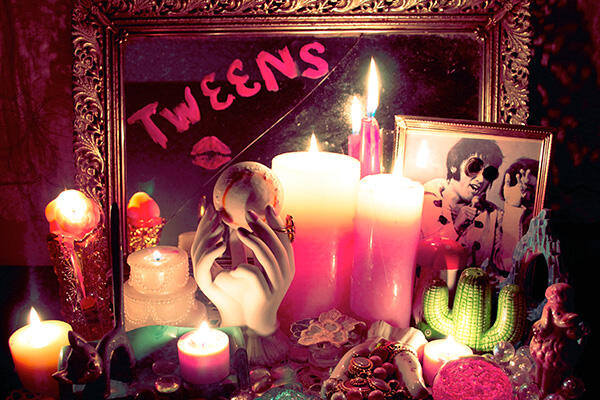
Rating: B- Although the Cincinnati noise-pop trio are not actually about to enrol in their first year of high school, the name isn’t entirely inappropriate. They’re bratty, they’re full of energy, they’re bored. These guys don’t deliver a lot of thoughtful wordplay or wise life lessons; instead Bridget Battle will tell you, in true tween style, what she wants and when she wants it at the top of her voice. It would be easy to lump Tweens in with the lo-fi pop trend that happened a few years ago (Wavves, Dum Dum Girls) and dismiss them as latecomers. But Tweens don’t seem to quite fit that mould, drawing more from bands like Be Your Own Pet, Yeah Yeah Yeahs and even Blondie. The album starts fast with “Bored in this City.” Battle cries that her town “is eating her alive” in an infectious blown-out chorus worthy of Perfect Hair Forever. From there it is a sprint to the finish, with few stops for Battle, or the listener, to catch their breath. By the time slow-burning “Want U” comes around at track 10, the wavey echoes of guitar are a sweet relief from the aggressive playing that dominates the album. Battle is reminiscent of Bethany Cosentino as she worries about thinking “way too much” and uses straightforward cliché lyrics like “all I know is I want you.” “Star Shudder” ramps things up one last time, borrowing heavily from Nirvana’s “Stay Away.” While the songs on this album aren’t bad at all, Tweens sounds more like a band you’d want to play in (or at least see live) rather than play through a pair of speakers. With relatively basic song writing and playing, these songs rely on the energy and grit that comes with live performance. It’s hard to imagine this album sticking around to make a lasting impression. Kim Deal likes them though, so that’s cool.
-
New this week
How To Dress Well - Repeat Pleasure Another single from How To Dress Well, AKA Tom Krell. Another romantic themed tale, told with a great soulful melody, and a flurry of illuminating synth work. Features lightly strummed acoustic guitar, sounds a bit like a remixed version of a John Mayer song. Parquet Courts - Sunbathing Animal Brooklyn based four-piece Parquet Courts bring their classic, loose approach and combine it with a dose of militaristic, hardcore punk. A fast paced, no-nonsense song, sung at a terrifying speed. Lone - 2 is 8 Lone is Matt Cutler, an electronic musician based in Nottingham, England. “2 is 8” is the first single from upcoming album Reality Testing. With his mixture of quirky hip-hop beat making and techno, dance influence, “2 is 8” is a fun-loving, hypnotic piece. Protomartyr - Come and See Detroit band, Protomartyr, release another single to their forthcoming album Under Color Of Official Right. The track is packed with dark slabs of synth combined with deep, rugged vocals. Like if Joy Division featured Nick Cave as their vocalist. Just Friends - Don't Tell Me Just Friends is a collaboration between deep house mastermind Nicolas Jaar and Wardell vocalist Sasha Spielberg. “Don’t Tell Me” is soulful, pretty and mesmerising. Highlighted by a infectious vocal hook, the track goes through a series of interesting, pulsing beats and synth runs.
-
Tycho - Awake
Rating: A- Tycho is Scott Hansen, a San Francisco based visual artist and producer. Having released music since the early 2000s, it wasn’t until 2011’s Dive that Hansen’s music started gaining considerable attention. Awake, like Dive, is a sleek, electro-ambient record with an undercurrent of warmth. But unlike its predecessor, Awake feels considerably more spacious, expansive and almost vast in comparison. The low end comes through sharper and crisper, the synths float, sweet and lustrous. And whereas previous efforts have been largely solo ventures, this record marks the first time Hansen has entered the studio with a three-piece band. “This is, in many ways, the first true Tycho record,” he expresses. Featuring Zac Brown on guitars and bass and Rory O’Conner on percussion, the more energetic, driven sound of their live performance is more apparent. This of course results in an atmosphere, more electric and alive. A sense that the music now has room to inhale and exhale, and has sprouted lungs constructed of not only flesh but fiberglass. Now with more organic instruments in the mix, Hansen’s synth work pulses in, around and underneath a mainframe of tender tepidness. Interweaving beautifully and developing into breathtaking swells or more pulsing, hypnotic grooves. Title track “Awake” is a glistening start to the record, interplaying a driving bass line with intricate layers of soaring synth and a captivating guitar melody. This is pretty much the basic structure for most of the pieces on this album and though there is little variation, I hardly think of that as an aim for a record of this nature. Instead, Tycho hopes to immerse us, mesmerise us in this lucid wonderland their music seems to instill. It sounds something like a sun rise in still frame, or like watching a skyline being constructed in fast-forward. With a playing time of around about 35 minutes, Tycho is wise in not running the risk of wearing out their welcome. Regardless, I would describe Awake as more of a device of atmosphere than a centerpiece. There are moments, quite breathtaking indeed, which extract your full attention. But to me it is more of a complementary soundtrack, a companion piece to the sometimes bustling, sometimes tranquil world around us. There are lulls, as with any album, but Tycho have succeeded in creating an album that is undeniably beautiful and engaging when it feels the need to be.
-
Interview: Ron Hanson - Founder of White Fungus
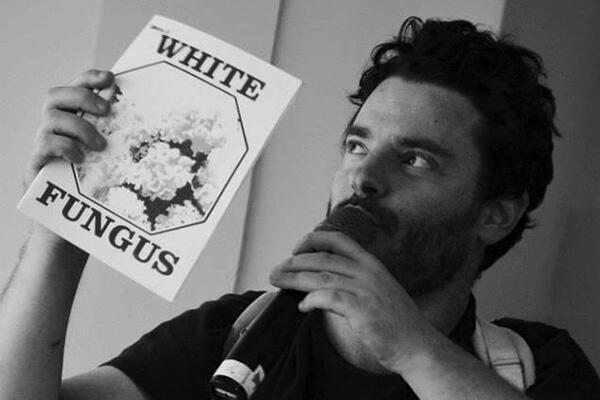
White Fungus magazine began in Wellington as a photocopied publication delivering political messages. Nine years on, brothers Ron and Mark Hanson are still creating their magazine and last year released its 13th issue. Zane Pocock and Loulou Callister-Baker chatted with Ron Hanson over Skype to understand what White Fungus is all about, and how the team maintained enthusiasm and drive for a project that only now is on the verge of an international launch. Ron: Where are you? Critic: We’re in the Critic office in Dunedin. Where are you? No way! Wow! I’m in Taichung in Taiwan. I went to university in Dunedin. I didn’t work for Critic but I had a band that was written about in the magazine. I have a connection to the city. I like Dunedin – it’s got its own space – it does its own thing. I went to high school in Wellington [and in comparison] I felt like Dunedin was a place where you could do your own thing – it wasn’t caught up in the trends – everyone in Wellington was so much more concerned about being cool. One of the best periods of my life was in Dunedin. That time was a chance to dream. I used to go for walks every night and [think about things]. What about your life now? Life now is pretty exciting! There’s more pressure than I had back in those days – we’ve been making our magazine White Fungus for nine years but it’s just starting to come together now. March 2012 was the turning point for us. Our magazine featured in an exhibition at the Museum of Modern Art in New York and in that same month there was an article about White Fungus in the experimental music magazine The Wire. Since then everything has been on a roll. Almost every day there’s some good or exciting news for us! We’re really enjoying ourselves because we’re feeling in control. How did you maintain enthusiasm for this project for nine years? We were broke, you know? Before we started we spent four years in Taiwan teaching English. We then had a bit of money to get the magazine going. We also spent years back in New Zealand on the unemployment benefit, we got some grants, we lived with our parents for quite a while. Oh – my mum is calling me! I don’t Skype that often! Ahh bad timing, I just declined her. [Everyone guiltily laughs] ... Anyway, during that time all we had was our magazine. We invested everything into it. If you turn it into a real business will you stay in Taiwan? What’s the allure of being in Taiwan? There are a number of reasons. Originally it was because we could make money teaching English here but Taiwan also has really good funding for the arts. Can you apply for that funding as Kiwis? We haven’t yet but we’re about to. We’ve done a lot of projects with Taiwanese artists and we can always get funding. We were just in San Francisco and we got funding to fly some San Francisco artists over here. Last year we got funding to fly an artist from Taiwan to New Zealand. Recently we’ve been introduced to someone high up in the Taiwanese government who has suggested we could get funding here. I don’t know if you know about Taiwan’s political situation but Taiwan isn’t recognised as a country because of the One China policy. When the KMT moved to Taiwan and Mao took over the mainland there were two governments of China. Eventually the West shifted allegiance to Mao and Taiwan got the cold shoulder even though it was becoming a democracy. Because Taiwan doesn’t have all that representation it puts a lot of money into the arts because it wants to get its name out there as much as possible. Taiwan is like New Zealand – it’s an underdog, it’s politically isolated – but there are some really great artists here. We’ve spent so much time here now we feel at home. The magazine’s name White Fungus even comes from a can of white fungus that we discovered in a supermarket here. When White Fungus was starting out, how did you establish connections in order to constantly have content to fill your magazine? That’s a good question. In the first issue we didn’t feature any artists, instead we wrote about the bypass being built in Wellington. It was really a political propaganda piece. It was against Kerry Prendergast, wasn’t it? That’s right! We’d just come back from Taiwan and we were working on a music project but we were really struggling to find a studio. Then all these artists were kicked out of their studios because of the bypass – including famous artists like the Flight of the Conchords guys. All these people were getting kicked out of their studios and the mayor was still going around saying that “we’re the creative capital” and bragging about Wellington, which was kind of embarrassing, too. The mainstream media didn’t want to cover this story. I wrote an article for one of Wellington’s community newspapers and they edited the hell out of it, so by the time it was published it was totally different to what I had written. In the end we decided to write about what it is they’re destroying to build this motorway. We wanted to make a publication about the history of this area – about Cuba Street. Because we wrote about issues that people cared about, our publication instantly got traction. After that we followed the responses. At first, some of the artists we wrote about we had met through art galleries. But at the beginning we had no contacts except the people we’d gotten drunk with at the pub. It involves trial and error and not being afraid to be rejected or not get any response at all. Do you have any bad or good rejection stories? Not so much! You get ignored more than you get rejected. One time a bookstore sent back a copy of the magazine with its business card that said “No. We do not want this.” I won’t name the store because it’s now stocking us. There’s no point in cutting off your nose to spite your face! Generally, we’d be ignored and underestimated. In the past, people would see our photocopied magazine and never see that it could grow into something. People only see something for what it is – they very rarely see a vehicle or a person and see the potential for what he or she or the project could become. Every time we made a new issue people would be shocked. But a lot of people preferred it when our magazine was simply a photocopied work because it was less threatening, I guess. But we were ambitious. We wanted to cause a stir and eventually live off what we did. Very few people have the courage to cold call but if you do that you will have some successes. But I’ve always felt like when we didn’t get a success or a response, that was for the better anyway. They’re not the sort of people we want to talk to. You’ve got to be open otherwise you go backwards. What barriers have you faced over time? Despite the obvious money barriers, the biggest barrier we encountered was a kind of defeatism. People would tell us, “You can’t do a magazine,” like it was an established fact. Do you know that magazine Pavement? Back in the ‘90s, Pavement was huge but it went broke and closed down. There was a magazine called Staple, which closed down, and then there was a magazine called Loop, which turned into a record label and the magazine closed down ... This made everyone think that we couldn’t do a magazine in New Zealand because New Zealand is too small. Also, New Zealanders are often suspicious of ambitious people. It was a hard road – there was very little comprehension or enthusiasm. But when things do start going well, people can turn on you even harder because they don’t want to be proven wrong. But we were operating on a whole different model and we weren’t just dealing with New Zealand – if we were only making a magazine for New Zealand, it would be a lot harder. I’d like to challenge the sense of defeatism in New Zealand. I want young people to know that just because no one seems to get what they’re doing, they should continue to do it anyway. If you’re determined, you can make it happen but it does take sacrifices. People ask me if they can be involved with White Fungus and as soon as I give them some work to do they suddenly say they’re busy. There’s this sense of a consumer culture – of instant gratification. This idea of sacrifice and hard work has been lost. For us, we’ve had a lot of hard years and we may have paid a very heavy price for it at times but in the end that’s the price you pay for doing what you want to do in life. We want to counter more than mainstream culture but consumer culture as well – the culture where you buy your identity rather than discover it or create it yourself. With White Fungus we want to get away from that niche specialisation – we want to create a different response and bring different kinds of people together. We want to create an active reader – the reader has to play an active role in decoding our magazine’s content and creating meaning from it. I’d like to think that White Fungus doesn’t have fans but instead the people who read it are all people who I’d like to meet and who I do meet over time! I watch a big rock or pop band perform to 50,000 people and I think those bands don’t want to meet all these people after the gig! We’re doing things on a smaller scale but, even as things get bigger, we’d like to think that we’re cultivating readers who we do want to meet. This is totally different to the consumer model. We want to create a counter culture to that passive, over-specialised culture that creates these detached individuals who have little connection to other people. Are you hoping to expand outside of the magazine as well? We’ve been doing this more and more over the years. Last year we did all sorts of different projects. We brought an artist to New Zealand. We also had an exhibition/project of our own work shown at the Adam Art Gallery in Wellington, accompanying exhibitions by the Wellington Media Collective and Martha Rosler. We made poster works and a big broadsheet publication called The Consumers of the Future. The title comes from a quote by John Key on Campbell Live before he was first elected: “Our children are important ... they’re the consumers of the future.” Also, Taiwan has just signed a Free Trade deal with New Zealand, too, so it looks like there will be the opportunity to do a lot of cultural exchanges between the two places. We really consider ourselves as artists who happen to make a magazine.