More Culture from Issue 4
-
Pearler
“I am an Expressionist painter. I rarely plan a painting or do preparatory drawing. I commence the work with a quick wash of strong, primary colour and then begin to hurriedly paint figures of people, animals and hybrid creatures. I add crude marks for volcanoes, hills, sea, buildings, boats, clouds, sun and moon, working with vibrant impasto. The painting forms, and informs me as to what it is. The last stroke is always the title. Above all I prize spontaneity, colour and a good dose of irony. I love being a painter.” - Ewan McDougall Ewan McDougall is a Wellington-born artist who is based in Dunedin. He was educated in Oamaru, where the North Otago painter Colin Wheeler taught him painting. From there, Ewan attended the University of Otago, gaining an honours degree in Political Studies in 1971, before working as a junior lecturer and tutor at the University. After his time at the University, like most other “artists,” he took some time off to travel and to experience. During the 1980s he travelled extensively, working numerous jobs here and there at pubs, fast food places, mines and on oil rigs (so bohemian), before finally moving home to New Zealand with his partner, Sarah McDougall. In 1988, he was referred to Queen Mary Hospital in Hamner Springs for treatment for addiction, a time that subsequently provided much inspiration for his earlier, and later, work. He began painting during his rehabilitation and developed a dynamic personal style using thick, richly pigmented oil colours, inhabited by personal references to his outrageous and somewhat volatile lifestyle; a style that continued on into his later work, as displayed in Pearler. McDougall has been painting full time since 1988 and has had 64 solo exhibitions in New Zealand regional galleries, dealer galleries and numerous group exhibitions – as well as exhibiting internationally. He is a figurative neo-expressionist, and using various brushes, knives, and his fingers in his studio, he creates works of wild excess, vigour and ecstasy with oils that are scraped, squeezed and splattered on to canvas, manifesting images of the memories that permeate his mind. There is a certain element of warmth in his passive-aggressive spontaneity that remains unforgettable, and above all there is a delicate sense of honesty, reflection and self-deprecating humour present in all of his works. Pearler, an exhibition and book of paintings and poems which celebrate the 30-year wedding anniversary – the Pearl Anniversary – of Ewan and Sarah McDougall and their creative life together; they collaborate to recount their past 30 years together. The exhibition and limited edition book is composed of seven poems to which Ewan has responded in paint, followed by eight of Ewan’s paintings, to which Sarah has responded with poems. Paintings with titles like “Happiness Junky” and “Bad Mona Lisa,” which feature childlike figures floating in empty spaces of vibrant colour, encapsulate the wild freedom that exists in their shared intimacy. McDougall states in his introduction to the book, “many of the themes and paintings owe a great deal to the fun, frivolity, chaos and pain of the past, as well as what I think of as the redemption. I am now free of mind-altering substances and today my mind is free to alter the world.” Art writer David Eggleston comments, “His wild-looking, clown like figures, swollen lips and squashed boxers’ noses, painted viscerally and set adrift to bob and weave in eerie landscapes.” McDougall’s bold and cavorting figures; scrawny-armed dancing stickmen grinning under the sun with candy-striped guts and wide, red eyes, leave an indelible impression of careless drinking, drug fuelled fun and delightfully undignified oblivion; a familiar state for most. I was inspired.
-
Captain America: Winter Soldier
Ed Brubaker’s first two comic book-arcs of Captain America tell the story of the Winter Soldier, a Soviet assassin and super-spy tied to Steve Rogers’ past. Published in 2006, this book was the subject of much controversy, as it became clear within a few issues that there was a very real possibility of Bucky, Captain America’s iconic sidekick, being brought back from the dead. That’s over fifty years of meaningful, sacrificial death, which would break the golden comic book adage “only Bucky and Uncle Ben stay dead.” Sullying the memory of the American boy hero would have earned Brubaker a great deal of fan boy-hate ... if this weren’t such an expertly crafted story in nearly every way. It breaks free of the “cape comic” status quo by telling a consistently gripping tale of espionage, mystery (murder mystery, even), responsibility and friendship. The initial threat to Captain America is Cap’s archenemy, the Nazi Red Skull. In an attempt to create a weapon of mass destruction (a “cosmic cube” or Tesseract, as you might know it from the Avengers), he must kill thousands of innocents. This sounds straightforward enough, but Brubaker creates a real aura of menace about the Skull, and with artist Steve Epting they make him scary and downright creepier than the villain has been in years. When intelligence informs Cap that the mythic Winter Soldier from the Cold War assassinated the Red Skull, he goes looking for the assassin. Captain America finds him, and sees a young man who appears to be a slightly older version of James “Bucky” Barnes, his World War II sidekick. Cap is understandably distraught and believes that somebody is playing mind games with him. Brubaker’s ability to tell both a personal and epic story at the same time is what makes it so engrossing and entertaining. Captain America fights to protect innocents against acts of terrorism, while his alter ego Steve Rogers struggles against his burden as an icon of freedom and the idea of Bucky as a murderer. This America-centric story seems enough to make us in the rest of the world turn away in indifference, but Steve turning his back on his government and fighting for more moral reasons instead gives everyone something to root for. As his partner Sharon Carter suggests, Captain America is at his best when he fights for what’s right, not for what he’s told. He’s a man of freedom and morals, he’s susceptible to sadness and rage, but he’s a human and this is a story of humanity and self-identity above all else. Although the narrative steals the show, the art is absolutely gorgeous. A guest artist will crop up here and there, but most of the credit goes to Steve Epting. He manages to give the book an ominous dark feel, while never feeling monotonous or depressing. His style is grounded in a gritty realism that lends itself well to the human narrative style and gives the action sequences a fierce, fluid energy, and dramatic lighting in more sombre scenes. This book is extremely accessible, and clearly written to be easily consumed by those new to comics, and not bogged down by lore. It offers a solid introduction to the Marvel world, especially for those wanting to learn more about where the film Winter Soldier (which is coming out in theatres on 3 April) came from and who those characters are. And for those who fell in love with this story as hard and fast as I did, Brubaker went on to write another whopping 7 years of Captain America stories for Marvel, which never stop being entertaining and refreshingly thoughtful.
-
Blue Is the Warmest Colour
Grade: A+ Blue Is the Warmest Colour, directed by Abdellatif Kechiche, has been praised by some as the best movie of 2013, as well as unanimously winning the Palme d’Or at Cannes and being nominated for a BAFTA and Golden Globe. After watching the film myself, it was easy to see why. (Warning: Unless you want complete lack of eye contact, followed by several years of awkwardness, do not watch this film with your parents). Blue Is the Warmest Colour follows Adèle (Adele Exarchopolous), a quiet and reticent high-school student with a passion for English and French literature, as she discovers her sexuality and enters into a relationship with Emma (Lea Seydoux), an art student several years her senior. Exarchopolous is cast excellently in the role of Adèle and plays the part with perfection, shifting effortlessly from an introverted teen struggling to accept her sexuality in the face of her peers, to a fiery young woman who is head-over-heels in love. Seydoux is also a natural fit for her role, as she embodies a mysterious allure and has such powerful onscreen chemistry with Exarchopolous that you could mistake their romance as also happening off-screen. Despite limited screen time, the supporting actors all do a wonderful job judging, accepting or flirting with Adèle depending on their role, and help form some of the best scenes in the film. In one particular scene Emma meets Adèle’s parents, whose disapproval of her artistic and free-spirited personality is obvious through the veneer of their social niceties, forming an almost palpable tension. In Blue Is the Warmest Colour, Kechiche combines a brilliantly written script with subtle yet captivating cinematography and two exceptional performances from Exarchopolous and Seydoux. This film will intrigue, appal and engross the audience from the very first scene. In what has been a strong year for cinema, Blue Is the Warmest Colour is a film that demands attention amongst its peers and could certainly claim to be the best film of 2013.
-
Winter's Tale
Grade: E I have limited space for this review, so I’ll just go ahead and start my list of “A Thousand Things Wrong with Winter’s Tale,” and we’ll see how far we get. Big number one: cast. Colin Farrell couldn’t sell the main character, a thief named Peter Lake, for a moment. With only his two trademarked facial expressions to peddle in every scene he appears (the “Puckered-Brows” and then the “Getting Teary”), he is less the expressive Zoolander and more the proverbial plank. Russell Crowe, too, transparently did not believe he was a demon of the underworld and/or an Irish gangster, and neither did I. The females in the cast were utterly forgettable as they had meagre relevance to what passed for plot. Oh, yeah, the plot is that Peter Lake is pursued by a demon while trying to pursue true love. The story arc was trivial to the point of absurdity, and told clumsily. Every time things look dire for Peter Lake, SUDDENLY A GIANT GUARDIAN ANGEL FLYING HORSE APPEARS AND SAVES EVERYBODY, and thus the emotional stakes were zero. The director also relied on the dialogue to do all of the work, and to make it clear why the story had taken the latest contrived turn, frequently characters would walk into shot, go on a giant one-sided spiel about their entire life story, and then finish by explaining what they were doing in that exact moment. Wow, that’s bold. Like, Tommy Wiseau bold. The love story of Peter Lake and “The Red-Headed Girl” barely pays off. Because of her weakness from tuberculosis, she could die if they ever hooked up, and it was plainly moralising at us (read: YOUR WICKED LUST WILL BRING RUIN). This love story makes Twilight look like fucking Titanic. So in summary, Winter’s Tale was the most pointless two hours I ever spent staring at a screen, and that’s including the time my friends and I stayed up until 3am watching a fake-fireplace video on YouTube. Also, terrible wigs.
-
Classic Film | Misery (1990)
Despite having over 30 of his novels adapted for the big screen, only one Stephen King movie has ever won an Oscar, and that is Misery. Misery invites the audience into the home and mind of perhaps King’s most perplexing creation: Annie Wilkes. Annie is a clean-living, conservative nurse, whose wholesome lifestyle only allows for one simple passion: the Misery Chastain book series. So imagine Annie’s absolute glee when by a freak twist of fate the series’ author Paul Sheldon crashes his car on the outskirts of her home. With two broken legs, no personal phone and a blizzard raging outside, Paul is forced to stay in the middle of nowhere, to be nursed in the home of his supposed “number one fan.” But there’s a problem: Annie has just completed the final book in the Misery series to discover that the title character, her life hero, has been killed off once and for all. Distraught and outraged, her sanity slowly begins to unravel as she punishes Paul for what he has done, and imprisons him in her home until he re-writes the ending. The “small town religo harbouring psychotic feelings and blood thirst” is certainly a common character type, but is brought to the next level by Kathy Bates’ absolutely stellar performance. Bates’ Annie is equal parts sickly sweet, unintentionally hilarious and balls-shrinkingly scary. It’s a testament to her performance that she could make a polite, plump, middle-aged nurse be voted the 17th most terrifying villain of the last 100 years by the American Film Institute. Misery does contain some suitably unpleasant violence (you think Annie’s threats are empty, until you discover they’re not) but the beauty of the film comes in the moments of psychological thriller. Nothing makes you squirm more than watching Annie shaving Paul’s face, slowly and intensely confiding in him the deep personal level on which she connects to his work. Naturally, Bates won the Oscar for that year and Annie’s phrase “you dirty bird” became the funniest insult to come out of 1990. Get amongst it – every self-respecting Civic Video will have numerous copies.
-
Non-Stop
Grade: B- Almost the first shot of Non-Stop is Neeson’s grizzled Air Marshal pouring whisky into his morning coffee, so you know you’re dealing with gritty Neeson, not Love Actually Neeson. But then he sentimentally touches the picture of his daughter taped to the roof of his car, so you know he’s got a heart. No, this isn’t Taken’s damaged but ruthless ex-CIA Bryan Mills. This is alcoholic but committed Bill Marks. Totally different guy. Actually, the body-count isn’t that high, relying on suspense rather than brutality for the majority of the film, and there’s a pretty decent “whodunnit” mystery throughout. Is it tough-looking bald guy? Blonde bunny-boiler with older man? Stereotypically Arabic guy? Surprisingly, they’re all portrayed by impressive acting – it’s actually a shame we don’t see more of them. The action stays fresh and the pace is true to the title – and that’s the main problem. These people are stuck in a metal tube with a possible murderer and/or hijacker. Where’s the claustrophobia? The wild accusations? The overwhelming feeling of helplessness? Despite being told repeatedly that there are 150 people on this plane (goddammit!), it never feels like it – just Marks’ few suspects getting in one or two lines as he charges around the plane, never quite earning your sympathy. I liked Taken because it stayed just on the right side of convincing me that, yeah, actually, if you kidnap an ex-CIA man’s daughter, he might well have a particular set of skills, and he might well use those skills to kill people in inventive ways. Non-Stop barely convinced me that they were on a plane. I can’t fault it on being a big-budget, technically serviceable thriller. The cinematography is pleasant, if pedestrian, the actors are talented enough, and the script fulfils the title’s promise exactly as you’d expect. The flight angle just feels a bit tacked-on, nothing more than a rushed third act political point and an automatic stake-raiser. Non-Stop is distracting for exactly its run-time, and then you will never think about it again.
-
Mexican Meatball Soup
Who needs a man to warm you on these increasingly chilly Dunners nights when you have Mexican meatballs? It seems to be every Thursday that the girls of 5C have a romantic dinner together, with smooth jazz for lovers, wine, and balls of meat. The consumption of dinner was punctuated with comments such as “I don’t know why guys think jack hammering is a thing,” “I need more clitoral stimulation,” and of course “I just really want sex. I must be ovulating.” Living with med students is the best. Post romantic dinner we proceeded to booty shake, transforming everyday household activities into sexual dance moves with aerosol cans and grown women against kitchen surfaces. Feminists everywhere wept a little bit. The general public should be slightly concerned that these ladies are also the future of New Zealand medicine. This meatball soup is cheap as chips to make. It is a basic tomato and vegetable soup paired with poached meatballs, cumin seeds and a tonne of coriander. The meatballs in this contain rice, rather than breadcrumbs. You also cook them in the simmering soup rather than pan-frying, which makes them extra moist and wonderfully healthy. Ingredients (SERVES 4)Meatballs: 400g lean pork mince 3 tablespoons long grain rice 1 egg ¼ cup fresh coriander, chopped ½ teaspoon salt ½ teaspoon freshly ground pepper 1 teaspoon cumin seeds Soup: 4 cloves garlic, minced 1 onion, diced 3 carrots, diced 3 sticks of celery, diced 1 good handful of chopped coriander stalks (or leaves) 1 tablespoon vegetable oil ½ teaspoon salt 1 tablespoon cumin seeds ½ teaspoon chilli powder 2x400g tin of tomatoes 2 tablespoons tomato paste 2 cups chicken stock Method1. Sauté the garlic, onion, carrot and celery in the vegetable oil until the onion becomes soft and translucent. Add the cumin seeds, chilli, coriander and salt, and sauté for a further two minutes. Add the tinned tomatoes, the tomato paste and the chicken stock. Bring to the boil then reduce the heat and leave to simmer for 15 minutes. 2. Roll the mince mixture into small balls and place gently into the simmering soup and then cover. Leave the soup to simmer for 20-25 minutes. Check to see if the meatballs are cooked by cutting one in half. The centre should not be pink. If brown, sample to see if rice is cooked. If the rice is still crunchy, leave to simmer for another 5-10 minutes to finish it off until it is soft. 3. Serve with a wedge of lime or lemon squeeze over the meatballs with plenty more coriander and sour cream.
-
Thief
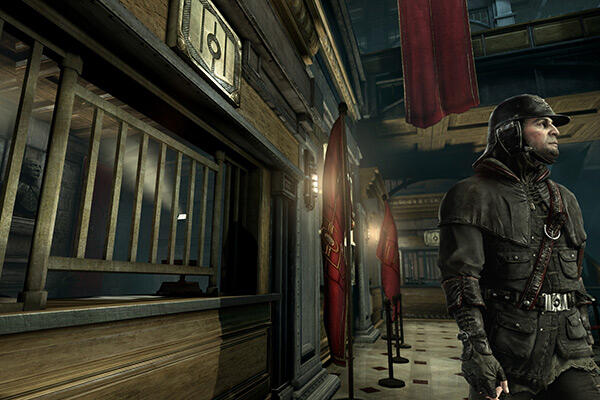
Grade: B Over the last couple of weeks the video game industry has been overwhelmed by mass layoffs. Eidos Montreal laid off a large number of their staff, Irrational Games laid off over 100 people and Disney Interactive laid off 700 people. Understandably, these lay offs have concerned people. Why is it that some of the world’s biggest developers appear to be cleaning house? Well, first of all, this actually happens all the time. Developers take on large numbers of employees to finish a game and when it is finished they let them go. The timing isn’t coincidental either: the reason that all these layoffs are happening at the same time is that the financial year is about to end and these companies need to clear their books. Finally, and this may seem like a contrary statement, lay offs can be a good thing. Well, for games at least. Often, retaining the same staff for every game can lead to their games becoming stagnant and uninspired. For example, Eidos Montreal just laid off a large number of their employees and this may well be a good thing because if their latest game, Thief, is any indication, that studio is in desperate need of some fresh new talent. The latest Thief game developed by Eidos Montreal is actually a reboot of the beloved Thief series of which the first game, Thief: The Dark Project, was released in 1998 and the last game, Thief: Deadly Shadows, was released in 2004. Thief, like its predecessors, is a first-person stealth game. However, unlike most other stealth games on the market, the game’s emphasis isn’t on silently taking out enemies, but rather in avoiding them completely. Your goal instead is to steal as many valuables as possible without detection. Often this goal is secondary to a story objective, but considering that it makes up most of the gameplay and the story is rather forgettable, no doubt stealing will become your primary objective. The game is set in a town with the aesthetic and tone of a British city in the midst of the Industrial Revolution and is only ever referred to as “the city.” As a thief, of course, you only ever explore at night, so the city is always foggy, dirty and dark. The gameplay graphics are actually quite impressive, particularly on next-gen consoles and PC, and it is quite easy to get immersed in the reality of the city while exploring. However, it is when the game tries to communicate with you that this immersion is harshly broken. The story is a mess both in content and execution. You play as Garrett, a master thief who returns to the city after the events revealed in the prologue. I won’t spoil what these events are, except for that they are an absurd mess of unnecessary dark fantasies. He returns to find that the Baron has overruled the city and that a terrible plague is sweeping the city. Garrett decides to use the chaos to his advantage. There is certainly great potential in this premise; unfortunately it is never realised. This is mainly due to the fact that it never finds a direction to drive the game in. Garrett is never sure if he is just out to make money, or to vindicate himself and be the city’s hero. The mediocrity of the story seeps into many other aspects of the game, including integral components such as the sound design. In a stealth game it is crucial that players be able to ascertain where enemies are, using all of their senses. Sound is a big part of this, however, in Thief the sound is unjustifiably vague. If you are in a house stalking around, when a person talks it sounds as though they are right next to you regardless of whether they are on the other side of the building or 2 feet away. It is this kind of laziness that exemplifies the issues this game has. The only real way to enjoy this game is to try and block out all of its weak points and let oneself be immersed in the world and gameplay. The stealing itself is very fun. The game allows you to approach situations as a ghost without ever being detected, the opportunist who knocks enemies out to clear the way, and the Predator who has no qualms entering to open combat. I wish those who lost their jobs at Eidos Montreal all the best, however, this is a studio that’s known for amazing games such as Deus Ex and if fresh blood is what they need to return to that pedigree, then I support it. Thief, sadly, is a game that only has moments of awesomeness to offer in a sea of mediocrity.
-
Profile: Ian Henderson
The Dunedin music scene is currently undergoing quite a resurgence; at the forefront of that is Ian Henderson. Owner of Fishrider Records, he has over the past few years released a slew of local talent, helping Dunedin music find a more international audience. Ian talks to Adrian Ng about the Dunedin music scene, his exciting new compilation, and the Fishrider Sound. Tell us about Fishrider; what do you feel has made it as recognised as it is today? Is it recognised? I’m not sure. It had a really good piece of luck in 2012 when an album by Opposite Sex attracted some attention overseas. Up until that point the label was really just The Puddle albums and a means to an end to release my brother’s music. It wasn’t taken seriously as a label. Not even by me. But releasing Opposite Sex made me realise that it was much more exciting and satisfying to release new music by unknown young artists that no-one else would ever release, and find an audience for them. The reputation of Dunedin for this type of music has grown over the years as more people discover music from the past and realise wonderful music is still being made here. People overseas romanticise Dunedin and its music. You’ve gathered some tracks for an upcoming project you’ve got lined up. Are you willing to share a bit of knowledge on this compilation you’ve got in the works? Fishrider will be releasing a compilation LP and magazine called Temporary – Selections from Dunedin’s Pop Underground 2011 – 2014 about June, I hope. It will be our 13th release so FISH013 will be 13 bands and 13 songs. Some of it is new, some unreleased and unheard. It is a very cool collection of music by some of my favourite people. It is a very personal selection of songs by the young bands I love the most. It was pretty easy to choose because I just made a list of all the bands I had seen multiple times. It is not meant to be representative of “Dunedin music” – it is just my personal fantasy “Pop Underground” scene. I’ve had the idea of a compilation for a while but Loulou Callister-Baker gave me the inspiration to turn the idea into reality. She interviewed me last year for a Critic article on nostalgia in relation to music. Loulou was looking at music from the perspective of a 20-year-old, experiencing being part of something in Dunedin involving music made by a wide group of people she knew which she thought was special. She was experiencing being part of a music scene for the first time and realising these were memories of people, places and sounds she would carry with her throughout life. I can look back on a few decades where my experiences were in part defined by music and music scenes both here and also overseas. But I also worry about how coherently things are documented in a digital era. So that leaving a record - quite literally - was part of it. The Temporary title reflects the transient nature of music and young musicians here. Dunedin is a place people leave or pass through, so sometimes bands and scenes here can be quite fleeting – which can be frustrating when you love them! But the main driver from a practical business perspective was I realised that the little bit of international profile the label had meant a compilation might be viable and a good way to promote a wider range of bands and their music. All the bands I would happily release on Fishrider if that was practical, so the compilation is a good way to share a bit more of the kind of Dunedin music I love with the world. I have the networks to sell it in the UK & Europe and in the US and there is an interest in what we are doing here, so why not? These kinds of compilations were how I discovered a lot of great music – compilations based on a label, a region, a scene. What was your initial perception of the Dunedin music scene and how does it compare to the scene of present? I came back to Invercargill from a few years living in the UK in the early 1980s with a collection of UK post-punk music. A friend raved about this great new band and played me something by The Clean off their first EP. I said “that’s rubbish.” In my defence, it was played on a crappy little tape recorder. But it didn’t take me long to fall in love with The Clean. Within a few years I was harassing the local newspaper to cover local music in their Saturday music page and they said “why don’t you do it?” I have never really stopped telling people what I think they should be listening to and why. I visited Dunedin as much as I could and I saw some great gigs here and when bands came to Invercargill, but I didn’t experience very much of the scene in the ‘80s apart from that and through my brother. By the time I had moved here in 1996 the Flying Nun and Xpressway era “scene” had all but gone. There was another “scene” around Arc cafe and its Arclife label for several years from the late 1990s. There has always been great music made here. What comes and goes are the focus points for a scene – creative communities like The Attic is today, venues, organisers and promoters, record labels. I think the scene today is as good and vibrant as it ever was. I see people making music now for the same reasons as they did in previous eras. There is still the lack of ambition and that “nothing to lose/ nothing to gain” mindset Shayne Carter said was the strength of alternative music made here. I still love how musicians I see here just do their own thing and don’t really care about “making it.” There’s a kind of honesty and freshness that comes with making music for yourself and your friends. What are the elements you look for in an artist? What makes you think “Oh, I want to release this?” First thing is I have to really love the music and want to play it all the time and need to have that record in my collection. That passion for the music is the most important. Second most important thing is I have to know and like and respect the people. Life’s too short to work with difficult, unrealistic people, particularly when you are doing it for love – putting hours of time and effort and money into those people just for the reward of releasing their music. Is there such a thing as the “Fishrider sound?” All the bands on the label are selected on my taste and all fit a very loose “underground pop” aesthetic, so who knows? I think there was a 4AD sound and a Postcard Records sound and, early on, a Creation Records sound, so I think it is a good thing for a label to have a musical identity.
-
Speedy Ortiz - Real Hair
Grade: A- On Real Hair, the follow-up EP to their excellent 2013 LP Major Arcana, Speedy Ortiz once again prove that they’re not just rehashing ‘90s indie rock, but taking all the irony, angular guitar lines and fuzz that characterised that decade, and making it their own. Yes, they sound like Pavement, Slint and Dinosaur Jr, but they’re more than just a faded copy of what was. Rather than making you wish you were in ‘92 hearing Slanted and Enchanted for the first time, Speedy Ortiz make you glad to be around in 2014 and show that there’s still plenty of room to innovate in indie rock. Speedy opens this EP with their most poppy and immediate track to date. They’re a band that usually makes you work for the hooks and melody buried within layers of grunt and dissonance, but on “American Horror” it’s just infectious guitars, big choruses, and the classic quiet-loud dynamic perfected by Pixies 25 years ago and utilised by pretty much every indie rock band since. However, the angularity returns on “Oxygal,” with both the lead guitar line and front-woman Sadie Dupuis’ wiry voice bouncing around, matching up occasionally and ultimately harmonising beautifully in the chorus as she wistfully asks for a camera-shy fleeting lover to be in a picture with her; to prove it was real. The Pavement influence shines through on “Everything’s Bigger,” with an intro that wouldn’t be out of place on Crooked Rain, Crooked Rain and borrowing a little melody from possibly the most Speedy Ortiz-esque Pavement track, “Platform Blues.” The closing song, “Shine Theory,” serves a similar purpose to “No Below” on their last album, showing that Speedy can do beautiful and heartfelt just as well as heavy and biting. It’s the slowest and gentlest track on the record, with touches of acoustic guitar in the intro and a sweet melody that helps to blunt Dupuis’ naturally sharp tongue. For all they owe to the indie rock canon, Speedy Ortiz have managed to craft a sound that is undeniably their own. There are few guitar bands around today that can claim that – Parquet Courts are another exception. What separates Speedy from their blander contemporaries is the level of personality Dupuis puts into her songs and an apparent refusal to become a caricature of her influences. More reinvention than revival, this band is doing to ‘90s indie rock what Tame Impala have done to ‘60s psychedelia, bringing it into the present on their own terms and creating music that could only exist today.
-
New this week
Hey! Do you like free stuff? This week we are giving away Clap Clap Riot’s new album, titled Nobody/Everybody. We’ve got it on compact disc and apart from a very small coffee stain, it’s in pretty fine condition. So how do you win? Just email music@critic.co.nz with your name and you will be entered into a one-of-a-kind, exclusive draw. So don’t miss out! Also, don’t forget to catch the band at Chick’s Hotel on 15 March where they will be joined by the talented Sherpa. It could be a pretty special night. Perfect Pussy - Interference Fits Distorted vocals over a shimmering, melodic wall of guitars. Punk, but not in the stereotypical brute force, shout-shout-shout approach. Perfect Pussy instead showcase some interesting shades on a seemingly limited spectrum. Bad Sav - Buy Something New Buy Something New by Bad Sav Sonic, biting and dark. Bad Sav combine an ethereal quality with a subtle fuzziness, culminating in a brooding, neon soundscape. Tied together with a haunting vocal melody, which is both circular and captivating. Miguel - Simple Things A track from the new season of HBO’s Girls. Miguel’s smooth voice shimmers over a grungy, distorted guitar riff. Though this track in terms of its melodic content is intrinsically a R&B song, the rock influence makes for quite a strange fusion. Sometimes I’m not quite sure if it works. But there’s something about it. It’s down-tempo, smooth and kind of gutsy. Movement - Like Lust Atmospheric, moody track from Sydney trio Movement. “Like Lust” is hypnotic in its execution, with vocals swirling through a glaze of psychedelia. Bringing elements of electronic music to a standard rock set-up of bass/drums/guitar, the group produce something quite unique. Metronomy - I'm Aquarius I was supposed to review their album Love Letters this week but I ran out of time. This star sign themed song is smooth and infectious. The track is centered around the vocal mantra “I’m Aquarius,” this melodic onslaught is coupled beautifully with countless sensual “shoo-do-do-aah’s” in the background. All caught up in a down-tempo wonderland.
-
Interview: Deborah Lambie
Deborah Lambie is a stereotype-smasher. She’s a medical student here at Otago, a beauty queen, and an award-winning speaker. Josie Adams sat down to talk to her about the jet-setting life of a pageant pro: talents, inner beauty, and demilitarised zones. Why did you enter Miss New Zealand? I just thought it would be really fun. Something new and challenging. I really enjoyed Miss Otago, so I thought, “why not?” You had to send in photos of yourself, and I already had photos because I’m with Aliana [of the Ali McD modelling agency]. Why not send them in? Are you still modelling? A little bit! Last year I did all pageants, so I’m not sure whether I’ll do different pageants now, or … I’m not sure what I’m going to do now. I’d definitely like to keep modelling; it’s so much fun, just in a different way to pageants. How is it different? Modelling is about showcasing a designer’s work, whereas pageants are more about your personality and how you relate to people. It’s just a different job, really! Modelling’s about the clothes and being a coat hanger, but this is about letting your personality shine. That’s really interesting, because I guess a lot of people view pageants as being old or overly traditional. That’s cool that it could be more empowering than modelling. It can be. I found for me it really helped my confidence. Modelling did a little bit, but then this has a lot. It’s such a cool thing to represent your country and go overseas, so that’s been a really big boost for me. It was something I never thought I could do. Where did you go? The top 20 finalists from Miss New Zealand went to Thailand for two weeks, and that was awesome. We got to watch elephant polo, ride elephants, ride horses on the beach … we got to stay at the most amazing hotels, the nicest in Bangkok. We had meals out, did a really cool photo shoot on the beach and went swimming. For Miss World University in South Korea we stayed in Seoul; I wasn’t prepared for how cold it was! It was something like negative fifteen degrees! I’d got back from a trip to China and it was cold there, but nothing like Korea. Some girls wore pantyhose and open-toe shoes, and sometimes even bare legs, I don’t know how they survived! We went ice-fishing and four-wheeling on the frozen lakes. We also stayed in Hwacheon, which is the closest town to the border between North and South Korea. We went to the demilitarised zone, which was crazy, and actually really sad. I knew a little bit about the situation, but I didn’t realise how bad it was. Each girl got buddied with a soldier: all men in Korea are conscripted from the age of 18 for a year and a half, so we got to talk to them about it, and how they felt about the war. What was the general sense you got? That they really don’t want to be at war with North Korea, and that they want a peaceful resolution. There are obviously lots of barriers to that happening. I didn’t realise there were so many world competitions. Neither! It’s a whole industry! Even in New Zealand – and I’m still learning about all this, too – there’s Miss Universe New Zealand, Miss University New Zealand, Miss World New Zealand … So Miss World and Miss Universe are different? In Miss World you have to have a talent … Actually, at Miss University you could have a talent as well! What was yours? In Miss World University the talent section is just for fun, and doesn’t count toward your overall score. I decided not to do one – I thought it was better to sit it out than to do something average! What could I do? Is anyone sick in the audience? There were 40 contestants, and maybe 15 didn’t do the talent section. What kind of talents did they have? Mostly dancing. Dancing’s good if you’re a dancer, you know? If you’re not a dancer … not so good. One girl sung and she actually won the talent competition. [whispers] She was terrible. She was such a nice girl, but even she was really surprised when she won! Maybe the judges thought it was traditional. What’s the weirdest talent you saw? Three girls did belly dancing, which was really cool. Miss Zimbabwe did an acting skit! She’s a comedian, so her’s was hilarious! It was cool, and it stood out. Miss Canada did martial arts! Which was your favourite of all the different pageants? Probably Miss University, because I didn’t have any expectations. I was so happy to even be there. I wasn’t worried if I won or not, and then I did end up winning the award for best speaker, which was really cool. That’s the nicest way to be: if you’re super stoked just to be there and then you end up doing well, then it’s such a bonus. Lots of the girls were really competitive, but if there’s only one girl who can win, there is a good chance you will end up disappointed. After the final lots of girls were really gutted, which I thought was a shame. I thought, just chill, because you’re awesome. You got here. What was your speech on? We all had to do three three-minute speeches: one on ourselves, for the judges; then there was an international forum on the environment; and then another one on peace. They collate your scores from all of them. Were you worried about your accent? I should have been! You always think you don’t have an accent, but I definitely do! But English is my first language, and I spoke slowly, so I think the judges didn’t have too much of a hard job understanding me. Some of the girls whose English wasn’t very good were at a bit of a disadvantage. Do you think it’s unfair that it was in English? It would have been better if there were translators for the girls who didn’t speak English. It shouldn’t be about what language you speak. Nevertheless, the girl who won was from Mexico and could speak virtually zero English; it obviously didn’t matter too much. 1st was Mexico, 2nd was Zimbabwe, and 3rd was Brazil. What would your number one tip be for anyone entering Miss Otago? Have fun, be yourself and don’t worry about losing too much weight! Your natural body size is what you look best at. That’s what I really noticed when I was over there [in South Korea]. There were girls that were so much skinnier than me; but being that skinny wouldn’t look good on me. There were girls that were much curvier, and that wouldn’t look good on me either. So yeah, just be happy with your own body! That’s such good advice to hear in a beauty competition! I genuinely think it’s true! It’s not always easy to remember when you have to wear your bikini in front of lots of people, but I really think that it’s true. If you’re enjoying yourself and having a good time, then that’s when you’ll look the best. Also, these are subjective competitions. Remember that it’s hard for the judges – in my opinion there’s no such thing as a best person, but they have to choose someone. You've experienced so much and had so much fun, and never even won anything. I haven’t! I was 2nd runner up in Miss Otago, 2nd runner up in Miss New Zealand and … I guess I did win Miss University New Zealand. That was chosen from my CV and photos so it was slightly different. What are your final thoughts on all this? I feel so lucky to have had all these opportunities! It’s so easy to do the dumb girl thing: “Oh, it was so awesome!” I’ve tried to be honest as well, but it was awesome!