More News from Issue 23
-
El Duniño is Here
Between bouts of cone theft, bottle smashing and mould wiping, a lot of us are still riding the wave of winter blues that continued through last year’s flop of a summer. But what if Critic Te Ārohi were to tell you that in collaboration with El Niño and climate change, Big Climate is bringing you summer early this year? The strongest El Niño phase in the past 80 years is nearly upon us. The National Institute of Water and Atmosphere (NIWA) have predicted large periods of hot, dry weather as early as September. After last year’s drizzly summer (courtesy of La Niña) this warm period will provide the backdrop for increased student debauchery. Lurking in the Robertson Library, Critic Te Ārohi came across some students who were more than happy to divulge their predictions for the upcoming months. Third-year James is predicting that a warmer spring period will lead to exam studiers abandoning the library in favour of a seat on a sunny sofa, accompanied by a crate of Summit Ultras. It would be rude not to, after all. And with more booze comes cone tomfoolery, increasing our chances of finally discovering Conehenge. James’ friend Will – a Geography major – was a bit more conflicted in his feelings. Although he shared James’ positive sentiments about the benefits of warmer weather, he was clearly more concerned with the broader implications. “It’ll be sweet to go home with an even tan for the summer,” he said, “but having seen what happened to Europe in recent months, I’d be happy enough to stick with drizzle.” So while the warm period will provide the perfect scenery to celebrate another year of procrastination and alcoholism almost done and dusted, it is clear that students are concerned about the impacts that this juiced up El Niño will have from September onwards. In the meantime, Critic Te Ārohi will be emerging from our dark, seasonally depressed office and cracking open a cold one with the boys.
-
Frisbee Fanatics Fantastically Finish First
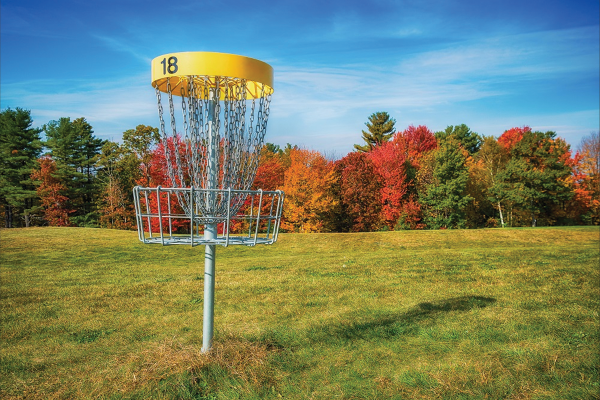
Toroa, one of the two Otago Ultimate Frisbee teams, took home first place at the national tertiary championships a couple weeks ago on the 2-3 of September. Hoiho, the secondary Otago team, moved up in the ranks from previous years, landing 7th place overall. Critic Te Ārohi sat down with five of the players Abi (Toroa), Josh (Toroa), Pierre (Hoiho), Kristen (Hoiho), and Gemma (Hoiho) to talk about their big win. For all those who have never seen an American movie about uni, ultimate frisbee is a mixed-gendered team sport. “It's kind of like a mix between American football and netball, but with a frisbee,” said Gemma. The sport is albeit “fringe in the public eye,” Kristen said, “[but] once you get into it, you realise there's actually a pretty big scene. Like, people are consistently showing up, people just want to play.” The Toroa team beat the Auckland Uni team 14-9, which is the highest a team scored against Toroa the entire tournament weekend. “It was real close. Even though it's a cliche to say, the score didn't resemble the game,” Josh told us. Despite only needing one run to turn it around, Auckland didn’t manage to do so. “It is quite exciting because Auckland's been pretty dominant at this tournament for a while,” said Abi. “Their names have been the only ones on the trophy, so it's cool that we've kind of broken that streak and also gotten Otago the map.” The ultimate club at uni was only established in 2018 and “the fact that we're now winning it in five years is pretty crazy,” Pierre said. Hoiho were also stoked to place higher than before but, more importantly, they had great spirit - something that is actually scored in frisbee by other teams post-match. The spirit scores reflect the energy aspects of the team as well as fair play and sportsmanship of the team. “You can’t take it too aggressively or too seriously,” Kristen said. “In the end, you’re only accountable to yourself and teammates.” This also ties into the fact the sport is self-refereed. “Spirit is quite a big part of the game with high attitudes,” said Gemma, “but also fair play. Since it's self-refereed, you have to be pretty well knowledgeable on the rules.” Whilst some people do become too competitive and try to take advantage of self-referring, Gemma said it’s “very rare”. Abi reckoned other sports could learn from frisbee in this regard: “Even just having every player having to know the rules quite well means that everyone's kind of personally accountable for how they act on the field.” Similar to the Jamaican Bobsled Team of 1988, Toroa almost didn’t have a chance of competing. Frisbee, alongside rowing, futsal, and various other sports, were told they were not going to be able to compete at national championships due to budget cuts at the end of last year. University and Tertiary Sports New Zealand (UTSNZ) is the organisation that hosts these sports and national competitions, and requires a membership fee that was a part of the cuts. “Considering we got second last year in a really tight final, we were pretty eager to go back like this year and then we heard funding was cut - that sucked,” Josh said. But once UTSNZ funding was restored, the team was excited to go back and challenge Auckland. “We have a team that fought to still be able to go play frisbee, win that battle, and then we brought home gold, which is pretty amazing,” said Abi. “And we also vibe really hard.” They all wanted to share their love for frisbees and winning with everyone, like the good communists they might be. “We're a social sport that is easy to get involved in,” Josh said. You don’t have to know anyone or even know what a frisbee is to join. “I just showed up at the beginning of the year and it's one of the best things I've done since moving here.” But even after winning the national championship, the team still battles with lack of name recognition and greater sport recognition. In the Toroa team, they have five guys and four girls who represented Aotearoa New Zealand in the U24 World champs, and the “DCC still thinks we’re frisbee golf,” said Abi. Adding on to this, Pierre said, “I mean this in the nicest way possible, but like I hope I never have to read an article where we’re explaining what frisbee is again.” Apart from this one, of course.
-
Heavy Breathers Cross the Finish Line
In the race for men’s mental health, the Heavy Breathers smashed not only their personal bests but the silence that surrounds the issue that resonates deeply with the group. The Heavy Breathers, a group of 33 third-year boys, set out on a mission to raise money for men's mental health by running the Emerson’s Dunedin Marathon. Their proceeds went to Spark That Chat, a mental health awareness charity. On Sunday, 10th September, proving motivation knows no bounds, the Heavy Breathers crossed the finish line. It was an incredible feat that tallied their collective distance to 7,718km, surpassing the distance from Dunedin to Indonesia. Heavy Breather Chris Mairs described it as “a massive sense of accomplishment and euphoria.” After blood, sweat, tears and a broken bone, those who were uninjured or cast-less finished the run. Chris said that what got him through the marathon was “the idea that no matter what pain I was feeling at this time, men all around New Zealand face much bigger challenges everyday.” Will Saunders agreed: “I think we all lifted each other with the mentality of, ‘If he can, so can I.’” Rightfully, they celebrated the day with a BBQ, two kegs, and various accolades. Among these honours, Zach Coventry claimed first place with a time of 3 hours and 22 minutes. ‘The OG Award’ was given to Tom Coffey in recognition of his role as the initiator of the event. Lastly, an award was given to one of the boys who, impressively, completed the 42km despite having covered less mileage in his training. As of time of writing, the boys have raised an astonishing $94,524 - a far cry from their original target of $10k, and they’re pushing for $100k over the next few weeks. They’ve spread their message far and wide, making national headlines and, more importantly, igniting inspiration among youth across the motu. After crossing both the finish line as well as the line of stigma, Chris said the message they want out there is to “talk to your mates and family… It doesn’t take much effort to have a conversation that goes deeper than surface level and, believe me, going past surface level can change peoples lives.” After such an incredible journey, the group has expressed that they may be interested in keeping the Heavy Breathers going: “Stay tuned to find out.”
-
OUSA Exec Candidates Run Uncontested
Last week saw the candidate forum for the 2024 OUSA Exec nominees. It was an opportunity for the candidates to campaign for their chosen positions and appeal to the masses - the masses being the current exec, their flatmates, and Radio One and Critic. That was about it. In what some might call a new low for student political engagement, four out of the ten positions only have one person running, meaning that they’ll be in uncontested unless they receive a vote of no confidence. Academic rep has no nominees at all, meaning another election will have to take place. Alarmingly, one of the uncontested positions is President, the top dog role in the exec, with this year’s Postgraduate Rep Keegan Wells as the sole candidate. On the topic of low engagement, Keegan pointed out that the position was historically one of the most contested, yet engagement has plummeted to the point where she was spinning yarns alone on stage about rebranding the position’s name to ‘Big Chungus’ to avoid allegations of her (an American) running just because of the title ‘President’, and also detailing how awful pelicans are just “as a concept”. Vice President is also going uncontested, with second-year Marine Science student Emily Williams running - a fact she was shocked to learn only after having applied. She also studied under Dr. Christina Riesselman, which our editor notes is “a slay”. Another shoo-in is Abby Clayton for Finance and Strategy Officer: a self-proclaimed “non-math girlie” who blamed the lack of competition on the fact that it “sounds super hard”. She mentioned some sort of controversial spending project that she’d like to cut back on, but said that it was in the Uni’s budget line, not OUSA’s. And she wouldn’t tell us what it was because she didn’t want to get cancelled. We’ll see how that one goes! Finally, there’s also Emma Jackson for Clubs and Societies Rep, who wanted to streamline the application process for new clubs and while appearing to have little knowledge of the current process. Our reporter admittedly zoned out a little during these parts of the forum since they’re gonna be on the exec anyway. Compared to last year’s forum (which was fairly dominated by talk of reopening a student bar), hot topics throughout the policies of nominees in the contested positions of Welfare and Equity Rep, Postgrad Student Rep, International Student Rep, Political Rep, and Residential Rep were mental health, cozzie lives and the tertiary sector cuts. One of the residential candidates, Stella, spoke to the common experience of the link between the quality of accommodation in Dunedin and mental health as well. The “know-how” among the nominees appeared to be lagging in part, with some awkward pauses and “can I get back to you on that?”s in response to some questions, but all in all, the candidates for next year’s exec are all passionate individuals eager to do their part to advocate for the student body - whether it be bolstering support networks, writing submissions on student allowances or putting subtitles on lecture slides. I guess. You’ll be able to find the candidate’s blurbs in the culture section of the mag - just past the puzzles. Voting opens 9am Monday, September 18th, and closes 4pm Thursday, September 21st. There are even New World vouchers up for grabs if you do.